Review

Integrated Management of Damping-Off in Tomato Seedling Caused by Soil-Borne Fungi and Oomycetes Under Protected Cultivation Systems


by
Michel Leiva-Mora
1,*,
Orelvis Portal
2,3,
Luis Rodrigo Saa
4,
Segundo Euclides Curay Quispe
1,
Ariel Villalobos Olivera
5 and
Marcos Edel Martínez Montero
5,*
1
Laboratorio de Biotecnología, Departamento de Agronomía, Facultad de Ciencias Agropecuarias, Universidad Técnica de Ambato (UTA-DIDE), Cantón Cevallos vía a Quero, Sector El Tambo-La Universidad, Cevallos 180150, Ecuador
2
Departamento de Biología, Facultad de Ciencias Agropecuarias, Universidad Central “Marta Abreu” de Las Villas, Carretera a Camajuaní km 5.5, Santa Clara 54830, Cuba
3
Centro de Investigaciones Agropecuarias, Facultad de Ciencias Agropecuarias, Universidad Central “Marta Abreu” de Las Villas, Carretera a Camajuaní km 5.5, Santa Clara 54830, Cuba
4
Departamento de Ciencias Biológicas y Agropecuarias, Facultad de Ciencias Exactas y Naturales, Universidad Técnica Particular de Loja (UTPL), Loja 110108, Ecuador
5
Facultad de Ciencias Agropecuarias, Universidad de Ciego de Ávila “Máximo Gómez Báez”, Ciego de Ávila 65200, Cuba
*
Authors to whom correspondence should be addressed.
Agriculture 2026, 16(12), 1261; https://doi.org/10.3390/agriculture16121261
Submission received: 31 March 2026 / Revised: 4 June 2026 / Accepted: 4 June 2026 / Published: 7 June 2026
(This article belongs to the Special Issue Integrated Management of Soil-Borne Diseases—Second Edition)

Abstract

Damping-off disease represents a major constraint in greenhouse tomato (Solanum lycopersicum) production, being primarily caused by soil-borne fungi and oomycetes whose persistence is intensified by intensive cultivation practices. This review synthesizes current knowledge on integrated disease management strategies targeting these pathogens in protected cropping systems. Cultural practices (e.g., substrate sanitation and irrigation control), physical and chemical soil disinfestation, deployment of resistant cultivars, and biological control agents (e.g., Trichoderma, Bacillus, and Pseudomonas) are critically evaluated. Available evidence indicates that integrated approaches consistently reduce pathogen inoculum, limit infection processes, and enhance seedling establishment and vigor, thereby outperforming single-method interventions. Synergistic interactions among practices strengthen rhizosphere resilience and contribute to sustained soil health. Overall, integrated disease management offers an effective and environmentally sound framework to mitigate damping-off, reduce reliance on chemical inputs, and ensure stable tomato production in protected cultivation systems.

1. Introduction

Tomato (Solanum lycopersicum Mill.) is among the most widely cultivated and economically significant horticultural crops worldwide, owing to its central role in global food systems, high market value, and broad adaptability to diverse agroecological conditions. Annual global tomato production exceeded 180 million tonnes in 2022, reflecting its importance both as a staple vegetable and a high-value greenhouse crop. This production is distributed across nearly five million hectares, with substantial contributions from major producers such as China, India, and the United States [1].
Protected cultivation systems, while advantageous for extending the production window and stabilizing yields, also generate an agronomic environment conducive to the emergence and proliferation of soil-borne pathogens, particularly in nurseries and seedling production units. Damping-off in tomato nurseries is a complex, soil-borne disease syndrome affecting seeds and young seedlings, primarily caused by pathogenic fungi and oomycetes such as Pythium spp., Phytophthora spp., Rhizoctonia solani, and Fusarium spp. The disease is characterized by pre- and post-emergence seedling mortality resulting from pathogen-mediated decay of germinating seeds, hypocotyl necrosis, and root system collapse [2].
In protected cultivation systems, elevated relative humidity, frequent irrigation, and the reuse and recirculation of water, mainly in soilless substrates promote prolonged moisture at the soil–root interface. This creates a microenvironment conducive to spore germination, mycelial proliferation, and host tissue penetration by major damping-off pathogens, including Pythium, Phytophthora, Rhizoctonia and Fusarium depending on substrate and production conditions [3].
Among these, Pythium aphanidermatum and R. solani are particularly aggressive and can lead to significant yield reductions, ranging from 20% to 60%. The controlled microenvironment of greenhouses mitigates climatic constraints and extends the harvest window, thereby maximizing productivity per unit area and meeting the rising market demand for fresh, nutritious produce in both local and export markets [4]. However, these intensified agricultural practices often create conditions conducive to the proliferation of soil-borne pathogens, posing significant challenges to sustainable tomato production. This issue is specially concerning given that soil-borne pathogens, including various fungi, nematodes, oomycetes, and bacteria, significantly impact tomato yield and quality, particularly in processing tomatoes grown under field conditions [5].
The persistent and multifactorial nature of damping-off in protected tomato systems highlights the need for integrated soil-borne disease management strategies that extend beyond single control measures. Pathogen build-up driven by monoculture, favorable microclimates, and intensive production is rarely sustainable when chemical control is used alone, especially in the context of increasing resistance and environmental constraints [6].
Consequently, a systems-based approach combining soil disinfection, biological control, resistant cultivars, and optimized cultural practices is essential to suppress pathogens effectively. Although numerous studies have focused on individual control strategies, their integration into coherent disease management systems, encompassing pathogen biology, greenhouse epidemiology, diagnostics, and compatible management practices, remains limited and fragmented [7].
The aim of this review is to critically synthesize current knowledge regarding integrated management strategies for damping-off in tomato, emphasizing a systems-based approach that integrates physical, chemical, biological, and cultural controls to enhance disease suppression and promote sustainable production in protected cultivation systems. This approach moves beyond fragmented interventions by considering the complex interactions among pathogens, host plants, and the environment to develop resilient and long-term solutions for disease control [8].

2. Etiology of Damping-Off: From Taxonomic Diversity to Functional Pathogen Groups

Damping-off in tomatoes is primarily caused by an-array of soil-borne fungi and oomycetes, including prevalent species such as R. solani and P. aphanidermatum. Other notable pathogens contributing to this devastating disease include Botrytis cinerea, Sclerotinia sclerotiorum, Alternaria spp., Phytophthora spp., and Fusarium spp. These pathogens exhibit varied infection mechanisms and survival strategies, contributing to seedling mortality rates that can range from 60% to 90% in severe outbreaks [9].
Table 1 provides an overview of the principal soil-borne pathogens involved in tomato damping-off, integrating their diagnostic characteristics, pathogenic mechanisms, and transmission routes across different taxa of oomycete pathogens within the genera Pythium and Phytophthora, alongside representative fungal pathogens such as Rhizoctonia, Fusarium, and Alternaria.
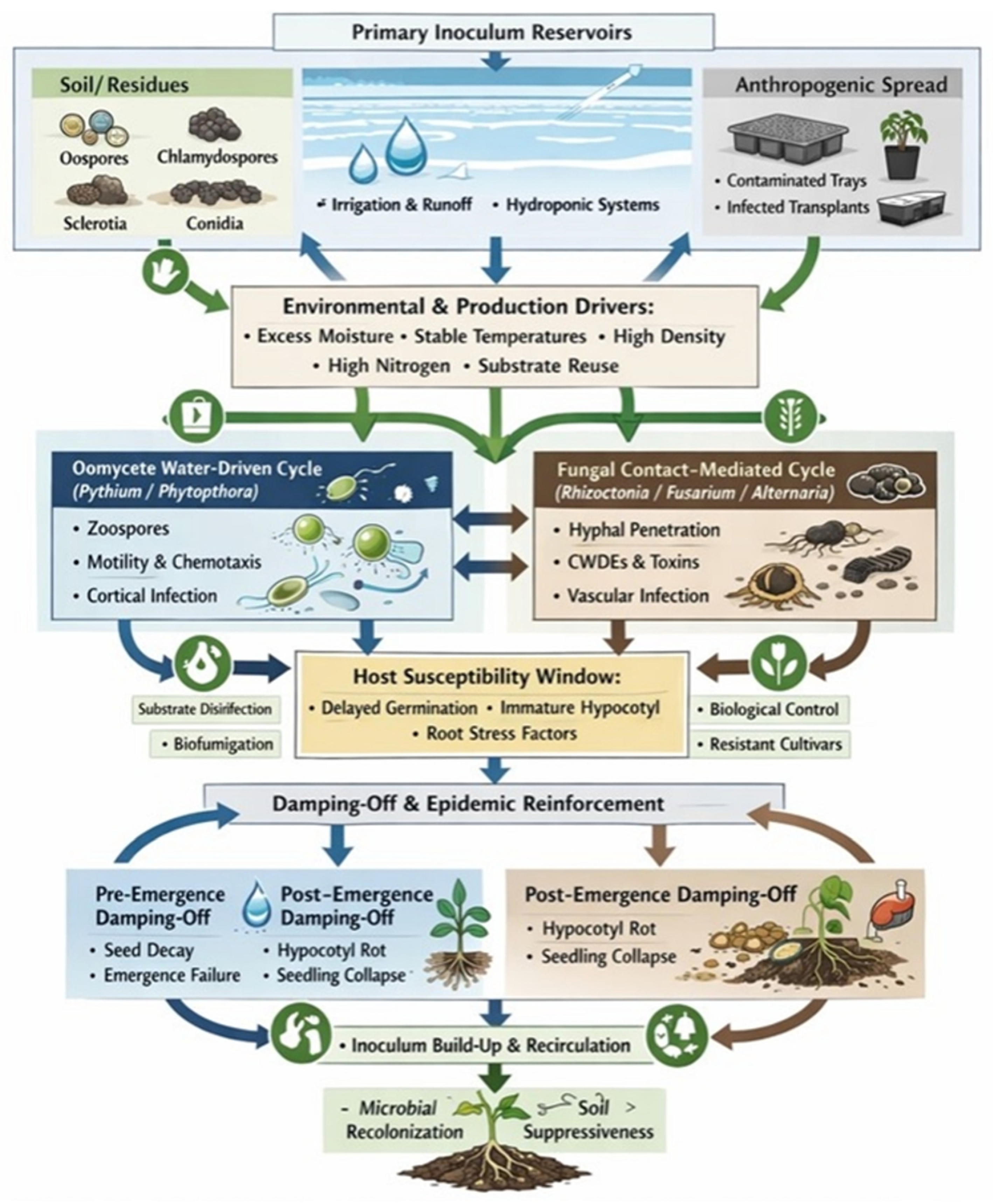
Figure 1 summarizes the epidemiological framework of damping-off in tomato under protected cultivation systems, highlighting the interactions among soil-borne fungi and oomycetes, environmental drivers, and host susceptibility. The disease is primarily caused by Pythium spp., Phytophthora spp., R. solani, Fusarium spp., and Alternaria spp., which persist in soil, irrigation water, crop residues, and contaminated substrates through resistant structures such as oospores, chlamydospores, sclerotia, and conidia. Under favorable conditions, including excessive moisture, stable temperatures, high planting density, elevated nitrogen levels, and substrate reuse, these pathogens rapidly infect susceptible seedlings through water-mediated zoospore dispersal or direct hyphal penetration, leading to seed decay, hypocotyl rot, seedling collapse, and continuous inoculum recirculation. Collectively, the figure emphasizes the polyetiological and multifactorial nature of damping-off, where pathogen biology, environmental conditions, and production practices converge to drive disease development and epidemic progression.
Table 2 presents soil-borne pathogens associated with tomato damping-off under protected cultivation systems, integrating their diagnostic characteristics, survival structures, infection strategies, transmission pathways, and main environmental drivers. The table comparatively highlights the epidemiological and biological differences between water-dependent oomycetes such as Pythium and Phytophthora and fungal pathogens including Rhizoctonia, Fusarium, and Alternaria, emphasizing the relevance of combining morphological and molecular diagnostics to support accurate pathogen identification and integrated disease management.
Oomycetes such as Pythium and Phytophthora are closely associated with saturated substrates and long-lived oospores, whereas true fungi, including R. solani, Fusarium spp., and occasionally Alternaria spp., survive through structures such as sclerotia and chlamydospores. These pathogens can induce both pre- and post-emergence damping-off, making knowledge of their survival, transmission, and infection biology essential for accurate diagnosis and targeted management [10].
Water-dependent oomycetes such as Pythium, Phytophthora, and Aphanomyces constitute a major group of soil-borne pathogens associated with tomato damping-off in protected cultivation systems. Unlike true fungi, these organisms are phylogenetically distinct and depend on motile zoospores for dispersal and infection under high-moisture conditions, making them particularly problematic in recirculating irrigation and soilless production systems. Their persistence is favored by the production of resistant survival structures, including sporangia and long-lived oospores, which enable survival under adverse environmental conditions and facilitate rapid disease outbreaks in young seedlings [11].
The epidemiological importance of these oomycetes is further enhanced by their broad host range, capacity to colonize weed reservoirs, and complex infection processes mediated by chemotactic responses to root exudates. Moreover, advances in molecular phylogenetics have revealed considerable taxonomic complexity within genera such as Pythium, leading to the reclassification of several species into new taxa, including Globisporangium. Because symptom expression is often non-specific and may resemble abiotic stress or infections caused by other root pathogens, accurate diagnosis increasingly depends on molecular tools. Consequently, effective disease management requires integrated strategies that combine environmental regulation, irrigation management, and microbiome-based approaches to limit pathogen dissemination and infection in intensive production systems [12].
Opportunistic and stress-related pathogens such as Fusarium spp.; R. solani; Sclerotinia spp.; and, to a lesser extent, Alternaria and Colletotrichum play major roles in tomato damping-off, particularly under conditions that weaken seedling vigor. These true fungi differ from oomycetes by possessing chitinous cell walls and distinct survival strategies, including the formation of resistant structures such as sclerotia and persistent mycelia [13].
Among them, R. solani is especially important due to its broad host range, capacity to infect tissues at the soil line, and ability to survive for long periods in soil, whereas Fusarium species are commonly associated with root rot and damping-off in stressed plants. In parallel, oomycetes such as Pythium ultimum and Phytophthora spp. remain highly destructive because of their rapid colonization of germinating seeds and young tissues under wet conditions [11].
Collectively, these pathogens cause both pre- and post-emergence damping-off, leading to seed decay, hypocotyl necrosis, root rot, and rapid seedling collapse. Their epidemiological success is largely attributable to their persistence through resistant survival structures, broad host ranges, and capacity to thrive under adverse environmental conditions such as excessive moisture and poor drainage [14].

3. Epidemiology in Protected Systems: A Risk Amplification Model

Protected cultivation systems create environmental conditions that strongly favor the development of damping-off in tomato seedlings by increasing pathogen proliferation and host susceptibility. High humidity, reduced air circulation, excessive irrigation, and continuous monoculture generate ideal microclimates for soil-borne fungi and oomycetes such as Pythium, Phytophthora, Rhizoctonia, and Fusarium. In particular, saturated substrates stimulate oospore germination, zoospore production, and rapid pathogen dissemination [10].
Poor drainage and compacted substrates further intensify disease pressure by reducing oxygen availability and promoting pathogen activity. Consequently, irrigation management and substrate aeration are considered key epidemiological factors for suppressing damping-off in greenhouse systems [15].
Agronomic practices also play a central role in disease amplification and transmission dynamics. High planting densities facilitate rapid pathogen spread among seedlings, whereas prolonged periods of seedling susceptibility increase the likelihood of infection. Lower sowing densities improve air circulation, reduce relative humidity, and accelerate seedling growth beyond vulnerable developmental stages, thereby limiting pathogen establishment [11].
In addition, the persistence of inoculum in contaminated substrates, trays, and soils, together with the broad host range of pathogens such as R. solani, contributes to recurrent outbreaks and substantial crop losses. These interactions demonstrate how management decisions can either mitigate or intensify epidemiological risks in protected cultivation systems [16].
The epidemiology of damping-off is further complicated by the spatial distribution of pathogens, environmental heterogeneity, and complex host–pathogen–microbiome interactions. Factors such as temperature, inoculum density, incubation period, and microbial community composition strongly influence disease progression and variability among epidemics [17].
Recent studies emphasized the importance of disease-suppressive soils and beneficial microbial communities capable of limiting pathogen activity through competition and antibiosis. Consequently, advanced epidemiological and stochastic models are increasingly required to predict disease outbreaks and evaluate integrated management strategies, including biological control agents such as Trichoderma viride. This systems-level perspective is essential for developing sustainable and resilient disease management programs in intensive tomato production systems [18].

4. Environmental Drivers as Epidemiological Regulators

Environmental factors such as temperature, moisture, nutrient availability, and soil porosity play fundamental roles in regulating the epidemiology of damping-off in protected cultivation systems. High humidity and excessive soil moisture promote spore germination, zoospore mobility, and infection by oomycetes, whereas temperate fluctuations influence both pathogen virulence and host defense responses. These abiotic conditions also affect the activity of beneficial microorganisms and the suppressive capacity of the soil microbiome. Consequently, environmental management is essential for reducing disease incidence and improving the effectiveness of biological control strategies [19].
The interaction among environmental conditions, root exudates, and rhizosphere microbial communities strongly influences plant immunity and disease suppression. Variations in soil moisture, pH, and nutrient availability shape microbial recruitment and determine the persistence and activity of antagonistic microorganisms in the rhizosphere. In addition, plant-derived compounds and secondary metabolites can selectively enrich beneficial microbes while limiting pathogen establishment. These complex plant–microbe interactions are increasingly recognized as key mechanisms underlying natural disease suppressiveness and sustainable soil health management [20].
Recent advances in molecular and multi-omics approaches have improved understanding of the functional interactions among pathogens, plants, and microbial communities associated with damping-off suppression. These technologies enable detailed characterization of metabolic pathways, root exudation patterns, and microbiome dynamics involved in plant resistance and pathogen inhibition. Furthermore, integrating microbiome engineering with plant breeding strategies offers new opportunities to enhance disease resistance and crop productivity under stress conditions. This systems-level perspective is essential for developing adaptive and sustainable management programs in intensive tomato production systems [21].

5. Agronomic Intensification Factors

Intensive agronomic practices such as monoculture, high planting densities, and conventional fertilization regimes significantly influence the epidemiology of damping-off by altering soil microbial communities and rhizosphere dynamics. These practices can reduce beneficial microbial diversity while favoring opportunistic pathogens associated with tomato seedling diseases. In contrast, biofertilization and sustainable soil management practices may promote more balanced microbial communities and improve plant resilience. Consequently, agronomic intensification strongly affects crop susceptibility through its impact on soil biological and ecological processes [22].
Root exudates play a central role in shaping rhizosphere microbial communities and regulating disease outcomes in tomato production systems. Their composition varies according to plant genotype, environmental conditions, and stress factors, influencing the recruitment of microorganisms that may either suppress or promote pathogen establishment. Dynamic changes in root exudation patterns also affect plant–microbe and microbe–microbe interactions, contributing to the formation of disease-suppressive soils. However, the complexity of these interactions currently limits the ability to predict and efficiently manipulate rhizosphere microbiomes [23].
Plant–microbiome interactions are regulated by multiple factors, including plant genotype, soil characteristics, environmental conditions, and biotic or abiotic stresses. This complexity highlights the need for integrated research approaches aimed at understanding the mechanisms governing microbiome assembly and disease suppression. In particular, traits related to root architecture and exudate composition strongly influence the recruitment and maintenance of beneficial microbial communities. Therefore, manipulating rhizosphere microbiomes through plant genetics represents a promising strategy for enhancing sustainable disease resistance [24].
Recent perspectives propose considering the plant and its associated microbiome as a single functional unit, or holobiont, in breeding programs designed to improve resilience against damping-off pathogens. This approach emphasizes selecting plant genotypes capable of recruiting and sustaining beneficial microbial consortia that enhance plant fitness and stress tolerance. Identifying genomic regions associated with microbiome recruitment and promoting the vertical transmission of beneficial microorganisms may strengthen long-term disease resistance. Consequently, integrating plant genetics with microbiome engineering offers new opportunities for developing sustainable and resilient tomato production systems [12].

6. Integrated Management Strategies for Damping-Off in Tomato Under Protected Cultivation Systems

Damping-off in tomato is a complex disease caused by diverse soil-borne fungi and oomycetes, including Pythium, Phytophthora, Rhizoctonia, and Fusarium, which frequently interact synergistically to increase disease severity. Their persistence through resistant survival structures and broad host ranges complicates diagnosis and control, particularly under protected cultivation systems where excessive moisture, high humidity, and poor drainage favor pathogen proliferation. These epidemiological conditions promote both pre- and post-emergence damping-off, resulting in severe seedling losses and reduced crop establishment [25].

6.1. Cultural Practices

Cultural practices constitute one of the most effective and sustainable components of integrated damping-off management in tomato seedlings, particularly under protected cultivation systems where environmental conditions frequently favor soil-borne pathogens. Proper irrigation management is considered a critical epidemiological regulator because excessive moisture and substrate saturation strongly stimulate the activity of oomycetes such as Pythium and Phytophthora, whose infection cycles depend on free water for zoospore production and dispersal [17].
Consequently, optimizing irrigation frequency, improving drainage, and maintaining adequate substrate aeration are essential to reduce pathogen proliferation and minimize seedling susceptibility. In parallel, proper greenhouse ventilation and humidity management help prevent the formation of microclimates conducive to pathogen establishment and epidemic development [26].
Sanitation measures are equally fundamental for preventing the introduction and dissemination of damping-off pathogens in nursery systems. Disinfection of trays, tools, substrates, irrigation systems, and greenhouse surfaces substantially reduces the accumulation and spread of inoculum associated with pathogens such as R. solani, Fusarium spp., and Pythium spp. [27].
In addition, the use of pathogen-free seeds, healthy seedlings, and sterilized or pasteurized substrates minimizes the risk of introducing soil-borne pathogens during early crop establishment. Rapid removal of symptomatic seedlings and infected plant residues further contributes to limiting secondary inoculum sources and interrupting pathogen transmission cycles within intensive tomato production systems [28].
Crop rotation and diversified cropping systems also play major roles in suppressing damping-off pathogens through their influence on soil microbial communities and pathogen population dynamics. Rotations involving non-host crops can reduce inoculum density, interrupt pathogen life cycles, and promote the establishment of disease-suppressive soils enriched with beneficial microorganisms such as Bacillus, Pseudomonas, and arbuscular mycorrhizal fungi [29]. Similarly, the incorporation of organic amendments, composts, and biofertilizers enhances microbial diversity and stimulates antagonistic microbial activity against soil-borne pathogens. These practices improve soil structure, nutrient availability, and rhizosphere resilience while reducing the ecological dominance of pathogenic fungi and oomycetes [30].
Additional agronomic practices such as balanced fertilization, optimized sowing density, and adequate temperature management further contribute to reduce disease incidence and improved seedling vigor. Excessive nitrogen fertilization and high planting densities often increase humidity and prolong the period of seedling susceptibility, thereby favoring disease outbreaks [31]. Conversely, balanced nutrient management and lower seedling densities improve air circulation, accelerate seedling development, and reduce the duration of vulnerable growth stages. Collectively, these cultural practices function synergistically to regulate environmental conduciveness, reduce pathogen inoculum pressure, and enhance host resilience, forming the foundation of sustainable damping-off management programs in tomato production systems [21].

6.2. Physical Control Practices

Physical control practices represent an important preventive component of integrated damping-off management in tomato seedlings, particularly in protected cultivation systems where soil-borne pathogens can accumulate rapidly under intensive production conditions. Among these methods, steam treatment is considered one of the most effective physical disinfection strategies because moist heat penetrates substrates efficiently, causing protein denaturation, membrane disruption, and inactivation of essential cellular processes in pathogens such as Pythium, Phytophthora, Rhizoctonia, and Fusarium. Steam sterilization can substantially reduce pathogen inoculum in soils, trays, and growing media before sowing, thereby decreasing the risk of both pre- and post-emergence damping-off during the highly susceptible seedling stage [27].
Soil solarization is another widely used physical method that relies on solar radiation to increase soil temperatures to levels lethal for many soil-borne pathogens. This approach is particularly useful in greenhouse systems and warm climates, where transparent polyethylene films trap solar heat and suppress pathogen populations through thermal inactivation. Although solarization is generally less costly and more environmentally friendly than chemical fumigation, its efficacy depends strongly on climatic conditions, treatment duration, soil moisture, and heat penetration depth. Nevertheless, when properly implemented, solarization can significantly reduce populations of damping-off pathogens while partially preserving beneficial microbial communities compared with more aggressive sterilization techniques [10].
Additional physical sanitation measures are essential for limiting pathogen dissemination within nursery systems. The use of sterile or pasteurized substrates, hot water seed treatments, UV disinfection of irrigation water, and thermal disinfection of trays and tools can substantially reduce the introduction and spread of soil-borne inoculum. Proper substrate aeration and drainage management also function as indirect physical controls by preventing water saturation and reducing the favorable conditions required for zoospore mobility and infection by oomycetes. In intensive tomato seedling production systems, these preventive sanitation practices are particularly valuable because they reduce inoculum pressure before pathogen establishment occurs [26].
Despite their high efficacy in rapidly reducing pathogen populations, physical disinfection methods may also negatively affect beneficial soil microbiota and create temporary biological vacuums susceptible to recolonization by opportunistic pathogens. Consequently, current integrated disease management frameworks recommend combining physical control practices with biological recolonization strategies, organic amendments, and optimized cultural management to restore beneficial microbial communities and improve long-term soil suppressiveness. This integrated approach enhances system resilience, reduces dependency on chemical fungicides, and contributes to more sustainable and environmentally compatible damping-off management in tomato production systems [32].

6.3. Biological Control Strategies

Biological control has emerged as one of the most sustainable and environmentally compatible strategies for managing damping-off in tomato seedlings, particularly under protected cultivation systems where intensive production practices favor the accumulation of soil-borne pathogens. Unlike chemical fungicides, biological control does not aim at complete pathogen eradication but rather at ecological regulation, maintaining pathogen populations below economically damaging thresholds while enhancing rhizosphere resilience and soil suppressiveness. This approach is especially important for damping-off diseases caused by complex pathogen assemblages including Pythium spp., Phytophthora spp., R. solani, and Fusarium spp., whose persistence and adaptability frequently limit the long-term effectiveness of conventional chemical control strategies [33].
Among the most widely studied fungal biocontrol agents, Trichoderma harzianum, Trichoderma asperellum, and Gliocladium virens have demonstrated remarkable efficacy against multiple damping-off pathogens. These beneficial fungi exhibit strong antagonistic capabilities through rapid rhizosphere colonization, secretion of hydrolytic enzymes, and direct mycoparasitic interactions with pathogenic fungi and oomycetes. Species of Trichoderma are particularly effective because they combine multiple mechanisms of action, including competition for ecological niches, degradation of pathogen cell walls through chitinases and glucanases, and stimulation of plant defense pathways that enhance seedling resistance under stress conditions [34].
Beneficial bacteria also play a central role in the biological suppression of damping-off pathogens. Species such as Bacillus subtilis, Bacillus velezensis, Pseudomonas fluorescens, and Streptomyces spp. have shown significant antagonistic activity against oomycetes and fungal pathogens associated with tomato seedling mortality. These bacteria can colonize root surfaces efficiently, produce antimicrobial metabolites, and establish stable biofilms that protect root tissues against pathogen invasion. In addition, several Bacillus and Pseudomonas strains promote plant growth through phytohormone production, nutrient solubilization, and enhancement of root system development, thereby improving overall seedling vigor and tolerance to biotic stress [35].
The efficacy of biological control agents is primarily associated with multiple ecological and biochemical mechanisms acting simultaneously within the rhizosphere environment. Antibiosis constitutes one of the most important mechanisms, involving the production of antimicrobial compounds such as lipopeptides, antibiotics, volatile organic compounds, and siderophores capable of inhibiting pathogen growth and infection. In parallel, mycoparasitism enables beneficial fungi such as Trichoderma to directly attack pathogenic hyphae through enzymatic degradation and physical penetration. These antagonistic interactions substantially reduce pathogen inoculum density and limit disease progression during the highly susceptible seedling stage [12].
Competition for nutrients and ecological niches also contributes significantly to disease suppression. Beneficial microorganisms rapidly colonize root surfaces and substrate particles, limiting the availability of carbon sources and infection sites required by pathogens for successful establishment. This ecological exclusion is especially important against fast-growing pathogens such as Pythium spp., whose infection processes depend strongly on rapid access to germinating seeds and young root tissues. Moreover, the formation of stable microbial biofilms around root systems creates a physical and biochemical barrier that further reduces pathogen penetration and colonization [36].
Another critical mechanism involved in biological control is induced systemic resistance, whereby beneficial microorganisms activate plant defense pathways before pathogen attack occurs. Through signaling molecules and microbe-associated molecular patterns, beneficial bacteria and fungi stimulate the production of defense-related enzymes, phytoalexins, and antioxidant compounds that strengthen host resistance against soil-borne pathogens. This induced resistance improves the capacity of tomato seedlings to tolerate infections caused by damping-off pathogens while simultaneously enhancing tolerance to environmental stress conditions commonly encountered in greenhouse production systems [37].
The suppression of zoospore germination and motility represents an especially important mechanism against oomycete pathogens such as Pythium and Phytophthora. Certain bacterial and fungal antagonists can interfere with zoospore chemotaxis, reduce motility, or inhibit germination through the release of antifungal metabolites and volatile compounds. Because oomycetes depend heavily on free water and motile zoospores for successful infection, biological agents capable of disrupting these early infection stages can substantially reduce disease incidence. Consequently, the integration of biological control with optimized irrigation and drainage management often results in enhanced suppression of water-dependent pathogens [13].
The success of biological control programs also depends strongly on the application method used for introducing beneficial microorganisms into the production system. Common strategies include seed coating, seedling dipping, substrate inoculation, plug tray treatment, root drenches, and compost enrichment. Seed treatments are particularly effective because they allow early rhizosphere colonization during germination, thereby protecting emerging seedlings during their most vulnerable developmental stages. Similarly, substrate inoculation and compost enrichment promote the establishment of suppressive microbial communities capable of providing longer-term protection throughout seedling development [38].
Recent advances in microbiome research have promoted the development of microbial consortia and synthetic microbial communities (SynComs) designed to improve the consistency and robustness of biological control under commercial production conditions. Unlike single-strain inoculants, microbial consortia combine functionally complementary microorganisms capable of exerting multiple modes of action simultaneously. These communities often display enhanced ecological stability, improved rhizosphere persistence, and broader pathogen suppression compared with individual microbial strains. The synergistic interactions among fungi, bacteria, and beneficial rhizosphere microorganisms therefore represent a promising next-generation strategy for sustainable damping-off management [39].
Microbiome engineering is increasingly recognized as a transformative approach for future disease management in tomato production systems. This strategy involves deliberate manipulation of rhizosphere microbial communities to favor beneficial microorganisms that enhance soil suppressiveness, plant immunity, and ecological resilience. Advances in omics technologies, synthetic biology, and computational modeling now allow the identification of keystone microbial taxa and functional interactions associated with disease suppression. Consequently, integrating biological control with microbiome engineering, cultural practices, and precision environmental management offers a highly promising pathway toward sustainable, resilient, and environmentally compatible control of damping-off in tomato seedlings [40].

7. Chemical Control: Efficacy, Resistance, and Environmental Risk

Chemical fungicides remain important tools for the rapid suppression of damping-off pathogens in protected tomato systems; however, their intensive and repetitive use has generated significant concerns regarding pathogen resistance, environmental contamination, and disruption of beneficial soil microbiota. Continuous fungicide application exerts strong selective pressure on pathogen populations such as Pythium, Phytophthora, and Fusarium, favoring the emergence of resistant strains and progressively reducing treatment efficacy. In addition, fungicide residues may negatively affect non-target organisms, reduce microbial diversity, and compromise the natural suppressiveness of agricultural soils [41]. These limitations have intensified the need for more sustainable and integrated disease management strategies.
The growing restrictions on chemical fumigants, together with increasing consumer demand for environmentally safe production systems, have accelerated the transition toward integrated management approaches that combine chemical, biological, and cultural practices. Although fumigants and fungicides can substantially reduce initial inoculum levels, their long-term sustainability depends on their judicious use within integrated frameworks that support microbiome recovery and soil resilience. Strategies such as optimized irrigation, sanitation, resistant cultivars, and biological recolonization with beneficial microorganisms including Trichoderma and Bacillus are increasingly recognized as essential complementary measures for maintaining effective disease suppression while minimizing ecological risks [42].
An emerging perspective within sustainable disease management is the incorporation of circular bioeconomy principles through the valorization of agricultural and agro-industrial organic residues. Instead of being treated as waste streams, by-products such as crop residues, fruit and vegetable processing wastes, coffee husks, sugarcane bagasse, composted manure, and agro-industrial effluents can be transformed into biologically active soil amendments capable of enhancing soil health and suppressing soil-borne pathogens. This approach simultaneously addresses waste management challenges, reduces environmental pollution, and decreases dependence on synthetic fungicides, thereby contributing to more resource-efficient and climate-smart agricultural systems [14].
The disease-suppressive potential of recycled organic residues is largely associated with their ability to stimulate beneficial microbial communities and improve soil biological functioning. During decomposition, organic materials release carbon sources, bioactive metabolites, and nutrients that promote the proliferation of antagonistic microorganisms, including Trichoderma spp., Bacillus spp., Pseudomonas spp., and diverse actinomycetes. In addition, composting processes can generate humic substances, volatile compounds, and antimicrobial metabolites that directly inhibit pathogen survival or indirectly enhance plant defense responses. Consequently, organic waste-derived amendments may contribute to the establishment of disease-suppressive soils while simultaneously improving nutrient cycling, soil structure, and rhizosphere resilience [43].
Recent studies suggest that integrating organic waste valorization with biological control and biofumigation strategies can provide multifunctional benefits that extend beyond disease suppression alone. The combination of composted residues, vermicomposts, biochar-enriched organic amendments, and microbiologically active biofertilizers may reduce pathogen inoculum pressure while enhancing carbon sequestration, soil fertility, and microbial diversity. Within protected tomato production systems, these circular bioeconomy approaches represent promising complementary tools that align plant health management with broader sustainability goals, supporting the transition toward low-input production systems that minimize chemical dependency and maximize the productive reuse of renewable biological resources [44].
Recent advances in biological control and plant–microbiome research have highlighted the potential of beneficial microorganisms and plant growth-promoting rhizobacteria as eco-friendly alternatives to conventional chemical control. These biological agents suppress damping-off pathogens through mechanisms such as antibiosis, siderophore production, competition for ecological niches, and induction of systemic resistance. In parallel, omics technologies and molecular studies have improved understanding of fungicide resistance mechanisms and facilitated the identification of new targets for disease management. This systems-based perspective emphasizes the importance of integrating biological control with chemical stewardship principles to delay resistance development and improve long-term disease management sustainability [20].
The taxonomic and physiological diversity of damping-off pathogens further complicates disease management and necessitates pathogen-specific strategies. Oomycetes such as Pythium and Phytophthora differ fundamentally from true fungi in cell wall composition, life cycle, infection mechanisms, and fungicide sensitivity, explaining why many conventional fungicides are ineffective against them [45].
Accurate pathogen identification is therefore critical for selecting appropriate control measures and avoiding ineffective treatments. Overall, the evidence supports a transition from chemical-dependent management toward integrated, ecologically informed systems that combine biological control, cultural practices, host resistance, and targeted chemical interventions to achieve sustainable suppression of damping-off in intensive tomato production systems [46].
While fungicides effectively suppress soil-borne pathogens during early crop establishment, their repeated use drives resistance development and progressively reduces control reliability. Concurrently, chemical inputs disrupt beneficial soil microbiota, weakening natural suppressiveness and increasing vulnerability to reinfestation. The accumulation of residues further extends risks to non-target organisms and ecosystem health. Collectively, this graphical summary underscores that chemical control, although indispensable, must be strategically integrated within sustainable, system-level disease management frameworks [47].

8. Genetic Resistance and Seed Quality

The use of healthy seeds and genetically resilient cultivars constitutes a fundamental preventive strategy for reducing damping-off incidence in tomato seedlings, particularly during the highly susceptible stages of germination and early seedling establishment. Because damping-off pathogens such as Pythium spp., Phytophthora spp., R. solani, and Fusarium spp. primarily attack weak or physiologically stressed tissues, vigorous seeds with high germination capacity can significantly reduce the duration of vulnerability to infection [48].
High-quality seeds generally exhibit faster and more uniform germination, allowing seedlings to rapidly overcome the critical developmental window during which pathogens most effectively colonize hypocotyl and root tissues. Consequently, the use of certified pathogen-free seeds not only minimizes the introduction of seed-borne inoculum into nursery systems but also enhances seedling vigor and overall crop establishment [48].
Seed health is especially important in protected cultivation systems where intensive production practices and favorable environmental conditions can amplify pathogen dissemination and epidemic development. Seeds contaminated externally or internally with fungal propagules may serve as primary inoculum sources capable of initiating disease outbreaks in seedbeds and plug trays [49].
Therefore, seed sanitation practices such as hot water treatments, biological seed coatings, and protective fungicidal or microbial seed treatments can substantially reduce pathogen transmission during germination. In addition, the use of biologically treated seeds inoculated with beneficial microorganisms such as Trichoderma, Bacillus, or Pseudomonas species can improve rhizosphere colonization by antagonistic microbes during the earliest stages of plant development, thereby strengthening protection against soil-borne pathogens and improving seedling survival [50].
Although complete genetic resistance to damping-off is uncommon due to the polyetiological nature of the disease complex, the use of tolerant tomato genotypes can significantly reduce disease severity by limiting pathogen penetration, slowing tissue colonization, and enhancing inducible defense responses. Tomato cultivars differ substantially in root architecture, root exudate composition, stress tolerance, and activation of innate immune pathways, all of which influence their susceptibility to soil-borne pathogens [51].
Certain genotypes may recruit more beneficial rhizosphere microorganisms or exhibit stronger physiological responses against pathogen invasion, contributing to improved resilience under disease-conducive conditions. This interaction between plant genotype and rhizosphere microbiome has become increasingly important in modern breeding programs focused on enhancing natural disease suppressiveness and sustainable crop protection [30].
Recent advances in plant breeding, microbiome research, and molecular biology have reinforced the concept of integrating host resistance with microbiome-assisted disease management strategies. Future breeding programs are increasingly directed toward selecting tomato genotypes capable of establishing beneficial plant–microbe interactions and promoting disease-suppressive rhizosphere environments [52].
In this context, the combination of healthy seeds, tolerant cultivars, biological seed treatments, and optimized cultural management forms a multilayered preventive framework that reduces pathogen pressure while improving seedling vigor and system resilience. Consequently, resistance-based strategies, although insufficient as stand-alone measures, represent a critical component of integrated damping-off management programs aimed at minimizing dependence on chemical fungicides and promoting sustainable tomato seedling production systems [53].

9. Organic Amendments and Biofumigation Practices

Organic amendments and biofumigation have emerged as highly valuable components of integrated management programs for damping-off in tomato seedlings, particularly in protected cultivation systems where intensive production practices frequently favor the accumulation of soil-borne pathogens. Unlike conventional chemical fumigants, these approaches contribute not only to pathogen suppression but also to the improvement of soil health, microbial diversity, and long-term rhizosphere resilience [54].
Organic amendments such as composts, vermicomposts, crop residues, and biofertilizers enhance soil structure, aeration, nutrient availability, and microbial activity, thereby creating conditions less favorable for pathogens such as Pythium spp., Phytophthora spp., R. solani, and Fusarium spp. Consequently, their incorporation into nursery substrates and greenhouse soils represents an important preventive strategy for reducing damping-off incidence while promoting sustainable tomato seedling production [55].
Biofumigation specifically involves the incorporation of glucosinolate-rich plant materials, particularly Brassica residues, into the soil to release volatile biocidal compounds such as isothiocyanates during decomposition. These compounds exhibit suppressive activity against a broad spectrum of soil-borne fungi, oomycetes, nematodes, and other pathogens associated with damping-off [56].
In protected tomato systems, biofumigation can substantially reduce initial pathogen inoculum levels before sowing or transplanting, thereby lowering disease pressure during the critical stages of seed germination and seedling establishment. In addition to its direct antimicrobial effects, biofumigation may also stimulate beneficial microbial populations capable of contributing to long-term soil suppressiveness and enhanced disease resilience [57].
Organic amendments also play a central role in the development of disease-suppressive soils through their influence on rhizosphere microbial communities. The incorporation of organic matter stimulates populations of antagonistic microorganisms such as Trichoderma spp., Bacillus spp., Pseudomonas fluorescens, and actinomycetes that suppress pathogens through antibiosis, competition for nutrients and ecological niches, mycoparasitism, and induction of plant defense responses [58].
Furthermore, organic amendments can improve microbial functional diversity and promote ecological stability within the soil microbiome, reducing the likelihood of pathogen dominance under favorable environmental conditions. This enhancement of microbial suppressiveness is particularly important in intensive greenhouse systems where repeated monoculture and substrate reuse often disrupt natural microbial balance and increase disease vulnerability [59].
Despite their considerable benefits, the effectiveness of organic amendments and biofumigation depends strongly on factors such as amendment composition, decomposition rate, application timing, environmental conditions, and pathogen biology. Excessive amendment rates or inadequate aeration may occasionally produce phytotoxic effects or temporarily suppress beneficial microorganisms [60].
Therefore, these practices are most effective when integrated with complementary management strategies including biological control, optimized irrigation, sanitation, resistant cultivars, and proper environmental regulation. Within integrated disease management frameworks, organic amendments and biofumigation represent ecologically based approaches that reduce dependence on synthetic fumigants while simultaneously improving soil health, enhancing microbiome resilience, and promoting sustainable suppression of damping-off pathogens in tomato seedling production systems [61,62,63].

10. Conclusions

Integrated management of tomato damping-off under protected cultivation systems requires a systems-based approach that combines cultural, physical, biological, genetic, and environmentally compatible chemical strategies to effectively suppress soil-borne fungi and oomycetes. The evidence reviewed indicates that no single control method provides durable disease suppression, owing to the complex epidemiology and polyetiological nature of key pathogens including Pythium spp., Phytophthora spp., R. solani, and Fusarium spp. Instead, the synergistic integration of sanitation practices, irrigation optimization, biological control agents, resistant cultivars, high-quality seeds, organic amendments, and microbiome-oriented management significantly enhances rhizosphere resilience, reduces pathogen inoculum, and improves seedling establishment and productivity. Advances in microbiome engineering, molecular diagnostics, and sustainable soil health management further support the transition toward ecologically based disease suppression strategies. These approaches reduce dependence on chemical fungicides while promoting long-term sustainability and resilience in intensive tomato production systems.

Author Contributions

All authors meet the criteria established by the International Committee of Medical Journal Editors for authorship, including substantial contributions to the conception and design of the work, drafting and critical revision of the manuscript, final approval of the version to be published, and agreement to be accountable for all aspects of the work. M.L.-M. led the study, contributing to conceptualization, study design, literature review, data analysis and interpretation, figure development, and writing of the original draft, representing the major intellectual contribution to the manuscript. O.P. contributed to literature acquisition, data interpretation, and critical revision of the manuscript. L.R.S. contributed to formal analysis, data interpretation, and critical revision for important intellectual content. S.E.C.Q. contributed to data curation, figure preparation, and manuscript revision. A.V.O. contributed to literature review, data collection, and manuscript editing. M.E.M.M. contributed to supervision, conceptual refinement, and critical revision of the manuscript. All authors contributed to data interpretation, critically revised the manuscript for important intellectual content, approved the final version to be published, and agree to be accountable for all aspects of the work. All authors have read and agreed to the published version of the manuscript.

Funding

This research received no external funding. The authors confirm that no funding bodies or sponsors had any role in the design of this study; in the collection, analysis, or interpretation of data; in the writing of the manuscript; or in the decision to submit the manuscript for publication. All authors independently contributed to the development of the work and assume full responsibility for its content. This study was fully self-funded by the authors.

Data Availability Statement

No new data were created or analyzed in this study. Data sharing is not applicable to this article.

Acknowledgments

The authors gratefully acknowledge their own financial support, as this work was fully self-funded. The authors also sincerely thank the anonymous reviewers for their valuable comments and constructive observations, which significantly contributed to improving the scientific quality of the manuscript. Their insights led to a more rigorous and academically refined version, with enhanced clarity of expression and a notable improvement in the design and presentation of tables and figures.

Conflicts of Interest

The authors declare that they have no conflicts of interest.

References

  1. Ofori, P.A.; Owusu-Nketia, S.; Opoku-Agyemang, F.; Agbleke, D.; Amissah, J.N. Greenhouse Tomato Production for Sustainable Food and Nutrition Security in the Tropics. In Tomato—From Cultivation to Processing Technology; IntechOpen: Rijeka, Croatia, 2022. [Google Scholar] [CrossRef]
  2. Tawfik, E.; Mohamed, A.F. Molecular Evaluation of Cordyline fruticosa (L.) A.Chev. Behavior Affected by Different Chemical Mutagens. Jordan J. Biol. Sci. 2022, 15, 347–352. [Google Scholar] [CrossRef]
  3. McPartland, J. Damping-off diseases of seedlings. In Hemp Diseases and Pests; CABI: Wallingford, UK, 2025; pp. 322–332. [Google Scholar] [CrossRef]
  4. Lakshmi, K.V.; Seenivasan, N.; Saidaiah, P. Role of Protected Cultivation in Improving Yield and Quality of Horticultural Crops. Agric. Rev. 2025, 4, 1–2. [Google Scholar] [CrossRef]
  5. Ma, M.; Taylor, P.W.J.; Chen, D.; Vaghefi, N.; He, J. Major Soilborne Pathogens of Field Processing Tomatoes and Management Strategies. Microorganisms 2023, 11, 263. [Google Scholar] [CrossRef]
  6. Raaijmakers, J.M.; Paulitz, T.C.; Steinberg, C.; Alabouvette, C.; Moënne-Loccoz, Y. The rhizosphere: A playground and battlefield for soilborne pathogens and beneficial microorganisms. Plant Soil 2008, 321, 341–361. [Google Scholar] [CrossRef]
  7. Nurturing the Crop: Recent Innovations in Vegetable Diseases Management. Agrobiol. Rec. 2023, 13, 101–107. [CrossRef]
  8. Jeger, M.; Beresford, R.M.; Bock, C.H.; Brown, N.; Fox, A.; Newton, A.C.; Vicent, A.; Xu, X.; Yuen, J. Global challenges facing plant pathology: Multidisciplinary approaches to meet the food security and environmental challenges in the mid-twenty-first century. CABI Agric. Biosci. 2021, 2, 20. [Google Scholar] [CrossRef]
  9. Punja, Z.K. Emerging diseases of Cannabis sativa and sustainable management. Pest Manag. Sci. 2021, 77, 3857–3870. [Google Scholar] [CrossRef] [PubMed]
  10. AbuQamar, S.F.; El-Saadony, M.T.; Saad, A.M.; Desoky, E.M.; Elrys, A.S.; El–Mageed, T.A.A.; Semida, W.M.; Abdelkhalik, A.; Mosa, W.F.A.; Kafaas, S.S.A.; et al. Halotolerant plant growth-promoting rhizobacteria improve soil fertility and plant salinity tolerance for sustainable agriculture—A review. Plant Stress 2024, 12, 100482. [Google Scholar] [CrossRef]
  11. Múnera, J.D.C.; Beaulieu, J.; Redekar, N.; Delgado, C.; Eberhart, J.; Parke, J.L.; Hasselhoff, S.; Hu, M.; Swett, C.L. Evaluating Oomycete Pathogen and Community Responses to Chemical- and Slow Sand Filtration–Based Water Treatment Strategies to Enable Water Recycling in Nursery Production Systems. Plant Dis. 2025, 109, 1496–1508. [Google Scholar] [CrossRef]
  12. Al-Shammary, A.A.G.; Al-Shihmani, L.S.S.; Fernández-Gálvez, J.; Caballero-Calvo, A. Optimizing sustainable agriculture: A comprehensive review of agronomic practices and their impacts on soil attributes. J. Environ. Manag. 2024, 364, 121487. [Google Scholar] [CrossRef]
  13. Ansabayeva, A.; Makhambetov, M.; Rebouh, N.Y.; Abdelkader, M.; Saudy, H.S.; Hassan, K.M.; Nasser, M.A.; Ali, M.A.A.; Ebrahim, M. Plant Growth-Promoting Microbes for Resilient Farming Systems: Mitigating Environmental Stressors and Boosting Crops Productivity—A Review. Horticulturae 2025, 11, 260. [Google Scholar] [CrossRef]
  14. Asghar, W.; Craven, K.D.; Kataoka, R.; Mahmood, A.; Asghar, N.; Raza, T.; Iftikhar, F. The application of Trichoderma spp., an old but new useful fungus, in sustainable soil health intensification: A comprehensive strategy for addressing challenges. Plant Stress 2024, 12, 100455. [Google Scholar] [CrossRef]
  15. Cao, Y.; Shen, Z.; Zhang, N.; Deng, X.; Thomashow, L.S.; Lidbury, I.D.E.A.; Liu, H.; Li, R.; Shen, Q.; Kowalchuk, G.A. Phosphorus availability influences disease-suppressive soil microbiome through plant-microbe interactions. Microbiome 2024, 12, 185. [Google Scholar] [CrossRef] [PubMed]
  16. Chaudhary, R.; Nawaz, A.; Khattak, Z.; Butt, M.A.; Fouillaud, M.; Dufossé, L.; Munir, M.; ul Haq, I.; Mukhtar, H. Microbial bio-control agents: A comprehensive analysis on sustainable pest management in agriculture. J. Agric. Food Res. 2024, 18, 101421. [Google Scholar] [CrossRef]
  17. Chen, Q.; Song, Y.; An, Y.; Lu, Y.; Zhong, G. Soil Microorganisms: Their Role in Enhancing Crop Nutrition and Health. Diversity 2024, 16, 734. [Google Scholar] [CrossRef]
  18. Cheng, Q.; Widanage, M.C.D.; Yarava, J.R.; Ankur, A.; Latgé, J.; Wang, P.; Wang, T. Molecular architecture of chitin and chitosan-dominated cell walls in zygomycetous fungal pathogens by solid-state NMR. Nat. Commun. 2024, 15, 8295. [Google Scholar] [CrossRef]
  19. Chiquito-Contreras, C.J.; Meza-Menchaca, T.; Guzmán-López, O.; Vásquez, E.C.; Ricaño-Rodríguez, J. Molecular Insights into Plant–Microbe Interactions: A Comprehensive Review of Key Mechanisms. Front. Biosci.-Elite 2024, 16, 9. [Google Scholar] [CrossRef]
  20. Díaz-Rodríguez, A.M.; Parra-Cota, F.I.; Chávez, L.A.C.; García-Ortega, L.F.; Alvarado, M.; Santoyo, G.; de los Santos-Villalobos, S. Microbial Inoculants in Sustainable Agriculture: Advancements, Challenges, and Future Directions. Plants 2025, 14, 191. [Google Scholar] [CrossRef] [PubMed]
  21. Domeignoz-Horta, L.A.; Cappelli, S.L.; Shrestha, R.; Gerin, S.; Lohila, A.; Heinonsalo, J.; Nelson, D.B.; Kahmen, A.; Duan, P.; Sebag, D.; et al. Plant diversity drives positive microbial associations in the rhizosphere enhancing carbon use efficiency in agricultural soils. Nat. Commun. 2024, 15, 8065. [Google Scholar] [CrossRef] [PubMed]
  22. Du, B.; Haensch, R.; Alfarraj, S.; Rennenberg, H. Strategies of plants to overcome abiotic and biotic stresses. Biol. Rev. 2024, 99, 1524–1536. [Google Scholar] [CrossRef]
  23. Galli, M.; Feldmann, F.; Vogler, U.; Kogel, K. Can biocontrol be the game-changer in integrated pest management? A review of definitions, methods and strategies. J. Plant Dis. Prot. 2024, 131, 265–291. [Google Scholar] [CrossRef]
  24. Gao, M.; Hao, Z.; Ning, Y.; He, Z. Revisiting growth–defence trade-offs and breeding strategies in crops. Plant Biotechnol. J. 2024, 22, 1198–1205. [Google Scholar] [CrossRef]
  25. Hasan, A.; Tabassum, B.; Hashim, M.; Khan, N. Role of Plant Growth Promoting Rhizobacteria (PGPR) as a Plant Growth Enhancer for Sustainable Agriculture: A Review. Bacteria 2024, 3, 59–75. [Google Scholar] [CrossRef]
  26. Hyde, K. The 2024 Outline of Fungi and fungus-like taxa. Mycosphere 2024, 15, 5146–6239. [Google Scholar] [CrossRef]
  27. Hyde, K.D.; Baldrián, P.; Chen, Y.; Chethana, K.W.T.; de Hoog, S.; Doilom, M.; de Farias, A.R.G.; Gonçalves, M.F.M.; Gonkhom, D.; Gui, H.; et al. Current trends, limitations and future research in the fungi? Fungal Divers. 2024, 125, 1–71. [Google Scholar] [CrossRef]
  28. Islam, T.; Danishuddin, M.; Tamanna, N.T.; Matin, M.N.; Barai, H.R.; Haque, M.A. Resistance Mechanisms of Plant Pathogenic Fungi to Fungicide, Environmental Impacts of Fungicides, and Sustainable Solutions. Plants 2024, 13, 2737. [Google Scholar] [CrossRef] [PubMed]
  29. Karačić, V.; Miljaković, D.; Marinković, J.; Ignjatov, M.; Milošević, D.; Tamindžić, G.; Ivanović, M. Bacillus Species: Excellent Biocontrol Agents against Tomato Diseases. Microorganisms 2024, 12, 457. [Google Scholar] [CrossRef]
  30. Marx, D.H. The Influence of Ectotrophic Mycorrhizal Fungi on the Resistance of Pine Roots to Pathogenic Infections. I. Antagonism of Mycorrhizal Fungi to Root Pathogenic Fungi and Soil Bacteria. Phytopathology 2025, 115, 153–163. [Google Scholar] [CrossRef] [PubMed]
  31. Molina, A.; Jordá, L.; Torres, M.Á.M.; Martín-Dacal, M.; Berlanga, D.J.; Fernández-Calvo, P.; Gómez-Rubio, E.; Martín-Santamaría, S. Plant cell wall-mediated disease resistance: Current understanding and future perspectives. Mol. Plant 2024, 17, 699–724. [Google Scholar] [CrossRef]
  32. Nunes, P.S.O.; Lacerda-Júnior, G.V.; Mascarin, G.M.; Guimarães, R.A.; de Medeiros, F.H.V.; Arthurs, S.; Bettiol, W. Microbial consortia of biological products: Do they have a future? Biol. Control 2024, 188, 105439. [Google Scholar] [CrossRef]
  33. Peng, Z.; Qian, X.; Liu, Y.; Li, X.; Gao, H.; An, Y.; Qi, J.; Jiang, L.; Zhang, Y.; Chen, S.; et al. Land conversion to agriculture induces taxonomic homogenization of soil microbial communities globally. Nat. Commun. 2024, 15, 3624. [Google Scholar] [CrossRef]
  34. Rajendran, S.; Domalachenpa, T.; Arora, H.; Li, P.; Sharma, A.; Rajauria, G. Hydroponics: Exploring innovative sustainable technologies and applications across crop production, with Emphasis on potato mini-tuber cultivation. Heliyon 2024, 10, e26823. [Google Scholar] [CrossRef]
  35. Riseh, R.S.; Vatankhah, M.; Hassanisaadi, M.; Barka, E.A. Unveiling the Role of Hydrolytic Enzymes from Soil Biocontrol Bacteria in Sustainable Phytopathogen Management. Front. Biosci.-Landmark 2024, 29, 105. [Google Scholar] [CrossRef]
  36. Schmey, T.; Tominello-Ramirez, C.; Brune, C.; Stam, R. Alternaria diseases on potato and tomato. Mol. Plant Pathol. 2024, 25, e13435. [Google Scholar] [CrossRef]
  37. Seidel, D.; Wurster, S.; Jenks, J.D.; Sati, H.; Gangneux, J.; Egger, M.; Alastruey-Izquierdo, A.; Ford, N.; Chowdhary, A.; Sprute, R.; et al. Impact of climate change and natural disasters on fungal infections. Lancet Microbe 2024, 5, e594–e605. [Google Scholar] [CrossRef]
  38. Bamisile, B.S.; Akutse, K.S.; Siddiqui, J.A.; Xu, Y. Model Application of Entomopathogenic Fungi as Alternatives to Chemical Pesticides: Prospects, Challenges, and Insights for Next-Generation Sustainable Agriculture. Front. Plant Sci. 2021, 12, 741804. [Google Scholar] [CrossRef]
  39. Beckerman, J.L.; Palmer, C.L.; Tedford, E.; Ypema, H. Fifty Years of Fungicide Development, Deployment, and Future Use. Phytopathology 2023, 113, 694–706. [Google Scholar] [CrossRef] [PubMed]
  40. Berg, G.; Kusstatscher, P.; Abdelfattah, A.; Cernava, T.; Smalla, K. Microbiome Modulation—Toward a Better Understanding of Plant Microbiome Response to Microbial Inoculants. Front. Microbiol. 2021, 12, 650610. [Google Scholar] [CrossRef]
  41. Deng, S.; Caddell, D.; Xu, G.; Dahlen, L.; Washington, L.J.; Yang, J.; Coleman-Derr, D. Genome wide association study reveals plant loci controlling heritability of the rhizosphere microbiome. ISME J. 2021, 15, 3181–3194. [Google Scholar] [CrossRef]
  42. Deng, X.; Zhang, N.; Li, Y.; Zhu, C.; Qu, B.; Liu, H.; Li, R.; Bai, Y.; Shen, Q.; Salles, J.F. Bio-organic soil amendment promotes the suppression of Ralstonia solanacearum by inducing changes in the functionality and composition of rhizosphere bacterial communities. New Phytol. 2022, 235, 1558–1574. [Google Scholar] [CrossRef] [PubMed]
  43. Todorović, I.; Abrouk, D.; Fierling, N.; Kyselková, M.; Bouffaud, M.; Buscot, F.; Giongo, A.; Smalla, K.; Picot, A.; Raičević, V.; et al. Manure amendments and fungistasis, and relation with protection of wheat from Fusarium graminearum. Appl. Soil Ecol. 2024, 201, 105506. [Google Scholar] [CrossRef]
  44. Zhou, W.; Arcot, Y.; Medina, R.F.; Bernal, J.S.; Cisneros-Zevallos, L.; Akbulut, M. Integrated Pest Management: An Update on the Sustainability Approach to Crop Protection. ACS Omega 2024, 9, 41130–41147. [Google Scholar] [CrossRef]
  45. El-Saadony, M.T.; Saad, A.M.; Soliman, S.M.; Salem, H.M.; Ahmed, A.I.; Mahmood, M.; El-Tahan, A.M.; Ebrahim, A.A.M.; El-Mageed, T.A.A.; Negm, S.H.; et al. Plant growth-promoting microorganisms as biocontrol agents of plant diseases: Mechanisms, challenges and future perspectives. Front. Plant Sci. 2022, 13, 923880. [Google Scholar] [CrossRef]
  46. Harman, G.E.; Khadka, R.B.; Doni, F.; Uphoff, N. Benefits to Plant Health and Productivity From Enhancing Plant Microbial Symbionts. Front. Plant Sci. 2021, 11, 610065. [Google Scholar] [CrossRef] [PubMed]
  47. Hassanisaadi, M.; Bonjar, G.H.S.; Hosseinipour, A.; Abdolshahi, R.; Barka, E.A.; Saadoun, I. Biological Control of Pythium aphanidermatum, the Causal Agent of Tomato Root Rot by Two Streptomyces Root Symbionts. Agronomy 2021, 11, 846. [Google Scholar] [CrossRef]
  48. Jacquet, F.; Jeuffroy, M.; Jouan, J.; Cadre, E.L.; Litrico, I.; Malausa, T.; Reboud, X.; Huyghe, C. Pesticide-free agriculture as a new paradigm for research. Agron. Sustain. Dev. 2022, 42, 8. [Google Scholar] [CrossRef]
  49. Jaiswal, D.K.; Gawande, S.; Soumia, P.S.; Krishna, R.; Vaishnav, A.; Ade, A.B. Biocontrol strategies: An eco-smart tool for integrated pest and diseases management. BMC Microbiol. 2022, 22, 324. [Google Scholar] [CrossRef]
  50. Jing, J.; Cong, W.; Bezemer, T.M. Legacies at work: Plant–soil–microbiome interactions underpinning agricultural sustainability. Trends Plant Sci. 2022, 27, 781–792. [Google Scholar] [CrossRef] [PubMed]
  51. Kumar, P.L.; Cuervo, M.; Kreuze, J.; Müller, G.; Kulkarni, G.; Kumari, S.G.; Massart, S.; Mezzalama, M.; Alakonya, A.; Muchugi, A.; et al. Phytosanitary Interventions for Safe Global Germplasm Exchange and the Prevention of Transboundary Pest Spread: The Role of CGIAR Germplasm Health Units. Plants 2021, 10, 328. [Google Scholar] [CrossRef]
  52. Li, X.; Chen, D.; Carrión, V.J.; Revillini, D.; Yin, S.; Dong, Y.; Zhang, T.; Wang, X.; Delgado-Baquerizo, M. Acidification suppresses the natural capacity of soil microbiome to fight pathogenic Fusarium infections. Nat. Commun. 2023, 14, 5090. [Google Scholar] [CrossRef]
  53. Lynch, J.P.; Strock, C.; Schneider, H.; Sidhu, J.S.; Ajmera, I.; Galindo-Castañeda, T.; Klein, S.P.; Hanlon, M.T. Root anatomy and soil resource capture. Plant Soil 2021, 466, 21–63. [Google Scholar] [CrossRef]
  54. Minchev, Z.; Kostenko, O.; Soler, R.; Pozo, M.J. Microbial Consortia for Effective Biocontrol of Root and Foliar Diseases in Tomato. Front. Plant Sci. 2021, 12, 756368. [Google Scholar] [CrossRef]
  55. Ni, B.; Xiao, L.; Lin, D.; Zhang, T.-L.; Zhang, Q.; Liu, Y.; Chen, Q.; Zhu, D.; Qian, H.; Rillig, M.C.; et al. Increasing pesticide diversity impairs soil microbial functions. Proc. Natl. Acad. Sci. USA 2025, 122, e2419917122. [Google Scholar] [CrossRef]
  56. Plaszkó, T.; Szűcs, Z.; Vasas, G.; Gonda, S. Effects of Glucosinolate-Derived Isothiocyanates on Fungi: A Comprehensive Review on Direct Effects, Mechanisms, Structure-Activity Relationship Data and Possible Agricultural Applications. J. Fungi 2021, 7, 539. [Google Scholar] [CrossRef]
  57. Simonin, M.; Briand, M.; Chesneau, G.; Rochefort, A.; Marais, C.; Sarniguet, A.; Barret, M. Seed microbiota revealed by a large-scale meta-analysis including 50 plant species. New Phytol. 2022, 234, 1448–1463. [Google Scholar] [CrossRef]
  58. Xing, Y.; Wang, X.; Mustafa, A. Exploring the link between soil health and crop productivity. Ecotoxicol. Environ. Saf. 2025, 289, 117703. [Google Scholar] [CrossRef]
  59. Yang, C.; Chen, S.; Hong, X.; Wang, L.; Wu, H.; Tang, Y.; Gao, Y.-Y.; Hao, G.-F. Plant exudates-driven microbiome recruitment and assembly facilitates plant health management. FEMS Microbiol. Rev. 2025, 49, fuaf008. [Google Scholar] [CrossRef]
  60. Yatoo, A.M.; Ali, M.N.; Baba, Z.A.; Hassan, B. Sustainable management of diseases and pests in crops by vermicompost and vermicompost tea. A review. Agron. Sustain. Dev. 2021, 41, 7. [Google Scholar] [CrossRef]
  61. Zhou, X.; Wang, J.; Liu, F.; Liang, J.; Zhao, P.; Tsui, C.K.M.; Cai, L. Cross-kingdom synthetic microbiota supports tomato suppression of Fusarium wilt disease. Nat. Commun. 2022, 13, 7890. [Google Scholar] [CrossRef] [PubMed]
  62. Li, Y.; Wu, R.; Jia, S.; Fan, F.; Li, J.; Liu, S. Effects of Soil Fumigant-Mediated Changes in the Microbial Communities of Soil with Continuous Cropping on Tomato Yield and Soil-Borne Diseases. Microorganisms 2026, 14, 400. [Google Scholar] [CrossRef] [PubMed]
  63. Lillo, P.; Sánchez-Moreno, S.; Vela, M.D.; García, M.d.C.; Talavera, M. Suppression of the root-knot nematode disease through background fertilization with organic amendments. Front. Plant Sci. 2025, 16, 1659742. [Google Scholar] [CrossRef] [PubMed]
Figure 1. Conceptual epidemiological framework of damping-off development in tomato (Solanum lycopersicum) production systems. Primary inoculum reservoirs include soil and crop residues (oospores, chlamydospores, sclerotia and conidia), irrigation water and hydroponic systems, as well as anthropogenic dissemination through contaminated trays and infected transplants. Environmental and production drivers, including excess moisture, stable temperatures, high plant density, elevated nitrogen levels and substrate reuse, favor the establishment of two major disease pathways: the water-driven oomycete cycle (Pythium spp. and Phytophthora spp.) and the contact-mediated fungal cycle (Rhizoctonia spp., Fusarium spp. and Alternaria spp.). These processes interact with host susceptibility factors, ultimately leading to pre-emergence damping-off, post-emergence damping-off and seedling collapse. Blue arrows indicate water-mediated dispersal and infection processes; brown arrows indicate fungal contact-mediated infection pathways; green arrows represent environmental drivers, management interventions and ecological feedback mechanisms. Circular icons denote management practices and ecological processes contributing to disease suppression and inoculum regulation.
Agriculture 16 01261 g001
Table 1. Major soil-borne pathogens and diagnostic traits in tomato damping-off.
Pathogen GroupMain GeneraDiagnostic TraitsPathogenic MechanismsTransmission Routes
OomycetesPythium, PhytophthoraMotile zoospores, sporangia, oospores; water-soaked lesionsRapid tissue maceration, root infection under high moistureWater-mediated dispersal, irrigation systems
Fungi (necrotrophic/opportunistic)Rhizoctonia, Fusarium, AlternariaHyphal structure, sclerotia (Rhizoctonia), chlamydospores (Fusarium)Tissue necrosis, root rot, vascular colonizationSoil, plant debris, contaminated substrates
General diagnostic approachAll groupsSeed/seedling symptoms, morphology, ITS, and mitochondrial sequencingSpecies-specific infection strategiesCombined soil, water, and plant material transmission
Table 2. Integrated diagnostic, pathogenic, and epidemiological features of major soil-borne pathogens causing tomato damping-off in protected cultivation systems.
Pathogen GroupRepresentative GeneraKey Diagnostic FeaturesSurvival StructuresInfection StrategyTransmission PathwaysEnvironmental Drivers
Oomycetes (water-dependent)Pythium, PhytophthoraWater-soaked lesions, soft rot in seedlings, rapid collapse; coenocytic hyphae; sporangia and zoosporesOospores, sporangiaZoospore-mediated infection of roots and hypocotyls; rapid tissue macerationWater movement, irrigation systems, saturated substratesHigh soil moisture, poor drainage, recirculating irrigation
Necrotrophic fungiRhizoctoniaDry lesions at soil line, stem constriction, seedling collapse; septate hyphae; sclerotia formationSclerotia, myceliumDirect hyphal penetration and tissue necrosis at collar regionSoil, plant debris, contaminated substratesModerate temperature, dense planting, continuous cropping
Vascular and opportunistic fungiFusarium, AlternariaRoot discoloration, vascular browning, damping-off and seed rot; septate hyphae; conidiaChlamydospores, conidiaRoot colonization and vascular invasion; opportunistic infection under stressSoil, infected residues, seedsPlant stress, nutrient imbalance, suboptimal environmental conditions
Diagnostic integrationAll groupsSymptom expression + morphological traits + ITS and mitochondrial sequencingDepends on pathogenSpecies-specific infection mechanismsCombined soil–water–plant pathwaysInteraction of abiotic factors and microbiome dynamics
Disclaimer/Publisher’s Note: The statements, opinions and data contained in all publications are solely those of the individual author(s) and contributor(s) and not of MDPI and/or the editor(s). MDPI and/or the editor(s) disclaim responsibility for any injury to people or property resulting from any ideas, methods, instructions or products referred to in the content.