Article

The Effects of Different Improvement Measures on Soil Moisture Characteristics in Cold-Soaked Fields and on Maize Root Development and Growth
1
College of Water Resources Science and Engineering, Taiyuan University of Technology, Taiyuan 030024, China
2
Shanxi Landcare Land Planning, Design and Consulting Co., Ltd., Taiyuan 030021, China
3
Shanxi Province Key Laboratory of Collaborative Utilization of River Basin Water Resources, Taiyuan 030024, China
*
Author to whom correspondence should be addressed.
These authors contributed equally to this work.
Agriculture 2026, 16(11), 1226; https://doi.org/10.3390/agriculture16111226
Submission received: 18 April 2026 / Revised: 20 May 2026 / Accepted: 31 May 2026 / Published: 2 June 2026
(This article belongs to the Special Issue Effects of Biochar on Soil Improvement and Crop Production)

Abstract

To clarify the effects of pond excavation and field elevation combined with biochar application on soil improvement and maize growth in cold-soaked fields in northern China, a two-year field experiment was conducted using maize as the test crop under five biochar application rates: 0, 7.5, 15, 22.5, and 30 t/ha. The effects of biochar application on soil water characteristics, maize root development, plant growth, and yield formation were investigated. The results showed that, under the pond excavation and field elevation treatment, the application of 22.5 t/ha biochar (B3) achieved the best overall improvement effect and significantly improved soil moisture conditions. At the heading stage, the soil water content in the 0–90 cm soil layer under the B3 treatment increased by 6.18% and 27.72% in the two experimental years, respectively, compared with the 0 t/ha biochar treatment (B0). In 2025, compared with the B0 treatment, root length density, root surface area density, and root volume density under the B3 treatment increased by 38.56%, 109.31%, and 65.35%, respectively, while the average diameter of maize fine roots decreased by 8.50%. Meanwhile, the leaf area index, plant height, stem diameter, kernels per ear, 100-kernel weight, and maize yield were all significantly increased, with grain yield reaching 13,991.10 kg/ha in 2025. Correlation analysis showed that the biochar application rate was significantly positively correlated with maize plant height, stem diameter, leaf area index, root morphological traits, and grain yield, indicating that biochar application promoted maize growth and yield by optimizing canopy structure and root architecture. These results demonstrate that pond excavation and field elevation combined with an appropriate biochar application rate can effectively improve cold-soaked fields in northern China and achieve stable and high maize yields, thereby providing technical support for the management of medium- and low-yield farmlands.

1. Introduction

Cold-soaked fields are a type of special low-yield farmland characterized by long-term waterlogging, high groundwater levels, susceptibility to soil salinization, and poor soil structure. The total area of cold-soaked fields in China exceeds 2 × 10⁶ ha, representing an important reserve resource for improving agricultural productivity and efficiency [1]. Therefore, the improvement and management of cold-soaked fields are of great strategic significance for enhancing cultivated land productivity and ensuring national food security.
At present, the improvement and management of cold-soaked fields mainly involve engineering and agronomic measures. Engineering measures focus on reconstructing the physical environment and improving soil conditions through open ditch excavation, subsurface pipe installation, construction of deep and narrow drainage trench systems, and optimization of irrigation and drainage networks [2,3,4,5]. Qi et al. [6] found that open ditch drainage effectively reduced the groundwater level by 28%, while Wang et al. [7] reported that subsurface pipe installation combined with mechanical tillage significantly improved soil structure, increased soil nitrogen content by 37.27 mg/kg, and enhanced crop root growth rates by 6.53–16.33%. Agronomic measures mainly focus on improving soil fertility, optimizing cultivation practices, and refining cropping systems, including rational crop rotation, scientific fertilization, and precise water management [8]. Zuziana et al. [9] reported that the combined application of organic and inorganic fertilizers significantly increased soil nitrogen content, thereby increasing rice yield by 82% and achieving coordinated regulation of soil water, fertilizer, air, and heat conditions. In addition, previous studies have shown that the combined application of organic fertilizers and chemical amendments can effectively improve the soil environment of upland fields and enhance basic soil fertility [10,11,12]. Hu et al. [13] demonstrated that the combined application of organic fertilizer and gypsum reduced the bulk density of saline–alkali soils in arid regions by 5.1–7.6% and increased soil porosity by 6.3–8.3%. Jyothishree et al. [14] further confirmed that humic acid amendments increased the contents of available N, P, and K in soil by 3.06, 22.60, and 26.52 kg/ha, respectively. It is worth noting that the improvement models used in paddy fields of southern China are mainly designed for environments characterized by high rainfall, shallow groundwater levels, and long-term flooding conditions. In contrast, arid and semi-arid regions in northern China are characterized by uneven temporal and spatial precipitation distribution, strong evaporation, pronounced seasonal low temperatures, and predominantly upland crop cultivation. Consequently, significant differences exist between southern and northern China in terms of soil hydrothermal processes and salt transport mechanisms. Owing to the substantial differences in climatic conditions, soil types, and cropping systems, improvement practices developed for southern China often show limited applicability in northern regions. Therefore, there is an urgent need to develop improvement technologies specifically suited to the characteristics of cold-soaked fields in northern China.
Eissa et al. [15] reported that adjusting the height of the plow layer reduced the groundwater level by 0.35–0.45 m and increased soil aeration by 60–80%. Zhang et al. [16] found that ridge cultivation in cold-soaked fields increased root-zone soil temperature by 0.8–1.5 °C, and crop seedling growth was significantly better than that under conventional flat planting. Based on the practical effects of these similar farmland improvement techniques, together with the low-lying and waterlogging-prone characteristics of cold-soaked fields in northern China, the engineering measure of pond excavation and field elevation has gradually been adopted [17]. This measure physically interrupts the capillary rise pathway of groundwater by elevating the plow layer, thereby reducing soil water content in the root zone and alleviating cold-waterlogging stress. However, after the implementation of such engineering measures, the newly constructed plow layer is often backfilled with raw soil or original cold-soaked soil, resulting in widespread problems such as low organic matter content, poor structural stability, weak water and nutrient retention capacity, and a high risk of secondary salinization. Therefore, the application of soil amendments in combination with engineering measures is crucial for further enhancing soil improvement effects. Due to its porous structure and abundant surface functional groups, biochar has demonstrated significant advantages in improving soil water-holding capacity, reducing nutrient leaching, and immobilizing toxic substances, making it an ideal amendment for alleviating water stress and enhancing crop resistance in arid regions [18,19]. Uwingabire et al. [20] reported that biochar application increased field capacity by 35.5–41.0% and reduced soil bulk density by 33.3–47.9%. Yu et al. [21] found that biochar application effectively increased soil aggregate content by 10–20%, enhanced soil nitrogen supply capacity, and increased wheat yield by 15.5–17.1%. Previous studies have also shown that biochar application can increase the total root length, root volume, and root dry weight of maize; expand the root absorption area; maintain salt balance in the tillage layer; alleviate salt ion toxicity; and consequently improve leaf net photosynthetic rate and grain yield [22,23]. However, the synergistic effects of pond excavation and field elevation engineering measures combined with biochar application on soil water transport characteristics and maize root development in cold-soaked fields in northern China remain unclear.
Based on this, a field experiment was conducted in typical cold-soaked fields in northern China under the combined mode of pond excavation and field elevation with biochar application. Different biochar application rates were established to systematically investigate the spatial and temporal distribution characteristics of soil moisture, maize root architecture development, and the response mechanisms of aboveground growth. The objectives of this study were to determine the optimal biochar application rate for the improvement of cold-soaked fields in northern China and to provide a scientific basis and technical support for low-yield field improvement and high-yield maize cultivation.

2. Materials and Methods

2.1. Overview of the Test Area

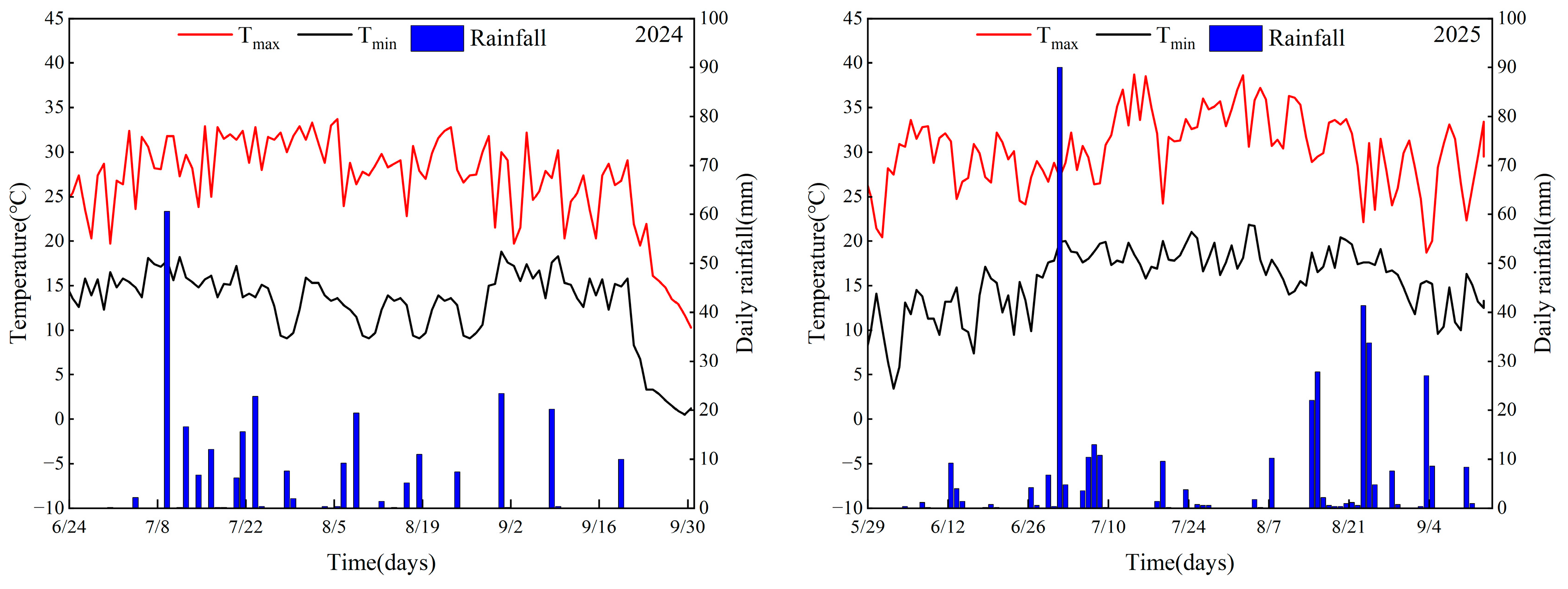
This experiment was carried out in Nanchi Village, Xindian Town, Qinxian County, Changzhi City, Shanxi Province (112°44′ E, 36°36′ N), from June to October 2024 and from May to September 2025, with an altitude of 916 m. The test area is a warm temperate continental monsoon climate. It is dry and windy in spring, hot and rainy in summer, cold and less snowy in winter, and the temperature difference between day and night in autumn is large. The annual average temperature is 9.1 °C, the annual average rainfall is 557.5 mm, the average relative humidity is 62.8%, the annual average wind speed is 1.1 m/s, the number of annual sunshine hours is 2311.5 h, the annual frost-free period is 168 d, and the groundwater level in the test area is about 1 m from the surface. Rainfall and daily temperatures during the trial period are shown in Figure 1.
In this experiment, soil samples were collected from different depths of the experimental site after the implementation of the pond excavation and field elevation project. The average field capacity and bulk density of the 0–90 cm soil layer were 0.28 cm3/cm3 and 1.68 g/cm3, respectively. The soil texture of the experimental area was classified as silty clay loam. The basic physical and chemical properties of the soil are presented in Table 1.

2.2. Experimental Design

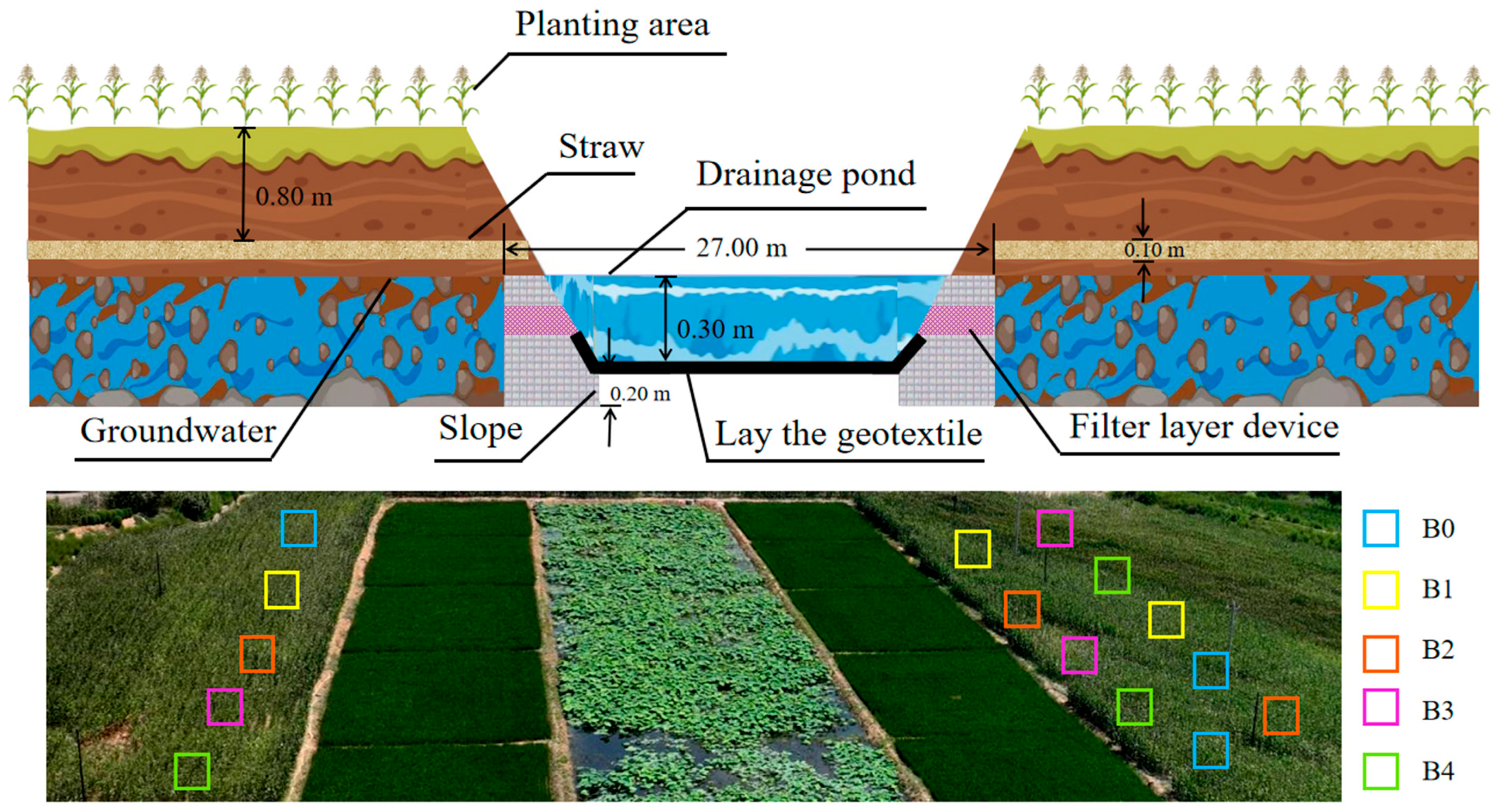
In this study, the pond excavation and field elevation engineering treatment was implemented in May 2024. The surface soil of 30 cm deep in the experimental field was stripped, and the pond was dug in the middle of the experimental field until the groundwater level was below. The pond was built for drainage to reduce the groundwater level, and aquatic plants or rice could be planted at the same time. The soil produced by the pond excavation is filled on the side of the crop planting area, raising the field elevation of the crop planting area and increasing the groundwater depth to meet the groundwater level requirements for crop planting. At the same time, a corn straw layer with a thickness of 10 cm was laid 80 cm below the surface of the dry farming area before the excavation soil was backfilled to prevent the rise of the groundwater level and cold immersion. Figure 2 is a schematic diagram of the measures for opening ponds and building fields.
In this study, a rectangular plot measuring 34 m in length and 20 m in width was selected within the crop planting area after pond excavation and field elevation. Before the experiment, biochar was surface-applied and uniformly incorporated into the 0–30 cm soil layer using a rotary tiller (1GQN-125, Dongfeng Agricultural Machinery Co., Ltd., Changzhou, China). The biochar used in the experiment was purchased from Liaoning Jinhefu Agricultural Development Co., Ltd., Anshan, China. It was produced from corn straw through pyrolysis at 400–500 °C in a tempering furnace, with a particle size of less than 2 mm. The organic matter content of the biochar was 925.70 g/kg, which was 124.6 times higher than the average soil organic matter content at the experimental site (Table 1). Biochar was applied once before planting in 2024 using uniform surface broadcasting followed by deep incorporation through rotary tillage at a depth of 25–30 cm during land preparation. Five treatments with different biochar application rates were established in this experiment, and each treatment included three replicates. Each replicate consisted of an independent plot, resulting in a total of 15 square plots with a side length of 6 m. The area of each plot was 36 m2, and a 1 m wide buffer zone was maintained between adjacent plots. The specific treatment design is presented in Table 2. The field experimental layout was consistent in 2024 and 2025, and the experimental design, plot arrangement, and treatment settings are shown in Figure 2.
The maize planting density was 3175 plants/mu in 2024 and 4630 plants/mu in 2025. The fertilizer application rates in the experimental area were 50 kg/mu of ferrous sulfate, 450 kg/mu of organic fertilizer, and 40 kg/mu of compound fertilizer, the main nutrient composition of which was N-P2O5-K2O, containing 26% nitrogen, 13% phosphorus, and 6% potassium. No irrigation was applied after maize emergence. The maize variety used in 2024 was ‘Bingdan 56’, whereas ‘Dongyufeng 338’ was planted in 2025. Both were semi-dent hybrid maize varieties characterized by compact plant architecture, tolerance to high-density planting, good grain quality, high and stable yield potential, and strong environmental adaptability, making them suitable for dense planting and field management in the Loess Plateau and northern dryland regions.

2.3. Indicators and Methods of Determination

(1)
Soil water content: A moisture access tube was installed at the center of each plot, and soil moisture in the 0–90 cm soil layer was measured using a soil moisture monitoring system (TRIME-PICO IPH) (IMKO Micromodultechnik GmbH, Ettlingen, Germany). The device was based on the time domain reflectometry (TDR) principle and was used for real-time monitoring of volumetric soil water content. Measurements were conducted regularly, once per week. During the experiment, the conventional oven-drying method was simultaneously used for calibration and correction to ensure the accuracy and reliability of the soil moisture data.
(2)
Plant height and stem diameter: After maize entered the jointing stage, three representative plants were selected in each plot to mark, and the plant height of maize was measured with a tape measure based on the ground. The vernier caliper was used to measure the diameter of the two vertical directions of the corn stem about 2 cm above the outer root of the corn, and the average value was the corn stem diameter.
(3)
Leaf area index: After entering the jointing stage of maize, three representative plants were selected in each plot every week for measurement. The length (L) and maximum width (W) of all leaves of the plant were measured using a tape measure. The calculation formula of leaf area index (LAI) is as follows:
L A I = D × i = 1 n ( L i × W i × 0.75 ) 10000
In the formula, D is the actual density after emergence (plants·hm−2); L is the leaf length (m); W is the maximum width of the blade (m); n is the number of leaves of the plant; 0.75 is the correction coefficient.
(4)
Root morphology: After maize entered the jointing stage, three representative plants were randomly selected from each experimental plot at each growth stage. Root samples were collected from the 0–100 cm soil layer at a distance of 15 cm from the maize stem base using a root auger (Soil Core Sampler 50, Zhejiang Top Instrument Co., Ltd., Hangzhou, China) with a diameter of 5 cm. The root-containing soil samples were placed on a sieve and rinsed with running water until the roots were completely exposed. Fine roots with diameters ≤ 2 mm were manually separated using tweezers [24], placed in sealed bags, and transported to the laboratory. Root length, root surface area, root volume, and average root diameter were determined using the WinRHIZO root analysis system (Regent Instruments Inc., Quebec, QC, Canada). Root length density, root surface area density, and root volume density were subsequently calculated by dividing the corresponding root parameters by the soil volume occupied by the roots.
(5)
Determination of maize yield: At maize maturity, all ears from the middle two rows of each plot were harvested, and fresh ear weight was measured after removing the bracts. Thirty ears were randomly selected to determine yield components, including the number of rows per ear, barren tip length, kernels per row, and fresh 100-kernel weight. The number of rows per ear was determined by directly counting the kernel rows at the middle portion of each ear. For kernels per row, three complete kernel rows were randomly selected from each ear, and the average value was calculated after counting. The number of kernels per ear was calculated as the product of the number of rows per ear and kernels per row. Barren tip length was defined as the unfilled portion at the top of the ear and was measured using a ruler with an accuracy of 0.1 cm. For determination of 100-kernel weight, 100 intact kernels were randomly selected from the middle portion of each ear after thorough mixing. The fresh weight was measured and converted to the standard moisture content of 14%, and the average value of three replicates was used for analysis. Grain yield was determined based on the total harvested ears from each plot after threshing and air drying, converted to a standard moisture content of 14%, and expressed as yield per unit area (kg/ha).

2.4. Statistical Analysis of Data

In this study, Microsoft Excel 2021 (Microsoft Corporation, Redmond, WA, USA) was used for data processing, Origin 2024 (OriginLab Corporation, Northampton, MA, USA) was used for figure preparation, and SPSS 26 (IBM Corp., Armonk, NY, USA) statistical software was used for significance testing and analysis of variance (ANOVA) of yield-related indicators. Duncan’s multiple range test was employed for multiple comparisons at the 0.05 significance level (p < 0.05), and Pearson correlation analysis was conducted to evaluate the relationships among variables.

3. Results and Analysis

3.1. Effects of Improvement Measures on Soil Water Distribution Characteristics

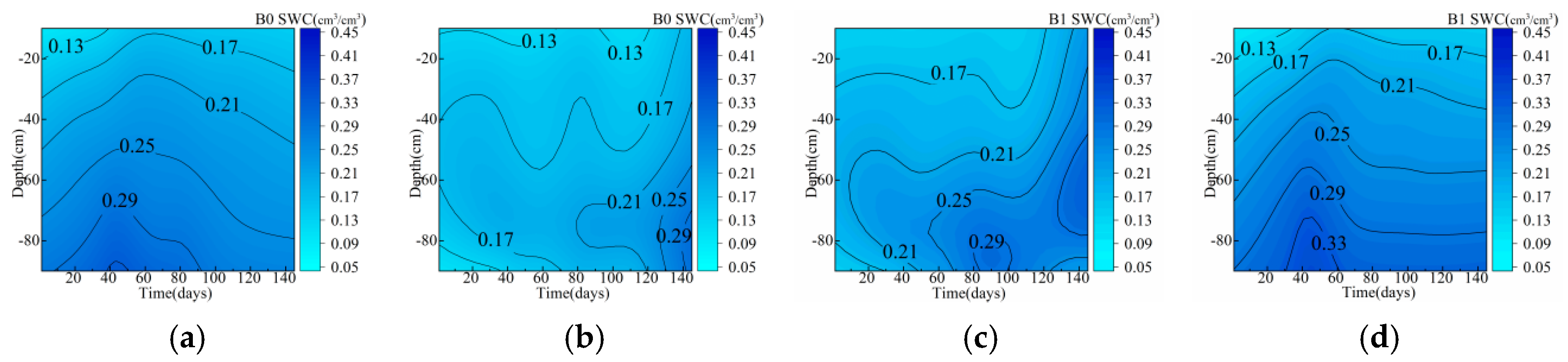
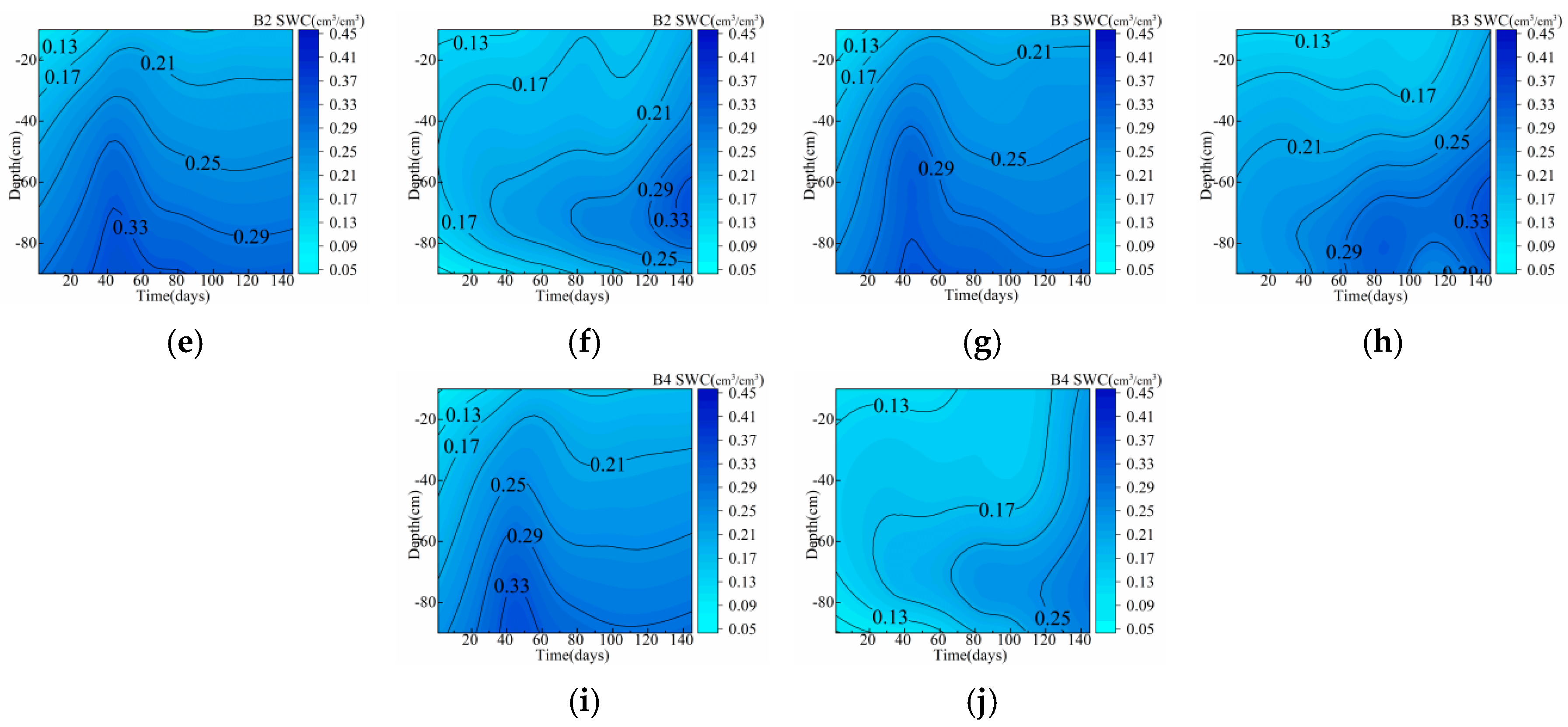
It can be seen from Figure 3 that the average soil moisture content of 0–90 cm soil layer under different biochar application rates in 2024 increased first and then decreased with the advancement of the maize growth period, and it reached the highest at maize heading stage, which was 1.58%, 7.42% and 9.41% higher than that at jointing stage, filling stage and maturity stage, respectively. Among them, the B3 treatment reached the highest and reached 36.14 cm3·cm−3, which was 6.18%, 1.10%, 0.02% and 6.28% higher than the B0 treatment, B1 treatment, B2 treatment and B4 treatment, respectively. At the heading stage of maize, the soil moisture content increased–decreased–increased with the increase in soil depth under different biochar application rates. The soil moisture content of the 30–90 cm soil layer at heading stage of the B3 treatment was 33.83% and 30.00% higher than that of 0–20 cm and 20–30 cm, respectively. In 2025, the soil moisture content of each treatment in 0–90 cm affected by climate decreased first and then increased with the advancement of the growth period. The average soil moisture content in the 0–90 cm soil layer affected by rainfall at the maturity stage of each treatment was 46.23%, 31.99% and 42.09% higher than that at the jointing stage, heading stage and filling stage, respectively. Apart from the ripening stage, the moisture content during the heading stage is the highest among the other three growth stages. Among them, the average soil moisture content of the 0–90 cm soil layer in the B3 treatment at the heading stage was 27.72%, 5.35%, 7.78% and 26.48% higher than that in the B0 treatment, B1 treatment, B2 treatment and B4 treatment, respectively. Compared with 0–20 cm and 20–30 cm, the soil moisture content of the 30–90 cm soil layer in the B3 treatment at the heading stage increased by 34.87% and 28.60%, respectively. With the increase in treatment years, the average soil moisture content of the 0–90 cm soil layer in the B3 treatment in 2025 decreased by 14.06% compared with that in 2024.

3.2. Effects of Improvement Measures on Root Development of Maize

3.2.1. Effects of Improvement Measures on Root Length Density of Maize

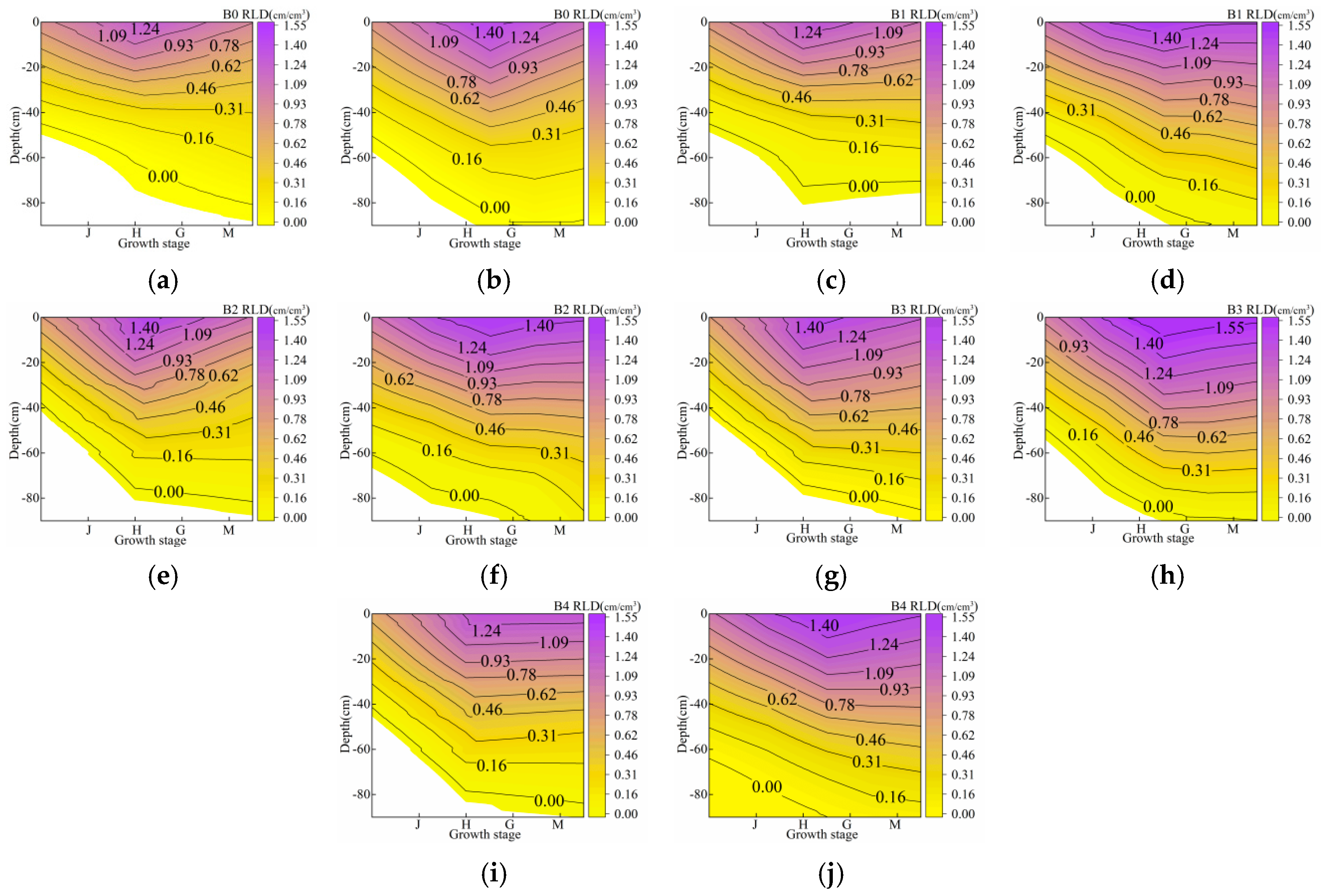
The application of biochar on the basis of pond construction in cold-soaked fields can effectively increase the root length density of maize (Figure 4). At the jointing stage of maize, the root length density of the B3 and B4 treatments in 2024 was 17.05% and 25.35% higher than that of the B0 treatment, respectively. At the heading stage of maize, the roots of maize grew rapidly. Compared with the B0 treatment, the root length density of the B1, B2, B3 and B4 treatments increased by 11.60%, 57.65%, 113.27% and 36.89%, respectively, among which the B2 and B3 treatments had the best effect. During the filling stage of maize, the root length density of maize decreased, but the root length density of the B1, B2, B3 and B4 treatments increased by 32.75%, 15.29%, 122.92% and 54.62%, respectively, compared with the B0 treatment. In 2025, the root length density of maize treated with B3 at the jointing stage, heading stage, filling stage and maturity stage increased by 13.33%, 17.48%, 20.59% and 80.13%, respectively, compared with B0. Among them, the root length density of maize at maturity stage B3 increased by 23.55% compared with that in 2024.
The application of biochar on the basis of pond construction in cold-soaked fields mainly increased the root length density of maize in the 0–40 cm soil layer. At the jointing stage of maize, biochar had the most obvious effect on the root length density of maize in the 20–40 cm soil layer. Compared with the B0 treatment, the B2, B3 and B4 treatments increased by 75.00%, 262.50% and 237.50%, respectively. At heading stage, in the 0–20 cm soil layer, the B1, B2, B3 and B4 treatments increased by 29.74%, 42.58%, 78.06% and 17.42%, respectively, compared with the B0 treatment, and they increased by 98.62%, 347.82%, 634.78% and 223.19%, respectively in the 20–40 cm soil layer. The distribution of root length density of maize at the filling stage and mature stage was basically the same as that at the jointing stage and filling stage. In 2025, the root length density of maize in the 0–40 cm soil layer of the B3 treatment was 27.05–81.87% higher than that of the B0 treatment in each growth period and 27.79% higher than that in 2024.

3.2.2. Effects of Improvement Measures on Root Surface Area Density of Maize

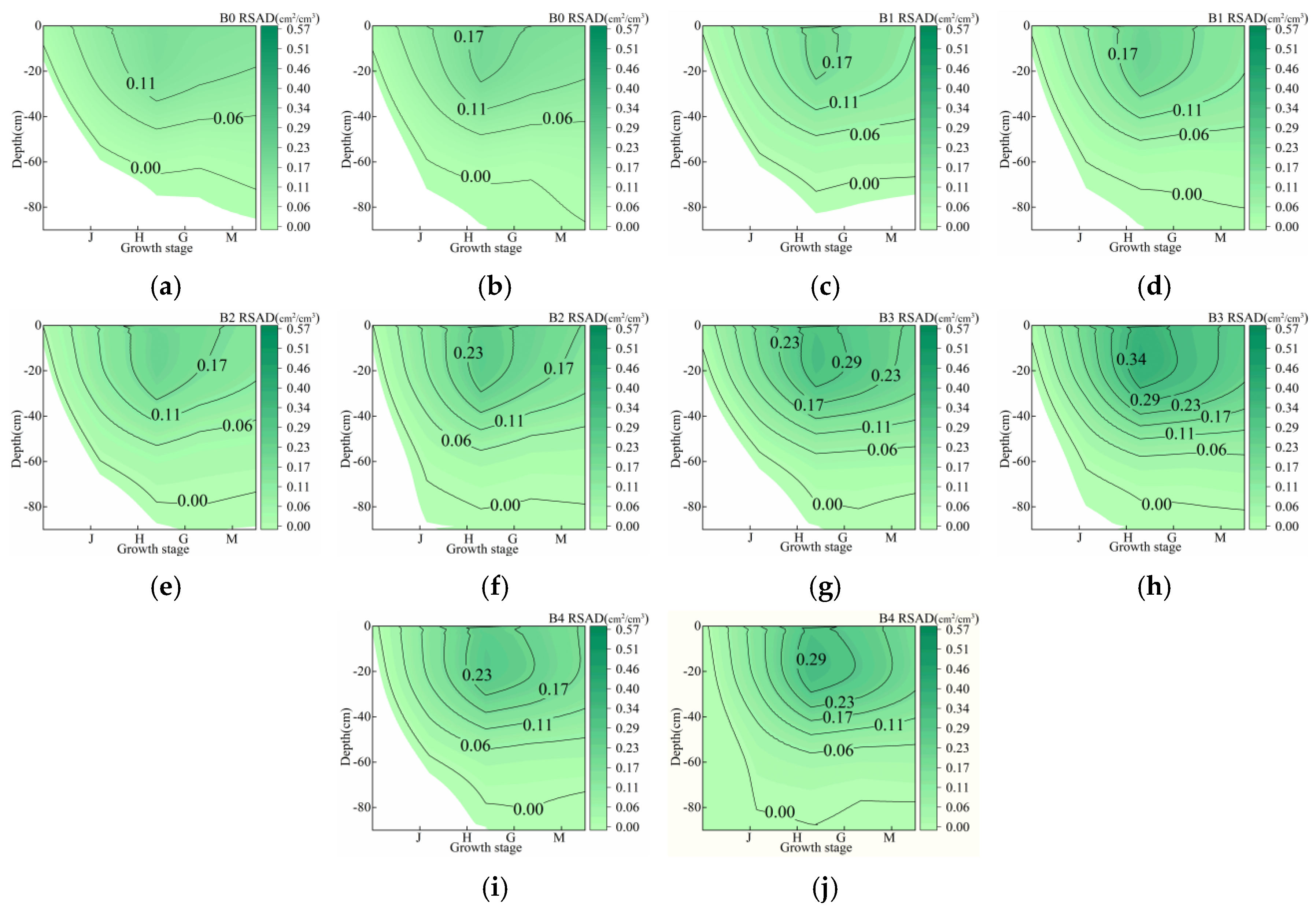
It can be seen from Figure 5 that the application of biochar on the basis of pond construction in cold waterlogged fields can significantly increase the surface area density of maize roots for two consecutive years. At the jointing stage of 2024, the root surface area density of maize was small, and the overall level of each treatment was between 0.12 cm2·cm−3 and 0.22 cm2·cm−3. Among them, the root surface area density of the B2, B3 and B4 treatments increased by 47.69%, 64.51% and 85.48%, respectively, compared with the B0 treatment. At the heading stage, the root surface area density of maize increased significantly compared with that at the jointing stage. The root surface area density of the B2, B3 and B4 treatments reached 0.36 cm2·cm−3, 0.57 cm2·cm−3 and 0.47 cm2·cm−3, respectively, which was 33.24%, 112.36% and 74.09% higher than that of the control treatment. During the filling stage, the root surface area density of each treatment decreased, but the B3 and B4 treatments were still significantly higher than the control treatment. Among them, the B3 treatment was the best, reaching 0.43 cm2·cm−3, which was 90.73% higher than the B0 treatment, followed by the B4 treatment, which was 61.49% higher than the B0 treatment. At the maturity stage of maize, the root surface area density of each treatment tended to be stable, slightly lower than that at the filling stage, but not obvious. In 2025, the root surface area density of maize in the 0–90 cm soil layer at the jointing stage, heading stage, filling stage and maturity stage of the B3 treatment increased by 48.09%, 44.86%, 58.79% and 55.41%, respectively, compared with that in 2024.

3.2.3. Effects of Improvement Measures on Root Volume Density of Maize

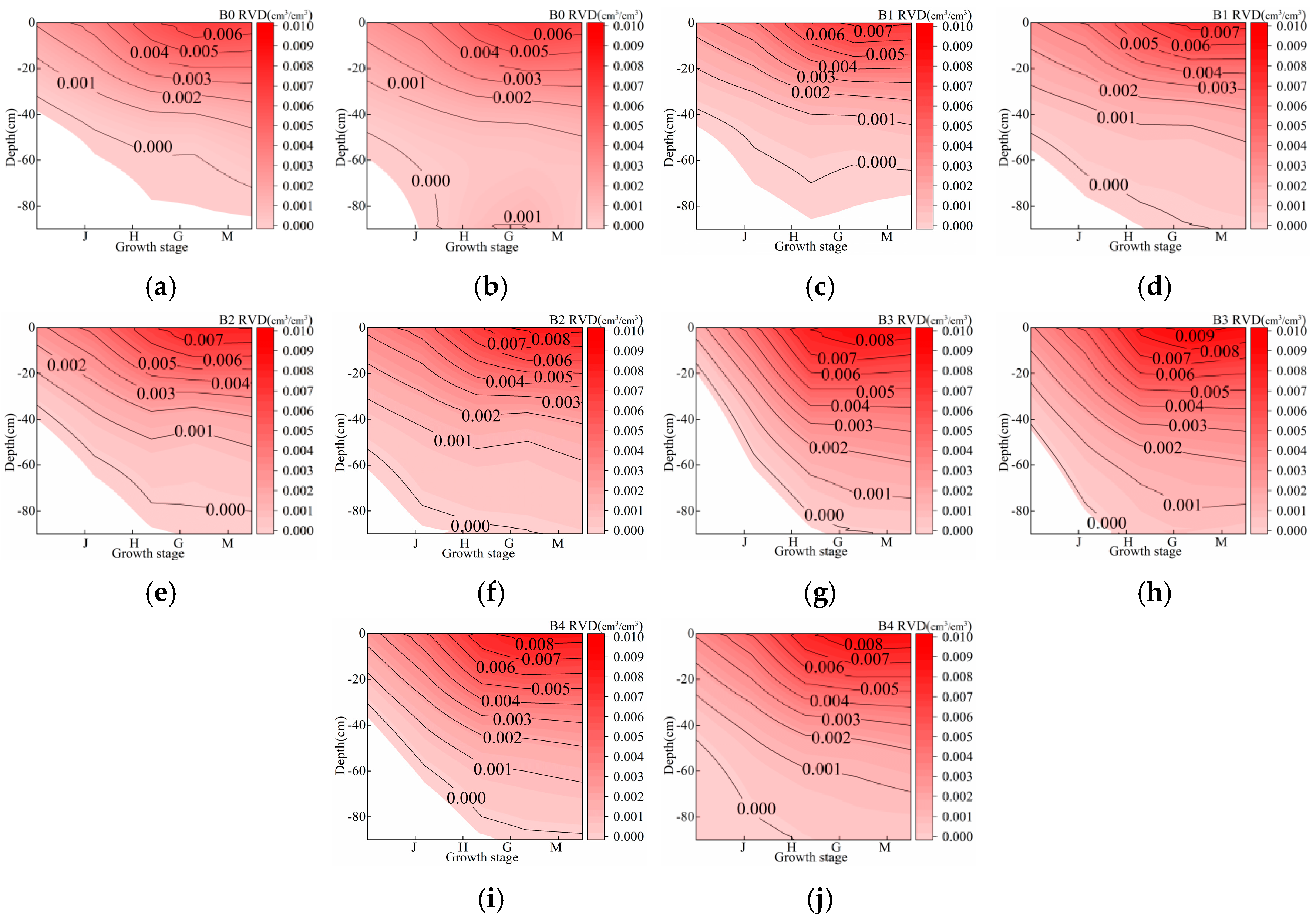
It can be seen from Figure 6 that the application of biochar on the basis of pond construction in cold-soaked fields significantly affected the dynamic change of maize root volume density. At the jointing stage, the volume density of maize roots treated with biochar was higher than that of the control treatment. Among them, the B2, B3 and B4 treatments increased by 8.15%, 81.56%, 97.25% and 149.14%, respectively, compared with the B0 treatment. At the heading stage, maize grew rapidly, and the root volume density of each treatment increased rapidly. The B3 treatment showed the best performance, and the root volume density reached 0.0227 cm3·cm−3, which was 118.15% higher than the B0 treatment, followed by the B4 treatment, which was 60.53% higher than the B0 treatment. At the filling stage and mature stage, the root volume density of each treatment was basically stable. The root volume density of the B3 and B4 treatments decreased at the mature stage, but it was still significantly higher than that of the B0 treatment. In 2025, the root volume density of maize in the 0–90 cm soil layer at the jointing stage, heading stage, filling stage and maturity stage of the B3 treatment increased by 35.86%, 85.52%, 55.95% and 82.90%, respectively, compared with that in 2024.
For two consecutive years, the application of biochar on the basis of pond construction in cold-soaked fields mainly increased the root volume density of maize in the 0–20 cm soil layer, so that the root volume density of maize increased first and then decreased with the increase in soil depth. In 2024, the root volume density of maize in the 0–20 cm soil layer at the jointing stage, heading stage, filling stage and maturity stage of the B3 treatment increased by 93.16%, 54.56%, 80.57% and 51.25%, respectively, compared with that in the 20–50 cm soil layer. Moreover, due to the increase in soil depth, there was no significant change in the volume density of maize roots in the 50–90 cm soil layer. In 2025, the root volume density of maize in the 0–20 cm soil layer at the jointing stage, heading stage, filling stage and maturity stage of the B3 treatment increased by 40.81%, 3.41%, 4.84% and 4.64%, respectively, compared with that in 2024.

3.2.4. Effect of Improvement Measures on Average Diameter of Maize Fine Root

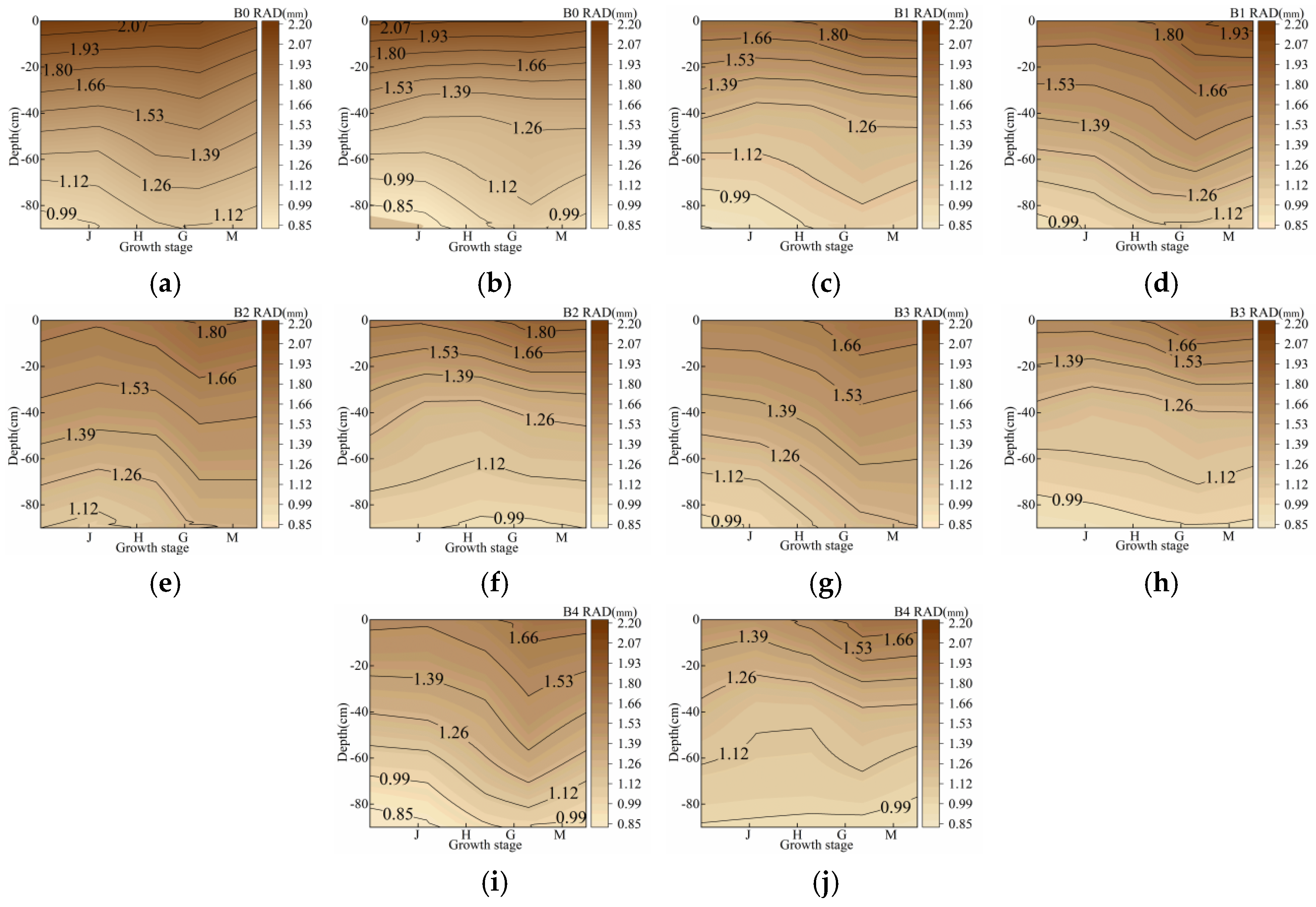
As shown in Figure 7, for two consecutive years, the application of biochar on the basis of pond construction in cold-soaked fields can effectively promote the growth of fine roots of maize. At jointing stage, with the increase in the biochar application rate, the average diameter of fine roots of maize decreased gradually. The effect of the B4 treatment (1.33 mm) was the most obvious, which was 13.17% lower than the B0 treatment, followed by the B3 treatment (1.41 mm), which was 8.20% lower than the B0 treatment. At the heading stage, treatment with a high biochar application rate could still maintain a good effect on reducing the average diameter of fine roots of maize. The average diameter of fine roots of the B2, B3 and B4 treatments was 11.96%, 12.37% and 13.27% lower than that of the B0 treatment, respectively. During the filling stage, the B2, B3 and B4 treatments decreased by 3.33%, 8.22% and 9.52%, respectively, compared with the B0 treatment. At the maturity stage, the average diameter of maize fine roots tended to be stable. The average diameter of fine roots in the B4 treatment decreased by 6.73% compared with the B0 treatment, followed by the B3 treatment, which decreased by 4.16%. In 2025, the average fine root diameter of maize at the jointing stage, heading stage, filling stage and maturity stage of the B4 treatment decreased by 14.39%, 12.31%, 9.69% and 15.73%, respectively, compared with 2024.
For two consecutive years, biochar was applied on the basis of ponding and field construction in cold-soaked fields, so that the average diameter of fine roots of maize gradually decreased with the increase in soil depth. During the whole growth period of maize, the average diameter of fine roots of maize in each treatment at 40 cm began to decrease rapidly. In 2024, the average diameter of fine roots of maize in 40–90 cm of the B4 treatment decreased by 16.37% compared with 0–40 cm. In 2025, the average diameter of fine roots of 40–90 cm maize treated with B4 decreased by 10.72% compared with that in 2024.

3.3. Effects of Improvement Measures on Maize Growth and Yield

3.3.1. Effects of Improvement Measures on Maize LAI

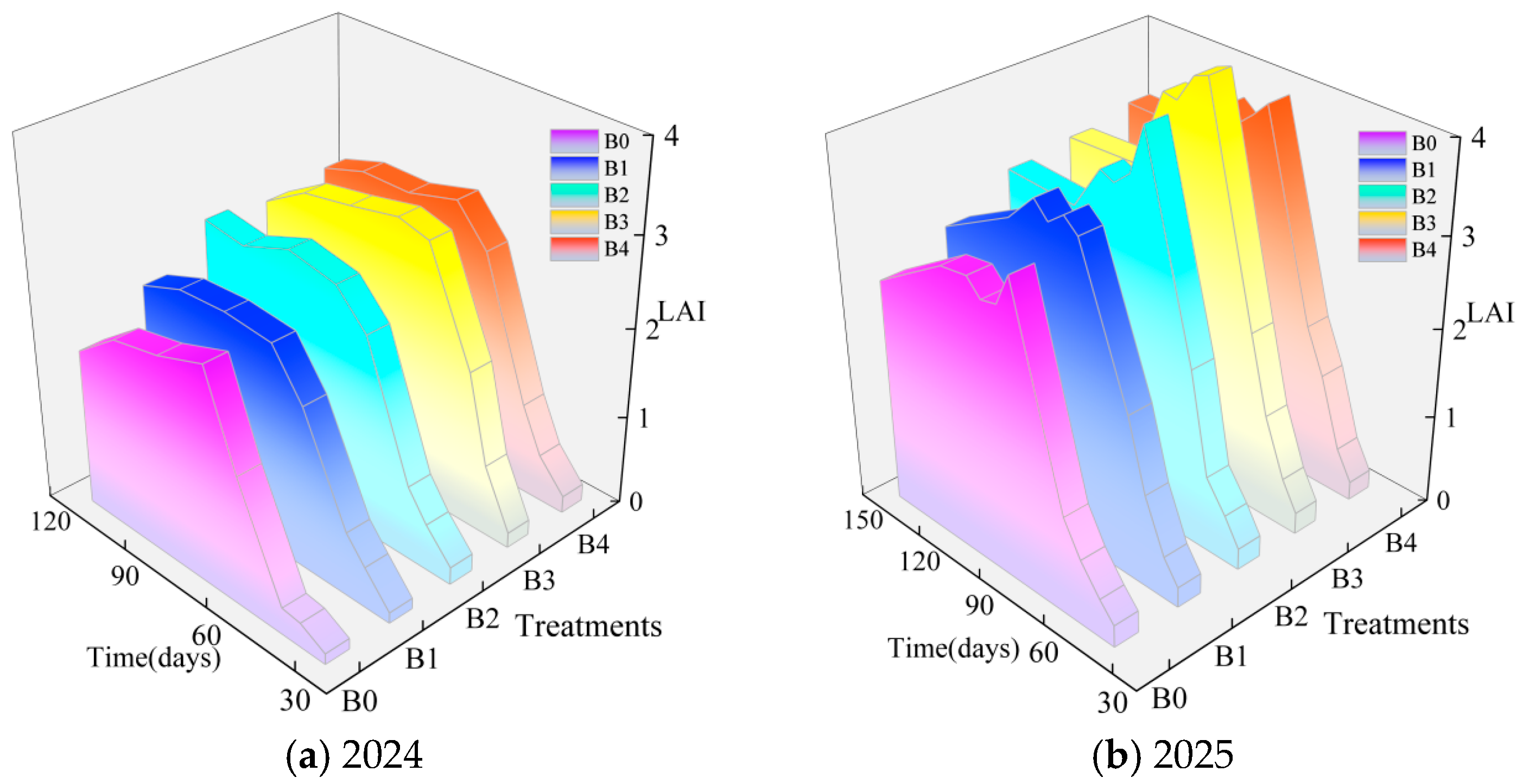
It can be seen from Figure 8 that the LAI of maize in each treatment showed a trend of increasing rapidly and then decreasing slowly with the growth period in 2024, and it reached the peak at the end of heading to the early stage of filling. From the jointing stage to heading stage, maize entered the stage of rapid growth. The growth rate of the leaf area index of maize treated with B1, B2, B3 and B4 increased by 1.89%, 8.49%, 19.81% and 16.04%, respectively, compared with the control treatment. Among them, the maximum leaf area index of B3-treated maize in this period was 22.49% higher than that of the B0 treatment. At the late stage of maize growth, the leaf area index began to decline slowly, among which the B3 treatment was the most obvious, and the LAI was maintained above 2.5, which was significantly higher than that of the B0 treatment. The change trend of maize LAI in 2025 was basically the same as that in 2024. The LAI of maize in the jointing stage was 56.94–81.15% higher than that of the B0 treatment, and the LAI of maize in the heading stage was 19.41–47.23% higher than that of the B0 treatment. Among them, the B3 treatment had the best effect, and the B3 treatment at the heading stage increased by 47.23% compared with the B0 treatment. With the increase in treatment years, the average LAI of maize in the whole growth period of B3 treatment in 2025 was 30.70% higher than that in 2024.

3.3.2. Effects of Improvement Measures on Plant Height and Stem Diameter of Maize

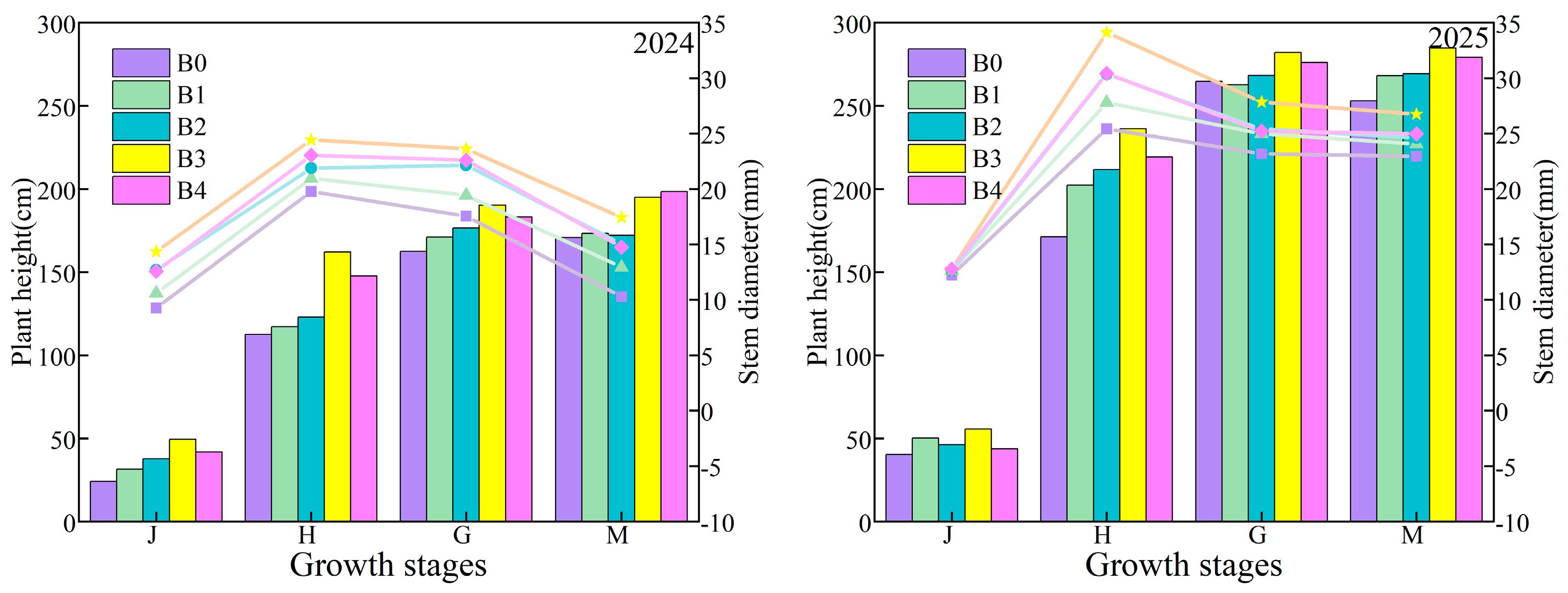
It can be seen from Figure 9 that the application of biochar on the basis of pond construction in cold-soaked fields effectively accelerated the growth and development of maize plant height and stem diameter. At the jointing stage of maize in 2024, the plant height of maize in each treatment increased by 29.85–104.21% compared with the B0 treatment, and the effect of the B3 treatment was the most significant. At the heading stage of maize, the plant height of maize in each treatment increased by 4.07–43.96% compared with the B0 treatment. At the filling stage of maize, the growth rate of maize plant height decreased, but the plant height of the B3 treatment increased by 17.21% compared with the B0 treatment. At the maturity stage of maize, the final plant height of the B3 treatment reached 195 cm, which was significantly higher than that of other treatments. In addition, each treatment also effectively improved the growth rate of maize plant height. In the jointing stage of maize plant height growth, the daily average growth rate of the B3 treatment was 5.73 cm·d−1, which was 32.94% higher than that of the B0 treatment. The growth law of maize stem diameter is similar to that of plant height, and there are also stage characteristics. From the jointing stage to heading stage, the stem of maize increased rapidly, and the thickening rate of the B3 treatment was 0.57 mm·d−1. At the heading stage of maize, the stem diameter of the B3 treatment was 23.56% higher than that of the B0 treatment. The variation trend of plant height and stem diameter of each treatment in 2025 was basically the same as that in 2024. Among them, the plant height and stem diameter of the B3 treatment reached a peak in 2025, which increased by 23.79% and 18.8% on average compared with the B0 treatment. In addition, the average plant height and average stem diameter of the B3 treatment in 2025 were 43.89% and 27.13% higher than those in 2024, respectively.

3.3.3. Effects of Improvement Measures on Maize Yield

As shown in Table 3, biochar application increased the number of rows per ear and kernels per row of maize in 2024. The number of kernels per ear under the B3 treatment was significantly higher than that under the B0 treatment, with an increase of 8.64% (p < 0.05). In addition, the 100-kernel weight (adjusted to 14% moisture content) under the B3 treatment significantly increased to 49.71 g, representing increases of 17.63%, 14.65%, and 11.59% compared with the B0, B2, and B4 treatments, respectively. Similarly, maize yield under the B3 treatment significantly increased to 11,761.50 kg/ha, which was 27.82% higher than that under the B0 treatment, while the yields under the B2 and B4 treatments increased by 12.47% and 18.73%, respectively.
In 2025, the barren tip length under the B3 treatment was significantly reduced by 41.8% compared with that under the B0 treatment (p < 0.05), while kernels per row increased by 6.34%. At the same time, the number of kernels per ear under the B3 treatment was significantly higher than that under the B0 treatment, with an increase of 9.63%, and the 100-kernel weight was significantly increased by 3.04%. Maize yield initially increased and then stabilized with increasing biochar application rate, with the highest yield observed under the B3 treatment, reaching 13,991.10 kg/ha, which was 15.73% higher than that under the B0 treatment. Furthermore, maize yield under the B3 treatment in 2025 increased by 18.96% compared with that in 2024.

3.4. Correlation Analysis of Biochar Application Rate and Each Index

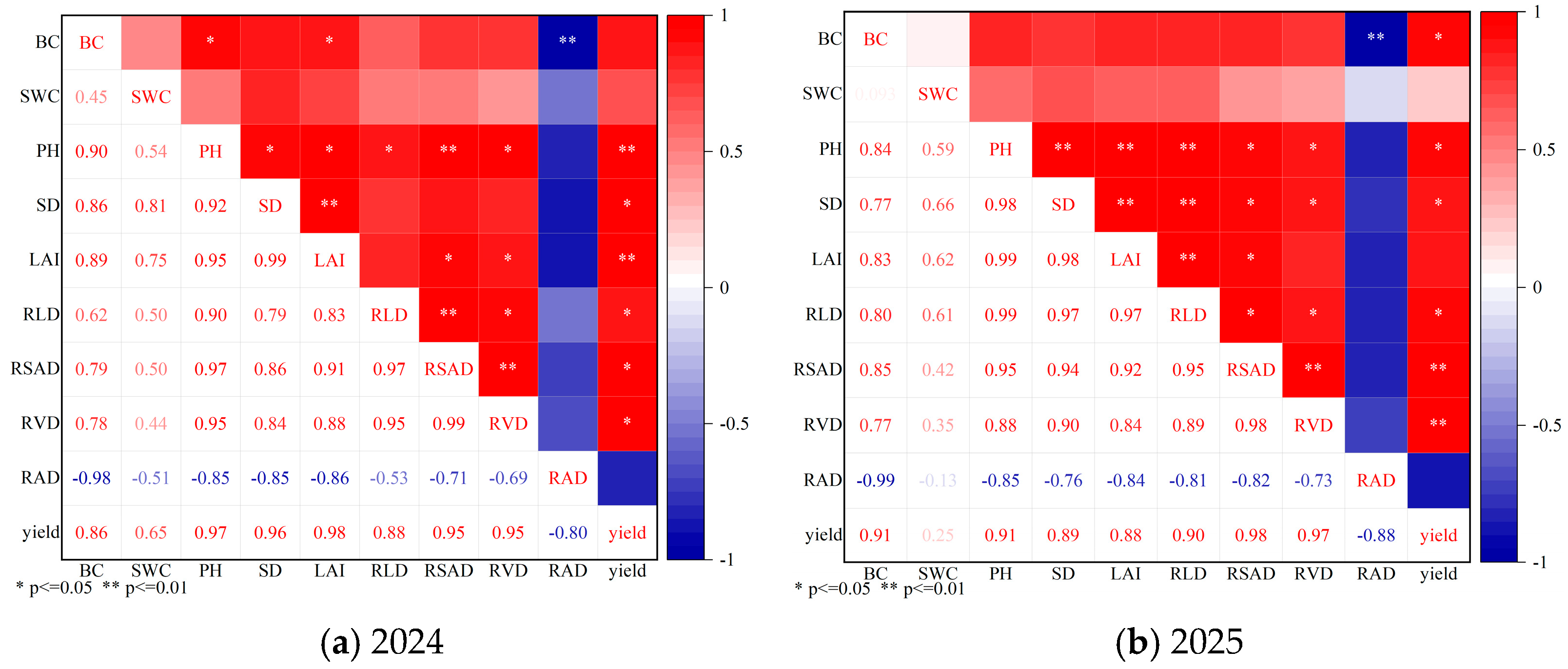
As shown in Figure 10, the biochar application rate (BC) exhibited strong correlations with most maize growth indices and yield, reaching significant levels (p < 0.05). In particular, BC showed significant positive correlations with plant height (PH) and leaf area index (LAI), with correlation coefficients ranging from 0.84 to 0.90 and 0.83 to 0.86, respectively. Meanwhile, BC was also significantly positively correlated with maize yield (r = 0.86–0.91), indicating that improvements in root and canopy growth effectively promoted yield enhancement. Among the root traits, root length density (RLD), root surface area density (RSAD), and root volume density (RVD) were highly significantly positively correlated with each other (r > 0.89) and also showed strong correlations with LAI, PH, and stem diameter (SD), reflecting the synergistic relationship between root development and canopy morphology. In contrast, BC was significantly negatively correlated with the average diameter of fine roots (RAD), with correlation coefficients ranging from −0.99 to −0.98. Overall, biochar application improved the overall absorption efficiency of maize plants by enhancing root structure, increasing root surface area and volume, and optimizing canopy development, thereby ultimately promoting maize yield improvement.

4. Discussion

Under the engineering improvement mode of pond excavation and field elevation in cold-soaked fields, this study systematically evaluated the effects of biochar application on soil water characteristics, root architecture, and maize growth in improved cold-soaked fields. The results showed that the soil moisture content under the B3 treatment significantly increased throughout the entire growth period, whereas excessive biochar application under the B4 treatment resulted in a significant decrease in soil moisture content, indicating that an appropriate biochar application range is critical for improving soil water conditions. Similarly, Manpreet et al. [25] also reported that biochar application within an appropriate range could increase soil moisture content, whereas excessive application weakened its water retention effect. The underlying reason may be that biochar enhances soil water retention capacity through its porous structure; however, excessive application may alter the soil pore structure and reduce the effective capacity of soil to retain water [26], thereby decreasing soil moisture content. Due to its loose and porous characteristics, strong adsorption capacity, and excellent water-holding performance, biochar can effectively improve soil structure and increase soil moisture content in cold-soaked fields [27]. Pandit et al. [28] reported that biochar can improve soil water-holding capacity, enhance soil aeration, reduce soil mechanical resistance, and provide favorable conditions for root penetration, thereby promoting root elongation and distribution through its porous structure and abundant surface functional groups. In addition, biochar can regulate soil nutrient availability and reduce nutrient leaching through adsorption and ion exchange processes [29]. Muhammad et al. [30] further pointed out that biochar can alleviate soil anaerobic stress, promote root respiration, and maintain normal physiological metabolism in plants, thereby improving crop root architecture and growth. In the present study, compared with the B0 treatment, root length density, root surface area density, and root volume density under the B3 treatment increased by 30.48–38.56%, 66.77–109.31%, and 62.42–65.35%, respectively, over the two experimental years. Moreover, biochar application can increase soil organic carbon content, improve soil aggregate stability [31], and reduce soil bulk density and mechanical resistance [32], thereby creating a more favorable environment for root growth and promoting root elongation [33]. However, maize root traits did not continuously improve with increasing biochar application rates. In this study, the root length density under the B4 treatment decreased by 10.08–15.02% compared with that under the B3 treatment over the two experimental years. The underlying reason may be that excessive biochar application causes an imbalance in the soil carbon-to-nitrogen ratio and reduces mineral nitrogen availability, thereby inhibiting root growth [34]. Meanwhile, excessive biochar application may also alter soil pore structure, reduce soil structural stability and water-holding capacity, accelerate soil water evaporation, and consequently induce root water stress [35]. As a result, the average diameter of fine roots under the B4 treatment was the lowest, decreasing by 8.50–12.02% compared with that under the B0 treatment. Chen et al. [36] suggested that excessive biochar application can disrupt soil physicochemical balance, affect micronutrient availability and nutrient transformation, and consequently suppress the development of crop fine roots. The results of the present study are consistent with these reported trends. Overall, biochar promoted root development and further enhanced the foundation for aboveground growth by improving the soil water–air environment and rhizosphere conditions in cold-soaked fields.
Plant height and stem diameter are conventional indicators widely used to evaluate maize growth status. Meanwhile, the effects of biochar application can also be assessed based on the changes in these growth indicators during different growth stages. The results showed that, under the engineering mode of pond excavation and field elevation, biochar application significantly promoted maize shoot growth. Compared with the B0 treatment, maize plant height and stem diameter under the B3 treatment increased by 17.75–26.98% and 21.10–40.36%, respectively. In addition, biochar application also increased the maize leaf area index (LAI), which is closely associated with canopy photosynthetic capacity and yield formation [37]. In this study, the LAI of all treatments increased rapidly during the jointing and heading stages, and the biochar-treated plots exhibited significantly higher LAI values than the B0 treatment during these growth stages. At the heading stage, the LAI under the B3 treatment was 43.88–51.36% higher than that under the B0 treatment. The LAI of all treatments decreased significantly during the late growth stage, which may be associated with the natural senescence of maize leaves at later developmental stages [38]. However, the biochar treatments generally maintained relatively high LAI levels, indicating that biochar application may delay leaf senescence to some extent. Previous studies have shown that appropriate biochar application promotes increases in maize plant height and stem diameter, whereas excessive application weakens its positive effects [39]. Similarly, studies by Don [40] also demonstrated that biochar application can improve the agronomic traits of maize. The results of the present study are generally consistent with those reported in previous studies, indicating that appropriate biochar application can further promote maize growth by improving the soil environment. At the same time, the results of this study demonstrated that biochar exerted significant synergistic effects when combined with engineering measures. Engineering improvements such as pond excavation and field elevation substantially enhanced the drainage and tillage conditions of cold-soaked fields, transforming previously low-productivity or difficult-to-cultivate land into farmland with basic production capacity (B0 treatment), thereby providing essential site conditions for crop growth. On this basis, biochar, as an agronomic regulation measure, further enhanced the productivity and land-use efficiency of cold-soaked fields by improving soil water retention, structural stability, and the root growth environment. These findings indicate that a single measure is insufficient to overcome the multiple constraints of cold-soaked fields fundamentally, whereas the integrated coupling of engineering and agronomic measures can achieve more pronounced comprehensive effects through the coordinated regulation of water, nutrient, and air conditions in the soil.
In summary, under the engineering mode of pond excavation and field elevation, biochar application in cold-soaked fields was significantly positively correlated with maize growth and root morphological traits; however, an optimal application range was observed. Appropriate biochar application synergistically promoted crop growth and yield formation by optimizing the soil environment and root architecture [41,42]. From the perspectives of engineering improvement and agronomic regulation, this study elucidates the key mechanisms underlying the transformation of cold-soaked fields from low-efficiency utilization to high-efficiency production, and it provides a theoretical basis and practical approach for the sustainable utilization of constrained cultivated land. However, due to the complexity of field experimental conditions and the limited duration of the study, several aspects still require further investigation, and the regional adaptability and effectiveness of this approach under different cultivation conditions remain to be verified. Future studies should strengthen the monitoring of groundwater levels, soil redox potential, and the long-term decomposition processes of the straw interlayer and biochar in order to systematically evaluate their long-term effects on soil hydrological characteristics. Meanwhile, economic analyses considering input costs, land occupation, and long-term benefits are needed to evaluate the cost-effectiveness of different improvement measures. In addition, increasing the gradient of biochar application rates and conducting response curve fitting analyses would help to further determine the optimal biochar application rate from both agronomic and economic perspectives.

5. Conclusions

In this study, cold-soaked fields in northern China were selected to investigate the effects of different biochar application rates on soil water characteristics, maize growth, and root development under the engineering mode of pond excavation and field elevation over two consecutive years. The results showed that pond excavation and field elevation combined with biochar application effectively improved soil water conditions and promoted maize growth and root development. Among all treatments, the combined application of pond excavation and field elevation with 22.5 t/ha biochar (B3 treatment) achieved the best overall improvement effect. Over the two experimental years, soil moisture content under the B3 treatment increased by 11.49–24.89% compared with that under the B0 treatment. In the 0–40 cm soil layer, root length density, root surface area density, and root volume density under the B3 treatment increased by 30.48–38.56%, 66.77–109.31%, and 62.42–65.35%, respectively. Meanwhile, the B3 treatment significantly increased maize leaf area index, plant height, and stem diameter, delayed leaf senescence, optimized yield components such as kernels per ear and 100-kernel weight, and achieved the highest grain yield in both years, which was 27.82% and 15.73% higher than that of the B0 treatment, respectively. However, excessive biochar application reduced the improvement effect, as the soil moisture content and maize yield under the B4 treatment decreased by 6.59–19.72% and 2.33–7.11%, respectively, compared with those under the B3 treatment. In addition, biochar application rate was significantly positively correlated with maize canopy growth, root development, and yield formation (p < 0.05).

Author Contributions

Methodology, Y.W.; Software, Y.W.; Formal analysis, C.T. and C.Z.; Data curation, C.T., H.Y. and C.J.; Writing—original draft, C.T. and Y.W.; Writing—review and editing, L.Z. and J.M.; Supervision, J.M., C.T. and Y.W. contributed equally to this work. All authors have read and agreed to the published version of the manuscript.

Funding

This research was funded by “Shanxi Key Research and Development Program (Grant No. 202402140601008)” and “Shanxi Provincial Postgraduate Innovation Project (Grant No. 2025XS082)”.

Data Availability Statement

The raw data supporting the conclusions of this article are not publicly available due to project confidentiality and institutional data management policy.

Conflicts of Interest

Author Chenyan Tang was employed by the company Shanxi Landcare Land Planning, Design and Consulting Co., Ltd. The remaining authors declare that the research was conducted in the absence of any commercial or financial relationships that could be construed as a potential conflict of interest.

References

  1. Xiong, Y.S.; Xu, X.Y.; Zhang, Z.Y.; Wang, J.; Yuan, J.F.; Liu, G.R.; Xu, C.X.; Mao, C.Y. Influences of combining ridge and no-tillage on rice yield, soil temperature and aggregate distribution in cold waterlogged fields. Trans. Chin. Soc. Agric. Eng. 2014, 30, 157–164. [Google Scholar] [CrossRef]
  2. Xu, X.Y.; Zhang, M.M.; Xiong, Y.S.; Shaaban, M.; Yuan, J.F.; Hu, R.G. Comparison of N2O Emissions from Cold Waterlogged and Normal Paddy Fields. Front. Environ. Sci. 2021, 9, 660133. [Google Scholar] [CrossRef]
  3. Hansen, S.; Rivedal, S.; Øpstad, S.; Deelstra, J.; Børresen, T.; Torp, T.; Dörsch, P. Impact of drain spacing on subsurface drainage and greenhouse gas fluxes in a grassland on a Mollic gleysol in western Norway. Soil Tillage Res. 2026, 259, 107067. [Google Scholar] [CrossRef]
  4. Kaur, H.; Nelson, A.K. Subsurface drainage and nitrogen fertilizer management affect fertilizer fate in claypan soils. Sustainability 2024, 16, 6477. [Google Scholar] [CrossRef]
  5. Summerton, L.; Greener, M.; Patterson, D.; Brown, C.D. Effects of soil redistribution by tillage on subsequent transport of pesticide to subsurface drains. Pest Manag. Sci. 2022, 79, 616–626. [Google Scholar] [CrossRef]
  6. Qi, B.W.; Zheng, X.F.; Junejo, A.R.; Qin, D.D.; Hu, J.L.; Li, D.W.; Zhou, X.G.; Zhao, Q.Q.; Yang, S.J.; Liu, H.Q. Synergistic Water Management Enhances Rice–Rapeseed Rotation Yields in Waterlogged Areas: Field and Modeling Evidence. Irrig. Sci. 2026, 44, 78. [Google Scholar] [CrossRef]
  7. Wang, Q.J.; Bai, B.Q.; Liu, Y.P.; Wu, B.G.; Li, J.Y.; Zou, J.H. Research into the Mechanical Tillage Regulation Mechanisms of the Soil Structure in Black Soil Paddy Fields. Agriculture 2025, 15, 1145. [Google Scholar] [CrossRef]
  8. Wang, Y.; Zhu, G.B.; Song, L.Y.; Wang, S.Y.; Yin, C.Q. Manure fertilization alters the population of ammonia-oxidizing bacteria rather than ammonia-oxidizing archaea in a paddy soil. J. Basic Microbiol. 2014, 54, 190–197. [Google Scholar] [CrossRef] [PubMed]
  9. Susanti, Z.; Hikmah, Z.M.; Sastro, Y.; Sasmita, P.; Sembiring, H. The Combined Application of Organic and Inorganic Fertilizers to Improve Fertility of Degraded Soil and Sustainable Yield in Intensive Irrigated Rice Systems. IOP Conf. Ser. Earth Environ. Sci. 2023, 1165, 012026. [Google Scholar] [CrossRef]
  10. Laird, D.A.; Fleming, P.; Davis, D.D.; Horton, R.; Wang, B.Q.; Karlen, D.L. Impact of biochar amendments on the quality of a typical Midwestern agricultural soil. Geoderma 2010, 158, 443–449. [Google Scholar] [CrossRef]
  11. Wang, Y.Q.; Gao, M.; Chen, H.T.; Chen, Y.W.; Wang, L.; Wang, R. Organic Amendments promote saline-alkali soil desalinization and enhance maize growth. Front. Plant Sci. 2023, 14, 1177209. [Google Scholar] [CrossRef]
  12. Tian, Y.; Jiang, W.T.; Chen, G.L.; Wang, X.K.; Li, T.T. Gypsum and organic materials improved soil quality and crop production in saline-alkali on the Loess Plateau of China. Front. Environ. Sci. 2024, 12, 1434147. [Google Scholar] [CrossRef]
  13. Hu, M.; Li, Y.; Zhang, Y.; Qu, Z.Y. Comparative Effects of Amendment Practices on Soil Quality, Crop Productivity, and Ecosystem Services in Arid Saline–Alkali Farmland: A Three-Year Field Study. Agronomy 2026, 16, 283. [Google Scholar] [CrossRef]
  14. Jyothishree, K.L.; Prakash, S.S.; Suma, R.; Shekar, B.G.; Prakasha, H.C.; Muthuraju, R. Effect of Fortified Humic Acid on Total Uptake of Primary Nutrients (NPK) by Mangalore Cucumber and NPK Status in Postharvest Soil. Int. J. Plant Soil Sci. 2023, 35, 658–664. [Google Scholar] [CrossRef]
  15. Eissa, A.A.M.; Ghany, M.B.A.; Ebead, B.M.E.H.; Ahmed, A.I.M.A. Evaluating the Effect of Subsurface Drainage on Soil Properties and Maize Crop Production in Tina Plain Egypt. Open J. Soil Sci. 2025, 15, 388–407. [Google Scholar] [CrossRef]
  16. Zhang, J.P.; Jiangxu, Y.X.; Zhao, H.C.; Sun, H.F.; Zhang, J.N.; Wang, C.; Jiang, Z.; Li, H.Y.; Zhang, X.X.; Zhou, S. Ridge Tillage Cultivation Reduced Greenhouse Gas Emissions in Cold-Region Paddy Fields. Agriculture 2026, 16, 1049. [Google Scholar] [CrossRef]
  17. Ma, J.J.; Tang, C.Y.; Sun, X.H.; Zheng, L.J. Land Consolidation Planning Method for Remediation of Northern Cold-Waterlogged Farmland with Secondary Salinization. Chinese Patent CN117808230B, 16 May 2025. [Google Scholar]
  18. Li, X.F.; Zhang, L.J.; Ma, J.J. Biochar improves greenhouse tomato yield: Source–sink relations under deficit irrigation. Agronomy 2023, 13, 2336. [Google Scholar] [CrossRef]
  19. An, J.L.; Zheng, L.J.; Sun, R.F.; Li, X.F.; Ma, L.; Ma, J.J. Effects of corn stover biochar on soil bacterial and fungal biomarkers in greenhouse tomatoes under mulched drip irrigation. Horticulturae 2025, 11, 1143. [Google Scholar] [CrossRef]
  20. Uwingabire, S.; Nyberg, G.; Nduwamungu, J.; Chamshama, S.A.O. Synergistic Effect of Biochar and Livestock Manure on Soil Hydro-Physical Properties Under Field Conditions in Rwanda. Discov. Sustain. 2026, 7, 519. [Google Scholar] [CrossRef]
  21. Yu, C.X.; Chen, H.P.; Tang, B.; Liu, H.W.; Liu, X.L.; Zhang, H.B.; Wang, G.M. Biochar Integrated Dicyandiamide Modified Soil Aggregates and Optimized Nitrogen Supplying to Boosting the Soybean–Wheat Yield in Saline–Alkali Soil. Soil Tillage Res. 2026, 257, 106922. [Google Scholar] [CrossRef]
  22. Kocsis, T.; Kotroczó, Z.; Kardos, L.; Biró, B. Optimization of increasing biochar doses with soil–plant–microbial functioning and nutrient uptake of maize. Environ. Technol. Innov. 2020, 20, 101191. [Google Scholar] [CrossRef]
  23. Huang, M.Y.; Zhang, Z.Y.; Zhai, Y.M.; Lu, P.R.; Zhu, C.L. Effect of straw biochar on soil properties and wheat production under saline water irrigation. Agronomy 2019, 9, 457. [Google Scholar] [CrossRef]
  24. Wang, J.H.; Chen, Z.; Liang, Z.Y.; Yin, Y.L.; Huang, S.B.; Meng, Q.F.; Cui, Z.L.; Wang, P. Interactive Effects of Planting Density and Row Spacing on Maize Root Distribution and Yield. Agronomy 2025, 15, 2552. [Google Scholar] [CrossRef]
  25. Singh, M.; Singh, S.; Deb, S.; Ritchie, G. Root distribution, soil water depletion, and water productivity of sweet corn under deficit irrigation and biochar application. Agric. Water Manag. 2023, 279, 108192. [Google Scholar] [CrossRef]
  26. Fei, Y.H.; Liu, Z.P.; Yi, J.; She, D.L.; Qiu, W.W.; Jiang, L.; Liu, M.X.; Li, S.L.; Nie, H.J.; Li, Q.; et al. Biochar application enhances soil water storage in wet periods but intensifies drought conditions during dry periods in red soils. Soil Tillage Res. 2026, 256, 106902. [Google Scholar] [CrossRef]
  27. Dhakal, G.; Fujino, T.; Magar, S.T.; Araki, Y. Co-application of bokashi and biochar alleviates water stress, improves soil fertility and enhances wheat production under water-deficit conditions. Soil Syst. 2025, 9, 33. [Google Scholar] [CrossRef]
  28. Pandit, N.R.; Mulder, J.; Hale, S.E.; Martinsen, V.; Schmidt, H.P.; Cornelissen, G. Biochar improves maize growth by alleviation of nutrient stress in a moderately acidic low-input Nepalese soil. Sci. Total Environ. 2018, 625, 1380–1389. [Google Scholar] [CrossRef]
  29. Jia, C.B.; Bai, J.Y.; Luo, Z.; Tian, L.; Hou, Z. Biochar–Fertilizer Synergy Mitigates Replant Disorder by Modulating Soil Nutrients and the Rhizosphere Microbiome in Continuous-Cropping Strawberry. Plant Soil 2026, 1–19. [Google Scholar] [CrossRef]
  30. Razaq, M.; Salahuddin; Shen, H.L.; Sher, H.; Zhang, P. Influence of Biochar and Nitrogen on Fine Root Morphology, Physiology, and Chemistry of Acer mono. Sci. Rep. 2017, 7, 5367. [Google Scholar] [CrossRef]
  31. Wang, Z.; Chen, T.T.; Liu, S.J.; Huang, B.; Deng, H. Stevia residue and biochar reduce methane emissions from paddy soils by enhancing carbon stability and regulating methane-cycling microbes. Plant Soil 2026, 522, 331–347. [Google Scholar] [CrossRef]
  32. Liang, J.P.; Yang, J.; Li, N.; Yang, Q.L. Effects of biochar application and irrigation system on aggregate and soil respiration. Agric. Water Manag. 2026, 326, 110248. [Google Scholar] [CrossRef]
  33. Fišarová, L.; Berchová, K.; Lukáč, M.; Beesley, L.; Vosátka, M.; Hausenblas, M.; Trakal, L. Microgranular biochar improves soil fertility and mycorrhization in crop systems. Soil Use Manag. 2024, 40, e13068. [Google Scholar] [CrossRef]
  34. Zhou, L.F.; Tao, H.Z.; Yang, Q.L.; Feng, H.; Siddique, K.H.M.; Jin, T. Biochar particle size shapes soil water–oxygen conditions and delays senescence in sweet corn under mulched drip irrigation. Soil Tillage Res. 2026, 258, 107049. [Google Scholar] [CrossRef]
  35. Zhang, X.; Xue, C.C.; Liu, X.X.; Xue, L.H.; Xiong, Z.Q. Biochar and Nitrogen Synergistically Regulate Soil Carbon Mineralization by Enhancing Aggregate Stability and Altering Microbial Function in Intensive Vegetable Systems. Agronomy 2026, 16, 825. [Google Scholar] [CrossRef]
  36. Chen, X.P.; Duan, M.L.; Zhou, B.B.; Cui, L. Effects of Biochar Nanoparticles as a Soil Amendment on the Structure and Hydraulic Characteristics of a Sandy Loam Soil. Soil Use Manag. 2022, 38, 836–849. [Google Scholar] [CrossRef]
  37. Marcelino, I.P.; Andrade, M.A.N.; Ferreira, G.W.; Rauber, L.R.; Knoth, L.F.; Godinho, M.; Soares, C.R.F.S.; Piccolo, M.C.; Charlo, H.C.O.; Torres, J.L.R.; et al. Maize growth benefited by biochar and Azospirillum brasilense inoculation in subtropical soil. Front. Environ. Sci. 2026, 14, 1772361. [Google Scholar] [CrossRef]
  38. Sankar, T.; Ramanathan, S.P.; Ganesan, D.; Ramya, B.; Divya, R.; Selvakumar, M.; Govindaraj, T.; Thurkkaivel, T. Modified micrometeorological influence on growth and yield of baby corn and performance analysis using AquaCrop model. Agron. J. 2026, 118, e70289. [Google Scholar] [CrossRef]
  39. Chen, S.; Sun, X.L.; Zhang, S.W.; Li, N.Y.; Zhou, X.X.; Zhou, Z.J. Acidic soil amendments enhance maize nutrient uptake, grain yield and biomass accumulation: A global meta-analysis. Eur. J. Agron. 2026, 177, 128085. [Google Scholar] [CrossRef]
  40. Dong, W.L.; Qin, J.; Chun, J.H.; Yang, X.Y.; Ou, L.Y.; Zhou, T.Y.; Liu, F.; Xu, Y.J. Synergistic effects of biochar and arbuscular mycorrhizal fungi on maize growth: Insights into nutrient uptake and microbial community shifts. Ind. Crops Prod. 2026, 239, 122467. [Google Scholar] [CrossRef]
  41. Gaurav, S.; Diptanu, B.; Mehta, C.M.; Prasann, K.; Nishihara, E.; Inubushi, K.; Sudo, S.; Hayashida, S.; Patra, P.K.; Minkina, T.; et al. Effects of biochar amendment at various soil depths on maize roots and growth indices. Sci. Rep. 2025, 15, 26310. [Google Scholar] [CrossRef] [PubMed]
  42. Wan, H.; Liu, X.Z.; Shi, Q.M.; Chen, Y.T.; Jiang, M.; Zhang, J.R.; Cui, B.J.; Hou, J.X.; Wei, Z.H.; Hossain, M.A.; et al. Biochar amendment alters root morphology of maize plant: Its implications in enhancing nutrient uptake and shoot growth under reduced irrigation regimes. Front. Plant Sci. 2023, 14, 1122742. [Google Scholar] [CrossRef] [PubMed]
Figure 1. Changes in rainfall and daily temperature.
Agriculture 16 01226 g001
Figure 2. Schematic diagram of the measures for the construction of the pond and the construction of fields.
Agriculture 16 01226 g002
Figure 3. Vertical distribution map of soil moisture, where (a,c,e,g,i) are the treatments in 2024 and (b,d,f,h,j) are the treatments in 2025.
Agriculture 16 01226 g003aAgriculture 16 01226 g003b
Figure 4. RLD vertical distribution map. Note: J (Jointing stage), H (Heading stage), G (Grain filling stage) and M (Maturity stage) are the abbreviations of different growth stages, where (a,c,e,g,i) are the treatments in 2024 and (b,d,f,h,j) are the treatments in 2025.
Agriculture 16 01226 g004
Figure 5. RSAD vertical distribution map. Note: J (Jointing stage), H (Heading stage), G (Grain filling stage) and M (Maturity stage) are the abbreviations of different growth stages, where (a,c,e,g,i) are the treatments in 2024 and (b,d,f,h,j) are the treatments in 2025.
Agriculture 16 01226 g005
Figure 6. RVD vertical distribution map. Note: J (Jointing stage), H (Heading stage), G (Grain filling stage) and M (Maturity stage) are the abbreviations of different growth stages, where (a,c,e,g,i) are the treatments in 2024 and (b,d,f,h,j) are the treatments in 2025.
Agriculture 16 01226 g006
Figure 7. RAD vertical distribution map. Note: J (Jointing stage), H (Heading stage), G (Grain filling stage) and M (Maturity stage) are the abbreviations of different growth stages, where (a,c,e,g,i) are the treatments in 2024 and (b,d,f,h,j) are the treatments in 2025.
Agriculture 16 01226 g007
Figure 8. LAI of maize under different treatments for two years. Note: The x-axis represents the number of days after maize sowing; the y-axis represents different treatments (B0, B1, B2, B3, and B4); and the z-axis represents the maize leaf area index (LAI).
Agriculture 16 01226 g008
Figure 9. Plant height and stem diameter of maize in different treatments for two years. Note: J (Jointing stage), H (Heading stage), G (Grain filling stage) and M (Maturity stage) are abbreviations of different growth stages.
Agriculture 16 01226 g009
Figure 10. Correlation heat map of each index.
Agriculture 16 01226 g010
Table 1. Test soil and biochar physicochemical properties.
IndicatorsSoilBiochar
0–30 cm30–60 cm60–90 cm
TextureSilty clay loamSilty clay loamSilty clay loam
Field capacity (cm3/cm3)0.250.330.25
Bulk density (g/cm3)1.761.621.67
pH8.328.418.449.00
Organic matter (g/kg)11.65.465.23925.70
Total nitrogen (g/kg)0.960.530.46
Total phosphorus (g/kg)0.730.650.62
Total potassium (g/kg)13.2011.7010.60
Carbon (%)47.20
Hydrogen (%)3.80
Nitrogen (%)0.70
C/N ratio67.43
Table 2. Classification of test treatments.
TreatmentMeasures
B0Pond excavation and field elevation + 0 t·ha−1 biochar
B1Pond excavation and field elevation + 7.5 t·ha−1 biochar
B2Pond excavation and field elevation + 15 t·ha−1 biochar
B3Pond excavation and field elevation + 22.5 t·ha−1 biochar
B4Pond excavation and field elevation + 30 t·ha−1 biochar
Table 3. Yield and constituent factors of maize in cold-soaked fields under different treatments.
YearsTrtsRows per EarKernels per RowKernels per EarBare Tip Length
/cm
100-Kernel Weight
(14% MC)
Yield
/kg/ha
2024B014.67 ± 0.42 a40.00 ± 0.53 bc586.33 ± 7.54 bc0.54 ± 0.33 a42.26 ± 0.86 c9201.30 ± 97.65 c
B115.00 ± 0.31 a38.33 ± 0.87 abc574.67 ± 18.05 c1.00 ± 0.31 ab43.83 ± 1.11 bc9344.10 ± 163.95 c
B215.00 ± 0.22 a38.33 ± 0.55 ab575.00 ± 5.00 c 0.62 ± 0.76 b48.45 ± 1.57 a10,349.10 ± 358.05 b
B315.67 ± 0.34 b40.67 ± 1.01 b637.00 ± 11.93 a0.64 ± 0.27 b49.71 ± 0.78 a11,761.50 ± 241.50 a
B415.33 ± 0.33 a40.67 ± 0.61 ac623.67 ± 16.74 ab0.22 ± 0.81 b47.16 ± 1.08 ab10,925.10 ± 358.35 b
2025B016.31 ± 0.31 a41.16 ± 0.64 bc674.11 ± 21.05 b2.88 ± 0.48 a31.49 ± 0.33 b12,089.10 ± 321.75 c
B117.03 ± 0.50 a40.86 ± 1.32 abc694.02 ± 5.93 b2.25 ± 0.24 ab30.48 ± 0.17 c12,192.45 ± 168.75 bc
B216.57 ± 0.58 a41.10 ± 0.38 c686.84 ± 20.06 b1.86 ± 0.61 b31.04 ± 0.35 bc12,737.10 ± 516.00 b
B316.85 ± 0.76 a43.92 ± 2.3 a739.04 ± 7.13 a1.73 ± 0.36 b32.45 ± 0.6 a13,991.10 ± 278.55 a
B417.09 ± 0.32 a42.36 ± 0.23 ab726.05 ± 11.8 a2.11 ± 0.07 ab29.46 ± 0.09 d13,665.60 ± 250.50 a
Note: Data are presented as mean ± standard error. Different lowercase letters within the same column and year indicate significant differences among treatments at the 0.05 significance level (p < 0.05).
Disclaimer/Publisher’s Note: The statements, opinions and data contained in all publications are solely those of the individual author(s) and contributor(s) and not of MDPI and/or the editor(s). MDPI and/or the editor(s) disclaim responsibility for any injury to people or property resulting from any ideas, methods, instructions or products referred to in the content.