1. Introduction
Metal contamination of agricultural soils is a global environmental and public health problem [
1]. Among the most relevant toxic elements are cadmium (Cd) and nickel (Ni) because of their persistence, mobility in soil, and capacity to bioaccumulate in crops intended for human consumption [
2,
3]. These metals can occur in soils through mining activities, industrial emissions, the use of phosphate fertilizers, irrigation with wastewater, and atmospheric deposition. Once present in soil, Cd and Ni can be absorbed by plant roots and translocated to edible tissues, thereby compromising food safety and public health [
4].
Cacao (
Theobroma cacao L.) is a strategic crop for several tropical economies; however, it is particularly susceptible to the accumulation of potentially toxic metals, especially Cd. This issue is highly relevant because Cd can be transferred from contaminated or naturally enriched soils to cacao roots, vegetative tissues, and ultimately cocoa beans, thereby affecting the safety and commercial value of cocoa-derived products. Elevated Cd concentrations in cocoa beans have been reported as a recurrent problem in several cacao-producing regions, particularly in acidic tropical soils where Cd mobility and bioavailability are favored by low pH, low organic matter, and competition with other cations. As a result, cocoa-producing countries may face trade limitations when bean or chocolate Cd concentrations exceed international regulatory thresholds, making Cd mitigation a priority for sustainable cacao production [
5].
Although Ni has received less attention than Cd in cocoa bean regulation, it is also relevant in cacao-growing soils because it can occur naturally in parent materials or be introduced through agricultural and industrial inputs. At trace concentrations, Ni acts as an essential micronutrient involved in plant metabolism; however, at elevated levels it becomes phytotoxic, inducing oxidative stress, chlorosis, inhibition of root elongation, interference with nutrient uptake, and impaired biomass production [
6,
7]. In cacao seedlings, excessive Ni availability may therefore compromise early plant development and modify metal partitioning between roots and shoots. The simultaneous presence of Cd and Ni in cacao-cultivated soils represents a complex remediation challenge because both metals can compete for sorption sites, interact with Fe oxides and organic functional groups, and exhibit different root-retention and shoot-translocation behaviors. Therefore, strategies capable of reducing metal bioavailability and controlling Cd/Ni partitioning are needed to improve the sustainability and safety of cacao production.
Conventional soil-remediation technologies, such as chemical washing, stabilization with inorganic or organic amendments, and phytoremediation, have shown some effectiveness; however, they are limited by high operational costs, long treatment times, the generation of secondary residues, and variable performance depending on soil physicochemical properties [
8,
9]. These limitations have motivated the search for alternative remediation approaches that can reduce metal bioavailability while remaining compatible with agricultural production.
Among these approaches, green nanotechnology-based strategies have gained increasing attention for metal mitigation in agricultural systems. Green-synthesized nanomaterials can interact with metal ions in the rhizosphere through adsorption, ion exchange, surface complexation, redox-mediated reactions, and precipitation, thereby decreasing metal bioavailability and limiting root-to-shoot translocation. Compared with bulk amendments, nanoscale materials provide high specific surface area, abundant reactive sites, and tunable surface chemistry, which can enhance their interaction with potentially toxic ions such as Cd
2+ and Ni
2+. In addition, plant-extract-assisted synthesis or functionalization can reduce the use of harsh chemical reagents while introducing phytochemical functional groups, including –OH and –COOH, that may improve nanoparticle stabilization and metal-binding capacity. Therefore, green nanoamendments represent a sustainable platform for controlling metal mobility in soil–plant systems [
10].
Within this framework, nanoscale iron oxides are particularly attractive because Fe oxides are naturally abundant in soils and can participate in metal retention through hydroxylated surface sites. Nanomaghemite refers to nanoscale maghemite, γ-Fe
2O
3, a ferrimagnetic iron oxide with an inverse spinel-related structure, high chemical stability, relatively low toxicity, and strong surface reactivity. These properties are important for agricultural crop production because γ-Fe
2O
3 NPs can act as soil nanoamendments capable of interacting with potentially toxic metal ions in the rhizosphere while contributing Fe-based mineral surfaces that are already compatible with many soil environments. The hydroxylated surface of nanomaghemite can promote adsorption and surface-complexation processes with divalent metal cations such as Cd
2+ and Ni
2+, potentially reducing metal bioavailability and limiting root-to-shoot transfer. In addition, its magnetic response facilitates material handling and may enable magnetic recovery in aqueous or slurry systems, while its nanoscale size provides a high density of reactive surface sites [
11,
12,
13,
14,
15]. Therefore, nanomaghemite represents a promising platform for developing green functionalized nanoamendments aimed at improving crop safety and reducing metal risks in contaminated agricultural substrates.
Citrus peel-derived materials have also been reported as sustainable biosorbents for the removal of potentially toxic metal ions, including Cd
2+ and Ni
2+. The adsorption capacity of citrus residues is commonly associated with their pectin, cellulose, hemicellulose, lignin, and low-molecular-weight phytochemical components, which provide carboxyl, hydroxyl, carbonyl, and other oxygenated functional groups capable of binding metal ions. For example, Liang et al. [
16] reported that orange peel xanthate can remove Cu
2+, Cd
2+, Pb
2+, Zn
2+, and Ni
2+ from aqueous solutions, with adsorption behavior influenced by pH, initial metal concentration, and contact time. It indicates that citrus residues are not only low-cost and biodegradable agro-industrial wastes, but also chemically active biosorbent precursors for metal mitigation. Therefore, coupling citrus-derived functional groups with magnetic γ-Fe
2O
3 NPs may provide a hybrid platform in which the iron oxide core contributes magnetic and reactive Fe–OH sites, while the citrus-derived organic layer introduces additional metal-binding functionalities relevant for Cd and Ni immobilization [
16,
17,
18].
Citrus reticulata peel extract was selected in this study because citrus peel is an abundant agro-industrial residue and a low-cost renewable source of phytochemicals. In particular, mandarin/tangerine peels contain phenolic compounds, flavonoids, organic acids, and terpenoid molecules bearing oxygenated functional groups such as hydroxyl and carboxyl moieties. These groups can interact with hydroxylated iron oxide surfaces, favoring nanoparticle stabilization and surface biofunctionalization. Therefore, the use of
Citrus reticulata extract was chosen not only as a green synthesis route, but also as a strategy for valorizing agricultural waste while introducing surface functionalities potentially relevant for Cd
2+ and Ni
2+ interactions [
17].
Despite these advances, the application of green functionalized magnetic nanomaterials in cacao-cultivated soils remains at an early stage. Most citrus peel-based adsorbent studies have focused on metal removal from aqueous solutions, which does not reproduce the complexity of agricultural soils, where pH, organic matter, competing ions, mineral surfaces, moisture, and root activity jointly control metal mobility. In addition, previous work [
5] on nanomaghemite in cacao seedlings demonstrated Cd mitigation using non-biofunctionalized γ-Fe
2O
3, but it did not address whether citrus-derived surface functionalization modifies the interaction between γ-Fe
2O
3, metals, and plant roots. There is also limited knowledge of whether such biofunctionalized systems affect native metals such as Ni in addition to externally added Cd. Finally, cacao genotypes differ in metal uptake and stress responses, but genotype-specific dose responses to green magnetic nanoamendments are not well established. These gaps justify the present study, which evaluates MCRES under Cd-amended Ultisol nursery conditions containing naturally occurring Ni and links material properties with biometric responses and Cd/Ni partitioning in two cacao genotypes.
In this context, the present study evaluates a biofunctionalized nanomaterial (MCRES), composed of nanomaghemite combined with
Citrus reticulata extract (3%
w/
v), as a sustainable adsorbent for the immobilization of cadmium and nickel in cacao-cultivated soils [
18]. The novelty of this study lies not merely in producing nanomaghemite at a larger scale, but in evaluating a biofunctionalized γ-Fe
2O
3–
Citrus reticulata hybrid nanosystem under a Cd/Ni co-contamination scenario in cacao seedlings. Unlike our previous work [
5], which focused on non-biofunctionalized nano-γ-Fe
2O
3 as an inhibitor of Cd uptake, the present study examines whether phytochemical surface modification using
Citrus reticulata peel extract alters metal immobilization, plant uptake, and root-to-shoot translocation. In addition, this work expands the biological interpretation by comparing two cacao genotypes and by distinguishing the behavior of Cd and Ni in soil–root–shoot partitioning.
We hypothesize that phytochemical compounds derived from Citrus reticulata extract enhance the interaction between MCRES and metallic species through surface-complexation mechanisms and electrostatic interactions while maintaining environmental compatibility. Therefore, the objective of this study was to evaluate the performance of MCRES toward Cd and Ni in soil matrices and to analyze its influence on metal bioavailability, plant accumulation, and genotype-dependent responses in cacao seedlings.
The relevance of this study lies in its contribution to the early-stage development of sustainable nanoamendments for safer cacao production in metal-affected tropical soils. By linking the physicochemical properties of a green biofunctionalized γ-Fe2O3–Citrus reticulata hybrid nanosystem with plant growth, Cd/native Ni accumulation, and root-to-shoot translocation in cacao seedlings, this work provides preliminary information that may help guide nanomaterial dose optimization, genotype-specific response evaluation, and nursery-stage management strategies. The outcomes may serve as a basis for future studies comparing MCRES with unfunctionalized γ-Fe2O3, citrus extract alone, and non-contaminated controls under field conditions, ultimately supporting the development of low-cost, biomass-derived, magnetically responsive soil amendments for reducing metal mobility in cacao cultivation.
2. Materials and Methods
2.1. Materials
Analytical-grade reagents were used throughout the study without further purification. Type I ultrapure water (18.2 MΩ·cm) was used in all extraction, washing, and solution-preparation steps. Fresh
Citrus reticulata peels were used as the botanical precursor for the preparation of the aqueous extract employed in nanoparticle biofunctionalization. The iron oxide NPs (IONPs) used as the starting magnetic material for MCRES synthesis were obtained according to a previously reported method [
5]. Cadmium chloride hemi(pentahydrate) (≥99 %, Sigma-Aldrich, St. Louis, MO, USA) was used to artificially contaminate the experimental substrate. For the chemical analyses of soil and plant tissues, nitric acid (65 wt %, Merck, Darmstadt, Germany), ammonium acetate (≥98 %, Merck, Darmstadt, Germany), and DTPA (≥99 %, Sigma-Aldrich, St. Louis, MO, USA) were used for digestion and extraction procedures. Additional reagents required for phosphorus quantification by the Olsen and vanadate-molybdate methods were used according to the corresponding standard analytical protocols.
2.2. Synthesis of Scaled-Up MCRES
2.2.1. Preparation of Citrus reticulata Peel Extract
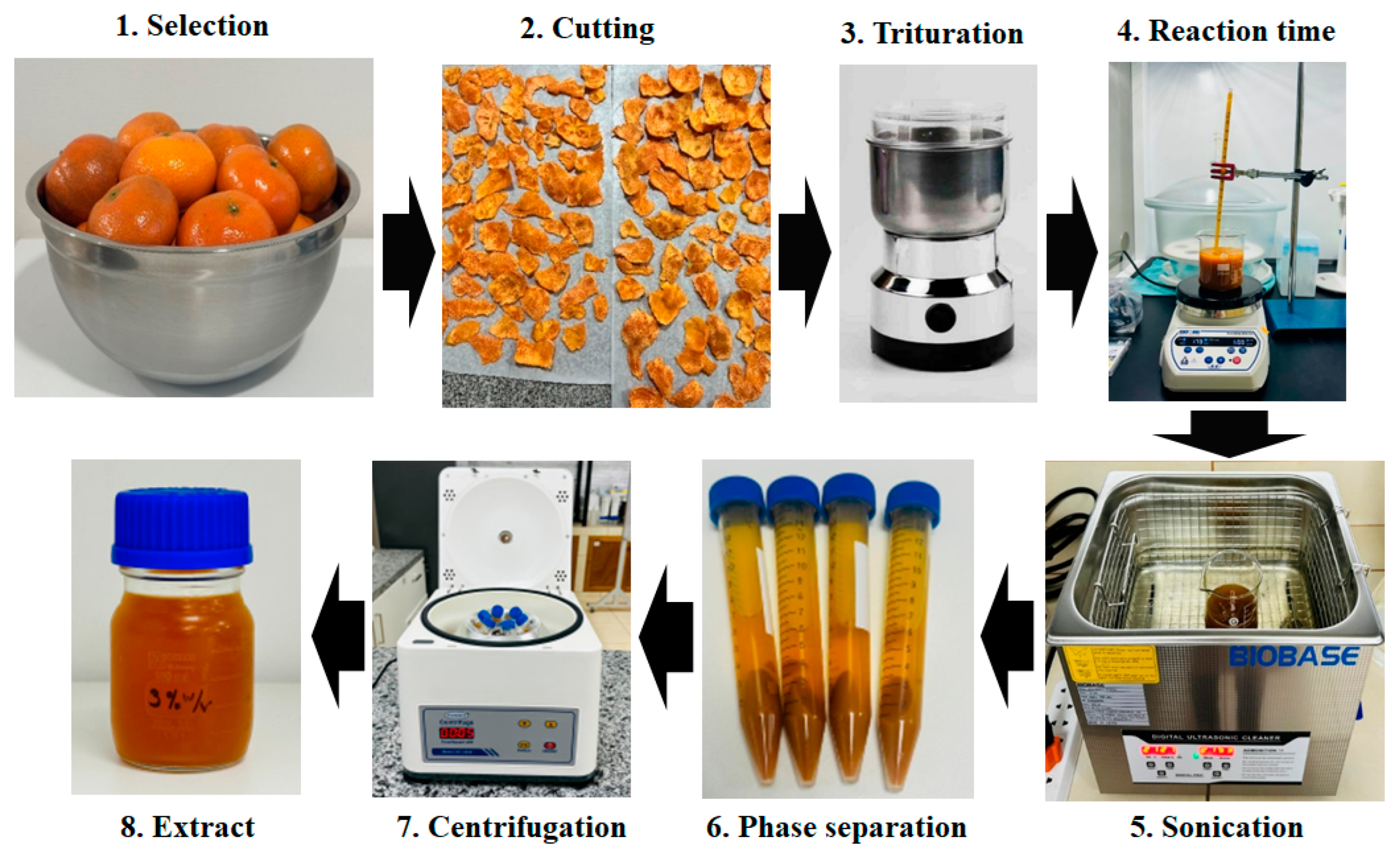
This biomass was selected because mandarin peel is an abundant agro-industrial residue and contains phenolic compounds, flavonoids, organic acids, and terpenoids that may act as natural stabilizing and surface-functionalizing agents for iron oxide NPs. Fresh peels of Citrus reticulata were manually separated from the fruit, thoroughly rinsed with distilled water to remove impurities, and cut into small pieces to increase the extraction surface area. The material was dried in a laboratory oven (Faithful) at 80 °C for 20 min to remove residual moisture. The dried peels were then ground in a stainless-steel electric mill to obtain a homogeneous fine powder.
An amount of 6 g of peel powder was accurately weighed and dispersed in 200 mL of ultrapure water (Type I), corresponding to a final concentration of 3% (w/v). The 3% (w/v) extract concentration was selected as a working concentration for MCRES biofunctionalization because it provides sufficient phytochemical content for interaction with hydroxylated γ-Fe2O3 surfaces while maintaining low viscosity and good processability during dispersion, magnetic separation, washing, and drying. Higher extract concentrations may increase organic loading and aggregation, whereas lower concentrations may provide insufficient surface-functionalizing molecules. The extract concentration was kept constant in this study because the main experimental variable was the MCRES dose applied to cacao seedlings; future work should optimize this parameter systematically.
The mixture was subjected to magnetic stirring at 363 K (90 °C) for 5 min to facilitate the aqueous extraction of bioactive phytochemicals, including flavonoids, phenolic compounds, and organic acids.
After thermal treatment, the suspension was allowed to cool gradually to 300 K using water to prevent abrupt thermal changes that could affect the stability of thermosensitive compounds. The cooled dispersion was subsequently sonicated (BIOBASE) for 30 min to enhance cell wall disruption and improve the release of phytoconstituents into the aqueous phase.
The resulting mixture was centrifuged at 4000 rpm for 5 min to separate insoluble residues from the liquid fraction. The supernatant was carefully collected and subjected to vacuum filtration to remove any remaining particulate matter, yielding a clear aqueous extract. The final extract was transferred into clean, dry borosilicate glass bottles, properly sealed, and stored at 278 K until its use in MCRES synthesis, this last step to preserve its chemical stability and bioactivity.
Scheme 1 summarizes all these steps.
2.2.2. Biosynthesis of IONPs Assisted by Citrus reticulata Peel Extract (MCRES)
The surface functionalization of the IONPs was carried out using the previously prepared
Citrus reticulata peel extract (3%
w/
v). Briefly, 10 g of pre-synthesized IONPs [
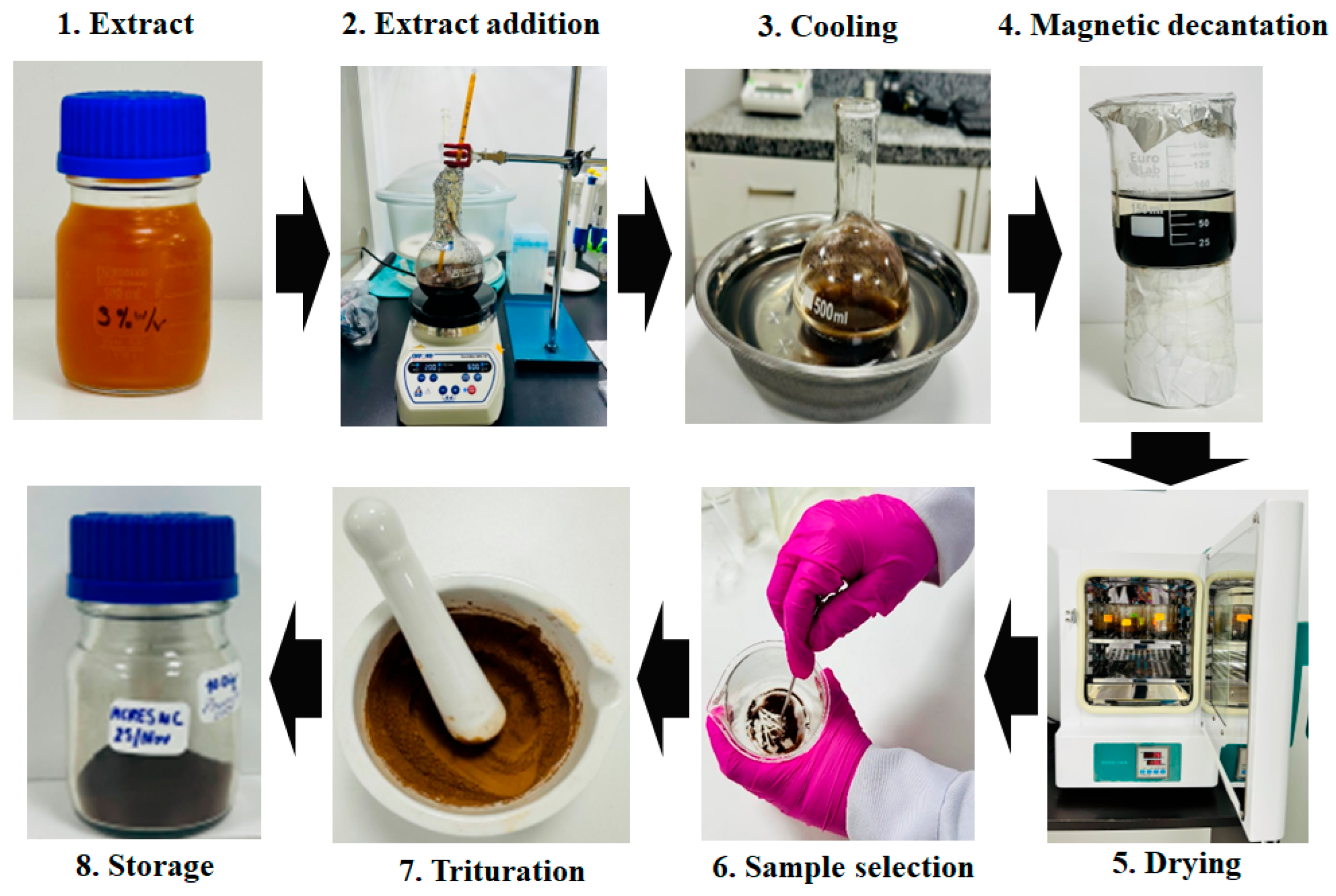
5] were dispersed in 140 mL of the aqueous peel extract under continuous magnetic stirring to ensure homogeneous mixing.
The suspension was heated at 353 K under constant magnetic stirring for 2 h. Once the temperature stabilized at 353 K, the reaction time was monitored to allow effective interaction between the nanoparticle surface, and the phytochemical constituents present in the extract. This thermal treatment promoted the adsorption and binding of bioactive molecules, such as phenolic compounds and flavonoids, onto the surface of the IONPs, yielding biofunctionalized NPs.
After completion of the reaction, the dispersion was subjected to controlled cooling using a water bath to prevent abrupt thermal changes and to stabilize the formed hybrid material. The resulting material was magnetically separated using a neodymium magnet and washed five times with ultrapure water until neutral pH (≈7) was reached, ensuring the removal of unbound organic residues and excess extract components.
The purified material was dried in a laboratory oven for 12 h to eliminate residual moisture. Finally, the dried product was gently ground using an agate mortar to obtain a homogeneous powder. The final recovered mass was 8.44 g, and the biofunctionalized IONPs were labeled as MCRES for subsequent characterization and application studies, as depicted in
Scheme 2.
2.3. Characterization
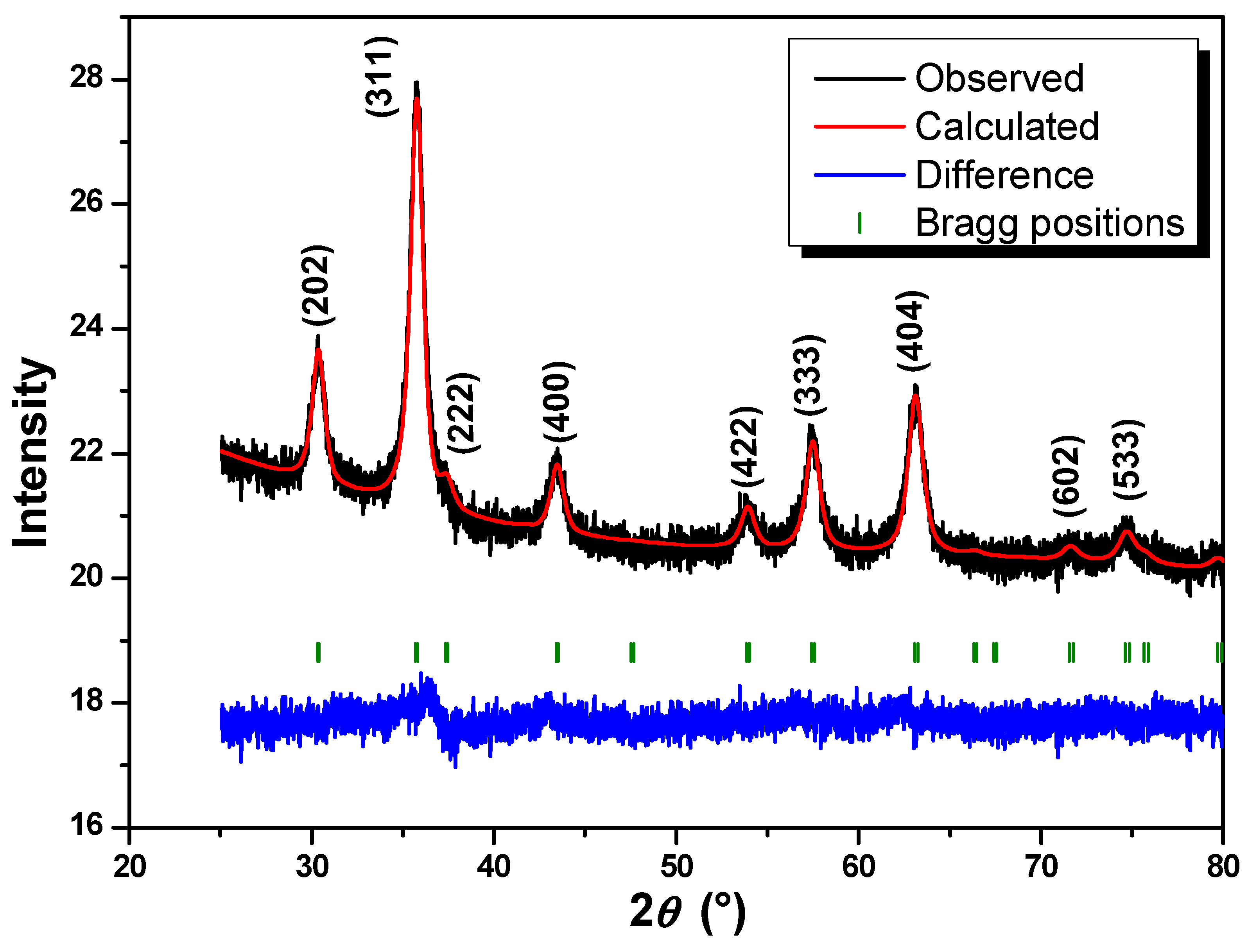
Structural characterization of the MCRES sample was carried out by X-ray diffraction (XRD) using a RIGAKU Ultima IV diffractometer (Rigaku, Tokyo, Japan) with CuK
α radiation (λ = 1.5418 Å) in Bragg–Brentano configuration. The X-ray diffractogram was recorded over a 2
θ range of 25–80°, using a step size of 0.02° and a dwell time of 2 s per step. The crystalline phase was identified by comparison with crystallographic reference data for cubic γ-Fe
2O
3. Rietveld refinement was performed to obtain the lattice parameter, crystallite size, atomic site occupancy, and refinement quality parameters [
19].
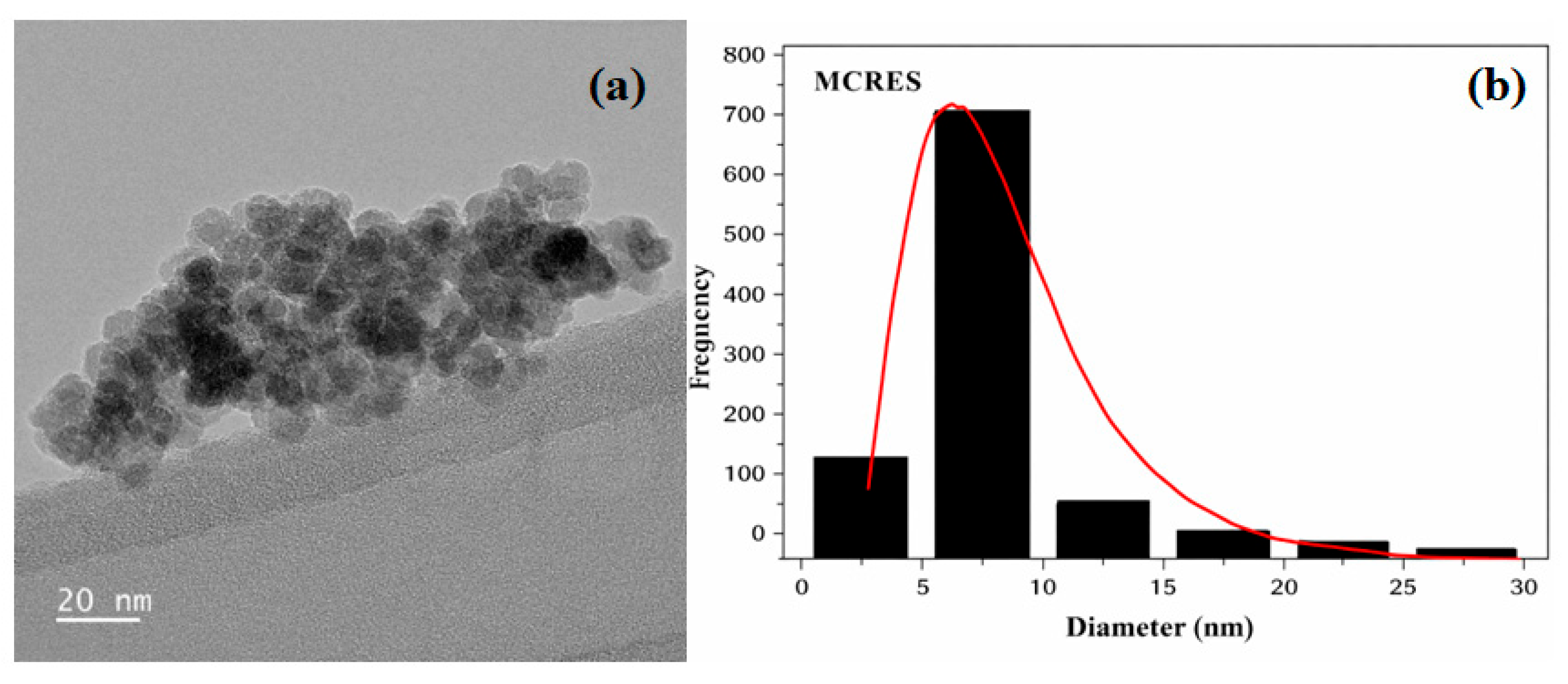
Morphological characterization was performed by transmission electron microscopy (TEM) using a JEOL 2100F microscope (JEOL, Tokyo, Japan) operated at 200 kV. For TEM preparation, approximately 20 mg of dried MCRES powder was dispersed in 1 mL of acetone in a 1.5 mL Eppendorf tube and sonicated for 5 min in an ultrasonic bath to reduce agglomeration and obtain a stable dispersion. After sonication, 5 µL of the supernatant was collected and drop-cast onto a lacey carbon-coated copper TEM grid. The grids were dried at room temperature before observation. Particle size distribution histograms were obtained by measuring approximately 800–1000 particles from 30–35 micrographs using ImageJ 1.54 g software. The size distribution was fitted using a log-normal function, and the mean particle diameter and goodness of fit were obtained from the fitted distribution.
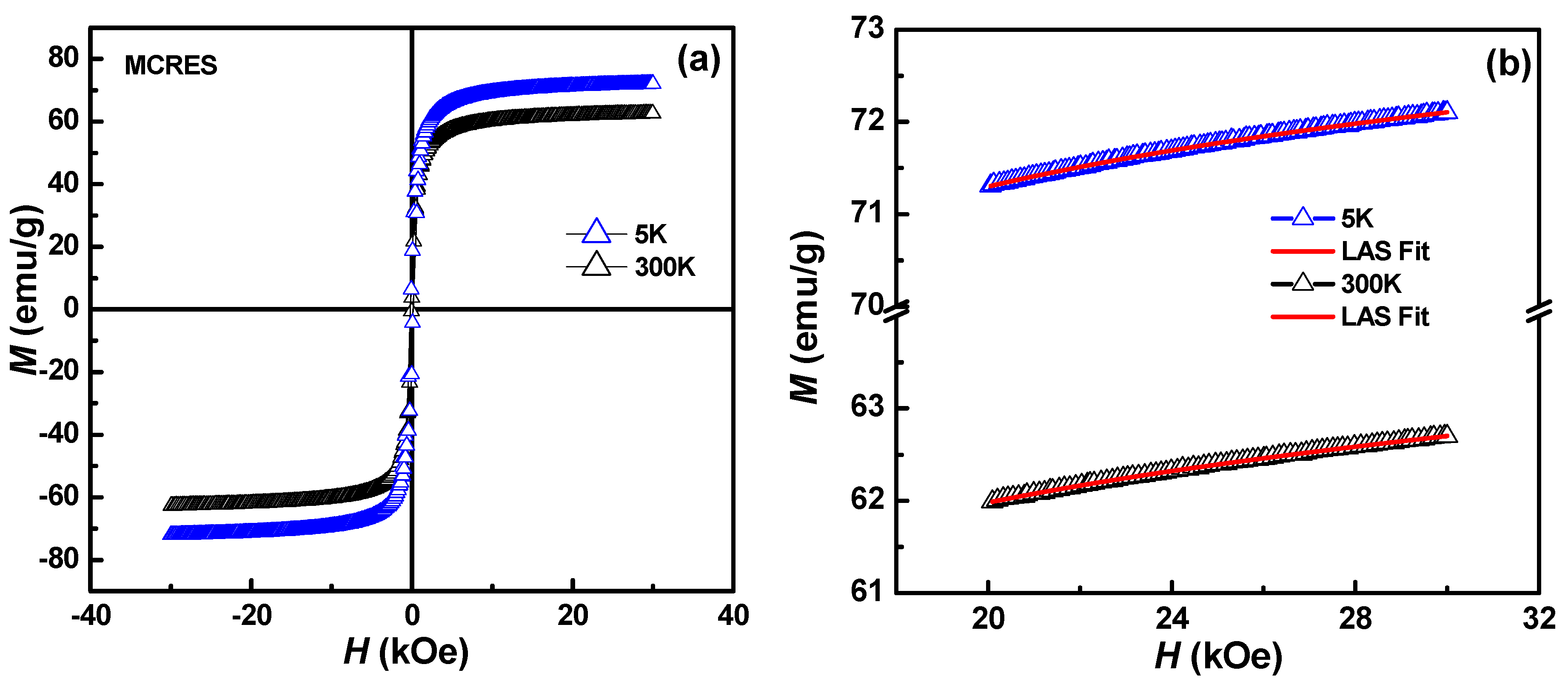
Magnetic characterization was performed using a Physical Property Measurement System, PPMS EverCool II, equipped with a vibrating sample magnetometer attachment. A known mass of dried MCRES powder was placed in a nonmagnetic sample holder and fixed to avoid movement during measurement. Isotherm magnetization curves, M(H), were recorded at 300 K and 5 K under applied magnetic fields from −50 to +50 kOe. Before each measurement, the sample was thermally stabilized at the target temperature. The saturation magnetization (MS), remanent magnetization (MR), and coercive field (HC) were obtained from the hysteresis loops. The near-zero coercivity observed at 300 K was used to evaluate the superparamagnetic-like response of the MCRES sample.
The high-field region of the magnetization curves was further analyzed using the Law of Approach to Saturation (LAS) given by Equation (1):
where
MS is the saturation magnetization,
b is the coefficient associated with anisotropy-related contributions,
χ is the high-field susceptibility, and
H is the applied magnetic field. The fitting was performed in the high-field region, approximately between +20 and +32 kOe, where the magnetization approaches saturation and irreversible low-field processes are minimized. The effective magnetic anisotropy,
Keff, was estimated from the anisotropy-related term obtained from the LAS fit. Magnetic parameters were reported using negative-exponent notation, namely emu g
−1 for
MS, kOe for
HC, and J m
−3 for
Keff.
2.4. Location and Seed Collection
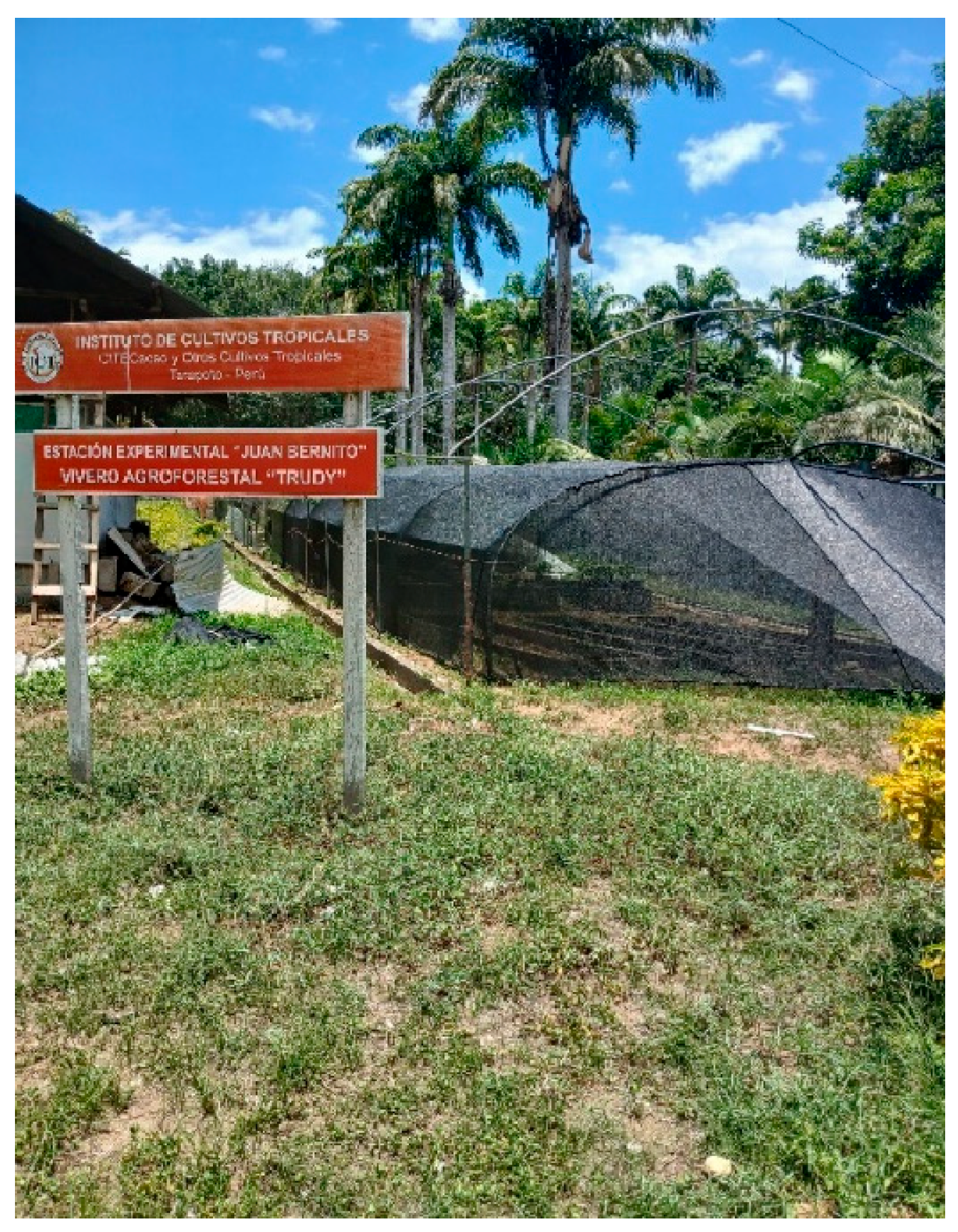
The experiments and data collection were carried out during 2025 at the nursery of the Juan Benito Experimental Station shown in
Figure 1, located in the district of Banda del Shilcayo, San Martín, Peru (06°30′28″ S; 76°00′18″ W; 333 m a.s.l.).
2.5. Seed Collection
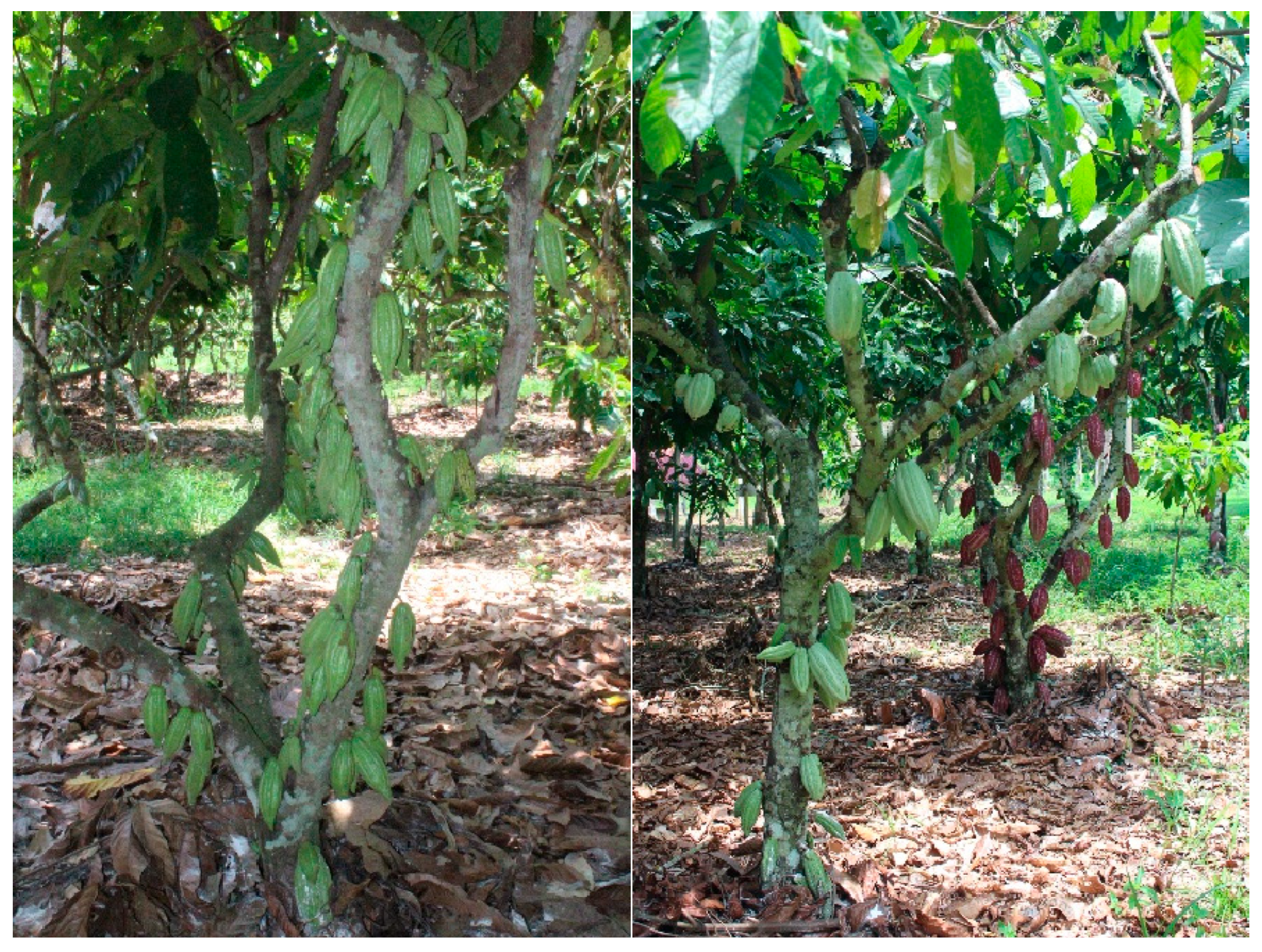
The ICS-95 and TSH-1188 genotypes were obtained from the demonstration plots of Instituto de Cultivos Tropicales, as shown in
Figure 2. The ICS-95 and TSH-1188 genotypes were selected because they are agronomically relevant cacao genotypes available at the Instituto de Cultivos Tropicales and allow evaluation of genotype-dependent responses to MCRES. These clones may differ in growth performance, nutrient uptake, and metal accumulation under contaminated substrate conditions. In particular, ICS-95 genotype has been reported as susceptible to Cd uptake [
20]. TSH-1188 genotype was included as a contrasting genotype to assess whether MCRES effects on plant growth and Cd/native Ni partitioning were genotype-specific.
2.6. Substrate Preparation and Artificial Contamination
For substrate preparation, soil from the B horizon of an Ultisol was collected according to Soil Taxonomy classification [
21]. This substrate was selected because of its acidic and low-fertility characteristics, which favor metal mobility and allow the evaluation of metal uptake by cacao seedlings under nursery conditions. The collected soil was air-dried, manually homogenized, and sieved (4 mm) to remove stones, coarse plant residues, and large aggregates before pot filling. Each experimental unit consisted of 5 kg of homogenized substrate placed in a plastic nursery pot. The soil used had the following physicochemical properties: pH 4.51, electrical conductivity 0.1 dS m
−1, organic matter content 2.21%, and texture clay loam.
The substrate was artificially contaminated only with Cd. A concentrated cadmium chloride solution of 1000 mg L−1 was prepared and added to the substrate to achieve a target Cd concentration of 3 mg kg−1 soil. The Cd solution was added gradually and mixed thoroughly with the soil to promote a homogeneous distribution of the contaminant within each pot. After contamination, the substrate was allowed to equilibrate under controlled wetting conditions before MCRES application and seedling establishment.
Nickel was not externally added to the substrate. Its behavior was evaluated based on the native Ni naturally present in the Ultisol used in this study (2.04 mg kg−1). Therefore, the artificial contamination step refers only to Cd addition, whereas Ni was monitored as a naturally occurring metal in the soil–plant system. Accordingly, the experimental system should be interpreted as Cd-amended Ultisol containing naturally occurring Ni, rather than as an artificially Cd/Ni-spiked substrate.
2.7. Experimental Design and MCRES Application
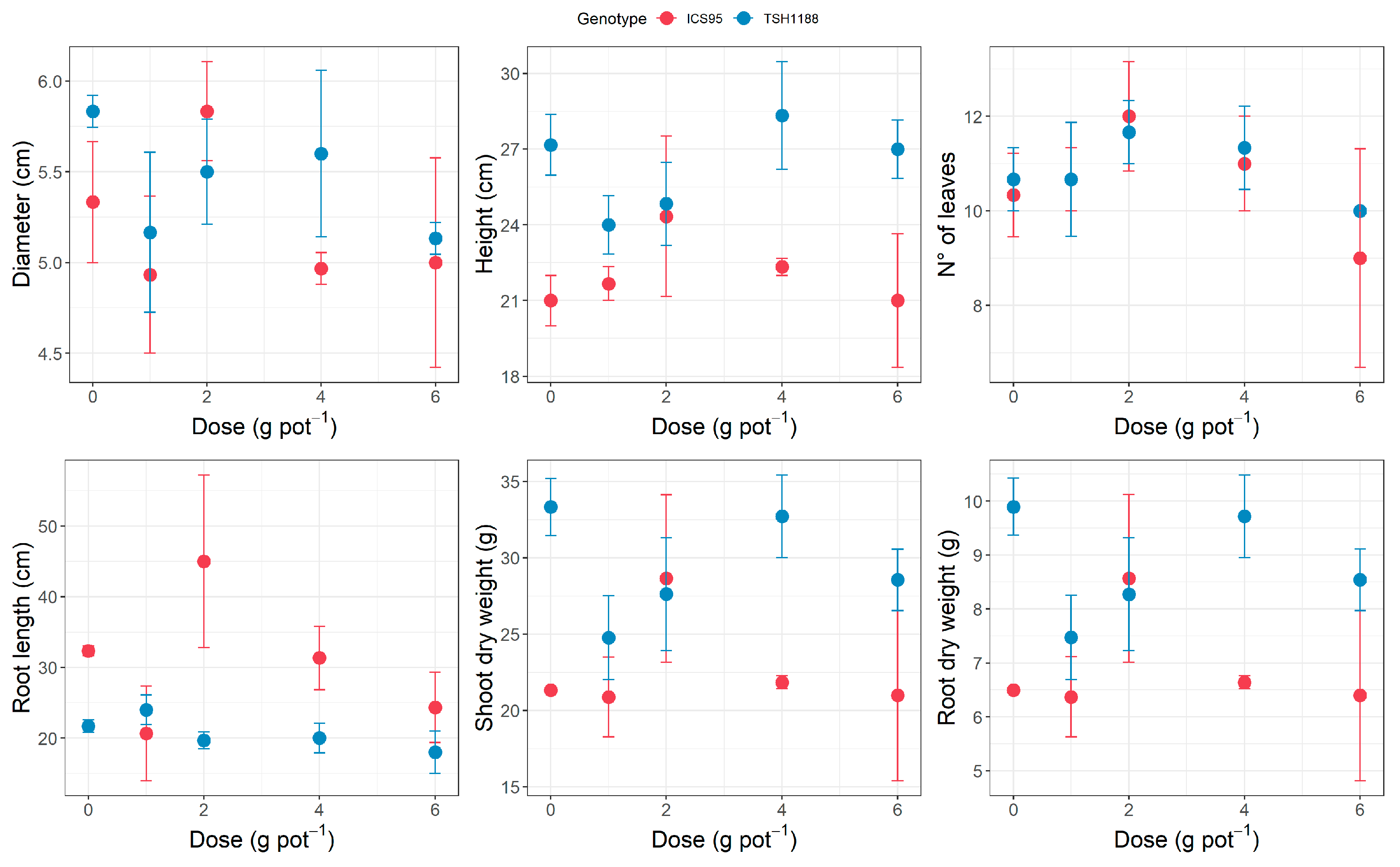
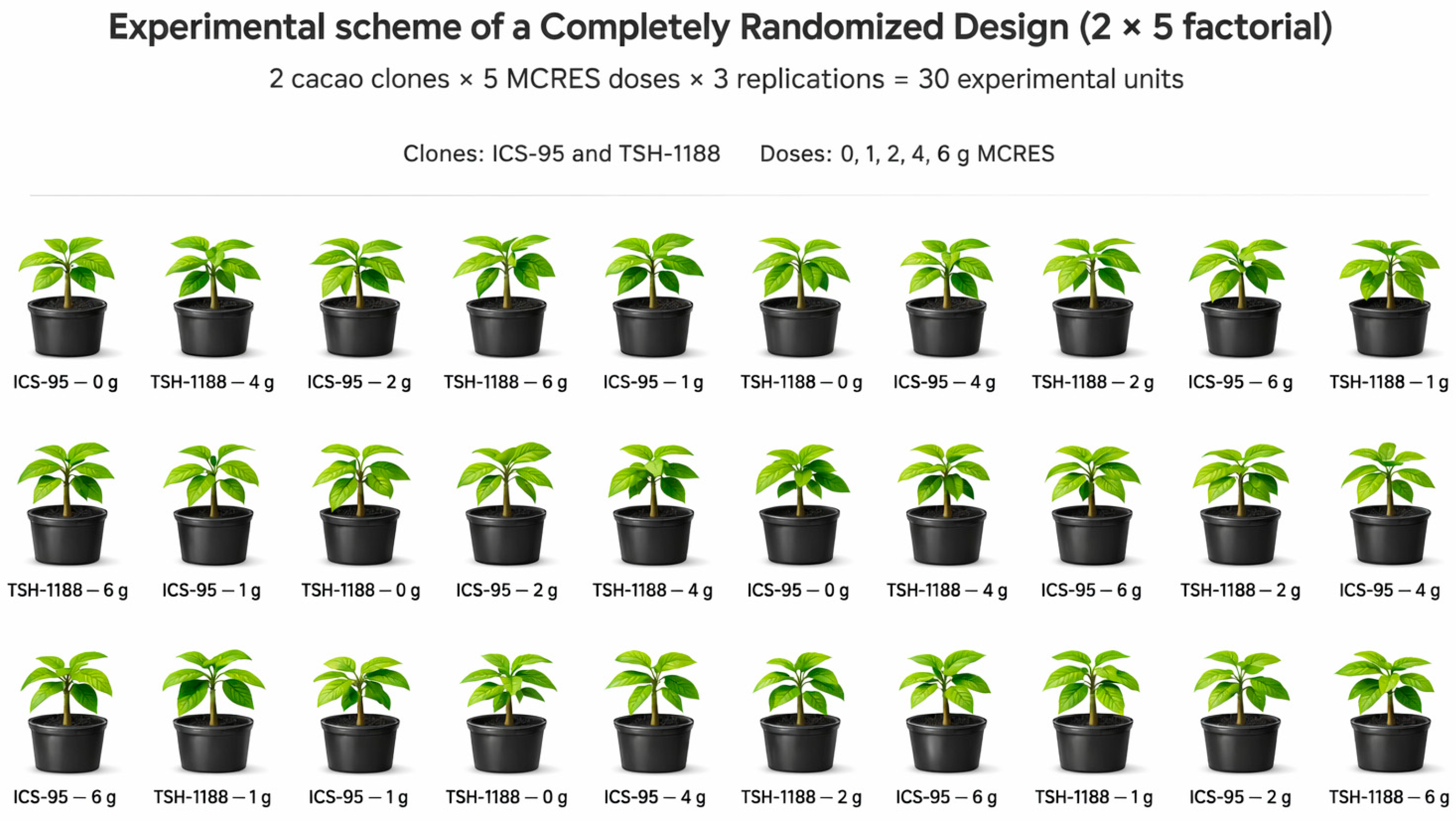
The study was conducted under nursery conditions for 4 months using a completely randomized design (CRD) in a 2 × 5 factorial arrangement, as seen in
Scheme 3. The factors were cacao genotype, with two levels, ICS-95 and TSH-1188 genotypes, and MCRES dose, with five levels: 0, 1, 2, 4, and 6 g pot
−1. Considering the total substrate mass of 5 kg per pot, these doses are nominally equivalent to 0, 200, 400, 800, and 1200 mg kg
−1 soil, respectively. However, these values should be interpreted only as nominal pot-based equivalents, because MCRES was not homogeneously dispersed throughout the entire substrate mass. Instead, the material was applied locally in the upper root-growth zone near the cacao seedling to promote contact among MCRES, the Cd-amended Ultisol, naturally occurring Ni, and the developing root system. Three replications were used per treatment, resulting in a total of 30 experimental units.
The 0 g pot−1 MCRES treatment corresponded to the Cd-amended control, because it contained the same Cd-amended Ultisol substrate but did not receive MCRES. This control was used to evaluate the dose-dependent effect of MCRES under the same metal-stress condition. A non-contaminated blank control was not included because the main objective of this experiment was to compare MCRES treatments under Cd-amended conditions rather than to compare contaminated and non-contaminated seedling development. Nevertheless, the absence of a non-contaminated blank control is recognized as a limitation, and future studies should include this treatment to establish baseline cacao seedling development under non-stressed conditions.
For MCRES application, the corresponding mass of dried MCRES powder was weighed for each treatment and incorporated locally into the upper substrate layer around the root-growth zone of each pot. The material was gently mixed with the surrounding substrate near the plant rather than uniformly dispersed throughout the entire 5 kg substrate mass. Control pots received no MCRES but were otherwise handled under the same experimental conditions.
Pregerminated cacao seeds or uniform cacao seedlings of ICS-95 and TSH-1188 genotypes were established in the treated pots under the same depth and nursery conditions. The plants were maintained for 04 months at the Juan Benito Experimental Station nursery, Banda del Shilcayo, San Martín, Peru. During the experimental period, the pots were irrigated with distilled water as required to maintain adequate substrate moisture (80% of Field Capacity), avoiding both waterlogging and excessive leaching. Plant development was monitored throughout the nursery exposure period, after which biometric parameter analysis, soil chemical analysis, and plant tissue chemical analysis were performed. The environmental conditions of the nursery were measured with a termohigrometer with mean temperatures between 300 K and 303 K and relative humidity between 60–90 %.
The selected MCRES doses were used as nursery-scale screening treatments to evaluate dose-dependent biometric responses and Cd/native Ni partitioning under pot conditions. Similar pot-based amendment studies have expressed amendment rates on a mass basis and used controlled substrate quantities to screen plant response before field validation [
22]. Therefore, the present treatments should not be interpreted as direct field-application recommendations, but rather as exploratory amendment rates intended to identify effective dose ranges and possible response thresholds for future field validation.
2.8. Measurement of Biometric Parameters and Plant Harvesting
Biometric measurements were performed at the end of the nursery exposure period following procedures adapted from [
20]. Plant height was measured from the root collar to the apical meristem using a measuring tape. Stem diameter was measured at the root collar using a caliper, and the number of fully expanded leaves was counted manually. Root length was measured after careful removal of the root system from the substrate.
After biometric evaluation, plants were harvested by cutting at the root collar to separate the shoot fraction from the root system. The shoot fraction included stems and leaves, whereas the root fraction included the complete recovered root system. Roots were carefully separated from the substrate to minimize tissue loss and to avoid cross-contamination with soil particles.
Shoots and roots were washed sequentially with tap water to remove adhered substrate particles, rinsed with 1 % HCl to remove surface-bound metals and external residues, and finally rinsed with distilled water. The fresh weight and length of roots and shoots were recorded. The samples were placed in labeled paper envelopes and dried in an oven at 333 K for 72 h until constant weight. Dry weight was then recorded and expressed in grams. The dried tissues were stored in labeled containers for subsequent digestion and elemental analysis.
2.9. Chemical Analysis
Soil and plant analyses were conducted following the procedures specified by [
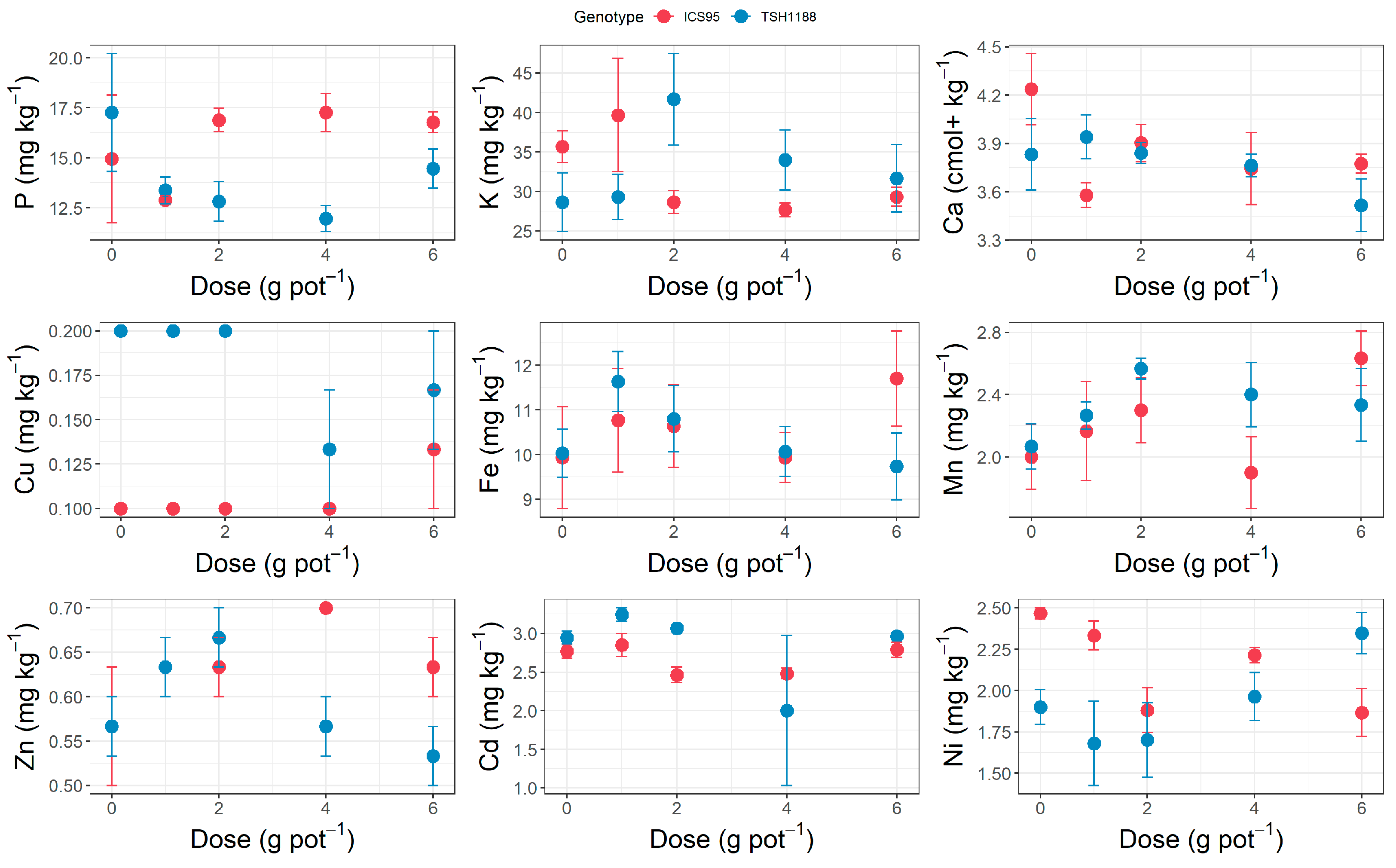
23]. For soil samples, pH (1:2) and Electrical conductivity (EC) were determined using 10 g of soil with 20 mL of distilled water in a potentiometer and conductivity meter, respectively. P was determined using the Olsen method, whereas Ca and K were extracted with ammonium acetate at pH 7.0. Organic matter was determined with Walkey and Black method. The micronutrients Cu, Fe, Mn, and Zn were extracted using DTPA. Cd and Ni concentrations in soil were determined following EPA Method 3050B [
24]; therefore, these values are reported as pseudo-total recoverable concentrations rather than directly bioavailable metal fractions. All elements were quantified by atomic absorption spectrophotometry (AAS).
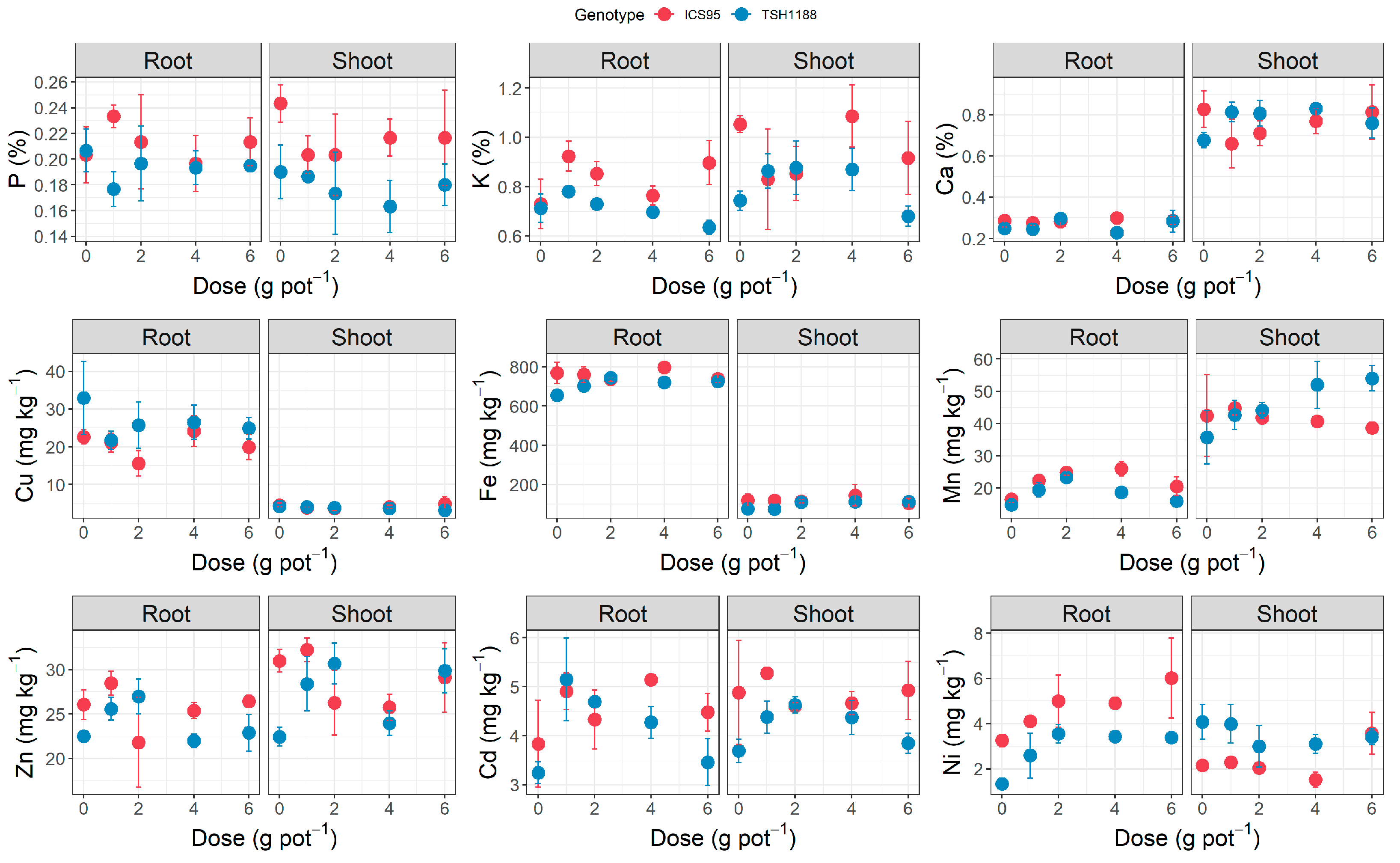
For plant tissue analysis, dried shoot and root samples were separately processed. The samples were digested with HNO3 prior to elemental determination. Phosphorus was determined using the vanadate-molybdate method at 880 nm with a UV-Vis spectrophotometer. The concentrations of K, Ca, Cu, Fe, Mn, Zn, Cd, and Ni were determined by AAS. Cadmium was analyzed as the externally added contaminant, whereas Ni was analyzed as a naturally occurring metal originally present in the Ultisol substrate. Metal concentrations were used to evaluate nutrient uptake, Cd/Ni accumulation, and root-to-shoot partitioning in cacao seedlings.
2.10. Bioconcentration and Translocation Factors
The bioconcentration factor (BCF) was calculated as the ratio of metal concentration in the plant shoot to that in the rhizosphere soil, according to the following Equation (2):
where soil metal concentration is the pseudo-total metal concentration in the soil (mg kg
−1 dry weight). A BCF > 1 indicates a plant with hyperaccumulation potential for the respective metal.
The translocation factor (TF) was calculated as the ratio of metal concentration in the shoot to that in the root, see Equation (3):
A TF > 1 indicates efficient translocation of metals from root to aerial tissues.
2.11. Statistical Analysis
Descriptive statistics (means and standard deviations) were calculated for all variables. An analysis of variance (ANOVA) was then performed at the 95 % confidence level. When significant differences were detected, means were compared using the Scott-Knott test at
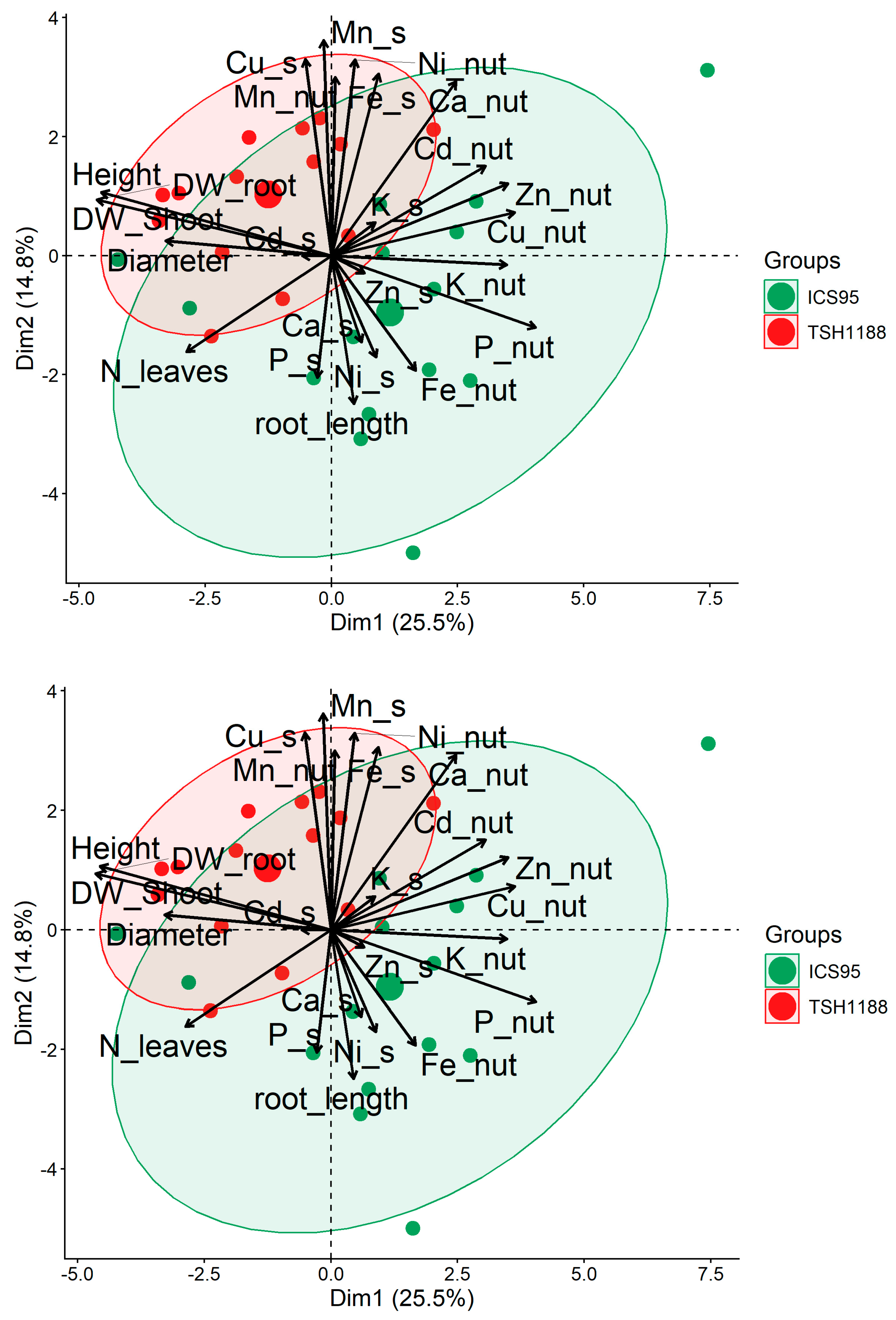
p < 0.05. To explore the relations between the studied variables, a Principal Component Analysis (PCA) was performed with the prcomp function (R software ver. 4.1). Prior to analysis, all variables were centered and scaled to unit variance. The PCA was computed from the correlation matrix, and the number of principal components retained for interpretation was determined using the Kaiser criterion (eigenvalues > 1). All statistical analyses and figures were generated using R software [
25].
4. Conclusions
This study demonstrated that the maghemite–Citrus reticulata extract system (MCRES) can be prepared as a green biofunctionalized γ-Fe2O3-based nanoamendment and applied under nursery conditions to cacao seedlings grown in Cd-amended Ultisol containing naturally occurring Ni. The results showed that MCRES affected cacao seedlings in a genotype- and dose-dependent manner. In particular, ICS-95 genotype showed a clearer biometric response to MCRES application, with the 2 g pot−1 treatment producing the most favorable growth response, whereas TSH-1188 genotype showed lower sensitivity to dose variation for most biometric parameters. From an agronomic perspective, the results indicate that MCRES should not be recommended as a universal amendment at a fixed dose for all cacao genotypes. Instead, its use should be optimized according to genotype, soil condition, and target metal. Under the present nursery conditions, the intermediate dose of 2 g pot−1 appeared more favorable for ICS-95 genotype growth, while higher doses were more effective in reducing Ni translocation in TSH-1188 genotype. Therefore, MCRES may be considered a promising nursery-stage green nanoamendment for modifying metal partitioning in cacao systems, especially by promoting root retention of naturally occurring Ni and reducing its movement toward aerial tissues. The study also showed that Cd and Ni responded differently to MCRES. Cd, which was externally added to the substrate, remained comparatively mobile toward the shoots, whereas naturally occurring Ni was preferentially retained in the roots, particularly in TSH-1188 genotype. This metal-specific behavior suggests that MCRES was more effective in limiting Ni translocation than Cd translocation under the tested conditions. Consequently, future optimization should focus on improving Cd immobilization while preserving the favorable Ni root-retention effect. Several limitations should be considered. First, the present design did not include side-by-side treatments with unfunctionalized γ-Fe2O3 NPs or Citrus reticulata extract alone; therefore, the specific contribution of citrus-mediated functionalization cannot be fully isolated. Second, although the 0 g pot−1 MCRES treatment served as the Cd-amended control for evaluating MCRES dose effects, a non-contaminated blank control was not included, limiting direct comparison with baseline cacao seedling development in uncontaminated soil. Third, Ni was not externally added, so the Ni-related results should be interpreted as the response of naturally occurring Ni in the Ultisol substrate under Cd-amended conditions. Fourth, soil Cd and Ni were determined using EPA Method 3050B, which provides pseudo-total recoverable concentrations rather than directly bioavailable fractions; therefore, the soil-metal data alone cannot confirm adsorption or immobilization mechanisms without complementary extractable-fraction, leachate, or mass-balance analyses. Finally, the study was conducted under nursery-pot conditions, and field-scale performance may differ because of rainfall, drainage, soil heterogeneity, microbial activity, and seasonal variation. Future studies should therefore include unfunctionalized γ-Fe2O3, Citrus reticulata extract-alone treatments, non-contaminated controls, and field trials under realistic cacao-growing conditions. Further work should also optimize the Citrus reticulata extract concentration used during synthesis, evaluate additional cacao genotypes, monitor soil moisture and leachates, determine extractable Cd/Ni fractions, perform mass-balance analysis, and evaluate the long-term stability, environmental safety, and effectiveness of MCRES in reducing Cd and Ni mobility. These steps are necessary before recommending MCRES for broader agricultural application in cacao production systems.





 ,
,