Article

The Role of Direct Payments in Shaping the Production Potential and Financial Performance of Dairy Farms: An Assessment for 2014–2023 in the Dominant Milk-Producing EU Countries


by
Andrzej Parzonko
1,
Anna Justyna Parzonko
2,
Tomasz Wojewodzic
3 and
Marta Czekaj
4,*
1
Department of Economics and Organization of Enterprises, Faculty of Economics, Institute of Economics and Finance, Warsaw University of Life Science SGGW, 02-787 Warszawa, Poland
2
Department of Tourism, Social Communication and Consulting, Faculty of Economics, Institute of Economics and Finance, Warsaw University of Life Science SGGW, 02-787 Warszawa, Poland
3
Department of Economics and Food Economy, University of Agriculture in Krakow, Al. Mickiewicza 21, 31-120 Krakow, Poland
4
Department of Management and Business Economics, University of Agriculture in Krakow, Al. Mickiewicza 21, 31-120 Krakow, Poland
*
Author to whom correspondence should be addressed.
Agriculture 2026, 16(10), 1106; https://doi.org/10.3390/agriculture16101106
Submission received: 16 March 2026 / Revised: 30 April 2026 / Accepted: 14 May 2026 / Published: 18 May 2026
(This article belongs to the Special Issue Economics of Milk Production and Processing—2nd Edition)

Abstract

The primary objective of this study was to present and assess the effects of direct payments and other subsidies targeted at dairy farms under the EU’s Common Agricultural Policy (CAP) guidelines implemented in 2014–2023 on their financial performance and changes in equity. To narrow the focus on the research problem, the scope of the analysis was limited to dairy farms from the five EU countries with the highest milk production. To achieve this objective, the study employed economic measures and indicators used to evaluate the resources and outcomes of agricultural activity. The empirical material used in the analysis consisted of farm-level accounting data collected within the European Farm Accountancy Data Network (FADN). The results indicate that direct payments and other subsidies had a very substantial impact on farm income in the analysed countries. The average share of direct payments in dairy farm income in 2014–2023 in the five analysed EU countries ranged from 19.7% in Italy to 88.4% in France. Without direct payments, the average dairy farm would have incurred financial losses from its activity during periods of unfavourable economic conditions on the milk market. The new model for distributing direct payments and other subsidies introduced in 2023, whose main modification compared with the previous system was a stronger alignment of direct payments with environmental objectives, did not result in substantial changes in either the level of payments or their impact on dairy farms’ financial performance. In 2023, the average payment per hectare of agricultural land in the analysed farms amounted to EUR 461.34, which was EUR 19.88 less than in 2022.

1. Introduction

Agricultural farms in all EU Member States are subject to the Common Agricultural Policy (CAP), the foundations for which were laid by the principles underlying the European Coal and Steel Community (ECSC), which evolved into the European Economic Community (EEC) in 1958 and subsequently into the European Union (EU) in 1993. Article 39 of the Treaty of Rome, signed on 25 March 1957, defined five main objectives of agricultural policy: (1) increasing agricultural productivity through the promotion of technological progress; (2) ensuring a fair standard of living for the agricultural community, in particular by increasing the individual earnings of persons engaged in agriculture; (3) stabilising agricultural markets; (4) ensuring the availability of agricultural produce; and (5) ensuring that food products are available to consumers at reasonable prices [1]. The Common Agricultural Policy was formally introduced in 1962. In order to achieve its objectives, a system of price support and market regulation was established [2]. These mechanisms ensured guaranteed prices for agricultural products, imposed tariffs on imports from outside the Community, and provided for state intervention in the event of declining market prices. Farmers received support linked to their overall level of production [3].
In the two decades following the Second World War, European agricultural policy was primarily driven by concerns about food security. This objective was understood as ensuring sufficient food production to meet domestic demand while improving the availability of affordable food for European consumers [4]. However, the pursuit of this policy, combined with technological progress and the low elasticity of demand for food products, resulted in food overproduction in the European Community. At the same time, high levels of market protection led to agricultural prices within the Community being significantly higher than those prevailing on world markets. These developments generated surpluses and created difficulties in exporting agricultural products. As a consequence, the Common Agricultural Policy (CAP) gradually evolved from a system primarily focused on supporting agricultural production towards one aimed at supporting farmers’ incomes [5]. Additional pressure for reform of the Common Agricultural Policy emerged with successive enlargements of the European Union, particularly the accession of ten Central and Eastern European countries in 2004 [6,7].
Following the 2003 reform, EU member states were obliged to implement the Single Payment Scheme (SPS) between 1 January 2005 and 1 January 2007. Countries that joined the EU in 2004 and later adopted the Single Area Payment Scheme (SAPS), although Malta, Slovenia, and Croatia implemented the SPS. Under the SPS, the so-called “old” Member States could choose among three alternative payment models: the historical model, the regional model, or a hybrid model combining elements of the two [8]. As a result, despite the introduction of the so-called Common Agricultural Policy, considerable differences persisted in the methods used to calculate direct payments across EU countries. A further reform of the direct payment scheme was implemented on 1 January 2015 under Regulation (EU) No 1307/2013 of the European Parliament and of the Council of 17 December 2013. Within this framework, the SPS operating in the “old” Member States was replaced by the Basic Payment Scheme (BPS).
In May 2020, the European Union adopted a new strategic framework for agriculture known as the “Farm to Fork” strategy. This initiative forms part of the broader European Green Deal, whose main objective is a comprehensive transformation of the EU economy aimed at shifting from being the world’s third largest source of greenhouse gas emissions to achieving climate neutrality within the coming decades [9]. The agricultural sector constitutes a key component of this strategy, partly because agriculture accounts for approximately 10.3% of total greenhouse gas emissions in the European Union, with nearly 70% originating from livestock production [10]. Under the “Farm to Fork” strategy, the EU plans to increase the share of agricultural land managed under organic farming systems to 25% of total agricultural area by 2030 [11]. The implementation of the “Farm to Fork” strategy allows for considerable flexibility at the national level. Each Member State is therefore required to prepare a Strategic Plan for the Common Agricultural Policy. Within this framework, numerous direct payments promoting environmentally friendly farming practices and improved animal welfare have been introduced. The degree of flexibility granted to Member States in designing their direct payment systems has contributed to variation in payment levels across countries. Moreover, differences among farms in terms of their resources and production scale result in considerable variation in the impact of direct payments and other subsidies on farm financial performance.
One argument supporting the relevance of the topic addressed in this paper is the persistently high level of agricultural expenditure within the European Union’s budget. In 2022, expenditure under the EU’s Common Agricultural Policy (CAP) amounted to EUR 56.4 billion, representing an increase of EUR 14.6 billion compared with 2000. However, it should be noted that the growth in CAP expenditure has slowed since 2010, while its share in the overall EU budget has declined from 45.0% in 2010 to 23.6% in 2022 (CAP expenditure: European Commission, Directorate-General for Agriculture and Rural Development, Financial Report; EU expenditure: European Commission, Directorate-General for Budget https://agriculture.ec.europa.eu/data-and-analysis/financing/cap-expenditure_en (accessed on 2 February 2026)). According to the proposal for the Multiannual Financial Framework for 2028–2034 submitted in 2025, CAP expenditure is not expected to increase and, in real terms, may even decline (Communication from the Commission to the European Parliament, the European Council, the Council, the European Economic and Social Committee and the Committee of the Regions: A dynamic EU budget for the priorities of the future—The Multiannual Financial Framework 2028–2034).
These developments, together with the substantial public expenditure from the EU budget directed towards rural areas—including agricultural farms—in the form of various payments and support instruments, justify continued analysis of the economic effects of these policy measures.
European Union countries are among the leading producers and processors of milk worldwide. In 2022, total milk production in the EU amounted to 154.2 million tonnes, representing approximately 25% of global production. Of this volume, 144.7 million tonnes were processed into dairy products. However, milk production and processing are not evenly distributed across all 27 EU Member States. In 2022, the largest milk producers were Germany (33.4 million tonnes), France (24.6 million tonnes), Poland (15.2 million tonnes), the Netherlands (14.5 million tonnes), and Italy (13.2 million tonnes). Together, these five countries accounted for approximately 60% of total EU milk production. For the sake of analytical clarity, the empirical analysis in this study focuses on dairy farms located in these five leading milk-producing countries.
The main objective of this study is to present and assess: (1) the impact of direct payments and other financial instruments targeted at dairy farms under the framework of the EU’s Common Agricultural Policy implemented in 2014–2023 on their financial performance, and (2) changes in the asset structure of dairy farms in the leading milk-producing EU countries.
The motivation for undertaking research in this area stems primarily from the changes in the system of direct payments and other financial instruments targeted at agricultural farms, including proposals to gradually phase out certain forms of financial support after 2027. Existing studies do not provide clear and consistent results regarding the impact of support for dairy farms, particularly in the context of regional differences across the EU. It remains unclear whether this support actually improves farm productivity and competitiveness, or primarily stabilises farm income and increases dependence on public transfers. These developments raise questions about the role of such payments in shaping the profitability and investment capacity of agricultural farms in EU Member States.
To reduce the analytical difficulties resulting from the high diversity of farms in terms of production structure, the study focuses on a single production type—milk production (dairy farms). In order to identify the effects of changes in the EU’s Common Agricultural Policy, the analysis covers the period 2014–2022 and the new perspective proposed for 2023–2027. Due to the lack of FADN data for 2024 and 2025 at the time of the study, the assessment of the most recent policy changes is based on data for 2023. To facilitate analysis of the impact of direct payments and other subsidies on dairy farms in the European Union, the study is limited to the five EU countries with the highest milk production in 2022.

2. Research Methodology

To achieve the research objective, data from the Farm Accountancy Data Network (FADN) are used. FADN is a European system for collecting farm-level accounting data, formally established in 1965. It constitutes one of the key tools supporting the design and implementation of measures under the EU’s Common Agricultural Policy. The data collected within this system are primarily used to determine annually the economic performance of farms operating in the EU and to evaluate the effects of changes introduced within the CAP framework. The European FADN covers commercial farms that together account for approximately 90% of the total value of standard output in a given region or country. Farms included in the system are classified according to production types, which are determined on the basis of the share of revenues generated by a particular activity in total farm revenues. The focus of the present analysis is on dairy farms (production type: dairy farming) which, according to the FADN methodology, are farms in which milk sales account for at least 66% of total revenues.
The analysis is based on average values for dairy farms in individual countries, calculated according to the methodology used in the Farm Accountancy Data Network (FADN). In this approach, the sum of a given variable for all dairy farms included in the sample (e.g., SE026—arable land, ha) is divided by the number of farms in the sample, resulting in the arithmetic mean.
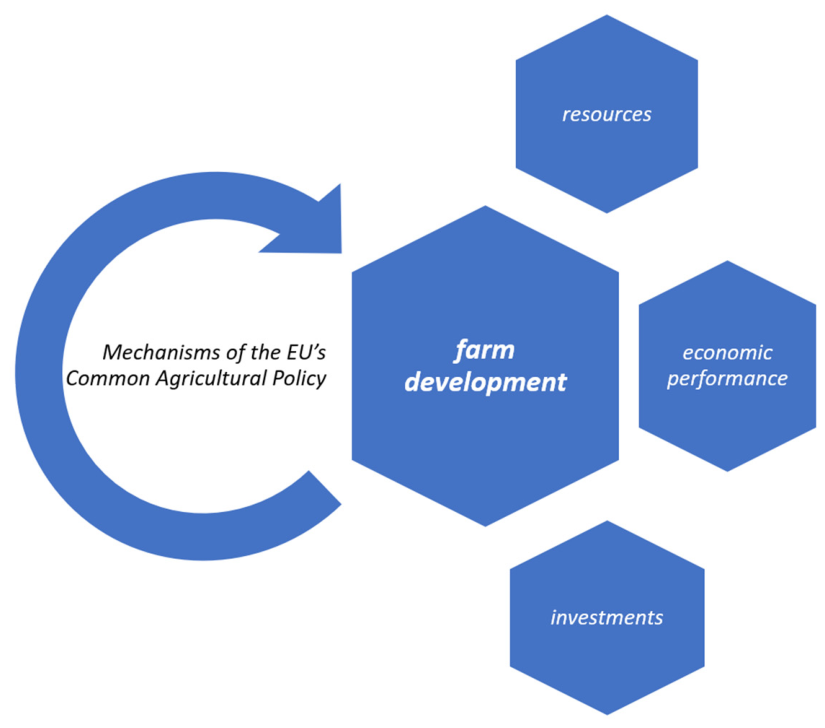
The impact of direct payments and various subsidies on the functioning of dairy farms in the selected EU countries is assessed in terms of three main dimensions: farm resources, economic performance, and investments (Figure 1). A comparative analysis is applied to evaluate differences.
The first determinant influencing both strategic and operational decisions of farmers is the set of resources available to the farm. According to the resource-based view, the resources possessed by an enterprise largely determine its production and economic outcomes [12]. This perspective focuses on identifying which resources can provide enterprises with a competitive advantage and thus enable them to achieve superior economic performance. In the case of agricultural farms, increasing the scale of production requires expanding production capacity, which primarily depends on the availability of key resources such as land, labour, and capital invested in farm assets. Therefore, the impact of direct payments and other subsidies on farm resources is analysed using three indicators referring to the main production factors of agricultural farms (Table 1).
The second determinant analysed in the study is economic performance, which refers to the financial results achieved by farms and the extent to which these results are influenced by direct payments and other subsidies. Farm income serves both consumption and investment purposes; therefore, its level affects not only the standard of living of the farm household but also changes in farm equity. Within the FADN system, financial result is measured at several levels. The first is gross value added, calculated without accounting for the ownership of production factors (i.e., whether land, labour, or capital are owned or hired) and excluding depreciation. Net value added is obtained by deducting depreciation from gross value added. Farm income is then calculated by adding the balance of subsidies and taxes related to investments to net value added and subtracting the costs of external production factors, including land rent, hired labour, and interest on borrowed capital. Within this determinant, three indicators are presented that show the share of direct payments and other subsidies in the value of agricultural production and in the financial results achieved by dairy farms (Table 1).
The third determinant analysed in the study is investment activity, understood as the level of investment expenditure and its relationship with direct payments and other subsidies. To illustrate this determinant, two indicators are used (Table 1). In general, the greater the financial resources generated from farm operations and public support instruments, the higher the farm’s potential propensity to invest.

3. Research Results

3.1. Basic Economic and Organisational Characteristics of Dairy Farms in Selected EU Countries

Despite operating within the framework of the Common Agricultural Policy, dairy farms across EU countries differ substantially in terms of production scale, which is largely determined by herd size [13,14,15]. These differences translate into varying levels of engagement of material resources, particularly land, buildings, and machinery [16,17]. From an economic perspective, farms operating on a larger production scale benefit from economies of scale, whereby the unit cost of production decreases as output increases [18,19]. Larger farms also tend to achieve higher income per hired worker as a result of greater labour productivity [20].
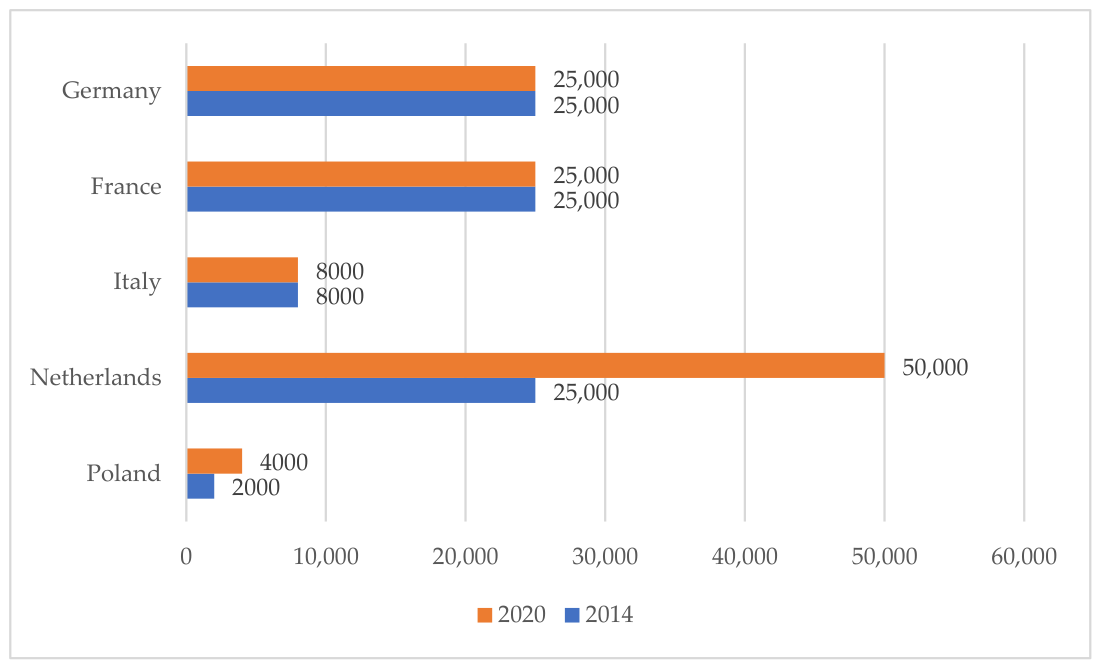
The Farm Accountancy Data Network (FADN) covers commercial agricultural farms that together account for at least 90% of the value of standard output (SO) in a given EU country. Starting with the largest farms in terms of standard output, the FADN sampling procedure progressively includes smaller farms until the threshold corresponding to 90% of the total standard output value in a given administrative unit (region) is reached. Consequently, the minimum economic size of farms included in the FADN system differs across EU Member States (Figure 2).
Among the countries analysed in this study, Poland has the smallest average economic size of commercial farms. Since 2020, within the FADN system, commercial farms in Poland have been defined as those generating more than EUR 4000 of standard output annually. At the other extreme are farms in the Netherlands, where only farms generating more than EUR 50,000 of standard output per year are classified as commercial. The substantial differences in farm structures across EU countries stem from a range of economic, natural, cultural, and institutional factors, many of which have a strong historical background [21,22,23].
According to the data available in the Farm Accountancy Data Network (FADN), in 2023 the economic size of an average dairy farm in the Netherlands amounted to EUR 452,000 in terms of standard output. Such a farm kept 105 dairy cows, and the total value of its assets reached EUR 4,366,900. By comparison, the economic size of an average Polish dairy farm recorded in FADN in 2023 was EUR 58,000. These farms kept an average of 21 dairy cows and had assets valued at EUR 333,100 (Table 2). These figures illustrate substantial disparities in both resources and production scale among dairy farms across EU countries. Among the countries analysed, Polish farms were characterised by significantly smaller resource bases and lower production scales. In contrast, the differences among dairy farms in France, Germany, and Italy in terms of herd size and available resources were relatively smaller. The economic size of farms, which is closely related to the level of material resources, also affects their economic performance. During the analysed period, the income of an average Polish dairy farm was the lowest among the countries included in the comparison. In 2014, the income generated by an average Polish dairy farm was nearly seven times lower than that of an average dairy farm in Italy. Although this gap decreased by 2023, the difference remained substantial (Table 2).
When evaluating the impact of direct payments on dairy farms in selected countries, differences in the intensity of agricultural production should also be taken into account. Production intensity is typically measured by the level of costs incurred relative to the value of output produced. In the case of dairy farms, the main output is milk, and therefore production costs are largely associated with its production. The calculations indicate that milk production intensity during the analysed period was lowest in Polish dairy farms. In 2023, the cost of producing 1 kg of milk on an average Polish dairy farm included in the FADN system amounted to EUR 0.50, which was EUR 0.13 lower than the corresponding cost observed in French farms (Table 2).

3.2. Impact of Direct Payments and Subsidies on Farm Resources

Land is one of the key resources determining the scale of milk production on dairy farms. The size of utilised agricultural area determines the capacity to produce feed, particularly roughage, which in turn influences the number of dairy cows that can be maintained and, consequently, the volume of milk production [24]. Due to its specific characteristics—such as its limited supply, spatial nature, and fundamental role in agricultural production—land is frequently used as a reference factor when analysing production and economic performance. Moreover, many forms of public support for agriculture are linked to the size of the agricultural area operated by farms [25]. Among the average dairy farms included in the FADN system in the analysed countries, the level of direct payments and subsidies per hectare of agricultural land ranged from EUR 311.70 in Poland in 2014 to EUR 622.60 in Italy in 2022 (Table 3). Overall, the amount of direct payments and subsidies per hectare of agricultural land in 2023 was slightly higher than in 2014 in most of the analysed countries, with the exception of Germany (Table 3). The relatively similar level of payments per hectare across countries results from the fact that the main criterion for allocating public funds under the EU’s agricultural policy is the size of the agricultural area in each Member State.
Human capital constitutes a vital resource in all economic enterprises [26,27], as production and economic outcomes largely depend on the skills and commitment of the workforce. Across sectors, there is a continuous drive to increase labour productivity, often through the adoption of modern machinery and other technological innovations [28,29]. Farmers similarly strive to enhance productivity, enabling them to achieve incomes comparable to those earned in non-agricultural sectors [30]. The majority of agricultural farms in the EU are family-operated, relying primarily on the labour of the owner and their family members [31,32]. Family members contribute varying levels of labour, raising the question of the distribution of direct payments and subsidies per person employed on dairy farms under the EU’s Common Agricultural Policy. In the FADN system, the number of hours worked by farmers, family members, and hired employees is reported, from which annual work units (AWU) are calculated assuming a standard annual working time of 2120 h per person. Analysis of the dairy farms participating in the FADN indicates substantial variation in the levels of direct payments and subsidies per AWU (Table 3). Polish dairy farms received considerably lower amounts than farms in Germany, France, the Netherlands, and Italy. In Poland, the annual value of direct payments and subsidies per AWU ranged from EUR 3754 to 5895 during 2014–2023. By contrast, French dairy farms achieved the highest values, exceeding EUR 22,147 per AWU in 2022 (Table 3). The primary explanation for the relatively low payments per AWU in Polish farms is their smaller production scale and correspondingly lower economic size.
Capital employed in farm assets represents another key resource [33]. The share of equity is particularly important, as it partially reflects the wealth of the farm owner. In the analysed countries, the value of equity in average dairy farms varied. Dutch farms recorded the highest levels: in 2014, average equity in the Netherlands was EUR 1,965,300, 2.7 times higher than in Italy, which ranked second. By 2023, the value of equity in Dutch dairy farms increased to EUR 3,313,200, while Italian farms reached EUR 1,313,400. The lowest levels were observed in Polish dairy farms, where equity in 2023 stood at EUR 320,400, up EUR 103,500 from 2014. When considering the ratio of direct payments to equity, Dutch farms consistently exhibited the lowest values throughout the study period, ranging from EUR 7.7 to 16.7 per EUR 1000 of equity. Conversely, French farms recorded the highest ratios, ranging from EUR 133.9 to 158.7 per EUR 1000 of equity (Table 3). This discrepancy is primarily explained by two factors: (1) the relatively low value of fixed assets in French farms, as the majority of utilised land (~85%) was leased; and (2) the substantial reliance on liabilities to finance assets, with debt accounting for 45.4% to 52.6% of total asset financing during the analysed period.
The analysis of the presented data indicates a differentiation of support models—Italian farms are characterised by the highest intensity of subsidies per hectare, French farms by dominance in relation to labour and capital, while Polish and German farms exhibit a moderate level of support. Dutch farms show the greatest variability over time. From the perspective of farm resource relations (AWU and equity), the highest “capital support intensity” is observed in France, whereas Poland remains in the group with the lowest subsidy-to-labour ratio, indicating persistent differences in the structure and production performance of farms between the new and old EU Member States.
In dynamic terms, German farms show a rather declining or stagnating trend in support levels, while France and Poland record increases (particularly in subsidies per AWU), suggesting a partial convergence of support levels within the EU while structural differences remain.

3.3. Impact of Direct Payments and Subsidies on Production Value and Farm Income

Since 2014, the primary objective of direct payments to farmers in EU countries has been to provide direct income support [34]. Previous models of the Common Agricultural Policy, which linked payments to production levels, often distorted market signals and led to surpluses of agricultural raw materials across EU countries [35]. To better align agricultural production with market conditions, this system was replaced by payments designed to directly support farmers’ incomes while also incentivising the adoption of environmentally friendly practices [36,37]. One rationale for maintaining income support is the specific nature of agricultural production: the biological processes and land dependency inherent in farming result in lower labour productivity compared to non-agricultural sectors [38]. This raises the question of how direct payments and other subsidies affect the financial performance of dairy farms. To address this, three indicators are presented in Table 4. The first is the share of direct payments and subsidies in the total value of agricultural production. Between 2014 and 2023, this share was highest in French dairy farms, ranging from 12.8% in 2023 to 19.2% in 2016. Dutch farms, by contrast, recorded the lowest share, reflecting their larger production scale and correspondingly higher production values (Table 4).
The most important indicator in this analysis is the share of direct payments and subsidies in farm income. In the FADN system, farm income is calculated by subtracting operating and maintenance costs from total revenue, which includes both agricultural sales and public support. Labour provided by the farmer and their family is not accounted for, as its valuation is difficult to standardise across farms, and thus is excluded from the calculated income.
The results demonstrate that direct payments and subsidies have a substantial effect on the incomes of dairy farms in the analysed countries (Table 4). Between 2014 and 2023, the share of payments in farm income varied considerably depending on market conditions, ranging from 15.3% in Italian farms in 2014 to 144.7% in French farms in 2016. Notably, in 2015, the share of direct payments and subsidies in average dairy farm income in Germany and France exceeded 100%, indicating that these farms would have generated no income without public support. In 2022, the share of payments in farm income reached its lowest level over the study period in Germany, France, the Netherlands, and Poland, whereas in Italy the lowest value was observed in 2023.

3.4. Impact of Direct Payments and Subsidies on Investment Activities

Investment levels in enterprises are a key indicator of growth potential. Entrepreneurs’ willingness to forego current consumption in favour of future returns reflects both the attractiveness of a given activity and their commitment to sustaining growth [39]. Investment decisions are influenced by a range of internal and external factors, including public support instruments such as direct payments, subsidies, tax incentives, and regulatory frameworks that either facilitate or constrain economic activity. Agricultural farms in the EU are among the sectors most affected by such external regulations, some of which—such as subsidies and direct payments for specific investments—serve as incentives. This raises the question of the extent to which dairy farms in the analysed countries benefited from investment incentives (Table 5).
Investment expenditure reflects the level of investment activity on dairy farms. Between 2014 and 2022, the highest investment levels were observed in Dutch farms, particularly in 2014–2015, when average annual expenditure exceeded EUR 114,000. At the opposite extreme were Polish dairy farms, where average investment ranged from EUR 4500 in 2016 to EUR 9900 in 2022. Investment levels were closely linked to production capacity and scale, with larger farms undertaking more substantial investments. The ratio of public support in the form of direct payments and subsidies to investment expenditure was highest in Italian farms, where it exceeded 100% throughout the analysed period, indicating that public support was higher than actual investment expenditure. However, investment levels in Italian farms remained among the lowest, alongside Polish farms. Conversely, Dutch farms invested substantially more than they received in direct payments and other subsidies.

4. Discussion

The evolution of support under the Common Agricultural Policy, particularly towards eco-schemes, may initially reduce the technical efficiency of dairy farms, as it requires the adoption of more environmentally friendly but often less intensive and more costly production practices. In the longer term, however, through technological adaptation, improved management, and innovation, farms may regain or even enhance their efficiency, although its nature will shift—from maximising production to a more sustainable approach.
The analysis confirms that direct payments significantly influence the financial performance, resource base, and investment activity of dairy farms in EU countries that were leading milk producers between 2014 and 2023. This is consistent with findings from previous studies [40,41,42]. Michels et al. [43] reported that 52% of German farmers surveyed considered direct payments important or very important, whereas only 14% viewed them as unimportant or very unimportant for farm income [43]. Similarly, Zalewski et al. [44] found that investment decisions often depend on the availability of public funding.
The obtained results indicate that role of direct payments is mainly income-supporting rather than efficiency-enhancing. In countries such as France subsidies constitute a key component of income from land, labour, and capital, indicating a high level of dependence on public support. In contrast, a declining importance of direct payments can be observed in Germany, which may suggest greater market competitiveness of farms.
However, the perceived impact of direct payments on agricultural operations varies among economists [36,37,41]. Advocates argue that direct payments enhance the resilience of European agriculture to adverse market conditions. Žičkienė et al. demonstrated that such payments contribute to higher production profitability and labour productivity while mitigating the effects of declining food prices [45]. Ciliberti et al. [46] found that in Italian FADN farms, direct payments had a greater impact on income in larger farms than in smaller ones, suggesting limited effectiveness in supporting small farms and reducing income disparities. Their findings also indicate potential for reducing payments to farms already receiving substantial support [46]. Biagini et al. [40] highlighted that direct payments in Italy stabilise farm income, as these funds are less volatile than other income components, although they are not targeted at farms with the highest income variability. Guth et al. noted that EU subsidies tend to benefit the strongest farms, which are least sensitive to market fluctuations, indicating that the Common Agricultural Policy is not an effective income-equalising instrument [47,48].
Direct payments are also justified on social grounds. Farmers occupy the first link in the food supply chain, producing raw materials that are subsequently processed and sold to consumers. Due to their relatively weak bargaining power vis-à-vis processors, farmers often experience price erosion, as the share of raw material value in final food prices continues to decline [49,50]. Direct payments are therefore recognised as a tool to mitigate this structural disadvantage and promote social fairness [51,52].
Since 2016, policy discussions and academic research have increasingly emphasised the need to link direct payments to environmentally friendly farming practices. However, it is emphasised that technological progress in precision agriculture may, on the one hand, contribute to reducing production intensity and support environmentally beneficial practices [53]. Market-driven intensification can negatively affect the environment, and payments are designed to compensate farmers for adopting less intensive practices [54]. Simulation studies of German farms by Michels et al. [43] suggest that, without direct payments, farms would expand and intensify production, reduce labour demand, and abandon extensive livestock farming. These changes could also alter regional crop patterns, favouring high-profit crops such as maize, and potentially lead to further intensification of agriculture. The authors concluded that the decrease in livestock and farms would have negative economic effects on rural areas, including employment losses [43].
Opponents of maintaining direct payments often argue that they may negatively affect measures aimed at improving the economic performance of farms. Žičkienė et al. [45] found that higher direct payments reduce farmers’ incentives to operate efficiently and adapt to market changes, potentially decreasing income and increasing reliance on subsidies. This declining motivation may undermine the development of adaptability, which is critical for the long-term resilience of individual farms and the agricultural sector as a whole [45]. Moreover, the impact of direct payments on income is higher in large farms than in small ones, and lower in farms already receiving substantial support. This suggests that direct payments are not effective in supporting small farms or reducing income disparities among agricultural farms [46,55].
The effect of direct payments and subsidies on economic performance and production potential varies by country, reflecting differences in payment distribution schemes and farm size. In Dutch dairy farms—the largest in terms of herd size—the share of direct payments in production value was lower than in Polish farms, which have the smallest herds. However, when considering farm income, the average share of direct payments was similar: 44.3% in the Netherlands and 44.5% in Poland over the analysed period. Research by Wojewodzic and Mikołajczyk [56] indicates that area payments per AWU in commercial dairy farms exceeded the statutory minimum gross wage, highlighting the role of such payments in supporting farmers’ social security.
The differences in the schemes for calculating direct payments across EU countries are most evident when analysing economic performance of French farms. Over the analysed period, average annual direct payments accounted for 88.4% of farm income. During market crises, the importance of direct payments is even more pronounced. In 2016, when global prices of dairy products fell sharply resulting in lower prices offered to farmers for milk, direct payments represented 79.9% of income in the analysed countries on average, while in French farms they exceeded 144%, demonstrating the stabilising effect of public support on farm income and resilience to adverse market conditions. As demonstrated by Soliwoda [57], the impact of Common Agricultural Policy instruments on the economic and financial stability of farms is relatively strong, with direct payments in particular, as an element of a security system, showing the potential to stabilise farm incomes. On the other hand, increasing levels of overall subsidies may raise the propensity to take on higher financial risk. It is emphasised that well-designed direct payments can contribute to reducing greenhouse gas emissions, which is particularly important in the case of livestock production [58].
Our study also has certain limitations. The first relates to the descriptive nature of the analysis, reliance on averages, and the structural heterogeneity of FADN farms. Other limitations include the lack of statistical testing and the inability to draw causal inferences. We acknowledge these constraints, and the results indicate the need for more in-depth research, which is particularly important in the context of shaping the future of the Common Agricultural Policy.

5. Need for Further Research

This study does not exhaust the topic of direct payments’ effects on the economic performance of European dairy farms, and relies on averaged FADN data. A more in-depth assessment would require analysing the criteria for granting individual direct payments and assessing their effectiveness, while also considering the scale of milk production at the farm level. A key factor determining the effectiveness of direct payments is the transaction costs associated with administrative procedures, which should be taken into account in a comprehensive assessment of these CAP mechanisms. The absence of disaggregated farm-level analysis, regional heterogeneity, or econometric identification strategies creates space for specific future research directions, such as using micro-level panel data, applying causal inference methods, examining cross-country institutional differences, modelling farm-level behavioural responses to policy changes, or analysing the heterogeneity of impacts by farm size or production intensity.

6. Summary and Conclusions

Direct payments and other subsidies have historically been, and continue to be, a crucial source of income support for EU agricultural farms. Payment schemes have evolved over time, altering farm priorities. Significant heterogeneity exists across EU countries in farm structure, particularly regarding milk production scale, material resources, and labour productivity. Among major milk-producing countries, Polish commercial farms have the smallest average utilised land area. Since 2020, under the FADN system, commercial farms in Poland have been defined as those that annually generate over EUR 4000 in Standard Output. By contrast, in the Netherlands, commercial farms are defined as entities that annually generate over EUR 50,000 in Standard Output. The reasons for farm heterogeneity across the European Union are numerous. In addition to economic, cultural, and natural conditions, many differences have a historical background. These structural differences also influence the impact of direct payments.
Based on the analysis, the following conclusions can be drawn:
  • The results indicate a clear structural differentiation of dairy farms in the surveyed countries, which translates into varying levels of dependence on CAP support and varying economic resilience of the sector. Direct payments and subsidies had a substantial effect on dairy farm income in the analysed countries. The average share of direct payments in farm income between 2014 and 2023 ranged from 19.7% in Italy to 88.4% in France. In 2016, the share reached 144.7% in French farms, highlighting their strong dependence on public support. During periods of adverse market conditions, EU dairy farms would have incurred financial losses without these payments.
  • In terms of direct payments relative to farm resources, Dutch farms exhibited the lowest ratio, while French farms had the highest. The lower ratio in Dutch farms reflects their technologically advanced operations, largely financed with equity. In 2023, assets financed by equity in Dutch farms were more than ten times higher than in Polish farms. The high ratio in French farms is explained by (1) relatively low fixed assets and (2) a high share of assets financed by liabilities (45.4–52.6% during the analysed period).
  • The ratio of investment expenditure to public support in the form of direct payments and other subsidies was highest in Italian farms, exceeding 100% throughout the period, despite investment levels being among the lowest, alongside Polish farms. Conversely, Dutch farms invested significantly more than they received in direct payments and subsidies.
  • A new scheme linking direct payments to environmental goals was implemented in 2023. Comparing payments relative to assets, income, and investments shows no substantial changes from previous years. In 2023, the average payment per hectare across the selected farms was EUR 461.34, only EUR 19.88 lower than in 2022. The results have important implications for the design of EU agricultural policy, particularly in the context of the 2023 eco-schemes, which should take into account structural differences between countries as well as the level of capital intensity and production organisation in order to enhance the effectiveness of support instruments and better tailor them to the diverse conditions under which agricultural holdings operate.

Author Contributions

Conceptualisation, A.P., T.W., M.C. and A.J.P.; methodology, A.P., T.W., M.C. and A.J.P.; formal analysis A.P., T.W., M.C. and A.J.P.; investigation, A.P.; data curation, A.P.; writing—original draft preparation, A.P., T.W. and M.C.; writing—review and editing T.W., M.C. and A.J.P.; visualisation, T.W., M.C. and A.J.P.; supervision, A.P.; project administration A.P. and M.C.; funding acquisition T.W., M.C. and A.J.P. All authors have read and agreed to the published version of the manuscript.

Funding

Research paid for with funds from the Ministry of Science and Higher Education under contract No. MEiN/2023/DPI/2872 dated 4 October 2023, action No. I.2 in the amount of PLN 1,350,000.00.

Institutional Review Board Statement

The study was conducted in accordance with the guidelines of the Act on the collection and use of accounting data from agricultural holdings of 29 November 2000 with subsequent amendments (Journal of Laws No. 3 of 2001, item 20). The study does not include animals.

Data Availability Statement

PL FADN (2024): Farm Accountancy Data Network, https://fadn.pl/ and https://bdl.stat.gov.pl (accessed on 1 December 2025).

Conflicts of Interest

The authors declare no conflicts of interest.

Abbreviations

The following abbreviations are used in this manuscript:
FADNThe Farm Accountancy Data Network
ECSCThe European Coal and Steel Community
SAPSSingle Area Payment Scheme
AWUAnnual Work Unit
EECThe European Economic Community
BPSBasic Payment Scheme
SPSThe Single Payment Scheme
CAPCommon Agricultural Policy

References

  1. Patel, K.K. The Treaties of Rome. In Oxford Research Encyclopedia of Politics; Oxford University Press: Oxford, UK, 2019. [Google Scholar]
  2. Gravey, V.; Adam, U.; Hoerber, T. The Long and Winding Road to Greening the Common Agricultural Policy. In The Routledge Handbook of European Integrations; Routledge: London, UK, 2022. [Google Scholar]
  3. Giuliani, A.; Baron, H. The CAP (Common Agricultural Policy): A Short History of Crises and Major Transformations of European Agriculture. Forum Soc. Econ. 2025, 54, 68–94. [Google Scholar] [CrossRef]
  4. Muirhead, B.; Almås, R. The Evolution of Western Agricultural Policy since 1945. Res. Rural Sociol. Dev. 2012, 18, 23–49. [Google Scholar] [CrossRef]
  5. Daugbjerg, C. Sequencing in Public Policy: The Evolution of the CAP over a Decade. J. Eur. Public Policy 2009, 16, 395–411. [Google Scholar] [CrossRef]
  6. Gorton, M.; Hubbard, C.; Hubbard, L. The Folly of European Union Policy Transfer: Why the Common Agricultural Policy (CAP) Does Not Fit Central and Eastern Europe. Reg. Stud. 2009, 43, 1305–1317. [Google Scholar] [CrossRef]
  7. Toma, I.; Redman, M.; Czekaj, M.; Tyran, E.; Grivins, M.; Sumane, S. Small Scale Farming and Food Security—Policy Perspectives from Central and Eastern Europe. Land. Use Policy 2023, 127, 106385. [Google Scholar] [CrossRef]
  8. Davidova, S. Implementation of Single Area Payment Scheme in the EU New Member States. In The Common Agricultural Policy after the Fischler Reform; Routledge: London, UK, 2016; pp. 107–120. [Google Scholar]
  9. 32021R1119; Regulation (EU) 2021/1119 of the European Parliament and of the Council of 30 June 2021. European Union: Brussels, Belgium, 2021.
  10. Petrescu, A.M.R.; Qiu, C.; Ciais, P.; Thompson, R.L.; Peylin, P.; McGrath, M.J.; Solazzo, E.; Janssens-Maenhout, G.; Tubiello, F.N.; Bergamaschi, P.; et al. The Consolidated European Synthesis of CH4 and N2O Emissions for the European Union and United Kingdom: 1990–2017. Earth Syst. Sci. Data 2021, 13, 2307–2362. [Google Scholar] [CrossRef]
  11. Synowiec, A.; Czekaj, M.; Verdeguer, M.; De Barreda, D.G.; Campillo-Cora, C.; Vieites-Álvarez, Y.; López-González, D.; Sánchez-Moreiras, A.M.; Fernández-Calviño, D.; Nocito, F.F.; et al. Herbicides in Use: Current Status and Perspectives in the Different Biogeographic Regions of Europe. J. Agric. Food Chem. 2025, 73, 22089–22109. [Google Scholar] [CrossRef]
  12. Prahalad, C.K.; Hamel, G. Competing for the Future; Harvard Business School Press: Cambridge, MA, USA, 1994. [Google Scholar]
  13. Bórawski, P.; Pawlewicz, A.; Parzonko, A.; Jayson, K.H.; Holden, L. Factors Shaping Cow’s Milk Production in the EU. Sustainability 2020, 12, 420. [Google Scholar] [CrossRef]
  14. Náglová, Z.; Rudinskaya, T. Factors Influencing Technical Efficiency in the EU Dairy Farms. Agriculture 2021, 11, 1114. [Google Scholar] [CrossRef]
  15. Sroka, W.; Parzonko, A.; Wojewodzic, T.; Czekaj, M.; Luty, L.; Drab, A. Drivers of Milk Production Decisions on Polish Family Farms: A Classification Tree Approach. Agriculture 2025, 15, 21. [Google Scholar] [CrossRef]
  16. Parzonko, A.; Bórawski, P. Competitiveness of Polish Dairy Farms in the European Union. Agric. Econ. 2020, 66, 4. [Google Scholar] [CrossRef]
  17. Špička, J.; Smutka, L. The Technical Efficiency of Specialised Milk Farms: A Regional View. Sci. World J. 2014, 2014, 985149. [Google Scholar] [CrossRef]
  18. Hornowski, A.; Parzonko, A.; Kotyza, P.; Kondraszuk, T.; Bórawski, P.; Smutka, L. Factors Determining the Development of Small Farms in Central and Eastern Poland. Sustainability 2020, 12, 5095. [Google Scholar] [CrossRef]
  19. Poczta, W.; Średzińska, J.; Chenczke, M. Economic Situation of Dairy Farms in Identified Clusters of European Union Countries. Agriculture 2020, 10, 92. [Google Scholar] [CrossRef]
  20. Hamilton, S.F.; Richards, T.J.; Shafran, A.P.; Vasilaky, K.N. Farm Labor Productivity and the Impact of Mechanization. Am. J. Agric. Econ. 2022, 104, 1435–1459. [Google Scholar] [CrossRef]
  21. Wojewodzic, T. Procesy Dywestycji i Dezagraryzacji w Rolnictwie o Rozdrobnionej Strukturze Agrarnej; Wydawnictwo Uniwersytetu Rolniczego w Krakowie: Kraków, Poland, 2017. [Google Scholar] [CrossRef]
  22. Bukraba-Rylska, I. Socjologia Wsi Polskiej; Wydawnictwo Naukowe PWN: Warszawa, Poland, 2008. [Google Scholar]
  23. Hryszko, K.; Pieniążek, K.; Rembeza, J.; Seremak-Bulge, J.; Szajner, P.; Świetlik, K. Rozwój Rynku Mleczarskiego i Zmiany Jego Funkcjonowania w Latach 1990–2005; Instytut Ekonomiki Rolnictwa i Gospodarki Żywnościowej–PIB: Warszawa, Poland, 2005. [Google Scholar]
  24. Fleury, P.; Dubeuf, B.; Jeannin, B. Forage Management in Dairy Farms: A Methodological Approach. Agric. Syst. 1996, 52, 199–212. [Google Scholar] [CrossRef]
  25. Płonka, R. Income Situation and the Level of Public Assistance for Commercial Farms in Selected EU Countries. Wiad. Stat. 2021, 66, 24–53. [Google Scholar] [CrossRef]
  26. El-Osta, H. The Impact of Human Capital on Farm Operator Household Income. Agric. Resour. Econ. Rev. 2011, 40, 95–115. [Google Scholar] [CrossRef]
  27. Yang, D.T.; An, M.Y. Human Capital, Entrepreneurship, and Farm Household Earnings. J. Dev. Econ. 2002, 68, 65–88. [Google Scholar] [CrossRef]
  28. Keizer, T.H.; Emvalomatis, G. Differences in TFP Growth among Groups of Dairy Farms in the Netherlands. NJAS Wagening. J. Life Sci. 2014, 70, 33–38. [Google Scholar] [CrossRef]
  29. Kumbhakar, S.C.; Hjalmarsson, L. Technical Efficiency and Technical Progress in Swedish Dairy Farms. In The Measurement of Productive Efficiency; Oxford University Press: Oxford, UK, 2023. [Google Scholar]
  30. Parzonko, A.; Wojewodzic, T.; Czekaj, M.; Płonka, R.; Parzonko, A.J. Remuneration for Own Labour in Family-Run Dairy Farms Versus the Salaries and Wages in Non-Agricultural Sectors of the Economy—Evaluation of the Situation in Poland in 2005–2022. Agriculture 2025, 15, 1314. [Google Scholar] [CrossRef]
  31. Eurostat (European Commission). Agriculture Statistics–Family Farming in the EU. Available online: https://ec.europa.eu/eurostat/statistics-explained/SEPDF/cache/38078.pdf (accessed on 12 March 2026).
  32. Guiomar, N.; Godinho, S.; Pinto Correia, T.; Almeida, M.; Bartolini, F.; Bezák, P.; Biró, M.; Bjørkhaug, H.; Bojnec, Š.; Brunori, G.; et al. Typology and Distribution of Small Farms in Europe: Towards a Better Picture. Land. Use Policy 2018, 75, 784–798. [Google Scholar] [CrossRef]
  33. Parzonko, A.; Parzonko, A.J.; Bórawski, P.; Wicki, L. Return on Equity in Dairy Farms from Selected EU Countries: Assessment Based on the DuPont Model in Years 2004–2020. Agriculture 2023, 13, 1403. [Google Scholar] [CrossRef]
  34. Larrubia Vargas, R. The Common Agricultural Policy and Its Reforms: Reflections about the 2014–2020 Reform. Cuad. Geogr. 2017, 56, 124–147. [Google Scholar]
  35. Olagunju, K.O.; Patton, M.; Feng, S. Estimating the Impact of Decoupled Payments on Farm Production in Northern Ireland: An Instrumental Variable Fixed Effect Approach. Sustainability 2020, 12, 3222. [Google Scholar] [CrossRef]
  36. Bernini, C.; Galli, F. Economic and Environmental Efficiency, Subsidies and Spatio-Temporal Effects in Agriculture. Ecol. Econ. 2024, 218, 108120. [Google Scholar] [CrossRef]
  37. Mamun, A. Impact of Farm Subsidies on Global Agricultural Productivity. Agric. Econ. 2024, 55, 346–364. [Google Scholar] [CrossRef]
  38. Dinis, I. Exploring the Drivers of Microregional Agricultural Labor Productivity: Empirical Insights from Portugal. Agriculture 2023, 13, 2150. [Google Scholar] [CrossRef]
  39. Czubak, W.; Pawłowski, K.P. The Impact of Agricultural Investments on the Economic Efficiency of Production Factors: An Empirical Study of the Wielkopolska Voivodeship. Agriculture 2024, 14, 2217. [Google Scholar] [CrossRef]
  40. Biagini, L.; Antonioli, F.; Severini, S. The Impact of CAP Subsidies on the Productivity of Cereal Farms in Six European Countries: A Historical Perspective (2008–2018). Food Policy 2023, 119, 102473. [Google Scholar] [CrossRef]
  41. Kumbhakar, S.C.; Li, M.; Lien, G. Do Subsidies Matter in Productivity and Profitability Changes? Econ. Model. 2023, 123, 106264. [Google Scholar] [CrossRef]
  42. Paula, S.; Constanța, T.V.; Elena, S.; Mihai, M.M.; Elena, S.; Ciprian, M.D. Subsidies’ Impacts on Technical–Economic Indicators in Large Crop Farms. Agriculture 2023, 13, 1712. [Google Scholar] [CrossRef]
  43. Michels, M.; Möllmann, J.; Musshoff, O. German Farmers’ Perspectives on Direct Payments in the Common Agricultural Policy. EuroChoices 2020, 19, 48–52. [Google Scholar] [CrossRef]
  44. Zalewski, K.; Bórawski, P.; Żuchowski, I.; Parzonko, A.; Holden, L.; Rokicki, T. The Efficiency of Public Financial Support Investments into Dairy Farms in Poland by the European Union. Agriculture 2022, 12, 186. [Google Scholar] [CrossRef]
  45. Žičkienė, A.; Melnikienė, R.; Morkūnas, M.; Volkov, A. CAP Direct Payments and Economic Resilience of Agriculture: Impact Assessment. Sustainability 2022, 14, 10546. [Google Scholar] [CrossRef]
  46. Ciliberti, S.; Severini, S.; Ranalli, M.G.; Biagini, L.; Frascarelli, A. Do Direct Payments Efficiently Support Incomes of Small and Large Farms? Eur. Rev. Agric. Econ. 2022, 49, 796–831. [Google Scholar] [CrossRef]
  47. Guth, M.; Smędzik-Ambroży, K.; Czyżewski, B.; Stępień, S. The Economic Sustainability of Farms under Common Agricultural Policy in the European Union Countries. Agriculture 2020, 10, 34. [Google Scholar] [CrossRef]
  48. Pawłowska, A.; Grochowska, R. Ile Dzieli Nas od Parytetu Dochodowego w Rolnictwie? Perspektywa Historyczna Polski (2004–2019). Gospod. Nar. 2025, 2, 49–69. [Google Scholar] [CrossRef]
  49. Czyżewski, A.; Stępień, S. Common Agricultural Policy of the EU after 2013 and the Interests of the Polish Agriculture. Ekonomista 2011, 1, 9–36. [Google Scholar]
  50. Velázquez, B.; Buffaria, B. About Farmers’ Bargaining Power within the New CAP. Agric. Food Econ. 2017, 5, 16. [Google Scholar] [CrossRef]
  51. Czyżewski, A.; Matuszczak, A. Dylematy Kwestii Agrarnej w Panoramie Dziejów. Zesz. Nauk. SGGW–Ekon. Organ. Gosp. Żywn. 2011, 90, 5–23. [Google Scholar] [CrossRef]
  52. Zegar, J. Ekonomia Wobec Kwestii Agrarnej. Ekonomista 2010, 6, 779–804. [Google Scholar]
  53. Kostić, M.; Šarac, V.; Narandžić, T.; Kovačević, D.B. Digital and Green Technological Drivers of Transformation in the Agri-Food Sector. Foods 2026, 15, 1081. [Google Scholar] [CrossRef] [PubMed]
  54. Zieliński, M.; Gołębiewska, B.; Jadczyszyn, J.; Adamski, M.; Tyburski, J. Importance of Environmental Measures under the CAP 2023–2027 on High Nature Value Farmlands: Evidence from Poland. Sustainability 2025, 17, 7763. [Google Scholar] [CrossRef]
  55. Frascarelli, A.; Ciliberti, S.; Bartolucci, P.E.; Mastandrea, G. The CAP Coherence between Redistributive and Environmental Goals: Do the Allocation Criteria for Direct Payments Play a Role? Agric. Food Econ. 2025, 13, 15. [Google Scholar] [CrossRef]
  56. Wojewodzic, T.; Mikołajczyk, J. Poziom Subsydiowania Działalności Operacyjnej Gospodarstw Towarowych w Polsce ze Szczególnym Uwzględnieniem Gospodarstw Mlecznych. Ann. Pol. Assoc. Agric. Agribus. Econ. 2025, 27, 193–207. [Google Scholar]
  57. Soliwoda, M. The Impact of the Support Instruments of the Common Agricultural Policy on Economic and Financial Stability of Farms in EU Countries. Acta Univ. Lodz. Folia Oecon. 2016, 319, 95–116. [Google Scholar] [CrossRef]
  58. Zuniga-Gonzalez, C.A.; Jaramillo-Villanueva, J.L.; Blanco-Roa, N. Inputs-Oriented VRS DEA in dairy farms. F1000Research 2025, 12, 901. [Google Scholar] [CrossRef]
Figure 1. Main determinants of agricultural farm development. Source: own elaboration.
Agriculture 16 01106 g001
Figure 2. Minimum economic size thresholds, determined on the basis of standard output, for farms included in the FADN observation field, in 2014 and 2020 (Euro). Source: data from the EU FADN (2023).
Agriculture 16 01106 g002
Table 1. Indicators used to evaluate the impact of direct payments in the analysed dairy farms.
Indicator TypeConstruction Method (Variables from FADN System)
Impact of direct payments and subsidies on farm resources (assets)
Direct payments and subsidies per hectare
of agricultural land [euro]
(SE 605 + SE 405)/(SE 025)
Direct payments and subsidies per AWU [euro] (SE 605 + SE 405)/(SE 010)
Direct payments and subsidies per EUR 1000
of equity [euro]
(SE 605 + SE405)/(SE501)
Impact of direct payments and subsidies on production value and farm income
Share of direct payments and subsidies
in production value [%]
(SE 605 + SE 405)/(SE 131)
Share of direct payments and subsidies
in net value added [%]
(SE 605)/(SE 415)
Share of direct payments and subsidies
in farm income [%]
(SE 605 + SE 405)/(SE 420)
Impact of direct payments and subsidies on investment financing
Share of direct payments and subsidies
in investment expenditure [%]
(SE 605 + SE 405)/(SE 516)
Share of subsidies in investment expenditure [%](SE 405)/(SE 516)
Source: own elaboration.
Table 2. Basic production and economic characteristics of an average dairy farm in selected EU countries based on FADN data, 2014–2023.
Countries/Period2014201520162017201820192020202120222023
Herd size
Germany62.2967.4369.1970.178.5978.7179.1180.0281.280.88
France58.3663.6963.6564.4672.2572.6173.0274.273.674.56
Italy53.9551.454.1155.9668.367.8669.4470.0970.5169.08
Netherlands94.16101.65104.02104.12105.24104.25106.07105.54105.48105.77
Poland16.117.7416.9218.4720.3820.9120.8820.8521.6421.41
Utilised agricultural land (owned and leased) [ha]
Germany72.2576.7577.6377.6189.1590.4492.0492.2194.7494.08
France90.4298.3597.5296.77110.39108.88110.33110.76110.12111.3
Italy28.9332.0832.4733.0240.9939.240.8142.4943.0140.6
Netherlands53.4255.6956.3657.5360.1460.0861.3261.5161.3460.45
Poland21.4422.922.0823.5126.4926.6425.8924.8425.7825.00
Assets [thousand euro]
Germany876.0925.7948.2974.21083.61105.91120.31169.01253.31269.6
France439.1482.9477.2484.6560.7561.3590.8623.0669.2712.5
Italy761.6752.0733.5699.6835.6981.91031.91174.31286.41334.9
Netherlands2938.73060.72923.63171.94395.24088.84137.34249.54459.74366.9
Poland229.9241.0229.2256.3283.1289.8282.9284.7317.8333.1
Farm income [euro]
Germany42,50732,46743,87274,65454,44146,39147,50982,506135,04369,371
France40,48533,53226,23649,17945,16452,50146,87160,31589,04362,501
Italy105,64678,04882,75190,675119,906111,190118,689125,313132,251134,583
Netherlands68,14845,82929,148101,30868,92884,44056,81677,943191,71896,125
Poland15,10013,16914,01422,62122,28523,02623,00228,13546,59129,203
Milk production costs [euro/kg]
Germany0.470.440.440.450.490.480.490.530.610.59
France0.500.490.480.460.490.500.500.530.580.63
Italy0.450.440.420.420.430.430.460.480.570.51
Netherlands0.440.420.400.410.410.410.420.450.520.53
Poland0.330.310.290.300.320.320.310.360.470.50
Source: own elaboration based on FADN data.
Table 3. Impact of direct payments and subsidies on farm resources (assets).
Countries/Period2014201520162017201820192020202120222023
Direct payments and subsidies per hectare of agricultural land [euro/ha]
Germany467.2450.1454.8459.9467.0458.3441.3438.4435.7416.0
France354.6370.9389.3389.2372.3391.0380.2391.6428.4414.2
Italy558.9526.6513.8530.4563.3556.0609.1604.2622.6560.4
Netherlands404.9592.2491.3460.0416.4453.6446.1522.4491.8515.9
Poland311.7367.6374.5384.2382.2388.0400.6392.7427.6400.2
Direct payments and subsidies per AWU [euro]
Germany16,626.616,688.917,055.616,995.718,022.917,711.517,067.617,202.617,126.616375.3
France16,964.018,329.619,568.019,314.919,388.220,368.919,879.119,896.822,147.421539.7
Italy8555.09332.69116.99217.410,943.610,089.811,248.411,410.711,493.610295.0
Netherlands11,951.417,357.414,728.213,783.312,778.114,193.813,957.115,986.115,313.716159.1
Poland3753.94575.54697.74856.55413.95557.05667.25330.65894.75497.3
Direct payments and subsidies per EUR 1000 of equity [euro]
Germany49.749.649.948.652.251.750.147.644.541.7
France133.9148.2158.7149.1152.9155.6149.8144.5138.6131.2
Italy22.022.923.025.428.122.524.522.321.217.3
Netherlands11.016.715.012.77.79.29.110.18.99.4
Poland30.736.937.937.238.137.938.735.936.131.2
Source: own elaboration based on FADN data.
Table 4. Impact of direct payments and subsidies on the value of production and farm income.
Countries/Period2014201520162017201820192020202120222023
Share of direct payments and subsidies in revenues from agricultural activity [%]
Germany14.515.014.612.512.912.912.310.28.08.8
France15.216.919.217.115.915.915.614.413.312.8
Italy6.88.28.28.58.48.08.58.17.26.0
Netherlands5.59.07.95.95.86.26.46.84.75.5
Poland17.823.924.419.519.018.618.914.610.811.2
Share of direct payments in net value added [%]
Germany41.247.941.930.438.640.738.928.620.517.2
France50.061.975.651.255.252.154.446.137.033.0
Italy13.518.417.316.816.616.417.617.116.510.1
Netherlands17.529.231.316.318.918.723.622.811.815.7
Poland38.055.552.336.038.838.339.030.921.222.6
Share of direct payments and subsidies in farm income (SE 420) [%]
Germany79.4106.480.547.876.589.385.549.030.656.4
France79.2108.8144.776.691.081.189.571.953.073.8
Italy15.321.620.219.319.319.620.920.520.216.9
Netherlands31.772.095.026.136.332.348.141.215.732.4
Poland44.363.959.039.945.444.945.134.723.734.3
Source: own elaboration based on FADN data.
Table 5. Impact of direct payments and subsidies on investment expenditure.
Countries/Period2014201520162017201820192020202120222023
Share of direct payments and subsidies in investment expenditure [%]
Germany82.884.599.874.167.766.866.262.346.548.4
France79.893.796.997.473.181.365.567.072.359.2
Italy107.5156.3197.0197.5365.1191.0515.9160.8232.2124.3
Netherlands18.927.847.840.927.032.630.057.943.931.7
Poland107.6153.4180.3105.8111.4126.2136.5111.1111.6113.6
Share of subsidies in investment expenditure [%]
Germany3.81.71.50.41.01.41.01.61.31.1
France3.03.34.34.94.95.14.05.27.54.1
Italy0.00.00.00.94.03.611.24.48.82.5
Netherlands0.24.53.61.20.82.01.64.41.82.5
Poland9.310.09.74.94.75.85.65.14.45.4
Source: own elaboration based on FADN data.
Disclaimer/Publisher’s Note: The statements, opinions and data contained in all publications are solely those of the individual author(s) and contributor(s) and not of MDPI and/or the editor(s). MDPI and/or the editor(s) disclaim responsibility for any injury to people or property resulting from any ideas, methods, instructions or products referred to in the content.