Article

Multiplex CRISPR/Cas9 Editing of SlTOM1 Host Factors Confers Enhanced Tolerance to ToBRFV in Tomato

Department of Plant Protection, Faculty of Agriculture, Akdeniz University, 07059 Antalya, Türkiye
*
Author to whom correspondence should be addressed.
Agriculture 2026, 16(10), 1097; https://doi.org/10.3390/agriculture16101097 (registering DOI)
Submission received: 14 April 2026 / Revised: 11 May 2026 / Accepted: 14 May 2026 / Published: 16 May 2026
(This article belongs to the Topic Applications of Biotechnology in Food and Agriculture)

Abstract

Tomato brown rugose fruit virus (ToBRFV) poses a major threat to global tomato (Solanum lycopersicum) production, as it can overcome conventional resistance genes that are effective against tobamoviruses. In this study, a multiplex CRISPR/Cas9 system was developed to target the SlTOM1 susceptibility gene family (SlTOM1a–d), which encodes host factors essential for tobamovirus replication. Six guide RNAs (gRNAs), designed following 12 off-target analyses, were assembled into a multiplex CRISPR/Cas9 construct using a Golden Gate cloning strategy and introduced into tomato genotypes through an Agrobacterium-based tissue culture transformation procedure. Although primary T0 transformants exhibited chimeric mutation patterns, stable inheritance and segregation of edited alleles were confirmed in the T1 generation. Sequence analyses identified diverse indel mutations across target loci, with SlTOM1d exhibiting the highest editing efficiency. Multiplex genome editing successfully generated single-, double-, and triple-mutant combinations, with higher-order mutants displaying the strongest tolerance phenotypes. Following mechanical ToBRFV inoculation, edited T1 plants exhibited markedly reduced symptom severity, low viral accumulation, and improved fruit health compared to wild-type controls. RT-qPCR analysis further confirmed significantly reduced viral RNA levels, supporting a host-factor-mediated tolerance mechanism. Importantly, edited lines maintained normal growth and agronomic performance. Collectively, these findings demonstrate that multiplex CRISPR/Cas9-mediated targeting of SlTOM1 homologs represents a promising and practical strategy for improving ToBRFV tolerance in tomato breeding programs.

1. Introduction

Tomato (Solanum lycopersicum) is one of the most important food crops cultivated and consumed worldwide. According to recent data from the Food and Agriculture Organization Statistics [1], global tomato production reached approximately 192 million tons in 2023, underscoring its substantial contribution to the global food supply and agricultural economies. In Türkiye, tomato production accounts for a substantial proportion of the total vegetable output and ranks among the leading agricultural products in terms of production volume and export capacity [2]. However, the intensification of production systems, expansion of global trade, and increased movement of plant material have facilitated the rapid dissemination of viral pathogens, leading to substantial yield and quality losses worldwide. Among these, RNA viruses such as Tomato brown rugose fruit virus (ToBRFV), Pepino mosaic virus (PepMV), and Tomato spotted wilt virus (TSWV) represent major constraints in tomato production systems and are frequently detected either individually or in combinations [3].
ToBRFV has emerged as one of the most destructive viral pathogens affecting tomato production globally. Owing to its high environmental stability, which is typical of tobamoviruses, and efficient mechanical and seed-associated transmission, ToBRFV has rapidly spread across major tomato-growing regions [4,5,6]. Infected plants exhibit mosaic patterns, chlorosis, and leaf deformation, whereas fruits develop rugosity and discoloration, resulting in reduced marketability and, consequently, severe economic losses. The yield reduction associated with ToBRFV infection can reach critically high levels depending on disease severity [7]. For decades, dominant resistance genes such as Tm-1, Tm-2, and particularly Tm-22 have been widely deployed to control tobamoviral infections by recognizing viral movement proteins and activating host defense responses. However, mutations in the movement protein of ToBRFV enable the virus to evade recognition by these resistance genes, thereby overcoming classical resistance mechanisms [8,9]. This breakdown of resistance underscores the urgent need for alternative and more durable ToBRFV management strategies.
Targeting the host susceptibility factors required for viral replication has emerged as a promising strategy beyond the dominant resistance mechanisms. Recessive resistance or tolerance is typically associated with loss-of-function mutations in host genes that are essential for the viral life cycle, offering a more durable and potentially broad-spectrum solution than resistance based on pathogen recognition [10,11,12].
Comparable CRISPR/Cas9-based host susceptibility gene editing approaches have also been successfully implemented in cucumber and tomato: targeted modification of eIF4E homologs conferred broad resistance against economically important potyviruses, including Cucumber mosaic virus (CMV), Potato virus Y (PVY), and multiple cucumber-infecting viruses, thereby demonstrating the wider applicability of susceptibility gene engineering as a precision breeding strategy for durable viral resistance across diverse crop species [13,14]. In addition to viral diseases, susceptibility gene editing has also been successfully applied to fungal pathosystems. In cucumber, CRISPR/Cas9-mediated knockout of CsaMLO homologs generated powdery mildew-resistant lines by increasing both pre- and post-invasive defense responses, demonstrating the broader utility of host factor engineering for durable disease resistance across crop species [15]. Collectively, these examples underscore the versatility of host susceptibility gene editing as a powerful precision breeding platform beyond traditional dominant resistance strategies.
Tobamovirus replication occurs in the cytoplasm of host cells, primarily in association with endoplasmic reticulum (ER) membranes, where viral replication complexes are assembled [16,17]. Host membrane-associated proteins play a critical role in this process. In particular, TOBAMOVIRUS MULTIPLICATION 1 (TOM1) proteins interact with viral replicase proteins and facilitate viral RNA synthesis [16,18]. Studies in Arabidopsis thaliana have demonstrated that loss-of-function mutations in TOM1 and its paralogs significantly suppress tobamovirus multiplication [18,19]. TOM1 was first identified in Arabidopsis thaliana as an essential host factor required for efficient tobamovirus replication; it encodes a multipass transmembrane protein that directly interacts with viral replication proteins and functions as a key component of viral replication complexes. Importantly, simultaneous disruption of TOM1 and its paralogs, including TOM3, results in nearly complete inhibition of tobamovirus multiplication without major developmental defects, indicating substantial functional redundancy among TOM1-like genes and suggesting that multiplex targeting of multiple homologs may provide durable resistance with minimal fitness penalties [18,20]. TOM1 homologs are evolutionarily conserved across numerous plant species, and previous RNA interference studies in tobacco, Nicotiana benthamiana, and tomato have demonstrated that suppression of TOM1 homologs effectively reduces tobamovirus accumulation [21,22,23]. More recently, CRISPR/Cas9-mediated targeted mutagenesis has validated TOM1-directed resistance in agricultural systems, where NtTOM1 editing in tobacco confers stable resistance to tobacco mosaic virus (TMV), whereas quadruple knockout of SlTOM1 homologs in tomato generates strong resistance to tomato brown rugose fruit virus without obvious developmental penalties [24]. Collectively, these findings establish TOM1 as a highly conserved susceptibility factor and highlight the necessity of simultaneously targeting multiple homologs to overcome functional redundancy and achieve robust tobamovirus resistance.
In tomato, SlTOM1 homologs represent this gene family, and they collectively contribute to tobamovirus replication. Multiple SlTOM1 homologs are involved in ToBRFV multiplication, with their relative contributions ranked as follows: SlTOM1aSlTOM1c > SlTOM1d > SlTOM1b [24]. Moreover, simultaneous disruption of TOM1 and TOM3 has been shown to result in an asymptomatic response to ToBRFV infection and a substantial reduction in viral accumulation [25]. These findings indicate that replication of tobamovirus in tomato is governed by a network of functionally related SlTOM1 homologs rather than a single host factor, highlighting the importance of multiplex targeting strategies.
Recent advances in clustered regularly interspaced palindromic repeats (CRISPR)/Cas9 genome editing have enabled precise manipulation of host susceptibility genes, providing a powerful approach for developing virus-tolerant crops. In tomato, CRISPR-based studies have demonstrated that editing susceptibility genes can effectively suppress viral infections. For example, targeting the gene has been shown to restrict Tomato yellow leaf curl virus (TYLCV) infection and limit its systemic spread [26]. Similarly, multiplex editing of SlTOM1 homologs has resulted in a strong response to ToBRFV [24,25]. Chemical control measures are insufficient once infection is established; thus, the development of sustainable genetic strategies such as genome editing is essential. Targeting host factors indispensable for viral replication, such as SlTOM1 homologs, represents a promising approach for achieving durable tolerance [25].
In this study, we targeted SlTOM1 homologs (SlTOM1a–d) in tomato using multiplex CRISPR/Cas9 genome editing technology. Accordingly, the aim was to develop tomato lines exhibiting high tolerance to ToBRFV infection. This study was designed to suppress viral replication by disrupting the function of the SlTOM1 homologs required for viral multiplication within the host. Overall, this study demonstrates the potential of using CRISPR/Cas9 technology to generate tomato lines with an increased tolerance to viral pathogens.

2. Materials and Methods

2.1. Plant Material

The tomato genotypes used in this study were selected from breeding germplasms. A total of 16 different genotypes, designated B1–B16, were used for regeneration and transformation experiments. These genotypes represent different tomato types, including cherry, cocktail, and beef.
This study was conducted over a three-year period (2023–2025). First, bioinformatic analyses, including guide RNA design and in silico validation, were performed. These were followed by in vitro molecular experiments and Agrobacterium-mediated transformation. Subsequently, plant regeneration was achieved through tissue culture techniques, and the development of regenerated plantlets was successfully completed in 2025.

2.2. gRNA Selection

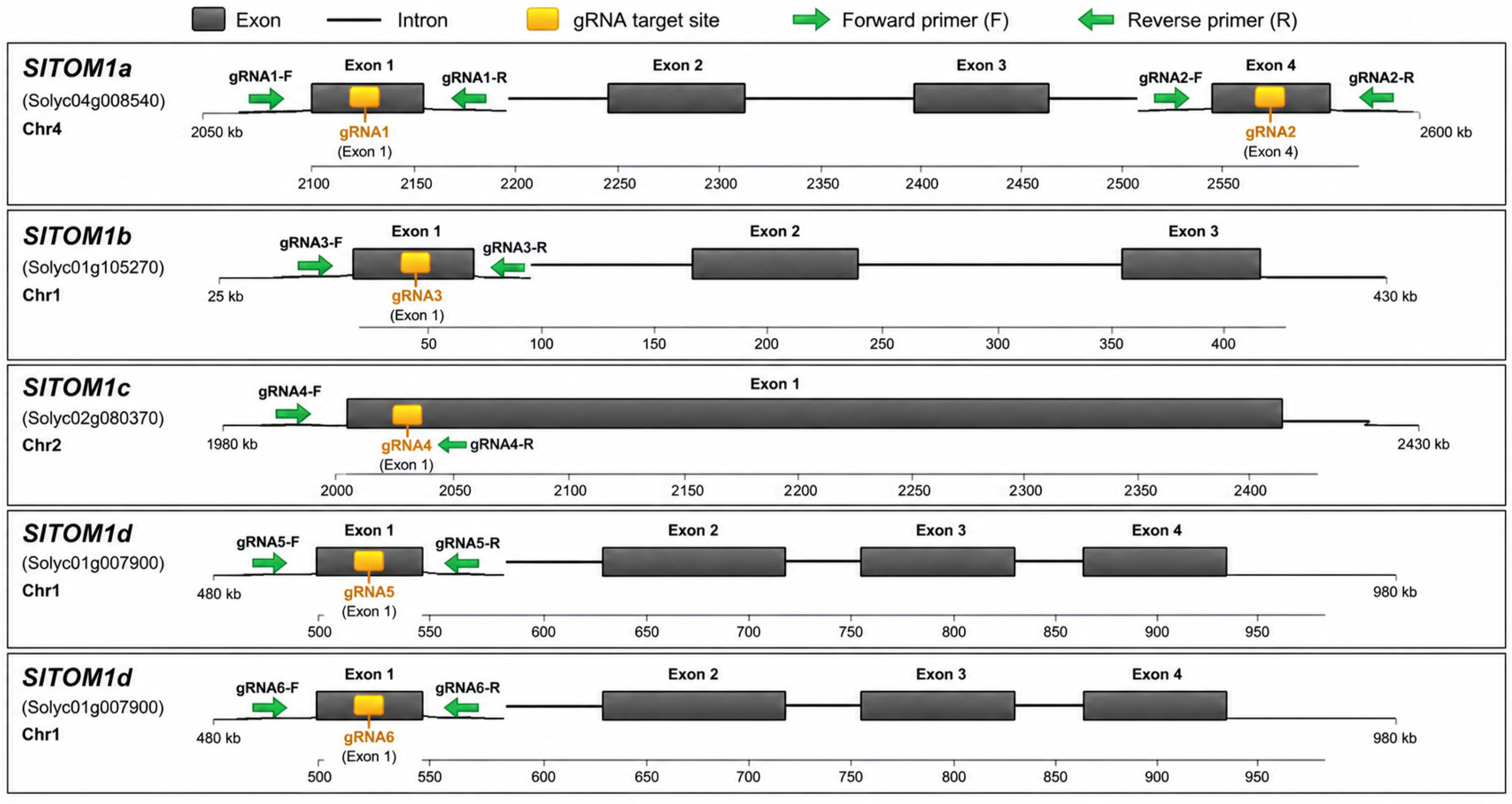
SlTOM1 homolog gene sequences (SlTOM1a–d) were obtained from the Sol Genomics Network database (ITAG release 4.0) and further validated via NCBI reference protein sequences, including SlTOM1a (NP_001234096.1), SlTOM1b (NP_001234100.1), SlTOM1c (NP_001234306.1), and SlTOM1d (XP_010315372.1). Sequence alignment and comparative analyses were performed to identify functional regions that were conserved among homologs. Target regions for gRNA design were selected from these conserved coding regions to maximize editing efficiency, ensure functional disruption of the encoded proteins, and enable simultaneous multiplex targeting of majorly expressed SlTOM1 homologs involved in tobamovirus replication. Two gRNAs were selected for SlTOM1a and SlTOM1d, whereas a single gRNA was selected for SlTOM1b and SlTOM1c using CRISPR-GE software (http://skl.scau.edu.cn/, accessed on 14 May 2026) [27]. Specifically, gRNA1 and gRNA2 were designed from the first and fourth exons of SlTOM1a (Solyc04g008540), respectively; gRNA3 from the first exon of SlTOM1b (Solyc01g105270); gRNA4 from the first exon of SlTOM1c (Solyc02g080370); and gRNA5 and gRNA6 from the first exons of SlTOM1d (Solyc01g007900). In addition, potential off-target sites for all selected gRNAs were evaluated in silico using the CRISPR-GE platform to minimize unintended genome editing effects, and the corresponding off-target prediction analyses are presented in Figure S4. Detailed information on the gRNA target sites, exon positions, and sequence characteristics is provided in Figure 1 and Table S1.

2.3. Vector Design for Genetic Transformation

The selected gRNAs were subsequently cloned and inserted into the pDIRECT_23C binary vector (Plasmid #91140 Addgene, MA, USA). A multiplex CRISPR/Cas9 construct (pDIRECT_23C: CmYLCV_gRNA1–gRNA6) was assembled using a Golden Gate cloning strategy following the established protocol [28]. A schematic representation of the construct is provided in Figure S1. gRNA and scaffold fragments were PCR-amplified from the pDIRECT_23C vector using CmYLCV, CSY_gRNA, REP_gRNA, and csy_term primers with Phusion High-Fidelity DNA Polymerase (New England Biolabs, Ipswich, MA, USA). The PCR conditions were as follows: initial denaturation at 98 °C for 30 s; 30 cycles of 98 °C for 10 s, 65 °C for 30 s, and 72 °C for 15 s; and a final extension at 72 °C for 5 min. The Golden Gate assembly reaction mixture (20 µL total volume) contained 50 ng pDIRECT_23C vector, 0.5 µL of each diluted PCR product, 0.5 µL SapI, 0.5 µL Esp3I, 0.5 µL T7 DNA ligase, 0.5 µL T4 ligase buffer, and nuclease-free water to volume. The reactions were carried out for 10 cycles at 37 °C for 5 min and at 25 °C for 10 min. The correct assembly of the multiplex gRNA cassette was verified via PCR amplification using primers targeting different regions of the construct. Amplification products corresponding to the expected fragment sizes were obtained, including a 524 bp fragment representing the CmYLCV promoter–gRNA1 region, multiple 136 bp fragments corresponding to junction regions between consecutive gRNA units, and a 128 bp fragment corresponding to the terminal region. The assembled constructs were transformed into Escherichia coli DH5α cells via heat shock and plated on LB agar supplemented with kanamycin (50 mg/L) using ccdB selection. Positive colonies were screened via colony PCR using primers flanking the CmYLCV promoter and the terminator region, and they were verified based on expected band sizes. The confirmed plasmids were subsequently introduced into the Agrobacterium tumefaciens strain EHA105 via electroporation. Successful transformation was further confirmed via colony PCR using the same primer pairs. In addition, Cas9-specific primers were used to verify the presence of the construct in transgenic T0 plants, and gRNA target regions were amplified in T1 plants. Representative PCR products and sequencing chromatograms are presented in Figure S2.

2.4. Agrobacterium Transformation and Regeneration

2.4.1. Explant Preparation

Eight-day-old cotyledons of a susceptible tomato cultivar were used as explants for Agrobacterium-mediated transformation. For the transformation procedure, an adapted protocol was followed [29]. The tomato seeds were sterilized with 20% NaOCl for 20 min, followed by treatment with 75% alcohol for 2 min. Thereafter, they were rinsed five times with deionized water and then dried on sterile filter paper aseptically in a laminar airflow cabinet. The sterilized seeds were placed on germination media (4.4 g/L MS salts + 30 g/L sucrose + 8 g/L plant agar, pH 5.8). Germinated seeds were removed from the germination media using sterile forceps. The cotyledons were then detached from the seedlings and cut into three equal parts using forceps and a scalpel. Explants were placed with the adaxial side down on pre-culture media (4.3 g/L MS salts, 100 mg/L myo-inositol, 1 mL/L Nitsch & Nitsch vitamins (PhytoTechnology Laboratories, Lenexa, KS, USA), 2 mg/L zeatin, 20 g/L sucrose, 7 g/L agar; pH 5.8) for 48 h at 25 °C.

2.4.2. Agrobacterium Strain and Binary Vector

Three days before agroinfection, the EHA105 containing the cloned binary vector was streaked on Luria–Bertani (LB) agar supplemented with 100 mg/L rifampicin and 50 mg/L kanamycin for 48 h at 28 °C. Thereafter, a colony from the plate was propagated in LB broth with the same antibiotic combination and concentrations for 16–24 h at 25 °C and 250 rpm. The bacterial cultures were inoculated into 50 mL LB broth and incubated until the optical density at 600 nm (OD600) reached 0.5. The cultures were then centrifuged at 4000× g for 10 min, after which the resulting pellet was resuspended in liquid MS media supplemented with 100 µM acetosyringone. The cotyledons were transferred from pre-culture media to EHA105-containing liquid MS, incubated for 10 min with occasional shaking, and then dried on sterile Whatman filter paper. Afterward, they were transferred to post-infection media (4.3 g MS salts, 100 mg/L myo-inositol, 1 mL/L Nitsch & Nitsch vitamins, 2 mg/L zeatin, 20 g sucrose, 7 g agar, 100 mM acetosyringone; pH 5.8) under dark conditions for 48 h at 25 °C. Explants, with the adaxial side upwards, were transferred to the shoot induction media for two weeks (4.3 g MS salts, 100 mg myo-inositol, 1 mL Nitsch & Nitsch vitamins, 2 mL zeatin (1 mg/mL stock), 50 mg/L kanamycin, 305 mg/L timentin, 20 g sucrose, 7.5 g agar; pH 5.8). Two weeks later, regenerated shoots were cleaned and transferred to shoot elongation media (4.3 g/L MS salts, 100 mg myo-inositol, 1 mL Nitsch & Nitsch vitamins, 2 mg/L zeatin, 50 mg/L kanamycin, 300 mg/L timentin, 3 mg/L Phosphinothricin, 20 g sucrose, 7.5 g agar; pH 5.8) for subsequent subcultures. Once the shoots reached 2–3 cm in height, they were transferred to rooting media (4.3 g MS salts, 1 mL/L Nitsch & Nitsch vitamins, 1 mg/L indole-3-butyric acid, 200 mg/L timentin, 30 g/L sucrose, 7.5 g/L agar; pH 5.8). Following sufficient root development, the plantlets were acclimatized under controlled conditions and subsequently transferred to greenhouse environments for further growth.

2.5. DNA Extraction, PCR Confirmation, and Mutation Analysis

To confirm the presence of the Cas9 gene, genomic DNA was extracted from putative T0 plants and T1 cotyledons using a GeneJET Genomic DNA Purification Kit according to the manufacturer’s instructions (Thermo Fisher Scientific, Waltham, MA, USA). DNA quality and concentration were evaluated prior to PCR analysis. Integration of the CRISPR/Cas9 construct was confirmed via PCR using Cas9-specific primers, Cas9 F (5′-GGAAACACCGATAGGCACT-3′), and Cas9 R (5′-ATCATGTGAGCGAGAGCGA-3′). The target regions of the SlTOM1 homolog genes were amplified using gene-specific primers flanking the gRNA target sites (Table S2). The PCR conditions were set according to the protocol from Xpert Hotstart 2X Mastermix (GRISP Research Solutions, Porto, Portugal) (95 °C for 15 min; followed by 30 cycles of 95 °C for 30 s, Tm for 15 s, and 72 °C for 30 s; and a 5 min final extension at 72 °C). PCR products were visualized via electrophoresis on 1% agarose gel-stained gel safe stain dye and then purified. The samples were subsequently sent for Sanger sequencing. Chromatograms were analyzed using SnapGene software (version 7.0.3; https://www.snapgene.com, accessed on 14 May 2026) and EditCo software (ICE Analysis tool, version 4.0 Beta; https://ice.editco.bio/#/, accessed on 14 May 2026) to identify insertions and deletions (indels) and to determine mutation types, including homozygous, heterozygous, and chimeric edits.

2.6. ToBRFV Inoculation and Disease Index Assay

T1 homozygous mutants generated from self-crossed T0 plants were used for ToBRFV infection assays. A total of eight independent T0 lines were self-pollinated to obtain T1 seeds. T1 plants were generated from seeds obtained by selfing of the corresponding T0 plants. From each T0 line, 24 T1 plants were grown, resulting in a total of 192 plants derived from eight independent transformation events. All T1 plants were subjected to ToBRFV inoculation assays and phenotypic evaluation. Each biological replicate corresponded to an individual plant. Wild-type B3 and B4 lines, as well as a susceptible tomato cultivar, were included as control groups. The viral inoculum was prepared from ToBRFV-infected plant material previously molecularly characterized and confirmed via sequence analysis (GenBank accession no. MK888980.1) and homogenized in phosphate buffer (pH 7.5), prepared by mixing 2% potassium phosphate (K2HPO4), 0.1% sodium sulfite (Na2SO3), and 0.01% β-mercaptoethanol. Mechanical inoculation was performed on young leaves using a soft sponge pad method, with three technical replicates applied per plant. The inoculated plants were maintained under greenhouse conditions and monitored regularly. Symptom development was recorded between 14 and 21 days post-inoculation. Disease severity was evaluated based on visible symptoms, including mosaic patterns, chlorosis, rugosity, and leaf deformation, and plants were categorized into tolerant and susceptible groups. Disease severity was assessed using a disease severity index (DSI) with a scale of 0–3, where 0 indicates no visible symptoms, 1 indicates mild symptoms (slight mosaic or chlorosis), 2 indicates moderate symptoms (clear mosaic patterns, chlorosis, and leaf deformation), and 3 indicates severe symptoms (pronounced rugosity, deformation, and stunted growth) [30].

2.7. RT-qPCR Detection of ToBRFV

Following the manufacturer’s protocol, total RNA was extracted from 30-day-old ToBRFV-infected tomato mutants and mock control plants using a Promega SV Total RNA isolation kit (Cat. #Z310; Promega Corporation, Madison, WI, USA). The integrity of the isolated RNA was observed on a 0.8% agarose gel. The RNA concentration was subsequently standardized and used as a template for RT-qPCR analysis. ToBRFV detection was performed using a commercial real-time PCR detection kit (Letgen Biotechnology, Izmir, Türkiye; LSK5008-0300) according to the manufacturer’s instructions. The negative controls included nuclease-free water instead of template RNA, whereas the positive controls provided with the kit were used to validate the reactions. RT-qPCR assays were carried out in a total reaction volume of 20 μL containing 10 μL qPCR Mastermix, 2 μL primer/probe mix, 3 μL PCR-grade water, and 5 μL template RNA. The amplification protocol consisted of reverse transcription at 50 °C for 15 min, enzyme activation at 95 °C for 2 min, and 40 cycles of denaturation at 95 °C for 10 s and annealing/extension at 60 °C for 30 s. Fluorescence signals were recorded during the annealing/extension step in the FAM and Cy5 channels on a LightCycler 96 Real-Time PCR System (Roche Diagnostics GmbH, Mannheim, Germany). Each reaction was performed in triplicate to ensure reproducibility. Ct values were calculated using instrument software, and they were used to determine viral presence in the tested samples. The relative quantity of ToBRFV was normalized using SlActin. Data were analyzed using the 2−ΔΔCt method [31].

3. Results

3.1. Generation of CRISPR/Cas9-Edited Tomato Plants and Mutation Analysis of T0 Lines

Agrobacterium-mediated transformation was performed using cotyledon and hypocotyl explants derived from a susceptible tomato cultivar. Among the tested genotypes, only B3 and B4 presented a regeneration capacity under the applied selection conditions, indicating a genotype-dependent response. A total of 56 regenerated plants were obtained, comprising 38 plants from genotype B3 and 18 plants from genotype B4 (Table 1). These regenerated plants were subsequently used for the generation of putative transgenic T0 lines.
Callus formation was observed within the first 2 weeks of transformation, followed by shoot induction and plant regeneration in responsive genotypes. In contrast, non-responsive genotypes failed to produce viable shoots under the same conditions.
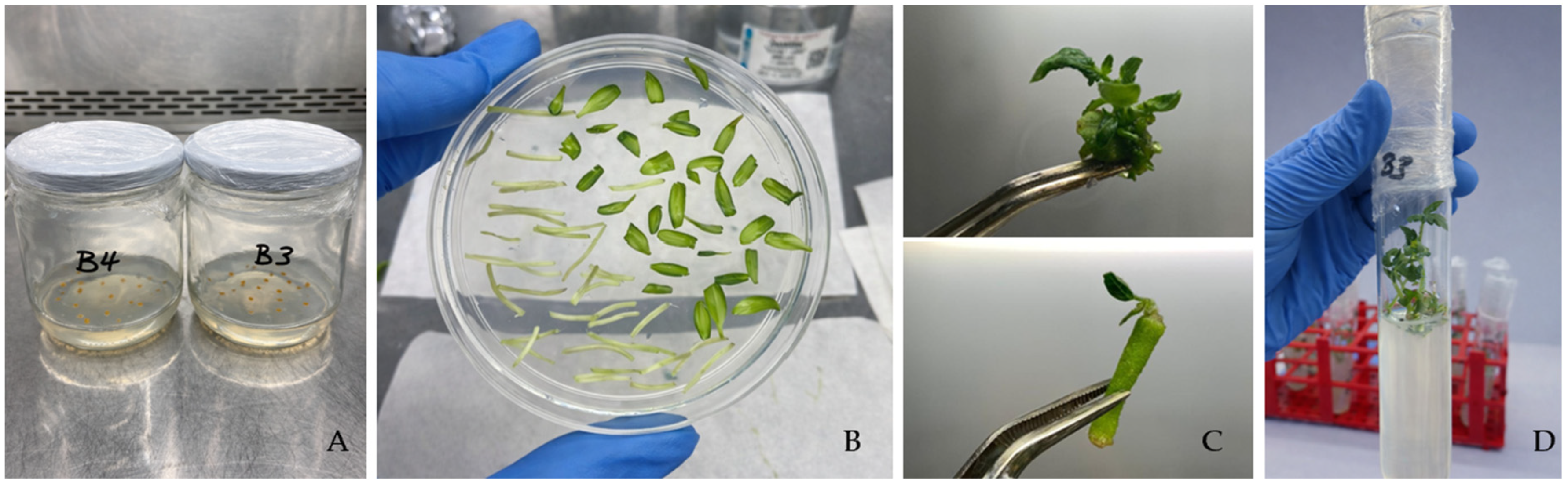
Representative stages of transformation and plant regeneration from cotyledon and hypocotyl explants are shown in Figure 2.
A total of eight primary T0 plants were selected for sequence analysis to evaluate the CRISPR/Cas9-induced mutations. Sanger sequencing of target regions did not reveal clearly detectable mutations in the T0 plants, likely due to chimeric or mosaic mutation patterns commonly observed in primary transformants. Representative sequencing chromatograms of the T0 plants are presented in Figure S3. However, minor signal distortions and peak overlaps were observed near the target sites in some samples. These ambiguous signals suggest the presence of low-frequency or mosaic mutations that cannot be reliably resolved at the T0 stage. The absence of clearly detectable mutations in the T0 plants indicates that editing events may have occurred in a chimeric manner, resulting in heterogeneous cell populations within individual plants.

3.2. Mutation Analysis and Segregation of Edited Alleles in T1 Plants

The generated T1 plants were analyzed to evaluate genome editing efficiency and mutation patterns across the targeted loci. Sequence analysis revealed diverse mutation types, including insertions, deletions, and substitutions at Cas9 cleavage sites. Mutation frequencies varied among the gRNAs and target genes, as summarized in Table 2. gRNA5, which targets SlTOM1d, presented the highest editing efficiency (62.5%), followed by gRNA4 (50%) and gRNA2 (37.5%), whereas gRNA3 showed comparatively low activity (12.5%). Mutations differed not only in frequency but also in type and position. Deletions ranging from 1 bp to ≥10 bp were frequently observed, particularly in SlTOM1d-targeted regions. Larger deletions often result in frameshift mutations, which are expected to disrupt the open reading frame (ORF) and lead to loss-of-function alleles. For mutation validation, representative T1 plants (n = 8 per group) showing different levels of symptom severity based on the disease severity index (DSI) scores were selected for Sanger sequencing. The target regions corresponding to the six gRNAs were amplified using specific primers and analyzed. A wild-type plant was included as a reference for sequence comparison.

3.3. Multiplex Mutation Patterns in Individual Plants

Mutation analysis at the individual plant level revealed that multiple target loci were simultaneously edited within eight single T1 plants, confirming the efficiency of the multiplex CRISPR/Cas9 system. Among the analyzed plants, several lines carried mutations in more than one SlTOM1 homolog gene. The highest level of multiplex editing was observed in plant T1-7, which exhibited mutations in four distinct target regions. Plants such as T1-1 and T1-2 also showed mutations across multiple loci, whereas one plant retained a completely wild-type genotype across all targets. These findings demonstrate that multiplex genome editing enables simultaneous targeting of homologous genes within a single generation. Multiplex mutation patterns observed across individual T1 plants, including gRNA-level editing and mutation class distribution, are presented in Table 3, highlighting the variation in the number and combination of edited target sites among plants.
An analysis of mutation types revealed that many of the detected indels resulted in frameshift mutations, leading to early termination of protein translation. It was predicted that large deletions (≥10 bp), particularly in SlTOM1d-targeted regions, would introduce premature stop codons, thereby disrupting protein function. In contrast, it was predicted that smaller indels and substitutions would be less likely to cause complete loss of function but may still affect protein structure and activity. These results suggest that CRISPR/Cas9-mediated editing effectively generated putative loss-of-function alleles in SlTOM1 homolog genes. Although all gRNAs were assembled in a single multiplex CRISPR/Cas9 construct using Golden Gate cloning, editing efficiency differed among target loci and individual plants; therefore, mutation classification was assigned based on gene-level sequence validation rather than individual gRNA-level signals. These findings indicate that disruption of SlTOM1 homologs limits viral replication and systemic spread rather than completely preventing infection, supporting a tolerance-based resistance mechanism.

3.4. Association Between Mutation Profiles and Disease Response

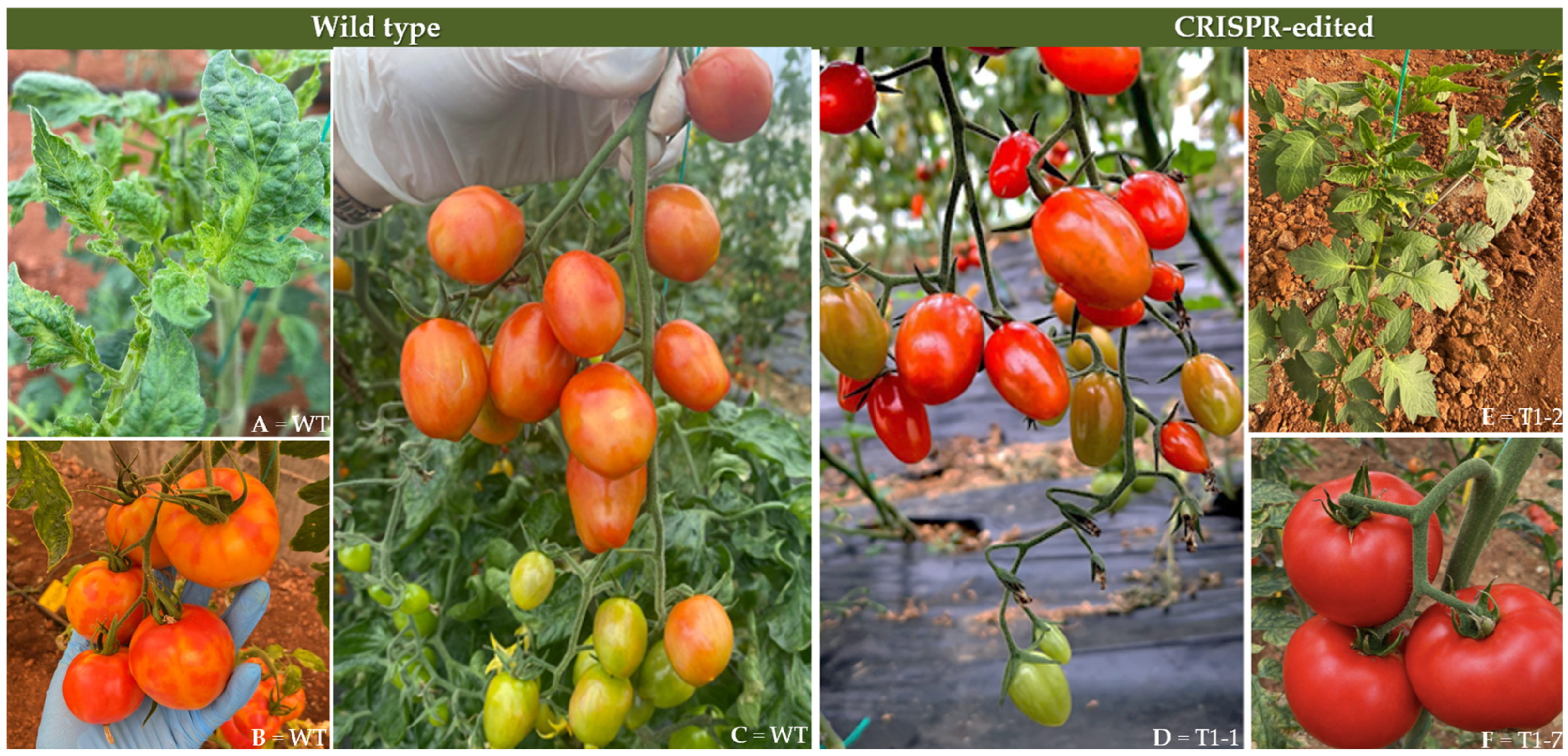
To assess the response to ToBRFV infection, 192 T1 plants, together with wild-type and susceptible control plants, were mechanically inoculated. All control plants developed characteristic ToBRFV symptoms, including mosaic patterns, chlorosis, and leaf deformation. In contrast, T1 plants derived from CRISPR-edited lines exhibited either no visible symptoms or markedly reduced symptom severity. The representative phenotypic differences between the control and edited plants are shown in Figure 3.
Phenotypic evaluation revealed that plants carrying mutations in multiple SlTOM1 homologs generally exhibited reduced symptom severity following ToBRFV inoculation.
In particular, plants with mutations involving SlTOM1d and SlTOM1c showed the lowest disease severity scores. In contrast, plants with single or no mutations exhibited greater symptom severity. These observations indicate a relationship between the extent of genome editing and the observed tolerance phenotype.
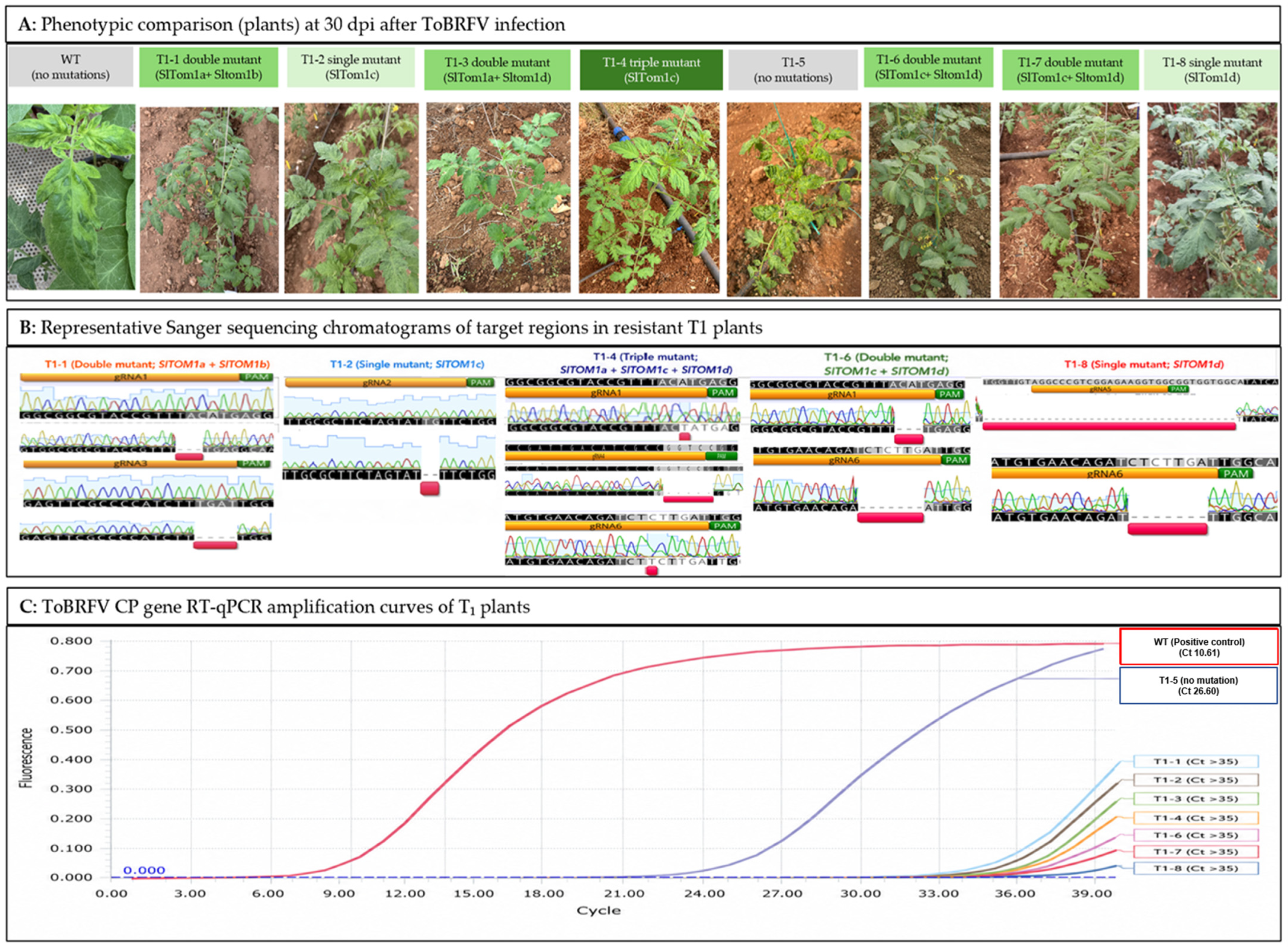
Molecular analyses confirmed that mutant plants carrying CRISPR/Cas9-induced edits exhibited a phenotype that was tolerant to ToBRFV. Although the RT-qPCR results indicated that viral presence was still detectable in some edited plants, the viral load was markedly lower than in the wild-type controls, as shown in Figure 4. This figure also schematically illustrates the leaf symptom phenotypes of the plants whose fruits are shown in Figure 3.
In this study, gRNA1 and gRNA2 targeted SlTOM1a, gRNA3 targeted SlTOM1b, gRNA4 targeted SlTOM1c, and gRNA5 and gRNA6 targeted SlTOM1d; therefore, mutation class abbreviations are designated as follows: a = SlTOM1a, b = SlTOM1b, c = SlTOM1c, and d = SlTOM1d. Targeted gRNA regions and PAM sites are indicated. In wild-type plants, amplification curves crossed the fluorescence threshold at earlier Ct values, indicating substantially higher viral accumulation, whereas CRISPR/Cas9-edited plants consistently presented delayed Ct values, reflecting reduced viral load. Relative quantification using the 2−ΔΔCt method further confirmed a significant reduction in viral RNA levels in edited plants compared to wild-type controls (p ≤ 0.05). The amplification plots displayed typical sigmoidal kinetics, confirming reliable reaction efficiency across all tested samples. Wild-type plants showed steeper amplification profiles with earlier exponential phases, while edited plants demonstrated a pronounced rightward shift in amplification curves, further supporting lower template abundance. Absolute quantification additionally revealed markedly higher viral copy numbers (log10 scale) in wild-type plants than in the edited lines, whereas edited lines maintained substantially reduced viral titers. Importantly, this molecular detection did not directly correlate with visible disease severity, as edited plants remained largely symptomless despite occasional low-level viral presence, supporting their classification as tolerant rather than completely resistant genotypes.
Phenotypic evaluations showed that CRISPR-edited plants displayed either no symptoms or only very mild leaf alterations following ToBRFV inoculation. Characteristic disease symptoms such as mosaic formation, chlorosis, and leaf deformation were largely absent in edited genotypes, whereas non-edited control plants consistently exhibited severe symptomatic responses under identical experimental conditions. The fruit tissues of edited plants similarly remained symptomless, with no visible rugosity, discoloration, or deformation, and, importantly, they retained key agronomic and commercial quality traits. These observations indicate that viral replication was sufficiently suppressed, thereby preventing economically significant damage while maintaining overall plant productivity.
Among the analyzed T1 individuals, mutations were detected in at least one gRNA target site in six plants, whereas only one individual (T1-5) showed no detectable mutation across any examined target region. Simultaneous mutations in two distinct gRNA target sites were identified in three individuals, while two plants carried mutations in three or more target loci. The highest multiplex editing level was observed in T1-7, where mutations were detected in four distinct gRNA target regions. These findings demonstrate that CRISPR/Cas9-mediated editing can effectively generate simultaneous modifications at multiple target loci within the same plant while also revealing substantial variation in gRNA editing efficiency among independent T1 individuals.
The resulting T1 generation clearly demonstrated that the CRISPR/Cas9 system could simultaneously target multiple homologs of the SlTOM1 gene family within single tomato plants. Triple mutants (SlTOM1a + SlTOM1c + SlTOM1d) exhibited the highest level of tolerance against ToBRFV infection, whereas double mutants, particularly those carrying SlTOM1c + SlTOM1d mutations, displayed moderate-to-high tolerance. This multiplex homolog-targeting profile strongly supports the molecular basis underlying the approximately 90% ToBRFV tolerance observed among edited T1 plants.
Comparative EditCo peak analyses further revealed substantial differences in dominant indel profiles, deletion sizes, and predicted frameshift potential among individual gRNAs. gRNA1 and gRNA3 predominantly generated short indels (mainly −1 bp), indicating a relatively limited frameshift potential. In contrast, gRNA2 and gRNA4 frequently produced −1 and −2 bp indels, suggesting a significantly greater disruptive capacity at their target sites. Notably, gRNA5, targeting the SlTOM1d homolog, produced large-scale deletions (≥20 bp), representing the highest predicted frameshift potential among all tested gRNAs. Although gRNA6 generally generated more localized indels, these alterations were still sufficient to disrupt the reading frame, indicating moderate-to-high functional knockout potential. Collectively, these results confirm that individual gRNAs differed substantially in editing behavior, with certain targets contributing disproportionately to functional gene disruption and enhanced ToBRFV tolerance.
Overall, these findings demonstrate that CRISPR/Cas9-mediated disruption of SlTOM1 homologs effectively suppresses ToBRFV replication and systemic spread without completely eliminating viral presence, thereby conferring a tolerance-based defense mechanism. The preservation of normal plant growth, fruit quality, and reduced symptom severity under viral pressure strongly supports host susceptibility gene editing as a highly promising strategy for the development of durable ToBRFV-tolerant tomato cultivars. These results also suggest that, although all SlTOM1 homologs contribute to tobamovirus susceptibility, SlTOM1a and SlTOM1d may play particularly critical roles in the viral life cycle, as evidenced by the stronger tolerance phenotypes associated with mutations in these loci.

4. Discussion

The mutation of susceptibility genes represents an effective strategy for developing virus-tolerant cultivars [32]. In the present study, CRISPR/Cas9-mediated targeting of SlTOM1 homolog genes successfully reduced ToBRFV susceptibility in tomato. The generation of edited T1 plants exhibiting reduced symptom severity and lower viral accumulation highlights the potential of host-factor-based genome editing approaches as alternatives to conventional resistance breeding strategies. These findings are consistent with those of previous studies targeting susceptibility genes such as eIF4E, where CRISPR/Cas9-mediated disruption conferred resistance to multiple viruses [33].
Although previous studies have demonstrated that CRISPR/Cas9-mediated disruption of SlTOM1 and related genes can reduce tobamovirus infection [12,18], the present study provides several distinct contributions. Unlike previous TOM1-focused studies that primarily concentrated on resistance mechanisms under controlled conditions, this study emphasizes the practical development of a Golden Gate-based multiplex CRISPR/Cas9 system specifically optimized for simultaneous targeting of multiple SlTOM1 homologs. Notably, we developed a multiplex CRISPR/Cas9 construct assembled using a Golden Gate cloning strategy, enabling the simultaneous targeting of multiple SlTOM1 homologs. Using a six-gRNA multiplex construct, this study systematically assessed homolog-specific editing efficiencies, revealing substantial variation among SlTOM1 loci and providing important technical insight into the practical challenges of balanced multi-target genome editing in tomato. In addition, all gRNAs used in this study were independently designed and optimized, representing an original targeting strategy rather than a direct adaptation of previously reported systems.
Another important aspect of this study is that genome editing was performed in locally adapted tomato genotypes rather than model genetic backgrounds. Considering that ToBRFV was first reported in Türkiye by our research group [34], this study was specifically designed to evaluate CRISPR/Cas9-based approaches under locally relevant conditions. While the selection of target genes was informed by previous studies on tobamovirus-associated host factors, the experimental design, gRNA selection, and construct assembly strategy are independent and original. Furthermore, the integration of genotype-dependent transformation performance, mutation inheritance, and greenhouse-based phenotypic validation in commercially relevant tomato backgrounds provides a more translational framework for practical tomato breeding applications.
Genome editing efficiency varied among SlTOM1 homologs, with SlTOM1d showing the highest mutation frequency. This variation may be attributed to differences in gRNA efficiency, chromatin accessibility, and sequence context, all of which influence CRISPR/Cas9 activity in plants [35]. Similar variability has been reported across CRISPR-based studies in tomato and other crops [36]. In line with this, previous work has shown that the transformation strategy and construct design significantly affect editing efficiency and phenotypic outcomes [37]. These findings further emphasize that multiplex construct design and target-specific optimization remain critical determinants of successful genome editing outcomes, particularly when multiple homologous loci are simultaneously targeted.
A major distinction between previous SlTOM1-targeting studies [24,25] and the present work lies not only in the plant material used but also in its direct breeding relevance, mutation validation capacity, and technical complexity. Earlier studies primarily utilized standard tomato model lines or regeneration-compatible cultivars, which are valuable for proof-of-concept demonstrations but are inherently limited in large-scale commercial breeding applications. In contrast, this study directly targeted the maternal and paternal lines of a commercial hybrid tomato, providing a significantly more stringent framework for evaluating CRISPR/Cas9 precision and breeding applicability. In hybrid parental backgrounds, potential off-target effects or undesirable genomic alterations can be more readily identified due to the defined genetic structure and direct consequences for hybrid performance. Moreover, while the parental lines exhibited strong regeneration potential under standard conditions, the introduction of CRISPR/Cas9 constructs, combined with transformation-associated stresses such as Agrobacterium infection, antibiotic selection, and tissue culture pressure, substantially reduced or completely inhibited regeneration efficiency in many genotypes, necessitating extensive optimization across 16 parental lines. Despite these considerable challenges, this study successfully achieved simultaneous multiplex editing of SlTOM1 homolog regions in both parental lines through a single-step Golden Gate assembly strategy, enabling efficient multi-target genome modification within a commercially relevant germplasm. Importantly, the resulting T1 progeny exhibited enhanced ToBRFV tolerance without observable detrimental phenotypic changes, developmental abnormalities, or major agronomic penalties. Collectively, these findings demonstrate that multiplex CRISPR/Cas9 editing can be successfully integrated into commercial hybrid breeding pipelines, providing a more translational, scalable, and practically relevant framework than previous standard-cultivar studies for the deployment of SlTOM1-mediated ToBRFV tolerance.
The absence of clearly detectable mutations in T0 plants is consistent with previous reports describing chimeric and mosaic mutation patterns in primary transformants [38]. Such mosaicism can limit mutation detection via Sanger sequencing in T0 individuals, whereas subsequent generations allow segregation and stabilization of edited alleles [39]. The detection of indels in T1 plants in this study supports this well-established phenomenon. Notably, the presence of larger deletions (≥10 bp), particularly in SlTOM1d-targeted regions, suggests effective Cas9 activity and a higher likelihood of functional gene disruption [40]. The demonstration of stable mutation inheritance and phenotypic validation in segregating T1 populations therefore represents an important applied advancement beyond initial proof-of-concept genome editing studies.
Importantly, edited T1 plants predominantly exhibited a tolerance phenotype rather than complete resistance. RT-qPCR analysis confirmed that viral RNA remained detectable in edited plants, albeit at reduced levels compared to controls, indicating reduced viral accumulation rather than complete elimination. This outcome is consistent with that of previous host-factor-based genome editing studies [41] and supports the role of TOM1-like proteins as essential host factors required for tobamovirus replication [12,18]. Disruption of these host factors impairs viral replication and movement without necessarily conferring complete resistance. This tolerance-based outcome may offer substantial agricultural advantages by reducing disease severity while maintaining breeding feasibility in elite cultivars.
The variation in symptom severity among edited lines suggests possible functional overlap within the SlTOM1 gene family, as well as differential contributions of individual homologs. These findings provide further insight into host–virus interactions and highlight the importance of simultaneously targeting multiple homologs to improve ToBRFV tolerance. Overall, this study demonstrates that multiplex CRISPR/Cas9 targeting of SlTOM1 homologs provides an effective and application-oriented framework for reducing ToBRFV susceptibility in tomato.
Among the evaluated genotypes, only B3 and B4 demonstrated an efficient regeneration capacity, consistent with previous reports describing genotype-dependent transformation responses in tomato [29,42]. Furthermore, the optimization of selection conditions, including the use of timentin and phosphinothricin, was critical for successful transformation and regeneration [43]. These results further support the practical importance of transformation efficiency and tissue culture optimization for deploying host susceptibility gene editing in operational breeding programs.

5. Conclusions

This study demonstrates that CRISPR/Cas9-mediated targeting of SlTOM1 homolog genes is an effective strategy for reducing ToBRFV susceptibility in tomato. The successful generation of edited T1 plants, together with the detection of indel mutations across multiple SlTOM1 homologs, confirms the efficiency of multiplex genome editing in this system. The multiplex CRISPR/Cas9 strategy employed in this study was specifically designed to address the functional redundancy among SlTOM1 homologs, as the simultaneous disruption of multiple conserved host susceptibility genes was expected to more effectively suppress ToBRFV replication than single-gene targeting approaches, thereby increasing the likelihood of achieving durable viral tolerance.
Mutation analyses revealed substantial variability in editing efficiency among gRNAs, highlighting the critical role of gRNA design in determining editing outcomes. Furthermore, higher mutation frequencies at SlTOM1 and greater frameshift potential were observed, indicating their effectiveness in disrupting target gene function. The absence of clear mutations in T0 plants, followed by the detection of stable edits in T1 individuals, further supports the well-known occurrence of chimerism in primary transformants and the stabilization of mutations in subsequent generations.
Phenotypic evaluations demonstrated that a high proportion of edited T1 plants exhibited tolerance to ToBRFV infection, characterized by reduced symptom severity despite detectable viral presence. Importantly, due to careful gRNA design, conserved target selection, and prior off-target analysis, multiplex-edited tomato lines maintained normal growth, development, and reproductive capacity without major unintended phenotypic alterations, indicating that specific disruption of SlTOM1 homologs can enhance ToBRFV tolerance while preserving overall plant health, productivity, and agricultural performance.
In addition, the observed genotype-dependent regeneration responses emphasize the importance of genetic background in transformation efficiency, while the optimization of selection conditions contributed to the successful recovery of transgenic plants.
Overall, this study demonstrates that multiplex CRISPR/Cas9 targeting SlTOM1 homologs using a Golden Gate assembly approach, combined with evaluation in local genotypes, provides a novel and application-oriented framework for reducing ToBRFV susceptibility. By integrating multiplex construct engineering, homolog-specific editing evaluation, genotype-dependent transformation analysis, and stable T1 phenotypic validation, this study extends beyond previous TOM1 resistance studies and establishes a practical framework for incorporating host susceptibility gene editing into commercial tomato breeding programs. The identification of tolerance phenotypes and mutation-dependent effects contributes to a deeper understanding of host-factor-mediated resistance and offers a foundation for future breeding strategies. Furthermore, this approach may serve as a model for developing resistance against other tobamoviruses that rely on similar host factors for replication. Future studies integrating genome-wide analyses and functional validation will further clarify the molecular basis of the observed tolerance and support the development of durable virus-tolerant tomato cultivars.

Supplementary Materials

The following supporting information can be downloaded at: https://www.mdpi.com/article/10.3390/agriculture16101097/s1.

Author Contributions

Conceptualization, P.S. and H.F.; methodology, P.S. and H.F.; software, P.S.; validation, P.S. and H.F.; formal analysis, P.S.; investigation, P.S.; resources, H.F.; data curation, P.S.; writing—original draft preparation, P.S.; writing—review and editing, P.S. and H.F.; visualization, P.S.; supervision, H.F.; project administration, H.F.; funding acquisition, H.F. All authors have read and agreed to the published version of the manuscript.

Funding

This research was funded by the Scientific and Technological Research Council of Türkiye (TÜBİTAK), under the 1505 University–Industry Cooperation Support Program, grant number 5230053, conducted as a collaborative project between AD-Rossen Seed Company and Akdeniz University.

Institutional Review Board Statement

Not applicable.

Data Availability Statement

The data supporting the findings of this study are available within the article and its Supplementary Materials. Additional data are included in the doctoral thesis of Pelin Sarıkaya (Thesis no: 999480), which will be made publicly available through the Council of Higher Education (YÖK) National Thesis Center.

Acknowledgments

The authors would like to thank the Scientific and Technological Research Council of Türkiye (TÜBİTAK, Ankara, Türkiye) for financial support under the 1505 University–Industry Cooperation Support Program (Project No. 5230053); AD-Rossen Seed Company (Antalya, Türkiye) for providing plant materials and technical support; and Akdeniz University (Antalya, Türkiye) for providing laboratory infrastructure, institutional coordination, and research facilities throughout the project.

Conflicts of Interest

The authors declare no conflicts of interest. This study received funding from the Scientific and Technological Research Council of Türkiye (TÜBİTAK, Project No. 5230053) and AD-Rossen Seed Company (Antalya, Türkiye). The funders were not involved in the study design, collection, analysis, interpretation of data, the writing of this article, or the decision to submit it for publication.

Abbreviations

The following abbreviations are used in this manuscript:
CRISPR-Cas9Clustered regularly interspaced short palindromic repeats
SlTOM1Solanum lycopercisum tobamovirus multiplication 1

References

  1. FAOSTAT. FAOSTAT Statistical Database; Food and Agriculture Organization of the United Nations: Rome, Italy, 2024; Available online: https://www.fao.org/faostat (accessed on 4 April 2026).
  2. Turkish Statistical Institute (TUIK). Crop Production Statistics, 2024; Turkish Statistical Institute: Ankara, Türkiye, 2024. Available online: https://data.tuik.gov.tr (accessed on 4 April 2026).
  3. Cayak, H.N.; Fidan, H. Multiplex PCR methods for simultaneous detection of tomato brown rugose fruit virus, tomato spotted wilt virus and pepino mosaic virus. J. Phytopathol. 2024, 172, e13327. [Google Scholar] [CrossRef]
  4. Salem, N.; Mansour, A.; Ciuffo, M.; Falk, B.W.; Turina, M. A new tobamovirus infecting tomato crops in Jordan. Arch. Virol. 2016, 161, 503–506. [Google Scholar] [CrossRef]
  5. Luria, N.; Smith, E.; Reingold, V.; Bekelman, I.; Lapidot, M.; Levin, I.; Dombrovsky, A. A new Israeli tobamovirus isolate infects tomato plants harboring Tm-22 resistance genes. PLoS ONE 2017, 12, e0170429. [Google Scholar] [CrossRef]
  6. van de Vossenberg, B.T.L.H.; Visser, M.; Bruinsma, M.; Koenraadt, H.M.S.; Westenberg, M.; Botermans, M. Real-time tracking of tomato brown rugose fruit virus outbreaks. PLoS ONE 2020, 15, e0234671. [Google Scholar] [CrossRef]
  7. Ilyas, R.; Rohde, M.J.; Richert-Pöggeler, K.R.; Ziebell, H. To be seen or not to be seen: Latent infection by tobamoviruses. Plants 2022, 11, 2166. [Google Scholar] [CrossRef]
  8. de Ronde, D.; Butterbach, P.; Kormelink, R. Dominant resistance against plant viruses. Front. Plant Sci. 2014, 5, 307. [Google Scholar] [CrossRef]
  9. Hak, H.; Spiegelman, Z. The tomato brown rugose fruit virus movement protein overcomes Tm-22 resistance. Mol. Plant-Microbe Interact. 2021, 34, 1024–1032. [Google Scholar] [CrossRef]
  10. Kang, B.C.; Yeam, I.; Jahn, M.M. Genetics of plant virus resistance. Annu. Rev. Phytopathol. 2005, 43, 581–621. [Google Scholar] [CrossRef] [PubMed]
  11. Hashimoto, M.; Neriya, Y.; Yamaji, Y.; Namba, S. Recessive resistance to plant viruses. Front. Microbiol. 2016, 7, 1695. [Google Scholar] [CrossRef]
  12. Sanfaçon, H. Plant translation factors and virus resistance. Viruses 2015, 7, 3392–3410. [Google Scholar] [CrossRef] [PubMed]
  13. Atarashi, H.; Jayasinghe, W.H.; Kwon, J.; Kim, H.; Taninaka, Y.; Igarashi, M.; Ito, K.; Yamada, T.; Masuta, C.; Nakahara, K.S. Artificially Edited Alleles of the Eukaryotic Translation Initiation Factor 4E1 Gene Differentially Reduce Susceptibility to Cucumber Mosaic Virus and Potato Virus Y in Tomato. Front. Microbiol. 2020, 11, 564310. [Google Scholar] [CrossRef] [PubMed] [PubMed Central]
  14. Chandrasekaran, J.; Brumin, M.; Wolf, D.; Leibman, D.; Klap, C.; Pearlsman, M.; Sherman, A.; Arazi, T.; Gal-On, A. Development of broad virus resistance in non-transgenic cucumber using CRISPR/Cas9 technology. Nat. Commun. 2016, 7, 11631. [Google Scholar] [CrossRef]
  15. Tek, M.I.; Calis, O.; Fidan, H.; Shah, M.D.; Celik, S.; Wani, S.H. CRISPR/Cas9 based mlo-mediated resistance against Podosphaera xanthii in cucumber (Cucumis sativus L.). Front. Plant Sci. 2022, 13, 1081506. [Google Scholar] [CrossRef]
  16. Ishikawa, M.; Naito, S.; Ohno, T. Effects of the TOM1 gene on multiplication of tobacco mosaic virus RNA. J. Virol. 1993, 67, 5328–5338. [Google Scholar] [CrossRef]
  17. Heinlein, M. Plant virus replication and movement. Virus Res. 2015, 198, 82–99. [Google Scholar] [CrossRef]
  18. Yamanaka, T.; Imai, T.; Satoh, R.; Kawashima, A.; Takahashi, M.; Tomita, K. Complete inhibition of tobamovirus multiplication. J. Virol. 2000, 74, 5804–5811. [Google Scholar]
  19. Nishikiori, M.; Mori, M.; Dohi, K.; Okamura, H.; Katoh, E.; Naito, S. TOM1 protein in viral replication complex. J. Virol. 2011, 85, 164–172. [Google Scholar]
  20. Fujisaki, K.; Ravelo, G.B.; Naito, S.; Ishikawa, M. Involvement of THH1, an Arabidopsis thaliana homologue of the TOM1 gene, in tobamovirus multiplication. J. Gen. Virol. 2006, 87, 2397–2401. [Google Scholar] [CrossRef] [PubMed]
  21. Asano, M.; Satoh, R.; Mochizuki, A.; Tsuda, S.; Yamanaka, T.; Nishiguchi, M.; Hirai, K.; Meshi, T.; Naito, S.; Ishikawa, M. Tobamovirus-resistant tobacco generated by RNA interference directed against host genes. FEBS Lett. 2005, 579, 4479–4484. [Google Scholar] [CrossRef]
  22. Ishibashi, K.; Nishikiori, M.; Ishikawa, M. Interactions between tobamovirus replication proteins and cellular factors: Their impacts on virus multiplication. Mol. Plant-Microbe Interact. 2010, 23, 1413–1419. [Google Scholar] [CrossRef]
  23. Jogam, P.; Sandhya, D.; Alok, A.; Peddaboina, V.; Singh, S.P.; Abbagani, S.; Zhang, B.; Allini, V.R. Editing of TOM1 gene in tobacco using CRISPR/Cas9 confers resistance to Tobacco mosaic virus. Mol. Biol. Rep. 2023, 50, 5165–5176. [Google Scholar] [CrossRef]
  24. Ishikawa, M.; Yoshida, T.; Matsuyama, M.; Kouzai, Y.; Kano, A.; Ishibashi, K. Tomato brown rugose fruit virus resistance generated by quadruple knockout of homologs of TOBAMOVIRUS MULTIPLICATION1 in tomato. Plant Physiol. 2022, 189, 679–686. [Google Scholar] [CrossRef]
  25. Kravchik, M.; Shnaider, Y.; Abebie, B.; Shtarkman, M.; Kumari, R.; Kumar, S.; Gal-On, A. Knockout of SlTOM1 and SlTOM3 results in differential resistance to tobamovirus in tomato. Mol. Plant Pathol. 2022, 23, 1278–1289. [Google Scholar] [CrossRef]
  26. Pramanik, D.; Shelake, R.M.; Park, J.; Kim, M.J.; Hwang, I.; Park, Y.; Kim, J.Y. CRISPR/Cas9-mediated generation of pathogen-resistant tomato against tomato yellow leaf curl virus and powdery mildew. Int. J. Mol. Sci. 2021, 22, 1878. [Google Scholar] [CrossRef]
  27. Xie, X.; Ma, X.; Zhu, Q.; Zeng, D.; Li, G.; Liu, Y.G. CRISPR-GE: A convenient software toolkit for CRISPR-based genome editing. Mol. Plant 2017, 10, 1246–1249. [Google Scholar] [CrossRef]
  28. Čermák, T.; Curtin, S.J.; Gil-Humanes, J.; Čegan, R.; Kono, T.J.Y.; Konečná, E.; Belanto, J.J.; Starker, C.G.; Mathre, J.W.; Greenstein, R.L.; et al. A multipurpose toolkit to enable advanced genome engineering in plants. Plant Cell 2017, 29, 1196–1217. [Google Scholar] [CrossRef]
  29. Van Eck, J.; Keen, P.; Tjahjadi, M. Agrobacterium tumefaciens-mediated transformation of tomato. In Transgenic Plants: Methods and Protocols; Springer: New York, NY, USA, 2018; pp. 225–234. [Google Scholar]
  30. Kabas, A.; Fidan, H.; Kucukaydin, H.; Atan, H.N. Screening of wild tomato species and interspecific hybrids for resistance/tolerance to Tomato brown rugose fruit virus (ToBRFV). Chil. J. Agric. Res. 2022, 82, 189–196. [Google Scholar] [CrossRef]
  31. Livak, K.J.; Schmittgen, T.D. Analysis of relative gene expression data using real-time quantitative PCR and the 2^−ΔΔCT method. Methods 2001, 25, 402–408. [Google Scholar] [CrossRef]
  32. Tyagi, S.; Kumar, R.; Kumar, V.; Won, S.Y.; Shukla, P. Engineering disease resistant plants through CRISPR-Cas9 technology. GM Crops Food 2021, 12, 125–144. [Google Scholar] [CrossRef]
  33. Fidan, H.; Calis, O.; Ari, E.; Atasayar, A.; Sarikaya, P.; Tek, M.I.; Izmirli, A.; Oz, Y.; Firat, G. Knockout of elF4E using CRISPR/Cas9 for large-scale production of resistant cucumber cultivar against WMV, ZYMV, and PRSV. Front. Plant Sci. 2023, 14, 1143813. [Google Scholar] [CrossRef]
  34. Fidan, H.; Sarikaya, P.; Yildiz, K.; Topkaya, B.; Erkis, G.; Çalış, Ö. Robust molecular detection of the new tomato brown rugose fruit virus in infected tomato and pepper plants from Turkey. J. Integr. Agric. 2021, 20, 2105–2115. [Google Scholar] [CrossRef]
  35. Wang, D.; Zhang, C.; Zhang, Y.; Zhu, W.; Liu, C. Deep learning models for predicting on-target CRISPR/Cas9 activity. Nat. Biotechnol. 2020, 38, 432–440. [Google Scholar]
  36. Li, T.; Liu, B.; Spalding, M.H.; Weeks, D.P.; Yang, B. Demonstration of CRISPR/Cas9-mediated PDS gene editing in a tomato hybrid parental line. Plant Cell Rep. 2018, 37, 1535–1543. [Google Scholar]
  37. Tek, M.I.; Budak Tek, K.; Sarikaya, P.; Ahmed, A.R.; Fidan, H. Choosing the best route: Comparative optimization of wheat transformation methods for improving yield by targeting TaARE1-D with CRISPR/Cas9. PLoS ONE 2026, 21, e0342491. [Google Scholar] [CrossRef]
  38. Feng, Z.; Mao, Y.; Xu, N.; Zhang, B.; Wei, P.; Yang, D.L.; Wang, Z.; Zhang, Z.; Zheng, R.; Yang, L.; et al. Multigeneration analysis reveals the inheritance, specificity, and patterns of CRISPR/Cas-induced gene modifications in Arabidopsis. Proc. Natl. Acad. Sci. USA 2014, 111, 4632–4637. [Google Scholar] [CrossRef]
  39. Bai, Y.; Li, M.; Zhang, Q.; Wang, J. Crossing CRISPR/Cas9-transgenic tomato plants with wild-type lines reveals novel heritable mutations in hybrid progenies. Front. Plant Sci. 2024, 15, 1447773. [Google Scholar]
  40. Zhou, H.; Liu, B.; Weeks, D.P.; Spalding, M.H.; Yang, B. Large deletions in gene editing using CRISPR/Cas9 in plants. Nat. Commun. 2018, 9, 1964. [Google Scholar]
  41. Ishikawa, M.; Naito, S. Host factors required for tobamovirus replication. Curr. Opin. Virol. 2012, 2, 695–701. [Google Scholar]
  42. Chetty, V.J.; Ceballos, N.; Garcia, D.; Narváez-Vásquez, J.; Lopez, W.; Orozco-Cárdenas, M.L. Evaluation of four Agrobacterium tumefaciens strains for the genetic transformation of tomato. Plant Cell Rep. 2013, 32, 239–247. [Google Scholar] [CrossRef]
  43. Sharma, P.; Gupta, S.; Sood, R. Role of timentin in plant transformation studies. Plant Cell Tissue Organ Cult. 2020, 140, 311–318. [Google Scholar]
Figure 1. Schematic representation of gRNA target sites within the exon–intron structures of SlTOM1 homolog genes in tomato. Exons are shown as gray boxes, and introns are shown as black lines. Yellow boxes indicate the positions of gRNA target sites. gRNA1 and gRNA2 target exons 1 and 4 of SlTOM1a (Solyc04g008540), respectively; gRNA3 targets exon 1 of SlTOM1b (Solyc01g105270); gRNA4 targets exon 1 of SlTOM1c (Solyc02g080370); and gRNA5 and gRNA6 target exon 1 of SlTOM1d (Solyc01g007900). The green arrows indicate the positions of the primers used for the PCR amplification of the target regions (F: forward primer; R: reverse primer). Exon numbering is based on the reference gene models of the tomato genome (SL4.0/ITAG annotation).
Agriculture 16 01097 g001
Figure 2. Representative stages of callus formation, shoot induction, and plant regeneration during Agrobacterium-mediated transformation of tomato explants. (A) Seed germination under sterile in vitro conditions. (B) Preparation of explants. (C) Callus formation and shoot regeneration from cotyledon and hypocotyl explants. (D) Regenerated plantlets transferred to rooting media.
Agriculture 16 01097 g002
Figure 3. Symptomatological comparison between wild-type and CRISPR/Cas9-edited tomato plants following ToBRFV inoculation. Wild-type plants (AC) exhibited severe disease symptoms corresponding to a score of 3 based on the disease severity index (DSI) scale [23]. Leaf symptoms (A) were characterized by pronounced mosaic patterns, deformation, and rugosity. In wild-type fruits, beef-type tomatoes (B) showed severe discoloration and deformation, while cocktail-type fruits (C) exhibited pronounced rugosity and yellow patchy discoloration typical of ToBRFV infection. In contrast, CRISPR/Cas9-edited plants (DF) displayed either no visible symptoms or a strong reduction in symptom severity. Cocktail-type fruits (D) and beef-type fruits (F) maintained normal morphology and uniform ripening, whereas leaves (E) showed a healthy phenotype without detectable ToBRFV-associated symptoms.
Agriculture 16 01097 g003
Figure 4. Integrated phenotypic, molecular, and genotypic characterization of wild-type and CRISPR/Cas9-edited T1 tomato plants following ToBRFV infection. (A) Phenotypic comparison of representative wild-type (WT), non-edited, and edited T1 plants following ToBRFV inoculation. WT and non-edited plants exhibited severe disease symptoms, whereas edited plants showed varying levels of symptom reduction depending on mutation class, demonstrating improved tolerance associated with SlTOM1 editing. (B) Representative Sanger sequencing chromatograms of target regions in selected resistant T1 plants, confirming CRISPR/Cas9-induced indel mutations and frameshift events across multiple SlTOM1 homologs. Targeted gRNA regions and PAM sites are indicated. (C) RT-qPCR amplification curves of the ToBRFV CP gene in WT, non-edited, and edited T1 plants, demonstrating differential viral accumulation levels. Edited plants showed delayed amplification relative to the controls, indicating reduced viral accumulation and enhanced tolerance.
Agriculture 16 01097 g004
Table 1. Regeneration efficiency of tomato genotypes used in transformation experiments.
GenotypeNumber of Explants Number of Explants Showing
Regeneration
Number of Regenerated PlantsRegeneration Efficiency (%)
B1–B260--0.0
B360453863.3
B460261830.0
B5–B16720--0.0
Total90071566.2
Table 2. Editing efficiency and mutation characteristics of CRISPR/Cas9-induced mutations in T1 plants.
gRNATarget GeneNumber of
Analyzed Plants
Heterozygous
(%)
Homozygous
(%)
Indel Type and Frequency (%) Predicted Frameshift Potential
gRNA1SlTOM1a825.00.0−1 bp deletion (%25)Moderate
gRNA2SlTOM1a812.525.0−2 bp deletion (37.5)High
gRNA3SlTOM1b812.50.0−1 bp deletion (12.5)Low
gRNA4SlTOM1c850.00.0−1/−2 bp deletion (%50)High
gRNA5SlTOM1d812.550.0≥20 bp deletion (62,5)Very high
gRNA6SlTOM1d825.012.5−1/−2 bp deletion (37.5)High
Table 3. Multiplex mutation patterns observed across individual T1 plants, showing gRNA-level editing and total number of edited targets per plant.
PlantgRNA1gRNA2gRNA3gRNA4gRNA5gRNA6Mutated Targets (n)Mutation Class (Sltom1 1)
T1-1WTMutantWTMutantMutantWT3Double (Sltom1a + Sltom1b)
T1-2WTWTWTMutantMutantMutant3Single (Sltom1c)
T1-3MutantWTWTWTMutantWT2Double (Sltom1a+ Sltom1d)
T1-4WTWTWTWTMutantMutant2Triple (Sltom1a + Sltom1c + Sltom1d)
T1-5WTWTWTWTWTWT0WT
T1-6MutantWTWTWTWTMutant2Double (Sltom1a + Sltom1d)
T1-7MutantWTWTMutantMutantMutant4Double (Sltom1c + Sltom1d)
T1-8WTWTWTWTWTMutant1Single (Sltom1d)
Note. 1 Mutation classes indicate combinations of edited SlTOM1 homolog genes.
Disclaimer/Publisher’s Note: The statements, opinions and data contained in all publications are solely those of the individual author(s) and contributor(s) and not of MDPI and/or the editor(s). MDPI and/or the editor(s) disclaim responsibility for any injury to people or property resulting from any ideas, methods, instructions or products referred to in the content.