1. Introduction
Dairy farms are unique work environments where cattle, workers, and the farm environment overlap and interact in often intensified manners. Infectious agents can persist and spread between cattle, workers, visitors, environmental elements, wildlife, and pests [
1,
2]. Livestock workers face elevated risks from zoonotic diseases, person-to-person infections such as COVID-19 and seasonal influenza, and other health threats that can undermine farm productivity and biosecurity. Safeguarding the health of those involved in food production and distribution is crucial to maintaining national and global food safety and food security. These risks are compounded by shared housing and transportation, as well as limited access to medical care. Farm personnel can also act as vectors, transmitting infectious diseases from humans to animals. Cultural and language differences among farm workers may hinder the effective communication, training, and adoption of preventive health practices. At the onset of the COVID-19 pandemic, the implications for worker health, animal health, farm operations, and the role of livestock such as cattle in SARS-CoV transmission were largely uncertain [
3,
4,
5,
6].
Dairy farmer knowledge, attitudes, and practices (KAP) related to disease prevention in animals and in themselves are poorly characterized and often misaligned, with knowledge and attitudes not consistently translating into effective preventive behaviors [
7]. Biosecurity measures on dairy farms are frequently incomplete and influenced by factors such as farm norms, traditions, resources, perceived efficacy, herd size, and communication with agricultural and veterinary organizations [
8]. The Health Belief Model provides a useful framework for understanding both animal- and human-focused preventive behaviors [
9,
10]. At the onset of COVID-19, little was known about farmers’ KAP regarding occupational infectious disease prevention. Existing evidence suggests gaps in the use of personal protective equipment (PPE) and zoonotic disease control. Although understanding KAP is critical for designing effective interventions and integrating animal–human health prevention, few comprehensive tools exist, and none address infectious disease prevention across both animal and human health domains. Dairy farm biosecurity is often viewed narrowly, focusing on cattle health rather than a holistic approach that includes farmer health, despite evidence that integrated biosecurity practices improve animal health, reduce antimicrobial use, and lower zoonotic disease risk for farm personnel [
11,
12].
The objective of this paper is to report a study conducted to develop and demonstrate the field application of a novel integrated biosecurity–biosafety KAP structured questionnaire survey for dairy farms during the peak of the COVID-19 pandemic. This manuscript describes KAP questionnaire construction, pilot testing, and its application on a small sample of Front Range Colorado dairy farms. Understanding farmer KAP regarding infectious disease prevention can inform the development of integrated risk assessment tools that generate quantifiable outputs and guide farm-level biosecurity policy and practice improvements.
2. Materials and Methods
2.1. KAP Questionnaire Construction
A published biosecurity text [
13] and the BioCheck.UGent dairy tool (Faculty of Veterinary Medicine, Ghent University, Belgium) (
https://biocheckgent.com/en/about-biosecurity-cattle, accessed on 28 February 2020) were used to guide formation of most biosecurity concepts and questions focused on KAP. Infectious disease concepts and definitions of terms including biosecurity and biosafety also informed KAP questionnaire concepts and content. Thereby, a questionnaire on biosecurity KAP and a second questionnaire on biosafety KAP were developed as described below.
PubMed and Google Scholar searches were conducted to identify relevant dairy farm biosecurity publications using search terms “biosecurity”, “cattle”, “knowledge”, “attitudes”, “practices”. Zoonotic disease papers were searched using terms “zoonotic”, “farm workers”, “knowledge”, “attitudes”, “practices”. Relevant publications included any that addressed cattle farmer zoonotic disease threats, obstacles to prevention, or KAP. The High Plains Intermountain Center for Agricultural Health and Safety (HICAHS) website was also used as a source for zoonotic disease prevention on dairy farms. The University of Washington Farm Infection Prevention and Control Plan and training modules were also consulted for information on zoonoses and concepts of integrating animal–human prevention efforts.
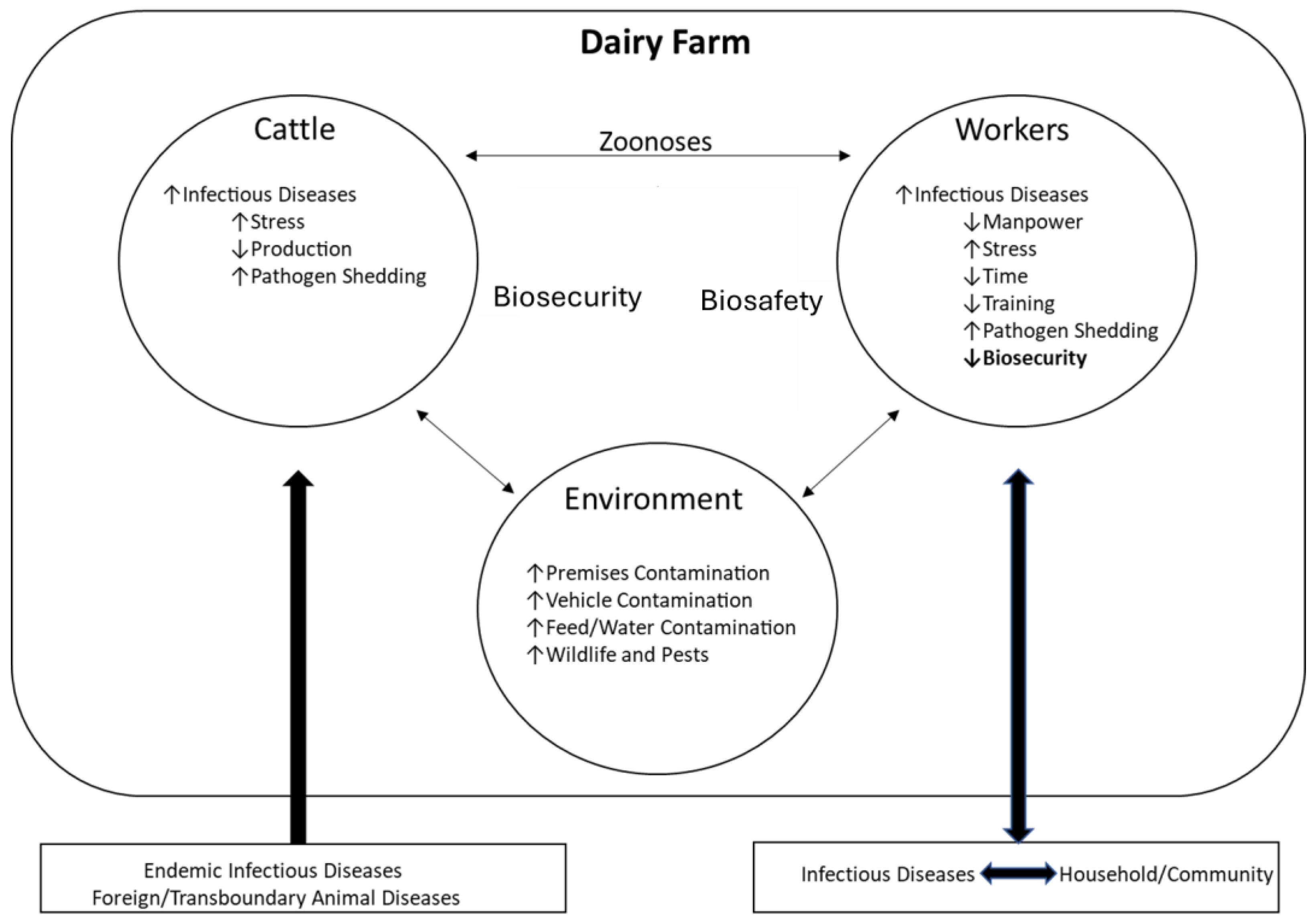
Based on infectious disease dynamics and principles of biosecurity within the cattle farm setting [
1,
2,
14], levels of implementation, constraints, and weaknesses of biosecurity on cattle farms [
15], overlapping concepts of infectious disease prevention in cattle and workers in this setting, and developing understanding of infectious disease threats to agricultural workers [
5], a hypothetical framework for interface between cattle, workers and environment was developed (
Figure 1).
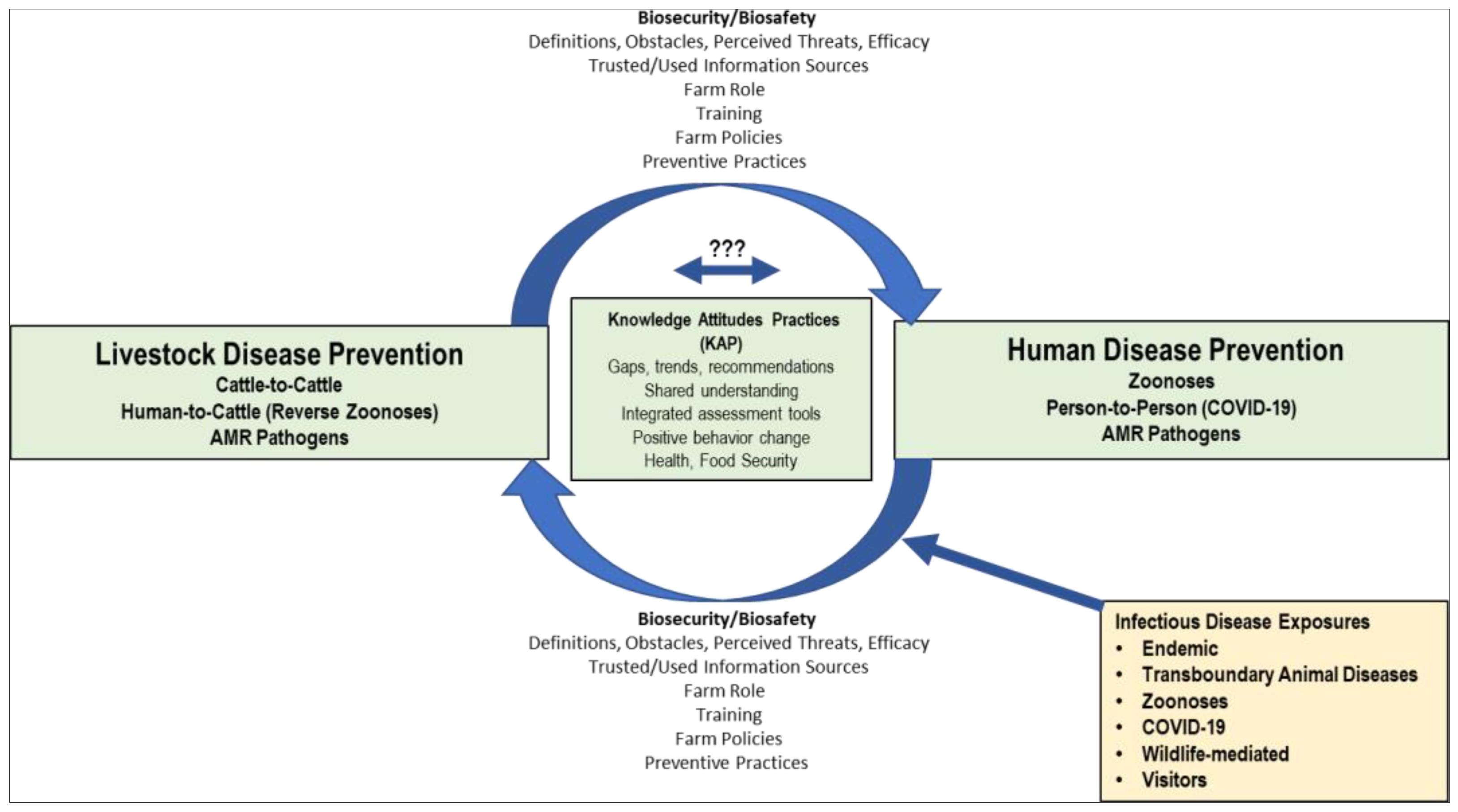
This framework served as a foundational guide for both the design and implementation of the integrated biosecurity–biosafety Knowledge, Attitudes, and Practices (KAP) survey conducted on Front Range Colorado dairy farms. It informed the development of survey content by systematically incorporating key concepts related to infectious disease transmission dynamics at the human–livestock interface within farm settings (
Figure 2). The framework enabled the identification of critical risk pathways, including direct animal contact, environmental exposures, and farm management practices, which were translated into targeted survey items.
In addition, it supported the integration of both biosecurity and biosafety principles into a unified assessment tool. This approach ensured that the questionnaire captured not only knowledge gaps but also behavioral practices and underlying attitudes influencing compliance with disease prevention measures. Furthermore, the framework guided the iterative development and refinement of the survey instrument, ensuring clarity, relevance, and scientific rigor. It also supported the alignment of survey domains with One Health principles by recognizing the interconnectedness of human, animal, and environmental health. Overall, this framework enhanced the robustness of the KAP tool and enabled a comprehensive evaluation of biosecurity and biosafety practices across diverse dairy farm settings.
The livestock biosecurity questionnaire was created first and based on those basic principles, the biosafety questionnaire was developed. Questions related to zoonoses were informed by publications focusing on KAP relevant to zoonoses, however these diseases are not limited to dairy cattle settings. Other published articles on zoonoses in farm or veterinary clinical settings were [
3,
6,
16,
17,
18]. Questionnaire construction was also guided by principles of the hierarchy of controls, which posits that administrative and engineering controls are more effective than PPE. Furthermore, KAP questionnaire content and structure at the initial stage were informed by input from subject matter experts in veterinary epidemiology and dairy animal science.
Biosecurity topics included foreign animal diseases, antimicrobial resistance, internal and external biosecurity, obstacles to biosecurity, efficacy of biosecurity measures, motivation for practicing biosecurity measures, PPE, impact of COVID-19 on biosecurity measures, hygiene, pest control, visitor policies, trusted and used sources of information, and training. Biosafety topics were developed to align with the biosecurity topics where possible.
Initially, the KAP questionnaires were structured according to biosecurity and biosafety sections. A background and demographics section was included within each of these sections (See
Supplementary S1: KAP Questionnaire). The biosecurity section contained a background and demographics section with 15 questions. The biosecurity KAP questionnaire contained a total of 61 questions, consisting of multiple-choice questions (MCQs), Likert-scale-type questions, fill-in-the-blank questions, yes/no/I don’t know questions, and ranking questions in which the participant had to write in a number to assign relative rank of importance, motivation, trust, or frequency of practice. The biosafety KAP questionnaire contained 14 background and demographic questions. Overall, the questionnaire contained 83 questions and structured in a similar manner as the biosecurity KAP questionnaire. The questionnaire was translated into Spanish and underwent several revisions for content, structure, and terminology.
2.2. KAP Questionnaire Pilot Testing and Subsequent Modifications
The English and Spanish versions of the initial KAP questionnaires were pilot tested on a Farm and modified accordingly. Researchers followed CDC guidance (
https://www.cdc.gov/covid/prevention/index.html, accessed 20 May 2020) and individual farm desires during all farm visits conducted during this research. Pilot testing was performed with the workers and owner at one of the dairy farms who provided substantial feedback and a PhD student who provided minor feedback. Overall KAP questionnaire began with biosecurity questions, followed by biosafety and then background and demographics questions.
Final KAP Questionnaire Structure and Content
The final KAP questionnaire including Spanish translated one had multiple components. When counted within their groups, total question count was 106, with 27 questions on biosecurity, 63 on biosafety, and 16 questions on background and demographics. When individual questions within groups were counted, total question count was 515, with 16 on background and demographics, 168 on biosecurity, and 331 on biosafety (
Table 1). Most questions were scale questions such as Likert scale type with agree/disagree scales or scales of importance, efficacy, or frequency of preventive practices.
2.3. Farm Recruitment and Data Collection
From June 2020 to August 2021, the team contacted 18 Front Range Colorado dairy farms (3 organic, 15 conventional) via email, phone, and in-person visits to recruit participation in the integrated KAP survey. Six farms (2 organic, 4 conventional) enrolled, yielding a 33.3% recruitment rate. Participating farms required 3–9 contact attempts before agreeing. All procedures for this research were conducted following a protocol approved by the Colorado State University (CSU) Institutional Review Board (Protocol Number: 20-10327H). Verbal informed consent was obtained from potential research participants in either English or Spanish before their participation in this study. Participants (workers and managers/supervisors) completed the questionnaires in the farm meeting or break room in presence of the researcher. Considering the length of the questionnaire, research participants were provided with a hard copy in the language of their choice so they could read through the questions and write their response. When the participants returned the questionnaire to the researcher, the researcher briefly checked for missing answers and asked the participants in their preferred language if they would like to answer the missing answers and reminded participants there was obligation to continue. After turning in the questionnaire, workers were offered a $40 gift card for a local grocery store. Managers and owners (supervisors) were given university coffee mug. Several responses from the same nine workers and two managers were omitted due to a translation error on question “What does biosecurity mean to you?” in the Spanish version. Similarly, responses from the same participants for the four subsequent knowledge questions were omitted because the option “I prefer not to answer” rather than “I don’t know” was included in the Spanish version. Responses for the question, “Attitudes toward livestock biosecurity. How much do you agree with the following statements?” were also omitted for this group of participants because a different Likert scale was used. Finally, responses for the question, “Sources of livestock biosecurity information” for this group of participants were omitted because the answer options did not match the English version. This situation was likely due to inadvertent printing of an older Spanish version of the KAP questionnaire.
2.4. Statistical Analysis
Spanish responses to free response questions were translated into English and transcribed onto the original paper KAP questionnaires. All responses were entered into a Microsoft Excel® file. Each farm and each participant within it were given a survey ID. Summaries of knowledge, attitudes, and practice findings were descriptively summarized with predominant focus on zoonotic diseases and overlapping elements of biosecurity and biosafety relevant to zoonotic disease prevention. Where applicable, various pairings of knowledge, attitudes, and practices were analyzed using Chi-Square or Fisher’s Exact Test. Microsoft Excel® was used to summarize data. Statistical analyses included computation of odds ratios and 95% confidence limits using the StatCalc program within EpiInfo version 7.2.5.0.
3. Results
3.1. Farm Characteristics and Participant Roles
The data collected was between March and September 2021. The sizes of two organic farms were 1350 and 11,325 milking cows. The size of the conventional farms ranged from 700 to 5500. The number of participants surveyed using questionnaire were 23 from organic farms and 27 from conventional farms, majorly representing workers, then managers and owners.
3.2. Demographics and Background
Majority of the 49 responders were males followed by females. Most of them preferred Spanish followed by English. Mean age was 35.62 (Range = 18–57). Majority had the highest education of high school followed by bachelor’s degree. Predominant work location in the farm was Dairy parlor, followed by Calf yard and Cow pens. Seventeen percent (n = 8) lived with other farm workers. Fifty-six percent had worked on their current dairy farm for 1–5 years, and 16% had worked there for >10 years. Mean duration of work in any dairy job was 8.19 years (Range = 0.02–32), whereas mean duration of work in the current farm was 5.13 years (Range = 0.13–25) (
Table 2).
3.3. Domestic and Wild Animals on the Farm
Dogs and small birds were present on all farms, whereas cats and mice/rats were present on almost all farms; 66.7% of farms indicated presence of minks/weasels, and 50% indicated presence of deer. The farms with most access to animal housing included housing for dogs, cats, mice/rats, and small birds.
3.4. Knowledge
Most workers and managers defined biosecurity as preventing disease introduction and spread within herds, and some also noted its role in preventing animal-to-human transmission. Supervisors showed higher likelihood of selecting comprehensive definitions than workers. In contrast, those trained in COVID-19 or human-to-human disease prevention were less likely to select all biosecurity definitions. Responders from organic farms showed higher likelihood of selecting comprehensive definitions compared to those from conventional farms. Biosecurity knowledge was also significantly associated with training factors, including the frequency of integrated biosecurity–biosafety training (
Table 3).
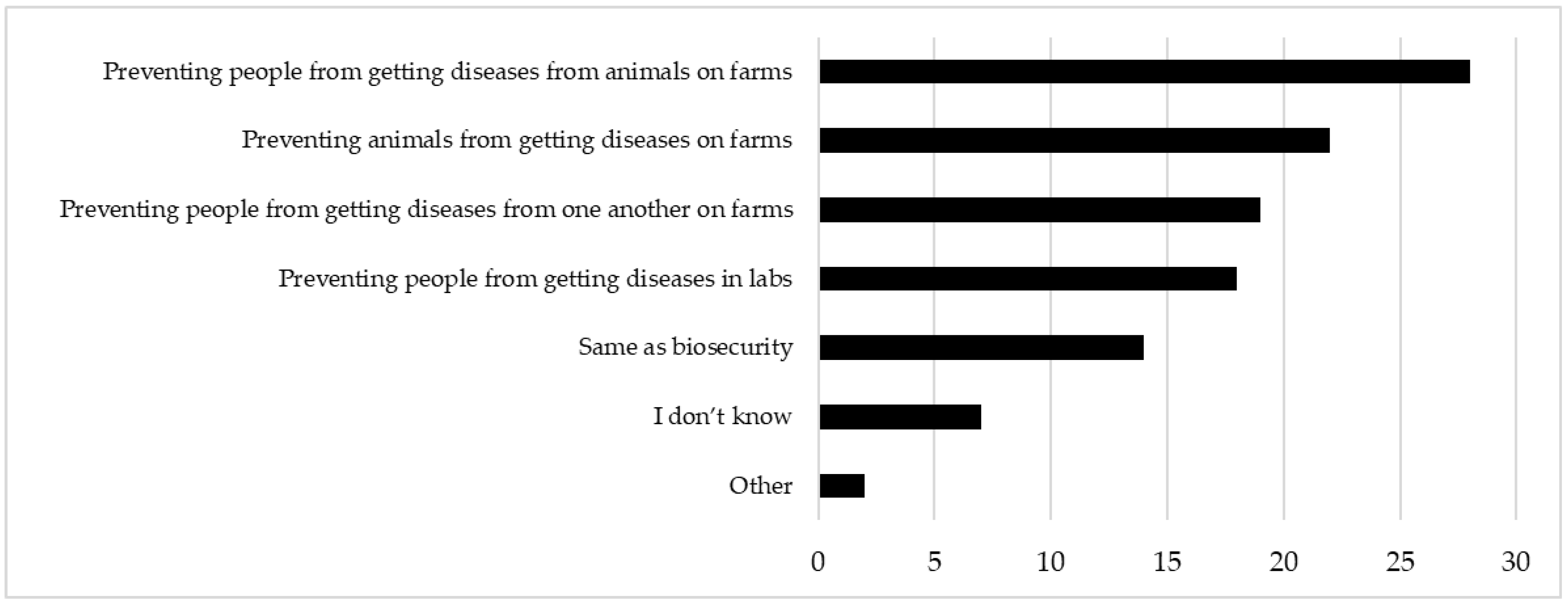
When asked about the meaning of “biological safety”, the most commonly selected option was “Preventing people from getting diseases from animals on the farm”. Respondents tended to consider biological safety as related to prevention of both animal disease and human disease in a farm setting. Fourteen respondents (29.17%) indicated that biological safety had the same meaning as biosecurity (
Figure 3). A greater proportion of supervisors than workers and organic compared to conventional farms tended to select a more comprehensive definition of biological safety. Workers (14.58%, n = 7) were the only respondents to select “I don’t know” option, 6 out of who were from conventional farms.
Analysis was conducted to examine association between knowledge of elements of biological safety definition and factors including farm personnel and frequency at which livestock biosecurity training and biosafety training occur together. Supervisors were not significantly different when compared to workers, whereas responders from organic farms were significantly higher (OR = 9.38, 95% CI = 1.75, 50.28) in selecting biological safety definition as preventing people from getting diseases from animals on farms. The differences in the farm personnel type and the farm type were not significant for other answer choices. In addition, training of personnel on preventing diseases in people same time as livestock biosecurity was not significantly associated with understanding the definition of biological safety (
Table 4).
3.5. Zoonoses
Overall, only 44.7% of respondents said that humans can give some diseases to animals, while 21.1% did not believe this was possible, and 34.2% did not know. There was no significant association between knowledge that people can transmit diseases to animals and training on infectious disease spread from animals to people, farm role, or integrated biosecurity–biosafety training. Participants (17/50) provided an example of a zoonotic disease that can be transmitted from humans to animals, 33.3% (5/15) of supervisors (managers and owners) provided a response, including one supervisor provided COVID-19 as a zoonotic agent from cattle. Only 34.3% (12/35) workers provided a response, Tuberculosis, “fever”, and COVID-19 were the most commonly cited examples. When asked if humans can infect some animals with the virus that causes COVID-19 (N = 37), 21.6% of respondents said yes. When asked about the meaning of “zoonotic disease”, the most frequently selected answer was defining the term as spread of disease between animals and people. Only 10 participants selected answer with unidirectional spread of disease from animal to human.
Many participants (n = 19) reported not knowing the definition of a zoonotic disease. One worker described it as “sickness that spreads from animals to people or vice versa”. A higher proportion of workers than supervisors selected “I don’t know”. Supervisors were significantly more likely than workers and organic farm employees more likely than conventional farm employees to correctly identify the definition of a zoonotic disease and to name a zoonotic disease. Supervisors compared to workers were more likely as well to identify all means of zoonotic disease transmission, whereas organic farms were not different than conventional farms. Respondents who received training on infectious disease transmission from people to animals were significantly more likely to correctly identify the definition of a zoonotic disease than those without such training. Respondents who received training on zoonotic disease transmission from animals to people were significantly more likely to name a zoonotic disease acquired from cattle than those without such training. Some of the zoonotic diseases selected from the drop-down list provided were Brucellosis, Salmonellosis, Tuberculosis, Ringworm, Parasites, E. coli and Rabies. Cryptosporidiosis and MRSA were the least frequently selected. Exposure to blood was the most frequently selected route of disease transmission from animals to people and aerosol transmission was the least commonly selected. Only 20% of respondents identified all correct modes of animal-to-human disease transmission, while 32% selected at least 70% of the correct answers.
Respondents from farms that provide zoonosis prevention training were significantly more likely to correctly identify all true statements about salmonellosis than those from farms without such training. Those who said their farms provide integrated biosecurity–biosafety training were not significantly different in identifying all correct options than the farms that did not have such training (
Table 5).
3.6. Attitudes and Practices
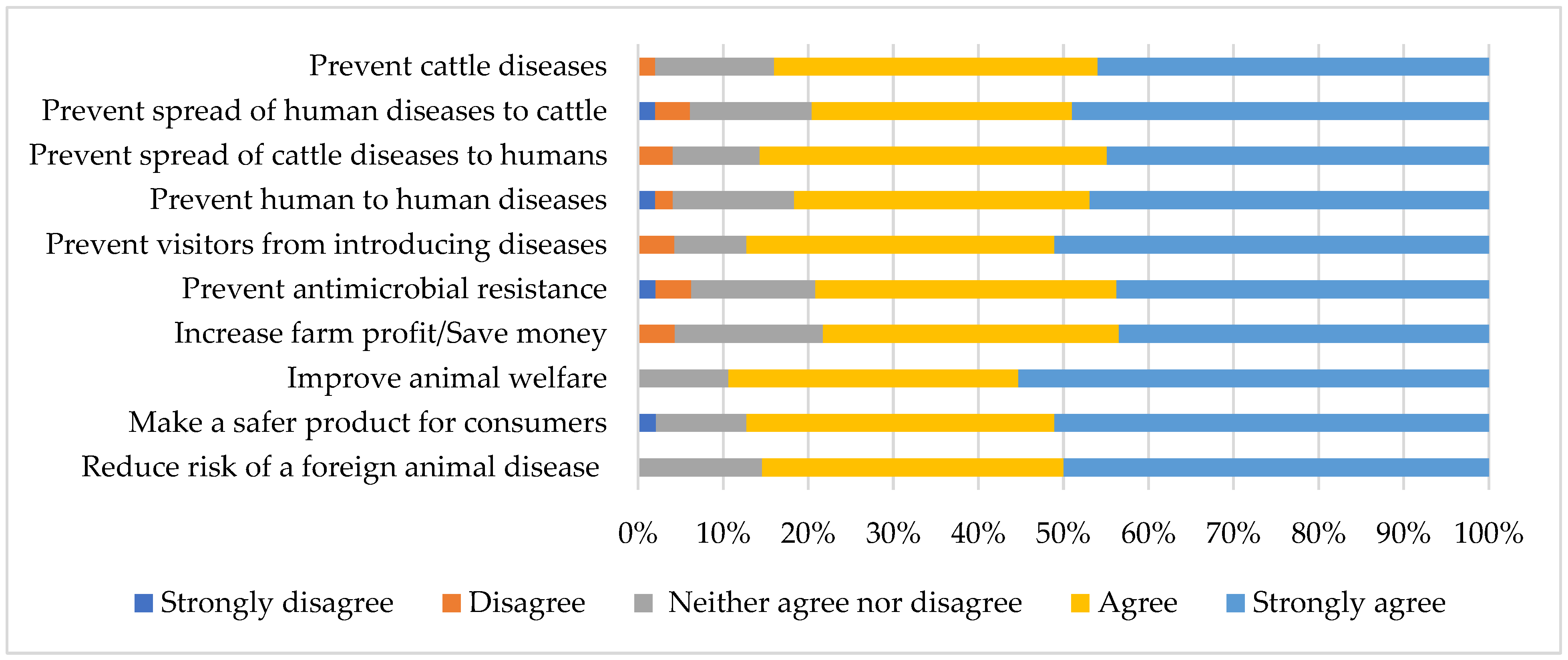
Respondents were most motivated to invest more time in livestock biosecurity if they had more evidence that it would improve animal welfare, prevent visitor-introduced diseases, and reduce cattle-to-human zoonoses (
Figure 4).
3.7. Impact of COVID-19 on Livestock Biosecurity
Several questions addressed the impact of the COVID-19 pandemic on biosecurity. Workers tended to agree more than supervisors that the pandemic made it more difficult to practice livestock biosecurity. Over half of respondents reported that livestock biosecurity became a higher priority after COVID-19. About 30% said maintaining manpower became more challenging, and 23% reported greater difficulty obtaining PPE since the pandemic began.
3.8. Impact of Livestock Biosecurity on Cattle and Human Health
Most respondents found preventing zoonoses and preventing infectious diseases in cattle (i.e., livestock biosecurity) very to extremely important and agreed that livestock biosecurity could prevent infectious diseases in both cattle and people on the farm. More respondents agreed that livestock biosecurity prevents disease in cattle than that it prevents disease in people.
3.9. COVID-19, Cattle and Person–Person Transmission
When asked to rank their concern about contracting COVID-19 from cattle, 56% of respondents reported some level of concern. When asked whether humans could infect cattle with COVID-19, 19.1% responded yes. Most respondents reported slight concern about human-to-cattle transmission on the farm.
Doctors and nurses were the most trusted and frequently used sources of information on person-to-person communicable diseases, followed by the CDC and local or state health departments. While 24% trusted private veterinarians, only 2% used them most frequently. Similarly, 28% reported using university researchers and 17.4% trusted them most. Internet and social media were widely used but rarely ranked among the top trusted sources. A few identified farm trainings as a frequently used/trusted source.
3.10. Perception of Health Risks and Health Impacts
All participants were asked to score their perception of health risks for cattle zoonoses, COVID-19, seasonal influenza and farm accidents with respect to perceived likelihood and health impact. Overall, participants scored seasonal influenza and COVID-19 as the most likely health occurrences. They scored getting a zoonotic disease from cattle as the least likely. However, when asked to score perceived impact of these health events, 69.4% of participants scored zoonotic diseases from cattle as very harmful to extremely harmful to their health, behind COVID-19 (75.5%), and accidents (72%).
3.11. Most Trusted and Used Sources for Information on Disease Prevention Livestock Biosecurity
Private veterinarians were selected as the most frequently used and most trusted information sources for livestock biosecurity information among respondents. Dairy owners and dairy managers were also selected as among the most used and trusted. Nearly 30% of respondents reported most frequently using university researchers for information, but only 20.5% identified them as their most trusted source. Similarly, more respondents reported using farm training as an information source than trusting it most.
3.12. Animal-to-Human Zoonotic Disease Prevention
Over half (51.3%) of respondents selected private veterinarians among their top three trusted sources for accurate information on preventing farm zoonotic diseases in people. However, only 29.3% of respondents indicated private veterinarians are among their top three sources used for this information. A high proportion of respondents also selected government veterinarians as trusted (25% of respondents) and used (17.1% of respondents) information sources. Doctors and nurses were second to private veterinarians as the most trusted sources but were selected with greatest frequency as most used. Regarding CDC and dairy owners, 35.4% of respondents selected each among their top three trusted information sources. However, a greater proportion of respondents selected dairy owners as the top three trusted information sources than they selected CDC. A greater proportion of respondents reported using university researchers and internet or social media sources frequently than trusting them, while farm training was infrequently selected as either a trusted or commonly used information source.
3.13. Obstacles to Practicing Stronger Livestock Biosecurity and Infection Prevention and Control
The five most commonly cited barriers to stronger livestock biosecurity were limited isolation or quarantine space, low concern about cattle infectious diseases, poor compliance with biosecurity policies, insufficient disease prevention knowledge, and limited labor availability. Fewer than 40% identified PPE availability as a factor. Compared to workers, supervisors were significantly less likely to view PPE availability, personnel noncompliance, and low farm concern about cattle diseases as barriers (OR < 1). Across farms, the top five barriers to stronger human disease prevention were lack of belief that prevention is worth the effort, poor compliance with infection control policies, limited labor availability, low concern about cattle zoonoses affecting people, and inadequate supervisory communication about prevention expectations. Fewer than 40% of respondents identified PPE availability as a barrier. Compared to workers, supervisors were significantly less likely to view inadequate handwashing stations, limited PPE, poor supervisory communication, and lack of cleaning or disinfecting supplies as obstacles to stronger infection prevention and control (
Table 6).
3.14. Intervention Effectiveness to Prevent Zoonotic Diseases from Cattle to People on Dairy Farms
Respondents generally viewed preventive practices as effective in reducing zoonoses from cattle, with all rating injection safety, cleaning and disinfecting shared animal areas and equipment, ventilation, and disease monitoring as at least moderately effective. Hand hygiene and glove use were rated very effective by 88% and 84% of respondents, respectively. Approximately 84% of respondents rated isolating and reporting sick animals as very effective, and 87.8% viewed ensuring cattle access to medical care as very effective. In contrast, disinfecting footbaths, using cloth face coverings, N-95 respirators, surgical masks, and increasing sunlight in animal housing, vehicles, and equipment were perceived as less effective than hand hygiene and gloves. By farm role, there were no significant differences between supervisors and workers in their perceptions of the effectiveness of preventive practices.
3.15. Understanding Farm Rules and Expectations for Biosecurity and Zoonotic Disease Prevention
Most participants reported understanding their farm’s zoonotic disease prevention and livestock biosecurity rules and expectations. However, 12.5% of workers (vs. 0% of supervisors) strongly disagreed regarding biosecurity rules, while 6.7% of supervisors (vs. 0% of workers) strongly disagreed regarding zoonotic disease prevention rules. Overall, supervisors and workers showed similar levels of understanding.
3.16. Preventing Infectious Diseases in People and Animals on Farm
Most respondents (65.2%) agreed that they knew how to protect themselves from cattle zoonoses, and most (60.5%) disagreed that nothing could be done to prevent incidence of zoonoses on the farm. Only 34.8% agreed or strongly agreed that cattle zoonoses became more common since COVID-19, but 57.4% agreed that preventing zoonoses from cattle became more of a priority since the advent of COVID-19. Approximately 84% respondents agreed or strongly agreed that farm policies and practices help prevent zoonoses from cattle.
When participants were asked about preventive practices on the farm, most respondents frequently washed hands and wore farm designated clothing and footwear. Comparatively few respondents wore face coverings such as N-95s, face shields, and surgical masks. Very few respondents reported showing up on the farm after work. Only one respondent (a manager) out of 38 respondents reported drinking raw milk on the farm.
Associations between frequency of wearing shoes/boots to home at the end of the day and various factors including training, zoonotic disease history, perceived harm, perceived efficacy of preventive measures, farm role, and farm level preventive practices were not statistically significant. No significant associations were found between frequency of changing clothes after work on the farm before returning home and various factors including efficacy of farm designed clothing, training, and farm role. However, a small proportion of respondents reported never changing clothes after work on the farm before returning home. Associations between frequency of wearing gloves when working in animal facilities and various factors including training, zoonotic disease history, farm preventive practices, perception of harm, efficacy of gloves, and farm role could not be evaluated as all (100%) of the respondents reported wearing gloves (rarely to always) when working in animal facilities. Moreover, no significant differences were found between frequency of wearing a cloth face cover on the farm and factors such as effectiveness of N-95 respirators, when supervisors were compared to workers. In addition, several respondents reported eating while conducting work duties; however, associations between frequency of eating while conducting work duties and receiving training on food safety/hand hygiene and farm role were not significant.
3.17. Personal Protective Equipment Personal Hygiene Access
Almost all respondents agreed or strongly agreed that using PPE can help prevent zoonoses. Only 34% of respondents agreed or strongly agreed that PPE had been harder to find since the start of the COVID-19 pandemic. Most respondents agreed or strongly agreed that they had all the PPE they need. When asked about cloth face coverings, respondents tended to agree that they are useful in preventing infectious diseases transmitted person–person, but fewer agreed that cloth masks can reduce their chances of getting a zoonotic disease from an animal. Over half (54.4%) of respondents agreed or strongly agreed that cloth face masks interfere with their ability to do their job.
Most respondents agreed or strongly agreed that they have access to hand sanitizer and handwashing facilities on the farm. However, access to hand sanitizer appears to be less than access to handwashing facilities. All respondents indicated workers are required to wear gloves while working with sick animals. Almost all respondents indicated farm workers must change gloves and wash hands after handling sick animals. Fewer respondents indicated workers must wash work clothes separately, change/disinfect clothes, or wear face masks or goggles.
3.18. Training
Almost all respondents agreed or strongly agreed that their livestock biosecurity training and zoonotic disease prevention training was provided in their preferred language, was worth the time, and that they are encouraged to provide feedback. A smaller proportion agreed or strongly agreed that their livestock biosecurity training provides accurate information.
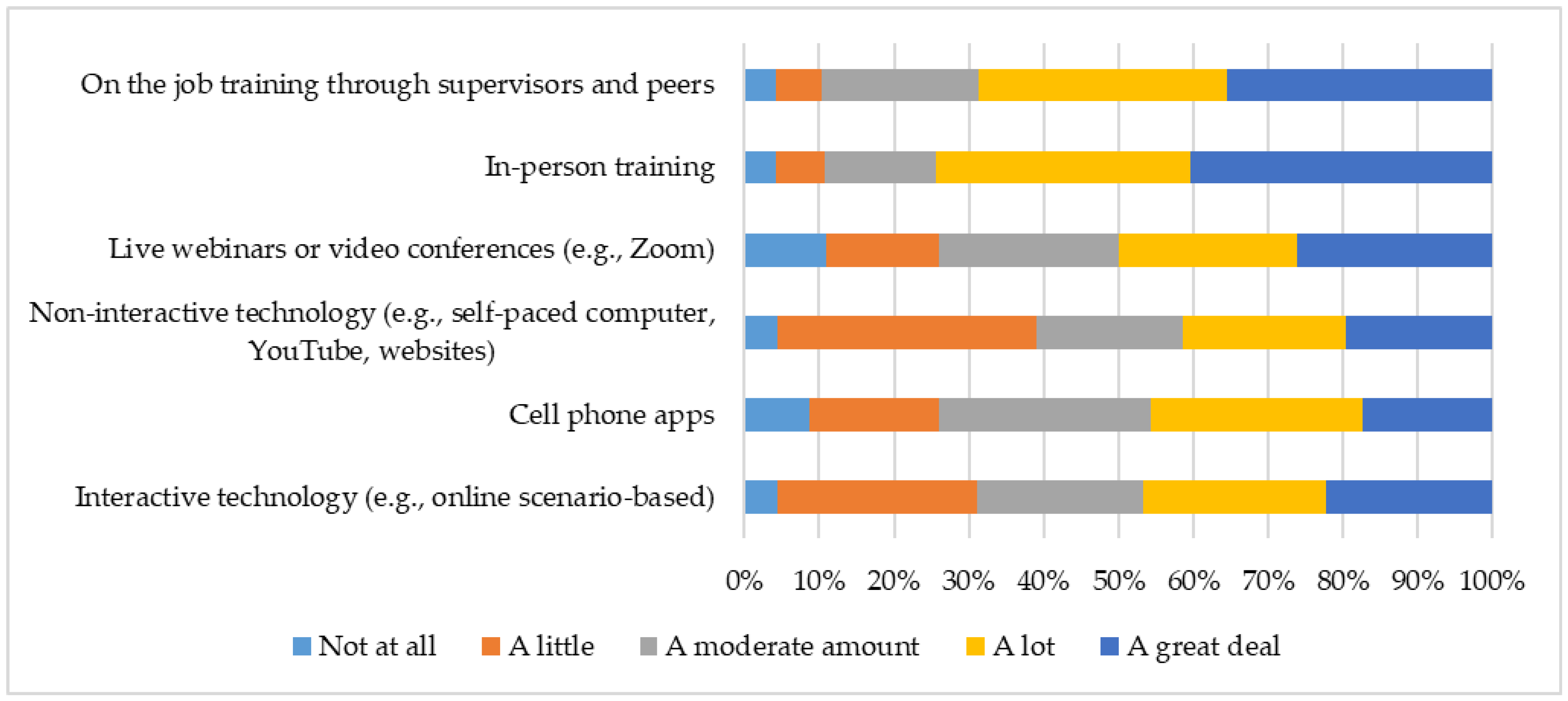
Respondents indicated on-the-job training and in-person training were the most frequently used methods. The least preferred methods of training were live webinars and cell phone apps (
Figure 5).
Only 43.2% (16/37) respondents indicated their farms provide training on preventing zoonoses from animals to people, while 32.4% (12/37) and 24.3% (9/37) indicated “No” or “I don’t know”, respectively. Only 59.5% (22/37) respondents indicated their farms provide livestock biosecurity training, while 18.9% (7/37) and 21.62% (8/37) indicated “No” or “I don’t know”, respectively.
When asked about training frequency, respondents most often selected “when starting work,” “when supervisors think it’s needed,” or “once per month.” Few reported trainings occurring when people (2/41 biosecurity; 4/41 zoonoses) or animals became sick, though animal illness was cited more often. Some indicated no training, uncertainty, daily sessions, or 4–5 times per year. Only 10.9% said training on human infectious disease prevention always coincides with livestock biosecurity training, while 13% said it never does. Sixty percent reported increased use of online training since COVID-19. Approximately 42% of respondents reported increased zoonosis prevention training since the start of COVID-19, and 60% reported greater use of online training. Regarding livestock biosecurity training, most respondents stated they received training on topics including recognizing and reporting cattle diseases, PPE, and hand hygiene. However, only around 25% of respondents indicated they received training on COVID-19 in animals or spread of COVID-19 from people to animals.
Most respondents reported receiving training on illness reporting and needle safety. However, only 31.3% received training on COVID-19 transmission from animals to people, 46.7% on symptoms of cattle zoonoses in people, and 54.3% on animal-to-human disease transmission. At least one respondent in each category was unsure whether they had received the training.
3.19. Sick Leave and Illness Reporting
Most respondents reported feeling comfortable informing supervisors when sick, understanding sick leave policies, knowing how cattle zoonoses could affect them, and being encouraged to stay home if ill. Nearly half (46.7%) believed zoonoses are underreported. While most of them knew someone who contracted a zoonotic disease on a farm, few believed they had become ill on their current farm. No significant associations were found between perceived importance of zoonosis prevention and zoonotic history, farm practices, or role.
Over half said their farm does not test workers on sick leave policies. Only one-third reported bilingual prevention materials or maintained cleaning records. Just 20% reported using zoonotic disease checklists, and over half were unsure if they were used. Fewer than half said their farm has a designated person for infectious disease control, and 33.3% did not know.
3.20. Associations Between Biosecurity and Biosafety Practices
There were several significant associations between biosecurity and biosafety practices whereby farms or individuals completing a specific practice or receiving a specific training aimed at preventing diseases in animals had a greater likelihood of completing the corresponding practice or receiving the corresponding training (
Table 6).
3.21. Motivation to Try New Tools for Infectious Disease Threat Evaluation
Almost all (93.7%) of respondents agreed or strongly agreed they would try a new tool on farm if it prevents their family from getting sick. A focus on animal and human health and prevention of infectious diseases in cattle were also highly supported. Approximately 85% of respondents agreed or strongly agreed they would try a new tool if it prevents zoonoses in farm personnel. Some respondents disagreed/strongly disagreed they would try the tool if it prevents infectious diseases from humans to cattle.
4. Discussion
This study describes integrated biosecurity–biosafety KAP survey questionnaire development and farm recruitment during the peak of the COVID-19 pandemic. Although the data collection was performed during COVID-19, the development of the survey is applicable to the contemporary period due to its ability to identify gaps and findings. This study also obtains data from the questionnaire on a small sample size of Front Range Colorado dairy farm supervisors/managers and workers. While the questionnaire addresses cattle diseases, COVID-19, and zoonoses, analysis focusses on zoonoses. Results help guide recommendations for improved farm measures aimed at preventing infectious diseases in farm personnel and can guide future efforts on the construction of integrated infectious disease risk assessment tools for the dairy farm environment. KAP frameworks have been widely used in zoonotic disease and agricultural biosecurity research to inform targeted interventions [
19,
20].
The KAP questionnaire used in this research was created as the COVID-19 pandemic unfolded. The potential for humans to be infected with SARS-CoV-2 from cattle and vice versa was poorly understood at the start of the COVID-19 pandemic. The finding of some concern in this population that cattle could infect them or that they could be infected by cattle would likely be different if this study were repeated today. As the COVID-19 pandemic progressed, more research shed light on the involvement of animals in SARS-CoV-2 transmission. These included studies showing SARS-CoV-2 transmission from humans to farm minks and back to humans on farms [
21], from humans to captive zoo animals at the Bronx Zoo [
22], from humans to companion animals [
23], and propagation within white-tailed deer populations [
24,
25]. Experimental work demonstrated low susceptibility of cattle and young calves to SARS-CoV-2 and lack of evidence for efficient transmission [
26,
27]. Regardless, respondents’ concern about cattle involvement in SARS-CoV-2 transmission may represent justified caution given scientific uncertainty at the time.
The study provides a snapshot of COVID-19’s impact on biosecurity, biosafety, and health outcomes. At the time, global supply chain disruptions affected PPE availability in many sectors [
28,
29]. In this population of dairy farms, findings suggest the pandemic did not have a major impact on biosecurity practices or PPE availability. Supervisors consistently showed better understanding of biosecurity and zoonoses, while workers reported more uncertainty. However, workers were more likely than supervisors to perceive challenges, warranting exploration of occupational perception gaps. Differences in perception between management and frontline workers have been documented in the occupational health literature [
30], supporting the need for shared understanding in workplace safety culture. The finding that less than 40% ranked PPE availability as an obstacle aligns with data suggesting variability in PPE shortages across sectors [
28]. Agreement that livestock biosecurity became more of a priority during COVID-19 is consistent with broader evidence that pandemics can increase attention to infection prevention and One Health approaches [
31].
Exploring differences in opinion between workers and supervisors reveals potential divergences in lived experience. Occupational safety research shows that frontline workers often report different risk perceptions compared to management [
30]. A shared understanding between supervisors and workers regarding preventive practice effectiveness is critical, as perceived efficacy influences compliance [
32]. Although core measures were widely viewed as effective, some respondents rated disinfecting footbaths, reducing crowding, requiring visitor PPE, and increasing sunlight in shared spaces as ineffective. However, biosecurity literature supports the role of hygiene barriers (e.g., footbaths), density reduction, and controlled access in preventing pathogen spread in livestock systems [
33,
34]. Sunlight (UV radiation) and ventilation reduce pathogen persistence and airborne transmission risk [
35,
36]. Respondents from organic farms were more likely to provide comprehensive definitions of biosecurity and biological safety. This may reflect greater regulatory emphasis or training requirements in organic systems. However, a study from Norway indicated that organic farmers felt they were less cautious about risks compared to conventional farmers [
37].
Despite moderate awareness of biosecurity concepts, only about half of all responders recognized human-to-animal disease transmission, and many could not define zoonoses. This highlights a critical gap in bidirectional disease understanding, which is central to One Health approaches. This aligns with a prior reference showing limited awareness of zoonoses among agricultural workers [
38].
Addressing this gap is essential for comprehensive disease prevention strategies. Future KAP questionnaires should assess availability of showers, which are recommended in high-biosecurity livestock systems [
33] and explore PPE discomfort as a barrier to compliance [
39]. Although analysis did not reveal a significant association between the practice of wearing work shoes/boots home at the end of the day and various factors including training, perceived harm, knowledge, and farm role, exploring footwear is important because pathogens can be spread throughout a farm and home to family members. Footwear and clothing can facilitate pathogen spread within and beyond farms [
34]. Changing clothes, glove use, and mask use are all recognized as protective measures in zoonotic risk reduction [
40]. Raw milk consumption, though rare in this study, has been associated with zoonotic outbreaks including
Salmonella,
Campylobacter, and
E. coli [
41]. It is known that inadequate biosafety practices increase the risk of zoonotic and production-related diseases, including avian influenza, salmonellosis, and other occupationally relevant infections. These diseases pose significant risks not only to animal health but also to human health and productivity, particularly among individuals with frequent animal contact [
42,
43]. The magnitude and nature of these risks vary across worker groups such as farm workers, veterinarians, and transport personnel due to differences in exposure pathways, intensity of contact, and job-specific responsibilities [
44]. Understanding these differential risk profiles is essential for designing targeted interventions and reinforces the importance of biosafety within a One Health framework [
45]. Similar justification can be made for exploring individual practices of changing clothes on the farm before going to work, frequency of glove use while working in animal facilities, and frequency of cloth face mask usage. In addition to preventing infection while on the farm, many of these practices can also prevent pathogen spread to family members or the public. Notably, 0% of respondents reported “never” wearing gloves while working in animal facilities, and 100% of respondents reported that workers are required to wear gloves while working with sick animals. With the exception of only 53.2% of respondents reporting that workers are required to wear face masks/coverings while working with sick animals, results suggest stringent PPE and hand hygiene requirements for workers interacting with sick animals.
Although no significant associations were found between eating while conducting job duties and farm role, training on food safety, or training on hand hygiene, exploring food consumption on the job is important, particularly if food is consumed in animal housing areas [
40,
41]. While only one respondent in this study reported drinking raw milk, this issue was not explored. Future studies should explore in greater detail the practice of raw milk consumption and factors associated with its occurrence, including training [
41,
46].
Most respondents indicated that they receive training on a wide array of subjects related to livestock biosecurity and infectious disease prevention in humans. At the time of KAP questionnaire creation, the threat of SARS-CoV-2 transmission from human to animal or from animal to animal was poorly understood [
21,
22]. Few respondents indicated that they receive training on these two topics. Considering the lack of information at the time, this gap in training is understandable. The findings show training is positively associated with correct identification of zoonotic diseases, yet only ~43% reported receiving zoonosis-related training. This reinforces evidence that structured training improves biosecurity compliance and implementation of farm management on dairy farms [
47].
Within the context of livestock biosecurity, the low presence of training on wildlife disease threats and pest/vermin disease threats should be addressed, as 5/6 of the included farms are characterized by animals with access to cattle housing. Wildlife interactions with cattle can lead to cattle infections, which can ultimately lead to human infections [
48,
49]. The finding that only a few respondents reported receiving training on the transmission of infectious diseases from humans to animals highlights an important gap that should be addressed, as understanding this mechanism is important to appreciating infectious disease prevention through a holistic lens [
6,
50].
The finding that only 46.7% and 54.3% of respondents reported receiving training on symptoms of cattle zoonoses in people and zoonotic disease spread from animals to people, respectively, is concerning and indicates the need for additional training [
33,
34]. The finding that over 50% of respondents reporting receiving training on sunlight to kill pathogens affecting humans and ventilation in workspace/common areas is encouraging. Sunlight and ventilation are both important for reducing infectious disease threats [
35,
36].
Finally, there were several significant associations between biosecurity and biosafety practices whereby farms or individuals completing a specific practice or receiving specific training aimed at preventing diseases in animals had a greater likelihood of completing the corresponding practice or receiving the corresponding training. This finding is not surprising, as farms completing one preventive practice (e.g., livestock biosecurity checklists) might be expected to also complete checklists that include zoonoses [
33,
34].
These pairing of animal and human health preventive practices can potentially increase efficiency, depth and breadth of training, and help farm workers and supervisors develop a more holistic view on infectious disease prevention and shared understanding within the dairy farm environment [
31,
51]. Significant associations found between animal-focused and human-focused prevention practices, supporting integrated approaches align with the One Health paradigm, emphasizing interconnected disease prevention. Integrated training can make learning more efficient and help people better understand how diseases spread between animals and humans [
52].
Study Limitations: This study was limited by small sample size, missing data, and low participation by supervisors and owners, limiting generalizability to Front Range Colorado dairies. Recruitment was challenging due to COVID-19-related stressors, and concerns about biosecurity and animal welfare policy initiatives. Length of the questionnaire was one of the limitations of the study. Future studies should prioritize owner and manager buy-in, use culturally informed, community-based approaches, and involve Spanish-speaking behavioral scientists. Shorter, simpler KAP instruments (20–30 min), interview-based data collection, random worker selection, and trust-building with producers are recommended.