Article

The Effects of Suckling Piglets Learning Feeding Behavior from the Sow on Their Welfare and Jejunum Morphological Development

1
College of Animal Science and Technology, Northeast Agricultural University, Changjiang Road No. 600, Harbin 150030, China
2
Key Laboratory of Swine Facilities Engineering, Ministry of Agriculture and Rural Affairs, Changjiang Road No. 600, Harbin 150030, China
*
Author to whom correspondence should be addressed.
Agriculture 2026, 16(10), 1057; https://doi.org/10.3390/agriculture16101057
Submission received: 28 March 2026 / Revised: 3 May 2026 / Accepted: 11 May 2026 / Published: 13 May 2026
(This article belongs to the Section Farm Animal Production)

Abstract

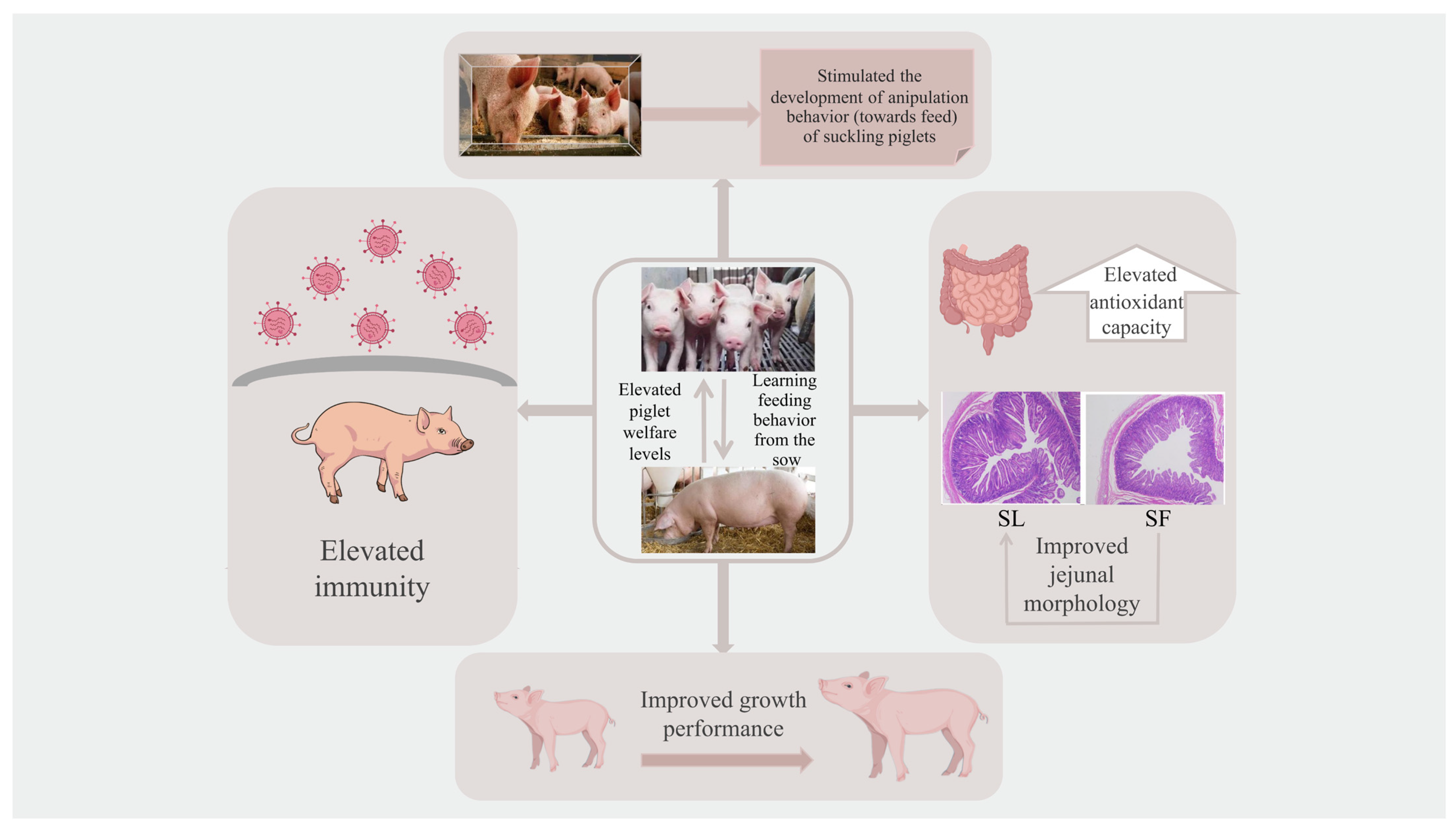
Under intensive farming systems, weaned piglets often face welfare challenges including food neophobia, reduced feed intake, and diarrhea. To address these issues, this study leverages the sow’s natural feeding behavior to guide piglets, enhancing their ability to learn to eat solid feed during lactation and improving digestive function. A total of 12 sows and 99 piglets were assigned to two groups: a Sow-Learning group (SL, n = 6), where piglets observed and learned feeding behavior from sows, and a Separate-Feeding group (SF, n = 6), where sows and piglets fed independently. Results showed that the SL group’s feed intake at 36–39 days of age was significantly higher than that of the SF group (p < 0.05). For weaned piglets, the diarrhea rate of the SL group was significantly lower than that of the SF group (p < 0.05). The SL group’s manipulation behavior (towards feed) during suckling and weaning was significantly higher than that of the SF group (p < 0.05). Compared with the SF group, weaned piglets in the SL group demonstrated stronger immune capacity, longer jejunal villi, a higher villus-to-crypt ratio, shallower crypt depth, and greater antioxidant capacity (p < 0.05). In summary, learning feeding behavior from sows improved piglet welfare and promoted jejunal development.

Graphical Abstract

1. Introduction

Pigs are social animals, and the social unit includes a sow and its litter [1]. But in commercial pig production, sows are generally confined in sow farrowing crates during lactation to prevent piglets from being crushed or injured; this limits the expression of natural behaviors of the sow and the potential for piglets to interact with the sow. It has been suggested that wild piglets interact more with sows and other family members during development. These interactions allow them to receive more stimulation and have more opportunities to learn from the sow about what, where, and how to eat—opportunities that are often limited on pig farms [2]. Research on social learning showed that learning from mothers is an effective way for young animals to learn about new foods [3]. In the family pen, the interaction between sows and piglets is beneficial to the development of the feeding behavior of suckling piglets [4]. One study showed that piglets participating in sow feeding explored the feed sooner than other piglets, had a higher feed intake 2 days after weaning, and had faster growth 5 weeks after weaning [5]. Additionally, Wattanakul et al. (2005) found that piglets that fed with sows frequently explored the trough [6]. However, other studies have shown that participation in sow feeding has no effect on weaned piglets’ body weight and feed intake [7]. Therefore, the effects of suckling piglets learning feeding behavior from the sow on their growth performance after weaning requires further investigation.
Piglet weaning is a highly stressful stage; this stress leads to a series of complex physiological changes in piglets, resulting in reduced feed intake and growth decline, which is one of the main causes of piglet deaths. Additionally, weaning stress is an important factor limiting pig production [8]. Piglets are generally weaned at 3–4 weeks of age in current pig production practices [9]. During sow lactation, piglets eat solid feed for a short time, or in some cases not at all, and because of the high position of the sow trough, piglets cannot reach it to participate in sow feeding, and are therefore not familiar with solid feed. Most piglets are unwilling to eat new food after weaning, resulting in weight loss [10]. Studies have shown that long-term low feed intake after weaning leads to significant changes in anti-inflammatory and pro-inflammatory factors [11]. The first five days after weaning are a period of acute disruption of gut integrity and possible changes in immunity [12]. Weaning stress may disrupt the redox homeostasis of the intestine, which leads to the release of excessive free radicals. These radicals can damage cell function, increase intestinal permeability, and thus impair intestinal health. Allowing piglets to remain with the sow and participate in sow feeding may mitigate the effects of weaning stress. A study by Oostindjer et al. (2011) found that piglets quickly contact and eat more novel food within 7 min of being in the sows’ company [13].
The primary mechanism tested in this study was social learning; specifically, by modifying the sows’ feed troughs, piglets can observe the sows and learn feeding behavior. Previous studies on whether piglet participation in sow feeding improves growth performance have reported contradictory findings [5,6,7]. Several gaps remain. First, most previous studies focused primarily on growth performance and feed intake, with limited attention to welfare indicators such as behavior, diarrhea, immunity, and intestinal health. Second, the effects of social learning from the sow on post-weaning jejunal morphology and oxidative stress have not been systematically examined. Third, the persistence of learned feeding behavior beyond the immediate post-weaning period has rarely been quantified. Therefore, we hypothesized that suckling piglets learning feeding behavior from the sow could promote the development of piglets’ feeding behavior, increase their early weaning feed intake, improve their growth performance after weaning, alleviate the damage caused by weaning stress, and improve intestinal function. The purpose of this study was to determine the effects of suckling piglets learning feeding behavior from the sow during lactation on piglet behavior, post-weaning growth performance, and cytokine and oxidative stress levels in the jejunum.

2. Materials and Methods

2.1. Animals and Housing

The study was conducted at the A-cheng Experimental Demonstration Base of Northeast Agricultural University in Harbin City, China. A total of 99 newborn piglets (Large White × Duroc × Min pig) from 12 sows of parity 2–3 were selected and assigned to two groups: a Sow-Learning group (SL group, n = 6), where piglets could observe and learn feeding behavior from sows, and a Separate-Feeding group (SF group, n = 6), where sows and piglets fed independently. Each treatment group comprised six experimental units, with each unit consisting of one litter of piglets. All experimental sows (Duroc × Min pig) were of the same genetic line to eliminate the influence of genetic background on the results, and the breeding boar was an American Large White (all the sire’s sperm were from the same boar). The 12 sows were randomly assigned to the SL group or SF group; for the baseline characteristics of sows and litters in the SL and SF groups, see Table S1. The piglet area (1.6 m × 0.8 m) was located in front of the sow area (4.4 m × 1.6 m), and the piglets could move freely in the piglet area and sow area. Sows were transferred to delivery pens 7 days before delivery to allow them to become familiar with the pen environment. In accordance with standard practice on pig farms, piglets had their teeth clipped at birth, and male piglets were castrated at 18 days of age.
When the piglets were 7 days old, the troughs were placed in the piglet area. An appropriate amount of suckling piglet feed was provided for the piglets at 06:00. Following standard feeding management procedures of lactating sows, the sows were fed at 06:00, 11:00, and 17:00 to maintain their physical condition and meet their nutritional requirements. The nutrient composition and content of feed used in the experiment are shown in Supplementary Table S2. The SF group’s sow troughs were opaque (38 cm × 36 cm × 20 cm), and were installed on the side of the pen farthest away from the piglet area, 25 cm from the ground (Figure S1A). The SL group’s sow troughs were transparent (38 cm × 20 cm × 15 cm), and were installed on the side of the pen nearest the piglet area (Figure S1B), at a height of 1 cm above the ground. Piglets could observe the feed and feeding behavior of sows through the trough. All piglets were weaned at 08:00 on day 36 of age. The grouping of weaned piglets remained the same as during the suckling period. After weaning, piglets were housed in the nursery in their original litter groups, with a stocking density of 0.5 m2 per piglet.
The pigsty was equipped with horizontal mechanical ventilation and natural lighting, and was maintained at a temperature of 25.1 ± 2.7 °C and a humidity of 63.8 ± 4.6%. The facilities were cleaned and disinfected daily. Sows and piglets were provided with nipple drinkers, allowing them to drink freely. All experiments and data collection were carried out in 2023.

2.2. Feeding Management

Each piglet was weighed individually after birth and marked, was given colostrum in a timely manner, and underwent the standard iron supplementation and immunization procedures. Piglets’ teeth were cut, and their tails were left intact. The piglets were weighed at 6:00 at the age of 36 days. The weaned piglets were preserved in their original pen and marked to distinguish them. Piglets were fed at 6:00, and piglets were given free access to feed. Beginning at 37 days of age, the piglets’ diet was gradually transitioned from suckling piglet feed to weaned piglet feed. The daily allowance of weaned piglet feed was increased by 20% each day, ensuring the feed was thoroughly mixed at every stage (Wellhope Foods Co., Ltd., Shenyang, China). Piglets were raised until 66 days of age. During this period, they had free access to clean drinking water, and their daily feed allowance was gradually increased according to their appetite. Before each daily feeding, any remaining feed from the previous day was collected from the troughs and floor and weighed (this is how food conversion was measured).

2.3. Growth Performance

The average daily gain (ADG) was calculated for two phases: the suckling period (from birth to weaning) and the nursery period (from weaning to the end of the nursery phase). The feed intake of piglets, feed intake of lactating sows, total feed intake of suckling piglets, and average daily feed intake (ADFI) during the nursery period were determined using the daily weight of feed provided in the piglets’ trough and the weight of residual feed (including spilled clean feed). The feed conversion ratio (FCR) was calculated based on the ADG and the ADFI.
From 7 to 36 days of age, piglets were observed daily at 16:30 h for diarrhea. Piglets observed to have yellow, gray, or white feces around the anus were identified as having diarrhea. The incidence of diarrhea in piglets during the suckling and weaning periods was recorded.
A D G   ( s u c k l i n g   p e r i o d ) = Σ ( W e a n i n g   w e i g h t B i r t h   w e i g h t ) N u m b e r   o f   d a y s   o f   s u c k l i n g × n u m b e r   o f   p i g l e t s  
A D G   ( n u r s e r y   p e r i o d ) = Σ ( F i n a l   n u r s e r y   w e i g h t w e a n i n g   w e i g h t ) Experimental   days × N u m b e r   o f   p i g l e t s
A D F I   ( n u r s e r y   p e r i o d ) = Σ D a i l y   f e e d   i n t a k e Experimental   days × N u m b e r   o f   p i g l e t s
F C R = A D F I ( n u r s e r y   p e r i o d ) A D G ( n u r s e r y   p e r i o d )
D i a r r h e a   r a t e   ( % ) = Number   of   piglets   with   diarrhea   during   the   experimental   period Number   of   piglets × Experimental   days × 100 %

2.4. Behavioral Observation

The manipulation behavior (towards feed) of piglets during the suckling and nursery periods were recorded with a video camera (Hikvision, Hangzhou, China). During the suckling period, two cameras were installed in each pen: one on the side wall of the piglet protection area and the other on the ceiling of the sow activity area. During the weaning period, the camera was installed directly above the pen. Suckling piglets were recorded throughout the day at the age of 7–9 days; at 15, 16, 22, 23, 29, and 30 days of age, piglets were recorded from 06:00 to 08:00, 11:00 to 13:00, and 17:00 to 19:00. The manipulation behavior (towards feed) of all piglets was recorded via the scan sampling method. During behavioral observation, piglets were observed for 10 s every minute, and the number of behavioral occurrences during the observation period was noted. Weaned piglets were recorded throughout the day at the age of 36–38 days; intermittent recording of piglets was conducted at 44, 45, 51, 52, 58, and 59 days old, from 09:00–11:00 and 14:00–16:00. During the behavioral observation period, the behavior of all piglets was recorded via the scan sampling method, with continuous observation for 10 s every 3 min. All behavioral observations were recorded by an observer. The behavior categories of piglets and their definitions are shown in Table S3.

2.5. Sample Collection

At 41 days of age, a total of 12 pigs of similar weights from both groups (three males and three females in each group, one from each of the 6 litters per treatment group) were randomly selected, and each pig was weighed first. Afterwards, 5 mL of blood was collected from the anterior vena cava and centrifuged at 3000 rpm for 10 min (CenLee, Changsha, Hunan, China, TD6M), and the upper layer of serum was collected and stored at −80 °C to facilitate subsequent serum cytokine assays. A total of 12 pigs of similar weights from both groups (three males and three females in each group) were randomly selected and euthanized (electroshock method); euthanasia was performed between 08:00 and 11:00. Piglets were fasted for 24 h prior to euthanasia. After euthanasia, the jejunal tissue (the midpoint of the jejunum) was washed with sterile deionized water, then the intestinal mucosa was scraped off with a sterile glass slide and subsequently frozen. A 1 cm loop of intestinal tissue was cut from the jejunum and fixed with 4% paraformaldehyde solution for intestinal morphology observation (stored at room temperature). The jejunal tissue was removed and the contents were collected for sterile ultra-low-temperature (−80 °C) preservation.

2.6. Histological Examination

The paraformaldehyde-fixed jejunum samples were dehydrated in gradient ethanol, cleared in xylene, and subsequently embedded in paraffin. Sections of 5–6 µm thickness were made and stained with hematoxylin and eosin. Finally, the sections were sealed with neutral resin. After drying, the jejunal microstructure was observed under a light microscope (Nikon, Tokyo, Japan). Image-Pro Plus v6.0 software was used to visualize the jejunal mucosal morphology, villus height (vertical length from the tip of the villus to the opening of the crypt), crypt depth (vertical height from the base of the crypt to the opening of the crypt), and the villus-to-crypt ratio (villus height-to-crypt depth ratio). Five field-of-view images of intestinal tissue sections from each piglet were selected for observation, and they consisted of only longitudinally oriented sections. Within each field, the longest well-oriented villi were selected. All measurements were performed at 40× and 100× magnification. The evaluator was blinded to treatment allocation (SL vs. SF) during all measurements.

2.7. Determination of Immunological Indicators

An ELISA kit (Jinma, Shanghai, China) was used to measure the levels of Immunoglobulin A (IgA), IgG, Interleukin-1β (IL-1β), IL-4, IL-6, IL-10, Interferon-γ (IFN-γ), and Tumor Necrosis Factor-α (TNF-α) in the serum of piglets. Measurements were carried out strictly according to the instructions of the kit. The jejunal mucosa and precooled saline were homogenized at a mass ratio of 1:9, and after centrifugation at 3000 rpm for 10 min, the supernatant was extracted and analyzed. Serum IgA and IgG levels were measured using an enzyme-linked immunosorbent assay kit (Jinma, Shanghai, China).

2.8. Oxidative Stress Index Measurement

The jejunal mucosa and precooled saline were homogenized at a mass ratio of 1:9, and the supernatant was measured after 3000 rpm centrifugation for 10 min. The enzyme activity and MDA content of T-AOC, GSH-Px, CAT, and SOD in jejunal mucosa were determined strictly according to the kit instructions (Jinma, Shanghai, China). A BCA protein concentration measurement kit (Jinma, Shanghai, China) was used to determine the total protein concentration in the supernatant of the jejunal mucosa mixed samples to calculate the relative level of each oxidative stress index in the sample.

2.9. Statistical Analysis

All data were initially compiled in Excel 2016, and then analyzed using SPSS 26.0. An independent sample t-test was used to analyze the differences in feeding behavior, growth performance, cytokine levels, and jejunal oxidative stress. The Shapiro–Wilk test was used to evaluate the normality of variables. The results are expressed as mean ± standard error (mean ± SEM), and p-values < 0.05 are considered significant.

3. Results

3.1. Growth Performance

The piglet growth performance results are shown in Table 1. The feed intake of 36–39-day-old piglets in the SL group was significantly higher than that of piglets in the SF group (p < 0.05), but there was no significant difference in the effect of participation or non-participation of piglets in the sows’ feeding for other indices (p > 0.05).

3.2. Diarrhea

The diarrhea rate of piglets in the SL group during the suckling period was not significantly different from that of piglets in the SF group (p > 0.05, see Table 2). For weaned piglets, the diarrhea rate of the SL group was significantly lower than that of the SF group (p < 0.05, see Table 2).

3.3. Behavior

The behavioral results for the two groups are shown in Table 3. For 7–9-day-old and 51–52-day-old piglets, the time spent manipulating feed within the trough and the spilled feed of the trough was significantly higher for piglets in the SL group than that in the SF group (p < 0.01). For 15–16-day-old, 36–38-day-old and 44–45-day-old piglets, the time spent manipulating feed within the trough was significantly higher for piglets in the SL group than that of the SF group (p < 0.05). For 22–23-day-old piglets, the time spent manipulating spilled feed of the trough in the SL group was significantly higher than that of the SF group (p < 0.05).

3.4. Jejunal Morphology

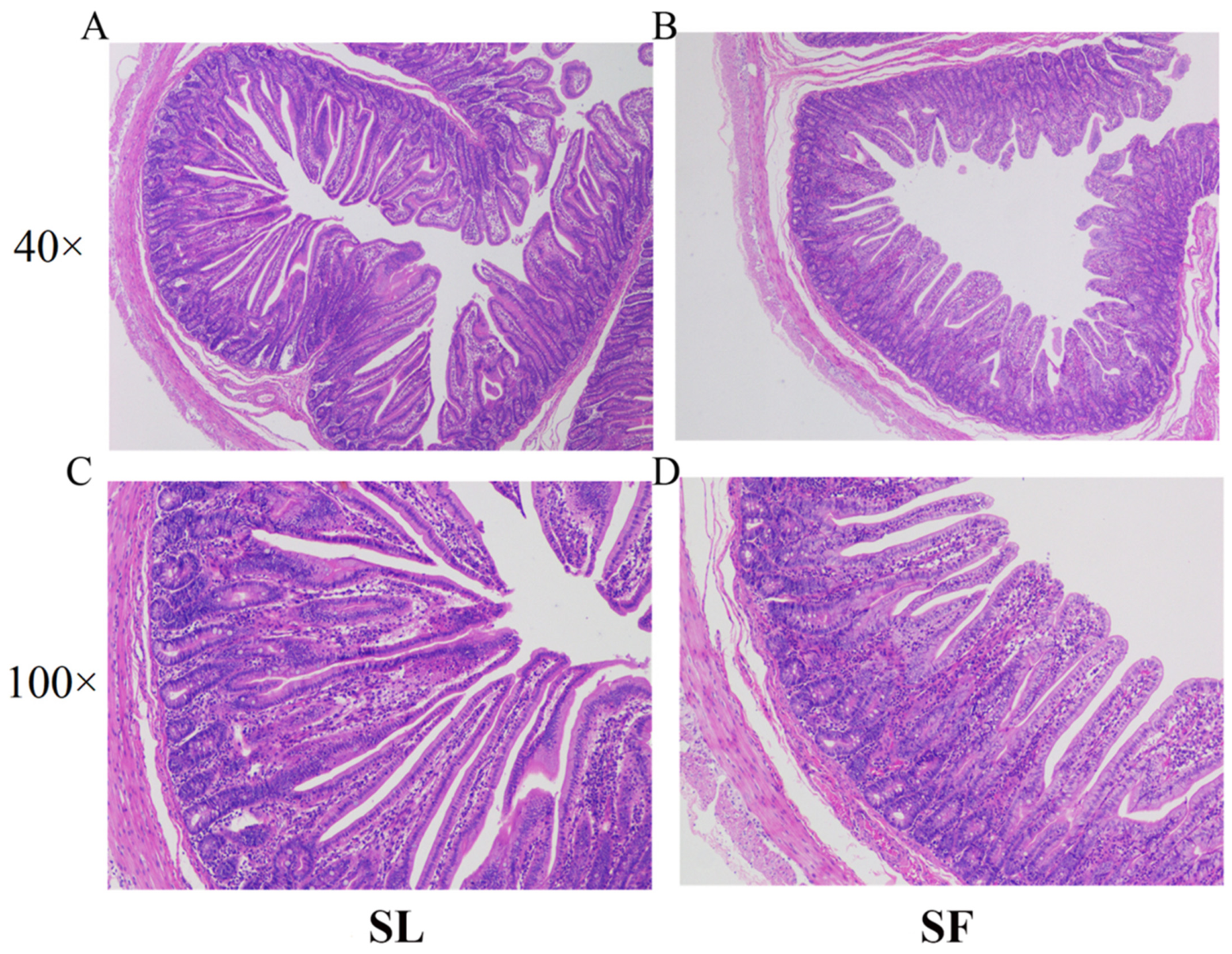
Table 4 and Figure 1 showed the effect of whether or not the piglets were involved in the sows’ feeding during lactation on the jejunal morphology of weaned piglets. Compared to the SF group, the SL group exhibited a significantly lower jejunal crypt depth (p < 0.05) and a significantly greater villus height (p < 0.05). Consequently, the villus height-to-crypt depth ratio was significantly higher in the SL group (p < 0.01).

3.5. Immunological Indicators

Table 5 shows that there were no significant differences (p > 0.05) in serum IgG, IL-1β, IL-6, or IL-10 between weaned piglets in the SL group and the SF group (p > 0.05). Serum IL-4 and IgA levels in weaned piglets of the SL group were significantly higher than those in the SF group (p < 0.05), while TNF-α and IFN-γ were significantly lower in the SL group than those in the SF group (p < 0.01).

3.6. Oxidative Stress Indices

Table 6 shows that the activities of T-AOC, GSH-Px, and CAT in the jejunal mucosa of piglets in the SL group were significantly higher than those in the SF group (p < 0.01), while the content of MAD was significantly lower in the SL group than that in the SF group (p < 0.01).

4. Discussion

Learning feeding behavior from the sow during lactation did not improve piglet feed intake. This result is consistent with the experimental results of Wattanakul et al. (2004), where piglet feed intake was not significantly different from the non-participating group [6]. This seems to explain the non-significant difference in growth performance between the SF and SL groups in this study. However, learning feeding behavior from the sow increased the weaning weight of piglets by 18.84% and ADG during lactation by 22.73%, so learning feeding behavior from the sow improved their growth performance to a certain extent. The feed intake of 36–39-day-old piglets in the SL group was significantly higher than that in the SF group. Van der Peet-Schwering et al. (2021) also found that feed intake within 9 days after weaning for piglets in an in-house feeding system was higher than that of piglets in a conventional feeding system, which indicated that learning feeding behavior from the sow during lactation could promote the development of piglets’ feeding behavior; additionally, piglets accepted solid feed more quickly and increased their feed intake after weaning [7]. Xu et al. (2020) found that piglets’ feed intake within 2 days after weaning was affected by the degree of enrichment in the lactation environment, and an increase in the number of sow troughs in the SL group could be used as enrichment material for the post-weaning environment [14].
Our study revealed that providing piglets with opportunities to learn from the sow promoted manipulation behavior (towards feed). Wattanakul et al. similarly found that piglets that co-fed with sows exhibited a significantly higher frequency of exploratory behavior toward the feed trough than conventionally reared piglets at 14 and 25 days of age [6]. Oostindjer et al. (2014) showed that if piglets saw sows eating a certain feed, they would eat more of that feed at weaning [2]. The higher feed intake of piglets in the SL group suggests that participation in sow feeding enhances the piglets’ learning about food and their acceptance of solid feed [15]. This study suggests that piglets observing their sows feeding stimulates the piglets to bite, root around, and explore the feed trough, thereby promoting the development of chewing actions. Chewing serves as a precursor to feed intake, and prolonged sow–piglet interaction may also facilitate the development of feeding-related behaviors through social learning processes [16,17,18]. Significant differences in manipulation behavior (towards feed) between the SL and SF groups at 36–38 days of age may be related to more corresponding behavior in the SL group during lactation, reflecting the continuous effect of participation in sow feeding on the development of feeding behavior [4]. Another possible reason may be that piglets learning from their sows’ feeding habits interact more with sows, resulting in lower stress levels after weaning. This enhances the welfare of piglets in the SL group. At 44–59 days of age, the higher frequency of manipulation behavior (towards feed) in the SL group than the SF group suggests that the manipulation behavior (towards feed) of the sows during lactation can be learned by the piglets and sustained into the later stages of the nursery period, which is beneficial to the growth of the piglets.
The diarrhea rate of piglets in the SL group during lactation was reduced by 52.12%, and the diarrhea rate of weaned piglets in the SL group was significantly lower than that of the SF group, which indicated that the feeding method in this experiment had some significance for production. During the suckling period, piglets observed their sows’ feeding behavior and consequently began creep feed and starter feed earlier and in larger amounts. This not only strengthened their digestive systems but also, more importantly, established a positive association with solid food and fostered feeding habits before weaning. This directly prevented digestive disorders caused by complete refusal or binge eating at weaning, thereby alleviating diarrhea in piglets [18]. Weaning stress in piglets leads to intestinal villus atrophy and crypt deepening, which affect digestion and absorption and in turn lead to diarrhea and growth retardation in weaned piglets [19,20]. Intestinal villus height, crypt depth, and villus-to-crypt ratio are important indicators for evaluating intestinal morphology, which can reflect intestinal function and health to a certain extent [21]. The greater the villus height, the greater the intestinal absorption area. The shallower the depth of the crypts, the greater the maturity and the greater the ability to absorb nutrients [22]. The ratio of villi to crypts reflects the rate of renewal of intestinal epithelial cells, with higher ratios indicating faster renewal and a healthier gut. Previous studies have shown that villus height in piglets rapidly decreases to 25–35% of the pre-weaning height within 24 h after weaning, and the decrease in villus height continues until approximately 5 d after weaning [23]. The SL group exhibited greater villus height, a higher villus-to-crypt ratio, and shallower crypt depth compared to the SF group, indicating superior intestinal morphology in the weaned piglets [24,25]. Spreeuwenberg et al. (2001) reported that a persistently low feed intake for 4 days after weaning predisposed pigs to intestinal barrier dysfunction [26]. In this study, the short-term higher feed intake of the SL group piglets after weaning may have alleviated the deleterious changes in intestinal morphology caused by weaning stress. Another reason may be that the SL group piglets, which consumed more feed from lactating sows during lactation and had better intestinal development, still had better intestinal morphology than the SF group piglets after weaning-induced intestinal morphology damage.
We found that IgA and IL-4 levels of piglets in the SL group were significantly higher than those in the SF group, whereas serum TNF-α and IFN-γ levels were lower than those of the SF groups, and IgG levels were not significantly different from those of the SF group. Van Nieuwamerongen et al. (2015) found that the IgG levels of piglets in a multi-litter system after weaning were not significantly different from those of control piglets, but the IgM levels were significantly higher than those of control piglets [5]. This result can be explained by the fact that piglets interact more with sows during lactation and experience reduced weaning stress [2]. In addition, it has been shown that IL-4, IL-10, and IL-13 can promote the differentiation of immature B cells into IgA-secreting plasma cells [27]. This may be why IgA levels were significantly higher in the SL group than in the SF group. The lactation feeding regimen may have reduced the inflammatory response and improved the immunity of piglets after weaning.
Piglet weaning stress increases oxidative processes in the body, releasing a large number of free radicals and leading to the upregulation of pro-inflammatory factors, which in turn cause increased intestinal permeability [28], and impairing intestinal health [29]. T-AOC reflects the body’s total antioxidant capacity, whereas SOD can be disproportionate to free radicals in the body, converting O2 to H2O2 [30]. MDA is a metabolic product of lipid oxidation; the higher the MDA content, the higher the oxidative toxicity. MDA is a metabolite of lipid oxidation, and the higher the content, the greater the oxidative toxicity. The activities of T-AOC, GSH-Px, and CAT were higher in the weaned piglets of the SL group than those of the SF group, the MDA content was lower than that of the SF group, and the activity of SOD tended to be elevated compared with that of the SF group. One reasons for this may be that the SL group piglets were fed more lactating sow feed during the suckling period; another reason may be that the contact between piglets and sows during lactation increased the interaction between them, and the resistance to stress after weaning was higher [4].
Several limitations of this study should be acknowledged. Although we selected three male and three female piglets per group for tissue and blood analysis, the sample size was insufficient to statistically examine sex-specific effects or interactions between sex and treatment. Therefore, we pooled data across sexes for all analyses. We did not measure cortisol or other physiological markers of stress (e.g., salivary or fecal glucocorticoids), which would have provided a more direct assessment of weaning stress responses in piglets. Our observations were limited to the nursery period up to 66 days of age; long-term follow-up beyond this period was not conducted, leaving the persistence of the observed benefits on growth, immunity, and intestinal health unknown. Future studies with larger sample sizes, inclusion of stress biomarkers, and extended monitoring periods are needed to address these limitations. To ensure that piglets were able to learn feeding behavior from the sow, the SL and SF groups differed not only in whether piglets could observe the sow eating, but also in several physical characteristics of the feed trough. Therefore, the observed differences in piglet behavior, welfare, and jejunal morphology between the two groups may also be related to visual access to the feed and the sow, as well as easier physical access to the trough. Future studies should adopt a multifactorial design to isolate the specific contribution of each factor. This study provides a multi-dimensional assessment of piglet welfare (behavior, growth, diarrhea, immunity, intestinal morphology, and oxidative stress) under a novel feeding design that allows piglets to observe and learn from the sow.

5. Conclusions

The present study suggests that suckling piglets learning feeding behavior from the sow during lactation stimulates the development of manipulating feed behavior in piglets before and after weaning, and has a positive effect on piglets’ growth performance. This type of feeding also improves the immune level and jejunal antioxidant capacity of weaned piglets, and both feeding methods improve the environmental adaptation of piglets after weaning and alleviate weaning stress to a certain extent, which is conducive to the healthy reproduction and welfare level of the piglets, compared to conventional piglet feeding methods.

Supplementary Materials

The following supporting information can be downloaded at: https://www.mdpi.com/article/10.3390/agriculture16101057/s1, Table S1: Baseline characteristics of the sows and litters in the SL and SF groups; Table S2: Nutrient composition and content of feed; Table S3: Piglet behavioral categories and definitions; Figure S1: Production circle structure. A: SL group production circle structure. B: SF group production circle structure. SL = Sow-Learning group; SF = Separate-Feeding group.

Author Contributions

Conceptualization, S.Z., Z.Z. (Zhiyang Zhang), Z.W. (Zhipeng Wang) and H.L.; Methodology, S.Z., Z.W. (Zhipeng Wang) and H.L.; Software, S.Z. and Y.L.; Validation, S.Z., Z.Z. (Zhiyang Zhang), Y.L. and Y.Q.; Formal Analysis, S.Z., Z.Z. (Zhihao Zhang), X.L., Z.W. (Zhonghui Wang), Y.Q. and H.L.; Investigation, S.Z., Z.Z. (Zhiyang Zhang), Y.L. and Y.Q.; Resources, H.L.; Data Curation, S.Z.; Writing—Original Draft Preparation, S.Z.; Writing—Review and Editing, Z.W. (Zhipeng Wang) and H.L.; Visualization, S.Z. and Z.Z. (Zhiyang Zhang); Supervision, S.Z., Z.Z. (Zhihao Zhang), X.L., Z.W. (Zhonghui Wang) and Y.Q.; Project Administration, Z.W. (Zhipeng Wang) and H.L.; Funding Acquisition, H.L. All authors have read and agreed to the published version of the manuscript.

Funding

This research was funded by the Basic Research Support Program for Outstanding Young Teachers of Provincial Undergraduate Universities in Heilongjiang Province and Cooperative Innovation and Extension System for Heilongjiang Modern Agricultural Industry Technology of Pig, grant number YQTH2023182, Heilongjiang Provincial Natural Science Foundation Key Project, grant number ZD2025C00 and the Heilongjiang Provincial Natural Science Foundation Joint Fund Key Project, grant number ZL2024C017.

Institutional Review Board Statement

The animal study protocol was approved the Animal Protection and Utilization Committee of Northeast Agricultural University (IACUCNEAU20230903, 14 September 2023).

Data Availability Statement

The data presented in this study are available on request from the corresponding author.

Acknowledgments

The authors would like to greatly thank members of the Animal behavior and Welfare Laboratory in the College of Animal Science and Technology, and give thanks for the support of Hou-Juan Xing. Generative AI and AI-assisted technologies were not used in the writing process.

Conflicts of Interest

The authors declare no conflicts of interest.

Abbreviations

ILInterleukin
TFNTumor necrosis factor
INFInterferon
T-AOCTotal antioxidant capacity
GSH-PxGlutathione peroxidase
CATCatalase
MDAMalondialdehyde
ADGAverage daily gain
ADFIAverage daily feed intake
FCRFeed conversion ratio
IgImmunoglobulin
SODSuperoxide dismutase

References

  1. Rydhmer, L.; Andersson, K. Effects of socialising piglets on sow and piglet performance and behaviour of entire male piglets. Animal 2024, 18, 101086. [Google Scholar] [CrossRef]
  2. Oostindjer, M.; Kemp, B.; van den Brand, H.; Bolhuis, J.E. Facilitating ‘learning from mom how to eat like a pig’ to improve welfare of piglets around weaning. Appl. Anim. Behav. 2014, 160, 19–30. [Google Scholar] [CrossRef]
  3. Laland, K.N. Social learning strategies. Anim. Learn. Behav. 2004, 32, 4–14. [Google Scholar] [CrossRef]
  4. Oostindjer, M.; Bolhuis, J.E.; Mendl, M.; Held, S.; Gerrits, W.; van den Brand, H.; Kemp, B. Effects of environmental enrichment and loose housing of lactating sows on piglet performance before and after weaning. J. Anim. Sci. 2010, 88, 3554–3562. [Google Scholar] [CrossRef]
  5. Van Nieuwamerongen, S.; Soede, N.; Van der Peet-Schwering, C.; Kemp, B.; Bolhuis, J. Development of piglets raised in a new multi-litter housing system vs. conventional single-litter housing until 9 weeks of age. J. Anim. Sci. 2015, 93, 5442–5454. [Google Scholar] [CrossRef] [PubMed]
  6. Wattanakul, W.; Bulman, C.A.; Edge, H.L.; Edwards, S.A. The effect of creep feed presentation method on feeding behavior, intake and performance of suckling piglets. Appl. Anim. Behav. Sci. 2005, 92, 27–36. [Google Scholar] [CrossRef]
  7. van der Peet-Schwering, C.M.C.; Hoofs, A.I.J.; van Hees, H.; Dees, Q.; Binnendijk, G.P.; Bolhuis, J.E. Family Feeding Matters: Effect Van Familie Eetsysteem En Familievoer Tijdens Lactatie Op Resultaten Van Zeugen en Biggen Tot 9 Weken Leeftijd; Wageningen Livestock Research: Wageningen, The Netherlands, 2021. [Google Scholar] [CrossRef]
  8. Tang, X.; Xiong, K.; Fang, R.; Li, M. Weaning stress and intestinal health of piglets: A review. Front. Immunol. 2022, 13, 1042778. [Google Scholar] [CrossRef]
  9. Metallo, B.F.; Da Selva, L.C.S.; Da Fonseca, A.D.; Niblett, R.T.; Aviles-Rosa, E.O. The effect of weaning age on physiological, behavioral, and performance indicators of welfare in weaned piglets. Livest. Sci. 2025, 301, 105816. [Google Scholar] [CrossRef]
  10. Rozin, P.; Vollmecke, T.A. Food likes and dislikes. Annu. Rev. Nutr. 1986, 6, 433–456. [Google Scholar] [CrossRef]
  11. Anastasilakis, C.D.; Ioannidis, O.; Gkiomisi, A.I.; Botsios, D. Artificial nutrition and intestinal mucosal barrier functionality. Digestion 2013, 88, 193–208. [Google Scholar] [CrossRef]
  12. Montagne, L.; Boudry, G.; Favier, C.; Le Huërou-Luron, I.; Lallès, J.P.; Sève, B. Main intestinal markers associated with the changes in gut architecture and function in piglets after weaning. Brit. J. Nutr. 2007, 97, 45–57. [Google Scholar] [CrossRef] [PubMed]
  13. Oostindjer, M.; Muñoz, J.M.; Van den Brand, H.; Kemp, B.; Bolhuis, J.E. Maternal presence and environmental enrichment affect food neophobia of piglets. Biol. Lett. 2011, 7, 19–22. [Google Scholar] [CrossRef]
  14. Xu, J.; Liang, R.; Zhang, W.; Tian, K.; Li, J.; Chen, X.; Yu, T.; Chen, Q. Faecalibacterium prausnitzii-derived microbial anti-inflammatory molecule regulates intestinal integrity in diabetes mellitus mice via modulating tight junction protein expression. J. Diabetes Res. 2020, 12, 224–236. [Google Scholar] [CrossRef]
  15. Pluske, J.R.; Kim, J.C.; Hansen, C.F.; Mullan, B.P.; Payne, H.G.; Hampson, D.J.; Callesen, J.; Wilson, R.H. Piglet growth before and after weaning in relation to a qualitative estimate of solid (creep) feed intake during lactation: A pilot study. Arch. Anim. Nutr. 2007, 61, 469–480. [Google Scholar] [CrossRef] [PubMed]
  16. Petersen, V. The development of feeding and investigatory behaviour in free-ranging domestic pigs during their first 18 weeks of life. Appl. Anim. Behav. 1994, 42, 87–98. [Google Scholar] [CrossRef]
  17. Petersen, V.; Simonsen, H.B.; Lawson, L.G. The effect of environmental stimulation on the development of behaviour in pigs. Appl. Anim. Behav. Sci. 1995, 45, 215–224. [Google Scholar] [CrossRef]
  18. Bolhuis, J.E.; Hoofs, A.I.J.; Van Hees, H.J.; Binnendijk, G.P.; Van Marwijk, M.A.; Van der Peet-Schwering, C.M.C. Promoting sow-piglet information transfer and playful foraging by changes in pen design and feeding strategy to ease weaning: Effects on pig performance and behaviour. Animal 2025, 19, 101610. [Google Scholar] [CrossRef]
  19. Pluske, J.R.; Hampson, D.J.; Williams, I.H. Factors influencing the structure and function of the small intestine in the weaned pig: A review. Livest. Prod. Sci. 1997, 51, 215–236. [Google Scholar] [CrossRef]
  20. Zhang, S.; Zhang, G.; Xu, J.; Chen, D.; Yin, C.; Wang, J.; Jiang, X.; Wang, C. Roles of Tight Junction Proteins in Intestinal Barrier Function and Health of Weaned Piglets: A Review. Vet. Sci. 2026, 13, 131. [Google Scholar] [CrossRef]
  21. Li, H.; Ran, T.; He, Z.; Yan, Q.; Tang, S.; Tan, Z. Postnatal developmental changes of the small intestinal villus height, crypt depth and hexose transporter mRNA expression in supplemental feeding and grazing goats. Small. Rumin. Res. 2016, 141, 106–112. [Google Scholar] [CrossRef]
  22. Skrzypek, T.; Piedra, J.V.; Skrzypek, H.; Kazimierczak, W.; Szymanczyk, S.E.; Zabielski, R. Changes in pig small intestinal absorptive area during the first 14 days of life. Livest. Sci. 2010, 133, 53–56. [Google Scholar] [CrossRef]
  23. Hampson, D.J. Alterations in piglet small intestinal structure at weaning. Res. Vet. Sci. 1986, 40, 32–40. [Google Scholar] [CrossRef]
  24. Monney, L.; Sabatos, C.A.; Gaglia, J.L.; Ryu, A.; Waldner, H.; Chernova, T.; Manning, S.; Greenfield, E.A.; Coyle, A.J.; Sobel, R.A.; et al. Th1-specific cell surface protein Tim-3 regulates macrophage activation and severity of an autoimmune disease. Nature 2002, 415, 536–541. [Google Scholar] [CrossRef] [PubMed]
  25. He, Y.; Liu, N.; Ji, Y.; Tso, P.; Wu, Z. Weaning stress in piglets alters the expression of intestinal proteins involved in fat absorption. J. Nutr. 2022, 152, 2387–2395. [Google Scholar] [CrossRef]
  26. Spreeuwenberg, M.A.M.; Verdonk, J.M.A.J.; Gaskins, H.R.; Verstegen, M.W.A. Small intestine epithelial barrier function is compromised in pigs with low feed intake at weaning. J. Nutr. 2001, 131, 1520–1527. [Google Scholar] [CrossRef]
  27. Wu, M.; Xiao, H.; Liu, G.; Chen, S.; Tan, B.; Ren, W.; Bazer, F.W.; Wu, G.; Yin, Y. Glutamine promotes intestinal SIgA secretion through intestinal microbiota and IL-13. Mol. Nutr. Food. Res. 2016, 60, 1637–1648. [Google Scholar] [CrossRef]
  28. Vergauwen, H.; Tambuyzer, B.; Jennes, K.; Degroote, J.; Wang, W.; De Smet, S.; Michiels, J.; Van Ginneken, C. Trolox and ascorbic acid reduce direct and indirect oxidative stress in the IPEC-J2 cells, an in vitro model for the porcine gastrointestinal tract. PLoS ONE 2015, 10, e0120485. [Google Scholar] [CrossRef]
  29. Yu, C.; Luo, Y.; Shen, C.; Luo, Z.; Zhang, H.; Zhang, J.; Xu, W.; Xu, J. Effects of Microbe-Derived Antioxidants on Growth Performance, Hepatic Oxidative Stress, Mitochondrial Function and Cell Apoptosis in Weaning Piglets. J. Anim. Sci. Biotechnol. 2024, 5, 128. [Google Scholar] [CrossRef]
  30. Yin, J.; Ren, W.; Liu, G.; Duan, J.; Yang, G.; Wu, L.; Li, T.; Yin, Y. Birth oxidative stress and the development of an antioxidant system in newborn piglets. Free Radic. Res. 2013, 47, 1027–1035. [Google Scholar] [CrossRef] [PubMed]
Figure 1. Jejunum morphology. (A): Morphology of jejunum in piglets of SL group (40×). (B): Morphology of jejunum in piglets of SF group (40×). (C): Morphology of jejunum in piglets of SL group (100×). (D): Morphology of jejunum in piglets of SF group (100×). SL = Sow-Learning group; SF = Separate-Feeding group.
Agriculture 16 01057 g001
Table 1. Effects of learning feeding behavior from the sow on the growth performance of piglets.
Index SL SF p-Value
Suckling piglets
Newborn weight (kg) 1.15 ± 0.01 1.16 ± 0.02 0.515
Weaning weight 10.41 ± 0.94 8.76 ± 0.64 0.575
ADG (suckling period, kg) 0.27 ± 0.03 0.22 ± 0.02 0.572
Feed intake (suckling period, g) 429.67 ± 81.15 415.39 ± 42.38 0.904
Weaned piglets
End-of-nursing weight (kg) 25.93 ± 1.18 22.37 ± 1.43 0.737
ADG (nursing period, kg) 0.53 ± 0.04 0.44 ± 0.03 0.603
ADFI (kg) 0.76 ± 0.09 0.74 ± 0.03 0.542
Feed intake of 36–39-day-olds (kg) 0.49 ± 0.05 0.36 ± 0.02 0.045
FCR (kg) 1.42 ± 0.11 1.73 ± 0.07 0.126
Abbreviations: SL = Sow-Learning group; SF = Separate-Feeding group; ADG = average daily gain; ADFI = average daily feed intake; FCR = feed conversion ratio. Results are expressed as mean ± standard error (Mean ± SEM). Each treatment group comprised 6 experimental units, with each unit consisting of 1 litter of piglets, n = 6.
Table 2. Effects of learning feeding behavior from the sow on the diarrhea of piglets.
Diarrhea Rate (%) SL SF p-Value
Suckling period 10.15 ± 1.25 15.44 ± 1.04 0.080
Weaning period 11.48 ± 0.63 17.50 ± 0.96 0.011
Abbreviations: SL = Sow-Learning group; SF = Separate-Feeding group. Results are expressed as mean ± standard error (Mean ± SEM). Each treatment group comprised six experimental units, with each unit consisting of one litter of piglets, n = 6.
Table 3. Effects of learning feeding behavior from the sow on the manipulation behavior (towards feed) of piglets.
Index (Times/Pig) SL SF p-Value
7–9 days Manipulating feed within trough 45.72 ± 3.12 28.81 ± 2.30 <0.01
Manipulating spilled feed of trough 15.10 ± 2.16 8.35 ± 0.82 <0.01
15–16 days Manipulating feed within trough 22.02 ± 3.88 14.23 ± 1.46 0.03
Manipulating spilled feed of trough 8.08 ± 2.90 4.00 ± 1.59 0.13
22–23 days Manipulating feed within trough 24.22 ± 2.15 18.00 ± 2.18 0.531
Manipulating spilled feed of trough 10.69 ± 2.60 5.09 ± 1.81 <0.01
29–30 days Manipulating feed within trough 27.69 ± 4.96 19.32 ± 3.18 0.06
Manipulating spilled feed of trough 10.39 ± 2.63 5.27 ± 2.51 0.06
36–38 days Manipulating feed within trough 126.57 ± 11.53 95.89 ± 5.41 <0.01
Manipulating spilled feed of trough 19.09 ± 3.91 17.60 ± 1.76 0.415
44–45 days Manipulating feed within trough 26.33 ± 3.78 22.05 ± 1.62 0.029
Manipulating spilled feed of trough 7.76 ± 1.33 6.82 ± 1.03 0.204
51–52 days Manipulating feed within trough 29.13 ± 4.40 24.01 ± 2.25 0.030
Manipulating spilled feed of trough 7.36 ± 0.79 6.35 ± 0.63 0.035
58–59 days Manipulating feed within trough 25.46 ± 3.69 22.15 ± 0.75 0.057
Manipulating spilled feed of trough 5.82 ± 1.09 5.34 ± 0.64 0.374
Abbreviations: SL = Sow-Learning group; SF = Separate-Feeding group.
Table 4. Effects of learning feeding behavior from the sow on the jejunal morphology of weaning piglets.
Index SL SF p-Value
Villus length (mm) 0.49 ± 0.02 0.37 ± 0.02 0.015
Crypt depth (mm) 0.19 ± 0.00 0.27 ± 0.01 0.010
Villus crypt ratio 2.58 ± 0.10 1.41 ± 0.12 0.002
Abbreviations: SL = Sow-Learning group; SF = Separate-Feeding group. Results are expressed as mean ± standard error (Mean ± SEM). Each treatment group comprised six experimental units, with each unit consisting of one litter of piglets, n = 6.
Table 5. Effects of learning feeding behavior from the sow on the immunity of piglets.
Index (μg/mL) SL SF p-Value
IgA 42.67 ± 0.86 40.10 ± 0.39 0.043
IgG 503.92 ± 2.24 490.77 ± 2.79 0.069
IL-1β 33.85 ± 0.34 35.92 ± 0.67 0.290
IL-4 106.06 ± 0.99 102.60 ± 0.57 0.022
IL-6 242.38 ± 2.97 264.37 ± 9.52 0.176
IL-10 109.31 ± 0.81 109.00 ± 0.45 0.580
TNF-α 362.54 ± 6.11 400.14 ± 4.73 0.003
IFN-γ 342.22 ± 9.00 403.50 ± 5.46 <0.001
Abbreviations: SL = Sow-Learning group; SF = Separate-Feeding group; IgA: Immunoglobulin A; IgG: Immunoglobulin G; IL-1β: Interleukin-1β; IL-4: Interleukin-4; IL-6: Interleukin-6; IL-10: Interleukin-10; IFN-γ: Interferon-γ; TNF-α: Tumor Necrosis Factor-α. Results are expressed as mean ± standard error (Mean ± SEM). Each treatment group comprised six experimental units, with each unit consisting of one litter of piglets, n = 6.
Table 6. Effects of learning feeding behavior from the sow on the immune response to oxidative stress in the piglets.
Index SL SF p-Value
T-AOC
(U/mg prot)
0.86 ± 0.01 0.72 ± 0.01 <0.001
SOD
(U/mg prot)
22.39 ± 0.36 21.09 ± 0.42 0.444
GSH-Px
(U/mg prot)
22.21 ± 0.29 17.07 ± 0.47 <0.001
CAT
(U/mg prot)
3.35 ± 0.08 2.93 ± 0.03 0.001
MDA
(nmol/mg prot)
1.07 ± 0.03 1.20 ± 0.02 0.008
Abbreviations: SL = Sow-Learning group; SF = Separate-Feeding group. Results are expressed as mean ± standard error (Mean ± SEM). Each treatment group comprised six experimental units, with each unit consisting of one litter of piglets, n = 6.
Disclaimer/Publisher’s Note: The statements, opinions and data contained in all publications are solely those of the individual author(s) and contributor(s) and not of MDPI and/or the editor(s). MDPI and/or the editor(s) disclaim responsibility for any injury to people or property resulting from any ideas, methods, instructions or products referred to in the content.