
Article

Environmental Enrichment Attenuates Acute Noise-Induced Bursal Injury in Broilers via Suppressing NF-κB and Mitochondrial Apoptotic Pathways

1
College of Life Sciences, Shihezi University, Shihezi 832003, China
2
College of Animal Science and Technology, Northeast Agricultural University, No. 600 Changjiang Road, Harbin 150030, China
*
Authors to whom correspondence should be addressed.
These authors contributed equally to this work.
Agriculture 2026, 16(1), 78; https://doi.org/10.3390/agriculture16010078 (registering DOI)
Submission received: 1 December 2025 / Revised: 25 December 2025 / Accepted: 28 December 2025 / Published: 29 December 2025
(This article belongs to the Section Farm Animal Production)

Abstract

Noise pollution represents a significant environmental stressor that compromises the health and welfare of farm animals. While music enrichment has been suggested to mitigate stress, the specific mechanisms by which it protects against noise-induced immune damage remain poorly understood. This study investigated whether music can mitigate acute noise-induced injury to the bursa of Fabricius in broilers. A total of 175 male Arbor Acres broilers were randomly allocated into four groups: Control (C), Noise (N), Noise plus Music (NM), and Music (M). Starting on day 14, groups N and NM were exposed to daily acute noise exposure (115–120 dB for10 min), while groups NM and M received daily 6-h Mozart’s K.448 music enrichment. We evaluated the effects of short-term (by day 21) and long-term (by day 42) music intervention. Results showed that acute noise induced significant histopathological damage, oxidative stress, and apoptosis in the bursa. While short-term music intervention showed limited efficacy, prolonged music exposure significantly attenuated these injuries. Mechanistically, music suppressed the noise-activated NF-κB signaling pathway and reduced inflammatory cytokines (IL-1β, IL-6, and TNF-α). Concurrently, it inhibited mitochondrial-dependent apoptosis by modulating Bcl-2, Bax, Cyt-C, and Caspase-3. These findings provide experimental evidence that long-term music enrichment effectively alleviates noise-induced immune injury, suggesting a practical strategy for improving poultry welfare.

1. Introduction

Intensified livestock production has increased noise pollution, a significant stressor that compromises animal health and welfare [1]. In intensive poultry farming, noise from diverse sources—such as high-speed ventilation fans, automated feeding systems, and routine management activities (e.g., catching or vaccination)—can impair immune function and trigger inflammatory responses [2]. While oxidative stress is recognized as a central driver of noise-related damage [3], most research using rodent models has focused on tissues like the heart and liver [4,5,6]. However, findings from these organs may not directly apply to the bursa of Fabricius, as this central immune organ possesses a unique microenvironment and high lymphocyte turnover, making it potentially more susceptible to stress-induced physiological shifts. Consequently, the specific mechanisms by which noise impacts the bursa of Fabricius, particularly the interplay between oxidative stress and apoptotic pathways in this central immune organ, remain inadequately elucidated.
Among various strategies to mitigate environmental stress, acoustic enrichment, specifically music intervention, is increasingly recognized for its unique scientific and practical value. Compared to physical or structural enrichment methods, music offers a non-invasive, easily standardized auditory intervention with excellent controllability and reproducibility [7]. In terms of potential mechanisms, structured music such as Mozart’s K.448 is hypothesized to act as a superior form of acoustic enrichment. Unlike white noise or randomized sounds, K.448 is characterized by a specific frequency distribution and long-period periodicity, which may more effectively synchronize neural activity [8]. These specific acoustic features are thought to modulate the hypothalamic-pituitary-adrenal (HPA) axis and neurotransmitter release more efficiently than other classical compositions, thereby potentially alleviating stress-induced neuroendocrine dysregulation [9]. While music enrichment has been shown to improve behavioral outcomes and productivity in livestock [10], including enhanced growth performance and reduced stress hormones in poultry [11], its specific protective effects on immune organs remain to be fully validated. These observations suggest that music may provide systemic physiological protection, offering a promising strategy to mitigate noise-induced immune impairment.
As the primary site for B lymphocyte differentiation and maturation in avian species, the bursa of Fabricius is essential for adaptive immunity [12,13]. Although the suppressive effects of noise on poultry immune function are partially understood, the direct mechanisms of injury targeting the bursa of Fabricius remain unclear—specifically, whether they involve an integrated “oxidative stress–inflammation–apoptosis” cascade. While previous studies have documented the general benefits of music on animal behavior and production, this study advances prior work by specifically focusing on the immune organ specific protection of the bursa and investigating the duration-dependent effects of music intervention (short-term vs. long term). Furthermore, we aim to elucidate the underlying molecular mechanisms, particularly the potential of music to modulate the NF-κB signaling pathway and mitochondrial apoptotic pathways, thereby providing a more comprehensive understanding of music enrichment in mitigating noise-induced immune damage.
Therefore, this study employs a broiler chicken model to evaluate the protective effects of Mozart’s K.448 music enrichment against acute noise stress, specifically focusing on the organ-specific immune responses of the bursa of Fabricius. Our objectives are to determine: (1) whether music alleviates noise-induced bursal damage by modulating oxidative stress, inflammatory responses, and apoptosis; and (2) whether these protective effects involve regulation of the NF-κB signaling pathway and the mitochondrial apoptotic cascade under different intervention durations (short-term vs. long term). The findings are expected to provide a novel, non-pharmaceutical intervention strategy for mitigating noise-related damage in farming environments and to offer experimental evidence supporting the application of acoustic enrichment in enhancing animal welfare and immune health.

2. Materials and Methods

2.1. Ethical Statement

The experimental design was conducted in compliance with regulations set by the Northeast Agricultural University IACUC. Approval for the study was granted by the aforementioned committee (Protocol No. NEAUEC20210234).

2.2. Laboratory Animals and Husbandry Management

A total of 175 one-day-old male Arbor Acres (AA) broiler chicks were obtained from a commercial hatchery in Harbin. The sex of the chicks was determined by vent sexing. Prior to the start of the experiment, the chicks were randomly allocated to four environmentally controlled rooms (3 m × 3.8 m). Chicken were uniformly and randomly housed in identical brooder cages (100 cm × 78 cm × 50 cm), each equipped with a feed trough. Throughout the experimental period, all birds were provided ad libitum access to a standard commercial diet. Ambient temperature, ventilation, and lighting were precisely regulated using a centralized control system. The temperature regime was as follows: 34–35 °C during days 1–3, 32–33 °C during days 4–7, and then gradually reduced by 2–3 °C every three days until reaching 20–21 °C, which was maintained for the remainder of the study. Relative humidity was maintained at approximately 50%.
For lighting management, each room was equipped with two vertically mounted lamps, to ensure uniform light distribution across the brooder area and prevent interference from external light sources. All lamps were connected to a centralized dimmer and timer system. To promote early feeding and drinking behavior, and thereby optimize health and welfare, a lighting schedule of 23 h of light and 1 h of darkness was implemented from days 1–7. After the chicken were 7 days of age, the schedule was adjusted to 5 h of darkness and 19 h of light. The light intensity was maintained at 30–35 lux from days 1 to 7, then reduced to 10–20 lux. During the dark period, the light intensity was maintained at 0.2–0.4 lux. Light intensity was measured regularly using a TASI meter (Jiangsu, China). It was measuredthroughout the experimental period.

2.3. Experimental Animal Grouping and Sample Collection

During the first week, five broilers died, and two additional broilers were randomly removed to ensure uniform distribution, leaving 168 chicks for the study. At 7 days of age, the broilers were randomly allocated to four environmentally controlled rooms (3 m × 3.8 m), each corresponding to one of the four experimental groups: control group (C), acute noise stress group (N), music mitigation after acute noise stress group (NM), and music group (M). Within each room, the broilers were housed in 6 independent cages, with 7 chicken per cage. In this study, the cage (n = 6 per group) was defined as the experimental unit for statistical analysis. To minimize potential room effects and ensure treatment uniformity, all rooms were identical in dimensions, ventilation, and lighting. Acoustic treatments (noise or music) were delivered via a centralized sound system in each room, calibrated to ensure that sound pressure levels remained consistent across all 6 cages.
For the first 14 days, all broilers were reared against a background of white noise at 45–50 dB. From 14 to 20 days of age, broilers in groups N and NM were exposed to daily acute noise (115–120 dB) for 10 min (8:30–8:40 a.m.). Concurrently, groups M and NM received Mozart’s K.448 music (60–65 dB) daily from 9:00 a.m. to 3:00 p.m. To evaluate the time-dependent effects of musicenrichment, the intervention was categorized into two stages based on the sampling time points:
Short-term intervention: Music exposure occurred from day 14 to day 21 (a 7-day duration), with samples collected on day 21.
Prolonged (Long-term) intervention: Music exposure occurred from day 14 to day 41 (a 28-day duration), with samples collected on day 42.
A high-precision digital sound level meter (VICTOR 824, Shenzhen, China) was used for real-time monitoring to ensure consistent sound intensity across all experimental groups.
In this study, sample collection followed the procedures below to ensure adequate sampling and processing. First, 21- and 42-day-old broilers were selected as experimental subjects, and all broilers were fasted for 10 h before sampling, with free access to water. During sampling, broilers were euthanized by cervical dislocation, after which their bursa of Fabricius was rapidly collected and placed in sterile EP tubes for subsequent analysis. Specifically, in the 42-day-old group, at least three intact bursa of Fabricius organs were selected from each group for HE staining and TUNEL staining. These organs were fixed in 4% paraformaldehyde for 48 h to ensure structural integrity and to preserve tissue morphology, thus laying the foundation for subsequent detection steps.
Additionally, for transmission electron microscopy (TEM) observation, three samples were taken from each experimental group, with each replicate consisting of 6–10 pieces of 1 mm3 bursa of Fabricius tissue. These tissue pieces were immersed in 2.5% glutaraldehyde solution. The remaining bursa of Fabricius samples were carefully labeled and numbered in nuclease-free EP tubes for subsequent tracking and identification. Finally, except for the samples fixed in paraformaldehyde, all other samples were stored at −80 °C in an ultra-low temperature freezer to ensure long-term preservation and stability.

2.4. Histopathological Examination and Ultrastructural Analysis

For histological examination, Bursa of Fabricius specimens were preserved in 4% paraformaldehyde and processed into paraffin blocks using standard techniques. After being sliced into 4-μm-thick sections and placed on glass slides, the samples underwent deparaffinization in two changes of xylene (10 min per stage). Rehydration was achieved through a descending ethanol gradient (100% to 85%), followed by a tap water rinse. The slides were then subjected to hematoxylin staining (1–2 min), differentiation in 1% acid alcohol, and bluing in 0.6% ammonia water. After a 5-min wash, eosin was applied for 2–3 min as a counterstain. Finally, the sections were dehydrated, cleared in xylene, and sealed with neutral resin. Microscopic changes were evaluated and documented using a light microscope equipped with a digital imaging system.
To assess ultrastructural features, small (1 mm3) pieces of the bursa of Fabricius were initially immersed in 2.5% glutaraldehyde at 4 °C for 4 h and post-fixed with 1% osmium tetroxide for 2 h. Following a series of ethanol-based dehydration steps, the tissues were encapsulated in epoxy resin and polymerized for 48 h at 60 °C. Ultrathin sections, ranging from 60 to 80 nm in thickness, were prepared and double stained with 2% uranyl acetate and lead citrate. Observations were conducted using transmission electron microscopy (TEM), with five random fields per specimen analyzed to ensure representative results. The primary equipment and reagents used are listed in Table S1.

2.5. Oxidative Stress Marker Detection

Bursa of Fabricius tissues were placed in homogenization tubes, homogenized, and centrifuged. The supernatant was collected, and the levels of malondialdehyde (MDA, Kit No. A003-1-2) and the activities of catalase (CAT, A007-2-1), superoxide dismutase (SOD, A001-3-2), and glutathione peroxidase (GSH-Px, A005-1-2) were measured using commercial assay kits purchased from the Nanjing Jiancheng Bioengineering Institute (Nanjing, China).

2.6. Quantitative Real-Time PCR (qRT-PCR) Analysis

Total RNA from the bursa of Fabricius was isolated using TRIzol reagent (TaKaRa, Beijing, China), and the resulting samples were reverse-transcribed into cDNA using the M5 Sprint qPCR RT Kit (Mei5 Biotechnology, Beijing, China). Quantitative real-time PCR (qRT-PCR) was performed using primers synthesized by Sangon Biotech (Shanghai, China). The amplification reactions, containing SYBR Green dye, template cDNA, and specific primers, were carried out under the following conditions: 95 °C for 10 min, then 45 cycles of 95 °C for15 secand 60 °C for 1 min. To ensure precision, each sample was tested in triplicate. Expression data were normalized to the internal control GAPDH and calculated using 2{−ΔΔCt} approach. The sequences of the forward and reverse primers are listed in Table S2.

2.7. TUNEL Assay

Terminal deoxynucleotidyl transferase dUTP nick end labeling (TUNEL) staining was performed using a commercial kit according to the manufacturer’s instructions. Briefly, paraffin sections were dewaxed, rehydrated, and treated with Proteinase K at 37 °C for 30 min). Sections were then incubated with TUNEL reaction mixture at 37 °C for 2 h in the dark, followed by DAPI counterstaining for nuclear visualization. The apoptosis rate was calculated using Image-Pro Plus 6.0 as the percentage of TUNEL-positive cells (green) relative to the total number of cells (blue). Reagents and instruments used in the experiment are listed in Tables S3 and S4, respectively.

2.8. Enzyme-Linked Immunosorbent Assay

To evaluate target protein levels, bursa of Fabricius fragments (0.1 g) were homogenized in 1× PBS (Servicebio, Wuhan China) and then centrifuged for 20 min at 12,000× g and 4 °C. The resulting supernatant was harvested for analysis using ELISA kits (Huijia Biotechnology Co., Ltd., Xiamen, China). Briefly, specific antigens in the samples were captured by pre-coated antibodies on the microplate and labeled with enzyme-linked secondary antibodies. Subsequent colorimetric development with the provided substrate allowed for the quantification of concentrations based on absorbance readings. Data were normalized to total protein content and expressed as pg/mg.

2.9. Western Blot

Total protein was extracted from BF tissues using lysis buffer containing PMSF, with concentrations adjusted to 5 μg/μL using a BCA assay (Beyotime, Shanghai, China). Protein samples were denatured and separated by SDS-PAGE before being transferred onto PVDF membranes (Millipore, Bilerica, MA, USA). After blocking and washing, membranes were incubated with primary antibodies overnight at 4 °C, followed by secondary antibody incubation for 1 h, (RT). Protein bands were detected using a grayscale scanner (GeneGnome XRQ, UK) The details of the antibodies used, including their dilution ratios and manufacturers, are summarized in Table 1.

2.10. Immunofluorescence Double Staining

Paraffin sections (5–10 μm) of the bursa of Fabricius were subjected to antigen retrieval and blocked with BSA. Sections were then incubated overnight at 4 °C with primary antibodies against TNF-α (1:800) and IL-6 (1:800) from Proteintech (Servicebio, Wuhan China), followed by secondary antibody incubation for 1 h at room temperature. Nuclei were counterstained with DAPI. Images were captured and converted to grayscale using Image-Pro Plus 6.0. The integrated optical density (IOD) and area (AREA) of positive staining were measured to calculate the average optical density (AOD = IOD/AREA) for quantitative evaluation.

2.11. Statistical Analysis

Statistical analyses were performed using SPSS software (version 26.0). Data are presented as mean ± SEM. The normality of the data was assessed using the Shapiro-Wilk test, and the homogeneity of variance was evaluated using Levene’s test. Differences among groups were analyzed by one-way analysis of variance (ANOVA) followed by Tukey’s post hoc test for multiple comparisons. Statistical significance was set at p < 0.05.

3. Results

3.1. Histological Observations

At 42 days of age, HE staining revealed the normal morphological structure of the bursa of Fabricius in groups C and M (Figure 1A). In contrast, group N exhibited folding of the surface epithelium into the lymphoid follicles, suggesting mild atrophy. Additionally, slight capillary congestion was observed at the corticomedullary junction, along with reduced lymphocyte numbers in both the cortex and medulla and more clearly defined boundaries between the cortical and medullary areas.
Transmission electron microscopy further demonstrated that, compared to the control group, group N displayed typical features of apoptosis, including mitochondrial vacuolization and cristae rupture, uneven nuclear chromatin distribution, darkened cytoplasm, and a significant increase in mitochondrial damage. After long-term music intervention, the extent of mitochondrial injury was alleviated (Figure 1B).
These findings indicate that acute noise exposure induced inflammatory responses in the bursa of Fabricius, while prolonged music exposure helped mitigate the noise-induced inflammatory damage.

3.2. Effects of Acute Noise Exposure on Antioxidant Activity in the Bursa of Fabricius Tissue of Broiler Chickens

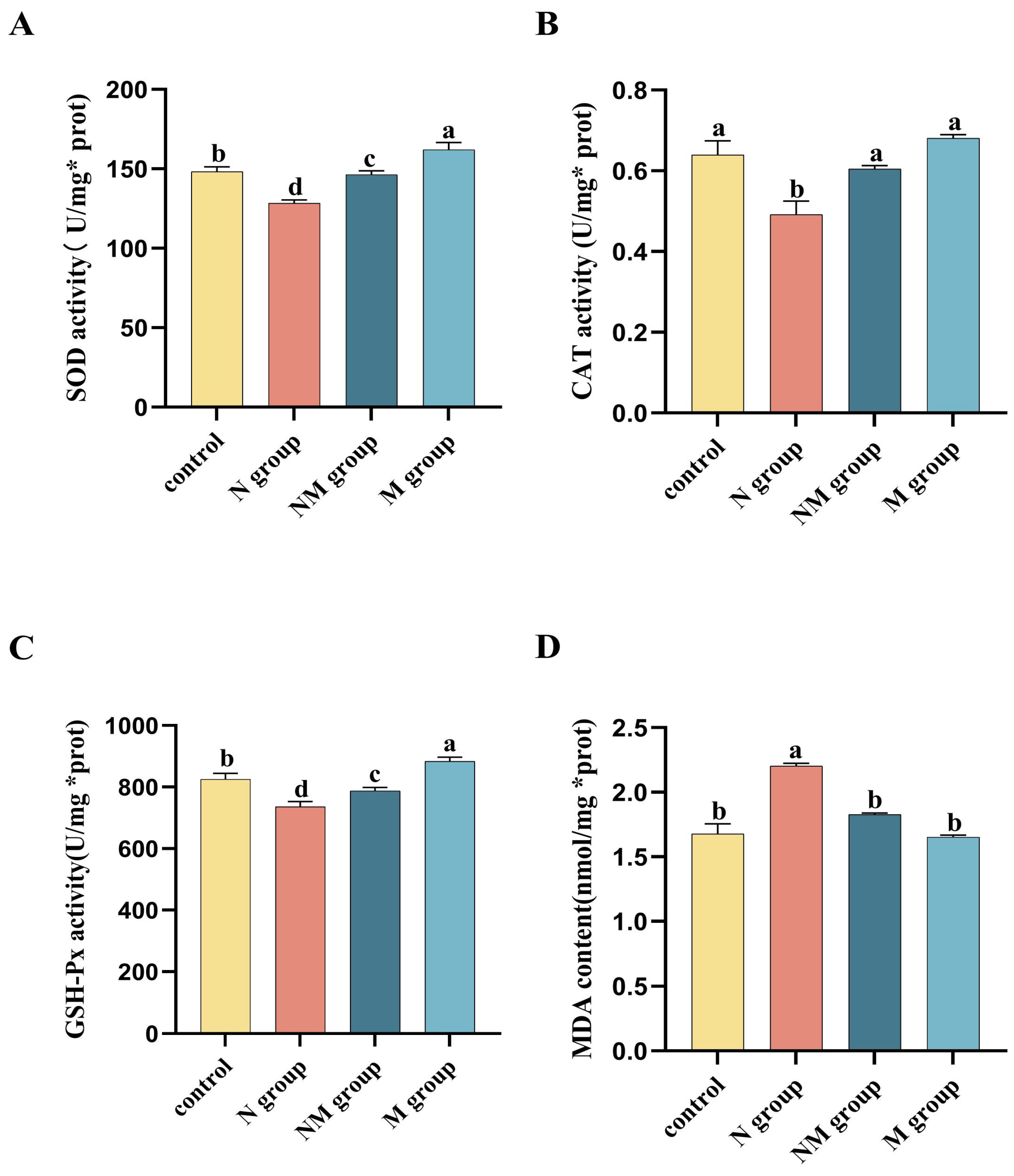
At 42 days of age, the MDA level in group N was significantly higher than that in the control group (p < 0.05; Figure 2D). The NM group showed a significant reduction in MDA levels compared to group N (p < 0.05; Figure 2D). Additionally, the activities of SOD, CAT, and GSH-Px in group N were significantly lower than those in the control group (p < 0.05; Figure 2A–C). Compared to group N, the NM group exhibited significantly higher activities of SOD, CAT, and GSH-Px (p < 0.05; Figure 2A–C). However, significant differences in SOD and GSH-Px activities remained between the NM and control groups (p < 0.05; Figure 2A,C).

3.3. Effects of Short-Term Music Intervention on Acute Noise-Induced Inflammatory Damage in the Bursa of Fabricius of Broilers

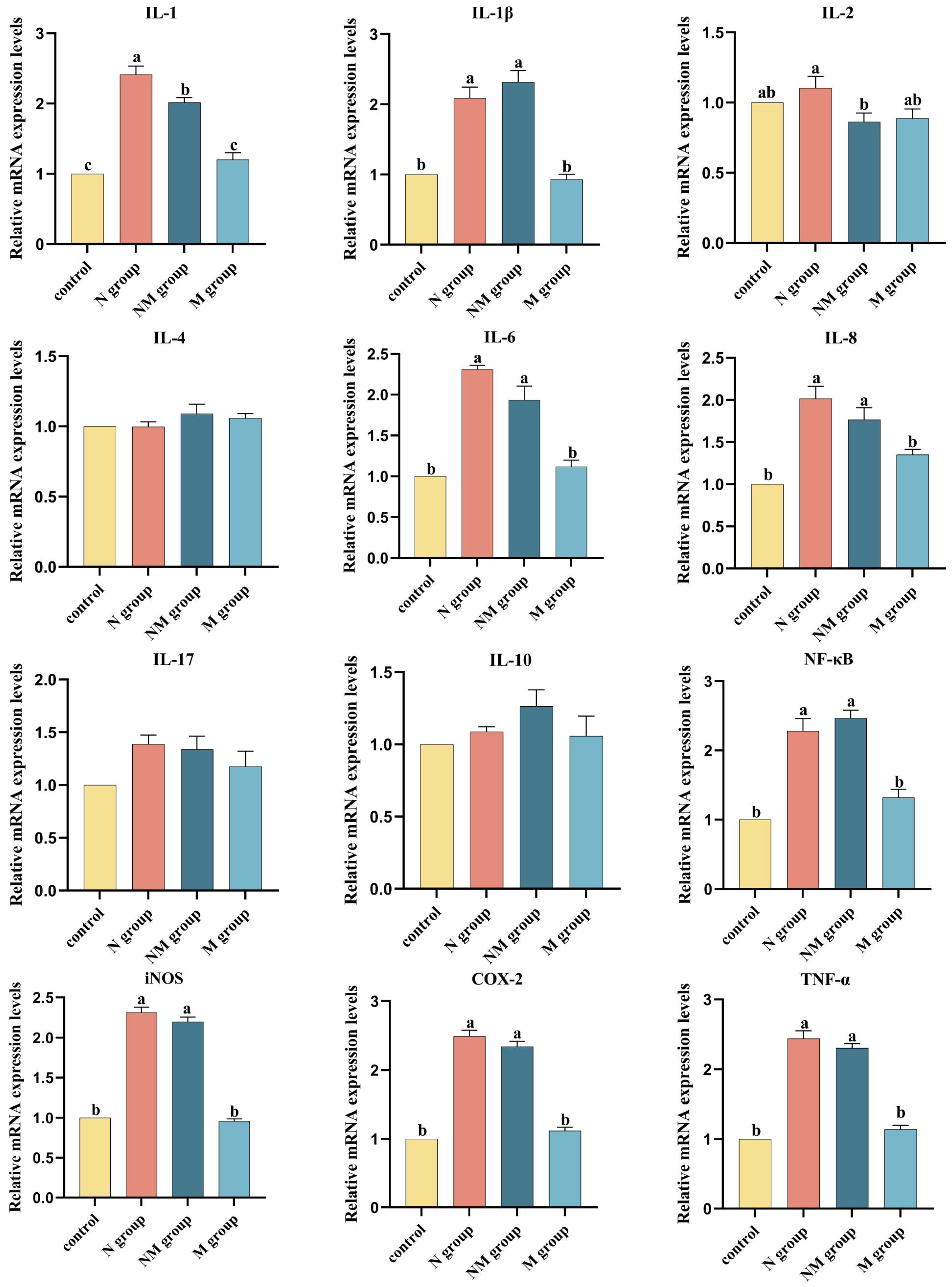
Figure 3 presents the mRNA expression of inflammatory factors in the bursa of Fabricius at 21 days of age. The mRNA levels of IL-1β, IL-6, IL-8, NF-κB, iNOS, COX-2, and TNF-α in groups N and NM were significantly higher than those in the control and M groups (p < 0.05), with no significant differences observed between groups N and NM (p > 0.05). In contrast, IL-1 mRNA expression in group NM was significantly lower than that in group N but remained higher than that in the control and M groups (p < 0.05). The mRNA expression level of IL-2 in group N was significantly higher than that in the NM group (p < 0.05). No significant differences in the mRNA expression of IL-4, IL-10, or IL-17 were observed among the four groups (p > 0.05).

3.4. Long-Term Music Exposure Suppresses Acute Noise-Induced Activation of the NF-κB Signaling Pathway

The expression and activation levels of the NF-κB pathway were assessed using qPCR and Western Blot techniques.
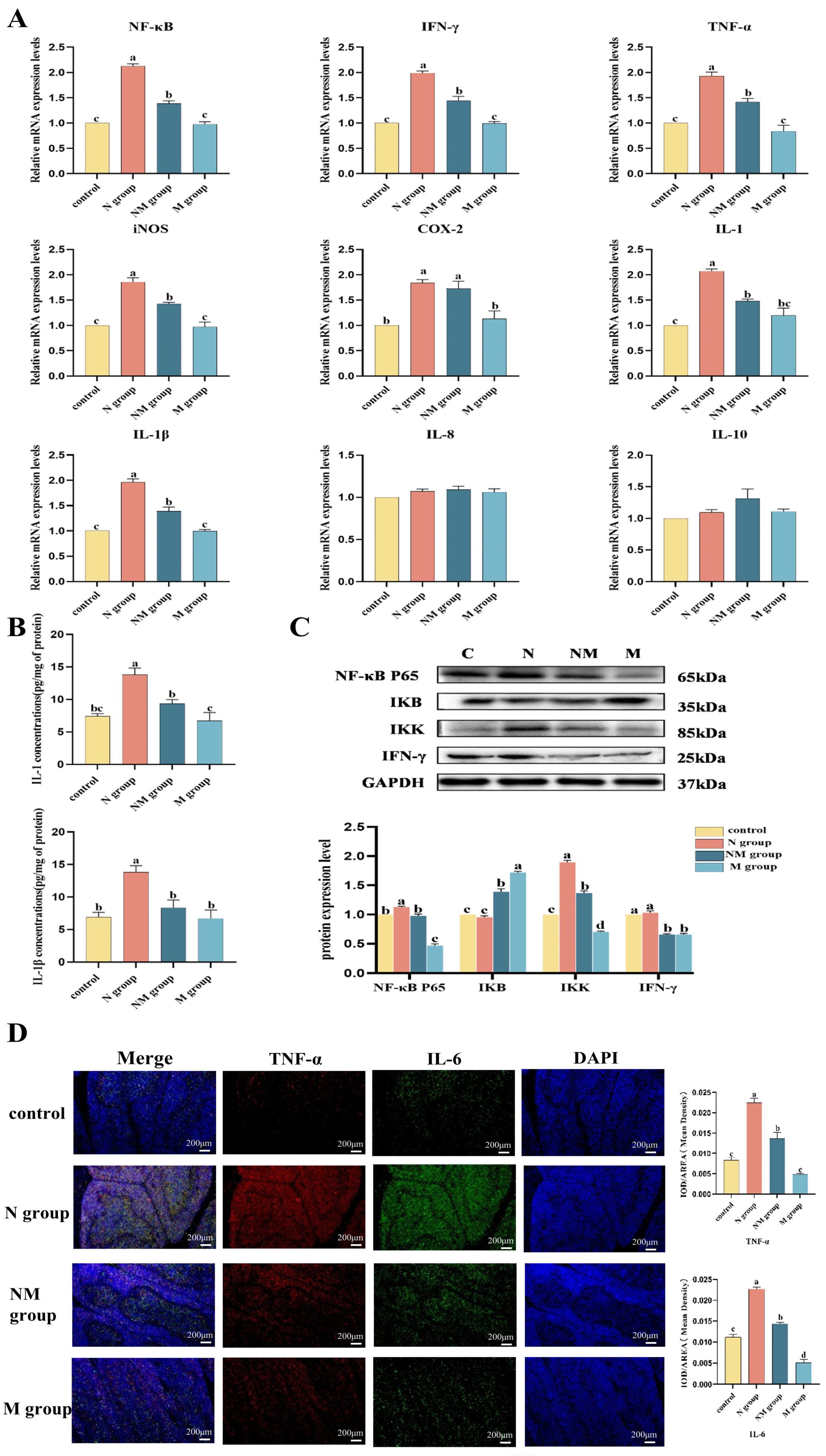
Figure 4A shows the effects of prolonged music stimulation on the mRNA expression of key genes in the NF-κB signaling pathway in the bursa of Fabricius under acute noise-induced conditions. At 42 days of age, the mRNA levels of NF-κB, IFN-γ, TNF-α, iNOS, IL-1, and IL-1β in group N were significantly higher than those in the control group (p < 0.05). Compared to group N, group NM showed significantly reduced mRNA expression of NF-κB, IFN-γ, TNF-α, iNOS, IL-1, and IL-1β (p < 0.05). In contrast, no significant difference in COX-2 mRNA expression was observed between groups N and NM (p > 0.05). The mRNA levels of NF-κB, IFN-γ, TNF-α, iNOS, COX-2, IL-1, and IL-1β in group NM remained significantly higher than those in the control group (p < 0.05). No significant differences in IL-10 or IL-8 mRNA expression were detected among the groups (p > 0.05). Group M showed no significant differences in the mRNA expression of NF-κB, IFN-γ, TNF-α, iNOS, COX-2, IL-1, or IL-1β compared to the control group (p > 0.05).
The protein expression of key components of the NF-κB signaling pathway is shown in Figure 4B,C. The protein levels of IL-1, IL-1β, NF-κB P65, IKK, and IFN-γ in group N were significantly higher than those in the control group (p < 0.05). Compared to group N, group NM exhibited significantly lower protein expression of IL-1, IL-1β, NF-κB P65, and IFN-γ (p < 0.05). No significant differences in the protein expression of IL-1, IL-1β, or NF-κB P65 were observed between the control group and the NM group (p > 0.05). The expression of IκB protein in group N was significantly lower than that in groups NM and M (p < 0.05), but did not differ significantly from the control group. Group NM showed significantly higher IκB protein expression than the control and N groups (p < 0.05). Group M exhibited significantly lower protein levels of IKK and IFN-γ than the control group (p < 0.05), while IκB expression was significantly higher in group M than in the control group (p < 0.05).
Immunofluorescence results (Figure 4D) revealed that the protein expression of TNF-α and IL-6 in group N was significantly higher than that in the control group (p < 0.05). Compared with group N, group NM showed significantly reduced expression of TNF-α and IL-6 (p < 0.05). No significant difference was observed in TNF-α expression between group M and the control group (p > 0.05).

3.5. Analysis of Apoptotic Molecule Expression in Bursa of Fabricius Tissue and TUNEL Assay

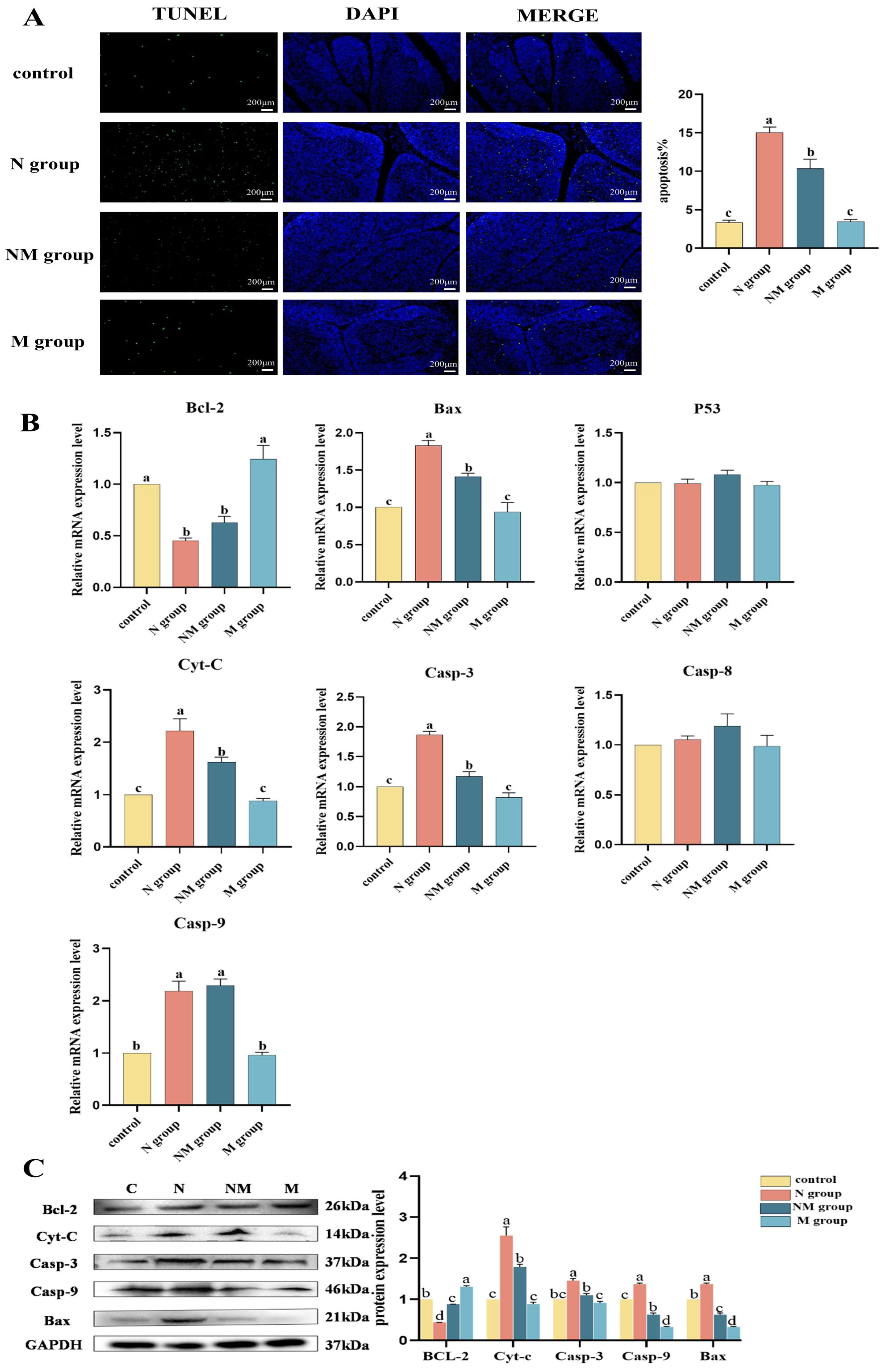
The apoptosis rate was detected using the TUNEL staining method, with apoptotic cells exhibiting green fluorescence. The results are shown in Figure 5A. At 42 days of age, the apoptosis rate in group N was significantly higher than that in the control group (p < 0.05). Compared with group N, group NM showed a significantly reduced apoptosis rate (p < 0.05). However, the apoptosis rate in the NM group remained significantly higher than in the control and M groups (p < 0.05).
Figure 5B shows the effects of prolonged music stimulation on the mRNA expression of key apoptosis-related genes in the bursa of Fabricius under acute noise-induced conditions. On day 21 post-exposure, compared with the control group, group N exhibited significantly downregulated Bcl-2 mRNA expression and significantly upregulated mRNA levels of Bax, Cyt-C, Caspase-3, and Caspase-9 (p < 0.05). The mRNA expression of Bcl-2 in group NM was significantly higher than that in group N (p < 0.05), while the mRNA levels of Bax, Cyt-C, and Caspase-3 were significantly lower in group NM than in group N (p < 0.05). No significant difference was observed in Caspase-9 mRNA expression between groups N and NM (p > 0.05). Compared with the control group, the NM group showed significantly downregulated Bcl-2 mRNA expression and significantly upregulated mRNA expression of Bax, Cyt-C, Caspase-3, and Caspase-9 (p < 0.05). No significant differences were detected in the mRNA expression of Bcl-2, Bax, Cyt-C, Caspase-3, or Caspase-9 between group M and the control group (p > 0.05). In addition, the mRNA expression levels of P53 and Casp-8 did not differ significantly among the groups (p > 0.05).
Figure 5C shows the effects of prolonged music stimulation on the protein expression of key apoptosis-related factors in the bursa of Fabricius. On day 21 post-exposure, compared with the control group, group N exhibited significantly downregulated Bcl-2 protein expression and significantly upregulated protein levels of Cyt-C, Caspase-3, Caspase-9, and Bax (p < 0.05). Group NM showed significantly lower protein expression of Cyt-C, Caspase-3, Caspase-9, and Bax than group N (p < 0.05). Compared with the control group, the NM group showed significantly downregulated Cyt-C and Caspase-9 protein expression, while Caspase-3 protein expression was significantly upregulated (p < 0.05). No significant difference was observed in Caspase-3 protein expression between group NM and the control group (p > 0.05). The protein expression of Bcl-2 in group NM was significantly higher than that in group N (p < 0.05). In group M, the protein expression of Caspase-9 and Bax was significantly lower than that in the control group (p < 0.05), while no significant differences were detected in the protein expression of Cyt-C or Caspase-9. Additionally, the protein expression of Bcl-2 in group M was significantly higher than that in the control group (p < 0.05).

3.6. No Significant Effect of Acute Noise on Endoplasmic Reticulum Stress Protein Expression in the Bursa of Fabricius

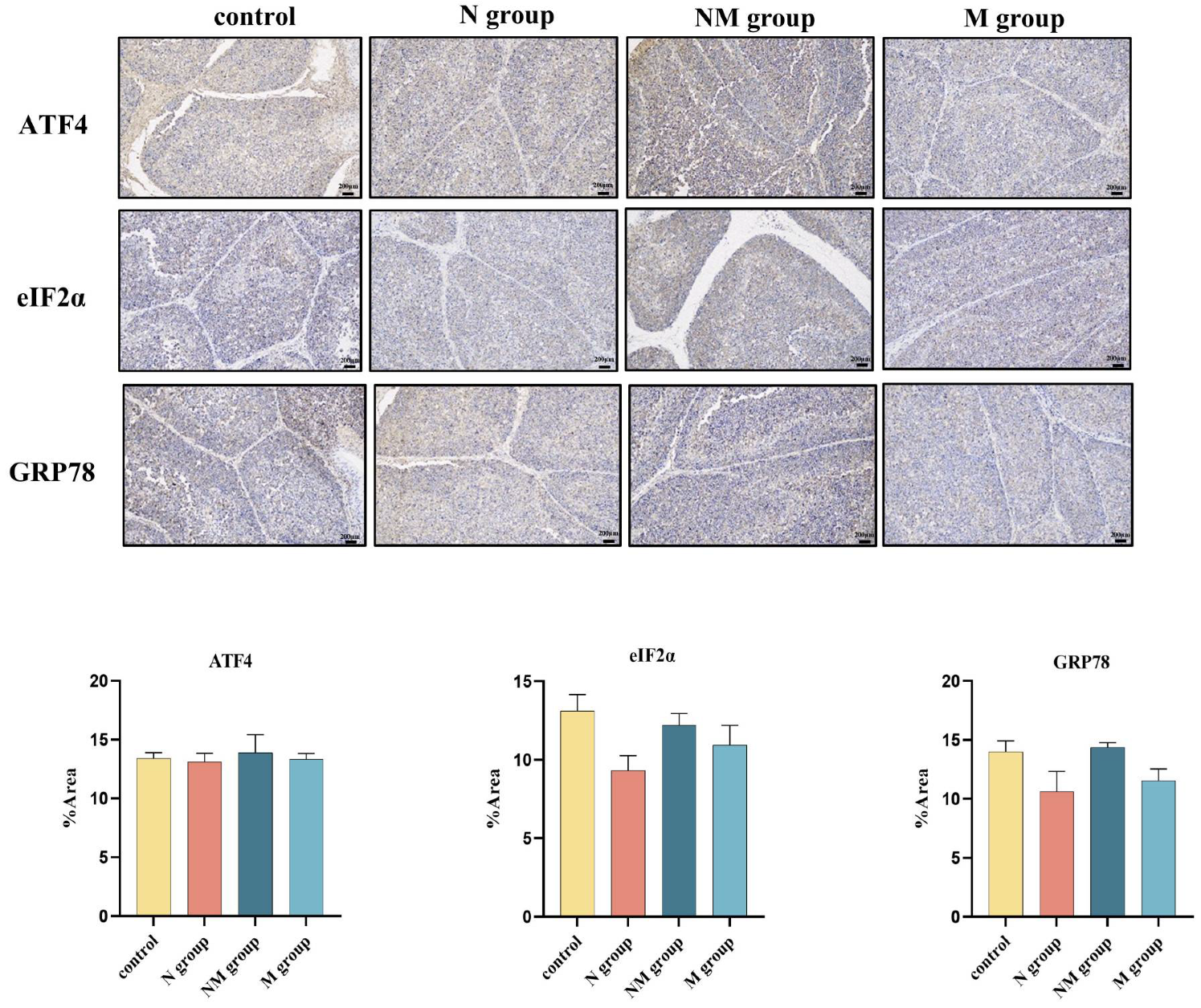
To further explore whether the noise-induced injury and the protective effect of music were mediated by the endoplasmic reticulum (ER) stress pathway, we performed immunohistochemical staining for key markers, including ATF4, eIF2α, and GRP78. Positive signals were identified as brown deposits (Figure 6). Contrary to our initial hypothesis, the results showed that at day 42, no significant differences in the protein expression levels of ATF4, eIF2α, or GRP78 were observed among the experimental groups (p > 0.05). These negative findings suggest that, under the current experimental conditions, the “oxidative stress–inflammation–apoptosis” cascade observed in the bursa of Fabricius might not be primarily driven by the classical ER stress pathway.

4. Discussion

Previous studies have confirmed that noise has a wide range of adverse effects on human health [14]. Long-term exposure to noisy environments can cause damage and dysfunction in the auditory, nervous, cardiovascular, and endocrine systems [15]. It is noteworthy that high-intensity noise can induce neuroinflammatory responses, cross the blood-brain barrier, and thereby increase the risk of immune deficiency [16]. Research indicates that noise exposure can elevate levels of inflammatory factors, causing damage to the auditory system and triggering physiological changes, such as fluctuations in blood pressure [17,18]. Music, as an acoustic signal characterized by regularity and aesthetic appeal, offers unique advantages in maintaining homeostasis in the body’s internal environment [19]. A growing body of research indicates that listening to music may exert positive regulatory effects on immune function through the psychoneuroimmunological axis [20,21].
Additionally, the positive emotional state induced by music is associated with the release of neurotransmitters such as dopamine and endorphins, which also participate in immune regulation processes [22,23]. These neuroendocrine changes are mechanistically closely associated with enhanced immune surveillance, specifically manifested as increased natural killer cell activity and abundance, as well as elevated immunoglobulin A levels [21,24]. Therefore, listening to music is not merely a passive distraction but can be regarded as an indirect, active immunomodulatory strategy—a non-invasive adjunct for regulating immune system function. Although the hazards of noise exposure have been extensively studied, the impact of farm noise on poultry health and its potential mechanisms of immune dysregulation remain unclear. As a central immune organ unique to avian species, the bursa of Fabricius serves as a critical site for the development, differentiation, and maturation of B lymphocytes [25]. Through genetic rearrangement, it generates a diverse B-cell repertoire and establishes self-tolerance through adverse selection. Consequently, the structural and functional integrity of the bursa of Fabricius directly influences poultry’s resistance to infection and the efficacy of vaccine-induced immunity; early damage may lead to severe immunosuppression [26]. However, no studies have reported the immunomodulatory effects of music on noise-induced immune dysfunction in the bursa of Fabricius. This study aimed to investigate the protective effects of long-term music stimulation on noise-induced oxidative stress and apoptosis in the chicken bursa of Fabricius, providing theoretical support for the development of strategies to prevent and control noise-related immune dysfunction.
Ultrastructural analysis revealed that noise exposure caused pathological changes in the bursal follicles, including uneven nuclear chromatin distribution and disruption of mitochondrial cristae. Prolonged music stimulation partially mitigated these structural damage. To further validate music’s role in alleviating noise-induced oxidative stress, we measured relevant markers of oxidative stress. Acute noise exposure significantly suppressed the activities of SOD, CAT, and GSH-Px while elevating MDA levels, indicating increased oxidative stress. Prolonged music intervention partially alleviated these changes. Furthermore, exposure to music alone enhanced the antioxidant capacity of the bursa of Fabricius. These findings suggest that noise induces oxidative stress in the bursa of Fabricius, and that music intervention has a specific alleviating effect, consistent with previous studies on music’s role in mitigating oxidative stress [27,28]. At 21 days of age, inflammatory factor detection revealed significant upregulation of gene expression levels of IL-1, IL-1β, IL-6, IL-8, NF-κB, iNOS, COX-2, and TNF-α. Short-term music intervention failed to suppress these inflammatory responses effectively. The NF-κB signaling pathway was activated following noise exposure, suggesting that it constitutes a critical component of cellular stress responses. A notable finding in this study is that short-term music intervention failed to significantly suppress the upregulation of inflammatory markers induced by acute noise. This lack of immediate effect suggests that the immunomodulatory benefits of music may follow a time-dependent cumulative pattern. Unlike pharmacological interventions that may act rapidly, acoustic enrichment likely exerts its effects through the gradual modulation of the neuroendocrine-immune axis. It is possible that a 7-day duration was insufficient to achieve the necessary ‘threshold’ of dopamine or endorphin release required to counteract the robust inflammatory cascade triggered by 120 dB noise. As observed in our prolonged exposure results, the protective effects of music became evident only after prolonged exposure, indicating that sustained auditory stimulation is essential for stabilizing the internal environment and achieving functional recovery of the bursa of Fabricius. This pathway activation promotes NF-κB nuclear translocation, enabling it to function as a transcription factor that regulates genes associated with inflammation, immunity, and cell survival. This study demonstrated that following acute noise exposure, gene expression levels of NF-κB, IFN-γ, TNF-α, iNOS, COX-2, IL-1, and IL-1β in the bursa of Fabricius in the N group significantly higher. Prolonged music intervention significantly mitigated these trends, with protein-level changes largely consistent with gene expression patterns. Although prolonged music intervention effectively alleviated noise-induced immune damage, significant differences persisted between the NM group and the control group for some indicators. This suggests that music intervention only partially mitigates noise-induced immune responses, indicating certain limitations in its regulatory effects. Interestingly, our results revealed that NF-κB expression in the NM group was significantly higher than that in the control group. This suggests that long-term music intervention does not merely restore NF-κB to baseline levels but may induce an over-compensatory or rebound effect. This upregulation of NF-κB could represent a robust feedback mechanism aimed at ensuring the complete suppression of the NF-κB signaling pathway under chronic environmental stress. Such an ‘overshoot’ in inhibitory protein expression may reflect the enhanced resilience of the bursa of Fabricius following prolonged acoustic enrichment, effectively creating a more stable anti-inflammatory internal environment that exceeds the baseline homeostatic state of the Control group.
Apoptosis is a highly programmed process of active cell death, also known as cell suicide [29]. This process is triggered by extrinsic and intrinsic signals both inside and outside the cell and is precisely regulated by a series of genes [30]. Unlike necrosis caused by injury or inflammation, apoptosis is characterized by a highly ordered process: cell shrinkage, chromatin condenses, and DNA fragmentation, ultimately leading to apoptotic bodies that are phogocytosed by nearby macrophages [31]. This mechanism plays an irreplaceable role in physiological processes such as embryonic development in multicellular organisms, and the tissue, clearance of abnormal cells, and immune regulation [32,33,34]. Research indicates that oxidative stress can lead to mitochondrial dysfunction and DNA damage, thereby inducing cellular injury and potentially apoptosis [35]. This study revealed, using the TUNEL assay, that the apoptosis rate in the bursa of Fabricius of broilers in N group was significantly higher than that in the control and NM groups. Further analysis of apoptosis-related gene and protein expression levels showed that, except for the anti-apoptotic gene Bcl-2, the pro-apoptotic genes were significantly upregulated after noise exposure. Prolonged music intervention partially reversed this trend. Notably, although differences in the expression levels of specific apoptosis-related indicators persisted between the N and NM groups, music intervention demonstrated a mitigating effect, indicating its protective potential in regulating noise-induced apoptosis.
Apoptosis and endoplasmic reticulum stress exhibit a complex and precise regulatory interaction [36]. The endoplasmic reticulum, as the primary cellular organelle responsible for protein folding, modification, and calcium ion homeostasis, activates the unfolded protein response (UPR) when its function is disrupted [37,38]. Under sustained stress conditions, an overactivated UPR can trigger the apoptotic program through multiple signaling pathways [39]. Therefore, endoplasmic reticulum stress often serves as a key trigger of apoptosis, playing an indispensable role in initiating and progressing this process. As a key regulatory factor maintaining endoplasmic reticulum homeostasis, GRP78 plays a crucial role [40,41]. It preferentially binds to misfolded and unfolded proteins, effectively protecting host cells from ERS-induced apoptosis, thereby maintaining a delicate equilibrium between cellular survival and death [42]. Our study found that no significant differences in the expression of key endoplasmic reticulum stress proteins (ATF4, eIF2α, and GRP78) were observed in the bursa of Fabricius at 21 days after the cessation of acute noise exposure. This result may stem from several factors: First, as an immediate early stress response, endoplasmic reticulum stress may have returned to normal levels through self-repair mechanisms during the 21-day recovery period. Second, the reaction of the bursa of Fabricius to noise stimulation may be more strongly mediated by the NF-κB inflammatory pathway and the mitochondrial apoptosis pathway. In contrast, the endoplasmic reticulum stress pathway exhibits relatively limited sensitivity in this model. Additionally, the intensity and duration of noise stimulation employed in this study may have been insufficient to induce a sustained and significant endoplasmic reticulum (ER) stress response, or the organism may have maintained ER homeostasis through other compensatory mechanisms. Collectively, these findings suggest that under the described experimental conditions, ER stress is not the primary pathway mediating noise-induced long-term damage to immune organs.
However, several limitations of the present study must be acknowledged. First, the initial loss of five broilers due to transport-related stress and the subsequent removal of two birds to standardize group sizes may have introduced potential selection bias. It is possible that the most stress-susceptible individuals were inadvertently excluded, which could have led to an underestimation of the pathological impact of noise exposure. Second, our study utilized only one type of music (Mozart’s K.448); therefore, the observed benefits may not be generalizable to other forms of acoustic enrichment. Third, the lack of behavioral data (such as activity levels or stress vocalizations) limits our ability to correlate molecular markers with the birds’ overall welfare. Furthermore, the reliance on a single observation endpoints may have overlooked critical molecular dynamics during the early exposure phase. The divergent outcomes observed at 21 days of age compared with 42 days of age suggest that music’s role may be more aligned with promoting long-term physiological recovery—requiring an extended duration for neuroendocrine modifications to manifest—rather than providing immediate protection against the initial insult.
Future research should consider using larger initial cohorts, sampling at multiple time points, and integrating metabolomics with functional assays (e.g., mitochondrial respiration), and incorporating neural signaling blockade to comprehensively reveal the temporal sequence and physiological mechanisms of music intervention.

5. Conclusions

In summary, this study demonstrates that acute noise exposure triggers oxidative stress and inflammatory responses in the bursa of Fabricius, in which the activation of the NF-κB signaling pathway appears to play a significant role. Our findings suggest that long-term music intervention partially alleviates these noise-induced pathological processes under the experimental conditions. While these results provide a theoretical basis for using music to mitigate environmental stress in poultry, further research is required to evaluate its efficacy in enhancing disease resistance and its applicability different farming environments. This study contributes to a more nuanced understanding of avian immunomodulation and highlights the potential of acoustic enrichment as a non-invasive strategy to support poultry welfare.

Supplementary Materials

The following supporting information can be downloaded at: https://www.mdpi.com/article/10.3390/agriculture16010078/s1, Table S1: Laboratory apparatus used during histopathological examinations and ultrastructural experiments; Table S2: Sequences of the primers for PCR; Table S3: Experimental apparatus used during Tunel’s experiments; Table S4: The experimental apparatus used during the Tunel experiments.

Author Contributions

Laboratory animal husbandry, data handling, and paper writing: M.L. and H.W.; Feeding of test animals and correction of articles: C.H. Provided experimental design ideas: R.Z. Provided article design ideas, page charges, experimental funding, and corrected issues with the article: R.Z. and C.L. All authors have read and agreed to the published version of the manuscript.

Funding

This research was supported by Xinjiang Uygur Autonomous Region Tianchi Talent Introduction Program (CZ001633).

Institutional Review Board Statement

This study was conducted in accordance with the guidelines of the Institutional Animal Care and Use Committee of Northeast Agricultural University, and the protocol was approved by the same committee (No. NEAUEC20210234) on 9 March 2021.

Data Availability Statement

All data generated or analyzed during this study are included in this published article. Additional data related to this study are available from the corresponding author upon reasonable request.

Acknowledgments

This study was supported by the Heilongjiang Province Modern Agricultural Industry Technology Collaborative Innovation and Promotion System Project (Poultry).

Conflicts of Interest

The authors declare no conflicts of interest.

References

  1. Amjad, R.; Ruby, T.; Ali, K.; Asad, M.; Imtiaz, A.; Masood, S.; Saeed, M.Q.; Arshad, M.; Talib, S.; Alvi, Q.A.; et al. Exploring the effects of noise pollution on physiology and ptilochronology of birds. PLoS ONE 2024, 19, e0305091. [Google Scholar] [CrossRef]
  2. Arregi, A.; Vegas, O.; Lertxundi, A.; Silva, A.; Ferreira, I.; Bereziartua, A.; Cruz, M.T.; Lertxundi, N. Road traffic noise exposure and its impact on health: Evidence from animal and human studies-chronic stress, inflammation, and oxidative stress as key components of the complex downstream pathway underlying noise-induced non-auditory health effects. Environ. Sci. Pollut. Res. 2024, 31, 46820–46839. [Google Scholar] [CrossRef]
  3. Wang, H.; Wang, Y.; Chai, Y.; Zhang, H.; Chang, Q.; Li, J.; Zhang, R.; Bao, J. Prolonged exposure to a music-enriched environment mitigates acute noise-induced inflammation and apoptosis in the chicken spleen by modulating the Keap-1/Nrf2 and NF-kappaB pathways. Poult. Sci. 2024, 103, 104100. [Google Scholar] [CrossRef] [PubMed]
  4. Rahmati, S.; Sadeghi, S.; Moosazadeh, M. Oxidative stress markers in occupational noise exposure: A systematic review and meta-analysis. Int. Arch. Occup. Environ. Health 2025, 98, 155–167. [Google Scholar] [CrossRef]
  5. Yang, L.; Gutierrez, D.E.; Guthrie, O.W. Systemic health effects of noise exposure. J. Toxicol. Environ. Health B 2024, 27, 21–54. [Google Scholar] [CrossRef] [PubMed]
  6. Mihalikova, D.; Stamm, P.; Kvandova, M.; Pednekar, C.; Strohm, L.; Ubbens, H.; Oelze, M.; Kuntic, M.; Witzler, C.; Bayo, J.M.; et al. Exposure to aircraft noise exacerbates cardiovascular and oxidative damage in three mouse models of diabetes. Eur. J. Prev. Cardiol. 2025, 32, 301–314. [Google Scholar] [CrossRef]
  7. Georgiou, S.G.; Galatos, A.D. Music as a perioperative, non-pharmacological intervention in veterinary medicine. Establishing a feasible framework for music implementation and future perspectives with a focus on the perioperative period of dogs and cats. Front. Vet. Sci. 2025, 12, 1672783. [Google Scholar] [CrossRef] [PubMed]
  8. Guo, X.; Wang, C.; Guo, J. The effect of Mozart’s K.448 on epilepsy: A systematic literature review and supplementary research on music mechanism. Epilepsy Behav. E&B 2025, 163, 110108. [Google Scholar] [CrossRef]
  9. Chavez, Y.; Meng, H.; Liu, Y.; Mayer, J.; Campbell, N.; Wright, C.; Amidei, A.; Butail, I.; Fields, S.; Green, M.; et al. Effects of classical music on behavioral stress reactivity in socially isolated prairie voles. Ann. N. Y. Acad. Sci. 2025, 1553, 187–203. [Google Scholar] [CrossRef]
  10. Cao, Z.; Zhao, H.; Feng, Z.; Yang, B.; Li, Z.; Ma, X.; Gu, S.; Ma, N. Effects of Raga music and Chinese five-element on milk production, antioxidant, neuroendocrine, immune, and welfare indicators in dairy cows. Front. Vet. Sci. 2025, 12, 1623026. [Google Scholar] [CrossRef]
  11. Neethirajan, S. Rethinking Poultry Welfare—Integrating Behavioral Science and Digital Innovations for Enhanced Animal Well-Being. Poultry 2025, 4, 20. [Google Scholar] [CrossRef]
  12. Szocs, E.; Balic, A.; Soos, A.; Halasy, V.; Nagy, N. Characterization and ontogeny of a novel lymphoid follicle inducer cell during development of the bursa of Fabricius. Front. Immunol. 2024, 15, 1449117. [Google Scholar] [CrossRef]
  13. Brunner, M.; Cavaleiro, C.L.C.T.; Berghof, T.V.L.; von Heyl, T.; Alhussien, M.N.; Wurmser, C.; Elleder, D.; Schusser, B. Transcriptome analysis identifies CCR7 and cell adhesion molecules as mediators of B cell migration to the bursa of Fabricius during chicken embryonic development. BMC Genom. 2025, 26, 555. [Google Scholar] [CrossRef]
  14. Hahad, O.; Kuntic, M.; Al-Kindi, S.; Kuntic, I.; Gilan, D.; Petrowski, K.; Daiber, A.; Muenzel, T. Noise and mental health: Evidence, mechanisms, and consequences. J. Expo. Sci. Environ. Epidemiol. 2025, 35, 16–23. [Google Scholar] [CrossRef]
  15. Mehrotra, A.; Shukla, S.P.; Shukla, A.K.; Manar, M.K.; Singh, S.K.; Mehrotra, M. A Comprehensive Review of Auditory and Non-Auditory Effects of Noise on Human Health. Noise Health 2024, 26, 59–69. [Google Scholar] [CrossRef]
  16. Song, Y.; Zhang, H.; Wang, X.; Huang, L.; Kang, Y.; Feng, Z.; Zhao, F.; Zhuang, H.; Zhang, J. Acute high-intensity noise exposure exacerbates anxiety-like behavior via neuroinflammation and blood brain barrier disruption of hippocampus in male rats. Behav. Brain Funct. 2025, 21, 11. [Google Scholar] [CrossRef]
  17. Ma, J.; Zhang, J.; Zhang, Y.; Wang, Z. Causal effects of noise and air pollution on multiple diseases highlight the dual role of inflammatory factors in ambient exposures. Sci. Total Environ. 2024, 951, 175743. [Google Scholar] [CrossRef]
  18. Foerster, C.Y.; Shityakov, S.; Stavrakis, S.; Scheper, V.; Lenarz, T. Interplay between noise-induced sensorineural hearing loss and hypertension: Pathophysiological mechanisms and therapeutic prospects. Front. Cell Neurosci. 2025, 19, 1523149. [Google Scholar] [CrossRef] [PubMed]
  19. Pingle, Y.P.; Ragha, L.K. An in-depth analysis of music structure and its effects on human body for music therapy. Multimed. Tools Appl. 2023, 83, 45715–45738. [Google Scholar] [CrossRef]
  20. Kuri, K.; Bind, R.H.; Rebecchini, L. The role of music in perinatal mental health, with a psychoneuroimmunological perspective. Brain Behav. Immun.-Health 2025, 48, 101092. [Google Scholar] [CrossRef] [PubMed]
  21. Fu, Y.; Wu, K.; Zhuang, J.; Chen, Y.; Jia, L.; Luo, Z.; Sun, R. Music therapy in modulating immune responses and enhancing cancer treatment outcomes. Front. Immunol. 2025, 16, 1639047. [Google Scholar] [CrossRef]
  22. Arnold, C.A.; Bagg, M.K.; Harvey, A.R. The psychophysiology of music-based interventions and the experience of pain. Front. Psychol. 2024, 15, 1361857. [Google Scholar] [CrossRef]
  23. Gallazzi, M.; Pizzolante, M.; Biganzoli, E.M.; Bollati, V. Wonder symphony: Epigenetics and the enchantment of the arts. Environ. Epigenetics 2024, 10, dvae001. [Google Scholar] [CrossRef] [PubMed]
  24. Dan, Y.; Xiong, Y.; Xu, D.; Wang, Y.; Yin, M.; Sun, P.; Ding, Y.; Feng, Z.; Sun, P.; Xia, W.; et al. Potential common targets of music therapy intervention in neuropsychiatric disorders: The prefrontal cortex-hippocampus—Amygdala circuit (a review). Front. Hum. Neurosci. 2025, 19, 1471433. [Google Scholar] [CrossRef]
  25. Shen, Y.; Jin, F.; Lin, Z.; Miao, Y.; Liu, Y.; Zhang, M.; Zhang, Y. The development, degeneration and immune function fate of bursa of Fabricius in the widely distributed altricial tree sparrow. Zoomorphology 2025, 144, 16. [Google Scholar] [CrossRef]
  26. Laghari, F.; Zhang, H.; He, C.; Gong, H.; Zhang, J.; Chang, Q.; Bao, J.; Zhang, R. Resveratrol alleviates stress-associated bursal injury in chickens: A transcriptomic analysis. Brit Poultry Sci. 2025, 1–16. [Google Scholar] [CrossRef]
  27. Quon, R.J.; Casey, M.A.; Camp, E.J.; Meisenhelter, S.; Steimel, S.A.; Song, Y.; Testorf, M.E.; Leslie, G.A.; Bujarski, K.A.; Ettinger, A.B.; et al. Musical components important for the Mozart K448 effect in epilepsy. Sci. Rep. 2021, 11, 16490. [Google Scholar] [CrossRef]
  28. Fu, Q.; Qiu, R.; Yao, T.; Liu, L.; Li, Y.; Li, X.; Qi, W.; Chen, Y.; Cheng, Y. Music therapy as a preventive intervention for postpartum depression: Modulation of synaptic plasticity, oxidative stress, and inflammation in a mouse model. Transl. Psychiatry 2025, 15, 143. [Google Scholar] [CrossRef] [PubMed]
  29. Wang, M.; Yu, F.; Zhang, Y.; Li, P. Programmed cell death in tumor immunity: Mechanistic insights and clinical implications. Front. Immunol. 2024, 14, 1309635. [Google Scholar] [CrossRef]
  30. Mustafa, M.; Ahmad, R.; Tantry, I.Q.; Ahmad, W.; Siddiqui, S.; Alam, M.; Abbas, K.; Hassan, M.I.; Habib, S.; Islam, S. Apoptosis: A Comprehensive Overview of Signaling Pathways, Morphological Changes, and Physiological Significance and Therapeutic Implications. Cells 2024, 13, 1838. [Google Scholar] [CrossRef] [PubMed]
  31. Hallam, J.; Burton, P.; Sanders, K. Poor Sperm Chromatin Condensation Is Associated with Cryopreservation-Induced DNA Fragmentation and Cell Death in Human Spermatozoa. J. Clin. Med. 2024, 13, 4156. [Google Scholar] [CrossRef]
  32. Nadri, P.; Zahmatkesh, A.; Bakhtari, A. The potential effect of melatonin on in vitro oocyte maturation and embryo development in animals. Biol. Reprod. 2024, 111, 529–542. [Google Scholar] [CrossRef]
  33. Obeagu, E.I.; Ubosi, N.I.; Obeagu, G.U.; Egba, S.I.; Bluth, M.H. Understanding apoptosis in sickle cell anemia patients: Mechanisms and implications. Medicine 2024, 103, e36898. [Google Scholar] [CrossRef]
  34. Qian, S.; Long, Y.; Tan, G.; Li, X.; Xiang, B.; Tao, Y.; Xie, Z.; Zhang, X. Programmed cell death: Molecular mechanisms, biological functions, diseases, and therapeutic targets. MedComm 2024, 5, e70024. [Google Scholar] [CrossRef] [PubMed]
  35. Yang, J.; Luo, J.; Tian, X.; Zhao, Y.; Li, Y.; Wu, X. Progress in Understanding Oxidative Stress, Aging, and Aging-Related Diseases. Antioxidants 2024, 13, 394. [Google Scholar] [CrossRef]
  36. Wang, Y.; Li, Y.; Wu, Y.; Wu, A.; Xiao, B.; Liu, X.; Zhang, Q.; Feng, Y.; Yuan, Z.; Yi, J.; et al. Endoplasmic reticulum stress promotes oxidative stress, inflammation, and apoptosis: A novel mechanism of citrinin-induced renal injury and dysfunction. Ecotoxicol. Environ. Safe 2024, 284, 116946. [Google Scholar] [CrossRef] [PubMed]
  37. Kettel, P.; Karagoz, G.E. Endoplasmic reticulum: Monitoring and maintaining protein and membrane homeostasis in the endoplasmic reticulum by the unfolded protein response. Int. J. Biochem. Cell B 2024, 172, 106598. [Google Scholar] [CrossRef] [PubMed]
  38. Kimmig, P.; Diaz, M.; Zheng, J.; Williams, C.C.; Lang, A.; Aragon, T.; Li, H.; Walter, P. The unfolded protein response in fission yeast modulates stability of select mRNAs to maintain protein homeostasis. Elife 2012, 1, e48. [Google Scholar] [CrossRef]
  39. Bravo-Jimenez, M.A.; Sharma, S.; Karimi-Abdolrezaee, S. The integrated stress response in neurodegenerative diseases. Mol. Neurodegener. 2025, 20, 20. [Google Scholar] [CrossRef]
  40. Chen, N.; Yang, J.Q.; Tong, S.; Xu, L.; Dong, N.; Wu, Y.; Li, Y.X.; Yao, R.Q.; Yao, Y.M. FAM134B in Cellular Homeostasis: Bridging Endoplasmic Reticulum-Phagy to Human Diseases. Int. J. Biol. Sci. 2025, 21, 5514–5530. [Google Scholar] [CrossRef]
  41. Zhao, J.; Yang, P.; Lu, L.; Yi, T.; Li, Y.; Mao, W.; Zhou, Q.; Lin, K. A study on expression of GRP78 and CHOP in neutrophil endoplasmic reticulum and their relationship with neutrophil apoptosis in the development of sepsis. J. Biosci. 2024, 49, 49. [Google Scholar] [CrossRef] [PubMed]
  42. Grando, K.; Bessho, S.; Harrell, K.; Kyrylchuk, K.; Pantoja, A.M.; Olubajo, S.; Albicoro, F.J.; Klein-Szanto, A.; Tukel, C. Bacterial amyloid curli activates the host unfolded protein response via IRE1 in the presence of HLA-B27. Gut Microbes 2024, 16, 2392877. [Google Scholar] [CrossRef] [PubMed]
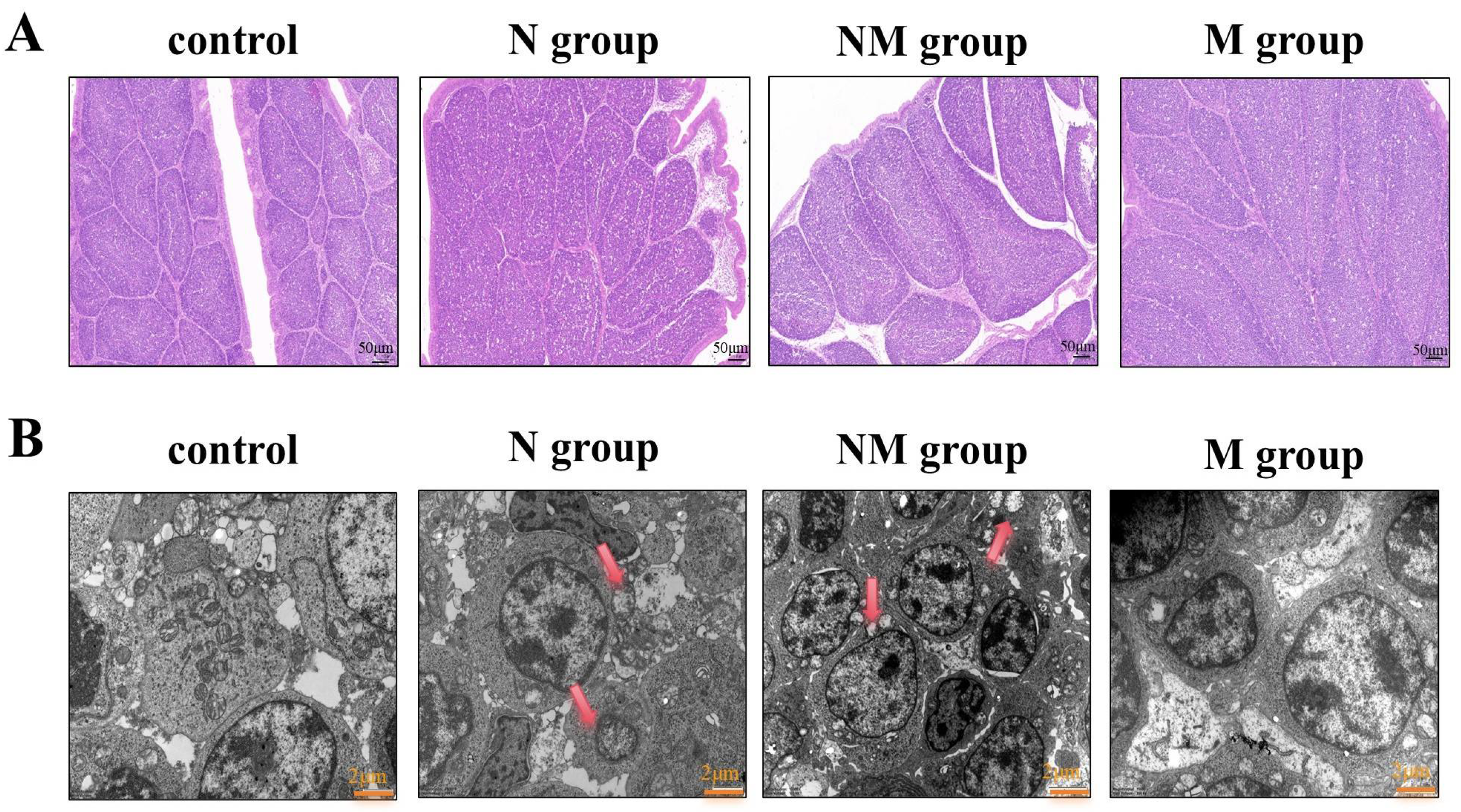
Figure 1. The Mitigating Effect of Music on the Bursa of Fabricius Damage in Broilers Following Acute Noise Exposure. (A) Hematoxylin-eosin staining of the bursa of Fabricius tissue sections. (B) Ultrastructural changes in the Bursa of Fabricius of 42-day-old broilers observed under transmission electron microscopy (×10,000–20,000).
Agriculture 16 00078 g001
Figure 2. Music alleviates acute noise-induced oxidative stress in broilers. The activities of (A) SOD, (B) CAT, (C) GSH-Px, and (D) MDA content were measured. Data were analyzed using one-way ANOVA with Tukey’s post hoc test. Bars marked with different lowercase letters are significantly different (p < 0.05). Different lowercase letters indicate p < 0.05, and the same letter indicates that the difference is not significant (p > 0.05).
Agriculture 16 00078 g002
Figure 3. The figure shows the expression levels of inflammation-associated genes in the bursa of Fabricius at 21 days of age: Control group (control); Acute noise exposure group (N group); Acute noise exposure followed by music relief group (NM group); Music group (M group); a, b, c, and d indicate significant differences between different treatment groups at the same age (n = 6). Different lowercase letters indicate p < 0.05, and the same letter indicates that the difference is not significant (p > 0.05).
Agriculture 16 00078 g003
Figure 4. Music has potential anti-inflammatory effects and can effectively alleviate inflammation in the bursa of Fabricius by inhibiting NF-κB signaling triggered by noise. (A) mRNA expression levels of NF-κB, IFN-γ, TNF-α, iNOS, COX-2, IL-1, IL-1β, IL-8, and IL-10 (n = 6). (B) Concentrations of IL-1 and IL-1β (n = 3). (C) Protein expression levels of NF-κB, IKB, IKK, and IFN-γ (n = 3). (D) Expression levels of TNF-α (red) and IL-6 (green) after music-induced alleviation of acute noise were detected by immunofluorescence (n = 3). Different lowercase letters indicate p < 0.05, and the same letter indicates that the difference is not significant (p > 0.05).
Agriculture 16 00078 g004
Figure 5. Music alleviated acute noise-induced excessive apoptosis. (A) TUNEL assay of the bursa of Fabricius, with apoptotic cells shown in green and non-apoptotic cells in blue (n = 3). (B) mRNA expression levels of Bcl-2, Bax, p53, Cyt-C, Caspase-3, Caspase-8, and Caspase-9 in the bursa of Fabricius (n = 6). (C) Protein expression levels of Bcl-2, Cyt-C, Caspase-3, Caspase-9, and Bax in the Bursa of Fabricius (n = 3). Different lowercase letters indicate p < 0.05, and the same letter indicates that the difference is not significant (p > 0.05).
Agriculture 16 00078 g005
Figure 6. Immunohistochemical (IHC) analysis of the bursa of Fabricius at Day 42 (200×). Protein expression of ATF4, eIF2α, and GRP78 following acute noise exposure. Positive signals are indicated by brown deposits (n = 3).
Agriculture 16 00078 g006
Table 1. The antibodies utilized in this investigation.
AntibodyDilution RatioSource
NF-κB P65, IKB, IKK, IFN-γ1:300Wanlei, China
Bcl-2, Cyt-C, Caspase-3, Caspase-9, Bax1:1000ABclonal, China
GAPDH1:2000Servicebio, China
Disclaimer/Publisher’s Note: The statements, opinions and data contained in all publications are solely those of the individual author(s) and contributor(s) and not of MDPI and/or the editor(s). MDPI and/or the editor(s) disclaim responsibility for any injury to people or property resulting from any ideas, methods, instructions or products referred to in the content.