Article

Research on Seed Selection Method for Wheat Variety Bainong 207 Based on Embryo Phenotype

College of Mechanical and Electrical Engineering, Henan Agricultural University, Zhengzhou 450002, China
*
Author to whom correspondence should be addressed.
Agriculture 2026, 16(1), 33; https://doi.org/10.3390/agriculture16010033
Submission received: 14 November 2025 / Revised: 15 December 2025 / Accepted: 18 December 2025 / Published: 22 December 2025
(This article belongs to the Section Agricultural Technology)

Abstract

Selecting high-quality seeds is an effective approach for increasing wheat yields. Phenotype-based seed selection has emerged in recent years as a simple and convenient method. However, due to the irregular shape of seeds, accurately measuring shape parameters via imaging for seed viability assessment poses certain challenges. This study statistically analyzed the embryo morphology of wheat variety Bainong 207, identifying three predominant phenotypes. The morphological parameters of seeds and embryos were measured for these three phenotypes. Germination tests were conducted on these three categories of wheat in accordance with Chinese national standards. The seeds with Phenotype Ⅰ exhibited the highest germination force (89.33%) and the highest germination percentage (96.00%), representing a statistically significant difference from Phenotype Ⅱ and Ⅲ. Morphological parameters related to seed vigor, including germinative force, germination percentage, seedling height, and root length, were measured. By exploring the relationship between embryo phenotypes and wheat seed viability and yield potential, principles and considerations for wheat seed selection based on embryo phenotypes were discussed. The YOLOv8 model was employed to classify wheat seeds with different embryo phenotypes. Under the global labeling of seeds, the classification accuracy for the three categories reached 99.9%. Classification results from various labeling methods were compared, validating the feasibility of machine vision for seed selection and providing technical support for large-scale wheat seed improvement.

1. Introduction

Wheat is one of the most important cereal crops worldwide [1]. As the population grows, human demand for wheat will also increase, at an annual rate of approximately 1.7% [2]. The growth rate of wheat production is approximately 1% annually [3]. There is still a gap between wheat production and these requirements. China’s summer wheat production reached 138 million tons in 2025, with an average yield of 5988 kg per hectare. Both are at historically high levels. To continue increasing wheat yields, in addition to developing new varieties [4] and implementing intelligent farming practices [5] and field management techniques [6], pre-sowing seed selection is another technical approach for boosting production [7].
Seed selection refers to the selection of high-quality seeds through technical means in order to obtain higher yields [8]. Research indicates that seed vigor is positively correlated with biomass and grain yield [9,10,11]. The fundamental test methods, such as the seed germination test [12], the field emergence test [13], and the conductivity method [14], are used to evaluate seed vigor through measuring seed germination parameters. These methods are destructive to seeds and have long testing cycles. In recent years, some fast and non-destructive seed selection methods have developed rapidly, such as hyperspectral detection methods [15,16], image-based visual methods [17], and methods based on the combination of spectra and images [18,19].
The evaluation of seed vitality [20] and the prediction of germination ability [21] based on the morphology, color, texture, and other indicators from seed images has the advantages of low cost, simplicity, convenience, high efficiency, and non-destructiveness, and has application prospects in large-scale wheat seed optimization. Currently, there are excellent open-source tools to extract and analyze seed morphology (including area, perimeter, length, width, roundness, and centroid), texture, and color features from images [22,23]. However, the irregular shape of seeds makes it difficult to accurately measure shape parameters due to the diverse postures of seeds during image acquisition [18,24].
Compared with the appearance of wheat kernels, the embryo’s appearance is less diverse, and its regional boundaries are clearer. The embryo is the most important component of the seed, and its shape parameters are significantly correlated with early seed vitality [25,26]: the length, width, and area of wheat embryos were significantly positively correlated with root dry weight, root surface area, number of root tips, root volume, aboveground dry weight, and total root length [27,28]; Wang et al. identified Quantitative Trait Loci (QTLs) associated with mature wheat embryo shape and found that embryo length and width were not related to grain size. They also evaluated the genetic relationship between embryo size parameters and agronomic traits [29]; Moore et al. proposed that it is possible to find genes or quantitative trait loci that describe the size of wheat embryos and to select for embryo size through genetic means during wheat breeding [30]. In the field of machine vision, Zhang et al. proposed to distinguish high-quality seeds from low-quality seeds by the spectral information of embryos [19]; Fábián et al. used embryo size to characterize embryo and endosperm development in wheat under drought stress [31]; Yan et al. used the same-position images of transmitted light and reflected light to optimize the extraction of seed color features for wheat embryo and endosperm segmentation, thereby improving the recognition rate of wheat varieties [32]; Dong et al. integrated near-infrared hyperspectral information and image information from embryos, effectively improving the classification effect of wheat varieties [18].
In summary, for wheat seed selection, it is difficult to implement existing methods that rely on precise shape parameter measurements for large-scale seed selection. Existing seed selection methods based on seed color are prone to chromatism due to differing lighting conditions and seed orientation, resulting in unstable performance. Since wheat embryos are significantly correlated with seed viability and exhibit abundant surface texture, combined with the fact that existing machine vision algorithms are well-suited for processing such non-quantitative texture features, a wheat seed selection method based on embryo phenotype is proposed and Bainong 207 is used as the research object.
Bainong 207 is one of the most widely planted wheat varieties in the Huanghuai region of China and is a commonly used variety in wheat research [33]. Based on the statistical classification of wheat embryo morphology, three distinct embryo phenotypes with clear morphological definitions of Bainong 207 were identified. Through germination tests according to the Chinese national standards, the relationship between the embryo phenotypes and early vigor traits was found. The classification method based on the YOLOv8 model achieved high classification accuracy for different embryo phenotypes, providing technical support for large-scale wheat seed selection.

2. Materials and Methods

2.1. Materials

The wheat seed varieties used in this study were Bainong 207 (initial moisture content: 3.464%), Luomai 40 (initial moisture content: 3.808%), Weilong 169 (initial moisture content: 3.164%), Zhengmai 158 (initial moisture content: 2.442%), and Zhoumai 42 (initial moisture content: 3.492%), which were purchased from Henan Qiule Seed Technology Co., Ltd (Zhengzhou, China). The image acquisition device was an MV-CU013-A0GC camera with an MNL-MF7538M-ML lens manufactured by Hikrobot Co., Ltd (Hangzhou, China). The digital vernier caliper purchased from Azovanger (Shanghai) Trading Co., Ltd. (Shanghai, China) had a measuring range of 0–150 mm and an accuracy of 0.01 mm. The analytical balance was a Lichen FA224C with a measuring range of 10 mg–220 g and an accuracy of 0.1 mg manufactured by Lichen Scientific Instrument (Zhejiang, China) Co., Ltd. (Shaoxing, China). The moisture meter was an MB27, manufactured by Ohaus Instruments (Changzhou, China) Co., Ltd. (Changzhou, China).

2.2. Experiment Methods

2.2.1. Wheat Embryo Phenotyping Measurement

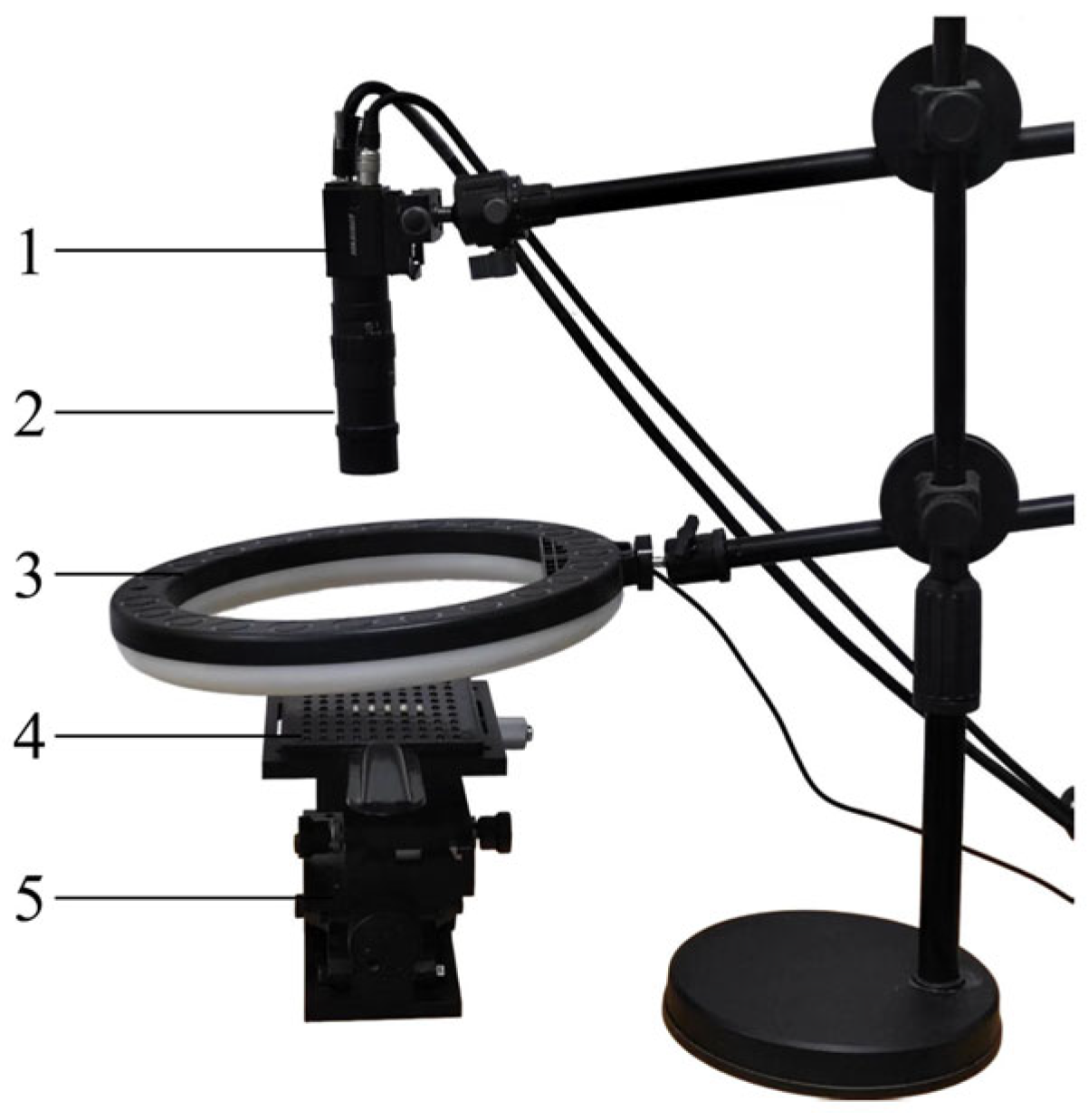
The device for wheat embryo phenotype measurement is shown in Figure 1. The power of the Light Emitting Diode (LED) ring light is 20 W and it is suspended 10 cm above the seeds. The camera is operating in automatic exposure mode. To reduce image noise, the analog gain of the camera is set to 10 dB (the adjustable range is 0 to 16 dB).
The operational procedure is as follows:
(1)
Stabilize wheat seeds in a seed sampling hole plate, with the embryo side facing upward;
(2)
Place the sampling hole plate on the three-dimensional adjustment stand;
(3)
Adjust the vertical height and horizontal position of the stand until clear images of the seeds are obtained.
In the embryo-phenotype classification experiment, images of 200 seeds randomly selected from each wheat variety were collected to establish an image dataset. Based on the differences in the two regions, the coleoptile and the radicle, the phenotype of the wheat embryo is statistically classified.
The protocol of wheat seed (Bainong 207) parameters measurement is as follows: collect 100 seeds per embryo phenotype randomly; measure their three-axis dimensions of kernels and two-axis dimensions of embryo using a digital vernier caliper; measure their mass using an analytical balance and record it as the hundred-grain weight, and repeat the measurement three times (for a total of 300 seeds per phenotype measured).

2.2.2. Hydration-Dehydration Treatment on Seeds

Hydration treatment: for each wheat variety, collect 200 seeds, weigh their total mass, and then place the seeds in a glass Petri dish; immerse the seeds in deionized water at a volume of one times the mass of the wheat seeds. After stirring, the seed–water mixtures are allowed to stand for 24 h.
Dehydration treatment: place the seeds in a moisture meter and dry at 103 °C [34], monitoring the seeds’ weight in real time. When the seeds’ weight drops to the value before hydration treatment, remove them from the oven.
The above tests were repeated three times.

2.2.3. Seed Germination Test

The wheat variety used for the germination test is Bainong 207. Standard seed germination tests were conducted in accordance with Chinese national standards GB/T 3543.4-2025 [35]. The protocol is as follows: collect 100 seeds per embryo phenotype randomly, weigh their hundred-grain weight, respectively, soak seeds in a 0.1% HgCl2 solution for 1 min to disinfect the surface, use sterile paper towels to blot the seeds’ surface, place a water-soaked filter paper at the bottom of the glass Petri dish, arrange the seeds on the wet filter paper ensuring that the distance between any two seeds is no less than twice the width of a single seed, cover the seeds with another layer of water-soaked filter paper, place the Petri dishes in a constant temperature and humidity chamber maintained at 20 °C with saturated relative humidity for incubation, record germination trends every 24 h, and harvest samples after 7 days of cultivation for parameter testing.
The above tests were repeated three times.

2.2.4. The Computational Platform and Software Environment

For hardware setup, the experiments in this paper are performed on a personal computer with Intel Core i5-7500 3.40 GHz, 16 GB RAM, and AMD Radeon R7 430. The software environment utilized Python 3.8.19, PyTorch 1.11.0 (CPU-only version), and Torchvision 0.12.0. The object-detection framework was based on Ultralytics YOLOv8 version 8.2.50.
The experiment employed the original YOLOv8 architecture, utilizing CSPDarknet53 as the backbone network, the Path Aggregation Feature Pyramid Network (PaFPN) as the neck network, and an anchor-free split Ultralytics head.

2.3. Parameter Measurement and Calculation Methods

  • Germinative force
Germination force refers to the percentage of normally germinated seeds during the peak germination period relative to the total number of seeds tested. It reflects seed vitality, intensity, and the uniformity of seedling emergence. Germination force was measured after 72 h of cultivation, calculated using the following formula:
X = M 1 M × 100 %
where X indicates the germination force, expressed as a percentage, M1 indicates the number of seeds that germinate normally after 72 h, and M indicates the total number of seeds tested.
2.
Germination percentage
Germination percentage refers to the proportion of seeds that germinate among all of the seeds tested, serving as one of the key indicators for assessing seed quality. It is measured after a 7-day cultivation period and calculated using the following formula:
Y = M 2 M × 100 %
where Y represents germination percentage and M2 indicates the number of seeds that germinate normally within a 7-day cultivation period.
3.
Seedling height and root length
After 7 days of cultivation, measure the seedling height and root length of the germinated seedlings, then calculate the average value and standard deviation from the experimental data.
4.
Seed vigor index
Vigor index comprehensively reflects a seed’s germination percentage and growth potential, serving as a crucial indicator for assessing seed vitality. It is dimensionless and its calculation formula is:
Z = ( H 1 + H 2 ) × Y
where Z indicates the vigor index, H1 is the seedling height, and H2 represents the root length.
5.
Fresh weight and dry weight of the seedling
After 7 days of cultivation, determine the fresh weight and dry weight of the seedling. Rinse seedlings thoroughly with deionized water, then blot surface water with sterile paper towels before measuring fresh weight. Dry seedlings at 105 °C until the weight remains constant, then measure the mass of dried seedlings as dry weight.
6.
Statistical methods
The experiment data were processed using IBM SPSS Statistics 27.0. First, the Shapiro–Wilk test was used to assess the data normality, followed by Levene’s test for homogeneity of variances. Then, one-way Analysis of Variance (ANOVA) was applied. If there was a statistically significant difference, Fisher’s Least Significant Difference (LSD) was conducted to determine exactly which specific group means differed from each other (the significance level was set to 0.05).
7.
Object detection model evaluation
Evaluate object detection model results using precision, recall, and Mean Average Precision (mAP), calculated as follows.
Precision:
P = T P T P + F P × 100 %
Recall:
R = T P T P + F N × 100 %
Mean average precision:
A P = 0 1 P ( R ) d R
m A P = A P 1 + A P 2 + + A P n n
where AP represents average precision, n is the number of target categories, TP indicates true positives, FP indicates false positives, and FN indicates false negatives.

3. Results

3.1. Classification Results of Wheat Embryo Phenotypes

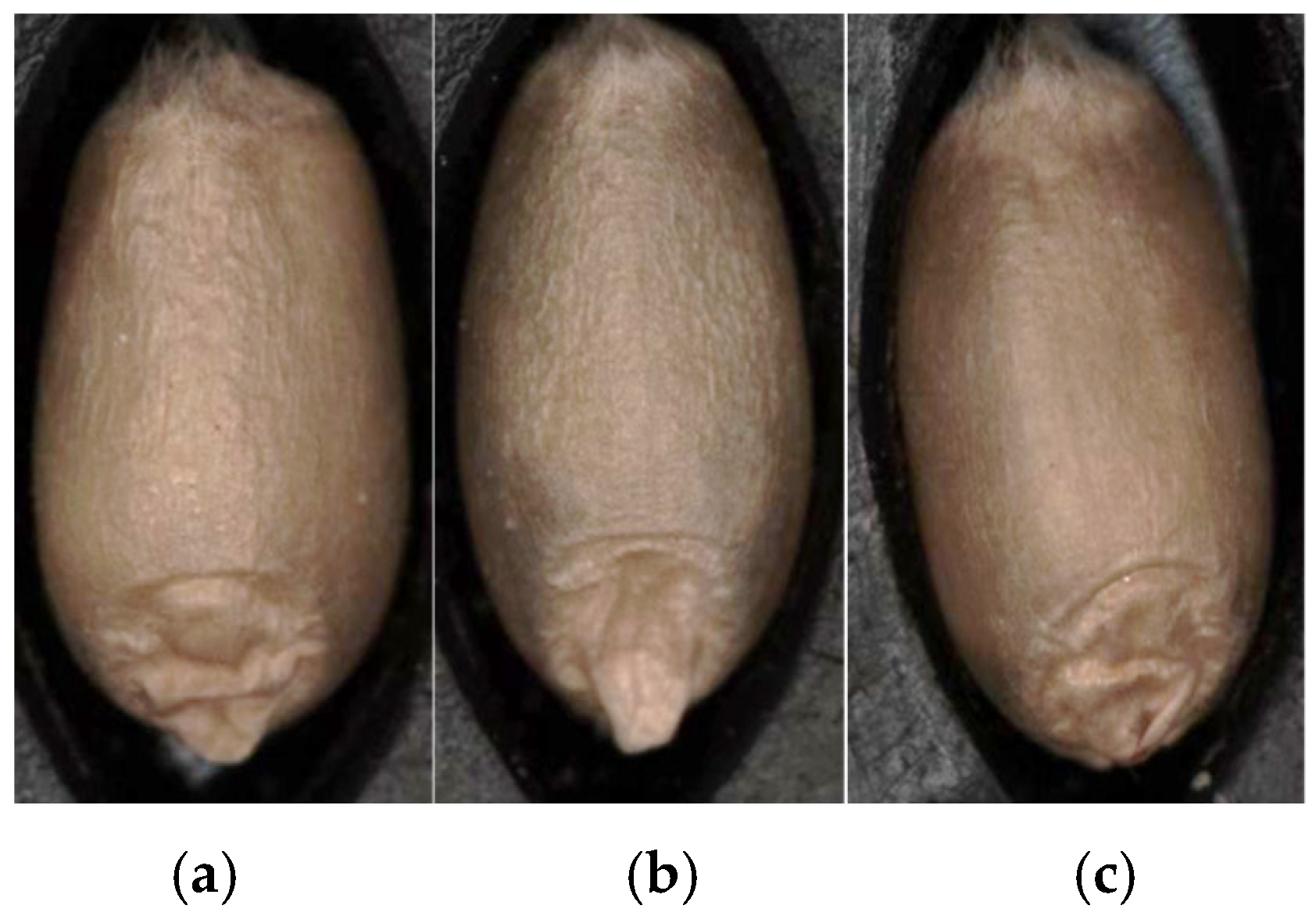
The Bainong 207 wheat seeds primarily exhibit three embryo phenotypes, as shown in Figure 2. Based on the morphology of the coleoptile and radicle, these three phenotypes of embryo are, respectively: “protruding coleoptile and elongated radicle” (labeled as Phenotype I), “depressed coleoptile and elongated radicle” (labeled as Phenotype II), and “depressed coleoptile and short radicle” (labeled as Phenotype III). As shown in Table 1, regarding the proportion of each embryo phenotype, different wheat varieties exhibit identical characteristics: Phenotype II accounted for the highest proportion and constituted the predominant phenotype, followed by Phenotypes I and III, respectively.
For Bainong 207, seeds exhibiting three primary phenotypes accounted for 86.0% of the total seeds. Seeds exhibiting Phenotype I accounted for 12%, those exhibiting Phenotype II accounted for 68.5%, and those exhibiting Phenotype III accounted for 5.5%. The morphological parameters and hundred-grain weight of the Bainong 207 seeds are shown in Table 2. The data in the table indicate that Phenotype I exhibits a relatively moderate body shape; Phenotype II features a longer body with a narrower width; Phenotype III displays a broader and thicker body, with a larger volume and a higher hundred-grain weight.
After undergoing hydration–dehydration treatment, the embryo phenotypes of different wheat varieties changed. The proportion of each embryo phenotype is shown in Table 3. Compared to the original measurement condition in Table 1, the proportions of Phenotype I increased significantly, making it the predominant phenotype. The proportion of seeds exhibiting Phenotype II decreased significantly, while the proportion of those exhibiting Phenotype III showed little change. This indicates that the embryo phenotypes can be used to determine whether the seeds had undergone a hydration–dehydration cycle.

3.2. Monitoring the Water Absorption Processes of Seeds with Different Embryo Phenotypes

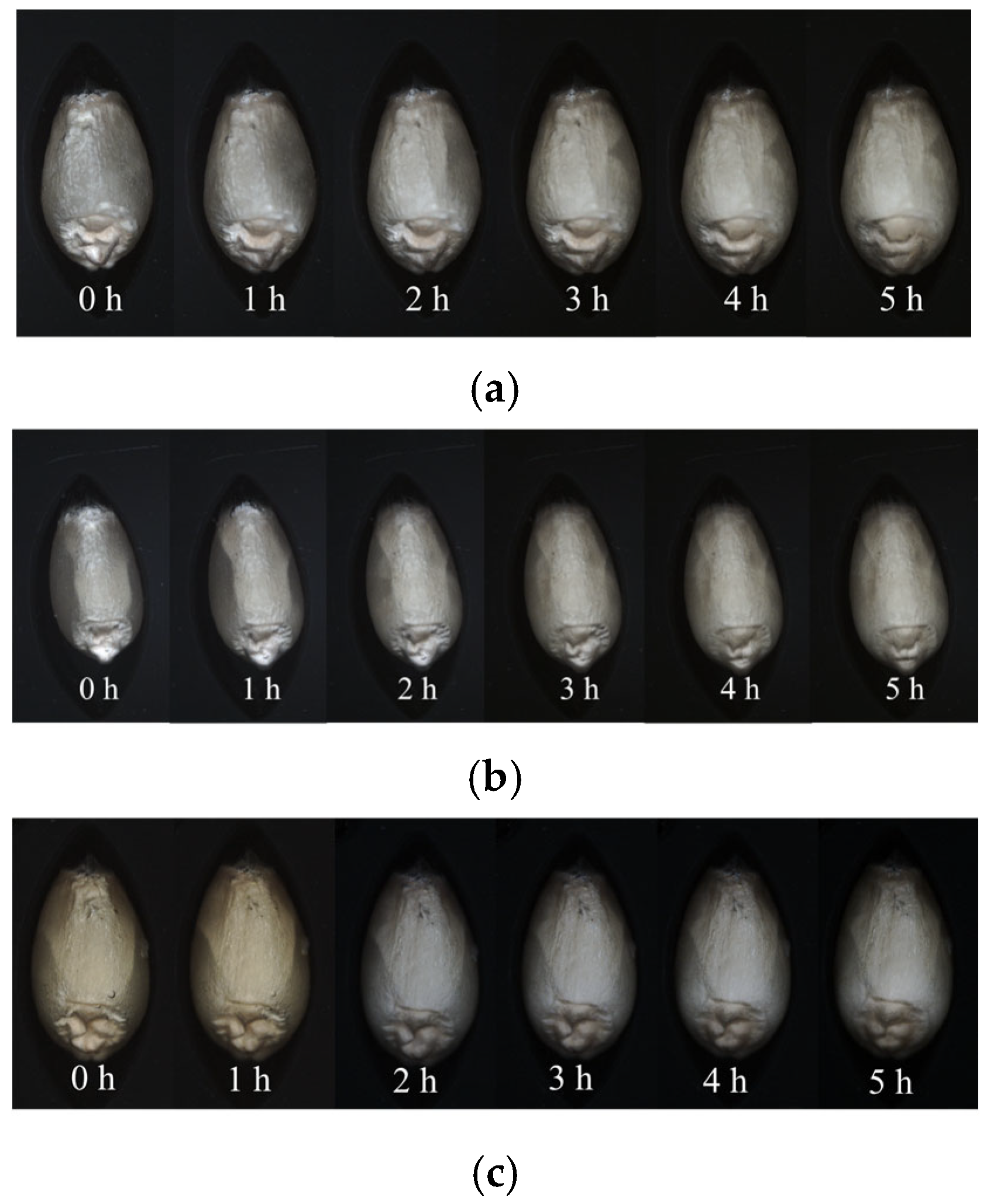
Water absorption is the first step in wheat seed germination. The dynamic changes in the embryo phenotypes of Bainong 207 seeds during the hydration process are shown in Figure 3. As shown in the image, during the early stage of water absorption, the seeds with depressed coleoptiles (Phenotypes II and Phenotypes III) absorbed water at a faster rate (beginning to swell and protrude as early as 5 min) with more pronounced changes, while the seeds with protruding coleoptiles (Phenotype I) showed slower changes. The radicle swelling and protrusion rates of the three phenotypes were similar and relatively slow.

3.3. Comparison of Germination Force and Germination Percentage Among Seeds with Different Embryo Phenotypes

The germination force and germination percentage of seeds with different embryo phenotypes are shown in Table 4. Seeds with Phenotype I exhibited the highest germination force, which was 5.33% higher than seeds with Phenotype II and 17% higher than seeds with Phenotype III, representing a statistically significant difference. In terms of germination percentage, seeds with Phenotype I exhibited the highest germination percentage, which was 4.33% higher than seeds with Phenotype II and 9.67% higher than seeds with Phenotype III, representing a statistically significant difference. Additionally, the standard deviation indicates that the intra-group variation in the Phenotype III group is greater than other two groups.
Germination force and germination percentage are important indicators for measuring seed germination capacity. Data analysis indicates that seeds with Phenotype III demonstrate the weakest germination capacity and exhibit the worst consistency. Wheat seeds with Phenotype I show the strongest germination capacity, while seeds with Phenotype II exhibit germination capacity that is intermediate between those with Phenotypes I and III.

3.4. Comparison of Seedling Heights and Root Lengths of Seedlings with Different Seed Embryo Phenotypes

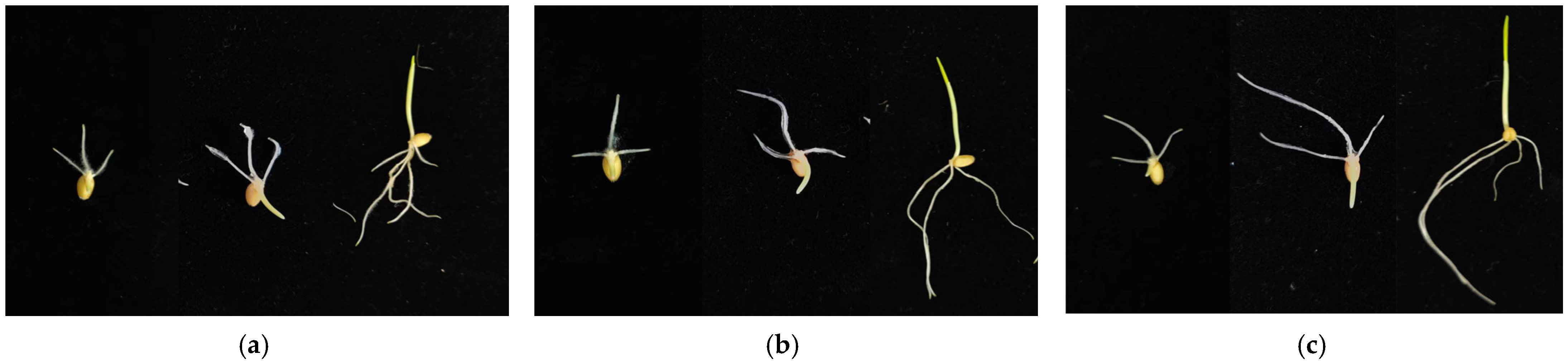
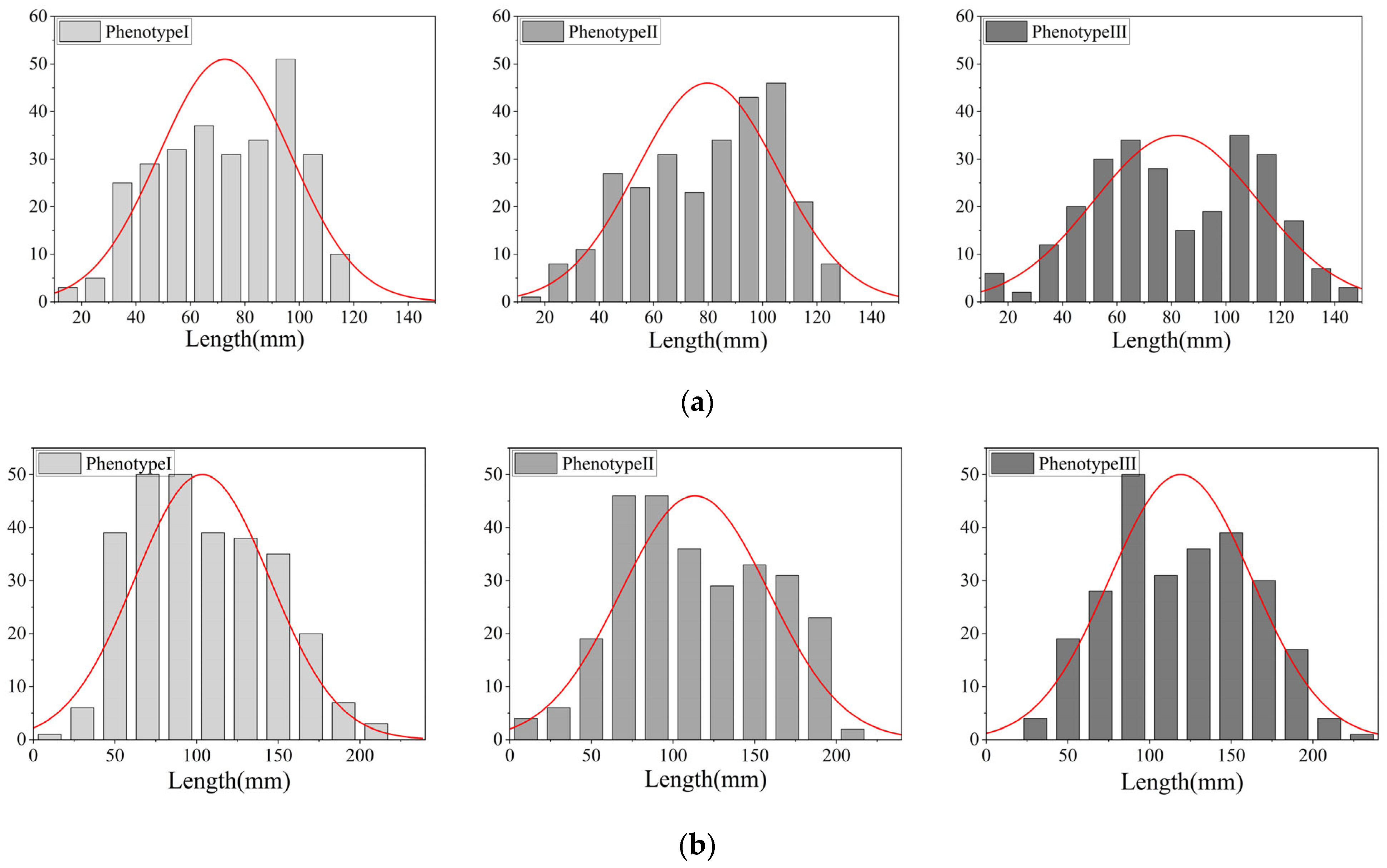
The growth patterns of seeds with different embryo phenotypes during the first three days are shown in Figure 4. Statistical results for seedling height and root length after seven days of cultivation are presented in Table 5, with the corresponding histogram displayed in Figure 5. According to the Kolmogorov–Smirnov test, the seedling heights and root lengths both conform to a normal distribution (p > 0.05). The seedling height and root length of seeds with Phenotype III were the highest among all three embryo phenotypes, while the seedling height and root length of seeds with Phenotype I were the lowest among all three embryo phenotypes. In terms of seedling height, seeds with Phenotype II showed a significant difference compared to seeds with Phenotype I. Regarding root length, significant differences were observed among the three types of seeds.

3.5. Comparison of Fresh and Dry Weights of Seedlings with Different Seed Embryo Phenotypes

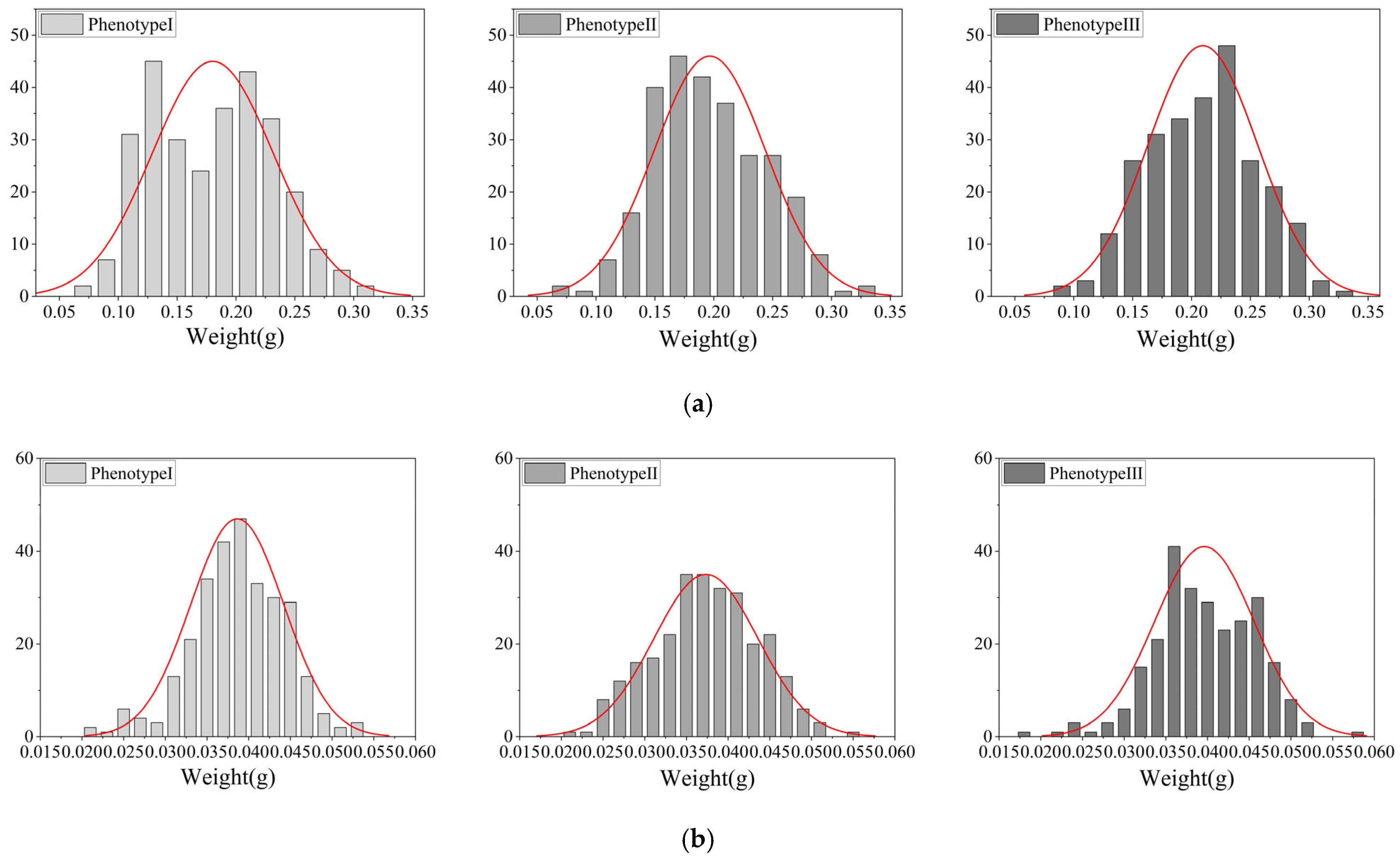
The statistical results for seedling fresh weights and dry weights after seven days of cultivation are presented in Table 6, with the corresponding histogram displayed in Figure 6. According to the Kolmogorov–Smirnov test, the seedling fresh weights and dry weights both conform to a normal distribution (p > 0.05). The seedling height and root length of seeds with Phenotype III were the highest among all three embryo phenotypes. This may be related to its significantly higher hundred-grain weight. The fresh weight of seedlings with seed Phenotype II showed no significant difference from those of Phenotype III, but differed significantly from those of Phenotype I. The dry weight of seedlings with seed Phenotype II showed no significant difference from those of Phenotype I. Combined with the hundred-grain weight data, it is found that seedlings from seeds with Phenotype II exhibit the strongest water absorption capacity, which is consistent with the conclusion from Figure 3.

3.6. Classification Results of Different Embryo Phenotypes

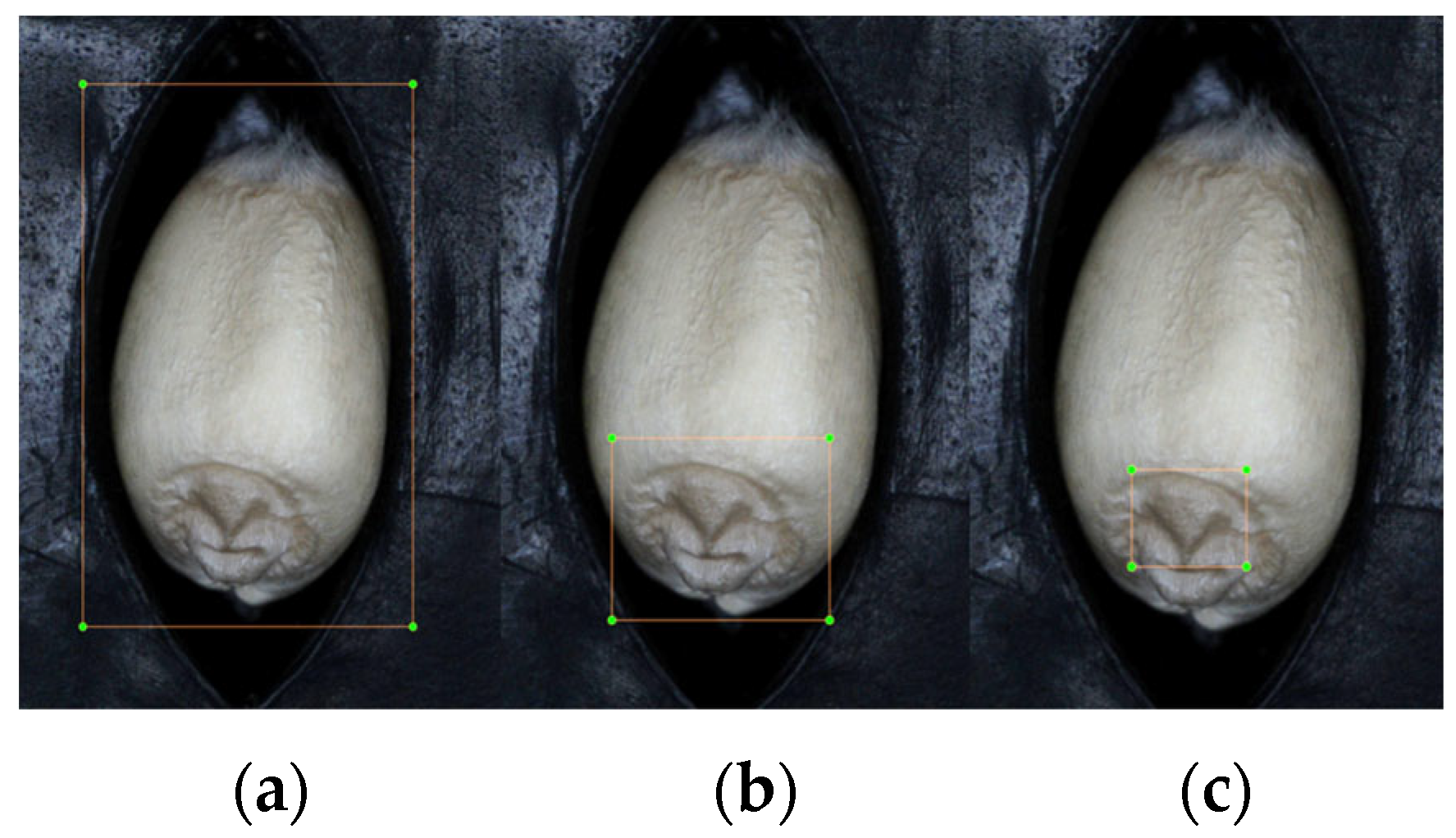
The YOLOv8n framework was employed to classify seeds with different embryo phenotypes. The classification performance of three labeling methods, named global labeling (Group A), embryo labeling (Group B), and local labeling (Group C), as illustrated in Figure 7, was compared. All three experimental datasets utilized identical data augmentation techniques and experimental conditions.
The image dataset comprised 3000 images, with 1000 images per phenotype class. The dataset was split into a 7:2:1 ratio for training, validation, and testing, respectively. To reduce the risk of overfitting, L2 regularization was implemented to constrain the model’s complexity by penalizing large weights; mosaic augmentation was employed in training and disabled towards the end of training by setting close_mosaic = 10 to enhance the model’s generalization. The initial momentum for the warmup phase was set as 0.8. Learning rate scheduling was implemented using the Cosine Annealing method, where the learning rate gradually decreases from an initial value to the final value following a cosine function. During training, the model’s performance on a validation set was continuously monitored. Once the model’s performance ceased to improve on this held-out data, the training process was terminated. The above measures enhanced the training stability and prevented overfitting. The training parameters are detailed in Table 7.
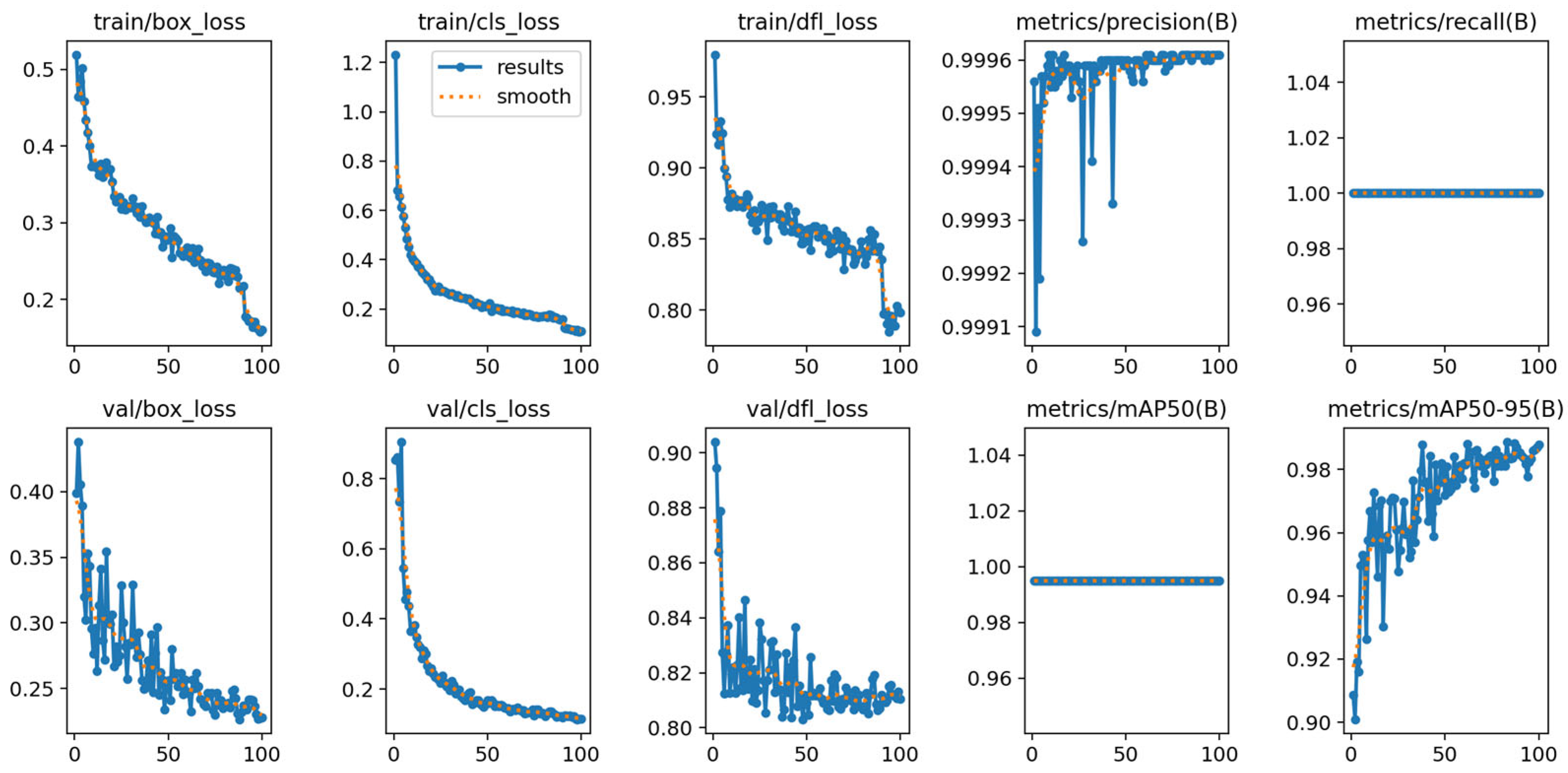
The learning curves are shown in Figure 8. The results show that the loss curves remain stable without rebound and the mAP50 and mAP50-95 rise synchronously before plateauing, confirming the absence of overfitting.
The classification results are shown in Table 8. Groups A and B achieved high precision, recall, and mAP@0.5, with no missed or false detections, indicating that these two labeling methods can meet classification requirements. However, the mAP@0.5 of Group B decreased significantly to 72.4%, suggesting inaccurate embryo region localization and blurred target boundaries. Group C yielded poorer results, with accuracy dropping to 85.0%, indicating that the model confused the background with the targets; the recall decreased to 95.0%, suggesting confusion and blurring in target locations within images; the mAP@0.5 fell to 94.7%, reflecting that the model missed boundary information and diminished fundamental localization capabilities; the mAP@0.5~0.95 dropped to 67.5%, indicating an inability to output bounding boxes that closely fit the target contours, resulting in reduced precision. The above analysis demonstrates that employing a global labeling approach to train the YOLOv8 model can effectively classify the three embryo phenotypes, with performance metrics meeting practical requirements. The phenotype classification results of global labeling are shown in Table 9.

4. Discussion

Genetic research has demonstrated that the shape of wheat embryos is determined by genes [30]. The shape parameters of wheat embryos show a significant correlation with early vigor. Similar correlations have been observed in other crops such as barley [36], rice [37], other wheat varieties [38,39], and maize [40], indicating that seed selection based on embryo morphology is feasible. The embryos of Bainong 207 wheat seeds primarily exhibit three phenotypic types, which account for 86% of the total seeds. These three phenotypic types also show similar proportional distributions among the other four common wheat varieties in China, indicating that this study possesses a certain degree of representativeness.
The hundred-grain weight and volume of seeds with Phenotype III (95% confidence interval [4.97, 5.54]) were significantly higher than those of the other two phenotypes (95% confidence interval [4.89, 5.12] and [4.99, 5.01]) and the morphological indicators of its seedlings were also superior to those of the other two phenotypes. According to the literature, larger wheat seeds exhibit heavier fresh seedling weights [41], heavier dry seedling weights [42], greater root biomass, and higher leaf area indices, which are advantageous for crop growth under stressful environmental conditions [43]; larger wheat seeds produce seeds that are also larger in volume and weight [43,44,45], but, in terms of yield, larger seeds do not produce higher yields than smaller seeds [45,46]. The same conclusion holds in studies of soybeans [47].
There were no significant differences in hundred-grain weight, width, or thickness between seeds with Phenotype I and Phenotype II, except that the seeds with Phenotype II were longer (95% confidence interval [5.91, 6.03]). According to the literature, smaller seeds germinate faster than larger seeds [48], which is consistent with the results of this study. However, findings of germination percentage diverge: in references [43,44,45], seed germination percentage was independent of size; whereas in this study and references [46,49], smaller seeds exhibited higher germination rates than larger seeds.
The embryo length, width, and area of the Bainong 207 seeds with different embryo phenotypes showed significant positive correlations with both seed hundred-grain weight and seedling morphological parameters, consistent with findings from genetic studies [27,29]. Therefore, seeds can be classified and selected based on their embryo phenotypes:
(1) Larger wheat seeds exhibit advantages during early growth stages. For the Bainong 207 variety, seeds with Phenotype III should be selected if wheat is likely to grow under stressful conditions. Additionally, seeds with Phenotype III may yield larger wheat grains. It is important to note that the average germination vigor and germination percentage of seeds with Phenotype III are significantly lower than that of the seeds with the other two phenotypes. When sowing seeds with Phenotype III, the number of seeds per unit area should be increased to compensate for losses due to the lower germination percentage.
(2) Smaller seeds exhibit higher germination vigor and germination percentage, resulting in more uniform seedling emergence. This compensatory effect enables smaller seeds to achieve yields comparable to larger seeds. Therefore, when planting practices prioritize uniform seedling emergence, wheat seeds with Phenotype I should be selected. It is important to note that seeds with Phenotype I require superior water and fertilizer conditions during early growth stages to ensure proper seedling development.
(3) Seeds with Phenotype II constituted the largest proportion, accounting for 68.5% of the total. When evaluating seed germination and growth potential using the more comprehensive vigor index, the vigor index of seeds with Phenotype II (177.70) exceeded that of seeds with Phenotype III (175.10) and Phenotype I (168.55). In practical production, breeding efficiency is an unavoidable concern. The disproportionately low proportions of the seeds with the other two phenotypes severely impact breeding efficiency. Therefore, when balancing high breeding efficiency with high seed vigor, seeds with embryo Phenotype II characteristics should be selected.
In addition, during the wheat harvest season, continuous rainfall causes wheat to undergo a hydration process, increasing its moisture level. During the post-harvest drying process, this wheat that had a high moisture content underwent a dehydration process. When the ripe wheat seeds maintain high moisture content for an extended period, their quality inevitably deteriorates. A joint analysis of Table 1 and Table 3 indicates that if the majority of seeds (above 80%) in a batch exhibit Phenotype I, it indicates that this batch of seeds has likely undergone the hydration–dehydration process and further evaluation is required to determine whether this batch of wheat seeds is suitable for planting.
This study did not modify the framework of the YOLOv8. Instead, it compared three different labeling methods for training. The results showed that performing global labeling of wheat seeds provided precise boundaries and achieved higher model learning accuracy. This indicates that the three embryo phenotypes exhibit significant differences. Therefore, wheat seed selection based on embryo phenotypes does not require complex or customized object detection algorithms, demonstrating both feasibility and scalability.

5. Conclusions

Seed phenotyping analysis, as an emerging technology in seed classification and breeding, has gradually gained prominence in recent years. Leveraging the technological foundation of industrial automation, it holds promise for achieving large-scale seed selection. Since seed shape characteristics such as size, texture, and color correlate with seed viability, the visual methods currently described in the literature primarily rely on shape characteristics [17,20]. However, the irregular shape of seeds, coupled with their diverse postures during image acquisition and their inconsistent lighting conditions, poses challenges for accurately measuring shape parameters [24]. Since embryo shape is also significantly correlated with seed vigor, this study proposes a wheat seed selection method based on embryo phenotypes. First of all, based on the statistical classification of wheat embryo morphology, three distinct embryo phenotypes with clear morphological definitions of Bainong 207 were identified. Secondly, the germination tests were conducted according to Chinese national standards, and the results indicate distinct germination characteristics among the three groups, each exhibiting unique advantages. Then, the principles and considerations for wheat seed selection based on embryo phenotypes were discussed. Finally, classification experiments were conducted on wheat seeds with different embryo phenotypes using the YOLOv8n model. The model was trained on single-view embryo images acquired under controlled imaging conditions. The results demonstrated that, using global labeling of seeds, the classification accuracy for the three categories reached 99.9%. These findings provide empirical support for large-scale wheat seed selection.

Author Contributions

Conceptualization, X.L.; methodology, Y.Z.; software, Y.Z.; validation, Y.Z.; formal analysis, Y.Z.; investigation, Y.Z.; resources, J.C.; data curation, J.C.; writing—original draft preparation, X.L.; writing—review and editing, C.Y.; visualization, C.Y.; supervision, H.L.; project administration, H.L.; funding acquisition, H.L. All authors have read and agreed to the published version of the manuscript.

Funding

The Major Scientific and Technological Projects in Henan Province (Grant No. 241100110300), Henan Science and Technology Research Project (Grant No. 242102111096).

Data Availability Statement

The data used to support the results of this study are available from the corresponding authors upon request.

Conflicts of Interest

The authors declare no conflicts of interest.

References

  1. Khalid, A.; Hameed, A.; Tahir, M.F. Wheat Quality: A Review on Chemical Composition, Nutritional Attributes, Grain Anatomy, Types, Classification, and Function of Seed Storage Proteins in Bread Making Quality. Front. Nutr. 2023, 10, 1053196. [Google Scholar] [CrossRef]
  2. Kumar, S.; Jacob, S.R.; Mir, R.R.; Vikas, V.K.; Kulwal, P.; Chandra, T.; Kaur, S.; Kumar, U.; Kumar, S.; Sharma, S.; et al. Indian Wheat Genomics Initiative for Harnessing the Potential of Wheat Germplasm Resources for Breeding Disease-Resistant, Nutrient-Dense, and Climate-Resilient Cultivars. Front. Genet. 2022, 13, 834366. [Google Scholar] [CrossRef]
  3. Hatfield, J.L.; Beres, B.L. Yield Gaps in Wheat: Path to Enhancing Productivity. Front. Plant Sci. 2019, 10, 01603. [Google Scholar] [CrossRef] [PubMed]
  4. Vitale, J.; Adam, B.; Vitale, P. Economics of Wheat Breeding Strategies: Focusing on Oklahoma Hard Red Winter Wheat. Agronomy 2020, 10, 238. [Google Scholar] [CrossRef]
  5. Ding, J.; Li, F.; Le, T.; Xu, D.; Zhu, M.; Li, C.; Zhu, X.; Guo, W. Tillage and Seeding Strategies for Wheat Optimizing Production in Harvested Rice Fields with High Soil Moisture. Sci. Rep. 2021, 11, 119. [Google Scholar] [CrossRef] [PubMed]
  6. Bilsborrow, P.; Cooper, J.; Tétard-Jones, C.; Średnicka-Tober, D.; Barański, M.; Eyre, M.; Schmidt, C.; Shotton, P.; Volakakis, N.; Cakmak, I.; et al. The Effect of Organic and Conventional Management on the Yield and Quality of Wheat Grown in a Long-Term Field Trial. Eur. J. Agron. 2013, 51, 71–80. [Google Scholar] [CrossRef]
  7. Zhu, S.; Zhuo, J.; Huang, H.; Li, G. Wheat Grain Integrity Image Detection System Based on CNN. Trans. Chin. Soc. Agric. Mach. 2020, 51, 36–42. [Google Scholar]
  8. Guo, S.; Li, Z.; Xue, J. Establishment and Optimization of Comprehensive Evaluation Model for Seed and Seed Oil Traits of Handeliodendron Bodinieri. Trans. Chin. Soc. Agric. Eng. 2019, 35, 314–322. [Google Scholar]
  9. Whan, B.R.; Carlton, G.P.; Anderson, W.K. Potential for Increasing Early Vigour and Total Biomass in Spring Wheat. I. Identification of Genetic Improvements. Crop Pasture Sci. 1991, 42, 347–361. [Google Scholar] [CrossRef]
  10. Regan, K.L.; Siddique, K.H.M.; Turner, N.C.; Whan, B.R. Potential for Increasing Early Vigour and Total Biomass in Spring Wheat. II. Characteristics Associated with Early Vigour. Crop Pasture Sci. 1992, 43, 541–553. [Google Scholar] [CrossRef]
  11. Botwright, T.L.; Condon, A.G.; Rebetzke, G.J.; Richards, R.A. Field Evaluation of Early Vigour for Genetic Improvement of Grain Yield in Wheat. Aust. J. Agric. Res. 2002, 53, 1137–1145. [Google Scholar] [CrossRef]
  12. Liu, Z.; Yang, X.; Yang, Y. Effects of Microelement on Germination Status of Wheat Seed. J. Anhui Agric. Sci. 2014, 42, 1650–1652. [Google Scholar]
  13. Liu, Z.; He, Z.; Miao, F.; Jia, B. Method and Experiment for Estimating Emergence Rate of Water and Fertilizer Integrated Maize Based on Drone Technology. Acta Agric. Zhejiangensis 2019, 31, 977–985. [Google Scholar]
  14. Xiang, Y.; Li, H.; Zhang, T.; Wang, J.; Sun, Q. Study on Early Detection of Seed Vigor of Maize and Wheat Seeds by Conductivity Method. J. China Agric. Univ. 2020, 25, 12–19. [Google Scholar]
  15. Shi, R.; Zhang, H.; Wang, C.; Kang, K.; Luo, B. Detection of Wheat Single Seed Vigor Using Hyperspectral Imaging an d Spectrum Fusion Strategy. Spectrosc. Spectr. Anal. 2024, 44, 3206–3212. [Google Scholar]
  16. Zhang, H.; Zheng, L.; Tan, L.; Yang, J.; Gao, J. Research on the Method of Imperfect Wheat Grain Recognition Utilizing Hyperspectral Imaging Technology. Sensors 2024, 24, 6474. [Google Scholar] [CrossRef]
  17. Cervantes, E.; Martín, J.J.; Saadaoui, E. Updated Methods for Seed Shape Analysis. Scientifica 2016, 2016, 5691825. [Google Scholar] [CrossRef]
  18. Dong, G.; Guo, J.; Wang, C.; Chen, Z.; Deng, L.; Zhu, D. The Classification of Wheat Varieties Based on Near Infrared Hyperspectral Imaging and Information Fusion. Spectrosc. Spectr. Anal. 2015, 35, 3369–3374. [Google Scholar]
  19. Zhang, T.; Li, J.; Tong, J.; Song, Y.; Wang, L.; Wu, R.; Wei, X.; Song, Y.; Zeng, R. End-to-End Deep Fusion of Hyperspectral Imaging and Computer Vision Techniques for Rapid Detection of Wheat Seed Quality. Artif. Intell. Agric. 2025, 15, 537–549. [Google Scholar] [CrossRef]
  20. Whan, A.P.; Smith, A.B.; Cavanagh, C.R.; Ral, J.-P.F.; Shaw, L.M.; Howitt, C.A.; Bischof, L. GrainScan: A Low Cost, Fast Method for Grain Size and Colour Measurements. Plant Methods 2014, 10, 23. [Google Scholar] [CrossRef]
  21. Lurstwut, B.; Pornpanomchai, C. Image Analysis Based on Color, Shape and Texture for Rice Seed (Oryza sativa L.) Germination Evaluation. Agric. Nat. Resour. 2017, 51, 383–389. [Google Scholar] [CrossRef]
  22. Zhu, F.; Paul, P.; Hussain, W.; Wallman, K.; Dhatt, B.K.; Sandhu, J.; Irvin, L.; Morota, G.; Yu, H.; Walia, H. SeedExtractor: An Open-Source GUI for Seed Image Analysis. Front. Plant Sci. 2021, 11, 581546. [Google Scholar] [CrossRef] [PubMed]
  23. Loddo, A.; Di Ruberto, C.; Vale, A.M.P.G.; Ucchesu, M.; Soares, J.M.; Bacchetta, G. An Effective and Friendly Tool for Seed Image Analysis. Vis. Comput. 2021, 39, 335–352. [Google Scholar] [CrossRef]
  24. Bekkering, C.S.; Huang, J.; Tian, L. Image-Based, Organ-Level Plant Phenotyping for Wheat Improvement. Agronomy 2020, 10, 1287. [Google Scholar] [CrossRef]
  25. López-Castañeda, C.; Richards, R.A.; Farquhar, G.D.; Williamson, R.E. Williamson Seed and Seedling Characteristics Contributing to Variation in Early Vigor among Temperate Cereals. Crop Sci. 1996, 36, 1257–1266. [Google Scholar] [CrossRef]
  26. Botwright, T.L.; Rebetzke, G.J.; Condon, A.G.; Richards, R.A. Influence of Variety, Seed Position and Seed Source on Screening for Coleoptile Length in Bread Wheat (Triticum aestivum L.). Euphytica 2001, 119, 349–356. [Google Scholar] [CrossRef]
  27. Wu, L.; Li, Y.; Su, L.; Li, W.; Liu, Y.; Chen, G.; Xu, Q.; Jiang, Y.; Pu, Z.; Jiang, Y.; et al. Identification, Characterization, and Associations with Agronomic Traits and Early Vigor of Mature Wheat Embryo Size Loci. Theor. Appl. Genet. 2025, 138, 175. [Google Scholar] [CrossRef]
  28. Mohsen, M.N.; Mahdi, B.; Abolfazl, T. Effect of Seed and Embryo Size on Early Growth of Wheat Genotypes. Afr. J. Microbiol. Res. 2011, 5, 4859–4868. [Google Scholar] [CrossRef]
  29. Wang, S.; Wang, T.; Xuan, Q.; Qu, X.; Xu, Q.; Jiang, Q.; Pu, Z.; Li, Y.; Jiang, Y.; Chen, G.; et al. Major and Stably Expressed QTL for Traits Related to the Mature Wheat Embryo Independent of Kernel Size. Theor. Appl. Genet. 2023, 136, 90. [Google Scholar] [CrossRef]
  30. Moore, C.; Rebetzke, G. Genomic Regions for Embryo Size and Early Vigour in Multiple Wheat (Triticum aestivum L.) Populations. Agronomy 2015, 5, 152–179. [Google Scholar] [CrossRef]
  31. FabFábián, A.; Jäger, K.; Rakszegi, M.; Barnabás, B. Embryo and Endosperm Development in Wheat (Triticum aestivum L.) Kernels Subjected to Drought Stress. Plant Cell Rep. 2011, 30, 551–563. [Google Scholar] [CrossRef] [PubMed]
  32. Yan, N.; Zhang, H.; Dong, H.T.; Kang, K.; Luo, B. Wheat Variety Recognition Method Based on Same Position Segmentation of Transmitted Light and Reflected Light Images. Acta Agric. Zhejiangensis 2022, 34, 590–598. [Google Scholar]
  33. Zhang, H.; Ji, J.; Ma, H.; Guo, H.; Liu, N.; Cui, H. Wheat Seed Phenotype Detection Device and Its Application. Agriculture 2023, 13, 706. [Google Scholar] [CrossRef]
  34. GB/T 3543.6; Rules for Agricultural Seed Testing-Part 6: Sowing Quality-Determination of Moisture Content. State Administration for Market Regulation: Beijing, China, 2025.
  35. GB/T 3543.4; Rules for Agricultural Seed Testing-Part 4: Sowing Quality-Germination Test. State Administration for Market Regulation: Beijing, China, 2025.
  36. Kaufmann, M.L.; Guitard, A.A. The Effect of Seed Size on Early Plant Development in Barley. Can. J. Plant Sci. 1967, 47, 73–78. [Google Scholar] [CrossRef]
  37. Pandey, M.P.; Seshu, D.V.; Akbar, M. Genetics of Embryo Size and Its Relationship with Seed and Seedling Vigour in Rice (Oryza sativa L.). Indian J. Genet. Plant Breed. 1994, 54, 258–268. [Google Scholar]
  38. Aparicio, N.; Villegas, D.; Araus, J.L.; Blanco, R.; Royo, C. Seedling Development and Biomass as Affected by Seed Size and Morphology in Durum Wheat. J. Agric. Sci. 2003, 139, 143–150. [Google Scholar] [CrossRef]
  39. Ogilvie, I.S.; Kaltsikes, P.J. The Relationship between Seed Size, Embryo Size and Mature Plant Characters in Hexaploid Triticale. Z. Für Pflanzenzücht 1977, 79, 105–109. [Google Scholar]
  40. Revilla, P.; Butrón, A.; Malvar, R.A.; Ordás, R.A. Relationships among Kernel Weight, Early Vigor, and Growth in Maize. Crop Sci. 1999, 39, 654–658. [Google Scholar] [CrossRef]
  41. Jia, J.; Wang, J.; Xie, Z.; Yang, L.; Sun, B.; Sun, Q. Wheat Seeds Selection Based on Computer Image Recognition Technique. J. China Agric. Univ. 2014, 19, 180–186. [Google Scholar]
  42. Nik, M.M.; Babaeian, M.; Tavassoli, A. Effect of Seed Size and Genotype on Germination Characteristic and Seed Nutrient Content of Wheat. Sci. Res. Essays 2011, 6, 2019–2025. [Google Scholar] [CrossRef]
  43. Mian, M.A.R.; Nafziger, E.D. Seed Size and Water Potential Effects on Germination and Seedling Growth of Winter Wheat. Crop Sci. 1994, 34, 169–171. [Google Scholar] [CrossRef]
  44. Rukavina, H.; Kolak, I.; Sarcevic, H.; Satovic, Z. Seed Size, Yield and Harvest Characteristics of Three Croatian Spring Malting Barleys. Bodenkultur 2002, 53, 9–12. [Google Scholar]
  45. Shahwani, A.R.; Baloch, S.U.; Baloch, S.K.; Mengal, B.; Bashir, W.; Baloch, H.N.; Baloch, R.A.; Sial, A.H.; Sabiel, S.A.; Razzaq, K.; et al. Influence of Seed Size on Germinability and Grain Yield of Wheat (Triticum aestivum L.) Varieties. J. Nat. Sci. Res. 2014, 4, 147–155. [Google Scholar]
  46. Zareian, A.; Hamidi, A.; Sadeghi, H.; Jazaeri, M.R. Effect of Seed Size on Some Germination Characteristics, Seedling Emergence Percentage and Yield of Three Wheat (Triticum aestivum L.) Cultivars in Laboratory and Field. Middle East J. Sci. Res. 2013, 13, 1126–1131. [Google Scholar]
  47. Lima, E.R.; Santiago, A.S.; Araújo, A.P.; Teixeira, M.G. Effects of the Size of Sown Seed on Growth and Yield of Common Bean Cultivars of Different Seed Sizes. Braz. J. Plant Physiol. 2005, 17, 273–281. [Google Scholar] [CrossRef]
  48. Lafond, G.P.; Baker, R.J. Effects of Temperature, Moisture Stress, and Seed Size on Germination of Nine Spring Wheat Cultivars. Crop Sci. 1986, 26, 563–567. [Google Scholar] [CrossRef]
  49. Krishnasamy, V.; Seshu, D.V. Seed Germination Rate and Associated Characters in Rice. Crop Sci. 1989, 29, 904–908. [Google Scholar] [CrossRef]
Figure 1. The device for wheat embryo phenotype measurement. 1. Camera; 2. Lens; 3. LED ring light; 4. Sampling hole plate; 5. Three-dimensional adjustment platform.
Agriculture 16 00033 g001
Figure 2. The three main phenotypes of wheat embryo. (a) Phenotype I; (b) Phenotype II; (c) Phenotype III.
Agriculture 16 00033 g002
Figure 3. Dynamic changes in the embryo phenotypes during the hydration process. (a) Phenotype I; (b) Phenotype II; (c) Phenotype III.
Agriculture 16 00033 g003
Figure 4. Germination states of seeds with different embryo phenotypes. (a) Phenotype I; (b) Phenotype II; (c) Phenotype III.
Agriculture 16 00033 g004
Figure 5. Histogram of the stem heights and root lengths of seedlings with different embryo phenotypes. (a) Seedling height; (b) Root length.
Agriculture 16 00033 g005
Figure 6. Histogram of the fresh and dry weights of seedlings with different embryo phenotypes. (a) Seeding fresh weight; (b) Seeding dry weight.
Agriculture 16 00033 g006
Figure 7. Labeling methods for model training. (a) Global labeling; (b) embryo labeling; (c) local labeling.
Agriculture 16 00033 g007
Figure 8. The learning curves.
Agriculture 16 00033 g008
Table 1. Proportion of each embryo phenotype in different wheat varieties.
Wheat VarietiesPhenotype I (%)Phenotype II (%)Phenotype III (%)Total (%)
Bainong 20712.068.55.586.0
Luomai 407.071.58.086.5
Weilong 16913.061.56.080.5
Zhengmai 1588.073.04.085.0
Zhoumai 4212.563.03.078.5
Table 2. Parameters of wheat seeds (Bainong 207) with different embryo phenotypes.
PhenotypesLength
(mm)
Width
(mm)
Thickness
(mm)
Embryo Width
(mm)
Embryo Length
(mm)
Hundred-Grain Weight (g)
Phenotype Ⅰ5.86 ± 0.33 b3.55 ± 0.19 b3.28 ± 0.14 ab2.27 ± 0.26 ab1.89 ± 0.16 b5.01 ± 0.05 b
Phenotype Ⅱ5.97 ± 0.31 a3.50 ± 0.23 b3.25 ± 0.18 b2.17 ± 0.23 b2.06 ± 0.22 a5.02 ± 0.01 b
Phenotype Ⅲ5.86 ± 0.30 b3.71 ± 0.20 a3.30 ± 0.18 a2.51 ± 0.14 a2.10 ± 0.15 a5.25 ± 0.12 a
Note: Different lowercase letters within the same column indicate significant differences (p < 0.05).
Table 3. Proportion of each embryo phenotype in different wheat varieties after hydration–dehydration treatment.
Wheat VarietiesPhenotype I (%)Phenotype II (%)Phenotype III (%)
Bainong 20791.04.54.5
Luomai 4088.08.04.0
Weilong 16997.02.01.0
Zhengmai 15889.08.52.5
Zhoumai 4290.09.50.5
Table 4. Germination force and germination percentage of seeds with different embryo phenotypes.
PhenotypesGermination Force (%)Germination Percentage (%)
Phenotype Ⅰ89.33 ± 2.08 a96.00 ± 1.73 a
Phenotype Ⅱ84.00 ± 2.00 a91.67 ± 1.15 ab
Phenotype Ⅲ72.33 ± 8.14 b86.33 ± 6.66 b
Note: Different lowercase letters within the same column indicate significant differences (p < 0.05).
Table 5. The seedling heights and root lengths of seedlings with different embryo phenotypes.
PhenotypesSeedling Height (mm)Root Length (mm)
Phenotype Ⅰ72.52 ± 22.02 b103.06 ± 39.38 c
Phenotype Ⅱ80.22 ± 22.85 a113.63 ± 41.09 b
Phenotype Ⅲ82.25 ± 22.18 a120.58 ± 33.78 a
Note: Different lowercase letters within the same column indicate significant differences (p < 0.05).
Table 6. The fresh and dry weights of seedlings with different embryo phenotypes.
PhenotypesFresh Weight (g)Dry Weight (g)
Phenotype Ⅰ0.1798 ± 0.0465 b0.0386 ± 0.0023 b
Phenotype Ⅱ0.1967 ± 0.0324 a0.0373 ± 0.0039 b
Phenotype Ⅲ0.2101 ± 0.0226 a0.0394 ± 0.0034 a
Note: Different lowercase letters within the same column indicate significant differences (p < 0.05).
Table 7. Training parameter settings.
ParametersValueParametersValue
epochs100optimizerauto
patience30weight_decay0.0005
batch16momentum0.937
imgsz640warmup_momentum0.8
workers8close_mosaic10
lrf0.01patience30
Table 8. Classification results.
GroupsP (%)R (%)mAP@0.5 (%)mAP0.5~0.95 (%)
A99.9100.0 99.598.9
B99.9100.0 99.572.4
C85.0 95.0 94.767.5
Table 9. Classification results of the global labeling approach.
PhenotypesP (%)R (%)mAP@0.5 (%)mAP0.5~0.95 (%)
Phenotype Ⅰ99.9100.0 99.499.3
Phenotype Ⅱ100.0100.0 99.899.5
Phenotype Ⅲ99.8 100.0 99.397.9
Disclaimer/Publisher’s Note: The statements, opinions and data contained in all publications are solely those of the individual author(s) and contributor(s) and not of MDPI and/or the editor(s). MDPI and/or the editor(s) disclaim responsibility for any injury to people or property resulting from any ideas, methods, instructions or products referred to in the content.