Article

Design and Evaluation of an Automated Rod-Feeding Mechanism for Small Arch Shed Machine Based on Kinematics

1
College of Mechanical and Electrical Engineering, Xinjiang Agricultural University, Urumqi 830052, China
2
Xinjiang Uygur Autonomous Region Agriculture and Animal Husbandry Mechanization Technology Promotion Station, Urumqi 830063, China
*
Author to whom correspondence should be addressed.
Agriculture 2026, 16(1), 30; https://doi.org/10.3390/agriculture16010030
Submission received: 18 November 2025 / Revised: 13 December 2025 / Accepted: 19 December 2025 / Published: 22 December 2025

Abstract

Current small arch shed machine designs rely on manual pole placements, resulting in low construction efficiency and mechanized levels. These machines were not designed with key components tailored to the agronomic requirements of Xinjiang’s small arch shed cotton cultivation model. An automated rod-feeding mechanism for a small arch shed was designed using SolidWorks 2023 to bridge this gap. Its major components include rod separation and conveying units, enabling the separation and orderly transportation of tunnel rods. A kinematic simulation of the conveyor rod during the transport process using ADAMS 2024.1 software was performed to examine the effects of motor speed, synchronous belt stop block height, and horizontal distance on the conveyor rod. Using MATLAB 2023a to fit the center-of-mass distance curve yields the optimal values for the parameters (motor speed = 17.57 rpm, stop block height = 16.79 mm, and horizontal distance = 103.95 mm). Bench test results confirmed the simulation performance of the device with a motor speed of 17 rpm, a synchronous belt stop block height of 15 mm, and a horizontal distance of 100 mm. The automated rod-feeding device exhibited an 80.8% feeding rate. The prototype operates stably, and this design can serve as a reference for developing automated equipment for small arch sheds.

1. Introduction

Cotton growth and development require specific temperature conditions. Low temperatures adversely affect both cotton yield and fiber quality [1,2]. As China’s largest cotton-producing region, Xinjiang ranks among the world’s top cotton producers, with its cotton output significantly influencing the economic development of the Xinjiang region [3,4,5]. Spring cold damage is a recurrent phenomenon in Xinjiang, significantly limiting the region’s cotton yield [6,7,8,9,10,11]. Plastic arched tunnels can withstand wind and low temperatures, raise soil temperature, retain soil moisture, and create favorable conditions for crop growth [12,13,14]. Combining conventional planting methods with small arch shed can effectively mitigate the impact of temperature fluctuations on cotton, improve germination rates, advance the emergence period, and ensure healthy seedling growth under extreme weather conditions [15,16].
Currently, the construction of a small arch shed relies primarily on manual labor. Workers bend flexible bamboo rods and insert them into the soil, or insert pre-bent metal rods into the ground to form arches, followed by the application of plastic sheeting [17,18]. In most regions, before constructing a small arch shed, workers measure the spacing between support rods in advance and use equipment like hole-drilling machines to create holes. This process is cumbersome and labor-intensive. In most cotton farming areas, no standards exist for the placement of support rods in small arch shed. Additionally, the rods are placed manually, which often leads to numerous errors including uneven spacing and inconsistent insertion depths on both sides of the rods.
Domestic and international scholars and enterprises have conducted research on small arch sheds, developing various types of construction machines for these structures, thereby advancing the mechanization of small arch shed construction. Dubois Agrinovation and ANDROS have each developed small arch shed erection machinery, which has enhanced the efficiency of small arch shed construction [19]. Liu et al. [20,21] developed an integrated frame-insertion and mulching machine that uses a control handle to achieve fixed-distance row movement, frame insertion, and film covering. To further enhance efficiency and versatility, they subsequently developed a compact arch shed single-row dual-frame film-covering machine, where the frame spacing can be adjusted via a regulating plate. Chen et al. [22] developed a self-propelled automatic insertion machine for small arch shed supports, incorporating feedback control to monitor the insertion depth of support rods in real time. Hu et al. [23] designed a frame structure that employed a rotating insertion mechanism for the support rods, enabling two rods to be inserted with a single rotation. Liu et al. [24] designed a small arch shed recovery machine that enhances recovery efficiency and effectively addresses issues such as the high labor intensity associated with traditional manual recovery methods.
Compared to manually constructed small arch shed, the aforementioned machinery reduces labor intensity and improves the efficiency. However, its operation requires manual rod placement, where the pace of rod placement must match the machine’s speed. This heightens human error. Some machinery requires bending the support rods before operation, and can only use rods of specific dimensions. Although some machines feature automatic rod-feeding mechanisms with limited number of rods, restricting operational time.
Therefore, this study designed an automatic rod-feeding mechanism for cotton small arch shed cultivation systems. Its primary contributions are as follows: (1) The automated rod-feeding device was proposed to address the critical bottleneck of manual dependency in Xinjiang’s small arch shed cotton cultivation model, which fills a technical gap in existing agricultural equipment supporting such innovative farming practices. (2) Kinematic simulations were conducted on the conveyor rods during the transportation process, and optimal values for key factors were determined using MATLAB. (3) A prototype was developed, and bench testing was conducted, validating the feasibility of the device’s automatic rod-feeding capability. Compared with existing devices, the automatic rod-feeding device proposed in this study better meets the agronomic requirements of Xinjiang’s small arch shed cotton cultivation model, thereby promoting the mechanization of this cultivation method.

2. Materials and Methods

2.1. System Design and Functionality

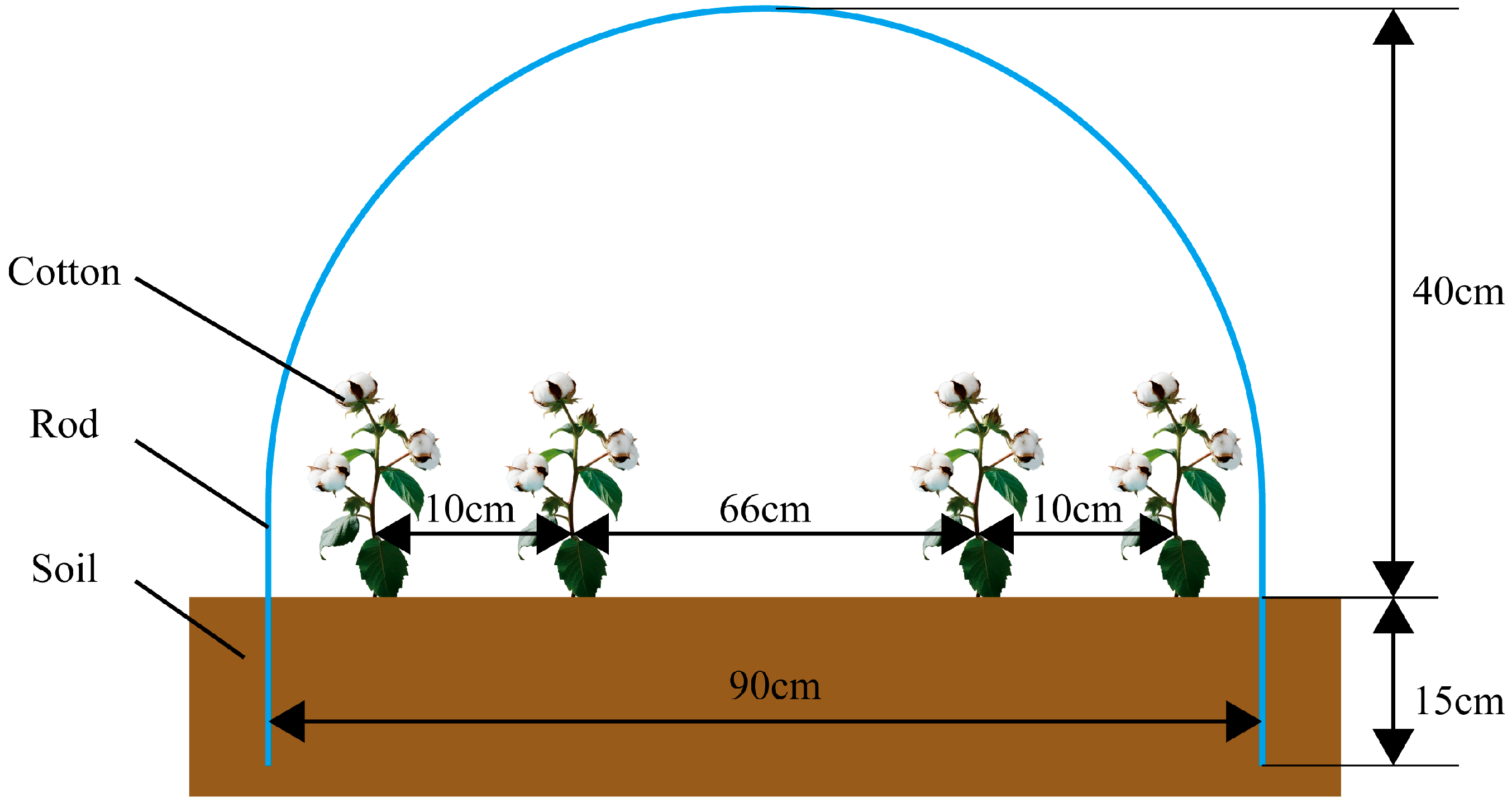
As shown in Figure 1, the automated system of the small arch shed machine comprises three primary mechanisms: (1) the rod separation mechanism, (2) the rod conveying mechanism, and (3) the automated rod-feeding mechanism, each performing complementary functions. The rod separation mechanism is responsible for isolating individual rods, which are subsequently transferred by the conveying mechanism to the frame insertion unit of the automated rod feeder. The automated rod feeder then drives the rods into the soil, completing the insertion process with precision and consistency. The cotton small arch shed cultivation model is shown in Figure 2. The cotton small arch shed mechanism depicted in Figure 1 is designed based on the cultivation model illustrated in Figure 2.

2.1.1. Automatic Rod Feeder

The start button (in the control box) activates the cotton small arch shed machine to automatically reset. This sets the frame insertion device to its highest point. The rod-feeding mechanism engages to deliver shed rods to the frame insertion unit. The frame insertion unit is equipped with multiple sensors. When the sensors detect the support rods, they transmit signals to the control box. Upon receiving these signals, the control box directs the frame insertion device to bend the support rods and insert them into the soil.
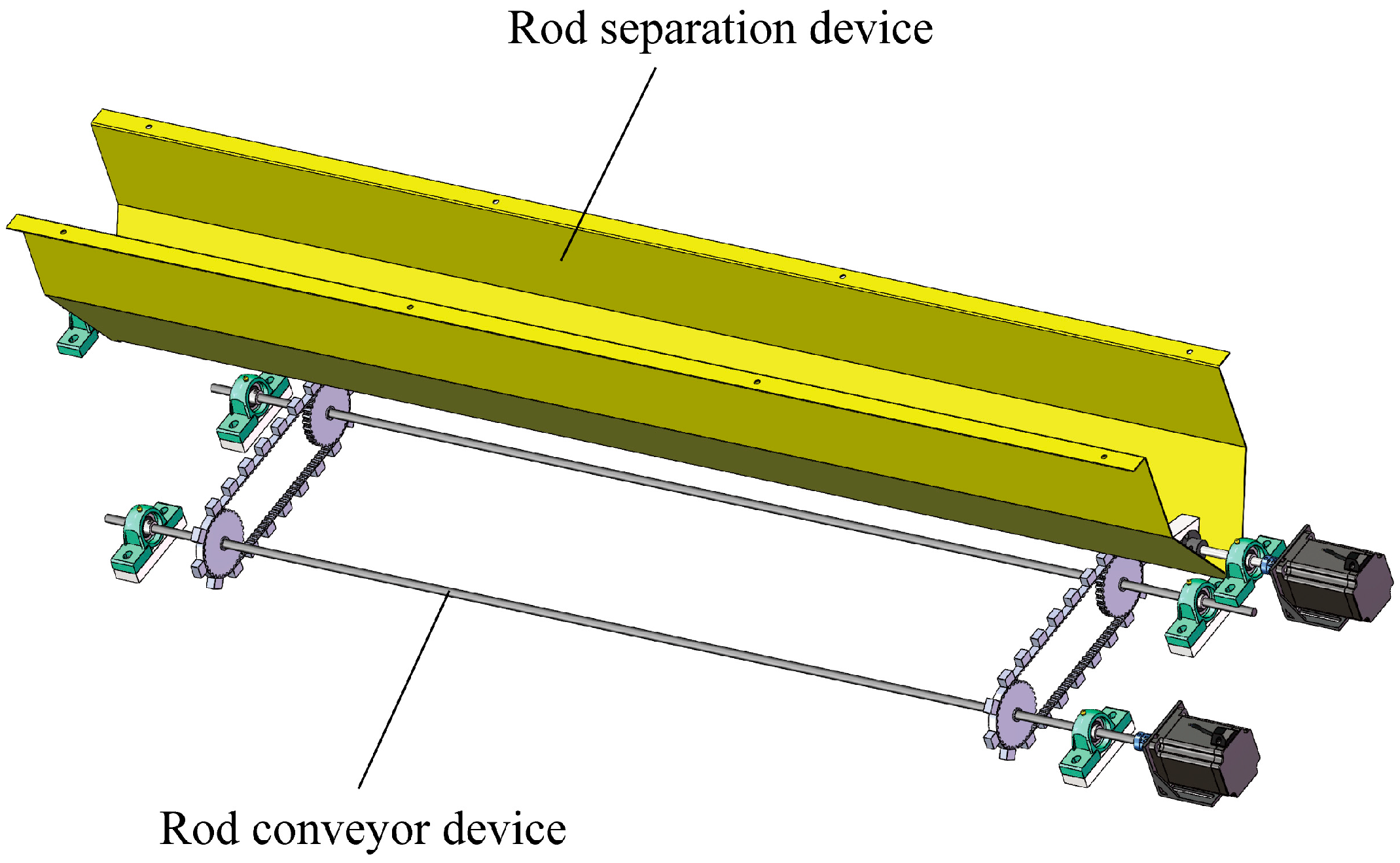
The rod-feeding device, as shown in Figure 3, primarily consists of a rod separation device and a rod conveyor device.

2.1.2. Rod Separation Mechanism

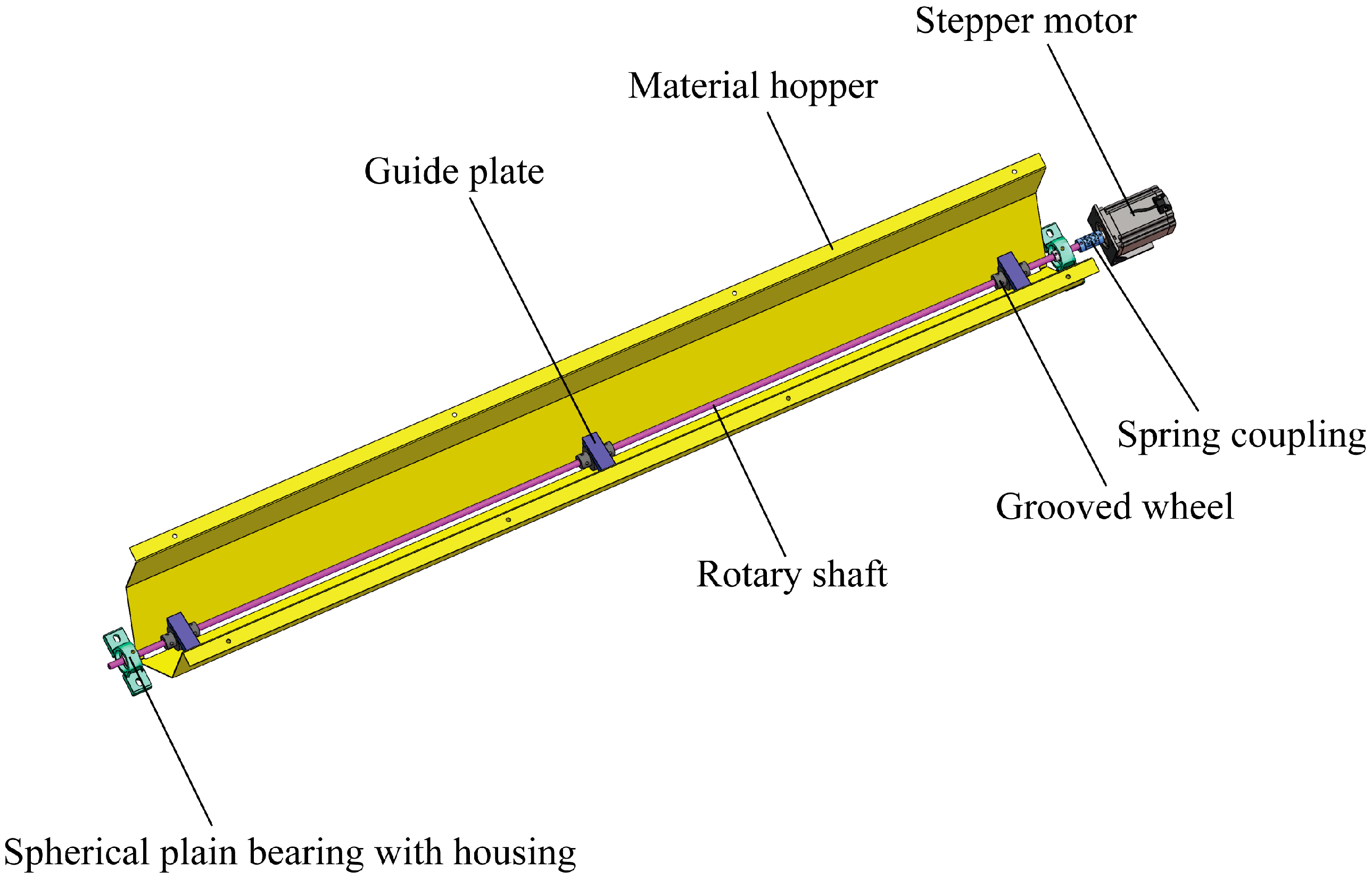
As shown in Figure 4, the rod separation mechanism is a crucial component of the rod-feeding process. It separates individual rods for subsequent single-rod feeding. It consists of a material hopper, guide plate, rotary shaft, grooved wheel, spherical plain bearing with housing, and stepper motor. The bottom of the hopper is open, secured only on both sides. The central area of the bottom is slightly larger than the diameter of the rod. The shaft is connected to the motor via a coupling. The grooved wheel is fixed to the shaft with a set screw. The rods slide down diagonally along the guide plate. Each full rotation of the grooved wheel removes one rod from the hopper. When the rod slot reaches its lowest point, the rod disengages from the hopper under its own weight and enters the rod conveyor system.
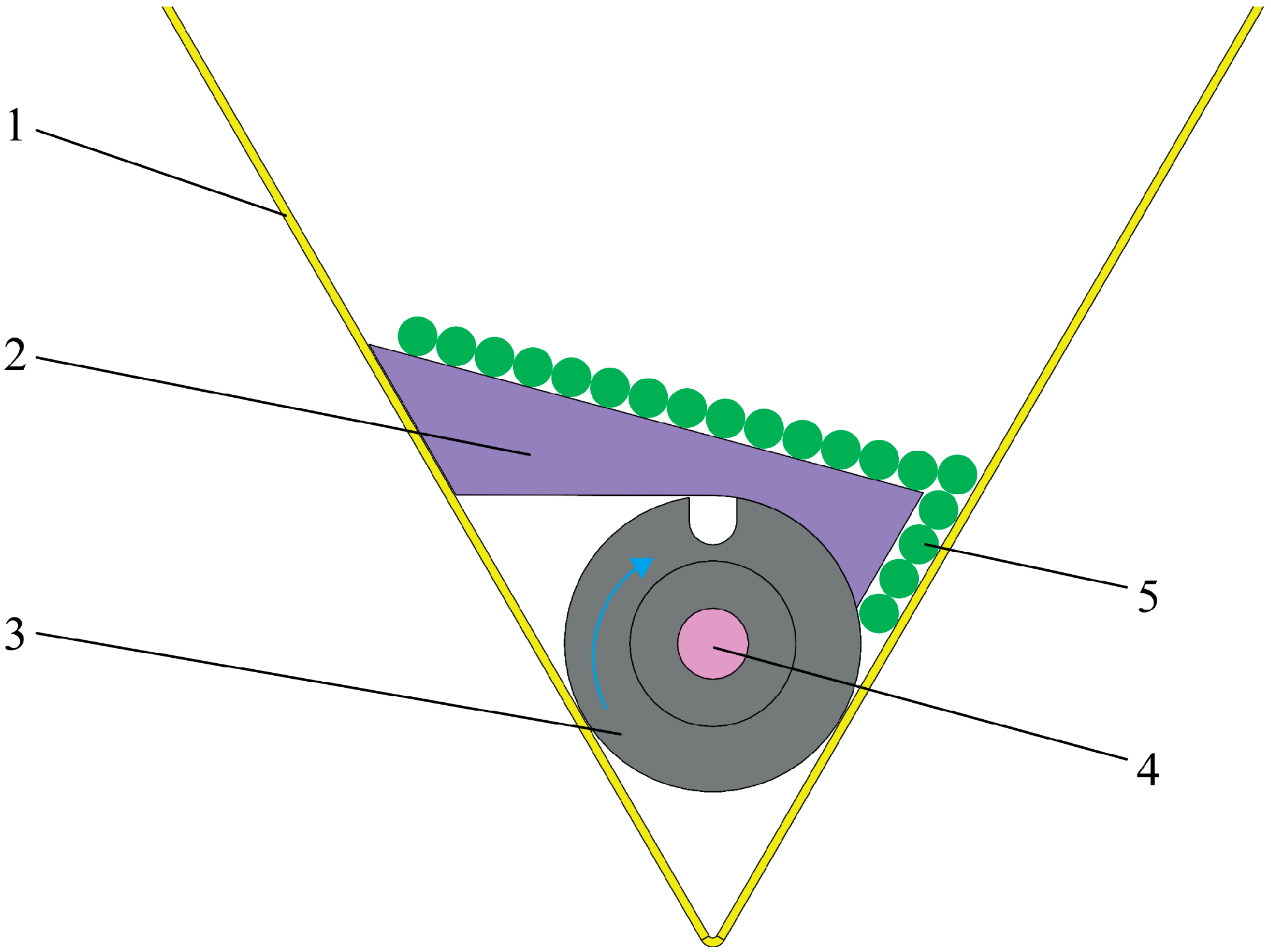
Without external force, stacked rods tend to develop hollow spaces, impairing separation efficiency. The grooved wheel and guide plate were precisely designed to ensure single-rod separation from the material hopper with each full rotation, as illustrated in Figure 5.
The rods, made of fiberglass and resin, have a length of 1600 mm and a diameter of 6 mm, respectively. The rod slot was designed with a width slightly greater than the rod’s diameter and a depth less than twice the diameter to prevent jamming during operation. The guide plate was installed at an angle, with its lower edge flush against the grooved wheel and its upper end maintained at a certain distance from the material hopper. This distance is slightly greater than the diameter of the rod. As the groove wheel rotates, the rods are gently compressed within the grooves. When two rods enter the groove, the groove’s limited depth prevents both from fitting simultaneously, causing the nearest rod to be displaced, ensuring reliable single-rod separation.

2.1.3. Rod Conveyor Mechanism

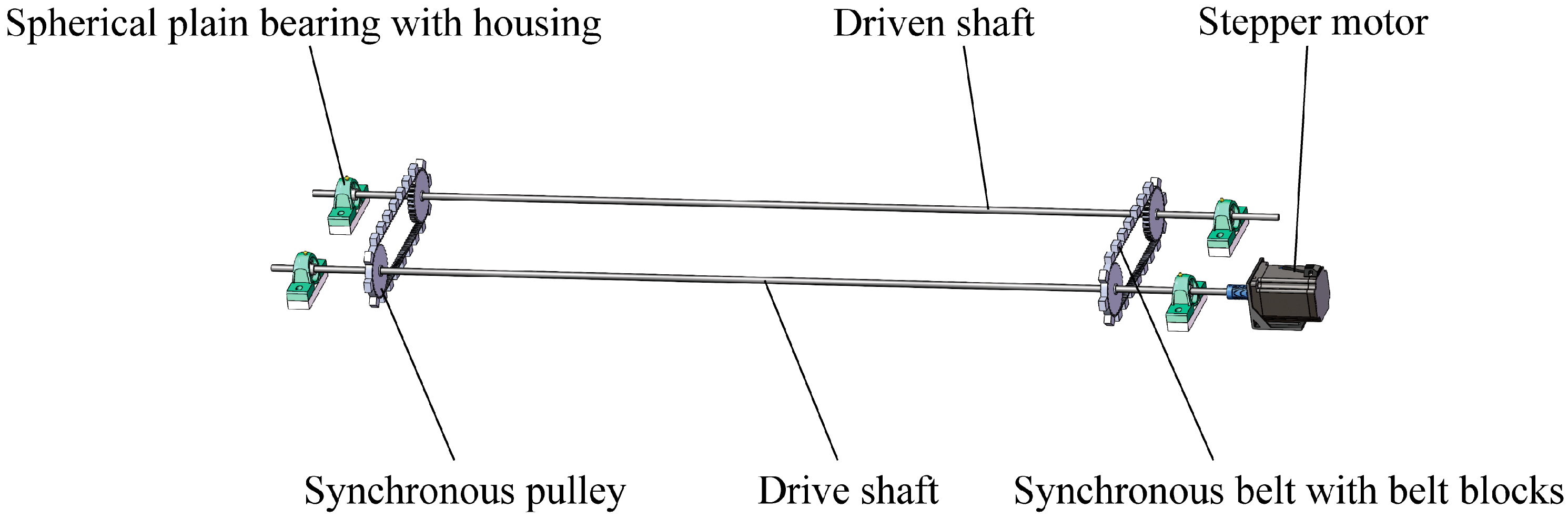
The rod conveying mechanism illustrated in Figure 6 consists of a spherical plain bearing with housing, driver and driven shafts, stepper motor, synchronous pulley, and synchronous belt with belt blocks. The conveyor is installed directly beneath the rod separation mechanism, with the synchronous belt aligned near both ends of the material hopper. Separated rods drop onto the synchronous belt under gravity. The stepper motor drives the synchronous belt, ensuring steady and precise transfer of separated rods to the frame insertion unit.
During the conveying process, the rod exhibits two distinct motion states: a fixed state, in which it moves synchronously with the belt, and a rolling state, in which it transitions off the end of the belt onto the frame insertion unit.
The rod acquires an initial velocity from the synchronous belt, with its direction aligned to the belt’s motion and its magnitude equal to the belt’s linear speed. Upon reaching the end of the synchronous belt, the rod moves into the frame insertion unit under gravity.

2.2. System Performance Test

2.2.1. Kinematic Simulation Procedure

Since the kinematic analysis of the conveyor rod’s movement is closely related to the feed rate, it is particularly important to conduct a comprehensive kinematic analysis of the entire motion process of the conveyor rod during the conveying process.
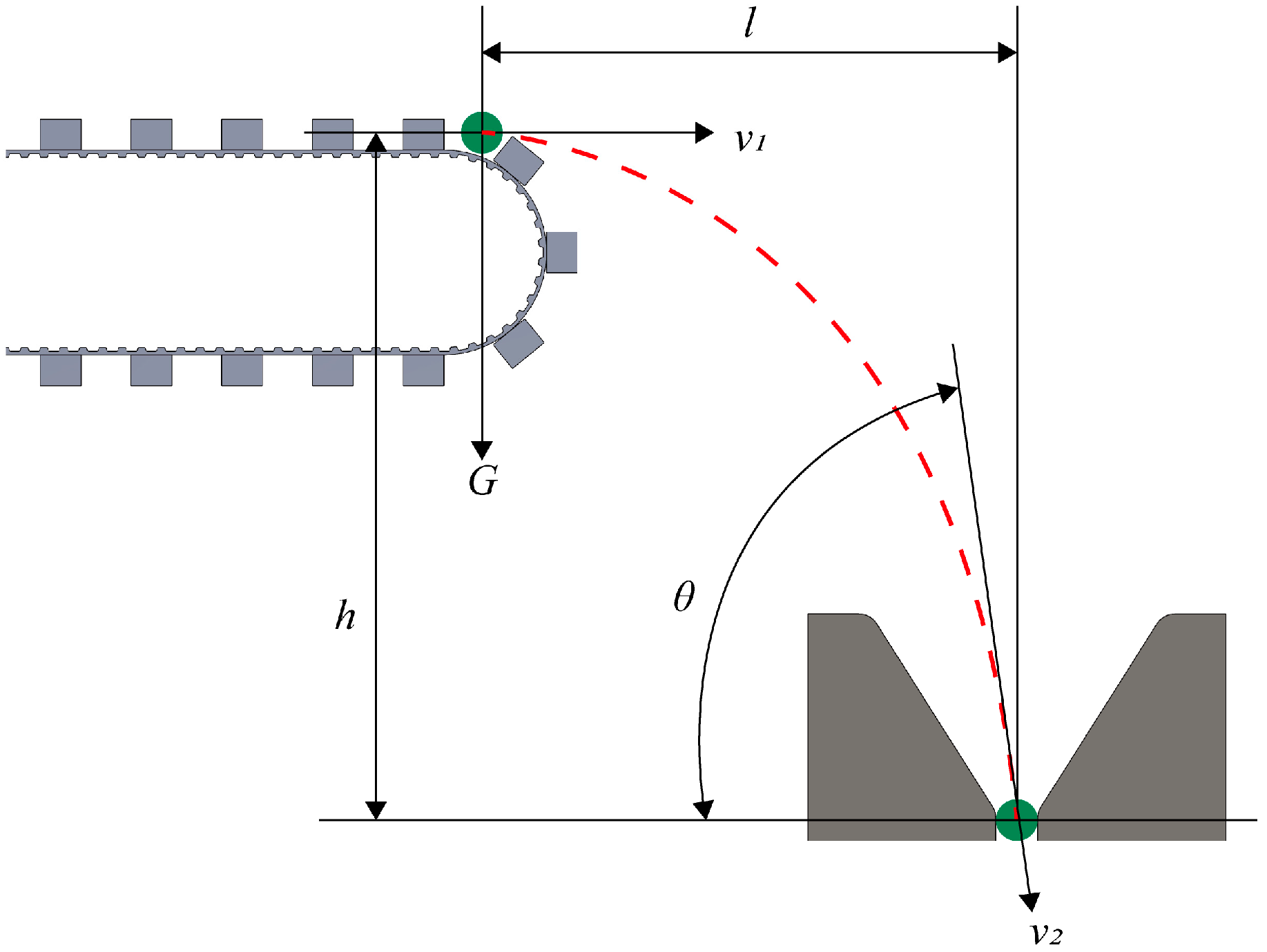
In this study, when performing a kinematic analysis of the conveyor rod, the rod was treated as a point mass, disregarding factors such as its length, center of mass position, deformation, and friction. These factors influence the actual conveying state. A kinematic analysis is performed on the rod about to separate from the synchronous belt, neglecting the effects of air resistance, as shown in Figure 7.
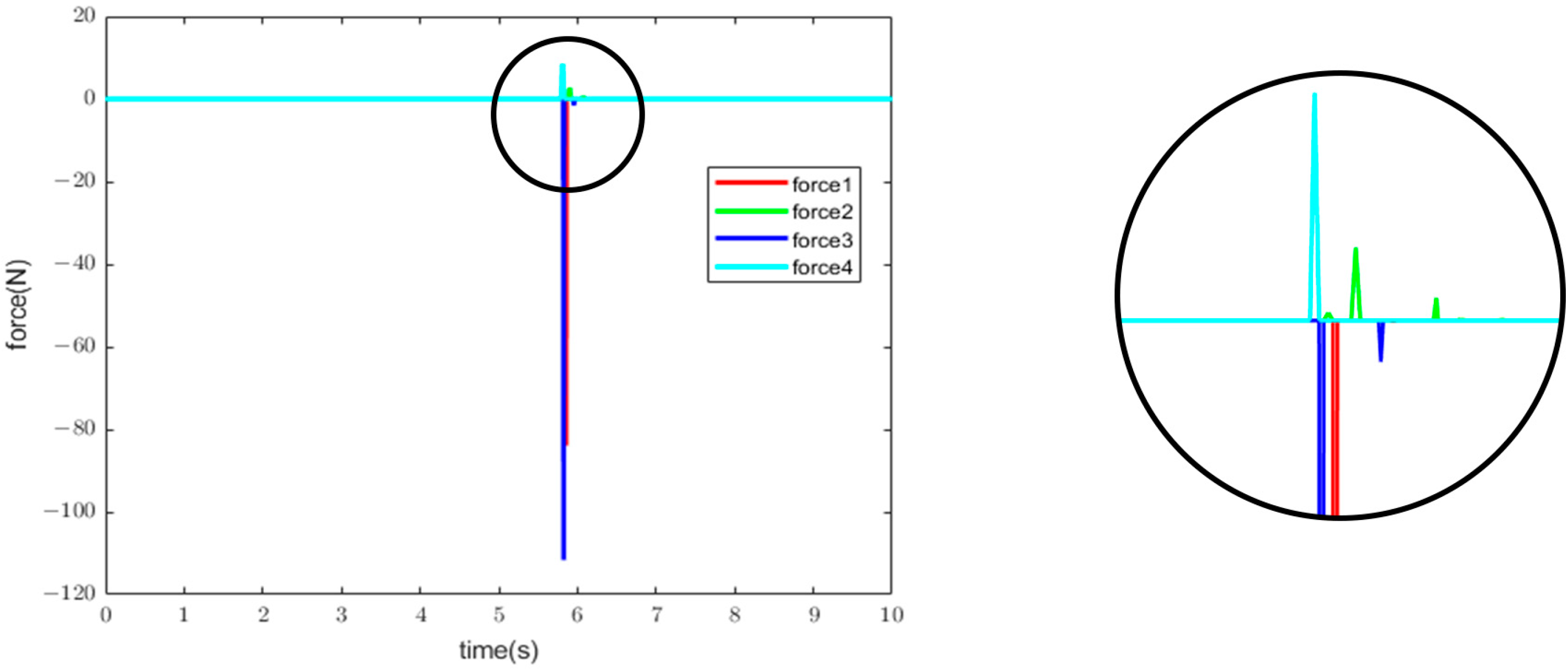
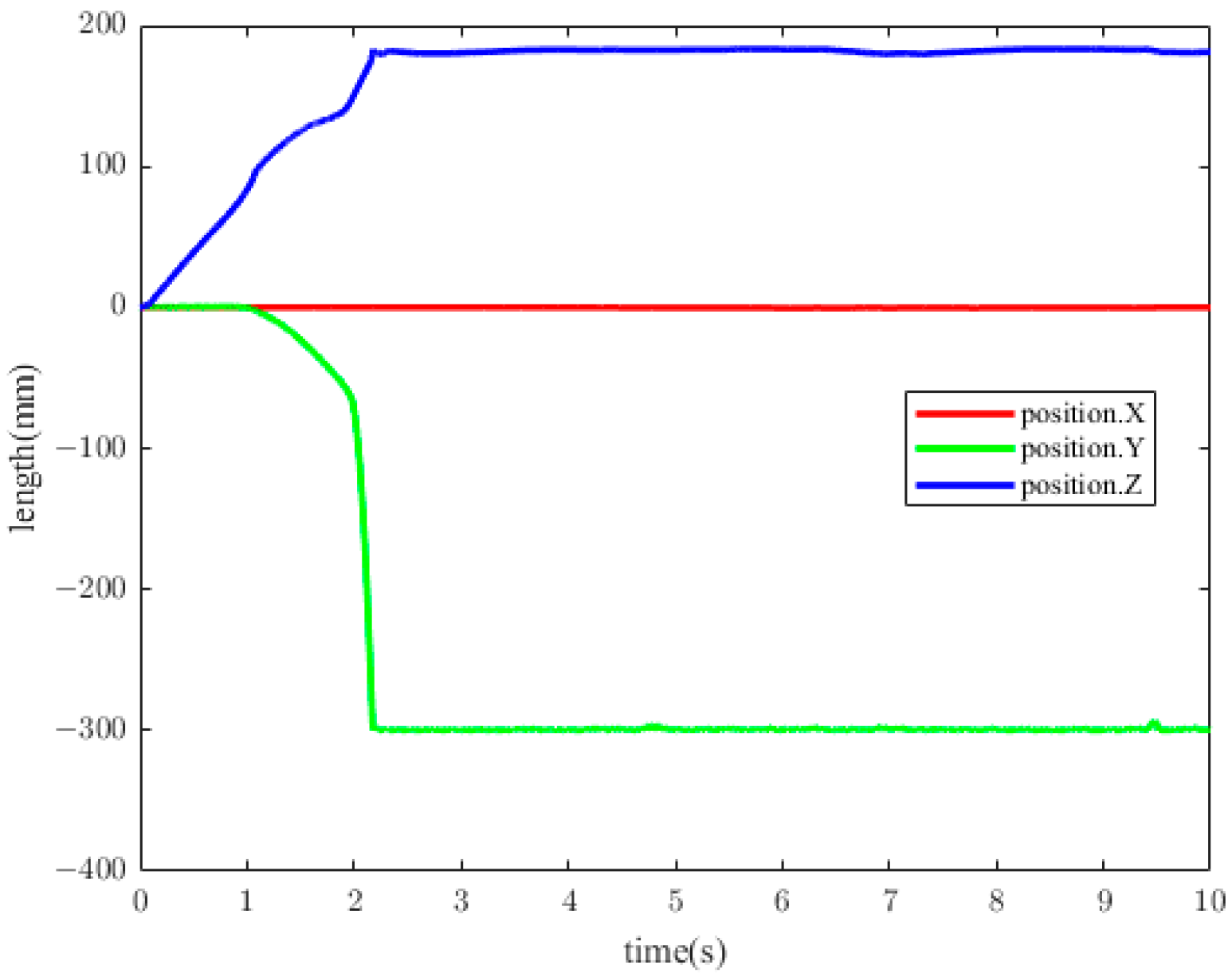
When assessing the effect of a single factor on the rod’s motion, the intermediate levels of the remaining two factors were selected. The levels of each factor are shown in Table 1. After each simulation, the coordinates and velocity of the rod’s center of mass, the coordinates of the support frame’s center of mass, and the force conditions on the limit plate were recorded. Based on the force curve of the limit plate (Figure 8), the contact time between the rod and the limit plate was determined, from which the coordinates and velocity of the rod’s center of mass at that time were obtained.

2.2.2. Kinematic Simulation Test

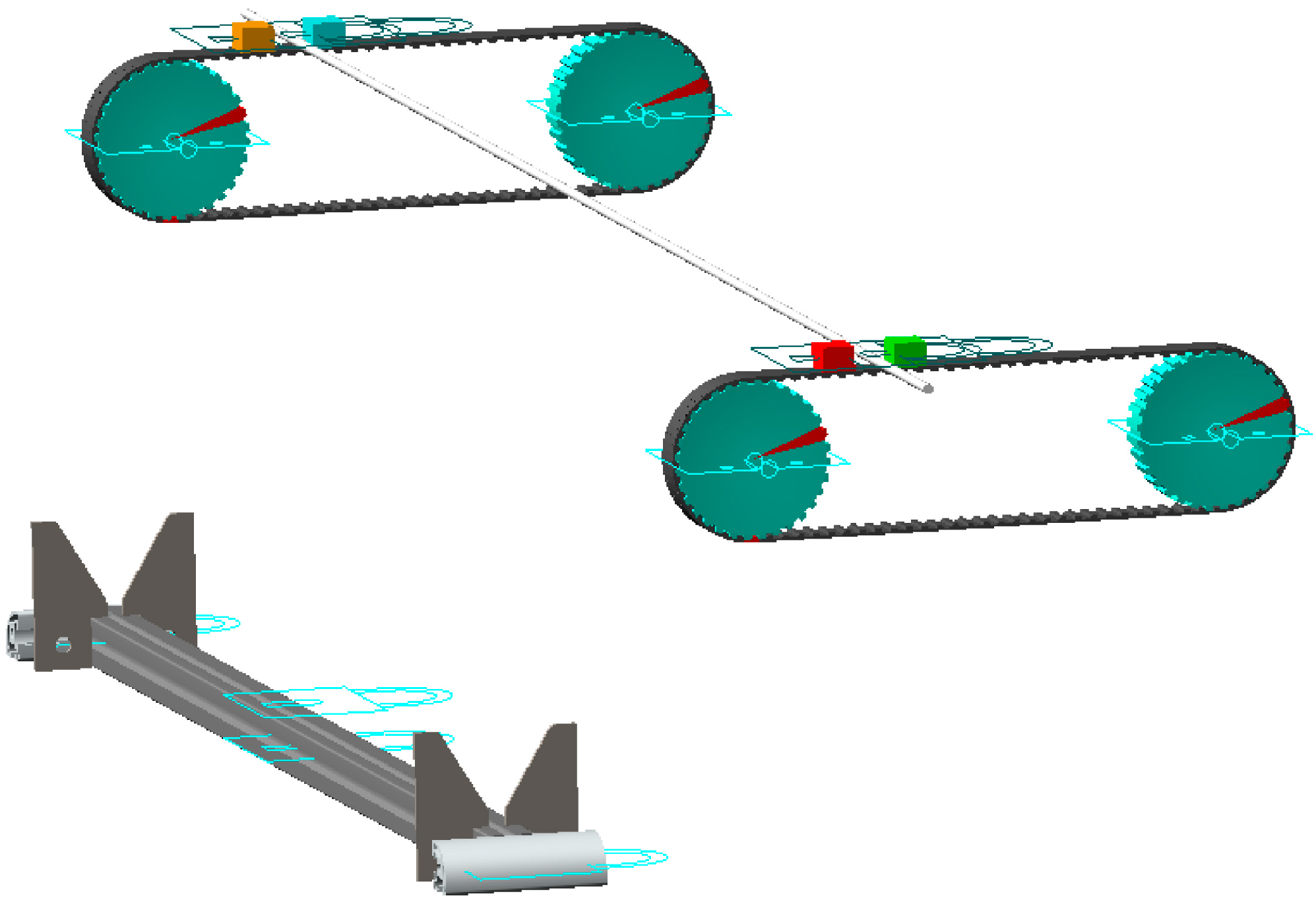
The 3D model of the rod conveyor system created in SolidWorks was imported into ADAMS for kinematic simulation [25,26,27]. Material properties of each component within the model were defined with corresponding constraints and drivers. Three replicate simulation tests were conducted under identical conditions. Simulation-related parameters are shown in Table 2. Contact stiffness 1 is the parameter used when setting the contact between the rod and metal components, such as the limit plate. Contact stiffness 1 is the parameter used when setting the contact between the rod and the synchronous belt. The constraint relationships of the simulation model are shown in Table 3. The simulation test was conducted as shown in Figure 9.

2.3. Measurements

At the instant of separation, the linear velocity of the rod equaled that of the synchronous belt. When the shed rod was in motion during the conveying process, it moved diagonally downwards with an initial velocity V1 (horizontal direction to the right). This motion can be expressed as uniform horizontal motion and uniformly accelerated vertical motion.
V 2 cos θ = V 1 V 2 sin θ = g t ,
In the equation, V1 is the initial velocity of the conveyor rod during the conveying process, m/s; V2 is the final velocity of the conveyor rod during the conveying process, m/s; θ is the angle formed between the terminal velocity of the conveyor rod and the horizontal direction during the conveying process, (°); and t is the conveying process rod movement time, s.
l = V 2 cos θ · t h = 1 2 g t 2 ,
In the equation, l is the horizontal displacement of the conveyor rod during the conveying process, m; and h is the vertical displacement of the conveyor rod during the conveying process, m.
A comprehensive analysis of the conveying process for the rod showed that its motion trajectory was influenced by the rotational speed of the stepper motor, the height of the synchronous belt stop block, and the horizontal distance between the end of the synchronous belt and the insertion frame device. These three factors collectively determine the rod-feeding rate.
After the simulation, the coordinates of the rod’s center of mass (A) were obtained (Figure 10). The coordinates corresponding to the instant when the rod first contacts the limit plate were used to calculate the distance between the two points, determined using the following equation:
Δ x = x 1 x 2 ,
Δ y = y 1 y 2 ,
Δ z = z 1 z 2 ,
d = Δ x 2 + Δ y 2 + Δ z 2 ,
In the equation, ( x 1 , y 1 , z 1 ) are the coordinates of the center of mass A of the rod, ( x 2 , y 2 , z 2 ) are the coordinates of the center of mass B of the support frame. x is the distance along the x-axis. y is the distance in the y-axis direction. z is the distance along the z-axis. d is the distance between the two centers of mass.
To prevent the rods from slipping, shifting, or falling during conveyance while minimizing the impact of machine tilt on the rods, stop blocks are installed on the synchronous belt. The stop block not only alters the initial separation velocity of the rod but also changes the rod’s drop height, while simultaneously shifting the separation point where the rod disengages from the synchronous belt. Therefore, it is necessary to determine the appropriate stop block height to ensure the effective feeding of the rods.
The horizontal distance in the preliminary kinematic analysis refers to the distance from the separation position of the rod to the center position of the limit plate. Considering installation and simulation parameter settings, the horizontal distance for simulation testing is defined as the distance from the center line of the drive pulley shaft to the center of the limit plate.
Data processing involved aggregating the following metrics across the different levels of each factor: the distance between the two centers of mass, the velocity of the rod’s center of mass, and the force data on the limit plate. This yields the following curves at different levels of individual factors: distance curve between the two centers of mass, velocity curve of the rod’s center of mass, and force curve on the limit plate. Only data recorded at the instant of contact between the rod and the limit plate were used, with the forward direction of the rod defined as positive.

3. Results

3.1. Kinematic Simulation

When other factors remain constant, the greater the rotational speed of the stepper motor, the larger the horizontal displacement of the rod. An increased horizontal distance may have caused the rod to overshoot the insertion frame unit, thereby reducing the feed rate. The height of the stop block affected the separation point between the rod and the synchronous belt. This influenced the rod’s trajectory and feed efficiency. When the horizontal distance between the end of the synchronous belt and the insertion frame exceeded or fell below the horizontal displacement of the rod, the rod struggled to enter the insertion frame. Therefore, based on the kinematic simulation in ADAMS, a single-factor experiment with three factors and five levels was conducted to study the influence of the stepper motor speed, the height of the synchronous belt stop block, and the horizontal distance on the shed rod.

3.1.1. Motor Speed

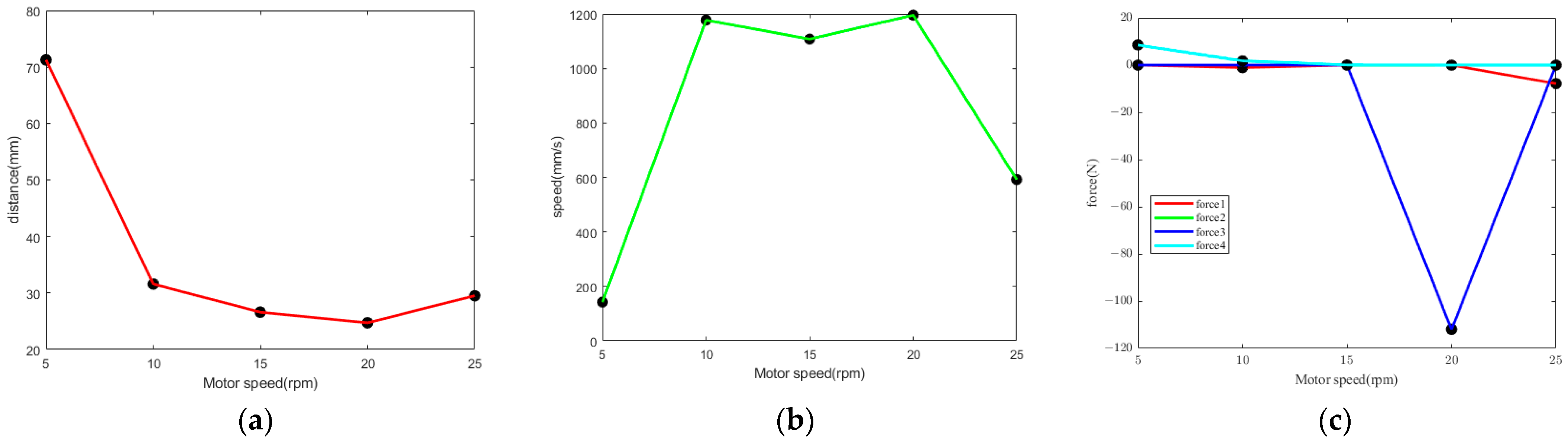
The speed of the motor affected the trajectory of the rod. Excessive motor speed caused the rod to move in a horizontal throw motion, increasing the horizontal distance of the rod’s movement. The stepper motors underwent acceleration and deceleration phases. Transitioning the stepper motor instantaneously from a stationary state to the target rotational speed, or brought to an abrupt halt from high speeds, unstable operation and abnormal vibrations are likely to occur. In the simulation, the acceleration and deceleration phases were omitted, and the synchronous belt was assumed to rotate at a constant preset speed. Figure 11 shows the distance curve between the two centers of mass, the velocity curve of the rod’s center of mass, and the force curve on the limit plate at different rotational speeds.
As shown in Figure 11a, the motor speed affected the distance between the two centers of mass. As the motor speed increased, the distance between the centers of mass first decreased and then increased. This indicates that there is an optimal motor speed that minimizes the distance between the two centers of mass. This resulted in the best rod feed effect, with the rod barely touching the limit plate during its descent.
Figure 11b,c indicate that the contact position between the rod and the limit plate affected the rod’s speed. During the falling process of the rod, the further back the contact point, the greater the speed of the rod’s movement. The motor speed not only affected the distance between the rod and the frame but also influenced the contact position between the rod and the limit plate, affecting the rod’s speed.

3.1.2. Stop Block Height

At the end of the synchronous belt, the rod was in contact with the stop block. When the stop block was positioned too low, the rod passed over it, causing misalignment. Consequently, the two ends of the rod were no longer maintained on the same horizontal plane. The excessive stop block height indirectly altered the separation position between the rod and the synchronous belt, inducing changes in the contact point between the rod and the limit plate. This reduced the effectiveness of the rod-feeding mechanism.
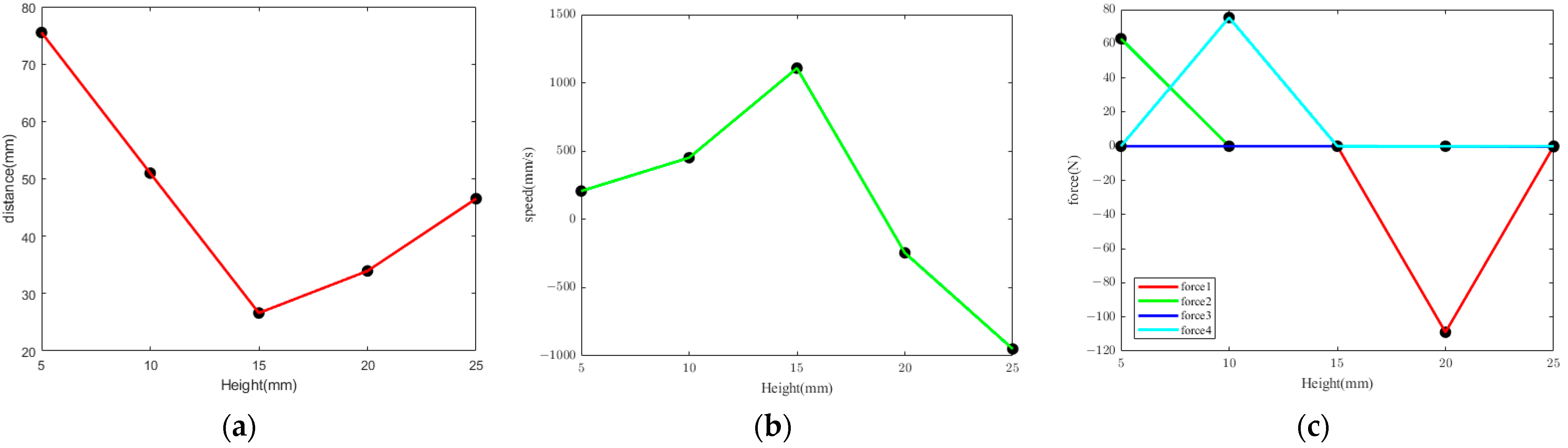
As shown in Figure 12a, the height of the stop block affected the distance between the center of mass of the rod and that of the support frame. As the stop block height increased, the distance between the two centers of mass initially decreases and then increases. This was because, at a fixed motor speed and horizontal distance, during the initial phase of the conveying process, the stop blocks imposed certain constraints on the rods, preventing them from slipping, shifting, or falling during transportation. At the end of the synchronous belt, the stop block was positioned too low, causing the rod to pass over the block during conveyance and separate prematurely. The resulting drop occurred toward the rear end of the limit plate. As the height of the stop block increased, the falling position of the rod gradually shifted toward the front end of the limit plate. When the rod’s falling position aligned with the center of the limit plate, the distance between the two centers of mass decreased. As the position of the rod’s fall moved forward, the distance between the two centers of mass gradually increased.
The velocity curve of the center of mass of the rod first increased and then decreased (Figure 12b). Since velocity is a vector, the negative sign indicates a direction opposite to the forward direction of the rod. Considering only the magnitude of the velocity values, the velocity of the center of mass of the rod initially increased with increasing height. It reached its highest value above 1000 mm/s at 15 mm height. The velocity then decreased sharply. As seen in Figure 12c, the height of the stop block affected the contact position between the rod and the limit plate. The force was measured at contact between the rod and the limit plate. In some cases, the rod initially made only slight contact with the limit plate, resulting in a relatively small force exerted on the limit plate.
A comprehensive analysis of Figure 12 reveals that the height of the stop block exerted pronounced effect on the distance between the two centers of mass, with a more distinct trend in the curve. This validates the accuracy of the motion analysis and demonstrates its influence on the feeding rate of the rod-feeding mechanism.

3.1.3. Horizontal Distance

Changes in the horizontal distance directly affected the drop position of the rod. When the horizontal distance was too small, the separation point between the rod and the synchronous belt exceeded the limit plate. This caused the rod-feeding mechanism to fail. When the horizontal distance was too large, the separated rod failed to contact the limit plate, resulting in rod-feeding failure. The horizontal distance in the simulation was varied along the direction of the rod’s advancement. With each change in distance, the limit plate moved away from the drive pulley of the synchronous belt in the positive direction of the directional axis.
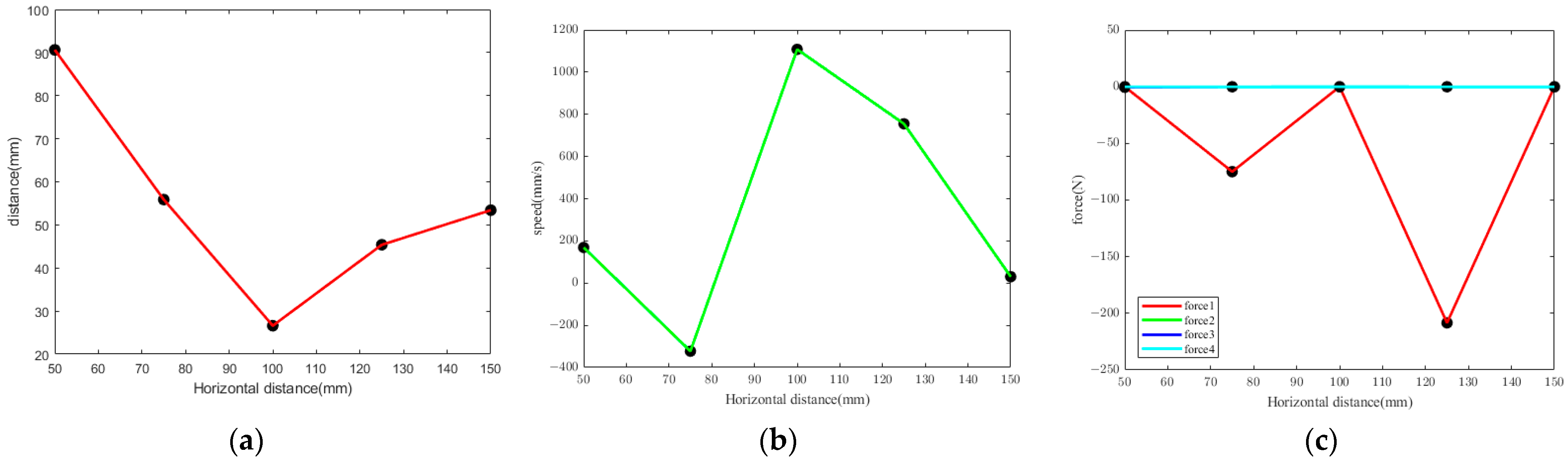
As shown in Figure 13a, the horizontal distance affected the distance between the center of mass of the rod and that of the support frame. As the horizontal distance increased, the distance between the two centers of mass initially decreased and then increased. The decreasing trend was more pronounced than the increasing trend. This was due to the excessively low horizontal distance, causing the rod to fall at the rear end of the limit plate. As the horizontal distance increased, the rod’s fall position gradually shifted towards the center of the limit plate (the symmetrical position of the limit plate). When the horizontal distance exceeded the optimal value, the falling position of the rod shifted forward, and the distance between the two centers of mass gradually increased.
In Figure 13b, the velocity curve initially decreased, then increased, and finally decreased again. Since velocity is a vector, the negative values indicate motion in a direction opposite to the forward direction. Focusing solely on the magnitude of the velocity, the curve for the center of mass velocity of the rod first increased and then decreased. In Figure 13c, the rod was primarily in contact with the front end of the limit plate, while at certain horizontal positions, contact with the rear end was observed.
This revealed that horizontal distance affected the movement of the rods, influencing the effectiveness of the rod-feeding mechanism. The appropriate horizontal distance can further enhance the feeding effect of the rod-feeding device, making the selection of the right horizontal distance essential.

3.1.4. Center-of-Mass Distance Curve Fitting

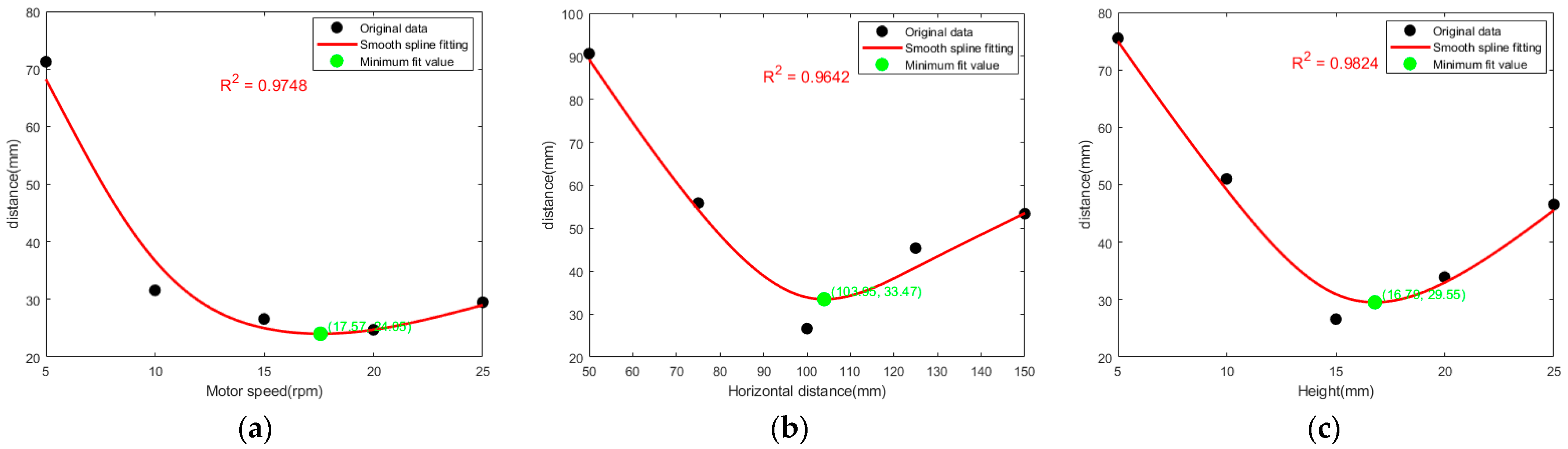
Kinematic simulation of the conveyor revealed that the motor speed, synchronous belt stop block height, and the horizontal distance from the synchronous belt drive pulley axis to the symmetrical plane of the limit plate all influenced the feeding performance of the rod-feeding mechanism. Together they affected the movement of the conveyor rod. The distance curves between the rod and the support frame center of mass, the velocity curves of the rod’s center of mass, and the force curves on the limit plate influenced the individual factors on the rod’s dynamics but were insufficient for identifying optimal factor values. To address this, curve fitting was performed using the smoothing spline model in MATLAB [28,29,30], and the optimal factor values were determined from the minima of the fitted curves.
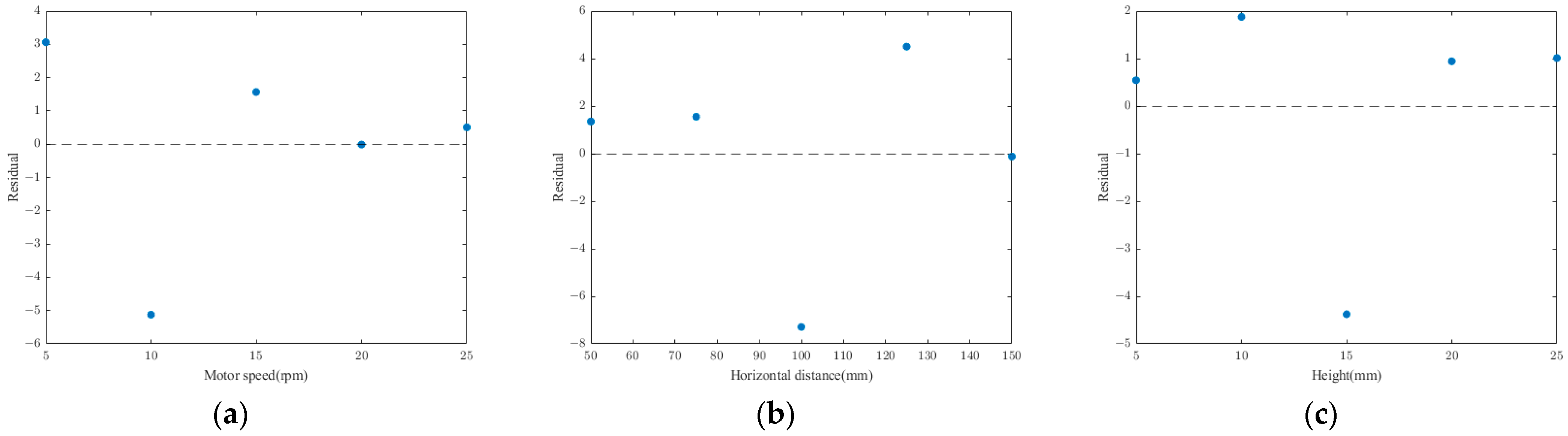
Simulation results indicated that the motor speed, stop block height, and horizontal distance all exhibited the same trend of influence on the distance between the center of mass of the rod and the center of mass of the support frame. As the levels of each factor were varied, the center-of-mass distance curve initially decreased and subsequently increased. Therefore, the center-of-mass distance metric was selected for curve fitting to obtain the optimal values for each factor. The resulting fitted curve for each factor is presented in Figure 14. The residual plots of the fitting curves for different factors are shown in Figure 15.
The coefficient of determination (R2) of the fitted curves under different factors in Figure 14 was greater than 0.9, indicating a good fit. The residual plots indicate that the overall trend of the fitted curve aligns well with the data, making it suitable for guiding bench testing. As shown in Figure 14, the optimal values for motor speed, stop block height, and horizontal distance are 17.57 rpm, 16.79 mm, and 103.95 mm, respectively. Based on the actual operating conditions of the automatic rod-feeding device, the test parameters were set as follows: motor speed of 17 rpm, stop block height of 15 mm, and horizontal distance of 100 mm.

3.2. Bench Test

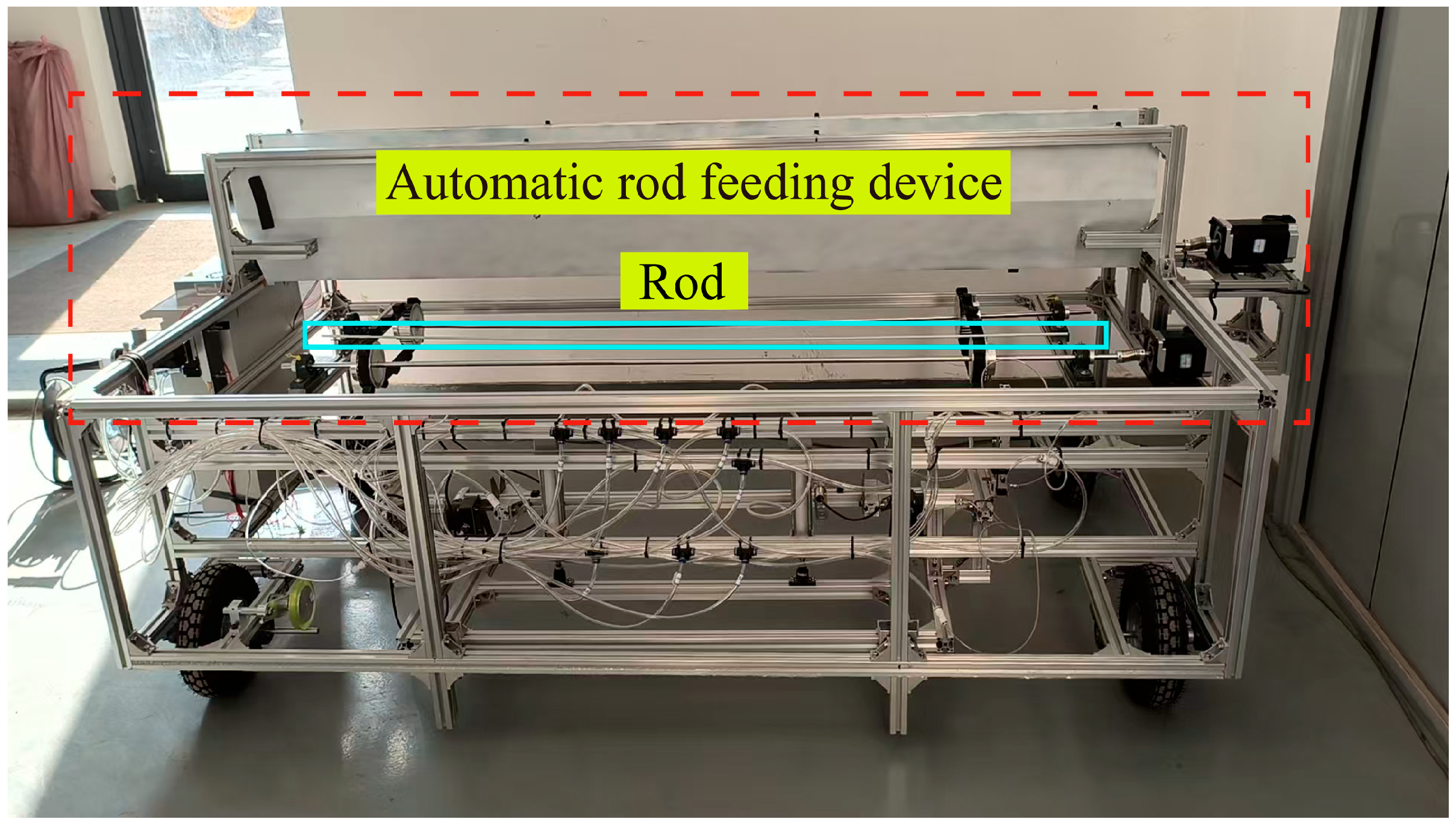
This experiment was conducted at the Intelligent Agricultural Equipment Laboratory of Xinjiang Agricultural University. Using the optimal parameter combination, five trials were performed under identical conditions. Physical model of bench is shown in Figure 16. After the test runs, the missed rod rate and feed rate were determined from the equations below.
η 1 = T 1 T × 100 %
In the equation, η 1 is the missed rod rate, %; T is for the same parameter conditions, the number of rods is set to 50; and T 1 is the number of times the rods did not fall onto the limit plate.
η 2 = T 2 T × 100 %
In the equation, η 2 is the feeding rate, %; T is for the same parameter conditions, the number of rods is set to 50; and T 2 is the number of rods successfully driven into the limit plate.
During bench test, rods entering the limit plate were manually removed to ensure only one rod entered at a time. The test results are presented in Table 4. The missed rod and feeding rates of the automatic rod-feeding mechanism were calculated using Equations (7) and (8). The results indicate that at a motor speed of 17 rpm, a stop block height of 15 mm, and a horizontal distance of 100 mm, the missed rod rate was 19.2% ± 7%, while the rod-feeding rate reached 80.8% ± 7%, and the 95% CI is [72.1%, 89.5%]. Throughout the test, the automatic rod-feeding mechanism operated smoothly without any abnormalities. Therefore, the findings of this study can serve as a basis for the design and optimization of automatic rod-feeding machines.

4. Discussion

The automatic rod-feeding device designed in this study achieved effective separation and orderly conveyance of shed rods. The automatic rod-feeding device designed in this study enables effective separation and orderly transportation of rods, addressing the critical bottleneck of manual dependency in Xinjiang’s small arch shed cotton cultivation model. It fills a technical gap in existing agricultural equipment supporting such innovative cultivation methods. However, this study has several limitations: (1) During kinematic analysis, the conveyor rod is treated as a point mass, neglecting factors such as rotational inertia, rod length, deformation, and friction—all of which influence actual conveying conditions. (2) The primary objective of this study is to conduct preliminary screening and trend analysis of key parameters within limited time and resource constraints, thereby providing a foundational reference for subsequent systematic optimization. Therefore, this study only conducted single-factor experiments to perform preliminary screening and trend analysis of key parameters. No small-scale factorial designs or central composite designs were implemented to evaluate interactions between factors. (3) This study is in the proof-of-concept phase, with a handcrafted prototype used to validate the structural feasibility of the device. There are certain processing, manufacturing, and assembly tolerances. No performance comparisons with existing commercial products have been conducted. (4) Bench tests conducted in indoor environments did not account for factors such as soil leveling and mechanical vibration affecting rod feed rates, nor did they involve long-term trials without human intervention. Consequently, these bench test results cannot demonstrate the device’s fully automated continuous operation performance and the actual performance of the automatic rod feed mechanism under real agricultural field conditions. Future research will focus on: (1) In the kinematic analysis, factors such as the length of the conveyor rod and friction are considered to ensure the applicability of the kinematic analysis method to the conveying process of the conveyor rod. (2) Building upon single-factor experiments, conduct small-scale factorial designs or centered composite designs to systematically evaluate interactions among factors. (3) Implement structural improvements and standardized machining and assembly for the device, and compare its performance with existing commercial products. (4) Conduct long-term field trials without human intervention.

5. Conclusions

This study designed an automatic rod-feeding device for cotton small arch shed machines, aiming to reduce labor intensity and improve the efficiency of constructing cotton small arch sheds. The study thoroughly investigated the effects of motor speed, synchronous belt stop block height, and the horizontal distance between the center of the synchronous belt drive pulley and the center of the limit plate on the automatic rod-feeding device. Optimal values for each influencing factor were determined, and bench tests were conducted.
(1)
Based on current cotton cultivation practices, an automated rod-feeding mechanism for small cotton arch sheds was proposed. This system enabled automatic separation of shed rods and orderly material feeding, effectively reducing labor costs and enhancing the efficiency of small cotton arch shed construction.
(2)
A kinematic analysis of the rod at the end of the synchronous belt revealed that the motor speed, synchronous belt stop block height, and horizontal distance were the primary influencing factors.
(3)
Kinematic simulation of the rod movement during the conveying process was conducted. The results indicated that motor speed, synchronous belt stop block height, and horizontal distance all exhibited similar trends in influencing the distance between the center of mass of the rod and the center of mass of the support frame. As the levels of these factors changed, the distance curve between the centers of mass first decreased and then increased. The optimal values were determined by fitting the centroid distance curve, where motor speed was 17.57 rpm, stop block height was 16.79 mm, and horizontal distance was 103.95 mm.
(4)
Bench tests were conducted in accordance with actual conditions. The results indicated that at a motor speed of 17 rpm, a stop block height of 15 mm, and a horizontal distance of 100 mm, the mechanism achieved missed rod and feeding rates of 19.2% and 80.8%, respectively. During the test, the automatic rod-feeding device operated smoothly without any abnormalities.

Author Contributions

Conceptualization, P.Y.; writing—original draft preparation, P.W. and P.Y.; writing—review and editing, J.Y. and X.Z.; software—P.W.; validation P.Y., P.W., J.Y., S.A., Z.W. and H.P. All authors have read and agreed to the published version of the manuscript.

Funding

This research was funded by the Xinjiang Uygur Autonomous Region Key Research and Development Plan (2022B02025-2, 2022B02025-1), “Tianshan Talents—three rural Areas” Key Talent Training Project in Xinjiang Uygur Autonomous Region (2022SNGGGCC020).

Institutional Review Board Statement

Not applicable.

Data Availability Statement

The data presented in this study are available on request from the corresponding author.

Conflicts of Interest

The authors declare no conflicts of interest.

References

  1. Zhang, X.; Zhang, J.B.; Khan, A.; Zhu, D.S.; Zhang, Z.Y. Improving the productivity of Xinjiang cotton in heat-limited regions under two life history strategies. J. Environ. Manag. 2024, 363, 121374. [Google Scholar] [CrossRef] [PubMed]
  2. Wang, H.B.; Yin, Z.; Zhang, L.; Zhao, F.N.; Huang, W.X.; Wang, X.P.; Gao, Y. Irrigation modulates the effect of increasing temperatures under climate change on cotton production of drip irrigation under plastic film mulching in southern Xinjiang. Front. Plant Sci. 2022, 13, 1069190. [Google Scholar] [CrossRef] [PubMed]
  3. Zhao, X.F.; Zhu, A.L.; Liu, X.H.; Li, H.Y.; Tao, H.Y.; Guo, X.X.; Liu, J.F. Current status, challenges, and opportunities for sustainable crop production in Xinjiang. iScience 2025, 28, 112114. [Google Scholar] [CrossRef]
  4. Li, Z.J.; Liu, H.G.; Wang, T.G.; Gong, P.; Li, P.F.; Li, L.; Bai, Z.T. Deep vertical rotary tillage depths improved soil conditions and cotton yield for saline farmland in South Xinjiang. Eur. J. Agron. 2024, 156, 127166. [Google Scholar] [CrossRef]
  5. Kuang, N.K.; Hao, C.C.; Liu, D.Z.; Maimaitiming, M.T.S.; Xiaokaitijiang, K.S.M.; Zhou, Y.P.; Li, Y.K. Modeling of cotton yield responses to different irrigation strategies in Southern Xinjiang Region, China. Agric. Water Manag. 2024, 303, 109018. [Google Scholar] [CrossRef]
  6. Yue, Z.Y.; Xu, Z.L.; Wang, Y. The spatio–temporal variation of spring frost in Xinjiang from 1971 to 2020. Atmosphere 2022, 13, 1087. [Google Scholar] [CrossRef]
  7. Alimu, A.; Wang, S.Y.; Wang, Y.; Xu, Z.H. The response of biomass allocation in alfalfa and ryegrass to simulated spring frost. J. Plant Ecol. 2025, 18, rtaf073. [Google Scholar] [CrossRef]
  8. Li, Y.; Li, N.; Javed, T.; Pulatov, A.S.; Yang, Q.L. Cotton yield responses to climate change and adaptability of sowing date simulated by AquaCrop model. Ind. Crops Prod. 2024, 212, 118319. [Google Scholar] [CrossRef]
  9. Zhang, T.Y.; Xie, Z.M.; Zhou, J.L.; Feng, H.J.; Zhang, T. Temperature impacts on cotton yield superposed by effects on plant growth and verticillium wilt infection in China. Int. J. Biometeorol. 2024, 68, 199–209. [Google Scholar] [CrossRef] [PubMed]
  10. Zuo, W.Q.; Wu, B.J.; Wang, Y.X.; Xu, S.Z.; Chen, M.Z.; Liang, F.B.; Tian, J.S. Optimal row spacing configuration to improve cotton yield or quality is regulated by plant density and irrigation rate. Field Crop Res. 2024, 305, 109187. [Google Scholar] [CrossRef]
  11. Zhai, M.H.; Wei, X.W.; Pan, Z.L.; Xu, Q.Q.; Qin, D.L.; Li, J.H.; Zhang, J.; Wang, L.Z.; Wang, K.F.; Duan, X.Y.; et al. Optimizing plant density and canopy structure to improve light use efficiency and cotton productivity: Two years of field evidence from two locations. Ind. Crops Prod. 2024, 222, 119946. [Google Scholar] [CrossRef]
  12. Guo, B.; Zhou, B.; Zhang, Z.M.; Li, K.D.; Wang, J.Y.; Chen, J.F.; Papadakis, G. A critical review of the status of current greenhouse technology in China and development prospects. Appl. Sci. 2024, 14, 5952. [Google Scholar] [CrossRef]
  13. Mao, Q.J.; Li, H.W.; Ji, C.C.; Peng, Y.; Li, T. Experimental study of ambient temperature and humidity distribution in large multi-span greenhouse based on different crop heights and ventilation conditions. Appl. Therm. Eng. 2024, 248, 123176. [Google Scholar] [CrossRef]
  14. Nemali, K. History of controlled environment horticulture: Greenhouses. HortScience 2022, 57, 239–246. [Google Scholar] [CrossRef]
  15. Lu, H.Q.; Chai, Z.P.; Bai, Y.G.; Zhang, J.H.; Liu, H.B.; Zheng, M.; Xiao, J. Effect of different mulching measures on cotton seedling stage in small arch shed. Water Sav. Irrig. 2023, 44–51+66. [Google Scholar] [CrossRef]
  16. Virk, G.; Snider, J.L.; Chee, P.; Jespersen, D.; Pilon, C.; Rains, G.; Roberts, P.; Kaur, N.; Ermanis, A.; Tishchenko, V. Extreme temperatures affect seedling growth and photosynthetic performance of advanced cotton genotypes. Ind. Crops Prod. 2021, 172, 114025. [Google Scholar] [CrossRef]
  17. Zhu, H.Y.; Zhang, Y.L. Green cultivation technology for deep winter market release of chives in small greenhouses. China Cucurbits Veg. 2019, 32, 98–99. [Google Scholar] [CrossRef]
  18. Chen, X.; Hu, J.L.; Gong, Y.; Yu, Q.X.; Wang, Z.W.; Deng, X.Z.; Pang, X.G. Design and test of automatic feeding device for shed pole of small-arched insertion machine. Agriculture 2024, 14, 1187. [Google Scholar] [CrossRef]
  19. Liu, P.; Wang, C.Y.; Qin, H.Z.; Hou, J.L. Design and test of automatic cottage device for arched shed. Trans. Chin. Soc. Agric. Eng. 2020, 36, 21–29. [Google Scholar]
  20. Liu, P.; Qin, H.Z.; Wang, Y.; Shao, R.R.; Wang, Y.H. Design and development of a low tunnel machine. J. Agric. Mech. Res. 2021, 43, 83–89. [Google Scholar]
  21. Liu, P.; Wang, C.Y.; Qin, H.Z.; Hou, J.L.; Li, T.H. Design and experiment of single-row double cottage and film covering multi-functional machine for low tunnels. Trans. Chin. Soc. Agric. Eng. 2021, 37, 1–9. [Google Scholar]
  22. Chen, K.Z.; Liu, X.; Jin, S.T.; Li, L.F.; He, X.; Wang, T.; Mi, G.P.; Shi, Y.G.; Li, W. Design of and experiments with an automatic cuttage device for an arch shed pillar with force feedback. Agriculture 2022, 12, 875. [Google Scholar] [CrossRef]
  23. Hu, J.L.; Gong, Y.; Chen, X. Design and parameter optimization of rotary double-insertion device for small arched insertion machine. Agriculture 2024, 14, 739. [Google Scholar] [CrossRef]
  24. Liu, D.J.; Yao, K.H.; Zhong, C.Y.; Ma, S.M.; Deng, X.Z.; Aiwaili, S.D.K.J. Experimental study on performance of cotton small arch shed recovery machine. Sustainability 2024, 16, 8749. [Google Scholar] [CrossRef]
  25. Han, B.; Zhou, Y.Z.; Zhang, J.C.; Xu, Y.D.; Yao, J.T.; Zhao, Y.S. Kinematics and dynamics characteristics analysis of a double-ring truss deployable mechanism based on rectangular scissors unit. Eng. Struct. 2024, 307, 117900. [Google Scholar] [CrossRef]
  26. Urbaś, A.; Augustynek, K.; Stadnicki, J. Dynamics analysis of a crane with consideration of a load geometry and a rope sling system. J. Sound Vib. 2024, 572, 118133. [Google Scholar] [CrossRef]
  27. Chai, K.; Hu, J.B.; Lou, J.J. Equilibrium analysis and simulation calculation of four-star type crank linkage mechanism. Machines 2023, 11, 735. [Google Scholar] [CrossRef]
  28. Jiang, Y.C.; Liu, L.; Yan, J.; Wu, Z.J. Room-to-low temperature thermo-mechanical behavior and corresponding constitutive model of liquid oxygen compatible epoxy composites. Compos. Sci. Technol. 2024, 245, 110357. [Google Scholar] [CrossRef]
  29. Wu, R.M.; Wang, L.Q.; Tong, J.Z.; Tong, G.S.; Gao, W. Elastic buckling formulas of multi-stiffened corrugated steel plate shear walls. Eng. Struct. 2024, 300, 117218. [Google Scholar] [CrossRef]
  30. Hu, J.P.; Pan, J.; Zhang, C.D.; Zhang, S.W.; Fei, W.Z.; Pan, H.R. Optimization design and experiment on planetary gears planting mechanism of self-propelled transplanting machine. Trans. Chin. Soc. Agric. Mach. 2018, 49, 78–86. [Google Scholar]
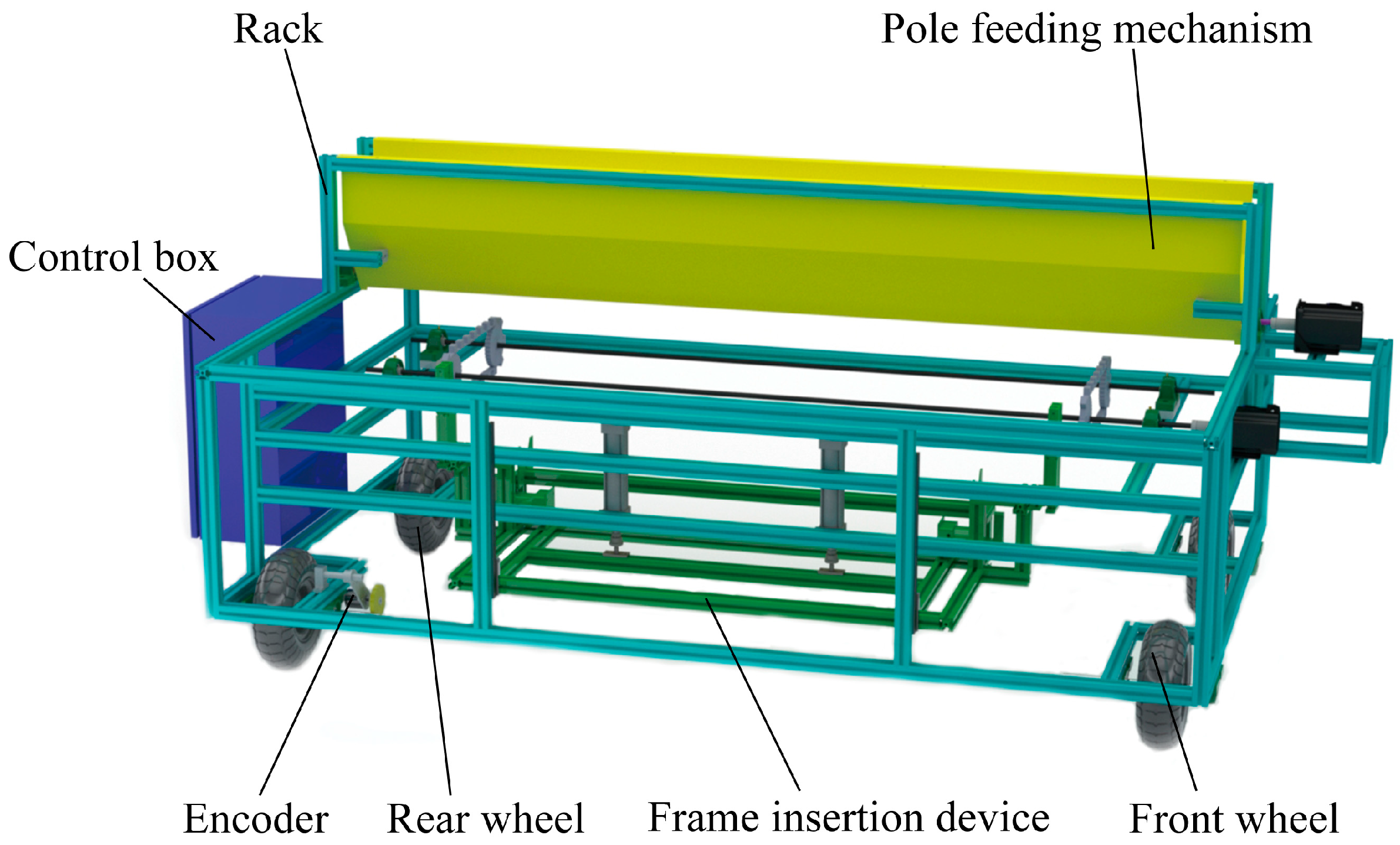
Figure 1. Schematic diagram of cotton small arch shed machine.
Agriculture 16 00030 g001
Figure 2. Schematic diagram of cotton small arch shed cultivation model.
Agriculture 16 00030 g002
Figure 3. Schematic diagram of the rod-feeding device.
Agriculture 16 00030 g003
Figure 4. Schematic diagram showing the parts of the rod separation mechanism.
Agriculture 16 00030 g004
Figure 5. Schematic diagram of guide plate and grooved wheel structure: (1) Material hopper; (2) Guide plate; (3) Grooved wheel; (4) Rotary shaft; and (5) Rod.
Agriculture 16 00030 g005
Figure 6. Schematic diagram of the rod conveyor device.
Agriculture 16 00030 g006
Figure 7. Kinematic analysis of the rod conveying process.
Agriculture 16 00030 g007
Figure 8. Force curve of the limit plate during movement.
Agriculture 16 00030 g008
Figure 9. ADAMS simulation model diagram.
Agriculture 16 00030 g009
Figure 10. Center-of-mass curve of the rod during movement.
Agriculture 16 00030 g010
Figure 11. Curve diagram at different rotational speeds. (a) Center-of-mass distance curve; (b) center of mass velocity curve of the rod; (c) force curve of the limit plate.
Agriculture 16 00030 g011
Figure 12. Curves at different stop block heights. (a) Center-of-mass distance curve; (b) center of mass velocity curve of the rod; (c) force curve of the limit plate.
Agriculture 16 00030 g012
Figure 13. Curves at different horizontal distances. (a) Center-of-mass distance curve; (b) center of mass velocity curve of the rod; (c) force curve of the limit plate.
Agriculture 16 00030 g013
Figure 14. Fitted curves under different factors. (a) Motor speed; (b) horizontal distance; (c). stop block height.
Agriculture 16 00030 g014
Figure 15. Residual plots under different factors. (a) Motor speed; (b) horizontal distance; (c). stop block height.
Agriculture 16 00030 g015
Figure 16. Physical model of bench.
Agriculture 16 00030 g016
Table 1. Influencing Factors and Levels.
LevelMotor Speed (rpm)Stop Block Height (mm)Horizontal Distance (mm)
15550
2101075
31515100
42020125
52525150
Table 2. Simulation Parameter Table.
ParametersNumeric Value or Type
Static friction coefficient0.3
Dynamic friction coefficient0.1
Time step0.01 s
Rod materialGlass fiber plastic
Synchronous belt pulley tooth count32
Stop block spacing24.26 mm
Contact stiffness 1100
Contact stiffness 21000
Damping1.0
Table 3. Constraint Definition Table.
Connected PartsConnected PartsConstraint Relationship
Synchronous belt pulleyGroundRotary assembly
RackGroundJoint
Limit plateRackJoint
Stop blockSynchronous beltJoint
Table 4. Bench test results.
Number of TestsNumber of RodsNumber of Rods Without Rods InsertedNumber of Rod InsertionsMissed Rod Rate (%)Feeding Rate (%)
1506441288
2506441288
35011392278
45011392278
55014362872
Disclaimer/Publisher’s Note: The statements, opinions and data contained in all publications are solely those of the individual author(s) and contributor(s) and not of MDPI and/or the editor(s). MDPI and/or the editor(s) disclaim responsibility for any injury to people or property resulting from any ideas, methods, instructions or products referred to in the content.