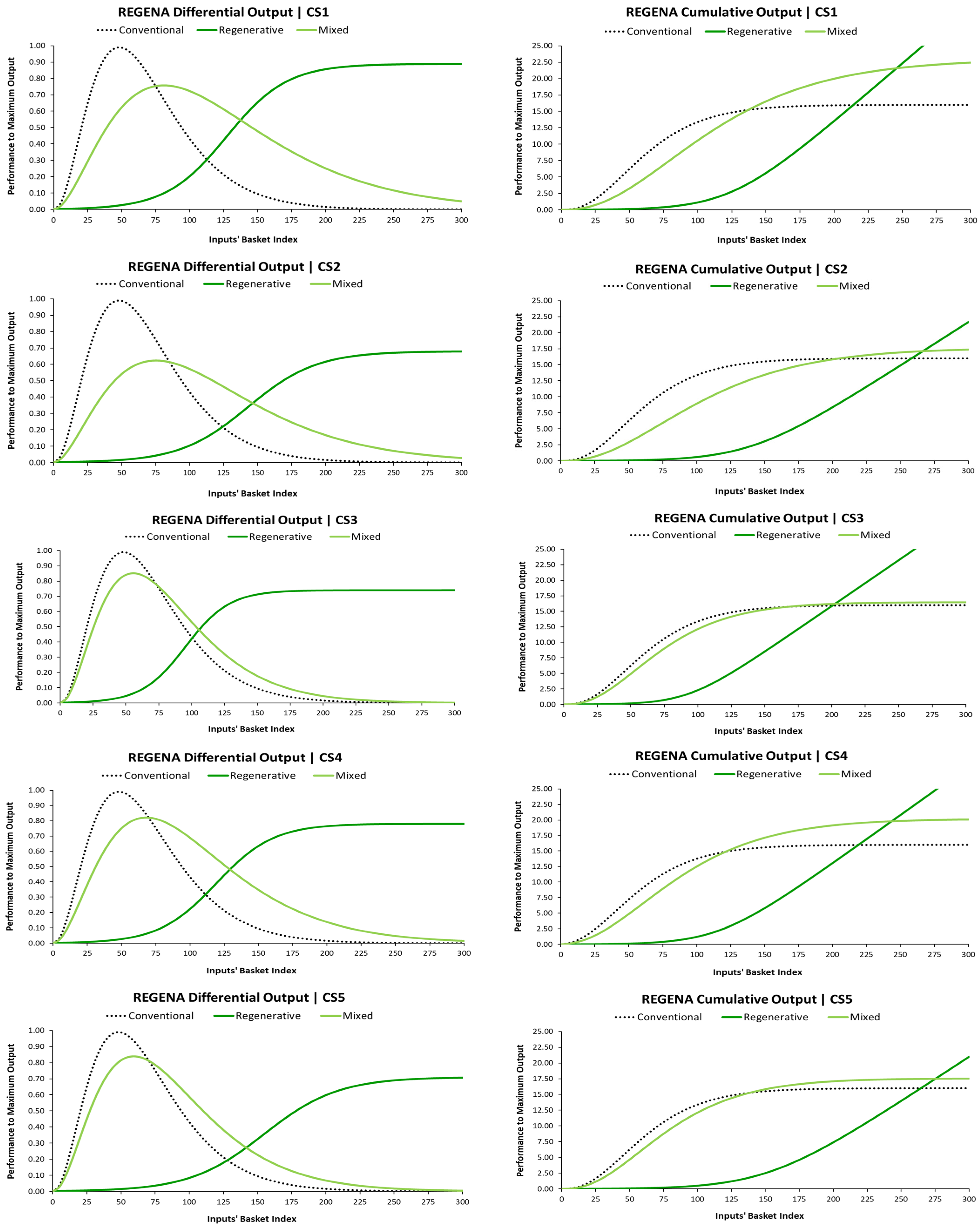
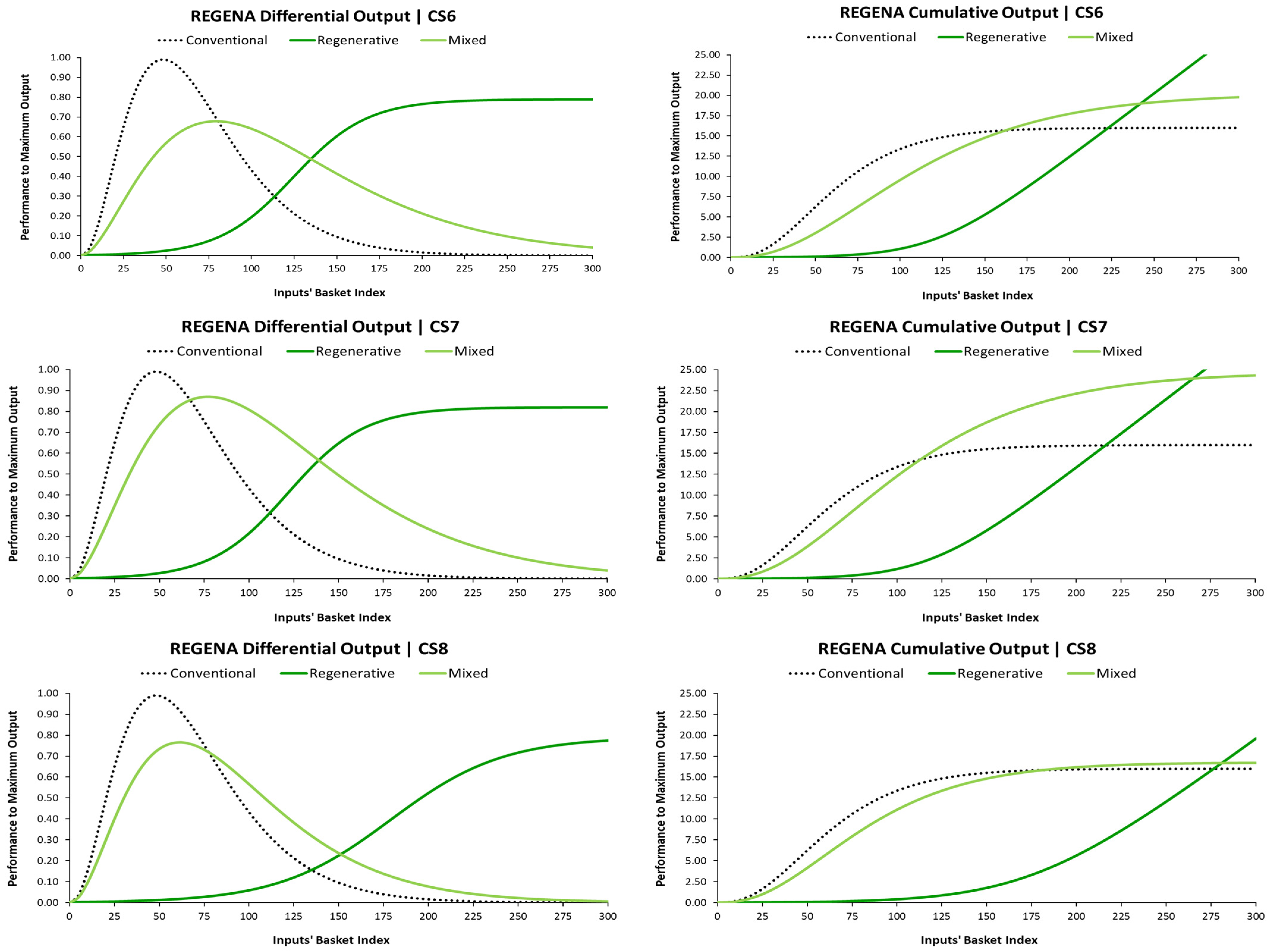
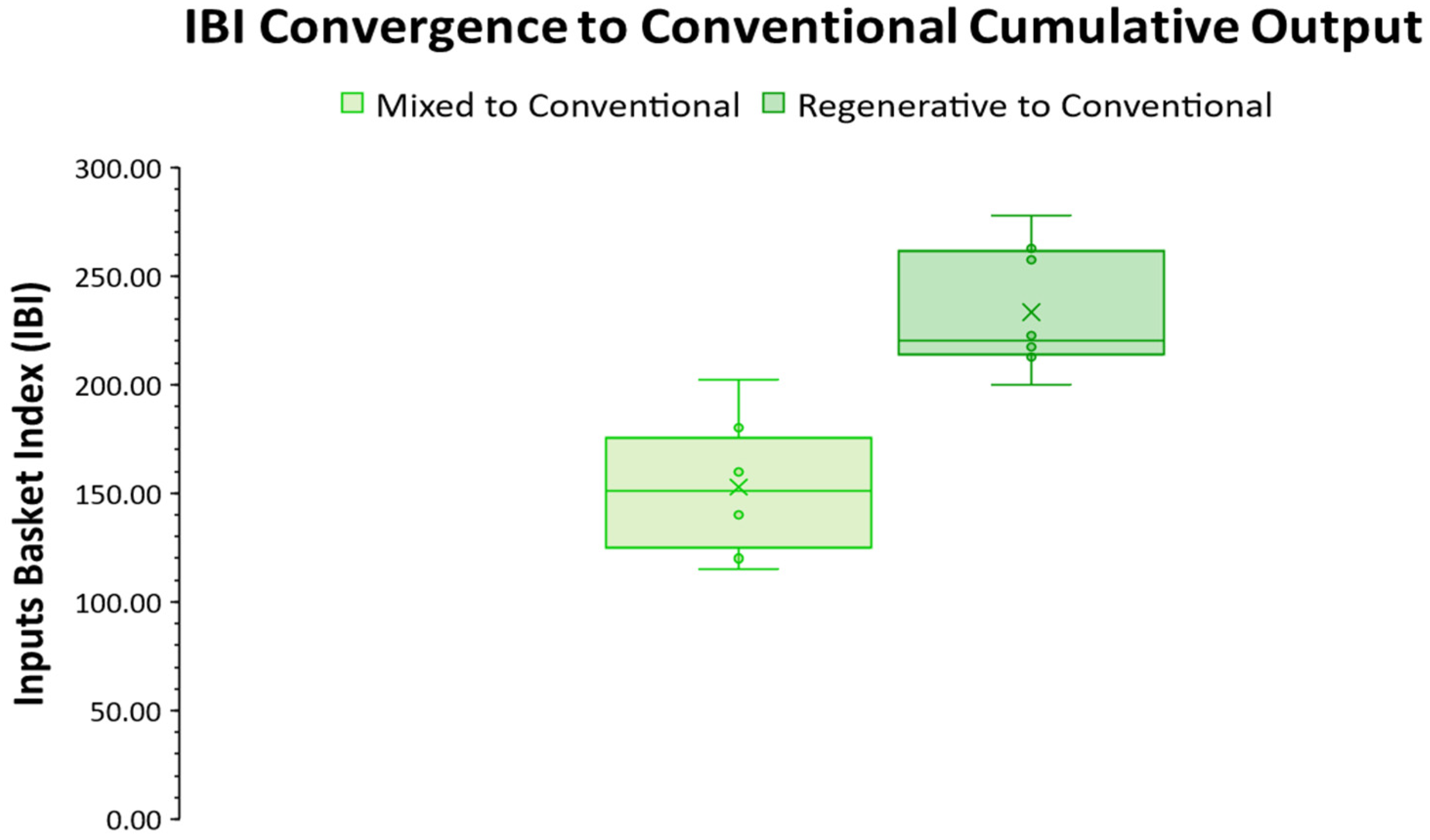
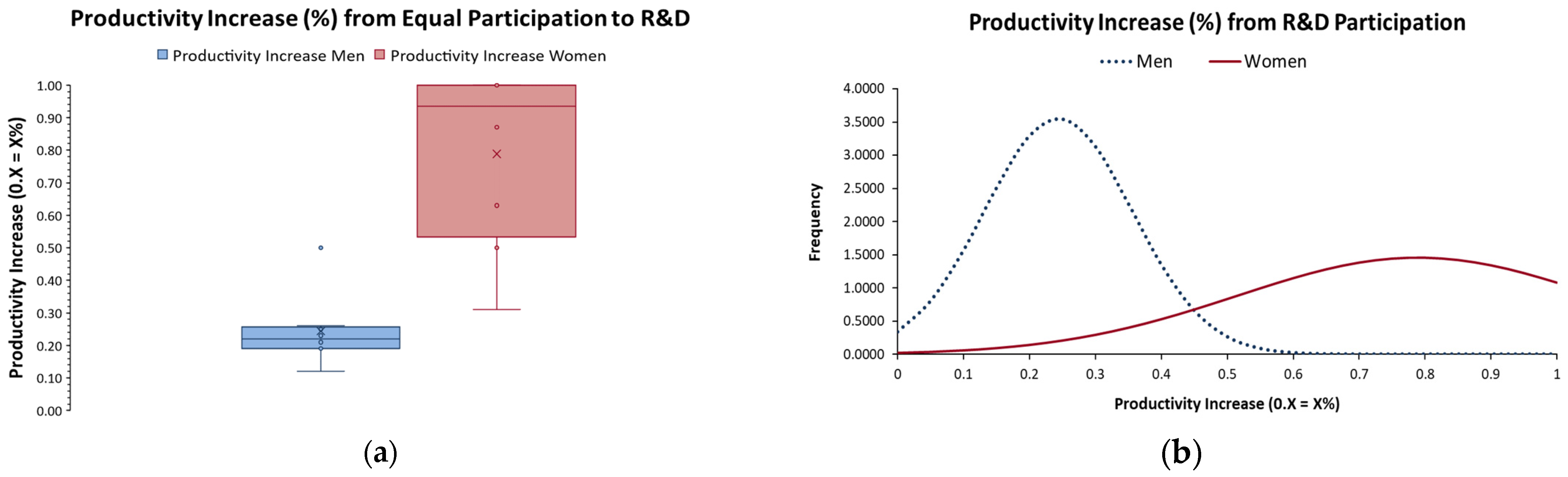
In this section, our core task is to set the theoretical background and data of RA into a concise and consistent economic framework for structuring the REGENA mathematical model on a farm’s crop output by each of the ABMR regenerative farming pillars. In the first part we examine the compatibility of REGENA v2.0 to EU Taxonomy framework and in the second part we develop analytically the set of structural equations.
2.1. Regenerative Farming, REGENA and the EU Taxonomy
The EU SFT constitutes the main financial vehicle of the EU GD. REGENA addresses the specific EU SFT objectives and pillars, aiming at the substantiation of the environmental value of RA solutions. The monetization of regenerative practices’ costs [
43] and values [
44,
45], whether they concern the value of agro-ecosystems’ state improvement from reducing the use of petrochemical fertilizers at lifecycle [
46], the generation of new ecosystem services [
44,
47] or land tenure optimization [
48], constitutes a prerequisite for financial institutions to direct capital towards RA investments with measurable impact on their credit rating profiles and monetary yields. Experimental crops have demonstrated significant profitability potential in EU countries [
49,
50,
51], as well as in other continents [
52,
53,
54] within integrated economic–environmental accounting frameworks [
3].
In such a context, the EU GD and SFT address the scientific challenges of RA and the conditions for its market upscale future commercial utilization. Specifically, we may identify four priority objectives of REGENA in relation to the six EU SFT pillars: (a) the depiction of tailored approaches to address climate change, desertification, pollution and low-income challenges into a concise and coherent microeconomic production function, applicable to small farms in the EU with focus on areas under significant pedoclimatic stress, such as the Mediterranean [
23]; (b) the production function’s capacity to depict adequately the positive effect of chemicals’ use reduction via their substitution by organic fertilizers, biostimulants and organic waste biomasses; (c) the deriving restoration and regeneration of soil health via consortia of beneficial micro-organisms [
55,
56,
57], the use of resistant local varieties and their synergies with the soil’s microbiome [
58,
59] and adoption of agronomical practices, such as no-tillage and cover crops; and (d) the production function’s capacity to depict the farm’s potential for restructuring its production factors [
60,
61] and grow its income from the knowledge of local natural capital.
Table 1 below presents the relation of the REGENA function to the six pillars of the EU SFT.
By the above criteria, REGENA is directly related to the EU Taxonomy pillar 1 (Climate Change Mitigation), accounting for CO
2 removal from the atmosphere and its transformation into
Soil Organic Carbon (SOC). SOC is a fundamental indicator for regenerative farming [
62,
63,
64] and forest conservation [
64,
65], where both are part of
Nature-based Solutions (NBS). A respective strong relevance is found for pillar 2 (Climate Change Adaptation) via the use of resistant varieties for coping with extreme weather phenomena, as well as pillar 6 (Biodiversity and Ecosystems) via micro-organisms that enhance soil biodiversity and generated ecosystem services. Pillar 4 (Transition to a Circular Economy) follows, as REGENA includes the effect of organic biomasses for micro-organisms’ growth along with pillar 5 (Pollution Prevention and Control), as N-fixation bacteria can reduce the use of petrochemical fertilizers. Respectively, resistant varieties can reduce the use of chemical pesticides, while agronomical practices, such as no-tillage and cover crops, can increase soil water retention capacity, reduce ET and minimize excessive water use that combined with excessive use of fertilizers causes eutrophication and aquifer pollution. Finally, pillar 3 (Sustainable Water and Marine Resources) is mainly related to
Blue Economy; hence, it is the least relevant to REGENA, with its main direct connection being the variables of
water resource depletion and
marine eutrophication (for discharges in coastal areas) in the
Product Environmental Footprint (PEF) [
66] method, as a benchmark EU lifecycle analysis standard.
As regenerative farming utilizes soil micro-biodiversity and organic biomasses, this work primarily examines the farm’s production factors’ composition change. Of vital importance is the farm’s knowledge stock on the soil’s natural capital features and its utilization for endogenous growth and income increase. Empirical studies [
9,
67,
68,
69] show that the driving force for the transition from
subsistence (as the lower poverty bound) to
surplus agriculture across various historical periods was the knowledge accumulation on the features of local agro-ecosystems and its sharing between neighboring farms. Modern cases of subsistence farming in Africa [
29] demonstrated that the knowledge of the features of local ecosystems, combined with crop diversification, yielded promising results for small farms in terms of income growth and emancipation of women. This aspect is simulated by REGENA v2.0, expressing the endogenous growth potential from the equal participation of women in the research process in the examined plots.
Finally, a frequent confusion is observed when regenerative practices are interpreted as primitive methods that were prevalent in the agrarian phase of human civilizations [
6] and currently an option exclusively for developing countries that lack access to mechanical capital. This confusion is enhanced when regenerative farming is considered to incorporate many hydroclimatic risks due to its high dependence on rain-fed agriculture [
70]. However, although regenerative farming shares with rain-fed agricultural practices the low environmental footprint at lifecycle as a common feature, it should be distinguished from it. For instance, regenerative farming adopts irrigation technologies; however, those of high water efficiency (such as drip irrigation) are a feature also incorporated in pillar A of the REGENA v2.0 function.
2.2. Structuring the REGENA Function
The foundation of REGENA is the mathematical formulation of the ABMR pillars to depict their
synergistic or
competitive activity. From an economic perspective, this is translated as
substitutability or
complementarity. The modeling of the ABMR pillars is enriched with environmental, economic and social data from each examined CS, which are classified into 5 categories: (a) Energy use; (b) Water use; (c) Fertilizer use; (d) Climate; and (e) Social. The list of the metadata is presented in
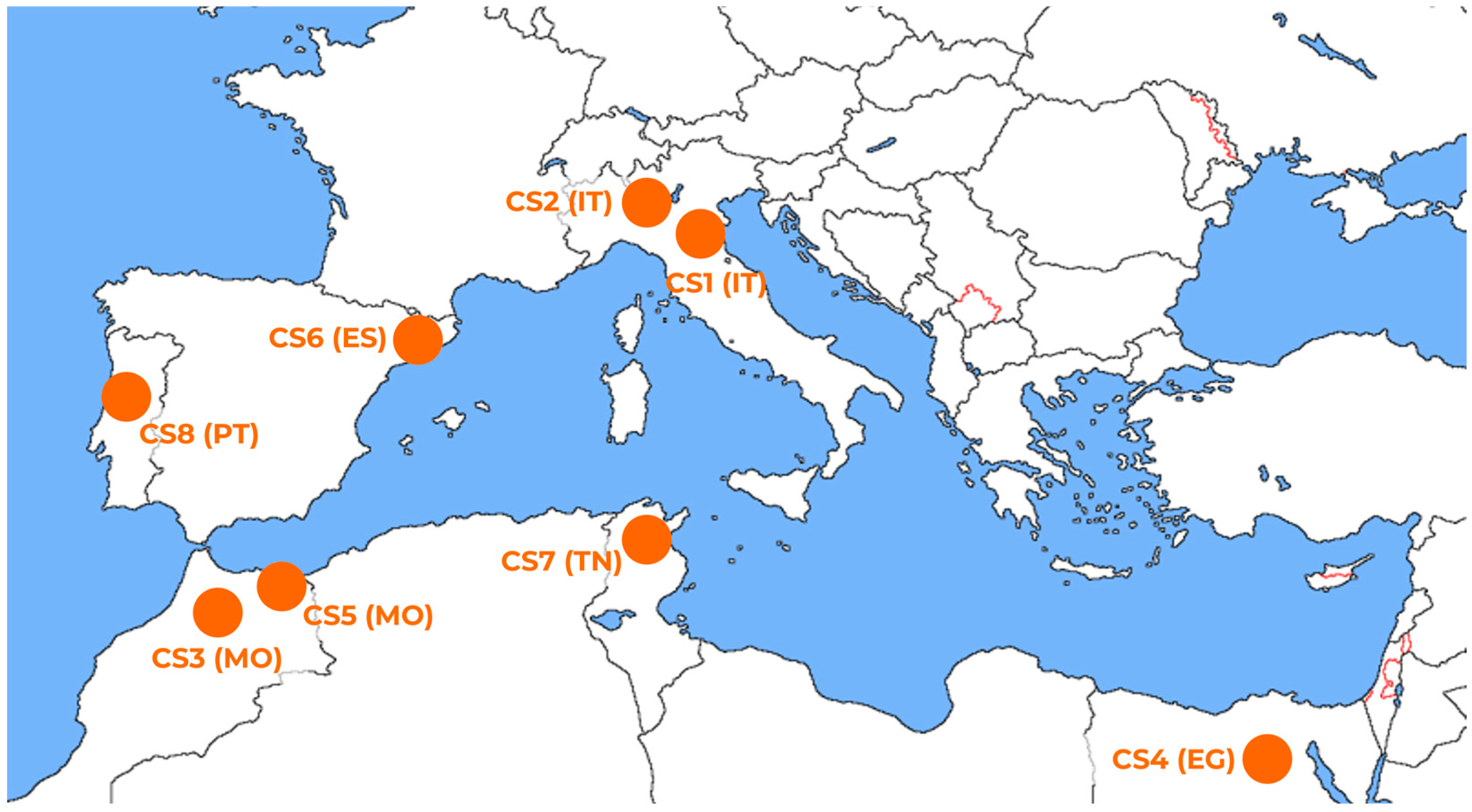
Appendix A.3. The limitations concerned (i) the low availability of data; (ii) the type of the experiments, as some CSs performed pot experiments—incorporating significant uncertainty on how an upscaled open field experiment would behave—and (iii) scale, as even the CSs performing field plot experiments were too small in size to be considered representative of a real-world farm. To cope with these constraints, it was necessary to resort to external data, combined with rational assumptions. These inputs were then transformed into the variables of REGENA to perform structural change simulations. The simulations compare the output of a standardized conventional farm to a hypothesized regenerative farm of the same size for each CS.
REGENA v2.0 combines elements from the
Cobb–Douglas [
25], the
Halter Transcendental [
27] and the
de Janvry Generalized Power [
26] production functions (for a thorough mathematical formulation see
Appendix B.1,
Appendix B.2,
Appendix B.3 and
Appendix B.4). REGENA consists of a system of
nested relationships and output elasticities that signify the productivity of each production factor separately. These two features endogenize the physical properties of agro-ecosystems that affect the number of other inputs. For instance, the high supply of residual organic biomasses that enhance the growth of the populations of micro-organisms signifies that lower amounts of chemical fertilizers will be required. The general form of the REGENA function is:
Equation (1) combines features from Equations (A1)–(A3), as it adopts the multiplicative formulation on the relation between production factors. The necessary condition of multiplicative forms is the positive quantity of all production factors. If the quantity of even one production factor is zero (=0), the total output will collapse. This condition is consistent to physical properties of agricultural systems as it suggests the validity of Liebig’s
Law of the Minimum [
71], determining total output (further analyzed in Equation (9)). In contrast to the Cobb–Douglas function, this formulation does not require the assumption of constant returns to scale. Any input
Xi is expressed endogenously as a function of 0 →
n − 1 inputs, which stands for
the input is either an independent variable or it is a function combining up to n −
1 nested variables, raised in the exponent
ai that depicts output elasticity. In addition, the constant
Q0 depicts the minimum (reference) agricultural output level that grows by how effectively the production factors combine. Hence, for
ai ∈ (0, 1), production factors combine ineffectively, as
Q0 divisor; for
ai = 1, production factors combine with
neutral effectiveness; while for
ai ∈ (1, +∞), production factors combine effectively as
Q0 multiplier. Equation (1) can express both the Halter [
27] and de Janvry [
26] forms, as presented in Equations (A2) and (A3). By simply assuming that each variable
Xi follows the
General Power form of Equation (A3), where for
fi(
X) > 0 and
eg(x) = 1 →
g(
X) = 0, the variable reduces to the Cobb–Douglas-type [
25] monotonic form, as in Equation (A1).
The first REGENA element is the stock of scientific and technological knowledge (
A) that regenerative farms accumulate across their shift from conventional practices. Even if conventional production functions—including Equations (A1)–(A4)—depict (
A) as exogenous coefficient that multiplies linearly total output across technical level upgrades, we depict it as an endogenous variable depending on the knowledge accumulation on beneficial
micro-organism (pillar M) and
biomass (pillar B) species (
S) as complementary inputs:
Equation (2) basically suggests that as the species of populations of micro-organisms (
MS) grow, statistically new and more available samples can be identified so that the total knowledge on the micro-ecosystem becomes increasingly representative of the full regenerative potential of the farm, at rate (
m). Respectively, organic biomass species (
BS) have a similar effect; as their quantity increases, farmers can classify, separate and utilize them with higher precision for the soil’s fertilization, at a rate (
b). Equation (2) also constitutes a multiplier of manual
Labor (
LM), as every additional hour dedicated in the farm is increasingly efficient due to the (exponential) accumulation of knowledge [
30,
31,
36]. Hence, the total labor (mental and manual) in the farm is:
Equation (3) depicts the manual labor
LM variable as independent, as it only concerns standard works that any unskilled worker can perform. Any special skill, knowledge and technique that is beneficial for the better care of the soil is a part of variable
A0, depicting mental labor that is further augmented by the knowledge stock on micro-organisms and biomasses. The output elasticities (
λ) of manual labor, as well as (
α) of knowledge, are the typical exponents found in all multiplicative production functions. Equation (3) suggests an exponential growth of knowledge even when the diversity of micro-organisms
MS and biomasses
BS reaches its maximum value. The background rationale for this assumption is that even when a farm fully adopts regenerative practices, its knowledge continues to grow, becoming more elaborate via the study of
MS,
BS combinations in variable pedoclimatic conditions. In contrast, the use of conventional
Fertilizers (
F) is competitive with the use of biomasses and the growth of micro-organism populations, as follows:
Equation (4) depicts the competitive relationship between micro-organisms and conventional fertilizers (
F) by a rate (
φ). This rate expresses the intensity of micro-organisms crowding-out by the use of each unit of conventional fertilizer. Biochemically, coefficient (
φ) derives from the modeling of
kinetic responses and essentially expresses macroscopically the kinetic response of micro-organisms to the toxicity of petrochemical fertilizers in terms of population decay. It is anticipated that different micro-organisms have different response towards conventional fertilizers; hence, this coefficient is essentially a
weighted average of a “basket” of selected (tested) micro-organisms. In addition, the total amount of fertilizers (
FT) is the sum of all species of petrochemicals and organic biomasses, as:
Equation (5) essentially depicts that the composition of fertilizers is categorized into two major classes that are competitive with each other in the plot. An issue of major importance is to model the
effectiveness equivalence between conventional and organic fertilizers to identify two major dimensions: (a) the conditions where the two fertilizer types can achieve the same crop output—irrespective of long-term sustainability dimensions—and (b) the real potential of substituting petrochemicals with (waste) organic biomasses in the field. The equivalent quantity of each unit of organic biomass (
B) that is competitive with a unit of chemical fertilizer (
F) is:
Equation (6) suggests that the petrochemical fertilizer equivalent of a total quantity of biomass (
B→F) as organic fertilizer consists of a base amount (
B0), normalized (multiplied or divided) by the
equivalence coefficient (
h). The underlying assumption is that petrochemical fertilizers are manufactured and processed to maximize the concentration of nutrients per unit mass [
72]; hence, unprocessed (recycled) organic biomasses produced naturally contain these nutrients in lower concentrations. The value domain of coefficient (
h) practically expresses the biomass quantity required to substitute one unit of fertilizer for an
equivalent result. Hence, for
h < 0, the conventional fertilizer is more efficient than the biomass, for
h = 0, both are
qualitatively equivalent, while for
h ∈ (0, 1), the biomass is less efficient due to lower concentration of necessary nutrients. Respectively, the base amount
B0 is considered to be a fraction of total output (
Q) at the previous time step
t − 1 in Equation (1), as:
Equation (7) suggests that the (thermodynamic) losses abstracted from total output are assessed as inadequate for consumption along with any other material losses across cropping and harvesting. These residuals can be reused as biomasses for organic fertilization. The notation in Equation (7) also suggests a closed self-sustained circular system, in compliance with EU Taxonomy pillar 4 (
Table 1). Organic biomasses can be supplied by a wide range of sources [
73], such as symbiotic livestock and agricultural systems [
74], or food wastes from consumer centers that are processing, and distributed back to the farm [
29]. For simplicity we will assume the form of Equation (7) on a closed-loop local supply system and discuss selected REGENA extensions in relation to local, national and global trade facets.
The effect of organic biomasses and petrochemical fertilizers on the growth of micro-organisms’ populations constitute an essential part of the REGENA function. Specifically, 99.6% of global biomass is composed of plants (82.4%) and micro-biota (bacterial biomass with 12.8% share, fungi biomass with 2.2% and single-cell microbes’ biomass with 1.5%) [
72]. Closing the loop that governsthe relationships between micro-organisms, biomasses and petrochemical fertilizers, we model the population growth of micro-organisms as:
Equation (8) suggests that micro-biota diversity and population sizes grow proportionally to the quantity of organic biomasses fertilizing the soil. The coefficient (
γ) depicts the metabolic ability of micro-organisms, which depends on their ensembles’ composition (i.e., how well their composed consortia work synergistically or competitively); maximizing energy and nutrient inputs’ efficiency [
75,
76]. Higher values of (
γ) signify higher metabolism and population growth, reaching the maximum population level more quickly. The maximum population (
M0) is constrained by the
Sprengel–Liebig Law of the Minimum [
71], suggesting that biomass growth is constrained by the growth factor (e.g., nutrient
C,
N,
P,
S) in
minimum relative availability. Relative availability is defined as the exact ratio of the minimum quantity of a nutrient
n, combined with the respective minimum quantities of
n − 1 complementary nutrients to form one unit of biomass, in relation to their environmental availability. Hence,
M0 is modeled to depend on the system’s
limiting factor, as:
Equation (9) depicts the law of the minimum as a
Consumption to Reserves (
C/
R) ratio, which is widely used in natural resource economics and is equivalent to the standard formulation [
72]. In regard to this relation’s physical meaning, a typical necessary ratio of carbon, nitrogen and phosphorus nutrients
C/
N/
P = 41/7/1, with a natural availability of phosphorus at only 0.5 units, will allow the system to utilize only 20.5 units of carbon and 3.5 units of nitrogen to preserve this ratio. Any excess amounts will remain unutilized by the system at the risk of flowing to wetlands and groundwater aquifers; causing eutrophication and pollution. This is an additional value-added of regenerative practices, as nitrogen-fixing bacteria optimize the above ratio [
61] and substitute the use of petrochemical fertilizers, along with the attached risks of water overuse and eutrophication. Results for the use of soil and plant growth-promoting micro-organisms to cope with biotic stresses in economically important crops [
55,
56,
57,
58] demonstrate a respective value for the reduction in chemical pesticides, highlighting the pivotal role of micro-biota for regenerative practices and knowledge accumulation. Completing the modeling of population size of micro-organisms, we postulate the general condition of total output (
Q) in relation to the state of fully adopting regenerative practices or deviating from them (via CA or CA-RA mixes), as follows:
Equation (10) essentially suggests that with full adoption of regenerative practices, the system’s growth will be determined by the micro-organisms’ maximum population (
M0), which in turn depends on the regenerative input (such as organic biomasses) as the limiting factor. Any additional conventional input (such as chemical fertilizers) will either reduce
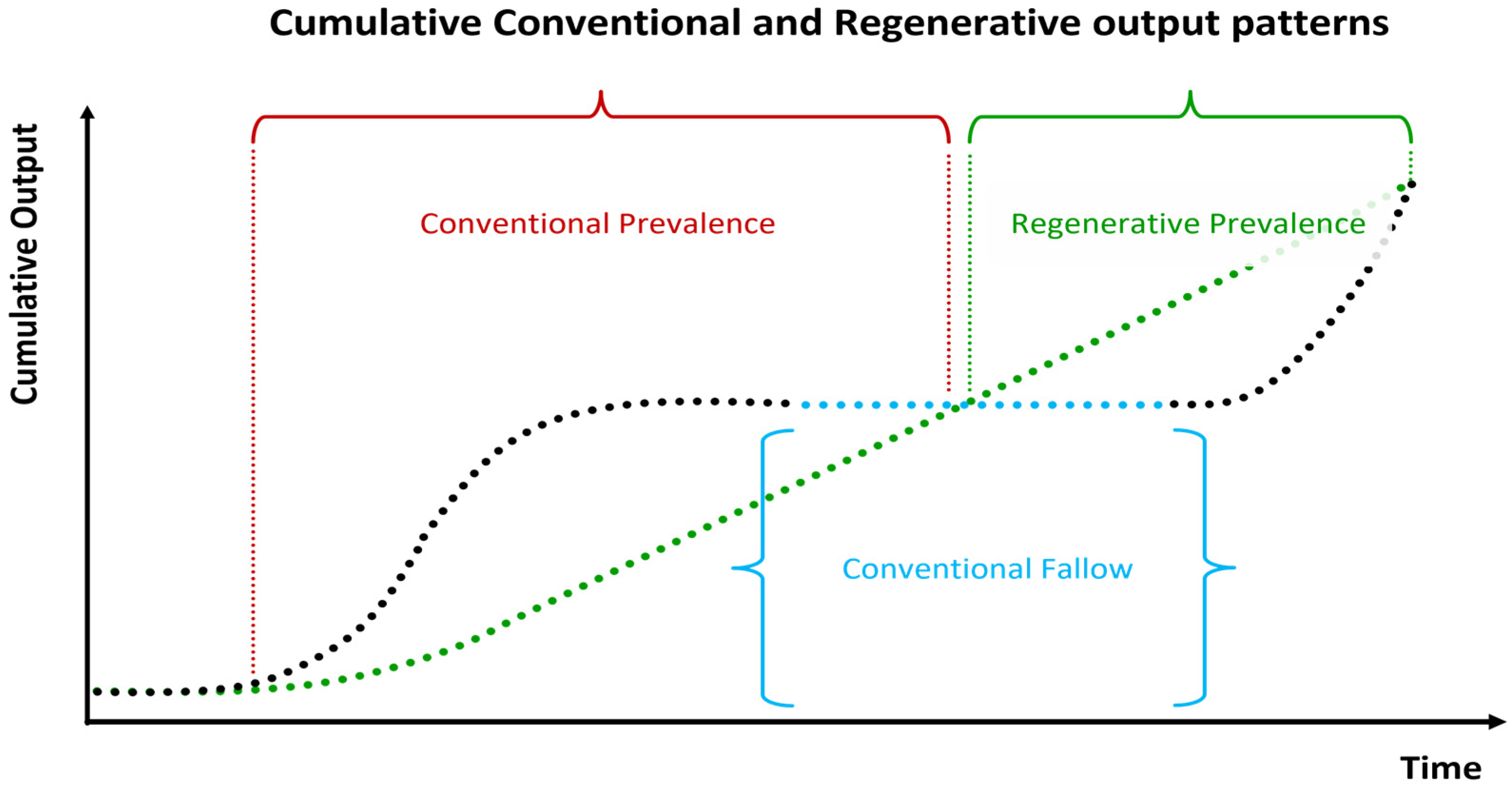
M0 or will not have any further effect on total output growth. Hence, three deriving conditions are the following: (a) the fully regenerative plot follows a logistic growth pattern that is frequently observed in continental natural ecosystems [
75,
76], with the form of the
Chapman–Richards (CR) logistic model (see
Appendix B.4) that is widely used for modeling biomass growth in forest ecosystems. This concept is physically backed by the fact that fully regenerative farms utilize the natural capital of local agro-ecosystems; (b) micro-organisms constitute the pivotal factor, serving multiple purposes in fully regenerative plots; (c) total output of mixed conventional–regenerative or fully conventional practices is not necessarily lower than the full regenerative farm’s output. However, conventional practices are long-term unsustainable, as they require extensive fallow periods after the intensive use of chemical fertilizers and pesticides, while regenerative farming are able to produce perpetually, via cover crops and crop rotation. This is an issue that this work discusses later in more detail.
Modeling crop resistance against weather and climate stresses, such as heat shocks and droughts, is an additional vital element of the REGENA structural equations. A range of favorable statistical temperature properties (such variability) for plant growth constitutes by itself a production factor for crop output. Stability of plant biomass growth across a wider range of temperatures signifies higher resistance and crop output predictability. Economically, that translates into lower risk of crop failure, ecosystem services’ provision [
72], as well as lower insurance costs, either as compensations or weather derivatives [
77]. Although with technological progress the dependence of agriculture from hydrometeorological phenomena is highly mitigated [
70], optimal combinations of weather conditions maximize crop output and reduce costs. The underlying variable is temperature (
T), modeled as a stochastic process following the
Normal Distribution T(
μ,
σ), with
μ as the mean value and
σ depicting standard deviation [
48]. Irrespective of the real distribution of temperature, we may depict the map of a crop variety’s
internal productivity (
H) across a range of temperatures with the following general mathematical form:
Equation (11) is essentially the continuous and symmetrical quadratic map [
65,
72], where the parameter values determine the
range of the map’s positive values, as well as its global
maximum value. For simplicity, we may assume
c = 0, so that the initial value of the map is
T = 0. Its physical meaning is that for any deviation from an optimal temperature, the system will perform less than maximum. In our case, this concerns crop output that is highest at a specific temperature, while it will be reduced for any deviation from it; higher or lower. The significance of temperature-output quadratic map is to indicate crop
intrinsic productivity. For instance, as the maximum point of the quadratic map is for
T =
ε/2∙
η [
6,
72], setting a reference optimal temperature at 25 °C and beginning from a reference value of a crop with neutral resistance ability at
ε = 1, the quadratic map yields by default a value of
η = 0.02 for a
ε/
η ratio equal to 50 °C. Hence, the physical meaning of the quadratic map is that the crop will be able to survive within a range of 0–50 °C, with its maximum productivity at 25 °C.
This
ε/
η ratio can be preserved for infinite combinations of parameters
ε and
η values. For example, even if both combinations
ε1/
η1 = 1/0.02,
ε2/
η2 = 2.5/0.05 preserve this ratio, the second combination suggests higher crop intrinsic productivity, as for any temperature
T it is capable of higher yield. Respectively, exponent (
δ) is a smoothing
resistance or
homeostasis coefficient. This approach is quite representative of the arid and semi-arid conditions in the Mediterranean [
23] and related to the use of
Weather Derivatives (WDs) [
77] as financial instruments for managing operational risks deriving from weather variability. From a financial standpoint, planting resistant varieties in heat-stressed areas constitutes a form of future cost savings, from the avoidance of paying the premiums of such instruments. These aspects are part of regenerative financial engineering schemes discussed in the results, as simulations show that regenerative practices outperform conventional or mixed practices with significant time lag.
The next category of variables concerns environmental footprint intensity of natural resource inputs. These inputs are further grouped into energy-intensive and water-intensive. The group of energy-intensive resources is modeled as follows:
Equation (12) expresses the farm’s energy use (
E) as a function of mechanical capital (
K), petrochemical fertilizers (
F) and conventional pesticides (
P). The coefficients concern the energy use by each unit of mechanical capital (
EK) as the weighted average of the vehicles’ energy mix, multiplied by parameter (
k), depicting CO
2 emissions intensity (such as kg of CO
2 emissions per liter of liquid fuel type) [
78]. Here, the pivotal variable is the base quantity of mechanical capital
K. In the literature of production functions [
14,
24,
25,
26,
27,
28,
29], mechanical capital refers to all kinds of material tools and machinery used to leverage the output of manual labor. In this context,
K is the
minimum quantity of machinery (such as vehicles, sensors, data centers, monitoring tools) in a fully regenerative farm. The energy use of this base machinery stock increases along with the increase in fertilizers and pesticides that are assumed to be utilized by the multi-functional machinery (such as a tractor with multiple compounds’ spraying capacity). Exponents (
s) and (
p) depict the environmental efficiency of fertilizers and pesticides use. Practically,
s and
p function as
resource input elasticities, where contrarily to the
output elasticities of Equations (1)–(3), their desired value is as low as possible for higher environmental efficiency. Respectively to coefficient (
h) in Equation (6), exponents
s and
p operate as multipliers or dividers; specifically, for
s,
p < 0, fertilizers and pesticides are used efficiently, for
s,
p = 0, they are used with standard (baseline) efficiency, while for
s,
p ∈ (0, 1), they are used inefficiently.
Such a formulation provides the flexibility to utilize Equation (12) both as nested REGENA module for measuring the contribution of resources’ thermodynamic depletion at each output level (also compatible with the PEF), as well as an independent environmental footprint production function. The physical meaning of Equation (12) concerns how well mechanical capital operates as a multi-purpose production factor. For instance, a tractor may have attached systems for spraying both fertilizers and pesticides instead of using different vehicles. The combined increase in fertilizers and pesticides will increase monotonically the energy use of the farm, but at a diminishing rate. Finally, coefficient (π) expresses the planted variety’s pest resistance. The coefficient (π) is complementary to its heat stress resistance counterpart coefficient (δ) shown in Equation (11); here addressing biotic stresses. Specifically, π < 0 suggests that the crop requires fewer chemical pesticides than the standard level (π = 0) to cope with biotic stress, while π ∈ (0, 1) signifies that the crop is very sensitive to biotic stress, requiring pesticide inputs above the standard.
In a respective context, the extraction of freshwater resources is modeled in Equation (12) as an energy-intensive input for processing and groundwater pumping. Exponent (
w) essentially expresses the energy use intensity per unit of water, functioning as a multiplier or divider following extraction efficiency. Specifically, a value
w < 0 suggests that to make each unit of water available to the plot is energy efficient above the standard (
w = 0), while for
w ∈ (0, 1), it is highly inefficient. Such a case could concern the pumping of water from increasing depths in nearly depleted groundwater aquifers. As the formulation of energy-intensive production factors in Equation (12) provides flexibility to model their combinations in terms of their overall energetic efficiency (e.g., how productive each fuel and CO
2 emission unit is) or their
Global Warming Potential (GWP), a respective rationale is adopted for the category of water-intensive inputs that are directly related to the soil’s water retention capacity from applied agronomical practices, as follows:
Equation (13) suggests that
water use (
W) inputs are a function of mechanical capital inputs (
K). Coefficient (
ω) expresses the reference state of the soil’s water retention capacity and stress from the currently applied treatment [
79]. Specifically, a value of
ω < 0 can indicate high soil water retention capacity, where tillage has either not been a main treatment type or tillage practices were not intensive or the soil demonstrates high water retention capacity recovery, after tillage. For ω = 0, soil water retention capacity is at reference level [
79], while for
ω ∈ (0, 1), water retention capacity is below standard, requiring frequent inputs of water to compensate for increased
evapotranspiration (ET) and maintain the crop. Coefficient (ω) is multiplied to the minimum required water amount
W0 needed to sustain a completely regenerative plot. Mechanical capital used for tillage, such as tractors, decreases soil water retention capacity by a coefficient (
z). Coefficient z is mitigated by exponent (
ξ), depicting organic biomass inputs that stabilize soil aggregates and increase
Soil Organic Matter (SOM). SOM reduces ET and minimizes new surface or groundwater inputs, thus conserving the soil’s water capital [
80,
81,
82].
After structuring the REGENA equations, three crop compositions are simulated in the 8 examined CSs: (a) exclusively conventional practices, with a global reference plot to which all CSs are compared; (b) mixed conventional and regenerative practices, focusing on the share of regenerative pillars to total crop output across the increase in conventional inputs and (c) exclusively regenerative practices, as part of the EU GD and EU SFT.