
Next Article in Journal
REGENA: Growth Function for Regenerative Farming
Previous Article in Journal
A Vision-Based Robot System with Grasping-Cutting Strategy for Mango Harvesting
error_outline You can access the new MDPI.com website here. Explore and share your feedback with us.
 
 
Article

Microbial and Metabolite Profiling Reveal the Composition of Beejamrit: A Bioformulation for Seed Treatment in Sustainable Agriculture


1
Gujarat Biotechnology Research Centre (GBRC), Gandhinagar 382011, Gujarat, India
2
Centre for Natural Resources Management, Sardarkrushinagar Dantiwada Agricultural University (SDAU), Banaskantha 385506, Gujarat, India
3
CSIR—Central Salt and Marine Chemicals Research Institute, G. B. Marg, Bhavnagar 364002, Gujarat, India
4
Department of Veterinary Biotechnology, College of Veterinary Science and Animal Husbandry, Kamdhenu University, Anand 388110, Gujarat, India
*
Author to whom correspondence should be addressed.
These authors contributed equally to this work.
Agriculture 2026, 16(1), 133; https://doi.org/10.3390/agriculture16010133
Submission received: 13 November 2025 / Revised: 9 December 2025 / Accepted: 13 December 2025 / Published: 4 January 2026
(This article belongs to the Section Seed Science and Technology)

Abstract

Overuse of synthetic pesticides and fertilizers has increased concerns regarding environmental and human health. Indian natural farming practices, which are mainly based on different bioformulations, provide sustainable alternatives to conventional farming. Among other bioformulations, Beejamrit is a cow-based biostimulant that is used for seed treatment to promote seed germination, seed vigor, and tolerance to pathogens. In this study, 16S rRNA amplicon metagenomics and untargeted metabolomics (GC-MS and LC-MS) approaches were employed to evaluate microbial and metabolic profiles of Beejamrit samples, respectively. Metagenomic analysis indicated that Beejamrit consisted of different plant-growth-promoting bacteria, such as Advenella, Comamonas, Lysinibacillus, Acinetobacter, and Arcobacter. GC-MS analysis discovered organoheterocyclics (23%) to be the most prevalent metabolite group in Beejamrit, followed by organic acids (18%) and benzenoids (15%). In LC-MS analysis, lipids (26%) were most abundant, followed by organoheterocyclics (18%) and organic acids (18%). Furthermore, GC-MS and LC-MS analyses identified a wide range of metabolites, including amino acids, organic acids, phenolics, and fatty acids. These findings confirm that Beejamrit contains a wide array of beneficial bacteria and bioactive compounds, thereby elucidating the potential mechanisms behind its efficacy as an effective seed treatment agent. The study offers an initial framework for further standardization and wider application in sustainable agriculture.

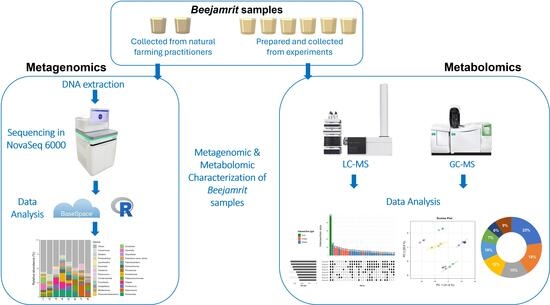
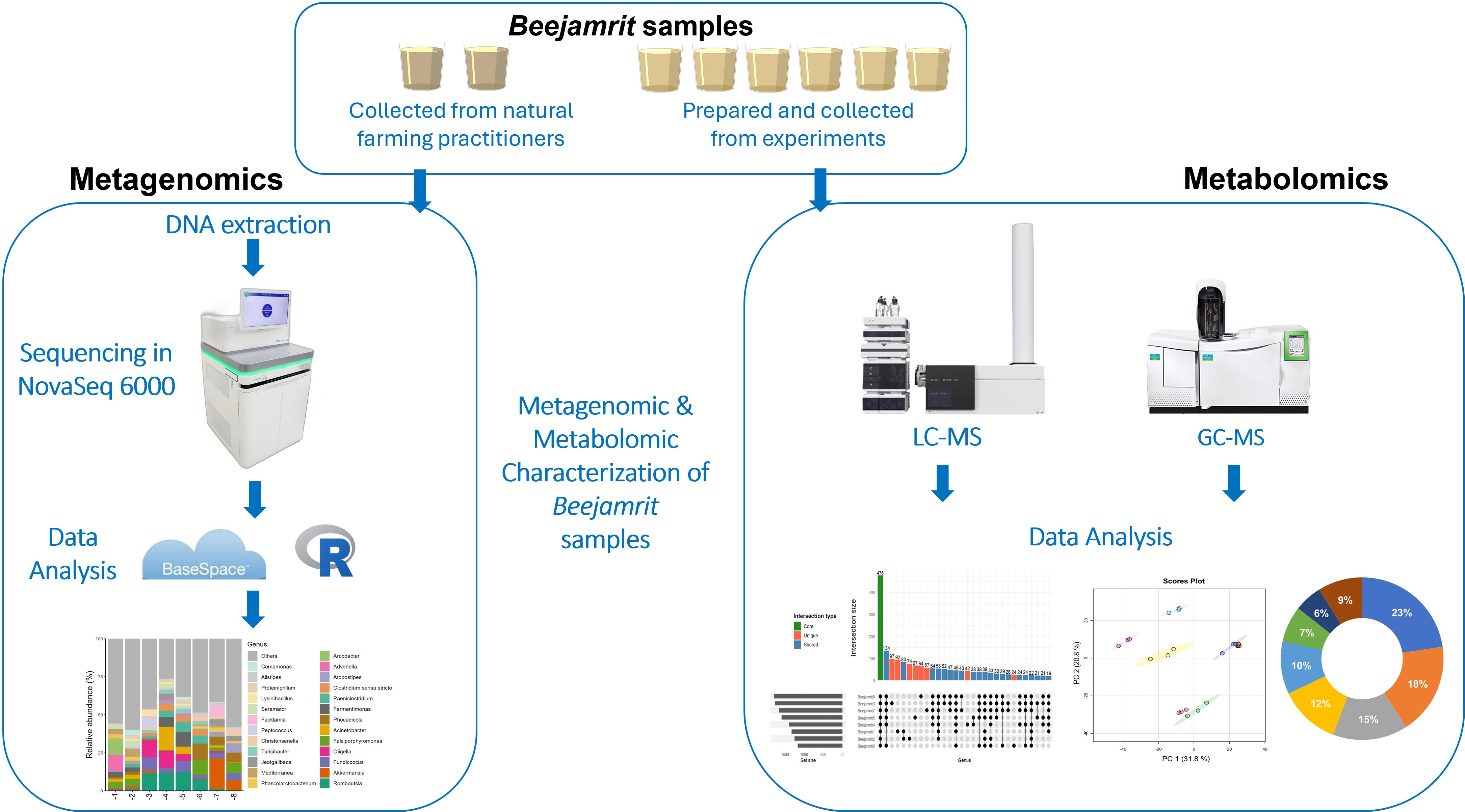
Graphical Abstract

1. Introduction

Intensive chemical farming in recent years has increased food production but simultaneously caused serious health and environmental problems. Excessive use of chemical pesticides and fertilizers has led to soil degradation, loss of microbial diversity, environmental pollution, pest resistance, and harmful effects on human health [1]. As a sustainable alternative, natural farming systems based on traditional knowledge have been identified as an environmentally friendly option to increase the productivity of crops with agroecosystem resilience [2].
Natural farming is based on five major components: Beejamrit (for seed treatment), Jeevamrit and Ghanjeevamrit (as a soil fertility enhancer), Whapasa (soil-water management), Acchadana (mulching), and plant protection (natural bioformulations for pest and disease management) [3]. Beejamrit is used as a seed treatment agent for seeds, seedlings, or any planting material [4]. Seeds are treated with Beejamrit before sowing to improve germination, induce early root growth, and protect against soil- and seed-borne pathogens [5]. It is traditionally made with cow dung (which provides nutrients and beneficial microbes), cow urine (a natural disinfectant for eliminating pathogens), water (which serves as a solvent to facilitate even mixing), forest/bund soil (which introduces beneficial microorganisms), and lime (for maintaining a proper pH balance) [6,7,8,9]. The beneficial effects of Beejamrit are assumed to result from rich microbial consortia and bioactive metabolites. Previous studies suggest that Beejamrit consists of a diverse microbial community with different plant-growth-promoting characteristics like indole-3-acetic acid (IAA) production, solubilization of phosphate, nitrogen fixation, nutrient cycling, and defense against phytopathogens [10,11]. Beejamrit treatment in turmeric cultivation, along with other natural farming inputs (e.g., Jeevamrit and Ghanjeevamrit), showed doubled yield compared to chemical/conventional farming practice and also reported beneficial bacterial and fungal genera [12].
Although Beejamrit is widely proven and used for seed treatment in natural farming practices in various legume crops (groundnut, soybean, moth bean, and green gram) and cereals (wheat, maize, and finger millet) [13,14,15], its microbial and metabolite characterization is not well understood. A comprehensive, simultaneous characterization of both the microbial consortia and the metabolite landscape of Beejamrit is lacking, hindering our understanding of the synergistic mechanisms responsible for its bio-stimulant effects and preventing its wider acceptance and scientific standardization. Recent developments in high-throughput omics have provided strong tools to establish the scientific basis of such bioformulations. Metagenomics analysis allows for the identification of diverse microbial communities, whereas metabolomics analysis reveals the chemical composition of such bioformulations [16,17]. Considering the limitation of data availability, the present study was focused on 16S rRNA amplicon metagenomics and untargeted metabolomics (GC-MS and LC-MS) to characterize microbial communities and metabolic profiles of Beejamrit samples, respectively. This study offers an initial scientific basis for the use of Beejamrit for seed treatment in natural farming systems by characterizing the microbial and metabolic profiles and highlighting its potential in sustainable agriculture for growth promotion and seed protection.

2. Materials and Methods

2.1. Sample Collection and Processing

Beejamrit-1 to Beejamrit-6 samples were collected from the Centre for Natural Resources Management, Sardarkrushinagar Dantiwada Agricultural University (SDAU), Sardarkrushinagar, India, and were prepared following the standard natural farming protocol [9] for application in different crop experiments during 2023–2024. Beejamrit-7 and Beejamrit-8 samples were collected from natural farming practitioners/farmers (Table 1). These samples were prepared by farmers following the traditional method but may include minor variations in ingredient quantities and total volume compared to the standard protocol, reflecting common practice in field-level preparation. In preparation of Beejamrit, 5 kg of fresh cow dung is wrapped in a clean cloth and hung overnight in 20 L of water. At the same time, 50 g of lime is added to 1 L of water and left overnight for stabilization. Next day, the dung in the cloth is squeezed repeatedly for complete release of its extract into the water. Subsequently, about 1 kg of soil, 5 L of cow urine, and the prepared lime water are added to the solution. The mixture is then stirred thoroughly to obtain a homogeneous Beejamrit solution. Seeds are coated with Beejamrit by mixing them using hand, and they are then dried and used for sowing [4,9]. Samples were collected, stored at −20 °C, and processed in triplicate for further analysis.

2.2. DNA Extraction and 16S rRNA Amplicon Metagenomics Workflow

A DNeasy PowerSoil Pro Kit (Qiagen, Hilden, Germany) was used for DNA isolation. DNA quality and integrity were assessed using agarose gel electrophoresis, and purity was confirmed by measuring spectrophotometric ratios (A260/280 and A260/230). The 16S rRNA gene (V3–V4 region) was further amplified using Illumina-barcoded primers [18]. Amplicons were purified using QIAseq beads (Qiagen, Hilden, Germany) and subjected to index PCR with IDT-compatible indices (Integrated DNA Technologies, Coralville, IA, USA). Libraries were normalized to 4 nM and further checked for quality using a QIAxcel Advanced system (Qiagen, Hilden, Germany). Sequencing was performed on the Illumina NovaSeq 6000 platform using 250 × 2 chemistry as per the manufacturer’s guidelines (Illumina, San Diego, CA, USA).

2.3. Data Processing and Statistical Analysis of 16S rRNA Amplicon Metagenomics

The quality of raw FASTQ files was checked using FASTQC, followed by analysis on the Illumina BaseSpace platform (https://basespace.illumina.com). The taxonomic classification of amplicon sequence variants (ASVs) was performed on RDP Classifier v2.14. Data was normalized to the minimum library size after removing the outliers and low-quality samples. Alpha diversity indices (Observed, Chao1, Shannon, and Simpson) and beta diversity (Principal Coordinates Analysis (PCoA) based on Bray–Curtis) were calculated using the Microeco R package v1.16.0 [19]. Unique and shared genera were visualized using the ComplexUpset R package v1.3.5 [20]. Core microbiome analysis was performed using MicrobiomeAnalyst v2.0 [21] with ≥50% sample prevalence and ≥1% relative abundance. Raw data of 16S rRNA amplicon metagenome sequencing was submitted to NCBI (BioProject: PRJEB96337), with sample-wise accession numbers given in Table S1.

2.4. Metabolite Profiling Using Gas Chromatography–Mass Spectrometry (GC-MS) and Statistical Analysis

GC-MS-based metabolite profiling was performed according to the protocols of [22,23] with minor modifications. A total of 200 µL of sample was mixed with 1000 µL of solvent mixture (1:1 mixture of ethyl acetate and methanol), vortexed for 3 min, and sonicated for 15 min. After centrifugation (3000 rpm, 15 min, 4 °C), the supernatant was dried using a Speedvac™ vacuum concentrator (Thermo Fisher Scientific, Waltham, MA, USA). Samples were derivatized with N,O-bis(trimethylsilyl)trifluoroacetamide (BSTFA) containing 1% trimethylchlorosilane (TMCS) at 70 °C for 1 h. A PerkinElmer Clarus 680 GC coupled with a Clarus SQ8C MS with Elite-5 ms column (Shelton, CT, USA) was used for GC-MS. The oven temperature program was set at 60 °C for 2 min, followed by 300 °C at 10 °C/min, and kept at 300 °C for 6 min. A 1 µL sample was injected at 250 °C with a 1:50 split ratio and MS-scanned from 50–600 m/z between 5–32 min. Raw files were converted into .mzML files using ProteoWizard v3.0 [24]. GC-MS peaks were annotated using MS-DIAL v4.9.221218 [25] against the NIST14 spectral library, and blank subtraction was performed to remove background signals before feature extraction. The following parameters were considered for data analysis: a minimum peak height of 2000 amplitude, RT tolerance for identification of 0.5 min, m/z tolerance of 1 Da, EI similarity cut-off of 70%, identification score cut-off of 70%, RT tolerance for alignment of 0.075 min, EI similarity tolerance of 70%, and a sigma window value of 0.5. Unannotated peaks were excluded, and functional group tags (e.g., TMS derivatives) were removed to retain original metabolite names, which were verified against databases. For duplicate retention times, the metabolite with the higher score was retained. Peak intensity data were normalized (sum), log-transformed, and subjected to auto-scaling using MetaboAnalyst 6.0 [26]. Principal component analysis (PCA) was performed. Metabolites were classified using ClassyFire [27].

2.5. Metabolite Profiling Using Liquid Chromatography–Mass Spectrometry (LC-MS) and Statistical Analysis

The sample preparation for LC-MS profiling adopted the procedure given by [28] with slight modifications. A total of 200 µL from each sample was blended with 1000 µL of a multi-solvent mixture of methanol–acetonitrile–water (2:2:1) and then sonicated (20 min) and centrifuged (12,000 rpm, 15 min, 4 °C). Samples were then filtered by a 0.22 µm syringe filter, and a diluted aliquot (450 µL of acetonitrile + 50 µL of filtered sample) was used for LC-MS using Agilent 1290 Infinity II UHPLC coupled with AdvanceBio 6545XT Q-TOF-MS (Santa Clara, CA, USA). Metabolites were separated on an Agilent Zorbax Eclipse Plus C18 column (3 × 100 mm, 1.8 µm) at a flow rate of 0.3 mL/min. Solutions of 0.1% formic acid in water and 0.1% formic acid in acetonitrile were used as mobile phase A and B, respectively. The UHPLC run was carried out with a gradient of 2% B (0–1 min), 30% B (2–10 min), 60% B (11 min), and 95% B (13–25 min), followed by a 1 min post-run wash. The flush port was kept for 15 s, and the needle was washed for 15 min before each injection. The oven was set at 40 °C, and a 5 µL injection volume was taken. MS was operated in the positive ion mode (50–1200 m/z) with a gas temperature of 250 °C; drying gas at 10 L/min; sheath gas at 350 °C, at 10 L/min; nebulizer at 35 psi; nozzle voltage at 1000 V; and capillary voltage at 3000 V. Raw data files obtained from LC-MS were converted to .mzML format using ProteoWizard. Data were subsequently processed in XCMS Online [29] against the METLIN database in the positive ion mode, with blank subtraction applied prior to analysis, and features were extracted using the following parameters: signal-to-noise (S/N) ratio: 6; m/z tolerance: 15 ppm; RT correction method: peak groups, step size = 1; mass error for annotation: 20 ppm; absolute mass error for annotation: 0.05 m/z; m/z tolerance for database matching: 10 ppm; and p-value cut-off for database matching: <0.05. Data files were processed and statistical analysis was performed as mentioned in the GC-MS data analysis.

3. Results

3.1. Microbial Profiling via 16S rRNA Amplicon Metagenomics

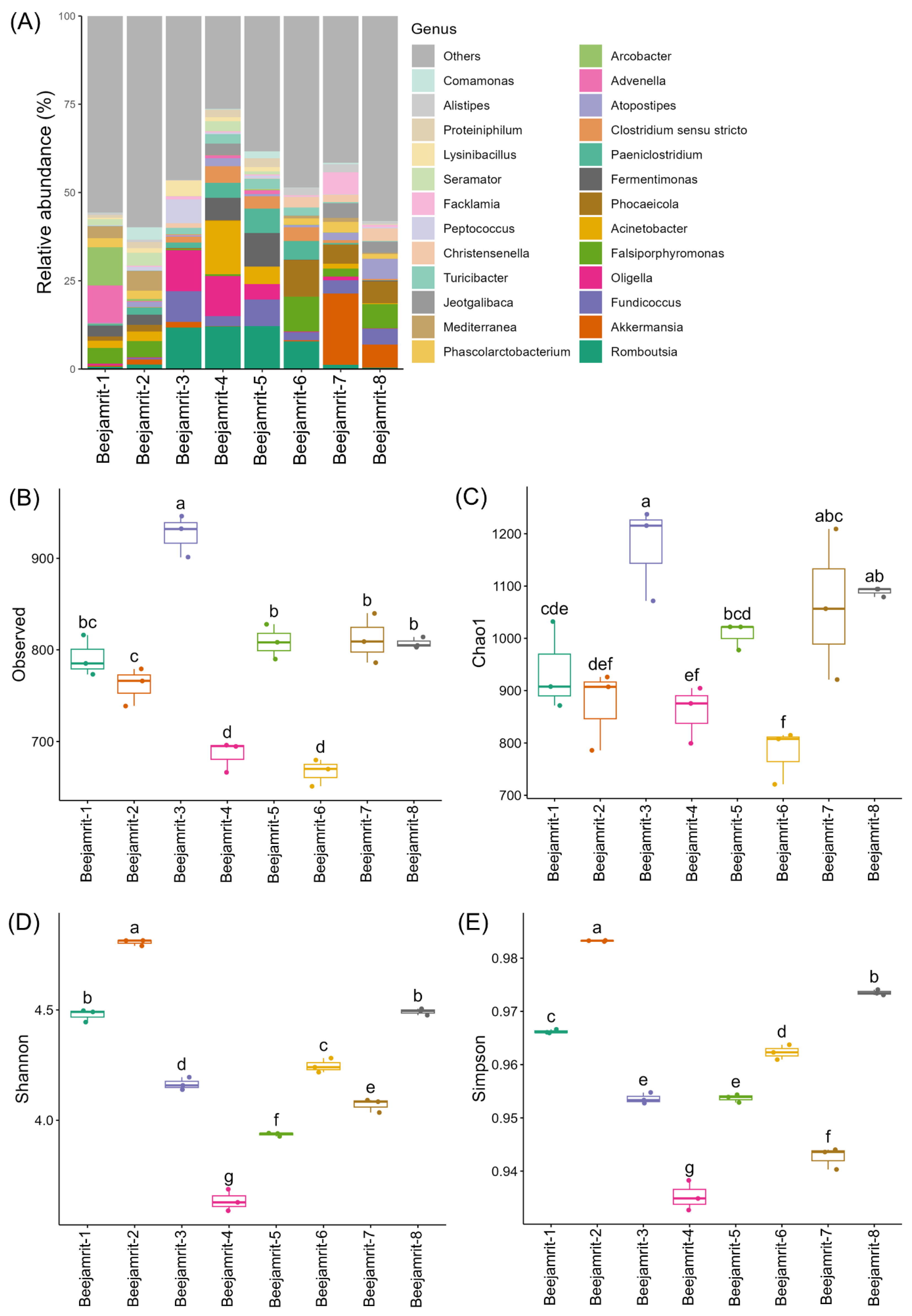
16s rRNA amplicon metagenomics data provided detailed insights into the bacterial diversity of different Beejamrit samples. A total of 5,158,820 reads were obtained from eight Beejamrit samples (processed in triplicate), out of which 4,423,087 reads (85.74%) were classified at the genus level into 2403 unique features (Table S2). Reads were normalized to the smallest library size of 68,736 to ensure comparability among samples (Figure S1). Distinct microbial community structures were observed between different Beejamrit samples, as revealed by metagenomic analysis (Figure 1A). Based on the relative abundance of bacterial genera, Beejamrit-1 consisted of Advenella (~10%) and Arcobacter (~10%) as the most dominant genera, followed by Falsiporphyromonas (~5%), Mediterranea (~3%), and Fermentimonas (~3%). Beejamrit-2 exhibited a relatively even distribution of bacterial genera, with Mediterranea (~5%), Falsiporphyromonas (~4%), Seramator (~4%), and Comamonas (~3%) as the major genera. Beejamrit-3 showed dominance of Romboutsia (~12%), Oligella (~11%), Fundicoccus (~9%), and Peptococcus (~7%), collectively accounting for ~40% of the community. In Beejamrit-4, around 45% of the bacterial population was represented by Acinetobacter (~15%), Romboutsia (~12%), Oligella (~11%), and Fermentimonas (~6%). Romboutsia, Fermentimonas, Fundicoccus, and Paeniclostridium, with relative abundance of ~12%, ~9%, ~8%, and ~7%, respectively, were identified as major genera in Beejamrit-5, whereas Beejamrit-6 was enriched with Phocaeicola (~10%), Falsiporphyromonas (~10%), Romboutsia (~8%), and Paeniclostridium (~5%). In Beejamrit-7, Akkermansia was the predominant genus (~20% relative abundance), and other genera such as Facklamia (~6%), Phocaeicola (~5%), Jeotgalibaca (~4%), and Fundicoccus (~4%) were found to be evenly distributed. Beejamrit-8 contained Falsiporphyromonas (~7%), Akkermansia (~6%), Phocaeicola (~6%), Atopostipes (~6%), and Fundicoccus (~4%) as the predominant genera. Microbial diversity varied significantly among the Beejamrit samples, estimated by alpha diversity indices like Observed, Chao1, Shannon, and Simpson (Figure 1B–E). The Observed and Chao1 indices revealed that Beejamrit-3 exhibited the highest species richness (Observed: 923; Chao1: 1175), whereas Beejamrit-6 (Observed: 667; Chao1: 781) showed the lowest richness. The Shannon and Simpson indices revealed that Beejamrit-2 (Shannon: 4.81; Simpson: 0.98) had the most diverse and evenly distributed microbial community, followed by Beejamrit-8 (Shannon: 4.49; Simpson: 0.97) and Beejamrit-1 (Shannon: 4.48; Simpson: 0.97). In contrast, Beejamrit-4 (Shannon: 3.64; Simpson: 0.94) showed the lowest richness and evenness.
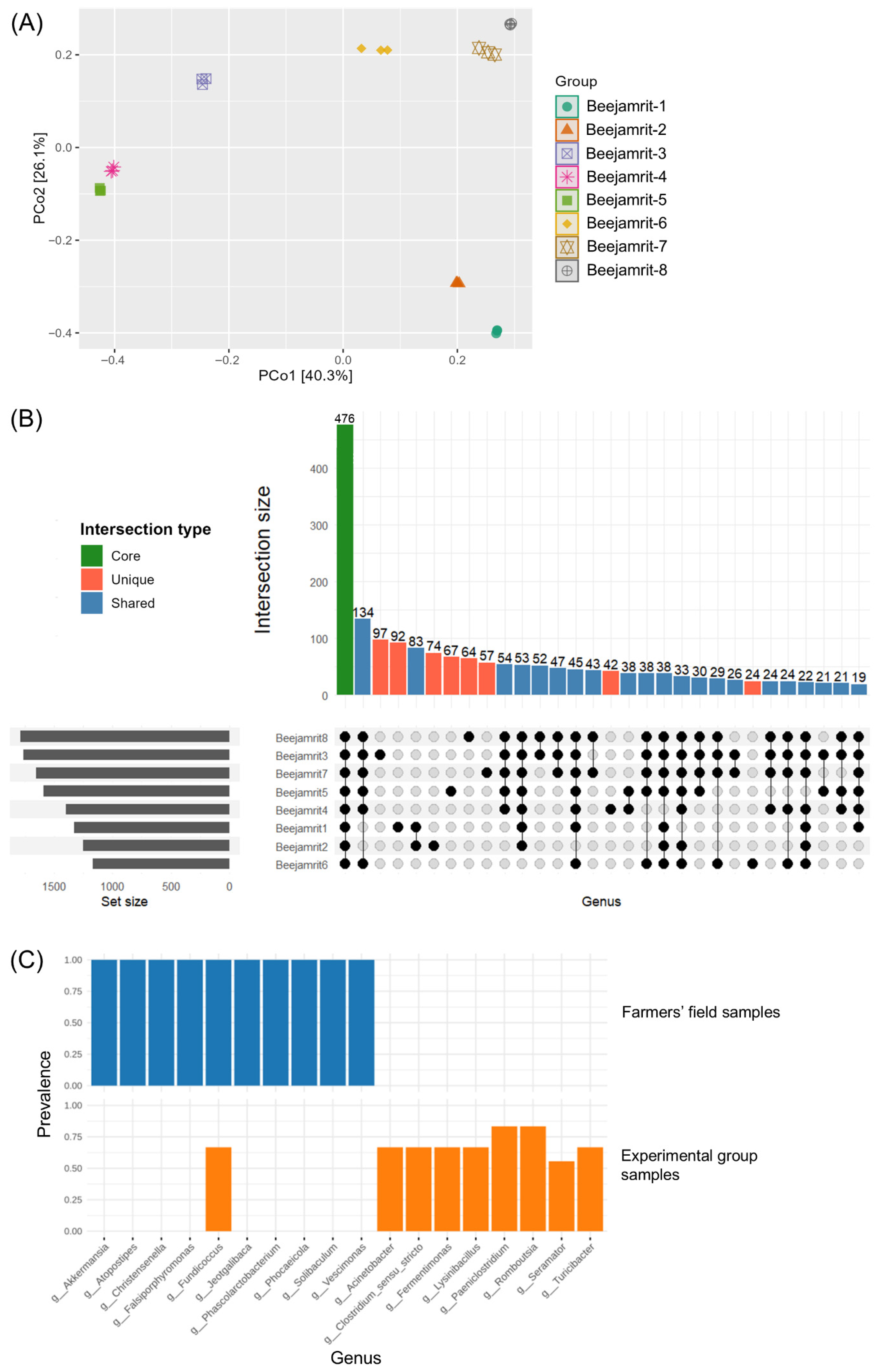
PCoA based on Bray–Curtis dissimilarity (Figure 2A) showed clear clustering of microbial populations between different samples, with PCo1 and PCo2 explaining 40.3% and 26.1% of the total variance, respectively. Beejamrit-1 and Beejamrit-2, which were collected during Kharif 2023, clustered together closely, whereas Beejamrit-4 and Beejamrit-5, collected during Kharif 2024, clustered as a separate group. Interestingly, Beejamrit-3 (collected during Rabi 2023) and Beejamrit-6 (collected during Rabi 2024) formed a specific cluster, different from the clusters of the samples collected during Kharif seasons. Additionally, samples collected from farmers’ fields (Beejamrit-7 and Beejamrit-8) also formed a separate group. The UpSet plot revealed 476 core bacterial genera common to all samples, 517 bacterial genera unique to respective samples, and 874 bacterial genera shared among different Beejamrit samples (Figure 2B). Different Beejamrit samples contained 1168 to 1788 total numbers of bacterial genera, with Beejamrit-8 exhibiting the highest (1788 genera) and Beejamrit-6 showing the lowest (1168 genera) diversity. The core microbiome analysis at the genus level identified distinct bacterial signatures between the two groups, farmers’ field samples collected from natural farming practitioners and experimental group samples prepared at SDAU (Figure 2C). The farmers’ field samples had distinctive core genera such as Akkermansia, Atopostipes, Christensenella, Falsiporphromonas, Jeogalibaca, Phascolarctobacterium, Phaeocaeicola, Solibaculum, and Vescimonas. In the experimental group samples, Acinetobacter, Fermentimonas, Lysinibacillus, Paneclostridium, Romboutsia, Serramator, and Turicibacter contributed to the core microbiota. Interestingly, Fundicoccus was the only genus common between these two groups. Interestingly, Fundicoccus emerged as the sole core genus shared between both preparation types, underscoring its potential ecological importance in the Beejamrit microbiome and suggesting that it may represent a stable member regardless of preparation method.

3.2. Untargeted Metabolite Profiling Using GC-MS and LC-MS

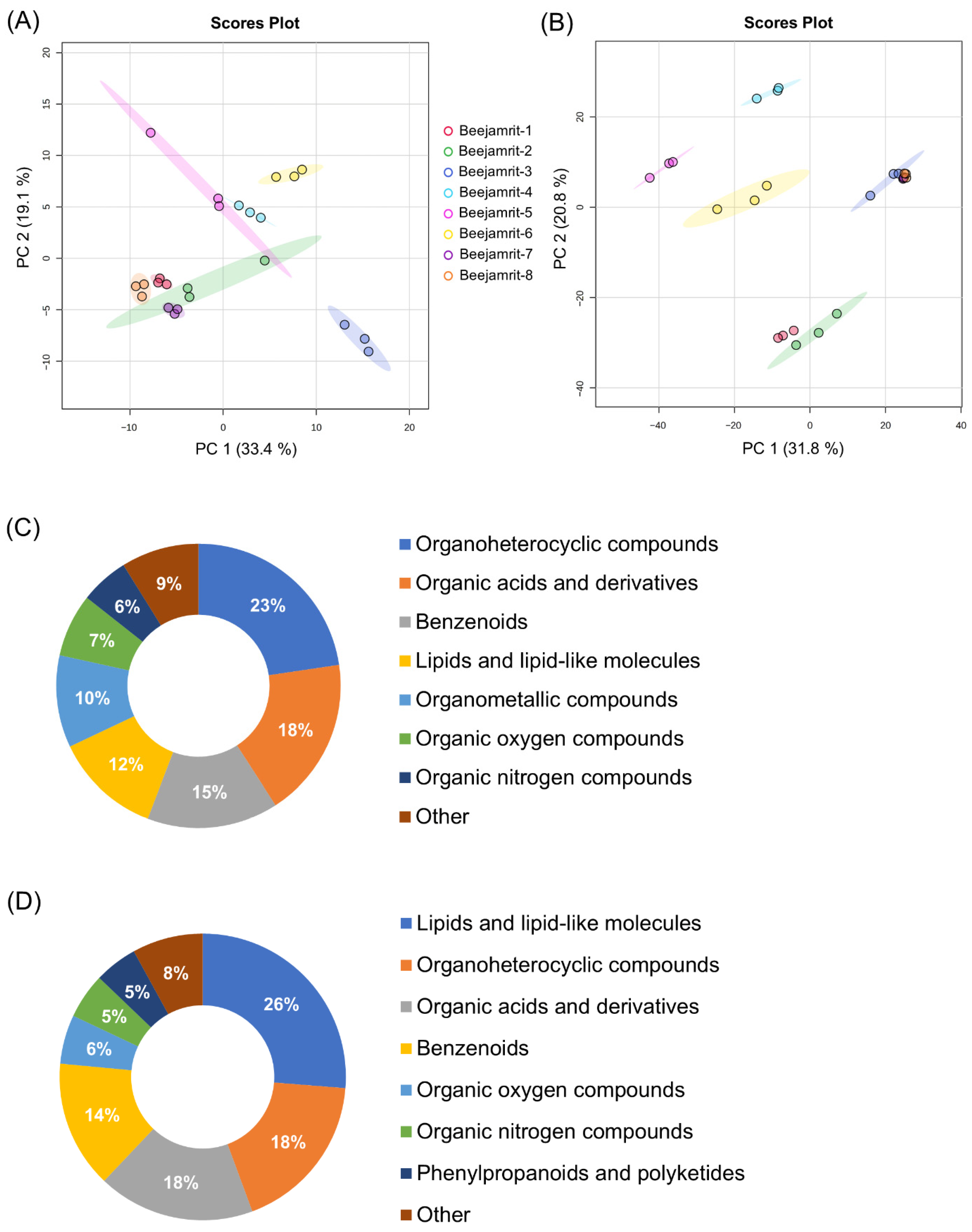
In GC-MS and LC-MS data analysis, 181 and 1501 compounds were retained after filtering, respectively (Table S3). PCA of GC-MS data revealed that the first two components (PC1 and PC2) explained 33.4% and 19.1% of the total variation, respectively (Figure 3A). Similarly, PCA of LC-MS data showed that PC1 and PC2 accounted for 31.8% and 20.8% of the total variance (Figure 3B). In agreement with the PCoA analysis of microbial beta diversity, both GC-MS and LC-MS PCA plots revealed distinct clustering of experimental group samples collected from SDAU during Kharif and Rabi seasons and samples collected from farmers’ fields, indicating season- and source-specific differences in metabolite composition. GC-MS-identified metabolite classification (Figure 3C) showed that organoheterocyclic compounds (23%) were most dominant class of metabolites in Beejamrit samples, followed by organic acid and derivatives (18%), benzenoids (15%), lipid and lipid-like molecules (12%), and organometallic compounds (10%). Organic oxygen compounds (7%) and organic nitrogen compounds (6%) were reported in lesser amounts. Classification of metabolites identified from LC-MS data (Figure 3D) revealed that lipids (26%) were the dominant class in Beejamrit samples, followed by organoheterocyclic compounds (18%), organic acids (18%), and benzenoids (14%), whereas organic oxygen compounds (6%), organic nitrogen compounds (5%), and phenylpropanoids and polyketides (5%) were detected in comparatively lower proportions.
GC-MS analysis of Beejamrit samples identified various key metabolites with proven functional importance. These include amino acids such as L-alanine, L-proline, and L-glycine; aliphatic organic acids including acetic acid, propanoic acid, succinic acid, and 3-methylbutanoic acid; aromatic organic acid such as benzoic acid, 2,3-dihydroxybenzoic acid, 4-aminobenzoic acid, and IAA; as well as palmitic acid (fatty acid) and 2-propanone (ketone). Metabolites identified through GC-MS and LC-MS analysis have possibly been reported to have some activities signifying the role of Beejamrit. LC-MS analysis identified various important metabolites, including a piperazine derivative (7-piperazin-1-yl-isoquinoline), an amino acid derivative (N-stearoyl valine), and the tripeptide glutathione; fatty acid amides such as N-acyl ethanolamines (behenoyl-EA and eicosanoyl-EA) and palmitamide; aromatic acids like benzoic acid and phenyllactic acid; as well as glycosides like plantamajoside and rutin.

4. Discussion

This study provides an integrative characterization of Beejamrit, demonstrating that it functions as a biologically rich and chemically complex seed-treatment bioformulation. Despite noticeable variability in microbial composition and metabolite profiles across seasons and ingredient sources, our results reveal a consistent enrichment of functionally important microbial groups and bioactive metabolites. Together, these components form a synergistic consortium capable of promoting seed germination, enhancing nutrient mobilization, and strengthening early seedling defense. By combining 16S rRNA profiling with untargeted GC-MS and LC-MS metabolomics, we show that Beejamrit harbors complementary microbial traits and metabolite signatures that collectively underpin its biostimulant activity. This overarching pattern provides a unifying framework for interpreting the detailed microbial and chemical findings presented in the subsequent sections.

4.1. Microbial Profiling via 16S rRNA Amplicon Metagenomics

16S rRNA amplicon metagenomic analysis revealed various bacterial genera that have previously been reported in the literature for their potential role in plant growth promotion and plant defense (Table 2). Among the identified bacterial genera, Advenella, Comamonas, Lysinibacillus, and Acinetobacter were reported to produce IAA, an important phytohormone that promotes nutrient uptake, root growth, and overall plant development [30,31,32,33]. Beejamrit also contains various bacteria that improve the nutrient availability and nutrient uptake in seeds and seedlings to promote overall growth and development. Comamonas and Arcobacter are endophytic bacteria which fix atmospheric nitrogen and make it available to plants for better growth [34,35]. Comamonas and Acinetobacter solubilize insoluble phosphate, potassium, and zinc, thereby increasing the nutrient supply to seedlings [33,34]. Several other bacteria produce bioactive compounds and enzymes that help in nutrient mobilization, i.e., Acinetobacter and Lysinibacillus produce siderophores (iron mobilization) and Advenella produces phytase (phosphorus mobilization) [33,36,37]. Seramator contributes to soil nutrient cycling by degrading cellulose and xylan [38]. Oligella and Atopostipes possess several plant-growth-promoting activities [39,40]. Apart from growth promotion and nutrient cycling, some bacteria also play important roles in plant defense against phytopathogens. Advenella inhibits root rot disease in plants, and Comamonas acts as a biocontrol agent against soil pathogens [41,42]. Lysinibacillus and Acinetobacter produce various antimicrobial metabolites that inhibit the growth of different plant pathogens [33,36]. Our results complement the previous research carried out on Beejamrit, which reported the presence of various plant-growth-promoting rhizobacteria (PGPR) with characteristics such as IAA production, phosphate solubilization, nitrogen fixation, and antimicrobial activity against pathogens [6,7,11]. Beejamrit showed higher abundance of bacterial (Arcobacter, Advenella, Anaerocella, and Falsiporphyromonas) and fungal (Aspergillus, Myriococcum, Talaromyces, Scytinostroma, and Tomentella) genera, known for their roles to enhance soil quality and plant growth [13]. Besides these genera, there were a number of other known and unknown bacterial genera found in the Beejamrit samples. Together, these genera may play a role in seedling establishment and plant growth by providing phytohormones and essential nutrients and supporting defense against plant pathogens.
The difference in bacterial diversity between these samples may be due to the seasonal variation and differences in the source of ingredients (e.g., cow dung, cow urine, water, soil) utilized for sample preparation. The PCoA analysis clearly showed these differences in the microbial composition of the Beejamrit samples. The clustering of samples collected during Kharif 2023 (Beejamrit-1 and -2) and samples collected during Kharif 2024 (Beejamrit-4 and -5) indicated intra-seasonal similarity, which was likely due to similar environmental and climatic conditions prevailing at the time of their preparation. Conversely, the distinct separation of samples collected during Rabi seasons (Beejamrit-3 and -6) suggested the seasonal shift in microbial composition, likely influenced by differences in temperature, humidity, and substrates utilized for bioformulation. The effect of seasonal/weather parameters on microbial populations within organic amendments and soil ecosystems has been well-established in the literature, with temperature and moisture serving as primary regulating factors [44,45]. In addition, the clustering profile of Beejamrit samples collected from farmers’ fields (Beejamrit-7 and -8) showed that Beejamrit developed a distinct microbial community from experimental preparations performed at SDAU. These differences might be due to the utilization of local ingredients, variation in preparation methods, and environmental conditions specific to the farmers’ fields or preparation sites. A similar observation has been reported in previous research on different bioformulations, where local preparation techniques significantly impact microbial communities and their functional traits [46,47,48]. Beejamrit incorporates microbes from locally available cow dung, cow urine, and farm soil, and its microbial community may naturally reflect site-specific ecological conditions. This adaptive flexibility could allow the formulation to harness locally resilient and ecologically compatible microbial consortia, thereby enhancing its effectiveness under region-specific environmental and soil conditions.

4.2. Untargeted Metabolite Profiling Using GC-MS and LC-MS

PCA of metabolite datasets (GC-MS and LC-MS) showed clustering patterns consistent with the PCoA results of microbial communities in the Beejamrit samples. This similarity suggests that apart from microbial profiles, seasonal conditions and preparation methods may also influence the metabolite profiles in Beejamrit samples. Earlier studies have pointed out that metabolite profiles of organic amendments are directly connected with microbial composition since microbes are responsible for the synthesis and biotransformation of many metabolites or bioactive compounds [49,50]. GC-MS- and LC-MS-based metabolomics of the Beejamrit samples revealed diverse metabolite classes such as lipids and lipid-like metabolites, organoheterocyclic compounds, organic acids and derivatives, benzenoids, and phenylpropanoids/polyketides. These compound classes present in Beejamrit with diverse roles and help in seed germination, seedling establishment, and protection against soil pathogens. Organoheterocyclic compounds have been found to be most abundant in Beejamrit samples, which are reported to enhance drought tolerance, induce root and fruit growth, and trigger plant immune systems [51,52]. Lipids are another major class of metabolites that play an important role in the structure of the plant membrane, energy storage, signaling, and plant immunity [53,54]. Organic acids are important rhizosphere exudates produced by plant roots and microbes that aid in nutrient solubilization, promote microbe growth, detoxify harmful compounds, influence bacterial chemotaxis, and improve drought and biotic stress tolerance [55,56]. Benzenoids contribute to plant defense, stress response, and plant–microbe interactions [57]. Phenylpropanoids and polyketides provide protection against pathogens and regulate plant growth and development [58,59]. Several other metabolite classes are also identified, which might have plant-growth-promoting activities or inhibitory activities against plant pathogens.
GC-MS analysis of the Beejamrit samples showed a range of functionally important metabolites that play key roles in plant growth, development, and stress responses (Table 3). L-alanine is an important amino acid that participates in assimilation of nitrogen and biosynthesis of protein, as well as acting as an osmotic regulator that enhances cell expansion and biomass accumulation. Additionally, its conversion to β-cyano-L-alanine is responsible for detoxifying cyanide toxicity in the process of ethylene synthesis [60]. L-proline promotes abiotic stress tolerance in plants, such as salinity, drought, extreme temperatures, and oxidative stress, by maintaining cellular turgidity, scavenging reactive oxygen species (ROS), and stabilizing photosynthetic activity [61]. L-glycine increases plant resilience to biotic and abiotic stresses by promoting antioxidant synthesis [62]. The presence of this amino acid indicates that Beejamrit, when used for seed treatment, may promote new root growth and enhance seedling resilience against abiotic and biotic stresses. Acetic acid enhances photosynthesis, lowers transpiration, detoxifies ROS, and interacts with phytohormones to modulate major physiological activities. It is especially effective in promoting soil fertility and microbial diversity under drought, salinity, and metal toxicity conditions [63]. While succinic acid in root exudates acts as a carbon source and also a signaling molecule, it has a crucial role in shaping the structure and functional dynamics of the rhizosphere microbiome [64]. IAA is the principal plant auxin that regulates diverse aspects of plant growth and development. In the rhizosphere, IAA acts as a key mediator of interactions between plants and microbes [65]. Palmitic acid promotes seedling growth and inhibits the growth of soil-borne pathogens [66]. 4-Aminobenzoic acid induces systemic acquired resistance (SAR) in plants and acts as an antifungal compound against pathogens like Colletotrichum fructicola [67,68]. 2,3-Dihydroxybenzoic acid is a key precursor for the biosynthesis of siderophores, which enable the acquisition of iron and help in pathogen defense and stress responses in plants [69]. Benzoic acid plays a key role in plant defense against abiotic stresses and soil-borne pathogens. It is also involved in the biosynthesis of secondary metabolites, which regulate interactions of plants with herbivores and pathogens [70,71]. Propionic acid and 2-propanone exhibit antifungal activity against several phytopathogenic fungi [72,73]. Similarly, 3-methylbutanoic acid shows antifungal activity against Colletotrichum gloeosporioides and Alternaria alternata [74,75].
Similarly, LC-MS analysis identified several metabolites with diverse functional roles in plant growth, development, and defense (Table 4). N-acyl ethanolamines, glutathione, and rutin are key signaling molecules of plants. N-acyl ethanolamines play a role in seedling establishment, chloroplast development, and plant defense against various stresses [76]. Glutathione regulates various cellular events, gene expression, and plant–microbe interactions [77]. Rutin triggers defense reactions against biotic as well as abiotic stresses [78]. In addition to the signaling role, glutathione and rutin, along with plantmajoside, also serve as antioxidant compounds. These antioxidant compounds detoxify ROS and protect plants against oxidative stress [77,78,79]. Phenyllactic acid regulates root growth and enhances plant development by its conversion to phenylacetic acid, which induces auxin signaling in plants [80]. Cerebrosides (cerebroside B) act as an elicitor and trigger defense responses in plants [81]. Piperazine derivatives regulate plant growth and exhibit broad-spectrum activities against plant viruses, fungi, bacteria, and insects [82].
Beejamrit functions as an integrated, multi-layered bioformulation in which specific bacterial genera and metabolites act synergistically to support seedling growth and defense. Genera such as Advenella, Comamonas, Lysinibacillus, and Acinetobacter are known producers of IAA, siderophores, and organic acids, so detection of IAA, 2,3-dihydroxybenzoic acid, and multiple low-molecular-weight organic acids in Beejamrit is consistent with an active PGPR consortium that simultaneously modulates root architecture, nutrient solubilization, and rhizosphere iron dynamics to favor beneficial microbes over pathogens [30,31,32,33]. Antimicrobial metabolites like palmitic acid, benzoic acid, propionic acid, 2-propanone, 3-methylbutanoic acid, phenyllactic acid, and piperazine derivatives, many of which are reported to inhibit fungi or trigger plant immune responses, can be viewed as the chemical “front line” of defense, while biocontrol genera such as Lysinibacillus and Acinetobacter supply bacteriocins, lipopeptides, and siderophore complexes that further suppress pathogens and induce systemic resistance in plants [70,71,72,73,74,75]. Together, these taxa–metabolite combinations point toward a coordinated defense architecture in Beejamrit seed treatments, where PGPR first prime and nourish emerging roots, and a diverse suite of antimicrobial fatty acids, benzenoids, organic acids, and organoheterocyclic compounds, partly microbially derived, create an antagonistic microenvironment that reduces pathogen establishment while supporting seed germination, early vigor, and protection under diverse agroecological conditions.
This study reported the presence of various beneficial bacteria and bioactive compounds in Beejamrit, which may work synergistically to promote faster seed germination and healthy plant growth. Furthermore, detection of some metabolites (i.e., IAA) and also the bacteria producing them suggests the potential correlation between metabolites and microbial community in Beejamrit. The microbial diversity and metabolite composition of Beejamrit may vary depending on factors such as weather conditions and sources of ingredients used for its preparation. The batch-to-batch variation becomes a built-in adaptation mechanism with bacterial communities and metabolites derived from the surrounding agroecosystem, and Beejamrit can act as a location-specific bio-stimulant that co-evolves with local soils, crops, and management rather than a single fixed strain that may perform inconsistently across environments. This initial characterization of Beejamrit will help in establishing a scientific basis for its wider application for seed treatment. Further research involving a greater number of samples from diverse sources can be carried out with field-level evaluation to optimize its composition and effectiveness in different crops and environmental conditions.

5. Conclusions

This study offers an extensive characterization of the microbial and metabolic profiles of Beejamrit samples, commonly employed for seed treatment in Indian natural farming. The findings suggest that the microbial composition and metabolite profile of Beejamrit can vary depending on season, source of ingredients, and preparation conditions. Identification of beneficial bacteria and bioactive metabolites further supports its potential role as a seed treatment bioformulation. Future studies should focus on isolating key microbes to build a defined community, validate microbial–metabolite effects through pot and field trials, and use metatranscriptomics to assess in situ activity. In addition, evaluating application efficacy under farm conditions and performing microbiological risk assessments will be essential to ensure its safe and effective use in agricultural practice. These efforts will help refine and optimize Beejamrit for crop- and region-specific use.

Supplementary Materials

The following supporting information can be downloaded at: https://www.mdpi.com/article/10.3390/agriculture16010133/s1, Figure S1: Rarefaction curve of 16S rRNA amplicon metagenomics data of different Beejamrit samples; Table S1: Accession numbers for 16S rRNA amplicon data of Beejamrit samples; Table S2: Reads of 16S rRNA amplicon metagenomics data; Table S3: Metabolites identified by GC-MS and LC-MS analysis of Beejamrit samples.

Author Contributions

Conceptualization, D.D. and C.J.; methodology, D.D. and C.J.; validation, K.G. and D.D.; formal analysis, K.G., D.P., D.D., I.R., and N.S.; investigation, K.G., I.R., and D.D.; resources, M.C., D.C., C.K.P., C.J., and S.B.; data curation, K.G. and D.D.; writing—original draft preparation, D.P., K.G., and D.D.; writing—review and editing, D.P., K.G., M.C., D.C., C.K.P., N.S., A.P., D.D., S.B., and C.J.; visualization, D.P., K.G., and D.D.; supervision, C.J., A.P., and D.D.; project administration, D.D., M.C., D.C., and C.J.; funding acquisition, D.D., M.C., and D.C. All authors have read and agreed to the published version of the manuscript.

Funding

The authors gratefully acknowledge the financial support provided by the Gujarat State Biotechnology Mission (GSBTM) and the Department of Science and Technology (DST), Government of Gujarat, India, for this research. Project grant number: GSBTM/JD(R&D)/661/2022-23/00172688.

Institutional Review Board Statement

Not applicable.

Data Availability Statement

The original data (16S rRNA amplicon) presented in this study are openly available in IBDC (Study Accession: INRP000426) and INSDC (Project Accession: PRJEB96337), with sample-wise accession numbers provided in Table S1. The metabolomics datasets (GC-MS and LC-MS) presented in this study have been deposited in MetaboLights and are openly available under the study accession MTBLS13129.

Conflicts of Interest

The authors declare no conflicts of interest.

Abbreviations

The following abbreviations are used in this manuscript:
GC-MSGas chromatography–mass spectrometry
LC-MSLiquid chromatography–mass spectrometry
IAAIndole-3-acetic acid
ASVAmplicon sequence variants
PCoAPrincipal coordinates analysis
BSTFAN,O-bis(trimethylsilyl)trifluoroacetamide
PCAPrincipal component analysis
PGPRPlant-growth-promoting rhizobacteria
ROSReactive oxygen species
SARSystemic acquired resistance

References

  1. Chittora, D.; Parveen, T.; Yadav, J.; Meena, B.R.; Jain, T.; Sharma, K. Harmful impact of synthetic fertilizers on growing agriculture and environment. Glob. J. Pharm. Sci. 2023, 11, 555804. [Google Scholar] [CrossRef]
  2. Devarinti, S.R. Natural farming: Eco-friendly and sustainable. Agrotechnology 2016, 5, 1000147. [Google Scholar]
  3. Sarma, H.H.; Paul, A.; Das, O.; Goswami, A.; Hazarika, P.; Borkotoky, B.; Sonowal, S. The ABCs of natural farming: Principles, components and features: A review. Pharma Innov. 2023, 12, 564–568. [Google Scholar]
  4. Gurjar, P.S.; Tiwari, A.; Mishra, A.K.; Tripathi, S.K.; Singh, H.; Singh, S.B. Principals and components of natural farming. Vet Farm Front. 2024, 1, 1–5. [Google Scholar]
  5. Shahane, A.A. Overview of natural faming-A new environmentally responsible production system. Acta Sci. Agric. 2024, 8, 25–30. [Google Scholar] [CrossRef]
  6. Patel, M.; Islam, S.; Glick, B.R.; Choudhary, N.; Yadav, V.K.; Bagatharia, S.; Sahoo, D.K.; Patel, A. Zero budget natural farming components Jeevamrit and Beejamrit augment Spinacia oleracea L. (Spinach) growth by ameliorating the negative impacts of the salt and drought stress. Front. Microbiol. 2024, 15, 1326390. [Google Scholar] [CrossRef]
  7. Singh, S.; Singh, A.B.; Mandal, A.; Thakur, J.K.; Das, A.; Rajput, P.S.; Sharma, G.K. Chemical and microbiological characterization of organic supplements and compost used in agriculture. Emergent Life Sci. Res. 2023, 9, 234–244. [Google Scholar] [CrossRef]
  8. Fiskey, V.; Reddy, M.; Kumar, S. Beejamrit: An organic seed treatment solution. Agric. J. World 2024, 3, 31–35. [Google Scholar]
  9. Sunitha, R. Preparation and Application of Beejamrit, Jeevamrit, Ghanjeevamrit and Saptdhanya Ankur Ark for Natural Farming; National Institute of Agricultural Extension Management (MANAGE): Hyderabad, India, 2023.
  10. Devapatni, M.K.; Prashar, J.; Singh, M.; Menon, S.; Singh, G. ITK based organic formulations in crop production: A review. Ecol. Environ. Conserv. 2023, 29, s124–s129. [Google Scholar]
  11. Mukherjee, S.; Sain, S.; Ali, M.N.; Goswami, R.; Chakraborty, A.; Ray, K.; Bhattacharjee, R.; Pradhan, B.; Ravisankar, N.; Chatterjee, G. Microbiological properties of Beejamrit, an ancient Indian traditional knowledge, uncover a dynamic plant beneficial microbial network. World J. Microbiol. Biotechnol. 2022, 38, 111. [Google Scholar] [CrossRef]
  12. Gajjar, K.; Patel, S.; Chaudhary, M.; Agrawal, D.; Maniyar, R.; Chaudhary, D.; Patel, C.K.; Joshi, C.; Joshi, M.; Dharajiya, D. Metagenomic insights reveal the impact of natural farming on soil nutrients, enzyme activities, microbial communities, and yield in turmeric cultivation. BMC Plant Biol. 2025. [Google Scholar] [CrossRef]
  13. Vyankatrao, N.P. Effect of Bijamrita and other organic liquid treatments on seed germination and seedling growth of legume crops. Online Int. Interdiscip. Res. J. 2019, 9, 59–68. [Google Scholar]
  14. Shubha, S. Effect of seed treatment, Panchagavya application, growth and yield of maize. Build. Org. Bridg. 2014, 2, 631–634. [Google Scholar]
  15. Thakur, N.; Thakur, P.; Kumar, R.; Devi, S. Natural formulation and chemical as pre-sowing seed treatment affecting seed quality of finger millet (Eleusine coracana L. Gaertn). Plant Arch. 2024, 24, 1151–1157. [Google Scholar] [CrossRef]
  16. Wishart, D.S. Emerging applications of metabolomics in drug discovery and precision medicine. Nat. Rev. Drug Discov. 2016, 15, 473–484. [Google Scholar] [CrossRef]
  17. Langille, M.G.I.; Zaneveld, J.; Caporaso, J.G.; McDonald, D.; Knights, D.; Reyes, J.A.; Clemente, J.C.; Burkepile, D.E.; Vega Thurber, R.L.; Knight, R.; et al. Predictive functional profiling of microbial communities using 16S rRNA marker gene sequences. Nat. Biotechnol. 2013, 31, 814–821. [Google Scholar] [CrossRef]
  18. Klindworth, A.; Pruesse, E.; Schweer, T.; Peplies, J.; Quast, C.; Horn, M.; Glöckner, F.O. Evaluation of general 16S ribosomal RNA gene PCR primers for classical and next-generation sequencing-based diversity studies. Nucleic Acids Res. 2013, 41, e1. [Google Scholar] [CrossRef]
  19. Liu, C.; Cui, Y.; Li, X.; Yao, M. microeco: An R package for data mining in microbial community ecology. FEMS Microbiol. Ecol. 2021, 97, fiaa255. [Google Scholar] [CrossRef]
  20. Krassowski, M. Krassowski/Complex-Upset. Zenodo 2020. [Google Scholar] [CrossRef]
  21. Lu, Y.; Zhou, G.; Ewald, J.; Pang, Z.; Shiri, T.; Xia, J. MicrobiomeAnalyst 2.0: Comprehensive statistical, functional and integrative analysis of microbiome data. Nucleic Acids Res. 2023, 51, W310–W318. [Google Scholar] [CrossRef]
  22. Doshi, P.; Bhalaiya, C.; Suthar, V.; Patidar, V.; Joshi, C.; Patel, A.; Raval, I. Untargeted metabolomics of buffalo urine reveals hydracyrlic acid, 3-bromo-1-propanol and benzyl serine as potential estrus biomarkers. J. Proteom. 2024, 296, 105124. [Google Scholar] [CrossRef]
  23. Sathiyaraj, S.; Suriyakala, G.; Gandhi, A.D.; Babujanarthanam, R.; Kaviyarasu, K.; Rajakrishnan, R.; Kuppusamy, P.; Philippe, B.E.K. Chemical composition and mosquitocidal efficacy of panchagavya against Anopheles stephensi, Aedes aegypti and Culex quinquefasciatus. J. King Saud Univ. 2022, 34, 101960. [Google Scholar] [CrossRef]
  24. Chambers, M.C.; Maclean, B.; Burke, R.; Amodei, D.; Ruderman, D.L.; Neumann, S.; Gatto, L.; Fischer, B.; Pratt, B.; Egertson, J.; et al. A cross-platform toolkit for mass spectrometry and proteomics. Nat. Biotechnol. 2012, 30, 918–920. [Google Scholar] [CrossRef] [PubMed]
  25. Tsugawa, H.; Ikeda, K.; Takahashi, M.; Satoh, A.; Mori, Y.; Uchino, H.; Okahashi, N.; Yamada, Y.; Tada, I.; Bonini, P.; et al. A lipidome atlas in MS-DIAL 4. Nat. Biotechnol. 2020, 38, 1159–1163. [Google Scholar] [CrossRef] [PubMed]
  26. Pang, Z.; Lu, Y.; Zhou, G.; Hui, F.; Xu, L.; Viau, C.; Spigelman, A.F.; MacDonald, P.E.; Wishart, D.S.; Li, S.; et al. MetaboAnalyst 6.0: Towards a unified platform for metabolomics data processing, analysis and interpretation. Nucleic Acids Res. 2024, 52, W398–W406. [Google Scholar] [CrossRef]
  27. Feunang, Y.D.; Eisner, R.; Knox, C.; Chepelev, L.; Hastings, J.; Owen, G.; Fahy, E.; Steinbeck, C.; Subramanian, S.; Bolton, E.; et al. ClassyFire: Automated chemical classification with a comprehensive, computable taxonomy. J. Cheminform. 2016, 8, 61. [Google Scholar] [CrossRef]
  28. Krishnareddy, P.M.; Basavarajegowda, M.H.; Buela, P.P.; Devanna, P.; Eregowda, P.M.; Sarangi, A.N.; Govindaraju, M.K.; Middha, S.K.; Banakar, S.N. Decoding the microbiome and metabolome of the Panchagavya—An indigenous fermented bio-formulation. Imeta 2022, 1, e63. [Google Scholar] [CrossRef]
  29. Tautenhahn, R.; Patti, G.J.; Rinehart, D.; Siuzdak, G. XCMS Online: A web-based platform to process untargeted metabolomic data. Anal. Chem. 2012, 84, 5035–5039. [Google Scholar] [CrossRef]
  30. Kuzmina, L.Y.; Gilvanova, E.A.; Galimzyanova, N.F.; Arkhipova, T.N.; Ryabova, A.S.; Aktuganov, G.E.; Sidorova, L.V.; Kudoyarova, G.R.; Melent’ev, A.I. Characterization of the novel plant growth-stimulating strain Advenella kashmirensis IB-K1 and evaluation of its efficiency in saline soil. Microbiology 2022, 91, 173–183. [Google Scholar] [CrossRef]
  31. Yue, J.; Yang, F.; Xiao, Y.; Lin, S.; He, Z.; Wang, S.; Zhao, J.; Yuan, J.; Li, L.; Liu, L. Comamonas endophytica sp. nov., a novel indole acetic acid producing endophyte isolated from bamboo in China. Int. J. Syst. Evol. Microbiol. 2024, 74, 6217. [Google Scholar] [CrossRef]
  32. Malisorn, K.; Kabbun, S.; Phuengjayaem, S.; Kanchanasin, P.; Tanasupawat, S. Identification and characterization of plant growth-promoting properties of bacterial endophytes from selected Zingiberaceae plants. Malays. J. Microbiol. 2021, 17, 548–559. [Google Scholar] [CrossRef]
  33. Mujumdar, S.; Bhoyar, J.; Akkar, A.; Hundekar, S.; Agnihotri, N.; Jaybhay, P.; Bhuyan, S. Acinetobacter: A Versatile Plant Growth-Promoting Rhizobacteria (PGPR). In Plant-Microbe Interaction-Recent Advances in Molecular and Biochemical Approaches; Elsevier: Amsterdam, The Netherlands, 2023; pp. 327–362. [Google Scholar]
  34. Khanghahi, M.; Strafella, S.; Allegretta, I.; Crecchio, C. Isolation of bacteria with potential plant-promoting traits and optimization of their growth conditions. Curr. Microbiol. 2021, 78, 464–478. [Google Scholar] [CrossRef]
  35. Donachie, S.P.; Bowman, J.P.; On, S.L.W.; Alam, M. Arcobacter halophilus sp. nov., the first obligate halophile in the genus Arcobacter. Int. J. Syst. Evol. Microbiol. 2005, 55, 1271–1277. [Google Scholar] [CrossRef] [PubMed]
  36. Bódalo, A.; Borrego, R.; Garrido, C.; Bolivar-Anillo, H.J.; Cantoral, J.M.; Vela-Delgado, M.D.; González-Rodriguez, V.E.; Carbú, M. In vitro studies of endophytic bacteria isolated from ginger (Zingiber officinale) as potential plant-growth-promoting and biocontrol agents against Botrytis cinerea and Colletotrichum acutatum. Plants 2023, 12, 4032. [Google Scholar] [CrossRef] [PubMed]
  37. de Souza, R.; Ambrosini, A.; Passaglia, L.M.P. Plant growth-promoting bacteria as inoculants in agricultural soils. Genet. Mol. Biol. 2015, 38, 401–419. [Google Scholar] [CrossRef] [PubMed]
  38. Liu, L.; Lv, A.P.; Li, M.M.; Ming, Y.Z.; Jiao, J.Y.; Fang, B.Z.; Xiao, M.; Salam, N.; Li, W.J. Seramator thermalis gen. nov., sp. nov., a novel cellulose-and xylan-degrading member of the family Dysgonamonadaceae isolated from a hot spring. Int. J. Syst. Evol. Microbiol. 2020, 70, 5717–5724. [Google Scholar] [CrossRef]
  39. Fernando, T.C.; Cruz, J.A. Profiling and biochemical identification of potential plant growth-promoting endophytic bacteria from Nypa fruticans. Philipp. J. Crop Sci. 2019, 44, 77–85. [Google Scholar]
  40. Wang, L.; Wang, T.; Xing, Z.; Zhang, Q.; Niu, X.; Yu, Y.; Teng, Z.; Chen, J. Enhanced lignocellulose degradation and composts fertility of cattle manure and wheat straw composting by Bacillus inoculation. J. Environ. Chem. Eng. 2023, 11, 109940. [Google Scholar] [CrossRef]
  41. Li, Z.; Bai, X.; Jiao, S.; Li, Y.; Li, P.; Yang, Y.; Zhang, H.; Wei, G. A simplified synthetic community rescues Astragalus mongholicus from root rot disease by activating plant-induced systemic resistance. Microbiome 2021, 9, 217. [Google Scholar] [CrossRef]
  42. Thompson, D.C.; Kobayashi, D.Y.; Clarke, B.B. Suppression of summer patch by rhizosphere competent bacteria and their establishment on Kentucky bluegrass. Soil Biol. Biochem. 1998, 30, 257–263. [Google Scholar] [CrossRef]
  43. Jin, F.; Ding, Y.; Ding, W.; Reddy, M.S.; Fernando, W.G.D.; Du, B. Genetic diversity and phylogeny of antagonistic bacteria against Phytophthora nicotianae isolated from tobacco rhizosphere. Int. J. Mol. Sci. 2011, 12, 3055–3071. [Google Scholar] [CrossRef]
  44. Fadiji, A.E.; Xiong, C.; Egidi, E.; Singh, B.K. Formulation challenges associated with microbial biofertilizers in sustainable agriculture and paths forward. J. Sustain. Agric. Environ. 2024, 3, e70006. [Google Scholar] [CrossRef]
  45. Banerjee, S.; Schlaeppi, K.; Van Der Heijden, M.G.A. Keystone taxa as drivers of microbiome structure and functioning. Nat. Rev. Microbiol. 2018, 16, 567–576. [Google Scholar] [CrossRef] [PubMed]
  46. Khan, A.; Singh, A.V.; Gautam, S.S.; Agarwal, A.; Punetha, A.; Upadhayay, V.K.; Kukreti, B.; Bundela, V.; Jugran, A.K.; Goel, R. Microbial bioformulation: A microbial assisted biostimulating fertilization technique for sustainable agriculture. Front. Plant Sci. 2023, 14, 1270039. [Google Scholar] [CrossRef] [PubMed]
  47. Devi, R.; Kaur, T.; Negi, R.; Kour, D.; Kumar, S.; Yadav, A.; Singh, S.; Chaubey, K.K.; Rai, A.K.; Shreaz, S.; et al. Bioformulation of mineral solubilizing microbes as novel microbial consortium for the growth promotion of wheat (Triticum aestivum) under the controlled and natural conditions. Heliyon 2024, 10, e33167. [Google Scholar] [CrossRef] [PubMed]
  48. Bender, S.F.; Wagg, C.; van der Heijden, M.G.A. An underground revolution: Biodiversity and soil ecological engineering for agricultural sustainability. Trends Ecol. Evol. 2016, 31, 440–452. [Google Scholar] [CrossRef] [PubMed]
  49. Müller, D.B.; Vogel, C.; Bai, Y.; Vorholt, J.A. The plant microbiota: Systems-level insights and perspectives. Annu. Rev. Genet. 2016, 50, 211–234. [Google Scholar] [CrossRef] [PubMed]
  50. Trivedi, P.; Leach, J.E.; Tringe, S.G.; Sa, T.; Singh, B.K. Plant--microbiome interactions: From community assembly to plant health. Nat. Rev. Microbiol. 2020, 18, 607–621. [Google Scholar] [CrossRef] [PubMed]
  51. Sun, P.; Huang, Y.; Yang, X.; Liao, A.; Wu, J. The role of indole derivative in the growth of plants: A review. Front. Plant Sci. 2023, 13, 1120613. [Google Scholar] [CrossRef]
  52. Rajkumar, M.; Narayanasamy, S.; Uthandi, S. A root-associated Bacillus albus LRS2 and its metabolites for plant growth promotion and drought stress tolerance in little millet (Panicum sumatrense L.). Plant Stress 2024, 12, 100446. [Google Scholar] [CrossRef]
  53. Kim, H.U. Lipid Metabolism in Plants. Plants 2020, 9, 871. [Google Scholar] [CrossRef]
  54. Kuźniak, E.; Gajewska, E. Lipids and lipid-mediated signaling in plant-pathogen interactions. Int. J. Mol. Sci. 2024, 25, 7255. [Google Scholar] [CrossRef] [PubMed]
  55. Chandel, N.S.; Singh, H.B.; Vaishnav, A. Mechanistic understanding of metabolic cross-talk between Aloe vera and native soil bacteria for growth promotion and secondary metabolites accumulation. Front. Plant Sci. 2025, 16, 1577521. [Google Scholar] [CrossRef] [PubMed]
  56. Panchal, P.; Miller, A.J.; Giri, J. Organic acids: Versatile stress-response roles in plants. J. Exp. Bot. 2021, 72, 4038–4052. [Google Scholar] [CrossRef] [PubMed]
  57. Mashabela, M.D.; Tugizimana, F.; Steenkamp, P.A.; Piater, L.A.; Dubery, I.A.; Mhlongo, M.I. Untargeted metabolite profiling to elucidate rhizosphere and leaf metabolome changes of wheat cultivars (Triticum aestivum L.) treated with the plant growth-promoting rhizobacteria Paenibacillus alvei (T22) and Bacillus subtilis. Front. Microbiol. 2022, 13, 971836. [Google Scholar] [CrossRef]
  58. Yu, O.; Jez, J.M. Nature’s assembly line: Biosynthesis of simple phenylpropanoids and polyketides. Plant J. 2008, 54, 750–762. [Google Scholar] [CrossRef]
  59. Ortiz, A.; Sansinenea, E. Phenylpropanoid derivatives and their role in plants’ health and as antimicrobials. Curr. Microbiol. 2023, 80, 380. [Google Scholar] [CrossRef]
  60. Ma, W.; Fang, X.; Qiu, M.; Hareem, M.; Erden, Z.; Toprak, Ç.C.; Alarfaj, A.A. Mitigating drought stress in fenugreek through synergistic effects of alanine and potassium-enriched biochar. BMC Plant Biol. 2025, 25, 139. [Google Scholar] [CrossRef]
  61. Hayat, S.; Hayat, Q.; Alyemeni, M.N.; Wani, A.S.; Pichtel, J.; Ahmad, A. Role of proline under changing environments: A review. Plant Signal. Behav. 2012, 7, 1456–1466. [Google Scholar] [CrossRef]
  62. Teixeira, W.F.; Fagan, E.B.; Soares, L.H.; Umburanas, R.C.; Reichardt, K.; Neto, D.D. Foliar and seed application of amino acids affects the antioxidant metabolism of the soybean crop. Front. Plant Sci. 2017, 8, 327. [Google Scholar] [CrossRef]
  63. Rahman, M.M.; Keya, S.S.; Sahu, A.; Gupta, A.; Dhingra, A.; Tran, L.-S.P.; Mostofa, M.G. Acetic acid: A cheap but chief metabolic regulator for abiotic stress tolerance in plants. Stress Biol. 2024, 4, 34. [Google Scholar] [CrossRef]
  64. Wang, N.; Ping, L.; Mei, X.; Zhang, Y.; Zhang, Y.; Yang, X.; Guo, Y.; Gao, Y.; Xu, Y.; Shen, Q.; et al. Succinic acid reduces tomato bacterial wilt disease by recruiting Sphingomonas sp. Environ. Microbiome 2025, 20, 85. [Google Scholar] [CrossRef] [PubMed]
  65. Tang, J.; Li, Y.; Zhang, L.; Mu, J.; Jiang, Y.; Fu, H.; Zhang, Y.; Cui, H.; Yu, X.; Ye, Z. Biosynthetic pathways and functions of indole-3-acetic acid in microorganisms. Microorganisms 2023, 11, 2077. [Google Scholar] [CrossRef] [PubMed]
  66. Ma, K.; Kou, J.; Rahman, M.K.U.; Du, W.; Liang, X.; Wu, F.; Li, W.; Pan, K. Palmitic acid mediated change of rhizosphere and alleviation of Fusarium wilt disease in watermelon. Saudi J. Biol. Sci. 2021, 28, 3616–3623. [Google Scholar] [CrossRef] [PubMed]
  67. Song, G.C.; Choi, H.K.; Ryu, C.-M. The folate precursor para-aminobenzoic acid elicits induced resistance against Cucumber mosaic virus and Xanthomonas axonopodis. Ann. Bot. 2013, 111, 925–934. [Google Scholar] [CrossRef]
  68. Laborda, P.; Li, C.; Zhao, Y.; Tang, B.; Ling, J.; He, F.; Liu, F. Antifungal metabolite p-aminobenzoic acid (pABA): Mechanism of action and efficacy for the biocontrol of pear bitter rot disease. J. Agric. Food Chem. 2019, 67, 2157–2165. [Google Scholar] [CrossRef]
  69. Bartsch, M.; Bednarek Pawełand Vivancos, P.D.; Schneider, B.; von Roepenack-Lahaye, E.; Foyer, C.H.; Kombrink, E.; Scheel, D.; Parker, J.E. Accumulation of isochorismate-derived 2, 3-dihydroxybenzoic 3-O-β-D-xyloside in Arabidopsis resistance to pathogens and ageing of leaves. J. Biol. Chem. 2010, 285, 25654–25665. [Google Scholar] [CrossRef]
  70. Sepúlveda, V.; González-Morales, S.; Mendoza, A.B. Ácido benzoico: Biosíntesis, modificación y función en plantas. Rev. Mex. Cienc. Agríc. 2015, 6, 1667–1678. [Google Scholar]
  71. Windisch, S.; Walter, A.; Moradtalab, N.; Walker, F.; Höglinger, B.; El-Hasan, A.; Ludewig, U.; Neumann, G.; Grosch, R. Role of benzoic acid and lettucenin A in the defense response of lettuce against soil-borne pathogens. Plants 2021, 10, 2336. [Google Scholar] [CrossRef]
  72. Micalizzi, E.W.; Golshani, A.; Smith, M.L. Propionic acid disrupts endocytosis, cell cycle, and cellular respiration in yeast. BMC Res. Notes 2021, 14, 335. [Google Scholar] [CrossRef]
  73. Poveda, J. Beneficial effects of microbial volatile organic compounds (MVOCs) in plants. Appl. Soil Ecol. 2021, 168, 104118. [Google Scholar] [CrossRef]
  74. Choub, V.; Won, S.J.; Ajuna, H.B.; Moon, J.H.; Choi, S.I.; Lim, H.I.; Ahn, Y.S. Antifungal activity of volatile organic compounds from Bacillus velezensis CE 100 against Colletotrichum gloeosporioides. Horticulturae 2022, 8, 557. [Google Scholar] [CrossRef]
  75. Wang, D.; Li, Y.; Yuan, Y.; Chu, D.; Cao, J.; Sun, G.; Ai, Y.; Cui, Z.; Zhang, Y.; Wang, F.; et al. Identification of non-volatile and volatile organic compounds produced by Bacillus siamensis LZ88 and their antifungal activity against Alternaria alternata. Biol. Control 2022, 169, 104901. [Google Scholar] [CrossRef]
  76. Hu, Z.; Shi, J.; Feng, S.; Wu, X.; Shao, S.; Shi, K. Plant N-acylethanolamines play a crucial role in defense and its variation in response to elevated CO2 and temperature in tomato. Hortic. Res. 2023, 10, uhac242. [Google Scholar] [CrossRef] [PubMed]
  77. Ayub, A.; Rahayu, F.; Gacem, A.; Muzammil, K.; Yadav, K.K.; Antarlina, S.S.; Saidah, S.; Anggoro, G.W.; Sunarto, D.A.; Alqahtani, T.A.; et al. Glutathione and biosensor technologies: Enhancing plant resilience to environmental stressors. Physiol. Mol. Plant Pathol. 2025, 136, 102570. [Google Scholar] [CrossRef]
  78. Dos Santos, C.A.L.; de Araújo Monteiro, A.A.; da Silva, P.A.G.; Kamdem, J.P.; Duarte, A.E.; Almutairi, M.M.; Ali, A.; Anwar, S.; Ibrahim, M. Protective capacity of Rutin against oxidative damage induced by saline stress in the roots of the model organism Allium cepa. Sci. Rep. 2025, 15, 24447. [Google Scholar] [CrossRef]
  79. Ravn, H.W.; Mondolot, L.; Kelly, M.T.; Lykke, A.M. Plantamajoside—A current review. Phytochem. Lett. 2015, 12, 42–53. [Google Scholar] [CrossRef]
  80. Maki, Y.; Soejima, H.; Sugiyama, T.; Watahiki, M.K.; Sato, T.; Yamaguchi, J. 3-Phenyllactic acid is converted to phenylacetic acid and induces auxin-responsive root growth in Arabidopsis plants. Plant Biotechnol. 2022, 39, 111–117. [Google Scholar] [CrossRef]
  81. Umemura, K.; Tanino, S.; Nagatsuka, T.; Koga, J.; Iwata, M.; Nagashima, K.; Amemiya, Y. Cerebroside elicitor confers resistance to Fusarium disease in various plant species. Phytopathology 2004, 94, 813–818. [Google Scholar] [CrossRef]
  82. Zhang, W.; Guo, S.; Yu, L.; Wang, Y.; Chi, Y.R.; Wu, J. Piperazine: Its role in the discovery of pesticides. Chin. Chem. Lett. 2023, 34, 108123. [Google Scholar] [CrossRef]
Figure 1. Taxonomic composition and alpha diversity indices of Beejamrit samples based on 16S rRNA amplicon metagenomics. (A) Taxa bar plot showing relative abundance of top 25 bacterial genera in different Beejamrit samples; boxplots displaying alpha diversity indices: (B) Observed, (C) Chao1, (D) Shannon, and (E) Simpson. Different lowercase letters above boxplots indicate statistically significant differences between samples (p < 0.05, one-way ANOVA followed by Tukey’s HSD post hoc test).
Agriculture 16 00133 g001
Figure 2. Beta diversity, shared bacterial genera, and core microbiome analysis of Beejamrit samples. (A) Principal Coordinates Analysis (PCoA) plot based on Bray–Curtis dissimilarity showing clustering patterns of different Beejamrit samples; (B) UpSet plot showing distribution of bacterial genera. Core taxa (green) represent genera shared among all samples, unique taxa (red) are sample-specific, and shared taxa (blue) are common among subsets of samples; (C) bar plot showing the prevalence of core bacterial genera among experimental group samples collected from SDAU (Beejamrit-1 to Beejamrit-6) and farmers’ field samples collected from natural farming practitioners (Beejamrit-7 and Beejamrit-8).
Agriculture 16 00133 g002
Figure 3. Multivariate analysis and chemical classification of metabolites identified by GC-MS and LC-MS of Beejamrit samples. (A) Principal component analysis (PCA) scores plot of GC-MS-identified metabolites with 33.4% (PC1) and 19.1% (PC2) of total variation; (B) PCA scores plot of LC-MS-identified metabolites with 31.8% (PC1) and 20.8% (PC2) of total variation; (C) classification of metabolites identified by GC-MS; (D) classification of metabolites identified by LC-MS.
Agriculture 16 00133 g003
Table 1. Sample collection details.
Sample GroupSeasonSample Collection SiteSampling Site GPS Coordinate
Beejamrit-1Kharif 2023Centre for Natural Resources Management, Sardarkrushinagar Dantiwada Agricultural University, Sardarkrushinagar, Banaskantha, Gujarat, India24°19′09.8″ N 72°16′58.9″ E
Beejamrit-2
Beejamrit-3Rabi 2023
Beejamrit-4Kharif 2024
Beejamrit-5
Beejamrit-6Rabi 2024
Beejamrit-7Kharif 2023Bhumbhali, Ghogha, Bhavnagar, Gujarat, India21°40′18.8″ N 72°13′49.3″ E
Beejamrit-8
Kharif and Rabi are the two primary agricultural seasons in India. Kharif refers to the monsoon cropping season (June–October), while Rabi refers to the winter cropping season (November–March).
Table 2. Functional roles of dominant bacterial genera identified in Beejamrit by 16S rRNA amplicon metagenomics.
No.GenusRoleReferences
1AdvenellaAdvenella shows IAA production, phytase activity, and increased phosphorus uptake, thereby improving plant growth and controlling root rot disease.[30,37,41,43]
2ComamonasComamonas exhibits various plant-growth-promoting traits like nitrogen fixation, nutrient solubilization, IAA production, and biocontrol of soil pathogens.[31,34,42]
3AcinetobacterAcinetobacter is a well-known PGPR, which also acts as a biocontrol agent against Botrytis cinerea and Colletotrichum acutatum.[33,36]
4LysinibacillusL. capsici produces siderophores and fixes atmospheric nitrogen. L. macroides produces various antimicrobial compounds and hydrolytic enzymes that inhibit fungal growth.[36]
5ArcobacterArcobacter species are reported as rice root endophytes, and A. nitrofigilis can fix atmospheric nitrogen.[35]
6SeramatorSeramator helps in nutrient cycling and availability by degrading xylan and cellulose. [38]
7OligellaOligella is a plant-growth-promoting endophytic bacteria, which is isolated from Nypa fruticans.[39]
8AtopostipesAtopostipes is reported as a plant-growth-promoting bacteria.[40]
Table 3. Biological roles of key metabolites detected in GC-MS profiling of Beejamrit.
No.NameRoleReferences
1L-AlanineL-alanine is a key amino acid in plants that acts as an osmotic regulator. It also detoxifies cyanide and increases nitrogen assimilation. [60]
2L-ProlineL-proline increases plant tolerance against different abiotic stresses, which include salinity, drought, and extreme temperatures.[61]
3L-GlycineExogenous L-glycine increases antioxidant production and provides resistance against various stress conditions.[62]
4Acetic acidAcetic acid is a key metabolite in plant metabolism and plays an important role in signaling processes. It also increases soil fertility and microbial diversity.[63]
5Succinic acidSuccinic acid acts as a carbon source as well as a signaling molecule in root exudates.[64]
63-Indoleacetic acid (IAA)IAA is one of the most important plant hormones; it regulates key processes in plant growth and development and also mediates plant–microbe interactions in the rhizosphere.[65]
7Palmitic acidPalmitic acid inhibits the growth of soil pathogens and promotes seedling growth.[66]
84-Aminobenzoic acid4-Aminobenzoic acid induces SAR in plants and exhibits antifungal activity against a wide range of fungi.[67,68]
92,3-Dihydroxybenzoic acid 2,3-Dihydroxybenzoic acid is involved in plant stress responses (i.e., pathogen interactions and senescence). It also serves as a key precursor for siderophore biosynthesis.[69]
10Benzoic acidBenzoic acid plays an important role in plant metabolism and enhances tolerance against biotic and abiotic stresses. [70,71]
11Propanoic acidPropionic acid is a microbial volatile organic compound that exhibits fungicidal activity against pathogenic fungi.[72]
122-Propanone2-Propanone can inhibit the growth of various plant pathogenic fungi.[73]
133-Methylbutanoic acid3-Methylbutanoic acid reduces spore germination in Colletotrichum gloeosporioides and has antifungal properties against Alternaria alternata.[74,75]
Table 4. Biological roles of key metabolites detected in LC-MS profiling of Beejamrit.
No.NameRoleReferences
1Behenoyl-EA,
Eicosanoyl-EA
N-acyl ethanolamines (i.e., behenoyl-EA, eicosanoyl-EA) are signaling molecules that regulate seedling establishment and development as well as responses against pathogens and environmental stresses.[76]
2Glutathione Glutathione is an antioxidant metabolite that plays a key role in plant defense against pathogens. It also acts as a signaling molecule and regulates various cellular processes, gene expression, and microbial interactions.[77]
3RutinRutin is a flavonoid that possesses strong antioxidant properties and functions as a signaling molecule.[78]
4PlantamajosidePlantamajoside acts as an antioxidant agent and protects plants against ultraviolet radiation.[79]
5Benzoic acidBenzoic acid plays an important role in plant metabolism and enhances tolerance against biotic and abiotic stresses.[70,71]
6Phenyllactic acid Exogenous phenyllactic acid promotes auxin signaling by its conversion to phenylacetic acid, thereby regulating root growth in plants.[80]
7Cerebroside BCerebroside B is a sphingolipid that triggers plant defense responses and builds resistance against infections by acting as an elicitor.[81]
87-Piperazin-1-yl-isoquinolinePiperazine derivatives are well-known for their inhibitory activities against fungi, bacteria, insects, plant viruses, and weeds.[82]
Disclaimer/Publisher’s Note: The statements, opinions and data contained in all publications are solely those of the individual author(s) and contributor(s) and not of MDPI and/or the editor(s). MDPI and/or the editor(s) disclaim responsibility for any injury to people or property resulting from any ideas, methods, instructions or products referred to in the content.