Article

Effects of Photovoltaic-Integrated Tea Plantation on Tea Field Productivity and Tea Leaf Quality

1
Tea Research Institute, Zhejiang University, Hangzhou 310058, China
2
Zhejiang Zhongxin Energy Development Co., Ltd., Hangzhou 310002, China
3
Institute of Agricultural Bioenvironmental Engineering, Zhejiang University, Hangzhou 310058, China
*
Author to whom correspondence should be addressed.
Agriculture 2026, 16(1), 125; https://doi.org/10.3390/agriculture16010125
Submission received: 9 December 2025 / Revised: 28 December 2025 / Accepted: 31 December 2025 / Published: 3 January 2026
(This article belongs to the Special Issue Advanced Cultivation Technologies for Horticultural Crops Production)

Abstract

Agrivoltaics integrates photovoltaic (PV) power generation with agricultural practices, enabling dual land-use and mitigating land-use competition between agriculture and energy production. China has 3.43 million hectares of tea fields, offering significant potential for PV-integrated tea plantations (PVtea) to address land scarcity in clean energy development. This study aimed to investigate the impact of PV modules above tea bushes in PVtea on the yield and quality of tea, as well as tea plant resistance to environmental stresses. The PV system uses a single-axis tracking system with a horizontal north–south axis and ±45° tilt. It includes 70 UL-270P-60 polycrystalline solar panels (270 Wp each), arranged in 5 columns of 14 panels, spaced 4500 mm apart, covering 280 m2. The panels are mounted 2400 mm above the ground, with a total capacity of 18.90 kWp (656 kWp/ha). Tea yield, quality-related components, leaf photosystem II (PSII) activity, and plant resistance to environmental stresses were investigated in comparison to an adjacent open-field tea plantation (control). The mean photosynthetic active radiation (PAR) reaching the plucking table of PVtea was 52.9% of the control, with 32.0% of the control on a sunny day and 49.0% on a cloudy day, accompanied by an increase in ambient relative humidity. These changes alleviated the midday depression of leaf PSII activity caused by high light, resulting in a 9.3–15.3% increase in leaf yield. Moreover, PVtea summer tea exhibited higher levels of amino acids and total catechins, resulting in tea quality improvement. Additionally, PVtea enhanced the resistance of tea plants to frost damage in spring and heat stress in summer. PVtea integrates photovoltaic power generation with tea cultivation practices, which not only facilitates clean energy production—an average annual generation of 697,878.5 kWh per hectare—but also increases tea productivity by 9.3–15.3% and the land-use equivalence ratio (LER) by 70%.

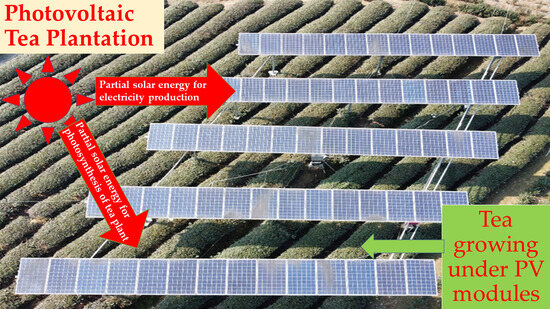
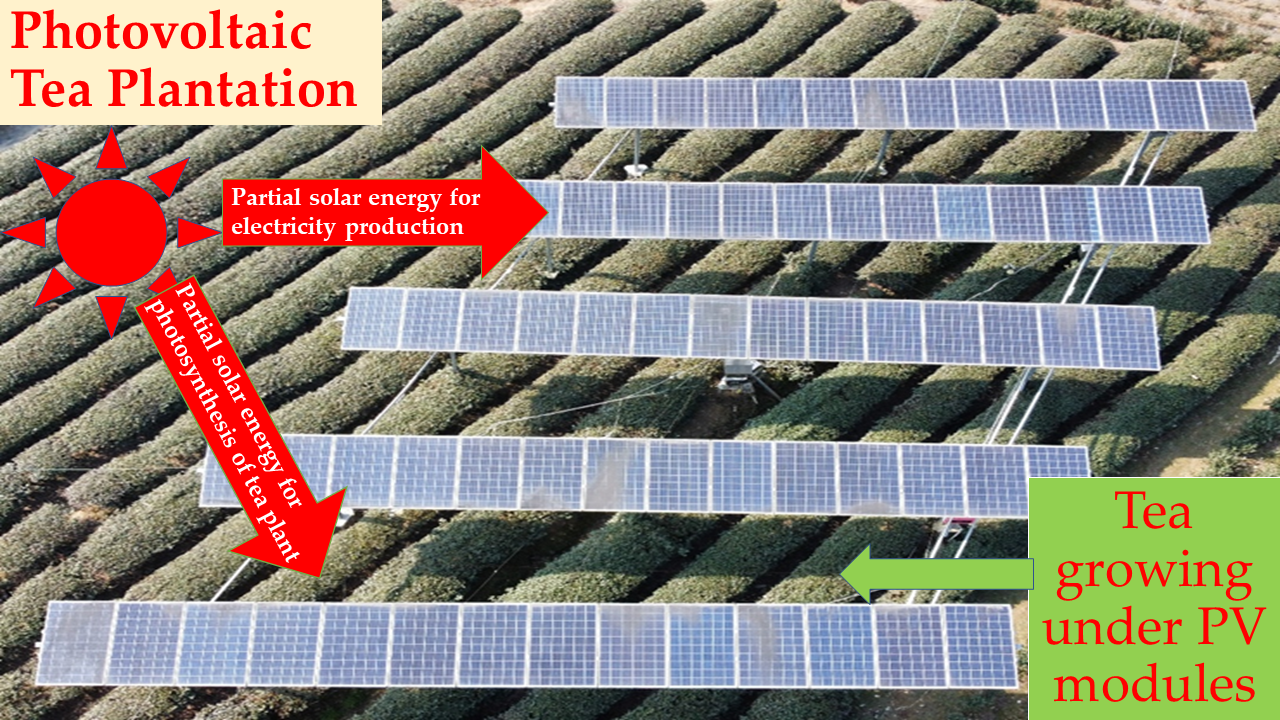
Graphical Abstract

1. Introduction

In the face of escalating global climate change and energy crises, the development of clean energy and the pursuit of sustainable development have emerged as a global imperative [1,2]. Photovoltaic (PV) power generation, a critical component of clean energy, has witnessed rapid advancement in recent years. Nevertheless, traditional PV power plants require substantial land areas, leading to increasing conflicts with agricultural land-use [3]. As an innovative industrial model, agrovoltaics (PV agriculture) integrates PV power generation with agricultural practices, which not only facilitates clean energy production but also ensures food security and enhances land efficiency, thereby offering an effective solution to the aforementioned challenges.
The concept of agrovoltaics originated in Europe and has since experienced rapid development in recent years, particularly in countries such as China, Japan, and the United States [4]. At its core, agrovoltaics involves utilizing agricultural land for PV power generation to achieve “dual land use,” thereby ensuring that agricultural productivity is maintained while simultaneously generating clean energy. Currently, the primary models of agrovoltaics include PV greenhouses [5], agrovoltaic systems over open fields [6], and fishery-photovoltaics [7]. These models have demonstrated significant success in various sectors, including vegetable cultivation, floriculture, and aquaculture.
The tea plant (Camellia sinensis (L.) O. Kuntze) is an important cash crop that belongs to the family Theaceae in botanical classification. It prefers to grow in partial shade under the forest canopy, making it well-suited for growing under diffused light conditions. Scientists have conducted extensive research on the impact of artificial shading on the growth, yield, and quality of tea plants. Shading modifies the microenvironment and can provide plants with some protection from frequent heat, drought, frost, and hail induced by climate change, and has the potential to improve plant growth, yield, and quality. When compared to no-shade control, black, blue, and red shade nets increased plant growth index (PGI), net photosynthetic rate, and stomatal conductance, and decreased air and leaf surface temperatures in summer, but they reduced cold damage in winter [8]. Tea plants grown under shade trees at higher elevations attained better quality and higher productivity of the leaf [9]. The best method to achieve improvements in the quality and commercial value of Gyokuro-styled green tea grown in Australia is to shade all visible light intensities to one per cent of ambient levels in as little as two weeks [10]. These suggest that tea plants exhibit characteristics of weak light tolerance.
Tea plants are widely planted in China, with 3.43 million hectares of tea fields in 2023 [11]. Building PV modules in the extensive tea fields for PV power generation can effectively address the land scarcity challenge faced by clean energy production. However, the impact of PV-integrated tea plantation (PVtea) on tea productivity and quality has not been available. There have been no comprehensive studies to date that simultaneously evaluate microclimate, physiology, yield, quality, and climate resilience in agrivoltaic systems for perennial crops, limiting the development of agrivoltaic technologies in this field. This study was set to install PV modules in existing tea gardens to examine their effects on the growth of tea plants, as well as the yield and quality-related phytochemicals, including catechins, amino acids, caffeine, and chlorophylls. The findings will provide a scientific basis for the large-scale promotion and application of this technology in tea fields. In the present paper, a PVtea is defined as a model that integrates PV modules above tea plants, enabling simultaneous production of tea and clean energy on the same land, which will significantly contribute to alleviating the land shortage issue for photovoltaic power stations. It is estimated that if one-third of China’s tea plantations were converted into PVtea, the annual electricity generation would reach 675 billion kilowatt-hours, equivalent to six times the power output of the Three Gorges Hydropower Station.

2. Materials and Methods

2.1. Construction of PVtea Plantation

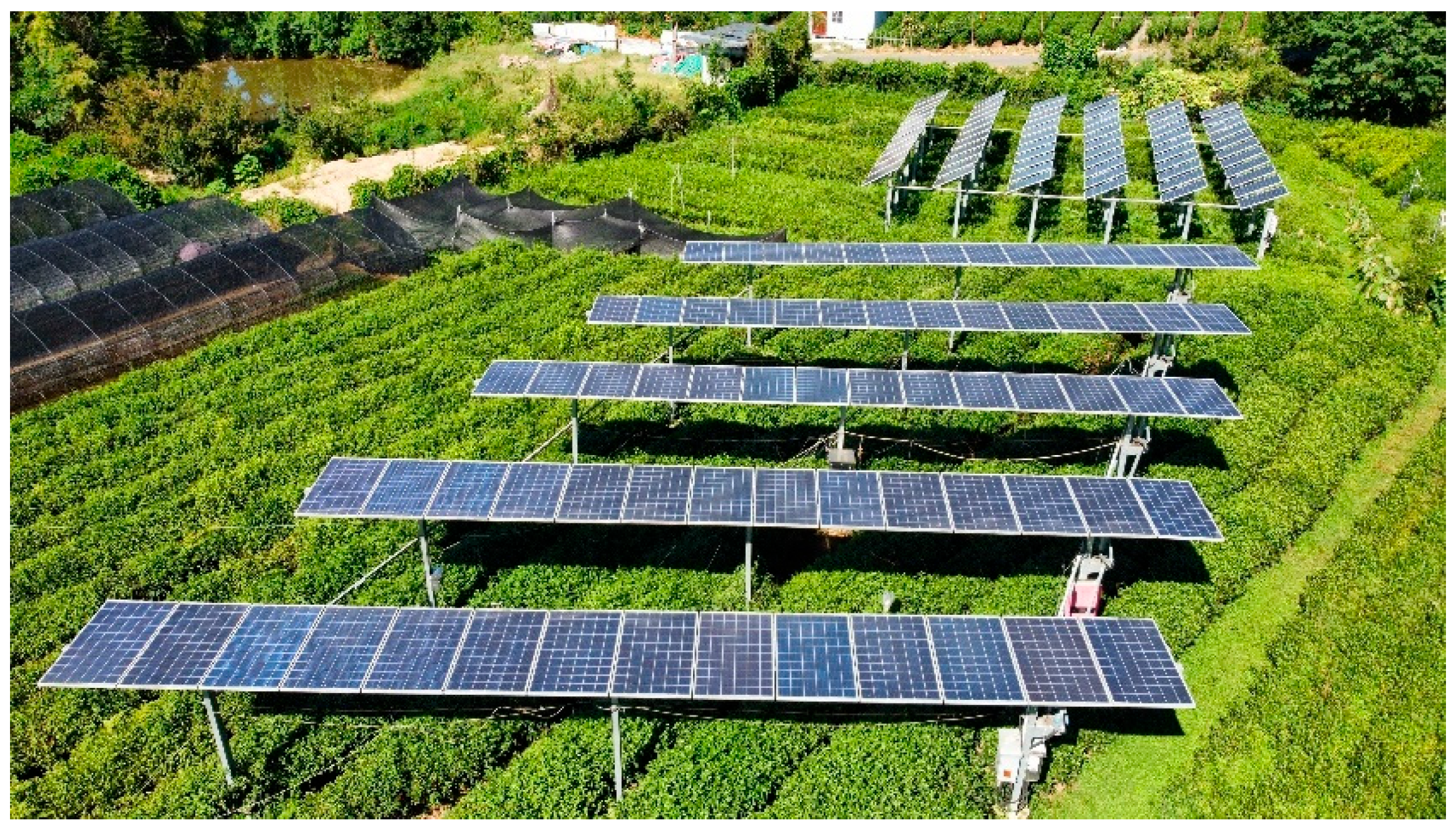
The experimental tea field, situated in the Fuyang District of Hangzhou City, China (30°04′89″ N, 119°86′22″ E), was grown with 18-year-old tea plants (C. sinensis cv. Xiangshanzao). The construction of a single-axis tracking system of PV modules with a north–south-oriented horizontal axis allowed for an inclination adjustment range of ±45°. Model UL-270P-60 polycrystalline silicon solar panels with a rated power of 270 Wp and dimensions of 1650 × 992 × 40 mm (Ningbo Eureka Solar Technology Development Co., Ltd., Nignbo, China) were used in the PV power generation system. In the tea field with 280 m2 (20 m × 14 m), 70 PV panels were installed in 5 columns of PV modules, with 14 panels for each module and a center-to-center distance of 4500 mm between adjacent PV modules. The distance between the lowest point of the panels and the ground was 2400 mm. The total installed power capacity in the 288 m2 tea field was 18.90 kWp, which fits 656 kWp per ha. There were two independent plots in the experimental design (Figure 1), and the installation was finished in November 2017. Based on 1000 effective sunlight hours per year for photovoltaic power generation at the test site, the annual electricity generation for each hectare of tea field is approximately 656,000 kWh. Observations on tea plant resistance to environmental stresses, as well as leaf yield and leaf quality, were conducted from 2018 to 2023.
To further validate the impact of PVtea on tea productivity and quality, this study also examined the PVteas located in Jingshan Town (30°39′59″ N, 119°79′41″ E), Yuhang District, Zhejiang Province, where 35-year-old C. sinensis cv. Fudingdabai was grown, and in Mumen Town (32°10′28″ N, 106°30′08″ E), Wanguan, Sichuan Province, where a 12-year-old C. sinensis cv. Mingshan 213 was grown, whose installations were completed in September 2021, and leaf yield and leaf quality were assessed in 2024 and 2025, respectively.
The agronomic management of the tea fields was conducted according to local farming practices. Organic fertilizer (fermented rapeseed cake, 3000 kg/ha) was applied in November. Compound fertilizer (N:P2O5:K2O = 10:4:10) was applied at a rate of 300 kg/ha in early March, 150 kg/ha in mid-May, and 150 kg/ha in late July. Weeding was performed prior to fertilizer application. There were no obvious differences in pest and disease incidence between PVtea and the control (without PV shade); therefore, no additional pest and disease control measures were implemented in the PVtea fields.

2.2. Investigation on Ambient Temperature and Humidity

TH10R-EX temperature and humidity monitors (Pingyang Miaoguan Sci-Tech Ltd., Wenzhou, China) were installed 20 cm above the plucking tables in both the PVtea fields and the open-field tea plantations (control) to continuously monitor and record ambient temperature and relative humidity.

2.3. Observation on Tea Sprouting in Spring

During the early growing stage of tea plant sprouting in spring, a metal frame measuring 30 cm × 30 cm was randomly placed on the plucking table of the tested tea bushes. The number of shoots with fish leaves, shoots with one leaf and a bud, shoots with two leaves and a bud, and shoots with three leaves and a bud within the frame were counted separately. This counting process was repeated three times, and the sprouting index was calculated using the following formula:
Sprouting index = (A × 1 + B × 2 + C ×3 + D × 4)/total number of shoots
Herein, A is the number of shoots with fish leaf sprouting; B is the number of shoots with one leaf and a bud; C is the number of shoots with two leaves and a bud; and D is the number of shoots with three leaves and a bud [12].

2.4. Investigation on the Yield of Fresh Tea Leaf

A metal wire frame (1 m × 1 m) was randomly placed on the picking table of the tested tea bushes, and the tea shoots within the frame were plucked and weighed. Each harvest was replicated three times, and the mean value (g/m2) was used to assess the fresh tea leaf yield. To eliminate marginal effects, a 1.5 m buffer zone was set aside around the PVtea field, and random sampling was carried out inside the buffer zone. The adjacent open-field tea plants attached to the same tea garden were used as a control.

2.5. Measurement of Tea Leaf Length, Width, and Leaf Area

The fourth leaf beneath the apical bud on tea shoots was collected for testing. An LI-3000C leaf area meter (Ecotek Co., Ltd., Beijing, China) was used to measure the maximum length, maximum width, average width, and leaf area according to the manufacturer’s instructions. Ten leaves were analyzed for each treatment.

2.6. Test of Activity of Leaf Photosystem II (PSII)

Tea plant growth depends on the photosynthesis of tea leaves, which is closely related to the activity of PSII. The efficiency of PSII photochemical reactions can be assessed by the ratio of variable fluorescence (Fv) to maximum fluorescence (Fm), denoted as Fv/Fm [13]. This ratio was measured using a fluorimeter (Handy PEA, Hansatech Instruments Ltd., Norfolk, UK) following the manufacturer’s protocol after 30 min of dark adaptation. For in vivo measurements of Fv/Fm, we selected the fourth leaf below the apical bud on tea shoots. Six leaves from six different plants were sampled and tested for each treatment, as outlined in previous studies [14].

2.7. Determination of Quality-Related Chemical Components in Tea

2.7.1. Leaf Extraction

Tea shoots with two leaves and a bud (200 g) were plucked from the tested tea bushes and were fixed by heating in an M1-231E microwave oven (Midea Group Co., Ltd., Foshan City, China) at 800 W (2450 MHz) for 1 min. Three leaf samples from each treatment were collected for subsequent analysis. The samples were dried at 80 °C, ground into powder, and sieved through a 12-mesh sifter. A total of 0.15 g of the ground tea powder was transferred to a 50 mL centrifuge tube with 25 mL of 50% ethanol, mixed, and incubated in a water bath at 70 °C for 20 min, with gentle shaking every 5 min. After extraction, the extract was cooled to room temperature and centrifuged at 12,000 rpm for 10 min. The supernatant, designated as the tea extract, was collected and stored at 4 °C for further analysis.

2.7.2. Determination of Amino Acids

The amino acid concentration was assessed using the ninhydrin assay method [15]. A total of 2 mL of the tea extract solution was mixed with 1 mL of a reagent mixture (comprising 20 g/L ninhydrin and 0.8 g/L SnCl2·2H2O) and 1 mL of buffer solution (0.067 M Na2HPO4 and 0.067 M KH2PO4, adjusted to pH 8.0) in a 50 mL volumetric flask. This mixture was then subjected to a 15 min reaction period in a boiling water bath. For the control, a similar setup was used, but with distilled water instead of the tea extract. Following the reaction, the solution was transferred to a quartz cuvette with a black aperture and a 1 cm light path for spectrophotometric analysis. The absorbance was measured at 570 nm using an HP8453E UV-VIS spectrophotometer (Hewlett Packard Company, Palo Alto, CA, USA). To establish a calibration curve, theanine (Sigma-Aldrich, St. Louis, MO, USA) was used as the reference standard. The amino acid content in the tea samples was quantified as theanine equivalents based on their absorbance values at 570 nm.

2.7.3. Determination of Catechins and Caffeine

The concentrations of catechins and caffeine were analyzed using high-performance liquid chromatography (HPLC-20AD System, Shimadzu, Kyoto, Japan) under conditions detailed in an earlier study [16]. The analysis was conducted with the following parameters: a sample injection volume of 10 µL; a TC-C18 column (5 μm particle size, 4.6 × 250 mm, Agilent Technologies Inc., Santa Clara, CA, USA); oven temperature at 35 °C; a linear gradient elution program that increased mobile phase B from 18% to 80% over 35 min; a flow rate maintained at 1 mL/min; mobile phase A consisted of acetonitrile/acetic acid/water in a ratio of 6/1/193 (v/v/v), while mobile phase B comprised acetonitrile/acetic acid/water in a ratio of 60/1/139 (v/v/v); and a detection wavelength at 280 nm. Identification and quantification of individual catechins and caffeine were achieved by comparing retention times and peak areas with those of certified reference standards, and their contents were determined based on the dry weight of the samples.

2.7.4. Analysis of Photosynthetic Pigments

The third leaf beneath the apical bud on tea shoots was sampled from tested tea bushes (3 samples each treatment). The primary veins were severed and discarded. A total of 200 mg of the leaves without primary veins was grounded in liquid nitrogen, mixed with 10 mL pre-cooled acetone and 50 mg Polyvinylpolypyrrolidone (PVPP), and then ultrasonically extracted for 30 min in a dark ice bath (JP-060S, Skymen Cleaning Equipment Co., Ltd., Shanghai, China). A total of 1.2 mL of the resultant mixture was placed into a 1.5 mL centrifuge tube and subjected to centrifugation at 12,000 rpm and 4 °C for 15 min. The supernatant was placed into a brown HPLC vial. The analysis of various photosynthetic pigments, including chlorophyll a, chlorophyll b, neoxanthin, violaxanthin, lutein, and β-carotene, was conducted using an LC-20AT HPLC System equipped with a UV-visible detector (Shimadzu, Kyoto, Japan). An Agilent Technologies Inc. (Santa Clara, CA, USA) TC-C18 column (5 μm particle size, 4.6 × 150 mm dimensions) was used to separate the photosynthetic pigments. The HPLC operating parameters were set as follows: the column was maintained at 35 °C, with an injection volume of 10 μL. For the mobile phase composition, solvent A consisted of 3% acetonitrile, 0.5% acetic acid, and 96.5% water (v/v), while solvent B comprised 75% acetonitrile, 20% methanol, and 5% chloroform (v/v). A linear gradient elution profile was employed, where the proportion of solvent B increased from 90% to 100% over the first 15 min, remained at 100% for an additional 15 min, and then returned to 90% within the subsequent 5 min. The flow rate was kept constant at 1 mL/min, and detection was performed at a wavelength of 440 nm. Identification and quantification of the detected pigments were achieved by comparing their retention times and peak areas with those of authentic reference standards.

2.8. Statistical Analysis

The data were expressed as mean ± standard deviation (DS), which was calculated by Microsoft Excel (Version 2019). The statistics were carried out on IBM SPSS Statistics 24.0 (2016).

3. Results

3.1. Effects of PV Modules on Photosynthetically Active Radiation (PAR)

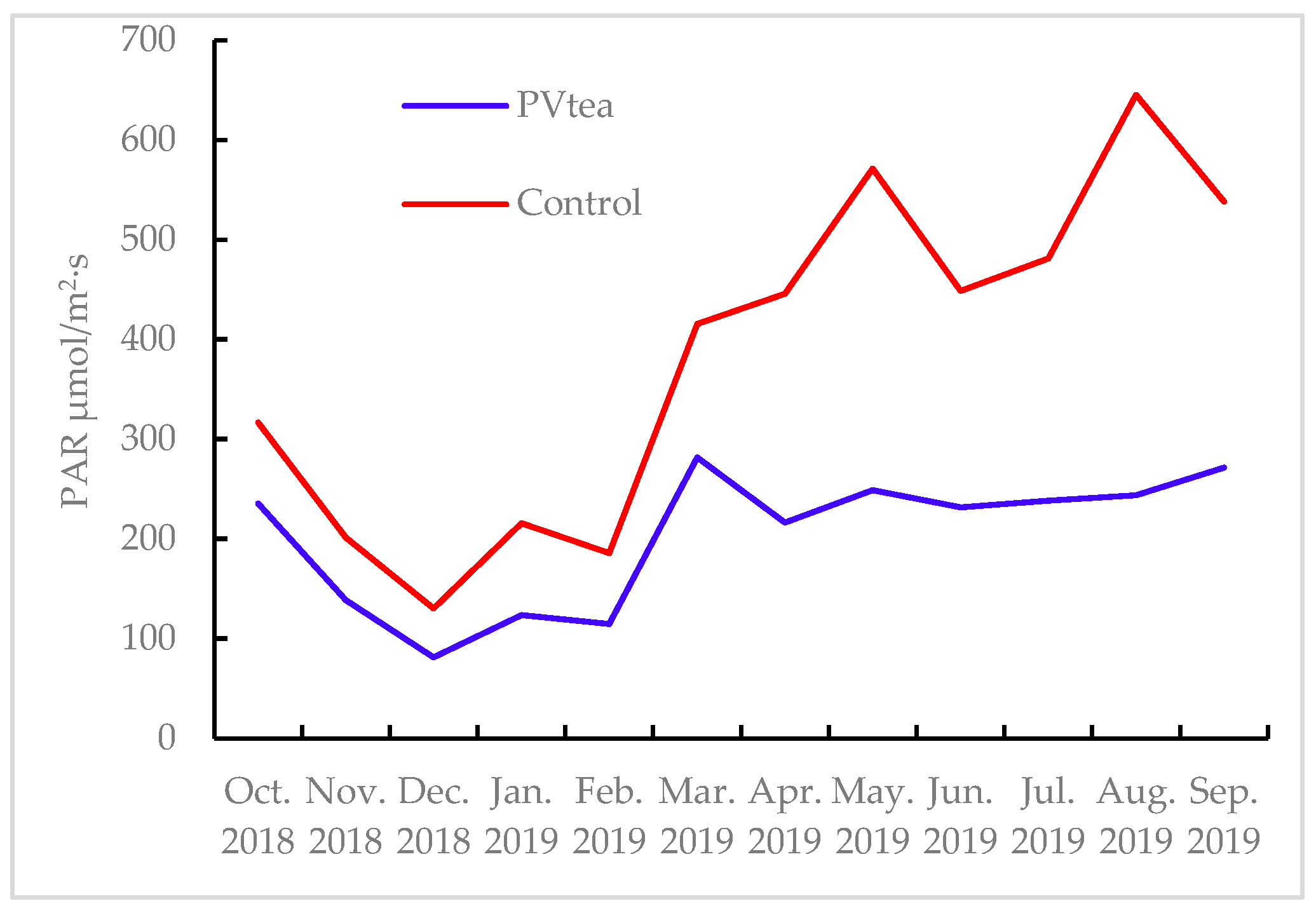
Based on the year-round PAR test results (October 2018–September 2019), the mean values of PAR on tested PVtea and open tea field (control) were 202.0 μmol/m2·s and 382.9 μmol/m2·s, indicating the PVtea was 52.8% of the control. The lowest PAR appeared in December, and the highest was in August (Figure 2).
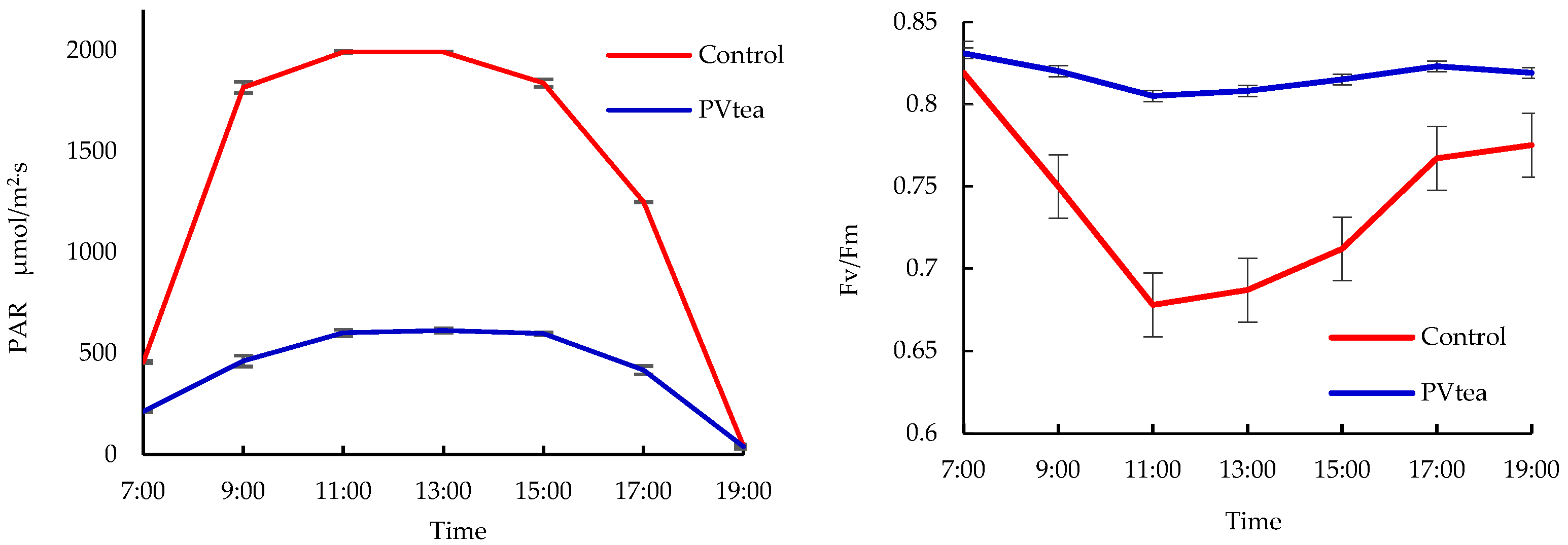
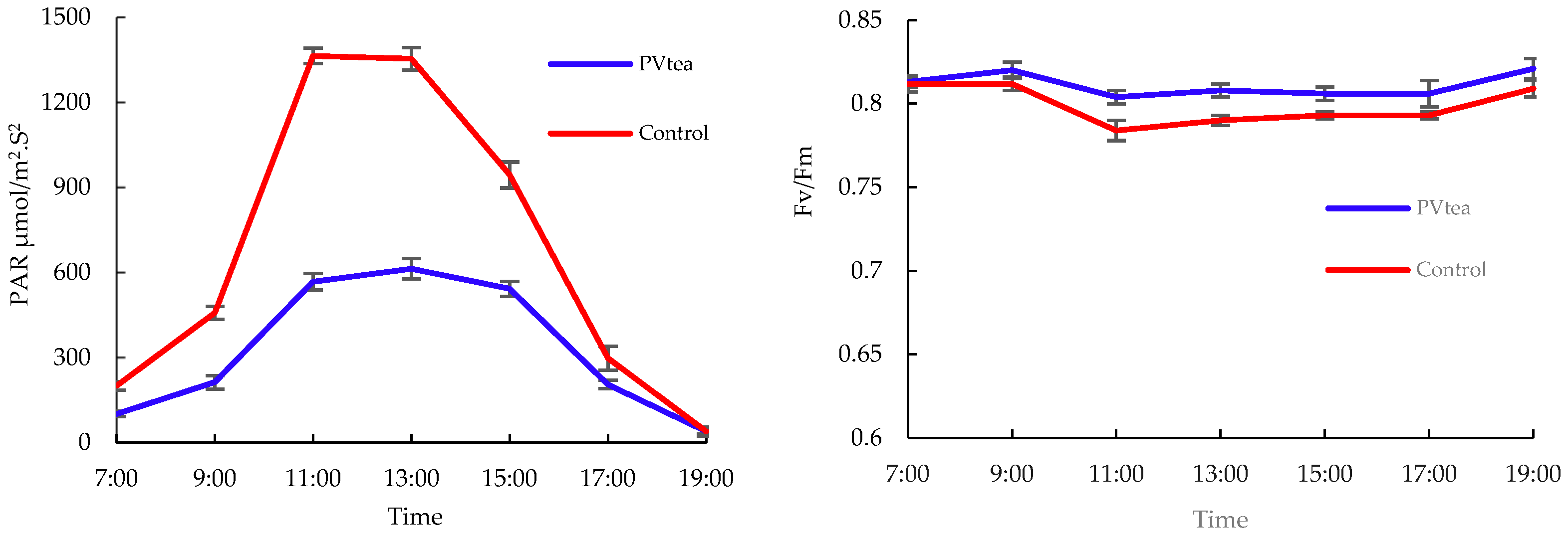
The diurnal variation in PAR is primarily driven by changes in the solar altitude angle. The difference in PAR between PVtea and the control increased progressively over time, reaching its peak at noon, followed by a gradual decline in the afternoon (Figure 3). The difference in PAR between PVTea and control was also influenced by the weather. On a sunny day, the mean daily PAR for PVtea was 421.2 μmol/m2·s, being 32.0% of the control (1314.3 μmol/m2·s). On a cloudy day, however, the mean daily PAR for PVtea was 326.1 μmol/m2·s, being 49.0% of the control (665.5 μmol/m2·s). At noon, the PAR for PVTea was about 600 μmol/m2·s on both sunny days and cloudy days, though the PAR for control on sunny days was greater than that on cloudy days (Figure 3 and Figure 4).
Minimal variations in Fv/Fm, a key indicator of photosystem II activity, were observed in PVTea, with values remaining consistently around 0.8 on both sunny and cloudy days. Although a significant suppression of Fv/Fm occurred at noon under sunny conditions, this effect was markedly alleviated during cloudy days (Figure 3 and Figure 4).

3.2. Effects of PV Modules on Ambient Temperature and Humidity

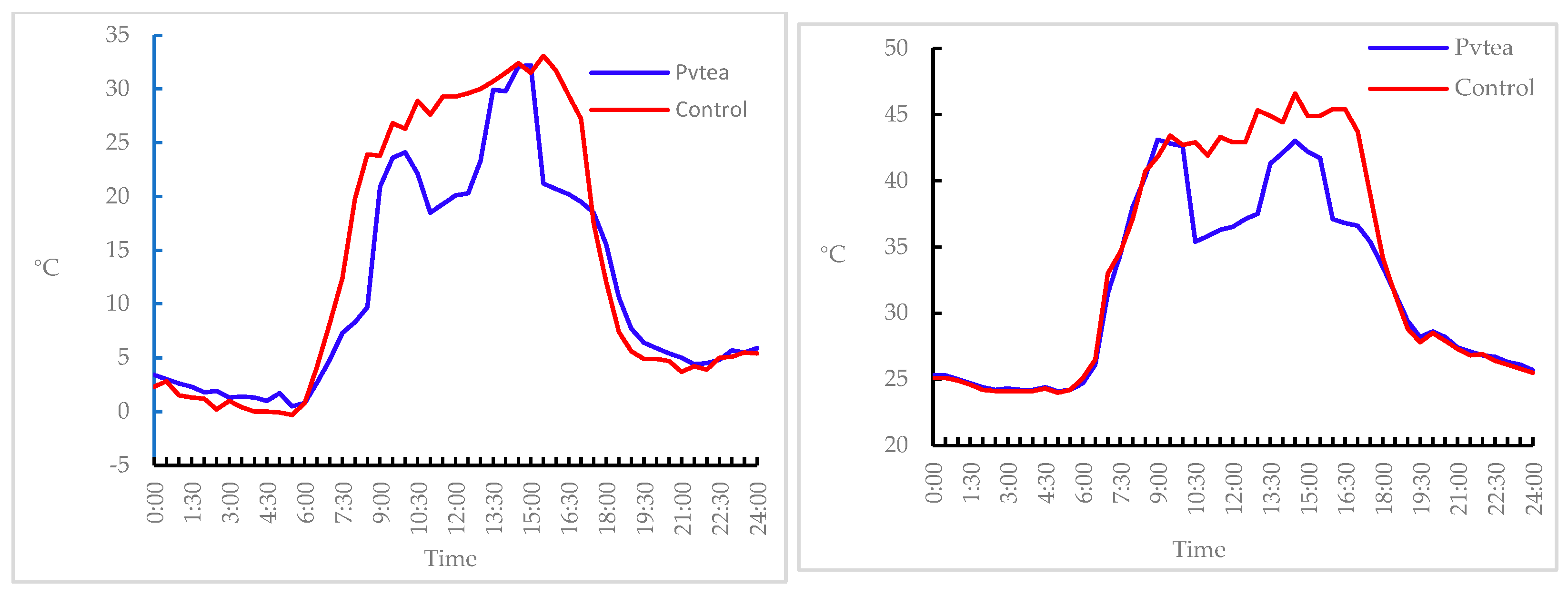
In the spring, the temperature on the tea-plucking table in the PVtea was 0.5–2 °C higher than that in the control field at night, but lower during the day (Figure 5). However, during the periods when the sun is directly shining on the plucking table (such as from 9:00 to 10:00 in the morning and from 1:30 to 2:30 in the afternoon), there is little difference in temperature between the PVtea and control.
During the summer, there was no significant difference in temperature between the PVtea and control before 10:00 a.m. and after 6:00 p.m. However, from 10:30 a.m. to 5:30 p.m., the temperature in the PVtea was markedly lower than that of the control. The largest temperature difference was 8.3 °C, which occurred at 4:00 p.m. (PVtea: 37.1 °C, control: 45.4 °C), followed by that at 1:00 p.m., with a difference of 7.8 °C (PVtea: 37.5 °C, control: 45.3 °C) (Figure 5). During extreme weather conditions, such as at 13:00 on 16 August 2025, a temperature difference of 13.1 °C was observed between the PVtea and the control group, with the PVtea temperature recorded at 37.4 °C and the control temperature at 51.7 °C.
The above results demonstrated that the temperature in the PVtea was significantly lower than that of the control during midday when sunlight intensity peaked in both spring and summer seasons. In spring, when ambient temperatures are relatively low, the PV modules mitigate nighttime convective heat radiation and reduce air flow, which minimizes heat loss from the PVtea fields and results in higher temperatures in the PVtea compared to the control.
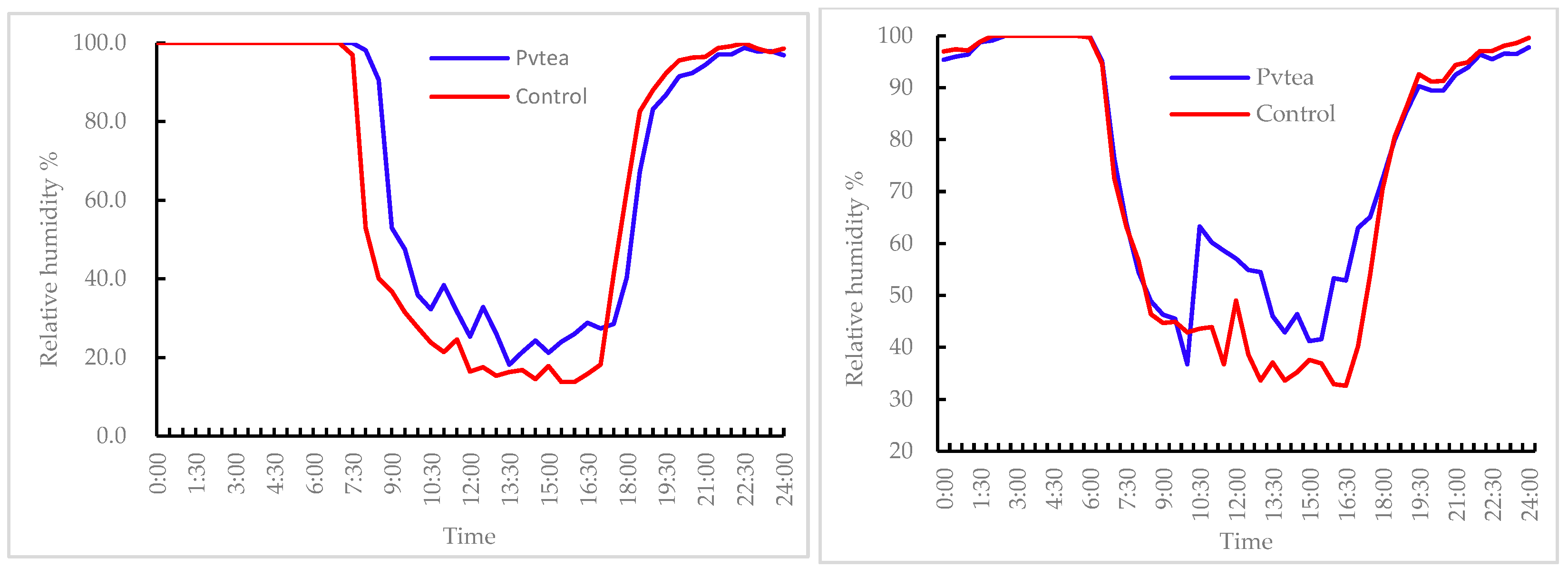
For diurnal changes in relative humidity, no significant differences were observed between PVtea and the control before 7:30 and after 19:00 in spring, as well as before 9:30 and after 18:00 in summer. However, during the daytime periods from 8:00 to 17:00 in spring and from 10:30 to 17:30 in summer, the relative humidity in PVtea was significantly higher than that in the control (Figure 6).

3.3. Effects of PV Modules on the Sprouting of Spring Shoots

The observation results indicated that although there was no significant difference in the number of shoots with one leaf and a bud or two leaves and a bud on 3 April 2018, the number of shoots with three leaves and a bud in PVtea was significantly higher than that in the control group, resulting in a higher sprouting index for PVtea (Table 1). On 26 March 2019, observations revealed that the number of shoots with two leaves and a bud, as well as those with three leaves and a bud, were greater in PVtea than in the control, while the number of shoots with one leaf and a bud was lower. The first plucking of Longjing tea began on 28 March 2018 and 23 March 2019 for PVtea, which was two days earlier than in the control group in both years. These findings suggest that the implementation of PVtea effectively promoted the sprouting of tea shoots during the spring season.

3.4. Effects of PV Modules on Fresh Leaf Yield

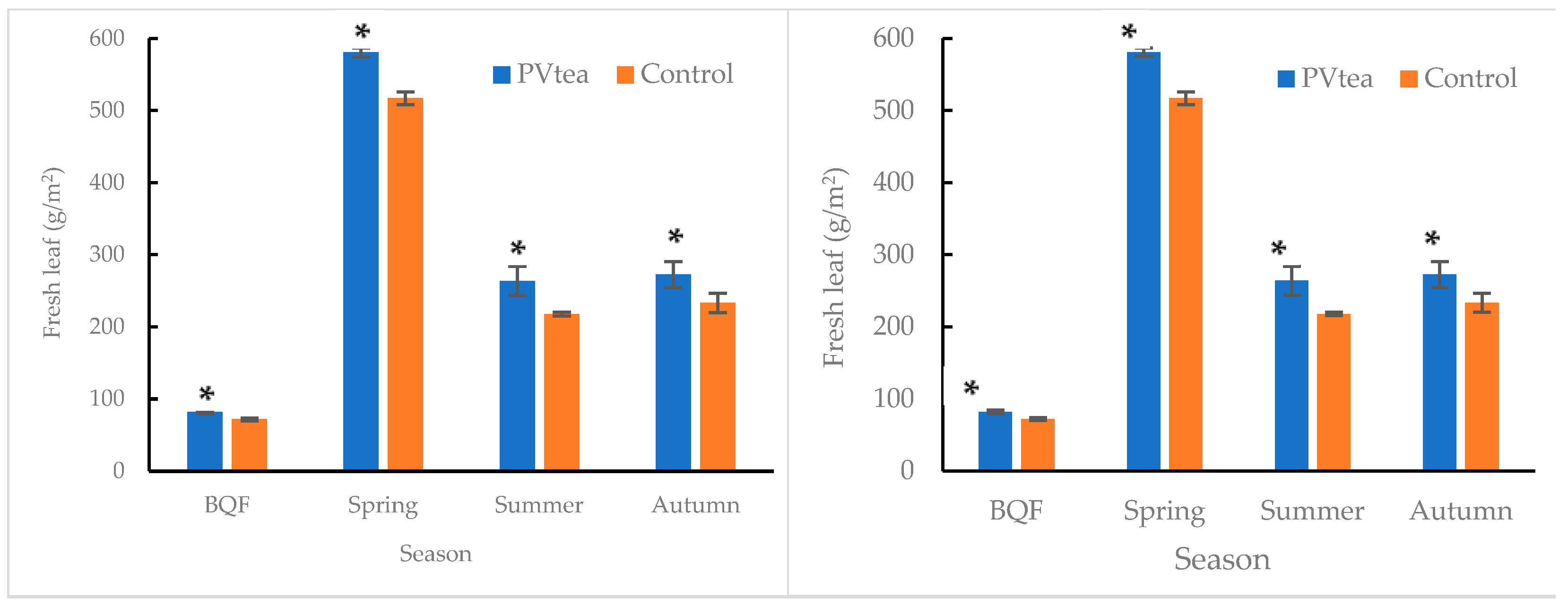
Fresh leaf yield tests demonstrated that PVtea exhibited significantly higher tea yields compared to the control group (Figure 7). In 2023, the total fresh leaf yield was 1199.2 ± 21.0 g/m2 for PVtea and 1040.3 ± 15.2 g/m2 for the control, indicating a 15.3% increase in yield for PVtea. The Qingming tea, which was harvested before the Qingming Festival (BQF, 5 April 2023; 4 April 2024), was of particular significance for the production of Longjing tea, a premium green tea from Hangzhou, China, due to its superior quality and high market value. The BQF leaf yield for PVtea was 82.0 ± 2.3 g/m2, which was significantly higher than that of the control. The fresh leaf yield in 2024 showed the same trend as in 2023. The total fresh leaf yield of PVtea in 2024 was 866.4 ± 30.1 g/m2, being 9.3% higher than the control (792.4 ± 24.2 g/m2). These results showed that PVtea was 9.3–15.3% higher than the control, suggesting that the installation of photovoltaic modules not only does not diminish tea yield, but also enhances tea yield by mitigating direct sunlight radiation through moderate shading.
Tests on the tea leaf yield of PVteas at Jingshan Town, Zhejiang Province, and at Mumen Town, Wangcang, Sichuan Province, showed the same trends as the above results (Supplementary Tables S1 and S2, and Supplementary Figures S1 and S2).

3.5. Effect of PV Modules on Weight of Shoots and Leaf Size

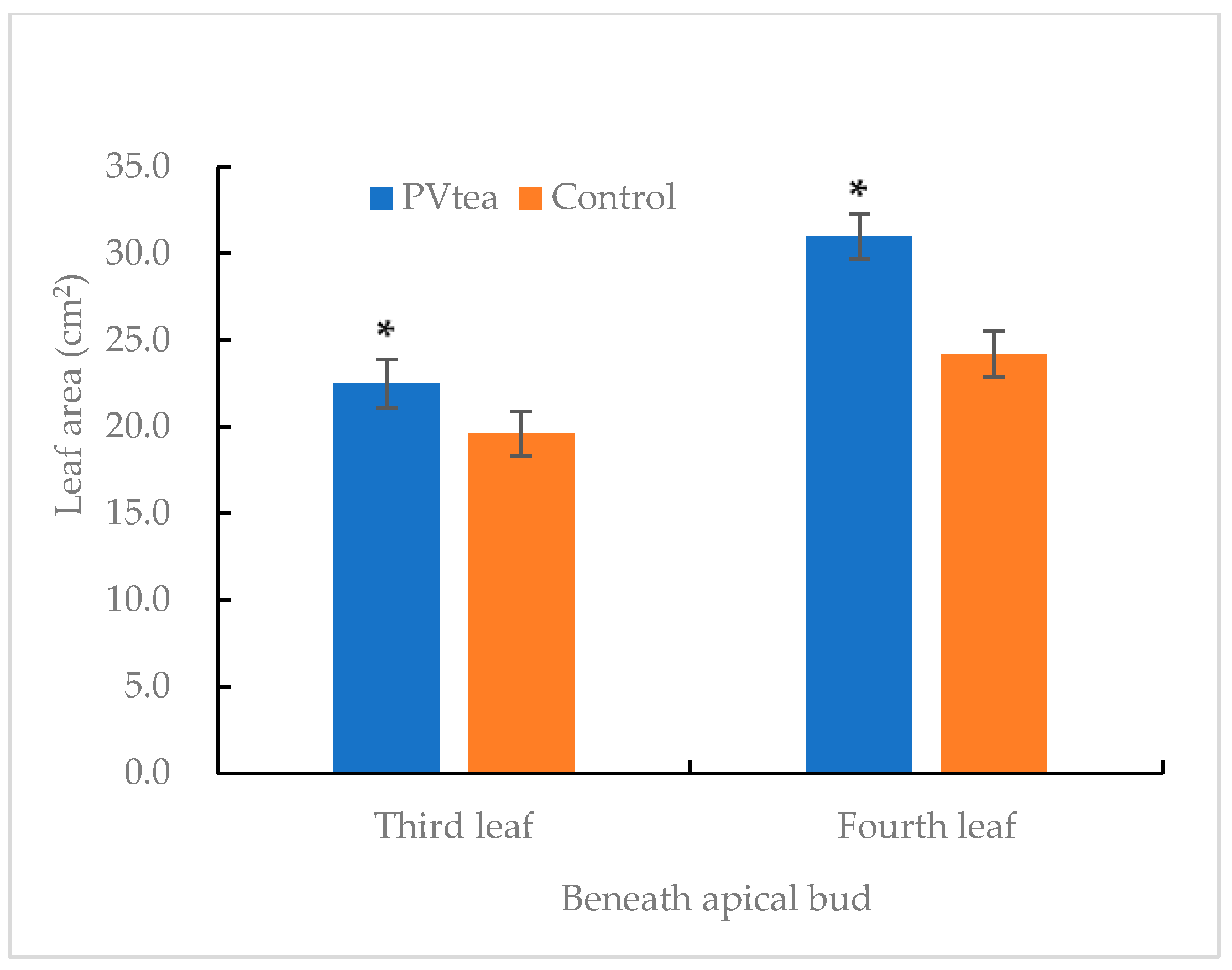
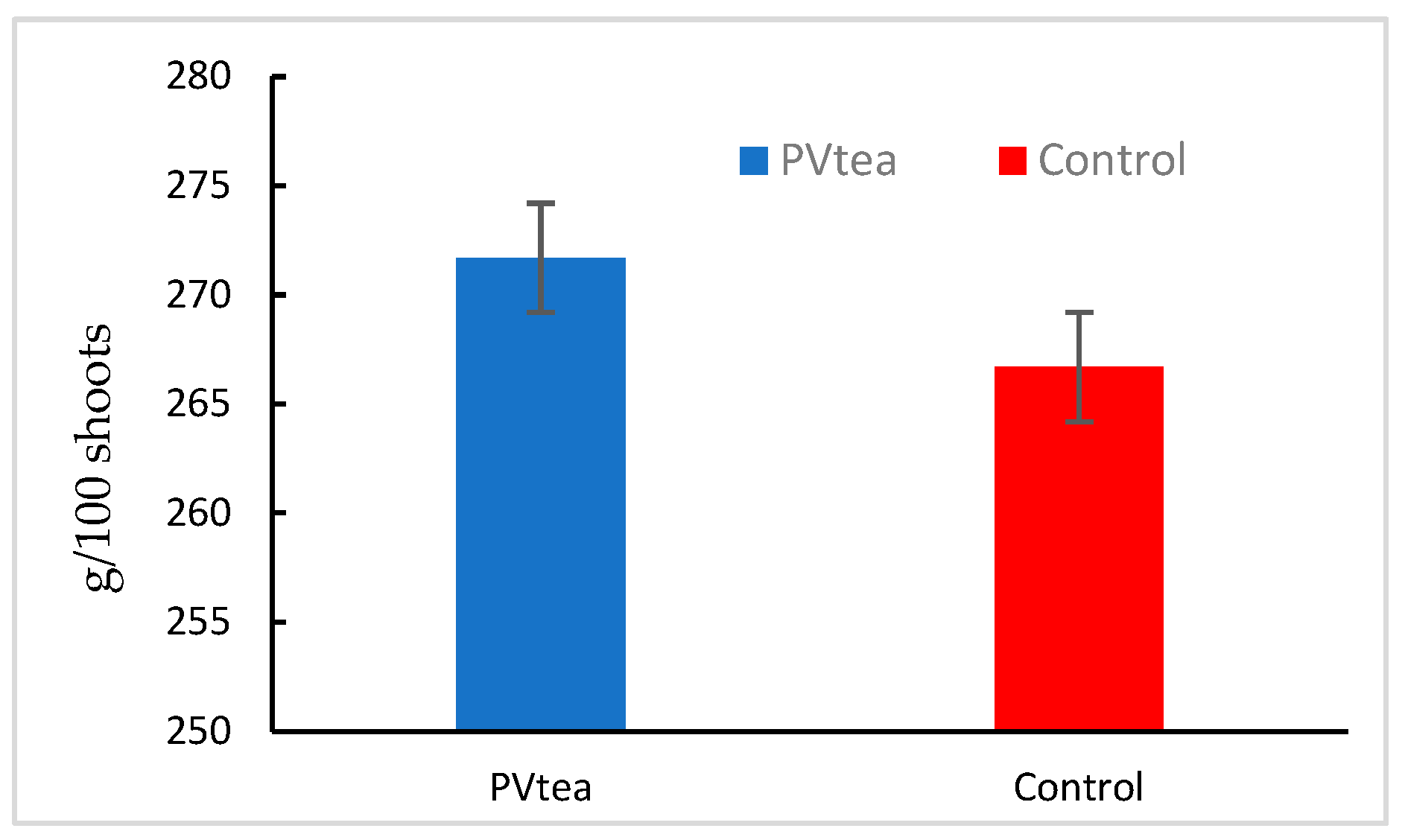
Tests showed that the weight of 100 shoots with two leaves and a bud in PVtea was 271.7 ± 4.9 g, compared to 261.6 ± 3.94 g for the control, with no statistically significant difference between them (Figure 8). However, the leaf size of the third and fourth leaves beneath the apical bud in PVtea was 22.5 ± 1.4 cm2 and 31.0 ± 1.3 cm2, respectively, which were significantly bigger than those of the control group (Figure 9). These results suggest that though the growth rate of PVtea shoots was not significantly different from that of the control group at the initial stage, it markedly exceeded that of the control group at the latter stage, leading to significantly larger size in the third and fourth leaves compared to the control group.

3.6. Effect of PV Modules on Tea Quality-Related Phytochemicals

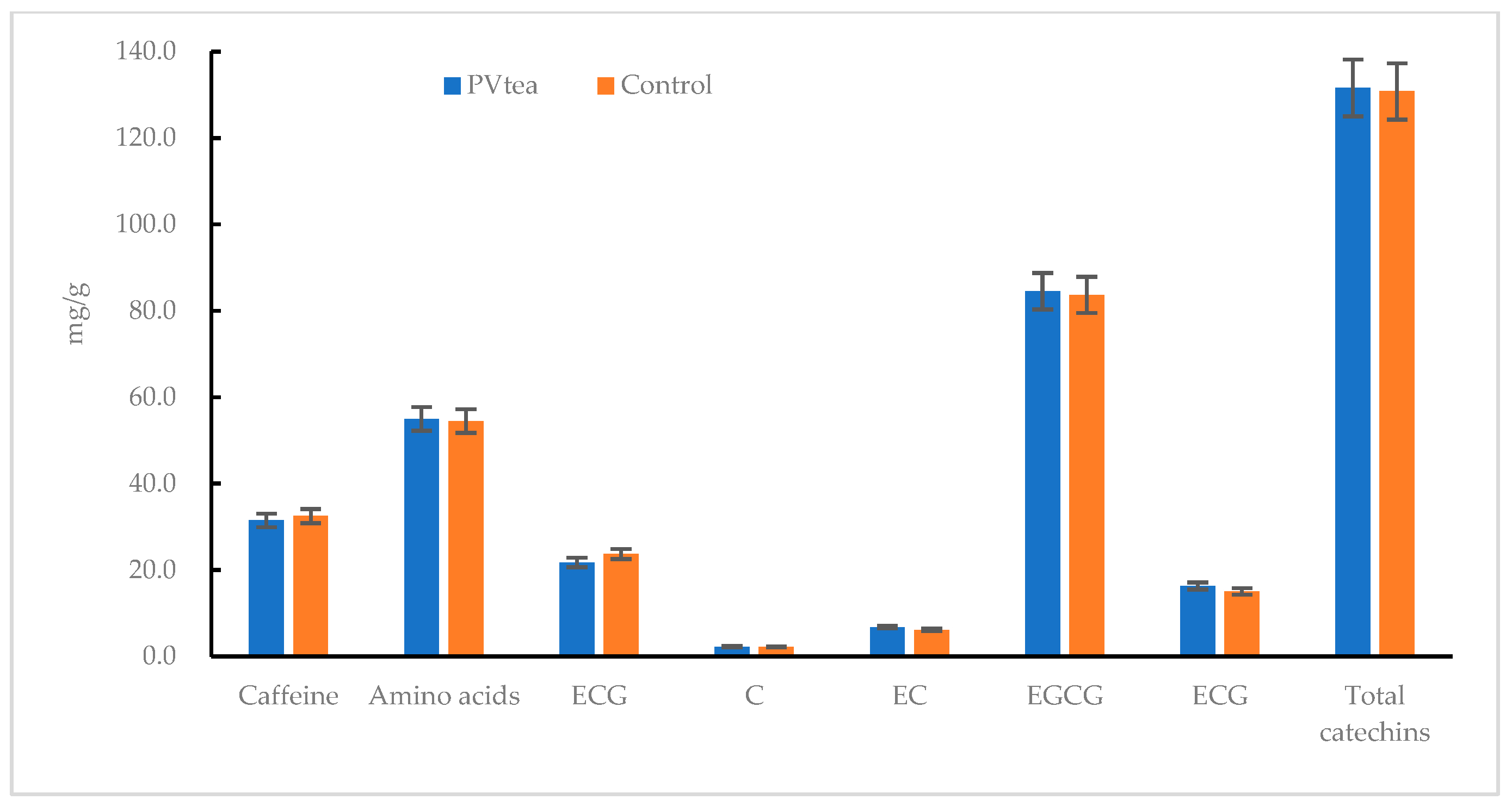
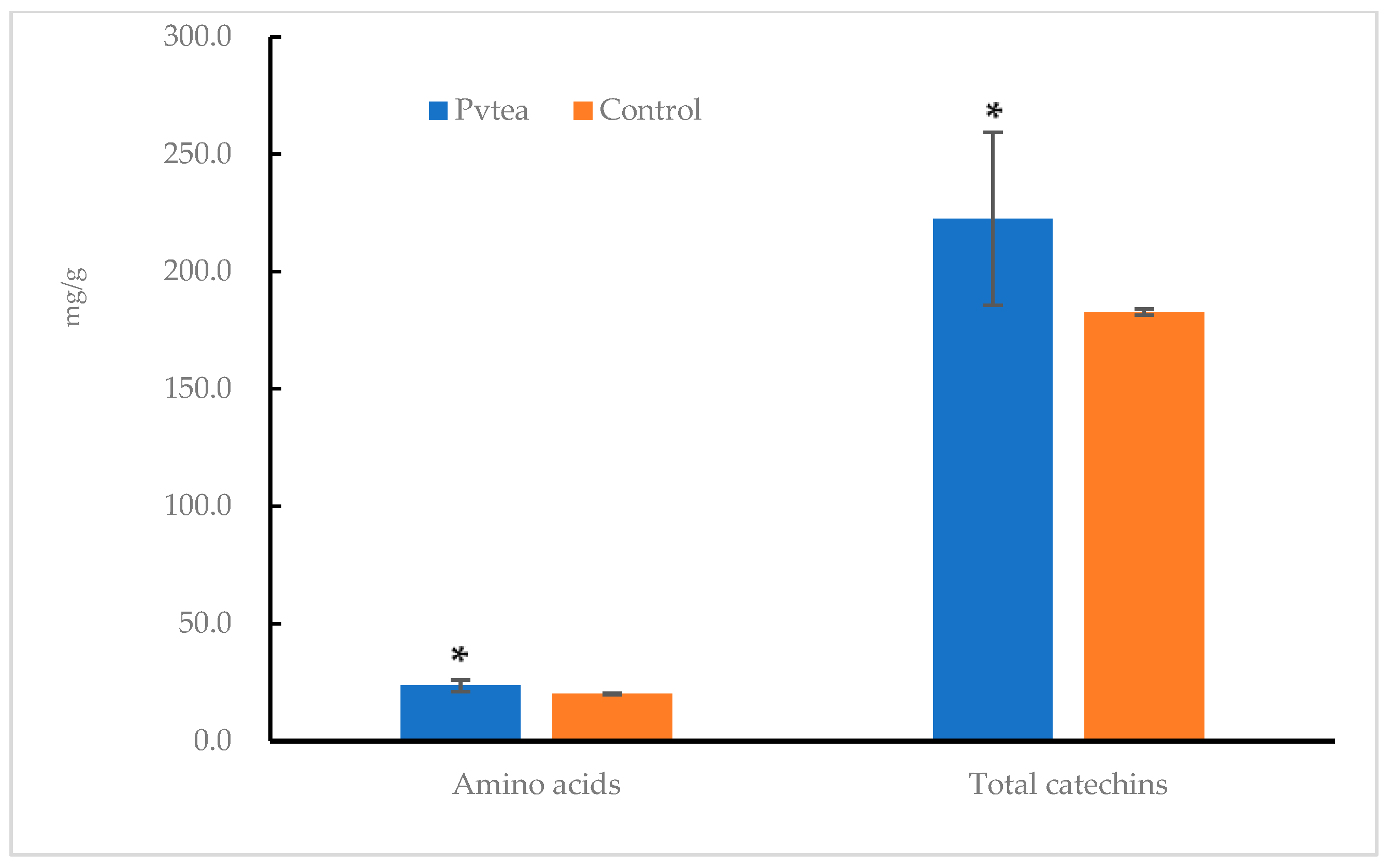
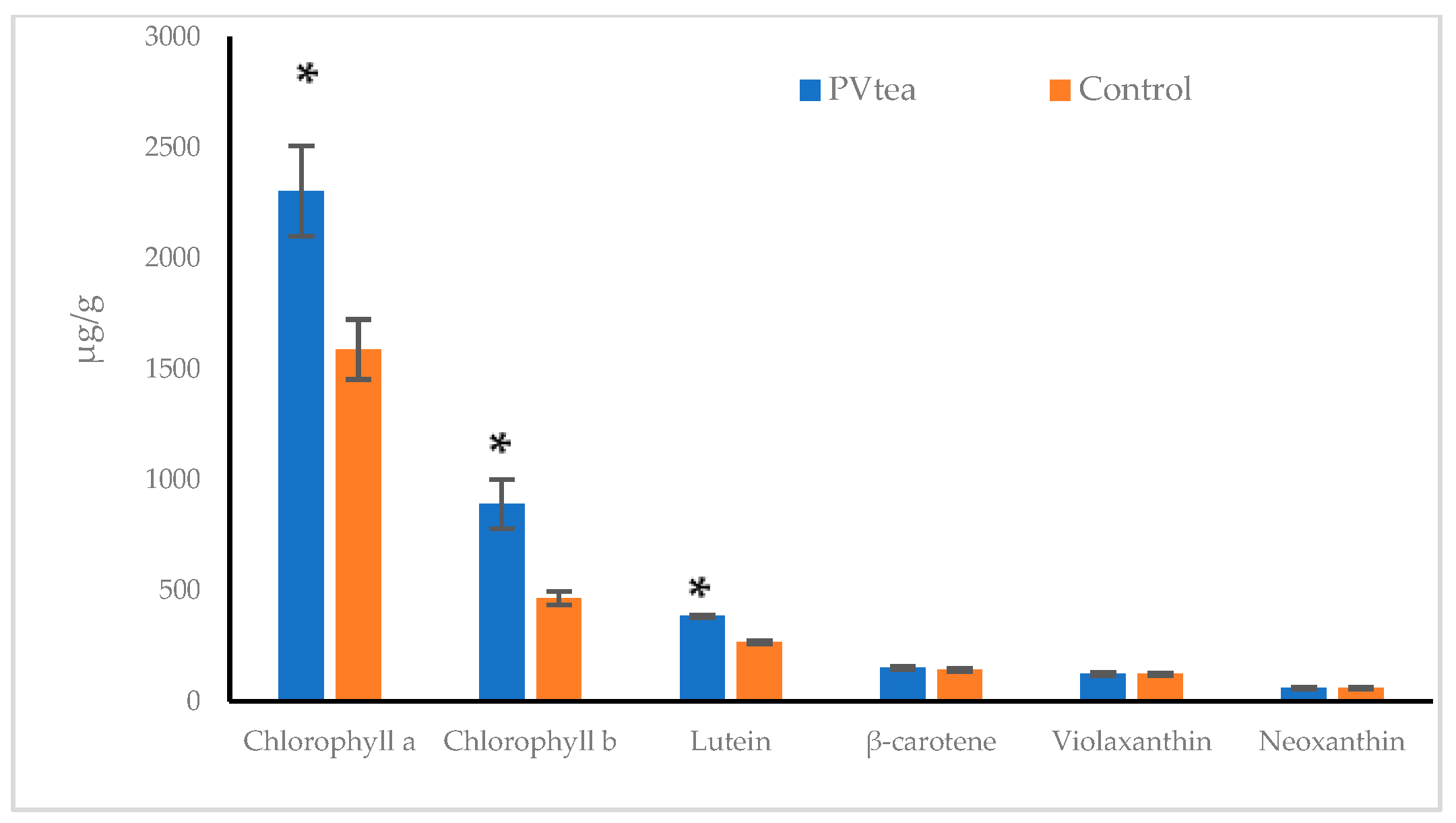
The test of tea quality-related chemical components showed that the contents of caffeine, amino acid, and catechins in PVtea spring tea did not significantly differ from those in the control group (Figure 10). In contrast, the amino acids and total catechin levels in PVtea summer tea were significantly higher than those in the control group (Figure 11). Contents of chlorophylls a and b, as well as lutein in PVtea, were significantly higher than in the control (Figure 12). These findings suggest that PV modules can enhance the quality-related key chemical components in summer tea, resulting in an improvement of tea quality.
Sensory quality of tea samples was assessed by the National Tea Quality Inspection and Testing Center of China, and the test reports for partial samples were added as Supplementary Table S3. They show that the sensory quality of the made teas was improved by the shade of PV modules.

3.7. Effect of PV Modules on Resistance of Tea Plants to Environmental Stress

3.7.1. Resistance to Frost Damage in the Early Spring

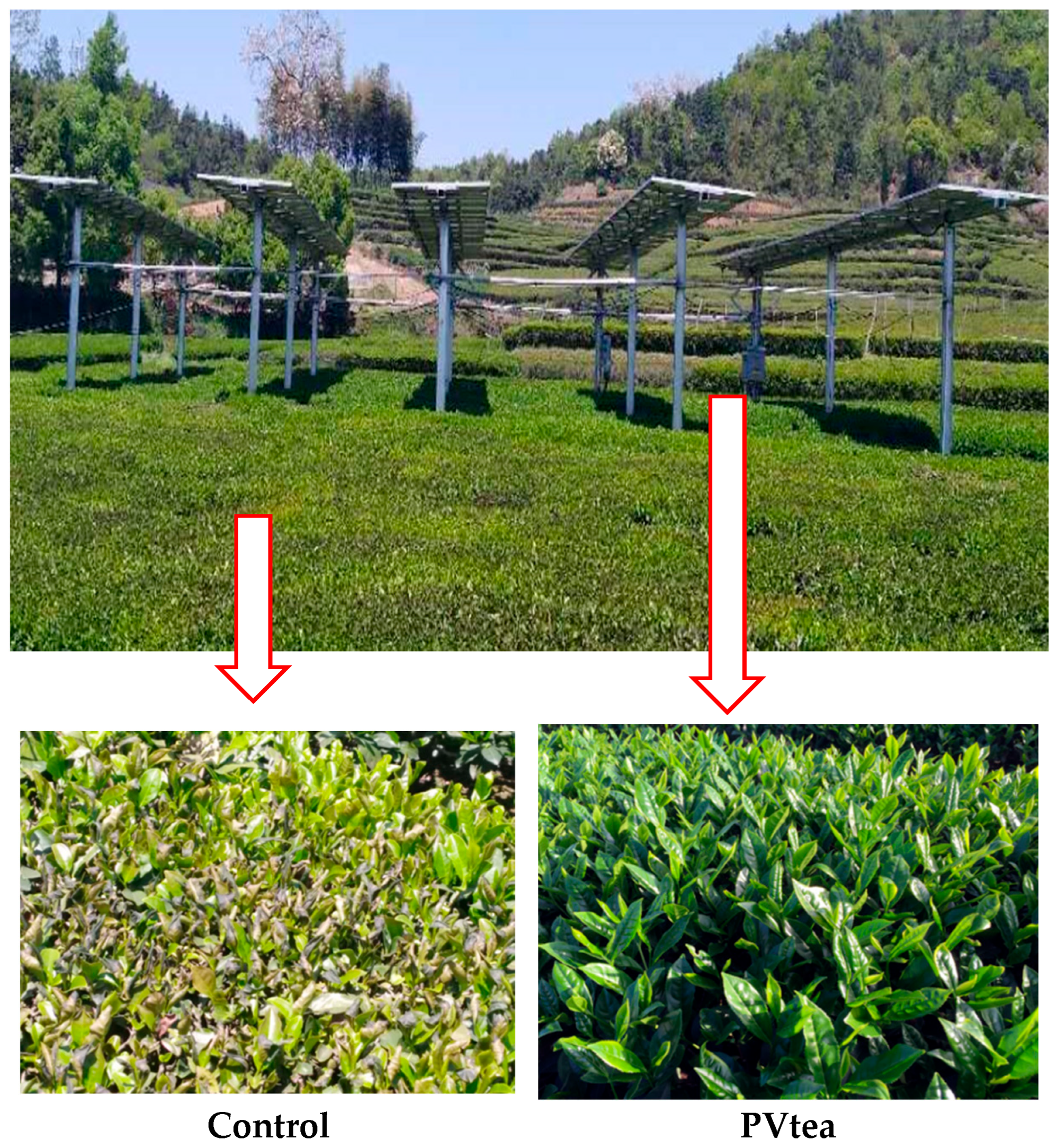
Frost damage is a common natural disaster in tea-growing regions of the middle and lower reaches of the Yangtze River, occurring approximately every 3 to 5 years. Two spring cold-weather events occurred during the experimental period. One occurred in early April 2018, in which tea plants in the control group were seriously injured by frost, while the tea plants in the PVtea were not subjected to any form of damage or adverse effects (Figure 13). Another cold spell occurred in early April 2020, in which the frost damage of tea plants showed the same trend as that in 2018. These suggest that installing PV modules in tea fields can effectively prevent frost damage to tea plants.

3.7.2. Resistance to Heat Damage in Summer

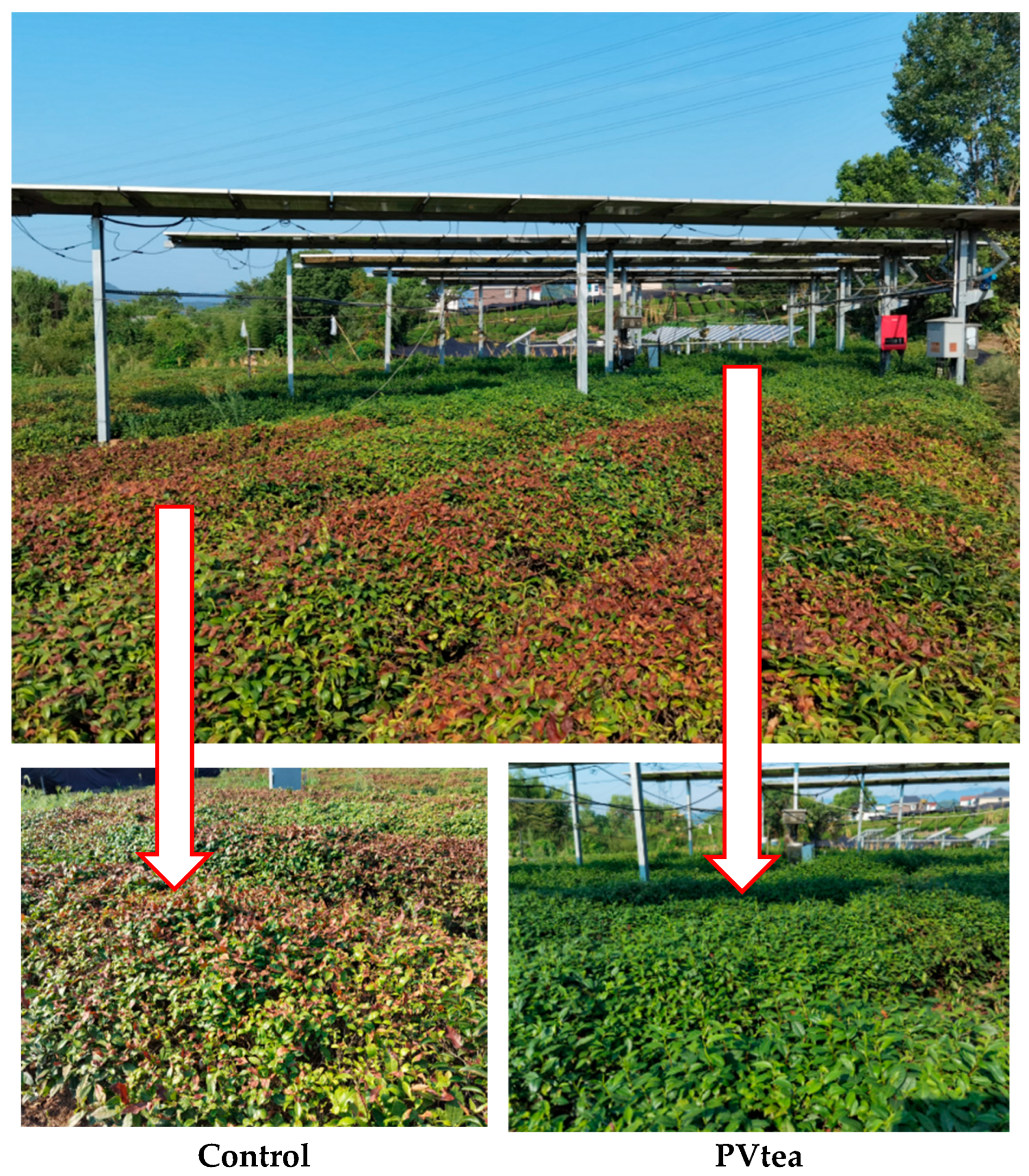
Heat waves have frequently occurred in test regions. In the summers of 2022 and 2024, the experimental area experienced prolonged periods of high temperatures exceeding 42 °C. During these periods, the surface temperature of the tea-plucking tables reached over 55 °C, causing significant heat damage to the tea plants. In contrast, the tea plants under PV modules grew well, with no adverse effects (Figure 14). These findings indicate that PV modules installed in tea fields can effectively mitigate heat damage to tea plants during extreme summer conditions.

4. Discussions

4.1. PV Modules Increase Tea Productivity by Mitigating Photodamage to Tea Leaves from Intense Sunlight

Photosynthesis in tea plants is a dynamic process intricately regulated by sunlight intensity, with the light saturation point (LSP) and light compensation point (LCP) serving as critical physiological thresholds. These parameters define the optimal and minimal light conditions required for efficient energy conversion and carbon assimilation, directly impacting tea plant growth and leaf yield, as well as secondary metabolite synthesis, such as catechins and chlorophylls. The LSP denotes the irradiance beyond which increased light no longer enhances the net photosynthetic rate (Pn). Tea plants generally exhibit LSP values of 775–973 μmol/m2·s under optimal growing conditions [17]. Excessively high light intensities beyond LSP induce photoinhibition, characterized by reduced chlorophyll levels and impaired photosystem II (PSII) functionality, as evidenced by declines in the Fv/Fm ratio under intense illumination [17,18]. For example, light intensities exceeding 550 μmol/m2·s suppress catechins biosynthesis and downregulate genes associated with photosynthetic electron transport (e.g., CspsbA, CspsbD) [18]. Tea plants exhibit distinct diurnal variations in photosynthesis, particularly under summer sunny conditions. Photosynthetic activity declines at midday due to excessive light intensity and high temperatures, i.e., photosynthetic noon break [19], which arises from multiple stressors: intense solar radiation induces photoinhibition by damaging PSII and reducing D1 protein repair efficiency [14,19]. The LCP represents the irradiance level at which photosynthetic carbon fixation equals respiratory carbon loss, marking the threshold below which Pn becomes negative. The LCP values for tea plants range between 5 and 7 μmol/m2·s under normal soil moisture conditions [17]. However, environmental stressors like drought elevate LCP, reflecting reduced photosynthetic efficiency under environmental stress [20].
Moderate light intensities (250–350 μmol/m2·s) optimize photosynthetic performance by balancing energy capture and metabolic demand. At this range of light intensities, tea plants exhibit enhanced electron transport rates (ETR), transpiration rates (Tr), and upregulated expression of photosynthetic genes (e.g., CsGLK1), which synergistically boost the synthesis of non-esterified catechins like epigallocatechin (EGC) [18]. Furthermore, shading practices by reducing light to 250 μmol/m2·s have been shown to mitigate photoinhibition under high-temperature stress by regulating canopy microclimates and preserving chlorophyll integrity [1]. This aligns with findings that shaded tea leaves accumulate higher concentrations of aroma precursors and antioxidants such as gallic acid (GA), through coordinated activation of shikimate pathway genes (CsaroB, CsaroDE) [18,20].
Solar radiation intensity profoundly shapes the photosynthetic dynamics of tea plants through its effects on LSP and LCP. Cultivation strategies must balance light exposure to avoid photoinhibition while ensuring sufficient irradiance to sustain metabolic activity and secondary metabolite production. In agricultural practices, managing light intensity through canopy shading or intercropping is pivotal for optimizing tea yield and quality. For example, black net shading not only prevents photodamage but also promotes the accumulation of theanine and volatile organic compounds (VOCs), which are critical for quality teas. Artificial shading can ameliorate cold-induced depression of photosynthesis in overwintering tea leaves, and the photosynthetic rates of overwintered leaves were higher during and after shading using lawn cloth, resulting in an increased yield in the first flush [21]. Low light conditions further increase the contents of amino acids and caffeine in shoots, but decrease the contents of tea polyphenols and the ratio of tea polyphenols to amino acids, which improves the taste of green tea [22]. The photosynthesis rate of mature leaves on shaded tea bushes exposed to 30–65% PAR was significantly higher (p < 0.05) than that of unshaded plants during midday on bright, clear days [19].
Figure 3 and Figure 4 in the present study show that the Fv/Fm value in the control decreased substantially at noon on sunny days when PAR was high, but remained relatively stable on cloudy days. The highest levels of PAR in PVtea, however, were less than 600 μmol/m2·s on both sunny and cloudy days, resulting in a continuously high Fv/Fm value (>0.8). The findings of this study demonstrate that appropriately installing photovoltaic modules above tea plants can effectively alleviate the photoinhibition effect induced by intense sunlight and high temperatures at midday during summer. This intervention also enhances the humidity of the tea field’s microclimate (Figure 5 and Figure 6), thereby promoting tea plant photosynthesis and increasing the concentration of key quality-related chemical components such as amino acids, catechins, and chlorophylls (Figure 11 and Figure 12), achieving dual benefits of boosting yield and improving product quality.

4.2. PVtea Is a Sustainable Model to Combat the Negative Impacts of Extreme Weather on Tea

4.2.1. Protecting Tea Plants Against Frost Damage

Tea plants are very vulnerable to spring frost damage (SFD), which often occurs in early spring and seriously affects the output and quality of tea in China and Japan [23,24]. Great efforts were made to minimize the SFD-induced loss in tea production, including application of remote sensing, geographic information systems [25], and satellite-based minimum temperature estimation [26,27] for predicting the occurrence of SFD and assessing the SFD-induced economic loss, and to protect tea plants from frost damage by cultivating tea cultivars with sprouting periods that avoid the occurrence of SFD [28], using oscillating frost protective fans or sprinkler irrigation in tea fields [29,30,31,32].
The critical temperature threshold (CTT) for SFD to tea plants is 3.0–3.7 °C. Frost damage occurs when the initial budburst of tea shoots coincides with periods in which the daily minimum temperature falls below the CTT [33,34]. SFD impairs the photosynthetic capacity of tea plants by reducing the chlorophyll fluorescence parameter Fv/Fm, which serves as an indicator of PSII activity [32]. Furthermore, Fv/Fm can be used to evaluate the effectiveness of frost protection measures against SFD. Tea leaves protected by sprinkler irrigation exhibited Fv/Fm values ranging from 0.6 to 0.7, which is significantly higher than those observed in leaves subjected to frost damage [32].
The sprinkler irrigation system effectively achieved frost protection for tea crops, with a recommended application rate of rainfall capacity 2–4 mm/h to enhance protective efficacy. To ensure optimal performance, the system should remain operational throughout the entire frost night and continue for an additional half hour after sunrise [35]. The temperature in the irrigated area was approximately 2.8 °C higher than that in the non-irrigated area, and the former exhibited a slower temperature increase after sunrise, which contributed positively to frost protection [36]. When ambient temperatures reached −4.0 °C, the microsprinklers were used to irrigate three designated areas. Each sprinkler operated on a cycle of 3.0 min of spraying followed by 6.0 min of rest, successfully maintaining canopy temperatures at approximately 1.0 °C [37].
Installing PV modules in tea fields can significantly alter the surface energy exchange process by reducing convective and radiative heat loss from the tea-plucking table to the atmosphere. This technology establishes a distinct microclimate within the PVtea field, demonstrating particular effectiveness during early spring nights that are prone to frost. The present study shows that the surface temperature of the plucking table in PVtea was 0.5–2 °C higher than that in the control group. This temperature increase effectively suppresses the occurrence of SFD. One mechanism underlying this effect is the radiation barrier function provided by the PV modules. Their physical coverage reduces long-wave radiation emitted from the plucking table to the cold night sky, thereby decreasing ground emissivity and limiting radiative cooling. A second mechanism involves the suppression of air convection. The structure of the PV array acts as a local barrier, restricting the downward movement of cold air masses near the plucking table and reducing their mixing with upper layers, which, in turn, minimizes heat loss due to turbulence and convection. Radiation-type frost formation primarily occurs under clear and calm nighttime conditions when the plucking table rapidly loses heat, cooling below the dew point. By reducing net radiative loss and lowering effective long-wave radiation emission to the atmosphere, PV modules weaken convective heat dissipation and slow the cooling rate. As a result, the nighttime temperature of the plucking table in PV-covered areas remains above the CTT, significantly reducing both the likelihood and severity of frost formation and protecting tea shoots from SFD. The PVtea model leverages PV technology to improve the microclimate of tea fields, offering an effective physical strategy for enhancing the safety and sustainability of tea growing.

4.2.2. Protecting Tea Plants Against Heat Damage

Global warming increases the exposure of tea plants to elevated heat conditions during the summer plucking period, and the most daunting issue of global climate change is the deleterious impact of extreme temperatures on tea productivity and quality, which has resulted in a quest among researchers and growers [38,39]. Investigation showed that the average heat damage (HD) ratios were 40–50% of tea-producing areas in China during typical HD years [40]. The critical land surface temperature (LST) threshold triggering HD in tea plants is 30.1 °C [41]. HD is always related to drought damage (DD), and it causes a range of biochemical, physiological, and chemical variations, resulting in membrane damage and loss in the functions of the cell and, finally, a decrease in the tea growth and leaf yield. A significantly greater negative impact of heat stress and drought stress was observed, as indicated by reductions in water retention, chlorophyll content, and oxidation potential, as well as an increase in membrane damage [42], resulting in a decrease in total polyphenol and water extract, which are closely related to the quality of tea [43]. To mitigate the adverse effects of high temperatures and drought on tea yield and quality, researchers and producers have implemented strategies such as cultivating heat- and drought-resistant tea cultivars or applying chemical protectants, including fulvic acid (FA) [44,45]. The present study shows that installing PV modules in tea fields to harness partial sunlight for power generation can significantly lower the temperature on the plucking table during summer days, thereby effectively mitigating HD to tea plants. These findings suggest that PV-integrated tea plantation represents a sustainable cultivation model capable of mitigating the adverse effects of global climate change on both tea productivity and quality.
Furthermore, from 2018 to 2024, the total electricity generation of the two experimental blocks (288 m2 each) was 121,202 kWh and 119,985 kWh, respectively, equivalent to an average annual generation of 20,098.9 kWh per block or 697,878.5 kWh per hectare. The installed capacity of a pure photovoltaic power station on barren land is generally 1050 kWp per hectare. The PVtea system in this study achieves an electricity output of 656 kWp per hectare, which is 62.5% of a pure photovoltaic power station. Considering the approximately 10% tea leaf yield increase associated with PVtea, the land-use equivalence ratio (LER) of PVtea is approximately 1.7. This indicates that the PVtea system achieves a favorable balance among agricultural productivity, clean electricity generation, and climate resilience.

5. Conclusions

Photovoltaic (PV) power generation represents a sustainable method of clean energy production. However, the extensive land-use associated with PV power stations poses a significant constraint on its large-scale development. Integrating solar power technology with agricultural practices offers an effective solution to this land-use challenge. Tea plants are known to be shade-tolerant, and high-quality tea cultivation often requires artificial shading conditions. In this study, PV modules were installed above tea bushes at a capacity of 656 kilowatts per hectare, resulting in an average annual generation of 697,878.5 kWh per hectare. The results indicate that the annual average PAR received by the tea plants in the PVtea garden was 52.9% of that in the control (open-field tea garden). Specifically, on sunny days, the PAR was reduced to 32.0% of the control level, while on cloudy days, it remained at 49.0%. Additionally, the daytime relative humidity within PVtea was significantly increased. These changes in the microclimate of the PVtea can effectively alleviate photoinhibition caused by intense midday sunlight, maintain the high activity of leaf photosystem II (PSII), promote photosynthesis in tea plants, and ultimately contribute to a 9.3–15.3% increase in tea leaf yield. The microclimate changes in the PVtea improve the synthesis and accumulation of secondary metabolites in tea plants, with higher accumulation of amino acids in tea leaves during periods of high light and increased temperature in summer, which is beneficial for improving the quality of green tea. Additionally, the tea plants’ resistance to frost damage in the spring and heat stress during the summer was also improved. It is concluded that PVtea integrates PV power generation with tea-growing practices, which not only facilitates clean energy production but also improves tea production, resulting in an increase in land-use equivalence ratio (LER) by 70%. The limitation of the study was that it was not applied to other crops.

Supplementary Materials

The following supporting information can be downloaded at: https://www.mdpi.com/article/10.3390/agriculture16010125/s1, Figure S1: PVtea at Jingshan Town, Zhejiang, China; Figure S2: PVtea at Mumen Town, Sichuan, China; Table S1: Fresh tea leaf yield in PVtea at Jingshan Town; Table S2: Fresh tea leaf yield in PVtea at Mumen Town; Table S3: Sensory assessment score of made teas.

Author Contributions

X.-Q.Z.: Conceptualization, funding acquisition, data curation, and writing—original draft; X.-H.Z.: Data curation and writing—original draft; J.-G.Z.: Funding acquisition, resources and conceptualization; R.-J.Z.: Conceptualization and resources; J.-L.L.: Methodology and validation; J.-H.Y.: Data curation; Y.-R.L.: Conceptualization, project administration, and writing—review and editing. All authors have read and agreed to the published version of the manuscript.

Funding

This study was financially supported by the Ministry of Agriculture and Rural Affairs of the People’s Republic of China through the earmarked fund for CARS-Tea (CARS-19) and the 2022 Hangzhou Key Science and Technology Research and Development Program in the field of carbon peak and carbon neutrality (202204T0).

Data Availability Statement

The original contributions presented in this study are included in the article and Supplementary Materials. Further inquiries can be directed to the corresponding author.

Conflicts of Interest

Author Jian-Gao Zhang was employed by the company Zhejiang Zhongxin Energy Development Co., Ltd. The remaining authors declare that the research was conducted in the absence of any commercial or financial relationships that could be construed as a potential conflict of interest.

References

  1. Li, L.; Tan, Z.F. The potential of renewable energy for the alleviation of climate change in China. Appl. Mech. Mater. 2013, 278–280, 2308–2312. [Google Scholar] [CrossRef]
  2. Heremans, G.; Trompoukis, C.; Daems, N.; Bosserez, T.; Vankelecom, I.F.J.; Martens, J.A.; Rongé, J. Vapor-fed solar hydrogen production exceeding 15% efficiency using earth abundant catalysts and anion exchange membrane. Sustain. Energ. Fuels 2017, 1, 2061–2065. [Google Scholar] [CrossRef]
  3. Trommsdorff, M.; Kang, J.; Reise, C.; Schindele, S.; Bopp, G.; Ehmann, A.; Weselek, A.; Högy, P.; Obergfell, T. Combining food and energy production: Design of an agrivoltaic system applied in arable and vegetable farming in Germany. Renew. Sust. Energ. Rev. 2021, 140, 110694. [Google Scholar] [CrossRef]
  4. Zeddies, H.H.; Parlasca, M.; Qaim, M. Agrivoltaics increases public acceptance of solar energy production on agricultural land. Land Use Policy 2025, 156, 107604. [Google Scholar] [CrossRef]
  5. Zhang, S.; Gong, J.; Xiao, C.; Yang, X.; Li, X.; Zhang, Z.; Song, L.; Zhang, W.; Dong, X.; Hu, Y. Bupleurum chinense and Medicago sativa sustain their growth in agrophotovoltaic systems by regulating photosynthetic mechanisms. Renew. Sust. Energ. Rev. 2024, 189, 114024. [Google Scholar] [CrossRef]
  6. Giri, N.C.; Mohanty, R.C. Turmeric crop farming potential under Agrivoltaic system over open field practice in Odisha, India. Environ. Dev. Sustain. 2024, 1–19. [Google Scholar] [CrossRef]
  7. Hu, B.; Zhou, P.; Zhang, L.P. A digital business model for accelerating distributed renewable energy expansion in rural China. Appl. Energ. 2022, 316, 119084. [Google Scholar] [CrossRef]
  8. Zhang, Q.; Bi, G.; Li, T.; Wang, Q.; Xing, Z.; LeCompte, J.; Harkess, R.L. Color shade nets affect plant growth and seasonal leaf quality of Camellia sinensis grown in Mississippi, the United States. Front. Nutr. 2022, 9, 786421. [Google Scholar] [CrossRef]
  9. Mukherjee, A.; Banerjee, S.; Sarkar, S. Productivity and radiation use efficiency of tea grown under different shade trees in the plain land of West Bengal. J. Agrometeorol. 2018, 10, 146–150. [Google Scholar] [CrossRef]
  10. Krahe, J.; Krahe, M.A. Optimizing the quality and commercial value of gyokuro-styled green tea grown in Australia. Beverages 2022, 8, 22. [Google Scholar] [CrossRef]
  11. Mei, Y.; Liang, X. Annual Report on China’s Tea Production and Sales in 2023, China Tea Marketing Association, Updated to 16 April 2024. Available online: https://mp.weixin.qq.com/s/JcL0ww7dHZKaGexvKXoiaA (accessed on 30 December 2025).
  12. Jiang, C.J. Tea Breeding, 2nd ed.; China Agriculture Press: Beijing, China, 2011; pp. 93–95. [Google Scholar]
  13. Cai, W.; Ma, J.; Guo, J.; Zhang, L. Function of ROC4 in the efficient repair of photodamaged photosystem II in Arabidopsis. Photochem. Photobiol. 2008, 84, 1343–1348. [Google Scholar] [CrossRef]
  14. Cai, W.-H.; Zheng, X.-Q.; Liang, Y.-R. High-light-induced degradation of photosystem II subunits’ involvement in the albino phenotype in tea plants. Int. J. Mol. Sci. 2022, 23, 8522. [Google Scholar] [CrossRef]
  15. Liang, Y.R.; Wu, Y.; Lu, J.L.; Zhang, L.Y. Application of chemical composition and infusion colour difference analysis to quality estimation of jasmine-scented tea. Int. J. Food Sci. Technol. 2007, 42, 459–468. [Google Scholar] [CrossRef]
  16. Zheng, X.-Q.; Dong, S.-L.; Li, Z.-Y.; Lu, J.-L.; Ye, J.-H.; Tao, S.-K.; Hu, Y.-P.; Liang, Y.-R. Variation of major chemical composition in seed-propagated population of wild cocoa tea plant Camellia ptilophylla Chang. Foods 2023, 12, 123. [Google Scholar] [CrossRef] [PubMed]
  17. Guo, C.F.; Sun, Y.; Zhang, M.Q. Effect of soil water stress on photosynthetic light response curve of tea plant (Camellia sinensis). Chin. J. Eco-Agric. 2008, 16, 1413–1418. [Google Scholar] [CrossRef]
  18. Xiang, P.; Zhu, Q.; Tukhvatshin, M.; Cheng, B.; Tan, M.; Liu, J.; Wang, X.; Huang, J.; Gao, S.; Lin, D.; et al. Light control of catechin accumulation is mediated by photosynthetic capacity in tea plant (Camellia sinensis). BMC Plant Biol. 2021, 21, 478. [Google Scholar] [CrossRef] [PubMed]
  19. Mohotti, A.J.; Lawlor, D.W. Diurnal variation of photosynthesis and photoinhibition in tea: Effects of irradiance and nitrogen supply during growth in the field. J. Exp. Bot. 2002, 53, 313–322. [Google Scholar] [CrossRef] [PubMed]
  20. Xiang, P.; Marat, T.; Huang, J.; Cheng, B.; Liu, J.; Wang, X.; Wu, L.; Tan, M.; Zhu, Q.; Lin, J. Response of photosynthetic capacity to ecological factors and its relationship with EGCG biosynthesis of tea plant (Camellia sinensis). BMC Plant Biol. 2025, 25, 199. [Google Scholar] [CrossRef]
  21. Aoki, S. Interaction of light and low temperature in depression of photosynthesis in tea leaves. Jpn. J. Crop. Sci. 1986, 55, 496–503. [Google Scholar] [CrossRef]
  22. Shen, R.H.; Ma, L.F.; Yang, X.D.; Fang, L. Effects of nitrogen form and weak light stress on tea plant growth and metabolism. J. Tea Sci. 2023, 43, 349–355. Available online: https://www.tea-science.com/EN/10.13305/j.cnki.jts.2023.03.01 (accessed on 30 December 2025). (In Chinese).
  23. Kotikot, S.M.; Flores, A.; Griffin, R.E.; Nyaga, J.; Case, J.L.; Mugo, R.; Sedah, A.; Adams, E.; Limaye, A.; Irwin, D.E. Statistical characterization of frost zones: Case of tea freeze damage in the Kenyan highlands. Int. J. Appl. Earth Obs. Geoinf. 2020, 84, 101971. [Google Scholar] [CrossRef]
  24. Lou, W.; Zhao, Y.; Huang, X.; Zhu, T.; Yang, M.; Deng, S.; Zhou, Z.; Zhang, Y.; Sun, Q.; Chen, S. Frost risk assessment based on the frost-induced injury rate of tea buds: A case study of the Yuezhou Longjing tea production area, China. Eur. J. Agron. 2023, 147, 126839. [Google Scholar] [CrossRef]
  25. Lou, W.; Ji, Z.; Sun, K.; Zhou, J. Application of remote sensing and GIS for assessing economic loss caused by frost damage to tea plantations. Precis. Agric. 2013, 14, 606–620. [Google Scholar] [CrossRef]
  26. Wang, P.; Tang, J.; Ma, Y.; Wu, D.; Yang, J.; Jin, Z.; Huo, Z. Mapping threats of spring frost damage to tea plants using satellite-based minimum temperature estimation in China. Remote Sens. 2021, 13, 2713. [Google Scholar] [CrossRef]
  27. Wang, P.; Ma, Y.; Tang, J.; Wu, D.; Chen, H.; Jin, Z.; Huo, Z. Spring frost damage to tea plants can be identified with daily minimum air temperatures estimated by MODIS land surface temperature products. Remote Sens. 2021, 13, 1177. [Google Scholar] [CrossRef]
  28. Omae, H.; Takeda, Y. Selection of early lines without frost damage based on parameters of accumulated temperature for flushing and opening speed of new leaves in tea. JARQ—Jpn. Agric. Res. Q. 2003, 37, 183–188. [Google Scholar] [CrossRef]
  29. Kimura, K.; Yasutake, D.; Nakazono, K.; Kitano, M. Dynamic distribution of thermal effects of an oscillating frost protective fan in a tea field. Biosyst. Eng. 2017, 164, 98–109. [Google Scholar] [CrossRef]
  30. Ni, Y.; Pan, Z.; Huang, Z.; Liu, W. Vortex characteristics downstream a fan and its effect on the heat transfer of the temperature inversion under late spring coldness. Adv. Mech. Eng. 2017, 9, 1687814017704353. [Google Scholar] [CrossRef]
  31. Xu, T.; Pan, Q.; Lu, Y. Heat transfer process of the tea plant under the action of air disturbance frost protection. Agronomy 2024, 14, 959. [Google Scholar] [CrossRef]
  32. Pan, Q.; Lu, Y.; Hu, Y. Influences of sprinkler frost protection on air and soil temperature and chlorophyll fluorescence of tea plants in tea gardens. Agriculture 2024, 14, 2302. [Google Scholar] [CrossRef]
  33. Kimura, K.; Kudo, K.; Maruyama, A. Spatiotemporal distribution of the potential risk of frost damage in tea fields from 1981-2020: A modeling approach considering phenology and meteorology. J. Agric. Meteorol. 2021, 77, 224–234. [Google Scholar] [CrossRef]
  34. Tang, J.; Wang, P.; Li, X.; Yang, J.; Wu, D.; Ma, Y.; Li, S.; Jin, Z.; Huo, Z. Disaster event-based spring frost damage identification indicator for tea plants and its applications over the region north of the Yangtze River, China. Ecol. Indic. 2023, 146, 109912. [Google Scholar] [CrossRef]
  35. Hu, Y.; Zhao, C.; Liu, P.F.; Amoah, A.E.; Li, P. Sprinkler irrigation system for tea frost protection and the application effect. Int. J. Agric. Biol. Eng. 2016, 9, 17–23. [Google Scholar] [CrossRef]
  36. Lu, Y.; Hu, Y.; Zhao, C.; Snyder, R.L. Modification of water application rates and intermittent control for sprinkler frost protection. Trans. ASABE 2018, 61, 1277–1285. [Google Scholar] [CrossRef]
  37. Pan, Q.; Hu, Y. Reasons of sprinkler freezing and rotational irrigation for frost protection in tea plantations. Irrig. Drain. 2025, 74, 139–147. [Google Scholar] [CrossRef]
  38. Chen, S.; Gao, Y.; Fan, K.; Shi, Y.; Luo, D.; Shen, J.; Ding, Z.; Wang, Y. Prediction of drought-induced components and evaluation of drought damage of tea plants based on hyperspectral imaging. Front. Plant Sci. 2021, 12, 695102. [Google Scholar] [CrossRef]
  39. Wang, H.; Hou, J.; Zhou, B.; Han, X. Effects of water supply mode on nitrogen transformation and ammonia oxidation microorganisms in a tea garden. Agronomy 2023, 13, 1279. [Google Scholar] [CrossRef]
  40. Wang, P.; Li, X.; Tang, J.; Wu, D.; Pang, L.; Zhang, Y. Critical threshold-based heat damage evolution monitoring to tea plants with remotely sensed LST over mainland China. Remote Sens. 2024, 16, 1784. [Google Scholar] [CrossRef]
  41. Wang, P.; Li, X.; Tang, J.; Yang, J.; Ma, Y.; Wu, D.; Huo, Z. Determining the critical threshold of meteorological heat damage to tea plants based on MODIS LST products for tea planting areas in China. Ecol. Inform. 2023, 77, 102235. [Google Scholar] [CrossRef]
  42. Seth, R.; Maritim, T.K.; Parmar, R.; Sharma, R.K. Underpinning the molecular programming attributing heat stress associated thermotolerance in tea (Camellia sinensis (L.) O. Kuntze). Hortic. Res. 2021, 8, 99. [Google Scholar] [CrossRef]
  43. Chaeikar, S.S.; Marzvan, S.; Khiavi, S.J.; Rahimi, M. Changes in growth, biochemical, and chemical characteristics and alteration of the antioxidant defense system in the leaves of tea clones (Camellia sinensis L.) under drought stress. Sci. Hortic. 2020, 265, 109257. [Google Scholar] [CrossRef]
  44. Nalina, M.; Saroja, S.; Chakravarthi, M.; Rajkumar, R.; Radhakrishnan, B.; Chandrashekara, K.N. Water deficit-induced oxidative stress and differential response in antioxidant enzymes of tolerant and susceptible tea cultivars under field condition. Acta Physiol. Plant 2021, 43, 10. [Google Scholar] [CrossRef]
  45. Sun, J.; Qiu, C.; Ding, Y.; Wang, Y.; Sun, L.; Fan, K.; Gai, Z.; Dong, G.; Wang, J.; Li, X.; et al. Fulvic acid ameliorates drought stress-induced damage in tea plants by regulating the ascorbate metabolism and flavonoids biosynthesis. BMC Genom. 2020, 21, 411. [Google Scholar] [CrossRef]
Figure 1. PV modules over the tea field.
Agriculture 16 00125 g001
Figure 2. The year-round changes in PAR measured on Fuyang Tea Farm.
Agriculture 16 00125 g002
Figure 3. Diurnal changes in PAR and Fv/Fm for a sunny day measured on Fuyang Tea Farm on 23 May 2023.
Agriculture 16 00125 g003
Figure 4. Diurnal changes in PAR and Fv/Fm for a cloudy day measured on Fuyang Tea Farm on 23 September 2023.
Agriculture 16 00125 g004
Figure 5. Diurnal temperature changes for spring (left) and summer (right) measured on Fuyang Tea Farm on 1 April 2019 and 27 July 2018, respectively.
Agriculture 16 00125 g005
Figure 6. Diurnal relative humidity changes for spring (left) and summer (right) measured on Fuyang Tea Farm on 1 April 2019 and 27 July 2018, respectively.
Agriculture 16 00125 g006
Figure 7. Comparison of fresh leaf yield for different tea seasons in 2023 (left) and 2024 (right). BQF indicates before the Qingming Festival. Values are means ± SD. *: being significantly different at p = 0.05 compared with the control.
Agriculture 16 00125 g007
Figure 8. Effect of PV module on shoot fresh weight with two leaves and a bud in 2024. Bar indicates SD.
Agriculture 16 00125 g008
Figure 9. Effect of PV module on the leaf size in 2024. Bar indicates SD. *: being significantly different at p = 0.05 compared with the control.
Agriculture 16 00125 g009
Figure 10. Effect of PV modules on phytochemicals of spring tea leaves in 2023.
Agriculture 16 00125 g010
Figure 11. Effect of PV modules on phytochemicals of summer tea leaves in 2023. Bar indicates SD. *: being significantly different at p = 0.05 compared with the control.
Agriculture 16 00125 g011
Figure 12. Concentration of pigments in summer tea leaves in 2023. Bar indicates SD. *: being significantly different at p = 0.05 compared with the control.
Agriculture 16 00125 g012
Figure 13. PV modules prevent tea plants from frost damage under cold weather conditions.
Agriculture 16 00125 g013
Figure 14. PV modules prevent tea plants from heat damage under extreme summer conditions.
Agriculture 16 00125 g014
Table 1. Comparison of sprouting indexes measured on Fuyang Tea Farm (mean ± SD, n = 3) .
DateTreatmentNumber of Shoots with One Leaf and a BudNumber of Shoots with Two Leaves and a BudNumber of Shoots with Three Leaves and a BudSprouting Index
3 April 2018PVtea18.00 ± 7.57123.00 ± 14.2260.00 ± 13.58 *3.21 ± 0.11 *
Control17.00 ± 7.00120.00 ± 20.8142.00 ± 10.973.14 ± 0.10
26 March 2019PVtea49.33 ± 15.6318.67 ± 14.22 *1.00 ± 1.73 *2.22 ± 0.13 *
Control56.00 ± 15.8712.33 ± 8.0802.01 ± 0.22
: SD, standard deviation. *: significantly different at p < 0.05 compared with the control.
Disclaimer/Publisher’s Note: The statements, opinions and data contained in all publications are solely those of the individual author(s) and contributor(s) and not of MDPI and/or the editor(s). MDPI and/or the editor(s) disclaim responsibility for any injury to people or property resulting from any ideas, methods, instructions or products referred to in the content.