Article

Energy Consumption Assessment of a Tractor Pulling a Five-Share Plow During the Tillage Process


1
College of Mechanical and Electrical Engineering, Hunan Agricultural University, Changsha 410128, China
2
Shanhe Intelligent Equipment Co., Ltd., Changsha 410131, China
*
Author to whom correspondence should be addressed.
Agriculture 2025, 15(24), 2619; https://doi.org/10.3390/agriculture15242619
Submission received: 4 November 2025 / Revised: 7 December 2025 / Accepted: 15 December 2025 / Published: 18 December 2025
(This article belongs to the Section Agricultural Technology)

Abstract

Reducing the fuel consumption of tractors has consistently been a critical challenge that the agricultural machinery industry must address. To investigate the energy consumption during the plowing process of tractors and enhance their economic efficiency, this study conducted comparative experiments under varying plowing speeds and depths. In this experiment, the CAN bus protocol was utilized for the collection of engine operational data, such as rotational speed and fuel flow. A GPS positioning system was adopted to measure the plowing speed of the tractor and combined with the data from the tractor coasting test, and then the energy consumption for operating the plow was determined. In addition, a tension sensor was installed on the three-point hitch to measure the horizontal pull force exerted by the five-share plow during plowing, thereby facilitating the calculation of the energy consumption of agricultural machinery. The findings indicate that when the tractor’s plowing speed is maintained at 5.7 km/h, both the average fuel consumption and the fuel consumption per unit area increase as the plowing depth increases. If the plowing depth is fixed at 23 cm, the average fuel consumption rises with an increase in plowing speed, whereas the fuel consumption per unit area decreases. The experimental data show that during the actual tillage operation of the tractor, the brake thermal efficiency of diesel engines ranges from 21.76% to 28.57%. The energy consumed by agricultural implements accounts for only 11.79% to 17.04% of the total fuel energy. The energy consumed in operating the tractor-drawn plow accounts for merely 7.87% to 13.66% of the diesel engine output energy. Approximately 23.24% to 38.69% of the effective power of the diesel engine is lost during the transmission process. This study provides valuable insights for optimizing the performance of tractors during operation.

1. Introduction

Improving the energy efficiency of tractor plowing operations remains a critical challenge in reducing operational costs and mitigating environmental impacts. Extensive research has established that forward speed, plowing depth, gear selection, soil conditions, and implement design exert a significant influence on specific fuel consumption and traction performance [1,2,3,4,5,6,7,8,9,10,11,12,13]. Increasing plowing depth and selecting appropriate gears generally enhance tractive load and optimize fuel consumption per unit area [4,6,7,8], whereas excessively high forward speeds exacerbate soil disturbance and wheel slip, consequently diminishing overall machine efficiency [10,14,15,16]. However, most of these studies only report total fuel consumption or traction power as end outcomes; very few offer a detailed quantification of energy losses within the tractor–implement–soil system under real-world field conditions with variable loads.
In recent years, advanced modeling approaches—including Artificial Neural Networks [17,18], Discrete Element Method (DEM) simulations [14], load transfer models integrating tire–soil interaction [19], and predictive or optimal control strategies [20,21]—have significantly improved the accuracy of fuel consumption prediction and transmission ratio optimization. Although these models perform well in forecasting total energy consumption, they tend to adopt oversimplified constant values for internal losses in the driveline, hydraulic system, and steering system, or completely overlook losses associated with rolling resistance [19,22,23]. Consequently, while total fuel consumption can be estimated with reasonable precision, it remains unclear how much of the engine’s output power is ultimately converted into the useful work of the implement and what the hierarchical contributions of the individual subsystems are to overall inefficiency.
Field measurements consistently indicate a significant discrepancy between bench test results and actual field work [24,25,26,27,28,29,30]. Engine torque, power, and other key parameters undergo severe fluctuations during acceleration, plowing depth adjustment, and turning maneuvers [22,28,29]—transient conditions that are difficult to replicate on dynamometers. While prior studies have measured transient wheel slip [16], three-point hitch forces [31,32], driveline loads [19], or PTO-based fuel consumption [33] in isolation, these works focused solely on individual components and failed to construct a comprehensive energy flow profile from the chemical energy of fuel to the effective soil-cutting work. Even studies reporting overall powertrain efficiency [23] do not provide a breakdown of losses attributable to thermal losses, driveline losses, wheel slip losses, hydraulic systems, or the implement itself.
Therefore, three critical gaps remain in the existing literature. First, there is a lack of field-derived studies that synchronously quantify all major power flow nodes across an entire operating cycle. Second, a quantitative assessment of the proportions of energy dissipation across various subsystems under real-world, variable-load conditions remains lacking. Third, there is insufficient evidence to identify which operating mode offers the greatest practical energy-saving potential in conventional high-power tractors.
To address these gaps, this study conducted comprehensive field tests using a 100 kW four-wheel drive tractor (LovoL M1204-D) paired with a five-furrow reversible plow. Under six combined operating conditions involving forward speeds (5.7, 7.1, and 8.9 km/h) and plowing depths (20, 23, and 26 cm), data were synchronously collected on instantaneous fuel consumption, engine speed and torque, forward speed, and three-point hitch forces, along with tractor rolling resistance and driveline resistance obtained from coasting tests. An energy balance analysis framework was established to track power flow in real time and calculate the proportional distribution of cumulative energy among engine thermal losses, driveline and hydraulic losses, slip and rolling resistance, and effective implement work. For the first time based on field measurements, this paper fully reveals the energy distribution patterns during actual plowing operations with a modern high-power tractor, providing a clear quantitative basis and scientific foundation for identifying major loss sources and guiding future targeted energy-efficient design and intelligent power management of tractors.

2. Tractor Plow Experiment Evaluating Energy Consumption

2.1. Tractor Introduction

For the tractor plowing test, a five-share plow was mounted using a three-point suspension system. The tractor used was a LovoL M1204-D, equipped with a 100 kW diesel engine independently developed by Yuchai Group, featuring a plowshare width of 1000 mm, a weight of 170 kg, and a plowshare depth of 200–300 mm. The specific parameters of the tractor are presented in Table 1.

2.2. Measurement Method

To clarify the energy consumption patterns during tractor plowing, this paper conducts a tractor plowing test study. The experiment used a tractor with a five-share plow to conduct tillage tests at different depths and speeds. The key parameters measured during the test included engine parameters, overall tractor parameters, and agricultural machinery parameters.
(1)
Diesel engine parameters
The diesel engine used in this study complies with the Serial Control and Communications Vehicle Network (SAE J1939) standard protocol. To analyze the performance parameters of the diesel engine during the plowing process, a Kvaser bus analyzer was connected to the diesel engine controller to collect parameters such as engine speed, torque ratio, and fuel flow rate. The SAE J1939 protocol parses the 29-bit Identifier (ID) into a 3-bit priority, a 1-bit reserved bit, a 1-bit data page, an 8-bit Protocol Data Unit (PDU) format, an 8-bit PDU-specific domain, and an 8-bit source address. The Controller Area Network (CAN) standardized the definitions of the four key parameters of the diesel engine examined in this study—rotational speed, torque, fuel flow, and transmission gear position are shown in Table 2.
This test obtained key parameters such as engine speed, torque, and fuel consumption by parsing tractor CAN bus data, all of which adhered to the SAE J1939 protocol [34]. The data acquisition system comprises a CAN data logger and an on-board intelligent terminal at a sampling rate of 100 Hz. The principles of the sensor measurement and calibration method are outlined as follows.
The engine speed measurement is based on the crankshaft speed detected by a Hall effect sensor through the frequency of the flywheel ring tooth slots. The standard number of teeth on the flywheel is 60, and the sensor outputs a pulse frequency with a rotational speed that satisfies
n = ( f   ×   60 )   /   N
Here, f is the pulse frequency, unit: Hz, and N is the number of teeth, unit: pcs. The Electronic Control Unit (ECU) converts the pulse signal into a digital quantity, encapsulating it into data domain bytes 4–5 according to Parameter Group Number (PGN) 61444, with the physical value conversion formula RPM = original value × 0.125.
Fuel consumption is collected and calibrated using the sensor output of an analog signal, which is converted to a digital quantity by the ECU and encapsulated into bytes 3–4 by PGN 65253, with the conversion formula flow rate = original value × 0.05. In a constant-temperature fuel tank environment, a high-precision electronic scale was used to record the mass of fuel consumption for 10 min, while the CAN original value was collected simultaneously to establish the original mass value conversion coefficient for calibrating fuel consumption.
The ECU calculates the torque output value based on the physical model in real time. The calculation input includes multi-source sensor data such as intake air mass flow rate, rotational speed, ignition and fuel injection timing and temperature [35]. The results are encapsulated as a standardized CAN message, encoded, and transmitted through a predefined communication matrix. During measurement, the torque signal in the target message ID must be parsed, and the original value is converted to a physical quantity based on the signal’s start bit, length, scaling factor, and Byte Order. In practical applications, CAN analyzers and parsing software are required, along with Database Container files, to enable data decoding and visual monitoring.
To determine the dynamic characteristics of the engine under actual operating conditions, the engine power was calculated as
P = T · n 9550
P is the engine power, unit: kW; T is the torque, unit: Nm; and n is the speed, unit: RPM.
(2)
Vehicle parameters
Speedbox-RTK (GPS) was installed on the top of the tractor’s cab to measure the tractor’s speed for analyzing the energy consumption during plowing. The tractor was accelerated to the target initial speed of 35 km/h (speed control accuracy ± 0.5 km/h) on a standard test road surface (asphalt road surface, slope ≤ 0.5%). The power transmission was instantaneously cut off (while synchronously triggering the data acquisition system), high-precision speed information was recorded using GPS (Speedbox-RTK, accuracy 0.05 km/h), speed decay curves were continuously collected, and the full-condition coasting distance from 35 km/h to complete stop was obtained precisely. During coasting, the tractor was subjected to the combined action of rolling resistance ( F r ) , air resistance   ( F i ) , and transmission system resistance ( F t ) , and the motion equation is
m d v d t = F r + F i + F t
where m is the vehicle mass, unit: kg. Among these variables, rolling resistance is proportional to the vehicle weight and dominates at low speeds:
F r   =   mg C r
C r is the rolling resistance coefficient, which is affected by tire pressure and road conditions. F i is air resistance (unit: N), which is proportional to the square of speed and is significant at high speeds:
F i = 1 2 ρ C d A v 2
ρ is the air density, unit: kg/m3; C d is the wind resistance coefficient, and A is the windward area, unit: m 2 . Drive resistance is usually simplified to a constant or a low-order polynomial function.
F total = m a t = α + β v + γ v 2
Here, α is a constant term, including roll resistance and transmission static friction; β v is the mechanical resistance in the low-speed region, including viscous friction of the bearing/gear; and γ v 2 is the air resistance. In this formula, α, β, and γ are all constant terms, and v is the tractor’s travel speed with units of m/s. C r test result data fitting yields a tractor roll resistance coefficient of 0.06 and a wind resistance coefficient of 1.1 on the test road surface.
The rolling resistance coefficient and wind resistance coefficient of the tractor were analyzed, allowing for an examination of the energy consumption pattern of the tractor during driving.
The driving power consumption of the tractor is related to traction force and speed, and the power is
P = F total   ·   v
P is the driving resistance power, unit: kW; F total is the driving resistance, unit: N; and v is the tractor driving speed, unit: km/h.
(3)
Farm tool parameters
To analyze the energy consumption of agricultural machinery during the plowing process, tension sensors were installed on three-point suspended rods to measure the force exerted on the five-share plow during operation.
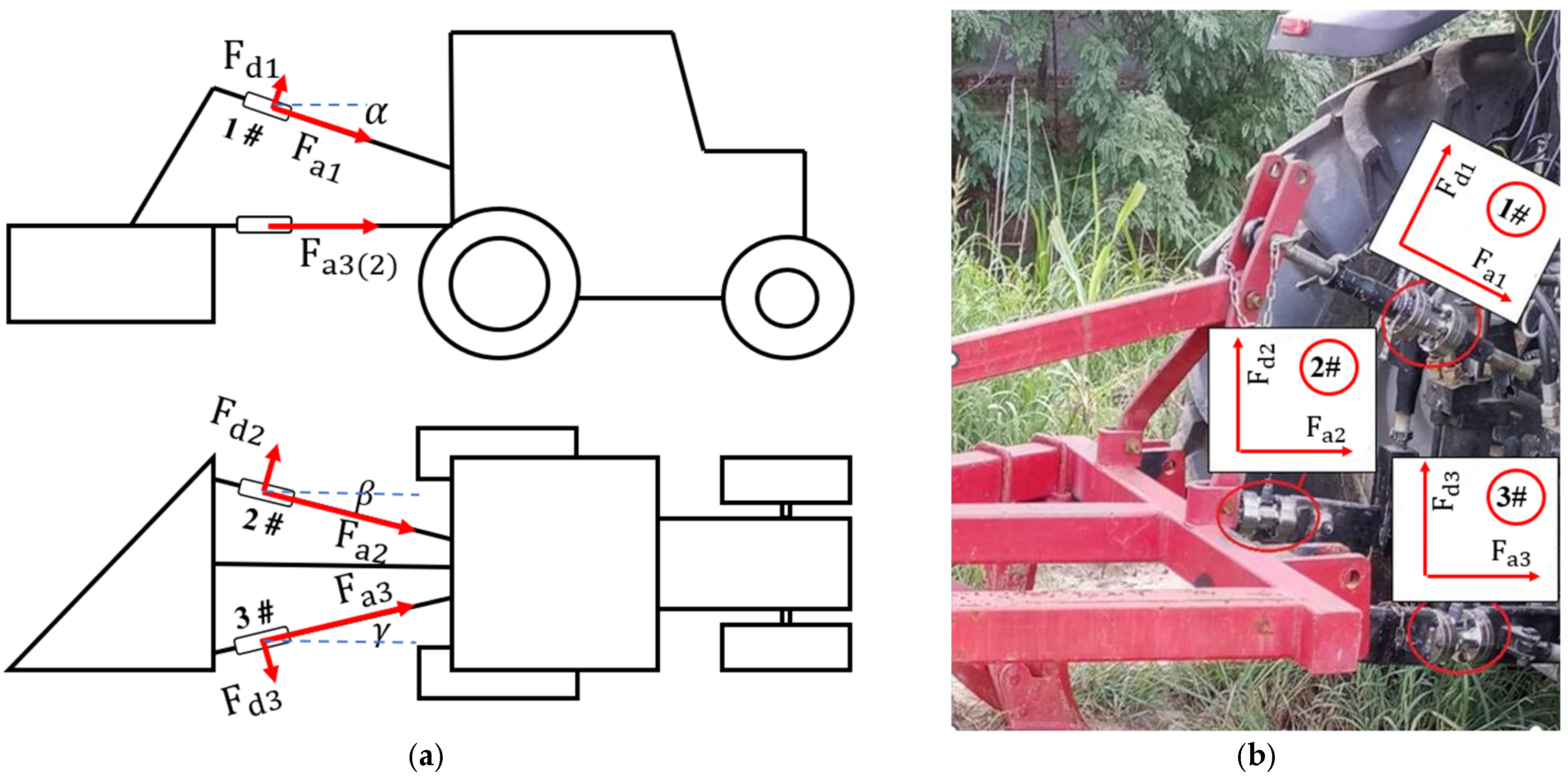
Three tension sensors were installed on the three-point suspension of the moldboard plow and tractor, and the measurement diagram is presented in Figure 1. (a) Schematic diagram of cultivated land with five-share plow. (b) Tension sensor.
Figure 1a is a schematic diagram of land cultivated with a five-share plow; Figure 1b illustrates the installation diagram of the sensor. The angles between the tractor’s forward direction and the axial/radial forces measured by the tension sensor were determined. By decomposing the sensor-measured force along the forward direction, the resultant operational force in this direction was obtained. As shown in Figure 1a, the angles β and γ between the left and right pull rods and the horizontal centerline (Y-axis) of the tractor were measured, and the sum of the axial and radial forces of the sensors indicates the direction of the pulling force. The angle α is defined as the inclination of the upper pull rod relative to the tractor’s horizontal centerline. Under normal circumstances, the angles between the axis direction of the left and right suspension tension sensors and the forward direction of the tractor are equal; that is, β = γ. Ignoring the slight changes in the position of the pull rod during tillage and the changes in the horizontal angle caused by variations in the depth of the five-share plow, the pulling force of the pull sensor during tillage is represented by Formulas (8)–(10). The product of the total pulling force acting on the plowshare and the traveling speed yields the power it consumes, as shown in Formula (12).
F 1 =   F a 1   ·   cos   α + F d 1 · sin α
F 2 = F a 2   ·   cos   β + F d 2 · sin β
F 3 = F a 3   ·   cos   γ + F d 3 · sin γ
F = F 1 + F 2 + F 3
P l = F   ·   v
In the formula, F is the total pulling force of the five-share plow, unit: N; F1 is the resultant force of sensor 1, unit: N; F2 is the resultant force of sensor 2, unit: N; F3 is the resultant force of sensor 3, unit: N; Fa1 is the axial force of sensor 1, unit: N; Fa2 is the axial force of sensor 2, unit: N; Fa3 is the axial force of sensor 3, unit: N; Fd1 is the radial force of sensor 1, unit: N; Fd2 is the radial force of sensor 2, unit: N; Fd3 is the radial force of sensor 3, unit: N; [variable] is the radial force of rod 3, unit: N;   v is the plowing velocity, unit: m/s; Pl is the power of the moldboard plow, unit: watts.
The raw data collected via the CAN bus is synchronously transmitted to the data acquisition terminal and processed by the Kalman filtering algorithm to establish the engine operating status database, providing essential data support for subsequent analyses of power transmission efficiency and energy consumption characteristics. Information on the main test instruments and equipment used in this paper is shown in Table 3.
The tractors utilized in all field tests were fueled exclusively with commercially available 0# diesel supplied by Sinopec Group. The use of this standardized fuel ensured consistency in combustion characteristics and energy input across all experimental repetitions, thereby minimizing a potential source of variability in engine performance and fuel consumption measurements. The key properties of the fuel, as provided by the manufacturer, are summarized in Table 4 below.

2.3. Experiment Procedures

The field experiment was conducted on 2.66 hectares of dryland at the Quan Quan Agricultural Machinery Cooperative in Shandong Province, China. The specific site is located in Sun Town, Zouping County, Binzhou City. The soil type was loam, with a moisture content of 21.26% at a depth of 10 cm and a soil firmness of 1.2 MPa. Before the experiment, the plot was planted with wheat and had approximately 15 cm long stubble. The tractor gear configuration was 16 + 8 R, determined by the high and low handles, the sub-gear lever, and the main gear lever, with different target speeds corresponding to various gear combinations. This paper selected target speeds of 5.7 km/h, 7.1 km/h, and 8.9 km/h and conducted tests at three plowing depths of 20 cm, 23 cm, and 26 cm. The detailed test schemes are presented in Table 5.
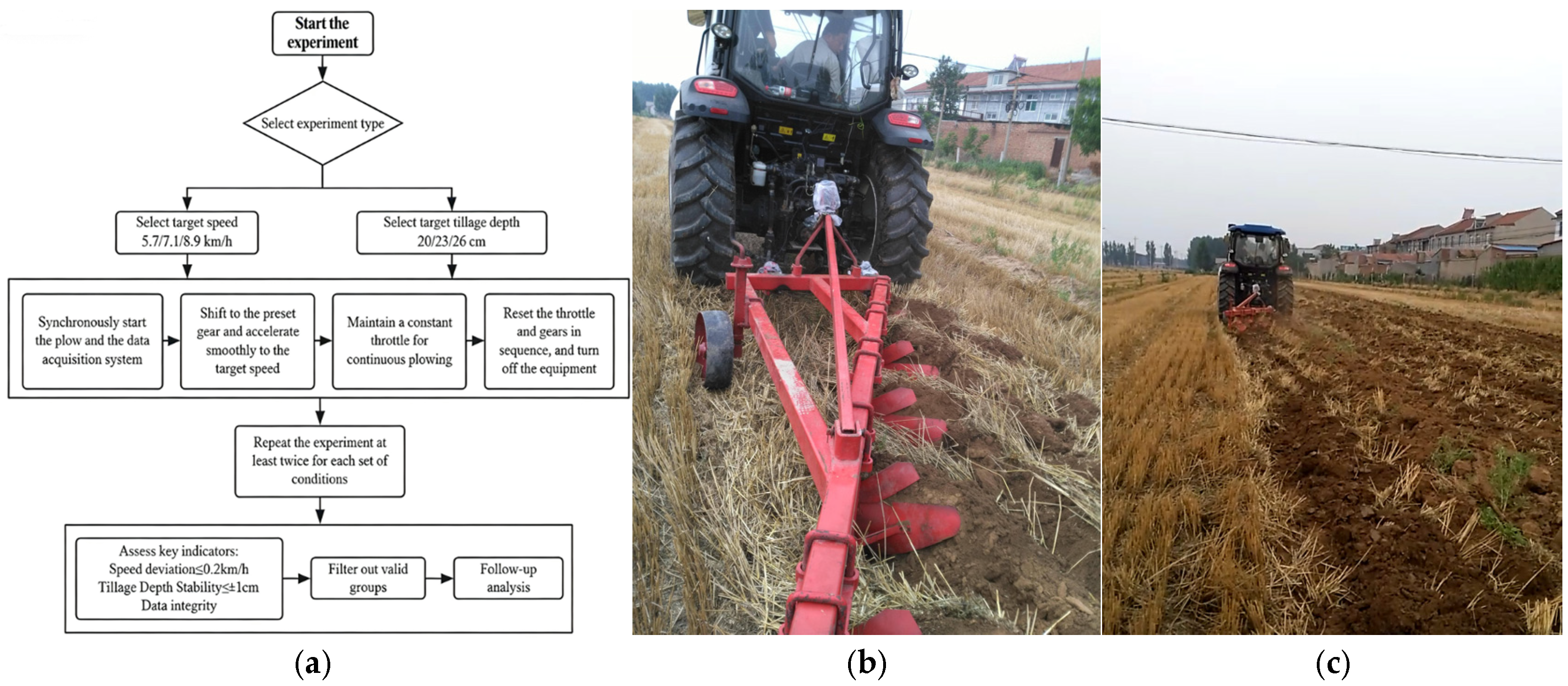
The fixed plowing depth test is a field test where the five-share plow has a fixed plowing depth adjustment scale of 23 cm, followed by three sets of different operation speeds (5.7 km/h, 7.1 km/h, and 8.9 km/h). The procedure is as follows: First, start the moldboard plow machinery and the accompanying parameter test system simultaneously, then smoothly accelerate to the target speed after shifting into the preset gear. Keep the throttle opening constant for continuous tillage, and then gradually complete the throttle reset, return the gear to neutral, and shut down the equipment after the operation is completed. For each group of speed conditions, at least two repeated tests were conducted. By comprehensively evaluating indicators such as speed deviation (≤±0.2 km/h), tillage stability (23 ± 1 cm), and completeness of data acquisition, valid test data groups that met the requirements were screened out for subsequent analysis. The fixed-speed test was conducted with the operating speed held constant at 5.7 km/h, with three depth gradients of 20 cm and 26 cm set for comparative tests. The procedure is as follows: Start the moldboard plow and its supporting parameter test system simultaneously. Engage the matching gear and keep the throttle opening constant for the tillage test. After the operation has been completed, perform the throttle reset, return the gear to neutral, and shut down the equipment in sequence. Sample and adjust the plowing depth for each experiment to reduce the plowing depth error. In Figure 2, the tractor during the plowing experiment is presented. Figure 2a is a flowchart of the tractor plowing process. Figure 2b shows the moment when the five-share plow began to dig into the soil. Figure 2c depicts the field state of the cultivation experiment.

3. Experiment Results

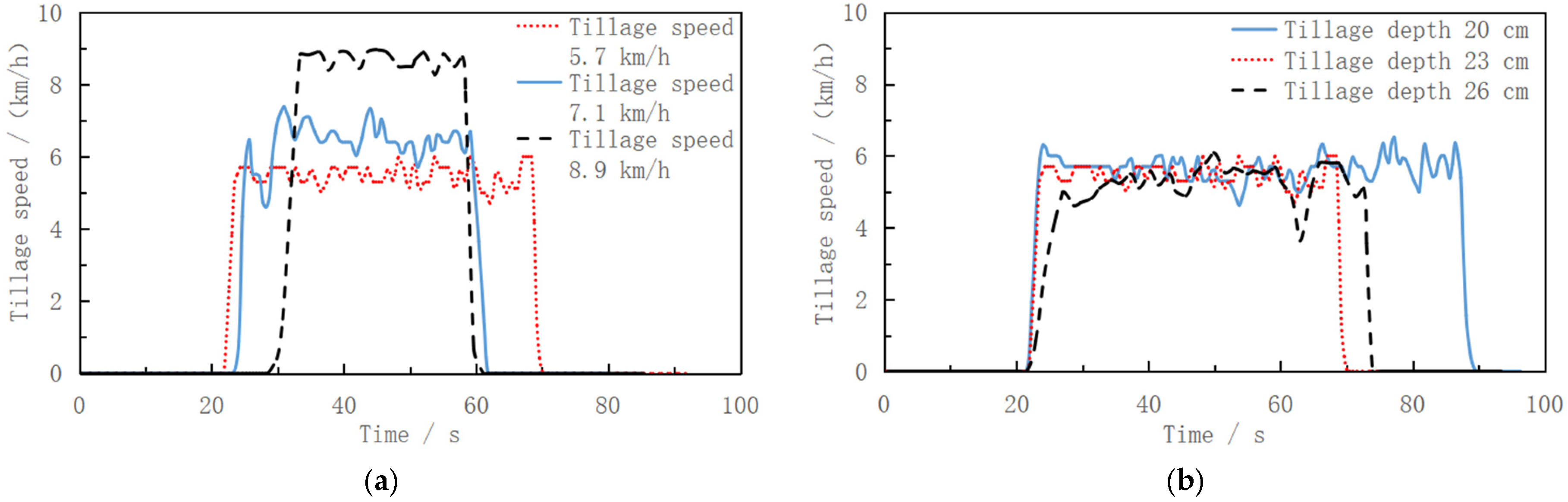
The results of the plowing speed and plowing depth from the two types of farmland experiments are shown in Figure 3. Figure 3a presents the results of varying plowing speeds at the same plowing depth. The variation pattern of the plowing speed is similar, and plowing can be conducted around the target speed during the constant throttle stage. Figure 3b displays the results of the same plowing speed at different plowing depths. When the throttle is pulled down, the tractor quickly reaches the target plowing speed of 5.7 km/h and fluctuates around this speed. When the throttle is released, the tractor comes to a quick stop. However, in the 26 cm depth test, the speed decreased at 63 s, possibly due to the presence of crop roots, hard clumps of soil, or an accumulation of soil on the plowshare. In summary, there are numerous uncontrollable factors in the field trials.
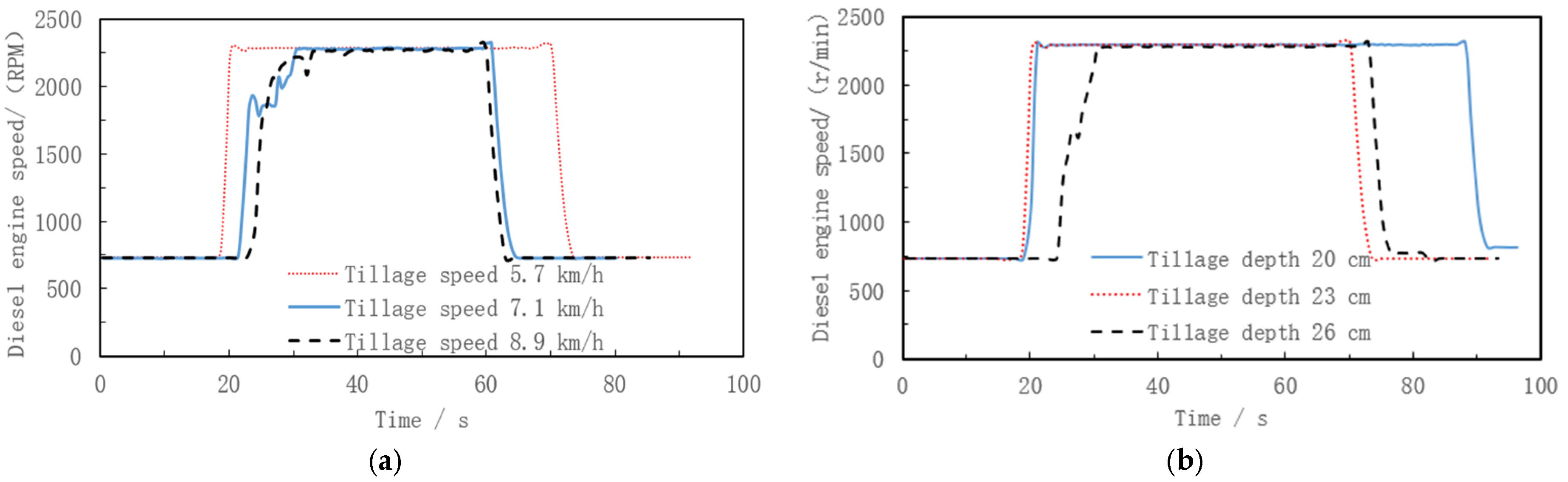
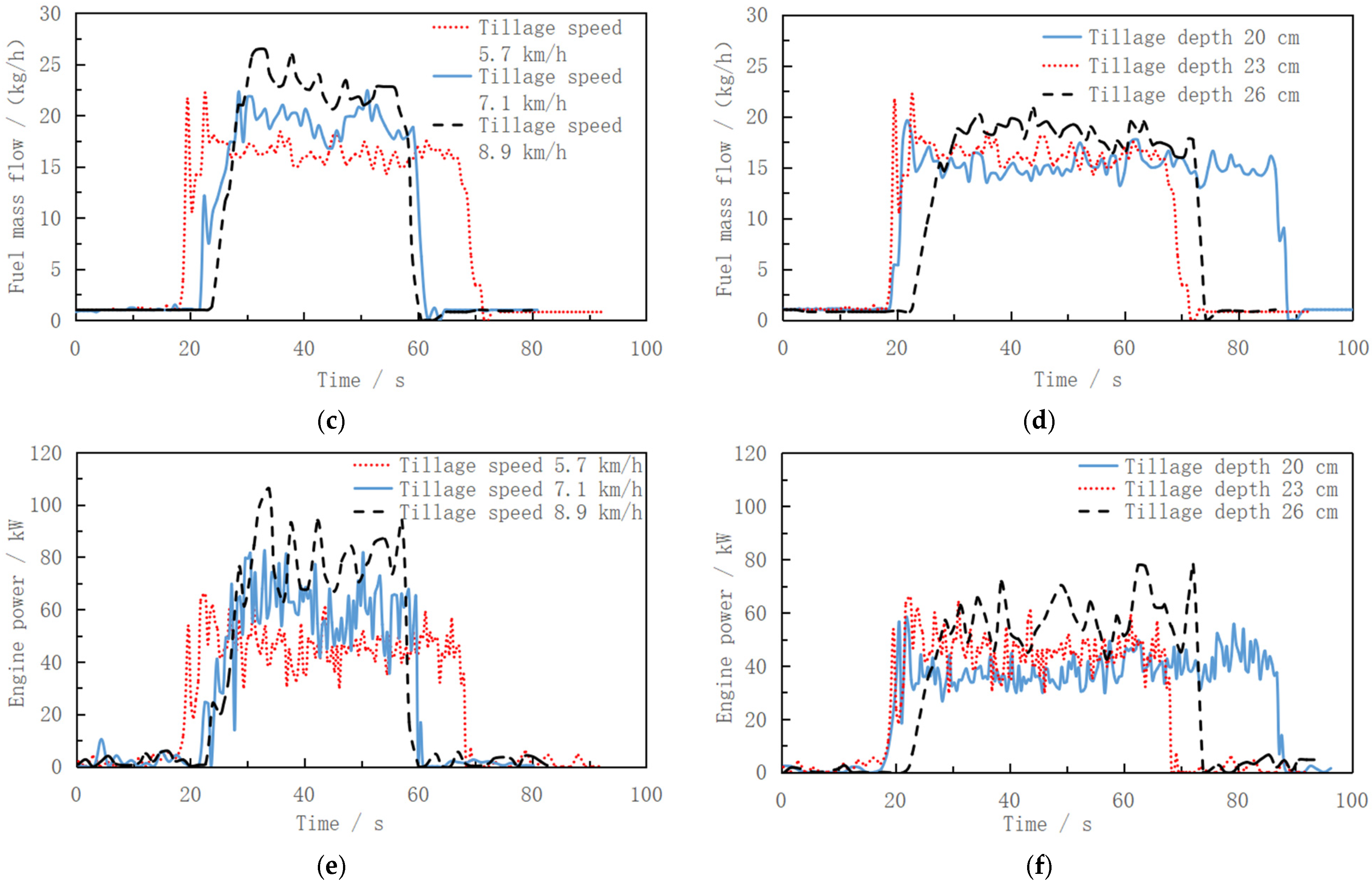
Figure 4 presents the performance parameters of diesel engines in two types of cultivated land tests. From Figure 4a,b, it is evident that during the constant throttle stage, the engine speed remains constant at the rated speed and is very stable, primarily because the engine is equipped with an ECU that can precisely control the engine speed. Figure 4c,d illustrate the variation pattern of the instantaneous fuel flow of the diesel engine. It is clear that only a small amount of fuel is required during the idle stage of the engine to maintain the basic operation of the entire machine. When the throttle is pulled down, the fuel consumption increases rapidly. During the stage when the tractor plows at a fixed target speed, the diesel engine speed can be maintained stably, but the instantaneous fuel consumption fluctuates significantly. Fuel consumption increases with the depth of plowing and the speed of plowing, with the latter being more significant. The team employed two methods to obtain the effective power of the diesel engine during the tractor plowing process. Method 1 involved reading the percentage of the current effective torque from the CAN bus, combined with the external characteristic torque at the current speed, to calculate the output torque of the diesel engine and subsequently calculate the power. The second method utilized a combustion analyzer to acquire the engine’s indicated performance parameters. The mechanical loss under current conditions was then determined by interpolating data from bench tests, enabling the calculation of effective power. The resulting effective power from Method 2 is displayed in Figure 4e,f.
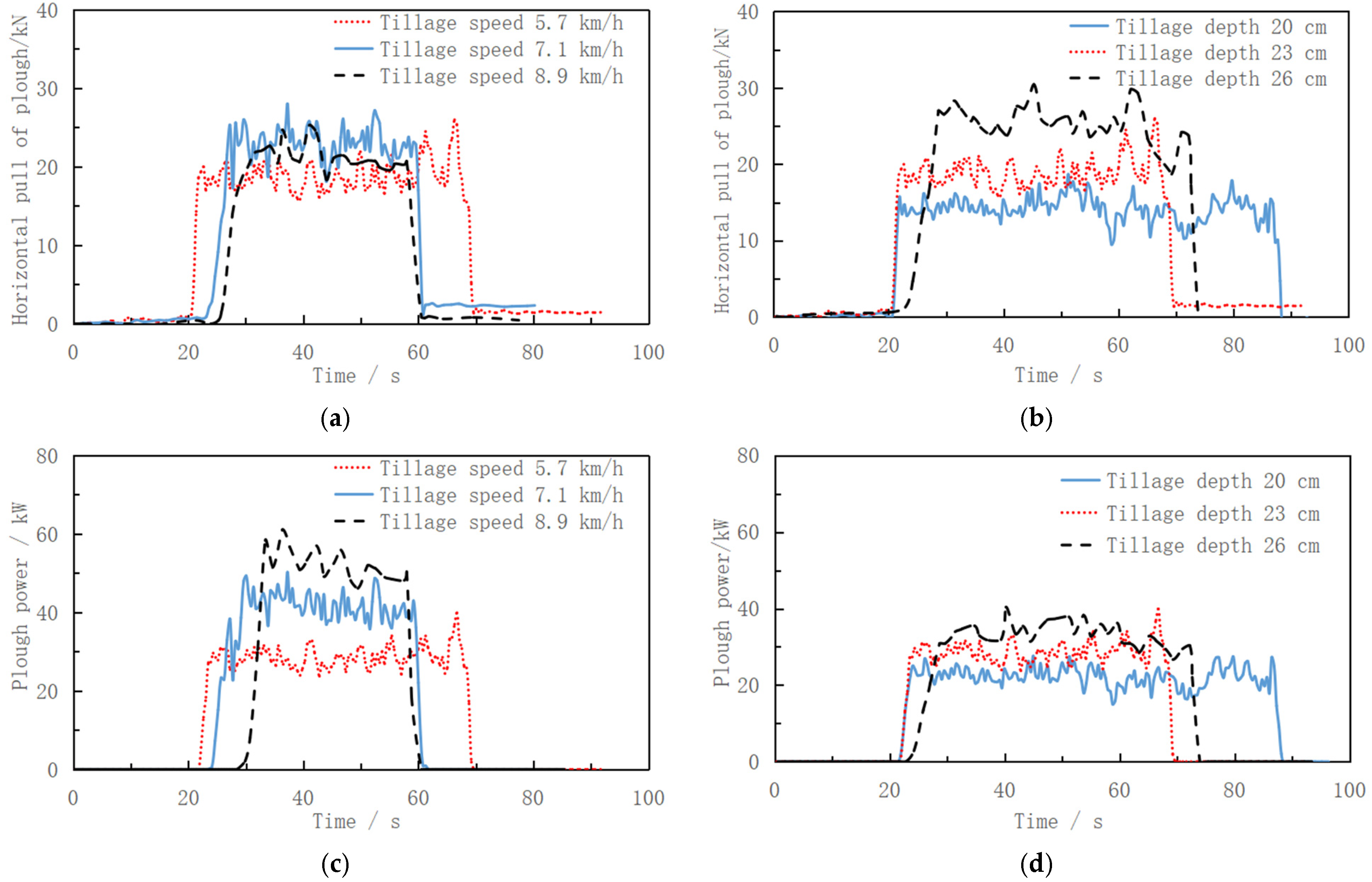
Figure 5 shows the parameters of the machinery in two types of experiments. The force on the rods during the plowing process of the five-share plow was collected using the tension sensor on the three-point suspension of the tractor. As shown in Figure 5a,b, the influence of tillage depth on traction is significant. When the plowing depth was fixed and the speed increased from 5.7 km/h to 8.9 km/h, the increase in pull was minimal. When the plowing depth increased from 20 cm to 26 cm, the increase in pull was significant. This phenomenon reflects the depth effect showing that tillage resistance mainly originates from soil shear. As shown in Figure 5c,d, the power characteristics reveal a different pattern, and the speed parameter has a significant impact on the power of the five-share plow. Under fixed plowing depth conditions, the average plowing power exceeded 10 kW when the speed increased to 8.9 km/h. When the speed was fixed, the depth was changed from 20 cm to 23 cm, which resulted in an average power difference of less than 5 kW, and the power increase was more pronounced when the depth of the five-share plow increased by 6 cm.

4. Discussion

(1) 
The energy flow of the tractor
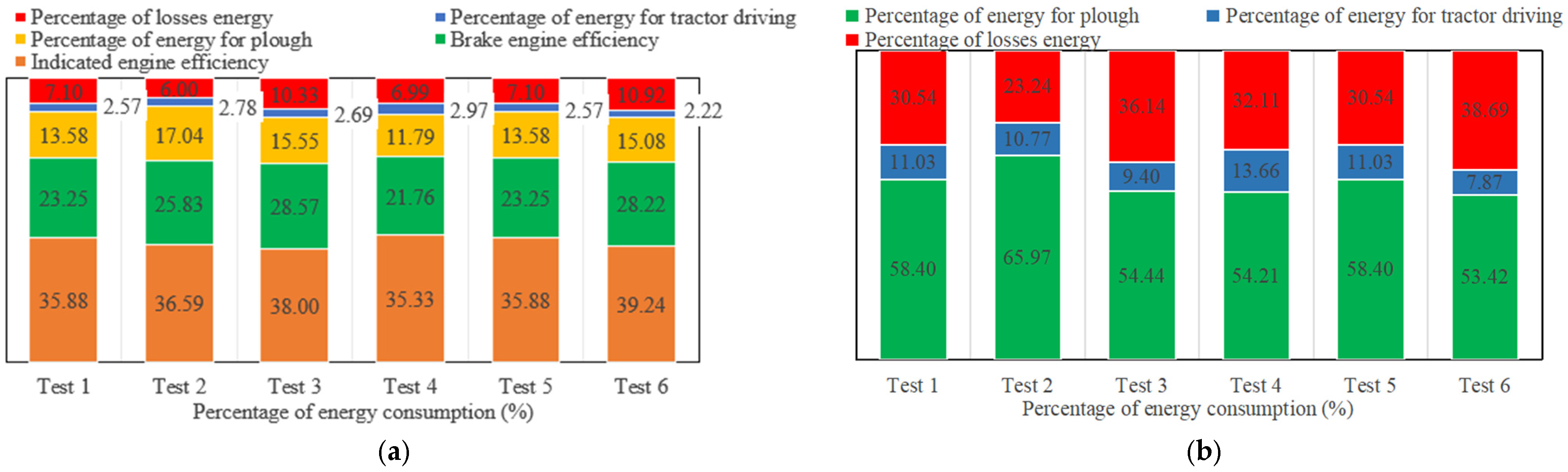
In Figure 6, the statistics for the effective utilization of fuel consumption by tractors are shown. Specifically, Figure 6a presents the patterns of the parameters obtained through statistical analysis based on the low calorific value of total fuel. The indicated thermal efficiency during the operation of this diesel engine is relatively low. The statistical chart shows that the indicated thermal efficiency for the diesel engine when the tractor is working in the field is approximately 40%, while that of the diesel engine during the bench test reaches as high as 45.85%. The brake thermal efficiency of the diesel engine when the tractor is working in the field ranges from 21.76% to 28.57%, but the brake thermal efficiency of the diesel engine in the bench test is as high as 45.85%. The thermal efficiency of the diesel engine during the plowing process is significantly lower than the test results of the diesel engine on the bench test, which is affected by external factors during field operations. The maximum proportion of energy consumed by farmland is only 17.04% of the total fuel energy. In addition, approximately 23.24% to 38.69% of the effective power of the diesel engine is lost during the transmission process.
Figure 6b shows the distribution of parameters based on the effective work of diesel engines. The majority of the effective work produced by the diesel engine is utilized for plowing. While only approximately 7.87% to 13.66% of the effective power is expended on the traveling aspect of the tractor, approximately 23.24% to 38.69% of the diesel engine’s effective power is consumed by mechanical transmission losses, drive wheel slip, and hydraulic system inefficiencies. Whether assessed through tractor fuel consumption or engine effective power, the energy loss proportion remains exceedingly high. Optimizing the proportion of effective power loss from engine output in future research has the potential to significantly enhance tractor efficiency and reduce energy consumption.
(2) 
The energy consumption for tractor plowing
In order to quantitatively assess the fuel consumption level of tractor plowing, the concept of fuel consumption per unit area and per unit volume of plowing operations is proposed. The fuel consumption per unit area of land plowed by the tractor can be calculated by the following formula:
Q a = Q S
where Q is the total fuel consumption and S is the cultivated land area. The fuel consumption per unit volume of land cultivated by a tractor can be calculated by the following formula:
Q v = Q V
The cultivated land area and cultivated land volume in Equations (14) and (15) are calculated by the following formulas:
S = L · W
V = S · H
where L , W , and H are the lengths, widths, and heights of the plowed test land, respectively.
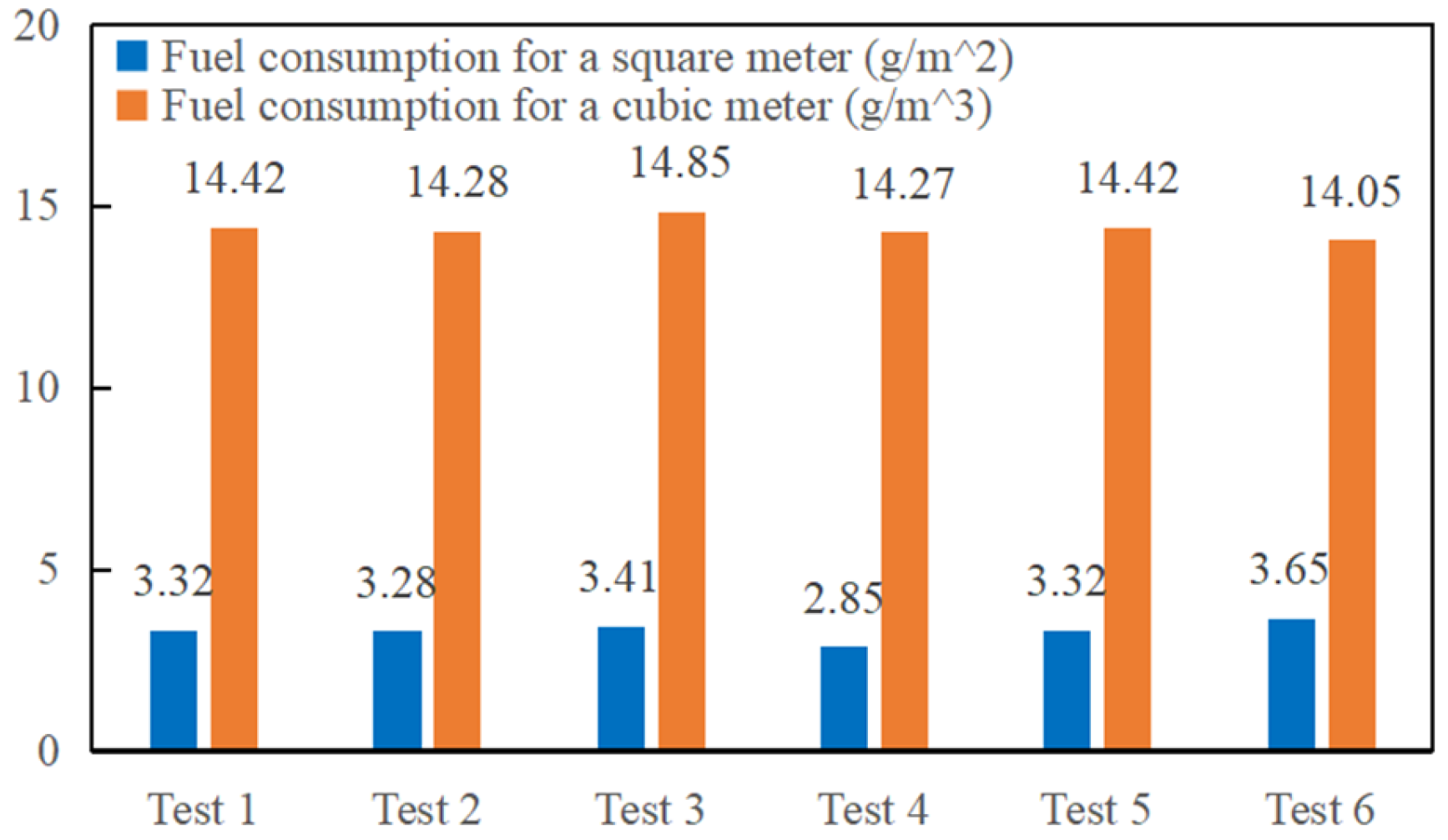
The fuel consumption calculated per square meter and per cubic meter of the tractor is shown in Figure 7. When the plowing depth is fixed, the plowing speed has minimal impact on fuel consumption per unit area. Conversely, when the plowing speed is fixed, fuel consumption per unit area increases significantly as the plowing depth increases. However, the amount of fuel consumed for plowing each cubic meter of soil is largely unaffected by both plowing speed and depth, mainly determined by the soil’s physical and mechanical properties.
(3) 
Division of Cultivation Stages and Fuel Consumption Characteristics
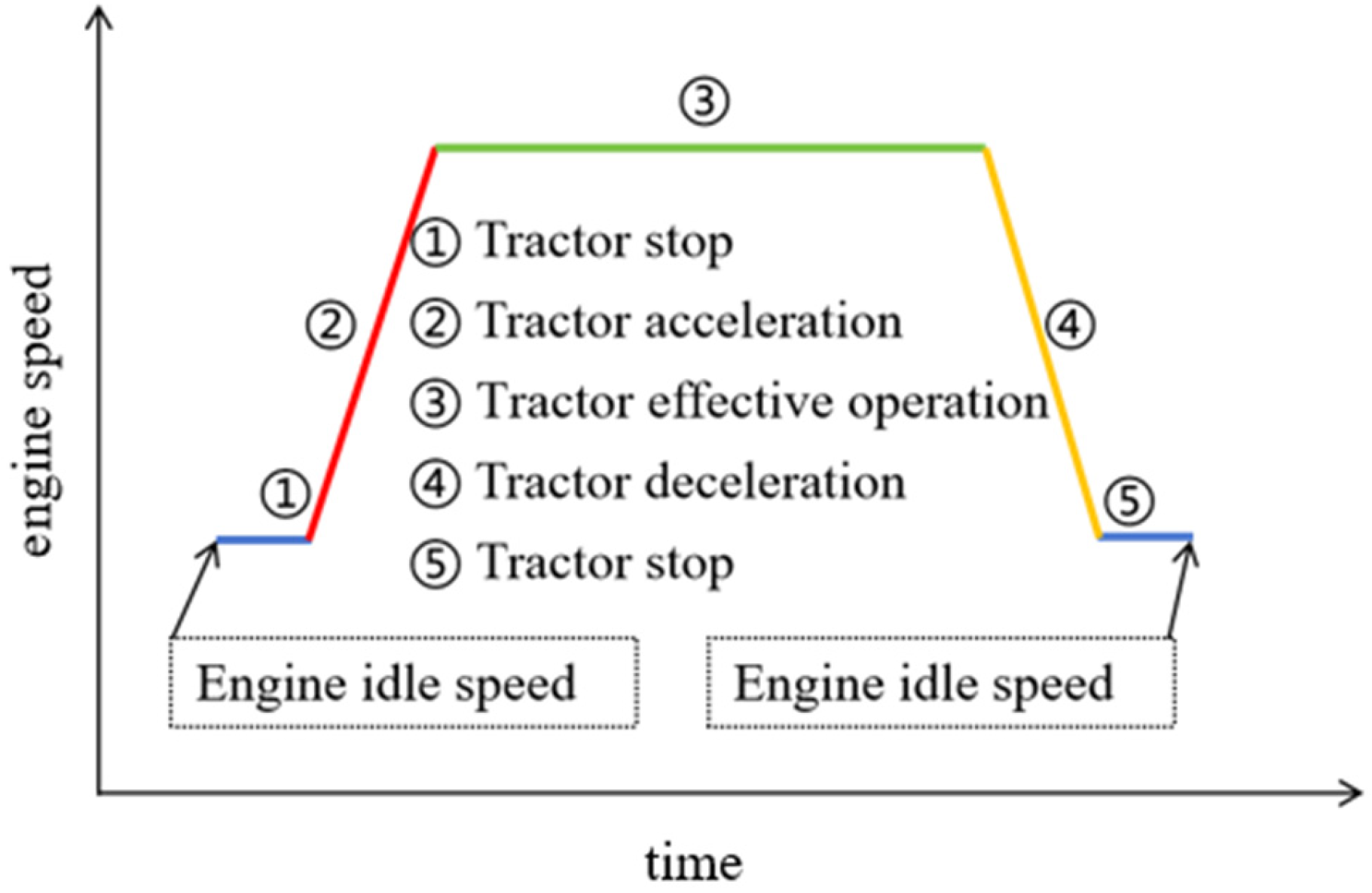
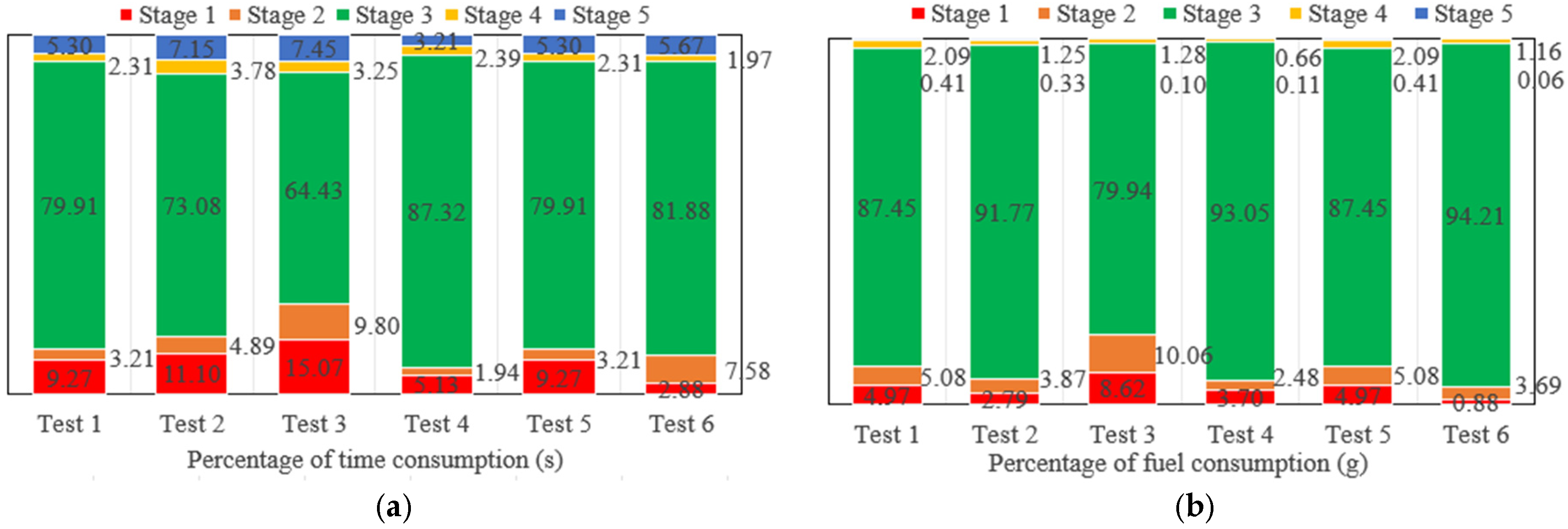
Operational efficiency is a crucial indicator of a tractor’s performance, typically measured by the time required to plow one hectare of farmland and by fuel consumption. As illustrated in Figure 8, the working process of the tractor can be divided into five stages: Stage 1: The tractor begins to prepare for shifting gears to lower the plowshare, while the tractor has not been started and the diesel engine is idling. Stage 2: The tractor starts in gear and accelerates to the target tillage speed. Stage 3: The tractor maintains the target plowing speed. This is the effective plowing stage. Stage 4: The tractor begins to slow down to fully lift the plowshare. Stage 5: The plowshare is fully lifted until the tractor stops working and the diesel engine returns to idling. To investigate the relationship between plowing speed, plowing depth, and fuel consumption during tractor plowing, statistical analysis was performed for each stage based on the defined divisions.
The time and fuel consumption for each stage were summed up and compared with the total time and total fuel consumption. Figure 9 illustrates the proportion of time and fuel consumption for each stage in the plowing experiment. The plowing process exhibited the highest proportion of time and fuel consumption. The time and fuel consumption ratios of Stages 1 and 2 are significant, as observed in Test 3, where considerable time and fuel were wasted; this is also closely related to the driver’s control. Stages 4 and 5 represent a significant proportion in terms of time, but their proportion of fuel consumption is very small. The primary reason for this is that the diesel engine shuts off fuel at this stage, while the tractor continues to move due to inertia. Training the driver and optimizing the operation process to maximize the time allocated to this stage could enhance plowing efficiency, while optimizing tractors could help reduce fuel consumption in farming.

5. Conclusions

A tractor plowing test study was conducted in this paper, in which the parameters of the diesel engine, the five-share plow and the tractor were measured. Based on the analysis of the test results from multiple plowing processes, the following conclusions can be made.
(1)
Under fixed conditions, such as the tractor gear, the accelerator pedal, and the plowing depth, most of the performance parameters of the tractor still fluctuate significantly. It can be seen that the transient state is the normal state during the tractor’s field operation.
(2)
Based on fuel energy, the brake thermal efficiency of diesel engines ranges from 21.76% to 28.57%, while the energy consumed for plowing ranges from about 11.79% to 17.04%. It can be seen that there is considerable potential for engine performance optimization.
(3)
Based on the engine output power, the plowing operation consumes approximately 53.42% to 65.97% of the energy, but there is also a loss of 23.24% to 38.69% of energy. It can be seen that the transmission losses are worthy of optimization.
(4)
Plowing speed has minimal impact on fuel consumption per unit area, while plowing depth significantly affects fuel consumption per unit area. The plowing fuel consumption per cubic meter of soil is nearly unaffected by both plowing speed and depth.

Author Contributions

Conceptualization, Q.T. and J.W.; methodology, Q.T.; software, Q.T.; validation, J.W., S.C. and J.H.; formal analysis, D.Z.; investigation, Q.T.; resources, C.S.; data curation, Q.T. and J.W.; writing—original draft preparation, J.W.; writing—review and editing, Q.T.; visualization, S.C.; supervision, D.Z.; project administration, C.S.; funding acquisition, Q.T. All authors have read and agreed to the published version of the manuscript.

Funding

This research was funded by Science and Technology Innovation Program of Hunan Province, China (2024QY2009). The APC was funded by Science and Technology Innovation Program of Hunan Province.

Data Availability Statement

The original contributions presented in this study are included in the article. Further inquiries can be directed to the corresponding author.

Acknowledgments

This research was funded by Science and Technology Innovation Program of Hunan Province, China (2024QY2009). The authors thank the anonymous reviewers and the editor for their careful reading and many constructive comments and suggestions on improving the manuscript.

Conflicts of Interest

The authors declare no conflict of interest.

References

  1. Han, J.; Yan, X.; Tang, H. Method of controlling tillage depth for agricultural tractors considering engine load characteristics. Biosyst. Eng. 2023, 227, 95–106. [Google Scholar] [CrossRef]
  2. Janulevicius, A.; Juostas, A.; Pupinis, G. Tractor’s engine performance and emission characteristics in the process of ploughing. Energy Convers. Manag. 2013, 75, 498–508. [Google Scholar] [CrossRef]
  3. Karparvarfard, S.H.; Rahmanian-Koushkaki, H. Development of a fuel consumption equation: Test case for a tractor chisel-ploughing in a clay loam soil. Biosyst. Eng. 2015, 130, 23–33. [Google Scholar] [CrossRef]
  4. Moitzi, G.; Haas, M.; Wagentristl, H.; Boxberger, J.; Gronauer, A. Energy consumption in cultivating and ploughing with traction improvement system and consideration of the rear furrow wheel-load in ploughing. Soil Tillage Res. 2013, 134, 56–60. [Google Scholar] [CrossRef]
  5. Md-Tahir, H.; Zhang, J.; Xia, J.; Zhou, Y.; Zhou, H.; Du, J.; Sultan, M.; Mamona, H. Experimental Investigation of Traction Power Transfer Indices of Farm-Tractors for Efficient Energy Utilization in Soil Tillage and Cultivation Operations. Agronomy 2021, 11, 168. [Google Scholar] [CrossRef]
  6. Kim, Y.; Kim, W.; Baek, S.; Baek, S.; Kim, Y.; Lee, S.; Kim, Y. Analysis of Tillage Depth and Gear Selection for Mechanical Load and Fuel Efficiency of an Agricultural Tractor Using an Agricultural Field Measuring System. Sensors 2020, 20, 2450. [Google Scholar] [CrossRef]
  7. Kim, Y.; Kim, W.; Siddique, M.A.A.; Baek, S.; Baek, S.; Cheon, S.; Lee, S.; Lee, K.; Hong, D.; Park, S.; et al. Power Transmission Efficiency Analysis of 42 kW Power Agricultural Tractor According to Tillage Depth during Moldboard Plowing. Agronomy 2020, 10, 1263. [Google Scholar] [CrossRef]
  8. Kim, Y.; Lee, S.; Baek, S.; Baek, S.; Jeon, H.; Lee, J.; Kim, W.; Shim, J.; Kim, Y. Analysis of the Effect of Tillage Depth on the Working Performance of Tractor-Moldboard Plow System under Various Field Environments. Sensors 2022, 22, 2750. [Google Scholar] [CrossRef]
  9. Kakahy, A.N.N.; Alshamary, W.F.A.; Kakei, A.A. The Impact of Forward Tractor Speed and Depth of Ploughing in Some Soil Physical Properties. IOP Conf. Ser. Earth Environ. Sci. 2021, 761, 12002. [Google Scholar] [CrossRef]
  10. Kim, W.; Kim, Y.; Park, S.; Kim, Y. Influence of soil moisture content on the traction performance of a 78-kW agricultural tractor during plow tillage. Soil Tillage Res. 2021, 207, 104851. [Google Scholar] [CrossRef]
  11. Moinfar, A.; Shahgholi, G.; Gilandeh, Y.A.; Gundoshmian, T.M. The effect of the tractor driving system on its performance and fuel consumption. Energy 2020, 202, 117803. [Google Scholar] [CrossRef]
  12. Ibrahim Kareem, K.; Sven, P. Effect of Ploughing Depth, Tractor Forward Speed, and Plough Types on the Fuel Consumption and Tractor Performance. Polytechnic 2019, 9, 43–49. [Google Scholar] [CrossRef]
  13. Tang, Q.; Ren, B.; Wu, J.; Hu, J.; Fu, J.; Zhang, D. Experimental study on diesel engine performance of tractor under transient conditions. Therm. Sci. Eng. Progress 2025, 61, 103509. [Google Scholar] [CrossRef]
  14. Du, J.; Heng, Y.; Zheng, K.; Zhang, W.; Zhang, J.; Xia, J. Evaluation of the Performance of a Combined Tillage Implement with Plough and Rotary Tiller by Experiment and DEM Simulation. Processes 2021, 9, 13. [Google Scholar] [CrossRef]
  15. Kichler, C.M.; Fulton, J.P.; Raper, R.L.; McDonald, T.P.; Zech, W.C. Effects of transmission gear selection on tractor performance and fuel costs during deep tillage operations. Soil Tillage Res. 2011, 113, 105–111. [Google Scholar] [CrossRef]
  16. Shafaei, S.M.; Loghavi, M.; Kamgar, S. Fundamental realization of longitudinal slip efficiency of tractor wheels in a tillage practice. Soil Tillage Res. 2021, 205, 13. [Google Scholar] [CrossRef]
  17. Nagar, H.; Machavaram, R.; Kulkarni, P.; Soni, P. AI-based engine performance prediction cum advisory system to maximise fuel efficiency and field performance of the tractor for optimum tillage. Syst. Sci. Control Eng. 2024, 12, 2347936. [Google Scholar] [CrossRef]
  18. Al-Sager, S.M.; Almady, S.S.; Marey, S.A.; Al-Hamed, S.A.; Aboukarima, A.M. Prediction of Specific Fuel Consumption of a Tractor during the Tillage Process Using an Artificial Neural Network Method. Agronomy 2024, 14, 492. [Google Scholar] [CrossRef]
  19. Shao, X.; Yang, Z.; Mowafy, S.; Zheng, B.; Song, Z.; Luo, Z.; Guo, W. Load characteristics analysis of tractor drivetrain under field plowing operation considering tire-soil interaction. Soil Tillage Res. 2023, 227, 105620. [Google Scholar] [CrossRef]
  20. Feng, G.; Zhang, J.; Yan, X.; Dong, C.; Liu, M.; Xu, L. Research on energy-saving control of agricultural hybrid tractors integrating working condition prediction. PLoS ONE 2024, 19, e299658. [Google Scholar] [CrossRef]
  21. Zhu, Z.; Yang, Y.; Wang, D.; Cai, Y.; Lai, L. Energy Saving Performance of Agricultural Tractor Equipped with Mechanic-Electronic-Hydraulic Powertrain System. Agriculture 2022, 12, 436. [Google Scholar] [CrossRef]
  22. Janulevicius, A.; Damanauskas, V. Validation of relationships between tractor performance indicators, engine control unit data and field dimensions during tillage. Mech. Syst. Signal Process. 2023, 191, 16. [Google Scholar] [CrossRef]
  23. Jeon, H.; Baek, S.; Baek, S.; Choi, J.; Kim, Y.; Kim, W.; Kim, Y. Efficiency Analysis of Powertrain for Internal Combustion Engine and Hydrogen Fuel Cell Tractor According to Agricultural Operations. Sensors 2024, 24, 5494. [Google Scholar] [CrossRef] [PubMed]
  24. Ozer, S.; Haciyusufoglu, F.; Vural, E. Experimental investigation of the effect of the use of nanoparticle additional biodiesel on fuel consumption and exhaust emissions in tractor using a coated engine. Therm. Sci. 2023, 27, 3189–3197. [Google Scholar] [CrossRef]
  25. Kannan, D.; Pachamuthu, S.; Nurun Nabi, M.; Hustad, J.E.; Løvås, T. Theoretical and experimental investigation of diesel engine performance, combustion and emissions analysis fuelled with the blends of ethanol, diesel and jatropha methyl ester. Energy Convers. Manag. 2012, 53, 322–331. [Google Scholar] [CrossRef]
  26. Lebedevas, S.; Pukalskas, S.; Žaglinskis, J.; Matijošius, J. Comparative investigations into energetic and ecological parameters of camelina-based biofuel used in the 1Z diesel engine. Transport 2012, 27, 171–177. [Google Scholar] [CrossRef]
  27. Rakopoulos, D.C.; Rakopoulos, C.D.; Kakaras, E.C.; Giakoumis, E.G. Effects of ethanol–diesel fuel blends on the performance and exhaust emissions of heavy duty DI diesel engine. Energy Convers. Manag. 2008, 49, 3155–3162. [Google Scholar] [CrossRef]
  28. Siedlecki, M.; Szymlet, N.; Fuc, P.; Kurc, B. Analysis of the Possibilities of Reduction of Exhaust Emissions from a Farm Tractor by Retrofitting Exhaust Aftertreatment. Energies 2022, 15, 17. [Google Scholar] [CrossRef]
  29. Rymaniak, L.; Merkisz, J.; Szymlet, N.; Kaminska, M.; Weymann, S. Use of emission indicators related to CO2 emissions in the ecological assessment of an agricultural tractor. Eksploat. Niezawodn. 2021, 23, 605–611. [Google Scholar] [CrossRef]
  30. Daniela, L.; Marco, F.; Gunnar, L. Fuel consumption and exhaust emissions during on-field tractor activity: A possible improving strategy for the environmental load of agricultural mechanisation. Comput. Electron. Agric. 2018, 151, 238–248. [Google Scholar] [CrossRef]
  31. Bauer, F.E.; Porte, P.; Slima Ík, D.A.; Upera, J.Í.; Fajman, M. Observation of load transfer from fully mounted plough to tractor wheels by analysis of three point hitch forces during ploughing. Soil Tillage Res. 2017, 172, 69–78. [Google Scholar] [CrossRef]
  32. Yahya, A.; Zohadie, M.; Kheiralla, A.F.; Giew, S.K.; Boon, N.E. Mapping system for tractor-implement performance. Comput. Electron. Agric. 2009, 69, 2–11. [Google Scholar] [CrossRef]
  33. Siddique, M.A.A.; Baek, S.; Baek, S.; Kim, W.; Kim, Y.; Kim, Y.; Lee, D.; Lee, K.; Hwang, J. Simulation of Fuel Consumption Based on Engine Load Level of a 95 kW Partial Power-Shift Transmission Tractor. Agriculture 2021, 11, 17. [Google Scholar] [CrossRef]
  34. Rohrer, R.A.; Pitla, S.; Luck, J.D. Tractor CAN bus interface tools and application development for real-time data analysis. Comput. Electron. Agric. 2019, 163, 104847. [Google Scholar] [CrossRef]
  35. Larsson, S.; Andersson, I. Self-optimising control of an SI-engine using a torque sensor. Control Eng. Pract. 2008, 16, 505–514. [Google Scholar] [CrossRef]
Figure 1. Tractor arable land test. (a) Schematic diagram of cultivated land with five-share plow; (b) tension sensor.
Agriculture 15 02619 g001
Figure 2. The tillage process of the tractor. (a) The experimental flowchart. (b) The five-share plow in the soil. (c) The cultivated field.
Agriculture 15 02619 g002
Figure 3. The tillage parameters. (a) Different tillage speeds. (b) Different tillage depths.
Agriculture 15 02619 g003
Figure 4. The diesel engine performance. (a) Diesel engine speed at different tillage speeds; (b) diesel engine speed at different tillage depths; (c) fuel mass flow at different tillage speeds; (d) fuel mass flow at different tillage depths; (e) diesel engine power at different tillage speeds; (f) diesel engine power at different tillage depths.
Agriculture 15 02619 g004aAgriculture 15 02619 g004b
Figure 5. The tractor performance. (a) Horizontal pull of plow under different tillage speeds; (b) horizontal pull of plow under different tillage depths; (c) plow power at varying tillage speeds; (d) plow power at different tillage depths.
Agriculture 15 02619 g005
Figure 6. Energy consumption assessment of the tractor. (a) Percentage based on fuel energy; (b) percentage based on engine power.
Agriculture 15 02619 g006
Figure 7. Fuel consumption of tractors.
Agriculture 15 02619 g007
Figure 8. The stages of tractor plowing.
Agriculture 15 02619 g008
Figure 9. The tractor performance. (a) Percentage of time consumption. (b) Percentage of fuel consumption.
Agriculture 15 02619 g009
Table 1. Specifications of the tractor.
ParameterValue
Curb weight (kg)4155
Tractor size/(mm)4530 × 2050 × 2810
Tire size (front/rear)11.2–24/16.9–34
Gear (forward + backward)16 + 8
Driving formfour-wheel
Implement attachment methodthree-point suspension
Type of plowfive-share plow
Width of a plow body (mm)200
Matching power (kW)>50
Tool quality (kg)170
Tillage depth (mm)200–300
Powerdiesel engine
Fuel type0# diesel
Rated power (kW)100
Indicated thermal efficiency (%)45.85
Barke effective thermal efficiency (%)42.95
Table 2. Standardized definition of core parameters of the CAN.
ParameterSPNPGNData Domain LocationScale FactorUnitRefresh Rate
Engine speed19061444Byte 4–50.125RPM20 ms
Engine output torque51361444Byte 2–30.125%−125–125%
Fuel flow18365253Byte 3–40.05L/h1 s
Gearbox gear52365253Byte 11-50 ms
Table 3. The primary instruments and equipment used in the test.
Equipment NameTypePrecision
Tension sensorNOS-C9020–50 k N/0.5% FS
GPSSpeedbox-RTK0.05 km/h
Engine speed senorFY0802±0.1% FS
CAN bus analyzerKvaserBaud rate 40–1000 kbps
Table 4. Key characteristics of the fuel sample.
PropertySpecificationTest Method
Cetane Number 51ATSM D613
Sulfur Content (mg/kg) 10ASTM D4294
Density at 20 °C (kg/m3)820–845ATSM D4052
Lubricity (μm) 460ASTM D6079
Table 5. Variable settings for tractor plowing experiments.
NOTransmission Gear (-)Target Velocity (km/h)Depth of Cultivated Land (cm)
Test 1High, turtle, gear III5.723
Test 2Low, rabbit, gear I7.123
Test 3Low, rabbit, gear II8.923
Test 4High, turtle, gear III5.720
Test 5High, turtle, gear III5.723
Test 6High, turtle, gear III5.726
Disclaimer/Publisher’s Note: The statements, opinions and data contained in all publications are solely those of the individual author(s) and contributor(s) and not of MDPI and/or the editor(s). MDPI and/or the editor(s) disclaim responsibility for any injury to people or property resulting from any ideas, methods, instructions or products referred to in the content.