Article

Regrowth and Yield Formation of ‘Qingtian No. 1’ Oat in Response to Cutting Management


1
College of Animal Science and Veterinary Science, Qinghai University, Xining 810016, China
2
Northwest Key Laboratory of Cultivated Land Conservation and Marginal Land Improvement, Ministry of Agriculture and Rural Affairs, Delingha 817000, China
*
Author to whom correspondence should be addressed.
Agriculture 2025, 15(24), 2542; https://doi.org/10.3390/agriculture15242542
Submission received: 29 October 2025 / Revised: 3 December 2025 / Accepted: 4 December 2025 / Published: 8 December 2025
(This article belongs to the Section Crop Production)

Abstract

The optimization of mowing management is crucial for establishing a high-yielding “one sowing, two harvests” system for oat (Avena sativa L.) forage production in the alpine regions of the Tibetan Plateau. This study aimed to identify the optimal combination of cutting stage and stubble height to maximize the total seasonal productivity of the system. A two-factor field experiment, arranged in a randomized complete block design, was conducted over two consecutive growing seasons (2024 and 2025) using the local cultivar ‘Qingtian No. 1’. The treatments consisted of two cutting stages (flowering stage, C1; milk stage, C2) and three stubble heights (5 cm, H1; 10 cm, H2; 15 cm, H3). Regarding regrowth phase performance, mowing at the flowering stage (C1) resulted in significantly superior agronomic traits (e.g., stem diameter, tiller number) and photosynthetic characteristics compared to the milk stage (C2). In terms of forage quality, the C2H2 treatment maximized water-soluble carbohydrate content but also led to elevated fiber levels. However, the key metric for system evaluation—the total seasonal dry matter yield—was predominantly governed by the cutting stage. Mowing at the milk stage (C2) consistently resulted in a higher total yield than C1, with optimal combinations yielding 1.31 t/ha (C2H1) in 2024 and 1.25 t/ha (C2H2) in 2025. This advantage was primarily due to a substantially greater first-harvest yield under C2, which outweighed the regrowth benefits of C1. A comprehensive evaluation based on total system productivity and forage quality indicates that mowing at the milk stage (C2) is the optimal strategy for achieving high total output. For ‘Qingtian No. 1’ oat in this region, a stubble height of 10 cm (as in the C2H2 treatment) is recommended to ensure robustness across years. This management strategy secures a high total seasonal forage yield through effective biomass allocation between harvests, extending the supply window and offering a sustainable cultivation model for this ecologically vulnerable region.

1. Introduction

The Qinghai–Tibet Plateau, renowned as the “Third Pole” and “Asia’s Water Tower,” is a unique and ecologically strategic region for both China and the globe [1]. Characterized by an average altitude exceeding 4000 m, this high-altitude environment exhibits harsh natural conditions, including a short growing season, limited thermal resources, intense solar radiation, and significant diurnal temperature fluctuations [2]. These factors collectively maintain a fragile, sensitive ecosystem in which traditional crop cultivation is severely constrained [3]. Animal husbandry, a cornerstone of the local economy, faces severe challenges due to a prolonged cold season that lasts 7–8 months [4]. The inherently low productivity of natural grasslands, coupled with highly seasonal forage supplies, results in a critical shortage of cold-seasoned fodder. This shortage perpetuates a detrimental cycle widely described as “summer satiety, autumn fatness, winter leanness, and spring death” [5]. Furthermore, long-term overgrazing exacerbates grassland degradation and desertification, posing significant threats to regional ecological security and the sustainable development of animal husbandry [6]. In this context, establishing high-yielding, high-quality artificial grasslands is crucial for supplementing inadequate natural forage resources and achieving a sustainable grass-livestock balance in alpine pastoral systems [7].
Oat (Avena sativa L.), an annual cool-season cereal, has gained prominence in these regions due to its strong tolerance to environmental stress, adaptation to diverse soil conditions, high yield potential, and superior forage quality [8]. While oat grain is valued for its rich content of dietary fiber, β-glucan, and essential amino acids beneficial to human health [9], its forage is equally prized for high palatability, nutritional value, and digestibility, making it highly suitable for hay and silage production [10]. Consequently, oat has become the most widely cultivated and readily accepted annual forage crop across the alpine regions of the Qinghai–Tibet Plateau [11]. However, the brief frost-free period in this region typically permits only a single annual harvest, posing a central challenge to maximize the efficiency of land and light/heat resource utilization within local forage production systems [12].
Implementing a cutting-regrowth system represents a promising strategy to enhance forage output from a single planting. For forage crops, appropriate cutting management can harness their tillering capacity and regenerative potential, enabling multiple harvests within one growing season [13,14]. This approach can significantly increase total seasonal biomass yield per unit area, extend the forage supply period, and improve overall resource use efficiency [15,16]. Nevertheless, plant regrowth is a complex physiological process influenced by environmental factors, genetic traits, and management practices [17,18]. Among these, cutting management—specifically the timing of cutting and the height of the stubble left behind—serves as a critical external regulator of regrowth vigor [19,20]. The timing of cutting directly impacts the plant’s carbohydrate reserves and root vitality [15]. Cutting too early may deplete reserves before adequate root development, while cutting too late may lead to plant senescence and reduced regenerative potential [21,22]. Similarly, stubble height is paramount for preserving the meristematic tissues and axillary buds at the base of the stems, which are essential for generating new shoots [23]. An optimal stubble maintains photosynthetic capacity and protects regenerative sites, whereas an excessively low stubble can severely damage these organs, delay regrowth and drastically reduce yield [24,25,26]. Previous studies have documented the regrowth capacity of various gramineous crops, including wheat (Triticum aestivum L.), sorghum [Sorghum bicolor (L.) Moench], and maize (Zea mays L.) [27,28,29]. Wheat research suggests that regrowth is regulated by endogenous hormones and influenced by cutting time and stubble height, which, in turn, affect forage quality and potential grain yield [30,31,32]. In semi-arid environments, sorghum can achieve rapid regrowth and biomass accumulation through enhanced tillering after cutting [33]. Numerous reports consistently indicate that a higher stubble height generally promotes regrowth vigor and stress resilience by preserving more photosynthetic tissue and carbohydrate reserves [21,34].
However, despite existing knowledge, most findings originate from traditional agricultural regions with more favorable climates. The applicability of these principles to the unique, ecologically fragile, and short-season environment of the Qinghai–Tibet Plateau remains largely unverified. This is particularly true for regrowth performance and optimal management of locally adapted oat cultivars such as ‘Qingtian No. 1’. Therefore, we hypothesized that for ‘Qingtian No.1’ oat in the alpine region of the Qinghai–Tibet Plateau, mowing at the flowering stage with a stubble height of 10–15 cm would optimize regrowth capacity, yield formation, and forage quality by effectively coordinating photosynthetic source activity and sink demand. To test this hypothesis, a two-year field study (2024 and 2025) was conducted employing a two-factor randomized complete block design, investigating different cutting stages and stubble heights. The objectives were to (1) systematically evaluate the effects of these management practices on the agronomic traits, photosynthetic physiology, and nutritional quality of regrown oat; and (2) identify the optimal combination of cutting stage and stubble height to establish an efficient ‘one-crop, two-harvest’ cultivation model, thereby providing theoretical and technical support for enhancing forage supply capacity in this critical region.

2. Materials and Methods

2.1. Experimental Site Overview

2.1.1. Site Location and Environmental Characteristics

A two-year field experiment was conducted during the 2024 and 2025 growing seasons at a site in Gahai Town, Delingha City, Qinghai Province (97°22′44″ E, 37°15′13″ N, altitude 2842.3 m). Situated on the northeastern margin of the Qaidam Basin, the experimental site is characterized by a desert saline-alkaline grassland environment under irrigated management. The daily precipitation and mean daily air temperature throughout the 2024 and 2025 growing seasons are shown in Figure 1.

2.1.2. Soil Characteristics

To characterize the baseline conditions of the experimental site, composite soil samples were collected from the 0–30 cm depth across the entire field area before sowing in the first experimental year (2024). Physical, hydraulic, and chemical properties were analyzed using standard methods, with results summarized in Table 1 and Table 2. The soil texture was classified as sandy loam. Key hydraulic parameters, essential for irrigation scheduling, were determined in the laboratory. The soil chemical profile indicated a moderately alkaline and slightly saline environment typical of the local desert saline-alkaline grassland. The field had a uniform management history before the experiment, and consistent management practices were applied across all plots during the study. Therefore, the soil properties presented here are considered representative of the initial conditions for both growing seasons.

2.2. Experimental Design and Agronomic Management

2.2.1. Test Material and Experimental Design

The forage oat (Avena sativa L.) cultivar ‘Qingyan No. 1’ was used. The experiment followed a two-factor randomized complete block design (RCBD) with four replications over two years. The factors were: Cutting Stage (C): flowering stage (C1) and milking stage (C2); and Stubble Height (H): 5 cm (H1), 10 cm (H2), and 15 cm (H3). This resulted in six treatment combinations and 24 plots per year. Each plot measured 3 m × 5 m (15 m2), with 1 m wide alleys between plots. The layout was re-randomized within blocks in the second year (2025).

2.2.2. Crop Establishment and Fertilization

Sowing was performed mechanically on 26 May in both 2024 and 2025, with a row spacing of 15 cm, a sowing depth of 3–5 cm, and a seeding rate of 2.25 t/ha. Before sowing, a base fertilizer was applied, providing 75 kg N/ha (as urea) and 90 kg P2O5/ha (as diammonium phosphate). A top-dressing of 50 kg N/ha (as urea) was applied after each cutting event to promote regrowth.

2.2.3. Irrigation and Soil Moisture Monitoring

An overhead sprinkler irrigation system was used to control water input. Soil volumetric water content (VWC, 0–30 cm depth) was monitored using a portable Time-Domain Reflectometry (TDR) probe (TRIME-PICO 64, IMKO, Ettlingen, Germany). Measurements were taken bi-weekly at three points in two representative plots per block. Irrigation was triggered when the average VWC fell below 60% of field capacity (i.e., <0.15 cm3 cm−3). Weed control was primarily manual. A preventive fungicide spray (mancozeb) was applied once at the stem elongation stage. Aphid populations were monitored weekly, and insecticides were applied only when threshold levels were exceeded.

2.2.4. Harvest Schedule

Primary Harvest: C1 plots were harvested on 9 August 2024 and 13 August 2025. C2 plots were harvested on 21 August 2024 and 26 August 2025.
Regrowth Harvest: Regrowth from C1 plots was harvested 45 days after the primary cut, i.e., on 23 September 2024 and 27 September 2025. Regrowth from C2 plots was harvested 45 days after the primary cut, i.e., on 5 October 2024 and 10 October 2025.

2.3. Measurement Indicators and Methods

2.3.1. Photosynthetic Characteristics

Measurement of Photosynthetic Parameters: Photosynthetic parameters were measured on day 45 after each cutting treatment between 09:00 and 11:00 on clear, windless mornings using a CI-340 portable photosynthesis system. For each plot, five plants were randomly selected, and the uppermost fully expanded functional leaves were measured for net photosynthetic rate (Pn), stomatal conductance (Gs), and transpiration rate (Tr). Three stable readings were recorded per leaf and averaged.
Measurement of Chlorophyll Content: Leaf chlorophyll content was determined using an SPAD-502 Plus handheld chlorophyll meter (Konica Minolta, Osaka, Japan). For each plot, ten plants were randomly selected, and the base, middle, and tip of the uppermost fully expanded functional leaves were measured under natural light. The average of the three measurements represented each plant’s relative chlorophyll content (SPAD value).
Rationale for Leaf Selection: The uppermost fully expanded functional leaves were selected for measurement because they are considered the key photosynthetic source organs in gramineous crops during the regrowth phase. Their physiological status directly reflects the degree of recovery and regrowth potential of the photosynthetic system following cutting.

2.3.2. Agronomic Traits and Yield

On day 45 after each mowing treatment, ten regenerated oat plants with uniform growth were randomly selected from each plot for the measurement of absolute plant height (PH), tiller number (FN), and leaf number (LN). Stem diameter (SD) was measured at the base of the second internode using a vernier caliper. Following the assessment of agronomic traits, a representative 1 m2 quadrat was demarcated in each plot, excluding border areas to minimize edge effects. All regenerated oat plants within the quadrat were cut at 5 cm above ground level. The harvested biomass was immediately weighed to determine its fresh weight for calculating fresh hay yield. The fresh samples were then air-dried in a well-ventilated room until a constant weight was achieved to determine the dry matter weight, which was used to calculate the dry hay yield. The air-dried samples were subsequently ground into a fine powder for subsequent analysis.

2.3.3. Forage Quality

The collected forage samples were oven-dried at 65 °C until a constant weight was reached, then ground into a fine powder and passed through a 1 mm sieve for subsequent nutritional analysis. Crude protein (CP) content was determined using the Kjeldahl method according to Bremner [35], with a conversion factor of 6.25. The contents of neutral detergent fiber (NDF) and acid detergent fiber (ADF) were analyzed following the fiber analysis procedure described by Soest et al. [36]. The phenol-sulfuric acid method was used to measure the water-soluble carbohydrate (WSC) content [37]. Crude fat was quantified by Soxhlet extraction [38], and crude ash content was determined by combustion in a muffle furnace at 550 °C until ash stabilization [39].

2.3.4. Statistical Analysis

Data were organized using Microsoft Excel 2021 (Microsoft Corp., Redmond, WA, USA). All statistical analyses, including assumption checks for normality (Shapiro–Wilk test) and homogeneity of variances (Levene’s test), were performed using SPSS 29.0 (IBM SPSS Statistics, Chicago, IL, USA). A three-way analysis of variance (ANOVA) was initially performed. As the three-way interaction (Year × Cutting Stage × Stubble Height) was not significant (p > 0.05), a simplified model was adopted for final reporting, retaining only the significant two-way interactions and main effects. For factors with significant effects (p < 0.05), post hoc comparisons were conducted using Duncan’s multiple range test. Additionally, principal component analysis (PCA) and graphing were performed using Origin 2024 (OriginLab Corp., Northampton, MA, USA), and Spearman correlation analysis was conducted using the linkET package in R 4.5.1 (R Foundation for Statistical Computing, Vienna, Austria).

3. Results

3.1. Total Productivity of the Oat ‘One-Sowing-Two-Harvest’ System

The analysis of variance indicated (Table 3) that cutting time (C) was the most significant factor affecting the total seasonal dry matter yield of the oat ‘one-sowing-two-harvest’ system (p < 0.01), while stubble height (H) and the interaction between year (Y) and cutting time had significant effects on the first-harvest yield (p < 0.05). Regarding the total yield, which determines the system’s overall benefit, the C2 (milk stage) treatment significantly outperformed C1 (flowering stage) in both experimental years. The optimal treatment combination varied between years: in 2024, it was C2H1, with a total yield of 1.31 t/ha, while in 2025, it was C2H2, with a total yield of 1.25 t/ha.

3.2. Effect of Different Cutting Treatments on Agronomic Traits of Oat During the Regrowth Stage

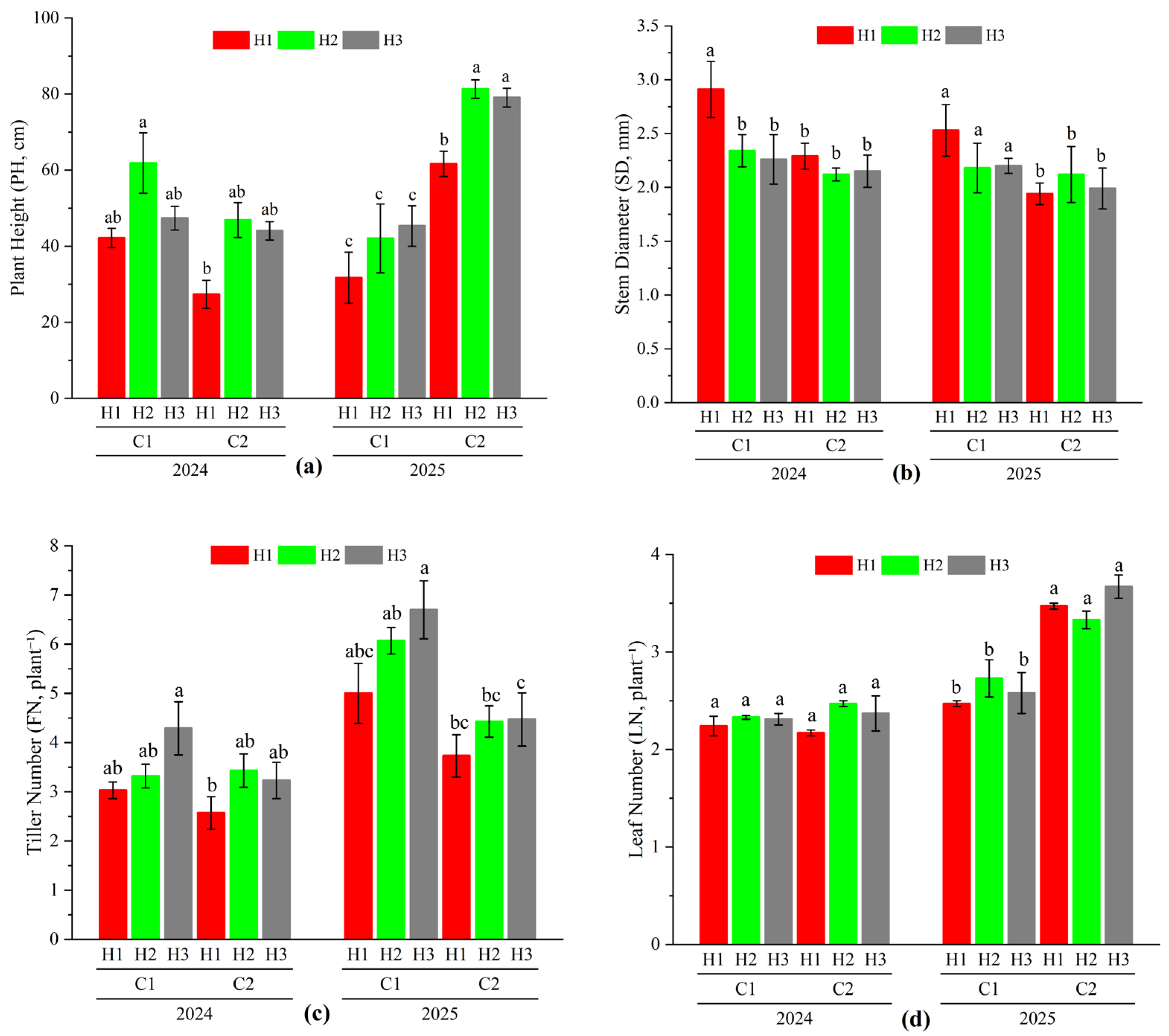
The ANOVA results (Table 4) indicated that the effects of year (Y), cutting stage (C), and stubble height (H) on oat regrowth traits were predominantly characterized by interaction effects. Significant two-way Y × C interactions were observed for plant height (PH), stem diameter (SD), and leaf number (LN) (p < 0.01). Regarding the main effects, C was the only factor that exhibited a significant (p < 0.01) effect on all measured traits, with tiller number (FN) being solely controlled by this factor. H showed a significant main effect on PH and LN (p < 0.01).
An in-depth analysis of the Y × C interaction revealed complex patterns for key agronomic traits (Figure 2). Cutting at the milk stage (C2) generally promoted plant height (PH) and leaf number (LN) (p < 0.05), while cutting at the flowering stage (C1) favored increases in stem diameter (SD) (p < 0.05). These effects exhibited significant variation between years. For instance, LN was highest under the C2 treatment in 2025 (p < 0.05), whereas SD peaked under C1 at the 5 cm stubble height (H1) consistently across both experimental years (p < 0.05).

3.3. Effect of Different Cutting Treatments on Photosynthetic Characteristics of Oat During the Regrowth Stage

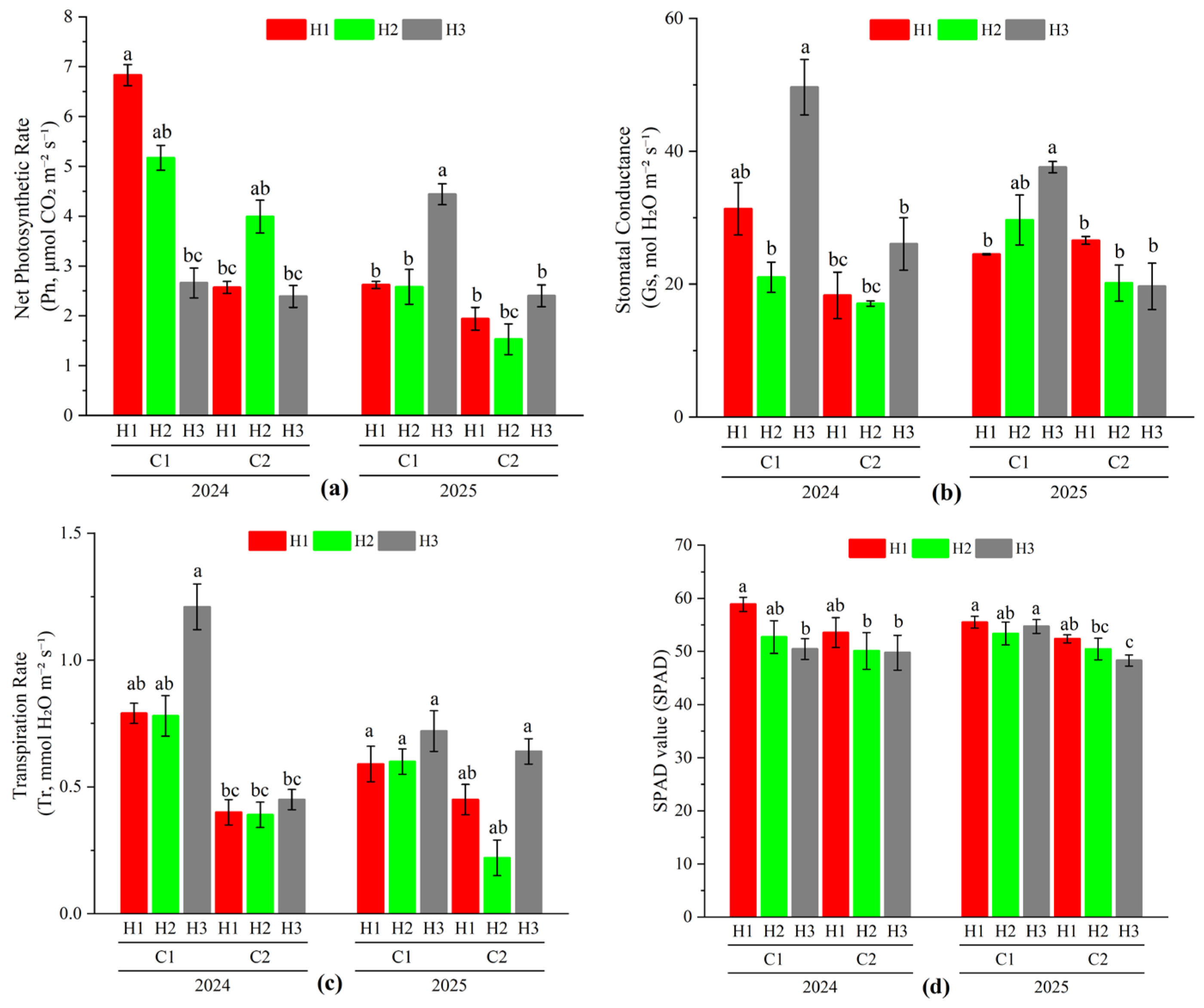
The ANOVA results (Table 5) indicated that a significant two-way Y × H interaction was observed for Pn (p < 0.01). Regarding main effects, cutting stage (C) had a significant (p < 0.01) impact on all photosynthetic parameters, whereas year (Y) exhibited a significant main effect only on Pn (p < 0.05).
Further analysis of the dominant factor, cutting stage (C), revealed that the photosynthetic indices under the C1 treatment were generally significantly superior to those under the C2 treatment (Figure 3, p < 0.05), a trend that remained consistent across both years. This confirms that the cutting stage is a key factor determining the physiological photosynthetic response during the regrowth period. Specifically, under certain stubble heights, significant differences in photosynthetic traits were observed between years. In 2024, both Gs and Tr were significantly higher than in 2025 (p < 0.05), though the magnitude of increase differed markedly between the two parameters: Gs showed an increase of 89%, while Tr increased by only 24%. Additionally, under the H1 condition, the SPAD value for the C1 treatment was significantly higher than for C2 (p < 0.05), further corroborating the advantage of the C1 treatment in promoting photosynthetic performance.

3.4. Effect of Different Cutting Treatments on Nutritional Quality of Oat During the Regrowth Stage

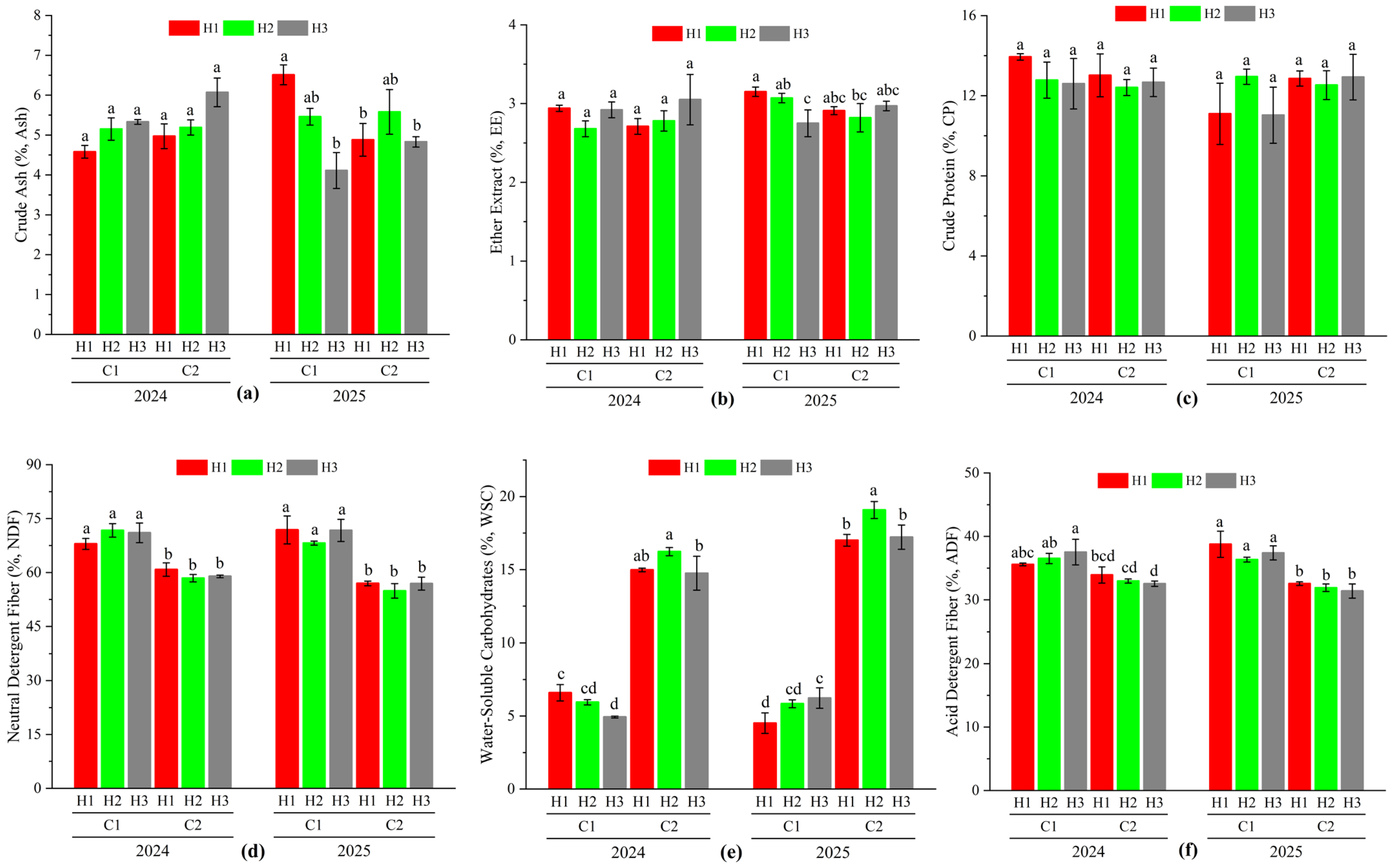
The ANOVA results (Table 6) indicated that among the two-way interactions, Y × H exhibited significant effects on crude ash (Ash) and water-soluble carbohydrate (WSC) content (p < 0.05), while Y × C showed a significant interactive effect only on WSC (p < 0.01). In terms of main effects, cutting stage (C), as the dominant factor, exerted significant independent influences on Ash, WSC, ether extract (EE), crude protein (CP), neutral detergent fiber (NDF), and acid detergent fiber (ADF) (p < 0.01). In contrast, stubble height (H) and year (Y) each demonstrated a significant main effect only on WSC content (p < 0.05).
A detailed analysis of significant interactions clarified the management–environment effects (Figure 4). For the Y × H interaction on WSC, the H2 treatment consistently resulted in higher WSC content than other stubble heights (p < 0.05). In both years, during the C2 cutting stage, WSC peaked at H2, whereas under C1, differences between treatments were small. For the Y × C interaction on Ash, in 2025, the C2 cutting stage had significantly lower Ash content than C1 (p < 0.05), with the lowest value observed in the C2H3 combination (4.11%). Analysis of the main effect of the cutting stage (C) further confirmed its central role. Simple effect analysis showed that, compared to C1, the C2 treatment significantly reduced NDF and ADF contents (p < 0.05) while significantly increasing EE content (p < 0.05), demonstrating its advantage in improving fiber structure and enhancing energy value. Overall, cutting at the milk stage (C2) exhibited better potential and stability in coordinating multiple nutritional quality indicators.

3.5. Correlation Analysis of Various Indicators in the Oat Regrowth Period

3.5.1. Correlation Analysis of Oat Regrowth Indicators in 2024

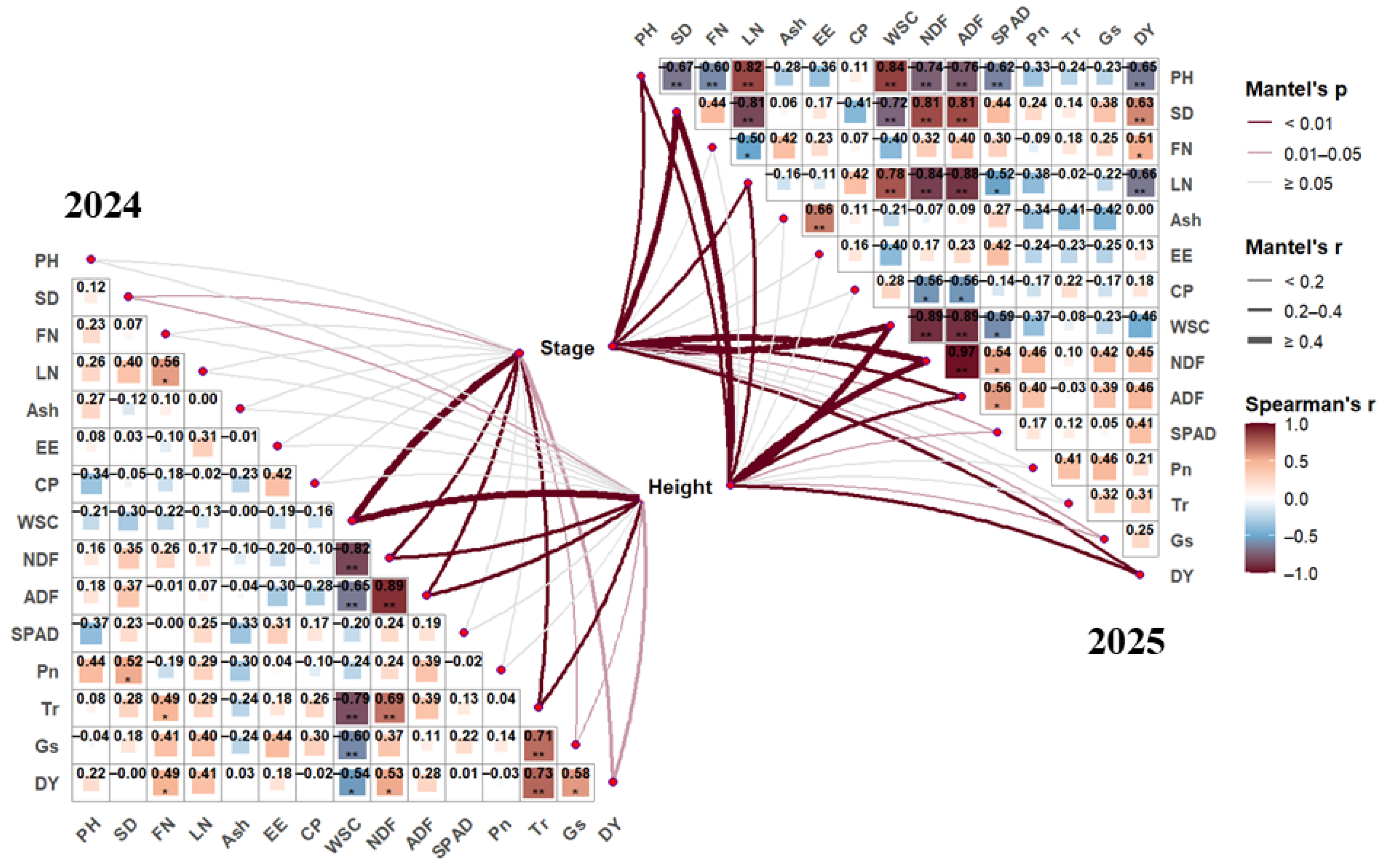
Mantel test results (Figure 5-2024) indicated that both cutting time and stubble height had significant associations with the agronomic and quality traits. Specifically, both management factors showed a very strong positive correlation with NDF (p < 0.01, Mantel’s r > 0.4). They also exhibited significant positive correlations with ADF, Tr, and FY (p < 0.01, Mantel’s r = 0.2–0.4). Pearson correlation analysis further elucidated the intrinsic relationships among the traits. Of the 8 trait pairs that reached the highly significant correlation level, four showed highly significant positive correlations, while four showed highly significant negative correlations. Tr was highly significantly positively correlated with Gs (r = 0.71, p < 0.05). WSC showed highly significant negative correlations with DY, ADF, and NDF. It is noteworthy that ADF and NDF were highly significantly positively correlated with each other (r = 0.89, p < 0.05).

3.5.2. Correlation Analysis of Oat Regrowth Indicators in 2025

Mantel test results (Figure 5-2025) indicated that in 2025, both cutting time and stubble height also exhibited significant associations with multiple agronomic and quality traits. Specifically, they showed strong positive correlations with SD, WSC, and NDF (p < 0.01, Mantel’s r > 0.4). Significant positive correlations were also observed with PH, LN, ADF, and DY (p < 0.01, Mantel’s r = 0.2–0.4). Pearson correlation analysis further elucidated the specific relationships among the traits. Of the 21 trait pairs that reached the highly significant correlation level, 8 showed highly significant positive correlations, while 13 showed highly significant negative correlations. In detail, PH showed highly significant positive correlations with WSC and LN, but highly significant negative correlations with SD, NDF, ADF, SPAD, and DY. SD was highly significantly positively correlated with DY, ADF, and NDF, but highly significantly negatively correlated with LN and WSC. NDF showed highly significant positive correlations with SPAD, and ADF.

3.6. Principal Component Analysis and Comprehensive Evaluation of the Oat Regrowth Period

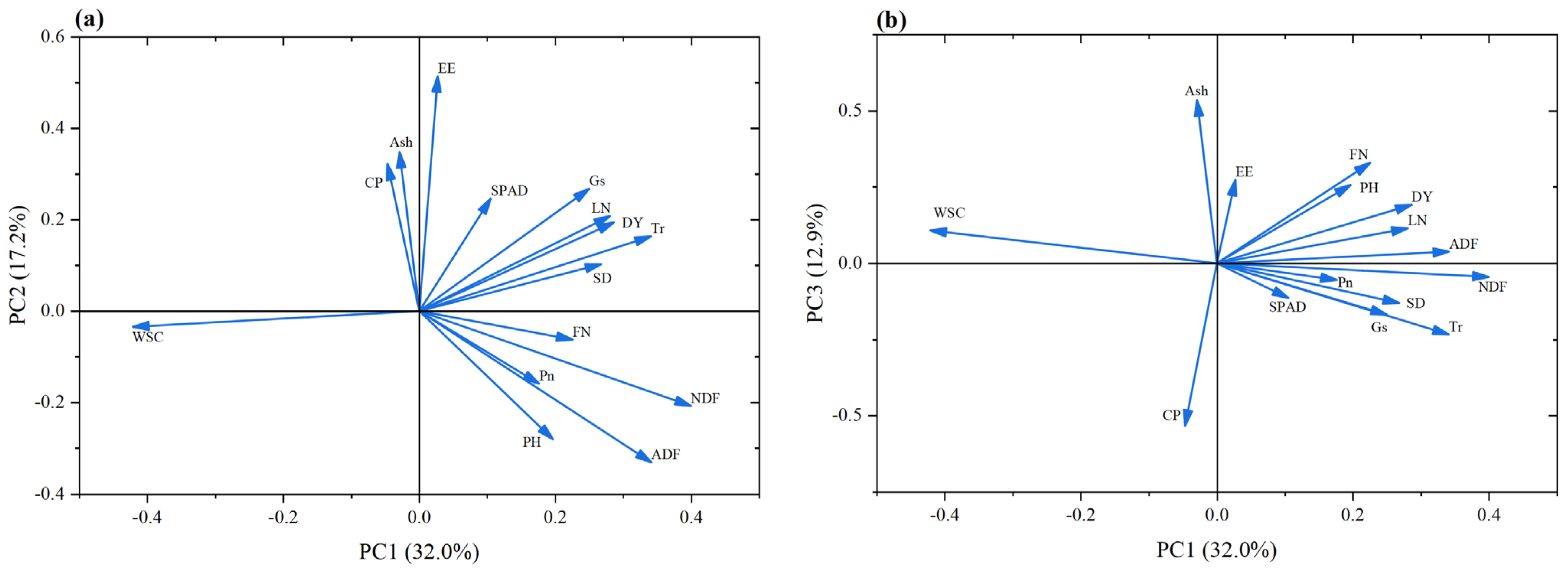
3.6.1. Principal Component Analysis and Comprehensive Evaluation of the Oat Regrowth Period in 2024

Principal component analysis (PCA) was performed on oat regrowth traits under cutting treatments in 2024 (Figure 6). The first three principal components (PC1, PC2, and PC3) collectively explained 62.9% of the total variance. PC1, accounting for 32.0% of the variance, was the primary source of variation and was predominantly driven by tiller number (FN), stem diameter (SD), neutral detergent fiber (NDF), acid detergent fiber (ADF), plant height (PH), and net photosynthetic rate (Pn), representing a comprehensive dimension of biomass production and structural development. PC2 was associated with transpiration rate (Tr), dry matter yield (DY), leaf number (LN), stomatal conductance (Gs), relative chlorophyll content (SPAD), ether extract (EE), crude protein (CP), and crude ash (Ash), reflecting a dimension related to photosynthetic physiology and basic nutritional composition. PC3 (12.9%) was mainly correlated with water-soluble carbohydrates (WSC), Ash, and EE, suggesting an independent dimension associated with carbon and mineral reserves.
Based on the principal component loadings, comprehensive scores were calculated and ranked for the oat regrowth indicators under different cutting treatments (Table 7). The results revealed that the overall performance under the C1 cutting stage was generally superior to that under the C2 cutting stage. Specifically, within the C1 cutting stage, the stubble height H2 treatment achieved the highest comprehensive score, followed by H3, while the H1 treatment had the lowest score. In contrast, all stubble height treatments under the C2 cutting stage exhibited relatively low comprehensive scores.

3.6.2. Principal Component Analysis and Comprehensive Evaluation of the Oat Regrowth Period in 2025

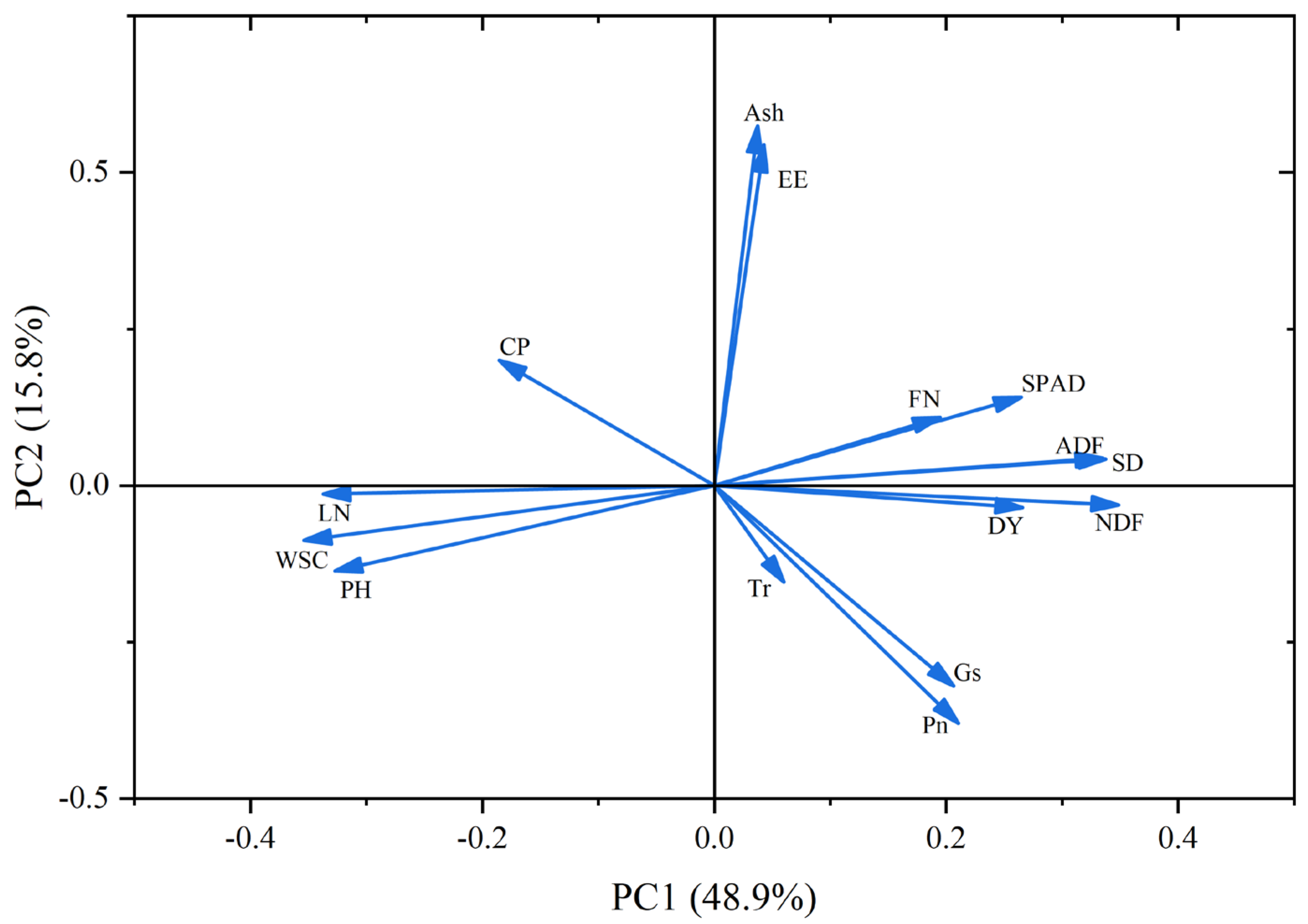
Based on the principal component analysis (PCA) loading plot for oat regrowth indicators in 2025 (Figure 7), the first two principal components (PC1 and PC2) together explained 64.7% of the total variance. PC1, as the primary source of variation, accounted for 48.9% of the total variance and was predominantly driven by loadings from ADF, SD, NDF, DY, Pn, Gs, and Tr. PC2 explained 15.8% of the variance and was mainly associated with FN, SPAD, EE, Ash, and CP.
Based on the principal component loadings, comprehensive scores were calculated and ranked for each treatment (Table 8). The results demonstrated that the overall performance under the C1 cutting stage was superior to that under the C2 cutting stage. Specifically, within the C1 cutting stage, the stubble height H3 treatment achieved the highest comprehensive score, followed by H2, while H1 had the lowest score. In contrast, all stubble height treatments under the C2 cutting stage exhibited relatively low comprehensive scores.

4. Discussion

4.1. Comprehensive Effects of Cutting Management on Production Performance and Agronomic Traits of Oat

This study systematically elucidates the regulatory mechanisms underlying the effects of cutting time and stubble height on oat regrowth performance. The results demonstrate synergistic effects between these two management factors, with cutting time serving as the dominant factor determining regrowth potential and direction, while stubble height exerts fine-tuning effects through its interaction with cutting time. Cutting at the flowering stage exhibited significant regenerative advantages, which can be attributed to the vigorous physiological activity during the transition from vegetative to reproductive growth. The robust root activity and active basal tiller buds at this stage facilitate rapid canopy reconstruction, resulting in superior performance in key agronomic traits, including stem diameter, tiller number, and leaf number [40]. In contrast, cutting at the milk stage substantially weakened regenerative capacity because photosynthetic products were preferentially allocated to grain development [41]. This finding is consistent with previous reports that early cutting stages more effectively promote forage regrowth [42,43]. However, the optimal cutting strategy appears to depend on specific production objectives. It has been demonstrated that a delayed cutting time is preferable for maximizing total biomass (first-harvest grain and straw yield), suggesting that cutting strategies should be adjusted according to different production goals [21,44]. This complexity is further reflected in the interannual variation observed in our study, where plant height showed different optimal cutting times across the two years, likely due to differences in climatic factors, such as light, temperature, and precipitation, during critical growth periods [45,46].
In this study, a stubble height of 10 cm provided the best overall results. Maintaining an optimal stubble height ensures sufficient photosynthetic organs and tiller buds while supporting favorable canopy conditions. Both excessively low and high stubble heights negatively influenced regrowth: low stubble damaged tiller nodes and slowed regeneration, while high stubble, although helpful for water retention under stress, decreased harvesting efficiency [15,47,48]. This demonstrates the importance of balancing immediate harvest gains with long-term stubble management for sustainability. Key findings emphasize the need for adaptive cutting strategies to respond to interannual climatic variations. Under favorable conditions, flowering-stage cutting with medium stubble height maximizes yield; under climatic stress, increased stubble height supports better physiological activity and regenerative capacity. This study observed significant year × management interactions, reinforcing the need for dynamic management. In conclusion, sustaining high yields in oat grasslands requires an integrated approach to cutting time and adaptive stubble height. Flowering-stage cutting with medium stubble is recommended for high-yield regrowth, while higher stubble during drought promotes resilience. Further research should define optimal cutting and stubble height strategies for varied ecological zones.

4.2. Physiological Responses of Photosynthetic Characteristics and Nutritional Quality in Oat Under Cutting Management

The compensatory enhancement of photosynthesis in remaining and newly developed leaves following defoliation serves as a fundamental physiological mechanism driving plant regeneration and recovery [49,50,51]. Cutting management is a crucial external factor that regulates this regenerative physiology [52,53]. This study demonstrates that oat plants cut at the flowering stage exhibit significantly superior photosynthetic performance during regrowth compared to those cut at the milk stage. When cutting occurs at the milk stage, most photoassimilates are preferentially allocated to grain filling, thereby limiting photosynthetic resources available for regrowth and delaying the reconstruction of the photosynthetic apparatus [54]. A strong correlation exists between photosynthetic parameters and yield-related traits, indicating that photosynthetic capacity during regrowth directly determines final biomass accumulation [36,55]. The tight relationship between transpiration rate and stomatal conductance indicates precise regulation of gas exchange during oat regrowth in alpine regions. Stubble height affects photosynthetic compensation by determining the residual leaf area after cutting. In this study, leaving 15 cm of stubble resulted in greater retention of photosynthetic tissue and faster recovery of carbon assimilation. This finding aligns with Olmstead and Rhode [56], who reported that higher stubble helps maintain favorable canopy conditions and tissue vitality. With 5 cm stubble, initial photosynthetic capacity dropped substantially, but stress responses likely enhanced efficiency in new leaves, demonstrating adaptive compensation under stress.
The combined effects of cutting time and stubble height collectively determine the forage value of regrowth. Delaying cutting until the milk stage, combined with 10 cm stubble height, resulted in the highest water-soluble carbohydrate content, potentially due to the more abundant soluble carbohydrate pool at later cutting stages. In contrast, moderate stubble height maintains sufficient residual photosynthetic tissue to support metabolic activity [57]. However, the negative correlation between yield components and water-soluble carbohydrates suggests that pursuing higher yield may compromise nutritional quality. Neutral detergent fiber and acid detergent fiber contents were higher when cutting occurred at the flowering stage, consistent with the progressive deposition of cell wall components (e.g., cellulose, lignin) during reproductive development, which gradually reduces forage digestibility [58,59]. This study confirmed that cutting stage and stubble height had no significant effect on the crude protein content of regrown oats, indicating that the plants likely maintained a relatively stable nitrogen metabolic balance during the regrowth phase. Furthermore, stubble height effects showed significant interannual variation. During the 2025 growing season, higher stubble promoted stem thickening and enhanced biomass accumulation, whereas medium stubble proved optimal in the 2024 season. This variability underscores the need to dynamically adjust stubble height based on specific climatic conditions.
In summary, the regulation of oat photosynthetic characteristics and nutritional quality by cutting management is essentially achieved through the synergistic effects of “photosynthesis–carbon allocation–structural growth”: cutting at the flowering stage enhances regrowth performance by maintaining photosynthetic activity and optimizing source–sink allocation, serving as the core measure. Stubble height acts as an environmental response factor, fine-tuning regrowth outcomes under different climatic conditions by modulating stem development and carbohydrate reserves. Future research could integrate physiological and biochemical indicators such as hormone levels and key enzyme activities, combined with the trait correlation patterns revealed in this study, to deeply analyze the real-time dynamics of carbon and nitrogen transport after cutting, thereby providing a more solid theoretical foundation for developing precise management strategies.

5. Conclusions

This study establishes an optimized cultivation system for forage oats in the unique alpine environment of the northeastern Qaidam Basin. Through an integrated analysis of the complete ‘one-sowing-two-harvest’ cycle, we clarified the distinct impacts of cutting management on different system components. For maximizing regrowth performance—including stem diameter, tiller number, and specific photosynthetic traits—mowing at the flowering stage, particularly with a higher stubble height (H2/H3), was superior. However, for achieving the goal of maximizing total seasonal forage productivity, mowing at the milk stage (C2) was the decisive strategy. The cultivar ‘Qingtian No. 1’ achieved the highest total seasonal dry matter yields under C2-based treatments, reaching 1.31 t/ha in 2024 (C2H1) and 1.25 t/ha in 2025 (C2H2). This advantage was primarily attributed to the substantially greater foundational yield from the first harvest under C2, which outweighed the regrowth benefits associated with C1. Therefore, we recommend mowing at the milk stage combined with a stubble height of 10 cm (C2H2) as the optimal practice. This strategy prioritizes total system output while maintaining acceptable regrowth and forage quality, effectively extending the regional forage supply window under variable climatic conditions. Our findings underscore a key agronomic trade-off and highlight that the evaluation and optimization of forage systems must be based on total seasonal productivity rather than the performance of a single growth phase. This provides a robust framework for sustainable forage intensification in the alpine regions of the Qinghai–Tibet Plateau.
The proposed cultivation system offers substantial implications for sustainable agricultural development in semi-arid alpine regions. It contributes to ecological sustainability by improving land productivity, supports stable livestock production by mitigating seasonal forage shortages, and enhances climate resilience by optimizing resource use patterns. However, this study acknowledges limitations in its single-site design and two-year experimental duration. Future research should focus on (1) verifying the system’s adaptability across different ecological zones; (2) conducting comprehensive economic benefit analyses; (3) elucidating the physiological mechanisms regulating post-cutting regrowth; and (4) evaluating long-term ecological impacts. These investigations will provide crucial scientific support for promoting ecological security and sustainable pastoral livelihoods on the Qinghai–Tibet Plateau.

Author Contributions

Conceptualization, Y.J.; methodology, Y.J. and C.X.; software, Y.J.; validation, H.S., H.Z. and F.X.; formal analysis, X.P., Y.Z. and C.X.; investigation, Y.J., C.X., H.S. and H.Z.; resources, F.X.; data curation, C.X., X.P. and Y.Z.; writing—original draft preparation, Y.J., H.S. and H.Z.; writing—review and editing, Y.J.; writing—review and editing, C.X., Y.J. and Y.Z.; visualization, Y.J. and Y.Z.; supervision, C.X., X.P. and Y.Z.; project administration, X.P.; funding acquisition, C.X. and X.P. All authors have read and agreed to the published version of the manuscript.

Funding

This research was funded by the Qinghai Provincial Key Research and Development Program, grant number 2023-NK-A3.

Data Availability Statement

The original contributions presented in this study are included in the article. Further inquiries can be directed to the corresponding author.

Conflicts of Interest

The authors declare no conflicts of interest.

Abbreviations

The following abbreviations are used in this manuscript:
PnNet Photosynthetic Rate
TrTranspiration Rate
GsStomatal Conductance
SPADChlorophyll Content
PHPlant Height
SDStem Diameter
LNNumber of Leaves
FNNumber of Tillers
FYFresh Forage Yield
DYDry Forage Yield
CPCrude Protein
NDFNeutral Detergent Fiber
ADFAcid Detergent Fiber
AshCrude Ash
EEEther Extract
WSCWater-Soluble Carbohydrates

References

  1. Harris, R.B. Rangeland Degradation on the Qinghai-Tibetan Plateau: A Review of the Evidence of Its Magnitude and Causes. J. Arid Environ. 2010, 74, 1–12. [Google Scholar] [CrossRef]
  2. Zhang, J.; Ding, J.; Zhang, Z.; Wang, J.; Zeng, X.; Ge, X. Study on the Inversion and Spatiotemporal Variation Mechanism of Soil Salinization at Multiple Depths in Typical Oases in Arid Areas: A Case Study of Wei-Ku Oasis. Agric. Water Manag. 2025, 315, 109542. [Google Scholar] [CrossRef]
  3. Cao, J.; Yeh, E.T.; Holden, N.M.; Yang, Y.; Du, G. The Effects of Enclosures and Land-Use Contracts on Rangeland Degradation on the Qinghai–Tibetan Plateau. J. Arid Environ. 2013, 97, 3–8. [Google Scholar] [CrossRef]
  4. Cao, J.; Adamowski, J.F.; Deo, R.C.; Xu, X.; Gong, Y.; Feng, Q. Grassland Degradation on the Qinghai-Tibetan Plateau: Reevaluation of Causative Factors. Rangel. Ecol. Manag. 2019, 72, 988–995. [Google Scholar] [CrossRef]
  5. Li, B.; Jia, G.; Wen, D.; Zhao, X.; Zhang, J.; Xu, Q.; Zhao, X.; Jiang, N.; Liu, Z.; Wang, Y. Rumen Microbiota of Indigenous and Introduced Ruminants and Their Adaptation to the Qinghai–Tibetan Plateau. Front. Microbiol. 2022, 13, 1027138. [Google Scholar] [CrossRef]
  6. Xue, X.; You, Q.; Peng, F.; Dong, S.; Duan, H. Experimental Warming Aggravates Degradation-Induced Topsoil Drought in Alpine Meadows of the Qinghai–Tibetan Plateau. Land Degrad. Dev. 2017, 28, 2343–2353. [Google Scholar] [CrossRef]
  7. Singh, R.; De, S.; Belkheir, A. Avena Sativa (Oat), a Potential Neutraceutical and Therapeutic Agent: An Overview. Crit. Rev. Food Sci. Nutr. 2013, 53, 126–144. [Google Scholar] [CrossRef] [PubMed]
  8. Daou, C.; Zhang, H. Oat Beta-Glucan: Its Role in Health Promotion and Prevention of Diseases. Compr. Rev. Food Sci. Food Saf. 2012, 11, 355–365. [Google Scholar] [CrossRef]
  9. Dong, C.Y.; Ma, B.B.; Lu, C.X. Spatio-Temporal Dynamics of Feed Grain Demand of Dairy Cows in China. Sustainability 2020, 12, 663. [Google Scholar] [CrossRef]
  10. Ashilenje, D.S.; Amombo, E.; Hirich, A.; Kouisni, L.; Devkota, K.P.; Mouttaqi, A.E.; Nilahyane, A. Crop Species Mechanisms and Ecosystem Services for Sustainable Forage Cropping Systems in Salt-Affected Arid Regions. Front. Plant Sci. 2022, 13, 899926. [Google Scholar] [CrossRef] [PubMed]
  11. Nabi, S.; ul Hussan, S.; Nabi, T.; Shikari, A.B.; Dar, Z.A.; Khuroo, N.S.; Lone, A.A.; Sofi, P.A.; Amin, R.; Wani, M.A. Bi-Environmental Evaluation of Oat (Avena sativa L.) Genotypes for Yield and Nutritional Traits under Cold Stress Conditions Using Multivariate Analysis. Plant Genet. Resour. 2024, 22, 295–303. [Google Scholar] [CrossRef]
  12. Zhao, W.; Chen, S.-P.; Lin, G.-H. Compensatory Growth Responses to Clipping Defoliation in Leymus Chinensis (Poaceae) under Nutrient Addition and Water Deficiency Conditions. Plant Ecol. 2007, 196, 85–99. [Google Scholar] [CrossRef]
  13. White, J.A.; Muir, J.P.; Lambert, B.D. Overseeding Cool-Season Annual Legumes and Grasses into Dormant ‘Tifton 85’ Bermudagrass for Forage and Biomass. Crop Sci. 2018, 58, 964–971. [Google Scholar] [CrossRef]
  14. Brummer, E.C.; Moore, K.J. Persistence of Perennial Cool-Season Grass and Legume Cultivars under Continuous Grazing by Beef Cattle. Agron. J. 2000, 92, 466–471. [Google Scholar] [CrossRef]
  15. Chen, Y.; Zheng, H.; Wang, W.; Tang, Q. Cutting Time & Height Improve Carbon and Energy Use Efficiency of the Forage–Food Dual-Purpose Ratoon Rice Cropping. Heliyon 2023, 9, e14042. [Google Scholar] [CrossRef]
  16. Borreani, G.; Odoardi, M.; Reyneri, A.; Tabacco, E. Effect of Cutting Height and Stage of Development on Lucerne Quality in the Po Plain. Ital. J. Agron. 2006, 1, 37–43. [Google Scholar] [CrossRef]
  17. Nakano, H.; Tanaka, R.; Hakata, M. Grain Yield Response to Planting Date and Cutting Height of the First Crop in Rice Ratooning. Crop Sci. 2023, 63, 2539–2552. [Google Scholar] [CrossRef]
  18. Kemp, D.R.; Culvenor, R.A. Improving the Grazing and Drought Tolerance of Temperate Perennial Grasses. N. Z. J. Agric. Res. 1994, 37, 365–378. [Google Scholar] [CrossRef]
  19. Kirkegaard, J.A.; Sprague, S.J.; Lilley, J.M.; McCormick, J.I.; Virgona, J.M.; Morrison, M.J. Physiological Response of Spring Canola (Brassica napus) to Defoliation in Diverse Environments. Field Crops Res. 2012, 125, 61–68. [Google Scholar] [CrossRef]
  20. Oral, H.H. Forage Yields and Nutritive Values of Oat and Triticale Pastures for Grazing Sheep in Early Spring. PeerJ 2024, 12, e17840. [Google Scholar] [CrossRef]
  21. Matsunaga, A.; Sasaki, H. Effects of Plant Height and Cutting Height on Regrowth and Yield of Garland Chrysanthemum Ratooning. Hortic. J. 2023, 92, 269–280. [Google Scholar] [CrossRef]
  22. Zhang, Y.; Li, J.; Zhang, D.; Wang, Z.; Yi, X. Effects of Grazed Stubble Height and Timing of Grazing on Resprouting of Clipped Oak Seedlings. Agrofor. Syst. 2018, 93, 295–304. [Google Scholar] [CrossRef]
  23. Yonemaru, J.; Kasuga, S.; Kawahigashi, H. QTL Analysis of Regrowth Ability in Bmr Sorghum (Sorghum Bicolor [L.] Moench) × Sudangrass (S. Bicolor Subsp. Drummondii) Populations. Grassl. Sci. 2022, 68, 310–318. [Google Scholar] [CrossRef]
  24. Volenec, J.J.; Ourry, A.; Joern, B.C. A Role for Nitrogen Reserves in Forage Regrowth and Stress Tolerance. Physiol. Plant. 1996, 97, 185–193. [Google Scholar] [CrossRef]
  25. Donaghy; Fulkerson. Priority for Allocation of Water-Soluble Carbohydrate Reserves during Regrowth of Lolium perenne. Grass Forage Sci. 1998, 53, 211–218. [Google Scholar] [CrossRef]
  26. Richards, J.H.; Caldwell, M.M. Soluble Carbohydrates, Concurrent Photosynthesis and Efficiency in Regrowth Following Defoliation: A Field Study with Agropyron Species. J. Appl. Ecol. 1985, 22, 907–920. [Google Scholar] [CrossRef]
  27. Vicensi, M.; Umburanas, R.C.; da Rocha Loures, F.S.; Koszalka, V.; Botelho, R.V.; de Ávila, F.W.; Müller, M.M.L. Residual Effect of Gypsum and Nitrogen Rates on Black Oat Regrowth and on Succeeding Soybean under No-Till. Int. J. Plant Prod. 2021, 15, 431–445. [Google Scholar] [CrossRef]
  28. Gómez-Miranda, A.; López-González, F.; Vieyra-Alberto, R.; Arriaga-Jordán, C.M. Grazed Barley for Dairy Cows in Small-Scale Systems in the Highlands of Mexico. Ital. J. Anim. Sci. 2022, 21, 178–187. [Google Scholar] [CrossRef]
  29. Ma, A.; Qiu, Y.; Raihan, T.; Paudel, B.; Dahal, S.; Zhuang, Y.; Galla, A.; Auger, D.; Yen, Y. The Genetics and Genome-Wide Screening of Regrowth Loci, a Key Component of Perennialism in Zea Diploperennis. G3 Genes Genomes Genet. 2019, 9, 1393–1403. [Google Scholar] [CrossRef] [PubMed]
  30. Li, S.; Wang, S.; Ye, W.; Yao, Y.; Sun, F.; Zhang, C.; Liu, S.; Xi, Y. Effect of Mowing on Wheat Growth at Seeding Stage. Int. J. Mol. Sci. 2023, 24, 15353. [Google Scholar] [CrossRef] [PubMed]
  31. Mannerkorpi, P.; Brandt, M. Feeding Value of Whole-Crop Wheat Silage for Ruminants Related to Stage of Maturity and Cutting Height. Arch. Für Tierernaehrung 1993, 45, 89–100. [Google Scholar] [CrossRef]
  32. Yang, J.; Lai, X.; Shen, Y. Response of Dual-Purpose Winter Wheat Yield and Its Components to Sowing Date and Cutting Timing in a Semiarid Region of China. Crop Sci. 2021, 62, 425–440. [Google Scholar] [CrossRef]
  33. Perazzo, A.F.; Carvalho, G.G.P.; Santos, E.M.; Bezerra, H.F.C.; Silva, T.C.; Pereira, G.A.; Ramos, R.C.S.; Rodrigues, J.A.S. Agronomic Evaluation of Sorghum Hybrids for Silage Production Cultivated in Semiarid Conditions. Front. Plant Sci. 2017, 8, 1088. [Google Scholar] [CrossRef]
  34. Jones, G.B.; Alpuerto, J.B.; Tracy, B.F.; Fukao, T. Physiological Effect of Cutting Height and High Temperature on Regrowth Vigor in Orchardgrass. Front. Plant Sci. 2017, 8, 805. [Google Scholar] [CrossRef] [PubMed]
  35. Bremner, J.M. Determination of Nitrogen in Soil by the Kjeldahl Method. J. Agric. Sci. 1960, 55, 11–33. [Google Scholar] [CrossRef]
  36. Soest, P.J.V.; Robertson, J.B.; Lewis, B.A. Methods for Dietary Fiber, Neutral Detergent Fiber, and Nonstarch Polysaccharides in Relation to Animal Nutrition. J. Dairy Sci. 1991, 74, 3583–3597. [Google Scholar] [CrossRef]
  37. Du, B. Determination of Related Substances in Estradiol Valerate Tablet by Use of HPLC Method. Curr. Pharm. Anal. 2018, 14, 513–518. [Google Scholar] [CrossRef]
  38. Thiex, N.J.; Anderson, S.; Gildemeister, B.; Adcock, W.; Boedigheimer, J.; Bogren, E.; Coffin, R.; Conway, K.; DeBaker, A.; Frankenius, E.; et al. Crude Fat, Diethyl Ether Extraction, in Feed, Cereal Grain, and Forage (Randall/Soxtec/Submersion Method): Collaborative Study. J. AOAC Int. 2003, 86, 888–898. [Google Scholar] [CrossRef]
  39. Thiex, N.; Novotny, L.; Crawford, A. Determination of Ash in Animal Feed: AOAC Official Method 942.05 Revisited. J. AOAC Int. 2012, 95, 1392–1397. [Google Scholar] [CrossRef]
  40. Archer, S.; Detling, J.K. The Effects of Defoliation and Competition on Regrowth of Tillers of Two North American Mixed-Grass Prairie Graminoids. Oikos 1984, 43, 351–357. [Google Scholar] [CrossRef]
  41. Culvenor, R. Effect of Cutting During Reproductive Development on the Regrowth and Regenerative Capacity of the Perennial Grass, Phalaris aquatica L., in a Controlled Environment. Ann. Bot. 1993, 72, 559–568. [Google Scholar] [CrossRef]
  42. Gold, W.G.; Caldwell, M.M. The Effects of the Spatial Pattern of Defoliation on Regrowth of a Tussock Grass: I. Growth Responses. Oecologia 1989, 80, 289–296. [Google Scholar] [CrossRef]
  43. Lyu, D.; Doce, R.R.; Juskiw, P.; Zhou, G.; Baron, V.S. Diverse Grain-Filling Dynamics Affect Harvest Management of Forage Barley and Triticale Cultivars. Agron. J. 2018, 110, 1017–1027. [Google Scholar] [CrossRef]
  44. Sirmon, P. The Effect of Harvest Cutting Height and Hybrid Maturity Class on Forage Nutritive Values and Ratoon Regrowth Potential of Sorghum Sudangrass in the Texas High Plains. Doctoral Dissertation, West Texas A&M University, Canyon, TX, USA, 2023. [Google Scholar]
  45. Rezaei, E.E.; Webber, H.; Asseng, S.; Boote, K.; Durand, J.L.; Ewert, F.; Martre, P.; MacCarthy, D.S. Climate Change Impacts on Crop Yields. Nat. Rev. Earth Environ. 2023, 4, 831–846. [Google Scholar] [CrossRef]
  46. Saxena, R.; Vanga, S.K.; Wang, J.; Orsat, V.; Raghavan, V. Millets for Food Security in the Context of Climate Change: A Review. Sustainability 2018, 10, 2228. [Google Scholar] [CrossRef]
  47. Yang, W.; Mo, X.; Zhang, Y.; Liu, Z.; Tang, Q.; Xu, J.; Pan, S.; Wang, Y.; Chen, G.; Hu, Y. Appropriate Stubble Height Can Effectively Improve the Rice Quality of Ratoon Rice. Foods 2024, 13, 1392. [Google Scholar] [CrossRef] [PubMed]
  48. Merino, V.M.; Aguilar, R.; Piña, L.F.; Garriga, M.; Ostria-Gallardo, E.; López, M.D.; Noriega, F.; Campos, J.; Navarrete, S.; Rivero, M.J. Regrowth Dynamics and Morpho-Physiological Characteristics of Plantago Lanceolata under Different Defoliation Frequencies and Intensities. PLoS ONE 2024, 19, e0310009. [Google Scholar] [CrossRef] [PubMed]
  49. Roche, J.; Turnbull, M.H.; Guo, Q.; Novák, O.; Späth, J.; Gieseg, S.P.; Jameson, P.E.; Love, J. Coordinated Nitrogen and Carbon Remobilization for Nitrate Assimilation in Leaf, Sheath and Root and Associated Cytokinin Signals during Early Regrowth of Lolium perenne. Ann. Bot. 2017, 119, 1353–1364. [Google Scholar] [CrossRef]
  50. Nowak, R.S.; Caldwell, M.M. A Test of Compensatory Photosynthesis in the Field: Implications for Herbivory Tolerance. Oecologia 1984, 61, 311–318. [Google Scholar] [CrossRef]
  51. Iqbal, N.; Masood, A.; Khan, N.A. Analyzing the Significance of Defoliation in Growth, Photosynthetic Compensation and Source-Sink Relations. Photosynthetica 2012, 50, 161–170. [Google Scholar] [CrossRef]
  52. Wang, N.; Ji, T.; Liu, X.; Li, Q.; Sairebieli, K.; Wu, P.; Song, H.; Wang, H.; Du, N.; Zheng, P.; et al. Defoliation Significantly Suppressed Plant Growth Under Low Light Conditions in Two Leguminosae Species. Front. Plant Sci. 2022, 12, 777328. [Google Scholar] [CrossRef]
  53. García-Favre, J.; López, I.F.; Cranston, L.M.; Donaghy, D.J.; Kemp, P.D.; Ordóñez, I.P. Functional Contribution of Two Perennial Grasses to Enhance Pasture Production and Drought Resistance under a Leaf Regrowth Stage Defoliation Criterion. J. Agron. Crop Sci. 2022, 209, 144–160. [Google Scholar] [CrossRef]
  54. Américo, L.F.; Duchini, P.G.; Schmitt, D.; Guzatti, G.C.; Lattanzi, F.A.; Sbrissia, A.F. Nitrogen Nutritional Status in Perennial Grasses under Defoliation: Do Stubble Height and Mixed Cultivation Matter? J. Plant Nutr. Soil Sci. 2021, 184, 208–216. [Google Scholar] [CrossRef]
  55. Wang, N.; Zhao, M.; Li, Q.; Liu, X.; Song, H.; Peng, X.; Wang, H.; Yang, N.; Fan, P.; Wang, R.; et al. Effects of Defoliation Modalities on Plant Growth, Leaf Traits, and Carbohydrate Allocation in Amorpha fruticosa L. and Robinia pseudoacacia L. Seedlings. Ann. For. Sci. 2020, 77, 53. [Google Scholar] [CrossRef]
  56. Olmstead, A.L.; Rhode, P.W. Adapting North American Wheat Production to Climatic Challenges, 1839–2009. Proc. Natl. Acad. Sci. USA 2010, 108, 480–485. [Google Scholar] [CrossRef] [PubMed]
  57. Meuriot, F.; Prud‘Homme, M.-P.; Noiraud-Romy, N. Defoliation, wounding, and methyl jasmonate induce expression of the sucrose lateral transporter LpSUT1 in ryegrass (Lolium perenne L.). Physiol. Plant. 2022, 174, e13744. [Google Scholar] [CrossRef]
  58. Nissinen, O.; Kalliainen, P.; Jauhiainen, L. Development of Yield and Nutritive Value of Timothy in Primary Growth and Regrowth in Northern Growing Conditions. Agric. Food Sci. 2010, 19, 252–268. [Google Scholar] [CrossRef]
  59. Monção, F.P.; Costa, M.A.M.S.; Rigueira, J.P.S.; Sales, E.C.J.d.; Leal, D.B.; Silva, M.F.P.d.; Gomes, V.M.; Chamone, J.M.A.; Alves, D.D.; Carvalho, C.d.C.S.; et al. Productivity and Nutritional Value of BRS Capiaçu Grass (Pennisetum Purpureum) Managed at Four Regrowth Ages in a Semiarid Region. Trop. Anim. Health Prod. 2019, 52, 235–241. [Google Scholar] [CrossRef] [PubMed]
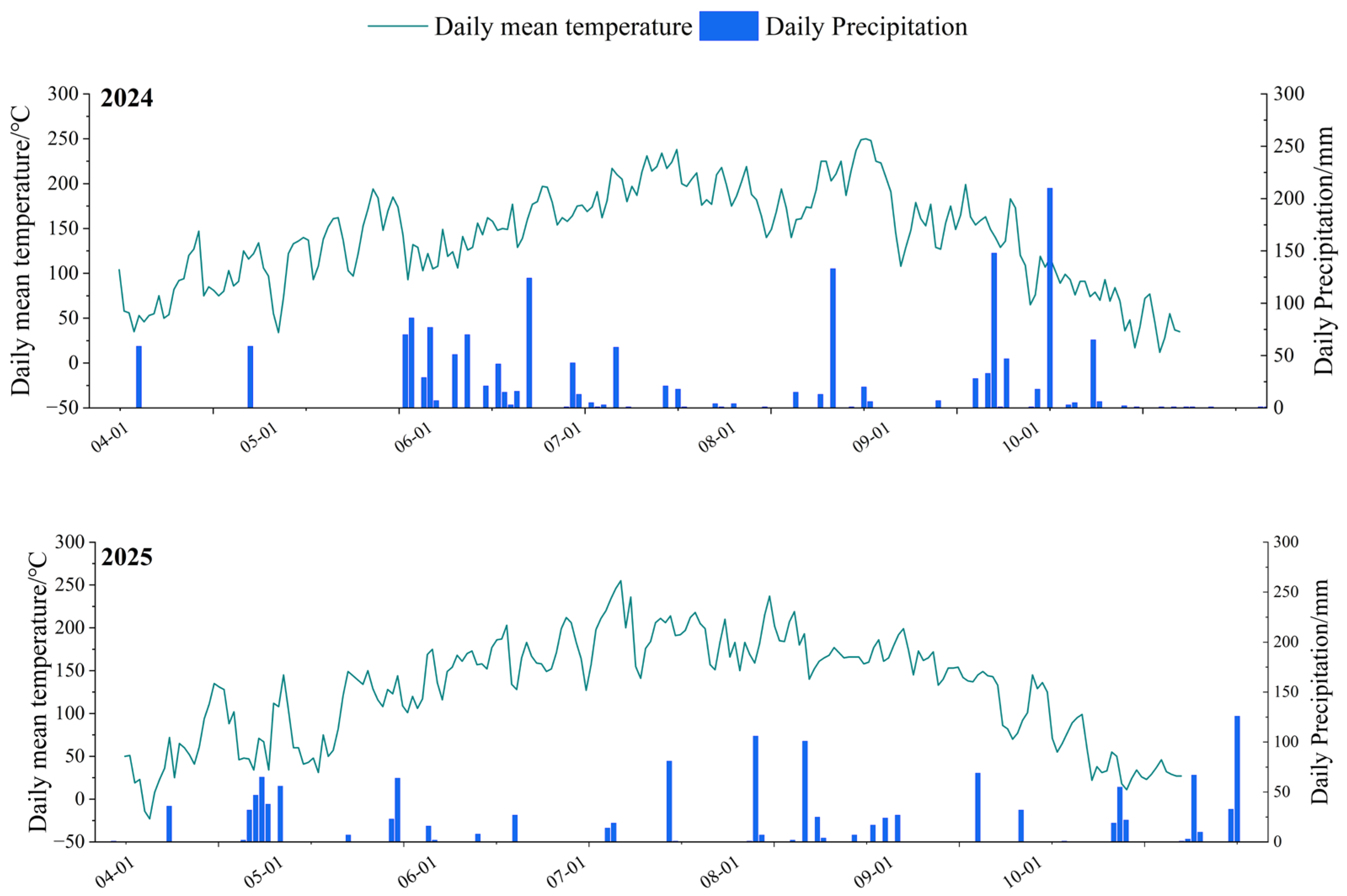
Figure 1. Daily precipitation and mean daily air temperature during the 2024 and 2025 oat growing seasons.
Agriculture 15 02542 g001
Figure 2. Effects of cutting stage and stubble height on agronomic traits and yield of oat in 2024 and 2025 growing seasons. Note: C1 and C2 represent cutting at the flowering stage and milk stage, respectively; H1, H2, and H3 represent stubble heights of 5 cm, 10 cm, and 15 cm, respectively. Values are presented as mean ± SE (n = 3). For each year, different lowercase letters above the bars indicate significant differences among the treatment combinations (cutting stage × stubble height) at p < 0.05 according to Duncan’s test. Letters are not comparable between years. (a) Plant height; (b) Stem diameter; (c) Tiller number; (d) Leaf number. The same conventions apply to the following figures and tables.
Agriculture 15 02542 g002
Figure 3. Effects of cutting stage and stubble height on the regrowth photosynthetic characteristics of oat. Note: C1 and C2 represent cutting at the flowering stage and milk stage, respectively; H1, H2, and H3 represent stubble heights of 5 cm, 10 cm, and 15 cm, respectively. Values are presented as mean ± SE (n = 3). For each year, different lowercase letters above the bars indicate significant differences among the treatment combinations (cutting stage × stubble height) at p < 0.05 according to Duncan’s test. Letters are not comparable between years. (a) Net photosynthetic rate; (b) Stomatal conductance; (c) Transpiration rate; (d) SPAD value. The same conventions apply to the following figures and tables.
Agriculture 15 02542 g003
Figure 4. Effects of different cutting treatments on photosynthetic characteristics of oat during the regrowth period. Note: C1 and C2 represent cutting at the flowering stage and milk stage, respectively; H1, H2, and H3 represent stubble heights of 5 cm, 10 cm, and 15 cm, respectively. Values are presented as mean ± SE (n = 3). For each year, different lowercase letters above the bars indicate significant differences among the treatment combinations (cutting stage × stubble height) at p < 0.05 according to Duncan’s test. Letters are not comparable between years. (a) Crude ash; (b) Ether extract; (c) Crude protein; (d) Neutral detergent fiber; (e) Water-soluble carbohydrates; (f) Acid Detergent Fiber. The same conventions apply to the following figures and tables.
Agriculture 15 02542 g004
Figure 5. Correlation analysis among various oat regrowth indicators in 2024 and 2025. Note: ** and * indicate significance at the 0.01 and 0.05 probability levels, respectively. DY: dry matter yield; PH: plant height; LN: leaf number; TN: tiller number; SD: stem diameter; Pn: net photosynthetic rate; Gs: stomatal conductance; Tr: transpiration rate; SPAD: relative chlorophyll content; CP: crude protein; EE: ether extract; ADF: acid detergent fiber; NDF: neutral detergent fiber; WSC: water-soluble carbohydrates; Ash: crude ash.
Agriculture 15 02542 g005
Figure 6. Principal component analysis (PCA) loading plot of oat regrowth indicators (2024). Note: (a) Loadings of variables on Principal Component 1 (PC1) and Principal Component 2 (PC2). (b) Loadings of variables on Principal Component 1 (PC1) and Principal Component 3 (PC3). Values in parentheses indicate the percentage of total variance explained by each component. Vectors (arrows) represent the direction and contribution of each measured variable to the principal components. DY: dry matter yield; PH: plant height; LN: leaf number; FN: tiller number; SD: stem diameter; Pn: net photosynthetic rate; Gs: stomatal conductance; Tr: transpiration rate; SPAD: relative chlorophyll content; CP: crude protein; EE: ether extract; ADF: acid detergent fiber; NDF: neutral detergent fiber; WSC: Water-Soluble Carbohydrates; Ash: crude ash.
Agriculture 15 02542 g006
Figure 7. Principal component analysis (PCA) loading plot of oat regrowth indicators (2025). Note: Values in parentheses indicate the percentage of total variance explained by each component. Vectors (arrows) represent the direction and contribution of each measured variable to the principal components. DY: dry matter yield; PH: plant height; LN: leaf number; FN: tiller number; SD: stem diameter; Pn: net photosynthetic rate; Gs: stomatal conductance; Tr: transpiration rate; SPAD: relative chlorophyll content; CP: crude protein; EE: ether extract; ADF: acid detergent fiber; NDF: neutral detergent fiber; WSC: Water-Soluble Carbohydrates; Ash: crude ash.
Agriculture 15 02542 g007
Table 1. Physical and hydraulic properties of the soil (0–30 cm depth) at the experimental site.
Texture Class (USDA)Clay (<0.002 mm) %Silt (0.002–0.05 mm) %Sand (0.05–2 mm) %Bulk Density/
(g cm−3)
Field Capacity (−33 kPa)/
(cm3 cm−3)
Permanent Wilting Point (−1500 kPa)/ (cm3 cm−3)Saturated Hydraulic Conductivity/
(cm day−1)
Sandy Loam15.228.756.11.520.250.1025
Table 2. Chemical properties of the soil (0–30 cm depth) at the experimental site.
Electrical Conductivity/
(dS m−1)
Organic Matter/
(g·kg−1)
Total Nitrogen/
(g·kg−1)
Total
Phosphorus/
(g·kg−1)
Total
Potassium/
(g·kg−1)
Ammonium Nitrogen/
(mg·kg−1)
Nitrate
Nitrogen/
(mg·kg−1)
Available Phosphorus/
(mg·kg−1)
Available
Potassium/
(mg·kg−1)
Soil Salinity/
(g·kg−1)
Soil pH
2.4018.130.830.4421.726.3921.8728.08129.612.408.46
Table 3. Forage dry matter yield: first harvest, regrowth, and total seasonal production in the oat ‘one-sowing-two-harvest’ system.
YearCutting StageStubble HeightFirst Harvest DMY (t/ha)Regrowth DMY (t/ha)Total Seasonal DMY (t/ha)
2024C1H10.77 ± 0.08bc0.31 ± 0.07bc1.08 ± 0.04ab
H20.68 ± 0.02c0.44 ± 0.04a1.12 ± 0.06ab
H30.62 ± 0.05c0.40 ± 0.05ab1.02 ± 0.10b
C2H11.13 ± 0.13a0.18 ± 0.03d1.31 ± 0.14a
H20.96 ± 0.10ab0.24 ± 0.02cd1.21 ± 0.09ab
H30.82 ± 0.12bc0.34 ± 0.07abc1.16 ± 0.08ab
2025C1H10.65 ± 0.06b0.40 ± 0.15ab1.05 ± 0.19a
H20.53 ± 0.01b0.57 ± 0.03a1.09 ± 0.04a
H30.60 ± 0.04b0.53 ± 0.10a1.13 ± 0.13a
C2H11.05 ± 0.04a0.15 ± 0.04c1.20 ± 0.02a
H21.03 ± 0.05a0.22 ± 0.04bc1.25 ± 0.09a
H30.91 ± 0.11a0.13 ± 0.04c1.05 ± 0.07a
FYear (Y)0.8750.2790.092
Cutting Stage (C)2.698125.914 **391.567 **
Stubble Height (H)4.454 *5.6460.811
Y × C6.471 *17.056 **0.294
Y × H0.3660.2650.241
C × H0.7603.2870.692
Y × C × H1.1200.0890.536
Note: C1 and C2 represent cutting at the flowering stage and milk stage, respectively; H1, H2, and H3 represent stubble heights of 5 cm, 10 cm, and 15 cm, respectively. DMY: dry matter yield, Total seasonal DMY = First harvest DMY + Regrowth DMY. Values are presented as mean ± SE (n = 3). For each year, different lowercase letters above the bars indicate significant differences among the treatment combinations (cutting stage × stubble height) at p < 0.05 according to Duncan’s test. ** and * indicate significance at the 0.01 and 0.05 probability levels, respectively. The same conventions apply to the following figures and tables.
Table 4. Analysis of variance of agronomic traits and yield of oat under different cutting treatments.
Source of VariationPlant Height
(PH)
Stem Diameter
(SD)
Tiller Number
(FN)
Leaf Number
(LN)
Year (Y)11.464 **12.314 **24.65 **139.912 **
Cutting Stage (C)59.933 **238.506 **34.043 **35.611 **
Stubble Height (H)5.623 **1.2850.87610.003 **
Y × C41.659 **28.013 **3.08959.414 **
Y × H0.5701.0260.1803.816
C × H1.0681.7441.0790.073
Note: ** indicate significance at the 0.01 probability levels, respectively. The same conventions apply to the following figures and tables.
Table 5. Analysis of variance of photosynthetic characteristics of oat regrowth under different cutting treatments.
Source of VariationNet Photosynthetic Rate
(Pn)
Stomatal Conductance
(Gs)
Transpiration Rate
(Tr)
SPAD Value
(SPAD)
Year (Y)5.669 *0.0771.8540.011
Cutting Stage (C)19.966 **30.735 **21.342 **708.708 **
Stubble Height (H)0.0252.1091.6792.759
Y × C0.3350.6463.4450.311
Y × H3.935 **1.9510.0900.935
C × H0.8272.2280.2860.945
Note: ** and * indicate significance at the 0.01 and 0.05 probability levels, respectively. The same conventions apply to the following figures and tables.
Table 6. Analysis of variance of oat regrowth nutritional quality under different cutting treatments.
Source of VariationCrude Ash
(Ash)
Ether Extract
(EE)
Crude Protein
(CP)
Water-Soluble
Carbohydrates
(WSC)
Acid Detergent Fiber
(ADF)
Neutral Detergent Fiber
(NDF)
Year (Y)0.3751.9091.88912.955 **0.0451.749
Cutting Stage (C)37.998 **540.007 **234.206 **1075.48 **1331.492 **1313.695 **
Stubble Height (H)0.0030.3540.1993.656 *0.6640.659
Y × C1.5980.3942.32621.006 **3.1792.672
Y × H3.451 *0.1080.4013.627 *0.8351.051
C × H1.3111.7770.4561.6480.4250.293
Note: ** and * indicate significance at the 0.01 and 0.05 probability levels, respectively. The same conventions apply to the following figures and tables.
Table 7. Comprehensive evaluation scores of oat regrowth performance under different cutting treatments (2024).
Cutting StageStubble HeightFRank
C1H10.2303
H20.5201
H30.2342
C2H1−0.6056
H2−0.1734
H3−0.2065
Note: C1 and C2 represent cutting at the flowering stage and milk stage, respectively; H1, H2, and H3 represent stubble heights of 5 cm, 10 cm, and 15 cm, respectively.
Table 8. Comprehensive evaluation scores of oat regrowth performance under different cutting treatments (2025).
Cutting StageStubble HeightFRank
C1H10.4203
H20.5942
H30.6521
C2H1−0.4834
H2−0.6006
H3−0.5845
Note: C1 and C2 represent cutting at the flowering stage and milk stage, respectively; H1, H2, and H3 represent stubble heights of 5 cm, 10 cm, and 15 cm, respectively.
Disclaimer/Publisher’s Note: The statements, opinions and data contained in all publications are solely those of the individual author(s) and contributor(s) and not of MDPI and/or the editor(s). MDPI and/or the editor(s) disclaim responsibility for any injury to people or property resulting from any ideas, methods, instructions or products referred to in the content.