Abstract
Optimizing field cropping practices to improve nitrogen use efficiency is imperative to promote intensive and sustainable wheat production. As a cultivation method commonly adopted in arid and semi-arid regions globally, the ridge–furrow mulching system (RFMS) is capable of efficiently harvesting rainfall, reduce evaporation losses, enhancing soil moisture levels in the root zone, and boosting crop productivity. However, the combined effects of varying ridge–furrow ratios (RD), ridge heights (RH), and nitrogen application rates (RN) on nitrogen fertilizer bias productivity (PFPN) under the influence of climatic conditions, soil types, and field management practices remain poorly understood due to a lack of systematic evaluation. This study conducted a meta-analysis of 462 comparative datasets from 98 research projects to reveal the interactive effects of RFMS and nitrogen fertilizer across climatic gradients. The results showed that RH, RD, and RN increased by 23.78%, 22.37%, and 23.07% respectively (p < 0.05), with the most significant enhancement of PFPN being demonstrated by RH. The most significant improvement in PFPN was observed when RD = 1:1, R < 10 cm, and RN > 200 kg∙hm−2, with PFPN increasing by 27.7%, 29.50%, and 29.32% respectively (p < 0.05). Climatic and soil physico-chemical factors and field management practices are the key factors influencing the RFMS. When average annual evapotranspiration (AE) < 1000, RN > 200 has the best effect on nitrogen utilization efficiency, while under the condition of AE > 1500, RN < 100 is more effective. In terms of mulching strategy, full mulching of ridges and furrows is recommended in areas with severe drought and low temperatures, while mulching only ridges or furrows is more appropriate in areas with relatively mild climate. The present study provides a scientific basis for the optimal design of ridge–furrow mulching configuration and nitrogen application level. This is achieved by considering climatic conditions, soil fertility, and field management in agro-ecosystems in arid and semi-arid areas.
1. Introduction
As the global population continues to grow, the efficient use of nitrogen is critical to guaranteeing food security and achieving sustainable development. However, the current use of nitrogen in global agricultural systems faces many challenges. In pursuit of high yields, farmers frequently over-apply chemical fertilizers. This not only leads to resource wastage and increased production costs but also triggers a series of environmental problems. Nitrogen not absorbed by crops contributes to the greenhouse effect through ammonia volatilization (NH3) and nitrous oxide (N2O) emissions, or contaminates soil and water via leaching and nitrification, ultimately reducing nitrogen use efficiency in agricultural fields [1,2,3]. It is therefore imperative to explore scientific nitrogen fertilizer management strategies that will improve crop yields and nitrogen fertilizer use efficiency, thereby promoting sustainable agricultural development.
The ridge–furrow mulching system (RFMS) is a commonly employed technique for enhancing rainfall resource accumulation through micro-topography modification. This approach effectively reduces rainfall evaporation by alternately collecting and retaining water in ridges and furrows, thereby significantly improving soil water availability in the crop root zone [4]. In arid and semi-arid regions such as northwestern China, RFMS has been extensively applied in rain-fed agriculture to enhance water and nitrogen availability [5,6]. By optimizing soil water flow, elevating soil temperature, and reducing transpiration and nitrogen loss, this technique ultimately achieves increased crop yields and enhanced nitrogen uptake [7]. The efficacy of RFMS largely depends on the optimal configuration of its key parameters with nitrogen application rates (RN). Research indicates that ridge–furrow ratios (RD) influence catchment area and soil water-heat conditions, while ridge heights (RH) regulate root-zone temperature and root morphology [8,9,10]. For instance, optimal RD configurations for rainfed wheat in eastern Africa are 20:20 cm and 30:20 cm [11], whereas winter wheat in China’s semi-arid Loess Plateau region exhibits optimal performance with a 60:60 cm spacing, achieving higher dry matter accumulation, crop yield, and water-heat utilization efficiency [12]. Beyond ridge–furrow structure, the coupled effect of RN and soil moisture also plays a critical role in crop nitrogen utilization [13,14]. Zhang et al. determined optimal nitrogen application rates for spring maize under RD = 40:70, RD = 55:55, and RD = 70:40 to be 204, 228, and 207, respectively [15]. Moderate nitrogen supplementation enhances leaf area index, nitrogen use efficiency, and grain yield in rainfed wheat, whilst combining controlled-release urea with deep incorporation reduces nitrogen leaching, increasing nitrogen fertilizer bias productivity (PFPN) by 22–38% [16]. However, under water-limited conditions, excessive nitrogen application may exacerbate soil salinity stress and inhibit crops’ efficient uptake of water and nutrients [17]. Nitrogen fertilizer application requires dynamic adjustment based on moisture conditions: RN = 150 is appropriate during wet years, while RN = 300 should be adopted during normal and dry years to achieve optimal water use efficiency [18]. Therefore, adjusting nitrogen fertilizer application based on soil moisture status is crucial for enhancing water–nitrogen synergy and boosting dryland wheat productivity [19]. RFMS exhibits high climatic adaptability and is widely applied under low temperatures and water constraints. It elevates soil temperature in cold regions and effectively collects water to increase yields under drought conditions [7]. Research indicates that when average annual temperature (MAT) < 12 °C, ridge–furrow ratios > 1:1 are more conducive to enhancing crop yield and water use efficiency; conversely, when MAT > 12 °C, ratios < 1:1 yield superior results [20]. Nevertheless, despite confirmed potential for RFMS in enhancing water use efficiency, the combined effects of ridge–furrow structure and RN on PFPN under variable climatic conditions remain unclear. A systematic assessment of interactions between diverse environmental factors and management practices is currently lacking, limiting the maximization of RFMS’s synergistic water–nitrogen potential.
In summary, rainwater harvesting with optimal management of nitrogen fertilizer in furrows and ridges has become an important strategy to improve soil water and heat conditions, crop yield and resource use efficiency. In arid and semi-arid areas, it is crucial to define the optimal combination of furrow ratio, ridge height, and nitrogen application to improve nitrogen utilization efficiency. However, there is a lack of systematic assessment of the mechanisms by which furrow configuration and nitrogen fertilizer transport synergistically affect PFPN, especially the response pattern under multifactorial interactions and different environmental conditions. To this end, this study used meta-analysis to quantitatively assess the combined effects of different RDs, RHs, and RNs on PFPN in dry-crop wheat based on data from published studies up to 1 September 2024, and to reveal the characteristics of their responses under different environmental and management measures. The study objectives included:
(1) analyzing the impact of ridge–furrow configuration and RD on wheat nitrogen use efficiency under varying environmental and management conditions;
(2) determining the optimal combination of RD, RH, and RN for wheat production in arid and semi-arid regions;
(3) providing theoretical foundations and technical support for green wheat production in China and similar ecoregions (e.g., eastern Africa, Korean Peninsula).
2. Materials and Methods
2.1. Data Sources and Collection
This paper investigates the response of wheat to PFPN under the RFMS in the arid and semi-arid regions of China. According to the research topic, the keywords “wheat”, “furrow–ridge”, or “nitrogen” were first determined as search terms. Peer-reviewed journal articles from the National Knowledge Infrastructure of China (http://www.cnki.net/, accessed on 1 October 2025) and Web of Science (http://apps.webofknowledge.com/, accessed on 1 October 2025) were collected from 1994 to 2024. To avoid bias, previous literature was selected for this study based on the following criteria: (1) Field trials should be conducted in arid and semi-arid regions of China; (2) pairwise comparisons of ridges and furrows (i.e., treatment groups and TF) were made, ignoring differences in the color of the plastic film as well as differences in the shape and size of the ridges, whether or not the ridges were consecutive monocultures, within the same study; (3) the crop studied was limited to wheat; (4) the crop had to provide information that could be calculated directly, including the number of replications, the nitrogen application rate, and the yield.
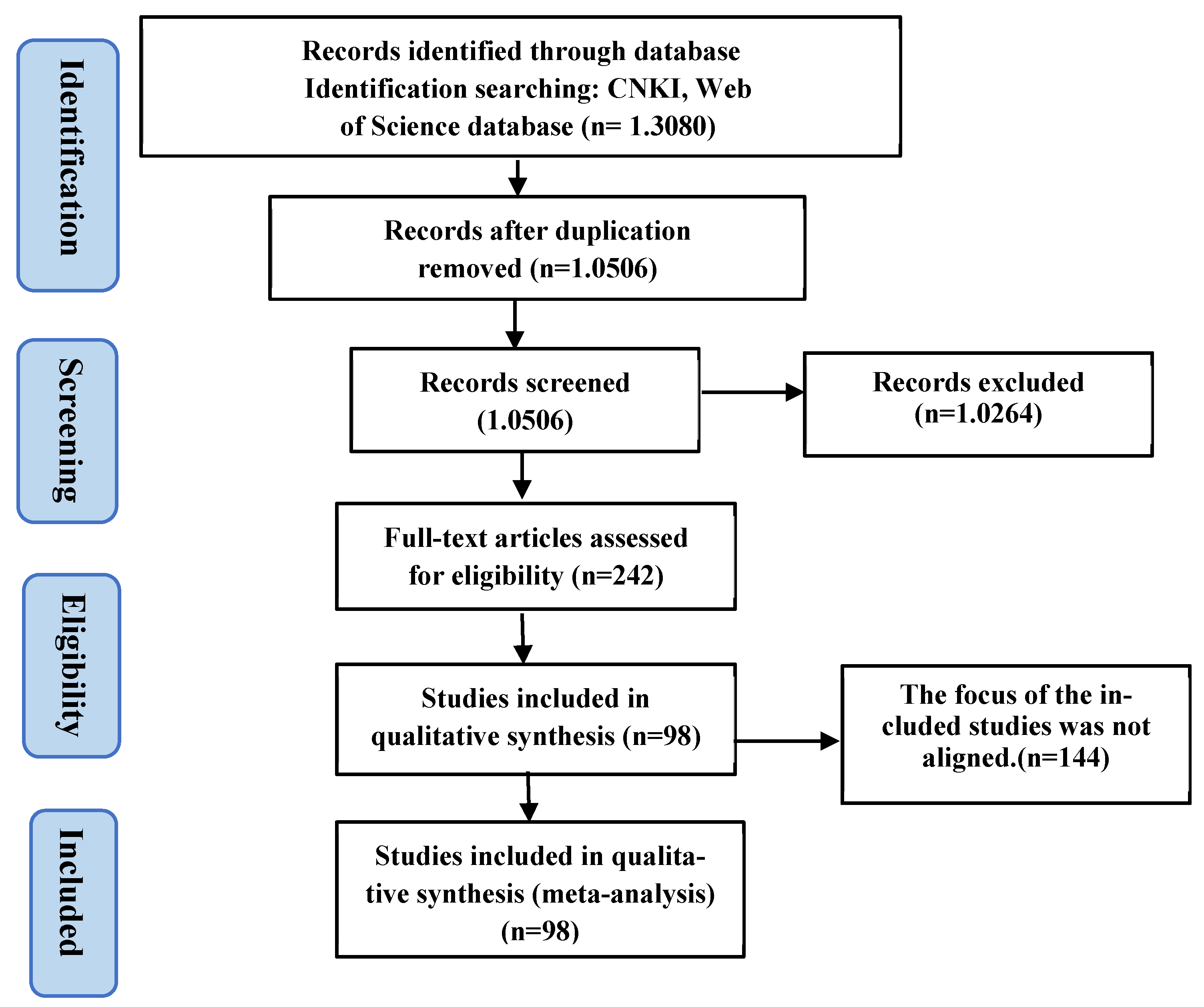
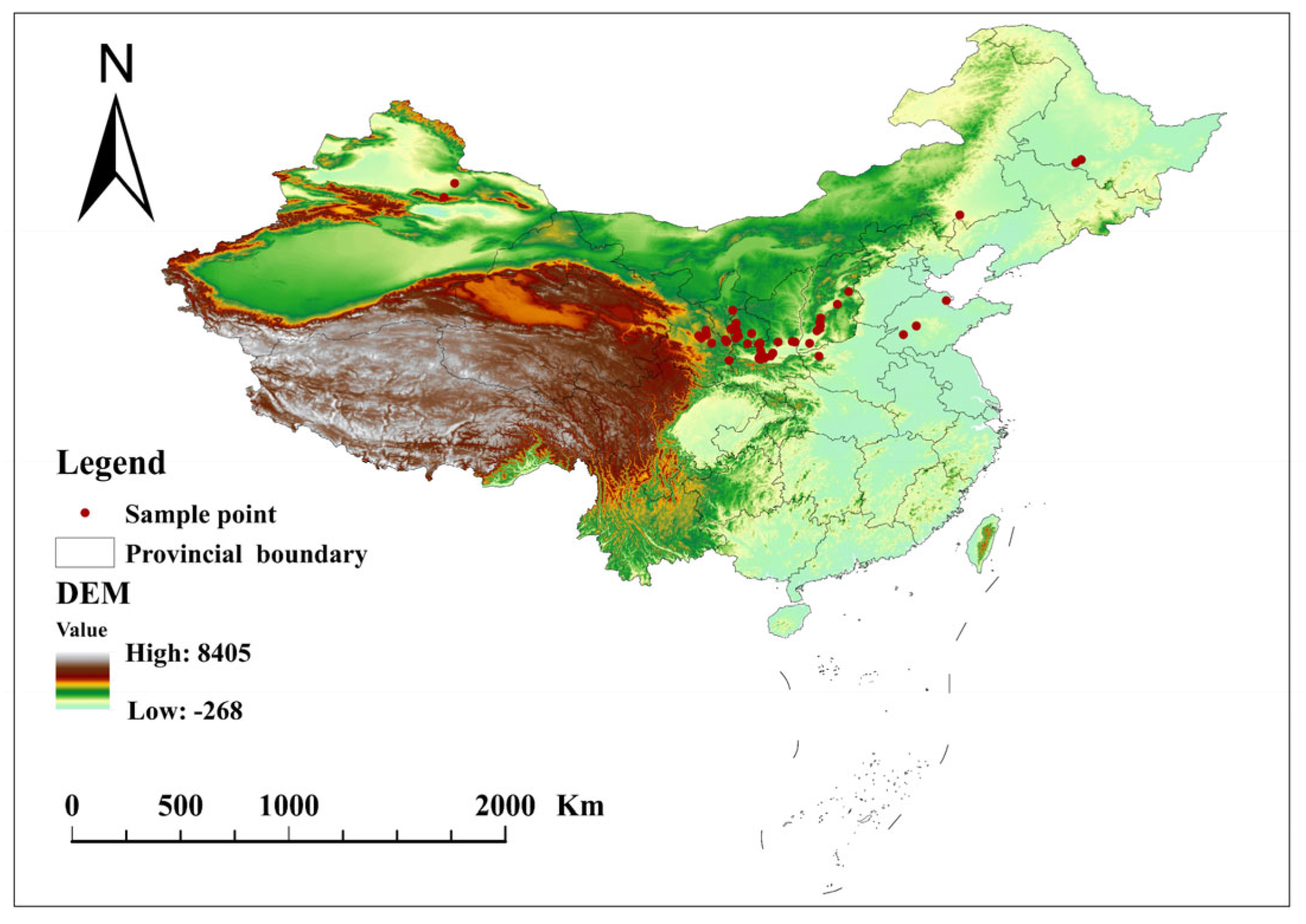
This study collected 98 relevant Chinese and foreign literature sources and ultimately screened out 462 sets of valid data for analysis (Figure 1). The field data used in the experiment were collected from 17 cities in arid and semi-arid regions of China, covering the country’s main agricultural cultivation areas (Figure 2). Additionally, 22 potential influencing factors were collected. For data presented in graphical form, this study utilized GetData Graph Digitizer 2.26 (http://www.getdata-graph-digitizer.com/, accessed on 1 October 2025, Russian Federation) for image digitization processing and extracted the corresponding numerical values for subsequent analysis.
Figure 1.
PRISMA flowchart of systematic review process.
Figure 2.
Diagrammatic representation of field locations in arid and semi-arid zones of China where actual trials (from which data were derived) were conducted on wheat and reported in peer reviewed literature.
2.2. Data Classification
Based on previous studies, RD was classified into three groups: when the ridge width is less than the furrow width, RD < 1:1; when the ridge width and furrow width are the same, RD = 1:1; when the ridge width is greater than the furrow width, RD > 1:1. RH was divided into two groups: RH < 10 cm and RH > 10 cm. RN was divided into three groups: RN < 100 kg·hm−2, RN = 100–200 kg·hm−2, and RN > 200 kg·hm−2. In this study, we focused on wheat. To further explain the effects of RD, RH, and RN on nitrogen use efficiency in wheat under different external influences, the information was subgrouped: The climate types in the study area were classified into temperate monsoon climate (TMC) and temperate continental climate (TCC). Based on the spatial distribution characteristics of rainfall in the Loess Plateau, and referencing two key thresholds: 400 mm (semi-arid and semi-humid drought-prone zones) and 600 mm (semi-humid drought-prone and semi-humid zones), the mean annual precipitation (MAP) was categorized into three levels: <400 mm, 400–600 mm, and >600 mm; and the mean annual temperature (MAT) is categorized into three types: <7 °C, 7–12 °C, and >12 °C; mulching measures (Mulching) were categorized into M1 (no mulching in the furrow without mulching on the ridge), M2 (straw mulching on ridges and no mulching in furrows), M3 (mulching on ridges and no mulching in furrows), M4 (mulching with straw in the furrow with mulching on the ridge), and M5 (mulching in the furrow and mulching on the ridge), and the specific information is shown in Table 1.
Table 1.
Specific classification of each subgroup.
2.3. Data Computation
In some studies that did not provide PFPN, the calculation was carried out using Formula (1):
In the formula: Yield represents the yield of the treatment group or the control group, N represents the nitrogen fertilizer input amount of the treatment group or the control group.
The effect of different ridge–furrow configurations and nitrogen fertilizer application rates on the PFPN of wheat is quantified by weighting the natural logarithm of the response ratio (lnRR):
In the formula, Xe and Xc represent the mean values of RFMS and traditional flat planting without mulching, respectively. The formula for calculating variance (VlnRR) is as follows:
SDe and SDc are the standard deviations of the experimental and control treatments; ne and nc are the replicate samples in the field trial treatment. If the data provided in the literature were standard errors (SE), they were converted to standard deviations (SD) using the following formula:
In the formula: n is the number of repetitions of the test.
In the meta-analysis of this study, a weighted random effects model was applied to assess the magnitude of the cumulative effect sizes [21].
where m denotes the number of subgroups; k denotes the sample size in group i; and ω denotes the weight of each observation, which is defined by the inverse of the sample variance. We calculated the 95% confidence intervals (CIs) through variance-weighted bootstrapping across 999 iterations. (CI denotes the 95% confidence interval, calculated from the inverse-variance weighted random-effects meta-analysis. A 95% CI excluding zero for lnRR (or 1 for untransformed response ratio) indicates statistical significance at α = 0.05.) [22]. An effect size was significant (p < 0.05) if its 95% CI did not overlap with zero. In order to present the results more visually, the effect size (P) was transformed into a percentage expression using Formula (6):
2.4. Data Processing
Data from the literature was organized and classified using Excel. Analyses performed in R 4.3.2 using metafor 3.5-1. The “randomForest” package in R was used to quantify the relative contributions of the relevant moderators. Data were visualized using ArcGIS 10.2 and regression analyses were performed using Origin 2024 (OriginLab Corporation, Northampton, MA, USA).
3. Results
3.1. Effect of Different Ridge Configurations and Nitrogen Fertilizer Transport on PFPN in Wheat
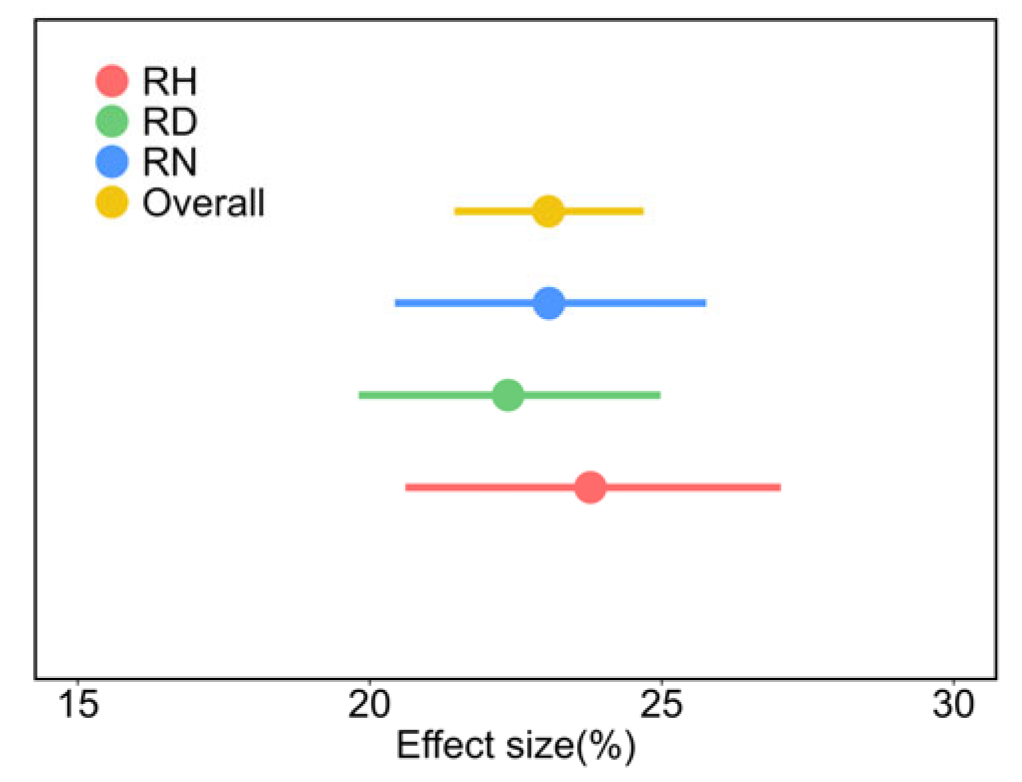
Overall, RH demonstrated the most sensitive response to PFPN, compared with RD and RN, with a significant increase of 23.78% (p < 0.05) (Figure 3). The PFPN was significantly enhanced by 23.07% (p < 0.05) (Figure 3) with nitrogen fertilizer application under RFMS compared to TF; rational setting of RD, PFPN effect was significantly increased by 22.37% (p < 0.05) (Figure 3) compared to TF. Significant changes in PFPN could be observed under RFMS compared to TF.
Figure 3.
Effect of different ridge–furrow mulching configurations and nitrogen application rates on PFPN; error lines indicate 95% confidence intervals (CI). When error line did not overlap with zero, results of experiment were significantly different from those of control, (p < 0.05).
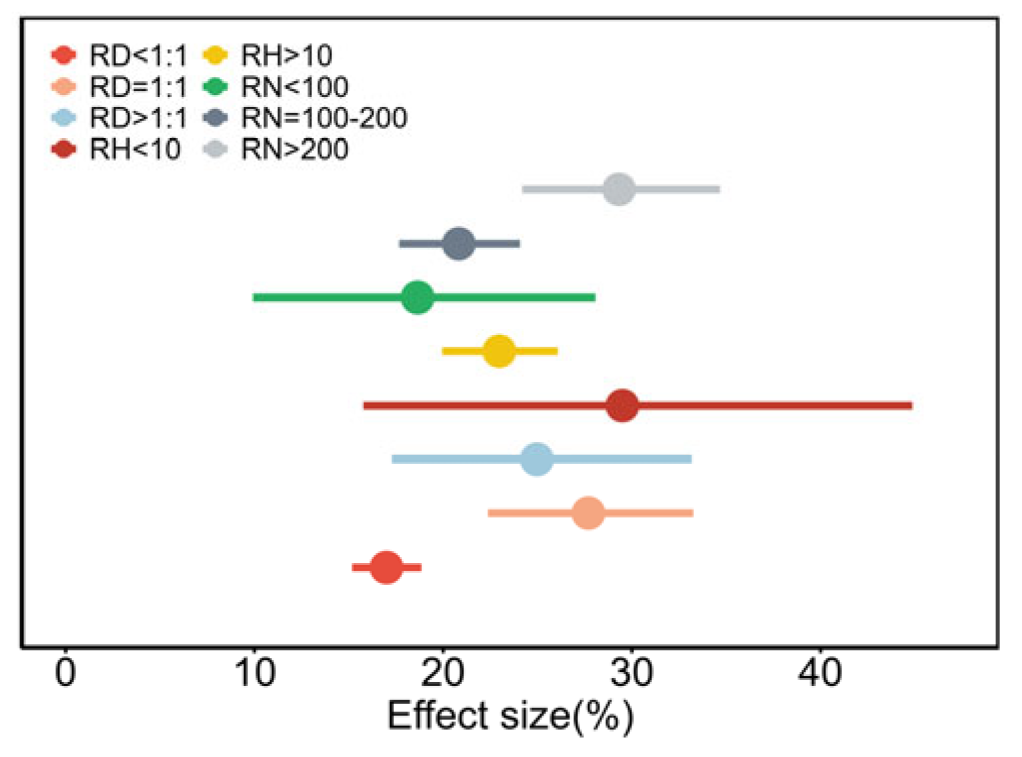
The most significant PFPN effect values were observed at different gradients, RD = 1:1, RH < 10 cm and RN > 200 kg·hm−2. PFPN was significantly increased by 27.70% (p < 0.05) and 29.50% (p < 0.05), respectively (Figure 4).
Figure 4.
Magnitude (%) of effect of ridge–furrow configuration and nitrogen application rates on PFPN at different gradients; error lines represent 95% confidence intervals. p-values were tested at the 0.05 level.
3.1.1. Effect of Ridge–Furrow Ratio on PFPN Under Different Influencing Factors
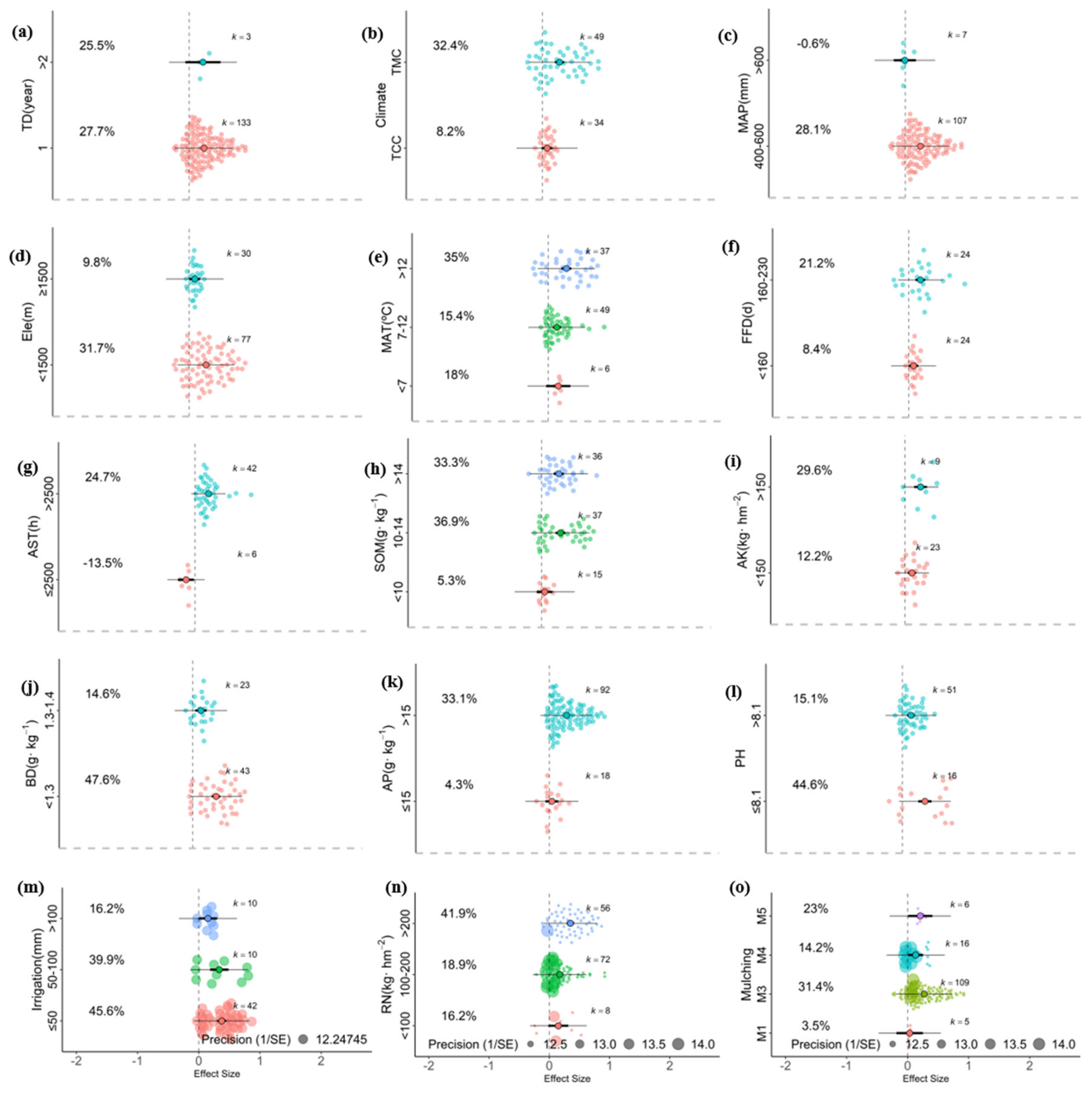
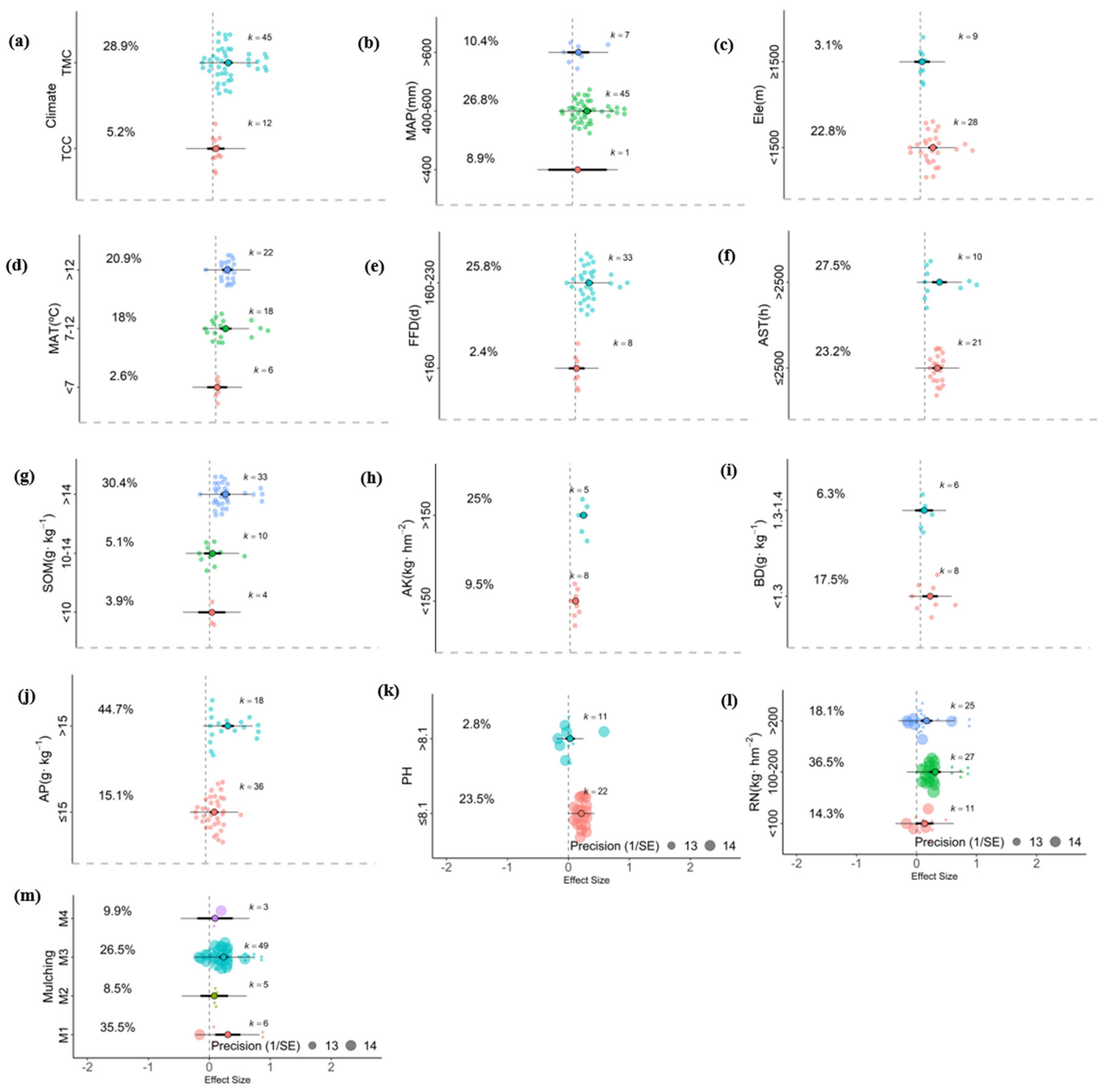
RD ≤ 1:1 increased PFPN effect sizes by 10.4% and 35%, respectively, in climates with MAP > 600 mm and MAT > 12 °C. When MAP ≤ 400–600 mm, MAT ≤ 7–12 °C, all three ridge–furrow ratios increased PFPN. The PFPN effect decreased as BD increased. At BD < 1.3 g·cm−3, the increasing effect was 47.6% and 17.5% for RD < 1:1 and RD = 1:1. In addition, the increase in soil TN, TP, TK, and SOM contents at different RDs elevated the amount of PFPN effect. At RD = 1:1, the M3 configuration had the best effect on PFPN enhancement, with an enhancement of 31.4%. At RD > 1:1, the M1 effect on PFPN was 35.5%. At RD ≤ 1:1, the PFPN effect declined with the increase of Irrigation. At RD ≤ 1:1, the PFPN effect increased gradually with the increase of RN, and at RD > 1:1, the RN = 100–200 kg·hm−2, the PFPN effect size was 36.5%.
3.1.2. Effect of Ridge Height on PFPN Under Different Conditions
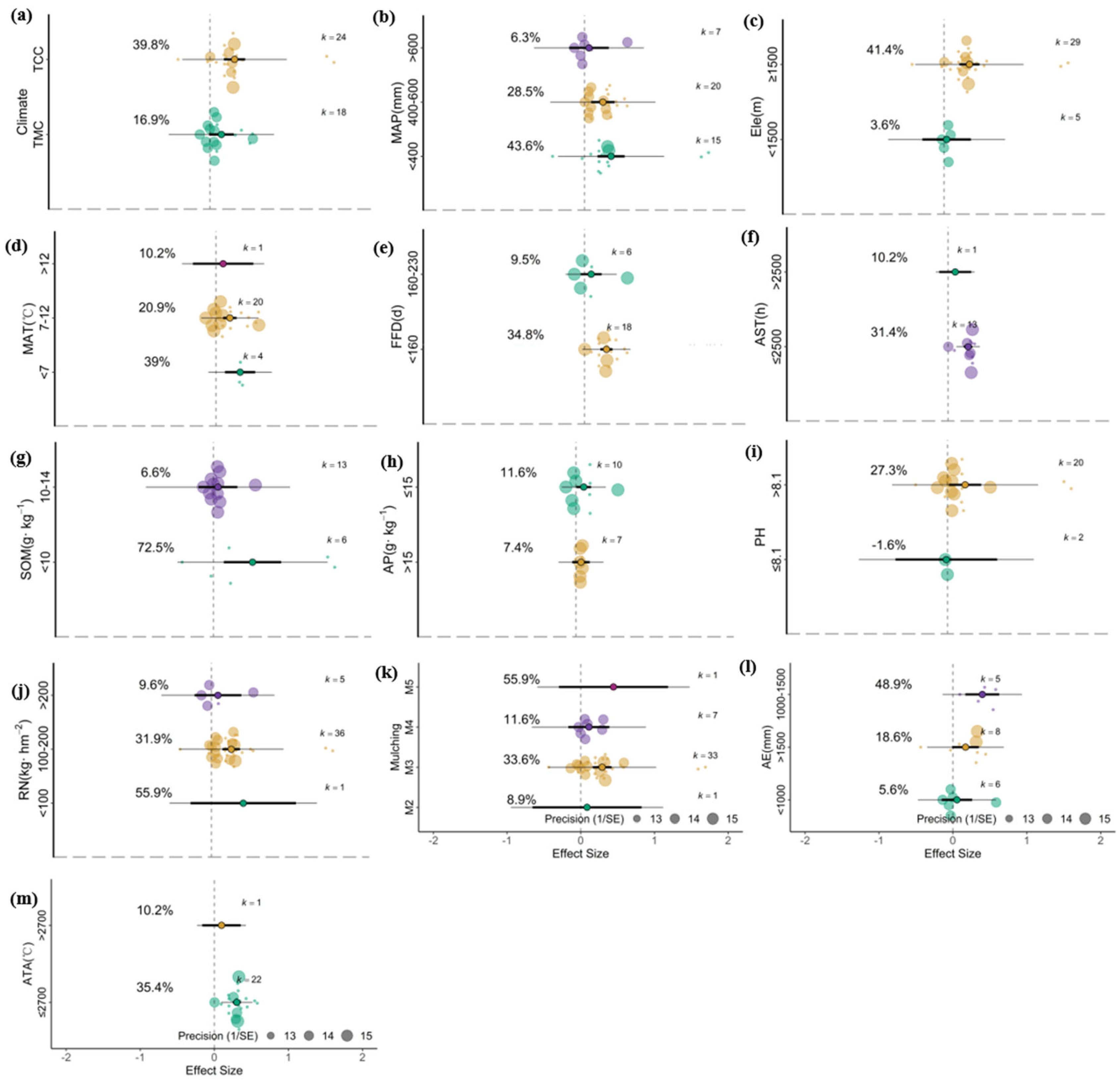
Under climatic conditions of MAP > 600 mm and MAT > 12 °C, RH > 10 cm increased the effect values of wheat PFPN by 24.1% and 18.9%, respectively. The optimal enhancement of PFPN by RH < 10 cm was 43.6% and 39% under drought-low temperature conditions with MAP < 400 mm and MAT < 7 °C. In addition, RH > 10 cm increased PFPN by 27.4%, 23.8%, and 18.4% when AST > 2500 h, Ele < 1500 m, and FFD = 160–230 d, respectively. Whereas, RH < 10 cm increased PFPN by 31.4%, 41.4%, and 34.8% under the conditions of AST ≤ 2500 h, Ele ≥ 1500 m, and FFD < 160 d, respectively.
The PFPN effect of RH tended to decrease as BD increased. At BD < 1.3 g·cm−3, the best lift of 66.3% was observed for RH > 10 cm. Increased soil TN, TP, TK, and SOM contents at different RH increased elevated PFPN. Specifically, at RH < 10 cm, the M5 configuration had the highest PFPN enhancement effect of 55.9%, while at RH > 10 cm, the M4 configuration had the best effect of 43.5%. The effect of irrigation on PFPN varied by RH: At RH > 10 cm, the PFPN effect decreased as irrigation increased. PFPN was elevated by 29.1% at irrigation ≤ 50 mm. RH < 10 cm, PFPN effect size decreased with increasing RN, while at RH > 10 cm, PFPN effect size increased with increasing RN.
3.1.3. Effect of Nitrogen Application Rates on PFPN Under Different Conditions
The effect of RN on PFPN varied according to climate and soil conditions. PFPN increased by 9.92–28.07% at RN < 100 kg·hm−2, 17.67–24.07% at RN = 100–200 kg·hm−2, and 24.18–34.68% at RN > 200 kg·hm−2.
Under climatic conditions of MAT > 12 °C and FFD = 160–230 d, PFPN was elevated by 16.3% and 20.1% at RN = 100–200 kg·hm−2, respectively. At low elevations with Ele < 1500 m, it was enhanced by 32.7% at RN > 200 kg·hm−2; in contrast, it was elevated by 26.4% at RN = 100–200 kg·hm−2 in areas with Ele ≥ 1500 m. The effect of AST on PFPN also varied according to the amount of nitrogen applied. AST > 2500 h was boosted by 45% for RN < 100 kg·hm−2; AST ≤ 2500 h was boosted by 10.9% for RN > 200 kg·hm−2. The PFPN effect of RN tended to decrease with increasing BD. When BD < 1.3 g·cm−3, PFPN was elevated by 26.4% for RN < 100 kg·hm−2, 15.8% for RN = 100–200 kg·hm−2, and 56.4% for RN > 200 kg·hm−2. PFPN was gradually elevated when SOM and TN, TP, and TK content increased. Under different management measures, the best enhancement of PFPN was achieved by M3 configuration with 30.4% enhancement at RN > 200 kg·hm−2. When RN ≤ 100–200 kg·hm−2, the M5 configuration had the best lifting effect. When RN = 100–200 kg·hm−2, the PFPN did not change much with increased irrigation. When RN = <100 kg·hm−2, the amount of the PFPN effect gradually increased with increased irrigation. At RN = 100–200 kg·hm−2, irrigation had a small effect on PFPN; at RN > 200 kg·hm−2, the amount of the PFPN effect decreased as irrigation increased.
4. Discussion
Climate change may further exacerbate water scarcity and the uneven distribution of rainfall and heat, posing a significant threat to wheat production [23]. Additionally, soil erosion, land degradation, and improper field management practices also limit the potential for sustainable agricultural development. Against the backdrop of climate change and environmental pollution potentially triggering negative effects, combining RFMS with scientific nitrogen fertilizer management strategies emerge as a promising adaptive management strategy for wheat production.
4.1. Analysis of Climatic Factors Affecting PFPN Under Different Management Practices and Nitrogen Application Rates
4.1.1. Rainfall Gradient
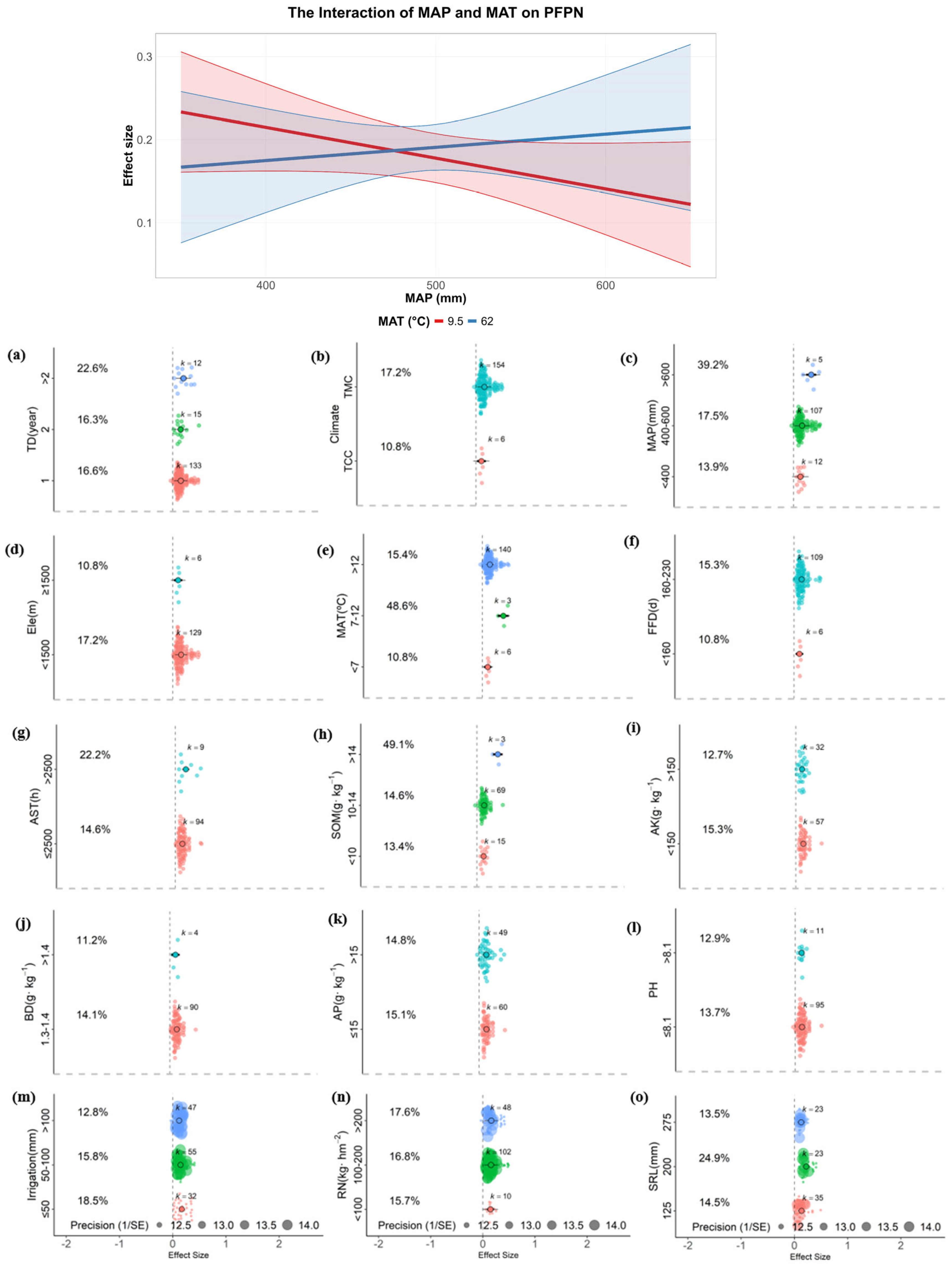
In arid and semi-arid regions, scientific regulation of water and nitrogen supply can effectively improve crop nitrogen use efficiency [24]. Climate conditions are a key factor affecting crop nitrogen use efficiency, the study’s findings suggest that, under three ridge–furrow ratio treatments, the temperate monsoon climate region significantly outperforms the temperate continental climate region in terms of improving nitrogen use efficiency in (Figure 5b, Figure 6b and Figure 7a). This indicates that a low-temperature, low-rainfall environment is conducive to maintaining stable moisture and temperature in the soil, promoting the activity of soil microorganisms, and thereby improving nitrogen fertilizer utilization efficiency [25].
Figure 5.
Orchard plots [26] showing mean estimate (%), 95% PI (thin line), 95% CI (thick line), and individual effect sizes of effects of different influences on wheat PFPN under RD < 1:1. (a) TD: test duration; (b) Climate: climate levels; (c) MAP: average annual rainfall; (d) Ele: height above sea level; (e) MAT: average annual temperature; (f) FFD: frost-free period; (g) AST: average annual sunshine hours; (h) SOM: soil organic matter; (i) AK: soil available potassium; (j) BD: average bulk density of soil; (k) AP: soil available phosphorus; (l) PH: initial soil pH; (m) Irrigation: irrigation level; (n) RN: nitrogen application rates; (o) SRL: simulated rainfall levels.
Figure 6.
Orchard plots [26] showing mean estimate (%), 95% PI (thin line), 95% CI (thick line), and individual effect sizes of effects of different influences on wheat PFPN under RD = 1:1. (a) TD: test duration; (b) Climate: climate levels; (c) MAP: average annual rainfall; (d) Ele: height above sea level; (e) MAT: average annual temperature; (f) FFD: frost-free period; (g) AST: average annual sunshine hours; (h) SOM: soil organic matter; (i) AK: soil available potassium; (j) BD: average bulk density of soil; (k) AP: soil available phosphorus; (l) PH: initial soil pH; (m) Irrigation: irrigation level; (n) RN: nitrogen application rates; (o) Mulching: mulching method.
Figure 7.
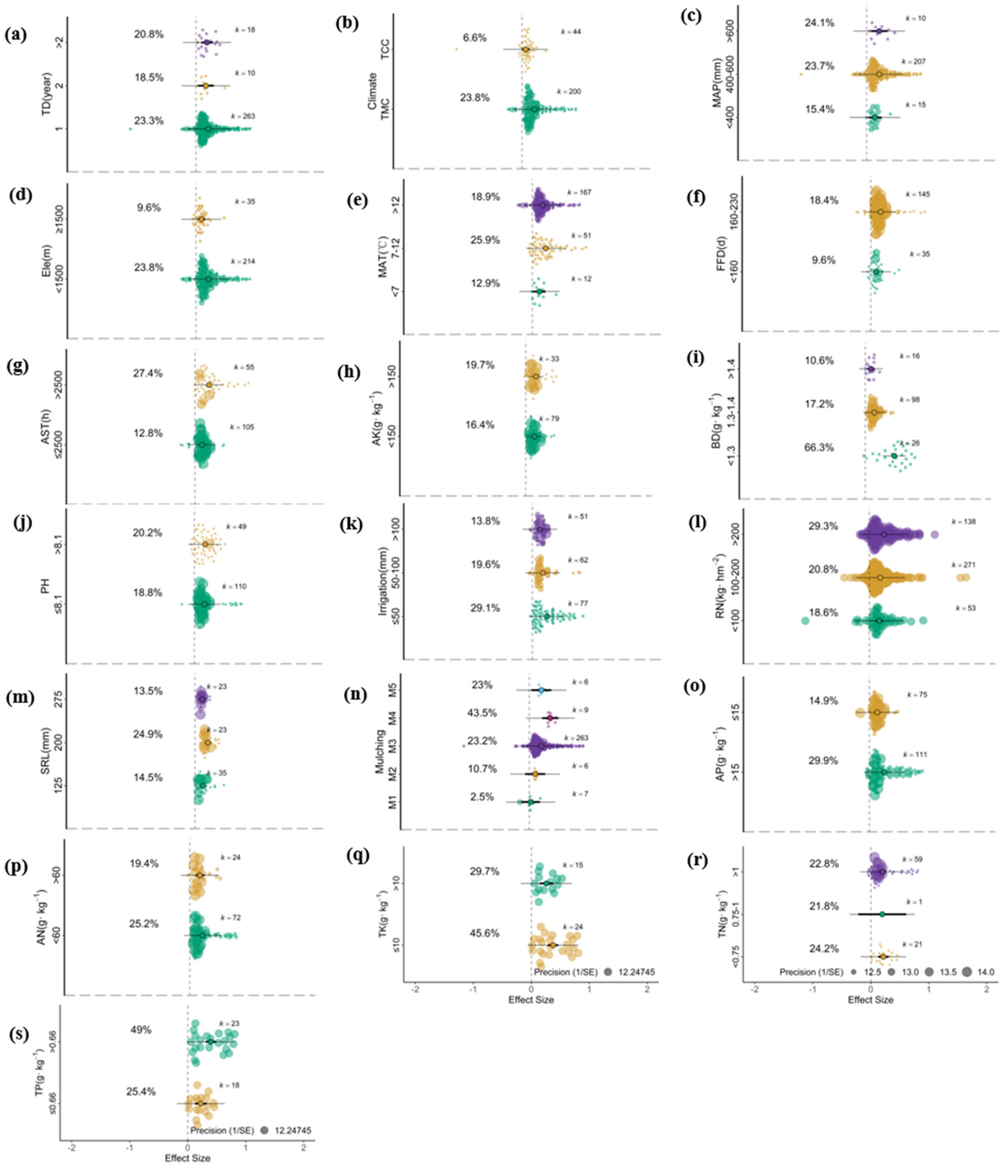
Orchard plots [26] showing mean estimate (%), 95% PI (thin line), 95% CI (thick line), and individual effect sizes of effects of different influences on wheat PFPN under RD > 1:1. (a) Climate: climate levels; (b) MAP: average annual rainfall; (c) Ele: height above sea level; (d) MAT: average annual temperature; (e) FFD: frost-free period; (f) AST: average annual sunshine hours; (g) SOM: soil organic matter; (h) AK: soil available potassium; (i) BD: average bulk density of soil; (j) AP: soil available phosphorus; (k) PH: initial soil pH; (l) RN: nitrogen application rates; (m) Mulching: mulching method.
RFMS on nitrogen use efficiency is negatively correlated with MAP and positively correlated with MAT. Natural precipitation constitutes the sole water source for dryland agricultural production, with rainfall volume being the primary factor influencing crop yield variation [27]. Under conditions of MAP > 600, RD < 1:1, nitrogen use efficiency increased significantly by 39.2% (Figure 5c). When MAP ranged between 400–600 mm, RD ≥ 1:1 enhanced nitrogen use efficiency by 28.1% and 26.8% (Figure 6c and Figure 7b), whereas under climates with MAP < 400 mm, RH < 10 significantly boosted efficiency by 43.6% (Figure 8b). Under conditions of MAP > 600, RH > 10, nitrogen use efficiency increased significantly by 24.1%. (Figure 9c). This indicates that in arid regions, high RD coupled with low RH proves more effective [28], whereas in humid or semi-humid zones, low RD yields superior results. Increasing ridge width may enhance dry matter growth rates and accumulation. However, excessively wide furrows shorten wheat’s effective growing period [29]. Higher ridges enhance drainage performance, reducing waterlogging stress risks. Simultaneously, they improve soil aeration in the plough layer, promoting nitrifying bacterial activity and root aerobic respiration, thereby increasing nitrogen mineralization and absorption efficiency. Low ridge designs reduce exposed surface area, lowering soil evaporation rates. Additionally, the micro-water collection zones formed by the ridge–furrow structure increase rainfall infiltration.
Figure 8.
Orchard plots [26] showing mean estimate (%), 95% PI (thin line), 95% CI (thick line), and individual effect sizes of effects of different influences on wheat PFPN under RH < 10. (a) Climate: climate levels; (b) MAP: average annual rainfall; (c) Ele: height above sea level; (d) MAT: average annual temperature; (e) FFD: frost-free period; (f) AST: average annual sunshine hours; (g) SOM: soil organic matter; (h) AP: soil available phosphorus; (i) PH: initial soil pH; (j) RN: nitrogen application rates; (k) Mulching: mulching method; (l) AE: average annual evaporation; (m) ATA: accumulated temperature.
Figure 9.
Orchard plots [26] showing mean estimate (%), 95% PI (thin line), 95% CI (thick line), and individual effect sizes of effects of different influences on wheat PFPN under RH > 10. (a) TD: test duration; (b) Climate: climate levels; (c) MAP: average annual rainfall; (d) Ele: height above sea level; (e) MAT: average annual temperature; (f) FFD: frost-free period; (g) AST: average annual sunshine hours; (h) AK: soil available potassium; (i) BD: average bulk density of soil; (j) PH: initial soil pH; (k) Irrigation: irrigation level; (l) RN: nitrogen application rates; (m) SRL: simulated rainfall levels; (n) Mulching: mulching method; (o) AP: soil available phosphorus; (p) AN: soil available nitrogen; (q) TK: total soil potassium; (r) TN: total soil nitrogen; (s) TP: total soil phosphorus.
4.1.2. Temperature and Altitude
This study incorporated altitude into the factor analysis, recognizing it as a variable of equal importance to temperature [30]. At Ele > 1500, RD < 1:1 increased PFPN by 10.8% (Figure 5d); at Ele ≤ 1500, RD > 1:1 increased NPFP by 22.8% (Figure 7c); at Ele < 1500, RH > 10 significantly enhanced PFPN, whereas at Ele ≥ 1500, RH < 10 proved more effective. This occurs because at lower elevations, the RD > 1:1 configuration possesses greater catchment surface area and smaller planting area. This structure significantly increases water infiltration and storage per unit area within planting furrows, substantially alleviating water stress during critical crop growth stages [8,31], while elevated ridges enhance both water harvesting and drainage capacity. Conversely, in high-altitude regions where heat limitation supersedes water stress as the primary constraint on agricultural production, configurations with RD < 1:1 demonstrate superior performance [32]. Lower ridges maintain adequate rainwater harvesting while reducing unnecessary soil exposure and heat loss, thereby helping to sustain root-zone soil temperatures and promote soil microbial activity and nutrient mineralization. Under climatic conditions where MAT < 7 °C, RH < 10 markedly enhanced PFPN by 39% (Figure 8d), Conversely, in climates where MAT > 12 °C, RH > 10 significantly increased PFPN by 18.9% (Figure 9e). This occurs because elevated ridge heights under high temperatures improve field drainage and aeration, thereby enhancing root aerobic respiration and optimizing crop nitrogen uptake and assimilation efficiency. Conversely, under low-temperature conditions, lower ridge heights effectively mitigate nocturnal soil heat loss by reducing soil surface area exposed to cold air, thereby accelerating organic nitrogen mineralization. Under climatic conditions where MAT > 12 °C and Ele ≥ 1500 m, the optimal PFPN effect is achieved with RN = 100–200. In high-temperature, high-altitude regions, excessive nitrogen application not only fails to be effectively utilized but also increases transpiration burden, exacerbates water stress, and may even cause losses such as ammonia volatilization [1,33]. Conversely, insufficient nitrogen application fails to meet basic crop requirements. Moderate nitrogen application provides adequate nitrogen supply while avoiding the negative effects of excess nitrogen, achieving an optimal balance between crop demand and environmental stress. This approach demonstrates the highest nitrogen fertilizer efficiency [13].
4.1.3. Sunlight and Evaporation Threshold
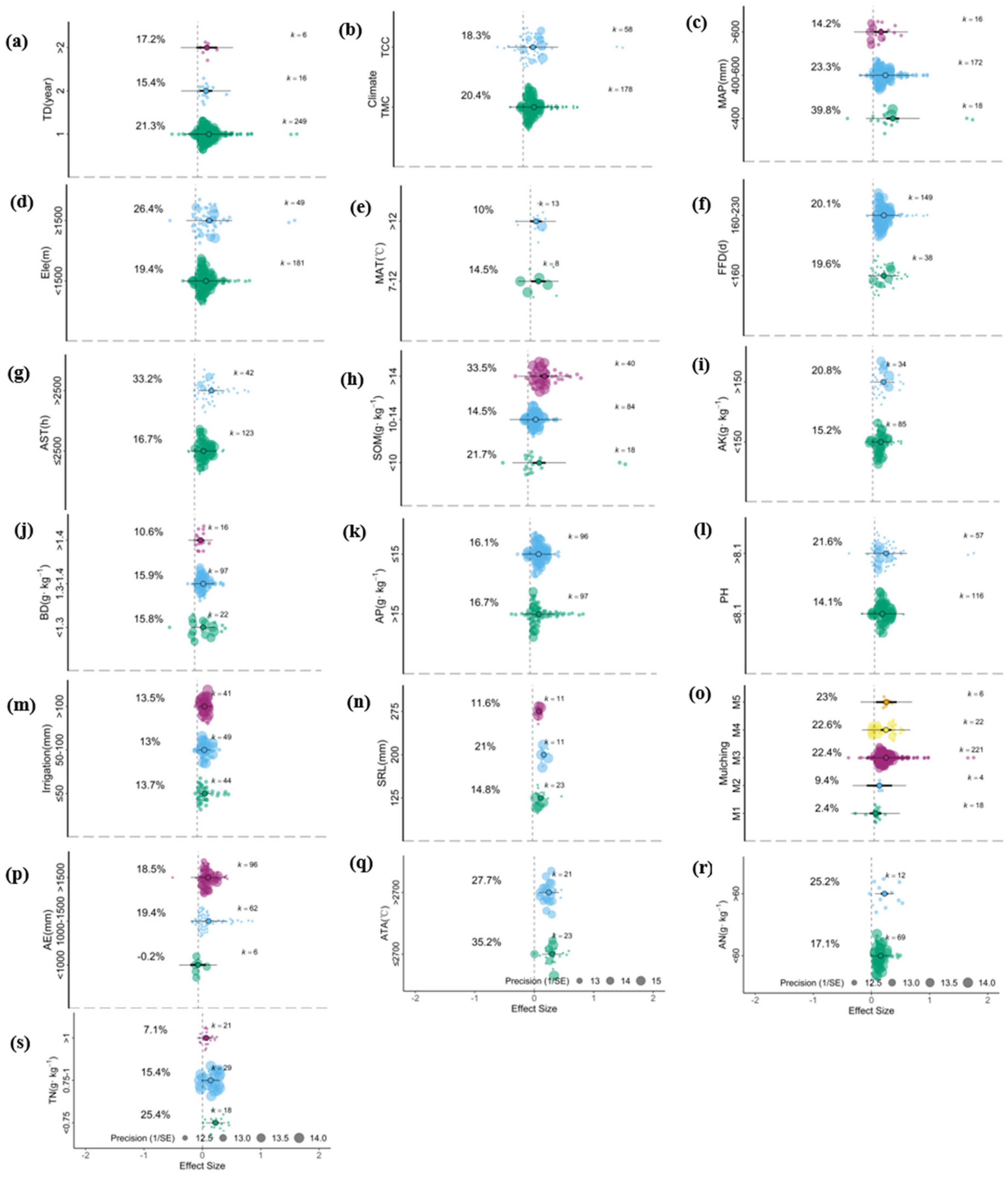
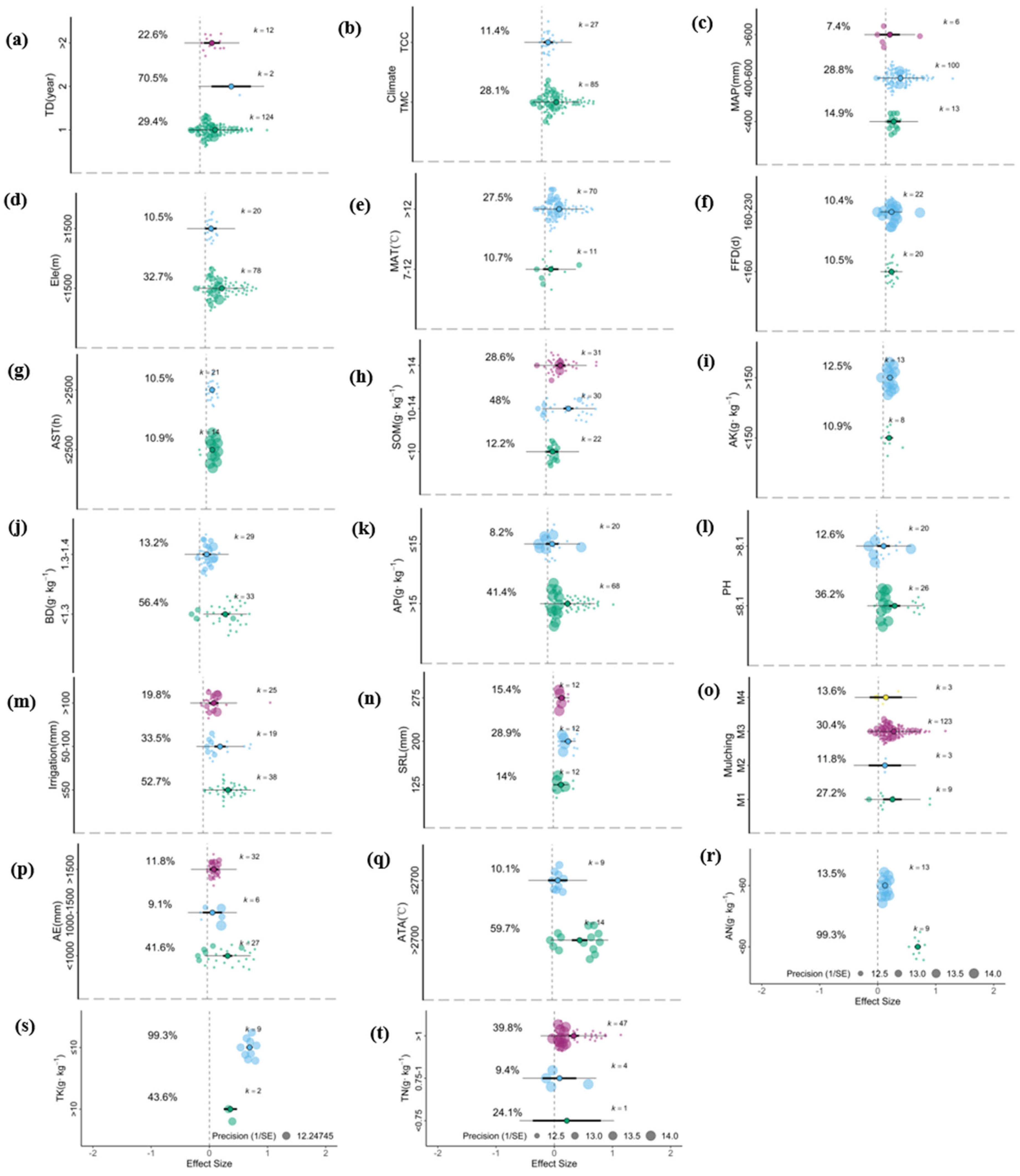
Under conditions of AST > 2500 and RN < 100, PFPN increased (Figure 10e); when AST ≤ 2500 and RN = 100–200, PFPN increased (Figure 11g); conversely, when AST ≤ 2500 and RN > 200, PFPN also increased (Figure 12g). This may be attributed to longer daylight hours enhancing photosynthesis and promoting nitrogen fertilizer uptake. Conversely, under shorter daylight conditions, increased nitrogen application elevates available nitrogen in the root zone soil, enabling greater uptake by wheat plants and subsequent conversion into biomass [34]. Under environmental conditions where AE < 1000, RN > 200 elevated PFPN by as much as 41.6% (Figure 12p); conversely, at AE > 1500, RN < 100 proved more effective in enhancing PFPN. This occurs because in arid conditions with AE < 1000, the ridge-and-furrow rainwater harvesting technique creates a microenvironment of ‘localized water and nutrient sufficiency’ within the crop root zone. Here, ample nitrogen fertilizer previously unavailable to crops due to water scarcity becomes the key driver of yield increase. The yield-enhancing effect of high nitrogen application is fully realized, thereby boosting PFPN. This demonstrates the synergistic interaction between water and nitrogen following improved moisture conditions. Conversely, in relatively water-sufficient regions, excessive nitrogen fertilizer inputs readily induce antagonistic effects: for instance, under high water and high nitrogen conditions, crops tend to exhibit excessive vegetative growth, delayed maturity, and reduced harvest index and nitrogen fertilizer use efficiency [35]. This study demonstrates that the optimal nitrogen fertilizer application rate must be determined based on local actual water conditions. Following effective mitigation of water stress through measures such as ridge-and-furrow rainwater harvesting, appropriately increasing nitrogen fertilizer application can unlock greater yield and efficiency potential. Conversely, in regions with inherently favorable water conditions, moderate nitrogen reduction should be pursued to achieve higher nitrogen fertilizer use efficiency and environmental sustainability. This provides crucial decision-making guidance for implementing precise water–nitrogen coupling management in dryland agricultural areas.
Figure 10.
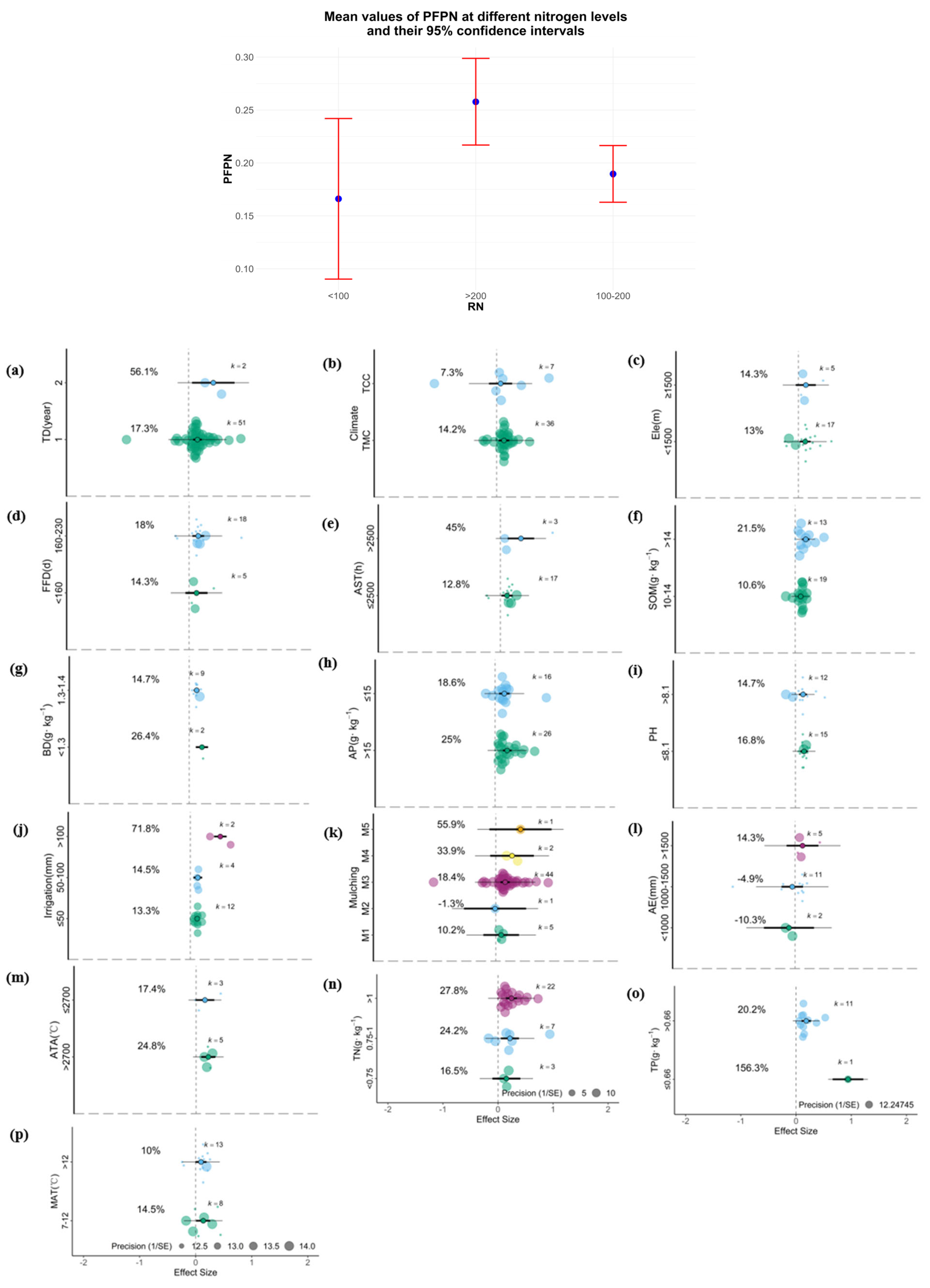
Orchard plots [26] showing mean estimate (%), 95% PI (thin line), 95% CI (thick line), and individual effect sizes of effects of different influences on wheat NPFP under RN < 100. (a) TD: test duration; (b) Climate: climate levels; (c) Ele: height above sea level; (d) FFD: frost-free period; (e) AST: average annual sunshine hours; (f) SOM: soil organic matter; (g) BD: average bulk density of soil; (h) AP: soil available phosphorus; (i) PH: initial soil pH; (j) Irrigation: irrigation level; (k) Mulching: mulching method; (l) AE: average annual evaporation; (m) ATA: accumulated temperature; (n) TN: total soil nitrogen; (o) TP: total soil phosphorus (p) MAT: average annual temperature.
Figure 11.
Orchard plots [26] showing mean estimate (%), 95% PI (thin line), 95% CI (thick line), and individual effect sizes of effects of different influences on wheat PFPN under RN = 100–200. (a) TD: test duration; (b) Climate: climate levels; (c) MAP: average annual rainfall; (d) Ele: height above sea level; (e) MAT: average annual temperature; (f) FFD: frost-free period; (g) AST: average annual sunshine hours; (h) SOM: soil organic matter; (i) AK: soil available potassium; (j) BD: average bulk density of soil; (k) AP: soil available phosphorus; (l) PH: initial soil pH; (m) Irrigation: irrigation level; (n) SRL: simulated rainfall levels; (o) Mulching: mulching method; (p) AE: average annual evaporation; (q) ATA: accumulated temperature; (r) AN: soil available nitrogen; (s) TN: total soil nitrogen.
Figure 12.
Orchard plots [26] showing mean estimate (%), 95% PI (thin line), 95% CI (thick line), and individual effect sizes of effects of different influences on wheat PFPN under RN > 200. (a) TD: test duration; (b) Climate: climate levels; (c) MAP: average annual rainfall; (d) Ele: height above sea level; (e) MAT: average annual temperature; (f) FFD: frost-free period; (g) AST: average annual sunshine hours; (h) SOM: soil organic matter; (i) AK: soil available potassium; (j) BD: average bulk density of soil; (k) AP: soil available phosphorus; (l) PH: initial soil pH; (m) Irrigation: irrigation level; (n) SRL: simulated rainfall levels; (o) Mulching: mulching method; (p) AE: average annual evaporation; (q) ATA: accumulated temperature; (r) AN: soil available nitrogen; (s) TK: total soil potassium; (t) TN: total soil nitrogen.
4.2. Analysis of Soil Factors Affecting PFPN Under Different Management Practices and Nitrogen Application Rates
RFMS not only exerts direct effects on soil thermal and hydrological conditions but also exerts indirect influences on soil structure, nutrient supply, microbial abundance and activity, thereby providing crops with a more favourable resource acquisition environment [36]. Soil physicochemical properties, ridge–furrow structure, and nitrogen application rates are closely linked to nitrogen use efficiency. Ridge–furrow configurations enhance crop nitrogen use efficiency by improving soil thermal and hydrological conditions [37]. Bed depth regulates wheat root development, thereby influencing yield and nitrogen use efficiency [38,39]. When RD = 1:1 and BD < 1.3, PFPN increased by 47.6%; when BD = 1.3–1.4, PFPN increased by 14.6% (Figure 6j). When RH < 10 and BD < 1.3, PFPN increased by 66.3%; when BD > 1.4, PFPN increased by 10.6% (Figure 9i). When RD < 100 and BD < 1.3, PFPN increased by 26.4%; when BD = 1.3–1.4, PFPN increased by 14.7% (Figure 10g). The effect of ridge-furrow configuration and nitrogen rate on PFPN showed a significant negative correlation with BD. (Figure 13b)., primarily because larger BDs hindered rainfall infiltration and reduced soil moisture content [40]. Compared to flat cultivation, the increased soil TN, TP, TK, and SOM under ridge-and-furrow rainwater harvesting significantly enhanced PFPN. These effects can be attributed to ridge-and-furrow rainwater harvesting improving soil moisture and temperature, promoting vigorous plant growth, leading to greater crop residues in the topsoil, thereby increasing soil organic matter, which positively impacts soil quality [41]. Furthermore, the favourable effects of ridge-and-furrow rain-harvesting cultivation on topsoil moisture content and temperature accelerate soil microbial decomposition of organic matter, thereby improving soil structure and reducing soil bulk density (BD) [42]. It increases the concentrations of TN, TP, and TK along with their available components AN, AP, and AK (Wang et al., 2016) [42], while simultaneously reducing dependence on external nutrient inputs.
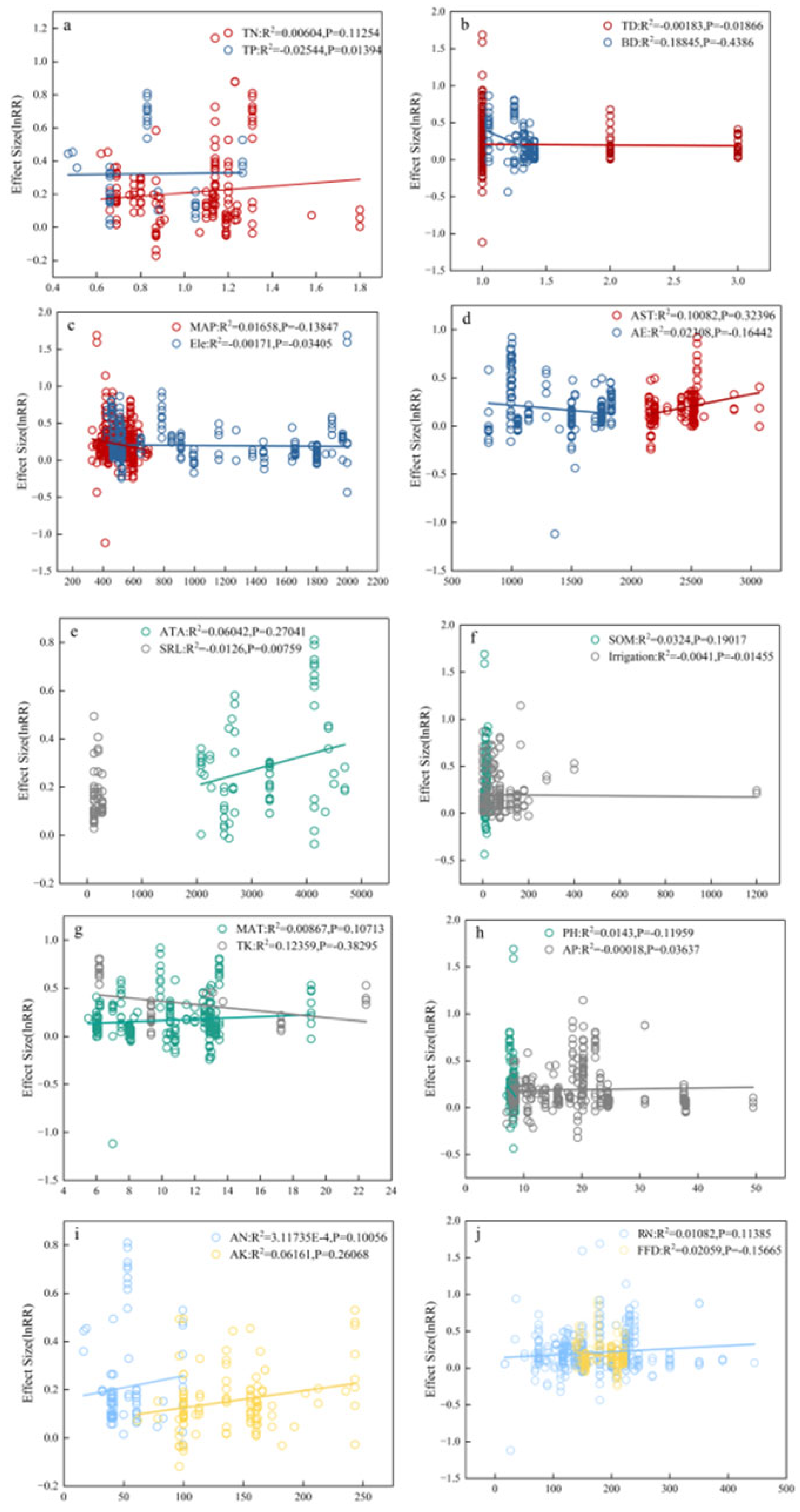
Figure 13.
Relationship between effect size (lnRR, Response Ratio) of PFPN and (a) total soil nitrogen (TN, g kg−1), total soil phosphorus (TP, g kg−1); (b) test duration (TD, year), average bulk density of soil (BD, g cm−3); (c) average annual rainfall (MAP, mm), height above sea level (Ele, m); (d) average annual sunshine hours (AST, h), average annual evaporation (AE, mm); (e) accumulated temperature (ATA, °C), simulated rainfall levels (SRL, mm); (f) soil organic matter (SOM, g kg−1), irrigation level (Irrigation, mm); (g) average annual temperature (MAT, °C), total soil potassium (TK, g kg−1); (h) initial soil pH (PH), soil available phosphorus (AP, mg kg−1); (i) soil available nitrogen (AN, mg kg−1), soil available potassium (AK, mg kg−1); (j) nitrogen application rates (RN, kg hm−2), frost-free period (FFD, d), effect sizes (lnRR, Response Ratio). Significance of regression coefficients and intercepts was tested by F-test (p < 0.01). p-values were tested at the 0.05 level.
4.3. Analysis of Field Management Practices Affecting PFPN Under Different Management Practices and Nitrogen Application Rates
The higher soil moisture and stable soil temperature in the root zone resulting from plastic mulch coverage promote root growth. Well-developed roots enable crops to absorb more nitrogen. Compared with flat cultivation, the combination of ridge–furrow rainwater harvesting and mulching significantly increased soil temperature in the 0–15 cm layer, optimizing soil moisture and temperature conditions [21]. RD = 1:1 and M3 increased PFPN by 31.4%, while M5 increased PFPN by 23% (Figure 6o). This may be attributed to ridge–furrow mulching maintaining elevated soil temperatures during the crop’s later growth stages, accelerating root senescence and thereby indirectly influencing yield formation. Therefore, under severe drought and low-temperature conditions, full mulching of both ridges and furrows is recommended, whereas under relatively mild conditions, covering only the ridges or furrows is more appropriate [21]. RD > 1:1: M1 increased PFPN by 35.5% (Figure 7m). This occurs because larger RD creates a substantial rain-harvesting surface area, efficiently channeling limited precipitation into narrow planting furrows. This significantly enhances infiltration depth and soil moisture storage in the root zone, accelerating the dissolution and migration rates of fertilizer nitrogen. RH < 10: M5 increased PFPN by 55.9% (Figure 8k), where low RH reduces soil exposure and mitigates nocturnal heat loss. At RH > 10, M4 increased PFPN by 43.5% (Figure 9n). The elevated ridge profile, combined with ridge-top mulch, efficiently directed rainfall into planting furrows. Straw mulch within furrows effectively captured and retained rainwater collected from ridges, minimizing evaporation losses from infiltrated water. Secondly, straw decomposition releases nutrients and promotes soil aggregate formation. Compared to full mulching of ridges and furrows, straw-covered furrows prevent excessive soil temperatures or poor aeration within furrows, balancing water, heat, and air relationships. This approach significantly enhances efficiency while maintaining soil health and sustainability; With RN < 100, M5 increased PFPN by 55.9% (Figure 10k). Under low nitrogen input, moisture and temperature became the key limiting factors for nitrogen uptake. The ridge–furrow full-film mulching measure significantly optimized the crop growth microenvironment by maximizing water retention and enhancing soil temperature. This enabled near-complete and efficient utilization of nitrogen fertilizers by crops, preventing waste. This configuration achieves water-enhanced fertilization and heat-enhanced efficacy, extracting the highest physiological nitrogen utilization efficiency under low-input conditions. RN > 200, M5 increased PFPN by 30.4% (Figure 12o). Although mulching still promotes nitrogen uptake by improving moisture conditions under high nitrogen input, its relative improvement rate is significantly lower than under low nitrogen conditions. This occurs because crop nitrogen uptake approaches saturation under high nitrogen levels, increasing loss risks. While mulching enhances nitrogen uptake, it cannot entirely prevent potential losses from ammonia volatilization or nitrification–denitrification due to excess nitrogen. The widespread application of mulching, particularly plastic mulch, presents significant limitations. Its environmental costs primarily stem from soil contamination and ecological risks caused by plastic residues. Residual film disrupts soil structure, impedes root penetration, and may enter the food chain through microplastic release. Consequently, when promoting mulching, the short-term yield benefits must be weighed against long-term environmental sustainability, alongside actively developing eco-friendly alternatives such as biodegradable mulch.
Appropriate irrigation and fertilization can enhance wheat uptake of both applied nitrogen and soil nitrogen, thereby improving nitrogen use efficiency [43]. Soil moisture accelerates fertilizer dissolution and organic fertilizer mineralization, enhancing nutrient availability, diluting soil nutrient concentrations, and reducing nutrient leaching [44,45,46]. Research indicates that low irrigation volumes significantly reduce wheat PFPN, whereas increased irrigation volumes enhance it. This outcome arises because shallow irrigation depths (e.g., Irrigation ≤ 50) may induce water stress, inhibiting plant growth and nitrogen uptake. Increasing irrigation depth first alleviates water stress, then rapidly boosts wheat nitrogen uptake, ultimately increasing PFPN. Mon et al. obtained similar findings. However, under Irrigation > 100 conditions, higher nitrogen application resulted in reduced nitrogen uptake by wheat [47]. This indicates that under water-sufficient conditions, appropriately reducing nitrogen application can decrease nitrogen loss without compromising crop nitrogen uptake. Consequently, nitrogen use efficiency increases as RN decreases. This finding aligns with numerous prior studies [33,42]. In summary, under water-deficient conditions, increased irrigation enhances nitrogen use efficiency by boosting plant nitrogen uptake. Conversely, under water-sufficient conditions, appropriately reducing nitrogen fertilizer application proves an effective strategy for improving nitrogen use efficiency. In summary, water–nitrogen management should adhere to the principle of ‘water-determined nitrogen application’: under water-deficient conditions, increased irrigation is a prerequisite for enhancing nitrogen efficiency; whereas under water-sufficient conditions, quantitative nitrogen reduction must be implemented to achieve the dual objectives of high yields and environmental sustainability.
5. Conclusions
This study systematically demonstrates that in arid and semi-arid regions, the adoption of an optimized ridge–furrow mulching system coupled with nitrogen fertilizer management strategies can significantly enhance nitrogen use efficiency in wheat. Specifically, rational ridge-and-furrow configuration and nitrogen fertilizer application increased nitrogen use efficiency by approximately 23% on average. Under conditions of the ridge–furrow ratio = 1:1, the ridge-height < 10 cm, and the nitrogen application rate > 200 kg·hm−2, nitrogen use efficiency increased significantly by 27.7%, 29.50%, and 29.32%, respectively (p < 0.05). Nitrogen use efficiency responses are jointly regulated by soil pH and average precipitation thresholds. Consequently, ridge–furrow structures and nitrogen application rates require dynamic adjustment based on local water and heat conditions to achieve sustainable wheat production.
The conclusions of this study are primarily based on existing published literature data, which may exhibit publication bias. Furthermore, the available data are geographically concentrated in typical arid and semi-arid agricultural regions, with insufficient representation of transitional zones or areas with greater climatic variability, thereby limiting the applicability of the conclusions to broader contexts. Future research should focus on establishing cross-regional, long-term field observation networks and integrating machine learning with extended datasets to predict the production performance of ridge-and-furrow crops under changing climatic conditions.
Author Contributions
Y.X.: conceptualization, writing—review and editing. X.H.: project administration and funding acquisition. T.P.: writing—original draft preparation, writing—review and editing. Z.L.: data curation. L.Y.: formal analysis. F.C.: supervision. J.W.: visualization. All authors have read and agreed to the published version of the manuscript.
Funding
This study was supported by State’s Key Project of Research and Development Plan (No.2021YFD1901101–1), National Natural Science Foundation of China (No.32301963), China Postdoctoral Science Foundation (No.2025M774023) and the project of Shanxi Province key lab construction (No.Z135050009017-1-7).
Institutional Review Board Statement
The authors declare that no ethics approval was necessary to conduct or publish this work.
Data Availability Statement
The datasets generated during and/or analyzed during the current study are available from the corresponding author on reasonable request.
Conflicts of Interest
The authors declare no competing interests.
Abbreviations
The following abbreviations are used in this manuscript:
| PFPN | Nitrogen fertilizer bias productivity | TP | Total soil phosphorus |
| TD | Test duration | TK | Total soil potassium |
| Mulching | Mulching method | AN | Soil available nitrogen |
| MAP | Average annual rainfall | AP | Soil available phosphorus |
| MAT | Average annual temperature | AK | Soil available potassium |
| Ele | Height above sea level | BD | Average bulk density of soil |
| AST | Average annual sunshine hours | PH | Initial soil pH |
| ATA | Accumulated temperature | RD | Ridge-furrow ratio |
| AE | Average annual evaporation | RH | ridge height |
| FFD | Frost-free period | Irrigation | Irrigation level |
| SOM | Soil organic matter | SRL | Simulated rainfall levels |
| TN | Total soil nitrogen | RN | Nitrogen application |
| Climate | Climate levels |
References
- Kang, J.; Wang, J.; Heal, M.R.; Goulding, K.; de Vries, W.; Zhao, Y.; Feng, S.; Zhang, X.; Gu, B.; Niu, X. Ammonia mitigation campaign with smallholder farmers improves air quality while ensuring high cereal production. Nat. Food 2023, 4, 751–761. [Google Scholar] [CrossRef] [PubMed]
- Ren, B.; Huang, Z.; Liu, P.; Zhao, B.; Zhang, J. Urea ammonium nitrate solution combined with urease and nitrification inhibitors jointly mitigate NH3 and N2O emissions and improves nitrogen efficiency of summer maize under fertigation. Field Crops Res. 2023, 296, 108909. [Google Scholar] [CrossRef]
- Song, X.; Zhang, J.; Peng, C.; Li, D. Replacing nitrogen fertilizer with nitrogen-fixing cyanobacteria reduced nitrogen leaching in red soil paddy fields. Agric. Ecosyst. Environ. 2021, 312, 107321. [Google Scholar] [CrossRef]
- Mo, F.; Wang, J.Y.; Zhou, H.; Luo, C.L.; Zhang, X.F.; Li, X.Y.; Li, F.M.; Xiong, L.B.; Kavagi, L.; Nguluu, S.N.; et al. Ridge-furrow plastic-mulching with balanced fertilization in rainfed maize (Zea mays L.): An adaptive management in east African Plateau. Agric. For. Meteorol. 2017, 236, 100–112. [Google Scholar] [CrossRef]
- Gosar, B.; Baricevic, D. Ridge-furrow-ridge Rainwater Harvesting System with Mulches and Supplemental Irrigation. HortScience 2011, 46, 108–112. [Google Scholar] [CrossRef]
- He, J.; Li, H.; Rasaily, R.G.; Wang, Q.; Cai, G.; Su, Y.; Qiao, X.; Liu, L. Soil properties and crop yields after 11 years of no tillage farming in wheat–maize cropping system in North China Plain. Soil Tillage Res. 2010, 113, 48–54. [Google Scholar] [CrossRef]
- Han, K.; Yao, G.; Li, Z.; Wang, Y.; Li, M.; Ning, T.; Kuzyakov, Y. Ridge and furrow cultivation raises water and nitrogen use efficiency and crop climate adaptability. Agric. Water Manag. 2025, 317, 109657. [Google Scholar] [CrossRef]
- Zhang, G.X.; Mo, F.; Shah, F.; Meng, W.H.; Liao, Y.C.; Han, J. Ridge-furrow configuration significantly improves soil water availability, crop water use efficiency, and grain yield in dryland agroecosystems of the Loess Plateau. Agric. Water Manag. 2021, 245, 106657. [Google Scholar] [CrossRef]
- Qiang, S.; Zhang, Y.; Fan, J.; Zhang, F.; Lin, W.; Sun, M.; Gao, Z.; Tang, X. Optimization of N Fertilizer Type and Ridge-Furrow Ratio to Improve Resource Use Efficiency and Grain Yield of Rain-Fed Winter Wheat in Loess Plateau, China. Agronomy 2024, 14, 172. [Google Scholar] [CrossRef]
- Yang, F.K.; He, B.L.; Dong, B.; Zhang, G.P. Film mulched ridge-furrow tillage improves the quality and fertility of dryland agricultural soil by enhancing soil organic carbon and nutrient stratification. Agric. Water Manag. 2024, 292, 108686. [Google Scholar] [CrossRef]
- Luo, C.L.; Zhang, X.F.; Duan, H.X.; Zhou, R.; Mo, F.; Mburu, D.; Wang, B.Z.; Wang, W.; Kavagi, L.; Xiong, Y.C. Responses of rainfed wheat productivity to varying ridge-furrow size and ratio in semiarid eastern African Plateau. Agric. Water Manag. 2021, 249, 106813. [Google Scholar] [CrossRef]
- Liu, K.; Liu, B.; Xie, Y.H.; Li, T.L.; Zhang, Q.R.; Li, S.; Jiang, L.W. Effects of Nitrogen Reduction and Film Mulching on Wheat Yield Composition and Utilization Efficiency of Water and Fertilizer in the Loess Plateau. J. Soil Water Conserv. 2020, 34, 198–206. [Google Scholar]
- Zhang, X.D.; Dong, Z.Y.; Wu, X.Q.; Gan, Y.T.; Chen, X.J.; Xia, H.X.; Kamran, M.; Jia, Z.K.; Han, Q.F.; Shayakhmetova, A.; et al. Matching fertilization with water availability enhances maize productivity and water use efficiency in a semi-arid area: Mechanisms and solutions. Soil Tillage Res. 2021, 214, 105164. [Google Scholar] [CrossRef]
- Hong, T.T.; Cai, Z.L.; Zhao, R.S.; He, Z.H.; Ding, M.; Zhang, Z. Effects of water and nitrogen coupling on the yield, quality, water and nitrogen utilization of watermelon under CO2 enrichment. Sci. Hortic. 2021, 286, 110213. [Google Scholar] [CrossRef]
- Zhang, G.X.; Zhang, Y.; Liu, S.J.; Zhao, D.H.; Wen, X.X.; Han, J.; Liao, Y.C. Optimizing nitrogen fertilizer application to improve nitrogen use efficiency and grain yield of rainfed spring maize under ridge-furrow plastic film mulching planting. Soil Tillage Res. 2023, 229, 105680. [Google Scholar] [CrossRef]
- Qiang, S.C.; Zhang, Y.; Fan, J.L.; Zhang, F.C.; Sun, M.; Gao, Z.Q. Combined effects of urea type and placement depth on grain yield, water productivity and nitrogen use efficiency of rainfed spring maize in northern China. Agric. Water Manag. 2022, 262, 107442. [Google Scholar] [CrossRef]
- Rasheed, A.; Li, H.; Tahir, M.M.; Mahmood, A.; Nawaz, M.; Shah, A.N.; Aslam, M.T.; Negm, S.; Moustafa, M.; Hassan, M.U.; et al. The role of nanoparticles in plant biochemical, physiological, and molecular responses under drought stress: A review. Front. Plant Sci. 2022, 13, 976179. [Google Scholar] [CrossRef]
- Pang, J.W.; Wang, Y.H.; Liu, C.; Gao, Y.; Liu, D.H.; Zhang, Y.; Yang, B.P.; Jia, Z.K.; Zhang, P. Effects of fertilization on soil moisture and maize yield in rainfed farmland with ridge mulching-furrow planting system. J. Plant Nutr. Fertil. 2021, 27, 826–836. [Google Scholar]
- Xing, J.; Liu, G.J.; Zhai, W.B.; Gou, T.; Zhou, Z.Y.; Hu, A.; Zhang, K.; Bai, D.; Ren, A.X.; Gao, Z.Q.; et al. Optimized fertilizer management strategy based on ridge–furrow planting pattern enhances dryland wheat yield and water utilization on the Loess Plateau. Agric. Water Manag. 2025, 311, 109391. [Google Scholar] [CrossRef]
- Zhang, R.; Dong, L.X.; Sun, C.H.; Lu, P.; Xu, J. Effects of Straw Crushing & Mulching and Furrow Sowing on Winter Wheat Yield and Soil Hydrothermal Characteristics in Dryland. Water Sav. Irrig. 2021, 7, 60–64+70. [Google Scholar]
- Yue, K.; Fornara, D.A.; Yang, W.; Peng, Y.; Peng, C.; Liu, Z.; Wu, F. Influence of multiple global change drivers on terrestrial carbon storage: Additive effects are common. Ecol. Lett. 2017, 20, 663–672. [Google Scholar] [CrossRef] [PubMed]
- Adams, D.C.; Gurevitch, J.; Rosenberg, M.S. Resampling tests for meta-analysis of ecological data. Ecology 1997, 78, 1277–1283. [Google Scholar] [CrossRef]
- Gu, X.B.; Cai, H.J.; Chen, P.P.; Li, Y.P.; Fang, H.P.; Li, Y.N. Ridge-furrow film mulching improves water and nitrogen use efficiencies under reduced irrigation and nitrogen applications in wheat field. Field Crops Res. 2021, 270, 108214. [Google Scholar] [CrossRef]
- Zhao, J.K.; Xu, Y.F.; Xu, X.X.; Liu, S.; Hao, T.; Qu, W.K.; Li, M.R.; Shi, Y.; Zhao, C.X. Effects of supplemental irrigation on grain yield, and water and nitrogen efficiencies of winter wheat in North China Plain. J. Sci. Food Agric. 2023, 103, 7484–7493. [Google Scholar] [CrossRef]
- Kallenbach, C.; Grandy, A.S. Controls over soil microbial biomass responses to carbon amendments in agricultural systems: A meta-analysis. Agric. Ecosyst. Environ. 2011, 144, 241–252. [Google Scholar] [CrossRef]
- Bishop, J.; Nakagawa, S. Quantifying crop pollinator dependence and its heterogeneity using multi-level meta-analysis. J. Appl. Ecol. 2021, 58, 1030–1042. [Google Scholar] [CrossRef]
- Guo, X.Y.; Wang, J.Y.; Liu, X.Y.; Zhang, F.S.; Chen, X.P. Responses of winter wheat yield, nitrogen fertilizer use efficiency and soil nitrogen balance to precipitation patterns and nitrogen application rates in dryland. Acta Agron. Sin. 2022, 48, 1262–1272. [Google Scholar] [CrossRef]
- Li, W.W.; Zhuang, Q.; Wu, W.; Wen, X.; Han, J.; Liao, Y. Effects of ridge-furrow mulching on soil CO2 efflux in a maize field in the Chinese Loess Plateau. Agric. For. Meteorol. 2019, 264, 200–212. [Google Scholar] [CrossRef]
- Liu, K.; Yang, F.T.; Xie, Y.H.; Li, T.L.; Zhang, Q.R.; Dou, L.; Liu, Y.F.; Ji, M.J.; Jiang, L. Effects of nitrogen reduction and film mulching on wheat yield and residual nitrogen in a dryland field experiment on the Loess Plateau. Chin. J. Appl. Environ. Biol. 2020, 6, 619–625. [Google Scholar]
- Chen, X.J.; Cao, G.C.; Jia, Y.; Chen, J.; Yu, Y.; LI, W.; LI, J. Influence of elevation on growth duration of maize (Zea mays L.). Chin. J. Eco-Agric. 2009, 17, 527–532. [Google Scholar] [CrossRef]
- Duan, C.X.; Chen, G.J.; Hu, Y.J.; Wu, S.F.; Feng, H.; Dong, Q.G. Alternating wide ridges and narrow furrows with film mulching improves soil hydrothermal conditions and maize water use efficiency in dry sub-humid regions. Agric. Water Manag. 2021, 245, 106559. [Google Scholar] [CrossRef]
- Yang, F.K.; He, B.L.; Dong, B.; Wang, L.M. Effects of black film mulched ridge-furrow tillage on soil water-fertilizer environment and potato yield and benefit under different rainfall years in semiarid region. Sci. Agric. Sin. 2021, 54, 4312–4325. [Google Scholar]
- Shi, Z.; Li, D.; Jing, Q.; Cai, J.; Jiang, D.; Cao, W.; Dai, T. Effects of nitrogen applications on soil nitrogen balance and nitrogen utilization of winter wheat in a rice–wheat rotation. Field Crops Res. 2012, 127, 241–247. [Google Scholar] [CrossRef]
- Guan, D.; Al-Kaisi, M.M.; Zhang, Y.; Duan, L.; Tan, W.; Zhang, M.; Li, Z. Tillage practices affect biomass and grain yield through regulating root growth, root-bleeding sap and nutrients uptake in summer maize. Field Crops Res. 2014, 157, 89–97. [Google Scholar] [CrossRef]
- Liu, X.L.; Wang, Y.D.; Yan, X.Q.; Hou, H.Z.; Liu, P.; Cai, T.; Zhang, P.; Jia, Z.K.; Ren, X.L.; Chen, X.L. Appropriate ridge-furrow ratio can enhance crop production and resource use efficiency by improving soil moisture and thermal condition in a semi-arid region. Agric. Water Manag. 2020, 240, 106289. [Google Scholar] [CrossRef]
- Zhang, F.; Ma, X.; Gao, X.; Cao, H.; Liu, F.; Wang, J.; Guo, G.; Liang, T.; Wang, Y.; Chen, X.; et al. Innovative nitrogen management strategy reduced N2O emission while maintaining high pepper yield in subtropical condition. Agric. Ecosyst. Environ. 2023, 354, 108565. [Google Scholar] [CrossRef]
- Ahamefule, E.H.; Peter, P.C. Cowpea (Vigna unguiculata L. Walp) response to phosphorus fertilizer under two tillage and mulch treatments. Soil Tillage Res. 2014, 136, 70–75. [Google Scholar] [CrossRef]
- Xu, G.; Fan, X.; Miller, A.J. Plant nitrogen assimilation and use efficiency. Annu. Rev. Plant Biol. 2012, 63, 153–182. [Google Scholar] [CrossRef]
- Liu, H.S.; Wu, B.; Gao, Y.H.; Cui, H.Y.; Li, Y.; Niu, J.Y.; Nan, B.J. Effects of Rainfall Harvesting Planting on Grain Yield and Water Use Efficiency of Spring Wheat in Semi-arid Areas. Chin. J. Soil Sci. 2018, 49, 862–868. [Google Scholar]
- Geng, Z.; Dai, W. Soil Science; Science Press: Beijing, China, 2011. (In Chinese) [Google Scholar]
- Yang, Y.L.; Ran, J.; Guo, H.Y.; He, G.S.; Huang, Y.P.; Li, H.Y.; Li, W.C.; Chen, J.J.; Xie, J.X.; Deng, S.Y. Effects of Different Ridge Heights on Soil Heat Status, Root Growth, and Leaf Maturity Tolerance of Flue-cued Tobacco. Acta Agric. Boreali-Sin. 2024, 39, 128–138. [Google Scholar]
- Wang, K.; Wei, T.; Dong, Z.Y.; Zhang, P.; Jia, Z.K. Effects of fertilizer application rates on soil water use and wheat yield under ridge-furrow practice with plastic mulching of the ridge. Agric. Res. Arid Areas 2016, 34, 93–98+200. [Google Scholar]
- Kaiser, D.E.; Mallarino, A.P.; Sawyer, J.E. Utilization of poultry manure phosphorus for corn production. Soil Sci. Soc. 2010, 74, 2211–2222. [Google Scholar] [CrossRef]
- Letey, J.; Vaughan, P. Soil type, crop and irrigation technique affect nitrogen leaching to groundwater. Calif. Agric. 2013, 67, 231–241. [Google Scholar] [CrossRef]
- Fu, Q.; Wang, Q.; Shen, X.; Fan, J. Optimizing water and nitrogen inputs for winter wheat cropping system on the Loess Plateau, China. J. Arid Land 2014, 6, 230–242. [Google Scholar] [CrossRef]
- Hammad, H.M.; Farhad, W.; Abbas, F.; Fahad, S.; Saeed, S.; Nasim, W.; Bakhat, H.F. Maize plant nitrogen uptake dynamics at limited irrigation water and nitrogen. Environ. Sci. Pollut. Res. 2017, 24, 2549–2557. [Google Scholar] [CrossRef]
- Mon, J.; Bronson, K.F.; Hunsaker, D.J.; Thorp, K.R.; White, J.W.; French, A.N. Interactive effects of nitrogen fertilization and irrigation on grain yield, canopy temperature, and nitrogen use efficiency in overhead sprinkler-irrigated durum wheat. Field Crops Res. 2016, 191, 54–65. [Google Scholar] [CrossRef]
Disclaimer/Publisher’s Note: The statements, opinions and data contained in all publications are solely those of the individual author(s) and contributor(s) and not of MDPI and/or the editor(s). MDPI and/or the editor(s) disclaim responsibility for any injury to people or property resulting from any ideas, methods, instructions or products referred to in the content. |
© 2025 by the authors. Licensee MDPI, Basel, Switzerland. This article is an open access article distributed under the terms and conditions of the Creative Commons Attribution (CC BY) license (https://creativecommons.org/licenses/by/4.0/).