


Review

Pros and Cons of Interactions Between Crops and Beneficial Microbes
by
Kseniia A. Palkina
1,
Vladimir V. Choob
2,
Ilia V. Yampolsky
1,3,
Alexander S. Mishin
1 and
Anastasia V. Balakireva
1,*
1
Shemyakin-Ovchinnikov Institute of Bioorganic Chemistry, Russian Academy of Sciences, Moscow 117997, Russia
2
Botanical Garden, Lomonosov Moscow State University, Vorobievy Gory 1 b.12, Moscow 119234, Russia
3
Institute of Translational Medicine, Pirogov Russian National Research Medical University, Ostrovityanova 1, Moscow 117997, Russia
*
Author to whom correspondence should be addressed.
Agriculture 2025, 15(24), 2526; https://doi.org/10.3390/agriculture15242526 (registering DOI)
Submission received: 23 October 2025 / Revised: 27 November 2025 / Accepted: 1 December 2025 / Published: 5 December 2025
(This article belongs to the Special Issue Biostimulants for Crop Growth and Abiotic Stress Mitigation)

Abstract

Microbe–plant interactions are a cornerstone of sustainable agriculture, offering eco-friendly alternatives to synthetic fertilizers and pesticides. These benefits are not cost-free for the host, and maintaining mutualisms requires investments of carbon, ATP, macro- and micro-nutrients, and water. Many associations involve the formation of specialized symbiotic tissues and depend on extensive signaling and immune modulation to sustain compatibility. In this review, we synthesize current knowledge on plant–microbe interactions that enhance crop performance and evaluate the accompanying costs, framing them as a physiological and ecological trade-off.

1. Introduction

Modern agriculture remains heavily reliant on synthetic fertilizers, the production of which is energy-intensive, their efficiency often suboptimal, and their use associated with considerable environmental risks [1,2,3]. Micro-organisms—including bacteria, fungi, and cyanobacteria—represent a sustainable alternative, functioning as biofertilizers that can support plant nutrition and growth. Among the most important groups are nitrogen-fixing bacteria, phosphorus- and potassium-solubilizing micro-organisms, those that enhance iron availability, and plant growth-promoting micro-organisms [4,5]. However, these beneficial micro-organisms are not without cost to the plant; maintaining these relationships requires plant resources such as carbon, ATP, macro- and micro-nutrients, and water. In some cases, specific symbiotic tissues are formed, and extensive signaling and immune modulation is required to benefit from such interactions. In this review, we summarize plant–microbe interactions that benefit crops in agriculture and assess associated costs in this trade-off (Figure 1).

2. Nitrogen Fixation

2.1. Natural Strains of Nitrogen-Fixing Bacteria

Nitrogen-fixing bacteria play a crucial role in sustainable agriculture by converting atmospheric nitrogen into forms usable by plants, thereby reducing reliance on synthetic fertilizers and enhancing soil fertility [6]. A large portion of applied nitrogen fertilizers is lost to the environment (on average over 50%), contributing to water pollution and greenhouse gas emissions [7]. Traditionally, leguminous crops obtain nitrogen through symbiosis with nitrogen-fixing soil bacteria, but other important food crops lack this ability [8]. This has sparked scientific interest, leading not only to the use of natural strains as inoculants but also to the development of genetically modified nitrogen-fixing micro-organisms to improve nitrogen fixation. In Table 1, we summarize the estimates of yield increase in crops upon nitrogen fixation by microbes.
Nodule bacteria are widely used in agriculture due to their ability to form symbiotic relationships with legumes. These bacteria reside in root nodules, where they fix up to 65% of atmospheric nitrogen, converting it into a plant-available form, thereby enhancing soil fertility and reducing the need for synthetic nitrogen fertilizers [9,10,11,12]. Most bacteria that fix nitrogen in the root nodules of leguminous plants belong to the genera Rhizobium [13,14], Bradyrhizobium, Ensifer, Phyllobacterium, Mesorhizobium, Devosia, Allorhizobium, Azorhizobium, and Microvirga [15]. Additionally, root nodules are inhabited by non-rhizobial endophytic bacteria, among which Bacillus and Pseudomonas are the most prevalent genera [16]. They do not stimulate nodule formation, but their presence is associated with various plant growth-promoting properties. These traits mediate important mechanisms such as phytostimulation, biofertilization, biocontrol, and stress resistance [16,17]. Commercial products containing rhizobial inoculants are widely used to increase the yield of crops such as soybean, lentil, pea, and bean, showing yield increases of approximately 10–40% depending on the crop and conditions [18,19,20,21,22,23]. Nodule crushing allows farmers to prepare their own rhizobial inoculants by crushing nodules onto seeds, which increases accessibility for smallholder farmers and promotes sustainable agricultural development [24].
Table 1. The estimation of yield increase in crops when nitrogen-fixating micro-organisms are utilized.
Nitrogen-Fixating Microbe Estimated Yield IncreaseCropConditionsReferences
Rhizobium~10–40%LegumesCompared to farmers’ local practices[18,19,20,21]
Azospirillum~5–15%CerealsCompared to untreated control[25,26,27,28]
Gluconacetobacter diazotrophicus~5–15%VegetablesCompared to untreated control and to 100% N and P treatment[29,30,31]
Methylobacterium symbioticum~20–30%Non-legumesIn nitrogen deficiency[32]
Well-known examples of natural strains that do not form nodules and are used in agriculture include Azospirillum brasilense, Azotobacter, Gluconacetobacter diazotrophicus, and species of Methylobacterium. The plant growth-promoting bacterium Azospirillum can colonize the roots of cereals such as maize and wheat [25,26,27,28]. Field trials have shown that inoculation with Azospirillum can reduce nitrogen fertilizer application by 25%, while increasing yield by approximately 5–15% [28,33]. Moreover, sugarcane may obtain up to 72% of its nitrogen needs from association with diazotrophic bacteria [34].
Another example is Gluconacetobacter diazotrophicus—a nitrogen-fixing bacterium found as an endophyte in sugarcane [35]—commercialized as the inoculant Envita (Azotic Technologies) (York, UK) for soybean, maize, tomato, carrot, and other non-leguminous crops. This has increased yields on average by 5–13%, and in some cases up to 20% or even 50%, depending on the specific crop, environment, additional fertilizer application, and soil fertility [29,30,31]. It is important to note that such positive effects are achieved not only through improved nitrogen uptake but also phosphorus assimilation and production of indole compounds (e.g., auxins) [36].
Methylobacterium symbioticum is another endophyte that penetrates through stomata and colonizes internal tissues [37,38,39]. It is commercialized under the names BlueN (Symborg) (Murcia, Spain) or Utrisha (Corteva Agriscience) (Indiana, USA) as a biofertilizer. It enhances maize yields by an average of up to 0.6 t/ha, sugar beet by up to 13.49 t/ha, cereals up to 74% yield increase, potato by up to 4 t/ha, legumes by up to 0.83 t/ha, strawberries up to 20%. It reduces fertilizer demand through nitrogen fixation from the air [32,40,41]. These bacteria can colonize the surface and internal tissues of leaves and are able to fix atmospheric nitrogen directly in the phyllosphere, enabling a roughly 50% reduction in nitrogen fertilizer use without yield loss [32]. However, there is some doubt that M.symbioticum can promote nitrogen assimilation and increase crop yields, since their sequenced genomes lack genes responsible for the biosynthesis and assembly of nitrogenase, unlike M. nodulans, the use of which may be justified [42].
Several bacteria also improve nitrogen assimilation in non-leguminous crops but are less actively used in commercial formulations. For example, Azospirillum brasilense and Pseudomonas fluorescens were used to increase nitrogen content in wheat, resulting in a 16% yield increase [43]. Additionally, Rhodotorula mucilaginosa and Arthrobacter sp. increased wheat yields through nitrogen fixation and reduced the need for chemical nitrogen fertilizers by up to 50% [44]. The use of synthetic communities, including nitrogen-fixing bacteria (Azospirillum sp., Azotobacter sp., and Rhizobium sp.) combined with a commercial inoculant Micomix (Rhizoglomus irregulare, Funnelliformis mosseae, Funnelliformis caledonium, Bacillus licheniformis, and Bacillus mucilaginosus) in tomatoes improved plant growth and promoted microbial soil diversity [45].
The free-living nitrogen fixer Xanthobacter autotrophicus is cultivated in bioreactors to build up excess energy before field application. After saturation, feeding is cut to encourage microbes to store carbon autonomously. These energy-rich cells, introduced into soil, can survive on internal resources and produce abundant ammonia for plants even under challenging soil conditions [46]. Field trials indicate this approach can partially substitute fertilizers or act as a yield-enhancing supplement.
Some startups are exploring consortia of modified micro-organisms that combine traits to improve overall nutrition [47,48]. Synthetic microbial communities (SynComs) are custom-designed consortia of plant-associated micro-organisms engineered to optimize plant functions like nutrient uptake and stress tolerance [49]. Unlike traditional single-strain inoculants (e.g., legume rhizobia), SynComs can combine multiple beneficial taxa to target a broader range of crops and traits. For example, an 8-member bacterial SynCom applied to switchgrass (a bioenergy grass) boosted field biomass yields by ~40% over uninoculated controls [49]. Similarly, a defined SynCom inoculum significantly enhanced growth of pepper seedlings—yielding ~20–117% increases in shoot and root biomass and chlorophyll content—while selectively enriching key rhizosphere taxa [50]. In strawberry, a disease-suppressive SynCom dramatically increased shoot and fruit biomass (by ~31–280%) and concurrently suppressed the soil-borne Fusarium pathogen [51]. These cases illustrate that well-designed SynComs can synergistically improve nutrient acquisition and disease resistance beyond the capability of single strains; indeed, co-inoculated consortia often outperform individual PGPR strains [52]. Nevertheless, practical SynCom deployment faces challenges. Introduced consortia must compete with native microbiomes and remain stable over time, and their activity can vary with host genotype and environmental context [53]. Achieving reliable SynCom function thus demands careful selection of complementary members, monitoring of community dynamics, and demonstration of robustness under field conditions.
Some researchers have considered transferring nitrogen fixation genes directly into plants or creating new symbiotic relationships, although these methods are not yet ready for field use [54]. It is worth noting that none of the current products involve modification of the plant itself—all focus on micro-organisms, thereby bypassing certain regulatory barriers associated with GMO crops.
The existing European Union regulation for biostimulants (European Commission Regulation 2019/1009) limits the list of micro-organisms approved for use to include Azospirillum, Azotobacter, Rhizobium (bacterial genera mainly involved in nitrogen fixation), and arbuscular mycorrhizal fungi [55,56]. It is also important to note that natural strains often suppress nitrogen fixation when nitrogen fertilizers are abundant, retaining nitrates or ammonia for their own needs. This leads to yield instability under field conditions. Therefore, genetically engineered improved strains of nitrogen-fixing bacteria have been developed.

2.2. Engineered Nitrogen-Fixing Bacteria

In addition to natural biofertilizers, strains for enhancing nitrogen fixation and improving microbial cooperation with agricultural crops are actively being developed through genetic engineering [57]. For example, Pivot Bio was one of the first companies to commercialize strains of Klebsiella variicola and Kosakonia sacchari and introduced genetic modifications to sustain fixation even in the presence of fertilizers, as well as to release more fixed nitrogen in plant-available forms [58,59]. Increased expression of nif genes, which are responsible for the production and activity of the nitrogenase enzyme in Klebsiella variicola and Kosakonia sacchari, resulted in an increase in nitrogen accumulation in maize by an average of 3.7–4.8% and improved yield [60].
Significant work on transferring nif gene clusters between different species of micro-organisms was conducted by the laboratory of Christopher Voigt. The transfer of nif gene clusters was carried out for endophytes of leguminous plants (Azorhizobium caulinodans ORS571 and Rhizobium sp. IRBG74) and a plant rhizosphere micro-organisms (Pseudomonas protegens Pf-5). This study allowed identification of barriers related to the sensitivity of nif genes to oxygen, ammonium repression, and the energetic burden on cells, which limited constitutive expression. Synthetic regulatory systems were employed to improve nitrogen assimilation by cereals and overcome these barriers. For example, nitrogenase activity was induced by agriculturally relevant signals, including root exudates, biological control agents, and phytohormones [61].
The strategy of Switch Bioworks (San Carlos, CA, USA) involves developing symbiotic bacteria with on/off genetic circuits switch—bacteria first focus on effective colonization of plant roots, and then nitrogen fixation genes are activated, allowing micro-organisms to conserve resources without limiting survival [62]. However, this company has not yet released a commercial product to the market.

2.3. How Expensive Are Nitrogen-Fixing Microbes for Plants?

To maintain the connection with the nitrogen-fixing micro-organisms, plants channel a notable fraction of metabolites and elements belowground. These include photosynthetic output, ATP or reducing power, macro-nutrients, micro-nutrients, water, and ion fluxes. For nitrogen fixation, the development of specific tissues is required as well as maintenance of signaling networks. Table 2 and Figure 1 summarize the typical percentage of photosynthate that plants invest in each major microbe–plant interaction, with nitrogen-fixing microbes reviewed in this chapter, alongside the benefits gained in nutrient uptake and yield.
The carbon cost is significant, and approximately 20–25% of the plant’s photosynthate is allocated to nodules in legume–rhizobia symbiosis, while non-legumes experience minimal additional costs since associative nitrogen fixers utilize normal root exudates [63]. The ATP and reducing power demand is high. Nitrogen fixation is energy-intensive, requiring around 16–28 ATP molecules to reduce one N2 molecule for nitrogenase function. Consequently, the plant must provide enough photosynthate to support bacteroid respiration [64]. Regarding macro-nutrients, P allocation is substantial, with about 20–30% of the plant’s total P directed to nodules to meet the high ATP demand [65]. Lipids are also invested as symbiosome membranes need extensive new membrane synthesis within nodules [66]. Additionally, some S and N are used in nodule proteins and enzymes. Micronutrients such as Fe and Mo are critical for bacterial nitrogenase activity (FeMo-cofactor) and leghemoglobin function; legumes experience a significant increase in iron demand during nodulation [64]. Boron is essential for the formation of infection threads and nodule development, with boron deficiency known to impair symbiosis. Ca acts as a second messenger in Nod factor signaling, facilitating calcium oscillations within root cells [67]. Zn regulates nitrogen fixation through the Zn-sensitive transcriptional regulator Fixation Under Nitrate (FUN) [68]. Nitrogen fixation using nitrogenase requires magnesium-ATP [69]. Moreover, Mg transporter genes (GmMGT4 and GmMGT5), specifically expressed in the nodule cortex, modulate Mg import by nodules, as well as carbon and nitrogen transport processes [70].
Table 2. Associated with interactions with beneficial microbe costs of the plant. Carbon costs indicate the proportion of plant photosynthate invested in supporting the microbe (for symbiotic interactions).
Microbial PartnershipCarbon Cost (% of Photosynthate)ATP/Reducing PowerMacronutrients InvestedMicronutrients InvestedWater/Ion FluxesSpecific Symbiotic Tissue/Organ DevelopmentSignaling and Immune Modulation
Nitrogen Fixation (rhizobial symbiosis or N2-fixing PGPR)High: ~20–25% of plant photosynthate [63]High: N2 fixation is energy-intensive—~16–28 ATP per N2 reduced [64]Phosphorus—~20–30% [65];
Mg—required for bacterial nitrogenase, regulators of symbiotic efficiency [69,70]
Lipids—substantial new membrane synthesis; some plant S and N invested in nodule proteins and enzymes [66]
Fe and Mo—required for bacterial nitrogenase [64]; B—essential for infection thread formation and nodule development. Ca—a second messenger in Nod factor signaling [67]
Zn—regulate transcriptional factor Fixation Under Nitrate [68]
Moderate: Nodules require water and nutrients from the host [71]Yes: Formation of root nodules [66]Extensive signaling: plant roots secrete flavonoids to attract compatible rhizobia, bacteria produce Nod factors that trigger host signaling. The host actively suppresses immunity in infected root zones to accommodate rhizobia without mounting defense responses [64]
Phosphorus Mobilization (arbuscular mycorrhizal fungi)Moderate: ~10–20% of photosynthate allocated to AM fungi [72]Moderate: Some host ATP investment for symbiosis maintenance and active transport of nutrients [73]Lipids: Host plant supplies fatty acids to AM fungus in addition to sugars [74,75]MinimalLow/beneficial: AM fungi improve the host’s water and mineral uptake, often enhancing drought tolerance [76]Partial: No new organ, but arbuscules form inside root cortical cells as specialized exchange sites [77]Signaling: Plant roots exude strigolactones that stimulate AM fungal spore germination and hyphal branching [78].
Immune modulation: The plant initially detects AM fungi, but this is quickly downregulated. The host suppresses strong immunity to allow fungal entry, achieving a balanced symbiosis [79]
Potassium Solubilization (K-releasing microbes)Low: reliant on root exudates [80]Minimal: No significant ATP cost to the plant [81]NegligibleNonspecificNone beyond normalNoneLittle active signaling
Immune response is not strongly invoked
General PGPR (nutrient uptake enhancers, phytohormone producers, etc.)Low: <10% carbon investment via root exudates [80]Minimal: No direct ATP expense dedicated to the microbe.Minor leaks as cues/nutrients: Plant roots exude amino acids, sugars, and organic acids that inadvertently feed PGPR [82]NonspecialNo extra demand: PGPR help the plant use water more efficiently under stressNo new organSignaling: Plants do not typically have a dedicated invite signal for general PGPR, but overall root exudate composition can shape microbial communities.
Immune modulation: PGPR can prime the plant’s immunity—inducing Induced Systemic Resistance (ISR) that fortifies the plant against pathogens [82]
Biocontrol Agents (microbial antagonists against pests and pathogens)Minimal: beneficial microbes feed on plant exudates or target pathogens [80]NoneNoneNoneNo direct cost: these agents improve plant health and thereby can indirectly improve the plant’s water/nutrient uptake efficiencyNoneSignaling: Plants under attack can call for help by releasing specific exudates to recruit biocontrol allies.
Immune modulation: can trigger ISR. The plant must integrate signals from the biocontrol agent which primes the immune system without causing disease
Specific symbiotic tissue and organ development takes place with the formation of root nodules, a new plant organ that houses nitrogen-fixing bacteria [66]. This process involves cortical cell division and differentiation, vascular rewiring, and extensive development of infection threads and symbiosomes. Water and ion fluxes are moderate in nodules, which require water and nutrients from the host plant for the transport of fixed nitrogen away as amino acids. Some ion flux adjustments occur, such as H+/malate release to maintain pH and facilitate NH4+ assimilation, but there is no extreme water cost beyond normal transpiration [71]. Signaling and immune modulation are extensive, and plant roots secrete flavonoids to attract compatible rhizobia [64]. The bacteria produce Nod factors that trigger host signaling, including nuclear Ca2+ spiking, and induce nodule organogenesis [83]. The host plant actively suppresses immunity in infected root zones to accommodate the rhizobia without mounting defense responses.
In terms of yield increase, inoculation significantly boosts legume grain yield, with up to about a 40% increase reported in meta-analyses (Table 1) [21]. Non-legume crops experience more modest gains of approximately 5% to 13% from nitrogen-fixing bacteria such as Azospirillum, while vegetables benefit from nitrogen-fixing endophytes with average increases of about 5% to 13%, reaching up to 20% to 50% in some special cases [26,27].

3. Phosphate Mobilization

3.1. Phosphate-Mobilizing Microbes

Only 0.1% of the total phosphorus in soil exists in a soluble form accessible to plants, and the efficiency of applied phosphate fertilizers rarely exceeds 30% due to fixation as either iron or aluminum phosphates, or as calcium phosphates in acidic soils [84]. Therefore, another important direction in the development of agricultural biofertilizers is the creation of micro-organisms capable of converting phosphorus into a soluble, easily assimilable form for plants [85]. In soil, phosphorus is present in organic (phosphorus-organic compounds) and inorganic (phosphates) molecules, but the forms it exists in cannot be easily absorbed by plants, limiting their growth and yield. Phosphate-solubilizing micro-organisms naturally convert phosphorus into an assimilable form, mainly orthophosphate [86]. These include bacteria (Bacillus, Pseudomonas, Escherichia, and Burkholderia), fungi (Glomus sp., Aspergillus, Penicillium), actinomycetes (Streptomyces and Micromonospora), and cyanobacteria [87]. Notably, arbuscular mycorrhizal fungi are perhaps the most universal solution to plant P acquisition [88,89]. By forming symbiotic networks in roots, arbuscular mycorrhizal fungi effectively extend the root system’s reach and actively transport phosphorus to the plant in exchange for organics. Mycorrhizal associations can supply up to 80% of a plant’s phosphorus uptake [90], a testament to their efficiency in scavenging P from soil. In Table 3, we summarize the estimates of yield increase in crops upon treatment with P-solubilizing microbes.
In agriculture, microbial biofertilizers containing phosphate-solubilizing bacteria and/or fungi or cell-free extracts with special properties are used. A notable example is Penicillium bilaiae, a soil fungus used in the inoculants JumpStart®, TagTeam® (Penicillium bilaiae and the nitrogen-fixing soybean symbiont Bradyrhizobium japonicum), and TagTeam® BioniQ® (Penicillium bilaiae, Bacillus amyloliquefaciens, and Trichoderma virens) (originally by Novozymes (Bagsværd, Denmark), now NexusBioAg/FMC (Saskatchewan, Canada)). P. bilaiae, growing along plant roots, releases organic acids to improve phosphorus uptake by cereals, oilseeds, maize, and legumes, increasing yield by approximately 3–7% for various crops [91,92,93,94].
The IFFCO biofertilizer contains Pseudomonas strains that solubilize insoluble phosphates in soil and are used for seed or soil treatment across a wide range of crops (from rice and wheat to legumes and vegetables), reducing the need for chemical phosphate fertilizers and increasing yield by 40–60 kg/ha [104].
In 2019, Embrapa (Brasília, Brazil) and Bioma launched the bioinoculant BiomaPhos®, containing two patented Bacillus strains (Bacillus subtilis and Bacillus megaterium) capable of releasing bound phosphorus from the soil. These strains have been shown to improve root and shoot growth in crops such as maize (yield increase of 500–700 kg/ha), cotton and soybean average yield increase of 6–9% [97,98]. Testing of BiomaPhos continues for crops such as coffee, sorghum, cotton, sugarcane, peanuts, citrus, mango, tomatoes, and potatoes. Meta-analysis demonstrates the potential of Bacillus inoculation to improve tomato yield [96]. Arbuscular mycorrhizal fungi mix, which penetrate root cells of agricultural crops and extend a network of hyphae into the soil, are also commonly used in agriculture. Studies show that arbuscular mycorrhizal inoculants can increase grain yields by approximately 20% in wheat, 13% in maize, 17% in rice, and even 37% in sorghum, with positive responses also recorded in potatoes and other crops [99,100,101,102,103,105].
As of 2025, no genetically modified phosphate-solubilizing micro-organisms have been widely commercialized as fertilizers, but development is ongoing in this direction. One such study examines pathways for synthesis of organic acids, particularly gluconic acid, to increase the release of acids that solubilize phosphate rocks [106,107]. Other efforts focus on modifying soil micro-organisms and creating synthetic microbial consortia combining expression of multiple functional genes (enzymes for acid biosynthesis, phytate-degrading enzymes) to solubilize soil phosphorus [108].

3.2. What Is the Metabolic Cost to Plants of Phosphorus Mobilization?

We analyzed the metabolic costs to plants for maintaining relationships with phosphorus-mobilizing agents—arbuscular mycorrhizal (AM) fungi (Table 2).
The carbon expense is moderate, with approximately 10–20% of photosynthate directed to arbuscular mycorrhizal fungi in return for phosphorus and other nutrients [72]. The ATP and reducing power demand is also moderate; the host invests ATP to maintain the symbiosis and actively transport nutrients, such as proton pumping at the fungus-plant interface to absorb phosphate [73]. Although the energy cost remains lower than that required for N2 fixation. Regarding macro-nutrients, the host plant provides fatty acids in addition to sugars, which are crucial for AM fungal growth [74]. Because AM fungi are fatty acid auxotrophs, the lipid metabolism contribution from the plant is a vital investment [74,75]. The transcription factor RAM1 (Required for Arbuscular Mycorrhization 1) is necessary for the induction of lipid biosynthesis and the glycerol-3-phosphate acyltransferase RAM2 (Required for Arbuscular Mycorrhization 2), its target, facilitates ATP-dependent lipid transfer in AM [75,109]. The investment in micro-nutrients is minimal, as no significant micronutrient is specifically supplied by the plant. The fungus forages for minerals and involves calcium in early symbiosis signaling through common symbiotic pathway Ca2+ spiking, but it does not require unusual micronutrient delivery from the plant. In fact, AM fungi often assist the plant in acquiring micro-nutrients such as Zn, Cu, Fe. Water and ion fluxes are low but beneficial. The AM fungi enhance the host plant’s uptake of water and minerals, frequently improving drought tolerance [76]. The plant does not need to use additional water because water and ion flow improve naturally thanks to the fungus’ expanded soil exploration. The minor costs involved include the energy required to run H+-ATPases for nutrient exchange at the arbuscule interfaces.
Regarding symbiotic tissue or organ development, it is partial. The plant does not form a new organ, but arbuscules—highly branched fungal structures—develop inside root cortical cells as specialized sites for nutrient exchange. These root cortical cells undergo substantial reprogramming to host arbuscules, effectively creating a new organ-like interface within existing cells [77]. There is some enlargement of host cells and occasional formation of storage vesicles, but the overall root structure remains unchanged.
The roots of plants release strigolactones, which trigger the germination of AM fungal spores and promote hyphal branching, initiating pre-symbiotic growth [78]. When it comes to immune modulation, plants first recognize AM fungi through MAMPs, which cause a mild defense response. However, this immune reaction is promptly downregulated, resulting in only a short-lived and weak immune activation during colonization [79]. The host plant suppresses a strong immune response to permit fungal entry, thereby establishing a balanced symbiotic relationship. Subsequently, mycorrhizae can enhance the plant’s systemic resistance against pathogens by priming defenses through mycorrhiza-induced resistance.

4. Assimilation of Other Micro- and Macronutrients

4.1. Microbial-Associated Absorption of K, Fe, and S

Although potassium is one of the common elements in the Earth’s crust, its content in soil varies from 0.4% to 3%, and some of its forms contained in minerals (feldspar, mica, clay minerals) are almost unavailable to plants, accounting for 90% of the total potassium content in the soil. Natural potassium-solubilizing micro-organisms—bacteria and fungi capable of converting unavailable forms of potassium into forms assimilable by plants play an important role [110]. The mechanism of potassium dissolution includes the transformation of potassium from minerals into the K+ cation and is used in some biofertilizers [111]. It has been shown that the application of such preparations can increase potassium availability in the soil by 15–40% and improve crop yields by 10–30% [87,112]. Particularly promising results were obtained with strains Bacillus mucilaginosus and Bacillus edaphicus, which have a high ability to solubilize potassium from aluminosilicate minerals [113,114].
The use of micro-organisms that improve the assimilation of micro-nutrients, especially iron—which is necessary for plant metabolism, chlorophyll synthesis, respiration, and nitrogen fixation—in biofertilizers has proven especially important for crops grown on calcareous or alkaline soils. Micro-organisms increase iron availability to plants through several mechanisms: production of siderophores, compounds that chelate the iron cation (Fe3+) with high affinity (found in Pseudomonas, Bacillus, and Trichoderma), reduction of iron from Fe3+ to the more soluble Fe2+ (Geobacter and Shewanella), and production of organic acids that dissolve iron compounds by lowering pH and chelation [115,116]. One study increased iron bioavailability for rice by 53–89% [117], although isolating the effect of solely improved iron bioavailability is challenging, as these micro-organisms often have a complex impact on the assimilation of other micro- and macro-nutrients and stimulate plant growth [118].
Poor availability of sulfur in the soil, which is a component of proteins, vitamins, and oils, can reduce the photosynthetic activity of plants, nitrogen metabolism, and protein synthesis, leading to delayed growth of shoots and roots and decreased crop yield. This is especially critical for oilseed crops such as rapeseed, mustard, peanut, sunflower, and soybean, but it is also important for legumes and cereals [119]. Sulfur-oxidizing bacteria (Acidithiobacillus, Thiobacillus, and heterotrophic bacteria including Cytobacillus firmus, Enterobacter cloacae, Enterobacter ludwigii, Klebsiella oxytoca, Phytobacter diazotrophicus, and Pseudomonas stutzeri) enhance sulfur availability through redox reactions by transforming sulfur, sulfides, and sulfites into sulfate (SO42−), which is available to plants. Inoculation with sulfur-oxidizing bacteria has shown a 47–69% increase in onion yield, and combined treatment with nitrogen-fixing bacteria increased onion yield by 221%, plant height by 62%, and nitrogen uptake by 629% [120,121,122]. Sulfur can also be part of organic compounds; its mineralization into sulfides occurs under the action of autotrophic micro-organisms and fungi (Microsporum gypseum). Commercial bacterial preparations that enhance sulfur availability are available, reducing the need for chemical fertilizers and are used for seed treatment, soil application, and foliar spraying [120,121,122].
A particularly important role is played by the availability of zinc and manganese, which are crucial in the photosynthesis process and in increasing crop yield. Manganese-solubilizing micro-organisms, primarily Bacillus, increase its bioavailability by reducing it from the oxidized, insoluble Mn (IV) form to the more soluble and plant-accessible Mn (II) form. This reduction is mediated by bacterial reductases and organic acids (e.g., oxalate and citrate), which chelate manganese and promote mineral dissolution. Application of Bacillus strains has increased plant growth and manganese concentration in maize seedlings, which could be used to improve crop yields [123].
A similar mechanism of increasing zinc bioavailability is employed by zinc-solubilizing micro-organisms (Bacillus, Pseudomonas, Acinetobacter, Gluconacetobacter, Serratia, and Cyanobacteria), which secrete organic acids and produce siderophores that chelate zinc, making it available to plants. Inoculation with Bacillus strains significantly increased the dry mass of green soybean by up to 26.96% and the number of grains per plant by up to 48.97% [124].
Regarding other macro-nutrients such as Ca and Mg, their availability in the soil can also be enhanced by micro-organisms that acidify the environment with organic acids; however, deficiencies of these elements are rare and generally not critical.
For micro-nutrients like Cu, Ni, Mo, Cl, and B, soils with serious deficiencies or unavailable forms of these elements for plants are practically non-existent. Nevertheless, when necessary, for better absorption, the use of preparations targeting the formation of chelated forms and foliar feeding combined with water-soluble salts is recommended [125].

4.2. How Costly Is Potassium Solubilization for Plants?

The carbon cost is low since the interaction of plants with K-solubilizing bacteria depends on root exudates and does not involve forming specialized structures [80]. Only a small percentage of carbon supports rhizosphere microbes. The ATP and reducing power requirement are minimal because the plant incurs no significant energy expense [81]; K-solubilizing microbe function independently by metabolizing sugars and organic acids from root exudates [126]. The plant does not invest additional macro-nutrients, as any organic acids or chelators released to solubilize K minerals are part of the normal root exudation process rather than a targeted allocation.
K-solubilizing microbes obtain the required cofactors directly from the soil, so the plant does not need to supply micro-nutrients to support them. These microbes often increase potassium availability by producing acids and enzymes on their own. There are no special demands for water or ion fluxes beyond normal levels. Once the microbes release K+ ions from soil minerals, the plant absorbs them using its usual transport systems, through the existing transpiration stream and root ion transporters. If root exudation of organic acids occurs, it involves routine H+ ion export, a common root process. No new symbiotic tissues or organs develop, as the microbes remain in the rhizosphere or on root surfaces, leaving the plant’s root structure unchanged except for possible indirect benefits from improved K nutrition, such as enhanced root growth.
Signaling and immune modulation involve little active signaling. These microbes are generally part of the background soil community. The plant does not produce specific signals to recruit K-solubilizers beyond generic root exudates. The immune response is not strongly triggered because these microbes remain external, and the plant usually tolerates them as benign rhizosphere inhabitants. K-solubilizing microbial inoculants can improve legume yields by approximately 10–30% in potassium-deficient soils [87].

5. Plant Growth Stimulation and Stress Resistance

5.1. Plant-Growth Promoting Rhizobacteria and Biocontrol Organisms

In addition to directly providing nutrients, soil fungi and plant growth-promoting rhizobacteria (PGPR) enhance the overall ability of plants to absorb nutrients and cope with stresses. The mechanisms of this influence include the secretion of phytohormones (auxins, gibberellins, and cytokinins) that stimulate root growth and development, protection against pathogens through the production of antibiotics, or the stimulation of the plant immune response. Common genera with such effects include Pseudomonas, Bacillus, Azospirillum, Trichoderma, Streptomyces, Enterobacter, Serratia, and others. In Table 4, we summarize the estimates of yield increase in crops upon treatment with PGPR.
For example, Pseudomonas inoculants have shown an average yield increase of nearly 50%, mainly by reducing biotic and abiotic stress of plants (salinity, drought, diseases, etc.), and Bacillus strains have contributed to a yield increase of about 25% on average [131]. Comprehensive effects on plants are exerted by PGPR producing 1-aminocyclopropane-1-carboxylic acid deaminase often together with indole-3-acetic acid [132]. This stimulates plant growth, root development, and improves symbiotic nodule formation due to the reduction of ethylene levels produced in plants under stress (such as drought), as well as the action of auxin. Such PGPR have demonstrated their advantage on important agricultural crops such as wheat [133] (Variovorax paradoxus, Pseudomonas spp., Achromobacter spp.and Ochrobactrum anthropi), the grass Brachiaria (strains Paraburkholderia silvatlantica, Azospirillum melinis, Herbaspirillum frisingense) [134], and maize (the best results were shown for strains Achromobacter xylosoxidans and Enterobacter cloacae) [135]. By exerting a complex and synergistic impact on nutrient uptake through the mechanisms described above and by stimulating resistance to stress factors, they enhance plant viability, which is reflected in improved crop yields, especially under challenging cultivation conditions.
Besides soil inoculants, epiphytic micro-organisms are used to protect plants and stimulate growth by treating above-ground organs. A classic example is the strain Pseudomonas fluorescens A506, an epiphytic bacterium that is the active ingredient in the bioproduct BlightBan A506 (CA, USA), which protects apple and pear flowers from the bacterium Erwinia amylovora (the causative agent of fire blight) through competitive colonization of flower surfaces [136]. Another example is the biofungicide Serenade® (CA, USA), containing Bacillus subtilis QST713. This epiphytic spore-forming bacterium suppresses a broad spectrum of phytopathogens when sprayed on leaves and is registered for use on many crops [137]. The epiphytic yeast Aureobasidium pullulans, included in the product BlossomProtect® (Tulln, Austria), effectively suppresses the fire blight pathogen by competing for niches on flowers and inducing plant defense responses [138]. The effectiveness of epiphytic biocontrol agents is due to a combination of mechanisms: competition for resources and sites on the plant, synthesis of antimicrobial metabolites and enzymes, and induction of systemic plant resistance. The use of such foliar bioproducts already demonstrates effectiveness as an environmentally safe approach to improving the phytosanitary status and yields of crops.

5.2. The Costs of PGPR and Biocontrol Micro-Organisms for Plants

We analysed the expenses of plants to maintain the relationships with PGPR—nutrient uptake enhancers, phytohormone producers, etc (Table 2).
Carbon cost is low, involving a small carbon investment via root exudate, typically less than 10% of photosynthate [80]. ATP and reducing power expenditure is minimal, as there is no direct ATP cost dedicated to the microbe; PGPR live on root surfaces or in intercellular spaces, so the plant does not engage in high-energy processes like nitrogenase activity or nutrient pumping for them. Macronutrient investment is limited to minor leaks that serve as cues or nutrients: plant roots exude amino acids, sugars, and organic acids that inadvertently feed PGPR. For example, L-tryptophan in root exudates is a precursor that PGPR use to biosynthesize auxin (indole-3-acetic acid) [82]. This is not a targeted investment but supports PGPR growth and beneficial activities. Overall, the plant does not make deliberate macronutrient investments, as PGPR mostly feed on existing exudates.
Micronutrients invested are none special because the plant does not need to supply micro-nutrients to PGPR. Many PGPR can produce siderophores to scavenge iron on their own, which benefits the plant’s iron uptake without the plant spending its own micronutrient reserves. Water and ion fluxes show no extra demand since PGPR generally improve root function, such as rooting depth and root hair density, enhancing water and ion uptake for the plant. The plant does not need to use additional water; in fact, PGPR help the plant use water more efficiently under stress. Ion fluxes remain normal or improve, for example, through better nutrient absorption thanks to PGPR-released phosphatases or nitrogen fixation by associative PGPR. There is no specific symbiotic tissue or organ development because no specialized structure forms for PGPR. However, root architecture often changes as PGPR can stimulate more lateral root formation and root hair elongation via bacterial auxin, effectively causing the plant to invest more into root biomass [82]. This is a beneficial growth response rather than a required cost but does redirect some resources to larger root systems.
Signaling and immune modulation in plants involves that plants do not usually have a specific invite signal for general PGPR, but the overall composition of root exudates can influence microbial communities. For instance, high levels of sugar or malate can promote certain PGPR. Regarding immune modulation, many PGPR are recognized by the plant’s immune system as harmless and can even prime the plant’s immunity by inducing Induced Systemic Resistance (ISR), which strengthens the plant against pathogens [82]. Notably, ISR is activated without the plant launching a full defense response, so no disease symptoms appear. This means the plant’s immune system is modulated rather than fully suppressed or activated by PGPR [82]. This immunological exercise incurs a minor metabolic cost that is offset by increased stress resistance.
We evaluated the costs to maintain the relationship with biocontrol agents—microbial antagonists against pests and pathogens.
Carbon cost is minimal, as there is no direct nutrient trade. Beneficial microbes feed on plant exudates or target pathogens, requiring little dedicated carbon investment [80]. ATP and reducing power costs are none since the plant does not perform energy-intensive processes for biocontrol partners. These beneficial microbes act by attacking pests and diseases, with the plant’s role being mostly passive except for possibly activating its own defenses through signaling. The plant invests no macro-nutrients, as it does not actively feed biocontrol microbes with special C, N, or P. Instead, these microbes sustain themselves by preying on pathogens or utilizing the general pool of organic matter in soil and root exudates.
There are no specific micronutrient investments. If anything, successful biocontrol of pathogens might save the plant from micronutrient losses, as pathogens often siphon iron or other nutrients, which biocontrol agents help prevent. The plant does not supply micro-nutrients to the biocontrol organism. There is also no direct water/ion fluxes cost. The presence of biocontrol microbes does not make the plant use more water or ions than normal. By suppressing disease, these agents improve plant health and can indirectly enhance the plant’s water and nutrient uptake efficiency since healthier roots function better. No specific symbiotic tissue or organ is formed, there are no structural changes in the plant. Biocontrol agents typically reside in the rhizosphere or on plant surfaces, sometimes endophytic, but they do not cause tissue formation. The plant does not grow new organs for them.
Plants under attack can call for help by releasing specific exudates to recruit biocontrol allies, such as Arabidopsis roots secreting malic acid when a foliar pathogen strikes, attracting beneficial Bacillus subtilis to the rhizosphere [139]. This signaling represents an active investment in recruiting protection. Biocontrol microbes often trigger the plant’s own defenses, similar to PGPR ISR. The plant integrates signals from the biocontrol agent, such as MAMPs from Bacillus or Trichoderma, which prime the immune system without causing disease. This immune modulation is generally beneficial, as the slight energy cost of producing defensive compounds is outweighed by pathogen suppression.
Overall, microbe–plant partnerships differ not only in carbon cost but also in their draw on other plant currencies. Nitrogen fixation is the most resource-intensive across the board—high photosynthate plus large ATP/NAD(P)H demand, heavy Fe/Mo (and B/Ca) requirements, and costly nodule construction—yet it yields the largest gains in legumes (≈10–40%), while benefits in cereals/vegetables are modest. Mycorrhizae require a moderate carbon outlay and a distinctive lipid export from the host, plus strigolactone signaling and arbuscule development; in return, they reliably deliver P (and micronutrient) uptake and ~10–25% yield gains, especially in cereals and vegetables. PGPR and K-solubilizers run mostly on routine exudates with minimal directed ATP or micronutrient costs, no new organs, and limited signaling, typically providing ~10–20% and ~10–30% yield lifts, respectively, when nutrients limit. Potassium solubilization is the least important on average unless K is limiting. Biocontrol agents impose almost no targeted resource cost beyond immune priming/signaling (ISR) yet offer high return of investment under disease pressure (~10–20% yield protection). Consequently, under nutrient-deficient conditions the primary quantitative priorities are nitrogen fixation (in legumes) and mycorrhizae, whereas micro-organisms that have a synergistic effect on nitrogen fixation, root growth, and resistance to stresses and pathogens increase the yield of a wide range of crops under various environmental conditions. In well-fertilized agricultural soils with ample available nutrients, the benefits of symbiotic micro-organisms are diminished; in some cases, they can even impair plant growth by inciting disease, producing phytotoxins, or competing for nutrients with other symbionts. Strategically stacking functions should account for the plant’s full resource budget—ATP, lipids, micro-nutrients, tissue space, and signaling—to allocate investment where the expected yield payoff is greatest.

6. The Downside of Plant-Microbial Symbiosis

6.1. Negative Effects of Plant-Microbe Interactions

In addition to the positive effects of plant-microorganism symbiosis, it is worth noting that under certain conditions it may be less effective for agricultural crops, transitioning from mutualism to parasitism [140]. Short generation times of micro-organisms, large population sizes, and high mutation rates, combined with genomic flexibility, facilitate accelerated microbial evolution and rapid adaptation to changing conditions [141]. Furthermore, changing environmental conditions, nutrient availability, and the characteristics of microbial strains and plant varieties can make such interactions costly and ineffective.
Nitrogen fixation by rhizobia bacteria in legumes requires significant expenditures of ATP and carbon, as well as suppression of plant immunity to facilitate colonization by symbionts. Nitrogen availability is an important factor influencing the rate of nitrogen fixation [142]. When nitrogen is in excess in the environment (due to overfertilization), nitrogenase biosynthesis and activity decrease [143] and plants sharply reduce nodulation and allocation of carbon to symbiosis [144]. In such cases, the energetic expense of maintaining nodules is not repaid by fixed N, and rhizobia can act like parasites. Indeed, mixed infections of mutualistic and cheater rhizobia can occur. The parasitic strains infect nodules but fix little or no nitrogen, siphoning plant resources without benefit [145]. Legumes normally sanction non-fixing nodules, but if cheaters co-occupy a nodule with efficient strains, they can exploit shared resources. Thus, the interaction may become disadvantageous for plants, leading to slower plant growth and complete destruction of the symbiotic benefit of bacteria [146].
As described above, arbuscular mycorrhizal (AM) fungi form mutualistic relationships with most plants. However, under certain conditions, such as in a naturally diverse soil community alongside other micro-organisms and pathogens, or when phosphorus is available, this mutualism can transition to parasitism, with the fungi requiring greater carbon inputs from the plant, potentially leading to exhaustion and reduced plant growth [147,148]. Excessive fungal colonization can significantly deplete plant carbon stores without a proportional return of nutrients, reducing overall plant viability and making the symbiosis energetically inefficient [149]. Several studies have noted the growth suppression of wheat and barley by AM, which was attributed to AM species aggressively colonizing the plant without providing a beneficial effect [150] and was also suggested to involve post-transcriptional or post-translational control of the phosphate transport pathway in plants [151]. Under low water and nutrient conditions, AM inoculation resulted in a decrease in plant biomass [152]. Furthermore, a negative effect of AM was observed under flooded (high humidity) and shaded rice conditions [153], as well as under high salinity conditions [154], highlighting the importance of the ecological context for the benefits of AM symbiosis. In nutrient-rich soils, where the benefit of fungal nutrient acquisition is reduced, AM use has even been shown to reduce maize yield [155].
Similarly, bacteria and fungi that mobilize potassium from mineral sources (by acid or siderophore secretion) are beneficial when soil K is deficient but can become neutral or costly when K is ample. In K-rich soils, the contribution of K-solubilizers to plant nutrition is minor, yet the microbial population still requires energy from the plant. Thus, excessive reliance on these microbes under non-limiting K conditions can divert plant carbon with little return. While detailed field studies are scarce, the principle is analogous to P-solubilization. Plants invest in root exudates and signaling to recruit K-mobilizers only when needed and will shut down or limit these investments when K is sufficient [156]. When soil nutrients are already high, the cost–benefit balance of these interactions shifts toward net cost for the host.
Root-associated PGPR (e.g., Bacillus, Pseudomonas, Azospirillum, etc.) can stimulate growth via hormone production, nutrient solubilization, or induced resistance. However, these bacteria also have a dark side under certain conditions. At high inoculum densities or under non-stress conditions, PGPR can cause hormonal imbalances (e.g., excess auxin) that inhibit root elongation, or produce phytotoxic compounds (e.g., hydrogen cyanide, volatile antibiotics) that trigger oxidative stress [156]. Moreover, the carbon cost of supporting large PGPR populations and the competition they impose on native microbiota can immobilize nutrients and deprive the plant of N or P during critical growth phases [156]. For example, some Pseudomonas and Bacillus strains secrete HCN or surfactant toxins; if these accumulate, they damage plant cells and reduce growth. PGPR-induced resistance (ISR) is another challenge. Defense upregulation helps against pathogens but diverts resources from yield. Thus, even beneficial rhizobacteria can impose net costs when over-colonizing roots or when the plant is not under nutrient or pathogen stress [156]. Environmental factors modulate this balance—e.g., under drought or high soil P, the negative effects of excessive PGPR colonization are exacerbated, underscoring that the mutualism-parasitism continuum is highly context-dependent.
An additional aspect of the downside of plant-microbial interactions is the impact on the composition of the soil microbiota. It was shown that rhizosphere soil contained higher levels of bacterial N-acyl-homoserine lactone [157] produced only by the phylum Proteobacteria [158]. When these bacteria become disproportionately abundant, it usually reflects and reinforces a stressed, unbalanced soil system: more opportunistic/pathogenic behavior, more competition with the plant, less diversity, and less resilience [159].

6.2. Limitations of Plant Growth-Promoting Microbes on Crop Productivity in the Field

In field experiments, PGPR and nutrient-mobilizing inoculants often fail to improve yields. For example, Suslow et al. reported that roughly two-thirds of bacterial fertilizer applications had no significant effect on crop yield [160]. Even strains selected for greenhouse efficacy can behave unpredictably in the field. One Bacillus strain that boosted sugar beet yield in California had no effect in Idaho trials, while another strain with Idaho success showed no benefit in California [161]. A recent multi-year trial in Mexico likewise found no maize or wheat yield response to biofertilizer inoculation except on low-phosphorus soils; overall only ~21% of the experiments showed any significant biofertilizer benefit [162]. Legume trials similarly illustrate this problem. Introduced rhizobia often fail to establish nodules when native strains dominate, and inoculation does not increase yield [163]. These examples underscore that high background fertility, strong indigenous microbial communities, and site-specific conditions frequently negate any expected PGPR benefits.
Controlled greenhouse or hydroponic studies showed similar results under optimal growth conditions. In the tomato experiment, root inoculation with selected PGPR (with or without grafting) increased vegetative growth but had no impact on total fruit yield [164]. This suggests that when nutrients and water are non-limiting, microbial contributions may not translate into productivity gains. Even in pots, inoculated bacteria may fail to persist or colonize roots effectively if the growth medium or plant exudates do not favor them. Genotype-specific interactions also play a role. Some plant cultivars simply do not respond to a given microbial strain under greenhouse conditions. In short, in non-stressed, well-fertilized environments common in greenhouses, inoculation effects can be negligible, with lack of limitation or microbial competition masking any potential benefits.
Meta-analyses and large reviews confirm that inoculant efficacy is highly context dependent. One recent meta-analysis of field trials in China found that while most crops showed significant yield increases, cotton and rapeseed exhibited only marginal, statistically non-significant gains from biofertilizer application [165]. In general, inoculation tends to be most effective under nutrient- or water-limited conditions; under high-input or non-stress conditions the average benefit often disappears. Reviews note that introduced PGPR must compete with native soil microbes and survive varied environmental conditions, so failures often arise when they cannot establish in the rhizosphere [166]. For example, when soils already supply ample N and P, bacterial N-fixation or P-solubilization adds little to plant nutrition. Likewise, environmental factors (extreme pH, moisture, temperature) or poor inoculant formulations can prevent strain colonization. In summary, field trials, greenhouse experiments, and meta-analyses all show that poor colonization, plant–microbe incompatibility, and unfavorable soil or climatic conditions often underlie the lack of observable growth or yield response to PGPR and other microbial inoculants.

7. Emerging Strategies for Optimizing Plant–Microbe Symbioses

Recent advances in spatial and single-cell transcriptomics are generating comprehensive gene atlases that pinpoint cell- and tissue-specific regulators of symbiosis. For example, Fan et al. integrated bulk RNA-seq, single-nucleus RNA-seq, and high-resolution spatial omics data from soybean organs (including roots and nodules) into a unified atlas [167]. This resource captures spatiotemporal expression patterns of organ-development genes and makes thousands of candidate genes accessible for functional study. Likewise, Zhang et al. used a spatially resolved single-cell multi-omic approach to define 103 distinct soybean cell types and mapped chromatin accessibility and regulatory motifs across ten tissues [168]. Their atlas uncovered cell-type-specific cis-regulatory elements underlying symbiotic nitrogen fixation and identified 13 sucrose transporter genes co-regulated by a DOF11 motif in endosperm, highlighting nutrient-transport processes relevant to symbiosis. Together, these spatial genomic data constitute a valuable resource of gene targets for engineering at the plant–microbe interface.

7.1. Cell-Type-Specific Genome Editing

Coupling spatial genomic resources with precision genome editing enables targeted manipulation of symbiotic pathways. Gao et al. recently reviewed a novel rhizobia-inducible, cell-type-specific CRISPR/Cas9 system in legumes [169]. In this strategy, guide RNAs are expressed only in root cells actively forming infection threads or nodules, so that gene knockouts occur exclusively in the relevant symbiotic cell types. This avoids the pleiotropic or lethal effects seen with constitutive knockouts and allows dissection of stage-specific functions. Cell-type-specific CRISPR enables the precise manipulation of each symbiotic nodulation stage in different legume plants, ultimately helping to improve biological nitrogen fixation efficiency. Such targeted editing approaches could be used to tweak individual metabolic or signaling steps in the root–microbe interface without disrupting the whole plant.

7.2. Metabolic Rerouting and Enhanced Nutrient Exchange

The goal of these tools is to re-route carbon and nutrient fluxes in favor of the symbiosis, thereby maximizing plant growth. For instance, metabolic engineering could redirect photosynthate to nodules or mycorrhizal interfaces and engineer microbial symbionts for more efficient nitrogen or phosphorus release. Early proof-of-concept studies demonstrate this potential. Zhong et al. generated soybean mutants (ric1a/2a) with moderately increased nodulation that balanced carbon allocation between nodules and shoots [170]. In multi-year field trials, these edited lines showed enhanced carbon and nitrogen acquisition, leading to improved grain yield and protein content [170]. This work shows that optimizing nodulation via gene editing can reallocate plant resources for better growth and quality.

8. Cost and Benefit of Commercial Microbial Inoculants

We assessed the cost effectiveness of some commercial microbial inoculants for increasing crop yield (Table 5). Biofix (Ibadan, Nigeria) (Bradyrhizobium japonicum inoculant) raised soybean yields 19% in African trials [171,172], and a 100 g packet (USD 1.25) inoculates ≈15 kg soybean seed (≃1 ha) [173]. Legumefix (Nottinghamshire, UK) (another B. japonicum inoculant) cost about USD 10.50/ha and gave ~12% yield boost in Ghana [172]. Novozymes’ TagTeam™ (Saskatchewan, Canada) (Rhizobium + P. bilaii) costs ~USD 9.50/ha on peas and lentils and has increased legume yields ~6% [174]. JumpStart™ (Saskatchewan, Canada) (just P. bilaii) costs ~USD 12.50/ha on cereals, boosting wheat yields by ~5% [174]. Finally, generic Azospirillum brasilense inoculants (used on maize, etc.) have raised maize yields ~5.4% in Brazilian trials [28]; the estimated price for Azospirillum inoculant to be profitable was €20 to €60 per ha [175]. In the reported conditions (mainly soybean in African trials), the Biofix has been shown to be the most cost effective.

9. Conclusions

Beneficial plant–microbe partnerships are not interchangeable add-ons but complementary levers of crop performance. Legumes tend to rely on nodulation under N limitation while AM fungi are most beneficial when P is scarce. PGPR and biocontrol agents also benefit plants at low fertility by mobilizing micro-nutrients or producing hormones. Conversely, when fertilizers are plentiful plants often lean on its direct uptake. Yields may already be near maximum so marginal gains from PGPR/biocontrol can be small or variable. Overall, the effectiveness of the plant–microbe symbiosis depends on specific crop–microbe–soil combinations.
Practically, the path forward is to co-opt the strengths of different symbionts in concert by stacking compatible inoculants, tuning fertilizer regimes, and benchmarking with standardized, multi-site trials that report both yield and carbon costs. In addition, when selecting optimal agricultural strategies, it is important to consider natural conditions, including the mineral composition of soils, natural soil microbial consortia, and their interactions with symbionts. With continued advances in strain selection, development of synthetic consortia, and studying plant signaling, microbe-enabled agronomy can maintain or raise yields while at least partially lowering external inputs improving yield and resilience of the plants.
Emerging spatial transcriptomic atlases and cell-type-specific genome-editing techniques are converging to make rational symbiosis engineering feasible. By identifying key genes in symbiotic cells (e.g., transporters or regulators) and precisely editing them, researchers can rewire carbon flow and nutrient exchange to favor the plant.

Author Contributions

A.V.B. and K.A.P. wrote the manuscript; I.V.Y., A.S.M., and V.V.C. reviewed the manuscript; A.V.B. conceptualized the paper. All authors have read and agreed to the published version of the manuscript.

Funding

This research was supported by the grant of the Ministry of Science and Higher Education of the Russian Federation No. 075-15-2025-288 Microbial preparation development to increase the plant stress resistance by selection of biostimulant bacteria using hormone-sensitive autoluminescent plant models.

Data Availability Statement

Not applicable.

Conflicts of Interest

The authors declare no conflicts of interest.

Abbreviations

The following abbreviations are used in this manuscript:
ATPAdenosine Triphosphate
AMArbuscular Mycorrhiza
GMGenetically Modified
ISRInduced Systemic Resistance
MAMPMicrobe-Associated Molecular Pattern
NAD(P)HNicotinamide Adenine Dinucleotide (Phosphate), reduced form
PGPRPlant Growth-Promoting Rhizobacteria

References

  1. Ashitha, A.; Rakhimol, K.R.; Mathew, J. Fate of the Conventional Fertilizers in Environment. In Controlled Release Fertilizers for Sustainable Agriculture; Elsevier: Amsterdam, The Netherlands, 2021; pp. 25–39. ISBN 9780128195550. [Google Scholar] [CrossRef]
  2. Penuelas, J.; Coello, F.; Sardans, J. A Better Use of Fertilizers Is Needed for Global Food Security and Environmental Sustainability. Agric. Food Secur. 2023, 12, 5. [Google Scholar] [CrossRef]
  3. Puginier, C.; Keller, J.; Delaux, P.-M. Plant-Microbe Interactions That Have Impacted Plant Terrestrializations. Plant Physiol. 2022, 190, 72–84. [Google Scholar] [CrossRef] [PubMed]
  4. Timofeeva, A.M.; Galyamova, M.R.; Sedykh, S.E. Plant Growth-Promoting Soil Bacteria: Nitrogen Fixation, Phosphate Solubilization, Siderophore Production, and Other Biological Activities. Plants 2023, 12, 4074. [Google Scholar] [CrossRef] [PubMed]
  5. Woźniak, M.; Siebielec, S. Agriculturally Important Groups of Microorganisms–Microbial Enhancement of Nutrient Availability. Curr. Agron. 2025, 54, 17–29. [Google Scholar] [CrossRef]
  6. Sharina, B.B.U.; Raj, N.; Baker, S.; Mathew, J. Importance and Application of Nitrogen Fixing Bacteria. Ph.D. Thesis, Karnataka State Open University, Mysore, India, 6 June 2025. [Google Scholar] [CrossRef]
  7. Wei, Q.; Wei, Q.; Xu, J.; Liu, Y.; Wang, D.; Chen, S.; Qian, W.; He, M.; Chen, P.; Zhou, X.; et al. Nitrogen Losses from Soil as Affected by Water and Fertilizer Management under Drip Irrigation: Development, Hotspots and Future Perspectives. Agric. Water Manag. 2024, 296, 108791. [Google Scholar] [CrossRef]
  8. Kebede, E. Contribution, Utilization, and Improvement of Legumes-Driven Biological Nitrogen Fixation in Agricultural Systems. Front. Sustain. Food Syst. 2021, 5, 767998. [Google Scholar] [CrossRef]
  9. Jach, M.E.; Sajnaga, E.; Ziaja, M. Utilization of Legume-Nodule Bacterial Symbiosis in Phytoremediation of Heavy Metal-Contaminated Soils. Biology 2022, 11, 676. [Google Scholar] [CrossRef]
  10. Seshadri, R.; Reeve, W.G.; Ardley, J.K.; Tennessen, K.; Woyke, T.; Kyrpides, N.C.; Ivanova, N.N. Discovery of Novel Plant Interaction Determinants from the Genomes of 163 Root Nodule Bacteria. Sci. Rep. 2015, 5, 16825. [Google Scholar] [CrossRef]
  11. Wekesa, C.; Jalloh, A.A.; Muoma, J.O.; Korir, H.; Omenge, K.M.; Maingi, J.M.; Furch, A.C.U.; Oelmüller, R. Distribution, Characterization and the Commercialization of Elite Rhizobia Strains in Africa. Int. J. Mol. Sci. 2022, 23, 6599. [Google Scholar] [CrossRef]
  12. Kebede, E. Competency of Rhizobial Inoculation in Sustainable Agricultural Production and Biocontrol of Plant Diseases. Front. Sustain. Food Syst. 2021, 5, 728014. [Google Scholar] [CrossRef]
  13. Zahran, H.H. Rhizobium-Legume Symbiosis and Nitrogen Fixation under Severe Conditions and in an Arid Climate. Microbiol. Mol. Biol. Rev. 1999, 63, 968–989. [Google Scholar] [CrossRef] [PubMed]
  14. Simms, E.L.; Taylor, D.L. Partner Choice in Nitrogen-Fixation Mutualisms of Legumes and Rhizobia. Integr. Comp. Biol. 2002, 42, 369–380. [Google Scholar] [CrossRef]
  15. Stępkowski, T.; Banasiewicz, J.; Granada, C.E.; Andrews, M.; Passaglia, L.M.P. Phylogeny and Phylogeography of Rhizobial Symbionts Nodulating Legumes of the Tribe Genisteae. Genes 2018, 9, 163. [Google Scholar] [CrossRef]
  16. Hnini, M.; Aurag, J. Prevalence, Diversity and Applications Potential of Nodules Endophytic Bacteria: A Systematic Review. Front. Microbiol. 2024, 15, 1386742. [Google Scholar] [CrossRef]
  17. Etesami, H. Root Nodules of Legumes: A Suitable Ecological Niche for Isolating Non-Rhizobial Bacteria with Biotechnological Potential in Agriculture. Curr. Res. Biotechnol. 2022, 4, 78–86. [Google Scholar] [CrossRef]
  18. Razafintsalama, H.; Trap, J.; Rabary, B.; Razakatiana, A.T.E.; Ramanankierana, H.; Rabeharisoa, L.; Becquer, T. Effect of Rhizobium Inoculation on Growth of Common Bean in Low-Fertility Tropical Soil Amended with Phosphorus and Lime. Sustainability 2022, 14, 4907. [Google Scholar] [CrossRef]
  19. Shah, I.; Sarim, K.M.; Sikka, V.K.; Dudeja, S.S.; Gahlot, D.K. Developed Rhizobium Strains Enhance Soil Fertility and Yield of Legume Crops in Haryana, India. J. Basic Microbiol. 2024, 64, e2400327. [Google Scholar] [CrossRef] [PubMed]
  20. Zerihun, G.; Girma, A.; Sheleme, B. Rhizobium Inoculation and Sulphur Fertilizer Improved Yield, Nutrients Uptake and Protein Quality of Soybean (Glysine max L.) Varieties on Nitisols of Assosa Area, Western Ethiopia. Afr. J. Plant Sci. 2017, 11, 123–132. [Google Scholar] [CrossRef]
  21. Sufar, E.K.; Hasanaliyeva, G.; Wang, J.; Bilsborrow, P.; Rempelos, L.; Volakakis, N.; Baranski, M.; Leifert, C. Effect of Rhizobium Seed Inoculation on Grain Legume Yield and Protein Content—A Systematic Review and Meta-Analysis. Agric. Sci. Agron. 2024, 9, 2275410. [Google Scholar] [CrossRef]
  22. Mmbaga, G.W.; Mtei, K.; Ndakidemi, P.A. Yield and Fiscal Benefits of Rhizobium Inoculation Supplemented with Phosphorus (P) and Potassium (K) in Climbing Beans (Phaseolus vulgaris L.) Grown in Northern Tanzania. Agric. Sci. 2015, 6, 783–797. [Google Scholar] [CrossRef]
  23. Buernor, A.B.; Kabiru, M.R.; Bechtaoui, N.; Jibrin, J.M.; Asante, M.; Bouraqqadi, A.; Dahhani, S.; Ouhdouch, Y.; Hafidi, M.; Jemo, M. Grain Legume Yield Responses to Rhizobia Inoculants and Phosphorus Supplementation under Ghana Soils: A Meta-Synthesis. Front. Plant Sci. 2022, 13, 877433. [Google Scholar] [CrossRef] [PubMed]
  24. Pudasaini, R.; Raizada, M.N. Nodule Crushing: A Novel Technique to Decentralize Rhizobia Inoculant Technology and Empower Small-Scale Farmers to Enhance Legume Production and Income. Front. Sustain. Food Syst. 2024, 8, 1423997. [Google Scholar] [CrossRef]
  25. Pelagio-Flores, R.; Ravelo-Ortega, G.; García-Pineda, E.; López-Bucio, J. A Century of Azospirillum: Plant Growth Promotion and Agricultural Promise. Plant Signal. Behav. 2025, 20, 2551609. [Google Scholar] [CrossRef] [PubMed]
  26. Cassán, F.; Coniglio, A.; López, G.; Molina, R.; Nievas, S.; de Carlan, C.L.N.; Donadio, F.; Torres, D.; Rosas, S.; Pedrosa, F.O.; et al. Everything You Must Know about Azospirillum and Its Impact on Agriculture and beyond. Biol. Fertil. Soils 2020, 56, 461–479. [Google Scholar] [CrossRef]
  27. Veresoglou, S.D.; Menexes, G. Impact of Inoculation with Azospirillum Spp. on Growth Properties and Seed Yield of Wheat: A Meta-Analysis of Studies in the ISI Web of Science from 1981 to 2008. Plant Soil 2010, 337, 469–480. [Google Scholar] [CrossRef]
  28. Barbosa, J.Z.; de Almeida Roberto, L.; Hungria, M.; Corrêa, R.S.; Magri, E.; Correia, T.D. Meta-Analysis of Maize Responses to Azospirillum brasilense Inoculation in Brazil: Benefits and Lessons to Improve Inoculation Efficiency. Appl. Soil Ecol. 2022, 170, 104276. [Google Scholar] [CrossRef]
  29. Ceballos-Aguirre, N.; Cuellar, J.A.; Restrepo, G.M.; Sánchez, Ó.J. Effect of the Application of Gluconacetobacter diazotrophicus and Its Interaction with Nitrogen and Phosphorus Fertilization on Carrot Yield in the Field. Int. J. Agron. 2023, 2023, 6899532. [Google Scholar] [CrossRef]
  30. Ceballos-Aguirre, N.; Restrepo, G.M.; Patiño, S.; Cuéllar, J.A.; Sánchez, Ó.J. Utilization of Gluconacetobacter diazotrophicus in Tomato Crop: Interaction with Nitrogen and Phosphorus Fertilization. Agriculture 2025, 15, 1191. [Google Scholar] [CrossRef]
  31. Pallucchini, M. An Investigation into the Mechanisms Underlying the Plant Growth Promoting Properties of G. diazotrophicus. Ph.D. Thesis, The University of Nottingham, Nottingham, UK, 2023. [Google Scholar]
  32. Torres Vera, R.; Bernabé García, A.J.; Carmona Álvarez, F.J.; Martínez Ruiz, J.; Fernández Martín, F. Application and Effectiveness of Methylobacterium symbioticum as a Biological Inoculant in Maize and Strawberry Crops. Folia Microbiol. 2024, 69, 121–131. [Google Scholar] [CrossRef]
  33. Galindo, F.S.; Teixeira Filho, M.C.M.; Buzetti, S.; Pagliari, P.H.; Santini, J.M.K.; Alves, C.J.; Megda, M.M.; Nogueira, T.A.R.; Andreotti, M.; Arf, O. Maize Yield Response to Nitrogen Rates and Sources Associated with Azospirillum brasilense. Agron. J. 2019, 111, 1985–1997. [Google Scholar] [CrossRef]
  34. Carvalho, T.L.G.; Rosman, A.C.; Grativol, C.; de M Nogueira, E.; Baldani, J.I.; Hemerly, A.S. Sugarcane Genotypes with Contrasting Biological Nitrogen Fixation Efficiencies Differentially Modulate Nitrogen Metabolism, Auxin Signaling, and Microorganism Perception Pathways. Plants 2022, 11, 1971. [Google Scholar] [CrossRef]
  35. Reinhold-Hurek, B.; Hurek, T. Life in Grasses: Diazotrophic Endophytes. Trends Microbiol. 1998, 6, 139–144. [Google Scholar] [CrossRef]
  36. Rojas, M.M. Relationships between Nitrogen Fixation and Auxins Production in Gluconacetobacter diazotrophicus Strains from Different Crops. Colomb. J. Biotechnol. 2009, 11, 84–93. [Google Scholar]
  37. Madhaiyan, M.; Poonguzhali, S.; Senthilkumar, M.; Lee, J.-S.; Lee, K.-C. Methylobacterium gossipiicola Sp. Nov., a Pink-Pigmented, Facultatively Methylotrophic Bacterium Isolated from the Cotton Phyllosphere. Int. J. Syst. Evol. Microbiol. 2012, 62, 162–167. [Google Scholar] [CrossRef] [PubMed]
  38. Sy, A.; Giraud, E.; Jourand, P.; Garcia, N.; Willems, A.; de Lajudie, P.; Prin, Y.; Neyra, M.; Gillis, M.; Boivin-Masson, C.; et al. Methylotrophic Methylobacterium Bacteria Nodulate and Fix Nitrogen in Symbiosis with Legumes. J. Bacteriol. 2001, 183, 214–220. [Google Scholar] [CrossRef]
  39. Andreote, F.D.; Lacava, P.T.; Gai, C.S.; Araújo, W.L.; Maccheroni, W., Jr.; van Overbeek, L.S.; van Elsas, J.D.; Azevedo, J.L. Model Plants for Studying the Interaction between Methylobacterium mesophilicum and Xylella fastidiosa. Can. J. Microbiol. 2006, 52, 419–426. [Google Scholar] [CrossRef] [PubMed]
  40. Available online: https://www.corteva.co.uk/content/dam/dpagco/corteva/eu/gb/en/files/UtrishaN-tech-sheet-Cereals.pdf#:~:text=How (accessed on 9 July 2025).
  41. Available online: https://symborg.com/us/news-us/first-usda-verification-for-biostimulant/#:~:text=Corteva%20Agriscience%20Receives%20First%20USDA,PVP (accessed on 9 July 2025).
  42. Giller, K.E.; James, E.K.; Ardley, J.; Unkovich, M.J. Science Losing Its Way: Examples from the Realm of Microbial N2-Fixation in Cereals and Other Non-Legumes. Plant Soil 2024, 511, 1–24. [Google Scholar] [CrossRef]
  43. Naiman, A.D.; Latrónico, A.; García de Salamone, I.E. Inoculation of Wheat with Azospirillum brasilense and Pseudomonas fluorescens: Impact on the Production and Culturable Rhizosphere Microflora. Eur. J. Soil Biol. 2009, 45, 44–51. [Google Scholar] [CrossRef]
  44. Aasfar, A.; Meftah Kadmiri, I.; Azaroual, S.E.; Lemriss, S.; Mernissi, N.E.; Bargaz, A.; Zeroual, Y.; Hilali, A. Agronomic Advantage of Bacterial Biological Nitrogen Fixation on Wheat Plant Growth under Contrasting Nitrogen and Phosphorus Regimes. Front. Plant Sci. 2024, 15, 1388775. [Google Scholar] [CrossRef]
  45. Novello, G.; Bona, E.; Nasuelli, M.; Massa, N.; Sudiro, C.; Campana, D.C.; Gorrasi, S.; Hochart, M.L.; Altissimo, A.; Vuolo, F.; et al. The Impact of Nitrogen-Fixing Bacteria-Based Biostimulant Alone or in Combination with Commercial Inoculum on Tomato Native Rhizosphere Microbiota and Production: An Open-Field Trial. Biology 2024, 13, 400. [Google Scholar] [CrossRef]
  46. Available online: https://www.wusf.org/environment/2023-06-11/the-price-of-plenty-technology-help-find-better-fertilizer (accessed on 9 July 2025).
  47. Kaur, T.; Devi, R.; Kumar, S.; Sheikh, I.; Kour, D.; Yadav, A.N. Microbial Consortium with Nitrogen Fixing and Mineral Solubilizing Attributes for Growth of Barley (Hordeum vulgare L.). Heliyon 2022, 8, e09326. [Google Scholar] [CrossRef]
  48. Nunes, P.S.O.; Lacerda-Junior, G.V.; Mascarin, G.M.; Guimarães, R.A.; Medeiros, F.H.V.; Arthurs, S.; Bettiol, W. Microbial Consortia of Biological Products: Do They Have a Future? Biol. Control 2024, 188, 105439. [Google Scholar] [CrossRef]
  49. Geerdes, N.; de Lorimier, P.; Howe, A.; Shade, A. Synthetic Microbial Communities: Bridging Research and Application in Second-Generation Bioenergy Feedstock Microbiomes. Plant Soil 2025, 1–29. [Google Scholar] [CrossRef]
  50. You, T.; Liu, Q.; Chen, M.; Tang, S.; Ou, L.; Li, D. Synthetic Microbial Communities Enhance Pepper Growth and Root Morphology by Regulating Rhizosphere Microbial Communities. Microorganisms 2025, 13, 148. [Google Scholar] [CrossRef]
  51. Lei, G.; Han, Z.; Wang, X.; Malacrinò, A.; Kang, T.; Zhang, D.; Zhang, J.; Zhang, Z.; Wu, H. Synthetic Microbial Communities Rescues Strawberry from Soil-Borne Disease by Enhancing Soil Functional Microbial Abundance and Multifunctionality. J. Adv. Res. 2025; in press. [Google Scholar] [CrossRef]
  52. Montoya, M.; Durán-Wendt, D.; Garrido-Sanz, D.; Carrera-Ruiz, L.; Vázquez-Arias, D.; Redondo-Nieto, M.; Martín, M.; Rivilla, R. Functional Characterization of a Synthetic Bacterial Community (SynCom) and Its Impact on Gene Expression and Growth Promotion in Tomato. Agronomy 2025, 15, 1794. [Google Scholar] [CrossRef]
  53. Shayanthan, A.; Ordoñez, P.A.C.; Oresnik, I.J. The Role of Synthetic Microbial Communities (SynCom) in Sustainable Agriculture. Front. Agron. 2022, 4, 896307. [Google Scholar] [CrossRef]
  54. Pankievicz, V.C.S.; Irving, T.B.; Maia, L.G.S.; Ané, J.-M. Are We There yet? The Long Walk towards the Development of Efficient Symbiotic Associations between Nitrogen-Fixing Bacteria and Non-Leguminous Crops. BMC Biol. 2019, 17, 99. [Google Scholar] [CrossRef] [PubMed]
  55. Available online: https://www.boe.es/doue/2019/170/L00001-00114.pdf (accessed on 17 July 2025).
  56. Santos, F.; Melkani, S.; Oliveira-Paiva, C.; Bini, D.; Pavuluri, K.; Gatiboni, L.; Mahmud, A.; Torres, M.; McLamore, E.; Bhadha, J.H. Biofertilizer Use in the United States: Definition, Regulation, and Prospects. Appl. Microbiol. Biotechnol. 2024, 108, 511. [Google Scholar] [CrossRef]
  57. Govindasamy, R.; Gayathiri, E.; Sankar, S.; Venkidasamy, B.; Prakash, P.; Rekha, K.; Savaner, V.; Pari, A.; Thirumalaivasan, N.; Thiruvengadam, M. Emerging Trends of Nanotechnology and Genetic Engineering in Cyanobacteria to Optimize Production for Future Applications. Life 2022, 12, 2013. [Google Scholar] [CrossRef]
  58. Temme, K.; Shah, N.; Eskiyenenturk, B.O.; Bloch, S.; Tamsir, A. Modified Bacterial Strains for Improved Fixation of Nitrogen. U.S. Patent Application No. 17/922,712, 17 August 2023. [Google Scholar]
  59. Available online: https://www.pivotbio.com/press-releases/peer-reviewed-study-validates-pivot-bios-gene-edited-microbes-as-a-third-source-of-nitrogen-delivery#:~:text=Harnessing%20proprietary%20gene,in%20their%20nitrogen%20management%20programs (accessed on 9 July 2025).
  60. Woodward, L.P.; Sible, C.N.; Seebauer, J.R.; Below, F.E. Soil Inoculation with Nitrogen-fixing Bacteria to Supplement Maize Fertilizer Need. Agron. J. 2025, 117, e21729. [Google Scholar] [CrossRef]
  61. Ryu, M.-H.; Zhang, J.; Toth, T.; Khokhani, D.; Geddes, B.A.; Mus, F.; Garcia-Costas, A.; Peters, J.W.; Poole, P.S.; Ané, J.-M.; et al. Control of Nitrogen Fixation in Bacteria That Associate with Cereals. Nat. Microbiol. 2020, 5, 314–330. [Google Scholar] [CrossRef]
  62. Blois, M. Can Microbes Replace Synthetic Fertilizer? Chem. Eng. News 2023, 101, 24–30. [Google Scholar] [CrossRef]
  63. Ma, Y.; Chen, R. Nitrogen and Phosphorus Signaling and Transport During Legume–Rhizobium Symbiosis. Front. Plant Sci. 2021, 12, 683601. [Google Scholar] [CrossRef]
  64. Soumare, A.; Diedhiou, A.G.; Thuita, M.; Hafidi, M.; Ouhdouch, Y.; Gopalakrishnan, S.; Kouisni, L. Exploiting Biological Nitrogen Fixation: A Route Towards a Sustainable Agriculture. Plants 2020, 9, 1011. [Google Scholar] [CrossRef]
  65. Isidra-Arellano, M.C.; Valdés-López, O. Understanding the Crucial Role of Phosphate and Iron Availability in Regulating Root Nodule Symbiosis. Plant Cell Physiol. 2024, 65, 1925–1936. [Google Scholar] [CrossRef] [PubMed]
  66. Brear, E.M.; Day, D.A.; Smith, P.M.C. Iron: An Essential Micronutrient for the Legume-Rhizobium Symbiosis. Front. Plant Sci. 2013, 4, 56807. [Google Scholar] [CrossRef]
  67. Bolanos, L.; Brewin, N.J.; Bonilla, I. Effects of Boron on Rhizobium-Legume Cell-Surface Interactions and Nodule Development. Plant Physiol. 1996, 110, 1249. [Google Scholar] [CrossRef] [PubMed]
  68. Lin, J.; Bjørk, P.K.; Kolte, M.V.; Poulsen, E.; Dedic, E.; Drace, T.; Andersen, S.U.; Nadzieja, M.; Liu, H.; Castillo-Michel, H.; et al. Zinc Mediates Control of Nitrogen Fixation via Transcription Factor Filamentation. Nature 2024, 631, 164–169. [Google Scholar] [CrossRef] [PubMed]
  69. Seefeldt, L.C.; Hoffman, B.M.; Dean, D.R. Mechanism of Mo-Dependent Nitrogenase. Annu. Rev. Biochem. 2009, 78, 701–722. [Google Scholar] [CrossRef]
  70. Cao, H.-R.; Peng, W.-T.; Nie, M.-M.; Bai, S.; Chen, C.-Q.; Liu, Q.; Guo, Z.-L.; Liao, H.; Chen, Z.-C. Carbon-Nitrogen Trading in Symbiotic Nodules Depends on Magnesium Import. Curr. Biol. 2022, 32, 4337–4349.e5. [Google Scholar] [CrossRef]
  71. Hachiya, T.; Sakakibara, H. Interactions between Nitrate and Ammonium in Their Uptake, Allocation, Assimilation, and Signaling in Plants. EXBOTJ 2016, 68, erw449. [Google Scholar] [CrossRef]
  72. Bennett, A.E.; Groten, K. The Costs and Benefits of Plant-Arbuscular Mycorrhizal Fungal Interactions. Annu. Rev. Plant Biol. 2022, 73, 649–672. [Google Scholar] [CrossRef] [PubMed]
  73. Del-Saz, N.F.; Romero-Munar, A.; Alonso, D.; Aroca, R.; Baraza, E.; Flexas, J.; Ribas-Carbo, M. Respiratory ATP Cost and Benefit of Arbuscular Mycorrhizal Symbiosis with Nicotiana tabacum at Different Growth Stages and under Salinity. J. Plant Physiol. 2017, 218, 243–248. [Google Scholar] [CrossRef] [PubMed]
  74. Keymer, A.; Pimprikar, P.; Wewer, V.; Huber, C.; Brands, M.; Bucerius, S.L.; Delaux, P.-M.; Klingl, V.; von Röpenack-Lahaye, E.; Wang, T.L.; et al. Lipid Transfer from Plants to Arbuscular Mycorrhiza Fungi. Elife 2017, 6, e29107. [Google Scholar] [CrossRef]
  75. Luginbuehl, L.H.; Menard, G.N.; Kurup, S.; Van Erp, H.; Radhakrishnan, G.V.; Breakspear, A.; Oldroyd, G.E.D.; Eastmond, P.J. Fatty Acids in Arbuscular Mycorrhizal Fungi Are Synthesized by the Host Plant. Science 2017, 356, 1175–1178. [Google Scholar] [CrossRef]
  76. Available online: https://extension.okstate.edu/fact-sheets/mycorrhizal-fungi.html (accessed on 27 August 2025).
  77. Luginbuehl, L.H.; Oldroyd, G.E.D. Understanding the Arbuscule at the Heart of Endomycorrhizal Symbioses in Plants. Curr. Biol. 2017, 27, R952–R963. [Google Scholar] [CrossRef]
  78. Besserer, A.; Puech-Pagès, V.; Kiefer, P.; Gomez-Roldan, V.; Jauneau, A.; Roy, S.; Portais, J.C.; Roux, C.; Bécard, G.; Séjalon-Delmas, N. Strigolactones Stimulate Arbuscular Mycorrhizal Fungi by Activating Mitochondria. PLoS Biol. 2006, 4, e226. [Google Scholar] [CrossRef]
  79. Hao, Z.; Xie, W.; Chen, B. Arbuscular Mycorrhizal Symbiosis Affects Plant Immunity to Viral Infection and Accumulation. Viruses 2019, 11, 534. [Google Scholar] [CrossRef]
  80. Gargallo-Garriga, A.; Preece, C.; Sardans, J.; Oravec, M.; Urban, O.; Peñuelas, J. Root Exudate Metabolomes Change under Drought and Show Limited Capacity for Recovery. Sci. Rep. 2018, 8, 12696. [Google Scholar] [CrossRef] [PubMed]
  81. Maierhofer, T.; Scherzer, S.; Carpaneto, A.; Müller, T.D.; Pardo, J.M.; Hänelt, I.; Geiger, D.; Hedrich, R. Arabidopsis HAK5 under Low K+ Availability Operates as PMF Powered High-Affinity K+ Transporter. Nat. Commun. 2024, 15, 8558. [Google Scholar] [CrossRef]
  82. Vacheron, J.; Desbrosses, G.; Bouffaud, M.-L.; Touraine, B.; Moënne-Loccoz, Y.; Muller, D.; Legendre, L.; Wisniewski-Dyé, F.; Prigent-Combaret, C. Plant Growth-Promoting Rhizobacteria and Root System Functioning. Front. Plant Sci. 2013, 4, 57135. [Google Scholar] [CrossRef]
  83. Kidaj, D.; Krysa, M.; Susniak, K.; Matys, J.; Komaniecka, I.; Sroka-Bartnicka, A. Biological Activity of Nod Factors. Acta Biochim. Pol. 2020, 67, 435–440. [Google Scholar] [CrossRef]
  84. Sharma, S.B.; Sayyed, R.Z.; Trivedi, M.H.; Gobi, T.A. Phosphate Solubilizing Microbes: Sustainable Approach for Managing Phosphorus Deficiency in Agricultural Soils. Springerplus 2013, 2, 587. [Google Scholar] [CrossRef] [PubMed]
  85. Ramos Cabrera, E.V.; Delgado Espinosa, Z.Y.; Solis Pino, A.F. Use of Phosphorus-Solubilizing Microorganisms as a Biotechnological Alternative: A Review. Microorganisms 2024, 12, 1591. [Google Scholar] [CrossRef]
  86. Pan, L.; Cai, B. Phosphate-Solubilizing Bacteria: Advances in Their Physiology, Molecular Mechanisms and Microbial Community Effects. Microorganisms 2023, 11, 2904. [Google Scholar] [CrossRef]
  87. Figiel, S.; Rusek, P.; Ryszko, U.; Brodowska, M.S. Microbially Enhanced Biofertilizers: Technologies, Mechanisms of Action, and Agricultural Applications. Agronomy 2025, 15, 1191. [Google Scholar] [CrossRef]
  88. Bonfante, P.; Genre, A. Mechanisms Underlying Beneficial Plant-Fungus Interactions in Mycorrhizal Symbiosis. Nat. Commun. 2010, 1, 48. [Google Scholar] [CrossRef]
  89. Bonfante, P.; Genre, A. Plants and Arbuscular Mycorrhizal Fungi: An Evolutionary-Developmental Perspective. Trends Plant Sci. 2008, 13, 492–498. [Google Scholar] [CrossRef] [PubMed]
  90. Hawkins, H.-J.; Cargill, R.I.M.; Van Nuland, M.E.; Hagen, S.C.; Field, K.J.; Sheldrake, M.; Soudzilovskaia, N.A.; Kiers, E.T. Mycorrhizal Mycelium as a Global Carbon Pool. Curr. Biol. 2023, 33, R560–R573. [Google Scholar] [CrossRef]
  91. Available online: https://ag.fmc.com/ca/en/biologicals/jumpstart#:~:text=JumpStart%C2%AE%20,plant%20roots%2C%20releasing%20phosphate (accessed on 10 July 2025).
  92. Available online: https://www.grainews.ca/news/if-you-plan-to-cut-back-on-phosphorus-fertilizer-this-year-you-could-try-jumpstart-to-see-if-it-helps-bridge-the-gap/ (accessed on 17 July 2025).
  93. Available online: https://www.crop.bayer.com.au/-/media/bcs-inter/ws_australia/use-our-products/product-resources/tagteam/tagteam-product-guide.pdf (accessed on 17 July 2025).
  94. Leggett, M.; Newlands, N.K.; Greenshields, D.; West, L.; Inman, S.; Koivunen, M.E. Maize Yield Response to a Phosphorus-Solubilizing Microbial Inoculant in Field Trials. J. Agric. Sci. 2015, 153, 1464–1478. [Google Scholar] [CrossRef]
  95. Ren, P.; Zhou, B.; Bi, Y.; Chen, X.; Yao, S. Study on the Microbial Mechanism of Bacillus subtilis in Improving Drought Tolerance and Cotton Yield in Arid Areas. Agronomy 2025, 15, 1932. [Google Scholar] [CrossRef]
  96. Ogugua, U.V.; Ogbuewu, I.P.; Mbajiorgu, C.A.; Adriaanse, P. Meta-Analysis of Biofertilizer Effects of Bacillus Species on Tomato Yield. Sci. Rep. 2025, 15, 34007. [Google Scholar] [CrossRef]
  97. Available online: https://agris.fao.org/search/en/providers/122419/records/6474a98a1a9cd02c1d8fdd63 (accessed on 10 July 2025).
  98. Available online: https://revistacultivar.com/news/biomaphos-yielded-R105-million-to-the-country-in-2020-with-increased-soybean-and-corn-productivity (accessed on 17 July 2025).
  99. Zhang, S.; Lehmann, A.; Zheng, W.; You, Z.; Rillig, M.C. Arbuscular Mycorrhizal Fungi Increase Grain Yields: A Meta-Analysis. New Phytol. 2019, 222, 543–555. [Google Scholar] [CrossRef]
  100. Wu, S.; Shi, Z.; Chen, X.; Gao, J.; Wang, X. Arbuscular Mycorrhizal Fungi Increase Crop Yields by Improving Biomass under Rainfed Condition: A Meta-Analysis. PeerJ 2022, 10, e12861. [Google Scholar] [CrossRef]
  101. Hijri, M. Analysis of a Large Dataset of Mycorrhiza Inoculation Field Trials on Potato Shows Highly Significant Increases in Yield. Mycorrhiza 2016, 26, 209–214. [Google Scholar] [CrossRef] [PubMed]
  102. Affokpon, A.; Coyne, D.L.; Lawouin, L.; Tossou, C.; Dossou Agbèdè, R.; Coosemans, J. Effectiveness of Native West African Arbuscular Mycorrhizal Fungi in Protecting Vegetable Crops against Root-Knot Nematodes. Biol. Fertil. Soils 2011, 47, 207–217. [Google Scholar] [CrossRef]
  103. Torres-Barragán, A. The Use of Arbuscular Mycorrhizae to Control Onion White Rot (Sclerotium Cepivorum Berk.) under Field Conditions. Mycorrhiza 1996, 6, 253–257. [Google Scholar] [CrossRef]
  104. Available online: https://www.iffco.in/en/phosphate-solubalizing-bacteria#:~:text=Phosphorous%20Solution%20Bio%20Fertiliser%20contains,need%20for%20synthetic%20phosphate%20fertilizers (accessed on 10 July 2025).
  105. Gao, X.; Guo, H.; Zhang, Q.; Guo, H.; Zhang, L.; Zhang, C.; Gou, Z.; Liu, Y.; Wei, J.; Chen, A.; et al. Arbuscular Mycorrhizal Fungi (AMF) Enhanced the Growth, Yield, Fiber Quality and Phosphorus Regulation in Upland Cotton (Gossypium hirsutum L.). Sci. Rep. 2020, 10, 2084. [Google Scholar] [CrossRef]
  106. dos Reis, G.A.; Martínez-Burgos, W.J.; Pozzan, R.; Pastrana Puche, Y.; Ocán-Torres, D.; de Queiroz Fonseca Mota, P.; Rodrigues, C.; Lima Serra, J.; Scapini, T.; Karp, S.G.; et al. Comprehensive Review of Microbial Inoculants: Agricultural Applications, Technology Trends in Patents, and Regulatory Frameworks. Sustainability 2024, 16, 8720. [Google Scholar] [CrossRef]
  107. Bhanja, E.; Das, R.; Begum, Y.; Mondal, S.K. Study of Pyrroloquinoline Quinine from Phosphate-Solubilizing Microbes Responsible for Plant Growth: In Silico Approach. Front. Agron. 2021, 3, 667339. [Google Scholar] [CrossRef]
  108. Shulse, C.N.; Chovatia, M.; Agosto, C.; Wang, G.; Hamilton, M.; Deutsch, S.; Yoshikuni, Y.; Blow, M.J. Engineered Root Bacteria Release Plant-Available Phosphate from Phytate. Appl. Environ. Microbiol. 2019, 85, e01210-19. [Google Scholar] [CrossRef] [PubMed]
  109. Jiang, Y.; Wang, W.; Xie, Q.; Liu, N.; Liu, L.; Wang, D.; Zhang, X.; Yang, C.; Chen, X.; Tang, D.; et al. Plants Transfer Lipids to Sustain Colonization by Mutualistic Mycorrhizal and Parasitic Fungi. Science 2017, 356, 1172–1175. [Google Scholar] [CrossRef]
  110. Meena, V.S.; Bahadur, I.; Maurya, B.R.; Kumar, A.; Meena, R.K.; Meena, S.K.; Verma, J.P. Potassium-Solubilizing Microorganism in Evergreen Agriculture: An Overview. In Potassium Solubilizing Microorganisms for Sustainable Agriculture; Springer: New Delhi, India, 2016; pp. 1–20. ISBN 9788132227748. [Google Scholar]
  111. Etesami, H.; Emami, S.; Alikhani, H.A. Potassium Solubilizing Bacteria (KSB): Mechanisms, Promotion of Plant Growth, and Future Prospects—A Review. J. Soil Sci. Plant Nutr. 2017, 17, 897–911. [Google Scholar] [CrossRef]
  112. Sattar, A.; Naveed, M.; Ali, M.; Zahir, Z.A.; Nadeem, S.M.; Yaseen, M.; Meena, V.S.; Farooq, M.; Singh, R.; Rahman, M.; et al. Perspectives of Potassium Solubilizing Microbes in Sustainable Food Production System: A Review. Appl. Soil Ecol. 2019, 133, 146–159. [Google Scholar] [CrossRef]
  113. Meena, V.S.; Maurya, B.R.; Meena, S.K.; Meena, R.K.; Kumar, A.; Verma, J.P.; Singh, N.P. Can Bacillus Species Enhance Nutrient Availability in Agricultural Soils? In Bacilli and Agrobiotechnology; Springer International Publishing: Cham, Switzerland, 2016; pp. 367–395. ISBN 9783319444086. [Google Scholar] [CrossRef]
  114. Basak, B.B.; Biswas, D.R. Influence of Potassium Solubilizing Microorganism (Bacillus mucilaginosus) and Waste Mica on Potassium Uptake Dynamics by Sudan Grass (Sorghum vulgare Pers.) Grown under Two Alfisols. Plant Soil 2009, 317, 235–255. [Google Scholar] [CrossRef]
  115. Odoh, C.K.; Sam, K.; Zabbey, N.; Eze, C.N.; Nwankwegu, A.S.; Laku, C.; Dumpe, B.B. Microbial Consortium as Biofertilizers for Crops Growing under the Extreme Habitats. In Sustainable Development and Biodiversity; Springer International Publishing: Cham, Switzerland, 2020; pp. 381–424. ISBN 9783030384524. [Google Scholar] [CrossRef]
  116. Karuppiah, V.; Murugan, S.; Panneerselvam, S.; Thangavel, K. Microbial Siderophores as Molecular Shuttles for Metal Cations: Sources, Sinks and Application Perspectives. Arch. Microbiol. 2023, 205, 322. [Google Scholar] [CrossRef]
  117. Kartik, V.P.; Chandwani, S.; Amaresan, N. Augmenting the Bioavailability of Iron in Rice Grains from Field Soils through the Application of Iron-Solubilizing Bacteria. Lett. Appl. Microbiol. 2023, 76, ovac038. [Google Scholar] [CrossRef]
  118. Sarpong, C.K.; Zhang, X.; Wang, Q.; Wang, W.; Jamali, Z.H.; Yong, T.; Chang, X.; Yang, W.; Wang, Y.; Song, C. Improvement of Plant Microbiome Using Inoculants for Agricultural Production: A Sustainable Approach for Reducing Fertilizer Application. Can. J. Soil Sci. 2021, 101, 1–11. [Google Scholar] [CrossRef]
  119. Chaudhary, S.; Sindhu, S.S.; Dhanker, R.; Kumari, A. Microbes-Mediated Sulphur Cycling in Soil: Impact on Soil Fertility, Crop Production and Environmental Sustainability. Microbiol. Res. 2023, 271, 127340. [Google Scholar] [CrossRef]
  120. Available online: https://www.msaforganics.com/bio-fertilizers-1/sulphur-solubilizing-bacteria?srsltid=AfmBOor6l8vd_3C7hKd7RoDVMKaPsv3n2j1aR2wP8I23oBpEE6VkBRyT (accessed on 2 September 2025).
  121. Available online: https://www.indogulfbioag.com/sulphur-solubilizing-bacteria (accessed on 2 September 2025).
  122. Available online: https://peptechbio.com/products/sulphur-solubilizing-bacteria-ssb-pep/ (accessed on 2 September 2025).
  123. Ijaz, A.; Mumtaz, M.Z.; Wang, X.; Ahmad, M.; Saqib, M.; Maqbool, H.; Zaheer, A.; Wang, W.; Mustafa, A. Insights into Manganese Solubilizing bacillus Spp. For Improving Plant Growth and Manganese Uptake in Maize. Front. Plant Sci. 2021, 12, 719504. [Google Scholar] [CrossRef]
  124. Srithaworn, M.; Jaroenthanyakorn, J.; Tangjitjaroenkun, J.; Suriyachadkun, C.; Chunhachart, O. Zinc Solubilizing Bacteria and Their Potential as Bioinoculant for Growth Promotion of Green Soybean (Glycine max L. Merr.). PeerJ 2023, 11, e15128. [Google Scholar] [CrossRef]
  125. Assunção, A.G.L.; Cakmak, I.; Clemens, S.; González-Guerrero, M.; Nawrocki, A.; Thomine, S. Micronutrient Homeostasis in Plants for More Sustainable Agriculture and Healthier Human Nutrition. J. Exp. Bot. 2022, 73, 1789–1799. [Google Scholar] [CrossRef]
  126. Wiesenbauer, J.; Gorka, S.; Jenab, K.; Schuster, R.; Kumar, N.; Rottensteiner, C.; König, A.; Kraemer, S.; Inselsbacher, E.; Kaiser, C. Preferential Use of Organic Acids over Sugars by Soil Microbes in Simulated Root Exudation. Soil Biol. Biochem. 2025, 203, 109738. [Google Scholar] [CrossRef]
  127. Breedt, G.; Korsten, L.; Gokul, J.K. Enhancing Multi-Season Wheat Yield through Plant Growth-Promoting Rhizobacteria Using Consortium and Individual Isolate Applications. Folia Microbiol. 2025. [Google Scholar] [CrossRef]
  128. Zhang, T.; Jian, Q.; Yao, X.; Guan, L.; Li, L.; Liu, F.; Zhang, C.; Li, D.; Tang, H.; Lu, L. Plant Growth-Promoting Rhizobacteria (PGPR) Improve the Growth and Quality of Several Crops. Heliyon 2024, 10, e31553. [Google Scholar] [CrossRef] [PubMed]
  129. Ipek, M.; Pirlak, L.; Esitken, A.; Figen Dönmez, M.; Turan, M.; Sahin, F. Plant Growth-Promoting Rhizobacteria (pgpr) Increase Yield, Growth and Nutrition of Strawberry under High-Calcareous Soil Conditions. J. Plant Nutr. 2014, 37, 990–1001. [Google Scholar] [CrossRef]
  130. Schütz, L.; Gattinger, A.; Meier, M.; Müller, A.; Boller, T.; Mäder, P.; Mathimaran, N. Improving Crop Yield and Nutrient Use Efficiency via Biofertilization-A Global Meta-Analysis. Front. Plant Sci. 2017, 8, 2204. [Google Scholar] [CrossRef]
  131. Li, J.; Wang, J.; Liu, H.; Macdonald, C.A.; Singh, B.K. Application of Microbial Inoculants Significantly Enhances Crop Productivity: A Meta-analysis of Studies from 2010 to 2020. J. Sustain. Agric. Environ. 2022, 1, 216–225. [Google Scholar] [CrossRef]
  132. Glick, B.R. Bacteria with ACC Deaminase Can Promote Plant Growth and Help to Feed the World. Microbiol. Res. 2014, 169, 30–39. [Google Scholar] [CrossRef] [PubMed]
  133. Chandra, D.; Srivastava, R.; Gupta, V.V.S.R.; Franco, C.M.M.; Sharma, A.K. Evaluation of ACC-Deaminase-Producing Rhizobacteria to Alleviate Water-Stress Impacts in Wheat (Triticum aestivum L.) Plants. Can. J. Microbiol. 2019, 65, 387–403. [Google Scholar] [CrossRef]
  134. Ferreira, J.P.; Vidal, M.S.; Baldani, J.I. Exploring ACC Deaminase-Producing Bacteria for Drought Stress Mitigation in Brachiaria. Front. Plant Sci. 2025, 16, 1607697. [Google Scholar] [CrossRef]
  135. Danish, S.; Zafar-ul-Hye, M.; Fahad, S.; Saud, S.; Brtnicky, M.; Hammerschmiedt, T.; Datta, R. Drought Stress Alleviation by ACC Deaminase Producing Achromobacter Xylosoxidans and Enterobacter Cloacae, with and without Timber Waste Biochar in Maize. Sustainability 2020, 12, 6286. [Google Scholar] [CrossRef]
  136. Stockwell, V.O.; Davis, E.W., 2nd; Carey, A.; Shaffer, B.T.; Mavrodi, D.V.; Hassan, K.A.; Hockett, K.; Thomashow, L.S.; Paulsen, I.T.; Loper, J.E. pA506, a Conjugative Plasmid of the Plant Epiphyte Pseudomonas Fluorescens A506. Appl. Environ. Microbiol. 2013, 79, 5272–5282. [Google Scholar] [CrossRef]
  137. Han, L.; Zhang, M.; Du, L.; Zhang, L.; Li, B. Effects of Bacillus amyloliquefaciens QST713 on Photosynthesis and Antioxidant Characteristics of Alfalfa (Medicago sativa L.) under Drought Stress. Agronomy 2022, 12, 2177. [Google Scholar] [CrossRef]
  138. Zeng, Q.; Johnson, K.B.; Mukhtar, S.; Nason, S.; Huntley, R.; Millet, F.; Yang, C.-H.; Hassani, M.A.; Zuverza-Mena, N.; Sundin, G.W. From the Fire Blight Biocontrol Product, Blossom Protect, Induces Host Resistance in Apple Flowers. Phytopathology 2023, 113, 1192–1201. [Google Scholar] [CrossRef] [PubMed]
  139. Available online: https://www.isaaa.org/kc/cropbiotechupdate/article/default.asp?ID=3416 (accessed on 27 August 2025).
  140. Johnson, N.C.; Graham, J.-H.; Smith, F.A. Functioning of Mycorrhizal Associations along the Mutualism–parasitism Continuum. New Phytol. 1997, 135, 575–585. [Google Scholar] [CrossRef]
  141. Drew, G.C.; Stevens, E.J.; King, K.C. Microbial Evolution and Transitions along the Parasite-Mutualist Continuum. Nat. Rev. Microbiol. 2021, 19, 623–638. [Google Scholar] [CrossRef]
  142. Reed, S.C.; Cleveland, C.C.; Townsend, A.R. Functional Ecology of Free-Living Nitrogen Fixation: A Contemporary Perspective. Annu. Rev. Ecol. Evol. Syst. 2011, 42, 489–512. [Google Scholar] [CrossRef]
  143. Yin, T.T.; Pin, U.L.; Ghazali, A.H.A. Influence of External Nitrogen on Nitrogenase Enzyme Activity and Auxin Production in Herbaspirillum Seropedicae (Z78). Trop. Life Sci. Res. 2015, 26, 101–110. [Google Scholar] [PubMed]
  144. Oldroyd, G.E.D.; Leyser, O. A Plant’s Diet, Surviving in a Variable Nutrient Environment. Science 2020, 368, eaba0196. [Google Scholar] [CrossRef]
  145. Menge, D.N.L.; Levin, S.A.; Hedin, L.O. Facultative versus Obligate Nitrogen Fixation Strategies and Their Ecosystem Consequences. Am. Nat. 2009, 174, 465–477. [Google Scholar] [CrossRef]
  146. diCenzo, G.C.; Checcucci, A.; Bazzicalupo, M.; Mengoni, A.; Viti, C.; Dziewit, L.; Finan, T.M.; Galardini, M.; Fondi, M. Metabolic Modelling Reveals the Specialization of Secondary Replicons for Niche Adaptation in Sinorhizobium Meliloti. Nat. Commun. 2016, 7, 12219. [Google Scholar] [CrossRef]
  147. Wieczorek, K.; Bell, C.A. Exploited Mutualism: The Reciprocal Effects of Plant Parasitic Nematodes on the Mechanisms Underpinning Plant-Mutualist Interactions. New Phytol. 2025, 246, 2435–2439. [Google Scholar] [CrossRef] [PubMed]
  148. Schmidt, B.; Gaşpar, S.; Camen, D.; Ciobanu, I.; Sumălan, R. Arbuscular Mycorrhizal Fungi in Terms of Symbiosis-Parasitism Continuum. Commun. Agric. Appl. Biol. Sci. 2011, 76, 653–659. [Google Scholar] [PubMed]
  149. Porter, S.S.; Sachs, J.L. Agriculture and the Disruption of Plant-Microbial Symbiosis. Trends Ecol. Evol. 2020, 35, 426–439. [Google Scholar] [CrossRef]
  150. Graham, J.H.; Abbott, L.K. Wheat Responses to Aggressive and Non-Aggressive Arbuscular Mycorrhizal Fungi. Plant Soil 2000, 220, 207–218. [Google Scholar] [CrossRef]
  151. Grace, E.J.; Cotsaftis, O.; Tester, M.; Smith, F.A.; Smith, S.E. Arbuscular Mycorrhizal Inhibition of Growth in Barley Cannot Be Attributed to Extent of Colonization, Fungal Phosphorus Uptake or Effects on Expression of Plant Phosphate Transporter Genes. New Phytol. 2009, 181, 938–949. [Google Scholar] [CrossRef] [PubMed]
  152. Wang, M.; Wang, Z.; Guo, M.; Qu, L.; Biere, A. Effects of Arbuscular Mycorrhizal Fungi on Plant Growth and Herbivore Infestation Depend on Availability of Soil Water and Nutrients. Front. Plant Sci. 2023, 14, 1101932. [Google Scholar] [CrossRef]
  153. Wang, Y.; Bao, X.; Li, S. Effects of Arbuscular Mycorrhizal Fungi on Rice Growth under Different Flooding and Shading Regimes. Front. Microbiol. 2021, 12, 756752. [Google Scholar] [CrossRef] [PubMed]
  154. Ma, P.; Shi, Z.; Diao, F.; Hao, L.; Zhang, J.; Xu, J.; Wang, L.; Dang, Z.; Guo, W. Effects of Arbuscular Mycorrhizal Fungi on Growth and Na+ Accumulation of Suaeda Glauca (Bunge) Grown in Salinized Wetland Soils. Appl. Soil Ecol. 2021, 166, 104065. [Google Scholar] [CrossRef]
  155. Thielicke, M.; Ahlborn, J.; Eichler-Löbermann, B.; Eulenstein, F. On the Negative Impact of Mycorrhiza Application on Maize Plants (Zea Mays) Amended with Mineral and Organic Fertilizer. Microorganisms 2023, 11, 1663. [Google Scholar] [CrossRef]
  156. Etesami, H. The Dual Nature of Plant Growth-Promoting Bacteria: Benefits, Risks, and Pathways to Sustainable Deployment. Curr. Res. Microb. Sci. 2025, 9, 100421. [Google Scholar] [CrossRef]
  157. DeAngelis, K.M.; Lindow, S.E.; Firestone, M.K. Bacterial Quorum Sensing and Nitrogen Cycling in Rhizosphere Soil. FEMS Microbiol. Ecol. 2008, 66, 197–207. [Google Scholar] [CrossRef]
  158. Fray, R.G. Altering Plant-Microbe Interaction through Artificially Manipulating Bacterial Quorum Sensing. Ann. Bot. 2002, 89, 245–253. [Google Scholar] [CrossRef]
  159. Lennon, J.T.; Aanderud, Z.T.; Lehmkuhl, B.K.; Schoolmaster, D.R., Jr. Mapping the Niche Space of Soil Microorganisms Using Taxonomy and Traits. Ecology 2012, 93, 1867–1879. [Google Scholar] [CrossRef]
  160. Available online: https://californiaagriculture.org/article/111373.pdf (accessed on 26 November 2025).
  161. Akinrinlola, R.J.; Yuen, G.Y.; Drijber, R.A.; Adesemoye, A.O. Evaluation of Strains for Plant Growth Promotion and Predictability of Efficacy by Physiological Traits. Int. J. Microbiol. 2018, 2018, 5686874. [Google Scholar] [CrossRef] [PubMed]
  162. Santillano-Cázares, J.; Turmel, M.-S.; Cárdenas-Castañeda, M.E.; Mendoza-Pérez, S.; Limón-Ortega, A.; Paredes-Melesio, R.; Guerra-Zitlalapa, L.; Ortiz-Monasterio, I. Can Biofertilizers Reduce Synthetic Fertilizer Application Rates in Cereal Production in Mexico? Agronomy 2021, 12, 80. [Google Scholar] [CrossRef]
  163. Available online: https://www.vegetables.bayer.com/ca/en-ca/resources/agronomic-spotlights/rhizobium-inoculation-garden-beans.html#:~:text=occurring,were%20lower%20than%20in%20the (accessed on 17 October 2025).
  164. Kalozoumis, P.; Ntatsi, G.; Marakis, G.; Simou, E.; Tampakaki, A.; Savvas, D. Impact of Grafting and Different Strains of Plant Growth Promoting Rhizobacteria on Tomato Plants Grown Hydroponically under Combined Drought and Nutrient Stress. Acta Hortic. 2020, 1273, 153–160. [Google Scholar] [CrossRef]
  165. Pei, B.; Liu, T.; Xue, Z.; Cao, J.; Zhang, Y.; Yu, M.; Liu, E.; Xing, J.; Wang, F.; Ren, X.; et al. Effects of Biofertilizer on Yield and Quality of Crops and Properties of Soil under Field Conditions in China: A Meta-Analysis. Agriculture 2025, 15, 1066. [Google Scholar] [CrossRef]
  166. Shah, A.; Nazari, M.; Antar, M.; Msimbira, L.A.; Naamala, J.; Lyu, D.; Rabileh, M.; Zajonc, J.; Smith, D.L. PGPR in Agriculture: A Sustainable Approach to Increasing Climate Change Resilience. Front. Sustain. Food Syst. 2021, 5, 667546. [Google Scholar] [CrossRef]
  167. Fan, J.; Shen, Y.; Chen, C.; Chen, X.; Yang, X.; Liu, H.; Chen, R.; Liu, S.; Zhang, B.; Zhang, M.; et al. A Large-Scale Integrated Transcriptomic Atlas for Soybean Organ Development. Mol. Plant 2025, 18, 669–689. [Google Scholar] [CrossRef] [PubMed]
  168. Zhang, X.; Luo, Z.; Marand, A.P.; Yan, H.; Jang, H.; Bang, S.; Mendieta, J.P.; Minow, M.A.A.; Schmitz, R.J. A Spatially Resolved Multi-Omic Single-Cell Atlas of Soybean Development. Cell 2025, 188, 550–567.e19. [Google Scholar] [CrossRef]
  169. Gao, J.-P.; Su, Y.; Jiang, S.; Liang, W.; Lou, Z.; Frugier, F.; Xu, P.; Murray, J.D. Applying Conventional and Cell-Type-Specific CRISPR/Cas9 Genome Editing in Legume Plants. Abiotech 2025, 6, 346–360. [Google Scholar] [CrossRef]
  170. Zhong, X.; Wang, J.; Shi, X.; Bai, M.; Yuan, C.; Cai, C.; Wang, N.; Zhu, X.; Kuang, H.; Wang, X.; et al. Genetically Optimizing Soybean Nodulation Improves Yield and Protein Content. Nat. Plants 2024, 10, 736–742. [Google Scholar] [CrossRef]
  171. Ulzen, J.; Abaidoo, R.C.; Mensah, N.E.; Masso, C.; AbdelGadir, A.H. Inoculants Enhance Grain Yields of Soybean and Cowpea in Northern Ghana. Front. Plant Sci. 2016, 7, 1770. [Google Scholar] [CrossRef]
  172. Rechiatu, A. Response of Soybean (Glycine max L.) to Rhizobia Inoculation and Molybdenum Application in the Northern Savannah Zones of Ghana. J. Plant Sci. (Sci. Publ. Group) 2015, 3, 64. [Google Scholar] [CrossRef]
  173. Available online: https://www.n2africa.org/learning-farmer-managed-soyabean-trials-kenya#:~:text=management%20was%20established%20on%2045,12%20t%20per%20ha%2C%20but (accessed on 27 November 2025).
  174. Available online: https://www.farmtrials.com.au/view_attachment.php?trial_attachment_id=4689#:~:text=the%20cost%20of%20the%20product,generally%20retail%20for%20around%20%245%2Fha (accessed on 27 November 2025).
  175. Bounaffaa, M.; Florio, A.; Le Roux, X.; Jayet, P.-A. Economic and Environmental Analysis of Maize Inoculation by Plant Growth Promoting Rhizobacteria in the French Rhône-Alpes Region. Ecol. Econ. 2018, 146, 334–346. [Google Scholar] [CrossRef]
  176. Available online: https://www.n2africa.org/sites/default/files/N2Africa_Market%20Analysis%20of%20Inoculant%20Production%20and%20Use_0_0.pdf (accessed on 27 November 2025).
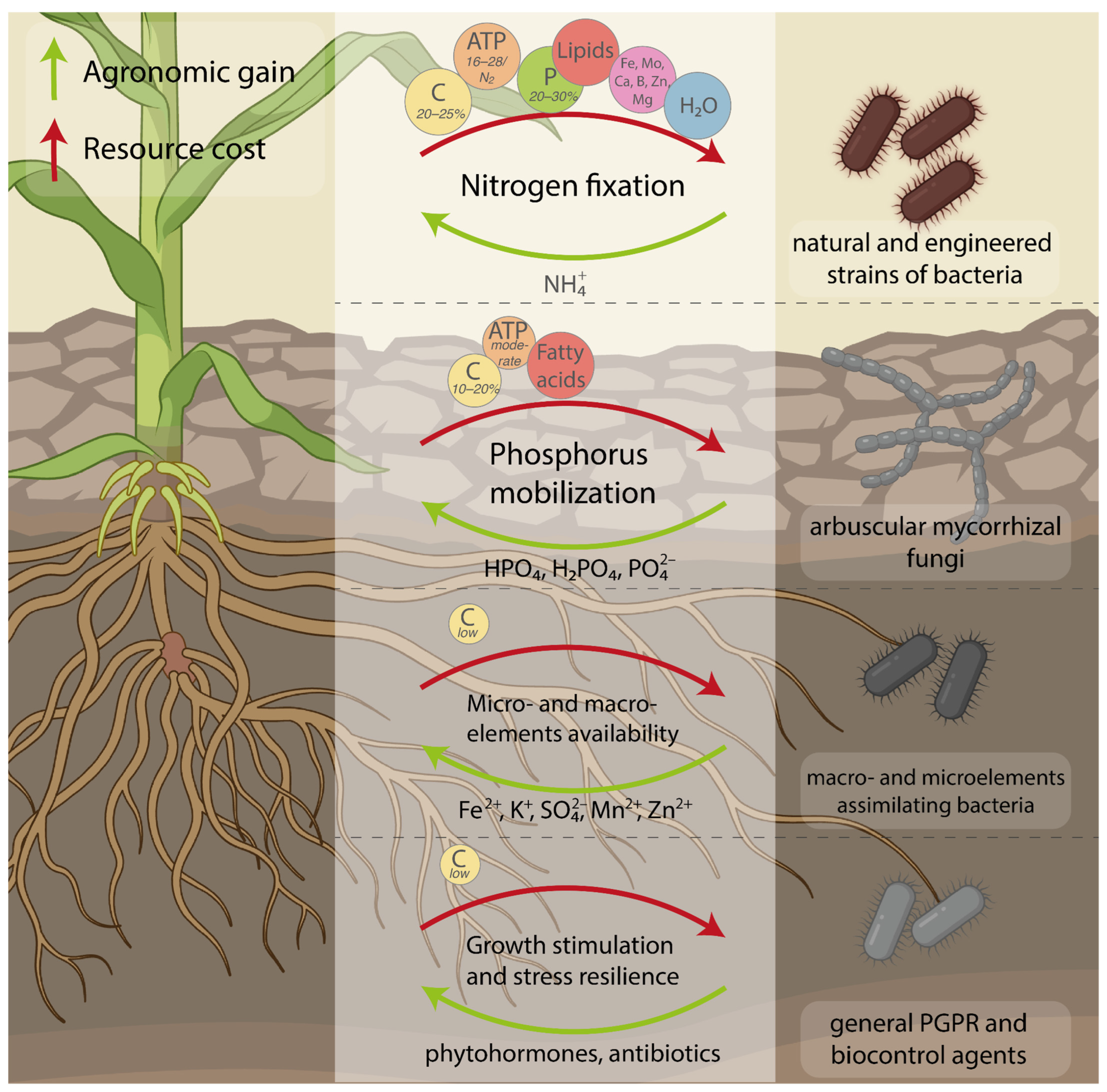
Figure 1. Overview of plant–microbe interactions and their mutual effects on each other. The red arrows indicate investment of plants (listed above the arrows), and the green arrows represent agronomic gain (listed below the arrows). The text between red and green arrows indicates the beneficial effects of microbes on plants. The colored circles represent plant investment items such as carbon (C), ATP, phosphorus (P) and magnesium (Mg), microelements (Fe, Mo, Ca, B, Zn), water (H2O), and fatty acids.
Agriculture 15 02526 g001
Table 3. The estimation of yield increase in crops when phosphorus-solubilizing micro-organisms are utilized.
Phosphorus-Solubilizing MicrobesEstimated Increase in YieldCropsConditionsReferences
Penicillium bilaiae~3–7%LegumesCompared to untreated control[91,92,93,94]
Bacillus (not only P-fixation effect led to yield increase)~6–9%Maize, cottonField trials, drought conditions[95]
~52%TomatoMeta-analysis[96]
Arbuscular mycorrhizal fungi ~10–20%CerealsField trials, inoculation in rainfed agriculture[97,98,99,100]
~10–30%VegetablesField trials, compared to untreated control[101,102,103]
Table 4. The estimation of yield increase in crops when PGPR are used.
PGPREstimated Yield IncreaseCropsConditionsReferences
PGPR + Bacillus safensis~5–16%WheatField trials, compared to untreated control[127]
PGPR~90%TeaField trials[128]
~47%StrawberryHigh-calcareous soil conditions[129]
~15–20%LegumesMeta-analysis[130]
~10–15%Cereals
~10–20%Vegetables
Table 5. Comparison of microbial inoculants in terms of cost and resulting yield increase.
Product (Brand)Microbial CompositionTarget Crop(s)Cost (USD/ha)Reported Yield Increase
Biofix (IITA)Bradyrhizobium japonicum (USDA 110 strain) [173]Soybean≈USD 1–2 (per 100 g pack) [176]+19% (soybean) [171]
Legumefix (LT)Bradyrhizobium japonicum (strain 532C) [171]Soybean~USD 10.5 [172]+12% (soybean) [171]
TagTeam™ (Novozymes)Penicillium bilaii + Rhizobium (legume inoculant) [174]Field peas, lentils, chickpea~USD 9.50 [174]≈+6% (field peas) [174]
JumpStart™ (Novozymes)Penicillium bilaii (phosphate-solubilizing fungus) [174]Wheat, barley, canola, sorghum~USD 12.50 [174]+5% (wheat) [174]
Azospirillum inoculantAzospirillum brasilense (e.g., strains Ab-V5/Ab-V6) [28]Maize and other cereals€20 to €60 [175]+5.4% (maize) [28]
Disclaimer/Publisher’s Note: The statements, opinions and data contained in all publications are solely those of the individual author(s) and contributor(s) and not of MDPI and/or the editor(s). MDPI and/or the editor(s) disclaim responsibility for any injury to people or property resulting from any ideas, methods, instructions or products referred to in the content.


