Article

Phylogenetic and Pathogenic Characterization of Cytospora Species Causing Apple Canker in Kazakhstan


1
Laboratory of Biodiversity and Genetic Resources, National Center for Biotechnology, Astana 010000, Kazakhstan
2
Department of Biotechnology and Microbiology, L.N. Gumilyov Eurasian National University, Astana 010000, Kazakhstan
3
Department of General Biology and Genomics, L.N. Gumilyov Eurasian National University, Astana 010000, Kazakhstan
4
Department of Bioengineering Systems, Shakarim University, Semey 071412, Kazakhstan
5
LLP “UniFruit”, Talgar-Almaty 040400, Kazakhstan
6
Scientific Center for Biological Research, Astana 010000, Kazakhstan
7
Department of Agricultural Biotechnology, Faculty of Agriculture, Aydın Adnan Menderes University, 09070 Aydın, Türkiye
8
Department of Agricultural Biotechnology, Faculty of Agriculture, Isparta University of Applied Sciences, 32260 Isparta, Türkiye
*
Author to whom correspondence should be addressed.
Agriculture 2025, 15(23), 2490; https://doi.org/10.3390/agriculture15232490
Submission received: 22 October 2025 / Revised: 25 November 2025 / Accepted: 28 November 2025 / Published: 29 November 2025
(This article belongs to the Section Crop Protection, Diseases, Pests and Weeds)

Abstract

Apple (Malus domestica) is a very important crop grown in Kazakhstan. Cytospora species are capable of causing destructive stem cankers on a wide range of woody plants, including apples, and can lead to twig and branch dieback. This study aimed to identify the Cytospora species responsible for canker disease of apple in Kazakhstan and to assess the susceptibility of major apple cultivars to these pathogens. Investigations were conducted in Almaty, Kazakhstan, during 2023 and 2024. Samples from symptomatic trees were collected, and nine Cytospora isolates were obtained from diseased apple trees. Multigene phylogenetic analysis based on combined sequence data of ITS, tef1-α, tub2, and LSU loci, together with morphological characteristics and pathogenicity assays, revealed two Cytospora species: C. leucostoma and C. sorbicola. The reactions of six apple cultivars (Gala, Golden Delicious, Red Delicious, Granny Smith, Fuji, and Jonaprince) to these species were evaluated, and statistically significant differences were found among cultivars (p < 0.05). The largest lesions occurred on Red Delicious and Fuji, indicating that these cultivars are the most susceptible. In contrast, lesion lengths on Jonaprince were significantly smaller than on all other cultivars, suggesting that Jonaprince is resistant to Cytospora species in Kazakhstan. This is the first report of C. leucostoma and C. sorbicola causing apple canker disease in Kazakhstan.

1. Introduction

The genus Malus Mill. (Rosaceae) comprises approximately 25 to 47 species, including cultivated apple (M. domestica Borkh.), one of the most economically important fruit crops [1]. Apples rank among the most economically significant fruit tree species worldwide, contributing approximately USD 73 billion to the global economy [2]. After citrus fruits, grapes, and bananas, apples represent the fourth most important fruit crop globally and are recognized as the most extensively cultivated and ecologically adaptable temperate fruit species [3]. Apples are a rich source of essential micronutrients, including iron, zinc, and vitamins C and E, and contain bioactive polyphenolic compounds such as procyanidins, phloridzin, and 5′-caffeoylquinic acid, which are associated with various health benefits [4]. Contemporary research suggests that the origins of modern apple cultivars can be traced to the Tian Shan Mountains in present-day Kazakhstan, with their initial domestication occurring in the late first millennium BCE [5,6].
Fungal pathogens pose a significant challenge to apple production, negatively impacting both fruit quality and overall yield [7]. Among these, species of the genus Cytospora are recognized as major agents of canker and dieback diseases, affecting more than 100 plant hosts globally, including apple trees [8,9,10]. Several Cytospora species have been consistently associated with canker disease in apples. These include C. balanejica, C. cincta, C. schulzeri, C. leucostoma, C. chrysosperma, C. nivea, C. sacculus, C. melnikii, C. mali, C. carphosperma, C. parasitica, C. rubescens, C. microspora, C. calvillae, C. personata, C. sorbicola, C. sorbina, C. pruinopsis, and C. leucosticta [11,12,13,14].
Historically, identification of Cytospora species was primarily based on host specificity and morphological features, including stromatal characteristics and conidial morphology. However, these traditional criteria often proved inadequate for resolving closely related or cryptic species. Over the past decade, molecular phylogenetic approaches—particularly multilocus sequence analyses involving the internal transcribed spacer (ITS) region, translation elongation factor 1-alpha (tef1-α), beta-tubulin (tub2), and RNA polymerase II subunit (RPB2)—have significantly enhanced the resolution of species boundaries within the genus. As a result, numerous novel Cytospora species have been described, and previously misidentified taxa have been reclassified [8,12,15,16,17].
Canker diseases caused by Cytospora species are leading to serious economic losses in apple plantations in Kazakhstan. This study aimed to identify and characterize Cytospora species causing apple canker in Kazakhstan and to assess their pathogenicity on major apple cultivars. Species delimitation was conducted using a combination of morphological assessments and molecular analyses, including DNA sequencing of multiple loci (ITS, tef1-α, tub2, and LSU) to infer phylogenetic relationships among the isolates.

2. Materials and Methods

2.1. Sampling and Fungal Isolation

From June 2023 to July 2024, fifteen apple branch samples exhibiting typical Cytospora canker symptoms were collected during annual disease-monitoring surveys in five commercial orchards in Almaty Province, Kazakhstan. Each sample was individually placed in a paper bag to prevent cross-contamination and subsequently transported to the Laboratory of the Department of Biotechnology and Microbiology at L.N. Gumilyov Eurasian National University in Astana for fungal isolation and further analysis.
Collected canker-infected branches were first rinsed with tap water and left to air-dry at ambient room temperature. Small bark segments (approximately 5 × 5 mm) were excised from the transition zone between healthy and diseased tissue. These segments were surface-sterilized by immersion in 70% ethanol for one minute, then rinsed with sterile distilled water and dried using sterile filter paper. The sterilized tissue pieces were placed onto Potato Dextrose Agar (PDA; TM MEDIA, Delhi, India)) plates and incubated at 25 °C in the dark for 48–72 h. Emerging mycelial growth from the bark segments was then transferred to fresh PDA plates for subculturing. To obtain pure cultures, a single terminal cell from an individual hypha was excised under a stereomicroscope using a sterile scalpel and transferred to PDA to allow the development of a monosporic colony [9]. All purified isolates were preserved on PDA slants and stored at 4 °C. Specimens and isolates were deposited in the Department of Biotechnology and Microbiology, L.N. Gumilyov Eurasian National University, Astana, Kazakhstan.

2.2. Morphological Identification

Nine pure fungal isolates grown on PDA were selected for morphological characterization. Species identification was carried out based on spore morphology—including color, shape, presence or absence of septa, and size—as well as colony features such as pigmentation, shape, elevation, edge structure, surface texture, and opacity. Microscopic examinations of fungal structures were conducted using a ZEISS Axio Scope.A1 microscope (Carl Zeiss, Jena, Germany).

2.3. DNA Extraction, PCR Amplification, Sequencing and Phylogenetic Analysis

Genomic DNA Isolation from Fungi; A small fraction of fungal material was aseptically transferred from glycerol stock into a sterile 1.5 mL microcentrifuge tube. Subsequently, 200 µL of fungal extraction buffer (Tris-HCl, EDTA, NaCl, and CTAB) supplemented with 5 µL of Proteinase K was added. The samples were homogenized with a sterile plastic pestle and incubated at 65 °C for 14–16 h with intermittent vortexing to ensure efficient cell lysis. Genomic DNA was recovered using the phenol–chloroform extraction procedure described by Chomczynski & Sacchi [18] and preserved at –20 °C until further analyses. Details of primer sequences, references and reaction mixtures are summarized in Table 1. PCR amplification was performed with an initial denaturation step of 95 °C for 5 min, followed by 35 cycles of strand denaturation at 95 °C for 15 s, annealing at 57.5 °C for 30 s, and primer extension at 72 °C for 1 min, and a final elongation at 72 °C for 10 min for ITS, tef1-α, tub2, and LSU loci.
Sequence Analysis and Phylogeny; PCR products were subjected to Sanger sequencing, and the forward and reverse reads obtained from each primer pair were assembled into consensus sequences. Sequence assembly was carried out using the CAP contig algorithm implemented in BioEdit v7.2.3 [23]. The ITS, tef1-α, tub2, and LSU sequences generated in this study were submitted to GenBank, and their accession numbers are shown in the phylogenetic trees and Table S1. Phylogenetic analyses of Cytospora isolates were performed using MEGA 11 [24]. All sequences were processed and analyzed within the MEGA 11 software. No sequence trimming was applied following alignment. Tree construction was performed using the Maximum Likelihood method based on the Tamura–Nei model [25], and branch support was evaluated with bootstrap analysis [26]. Sequences of Diaporthe eres were included as an outgroup, selected following the criteria described by Eken & Sevindik [11].

2.4. Pathogenicity Tests

Pathogenicity tests were performed on detached shoots of the ‘Golden Delicious’ apple cultivar using representative isolates from cankers, and based on a pre-pathogenicity test, the most virulent isolates, Cytospora leucostoma AC-204.2 and C. sorbicola AC-206.2, were selected for subsequent cultivar-reaction trials.
Healthy shoots were collected from three-year-old trees representing six commercial apple cultivars: Gala, Golden Delicious, Red Delicious, Granny Smith, Fuji, and Jonaprince. The shoots were rinsed under running tap water, surface-sterilized by immersion in 75% ethanol for 4 min, then rinsed in sterile distilled water and dried using sterile paper towels [12]. Each shoot segment was standardized to approximately 25 cm in length and 15–20 mm in diameter. To minimize moisture loss, the upper ends of the segments were sealed with Parafilm. A 5-mm-diameter bark disk was excised from the middle of each shoot using a sterile cork borer, and the exposed area was immediately inoculated. A 5-mm mycelial plug from a 5-day-old PDA culture of the Cytospora isolates was placed onto the wound. The same method was used in the control treatments except sterile PDA plugs were used instead of fungal isolates. All inoculation sites were covered with moist cotton and wrapped with Parafilm to maintain humidity and prevent contamination. The inoculated shoots, including controls, were placed upright in glass jars containing 50 mL of sterile distilled water. Each jar was enclosed in a plastic bag to maintain high humidity and incubated at 25 ± 1 °C for two days, after which the bags were removed. After 21 days, the extent of vascular discoloration was measured both above and below the inoculation site. Six replicate shoots were prepared for each isolate, and the experiment was set up using a completely randomized design. Inoculated shoots showing necrotic symptoms were surface-disinfected as described above, and 0.5–1 cm tissue segments from the interface of healthy and discolored areas were plated on PDA medium. Plates were incubated at 25 ± 1 °C in the dark, and the resulting fungi were identified by their macro- and micromorphological characteristics to fulfill Koch’s postulates. No fungi were recovered from the control treatments.

2.5. Statistical Analysis

Data were analyzed by one-way ANOVA using SAS software version 9.0 (SAS Institute, Cary, NC, USA). Differences in the length of vascular discoloration among Cytospora species were assessed with Tukey’s honest significant difference (HSD) test at p < 0.05. Standard errors (±SE) are shown as column bars, and columns sharing the same letter are not significantly different.

3. Results

3.1. Morphological Identification and Description of Cytospora Species

Nine fungal isolates belonging to the genus Cytospora were recovered from symptomatic apple branches. Based on morphological characteristics, five of these isolates were identified as C. leucostoma, while the remaining four were classified as C. sorbicola.

3.1.1. Taxonomic Description of Cytospora leucostoma

Anamorphic state: The conidiomata were predominantly immersed within the bark tissue, exhibiting a dark brown to black coloration with a slight emergence above the bark surface (a). The mean diameter of conidiomata was 407 µm (range: 359–424 µm; n = 20) (Figure 1b). Each conidioma contained a centrally located, irregularly shaped ostiole situated at the level of a dark, multilocular disk. The average diameters of the ostiole and locules were 123 µm (range: 87–135 µm; n = 20) and 49.9 µm (range: 40.2–55.4 µm; n = 20), respectively. Conidiophores were hyaline, unpigmented, and measured an average length of 16.9 µm (range: 13.2–20.1 µm; n = 30) (Figure 1c). Conidia were transparent, slightly curved, and allantoid in shape, with an average length of 5.2 µm (range: 4.1–6.4 µm) and width of 1.3 µm (range: 1.2–1.4 µm; n = 50) (Figure 1d).
Culture characteristics: The colonies exhibited rapid growth, appearing white with a distinct silvery radial zone during the early stages. As incubation progressed, the surface color transitioned to a creamy white, eventually developing a noticeable orange-brown pigmentation toward the colony center. By the seventh day, the colony texture was dense and uniform at the center, while the margins displayed a more loosely organized structure (Figure 1e,f).

3.1.2. Taxonomic Description of Cytospora sorbicola

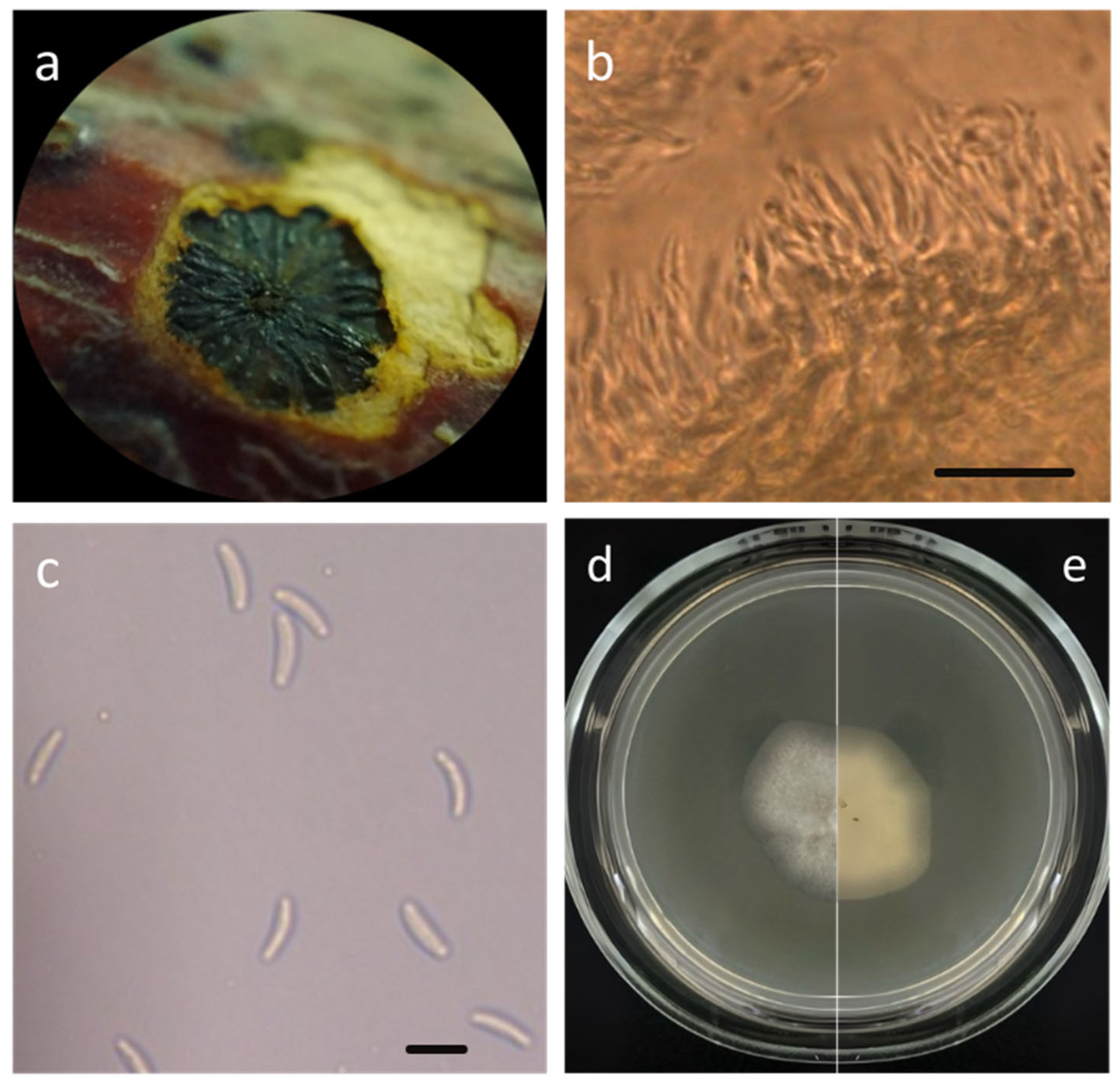
Anamorphic state: The conidiomata appeared dark brown and were partially embedded in the bark tissue, with an average diameter of 449 µm (range: 402–467 µm; n = 20) (Figure 2a). Each structure exhibited a single, centrally located spherical ostiole, approximately 118 µm in diameter (range: 99–134 µm; n = 20), embedded within a dark brown to black multilocular disk. The locules were irregularly distributed, with an average diameter of 53.1 µm (range: 46.8–65.0 µm; n= 20). Conidiophores were hyaline, enteroblastic in origin, and measured an average length of 17.7 µm (range: 13.8–21.4 µm; n = 30) (Figure 2b). The conidia were unicellular, elongate-allantoid, slightly curved, hyaline, and possessed smooth cell walls. The mean conidial length was 5.7 µm (range: 4.2–7.1 µm), and the average width was 1.5 µm (range: 1.3–1.8 µm; n = 50) (Figure 2c).
Culture characteristics: Colonies exhibited rapid growth and initially developed a pale yellow, velvety mycelial surface (Figure 2d,e). Over time, the coloration transitioned to a light gray or grayish beige hue. By the seventh day, the colony appeared loosely organized and cottony in texture, with irregular and uneven margins.

3.2. Cytospora Phylogenetic Analyses

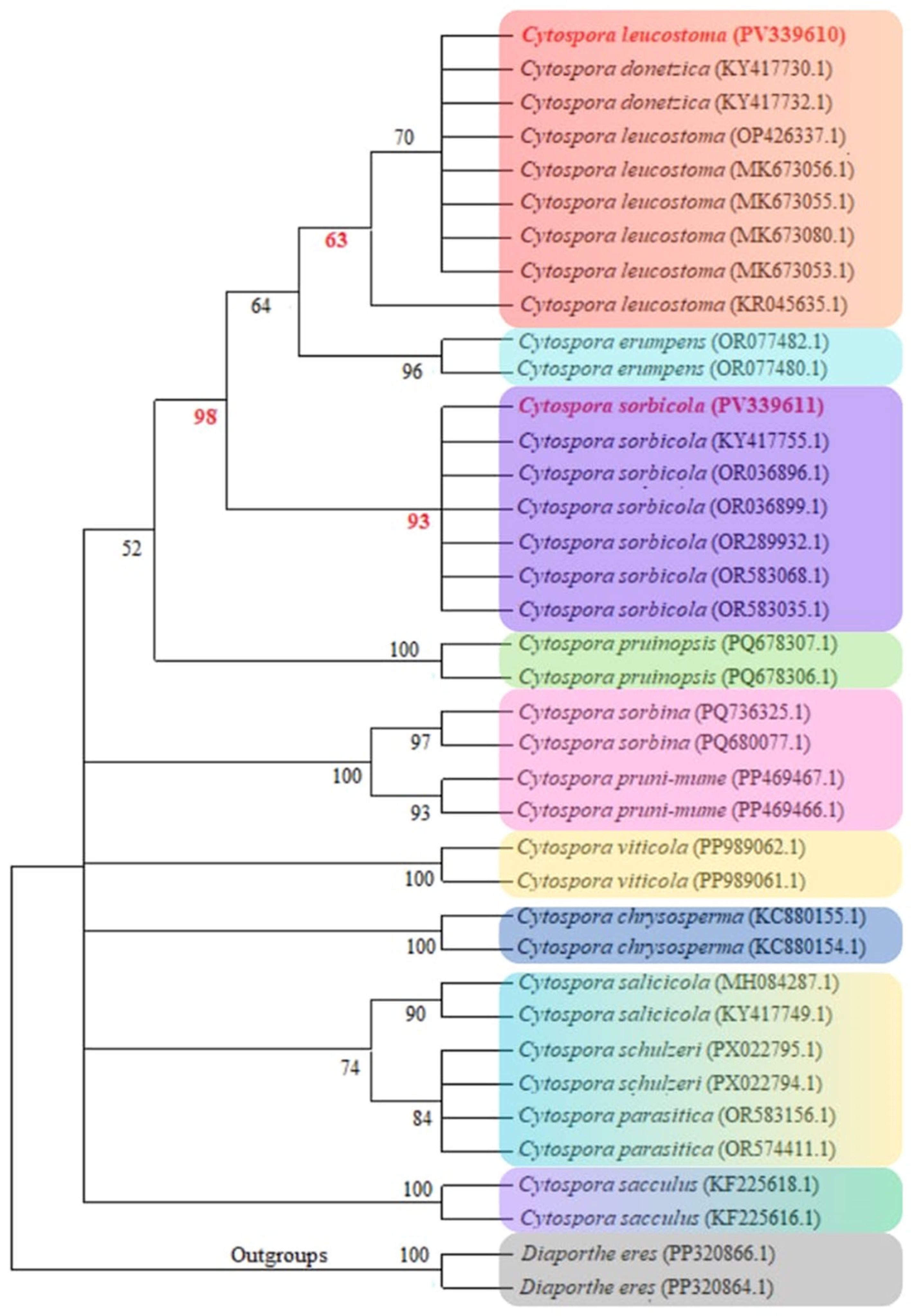
In the ITS-based phylogenetic tree constructed with sequences retrieved from NCBI, Cytospora leucostoma and C. donetzica formed a monophyletic clade with support (bootstrap value 63%). Similarly, C. sorbicola clustered with other C. sorbicola sequences from NCBI, also supported by a 93% bootstrap value. Moreover, C. leucostoma and C. sorbicola grouped together with C. donetzica and C. erumpens with a bootstrap value of 98%, indicating close evolutionary relationships (Figure 3). Overall, the ITS phylogeny revealed that Cytospora species (except between C. donetzica, C. parasitica and C. schulzeri) from NCBI clustered consistently at the species level, confirming that the ITS region is a reliable molecular marker for species-level phylogenetic analysis and identification.
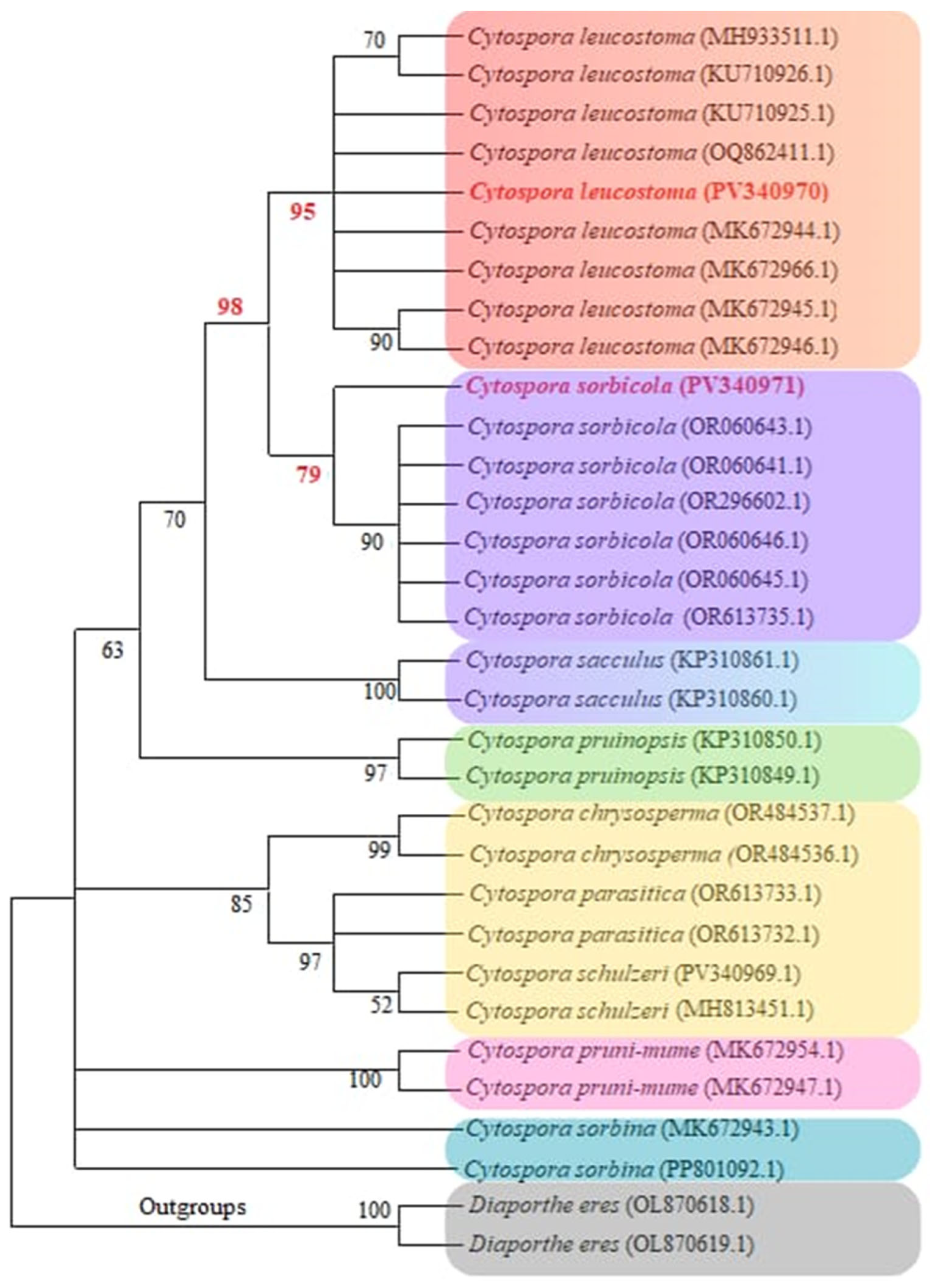
The maximum likelihood phylogenetic tree generated from tef1-α sequences of selected Cytospora species obtained from NCBI revealed that C. leucostoma formed a distinct cluster with strong support (bootstrap value 95%), while C. sorbicola clustered separately with a bootstrap value of 79%. Both C. leucostoma and C. sorbicola were positioned closely and grouped together as a monophyletic lineage with a bootstrap value of 98% (Figure 4). The tef1-α tree also showed clear divergence among Cytospora (except C. sorbina) taxa at the species level. Notably, the ITS phylogeny likewise placed C. leucostoma and C. sorbicola within the same lineage, demonstrating consistency between the two markers.
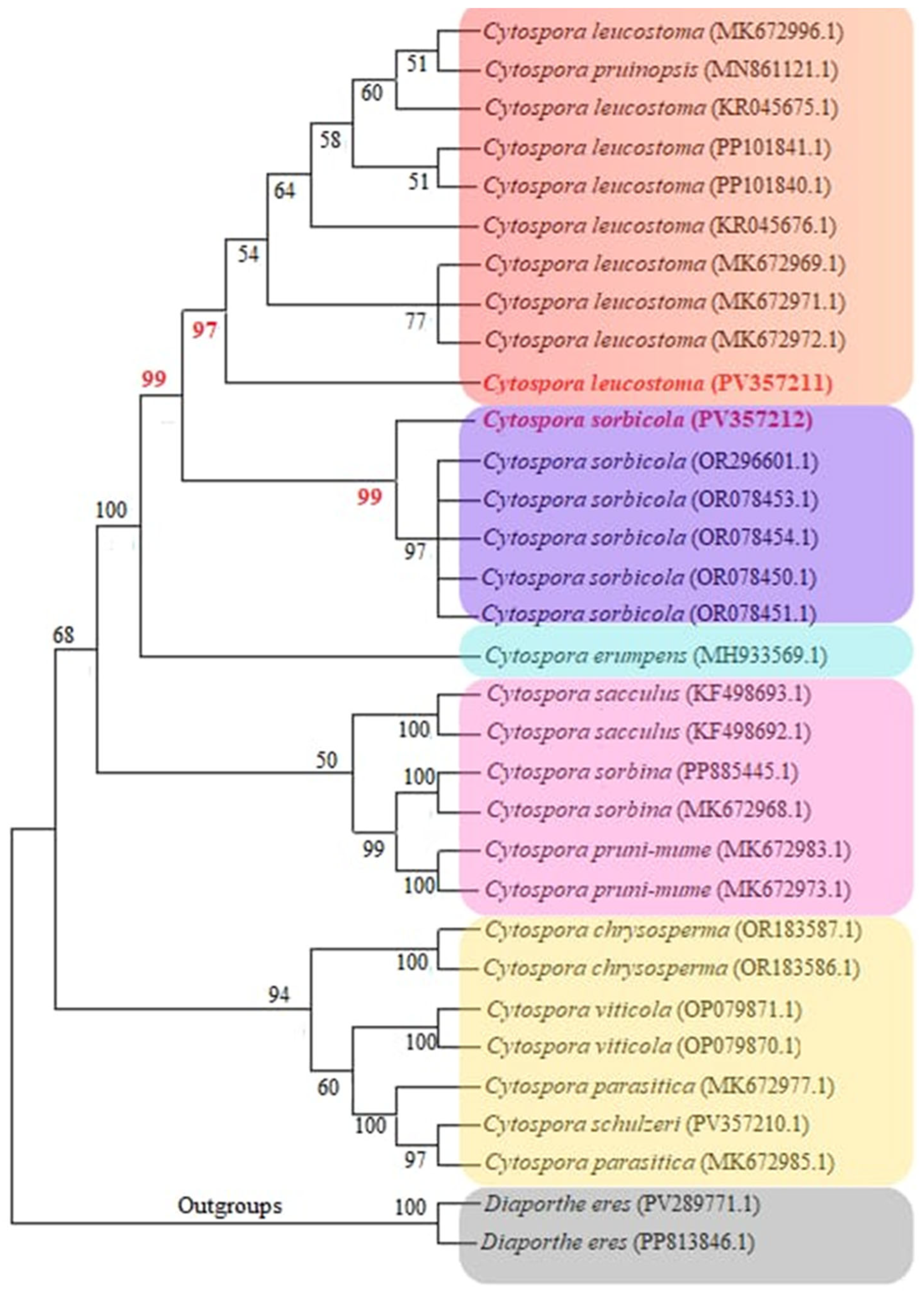
The phylogenetic tree derived from tub2 sequence data obtained from NCBI showed that Cytospora leucostoma clustered with C. pruinopsis with strong support (bootstrap value 97%), while C. sorbicola formed a well-supported group with a bootstrap value of 99%. Both C. leucostoma, C. pruinopsis and C. sorbicola were positioned closely and grouped together as a monophyletic lineage with a bootstrap value of 99%. Both clusters were closely related to C. erumpens in the topology (Figure 5). In ITS and tef1-α analysis, C. leucostoma was found to be separate from C. pruinopsis, while in tub2 analysis they were found to be together. Moreover, the tub2 marker successfully resolved Cytospora taxa at the species level, further supporting its reliability for phylogenetic discrimination.
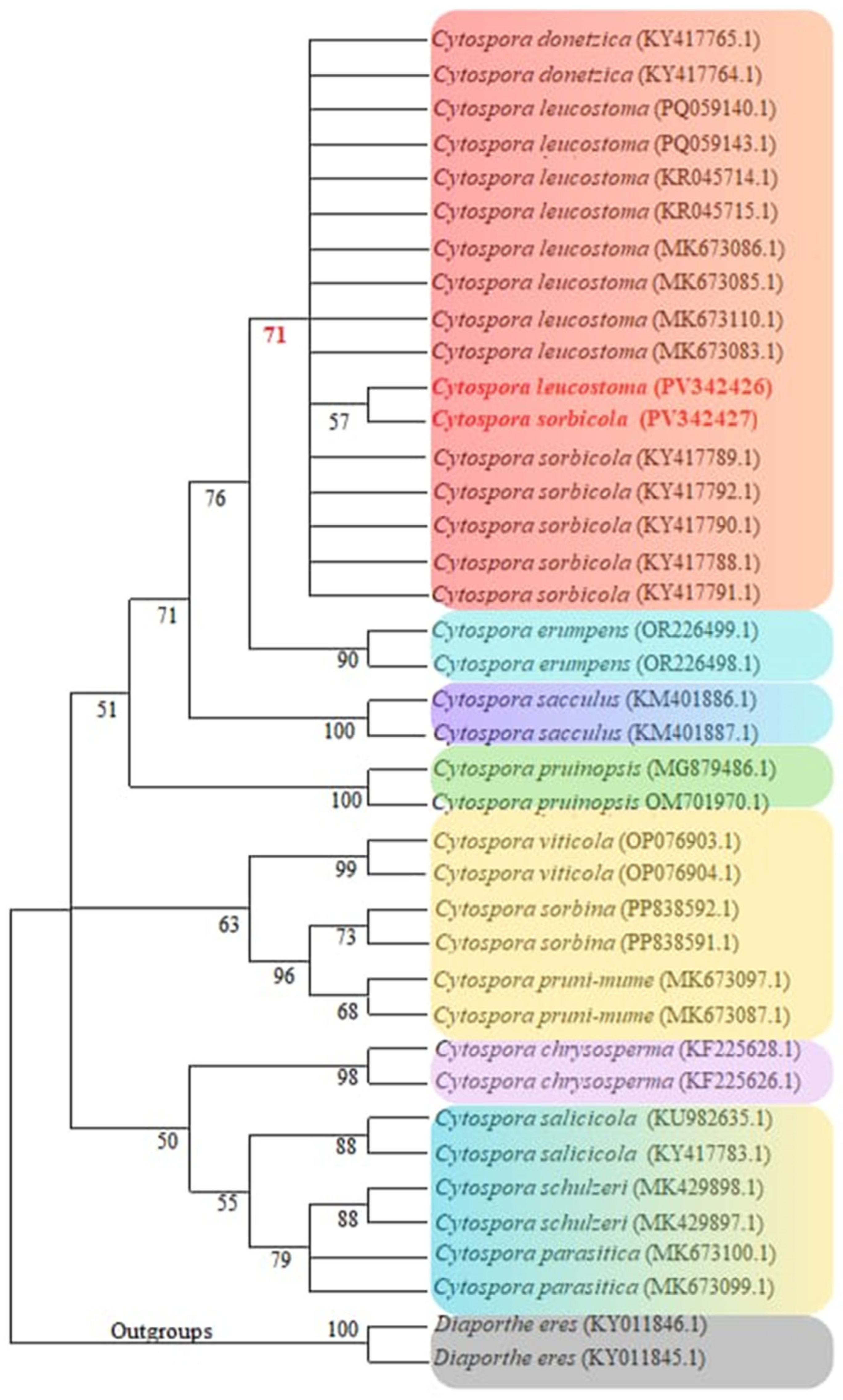
The phylogenetic tree constructed using LSU sequences retrieved from NCBI showed that C. leucostoma and C. sorbicola were not separated and formed a monophyletic group together with C. donetzica supported by a bootstrap value of 71% (Figure 6). This cluster was closely related to C. erumpens in topology. In the LSU results, there was no grouping of C. sorbicola and C. leucostoma isolates. In the LSU tree, the remaining Cytospora species (excluding C. leucostoma, C. sorbicola, C. parasitica and C. donetzica) clustered distinctly at the species level. In general, although LSU sequence data were not effective for grouping C. sorbicola and C. leucostoma isolates, they were effective for grouping other Cytospora isolates (C. erumpens, C. sacculus, C. pruinopsis, C. viticola, C.sorbina, C. pruni-mume, C. salicicola, C. schulzeri, C. chrysosperma).
As a result of phylogenetic inferences, ITS tef1-α and tub2 results were effective in distinguishing C. leucostoma and C. sorbicola isolates, while LSU results were not effective.

3.3. Pathogenicity Trials

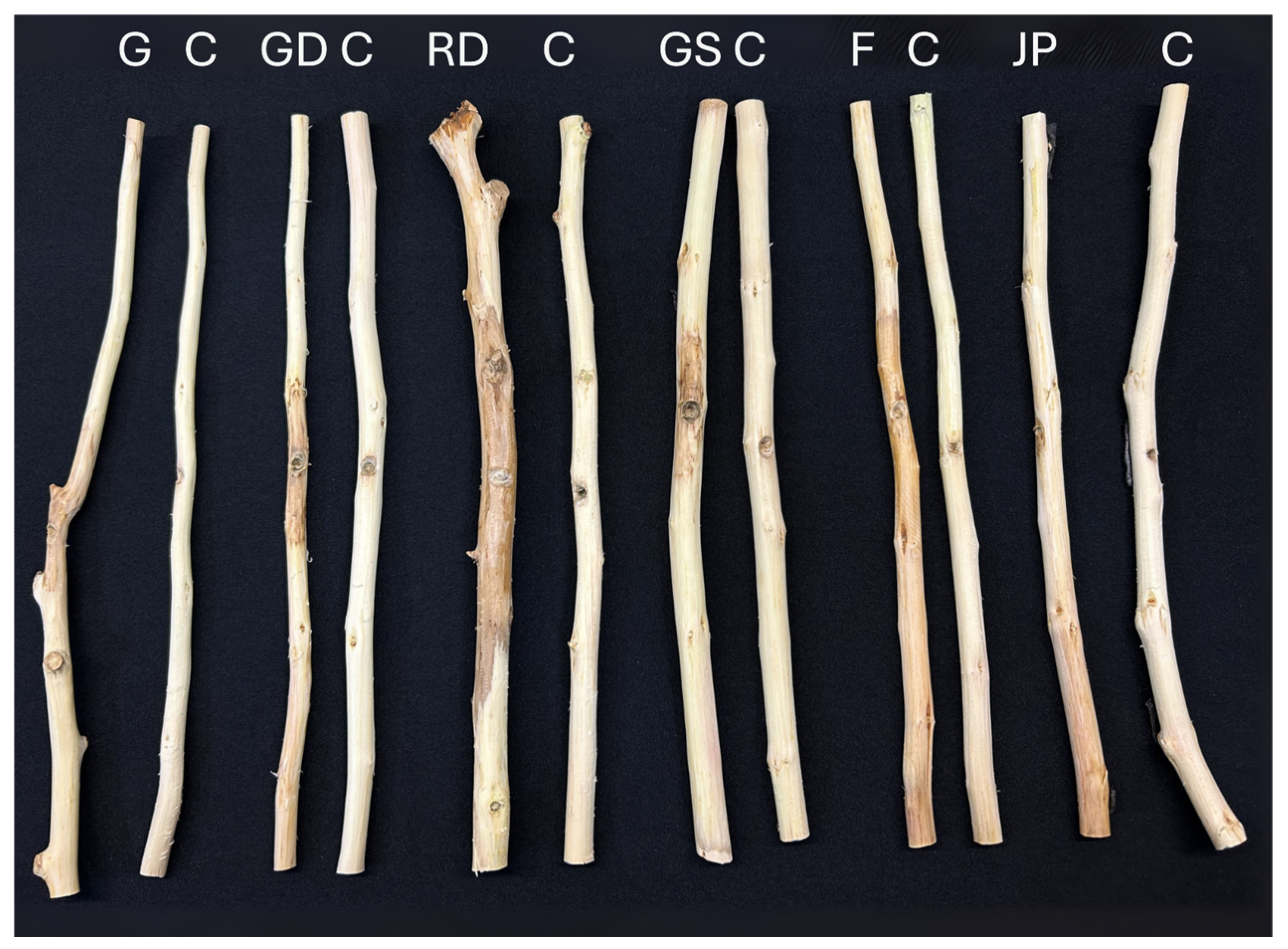
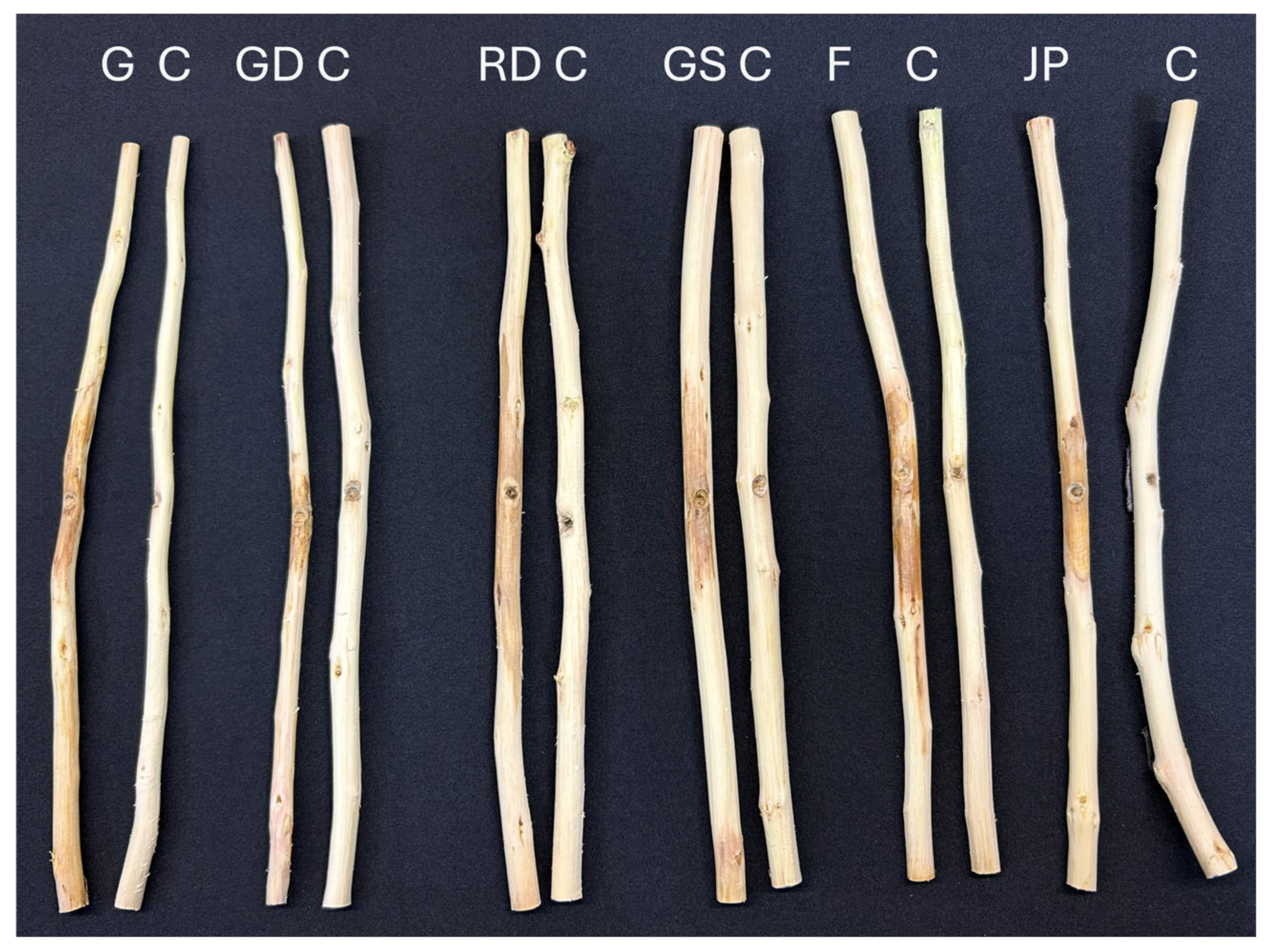
Pathogenicity assays revealed that the isolates belonging to Cytospora species caused necrotic tissue formation accompanied by bark and xylem discoloration in the inoculated shoots of apple cultivars. Following a 21-day incubation period on apple shoots, the pathogen was successfully re-isolated from symptomatic tissues and subsequently identified. In contrast, no visible lesions or discoloration were observed in the shoots of the control group (Figure 7 and Figure 8).
The mean length of necrotic lesions caused by Cytospora leucostoma isolate AC-204.2 ranged from 1.83 cm in the cultivar ‘Jonaprince’ to 9.00 cm in ‘Fuji’. For C. sorbicola isolate AC-206.2, lesion lengths ranged from 3.17 cm in ‘Jonaprince’ to 8.83 cm in ‘Red Delicious’. Analysis of variance indicated that the mean lesion lengths differed significantly (p < 0.05) between cultivars (Table 2). Severe symptoms were observed on the ‘Fuji’ and ‘Red Delicious’ cultivars, indicating that they are the most susceptible to Cytospora species. Based on the shoot inoculation tests, the ‘Jonaprince’ cultivar exhibited high resistance to both C. leucostoma and C. sorbicola. Significant differences in necrotic lesion sizes caused by C. leucostoma and C. sorbicola isolates were found in the Gala and Fuji apple cultivars, whereas no significant differences were observed among the other cultivars (Table 2).

4. Discussion

Apple cultivation is challenged by a variety of microbial pathogens, many of which lead to substantial economic losses [7]. Notably, fungal pathogens are responsible for approximately 90% of these diseases [27]. Among them, Cytospora canker stands out as one of the most destructive fungal infections affecting apple trees globally. This disease not only reduces yield and fruit quality but also poses a significant barrier to the sustainable development of the apple industry [28,29,30]. Several species of Cytospora have been associated with apple Cytospora canker disease on apple trees worldwide [11,12,13,27,30,31,32,33,34,35]. Several species of Cytospora have been reported as pathogens of canker of apples in Kazakhstan, including C. parasitica, C. sorbina, C. pruinopsis and C. chrysosperma [14]. In this study, two Cytospora species, C. leucostoma and C. sorbicola, were identified from apple trees in Kazakhstan. These species are reported as fungal pathogens associated with canker disease in apple orchards within the region. Cytospora leucostoma has previously been documented on Sorbus tianschanica, Spiraea hypericifolia, and Rosa iliensis in Kazakhstan [36]. However, to date, there have been no published records of C. leucostoma infecting Malus domestica in this region. This species was reported as the causal agent of stem canker on Malus domestica trees in Iran [31]. Cytospora sorbicola has been first described from dead and dying branches of Acer pseudoplatanus, Cotoneaster melanocarpus, Prunus cerasus, Sorbus aucuparia, and Sorbaronia mitschurinii in Russia [37]. Subsequently, this species was reported as the causal agent of canker on Malus domestica in Iran [34] and Türkiye [11]. In the present study, this species was isolated from apple trees exhibiting canker symptoms in Kazakhstan, and its pathogenicity was confirmed through fulfillment of Koch’s postulates. To the best of our knowledge, this study represents the first documented evidence of C. leucostoma and C. sorbicola as causal agents of canker disease on apple trees in Kazakhstan.
Previous identification of Cytospora species was mostly based on host relationships, often with uncertain morphological descriptions [10]. Recent developments in molecular phylogenetic approaches have notably enhanced the taxonomic resolution within the genus Cytospora, especially through the combined use of multilocus sequence data and morphological as well as ecological characteristics. These integrative strategies have enabled the identification and formal recognition of many previously uncharacterized Cytospora species in recent years, underpinned by thorough morphological evaluations and multigene phylogenetic frameworks [35,38,39,40,41]. Although the ITS region is widely accepted as a universal DNA barcode for fungi [42], its limited discriminatory power can hinder accurate taxonomic resolution in genera exhibiting low levels of intraspecific genetic variation [43,44]. To improve accuracy in species identification, especially in complex genera like Cytospora, it is often necessary to incorporate additional loci from protein coding genes such as tef1-α, tub2, and others which offer greater phylogenetic resolution [15]. In the present study, we applied a phylogenetic approach by analyzing concatenated sequences from four genetic markers, ITS, LSU, tef1-α, and tub2 to clarify the taxonomy and evolutionary relationships of Cytospora species associated with canker and dieback symptoms on apple trees. Based on these results, studies have been conducted in the past using different gene loci to identify Cytospora isolates and determine their molecular phylogenetic relationships [11,14,38,45,46]. Eken and Sevindik [11] investigated the molecular phylogenetic relationships of Cystosora parasitica and C. sorbicola isolates collected from apple trees in the Isparta province of Türkiye using ITS, tef1-α, and LSU sequence analyses. Neighbor Joining phylogenetic trees based on ITS, tef1-α, and LSU sequences were found to be effective in the discrimination and species identification of C. parasitica and C. sorbicola isolates. Additionally, Eken and Sevindik [11] showed that C. sorbicola and C. leucostama isolates clustered in the same group in phylogenetic trees constructed using Cytospora sequences obtained from NCBI. These findings are consistent with our own results based on the ITS, tef1-α, tub2, and LSU loci. Jiang et al. [45] identified two new Cytospora species and reported four new host records from Cytospora samples collected from Chinese chestnut (Castanea mollissima) trees. This identification was based on DNA sequences from the ITS, LSU, ACT, and RPB2 loci. Furthermore, the maximum parsimony phylogram constructed using the ITS, LSU, ACT, and RPB2 genes revealed that C. sorbicola and C. leucostama in the same group. In our ITS, tef1-α, tub2, and LSU results, C. sorbicola and C. leucostama were found in the same group. Our results are consistent with Jiang et al. [45]. Norphanphoun et al. [38] used a combined multi-gene DNA sequence dataset (ITS, LSU, ACT and RPB2) for species identification and phylogenetic relationships of Cytospora species isolated from Xylocarpus granatum, X. moluccensis and Lumnitzera racemosa from Phetchaburi and Ranong provinces of Thailand. In the phylogram constructed from maximum parsimony analysis based on the combined ITS, LSU, ACT and RPB2 sequence data, it was observed that C. sorbicola and C. leucostama clustered in the same group. Fotouhifar [46] determined the phylogenetic relationship of Cytospora isolates, obtained from various substrates of diseased and dead plants collected in Iran, using ITS sequences. A total of 114 isolates were morphologically identified in their study. Nine of these were recorded as new to Iran. The ITS sequence phylogenetic analyses revealed an agreement with morphological data, demonstrating that they are significant for the accurate identification of species in most cases. These results are consistent with our ITS, tef1-α, tub2, and LSU results. Phylogenetic inferences revealed that ITS, tef1-α, and tub2 results were effective in distinguishing C. leucostoma and C. sorbicola isolates. Particularly in tef1-α results, complete differentiation of C. leucostoma and C. sorbicola isolates occurred. In ITS results, C. leucostoma isolates together with C. donetzica, while C. sorbicola isolates coexisted. In tub2 results, C. leucostoma isolates together with C. pruinopsis isolates. In ITS results, C. pruinopsis isolates together in a separate location. In LSU results, C. leucostoma and C. sorbicola isolates together with C. donetzica isolates, and no resolution was achieved. ITS, tef1-α and tub2 results revealed that they were effective in distinguishing C. leucostoma and C. sorbicola isolates as groups, while LSU results were not effective.
In the present study, the reaction of six apple cultivars to infection with C. leucostoma and C. sorbicola was assessed. Based on other studies, responses of apple cultivars to Cytospora species could be different [33,47]. Hanifeh et al. [34] demonstrated that all eight Cytospora species tested in pathogenicity assays on M. domestica cv. Golden Delicious saplings were capable of inducing canker lesions, thereby confirming their pathogenic potential on apple. Among them, C. sorbicola was identified as the most virulent species, producing significantly larger lesions than the other isolates. The average lesion length caused by C. sorbicola was 49.44 mm, nearly twice the mean lesion length of 24.06 mm observed for the remaining Cytospora species. These results reveal substantial differences in virulence among Cytospora taxa, emphasizing the importance of species-level identification for effective disease management. The high aggressiveness of C. sorbicola in particular suggests it poses a serious threat to apple production, underscoring the need for further epidemiological investigations and the inclusion of this pathogen in resistance screening programs. Zhao et al. [13] evaluated the pathogenicity of all previously documented Cytospora species associated with Malus hosts by conducting inoculation trials on the leaves and branches of 13 apple (M. domestica) cultivars and wild apple (M. sieversii). Among the tested species, C. leucosperma and C. pruinopsis were identified as the most aggressive pathogens affecting both cultivated and wild apple trees in the Xinjiang region. Moreover, the cultivars Fuji and Golden Delicious exhibited the highest levels of resistance to Cytospora canker and were recommended as the most disease-tolerant varieties.
Cytospora species are generally opportunistic pathogens that cause severe damage particularly in plants exposed to abiotic or biotic stresses. Environmental factors such as drought, extreme temperatures, defoliation, insect activity, and infections by other pathogens can markedly increase tree susceptibility to Cytospora canker [48,49]. In Kazakhstan, recent climatic trends—especially the increasing frequency and intensity of drought events—appear to have further heightened orchard vulnerability. Rising average temperatures and irregular precipitation patterns not only weaken host defense mechanisms but also create conditions that favor fungal colonization, survival, and sporulation. These findings suggest that ongoing climatic changes are likely a major driver of the recent expansion and increased severity of Cytospora canker in the region. Such shifts in climatic conditions are known to alter the dynamics of host–pathogen interactions, with significant consequences for the distribution and behavior of fungal pathogens [50,51,52,53]. Altogether, this highlights the necessity of integrating environmental stress factors into the development of sustainable disease management strategies for trees under changing climate conditions.

5. Conclusions

In the present study, we identified two Cytospora species associated with canker diseases of apple trees in Kazakhstan, using morphological and phylogenetic approaches. Isolates belonging to C. leucostoma and C. sorbicola infected the shoots of all apple cultivars and caused canker symptoms of varying severity. Statistically significant differences were detected among the reactions of apple cultivars to Cytospora species. The Jonaprince apple variety may serve as a valuable genetic resource for breeding programs aimed at developing Cytospora-resistant cultivars. Further research is needed to clarify the biology and ecology of Cytospora spp., assess apple cultivar susceptibility and resistance under field conditions, and investigate the pathogen’s host range and epidemiology—all critical steps toward effective management strategies.

Supplementary Materials

The following supporting information can be downloaded at: https://www.mdpi.com/article/10.3390/agriculture15232490/s1. Table S1: Details of the isolates used in the phylogenetic analysis in this study.

Author Contributions

Conceptualization, Z.T., A.S. and K.D.; methodology, Z.T. and C.E.; formal analysis, Z.T., S.N., A.Z., G.M. and V.K.; funding acquisition, Z.T.; investigation, Z.T., S.N. and A.Z.; project administration, Z.T., G.M. and V.K.; resources, Z.T., T.N. and G.M.; data curation, Z.T., C.E., E.S., T.N. and A.S.; writing—original draft preparation, Z.T., K.D., E.S. and C.E.; writing—review and editing, Z.T., E.S. and C.E.; visualization, Z.T. and E.S.; supervision, Z.T. and C.E. All authors have read and agreed to the published version of the manuscript.

Funding

This research was funded by the Committee of Science of the Ministry of Science and Higher Education of the Republic of Kazakhstan (Grant No. AP19680152).

Institutional Review Board Statement

Not applicable.

Informed Consent Statement

Not applicable.

Data Availability Statement

The data obtained in this study are available upon request from the corresponding author.

Conflicts of Interest

Author Tursunbayev Nariman was employed by the company LLP “UniFruit.” The remaining authors declare that the research was conducted in the absence of any commercial or financial relationships that could be construed as potential conflicts of interest. The authors declare that this study received funding from the Committee of Science of the Ministry of Science and Higher Education of the Republic of Kazakhstan. The funder was not involved in the study design, collection, analysis, interpretation of data, the writing of this article or the decision to submit it for publication.

References

  1. Robinson, J.P.; Harris, S.A.; Juniper, B.E. Taxonomy of the genus Malus mill. (Rosaceae) with emphasis on the cultivated apple, Malus domestica Borkh. Plant Syst. Evol. 2001, 226, 35–58. [Google Scholar] [CrossRef]
  2. Tegtmeier, R.; Švara, A.; Gritsenko, D.; Khan, A. Malus sieversii: A historical, genetic, and conservational perspective of the primary progenitor species of domesticated apples. Hortic. Res. 2025, 12, uhae244. [Google Scholar] [CrossRef] [PubMed]
  3. Gharghani, A.; Zamani, Z.; Talaie, A.; Oraguzie, N.C.; Fatahi, R.; Hajnajari, H.; Wiedow, C.; Gardiner, S.E. Genetic identity and relationships of Iranian apple (Malus × domestica Borkh.) cultivars and landraces, wild Malus species and representative old apple cultivars based on simple sequence repeat (SSR) marker analysis. Genet. Resour. Crop Evol. 2009, 56, 829–842. [Google Scholar] [CrossRef]
  4. Oyenihi, A.B.; Belay, Z.A.; Mditshwa, A.; Caleb, O.J. “An apple a day keeps the doctor away”: The potentials of apple bioactive constituents for chronic disease prevention. J. Food Sci. 2022, 87, 2291–2309. [Google Scholar] [CrossRef]
  5. Spengler, R.N. Origins of the apple: The role of megafaunal mutualism in the domestication of Malus and rosaceous trees. Front. Plant Sci. 2019, 10, 617. [Google Scholar] [CrossRef]
  6. Ha, Y.-H.; Oh, S.-H.; Lee, S.-R. Genetic admixture in the population of wild apple (Malus sieversii) from the Tien Shan Mountains, Kazakhstan. Genes 2021, 12, 104. [Google Scholar] [CrossRef] [PubMed]
  7. Sutton, T.B.; Aldwinckle, H.S.; Agnello, A.M.; Walgenbach, J.F. Compendium of Apple and Pear Diseases and Pests; APS Press: St. Paul, MN, USA, 2014; pp. 8–116. [Google Scholar] [CrossRef]
  8. Adams, G.C.; Roux, J.; Wingfield, M.J.; Common, R. Phylogenetic relationships and morphology of Cytospora species and related teleomorphs (Ascomycota, Diaporthales, Valsaceae) from Eucalyptus. Stud. Mycol. 2005, 52, 1–144. [Google Scholar]
  9. Adams, G.C.; Roux, J.; Wingfield, M.J. Cytospora species (Ascomycota, Diaporthales, Valsaceae), introduced and native pathogens of trees in South Africa. Australas. Plant Pathol. 2006, 35, 521–548. [Google Scholar] [CrossRef]
  10. Pan, M.; Zhu, H.Y.; Tian, C.M.; Alvarez, L.V.; Fan, X.L. Cytospora piceae sp. nov. associated with canker disease of Picea crassifolia in China. Phytotaxa 2018, 383, 181–196. [Google Scholar] [CrossRef]
  11. Eken, C.; Sevindik, E. Molecular phylogeny of Cytospora species associated with canker diseases of apple trees in Türkiye. Erwerbs-Obstbau 2023, 65, 2249–2257. [Google Scholar] [CrossRef]
  12. Azizi, R.; Ghosta, Y.; Ahmadpour, A. Apple crown and collar canker and necrosis caused by Cytospora balanejica sp. nov. in Iran. Sci. Rep. 2024, 14, 6629. [Google Scholar] [CrossRef]
  13. Zhao, Y.; Cai, G.; Yan, M.; Ma, R.; Zhang, D. Pathogenicity evaluation of Cytospora species in 13 apple (Malus domestica) varieties and wild apple (Malus sieversii) in Xinjiang, China. J. Phytopathol. 2024, 172, e13375. [Google Scholar] [CrossRef]
  14. Tulegenova, Z.; Amanbayeva, U.; Shalabayeva, A.M.; Yelyubayeva, D.; Zhaxylykov, A.; Uakhit, R.; Smagulova, A.; Kiyan, V.; Dyussembayev, K.; Mukiyanova, G. Identification and pathogenicity of causal agents of apple canker disease in Kazakhstan. Horticulturae 2025, 11, 45. [Google Scholar] [CrossRef]
  15. Lawrence, D.P.; Holland, L.A.; Nouri, M.T.; Travadon, R.; Abramians, A.; Michailides, T.J.; Trouillas, F.P. Molecular phylogeny of Cytospora species associated with canker diseases of fruit and nut crops in California, with descriptions of ten new species and one new combination. IMA Fungus 2018, 9, 333–370. [Google Scholar] [CrossRef]
  16. Fan, X.; Bezerra, J.D.P.; Tian, C.-M.; Crous, P.W. Cytospora (Diaporthales) in China. Persoonia 2020, 45, 1–45. [Google Scholar] [CrossRef] [PubMed]
  17. Zhu, H.; Pan, M.; Bezerra, J.D.P.; Tian, C.; Fan, X. Discovery of Cytospora species associated with canker disease of tree hosts from Mount Dongling of China. MycoKeys 2020, 62, 97–121. [Google Scholar] [CrossRef] [PubMed]
  18. Chomczynski, P.; Sacchi, N. The single-step method of RNA isolation by acid guanidinium thiocyanate–phenol–chloroform extraction: Twenty-something years on. Nat. Protoc. 2006, 1, 581–585. [Google Scholar] [CrossRef]
  19. White, T.J.; Bruns, T.; Lee, S.; Taylor, J. Amplification and direct sequencing of fungal ribosomal RNA genes for phylogenetics. In PCR Protocols: A Guide to Methods and Applications; Academic Press, Inc.: Cambridge, MA, USA, 1990; Volume 18, pp. 315–322. [Google Scholar]
  20. Alves, A.; Crous, P.W.; Correia, A.; Phillips, A. Morphological and molecular data reveal cryptic speciation in Lasiodiplodia theobromae. Fungal Divers. 2008, 28, 1–13. [Google Scholar]
  21. O’donnell, K. Fusarium and its near relatives. In The Fungal Holomorph: Mitotic, Meiotic and Pleomorphic Speciation in Fungal Systematics; Reynolds, D.R., Taylor, J.W., Eds.; CABI: Wallingford, UK, 1993. [Google Scholar]
  22. Glass, N.L.; Donaldson, G.C. Development of primer sets designed for use with the PCR to amplify conserved genes from filamentous ascomycetes. Appl. Environ. Microbiol. 1995, 61, 1323–1330. [Google Scholar] [CrossRef]
  23. Hall, T.A. Bioedit: A user-friendly biological sequence alignment editor and analyses program for Windows 95/98/NT. Nucleic Acids Symp. Ser. 1999, 41, 95–98. [Google Scholar]
  24. Tamura, K.; Stecher, G.; Kumar, S. MEGA11: Molecular evolutionary genetics analysis version 11. Mol. Biol. Evol. 2021, 38, 3022–3027. [Google Scholar] [CrossRef] [PubMed]
  25. Tamura, K.; Nei, M. Estimation of the number of nucleotide substitutions in the control region of mitochondrial DNA in humans and chimpanzees. Mol. Biol. Evol. 1993, 10, 512–526. [Google Scholar] [CrossRef] [PubMed]
  26. Felsenstein, J. Confidence limits on the phylogenies: An approach using the bootstrap. Evolution 1985, 39, 783–791. [Google Scholar] [CrossRef]
  27. Sha, S.S.; Wang, Z.; Yan, C.C.; Hao, H.T.; Wang, L.; Feng, H.Z. Identification of fungal species associated with apple canker in Tarim basin, China. Plant Dis. 2023, 107, 1284–1298. [Google Scholar] [CrossRef] [PubMed]
  28. Lee, D.H.; Lee, S.W.; Chi, K.H.; Kim, D.A.; Uhm, J.Y. Survey on the occurrence of apple disease in Korea from 1992 to 2000. Plant Pathol. J. 2006, 22, 375–380. [Google Scholar] [CrossRef]
  29. Meng, X.L.; Qi, X.H.; Han, Z.Y.; Guo, Y.B.; Wang, Y.N.; Hu, T.I.; Wang, L.M.; Cao, K.G.; Wang, S.T. Latent infections of Valsa mali in the seeds, seedlings and twigs of crabapple and apple trees is a potential inoculum source of Valsa canker. Sci. Rep. 2019, 9, 7738. [Google Scholar] [CrossRef]
  30. Wang, X.; Shi, C.M.; Gleason, M.L.; Huang, L. Fungal species associated with apple Valsa canker in East Asia. Phytopathol. Res. 2020, 2, 35. [Google Scholar] [CrossRef]
  31. Mehrabi, M.; Mohammadi, G.E.; Fotouhifar, K. Studies on Cytospora canker disease of apple trees in Semirom region of Iran. J. Agric. Technol. 2011, 7, 967–982. [Google Scholar]
  32. Pan, M.; Zhu, H.Y.; Guido, B.; Tian, C.M.; Fan, X.L. High diversity of Cytospora associated with canker and dieback of Rosaceae in China, with 10 new species described. Front. Plant Sci. 2020, 11, 690. [Google Scholar] [CrossRef]
  33. Azizi, R.; Ghosta, Y.; Ahmadpour, A. Morphological and molecular characterization of Cytospora species involved in apple decline in Iran. Mycol. Iran. 2020, 7, 205–218. [Google Scholar] [CrossRef]
  34. Hanifeh, S.; Zafari, D.; Soleimani, M.-J.; Arzanlou, M. Multigene phylogeny, morphology, and pathogenicity trials reveal novel Cytospora species involved in perennial canker disease of apple trees in Iran. Fungal Biol. 2022, 126, 707–726. [Google Scholar] [CrossRef]
  35. Ilyukhin, E.; Nguyen, H.D.; Castle, A.J.; Ellouze, W. Cytospora paraplurivora sp. nov. isolated from orchards with fruit tree decline syndrome in Ontario, Canada. PLoS ONE 2023, 18, e0279490. [Google Scholar] [CrossRef]
  36. Rakhimova, E.V.; Sypabekkyzy, G.; Kyzmetova, L.A.; Asylbek, A.M. Genus Cytospora Ehrenb. In the south-east of Kazakhstan. Exp. Biol. 2023, 96, 52–65. [Google Scholar] [CrossRef]
  37. Norphanphoun, C.; Doilom, M.; Daranagama, D.A.; Phookamsak, R.; Wen, T.C.; Bulgakov, T.S.; Hyde, K.D. Revisiting the genus Cytospora and allied species. Mycosphere 2017, 8, 51–97. [Google Scholar] [CrossRef]
  38. Norphanphoun, C.; Raspé, O.; Jeewon, R.; Wen, T.C.; Hyde, K.D. Morphological and phylogenetic characterisation of novel Cytospora species associated with mangroves. MycoKeys 2018, 38, 93–120. [Google Scholar] [CrossRef]
  39. Pan, M.; Zhu, H.Y.; Tian, C.M.; Huang, M.R.; Fan, X. Assessment of Cytospora strains from conifer cankers in China, with the descriptions of four new Cytospora species. Front. Plant Sci. 2021, 12, 636460. [Google Scholar] [CrossRef] [PubMed]
  40. Travadon, R.; Lawrence, D.P.; Moyer, M.; Fujiyoshi, P.T.; Baumgartner, K. Fungal species associated with grapevine trunk diseases in Washington wine grapes and California table grapes, with novelties in the genera Cadophora, Cytospora, and Sporocadus. Front. Fungal Biol. 2022, 3, 1018140. [Google Scholar] [CrossRef] [PubMed]
  41. Konta, S.; Tibpromma, S.; Karunarathna, S.C.; Samarakoon, M.C.; Steven, L.S.; Mapook, A.; Boonmee, S.; Senwanna, C.; Balasuriya, A.; Eungwanichayapant, P.D.; et al. Morphology and multigene phylogeny reveal ten novel taxa in Ascomycota from terrestrial palm substrates (Arecaceae) in Thailand. Mycosphere 2023, 14, 107–152. [Google Scholar] [CrossRef]
  42. Schoch, C.L.; Seifert, K.A.; Huhndorf, S.; Robert, V.; Spouge, J.L.; Levesque, C.A.; Chen, W. Nuclear ribosomal internal transcribed spacer (ITS) region as a universal DNA barcode marker for fungi. Proc. Natl. Acad. Sci. USA 2012, 16, 6241–6246. [Google Scholar] [CrossRef]
  43. Raja, H.A.; Miller, A.N.; Pearce, C.J.; Oberlies, N.H. Fungal identification using molecular tools: A primer for the natural products research community. J. Nat. Prod. 2017, 80, 756–770. [Google Scholar] [CrossRef]
  44. Tekpinar, A.; Kalmer, A. Utility of various molecular markers in fungal identification and phylogeny. Nova Hedwig. 2019, 109, 187–224. [Google Scholar] [CrossRef]
  45. Jiang, N.; Yang, Q.; Fan, X.L.; Tian, C.M. Identification of six Cytospora species on Chinese chestnut in China. MycoKeys 2020, 62, 1–25. [Google Scholar] [CrossRef]
  46. Fotouhifar, K.B.; Hedjaroude, G.A.; Leuchtmann, A. ITS rDNA phylogeny of Iranian strains of Cytospora and associated teleomorphs. Mycologia 2010, 102, 1369–1382. [Google Scholar] [CrossRef] [PubMed]
  47. Cai, G.; Zhao, Y.; Zhai, Y.; Yan, M.; Ma, R.; Zhang, D. Two new species of Cytospora (Diaporthales, Cytosporaceae) causing canker disease of Malus domestica and M. sieversii in Xinjiang, China. MycoKeys 2024, 109, 305–318. [Google Scholar] [CrossRef] [PubMed]
  48. Miller, S.T.; Otto, K.L.; Sterle, D.; Minas, I.S.; Stewart, J.E. Preventive fungicidal control of Cytospora leucostoma in peach orchards in Colorado. Plant Dis. 2019, 103, 1138–1147. [Google Scholar] [CrossRef]
  49. Agustí-Brisach, C.; Moldero, D.; Raya, M.D.C.; Lorite, I.J.; Orgaz, F.; Trapero, A. Water stress enhances the progression of branch dieback and almond decline under field conditions. Plants 2020, 9, 1213. [Google Scholar] [CrossRef] [PubMed]
  50. Paap, T.; Brouwers, N.C.; Burgess, T.I.; Hardy, G.E.S.J. Importance of climate, anthropogenic disturbance and pathogens (Quambalaria coyrecup and Phytophthora spp.) on marri (Corymbia calophylla) tree health in southwest Western Australia. Ann. For. Sci. 2017, 74, 62. [Google Scholar] [CrossRef]
  51. Hossein, M.; Veneklaas, E.J.; Hardy, G.E.S.J.; Poot, P. Tree host-pathogen interactions as influenced by drought timing: Linking physiological performance, biochemical defense and disease severity. Tree Physiol. 2019, 39, 6–18. [Google Scholar] [CrossRef]
  52. Gomez-Gallego, M.; Galiano, L.; Martínez-Vilalta, J.; Stenlid, J.; Capador-Barreto, H.D.; Elfstrand, M.; Camarero, J.J.; Oliva, J. Interaction of drought- and pathogen-induced mortality in Norway spruce and Scot pine. Plant Cell Environ. 2022, 45, 2292–2305. [Google Scholar] [CrossRef]
  53. Li, Q.; Cao, S.; Wang, L.; Hou, R.; Sun, W. Impacts of climate change on the potential distribution of three Cytospora species in Xinjiang, China. Forests 2024, 15, 1617. [Google Scholar] [CrossRef]
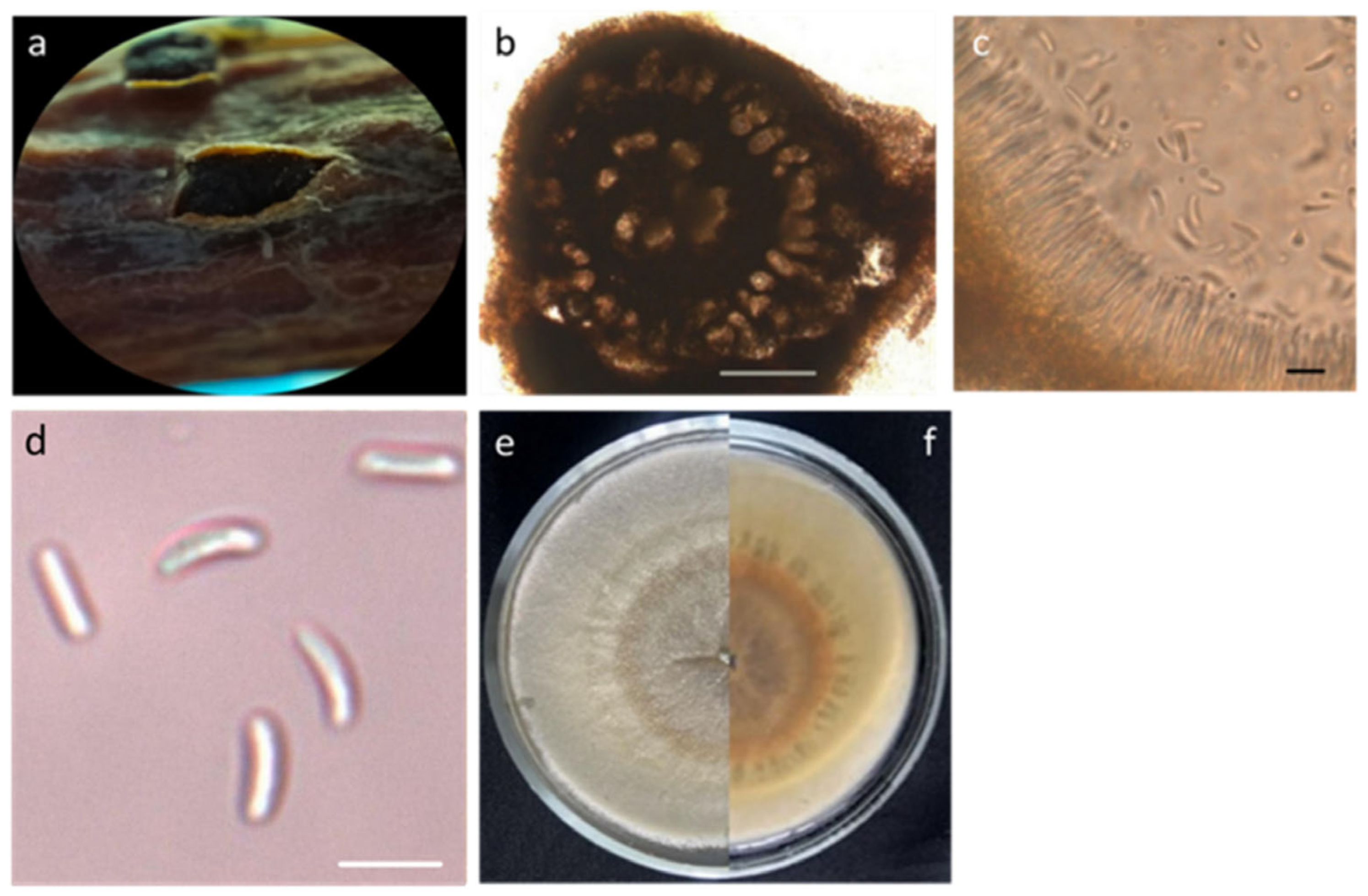
Figure 1. Cytospora leucostoma (AC-204.2) from Malus domestica. (a) Habit of conidiomata on the twig. (b) Transverse section of conidiomata. (c) Conidiophores, conidiogenous cells, and conidia. (d) Conidia (e,f) Cultures on PDA after 7 days ((e)—from above, (f)—from below). Scale bars: (b) = 125 μm; (c,d) = 5 μm.
Agriculture 15 02490 g001
Figure 2. Cytospora sorbicola (AC-206.2) from Malus domestica. (a) Transverse section of conidiomata. (b) Conidiophores and conidiogenous cells. (c) Conidia. (d,e) Cultures on PDA after 2 days ((d)—from above, (e)—from below). Scale bars: (b) = 10 μm; (c) = 5 μm.
Agriculture 15 02490 g002
Figure 3. Maximum likelihood phylogenetic tree based on ITS sequences, including Cytospora species obtained from NCBI. The accession numbers are provided in the phylogenetic tree. Bootstrap values ≥ 50% are shown above the corresponding branches.
Agriculture 15 02490 g003
Figure 4. Maximum likelihood tree based on tef1-α sequences of Cytospora species obtained from NCBI. The accession numbers are provided in the phylogenetic tree. Bootstrap values ≥ 50% are indicated above the branches.
Agriculture 15 02490 g004
Figure 5. Maximum likelihood phylogenetic tree constructed from tub2 sequences of selected Cytospora species obtained from NCBI. The accession numbers are provided in the phylogenetic tree. Bootstrap values ≥ 50% are indicated above the branches.
Agriculture 15 02490 g005
Figure 6. Maximum likelihood phylogenetic tree based on LSU sequences of selected Cytospora species retrieved from NCBI. The accession numbers are provided in the phylogenetic tree. Bootstrap values ≥ 50% are shown above the branches.
Agriculture 15 02490 g006
Figure 7. Evaluation of the pathogenicity of Cytospora leucostoma isolate AC-204.2 on apple cultivars. Apple cultivars: G, Gala; GD, Golden Delicious; RD, Red Delicious; GS, Granny Smith; F, Fuji; JP, Jonaprince; C, Control.
Agriculture 15 02490 g007
Figure 8. Evaluation of the pathogenicity of Cytospora sorbicola isolate AC-206.2 on apple cultivars. Apple cultivars: G, Gala; GD, Golden Delicious; RD, Red Delicious; GS, Granny Smith; F, Fuji; JP, Jonaprince; C, Control.
Agriculture 15 02490 g008
Table 1. List of primers, references, and components used in PCR experiments.
Primers Name, 5′-3′ SequencesReferencesPCR Components
ITS1: TCCGTAGGTGAACCTGCGG
ITS4: TCCTCCGCTTATTGATATGC
[19]1 μL genomic DNA,
12.5 μL master mix,
1 μL ITS 1,
1 Μl ITS4,
9.5 μL ddH2O
EF1-688F: CGGTCACTGATCTACAAGTGC
EF1-R: CCTCGAACTCACCAGTACCG
[20]
NL1: GCATATCAATAAGCGGAGAAAAG
NL4: GGTCCGTGTTTCAAGACGG
[21]
Bt2a: GGTAACCAAATCGGTGCTGCTTTC
Bt2b: ACCCTCAGTGTAGTGACCCTTGGC
[22]
Table 2. Mean lesion length on shoots of apple cultivars inoculated with Cytospora leucostoma (AC-204.2) and C. sorbicola (AC-206.2).
Apple CultivarsCytospora Species
C. leucostomaC. sorbicola
Mean Lesion Length (cm) *Mean Lesion Length (cm)
Gala3.83 ± 0.33 c ** B ***6.33 ± 0.33 ab A
Golden Delicious6.33 ± 0.33 b A4.67 ±0.72 bc A
Red Delicious6.33 ± 0.33 b A8.83 ±0.72 a A
Granny Smith4.50 ± 0.50 bc A4.83 ± 0.60 bc A
Fuji9.00 ± 0.57 a A6.33 ± 0.67 ab B
Jonaprince1.83 ± 0.17 d A3.17 ± 0.44 c A
*: Mean of six replications; **: Among apple cultivars ***: Among isolates. Mean ± SE. According to Tukey’s HSD test, mean values followed by the same letter are not significantly different (p < 0.05).
Disclaimer/Publisher’s Note: The statements, opinions and data contained in all publications are solely those of the individual author(s) and contributor(s) and not of MDPI and/or the editor(s). MDPI and/or the editor(s) disclaim responsibility for any injury to people or property resulting from any ideas, methods, instructions or products referred to in the content.