1. Introduction
China’s total grain output has ranked first in the world for many consecutive years, but its comprehensive agricultural strength lags behind some developed countries. In recent years, as indicated by, the Chinese government has increased its emphasis on agricultural development, making continuous efforts in areas such as smart agriculture and biological breeding.
The Chinese government attaches great importance to the cultivation of agricultural new-quality productivity and regards it as the core driving force for promoting high-quality agricultural development. As the specific manifestation of new-quality productivity in the agricultural sector, agricultural new-quality productivity emphasizes technological innovation as the core driver [
1], achieves the optimal combination of production factors and the leap of industrial forms, and features high technology, high efficiency, and high quality [
2]. This concept does not emerge in isolation but is the result of the long-term evolution of China’s agricultural production mode. From the development model relying on traditional factor inputs, to scale agriculture represented by mechanization, to the current smart agriculture guided by digitalization and greening, the form of China’s agricultural productivity is undergoing a transformation from the accumulation of “quantity” to a breakthrough in “quality”. Against this backdrop, the proposal of agricultural new-quality productivity marks that agricultural development has entered a new stage with the improvement of total factor productivity as the core [
3]. It integrates agricultural technology, intelligent equipment and new business forms, promotes the transformation of agriculture from a resource-consuming model to an innovation-driven one [
4], and is an important path to achieving high-quality and sustainable agricultural development [
5].
Developing the digital economy is not only an important path choice for promoting rural revitalization [
6], but also an important force for promoting agricultural modernization [
7]. The digital economy represents a distinct economic form. It treats digital knowledge as essential inputs for production. Modern information networks serve as its fundamental infrastructure. Information and communication technology acts as the core driver. This economic model primarily enhances operational efficiency. It simultaneously works on restructuring economic systems. These activities collectively characterize this new economic paradigm. The important practice of the digital economy in the agricultural field is mainly realized through the deep integration of the digital economy and agricultural production practice, thus promoting the transformation of agricultural production mode [
8], management mode and governance capacity, and realizing agricultural modernization [
9]. The digital economy is highly innovative, penetrative and integrated [
10]. Its integration with agricultural production can effectively improve agricultural development efficiency. At the same time, the application of the digital economy in agriculture is an important embodiment of the construction of agricultural new-quality productivity [
11,
12]. Guo and Lyu found in their research that China’s digital economy and agricultural modernization are generally underdeveloped, but show a positive upward trajectory [
13]. Strengthening the overall advancement of the digital economy and agricultural modernization is one of the important ways to realize Chinese-style agricultural modernization under the background of “a large country with small farmers” [
14]. As a catalyst for the construction of new-quality productivity, it is of great practical significance to realize the deep integration of traditional agriculture and digital economy construction [
15]. The combination of digital economy and agriculture has given birth to new forms of production and promoted the process of agricultural modernization. With the continuous development of AI, 5G technology, UAV technology, etc., the application of the digital economy in agricultural production is becoming more and more extensive, and the depth of integration is gradually deepening. With its characteristics of high innovation, strong penetration, wide coverage and sustainability, the digital economy plays an important role in all fields of economic and social development [
16]. Zhai believes that the rural digital economy and agricultural and rural modernization are interdependent and mutually reinforcing, promoting the sustainable and healthy development of the rural economy and society and realizing the grand goal of rural revitalization [
17].
As a systematic project, agricultural modernization is still a necessary condition for the digital economy construction to exert its effectiveness. In the 1950s, China clearly put forward the goals and tasks of achieving agricultural modernization. Agricultural modernization is an important strategic deployment made by the Chinese government and an important requirement for realizing Chinese-style modernization. Agricultural modernization refers to the process of transforming traditional agriculture into modern agriculture with high productivity, sustainability and market competitiveness through technological progress, institutional innovation and management optimization. It is not only a change in agricultural production mode, but also a comprehensive upgrade of rural economy, society and ecology. It is an important foundation for realizing rural revitalization and national modernization. The construction of agricultural modernization has to a certain extent promoted the emergence and development of agricultural new-quality productivity. To promote the development of China’s agriculture, modernization construction is an indispensable part. Studying the role of agricultural modernization in the construction of agricultural new-quality productivity will have important practical significance for the high-quality development of China’s agriculture and the promotion of economic and social development [
17,
18].
Existing research has failed to fully reveal the mediating mechanism of the “digital economy—agricultural modernization—agricultural new-quality productivity”, mainly due to the following two levels of research limitations. At the methodological level, most existing studies use traditional stepwise regression methods (such as the Baron & Kenny method) to test the mediating effect. This method has obvious defects: First, the statistical power is low, making it difficult to detect the partial mediating effect in complex models; second, it cannot provide the confidence interval of the mediating effect, making the accuracy and reliability of the effect value questionable. More importantly, most studies only stay in the verification of the direct effect and fail to build a complete “treatment-mediator-outcome” analysis framework, resulting in a lack of rigor in the test of the intermediary path. At the level of theoretical construction, existing research lacks a unified theoretical framework to explain the internal logic of the path of “digital economy → agricultural modernization → agricultural new-quality productivity” [
10]. This study systematically explains the path of “digital economy → agricultural modernization construction → agricultural new-quality productivity” under the integrated framework of innovation diffusion theory and modernization theory. In the cognitive–persuasion stage of innovation diffusion, digital technology stimulates the demand for the transformation of the agricultural system to modernization through smart agricultural practices; in the decision–implementation stage, the agricultural modernization construction transforms digital innovation into the basis for productivity leap through the systematic evolution of three levels: technology integration, organizational innovation and institutional adaptation; in the confirmation–institutionalization stage, the agricultural modernization construction that has completed the diffusion ultimately achieves a qualitative leap in agricultural productivity by optimizing the allocation of factors and improving the total factor productivity [
3]. The innovative value of this theoretical construction lies in defining the agricultural modernization construction as a dynamic intermediary process connecting technological innovation and productivity leap, which not only reflects the stage characteristics of the innovation diffusion theory, but also includes the system change perspective of the modernization theory, providing a more complete theoretical explanation framework for understanding the digital transformation of agriculture.
By adopting the Bootstrap mediation effect test method and based on the innovation diffusion theory, this study strives to make up for the deficiencies of existing research from the two dimensions of methodology and theoretical construction and provide more rigorous empirical basis and theoretical explanation for understanding the internal mechanism of the digital economy’s impact on agricultural development [
10].
2. Theoretical Analysis and Research Hypotheses
The agricultural sector globally is confronted with mounting challenges related to resource constraints and environmental sustainability. Within this context, the digital economy, the advancement of agricultural modernization, and the cultivation of agricultural new-quality productivity have emerged as pivotal forces driving systemic transformation in agriculture. This study develops an integrative framework grounded in Innovation Diffusion Theory and Modernization Theory to elucidate the underlying mechanisms linking these core constructs.
2.1. Digital Economy and Agricultural New-Quality Productivity
The digital economy acts as a fundamental catalyst for the emergence of agricultural new-quality productivity [
19]. Its influence is channeled through several mechanisms, the pervasive penetration of advanced technologies, the reconfiguration of production factors, and the induction of institutional innovations. Agricultural new-quality productivity itself represents an advanced productive force. It is characterized by its reliance on scientific and technological innovation as the primary driver, aiming to enhance production efficiency, optimize resource utilization, promote ecological sustainability, and upgrade the agricultural value chain through novel approaches to factor allocation, industrial restructuring, and institutional reform [
20].
The integration of digital technologies, such as artificial intelligence, into agriculture enables precision farming [
1]. This facilitates superior allocation of inputs across the production, processing, and marketing spectrum, thereby boosting total factor productivity. Furthermore, the digital economy gives rise to new business models like smart agriculture and digital agriculture, shifting the focus of agricultural development from sheer scale expansion towards quality and value-added production [
21]. The proliferation of digital infrastructure also provides a crucial platform for experimenting with and applying agricultural technological innovations, fostering the deep integration of the digital economy and new-quality productivity [
22].
Empirical evidence largely corroborates the positive role of the digital economy in enhancing agricultural productivity. Scholars argue that the digital economy fuels the development of new-quality productivity by elevating the overall capacity for innovation [
23]. It reshapes socio-economic operational mechanisms, thereby empowering the formation of this advanced productivity. Furthermore, empirical studies across various regions consistently report a significant positive association between the adoption of digital technologies and improvements in agricultural production efficiency [
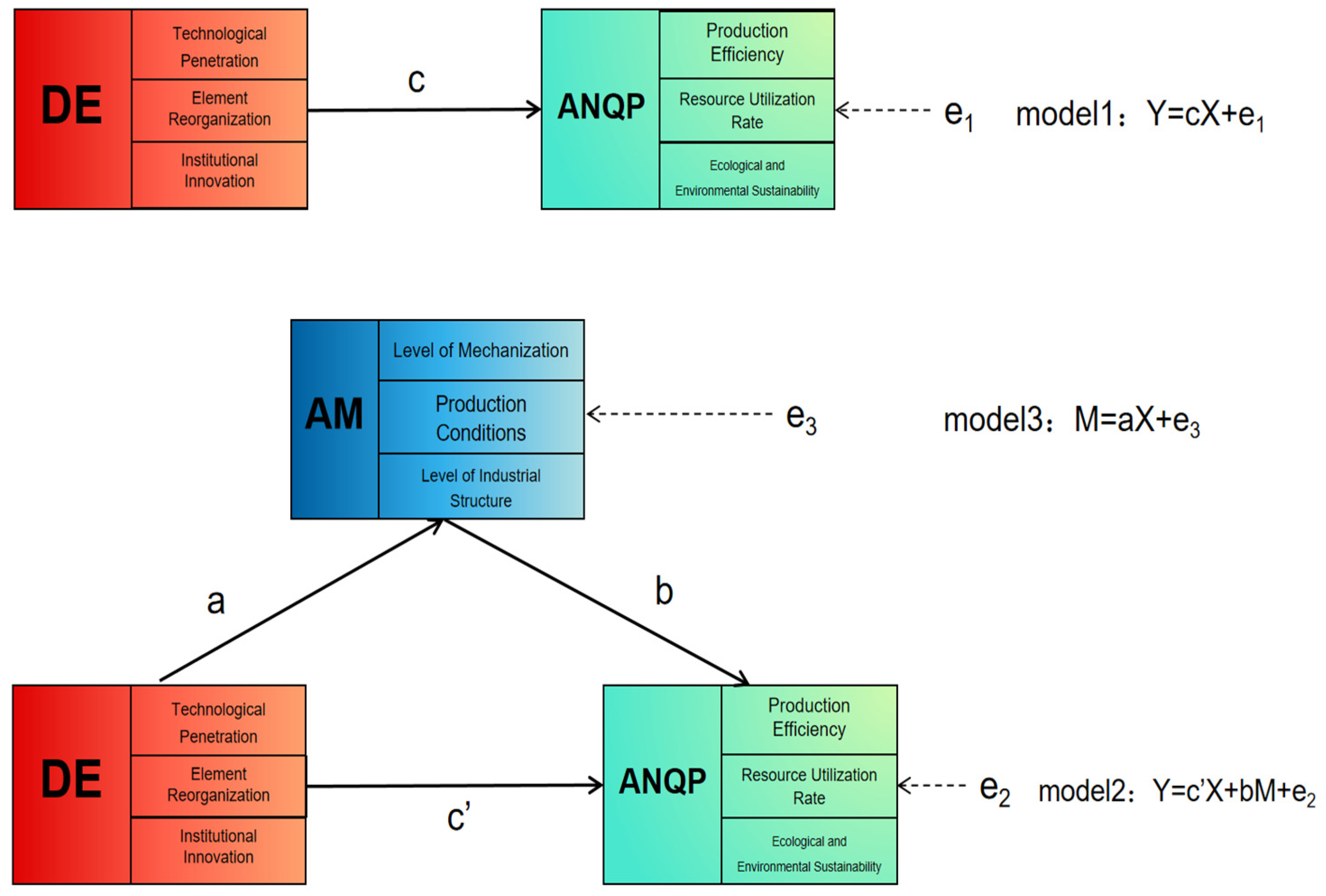
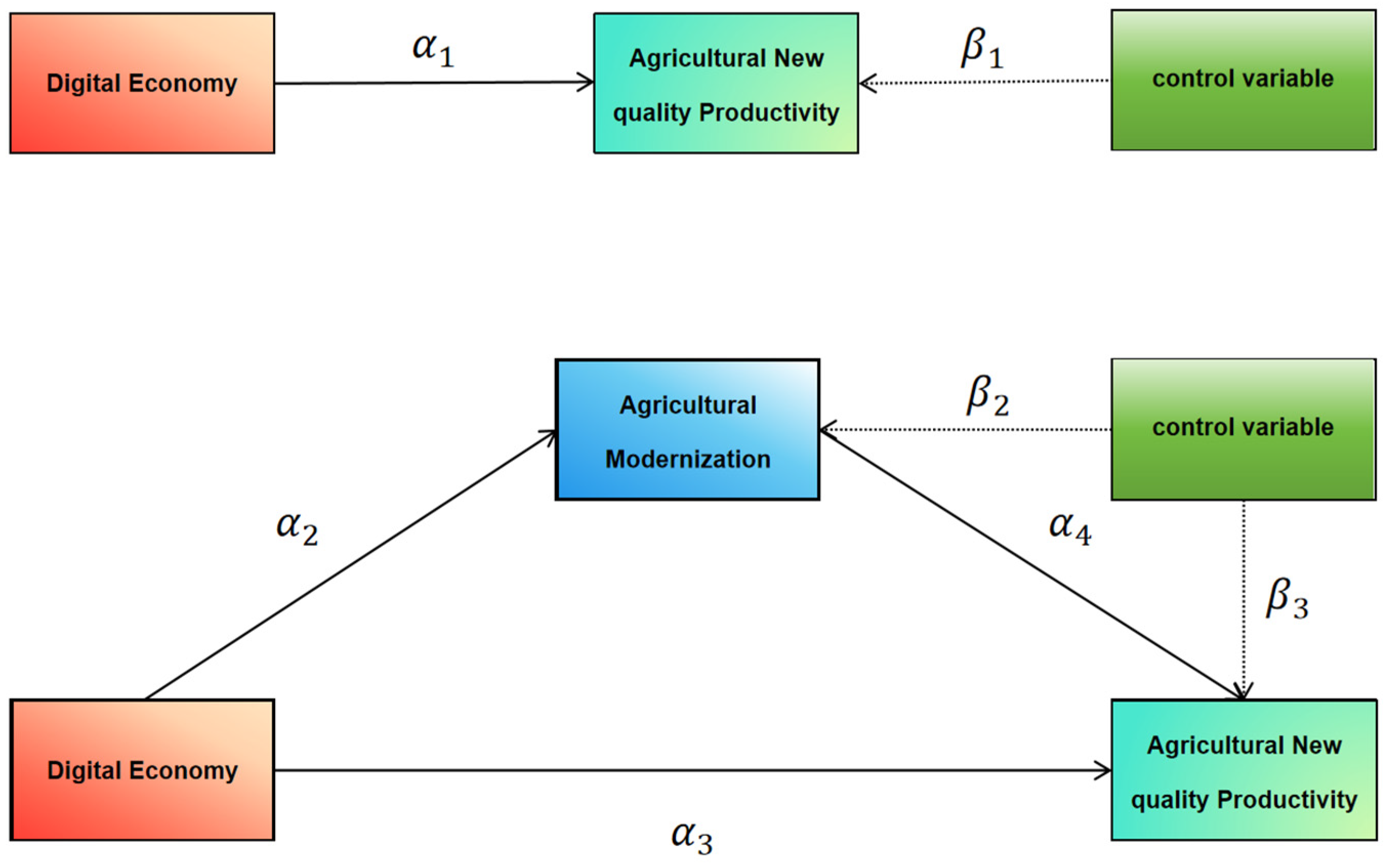
24]. Consequently, the following hypothesis is proposed, assuming the relationship as shown in
Figure 1—Model 1.
H1: The digital economy exerts a significant positive influence on agricultural new-quality productivity.
2.2. Digital Economy and Agricultural Modernization
Agricultural modernization entails the progressive transformation from traditional to high-quality agriculture. The digital economy propels this process through three primary pathways.
Technological Enabling: Technologies like the Internet of Things and big data allow for precise management and control of agricultural production processes [
25]. Initiatives such as “Internet + Agriculture” significantly enhance operational efficiency, leading to more refined and intelligent farming practices [
10].
Organizational Restructuring: Digital platforms facilitate the emergence of new agricultural business entities and innovative production relationships. They also contribute to bridging the urban-rural divide, thereby accelerating agricultural and rural modernization.
Institutional Transformation: Digital governance promotes the modernization of agricultural policy frameworks. Research suggests parallel upward trends in the development of the digital economy and agricultural modernization, with the former often leading the latter [
26]. Digital economy construction refines production techniques and standards, ultimately improving the quality of agricultural output.
Evidence indicates that applying digital technology markedly advances the agricultural modernization process. Practices in precision irrigation and intelligent greenhouses, for instance, have demonstrably raised the levels of standardization and intelligence in agricultural production. By enhancing farmers’ digital literacy and strengthening digital infrastructure, the digital economy elevates the productive capacity of a modernizing agricultural sector, contributing to quality improvements. Thus, the following hypothesis is formulated, assuming the relationship as shown in
Figure 1—Model 3.
H2: The digital economy significantly promotes the construction of agricultural modernization.
2.3. The Mediating Role of Agricultural Modernization
Agricultural modernization construction itself is a significant driver of agricultural new-quality productivity. By elevating mechanization levels, improving production conditions, and optimizing industrial structure, this fosters the qualitative transformation of productivity and is instrumental in building advanced agricultural productive capacities.
This study posits that agricultural modernization construction plays a crucial mediating role between the digital economy and agricultural new-quality productivity [
24]. This mediation aligns with the logic of innovation diffusion. Digital technologies first undergo a process from initial awareness and adoption to full implementation and confirmation through the vehicle of agricultural modernization. This process ultimately translates into substantial productivity gains. Specifically, agricultural modernization construction translates the potential of digital innovations into tangible productivity outcomes by establishing modern production and management systems, enhancing innovation infrastructure, and fostering a skilled workforce.
Empirical findings support this bridging role. Transforming conventional farming practices, shifting traditional agricultural paradigms, developing a robust talent pool, and reinforcing agricultural science and technology infrastructure are identified as effective strategies for promoting new-quality productivity. Comparative analyses suggest that regions with comparable levels of digital technology application but more advanced agricultural modernization exhibit greater productivity enhancements, underscoring the critical mediating value of agricultural modernization construction. Accordingly, the following hypothesis is proposed, assuming the relationship as shown in
Figure 1—Model 2.
H3: Agricultural modernization construction mediates the relationship between the digital economy and agricultural new-quality productivity.
4. Results
4.1. Descriptive Statistical Analysis
Descriptive statistics are presented in
Appendix A-
Table A2. The digital economy exhibits a right-skewed distribution (mean = 0.229, median = 0.192), confirming certain interregional disparities in digital development levels. Agricultural modernization demonstrates a relatively balanced distribution (mean = 0.395, median = 0.390), meeting the stability requirements for a mediating variable. Similarly, agricultural new-quality productivity shows right-skewed characteristics (mean = 0.268, median = 0.220), suggesting potential differential impacts of the digital economy on productivity development [
23]. The clustered distribution of control variables (mean = 0.652, median = 0.634) provides a reliable foundation for model estimation. These distributional characteristics offer substantial data support for subsequent mechanism analysis.
4.2. Dependency
Table 4 analysis reveals a strong positive correlation (0.848,
p < 0.01) between the digital economy (DE) and agricultural new-quality productivity (ANQP), supporting the “direct enabling productivity of digital economy” hypothesis. Agricultural modernization (AM) also positively correlates with agricultural new-quality productivity (0.284,
p < 0.01), providing basis for testing the mediation effect (DE → AM → ANQP). The significant DE-AM correlation (0.207 *,
p < 0.05) validates digital economy’s role in advancing agricultural modernization (e.g., through smart agriculture and supply chain digitization). Control variables (CV) show a significant agricultural new-quality productivity correlation (0.399 **,
p < 0.01), confirming their necessity for avoiding omitted variable bias. These Pearson correlations establish prior evidence for mediation modeling, strengthen study coherence, and support subsequent mechanism tests.
4.3. Linear Regression
As a general rule, variance inflation factor (VIF) values below 5 indicate acceptable levels of multicollinearity that do not require complex corrective measures. The multicollinearity diagnostics revealed that all variables demonstrated VIF values below this threshold, confirming that intervariable correlations remain within acceptable limits. The linear regression results presented in
Appendix A-
Table A3 show a mean VIF of 2.516. While this exceeds the ideal value of 1, it remains substantially below the conventional threshold of 10 typically associated with severe multicollinearity. This suggests the presence of moderate but manageable correlations among predictors, without sufficient severity to compromise the model’s estimates. Accordingly, we proceed with subsequent analyses.
4.4. Reference Regression
The baseline regression results presented in
Table 5 confirm a statistically significant and positive effect of the digital economy on agricultural new-quality productivity. Across various model specifications, the regression coefficients for the digital economy remain consistently positive and significant (coefficient range: 0.598–0.742,
p < 0.01), demonstrating robust direct effects [
26].
Regarding explanatory power, Model (4)—which includes all control variables and time-fixed effects—achieves an R2 of 0.727. This indicates that the digital economy and agricultural modernization collectively account for 72.7% of the variance in agricultural new-quality productivity, highlighting the fundamental role of digital elements in productivity enhancement.
In terms of economic significance, the results from Model (4) show a digital economy coefficient of 0.598 (p < 0.01), implying that a one-unit increase in the digital economy level corresponds to an approximately 59.8% improvement in agricultural new-quality productivity. This effect magnitude substantiates the substantial driving force of digital technology in agricultural system transformation.
Particularly noteworthy is the stability and significance of the digital economy coefficients despite the gradual inclusion of control variables and time-fixed effects [
39]. The persistent significance of these effects at the 1% level across different model specifications provides a reliable empirical foundation for subsequent mediation analysis.
4.5. Robust Test
4.5.1. Endogenetic Test
A potential reciprocal relationship may exist between the digital economy and agricultural new-quality productivity [
5]. This study employed the Durbin–Wu–Hausman test to examine potential endogeneity in the digital economy as the core explanatory variable, with results presented in
Appendix A-
Table A4 [
40]. The test statistics (χ
2(1) = 7.602,
p = 0.006; Wu–Hausman F (1117) = 7.843,
p = 0.006) confirm the presence of endogeneity, indicating that ordinary least squares estimation would yield biased results [
41]. Therefore, employing an instrumental variable approach is both necessary and appropriate.
Digital inclusive finance serves as a macro-level financial infrastructure indicator that primarily promotes overall digital economic development through improving financing environments and facilitating technology penetration, without directly affecting the technological core of agricultural new-quality productivity. Consequently, this study utilizes digital inclusive finance as the instrumental variable.
The weak instrument problem was addressed through two-stage least squares estimation to handle endogeneity.
Table 6 presents the 2SLS results. The first-stage regression shows a statistically significant coefficient of 0.001 (t = 10.665,
p = 0.000) for the digital inclusive finance index, confirming its strong correlation with the digital economy. The F-statistic of 66.918 substantially exceeds the Stock–Yogo critical value of 16.38 at the 10% level, providing strong evidence against the weak instrument hypothesis and verifying the instrument’s validity [
5].
In the second-stage analysis, the 2SLS results demonstrate that after accounting for endogeneity, the digital economy maintains a statistically significant and substantially larger promoting effect on agricultural new-quality productivity. The estimated coefficient of 0.799 (t = 13.266, p < 0.01) indicates that a one-unit increase in the digital economy level corresponds to approximately 79.9% improvement in agricultural new-quality productivity. This effect size significantly exceeds the baseline regression estimate (approximately 59.8%), revealing that conventional estimation methods may underestimate the true impact of the digital economy due to endogeneity bias.
The second-stage regression achieves an R2 of 0.73, indicating that the digital economy and control variables jointly explain 73% of the variance in agricultural new-quality productivity. The model’s overall validity is further supported by the Wald test (χ2(2) = 247.111, p = 0.000), confirming the robustness of the estimation results.
4.5.2. Other Robustness Tests
To address potential disruptions during the 2019–2022 pandemic period, we conducted robustness checks using a subsample approach with balanced panel data from 2013–2018 and 2023. As presented in
Table 7, the digital economy (DE) coefficients remain stable and statistically significant at the 1% level across various model specifications (coefficient range: 0.590–0.734). This range closely aligns with the full-sample baseline estimates (0.598–0.742), confirming the reliability of our core findings.
The full model (4) with all control variables and time-fixed effects shows a digital economy coefficient of 0.590 (t = 3.309, p < 0.01), indicating that a one-unit increase in digital economy level corresponds to a 59.0% improvement in agricultural new-quality productivity (ANQP). This effect magnitude is consistent with the corresponding full-sample model estimate (59.8%), further validating the robustness of the promotional effect.
The goodness-of-fit measures demonstrate stable explanatory power across all robustness check models, with R2 values ranging from 0.656 to 0.720. The complete model (4) achieves an R2 of 0.720, indicating that the core variables explain 72.0% of the variance in agricultural new-quality productivity. All models pass significance tests (p < 0.001) with coefficient directions aligning with theoretical expectations.
In conclusion, after accounting for time-fixed effects and excluding the unusual pandemic period, the digital economy maintains a statistically significant positive impact on agricultural new-quality productivity with stable effect magnitudes. These results provide robust support for hypothesis H1 and demonstrate the reliability of our research conclusions [
26].
4.6. Heterogeneity Test
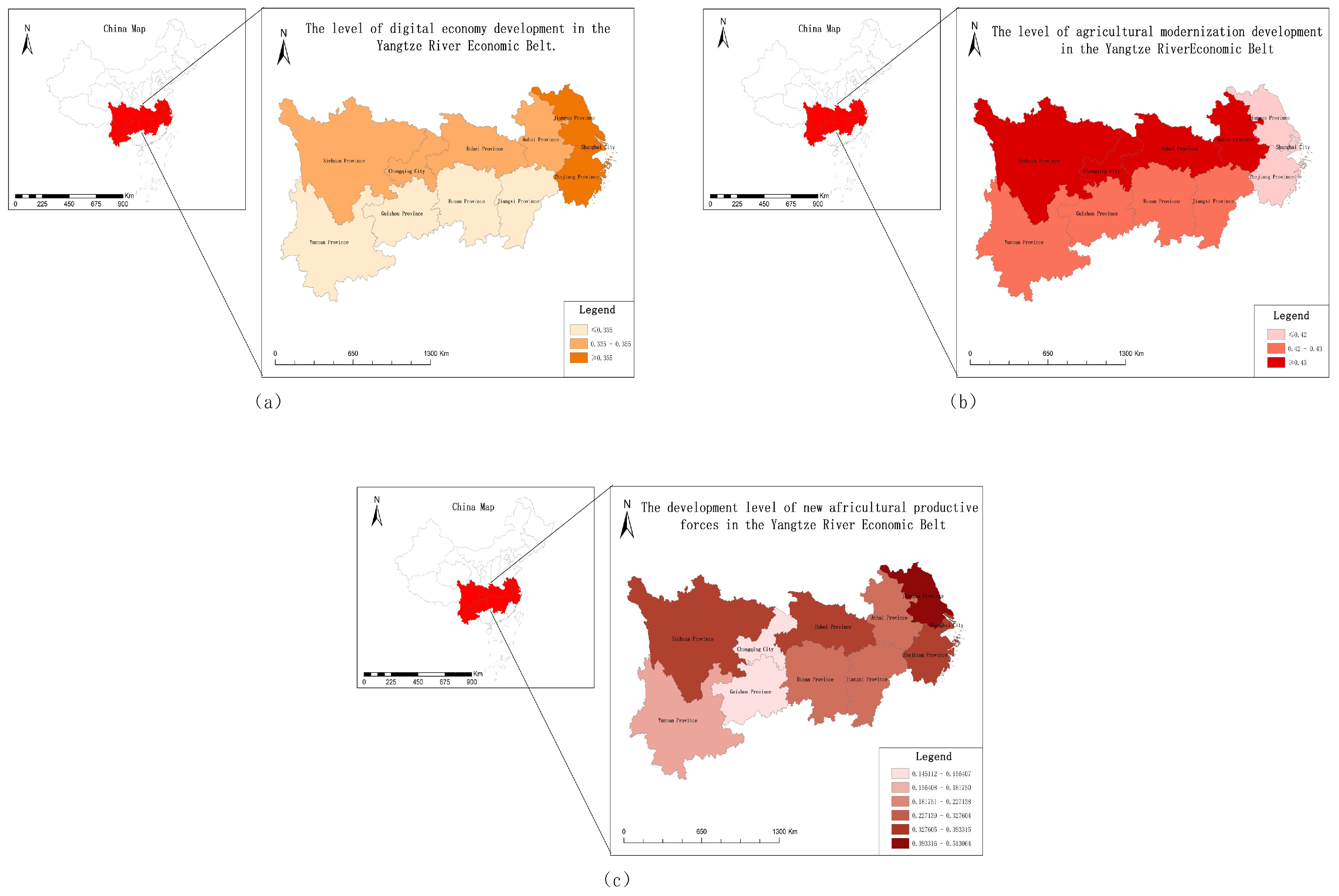
Given the vast geographical scope of the Yangtze River Economic Belt and the significant regional disparities in digital economy development levels, this study conducts a heterogeneity analysis by categorizing the 11 provinces and municipalities into three distinct groups based on comprehensive evaluation of their digital economy development, leading zones (Zhejiang, Jiangsu, Shanghai), growth zones (Sichuan, Chongqing, Hubei, Anhui), and starting zones (Guizhou, Yunnan, Hunan, Jiangxi). This classification primarily relies on the Digital Inclusive Financial Index while incorporating considerations of digital industry scale and infrastructure coverage across different regions.
Table 8 presents the subgroup regression results, revealing significant regional heterogeneity in the impact of the digital economy on agricultural new-quality productivity. In terms of effect magnitude, after controlling for relevant variables, the promoting effect demonstrates a clear gradient pattern, most prominent in growth zones (coefficient = 0.958), followed by leading zones (coefficient = 0.525), and relatively weaker in starting zones (coefficient = 0.257). Specifically, a one-unit increase in digital economy level corresponds to approximately 95.8%, 52.5%, and 25.7% improvements in agricultural new-quality productivity in growth, leading, and starting zones, respectively [
42].
Substantial differences emerge in model explanatory power across regions. Growth zones achieve the highest goodness-of-fit (R2 = 0.574), indicating that digital economy and related variables explain 57.4% of the variance in agricultural new-quality productivity in these areas. Leading zones show moderate explanatory power (R2 = 0.340), potentially constrained by sample size limitations, while starting zones demonstrate relatively limited explanatory capacity (R2 = 0.259). This gradient pattern closely aligns with the respective digital economy development stages of each region. Although statistical significance is weaker in starting zones, the persistently positive coefficient suggests untapped development potential.
From the perspective of technology diffusion theory, we attribute these regional differences to several factors, growth zones are undergoing rapid digital infrastructure improvement and development model transformation, where digital technology applications yield the most substantial marginal utility; leading zones, having reached a relatively mature stage of digital economy development, experience diminishing marginal returns from technological applications; while starting zones, constrained by inadequate digital infrastructure, limited technology absorption capacity, and incomplete supporting policy systems, have not yet fully realized the promotive effects of digital economy. Additionally, regional economic characteristics contribute to these patterns: leading zones benefit from high concentration of innovation factors in the Yangtze River Delta core area; growth zones leverage their strategic position in the middle reaches of the Yangtze River Economic Belt, effectively connecting eastern and western regions; starting zones, predominantly located in central and western provinces with higher proportions of traditional industries, face relatively weaker foundations for digital transformation [
42].
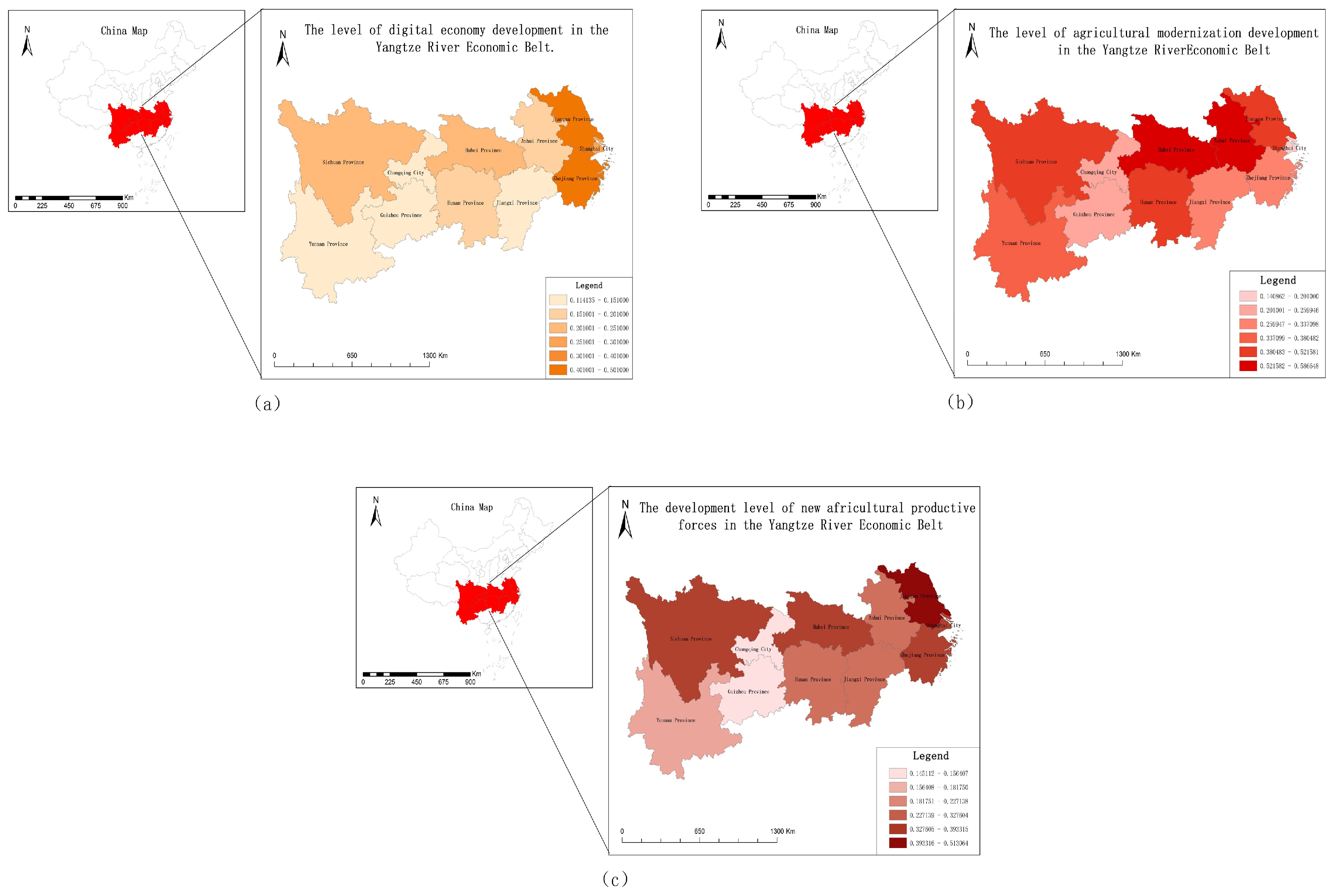
To visually demonstrate these regional disparities,
Figure 5 presents spatial distributions of composite scores for digital economy, agricultural modernization, and agricultural new-quality productivity across the three zone types.
These findings illuminate the spatial patterns through which the digital economy influences agricultural new-quality productivity, confirm the regional applicability of our research hypotheses, and provide empirical evidence for formulating differentiated regional digital economy development strategies [
43].
4.7. Mechanism Analysis
4.7.1. Analysis of Mediating Effects
The mechanism test results in
Table 9 demonstrate that the digital economy (DE) exerts a statistically significant positive effect on agricultural modernization (AM) (standardized coefficient β = 0.216,
p < 0.05). Thus, Hypothesis H2 is supported.
Regarding the impact pathway on agricultural new-quality productivity (ANQP), the total effect of the digital economy shows a standardized coefficient of 0.684 (
p < 0.01), while its direct effect coefficient is 0.665 (
p < 0.01). This indicates a significant direct promoting effect of the digital economy on agricultural new-quality productivity. Simultaneously, agricultural modernization (AM) demonstrates a significant direct impact on agricultural new-quality productivity (standardized coefficient = 0.091,
p < 0.05). These findings collectively confirm that agricultural modernization serves as a mediating variable in the process through which the digital economy promotes agricultural new-quality productivity [
20], thereby validating Hypothesis H3.
Regarding model fit indices, the baseline model incorporating only the digital economy and control variables (Model 1) achieves an R2 of 0.746, indicating that these variables collectively explain 74.6% of the variance in agricultural new-quality productivity (ANQP). After introducing agricultural modernization as a mediating variable (Model 3), the model’s R2 increases to 0.758, representing a 1.2 percentage-point improvement in variance explanation. Considering the limited sample size, this improvement remains substantively meaningful and further supports the partial mediating role of agricultural modernization.
In terms of practical effect magnitudes, the results indicate that each one-unit increase in the digital economy (DE) corresponds to a 68.4% enhancement in agricultural new-quality productivity (ANQP), demonstrating substantial practical significance. Similarly, each one-unit improvement in agricultural modernization (AM) leads to a 9.1% increase in agricultural new-quality productivity (ANQP). Although this effect size is relatively modest, it remains statistically significant and practically meaningful after controlling for other variables.
4.7.2. Bootstrap Test
To more rigorously test the mediating effect, this study employed the Bootstrap sampling method (with 5000 repetitions) for verification. The results demonstrate that agricultural modernization plays a significant partial mediating role between the digital economy and agricultural new-quality productivity. According to the Bootstrap test results in
Table 10, the indirect effect of the digital economy on agricultural new-quality productivity through agricultural modernization is 0.02, with a 95% confidence interval of [0.001, 0.074] that does not include zero, indicating a significant mediating pathway. It should be noted that the relatively low magnitude of this indirect effect may be attributed to the limited sample size, as a smaller sample reduces the detection power for subtle yet genuine mediating effects. Nevertheless, the significance confirmed by the Bootstrap test still supports the statistical reliability of this mediating pathway [
5]. The direct effect of the digital economy on agricultural new-quality productivity is 0.665, with a 95% confidence interval of [0.583, 0.746] excluding zero, while the total effect is 0.684, with a 95% confidence interval of [0.603, 0.765] also excluding zero, confirming that both effects are statistically significant. Furthermore, based on the test results, a one-unit increase in the digital economy directly promotes agricultural new-quality productivity by 66.5%, and indirectly enhances it by 2% through the advancement of agricultural modernization [
43]. These findings further verify that the digital economy not only directly drives the development of agricultural new-quality productivity but also exerts indirect influence by promoting agricultural modernization, thus supporting Hypothesis H3.
5. Conclusions and Policy Recommendations
5.1. Main Findings
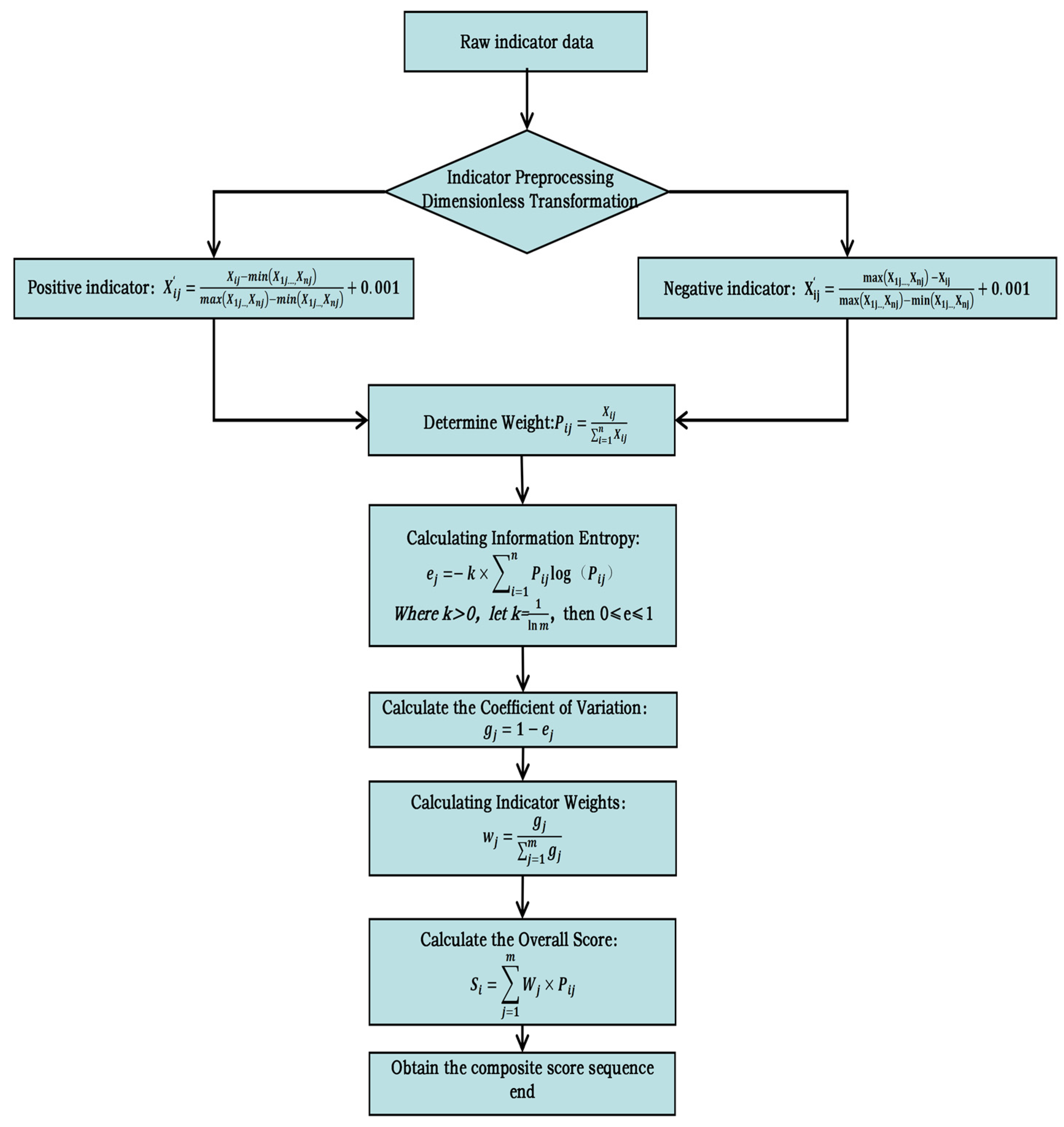
This study establishes an integrated analytical framework combining Innovation Diffusion Theory and Modernization Theory to examine the relationship between the digital economy and agricultural new-quality productivity in the Yangtze River Economic Belt from 2013 to 2023. Through the entropy weight method for indicator construction and multiple econometric approaches, several key findings emerge.
First, the digital economy demonstrates a significant dual-pathway impact on agricultural new-quality productivity [
23]. After accounting for endogeneity concerns, the digital economy not only exhibits a direct promoting effect (coefficient: 0.799) but also operates through agricultural modernization as a mediating channel. Methodologically, this reveals that ignoring endogeneity would lead to approximately 20% underestimation of the digital economy’s contribution.
Second, agricultural modernization serves as a crucial transmission mechanism through three primary channels: intelligent equipment application, production condition improvement, and human capital enhancement. These pathways effectively facilitate the transformation of digital technologies into practical productivity gains. Mediation effect tests confirm that agricultural modernization’s indirect effect accounts for 2% of the total impact, providing micro-level evidence for understanding the deep integration of digital and traditional agriculture [
10].
Third, significant regional heterogeneity exists in the digital economy’s effects. Following the technology diffusion framework, growth zones, leading zones, and starting zones demonstrate a clear gradient pattern in promotion effects (coefficients: 0.958, 0.525, and 0.257, respectively). This finding not only validates the applicability of Technology Diffusion Theory but also offers new empirical evidence explaining regional disparities in digital dividends.
5.2. Policy Recommendations
Based on these findings, this study proposes the following targeted policy recommendations.
At the strategic level, a “dual drivers, region-specific implementation” approach should be established. This involves strengthening both the direct empowering effects of digital technologies and enhancing technology transmission capacity through modernization system construction, while developing differentiated strategies according to regional characteristics.
At the implementation level, establish a regional collaborative development system forming a tiered development framework of “technological innovation in leading zones—application scaling in growth zones—infrastructure development in starting zones”; create special support funds focusing on large-scale technology application in growth zones and infrastructure construction in starting zones; develop differentiated technology promotion catalogs specifying key supported technologies and equipment for regions at different development stages; and build government–industry–university-research-application collaboration platforms to ensure effective alignment between technological innovation and regional needs.
Regarding institutional safeguards, implement a dynamic monitoring and evaluation system to regularly assess digital transformation progress across regions; establish scientific benefit assessment standards to ensure policy implementation matches regional development stages; and enhance talent development mechanisms and incentive systems, creating customized talent support policies for different regions.
5.3. Limitations and Future Research
This study has several limitations. First, the geographical scope is limited to 11 provinces and municipalities in the Yangtze River Economic Belt, requiring further validation of the conclusions’ generalizability across broader regions [
13]. Second, although major variables were controlled, potential omitted variables such as agricultural technology extension efficiency might affect estimation precision. Additionally, the time-lag effects of digital economy impacts warrant further investigation.
Future investigations could focus on the following aspects: Expand geographical coverage and develop more comprehensive indicator systems; employ dynamic panel models to analyze the temporal characteristics of digital technology impacts; utilize longitudinal data to examine the dynamic evolution of digital technology effects; and investigate the differential impact mechanisms of various digital technologies (e.g., big data, IoT, AI).
These research directions will contribute to a more complete understanding of the complex interactions between the digital economy and agricultural modernization, providing stronger theoretical support and practical guidance for agricultural digital transformation.