Article

The Effect of Calsporin® (Bacillus subtilis C-3102) on Laying Performance, Follicular Development, and Microorganisms of Breeder Geese

1
Institute of Animal Husbandry and Veterinary Science, Shanghai Academy of Agricultural Science, Shanghai 201106, China
2
Institute of Livestock and Poultry Research, Ningbo Academy of Agricultural Sciences, Ningbo 315040, China
*
Authors to whom correspondence should be addressed.
Agriculture 2025, 15(23), 2452; https://doi.org/10.3390/agriculture15232452
Submission received: 29 October 2025 / Revised: 18 November 2025 / Accepted: 25 November 2025 / Published: 26 November 2025
(This article belongs to the Section Farm Animal Production)

Abstract

This study aimed to investigate the effects of Bacillus subtilis C-3102 (CAL) on the laying performance, follicular development, and cecal microorganisms of breeder geese. The experiment was conducted at a goose farm in Lu’an City, Anhui Province, from April to December 2024. A total of 5965 geese (male-to-female ratio of 1:4.75) were used and divided into three groups with CAL supplementation levels of 0 ppm, 60 ppm, and 100 ppm. Changes in laying performance, serum hormones, follicle number, and fecal microorganisms were analyzed. The results showed that, compared with the control group, the total number of eggs laid in the 100 ppm BS group increased by 2.77 eggs (p < 0.05), and the number of graded follicles was significantly increased by 78.2% (p < 0.05). There was no significant difference in serum reproductive hormones among all groups (p > 0.05). Microbial analysis revealed that the 100 ppm CAL group had a significantly higher abundance of Firmicutes, with enrichment of the genera Bacillus and Lactococcus. Additionally, the relative abundance of Bacillus was significantly positively correlated with the level of intestinal secretory immunoglobulin A (sIgA) (p < 0.05). However, the egg weight and egg shape index in the 60 ppm CAL group were significantly lower than those in the other groups (p < 0.05), and there was no significant difference in hatching rate among all groups (p > 0.05). This study indicated that CAL has precise application value in the green breeding of breeder geese. It is recommended to add CAL at a dose of 100 ppm, which can improve the laying performance and optimize the follicular development of breeder geese by enhancing intestinal microecology and mucosal immune function. The results provide a direct theoretical basis and practical reference for the scientific application of CAL in breeder goose breeding.

1. Introduction

With the accelerated transformation of the breeding industry toward green and healthy development—defined in this context as a sustainable breeding paradigm that prioritizes antibiotic reduction, environmental friendliness, the intestinal health of animals, and efficient feed utilization, in line with global trends of reducing antimicrobial resistance and promoting ecological breeding—the gradual prohibition of antibiotics in livestock and poultry production has become an inevitable trend in the industry’s evolution [1]. Against this backdrop, probiotics, leveraging their prominent advantages such as high safety, environmental friendliness, and low risk of inducing drug resistance in pathogenic microorganisms, have rapidly emerged as a highly researched antibiotic alternative in the livestock and poultry breeding field, providing key technical support for the realization of green and healthy development [2].
Bacillus subtilis (BS), a type of probiotic that grows aerobically and forms spores, has become one of the ideal alternative strains to antibiotic additives due to its internationally recognized applicability in feed and efficient probiotic functions [3]. In the form of formulations, BS exists stability as endospores; upon entering the animal intestine, these endospores can germinate rapidly. Notably, the extent and location of this germination are critical for BS’s efficacy and exhibit high variability, as they are modulated by multiple factors, including BS strains, the host’s intestinal microenvironment such as pH and microbiota composition, and dietary components. Following germination, BS secretes highly active enzymes such as proteases, lipases, and amylases [4]. These enzymes not only facilitate the degradation of complex carbohydrates in plant-based feed to improve the utilization rate of nutrients but also produce a variety of metabolites that antagonize intestinal pathogenic bacteria. By means of “competitive exclusion”, they inhibit the colonization of harmful bacteria, thereby maintaining the balance of the intestinal microecology. In addition, BS possesses characteristics of heat resistance, acid and alkali resistance, and mechanical extrusion resistance, resulting in minimal damage to its activity during feed processing—this enables its wide application in the feed industry [5].
Calsporin® (CAL) is a specific and highly active strain of BS C-3102. It can not only ensure intestinal health by promoting intestinal peristalsis and regulating mucosal immunity but also reduce the feed conversion ratio by enhancing digestive enzyme secretion and improving the efficiency of intestinal nutrient absorption. In breeding experiments on swine and poultry, CAL has improved growth performance (e.g., by reducing the broiler feed conversion ratio by 1.46–6.92% [6] and 5.52% overall [7]) and enhanced immunity. This strain can produce substances such as short-chain fatty acids (SCFAs) through metabolism [8], which further strengthen the intestinal physical and immune barrier functions and reduce intestinal inflammatory responses, and long-term supplementation helps reduce reliance on antibiotics during the breeding process—fully aligning with the current development direction of green and healthy breeding [9].
The balanced state of microecology is closely related to nutrient absorption, immune regulation, and reproductive function in poultry. Specifically, probiotics exert direct or indirect regulatory effects on poultry reproductive performance through two core pathways: The first is through optimizing nutrient metabolism to ensure the supply of reproductive substrates—probiotics can enhance the decomposition of dietary crude protein, amino acids, and minerals such as calcium, phosphorus, and zinc in the intestine, improving the absorption efficiency of key reproductive nutrients. Studies have shown that dietary supplementation of BS can increase the egg production rate of breeder hens by enhancing amino acid absorption [10]. The second is through maintaining immune homeostasis to reduce reproductive tract inflammation—probiotics colonize the intestinal mucosa to form a biological barrier, inhibiting the adhesion and proliferation of pathogenic bacteria such as Escherichia coli and Salmonella, reducing the risk of systemic inflammation and mitigating reproductive disorders caused by immune stress. Probiotics can also regulate the balance of reproductive tract microflora, reduce the incidence of salpingitis, and improve egg quality [11].
Geese are an important breed in special poultry breeding, and their laying performance directly affects the economic benefits of breeding. The balanced state of their microecology is closely related to the nutrient absorption, immune regulation, and reproductive function of breeder geese [12]. However, current research on the effects of CAL on the laying performance, follicular development, and microorganisms of geese remains relatively limited. Existing reports mostly focus on breeds such as broilers, laying hens, or swine, and systematic research targeting breeder geese—this specific breeding object—is still insufficient. This phenomenon may stem from geese’s distinctive physiological adaptations, particularly their elongated intestinal tract, which enhances nutrient retention time, their specialized cecal fermentation systems capable of processing high-fiber diets, and their seasonally regulated reproductive cycles, which drive unique metabolic requirements during egg production phases. This experiment took breeder geese as the research object to explore the effects of CAL on their laying performance, follicular development, and microbiota. The aim was to clarify the application effects and mechanism of action of this strain in breeder goose breeding, provide a theoretical basis and data support for its scientific application in the breeder goose industry, and further promote the development of breeder goose breeding toward the direction of green and healthy development as defined above.

2. Materials and Methods

2.1. Materials

The main component of CAL is BS C-3102, which is added to the feed in powder form. Its carrier is a mixture of calcium carbonate. The content of BS C-3102 in the product is ≥1.0 × 10¹⁰ CFU/g.

2.2. Experimental Design and Feeding Management

The experiment was conducted at a breeder goose farm in Lu’an City, Anhui Province (Latitude: 31°58′59″ N, Longitude: 116°19′36″ E), from April to December 2024. A total of 5965 breeder geese (Zhedong White geese) were included at the start of the experiment, including 1035 male geese and 4930 female geese. Three dietary treatments (0, 60, and 100 ppm of CAL) were established. Each treatment was assigned 2 separate sheds, with 4 independent sub-sheds per shed. The sub-sheds served as the true experimental units, resulting in 8 replicates per treatment (n = 8). Stocking density was strictly maintained at 1.5 m2/geese across all sub-sheds to control confounding effects. For the Con group (0 ppm), the two sheds housed 185 and 180 male geese and 879 and 854 female geese, respectively. For the 60 ppm CAL group, the two sheds housed 150 and 160 male geese and 690 and 774 female geese, respectively. For the 100 ppm CAL group, the two sheds housed 180 and 180 male geese and 870 and 863 female geese, respectively. All experimental sheds were equipped with automatic environmental monitoring devices, with temperature (18–25 °C) and relative humidity (55–65%) monitored at 30 min intervals daily, ventilation controlled at 5–8 m3/(h·bird) via frequency-conversion fans (hourly recorded), and photoperiod standardized to 16L:8D (300–500 lx) with programmable LED lights (daily recorded for consistency); all environmental parameters were continuously archived throughout the experiment. The experimental diets were formulated according to the nutritional requirements of geese, and their composition and nutritional levels are shown in Table 1. Breeder geese in all groups had free access to feed and water, feces were cleaned up regularly, and sheds were disinfected periodically.

2.3. Laying Performance

The number of eggs laid and broken eggs and the egg weight in each group were recorded daily to calculate the laying rate (number of eggs laid/number of female geese × 100%) and average egg weight. Eggshell strength was measured using an eggshell strength tester (ORKA, Ramat HaSharon, Israel), and eggshell thickness was determined with an electronic digital caliper (Guanglu Digital Measurement & Control Co., Ltd., Guilin, China).

2.4. Serum Collection

Two female geese were randomly selected from each shed, and 4 mL of blood was collected from the wing vein of each goose using dry tubes. The blood samples were allowed to stand at 37 °C for 30 min, then centrifuged at 3000 r/min to separate the supernatant. The serum was aliquoted and stored in a −80 °C refrigerator for later use. The contents of follicle-stimulating hormone (FSH), prolactin (PRL), luteinizing hormone (LH), anti-Müllerian hormone (AMH), progesterone (PROG), and estradiol (E2) in the serum were sent to Shanghai Pinyi Biotechnology Co., Ltd., Shanghai, China. for detection using ELISA kits. The assay sensitivity for all hormones was ≤0.05 ng/mL.

2.5. Follicle Collection

At the end of the experiment, 10 geese were randomly selected from each group for slaughter. After 12 h of fasting, the geese were euthanized by exsanguination from the neck and disinfected with benzalkonium chloride solution for 5 min, and then the abdominal cavity was incised with a blade. The entire ovary was quickly removed and placed in a sterile Petri dish containing PBS solution (pH = 7.4). Subsequently, visible follicles on the ovary were carefully cut off using sterile small scissors and forceps. The length and diameter of each follicle were measured with a vernier caliper, and the follicles were classified as follows: hierarchical follicles (>2 cm) and large yellow follicles (10 mm < size ≤ 2 cm). The number of follicles in each category was counted.

2.6. Fecal Microbial Samples

Composite fecal samples were pooled from 5–8 random spots within each sub-shed, with 1 sample per sub-shed, 8 samples per treatment, and 24 samples in total collected during sampling. A 2 g aliquot of each sample was placed in a sterile cryovial, immediately frozen in liquid nitrogen, and then transferred to a −80 °C refrigerator for 16S rRNA gene sequencing analysis. The integrity of the samples was detected by 1% agarose gel electrophoresis, and quantification was performed using a Qubit 4.0 instrument. For the V3-V4 region of the 16S rRNA gene, PCR amplification was carried out using primers F (5′-GTGCCAGCMGCCGCGGTAA-3′) and R (5′-CCGTCAATTCMTTTRAGTTT-3′). After purification, the PCR products were used to construct an Illumina MiSeq library, and high-throughput sequencing was performed using the Novaseq 6000 platform (Shanghai Personalbio Technology Co., Ltd., Shanghai, China).

2.7. Bioinformatics Analysis

After quality control filtering of raw sequences (removal of low-quality reads and chimeras), the DADA2 software was used to generate amplicon sequence variants (ASVs). Species annotation was performed based on the Silva database, and Alpha diversity indices were calculated. Principal Coordinate Analysis (PCoA) was used to evaluate differences in Beta diversity, and Linear Discriminant Analysis Effect Size (LEfSe) was employed to screen for differential species among groups.

2.8. Data Analysis

The experimental data were statistically analyzed using SPSS 26.0 software and expressed as “mean ± standard deviation (Mean ± SD)”. One-way analysis of variance (ANOVA) was used for comparisons among multiple groups, with the significance level set at p < 0.05.

3. Results

3.1. Egg Production

Table 2 below presents the specific values of eggs laid per female goose in each group across different months. The overall trend shows that the values of the three groups were close to 0 from April to June, started to increase in July, reached a relatively high level around October, and then gradually decreased. Additionally, there were differences in the values among different groups in each month: in October, the value was 12.73 for the control group, 12.49 for the 60 ppm CAL group, and 12.72 for the 100 ppm CAL group, all near the peak; in December, the value was 10.51 for the control group, 9.84 for the 60 ppm CAL group, and 10.66 for the 100 ppm CAL group. Compared with the Con group, the average total number of eggs laid increased by 0.59 eggs in the 60 ppm CAL group and by 2.77 eggs in the 100 ppm CAL group.

3.2. Egg Quality

The results are shown in Table 3. When 60 ppm of CAL was added to the diet, the egg weight was significantly lower than that of the Con group and the 100 ppm CAL group (p < 0.05). Additionally, the long-axis length and egg shape index were also significantly lower than those of the Con group and the 100 ppm CAL group (p < 0.05).

3.3. Hatchability

As shown in Table 4, the hatching eggs selected for incubation included 7283 eggs in the Con group, 14,287 eggs in the 60 ppm CAL group, and 7311 eggs in the 100 ppm CAL group. Indicators such as the first candling failure rate, second candling failure rate, fertilization rate, and normal hatching rate of eggs in each group were statistically analyzed, and no significant difference was found among the groups (p > 0.05).

3.4. Serum Hormone

As shown in Table 5, after adding CAL, the E2 level in the serum of the 100 ppm CAL group increased by 4.9% compared with the Con group; FSH and LH increased by 14.6% and 13.7%, respectively; and AMH and PROG also increased by 9.6% and 9.1%, respectively. None of these indicators reached statistical significance (p > 0.05).

3.5. Follicles

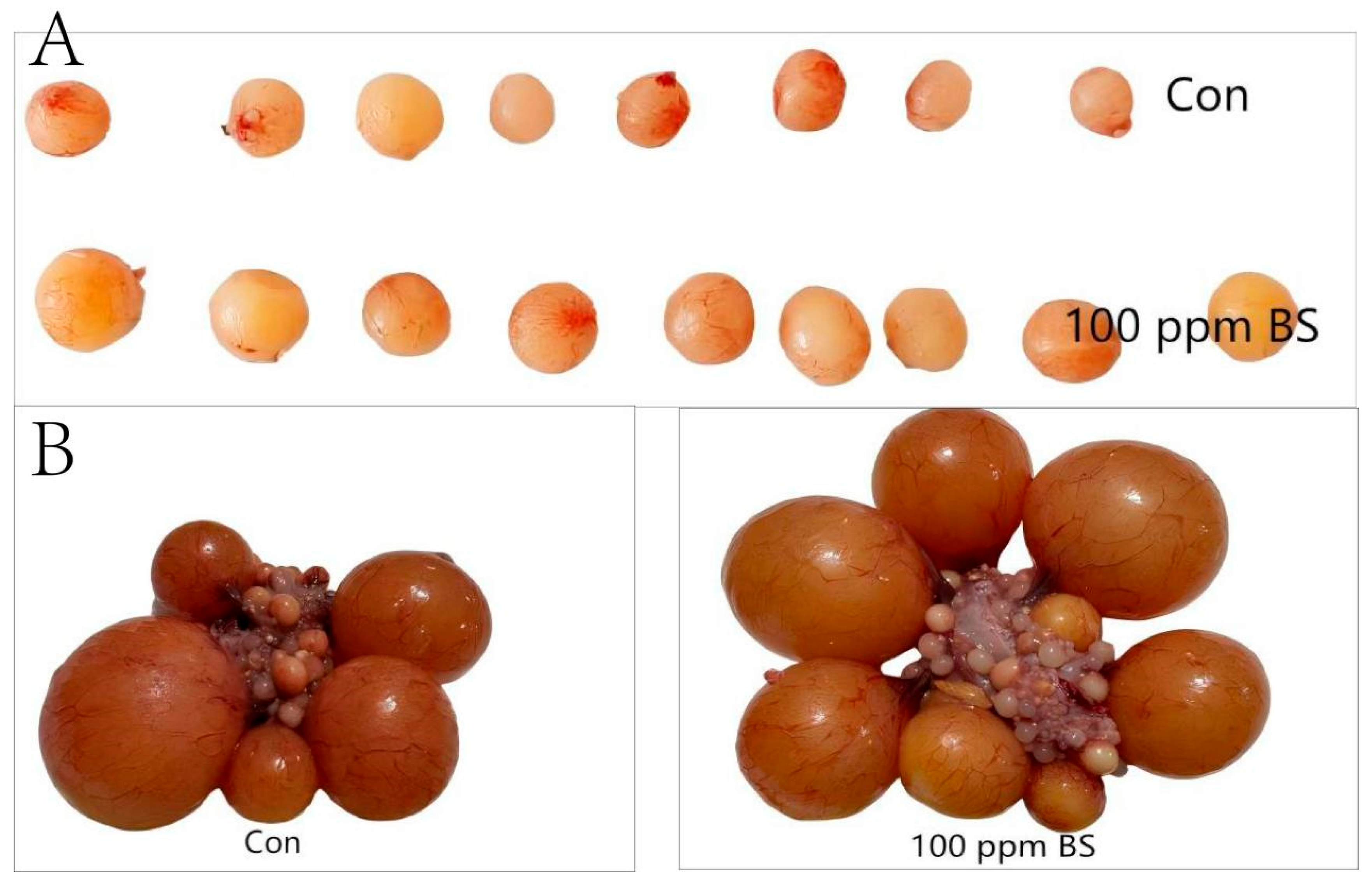
Shown in Figure 1 are the follicles of the Con group and the 100 ppm CAL group. In terms of the number of hierarchical follicles (Figure 1B), it was significantly increased in the 100 ppm CAL group by 78.2% compared with the Con group. While the number of large yellow follicles and the total number of large yellow follicles + hierarchical follicles increased by 8.1% and 29.8%, respectively (Figure 1A), the differences did not reach a statistically significant level (p > 0.05). The above results indicate that compared with the Con group, the number of follicles increased in the 100 ppm CAL group (Table 6).

3.6. Fecal Immune Factor

As shown in Table 7, the concentrations of secretory immunoglobulin A (sIgA) and inflammatory factors including interleukin-6 (IL-6), interleukin-10 (IL-10), and tumor necrosis factor-α (TNF-α) in the feces of geese were compared among the different groups. It was found that dietary supplementation with 60 ppm and 100 ppm of CAL both significantly increased the sIgA level (p < 0.05).

3.7. Fecal Microbial Diversity

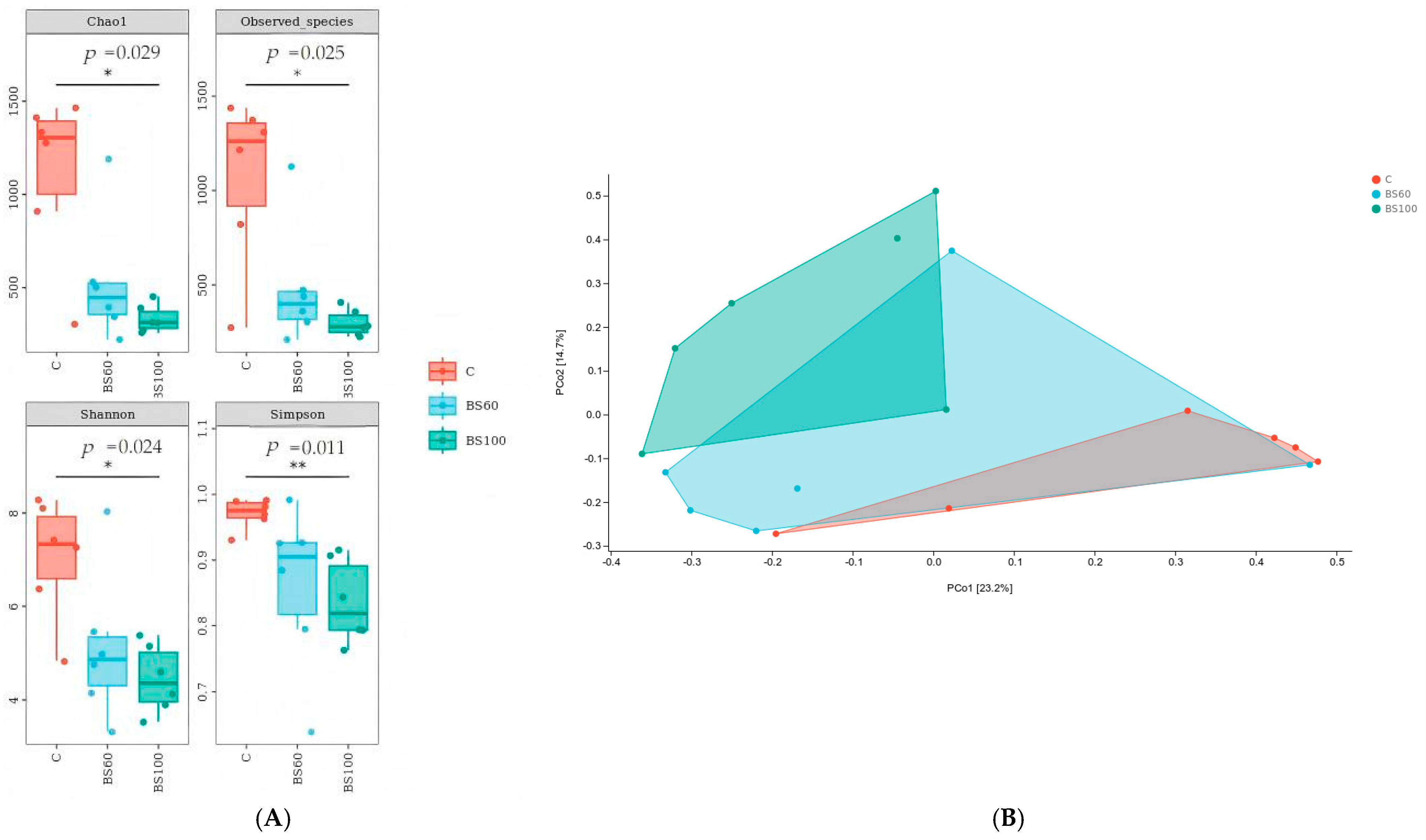
In terms of the α-diversity among groups (Figure 2A), there were obvious differences in microbial richness, represented by Chao1 and the observed species. We observed that the fecal diversity of the Con group was higher than that of the other experimental groups, and overall, the differences within each group were small. Regarding microbial diversity, represented by the Shannon and Simpson indices, a significant difference was observed between the Con group and the 100 ppm CAL group. It is preliminarily concluded that CAL supplementation improved the stability of fecal microbiota and reduced the diversity of fecal microorganisms. In terms of β-diversity (Figure 2B), no obvious inter-group differences or intra-group differences were observed.

3.8. The Composition of and Differences in Fecal Microbiota

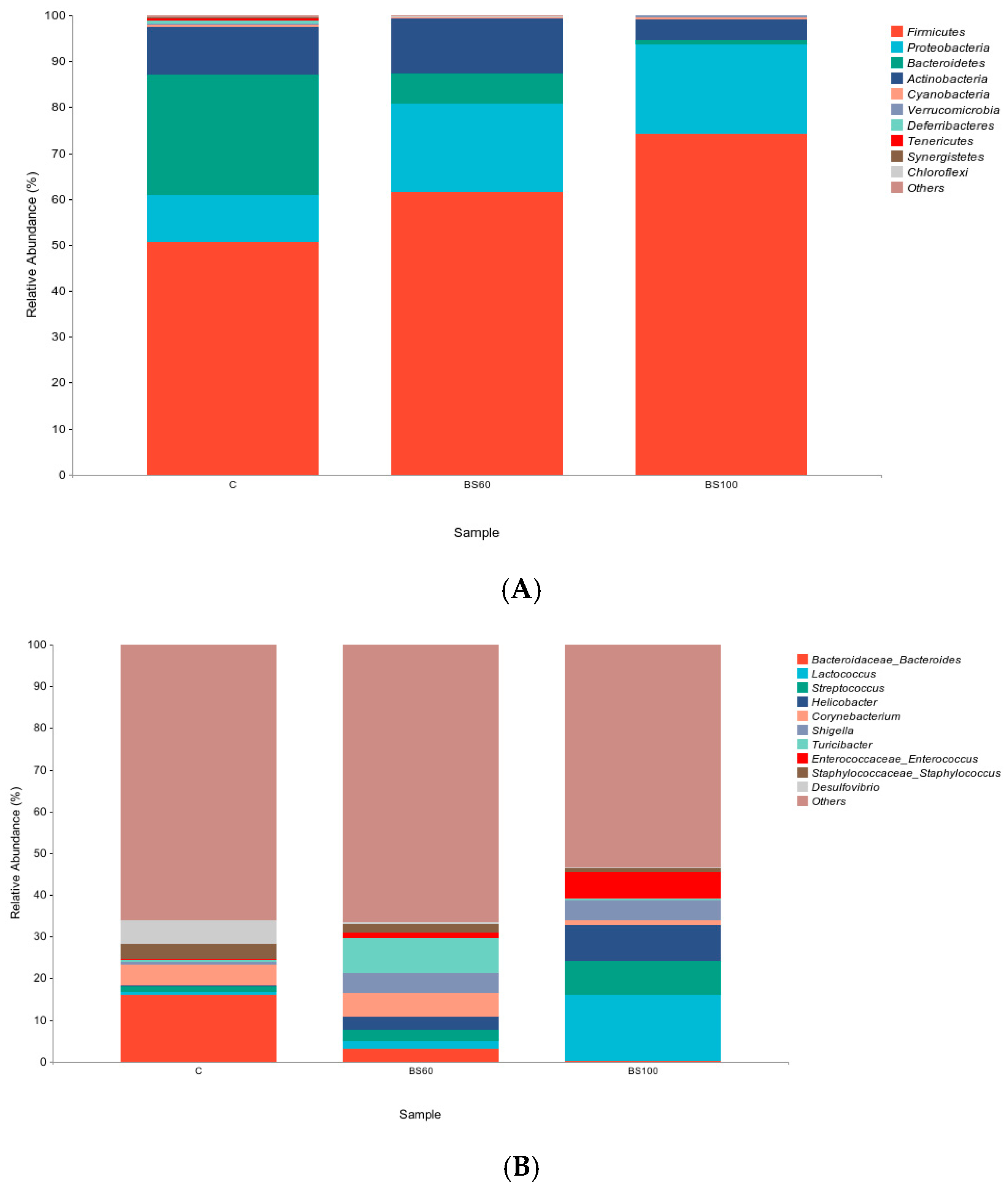
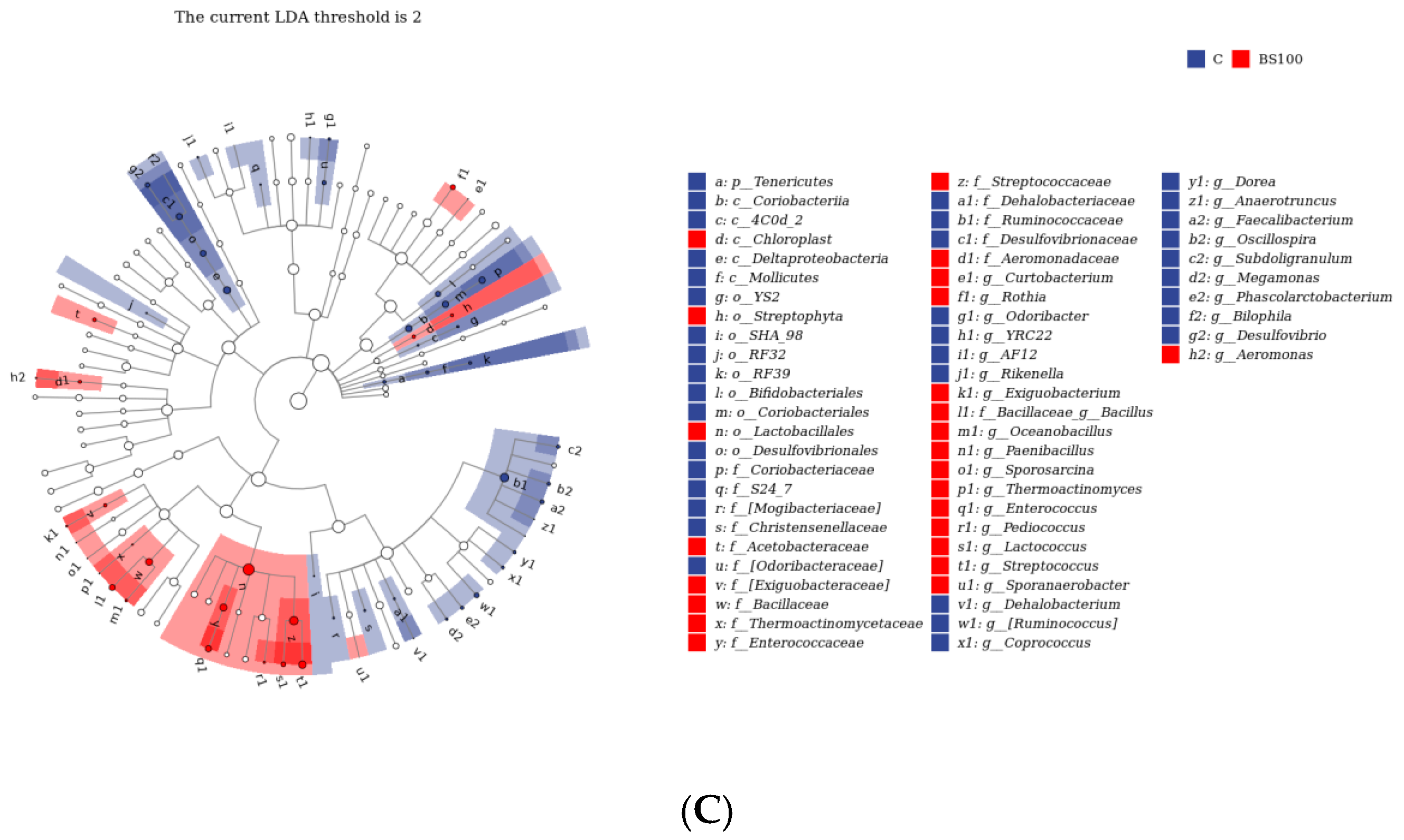
The phylum and genus levels among groups are shown in the figures below. At the phylum level, we observed an upward trend in Firmicutes, with the 100 ppm CAL group having the highest level of Firmicutes, which was consistent with the trend of dietary CAL supplementation (Figure 3A). At the genus level, among the top 10 genera in terms of abundance, we detected Bacillaceae-Bacillus, and the 100 ppm CAL group had the highest abundance of this genus, which was significantly higher than that in the other groups (Figure 3B). In the LEfSe analysis of species differences, we also observed a higher abundance of Bacillaceae-Bacillus in the 100 ppm CAL group. Meanwhile, we also found a higher abundance of Lactococcus (a key group of Firmicutes) in the 100 ppm CAL group (Figure 3C).

3.9. The Association Between Fecal Factors and Microbiota

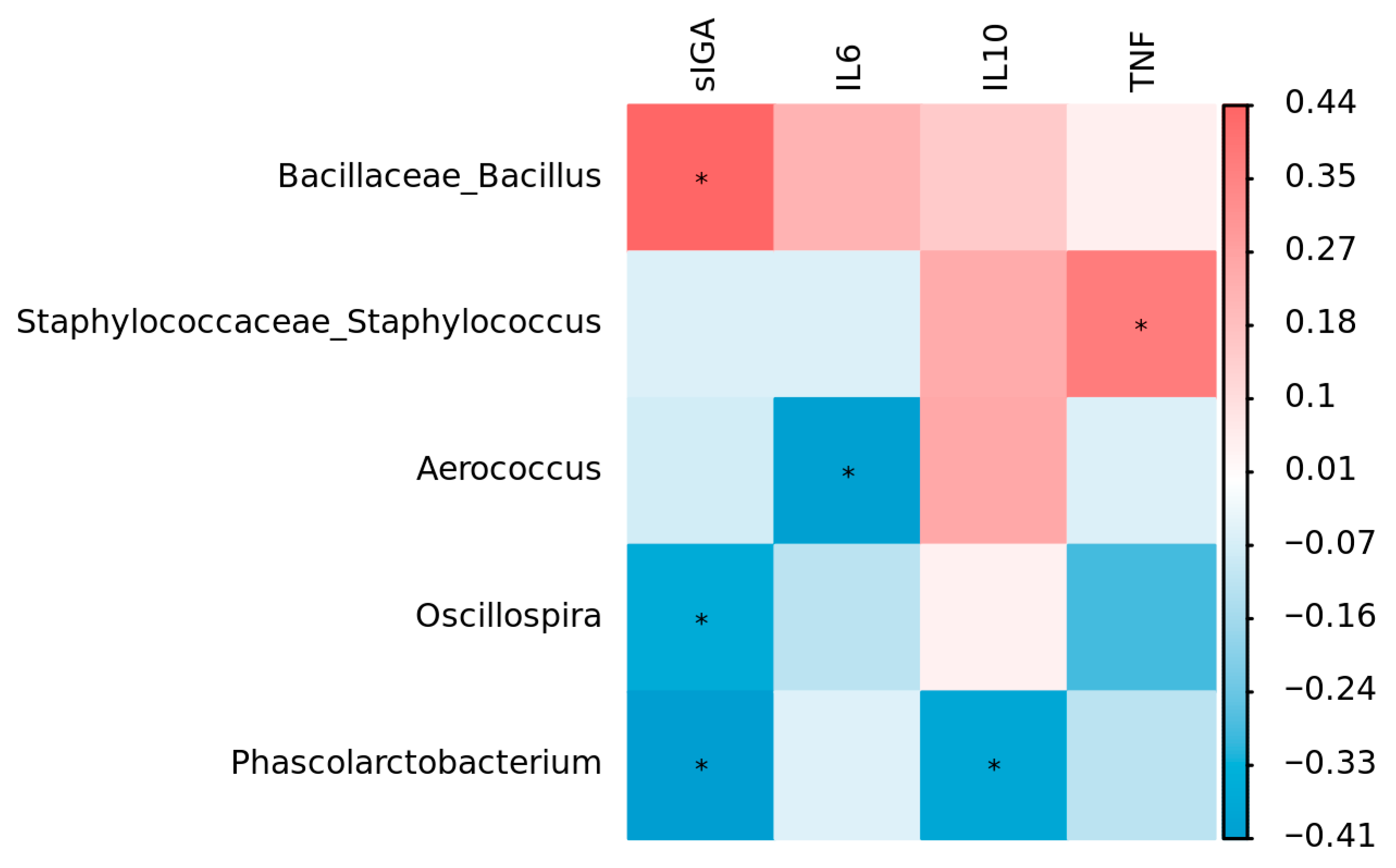
A correlation analysis was conducted between the top 25 genera (by abundance) and the fecal immune parameters. In the previous analysis of immune parameters, we observed differences in sIgA among groups. The results of the correlation analysis showed that Bacillus had a significant positive correlation with sIgA. Specifically, Bacillaceae_Bacillus was significantly positively correlated with sIgA and also significantly positively correlated with TNF. Staphylococcaceae_Staphylococcus showed no significant correlation with any of the four inflammatory factors. Aerococcus was significantly negatively correlated with IL-10. Oscillospira was significantly negatively correlated with IL-6. Phascolarctobacterium was significantly negatively correlated with both sIgA and TNF-α (Figure 4).

4. Discussion

With the advancement of green breeding and global calls to reduce antibiotics in animal husbandry, improving goose egg production performance is no longer just about boosting yield. It also needs to tackle challenges from traditional practices—such as egg antibiotic residues and bacterial resistance caused by overusing antibiotics for disease prevention. These issues not only harm food safety but also disrupt geese’s intestinal microecology, further interfering with their laying stability.
Egg production performance is a core biological indicator for evaluating the reproductive potential of geese, including egg production, egg-laying rhythm, egg quality, and the fertilization capacity of breeder eggs [12]. Conducting research on the mechanism analysis and regulation strategies of goose egg production performance holds prominent academic value and practical significance in both the basic research of agricultural animal reproductive biology and the field of industrial application. At present, there have been numerous studies on the improvement of egg production performance by probiotics. In laying hens, it has been found that dietary supplementation with Lactobacillus plantarum can increase the average daily feed intake and egg production rate of laying hens [13]; another study has shown that dietary addition of Lactobacillus plantarum to laying hens can improve the quality of eggs [14], indicating the positive regulatory effect of probiotics on the production performance of egg-laying poultry. Similarly, BS also exerts a positive effect on the egg production performance of poultry. Some studies have demonstrated that dietary supplementation with BS can reduce the probability of broken eggs and soft-shelled eggs [15]. There are also studies showing that BS has no effect on egg production performance but can improve the cecal microbiota of laying hens [16]. This may be closely related to the common functions of BS in regulating intestinal microbiota and promoting nutrient metabolism: on one hand, BS can secrete digestive enzymes such as protease and amylase, thereby improving the utilization rate of protein and carbohydrates in feed [17]; on the other hand, BS enhances the nutrient absorption capacity of the intestinal mucosa by improving intestinal morphology, providing a material basis for ovarian development and egg formation [18]. In this study, 100 ppm CAL significantly increased the total number of eggs produced, with an increase of 2.77 eggs compared with the Con group. Relevant studies have shown that CAL can improve the egg production rate and egg quality of geese [19]. Notably, the 60 ppm dose significantly reduced the egg weight and egg shape index, an unusual yet important finding that warrants in-depth exploration. It is hypothesized that the underlying mechanism may be associated with the non-beneficial perturbation of the intestinal microbiota induced by the intermediate dose (60 ppm): compared with the high dose of 100 ppm, CAL at 60 ppm may lack sufficient colonization and competitive capacity to establish a beneficial intestinal microbiota balance. Instead, it disrupts the absorption and metabolism of nutrients, thereby affecting the synthesis and deposition of egg yolk and egg white, ultimately leading to decreases in the egg weight and egg shape index. Meanwhile, in this experiment, we found that Kusubining at any concentration had no significant effect on the hatching rate of breeder geese. This may be because the core factors affecting the hatching rate of breeder geese are the quality of breeder eggs and the hatching environment, rather than intestinal-related factors.
The maintenance of breeder geese’s egg production performance relies on the continuous development and ovulation of follicles, a process precisely regulated by hormones secreted by the hypothalamic–pituitary–gonadal (HPG) axis. These hormones work synergistically throughout the entire process of follicle recruitment, growth, maturation, and ovulation [20]. FSH, a glycoprotein hormone secreted by the pituitary gland, serves as the core driver for follicle “recruitment” and “growth initiation”. Acting on ovarian granulosa cells, it can stimulate primordial and primary follicles to enter the growth pool while promoting the proliferation and differentiation of follicular theca cells to reserve a cellular basis for subsequent follicle development [21]. Studies on poultry have shown that increased FSH levels accelerate the initiation and growth of follicles in the follicle pool, making it a key driving signal for follicle development in the pre-laying period [22]. In this study, serum FSH in the 100 ppm CAL group showed an upward trend, and the significant increase in the number of graded follicles during the laying period suggests that BS may enhance follicle recruitment efficiency by upregulating FSH secretion, thereby increasing the number of graded follicles. E2, mainly secreted by developing follicles in the ovary, is a key estrogen during the follicle “maturation” stage. It not only promotes further proliferation and differentiation of follicular granulosa and theca cells, increasing follicle volume and enabling ovulation capacity, but also acts on the hypothalamus and pituitary gland through positive feedback to regulate the secretion rhythm of gonadotropins, ensuring the synchronization of follicle development and ovulation [23]. The upward trend of serum E2 in the 100 ppm group in this study, combined with the increase in the number of graded follicles, indicates that BS also regulates the follicle maturation stage, facilitating the smooth transition of follicles to the ovulation stage. PROG is involved in the formation and functional maintenance of the corpus luteum after ovulation, and PROG secreted by the corpus luteum is a key hormone for maintaining pregnancy [24]. Meanwhile, during the unfertilized laying cycle, PROG can also regulate the endocrine environment of the ovary, creating favorable conditions for the development of the next batch of follicles. The upward trend of PROG in this study further confirms the multi-hormone synergistic regulation of the HPG axis by BS. However, despite the positive regulatory trend of serum reproductive hormones, there was no significant difference among groups. This may be because BS cannot act directly on the HPG axis and can only affect hormones through the pathway of indirectly supporting HPG axis function. Notably, such hormone-mediated regulation aligns with the stage-specific effect of CAL observed earlier—this finding reveals CAL’s stage-specific regulation—it does not just boost follicle numbers but precisely accelerates their maturation from large yellow to hierarchical. This hints at CAL’s ability to fine-tune follicular microenvironment signals, offering a fresh lens into how probiotics, whether BS or CAL, modulate reproductive physiology through coordinated control over hormonal axes and follicular developmental transitions.
Fecal immune factors are closely associated with intestinal mucosal immune function. Among them, sIgA is a key effector molecule of the intestinal mucosal immune system, which maintains the integrity of the intestinal mucosal barrier by binding to pathogens, neutralizing toxins, and regulating intestinal flora colonization [25]. IL-6, IL-10, and TNF-α, however, are core indicators reflecting the intestinal inflammatory state, and changes in their levels are directly related to the balance of intestinal immune homeostasis [26]. In this study, dietary supplementation with 60 ppm and 100 ppm CAL both significantly increased the fecal sIgA level, with the concentrations in these two groups being significantly higher than that in the Con group. This suggests that CAL can enhance sIgA secretion in the intestinal mucosa, which may be related to the following mechanism: when BS colonizes the surface of the intestinal mucosa, its cell wall components can be recognized by pattern recognition receptors on intestinal epithelial cells or immune cells. This recognition activates immune signaling pathways, which in turn induces the differentiation of B lymphocytes in the intestinal mucosa into plasma cells, directly increasing the number of “sIgA-producing cells” [27]. In addition, this bacterium can secrete metabolites such as short-chain fatty acids and bacteriocins; these substances can further activate the intestinal mucosal immune microenvironment, promote the key expression of sIgA synthesis in plasma cells, and improve the sIgA synthesis efficiency of individual plasma cells [28]. Combined with fecal microbiota observations, this study found that the 100 ppm CAL group exhibited increased cecal Firmicutes abundance, along with enriched Bacillus and Lactococcus genera. Although CAL reduced microbial diversity, this outcome is not inherently negative—if the diversity decline reflects suppressed pathogens/non-beneficial taxa and enhanced beneficial bacteria dominance, it represents positive probiotic-mediated gut microbiota regulation. This change holds dual significance: From the perspective of nutrient metabolism, Firmicutes are key producers of intestinal short-chain fatty acids (SCFAs) [29]. SCFAs not only provide energy for intestinal cells but also supply energy to ovarian tissues through blood circulation, indirectly supporting follicle development [30]. From the perspective of immune regulation, Bacillus showed a significant positive correlation with the level of intestinal sIgA, suggesting that CAL can activate mucosal immunity, enhance intestinal barrier function, and reduce the risk of pathogen invasion. A healthy intestinal environment can, in turn, feed back to improve nutrient absorption and endocrine homeostasis, forming a positive feedback loop of “intestinal flora optimization → immune enhancement → reproductive performance improvement”. Furthermore, the enrichment of the Lactococcus genus also has important value: strains of this genus can produce bacteriostatic substances such as bacteriocins to inhibit the proliferation of harmful intestinal bacteria, and they also secrete lactic acid, which lowers intestinal pH. This acidic environment further suppresses pathogenic growth and favors the colonization of beneficial bacteria, thereby jointly maintaining the balance and stability of the gut microbial ecosystem [31]. Beyond these dominant beneficial taxa, Oscillospira exhibited a significant negative correlation with the pro-inflammatory factor IL-6. As a genus capable of fermenting complex carbohydrates to produce SCFAs [32], its regulated abundance under 100 ppm CAL supplementation may help alleviate intestinal inflammation, creating a favorable microenvironment for goose reproductive performance. Additionally, Phascolarctobacterium, a core gut genus associated with propionate production and microbial balance [33], showed significant negative correlations with sIgA and TNF-α. This negative association might reflect its role in suppressing excessive immune activation, preventing inflammatory disorders, and maintaining intestinal homeostasis, which further complements the positive regulatory effects of CAL on gut microbiota. Therefore, we conclude that 100 ppm CAL can improve the fecal microbiota of geese.


5. Conclusions

In conclusion, a dietary supplementation dose of 100 ppm CAL is recommended, as it can improve the microbiota and mucosal immunity, enhance the egg production performance of breeder geese, and optimize follicle development. Notably, the 60 ppm dose is not advised due to its significant negative impact on egg quality. This study provides theoretical and practical bases for the scientific application of CAL in breeder goose breeding.

Author Contributions

Conceptualization, D.H. and S.C.; methodology, Y.L., D.H. and S.C.; validation, Y.L., H.W. and G.L.; formal analysis, H.J. and J.D.; investigation, G.L., H.J. and J.D.; resources, D.H.; data curation, H.W., X.W.; writing—original draft preparation, G.L. and Y.L.; writing—review and editing, D.H. and S.C.; visualization, G.L.; supervision, D.H. and S.C.; project administration, S.C.; funding acquisition, H.W. All authors have read and agreed to the published version of the manuscript.

Funding

This research was funded by the Study on the Application of Key Technologies for Year-round Breeding of Zhedong White Goose [2023Z126]; the China Agriculture Research System [CARS-42-35]; and the Shanghai Academy of Agricultural Sciences’ excellent team building program [2022-021].

Institutional Review Board Statement

The animal study protocol was approved by the Animal Care and Use Committee of the Shanghai Academy of Agricultural Sciences (SAASPZ0522050) and implemented in accordance with the ’Experimental Animal—Guidelines for Welfare’ (GB/T 42011-2022) and the Experimental Animal Care and Use Guidelines of China (EACUGC2018-01). Every effort was made to minimize the suffering of the geese involved in this study.

Data Availability Statement

Data is contained within the article. The original contributions presented in this study are included in the article. Further inquiries can be directed to the corresponding author.

Conflicts of Interest

The authors declare no conflicts of interest.

References

  1. Haque, M.H.; Sarker, S.; Islam, M.S.; Islam, M.A.; Karim, M.R.; Kayesh, M.E.H.; Shiddiky, M.J.; Anwer, M.S. Sustainable antibiotic-free broiler meat production: Current trends, challenges, and possibilities in a developing country perspective. Biology 2020, 9, 411. [Google Scholar] [CrossRef]
  2. Imperial, I.C.; Ibana, J.A. Addressing the antibiotic resistance problem with probiotics: Reducing the risk of its double-edged sword effect. Front. Microbiol. 2016, 7, 1983. [Google Scholar] [CrossRef]
  3. Mingmongkolchai, S.; Panbangred, W. Bacillus probiotics: An alternative to antibiotics for livestock production. J. Appl. Microbiol. 2018, 124, 1334–1346. [Google Scholar] [CrossRef]
  4. Bernardeau, M.; Lehtinen, M.J.; Forssten, S.D.; Nurminen, P. Importance of the gastrointestinal life cycle of Bacillus for probiotic functionality. J. Food Sci. Technol. 2017, 54, 2570–2584. [Google Scholar] [CrossRef]
  5. Cho, W.I.; Chung, M.S. Bacillus spores: A review of their properties and inactivation processing technologies. Food Sci. Biotechnol. 2020, 29, 1447–1461. [Google Scholar] [CrossRef]
  6. Jeong, J.S.; Kim, I.H. Effect of Bacillus subtilis C-3102 spores as a probiotic feed supplement on growth performance, noxious gas emission, and intestinal microflora in broilers. Poult. Sci. 2014, 93, 3097–3103. [Google Scholar] [CrossRef]
  7. Hooge, D.M.; Ishimaru, H.; Sims, M.D. Influence of Dietary Bacillus subtilis C-3102 Spores on Live Performance of Broiler Chickens in Four Controlled Pen Trials. J. Appl. Poult. Res. 2004, 13, 222–228. [Google Scholar] [CrossRef]
  8. Kahraman, O.; Gurbuz, E.; Inal, F.; Arık, H.D.; Alatas, M.S.; Inanc, Z.S.; Ahmed, I. Effects of Bacillus subtilis C-3102 addition on nutrient digestibility, faecal characteristics, blood chemistry and faecal Lactobacilli spp., Enterococci spp., and Escherichia coli in healthy dogs. Ital. J. Anim. Sci. 2023, 22, 568–577. [Google Scholar] [CrossRef]
  9. Wang, Y.; Wang, H.; Wang, B.; Zhang, B.; Li, W. Effects of manganese and Bacillus subtilis on the reproductive performance, egg quality, antioxidant capacity, and gut microbiota of breeding geese during laying period. Poult. Sci. 2020, 99, 6196–6204. [Google Scholar] [CrossRef] [PubMed]
  10. Zhang, B.; Sui, F.; Wang, B.; Wang, Y.; Li, W. Dietary combined supplementation of iron and Bacillus subtilis enhances reproductive performance, eggshell quality, nutrient digestibility, antioxidant capacity, and hematopoietic function in breeder geese. Poult. Sci. 2020, 99, 6119–6127. [Google Scholar] [CrossRef] [PubMed]
  11. Serek, P.; Oleksy-Wawrzyniak, M. The effect of bacterial infections, probiotics and zonulin on intestinal barrier integrity. Int. J. Mol. Sci. 2021, 22, 11359. [Google Scholar] [CrossRef]
  12. Djermanovic, V.; Milojevic, M.; Bozickovic, I. Possibilities of productive and reproductive performance improvement in geese: Part II non-genetic factors. World’s Poult. Sci. J. 2024, 80, 403–422. [Google Scholar] [CrossRef]
  13. Qiao, H.; Shi, H.; Zhang, L.; Song, Y.; Zhang, X.; Bian, C. Effect of Lactobacillus plantarum supplementation on production performance and fecal microbial composition in laying hens. Open Life Sci. 2019, 14, 69–79. [Google Scholar] [CrossRef]
  14. Loh, T.C.; Choe, D.W.; Foo, H.L.; Sazili, A.Q.; Bejo, M.H. Effects of feeding different postbiotic metabolite combinations produced by Lactobacillus plantarum strains on egg quality and production performance, faecal parameters and plasma cholesterol in laying hens. BMC Vet. Res. 2014, 10, 149. [Google Scholar] [CrossRef]
  15. Zou, X.; Jiang, S.; Zhang, M.; Hu, H.; Wu, X.; Liu, J.; Cheng, H. Effects of Bacillus subtilis on production performance, bone physiological property, and hematology indexes in laying hens. Animals 2021, 11, 2041. [Google Scholar] [CrossRef]
  16. Zhang, G.; Wang, H.; Zhang, J.; Tang, X.; Raheem, A.; Wang, M.; Qin, T. Modulatory effects of Bacillus subtilis on the performance, morphology, cecal microbiota and gut barrier function of laying hens. Animals 2021, 11, 1523. [Google Scholar] [CrossRef] [PubMed]
  17. Mohamed, T.M.; Sun, W.; Bumbie, G.Z.; Dosoky, W.M.; Rao, Z.; Hu, P.; Wu, L.; Tang, Z. Effect of dietary supplementation of Bacillus subtilis on growth performance, organ weight, digestive enzyme activities, and serum biochemical indices in broiler. Animals 2022, 12, 1558. [Google Scholar] [CrossRef]
  18. Fan, W.; Shi, J.; Wang, B.; Zhang, M.; Kong, M.; Li, W. Effects of zinc and Bacillus subtilis on the reproductive performance, egg quality, nutrient digestion, intestinal morphology, and serum antioxidant capacity of geese breeders. Poult. Sci. 2022, 101, 101677. [Google Scholar] [CrossRef] [PubMed]
  19. Liu, X.; Peng, C.; Qu, X.; Guo, S.; Chen, J.F.; He, C.; Zhou, X.; Zhu, S. Effects of Bacillus subtilis C-3102 on production, hatching performance, egg quality, serum antioxidant capacity and immune response of laying breeders. J. Anim. Physiol. Anim. Nutr. 2019, 103, 182–190. [Google Scholar] [CrossRef] [PubMed]
  20. Du, Y.; Liu, L.; He, Y.; Dou, T.; Jia, J.; Ge, C.J.B.P.S. Endocrine and genetic factors affecting egg laying performance in chickens: A review. Br. Poult. Sci. 2020, 61, 538–549. [Google Scholar] [CrossRef]
  21. Moriarty, G.C. Immunocytochemistry of the pituitary glycoprotein hormones. J. Histochem. Cytochem. 1976, 24, 846–863. [Google Scholar] [CrossRef]
  22. Zhang, K.; Gao, G.; Zhao, X.; Li, Q.; Zhong, H.; Xie, Y.; Wang, Q. The direct effects of gonadotropin-releasing hormone on proliferation of granulosa cells and development of follicles in goose. Br. Poult. Sci. 2020, 61, 242–250. [Google Scholar] [CrossRef]
  23. Chauvin, S.; Cohen-Tannoudji, J.; Guigon, C.J. Estradiol signaling at the heart of folliculogenesis: Its potential deregulation in human ovarian pathologies. Int. J. Mol. Sci. 2022, 23, 512. [Google Scholar] [CrossRef]
  24. Stouffer, R.L. Progesterone as a mediator of gonadotrophin action in the corpus luteum: Beyond steroidogenesis. Hum. Reprod. Update 2003, 9, 99–117. [Google Scholar] [CrossRef] [PubMed]
  25. Corthesy, B. Role of secretory IgA in infection and maintenance of homeostasis. Autoimmun. Rev. 2013, 12, 661–665. [Google Scholar] [CrossRef] [PubMed]
  26. Maranduba, C.M.D.C.; De Castro, S.B.R.; Souza, G.T.D.; Rossato, C.; da Guia, F.C.; Valente, M.A.S.; Rettore, J.V.P.; Maranduba, C.P.; Souza, C.M.D.; Carmo, A.M.R.D.; et al. Intestinal microbiota as modulators of the immune system and neuroimmune system: Impact on the host health and homeostasis. J. Immunol. Res. 2015, 2015, 931574. [Google Scholar] [CrossRef]
  27. Lebeer, S.; Vanderleyden, J.; De Keersmaecker, S.C. Host interactions of probiotic bacterial surface molecules: Comparison with commensals and pathogens. Nat. Rev. Microbiol. 2010, 8, 171–184. [Google Scholar] [CrossRef] [PubMed]
  28. Xie, Z.; Li, M.; Qian, M.; Yang, Z.; Han, X. Co-cultures of Lactobacillus acidophilus and Bacillus subtilis enhance mucosal barrier by modulating gut microbiota-derived short-chain fatty acids. Nutrients 2022, 14, 4475. [Google Scholar] [CrossRef]
  29. Houtman, T.A.; Eckermann, H.A.; Smidt, H.; de Weerth, C. Gut microbiota and BMI throughout childhood: The role of firmicutes, bacteroidetes, and short-chain fatty acid producers. Sci. Rep. 2022, 12, 3140. [Google Scholar] [CrossRef]
  30. Fu, L.; Wang, M.; Li, D.; Ma, S.; Zhang, F.L.; Zheng, L. Microbial metabolites short chain fatty acids, tight junction, gap junction, and reproduction: A review. Front. Cell Dev. Biol. 2025, 13, 1624415. [Google Scholar] [CrossRef]
  31. Anjana, A.; Tiwari, S.K. Bacteriocin-producing probiotic lactic acid bacteria in controlling dysbiosis of the gut microbiota. Front. Cell. Infect. Microbiol. 2022, 12, 851140. [Google Scholar] [CrossRef] [PubMed]
  32. Luo, S.; He, L.; Zhang, H.; Li, Z.; Liu, C.; Chen, T. Arabinoxylan from rice bran protects mice against high-fat diet-induced obesity and metabolic inflammation by modulating gut microbiota and short-chain fatty acids. Food Funct. 2022, 13, 7707–7719. [Google Scholar] [CrossRef] [PubMed]
  33. Du, Y.; Li, X.; An, Y.; Song, Y.; Lu, Y. Association of gut microbiota with sort-chain fatty acids and inflammatory cytokines in diabetic patients with cognitive impairment: A cross-sectional, non-controlled study. Front. Nutr. 2022, 9, 930626. [Google Scholar] [CrossRef] [PubMed]
Figure 1. The Effect of adding CAL on goose follicles: (A) large yellow follicles; (B) hierarchical follicles.
Agriculture 15 02452 g001
Figure 2. Effect of CAL on fecal microbial diversity of geese: (A) α-diversity; (B) β-diversity. While the asterisks (*) indicate the statistical significance level: * p < 0.05, ** p < 0.02.
Agriculture 15 02452 g002
Figure 3. Effect of CAL on fecal microbial composition of geese: (A) composition at the phylum level; (B) composition at the genus level; (C) LEfSe analysis.
Agriculture 15 02452 g003aAgriculture 15 02452 g003b
Figure 4. Correlation analysis between fecal immune factors and microbiota. While the asterisks (*) indicate the statistical significance level: * p < 0.05.
Agriculture 15 02452 g004
Table 1. Composition and nutrient level of experiment diets (air-dry basis).
ItemsContent (%)
Ingredients
Corn67.92
Soybean meal (43% crude protein)24.90
Soybean oil2.00
Lys (98%)0.09
Met (98%)0.09
Premix 15.00
Total100.00
Nutrient level 2
CP16.00
ME (MJ/kg)b12.40
CF2.56
Ca0.79
p0.51
Lys0.90
Met0.45
Thr0.63
Cys0.21
1 One kilogram of the premix contained the following: NaCl, 4 g; Fe, 100 mg; Cu, 8 mg; Mn, 120 mg; Zn, 100 mg; Se, 0.4 mg; Co, 1.0 mg; I, 0.4 mg; VA, 8330 IU; VB1, 2.0 mg; VB2, 0.8 mg; VB6, 1.2 mg; VB12, 0.03 mg; VD3, 1440 IU; VE, 30 IU; biotin, 0.2 mg; folic acid, 2.0 mg; calcium pantothenic acid, 20 mg; and niacin acid, 40 mg. 2 CP (crude protein), ME (metabolizable energy), CF (crude fiber).
Table 2. The number of eggs laid by each goose in each treatment group in different months.
ItemsCon Group60 ppm CAL Group100 ppm CAL Groupp-Value
April0 ± 00 ± 00 ± 01.00
May0 ± 00 ± 00 ± 01.00
June0.01 ± 0.010 ± 00.04 ± 0.020.92
July1.62 ± 0.151.43 ± 0.132.12 ± 0.180.18
August7.14 ± 0.328.97 ± 0.359.56 ± 0.370.08
September10.76 ± 0.4111.23 ± 0.3812.72 ± 0.400.12
October12.73 ± 0.3112.49 ± 0.2812.72 ± 0.330.86
November12.45 ± 0.2911.83 ± 0.3111.09 ± 0.260.21
December10.51 ± 0.27 a9.84 ± 0.22 b10.66 ± 0.25 a0.03
Note: a,b Different superscript letters mean significant differences (p < 0.05).
Table 3. The effect of adding CAL on egg weight and egg shape index.
ItemsGroupsp-Value
Con60 ppm CAL100 ppm CAL
Egg weight, g170.52 ± 13.36 a163.00 ± 14.46 b169.53 ± 15.24 a0.03
Max axis, mm86.25 ± 3.75 a83.46 ± 3.28 b85.58 ± 3.86 a<0.01
Minor axis, mm58.75 ± 1.7358.60 ± 1.8758.57 ± 1.660.72
Egg shape index1.47 ± 0.07 a1.43 ± 0.05 b1.46 ± 0.06 a<0.01
Note: a,b Different superscript letters mean significant differences (p < 0.05).
Table 4. The effect of adding CAL on egg hatchability.
ItemsGroupsp-Value
Con60 ppm CAL100 ppm CAL
First candling failure rate, %19.67 ± 6.7120.17 ± 7.1521.61 ± 4.590.81
Second candling failure rate, %3.93 ± 1.532.42 ± 1.233.51 ± 1.410.11
Fertilization rate, %80.31 ± 6.7179.83 ± 7.1478.36 ± 4.590.81
Hatchability, %74.09 ± 8.2175.66 ± 8.6672.11 ± 5.570.65
Table 5. The effect of adding CAL on goose serum hormone.
ItemsGroupp-Value
Con100 ppm CAL
E2, pg/mL890.74 ± 206.56934.28 ± 470.380.231
FSH, ng/mL16.51 ± 3.8318.92 ± 8.930.142
PRL, ng/mL35.92 ± 8.5340.60 ± 19.340.196
LH, ng/mL16.52 ± 3.8418.79 ± 8.770.165
AMH, ng/mL3.34 ± 0.853.66 ± 1.920.291
PROG, ng/mL6.50 ± 1.337.09 ± 2.830.245
Table 6. The effect of adding CAL on goose follicles.
ItemsGroupsp-Value
Con100 ppm CAL
Large yellow follicles8.17 ± 3.338.83 ± 2.830.556
Hierarchical follicles3.67 ± 2.10 b6.54 ± 0.82 a0.016
Large yellow follicles + Hierarchical follicles11.83 ± 3.9315.36 ± 3.110.582
Note: a,b Different superscript letters mean significant differences (p < 0.05).
Table 7. The effect of adding CAL to the diet on the goose fecal immune factor.
ItemsGroupsSEMp-Value
Con60 ppm CAL100 ppm CAL
sIgA, mg/g1.24 b1.83 a1.79 a0.100.023
IL-6, pg/g52.5153.5953.731.040.884
IL-10, pg/g44.1047.9046.550.930.257
TNF-α, pg/g294.11298.55278.607.750.573
Note: a,b Different superscript letters mean significant differences (p < 0.05).
Disclaimer/Publisher’s Note: The statements, opinions and data contained in all publications are solely those of the individual author(s) and contributor(s) and not of MDPI and/or the editor(s). MDPI and/or the editor(s) disclaim responsibility for any injury to people or property resulting from any ideas, methods, instructions or products referred to in the content.