Article

Multi-Index Analysis and Comprehensive Evaluation of Different Drying Techniques for Citrus Peels Based on Entropy Weight Method


School of Food and Biological Engineering, Jiangsu University, Zhenjiang 212013, China
*
Author to whom correspondence should be addressed.
Agriculture 2025, 15(23), 2433; https://doi.org/10.3390/agriculture15232433
Submission received: 17 October 2025 / Revised: 21 November 2025 / Accepted: 24 November 2025 / Published: 25 November 2025
(This article belongs to the Section Agricultural Technology)

Abstract

This study examined the effects of hot-air drying (HAD), infrared drying (IRD), and microwave-infrared combined drying (MICD) on the drying characteristics and quality of citrus peels. Increasing temperature and microwave power significantly shortened drying time, with MICD showing the highest efficiency due to its volumetric heating mechanism. MICD also exhibited the highest effective moisture diffusivity and lowest activation energy, indicating enhanced moisture migration, but caused structural collapse and color deterioration. In contrast, HAD and IRD better preserved color and oil gland integrity. Under optimal conditions, MICD and IRD retained higher total phenolic and flavonoid contents, accompanied by superior antioxidant activity. Electronic nose and PCA analyses revealed better volatile flavor retention in HAD and IRD, while microstructural observations showed that IRD produced more uniform and intact tissues. Correlation analysis indicated strong associations among color, flavor retention, and antioxidant activity. The entropy-weight comprehensive evaluation identified IRD at 70 °C as the optimal drying method, balancing efficiency, bioactive compound preservation, and flavor quality. These findings provide practical guidance for selecting energy-efficient drying technologies to enhance the quality of dried citrus peels.

1. Introduction

Citrus is one of the most important fruit crops worldwide, valued both as fresh fruit and as a raw material for canned products, juices, and other processed foods. The rapid expansion of citrus processing generates large amounts of peel by-products, most of which are discarded, causing environmental pollution and economic loss [1]. Notably, citrus peels are rich in bioactive compounds such as phenolics, pectin, and dietary fiber, and thus hold considerable nutritional value and potential for pharmaceutical and functional food applications [2].
Citrus reticulata ‘Chachi’ is a representative example, as its peel serves as the sole raw material of Guangchenpi, a well-known traditional Chinese medicinal material, which has attracted great attention in both traditional medicine and functional food sectors. Traditionally, citrus peels have been dried mainly by sun-drying. Although this method is simple and inexpensive, it is hindered by long processing times, poor hygiene control, and unstable product quality [3]. Consequently, modern drying technologies, including hot air drying, infrared drying, microwave drying, and vacuum freeze-drying, have gradually been introduced into citrus processing [4].
Hot air drying (HAD) is the most widely applied method due to its simplicity and low cost. Its principle involves convective heat transfer to remove moisture from the material. Previous studies have demonstrated that drying temperature in HAD significantly affects the retention of polyphenols in citrus peels, with 70 °C reducing polyphenol degradation [5], while also better preserving volatile compounds compared with sun-drying [6]. Nevertheless, high temperatures can reduce antioxidant activity [7], deteriorate sensory quality and rehydration properties [8], and increase energy consumption. In contrast, infrared drying (IRD) employs infrared radiation for direct heating, characterized by high heat transfer efficiency, rapid response, and energy savings [9]. Xu et al. found that IRD helps maintain nutritional components and antioxidant activity in citrus peels [10], and Suri et al. also found that IRD enhances free radical scavenging capacity at 50–70 °C [11]. However, its broader application is limited by high equipment investment and operational costs, especially in small- to medium-scale production [12].
Microwave drying (MWD) rapidly heats materials internally through interaction with polar molecules, significantly reducing moisture content in the initial drying stage [13]. It promotes the formation of porous structures in citrus peels, which enhances rehydration capacity and improves the retention of phenolic compounds [14]. However, prolonged MWD may lead to color deterioration, uneven heating, and localized charring [15,16]. Combining MWD with infrared drying in a sequential manner can leverage their complementary heating mechanisms: MWD provides rapid internal heating, while subsequent IRD delivers uniform surface heating, thereby mitigating the risk of overheating and non-uniform drying commonly encountered in the later stages of MWD.
In recent years, the entropy-weighted linear weighting method has been increasingly applied in food quality evaluation due to its objectivity and scientific rigor [17,18,19]. This approach calculates the information entropy of each indicator and automatically assigns weights based on their variability, thus avoiding subjective bias in manual weighting [20] and accurately reflecting the relative importance of each indicator in overall quality assessment. Its applicability has been demonstrated in evaluating quality changes in agricultural products, such as modeling the shelf life of litchi [21] and developing a comprehensive evaluation model for pickled mustard quality [22]. However, systematic evaluations of citrus peel drying processes remain scarce, particularly those incorporating comprehensive multi-parameter comparisons. In the context of drying, where different methods cause distinct changes in phenolic content, antioxidant activity, color, aroma, and rehydration, such an objective weighting approach enables the integration of multiple quality indicators into a comprehensive evaluation framework. However, systematic applications to citrus peel drying remain limited, particularly for multi-parameter comparisons across drying techniques.
Therefore, this study systematically compared the drying characteristics of citrus peels under HAD, IRD, and Microwave–Infrared Combined Drying (MICD). The effects on color, total flavonoid content (TFC), total phenolic content (TPC), and antioxidant activity were investigated, along with microstructural changes observed via scanning electron microscopy (SEM). Furthermore, entropy-weighted analysis was applied for multi-criteria evaluation to identify the optimal drying method balancing efficiency and quality, thereby providing theoretical support and technological guidance for the high-value utilization of citrus peels.

2. Materials and Methods

2.1. Raw Materials

Fresh “Chachi” citrus fruits were sourced from the Dongjia production area in Xinhui, China. Fruits of uniform color and size, without mechanical damage or decay, were selected, washed, and peeled using a “four-cut method” from the fruit bottom to top to remove pulp. The resulting peel slices had an average thickness of 3.01 ± 0.13 mm. The initial moisture content of the peels was measured as 77.00 ± 1.33% w.b. using a rapid moisture analyzer (DHS-16A, Lichen Instruments Technology Co., Ltd., Shaoxing, China) at 105 °C until constant weight.

2.2. Drying Methods

Citrus peels were subjected to three drying treatments:
Hot Air Drying (HAD): Citrus peels were evenly spread on stainless steel mesh trays and dried in a hot air dryer at 50, 60, 70, and 80 °C, with an air velocity of 3 m/s and a relative humidity of approximately 15%.
Infrared Drying (IRD): Citrus peels were dried at 50, 60, 70, and 80 °C using an electric oven equipped with six tubular metal-sheathed electric infrared emitters (three on the top and three on the bottom) with a maximum power of 1800 W. The samples were positioned at a fixed distance of approximately 11 cm from the infrared emitters.
Microwave–Infrared Combined Drying (MICD): Drying experiments were conducted using a domestic digital microwave oven (P70D20TL, Galanz Co., Ltd., Guangdong, China) with a maximum rated output power of 700 W at a frequency of 2450 MHz. The internal cavity dimensions of the oven were 315 mm (width) × 195 mm (height) × 329 mm (depth), providing a total chamber volume of approximately 20 L. The microwave output powers applied in this study (196, 280, 462, and 595 W) were experimentally verified using the standard water load test in accordance with IEC 60705. During drying, citrus peels (110 g) were evenly distributed in a single layer on a rotating glass plate to achieve uniform microwave energy distribution. When the moisture content decreased to approximately 33% (wet basis), samples were transferred to an infrared dryer at 50 °C and further dried until reaching 10.00% moisture.

2.3. Drying Kinetics

The drying behavior was evaluated using moisture ratio (MR), drying rate (DR), and effective moisture diffusivity ( D e f f ). MR was calculated as [23]:
M R = M t M e M 0 M e M t M 0
where M 0 is the initial moisture content (dry basis), M t is the moisture content at time t , and M e is the equilibrium moisture content [24]. DR was expressed as [25]:
D R = M t 1 M t 2 t 2 t 1
where M t 1 and M t 2 are moisture contents at times t 1 and t 2 .
Assuming that moisture is uniformly distributed within the citrus peel and that both temperature and effective diffusivity remain constant during drying, the moisture diffusion process can be described by Fick’s second law for a slab geometry [26]:
l n   M R = l n   8 π 2 π 2 D e f f L 2 t
with L being peel thickness (m) and t drying time (s). Its temperature dependence followed the Arrhenius equation:
D e f f = D 0 e x p E a R ( T + 273.15 )
where D 0 is the pre-exponential factor, E a the activation energy, R the gas constant (8.314 J/(mol·K)), and T the drying temperature (°C).

2.4. Color Measurement

Color changes on the surface of citrus peels were measured using a handheld colorimeter. The measurements were taken under the D65 illuminant condition with a 10-degree observer angle. The colorimeter was calibrated automatically by the instrument prior to each measurement. The parameters L * , a * , and b * represent lightness/darkness, redness/greenness, and yellowness/blueness, respectively. Each sample group was measured in triplicate. The overall color difference between fresh and dried samples was calculated according to Equation (5) [27,28]:
Δ E = ( L 0 * L * ) 2 + ( a 0 * a * ) 2 + ( b 0 * b * ) 2
where subscripts “0” and “1” correspond to the color values of fresh and dried samples, respectively. A larger Δ E value indicates a greater deviation from the reference color.

2.5. Observation of Oil Glands

Images of citrus peel oil glands were captured using an industrial camera (MER-132-43U3C-L, Daheng Imaging, Beijing, China) equipped with a lens (H0514-MP2, Computar/CBC Group, Tokyo, Japan). A 15 W diffuse LED light source was applied with an exposure time of 5000 μs. Samples were placed horizontally on a transparent stage, with the light source positioned 5 cm below and the camera 10 cm above the sample.

2.6. Total Flavonoid Content (TFC)

Sample extraction: Approximately 0.2 g of citrus peel powder was accurately weighed into a conical flask, followed by the addition of 25 mL methanol. The flask was tightly capped and weighed. Samples were subjected to ultrasonication (400 W, 45 min) and cooled to room temperature. After reweighing, methanol was added to compensate for weight loss, mixed thoroughly, and filtered. The filtrate was collected for further analysis.
Determination method: The total flavonoid content was determined according to Mamy et al. [29] with slight modifications. Briefly, 4.0 mL of extract was transferred into a 25 mL brown volumetric flask, followed by sequential addition of 6.0 mL water, 1.0 mL of 5% NaNO2 solution (reaction for 6 min), and 1.0 mL of 10% Al(NO3)3 solution (reaction for 6 min). Subsequently, 10.0 mL of 4% NaOH solution was added, diluted to volume with water, and left to stand for 15 min. Absorbance was measured at 510 nm against a reagent blank. Catechin was used to generate the standard calibration curve, and the results were expressed as mg catechin equivalents per g dry weight (mg CE/g DW).

2.7. Total Phenolic Content (TPC)

The total phenolic content was determined by the Folin–Ciocalteu colorimetric method [30,31] with minor modifications. Briefly, 0.5 mL of extract was mixed with 1.0 mL Folin–Ciocalteu reagent, followed by 2.0 mL of 7.5% Na2CO3 solution. The mixture was diluted to 20 mL with distilled water, mixed well, and incubated at 50 °C for 5 min in the dark. Absorbance was measured at 760 nm. Gallic acid was used as a standard to construct the calibration curve, and results were expressed as mg gallic acid equivalents per g dry weight (mg GAE/g DW).

2.8. Antioxidant Activity Analysis

The antioxidant activity of citrus peels was evaluated using both DPPH and ABTS assays.
DPPH assay: The procedure followed Chen et al. [32] with slight modifications. A total of 0.1 mL extract was mixed with DPPH working solution and incubated in the dark for 30 min. Absorbance was measured at 517 nm, with methanol as the blank. The radical scavenging activity was calculated using Equation (6) [33]:
DPPH radical Scavenging   activity   ( % ) = A 0 A A 0 × 100 %
where A 0 and A are the absorbance values of “DPPH + methanol” and “DPPH + sample extract,” respectively.
ABTS assay: The ABTS assay was performed according to An et al. [34]. Equal volumes of 7 mmol/L ABTS solution and 2.45 mmol/L potassium persulfate were mixed and incubated in the dark at room temperature for 12 h to obtain the stock solution. A 0.1 mL aliquot of extract was mixed with 6 mL ABTS working solution and incubated in the dark at 25 °C for 30 min. Absorbance was measured at 734 nm, with methanol as the blank. The radical scavenging activity was calculated using Equation (7):
ABTS radical Scavenging   activity   ( % ) = A 0 A A 0 × 100 %
where A 0 and A are the absorbance values of “ABTS + methanol” and “ABTS + sample extract,” respectively.

2.9. Electronic Nose

The volatile compounds of the dried citrus peels were analyzed using an electronic nose (PEN3, Airsense Analytics GmbH, Schwerin, Germany). The PEN3 system contains 10 metal oxide single thick film sensors, namely W1C W5S, W3C, W6S, W5C, W1S, W1W, W2S, W2W and W3S, respectively, which can give odor fingerprint profile of samples [35,36]. A single peel sample was placed in a 500 mL beaker, sealed for 5 min, and then injected into the instrument. The measurement conditions were: cleaning time 150 s, zeroing time 5 s, preparation time 5 s, detection time 140 s, and carrier gas flow rate 300 mL/min. Data were processed using WinMuster software v.1.6.2.22. Each experimental group was tested with three parallel samples. The electronic nose was equipped with 10 sensors, with their specific sensitivities listed in Table 1.

2.10. Scanning Electron Microscopy (SEM)

Citrus peels were cut into cross-sectional blocks of 3 mm × 3 mm and prepared for microstructural observation using a scanning electron microscope (S-3400N, Hitachi Ltd., Tokyo, Japan). The dried samples were then mounted on aluminum stubs using conductive adhesive tape and sputter-coated with gold under vacuum conditions using a magnetron ion sputtering device (MSP-1S/Mini, Hitachi Ltd., Tokyo, Japan) operated at 110 V, 40 mA for 30 s. Micrographs were captured at accelerating voltages at 30 kV and magnifications of 100×, 300×, and 1000×. For each treatment, at least three replicate samples were observed, and micrographs were taken from three different regions of each specimen to ensure representative visualization.

2.11. Entropy Weight–Linear Weighting Method

The entropy weight–linear weighting method was applied to comprehensively evaluate the drying performance of citrus peels. Positive indicators (e.g., total flavonoids, total phenolics, antioxidant activity, and volatile compounds) and negative indicators (e.g., drying time, color difference) were first normalized using standard dimensionless processing. Non-negative translation was applied to ensure valid logarithmic transformation, and standardized values were subsequently used to calculate entropy values, reflecting the relative variability of each indicator. Indicators with higher variability were assigned greater weights. Finally, the comprehensive evaluation score was calculated using a linear weighting approach:
S = i = 1 n   w i X i  
where S is the comprehensive evaluation score, w i is the weight of the i -th indicator, and X i is the corresponding standardized value.

2.12. Statistical Analysis

A completely randomized design was employed for all treatments, each performed in triplicate. Results are expressed as mean ± standard deviation. Statistical analyses were carried out using Origin v.2021 and SPSS v.27.0. Before analysis of variance, data were tested for normality and homogeneity of variance. One-way analysis of variance (ANOVA) followed by Duncan’s multiple range test (p < 0.05) was then used to determine significant differences among treatments. Pearson correlation analysis was performed to evaluate the relationships between variables. Principal component analysis (PCA) was conducted using Origin v.2021, and entropy weight analysis was performed in Excel, with data normalized prior to analysis.

3. Results and Discussion

3.1. Drying Curves

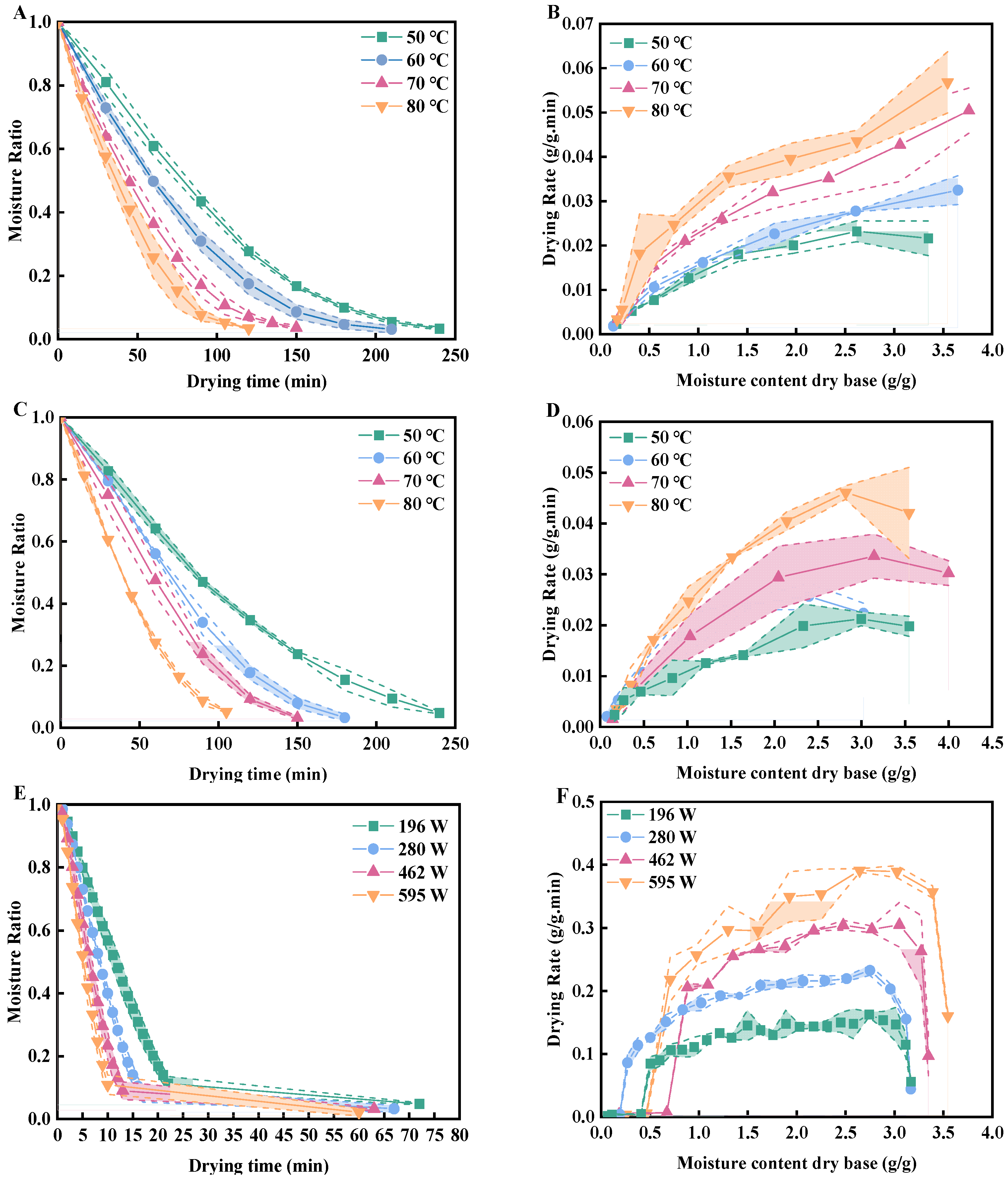
Figure 1 illustrates the drying characteristics of citrus peels under different drying methods. As shown in Figure 1A–C, drying temperature had a pronounced effect on drying time under HAD and IRD conditions. In HAD, the drying times at 50, 60, 70, and 80 °C were 240, 210, 150, and 120 min, respectively, while in IRD the corresponding values were 240, 180, 150, and 105 min. Compared with 50 °C, the drying time at 80 °C was reduced to only 50% (HAD) and 43% (IRD). Under MICD conditions, samples were first dried by microwave to approximately 33% moisture content, requiring 22, 17, 13, and 10 min at 196, 280, 462, and 595 W, respectively, and were then further dried by IRD for an additional 50 min. Notably, the microwave stage at 595 W lasted only 45% of the time required at 196 W. Overall, both increasing temperature and microwave power significantly shortened drying time. This reduction is due to enhanced moisture diffusivity resulting from higher energy input, which facilitates water molecule movement and evaporation. Consistent with this, Lin et al. [12] reported that drying at 70 °C took only about 57% of the time required at 50 °C.
Figure 1D–F present the changes in drying rate of citrus peel over time under different drying methods. The drying curves revealed distinct drying periods: HAD and IRD exhibited only a falling-rate period, whereas MICD showed a rising-rate period, a constant-rate stage, and then a falling-rate period. The falling-rate phase indicates that drying is governed by internal diffusion. In HAD and IRD, moisture migration is mainly driven by temperature gradients. In contrast, MICD introduces volumetric heating, generating internal pressure gradients that significantly enhance moisture transfer, accounting for its faster drying rate and unique drying profile [37].
In summary, MICD demonstrated a significantly faster drying rate than HAD and IRD due to its volumetric heating effect, which promotes rapid internal moisture migration. This highlights the advantage of MICD in achieving efficient dehydration of citrus peels within a shorter time.

3.2. Effective Moisture Diffusivity (Deff) and Activation Energy (Eₐ)

Table 2 shows the effective moisture diffusivity (Deff) for different drying methods. For HAD and IRD, Deff increased with temperature, with HAD at 80 °C reaching the highest value and IRD at 50 °C the lowest. Increasing temperature from 50 to 80 °C resulted in a Deff increase of approximately 72% for HAD and 57% for IRD, reflecting enhanced molecular mobility at higher temperatures [38]. Under MICD, Deff rose sharply with increasing microwave power, reaching values up to seven times those of HAD and IRD. This is mainly due to microwave heating rapidly energizing internal water molecules and generating vapor pressure, which accelerates moisture migration from the interior to the surface [39].
Activation energies (Eₐ) followed the order HAD > IRD > MICD, with values of 29.56, 27.51, and 21.74 kJ·mol−1, respectively. HAD’s higher Eₐ reflects reliance on surface heating and thermal diffusion, making it more temperature sensitive [40]. IRD accelerates surface evaporation but still depends on internal conduction, yielding slightly lower Eₐ. MICD’s lower Eₐ indicates that pressure-driven moisture migration from direct microwave heating reduces temperature dependence [41]. Overall, MICD markedly enhances moisture diffusivity and reduces activation energy, explaining its faster drying rate compared with HAD and IRD.

3.3. Color

Color is an important indicator of the appearance quality of dried agricultural products, directly affecting sensory evaluation and market value [42]. Table 3 presents the L*, a*, b*, and ∆E values of citrus peels under different drying methods. Across all drying methods, L* decreased while a* increased compared with fresh samples, indicating that drying darkened the peel and enhanced the red hue. This change is mainly due to moisture loss altering the optical properties of the peel, while thermal effects during drying promote mild oxidation of phenolic and sugar compounds and Maillard reactions, intensifying the red coloration [15,43].
For the b* value, HAD and IRD treatments showed an increasing trend, reflecting enhanced yellow tones. This may be because HAD applies slow heating with gradual moisture evaporation, increasing the relative concentration of carotenoids, while IRD rapidly heats the surface via infrared radiation, accelerating moisture removal and enhancing carotenoid concentration and yellow saturation. In contrast, b* decreased significantly under MICD, indicating a reduction in yellow tones. This is likely due to localized overheating and uneven moisture migration during microwave drying, which can partially degrade carotenoids while the increased a* value [44].
Regarding total color difference (∆E), HAD and IRD generally exhibited lower ∆E values than MICD, suggesting that HAD and IRD better preserved the original peel color. Within HAD and IRD, higher-temperature treatments resulted in the lowest ∆E values (HAD 80 °C: 4.89; IRD 70 °C: 5.50), likely because faster moisture evaporation at elevated temperatures shortens drying time, minimizing prolonged heat exposure that could degrade pigments and reducing color changes caused by excessive oxidation of phenolics and sugars. In contrast, high-power MICD may cause localized overheating and slight scorching, partially degrading pigments and increasing ∆E.
In summary, drying methods had significant effects on the color of citrus peels. HAD and IRD at relatively high temperatures effectively preserved the original peel color, whereas MICD, despite its high drying efficiency, tended to induce more severe color deterioration.

3.4. Observation of Oil Glands in Citrus Peel

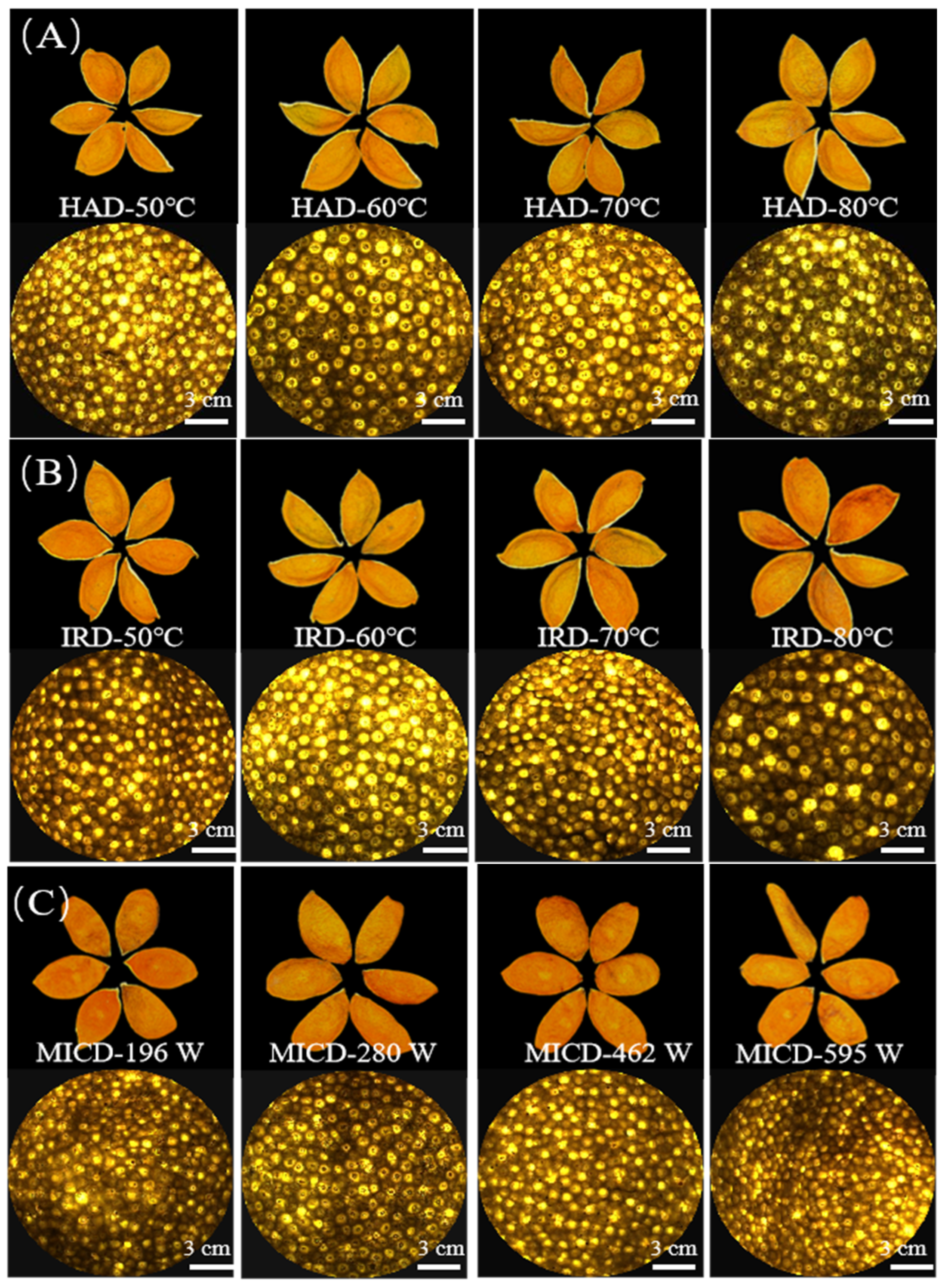
Volatile oils are important active components in citrus peels. As shown in Figure 2, different drying methods had a significant impact on the structure and quantity of oil glands. In citrus peels subjected to HAD and IRD, the oil glands were generally intact with clear edges and showed no obvious collapse; however, at 80 °C, some oil glands still collapsed, indicating that high temperatures can lead to volatile oil loss and damage to gland structure [45]. There was no significant difference in oil gland count between HAD and IRD, likely due to their similar drying times, Sun et al. [46] also reported similar findings.
In contrast, MICD caused blurred oil gland structures and partial gland rupture, resulting in a higher number of oil glands per unit area. This severe collapse is mainly attributed to the rapid evaporation of volatile compounds during drying, which not only affects the product’s appearance but may also lead to the loss of flavor compounds such as terpenes and limonene, which are characteristic of citrus aroma. This phenomenon is likely one of the key reasons for the reduced flavor of citrus peels [47].

3.5. Total Phenolic Content

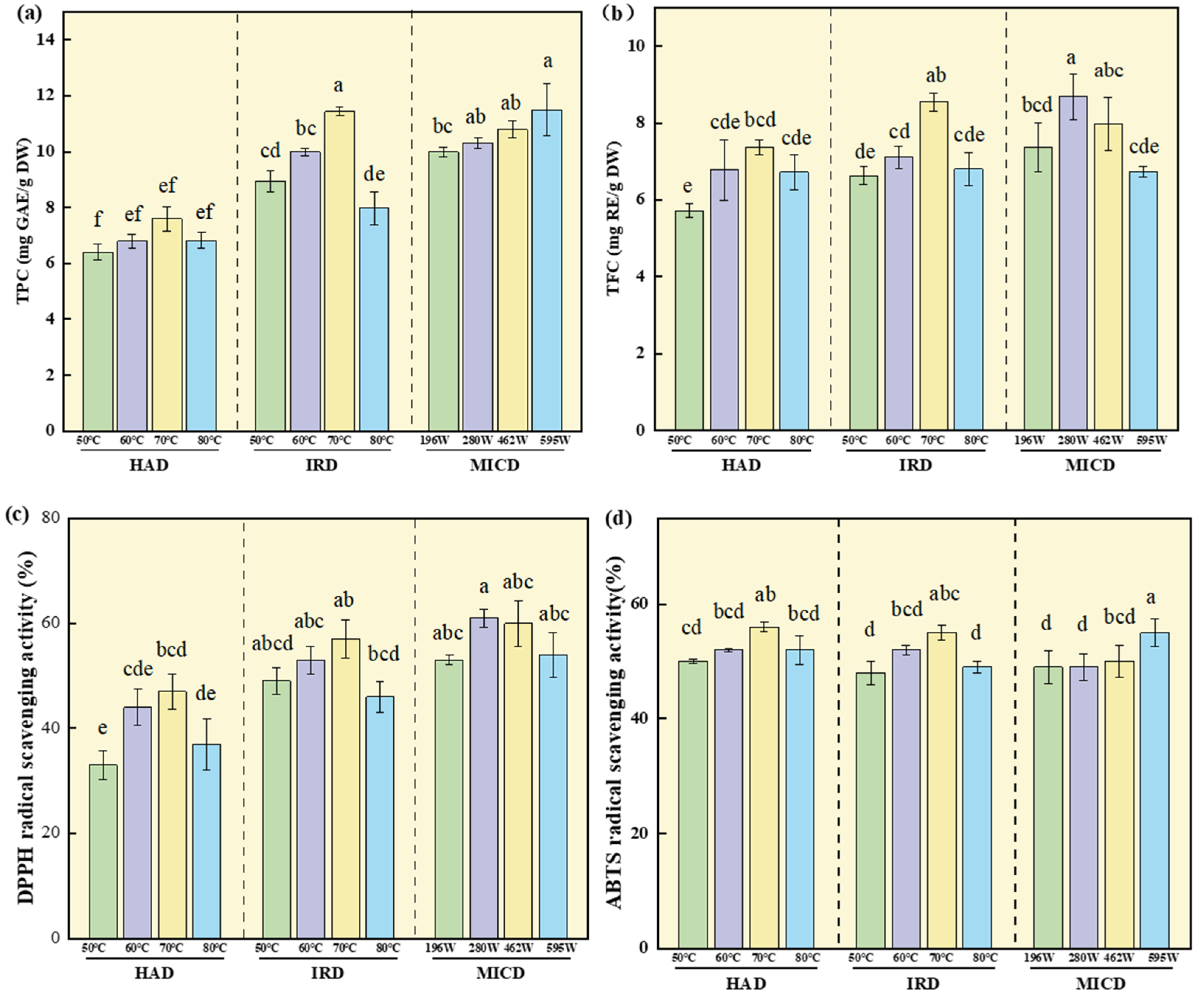
Total phenolic content (TPC) is an important indicator of the potential health benefits of plant-based foods. The effects of different drying methods on citrus peels TPC are shown in Figure 3a. For HAD, TPC increased with temperature up to 70 °C (approximately 7.6 mg GAE/g DW) and decreased slightly at 80 °C, suggesting moderate heating favors phenolic retention, while excessive or prolonged low-temperature drying promotes degradation. Sun et al. [48] reported that higher drying temperatures can promote the conversion of bound phenolics to free phenolics in citrus, increasing the measurable TPC. Under IRD, TPC peaked at 70 °C (11.7 mg GAE/g DW), significantly higher than at 50 °C, 60 °C, or 80 °C. This may be because moderate infrared heating effectively disrupts cell structures, facilitating the conversion of bound phenolics to soluble phenolics, while avoiding high-temperature-induced thermal degradation or oxidation. For MICD, TPC increased with microwave power, reaching the highest value (11.8 mg GAE/g DW) at 595 W, significantly higher than at 196, 280, or 462 W. This is consistent with Shu et al. [1], indicating that moderate-to-high microwave power can rapidly release phenolic compounds and reduce oxidative loss by shortening drying time.
Overall, MICD and IRD were significantly more effective in preserving phenolics than HAD. This is mainly attributed to MICD’s rapid heating mechanism, which quickly disrupts cell structures and releases phenolic compounds while reducing oxidation. In contrast, HAD’s gentle heating reduces oxidative degradation but has lower drying efficiency. As phenolics are temperature-sensitive molecules [49], their loss is largely due to oxidation. During hot-air drying, both enzymatic and non-enzymatic oxidation occur simultaneously [50], and prolonged drying leads to TPC decline. Therefore, IRD at 70 °C and MICD at 595 W achieved the highest TPC, indicating optimal phenolic retention.

3.6. Total Flavonoid Content

Flavonoids are the main active compounds in citrus, exhibiting significant antioxidant activity [51]. The effects of different drying methods on total flavonoid content (TFC) of citrus peels are shown in Figure 3b. After drying, TFC ranged from 5.7 to 8.6 mg RE/g DW, with HAD, IRD, and MICD treatments all showing a “first increase, then decrease” trend.
In HAD, the highest TFC was observed at 70 °C (7.3 mg RE/g DW), approximately 12% higher than at 50 °C, indicating an optimal balance between drying efficiency and thermal degradation. This result is consistent with Deng et al. [38], who reported no significant difference in TFC under 50–70 °C hot-air shock drying, and with Ghanem Romdhane et al. [52], who found that hot-air drying reduced lemon peel TFC by ~20% but that temperature had no significant effect on final flavonoid content. For IRD, temperature had a more pronounced effect on TFC, with excessive temperatures reducing flavonoid retention. The highest TFC (8.5 mg RE/g DW) was obtained at 70 °C, about 23% higher than at 50 °C. Xu et al. [10] reported that IRD at 70 °C could yield citrus peels TFC approximately twice that of hot-air dried samples, highlighting its superior performance. Under MICD, the highest TFC (8.6 mg RE/g DW) was achieved at 280 W, demonstrating excellent flavonoid preservation. Overall, MICD outperformed both IRD and HAD in TFC retention. HAD and IRD rely on surface heating and longer drying times, which can exacerbate oxidation and thermal degradation of heat-sensitive compounds [53]. In contrast, MICD employs internal microwave heating, rapidly evaporating moisture, shortening drying time, and reducing oxidative damage, thereby effectively protecting heat-labile flavonoids and minimizing degradation [54]. In summary, MICD at 280 W and IRD at 70 °C achieved the highest TFC retention, indicating optimal drying conditions for flavonoid preservation.

3.7. Antioxidant Activity

Free radicals are harmful species that can oxidize biomolecules such as proteins and DNA, potentially leading to various diseases. Antioxidants protect the body by scavenging or blocking free radicals [55]. The antioxidant activity of citrus peels was assessed using DPPH and ABTS assays, as shown in Figure 3c,d.
In HAD, drying temperature significantly affected antioxidant activity, with DPPH and ABTS scavenging trends showing similar patterns. The highest activity was observed at 70 °C, with DPPH and ABTS values reaching 47% and 56%, respectively. Both lower (50 °C, 60 °C) and higher (80 °C) temperatures resulted in reduced activity. This is consistent with the findings of Deng et al. [38] and can be explained by the fact that high temperatures may degrade antioxidant compounds, whereas prolonged drying at lower temperatures also increases their loss due to extended heat exposure. For IRD, 70 °C similarly provided the optimal antioxidant activity, which was generally higher than that of HAD. This agrees with Xu et al. [10]. The advantage of IRD lies in its shorter processing time and gentler thermal treatment, reducing damage to heat-sensitive antioxidants. Under MICD, the highest antioxidant activity was obtained at 280 W. MICD-treated samples exhibited significantly greater activity than those dried by HAD, consistent with observations by Kumar et al. [3] in citrus studies. The rapid and efficient volumetric heating of MICD allows simultaneous internal and external temperature rise, greatly shortening drying time and minimizing thermal degradation, thereby better preserving the natural antioxidant capacity of citrus peels.
Moreover, ABTS assays consistently showed higher antioxidant values than DPPH assays. This difference is mainly due to the larger molecular size and slower reaction rate of DPPH radicals, whereas ABTS radicals are smaller, water-soluble, and thus more effectively reflect the sample’s overall free radical scavenging capacity [56].

3.8. Electronic Nose Analysis

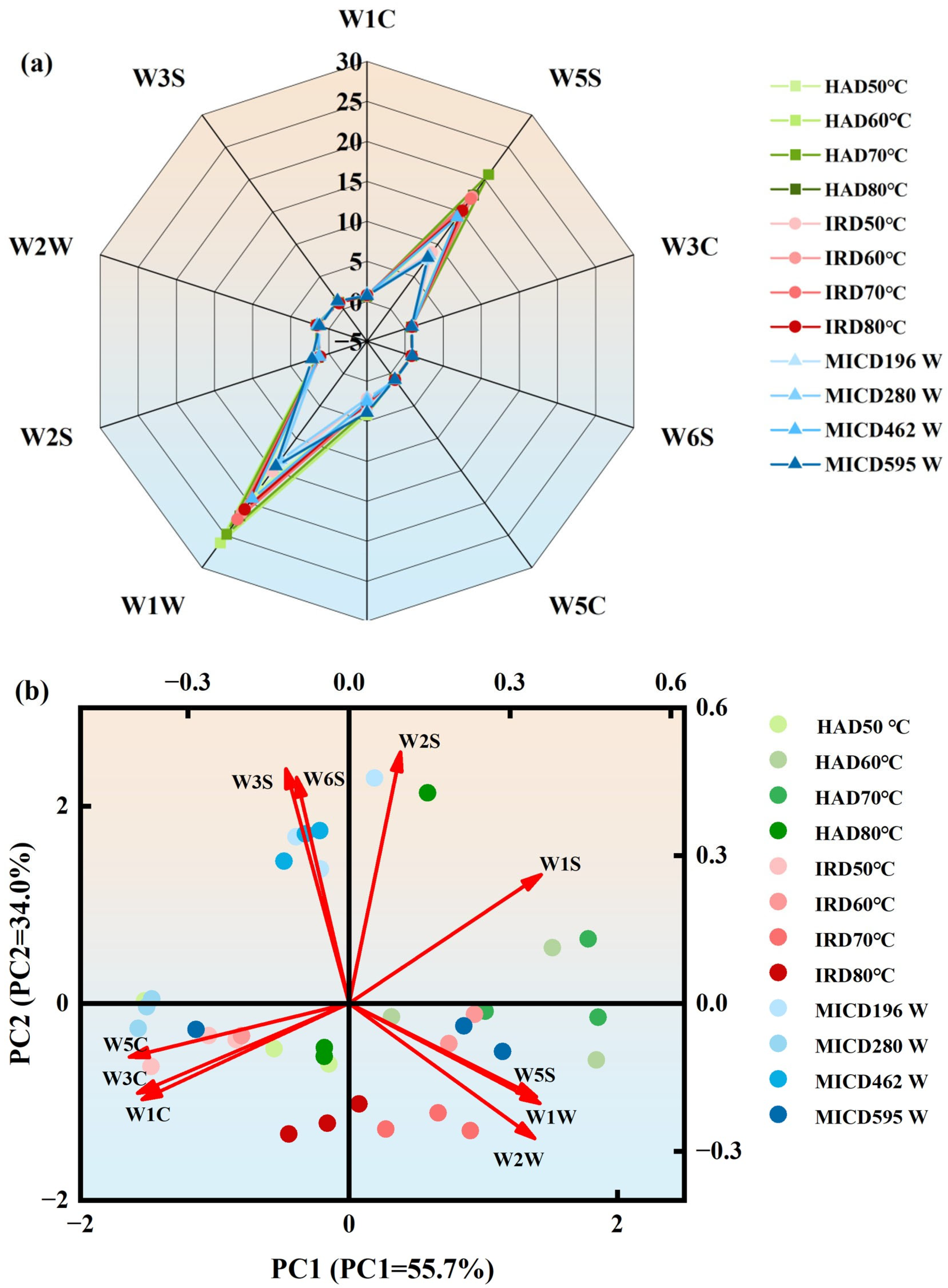
The sensor response profiles in Figure 4a illustrate the volatile characteristics of citrus peels immediately after drying by different methods. The dominant responses of the W1W and W5S sensors indicate that the volatile profile is primarily governed by terpenes (detected by W1W, e.g., limonene, characteristic of citrus aroma) and nitrogen oxides (detected by W5S), reflecting the balance between native citrus volatiles and oxidation-derived compounds generated during drying. The moderate signal from the W1S sensor suggests the presence of methane and light alkanes, while the minor responses from W1C, W5C, W2S, and W2W imply that aromatics, higher alkanes, alcohols, and organic sulfides occur at relatively low concentrations. This characteristic response pattern demonstrates that the drying method markedly influences the initial volatile fingerprint of citrus peels—both by preserving terpenoid compounds inherent to the peel and by inducing oxidative nitrogen-related volatiles during thermal processing.
In HAD, sensor responses were relatively high across all temperature treatments, indicating effective retention of flavor compounds. IRD showed intermediate flavor retention, while MICD exhibited the lowest responses. This difference is primarily attributed to the rapid heating in MICD, which can cause small volatile molecules (e.g., esters and terpenes) to evaporate with water vapor, reducing flavor retention [57]. Additionally, localized overheating in microwave drying may induce Maillard reactions or caramelization, generating burnt notes that mask the original fresh aroma [1]. In contrast, HAD and IRD provide more uniform heating, resulting in higher retention of flavor compounds.
Microstructural observations of oil glands support this interpretation. In HAD and IRD, oil glands were mostly intact, with only slight collapse at 80 °C, reflecting gradual moisture removal that preserves gland structure and volatile compounds. In contrast, MICD caused blurred and partially ruptured oil glands, increasing the apparent gland density per unit area. The combination of rapid evaporation, sudden tissue shrinkage, and internal pressure during microwave heating likely accelerated gland rupture and volatile loss. Although electronic nose measurements are not fully sensitive to all aromatic compounds and provide only relative profiles [54,58], the integrated analysis of sensor responses and microstructure effectively explains the differences in flavor retention among HAD, IRD, and MICD.
Principal component analysis (PCA) was further applied to assess the effects of different drying methods on citrus peels flavor, as shown in Figure 4b. PCA is a statistical method used to simplify the analysis of multiple indicators and visualize differences among samples. The first and second principal components (PC1: 55.7%; PC2: 34.0%) together explained 89.7% of the total variance, indicating that these components capture most of the variation in the data. The loading plot indicated that the separation along PC1, which accounts for the majority of variance, was primarily driven by the sensors W1W and W5S. This directly links the primary difference among drying treatments to the variation in terpenes and nitrogen oxides compounds. It was also indicated that samples treated with HAD and IRD overlapped considerably, whereas MICD-treated samples were clearly separated, demonstrating distinct differences among treatments. This suggests that HAD and IRD have similar effects on volatile flavor compounds, making them difficult to distinguish using electronic nose analysis.

3.9. Microstructure

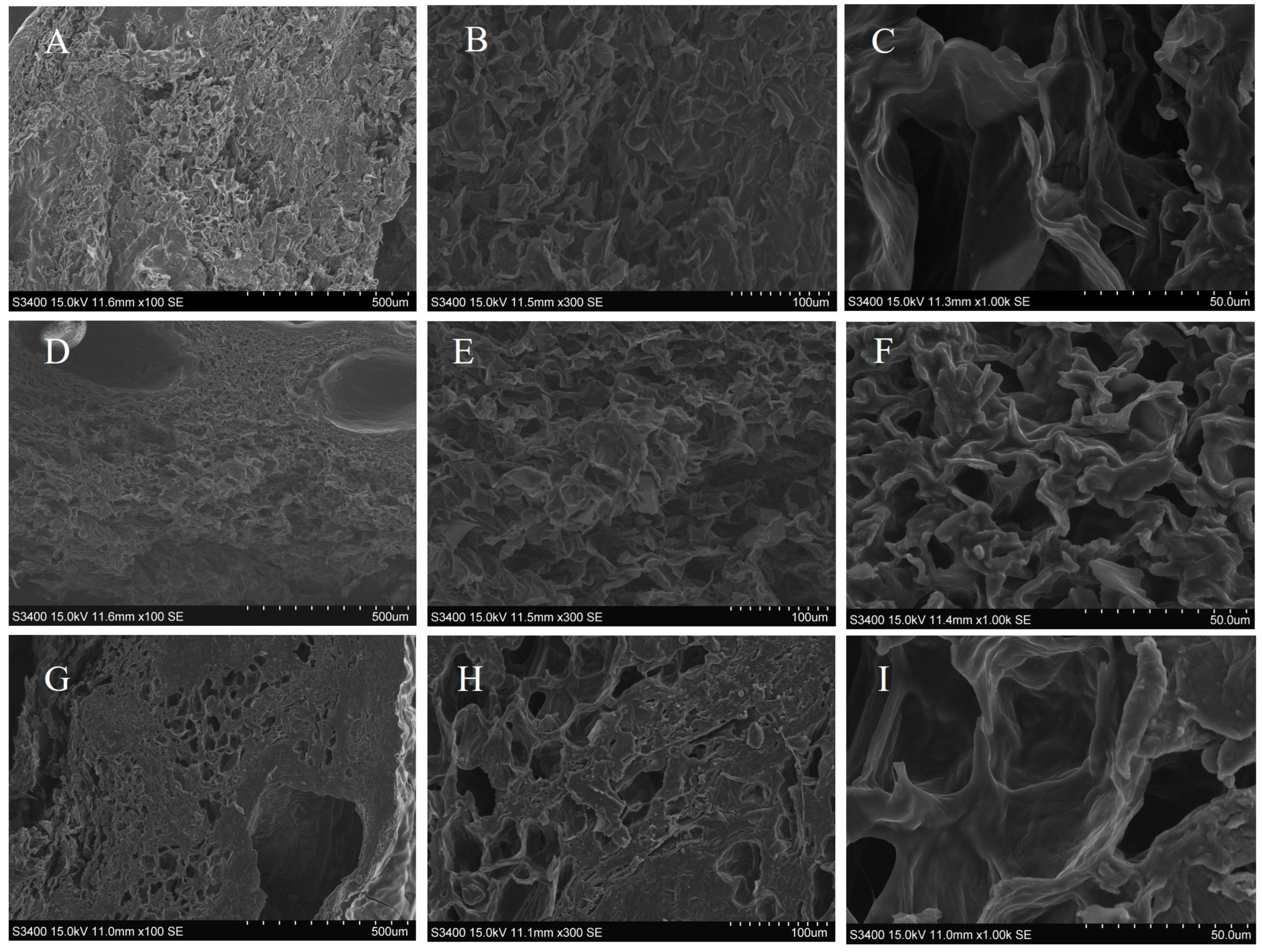
The microstructure of citrus peel cross-sections under different drying methods was observed using scanning electron microscopy (SEM), as shown in Figure 5. Observations were conducted at magnifications of 100×, 300×, and 1000× for citrus peels dried by HAD at 60 °C, IRD at 60 °C, and MICD at 280 W.
After HAD, the citrus peels exhibited irregular pores of varying sizes and uneven distribution (Figure 5A–C). This can be attributed to the convective heat transfer mechanism, which generates temperature and moisture gradients from the surface to the interior. As a result, the outer layers experienced excessive shrinkage and hardening, while internal water vapor ruptured the tissue, forming uneven pores. Under IRD, the citrus peels maintained a relatively uniform and porous network with well-preserved cavities and minimal collapse (Figure 5D–F). The even heating and radiative penetration of infrared drying promote synchronized moisture evaporation and migration, thereby preventing severe tissue contraction and sustaining pore connectivity [33]. In contrast, citrus peels subjected to MICD displayed larger cavities and reduced cellular integrity (Figure 5G–I). During MICD, rapid internal vapor generation causes transient pressure buildup, and the subsequent pressure release leads to partial collapse of the porous matrix [59]. Thus, IRD effectively maintains porous networks, while MICD tends to induce structure collapse due to internal vapor pressure effects. Overall, infrared drying better preserves the microchannel structure of citrus peels, producing a more uniform and intact microstructure compared with HAD and MICD.

3.10. Correlation Analysis

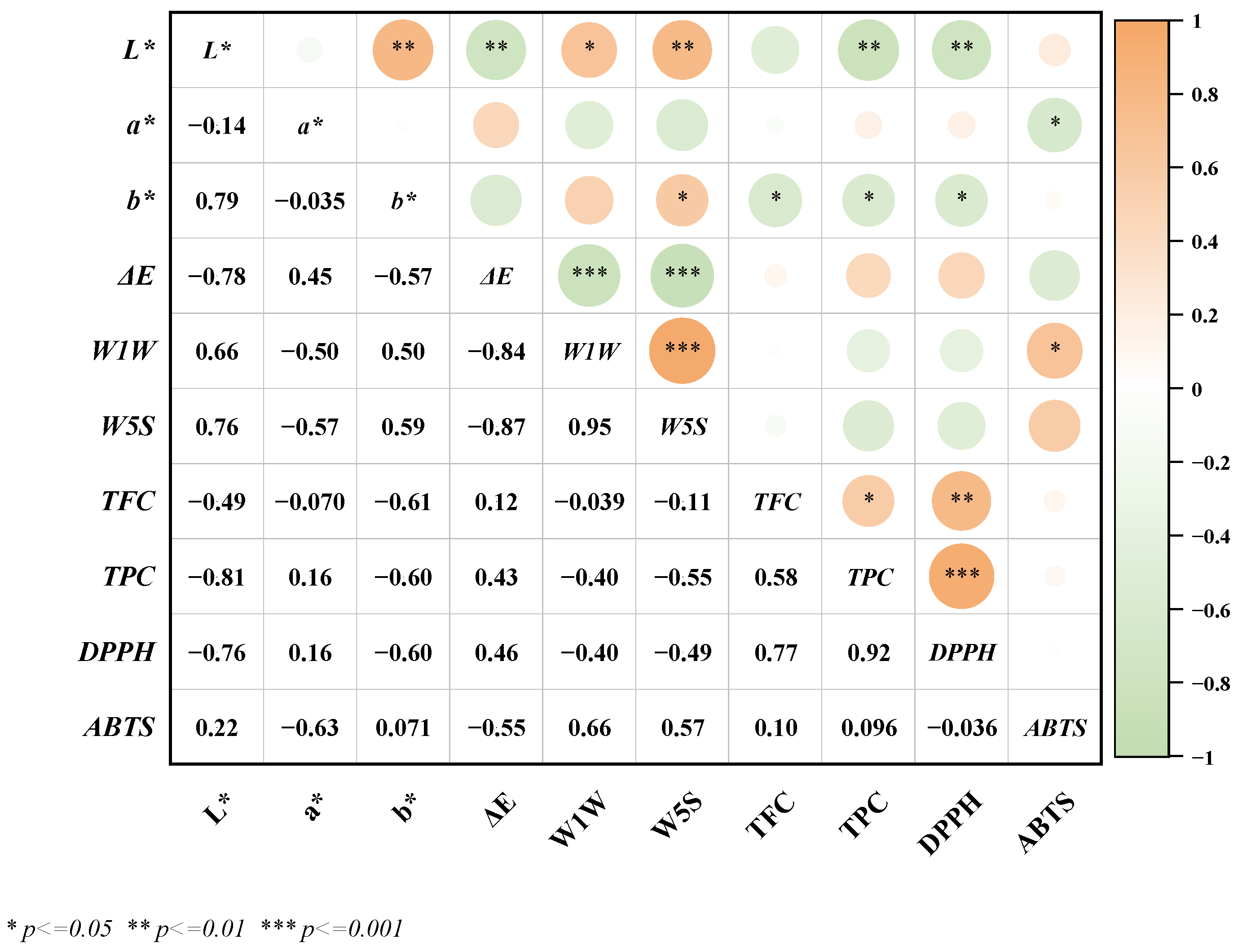
Pearson correlation analysis was performed for ten quality indices of citrus peels, as shown in Figure 6. In the figure, orange and blue indicate positive and negative correlations, respectively, with color intensity reflecting the correlation strength.
The results showed that ∆E was significantly negatively correlated with flavor-related sensors (W1W, W5S) (p < 0.01), with correlation coefficients of −0.84 and −0.87. This indicates that samples with color closer to that of fresh peel (smaller ∆E) retained higher levels of flavor compounds. This is likely because milder heat treatment causes less color change during drying, thereby reducing the loss of volatile flavor compounds and preserving more aromatic constituents (reference). Total flavonoid and total phenolic content were highly positively correlated with DPPH radical scavenging activity (p < 0.01), with coefficients of 0.60 and 0.76, indicating that flavonoids and phenolics are the primary contributors to citrus peel’s antioxidant activity (reference). In contrast, ABTS antioxidant activity showed weaker correlations with other parameters, suggesting that different antioxidant assays respond differently to bioactive compounds.
Overall, Pearson correlation analysis revealed that color difference (∆E) negatively correlated with flavor sensors, while TPC and TFC were strongly positively correlated with DPPH activity, highlighting the interdependence of color, flavor, and antioxidant retention.

3.11. Comprehensive Evaluation Using the Entropy Weight Method

The effects of different drying methods on various quality parameters of citrus peels were significant, making it difficult to evaluate drying performance based on a single indicator. To address this, the entropy weight method was used to determine the weight coefficients for each evaluation index, and a linear weighting approach was applied to calculate the comprehensive score. The evaluation system in this study was constructed across three dimensions: drying efficiency, flavor characteristics, and retention of bioactive compounds. The selected indicators included drying time, color parameters (L*, a*, b*), electronic nose responses (W1W, W5S), antioxidant activity (DPPH, ABTS), and bioactive compound contents (TPC, TFC). Using these indicators, the effects of HAD, IRD, and MICD on the physicochemical properties and microstructure of citrus peels were assessed. The calculated coupled weight coefficients (Wj) were 0.14, 0.09, 0.16, 0.17, 0.07, 0.14, 0.07, and 0.12, indicating that flavor-related compounds (0.32), drying time (0.25), and antioxidant activity (0.21) carry relatively higher weights, highlighting their decisive role in evaluating drying methods (Table 4).
The linear weighting method constructs the evaluation model by multiplying the original data by the corresponding weight coefficients, with higher comprehensive scores indicating better overall performance. The comprehensive scores for each drying method are presented in Table 5. Overall, medium-intensity treatments generally resulted in superior overall quality compared to low- or high-intensity conditions. Among all treatments, IRD at 70 °C achieved the highest comprehensive score, demonstrating optimal quality retention. This suggests that moderate infrared drying provides the best balance among drying efficiency, bioactive compound preservation, and flavor retention.
Therefore, the findings converge on a central principle: achieving a synergistic balance among efficiency, bioactivity, and flavor is paramount for optimal citrus peel drying. The supreme performance of 70 °C IRD exemplifies this principle, confirming that an intermediate thermal energy input best navigates the inherent compromise between rapid drying and quality preservation. This understanding provides a methodological framework for holistically optimizing industrial drying processes.

4. Conclusions

This study demonstrates that the drying method significantly influences the drying efficiency and quality of citrus peels. MICD exhibited superior drying efficiency with the shortest drying time, highest moisture diffusivity, and lowest activation energy, attributable to its volumetric heating mechanism. However, this method resulted in substantial quality deterioration, including color darkening, structural damage, oil gland rupture, and loss of volatile aroma compounds. In contrast, both HAD and IRD better preserved product quality. IRD at 70 °C demonstrated particularly outstanding performance, achieving optimal retention of phenolic compounds and flavonoids, which corresponded with enhanced antioxidant activity. This method also maintained better color, microstructure, and volatile compound preservation compared to other treatments. The entropy-weighted comprehensive evaluation further confirmed that IRD at 70 °C provides the best balance between drying efficiency and quality.
Therefore, IRD is recommended as an effective and industrially viable drying technology for producing high-quality dried citrus peels with desirable functional and sensory properties. Future work should focus on the energy balance and scale-up potential of IRD for industrial citrus-by-product utilization.

Author Contributions

Conceptualization, J.B. and J.C.; methodology, J.B. and Y.Z.; investigation, Y.Z.; resources, J.B. and J.C.; formal analysis, Y.Z. and C.W.; software, Z.F.; writing—original draft preparation, Y.Z.; writing—review and editing, J.B. and Y.Z.; supervision, J.B.; visualization, J.Z.; project administration, J.C.; funding acquisition, X.T. and J.C. All authors have read and agreed to the published version of the manuscript.

Funding

This study was supported by the Natural Science Foundation of Jiangsu Province (BK20230523) and China Agriculture Research System of MOF and MARA (CARS26).

Institutional Review Board Statement

Not applicable.

Informed Consent Statement

Not applicable.

Data Availability Statement

The original contributions presented in the study are included in the article; further inquiries can be directed to the corresponding author.

Conflicts of Interest

The authors declare no conflicts of interest.

References

  1. Shu, B.; Wu, G.; Wang, Z.; Wang, J.; Huang, F.; Dong, L.; Zhang, R.; Wang, Y.; Su, D. The effect of microwave vacuum drying process on citrus: Drying kinetics, physicochemical composition and antioxidant activity of dried citrus (Citrus reticulata Blanco) peel. J. Food Meas. Charact. 2020, 14, 2443–2452. [Google Scholar] [CrossRef]
  2. Munir, H.; Yaqoob, S.; Awan, K.A.; Imtiaz, A.; Naveed, H.; Ahmad, N.; Naeem, M.; Sultan, W.; Ma, Y. Unveiling the Chemistry of Citrus Peel: Insights into Nutraceutical Potential and Therapeutic Applications. Foods 2024, 13, 1681. [Google Scholar] [CrossRef] [PubMed]
  3. Kumar, D.; Ladaniya, M.S.; Gurjar, M.; Kumar, S.; Mendke, S. Quantification of Flavonoids, Phenols and Antioxidant Potential from Dropped Citrus reticulata Blanco Fruits Influenced by Drying Techniques. Molecules 2021, 26, 4159. [Google Scholar] [CrossRef] [PubMed]
  4. Zhang, A.-A.; Ni, J.-B.; Martynenko, A.; Chen, C.; Fang, X.-M.; Ding, C.-J.; Chen, J.; Zhang, J.-W.; Xiao, H.-W. Electrohydrodynamic drying of citrus (Citrus sinensis L.) peel: Comparative evaluation on the physiochemical quality and volatile profiles. Food Chem. 2023, 429, 136832. [Google Scholar] [CrossRef]
  5. Li, W.; Li, Y.; Bi, J.; Ji, Q.; Zhao, X.; Zheng, Q.; Tan, S.; Gao, X. Effect of hot air drying on the polyphenol profile of Hongjv (Citrus reticulata Blanco, CV. Hongjv) peel: A multivariate analysis. J. Food Biochem. 2020, 44, e13174. [Google Scholar] [CrossRef]
  6. Zheng, G.; Chao, Y.; Liu, M.; Yang, Y.; Zhang, D.; Wang, K.; Tao, Y.; Zhang, J.; Li, Y.; Wei, M. Evaluation of dynamic changes in the bioactive components in Citri Reticulatae Pericarpium (Citrus reticulata ‘Chachi’) under different harvesting and drying conditions. J. Sci. Food Agric. 2021, 101, 3280–3289. [Google Scholar] [CrossRef]
  7. Marey, S.; Shoughy, M. Effect of Temperature on the Drying Behavior and Quality of Citrus Peels. Int. J. Food Eng. 2016, 12, 661–671. [Google Scholar] [CrossRef]
  8. Talens, C.; Castro-Giraldez, M.; Fito, P.J. A thermodynamic model for hot air microwave drying of orange peel. J. Food Eng. 2016, 175, 33–42. [Google Scholar] [CrossRef]
  9. Chou, S.K.; Chua, K.J. New hybrid drying technologies for heat sensitive foodstuffs. Trends Food Sci. Technol. 2001, 12, 359–369. [Google Scholar] [CrossRef]
  10. Xu, M.; Tian, G.; Zhao, C.; Ahmad, A.; Zhang, H.; Bi, J.; Xiao, H.; Zheng, J. Infrared Drying as a Quick Preparation Method for Dried Tangerine Peel. Int. J. Anal. Chem. 2017, 2017, 6254793. [Google Scholar] [CrossRef]
  11. Suri, S.; Singh, A.; Nema, P.K. Infrared drying of Kinnow (Citrus reticulata) peel waste: Kinetics and quality characterization. Biomass Convers. Biorefinery 2024, 14, 7579–7590. [Google Scholar] [CrossRef]
  12. Lin, Y.; Yu, J.; Huang, D.; Chen, Y.; Fu, Y.; Zhang, L.; Jia, G. The effect of ultrasonic pretreatment on the drying kinetics of orange peels under different drying methods. Ind. Crop. Prod. 2025, 233, 121479. [Google Scholar] [CrossRef]
  13. Arslan, D.; Musa Özcan, M. Study the effect of sun, oven and microwave drying on quality of onion slices. LWT Food Sci. Technol. 2010, 43, 1121–1127. [Google Scholar] [CrossRef]
  14. Guclu, G.; Polat, S.; Kelebek, H.; Capanoglu, E.; Selli, S. Elucidation of the impact of four different drying methods on the phenolics, volatiles, and color properties of the peels of four types of citrus fruits. J. Sci. Food Agric. 2022, 102, 6036–6046. [Google Scholar] [CrossRef] [PubMed]
  15. Ghanem, N.; Mihoubi, D.; Kechaou, N.; Mihoubi, N.B. Microwave dehydration of three citrus peel cultivars: Effect on water and oil retention capacities, color, shrinkage and total phenols content. Ind. Crop. Prod. 2012, 40, 167–177. [Google Scholar] [CrossRef]
  16. Lin, X.; Xu, J.-L.; Sun, D.-W. Comparison of moisture uniformity between microwave-vacuum and hot-air dried ginger slices using hyperspectral information combined with semivariogram. Dry. Technol. 2021, 39, 1044–1058. [Google Scholar] [CrossRef]
  17. Zang, Z.; Huang, X.; Zhang, Q.; Jiang, C.; Wang, T.; Shang, J.; He, C.; Wan, F. Evaluation of the effect of ultrasonic pretreatment on vacuum far-infrared drying characteristics and quality of Angelica sinensis based on entropy weight-coefficient of variation method. J. Food Sci. 2023, 88, 1905–1923. [Google Scholar] [CrossRef] [PubMed]
  18. Xu, P.; Yang, Z.; Li, X.; Zhang, Z.; Yang, J.; Yuan, T.; Yusubjonovna, M.M.; ElGamal, R.; Wu, Z. Effects of different drying methods on drying characteristics and quality of silage Broussonetia papyrifera L. LWT 2024, 210, 116872. [Google Scholar] [CrossRef]
  19. Yang, X.; Ma, Z.; Wan, F.; Chen, A.; Zhang, W.; Xu, Y.; Zang, Z.; Huang, X. Different Pretreatment Methods to Strengthen the Microwave Vacuum Drying of Honeysuckle: Effects on the Moisture Migration and Physicochemical Quality. Foods 2024, 13, 3712. [Google Scholar] [CrossRef]
  20. Lu, H.; Huang, X.; Ma, G.; Xu, Y.; Zang, Z.; Zhang, K.; Ma, W.; Wan, F. Evaluation of the effect of ultrasound-assisted hot air drying on the drying characteristics and physicochemical properties of cherries based on the entropy-weighted TOPSIS method. J. Food Sci. 2024, 89, 7157–7171. [Google Scholar] [CrossRef]
  21. Zou, J.; Li, P. Modelling of litchi shelf life based on the entropy weight method. Food Packag. Shelf Life 2020, 25, 100509. [Google Scholar] [CrossRef]
  22. Lu, T.; Zhou, Z.; Sun, Y.; Huang, B.; Zhou, Y.; Yang, B.; Zeng, M.; Li, T.; Feng, J.; Man, R.; et al. Establishment of a comprehensive evaluation model for pickled mustard quality. J. Food Compos. Anal. 2025, 148, 108426. [Google Scholar] [CrossRef]
  23. Shen, C.; Chen, W.; Aziz, T.; Khojah, E.; Al-Asmari, F.; Alamri, A.S.; Alhomrani, M.; Cui, H.; Lin, L. Drying kinetics and moisture migration mechanism of yam slices by cold plasma pretreatment combined with far-infrared drying. Innov. Food Sci. Emerg. Technol. 2024, 95, 103730. [Google Scholar] [CrossRef]
  24. Alibas, I.; Kacar, O. Microwave Drying Kinetics, Hypericin Content, Effective Moisture Diffusivity and Activation Energy of Hypericum perforatum L. J. Essent. Oil Bear. Plants. 2016, 19, 454–465. [Google Scholar] [CrossRef]
  25. Gu, C.; Ma, H.; Tuly, J.A.; Guo, L.; Zhang, X.; Liu, D.; Ouyang, N.; Luo, X.; Shan, Y. Effects of catalytic infrared drying in combination with hot air drying and freeze drying on the drying characteristics and product quality of chives. LWT 2022, 161, 113363. [Google Scholar] [CrossRef]
  26. Bai, J.-W.; Li, D.-D.; Abulaiti, R.; Wang, M.; Wu, X.; Feng, Z.; Zhu, Y.; Cai, J. Cold Plasma as a Novel Pretreatment to Improve the Drying Kinetics and Quality of Green Peas. Foods 2025, 14, 84. [Google Scholar] [CrossRef]
  27. El-Mesery, H.S.; Kamel, R.M.; Shawir, S.M.; Alshaer, W.G. Theoretical and experimental analysis of the drying kinetics of okra using infrared dryer. J. Food Process Eng. 2024, 47, e14504. [Google Scholar] [CrossRef]
  28. Zeng, S.; Zhou, C.; Wang, B.; Xiao, H.; Lv, W. Microwave Infrared Cooperative Drying of Ginger: Moisture Evolution, Structure Change, Physicochemical Properties, and Prediction Model. Food Bioprocess Technol. 2024, 17, 4632–4651. [Google Scholar] [CrossRef]
  29. Mamy, D.; Boateng, I.D.; Chen, X. Ultrasound-assisted solid-state fermentation by Aspergillus niger increased phenolics and antioxidants’ accumulation in Citrus reticulata peels. Food Biosci. 2025, 63, 105699. [Google Scholar] [CrossRef]
  30. Zhou, L.; Guo, X.; Bi, J.; Yi, J.; Chen, Q.; Wu, X.; Zhou, M. Drying of garlic slices (Allium sativum L.) and its effect on thiosulfinates, total phenolic compounds and antioxidant activity during infrared drying. J. Food Process Preserv. 2017, 41, e12734. [Google Scholar] [CrossRef]
  31. Bai, J.-W.; Dai, Y.; Wang, Y.-C.; Cai, J.-R.; Zhang, L.; Tian, X.-Y. Potato Slices Drying: Pretreatment Affects the Three-Dimensional Appearance and Quality Attributes. Agriculture 2022, 12, 1841. [Google Scholar] [CrossRef]
  32. Chen, Y.; Pan, H.; Hao, S.; Pan, D.; Wang, G.; Yu, W. Evaluation of phenolic composition and antioxidant properties of different varieties of Chinese citrus. Food Chem. 2021, 364, 130413. [Google Scholar] [CrossRef] [PubMed]
  33. Bai, J.-W.; Wang, Y.-C.; Cai, J.-R.; Zhang, L.; Dai, Y.; Tian, X.-Y.; Xiao, H.-W. Three-Dimensional Appearance and Physicochemical Properties of Pleurotus eryngii under Different Drying Methods. Foods 2023, 12, 1999. [Google Scholar] [CrossRef] [PubMed]
  34. An, N.-N.; Sun, W.-H.; Li, B.-Z.; Wang, Y.; Shang, N.; Lv, W.-Q.; Li, D.; Wang, L.-J. Effect of different drying techniques on drying kinetics, nutritional components, antioxidant capacity, physical properties and microstructure of edamame. Food Chem. 2022, 373, 131412. [Google Scholar] [CrossRef] [PubMed]
  35. Yu, S.; Huang, X.; Wang, L.; Ren, Y.; Zhang, X.; Wang, Y. Characterization of selected Chinese soybean paste based on flavor profiles using HS-SPME-GC/MS, E-nose and E-tongue combined with chemometrics. Food Chem. 2022, 375, 131840. [Google Scholar] [CrossRef]
  36. Zhang, X.; Huang, X.; Dai, C.; Tian, X.; Wang, C.; Ren, Y.; Wang, L.; Yu, S.; Aheto, J.H.; Chang, X. Characterization of volatile flavor profiles and quantitative assessment of key physicochemical indicators for fermented bean curd using GC-IMS, E-nose and multi-channel colorimetric sensor array combined with chemometrics. Food Biosci. 2025, 69, 106879. [Google Scholar] [CrossRef]
  37. Kalinke, I.; Unterbuchberger, G.; Kulozik, U. Enhancing drying efficiency and temperature uniformity during microwave-assisted freeze drying: A weight-dependent microwave power approach. J. Food Eng. 2025, 406, 112810. [Google Scholar] [CrossRef]
  38. Deng, L.-Z.; Mujumdar, A.S.; Yang, W.-X.; Zhang, Q.; Zheng, Z.-A.; Wu, M.; Xiao, H.-W. Hot air impingement drying kinetics and quality attributes of orange peel. J. Food Process Preserv. 2020, 44, e14294. [Google Scholar] [CrossRef]
  39. Bozkir, H. Effects of hot air, vacuum infrared, and vacuum microwave dryers on the drying kinetics and quality characteristics of orange slices. J. Food Process Eng. 2020, 43, e13485. [Google Scholar] [CrossRef]
  40. Kosasih, E.A.; Zikri, A.; Dzaky, M.I. Effects of drying temperature, airflow, and cut segment on drying rate and activation energy of elephant cassava. Case Stud. Therm. Eng. 2020, 19, 100633. [Google Scholar] [CrossRef]
  41. Elhussein, E.A.A.; Şahin, S. Drying behaviour, effective diffusivity and energy of activation of olive leaves dried by microwave, vacuum and oven drying methods. Heat Mass Transf. 2018, 54, 1901–1911. [Google Scholar] [CrossRef]
  42. Bao, G.; Tian, Y.; Wang, K.; Chang, Z.; Jiang, Y.; Wang, J. Mechanistic understanding of the improved drying characteristics and quality attributes of lily (Lilium lancifolium Thunb.) by modified microstructure after pulsed electric field (PEF) pretreatment. Food Res. Int. 2024, 190, 114660. [Google Scholar] [CrossRef] [PubMed]
  43. Dajbych, O.; Kabutey, A.; Mizera, Č.; Herák, D. Investigation of the Effects of Infrared and Hot Air Oven Drying Methods on Drying Behaviour and Colour Parameters of Red Delicious Apple Slices. Processes 2023, 11, 3027. [Google Scholar] [CrossRef]
  44. Liu, M.; Hu, L.; Deng, N.; Cai, Y.; Li, H.; Zhang, B.; Wang, J. Effects of different hot-air drying methods on the dynamic changes in color, nutrient and aroma quality of three chili pepper (Capsicum annuum L.) varieties. Food Chem. X 2024, 22, 101262. [Google Scholar] [CrossRef]
  45. Zhang, L.-L.; Lv, S.; Xu, J.-G.; Zhang, L.-F. Influence of drying methods on chemical compositions, antioxidant and antibacterial activity of essential oil from lemon peel. Nat. Prod. Res. 2018, 32, 1184–1188. [Google Scholar] [CrossRef]
  46. Sun, W.; Li, M.; Zhang, Y.; Ai, Z.; Lei, D.; Pei, Y.; Liu, Y. Effect of different drying techniques on drying characteristics, physical quality, and active components of Citri reticulatae pericarpium, and the correlation between physiochemical quality. Ind. Crop. Prod. 2023, 204, 117350. [Google Scholar] [CrossRef]
  47. Zhang, H.; Xie, Y.; Liu, C.; Chen, S.; Hu, S.; Xie, Z.; Deng, X.; Xu, J. Comprehensive comparative analysis of volatile compounds in citrus fruits of different species. Food Chem. 2017, 230, 316–326. [Google Scholar] [CrossRef]
  48. Sun, Y.; Shen, Y.; Liu, D.; Ye, X. Effects of drying methods on phytochemical compounds and antioxidant activity of physiologically dropped un-matured citrus fruits. LWT Food Sci. Technol. 2015, 60, 1269–1275. [Google Scholar] [CrossRef]
  49. Li, B.B.; Smith, B.; Hossain, M.M. Extraction of phenolics from citrus peels: II. Enzyme-assisted extraction method. Sep. Purif. Technol. 2006, 48, 189–196. [Google Scholar] [CrossRef]
  50. Ding, Y.; Morozova, K.; Imperiale, S.; Angeli, L.; Asma, U.; Ferrentino, G.; Scampicchio, M. HPLC-Triple detector (Coulometric array, diode array and mass spectrometer) for the analysis of antioxidants in officinal plants. LWT 2022, 162, 113456. [Google Scholar] [CrossRef]
  51. Wang, Y.; Liu, X.-J.; Chen, J.-B.; Cao, J.-P.; Li, X.; Sun, C.-D. Citrus flavonoids and their antioxidant evaluation. Crit. Rev. Food Sci. Nutr. 2022, 62, 3833–3854. [Google Scholar] [CrossRef]
  52. Ghanem Romdhane, N.; Bonazzi, C.; Kechaou, N.; Mihoubi, N.B. Effect of Air-Drying Temperature on Kinetics of Quality Attributes of Lemon (Citrus limon cv. lunari) Peels. Dry. Technol. 2015, 33, 1581–1589. [Google Scholar] [CrossRef]
  53. Nudar, J.; Roy, M.; Ahmed, S. Combined osmotic pretreatment and hot air drying: Evaluation of drying kinetics and quality parameters of adajamir (Citrus assamensis). Heliyon 2023, 9, e19545. [Google Scholar] [CrossRef] [PubMed]
  54. Akther, S.; Jothi, J.S.; Badsha, M.R.; Rahman, M.M.; Das, G.B.; Alim, M.A. Drying methods effect on bioactive compounds, phenolic profile, and antioxidant capacity of mango powder. J. King Saud Univ. Sci. 2023, 35, 102370. [Google Scholar] [CrossRef]
  55. İnan, Ö.; Özcan, M.M.; Aljuhaimi, F. Effect of location and Citrus species on total phenolic, antioxidant, and radical scavenging activities of some Citrus seed and oils. J. Food Process Preserv. 2018, 42, e13555. [Google Scholar] [CrossRef]
  56. Jeong, B.-G.; Gwak, Y.-J.; Kim, J.; Hong, W.-H.; Park, S.-J.; Islam, M.A.; Jung, J.; Chun, J. Antioxidative Properties of Machine-Drip Tea Prepared with Citrus Fruit Peels Are Affected by the Type of Fruit and Drying Method. Foods 2022, 11, 2094. [Google Scholar] [CrossRef] [PubMed]
  57. Reinhard, H.; Sager, F.; Zoller, O. Citrus juice classification by SPME-GC-MS and electronic nose measurements. LWT Food Sci. Technol. 2008, 41, 1906–1912. [Google Scholar] [CrossRef]
  58. Wang, M.; Li, X.; Ding, H.; Chen, H.; Liu, Y.; Wang, F.; Chen, L. Comparison of the volatile organic compounds in Citrus reticulata ‘Chachi’ peel with different drying methods using E-nose, GC-IMS and HS-SPME-GC-MS. Front. Plant Sci. 2023, 14, 1169321. [Google Scholar] [CrossRef]
  59. Aydogdu, A.; Sumnu, G.; Sahin, S. Effects of Microwave-Infrared Combination Drying on Quality of Eggplants. Food Bioprocess Technol. 2015, 8, 1198–1210. [Google Scholar] [CrossRef]
Figure 1. Moisture ratio and drying rate curves of citrus peels under different drying methods: (A,B) hot-air drying, (C,D) infrared radiation drying, and (E,F) microwave-infrared combined drying.
Agriculture 15 02433 g001
Figure 2. Dried samples and oil gland morphology of citrus peels subjected to different drying methods: (A) hot-air drying, (B) infrared radiation drying, and (C) microwave-infrared combined drying.
Agriculture 15 02433 g002
Figure 3. Effects of different drying methods on (a) total phenolic content (TPC), (b) total flavonoid content (TFC), (c) DPPH radical-scavenging activity, and (d) ABTS radical-scavenging activity of citrus peels. The different letters (a–e) in the figure indicate significant differences (p < 0.05).
Agriculture 15 02433 g003
Figure 4. Electronic-nose analysis of citrus peels dried by different methods: (a) radar plot and (b) principal component analysis (PCA) loading plot.
Agriculture 15 02433 g004
Figure 5. Scanning electron micrographs of citrus peels dried by different methods at various magnifications. Hot-air drying at 60 °C: (A) 100×, (B) 300×, (C) 1000×; infrared radiation drying at 60 °C: (D) 100×, (E) 300×, (F) 1000×; microwave–infrared combined drying at 280 W: (G) 100×, (H) 300×, (I) 1000×.
Agriculture 15 02433 g005
Figure 6. Correlation matrix of physicochemical and antioxidant parameters of citrus peels dried by different methods.
Agriculture 15 02433 g006
Table 1. Performance parameters of the PEN3 electronic-nose sensor array.
Array NumberSensor NameReaction Compound
1W1CAromatic compounds
2W5SNitrogen oxides
3W3CAromatic constituents, mainly ammonia
4W6SHydrogen
5W5CAlkanes, aromatic compounds
6W1SBroad Methane
7W1WSulphur compounds, H2S; Terpenes and sulphur-containing organic compounds
8W2SBroad alcohols
9W2WAromatics, organic sulfides
10W3SAlkanes, especially methane
Table 2. Effective moisture diffusion coefficients and determination coefficients of citrus peels under different drying conditions.
Drying ConditionsLinear Regression FormulaR2Deff (×10−8 m2·s−1)
HAD-50 °Cln MR = −2.4 × 10⁻⁴t + 0.29980.98582.16
HAD-60 °Cln MR = −2.5 × 10⁻⁴t + 0.14920.98742.33
HAD-70 °Cln MR = −3.4 × 10⁻⁴t + 0.18110.98813.13
HAD-80 °Cln MR = −6.2 × 10⁻⁴t + 0.32510.97135.58
IRD-50 °Cln MR = −2.2 × 10⁻⁴t + 0.34180.93961.99
IRD-60 °Cln MR = −3.2 × 10⁻⁴t + 0.41070.96422.90
IRD-70 °Cln MR = −3.8 × 10⁻⁴t + 0.40340.96663.47
IRD-80 °Cln MR = −5.0 × 10⁻⁴t + 0.30100.98114.56
MICD-196 Wln MR = −1.6 × 10⁻³t + 0.26020.955415.2
MICD-280 Wln MR = −2.2 × 10⁻³t + 0.29980.948420.3
MICD-462 Wln MR = −2.8 × 10⁻³t + 0.29620.940825.9
MICD-595 Wln MR = −3.9 × 10⁻³t + 0.29350.942835.4
Table 3. Effects of different drying methods and conditions on the external color of citrus peels.
Drying ConditionsL*a*b*E
Fresh60.11 ± 0.41 a23.44 ± 4.27 de62.51 ± 0.09 ab
HAD50 °C59.00 ± 1.77 ab29.33 ± 2.41 ab66.15 ± 3.36 a8.02 ± 2.02 cde
60 °C57.02 ± 1.66 bc22.68 ± 5.30 e63.46 ± 3.26 ab6.75 ± 2.26 de
70 °C57.37 ± 2.05 abc24.83 ± 2.39 cde63.34 ± 3.85 ab5.51 ± 1.43 e
80 °C58.20 ± 1.57 abc23.83 ± 4.02 de63.11 ± 2.48 ab4.89 ± 1.58 e
IRD50 °C56.75 ± 1.65 bc31.21 ± 1.47 a67.04 ± 3.52 a10.23 ± 1.80 c
60 °C56.23 ± 0.93 bc23.34 ± 2.52 de64.97 ± 2.76 ab5.71 ± 1.36 e
70 °C56.56 ± 1.26 bc26.17 ± 1.32 cd60.87 ± 2.76 bc5.50 ± 1.52 e
80 °C55.34 ± 5.78 b27.49 ± 2.03 bc57.83 ± 8.37 cd9.88 ± 8.14 cd
MICD196 W48.31 ± 2.38 e26.60 ± 2.20 bcd49.29 ± 3.08 f18.15 ± 3.72 a
280 W49.93 ± 2.70 de25.46 ± 1.64 cde51.41 ± 4.03 f15.33 ± 4.61 ab
462 W51.24 ± 2.22 d31.13 ± 1.25 a55.83 ± 2.00 de13.71 ± 2.07 b
595 W48.21 ± 2.46 e24.93 ± 1.98 cde52.09 ± 1.73 ef16.01 ± 2.83 ab
Note: Data are expressed as the average ± standard deviation. Values in the same column having the different letters (a–f) for each parameter are significantly different (p < 0.05).
Table 4. Information entropy (Ej) and weight distribution table of evaluation indicators.
Indicator NameEntropy Weight Method
Ejaw
Drying time0.860.130.14
ΔE0.910.080.09
W1W0.850.140.16
W5S0.830.160.17
DPPH0.930.060.07
ABTS0.870.120.14
TFC0.920.070.07
TPC0.880.110.12
Table 5. Comprehensive quality scores and ranking of citrus peels dried by different methods.
Drying ConditionsComposite ScoresRanking
HAD-50 °C0.2512
HAD-60 °C0.625
HAD-70 °C0.772
HAD-80 °C0.558
IRD-50 °C0.3111
IRD-60 °C0.694
IRD-70 °C0.911
IRD-80 °C0.3910
MICD-196 W0.449
MICD-280 W0.597
MICD-462 W0.723
MICD-595 W0.606
Disclaimer/Publisher’s Note: The statements, opinions and data contained in all publications are solely those of the individual author(s) and contributor(s) and not of MDPI and/or the editor(s). MDPI and/or the editor(s) disclaim responsibility for any injury to people or property resulting from any ideas, methods, instructions or products referred to in the content.