Article

Mechanistic Insights into the Differential Effects of Biochar and Organic Fertilizer on Nitrogen Loss Pathways in Vegetable Soils: Linking Soil Carbon, Aggregate Stability, and Denitrifying Microbes

1
Key Laboratory for Improving Quality and Productivity of Arable Land of Yunnan Province, College of Resources and Environment, Yunnan Agricultural University, Kunming 650201, China
2
Yuxi Sanhu Ecological Environment Protection Research and Engineering Management Center, Yuxi 653100, China
*
Author to whom correspondence should be addressed.
Agriculture 2025, 15(22), 2326; https://doi.org/10.3390/agriculture15222326
Submission received: 29 September 2025 / Revised: 30 October 2025 / Accepted: 5 November 2025 / Published: 8 November 2025
(This article belongs to the Section Agricultural Soils)

Abstract

Biochar and organic fertilizer applications are widely recognized as effective strategies for mitigating greenhouse gas emissions and controlling agricultural non-point source pollution in agroecosystems. However, the combined effects of these two approaches on greenhouse gas emissions and agricultural non-point source pollution remain insufficiently understood. Through consecutive field-based positioning plot trials, this study systematically examined the individual and combined effects of biochar and organic fertilizer amendments on N runoff loss (WTN) and gaseous emissions (N2O and NH3), N-cycling functional microbial communities, and soil physicochemical properties. Results demonstrated that conventional chemical fertilization resulted in 20.70% total N loss (4.48% gaseous emissions, 15.22% runoff losses). Biochar and organic fertilizer applications significantly reduced WTN losses by 8.06% and 7.43%, respectively, and decreased gaseous losses by 2.01% and 1.88%, while concurrently enhancing plant N uptake and soil residual N. Random forest analysis combined with partial least squares structural equation modeling revealed that soil organic carbon directly modulated nitrogen runoff losses and indirectly influenced aggregate stability and macroaggregate formation. Dissolved organic carbon (DOC) and recalcitrant organic carbon (ROC) exhibited dual regulatory effects on NH3 volatilization through both direct pathways and indirect mediation via aggregate stability. Notably, biochar and organic fertilizer amendments induced significant compositional shifts in nirS- and nirK-type denitrifying microbial communities. pH, cation exchange capacity (CEC), and iron oxide–carbon complexes (IOCS) were identified as key factors suppressing N2O emissions through inhibitory effects on Azoarcus and Bosea genera. Our findings demonstrate that biochar and organic fertilizers differentially modulate soil physicochemical properties and denitrifier community structure, with emission reduction disparities attributable to distinct mechanisms’ enhanced aggregate stability and modified denitrification potential through genus-level microbial community restructuring, particularly affecting Azoarcus and Bosea populations. This study offers valuable insights into the regulation of carbon sources for nitrogen management strategies within sustainable acidic soil vegetable production systems.

1. Introduction

The intensification of agricultural cultivation systems, covering various crop types worldwide, has witnessed global expansion, driven by the pursuit of elevated crop yields and economic returns. This practice frequently entails excessive fertilizer application, where a substantial proportion of nitrogen (N) and phosphorus (P) inputs—beyond plant assimilation and soil retention—are dispersed into the environment through surface runoff, subsurface leaching, and gaseous emissions. Such nutrient fluxes contribute to agricultural non-point source pollution and climate warming, thereby jeopardizing soil functionality and terrestrial ecosystems [1,2]. Empirical evidence from Chinese vegetable production systems reveals that 13.1% of applied N is lost via ammonia volatilization per growth cycle, with 20.4% dissipated as gaseous N species (N2, NO, N2O) and 55% through hydrological pathways [3]. Vegetable cultivation ecosystems exhibit distinct biogeochemical dynamics compared to conventional croplands, characterized by intensive management practices including supra-optimal N fertilization, high-frequency irrigation, and elevated cropping indices. Compared with wheat–maize rotation systems, vegetable production typically employs high-rate and high-frequency fertilization strategies. Particularly under protected cultivation, the annual nitrogen application rate can be several times higher than that in field crop systems. Vegetable crops—especially leafy vegetables—often have shallow root systems and short growth cycles, resulting in limited nitrogen capture capacity. Combined with frequent irrigation, these systems are highly prone to nitrate leaching into deep soil layers, leading to groundwater contamination. Moreover, the high nitrogen input and moist soil conditions create a favorable environment for denitrification, promoting N2O emissions. Frequent tillage and low rates of crop residue return accelerate the turnover of soil organic carbon, which is detrimental to long-term soil health maintenance. Compared with legume–cereal intercropping systems, in legume-based intercropping systems, biological nitrogen fixation by rhizobia allows for internal nitrogen supply, significantly reducing dependence on synthetic fertilizers. In contrast, vegetable systems function as a typical “nitrogen sink,” relying almost entirely on external nitrogen inputs. Legume–cereal intercropping enhances resource use efficiency (e.g., light, water, nutrients) through temporal and spatial complementarity, exhibiting synergistic effects. In contrast, intensive monoculture vegetable systems often lead to continuous cropping obstacles and nutrient imbalances, generally resulting in lower apparent nitrogen recovery efficiency. These practices collectively amplify nitrogen loss risks by 38–62% relative to traditional agricultural systems [4,5]. Furthermore, the prevalent use of chemical N fertilizers has induced pronounced soil acidification in vegetable fields (pH decline > 1.2 units), exacerbating nitrogen depletion particularly through enhanced runoff-mediated losses (62–75% of total N outputs). Concomitant soil acidification triggers inorganic carbon depletion (14.3–18.7% reduction in SIC stocks) and elevates salt accumulation, ultimately diminishing soil organic carbon sequestration capacity by 22–30% [6,7]. These synergistic effects underscore the critical challenges facing vegetable production ecosystems in achieving long-term nitrogen loss mitigation and sustainable carbon sequestration.
Biochar, a carbon-enriched solid produced through pyrolysis of organic materials, demonstrates significant benefits in long-term carbon sequestration, soil health enhancement, and crop productivity improvement [8]. This carbonaceous amendment has been validated as an effective intervention for mitigating soil nitrogen losses. Research indicates that biochar and organic fertilizer applications reduce nitrogen runoff through promoting aggregate cementation [9], while other studies reveal biochar amendments substantially decrease N2O emissions (by 24–38%) while demonstrating negligible impacts on NH3 volatilization [10]. The observed variations in responses of runoff, N2O, and NH3 losses to biochar applications are predominantly attributed to pedoclimatic heterogeneity, which collectively modulates nitrogen cycling in biochar-amended agroecosystems [11]. Critical soil parameters including pH, cation exchange capacity (CEC), and aggregate stability exert substantial regulatory control over nitrogen loss pathways [12]. Organic fertilizer applications have shown nitrogen conservation potential, primarily through reducing total nitrogen export and ammonia oxidizer-driven N2O emissions [13], with multiple studies documenting its capacity to enhance microbial nitrogen assimilation and improve nitrogen sequestration via macroaggregate formation, thereby mitigating both hydrological and gaseous nitrogen losses [14]. The production of N2O, predominantly mediated by ammonia-oxidizing microorganisms (AOM) and denitrifiers, displays differential responsiveness to biochar and organic fertilizer amendments. While some studies report increased abundances of ammonia-oxidizing archaea (AOA) and bacteria (AOB) following these amendments [15,16], others observe neutral or suppressive effects. In denitrification processes, the nirK and nirS genes catalyze NO2 reduction to NO, whereas the nosZ gene governs N2O conversion to N2. Long-term nitrogen fertilization elevates the abundance of these functional gene-bearing microbial communities, though biochar and organic fertilizers exhibit distinct modulation patterns on different denitrifier genotypes [17].
Tobacco stalks represent a significant and widespread agricultural waste product in tobacco cultivation, with substantial annual production volumes in China’s major tobacco-producing regions. Converting these stalks into biochar offers an effective approach to the resource recovery of agricultural residues, transforming waste into valuable products in alignment with the principles of sustainable agricultural development. Yunnan Province, being one of the key tobacco-producing areas in China, provides a representative regional context for such research. Therefore, investigating the agronomic performance of tobacco stalk-derived biochar holds both practical relevance and regional significance. As a type of plant stem material, tobacco stalks possess a loose and porous structure and are rich in cellulose and lignin, making them highly suitable feedstocks for the production of porous biochar. Recent agricultural transformations in southwestern China’s vegetable production systems, characterized by spatial expansion from alluvial plains to upland watershed areas, have intensified environmental concerns [18]. Farmers increasingly reclaim marginal red soils for vegetable cultivation to enhance economic returns, inadvertently exacerbating nitrogen loss from these newly cultivated systems. To address this emerging non-point source pollution challenge, strategic investigations must elucidate how biochar and organic fertilizer applications mechanistically influence soil physicochemical parameters (particularly aggregate stability and CEC) and nitrification dynamics through AOA/AOB community modulation, denitrification pathways via functional gene expression regulation. Such mechanistic understanding is prerequisite for developing targeted nitrogen management protocols in acidified red soil vegetable ecosystems.
In light of this context, we investigated how soil and environmental factors regulate nitrogen runoff losses alongside N2O and NH3 emissions through microbial mediation in newly reclaimed red soil vegetable fields under biochar and organic fertilizer application strategies. The study further examined potential linkages between these nitrogen loss pathways (runoff, gaseous emissions) and critical soil properties, including mineral nitrogen dynamics, pH, aggregate stability, cation exchange capacity (CEC), enzyme activities, organic carbon fractions, and functional microbial communities. Our objectives were to: (1) The effects of single or combined application of biochar and organic fertilizer on nitrogen runoff loss and gaseous loss were studied; (2) High-throughput sequencing of key functional genes was conducted to assess the composition and abundance of functional microbial communities. To elucidate the underlying mechanisms of nitrogen loss by analyzing soil physicochemical properties, microbial community structure, and quantifying the composition and abundance of functional microbial communities. The research findings provide effective control measures for mitigating nitrogen runoff loss and gaseous loss from typical field-grown vegetables in Southwest China, which is of great significance for reducing agricultural non-point source pollution, mitigating climate change, and promoting sustainable development.

2. Materials and Methods

2.1. Experimental Site

The experiment was conducted at the Agricultural Non-Point Source Pollution Monitoring Station of Yunnan Agricultural University, located in Buyi Village, Yousuo Town, Chengjiang City, Yunnan Province (22°41′42″ N, 102°56′45″ E; elevation 1900 m). Situated in a subtropical monsoon climate zone, the experimental area experiences an annual mean temperature range of 11.9–25.5 °C and receives average annual precipitation of 900–1200 mm. The study utilized newly reclaimed terraced fields containing fixed-position runoff plots with mountainous red soil. Initial soil physicochemical characteristics were as follows: pH 5.4, organic matter 16.41 g kg−1, total nitrogen 1.02 g kg−1, alkali-hydrolyzable nitrogen 57.50 mg kg−1, available phosphorus 13.86 mg kg−1, and available potassium 135.33 mg kg−1.

2.2. Test Materials

Biochar Preparation: Tobacco stalk-derived biochar was produced via pyrolysis under oxygen-limited conditions at 550 °C, exhibiting a pH of 10.3. The material contained 1.06 g kg−1 total nitrogen, 167.28 g kg−1 organic carbon, and 17.73 mg kg−1 water-soluble carbon. Organic Fertilizer Specification: Manufacturing Company: Kunming Lishan Technology Development Co., Ltd., Jingkai Branch Company Location: No. 420, Jinma Village, Ala Township, Guandu District, Kunming City, Yunnan Province, China, Product Name/Model: Qijing Brand Tobacco Residue-based Organic Fertilizer Key Product Specifications: We have provided its main physicochemical properties, including organic matter content (≥40%), total nutrient (N + P2O5 + K2O) content (≥6%), with all other indicators complying with the Chinese agricultural standard NY/T 525-2021. The commercial organic fertilizer, primarily composed of tobacco processing residues, demonstrated a pH of 6.19 with 6.8 g kg−1 total nitrogen, 176.76 g kg−1 organic carbon, and 235.93 mg kg−1 water-soluble carbon. Experimental Crop: Pak choi (Brassica campestris L. ssp. Chinensis Makino var. communis Tsen et Lee), cultivar ‘Yellow-White’, was selected as the model vegetable. Fertilization Regime: Chemical inputs included: Urea (46% N), Calcium superphosphate (12% P2O5), Potassium chloride (60% K2O).

2.3. Experimental Design

The study began in August 2021 and was carried out in the positioning runoff plot constructed in the red soil of Xinkenshanyuan until August 2023. In this experiment, a total of 6 crops of vegetables have been planted so far (the main data of this paper are from the 6th crop cultivation experiment in 2023). The experimental design comprised four treatments: CK: Conventional chemical fertilization (control) B: Biochar amendment (7500 kg ha−1 per cycle; cumulative 45,000 kg ha−1 over 6 cycles) + chemical fertilizer F: Organic fertilizer amendment (7500 kg ha−1 per cycle; cumulative 42,600 kg ha−1) + chemical fertilizer BF: Combined biochar (3750 kg ha−1 per cycle; cumulative 22,500 kg ha−1) and organic fertilizer (3550 kg ha−1 per cycle; cumulative 21,300 kg ha−1) + chemical fertilizer Treatments were arranged in a randomized complete block design with three replicates, totaling 12 plots (30 m2 each: 7.5 × 4 m). Amendment application rates were normalized to equivalent organic carbon inputs across treatments. Nitrogen supplementation was adjusted based on inherent nutrient content of amendments, with deficit quantities compensated by chemical fertilizers. Phosphorus and potassium contributions from amendments were excluded from nutrient budgeting (detailed equivalent nutrient application rates per treatment are provided in Table S1). Fertilization Protocol: Basal application: Biochar and organic fertilizer were broadcast-incorporated into the 0–20 cm plow layer via rotary tillage prior to pak choi transplantation. Phosphorus/potassium fertilization: Water-soluble calcium superphosphate and potassium chloride were delivered through drip irrigation 24 h post-transplanting. Nitrogen management: Urea application rates varied among plots to maintain isonitrogenous conditions (accounting for amendment-borne N). Nitrogen was applied through three split applications: Subsurface banding beneath plastic mulch during transplantation Topdressing: Two subsequent applications at 10-day intervals post-basal fertilization Irrigation immediately followed each fertilization event to minimize volatilization losses. A scheduled drip irrigation system was installed prior to planting. All plots received identical irrigation management: each plot was watered via drip irrigation for 25 min per session, ensuring consistent water volume across all treatments.
Each experimental plot was divided into two raised beds with a height of 0.2 m. A total of 105 pak choi seedlings (arranged in 5 rows × 21 plants) were transplanted per bed, maintaining uniform row spacing and plant spacing of 0.1 m. The cultivation adopted plastic film mulching combined with drip irrigation, with strictly controlled consistent water pressure and irrigation duration across all plots to ensure uniform hydrological conditions. During the initial three consecutive days post-transplantation, 30-min irrigation sessions were conducted each morning following gas sample collection. After seedling establishment, irrigation was implemented at two-day intervals under non-precipitation conditions, with irrigation duration adjusted between 30–45 min based on weather patterns and soil moisture status. Field management practices, including sterilization and weed control, were standardized according to conventional protocols employed by local growers. This experimental design ensured the elimination of confounding factors while maintaining ecological relevance to actual agricultural practices.

2.4. Sample Collection

Runoff Collection: Runoff samples were collected using constructed runoff plots situated on terraced mountain slopes. Each plot (30 m2) was structurally reinforced with stone bricks and cement. To prevent cross-contamination between adjacent plots, each fixed-position runoff plot was physically isolated by reinforced concrete walls buried to a depth of 100 cm below the soil surface. Following each effective rainfall event, runoff liquid accumulating in the runoff collection tanks was transferred to polyethylene bottles and preserved at freezing temperatures [19].
N2O Sampling: Soil N2O emissions were monitored using a static closed-chamber method. The sampling system comprised a stainless-steel chamber (equipped with an internal fan and thermometer to homogenize gas distribution and record temperature) and a base frame. The base frame was embedded approximately 20 cm into the soil post-transplantation of pak choi seedlings. Gas sampling ports were installed on the chamber’s lateral surface. Sampling protocols were executed as follows: Two consecutive daily samplings within 2 days after fertilization. One sampling after a 1-day interval post-initial phase. Subsequent samplings at 2-day intervals until the next fertilization cycle. All sampling occurred between 08:30 and 11:00. During collection, the chamber was securely mounted onto the base frame, with water-filled sealing to prevent gas leakage. After a 10-min equilibration period, three gas samples per plot were sequentially extracted at 12-min intervals using a 25 mL syringe. Collected samples were labeled with sampling dates and sequences prior to laboratory analysis [20].
NH3 Sampling: Ammonia volatilization was quantified via an airflow method utilizing a PVC cylindrical chamber (16 cm diameter × 25 cm height) and two polyurethane sponge layers (16 cm diameter × 2 cm thickness). The core principle of this method involves utilizing an acidic absorbent solution within the sponge to capture ammonia gas that passively diffuses from the soil surface. The chamber, open at both ends, was inserted 2 cm into the soil post-fertilization. Each sponge was pre-saturated with 20 mL of sulfuric acid-glycerol solution (prepared as 50 mL phosphoric acid + 40 mL glycerol). Sponge placement protocol: The lower sponge was positioned 5 cm above the soil surface to adsorb soil-emitted NH3. The upper sponge was aligned with the chamber’s upper edge to intercept atmospheric NH3, preventing contamination. For 5 consecutive days post-fertilization, the lower sponge was replaced daily. Retired sponges were immediately subjected to NH3 extraction via 200 mL of 1 mol/L KCl solution, with the eluate representing the ammonia volatilization sample. This systematic methodology ensured precise quantification of gaseous emissions while maintaining experimental rigor and reproducibility [21].
Soil Sample Collection: Prior to the commencement of the experiment, plow-layer soil was collected and transported to the laboratory to avoid exposure to direct sunlight. The soil was allowed to air-dry naturally in a cool environment, subsequently sieved, and stored in bags for the determination of its fundamental physical and chemical properties. Approximately 25 days after the planting of Chinese cabbage, soil samples from the 0–20 cm depth were collected from each plot. After passing through a 2 mm sieve, the samples were promptly placed in sample tubes, transferred into an insulated box filled with dry ice, and brought back to the laboratory. They were then stored at −80 °C for subsequent analysis of the abundance and diversity of soil microbial communities. During the maturation phase of Chinese cabbage, original soil samples were collected from each plot using the five-point sampling method. After thorough mixing, the samples were divided into two portions. One portion was dried in a cool environment until semi-dryness, with impurities such as stones and roots that could potentially interfere with test results being carefully removed. This portion was utilized for the determination of soil aggregates. The other portion was further subdivided into two parts: one part was sieved through a 2 mm sieve and stored at −4 °C for the determination of soil ammonium nitrate nitrogen, microbial biomass carbon (MBC), and dissolved organic carbon (DOC). The remaining part was naturally air-dried, sieved, bagged, and appropriately stored for subsequent analyses of soil physical and chemical properties.

2.5. Sample Determination

The concentration of N2O in the gas sample was quantified using an Agilent gas chromatograph (model Agilent 7890A, Santa Clara, CA, USA). The detection limit of this instrument for N2O is 0.1 ppm. The ammonium nitrogen concentration was determined via a flow analyzer. Soil enzyme activities, including urease, nitrate reductase, and nitrite reductase, were assessed using microplate assays with commercially available kits (G0301W, G0309W, and G0310W, respectively, provided by Suzhou Greis Biotechnology Co., Ltd., Suzhou, China) [22]. The soil microbial biomass carbon (MBC) content was measured using the chloroform fumigation-K2SO4 extraction method. Readily oxidizable organic carbon (ROC) was determined through the 333 mmol/L potassium permanganate oxidation-colorimetric method. Soil organic carbon (SOC) was analyzed using the potassium permanganate oxidation method. Total nitrogen in nighttime runoff was quantified by alkaline potassium persulfate digestion followed by ultraviolet spectrophotometry [18]. The soil cation exchange capacity (CEC) was determined using cobalt hexammine trichloride spectrophotometry. Soil pH was measured using a calibrated pH meter produced by Chengdu Century Ark Technology Co., LTD. (Chengdu, China) [23].

2.6. Soil DNA Extraction and Real Time PCR Analysis

DNA was extracted separately from independent replicate soil samples of each experimental plot. Soil DNA was extracted from 0.50 g soil using the PowerSoil DNA Isolation Kit (MoBio laboratories, Carlsbad, CA, USA) following the manufacturer’s instructions. The quality of the extracted DNA was determined by a Nanodrop ND-2000c UV-Vis spectrophotometer (NanoDrop Technologies, Wilmington, DE, USA). The extracted DNA was stored at −20 ℃ before downstream analysis. The abundance of functional genes involved in the N cycle (AOB amoA, nirS, nirK and nosZ), and the bacterial 16 S rRNA gene and fungal ITS gene were determined by Quantitative PCR (qPCR) on a Light-Cycler® 480 (Roche life Science, Pleasanton, CA, USA). The primers and amplification conditions for each gene are detailed in Table S2. The qPCR system (20 µL) included 10 µL 2× Premix Taq (TaKaRa Bio Inc., Shiga, Japan) for bacterial 16 S rRNA gene, or 2× SYBR Premix Ex Taq for other genes (TaKaRa Bio Inc., Shiga, Japan), each primer (nirS, nirK: 1 μL; nosZ clade I: 1.5 μL; bacterial 16 S rRNA: 0.25 μL; fungi ITS: 1 μL), 0.5 μL probe TM1389 (for bacterial 16 S rRNA gene) and 0.2 µL of 1% BSA (TaKaRaBio Inc., Shiga, Japan), 2 µL DNA template (1–10 ng), and ddH2O was added to bring the final volume up to 20 µL. The qPCR results were accepted when the melting curve was under a single peak, the amplification efficiencies were between 90% and 110.0%, and the R2 value were greater than 0.98.

2.7. High-Throughput Sequencing of Bacterial 16 S rRNA Gene and Bioinformatic Analysis

The V3-V4 hypervariable region of the bacterial 16 S rRNA gene was amplified with the primer pair 341 F/805 R [24] using the amplification program detailed in Table S2. The PCR reaction mixtures contained 5× buffer 4 μL, 2 μL of 2.5 mM dNTPs, 0.8 μL of each primer (5 μM), 0.4 μL of TransStart FastPfu DNA Polymerase (TransGen Biotech Co., Ltd., Beijing, China), 0.2 μL of 1% BSA, 2 µL DNA template (1–10 ng), and ddH2O was added to bring the final volume up to 20 μL. PCR reactions were performed in triplicate, and pooled as one after being extracted from 2% agarose gel and then purified using the AxyPrep DNA Gel Extraction Kit (Axygen Biosciences, Union City, CA, USA).
Purified amplicons were pooled in equimolar amounts and paired-end sequenced on an Illumina NovaSeq PE250 platform (Illumina, SanDiego, SD, USA) by Biomarker Technologies Co., Ltd. (Beijing, China) [25,26]. Primer sequences and low-quality read ends with a quality score(Q) below 30 were trimmed. Paired-end sequences were merged to a single sequence of length c. 400 bp, and the resulting sequences were quality-filtered (maximum expected error = 0.5) and singletons were removed in USEARCH v.10 [25]. Overall, paired-end sequencing resulted in 27019187 high-quality reads, and these reads were assembled into 47082 operational taxonomic units (ZOTUs) at 100% identity. Representative sequences were classified using the BLAST algorithm with the SILVA reference database (v.12.8) in QIIME 1.91 [23,25]. Bacterial orders with an average abundance greater than 0.1% among all samples were subjected to Linear effect size (LEfSe) analysis to identify microbial biomarkers in the four soils (The performed by analysis was performed using BMKCloud (https://international.biocloud.net/zh/dashboard (accessed on 15 August 2024)).). We used default sets at a p level of 0.05 according to Kruskal–Wallis test and logarithmic LDA score higher than 4.0.

2.8. Calculation Parameters

The N2O emission flux was calculated using the following formula:
F(N2O) = ρ × dc/dt × 273.15/(273.15 + T) × h
Here, F(N2O) represents the emission flux of N2O-N (μg/m2/h), p represents the density of N2O-N gas in the standard state (g/L), h represents the height of the sampling box (m), dc/dt represents the rate of change in the gas concentration in the sampling chamber (nL/L/h), and T represents the average temperature in the sampling chamber during the sampling process (°C).
The formula for calculating cumulative N2O emissions is as follows:
E ( N 2 O )   =   i = 1 n F ( N 2 O ) i + F ( N 2 O ) i + 1 2 × t i + 1 t i × 24
Here, E(N2O) represents the cumulative emission of N2O-N (μg/m2), F(N2O) represents the emission flux of N2O-N (μg/m2/h), n represents the sampling number, i represents the sampling order, and ti+1 − ti represents the sampling interval time (d).
The daily ammonia volatilization rate and cumulative ammonia volatilization rate were calculated as follows:
F(NH3) = M/(S × T) × 10−2
E ( NH 3 ) =   i = 1 n F ( N H 3 ) i + F N H 3 ) i + 1 2 × t i + 1 t i
Here, F(NH3) represents the daily NH3-N volatilization rate (kg/hm2/d), n represents the sampling number, i represents the sampling order, and ti+1 − ti represents the sampling interval time (d).
The calculation formula of difficult to oxidize organic carbon:
IOCS = SOC − ROC
Here, SOC represents the organic carbon oxidized by potassium dichromate, and ROC represents the organic carbon determined by 333 mmol/L potassium permanganate oxidation-colorimetric method.
The aggregate stability parameters mean weight diameter (MWD), geometric weight diameter (GMD), and proportion of water-stable aggregates greater than 0.25 mm (R0.25) were calculated as follows:
R 0.25   =   M r > 0.25 / M T
M e a n   m a s s   d i a m e t e r ( M W D ) = i = 1 n ( R ¯ i W i ) / i = 1 n W i
G e o m e t r i c   m e a n   d i a m e t e r G M D = e x p i = 1 n ( M i ln R ¯ i ) / i = 1 n M i ,
Here, Wi represents the percentage content (%) of the aggregate mass of grade i, Mi represents the aggregate mass (g) of each particle grade, Ri represents the average diameter of a grade of aggregate (mm), Mr > 0.25 represents the particle size of the soil aggregates ˃0.25 mm and the mass of the aggregates (g), MT represents the aggregate mass (g), and Wi represents the fraction (%) of aggregate mass of grade i.

2.9. Data and Statistical Analysis

Initially, a random forest analysis was conducted utilizing the “randomForest” package to identify denitrifying microbial taxa, soil properties, soil organic carbon components, enzyme activities, aggregate stability, and macroaggregate proportion that significantly impacted nitrogen fate. Subsequently, linear mixed regression was employed to examine the associations between the abundance of key denitrifying microbes and nitrogen fate. Finally, partial least squares structural equation modeling (PLS-SEM) was utilized with the “plspm” package to explore the mechanistic pathways connecting denitrifying microbes, soil properties, soil organic carbon components, enzyme activities, aggregate stability, and macroaggregate composition to soil nitrogen dynamics. All computational analyses were carried out in R version 4.4.2 (The R Project for Statistical Computing). Statistical analyses were conducted using SPSS 26 (IBM, Armonk, NY, USA), while figures and tables were created using Origin 2021 (OriginLab Corporation, Northampton, MA, USA) and Microsoft Excel 2019 (Microsoft Corporation, Redmond, DC, USA).

3. Results

3.1. Effects of Biochar and Organic Fertilizer Application on the Proportion of Nitrogen Fate

The nitrogen loss proportions in four Chinese cabbage crops are presented in Table 1. The results indicate that the utilization of biochar and organic fertilizer significantly decreased nitrogen gaseous and runoff losses compared to conventional fertilization (Table S3). Generally, organic fertilizer exhibited a more pronounced reduction in nitrogen gaseous and runoff losses than biochar. Conversely, biochar demonstrated a greater efficacy in enhancing plant nitrogen uptake compared to organic fertilizer. A synergistic effect was observed with the combined application of both. These findings highlight that the utilization of biochar and organic fertilizer on newly reclaimed red soil can mitigate nitrogen losses.

3.2. Effects of Biochar and Organic Fertilizer on N Loss Characteristics

The figure illustrates the characteristics of N2O emissions and NH3 volatilization based on cultivation experiment data from the sixth crop (Figure 1). Application of biochar and organic fertilizer led to a significant reduction in gaseous and runoff nitrogen losses. Specifically, compared to the control (CK), treatments involving biochar (B), organic fertilizer (F), and their combination (BF) reduced runoff losses by 47.07%, 51.21%, and 67.20%, respectively. Organic fertilizer outperformed biochar in mitigating nitrogen runoff losses. Furthermore, all treatments, in comparison to the CK treatment, notably decreased cumulative N2O emissions and NH3 volatilization, as well as their emission and volatilization rates. While all treatments did not affect the peak timing of N2O emission and NH3 volatilization rates significantly, the reduction in emissions and volatilization was primarily achieved by delaying the peak timing. Specifically, the F treatment surpassed the B treatment in reducing NH3 volatilization rate and cumulative emissions, whereas the B treatment outperformed the F treatment in reducing N2O emission rate and cumulative emissions. The BF treatment demonstrated the most effective reduction in N2O and NH3 emission rates and cumulative emissions (Figure 1a–e). These findings suggest that the application of biochar and organic fertilizer can effectively decrease N2O and NH3 emission fluxes.

3.3. Effects of Biochar and Organic Fertilizer on Soil Organic Carbon Fractions

The table illustrates notable variations in soil organic carbon fractions across distinct treatments (Table 2). Specifically, soil organic carbon (SOC) and refractory organic carbon (IOCS) levels were notably elevated in the B treatment compared to the F treatment, with a significant disparity in SOC. Conversely, water-soluble organic carbon (DOC) and microbial biomass carbon (MBC) were markedly higher in the F treatment than in the B treatment. These findings underscore the differential impacts of organic fertilizer and biochar on soil carbon constituents. Organic fertilizer demonstrates a greater capacity for introducing active organic carbon into the soil, whereas biochar predominantly contributes inert, stable organic carbon.

3.4. Effects of Biochar and Organic Fertilizer on Soil Enzyme Activities

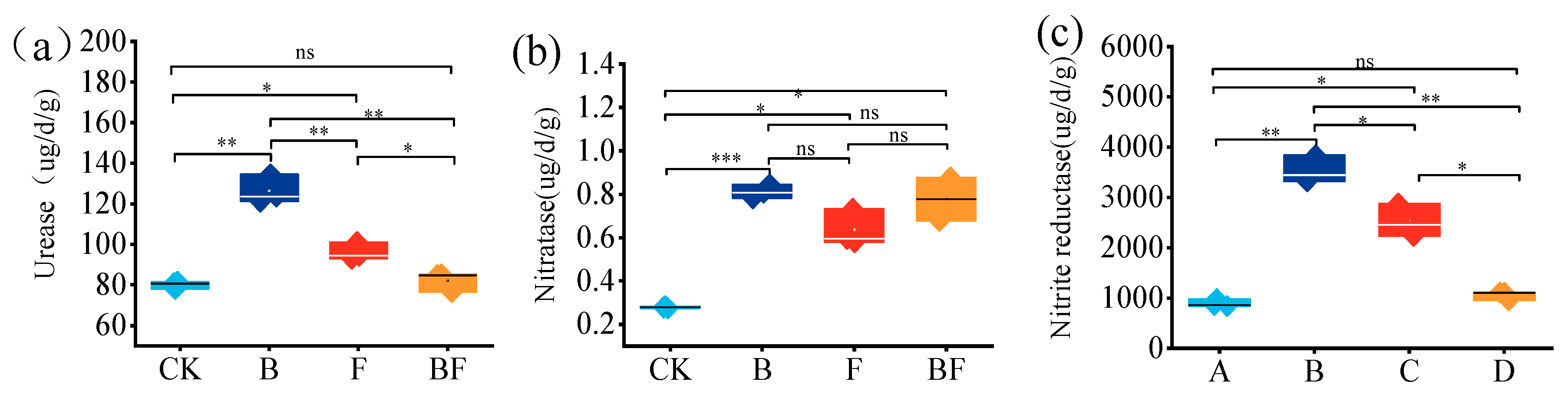
Depicted in the figure, both B and F treatments exhibit elevated levels of soil urease, nitrate reductase, and nitrite reductase activities compared to the control group (CK). Notably, the enhancement of urease, nitrate reductase, and nitrite reductase activities is more pronounced in the B treatment than in the F treatment. Specifically, the combined treatment of urease and nitrite reductase in the BF group did not demonstrate a statistically significant difference compared to the CK group (p > 0.05), whereas a significant increase in nitrate reductase activity was observed (Figure 2a–c).

3.5. Effects of Biochar and Organic Fertilizer on Soil Physical and Chemical Properties

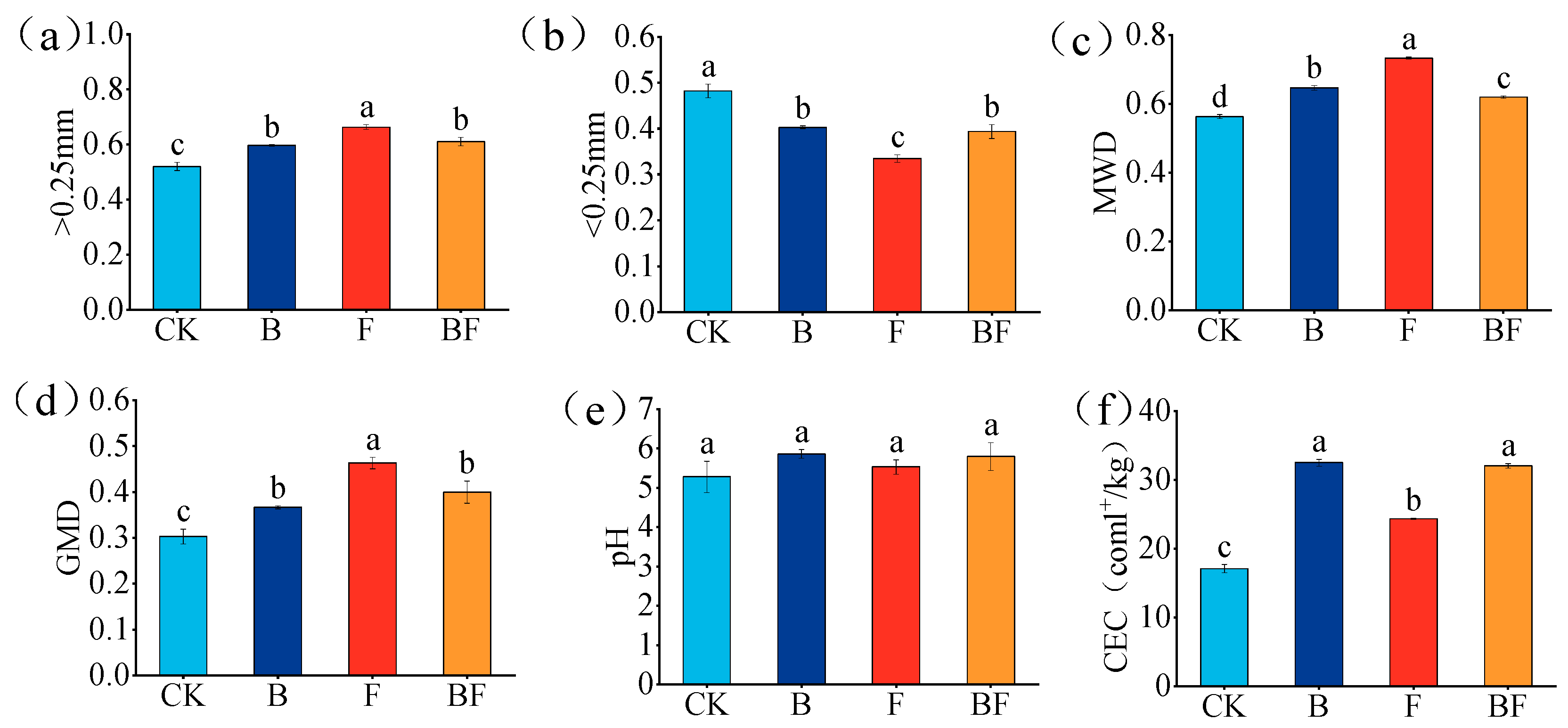
The figure demonstrates that the use of biochar and organic fertilizer led to a notable increase in soil aggregates >0.25 mm compared to CK. The decrease was by 0.05. Moreover, the CEC values of B, F, and BF treatments exhibited significant increases of 89.90%, 42.39%, and 87.27%, respectively (Figure 3a–f). This indicates that biochar has a higher capacity for soil nutrient adsorption than organic fertilizer and can elevate soil pH levels to a certain degree.

3.6. Effects of Biochar and Organic Fertilizer Application on Soil Nitrogen Forms

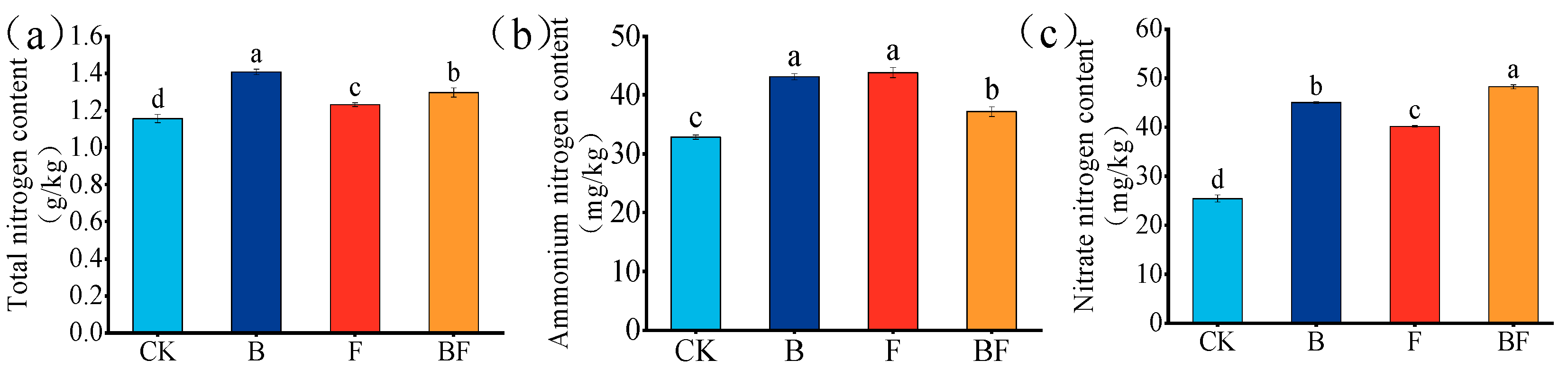
As shown in the figure, after the application of biochar and organic fertilizer, each treatment significantly increased the soil total nitrogen by 21.79%, 6.46% and 12.11%, respectively, compared with the control. The ammonium nitrogen increased by 31.21%, 33.40% and 13.21%, respectively, and the nitrate nitrogen content increased by 77.18%, 58.12% and 89.82%, respectively (Figure 4a–c). The effect of improving soil total nitrogen and nitrate nitrogen was better than that of F treatment. There was no significant difference in ammonium nitrogen content between the two treatments. The total nitrogen content of BF treatment was between B treatment and F treatment, and the ammonium nitrogen content was significantly lower than that of B treatment and F treatment. The content of nitrate nitrogen was significantly higher than that of each treatment.

3.7. Effects of Biochar and Organic Fertilizer Application on Key Microbial Communities of Soil Nitrogen Transformation

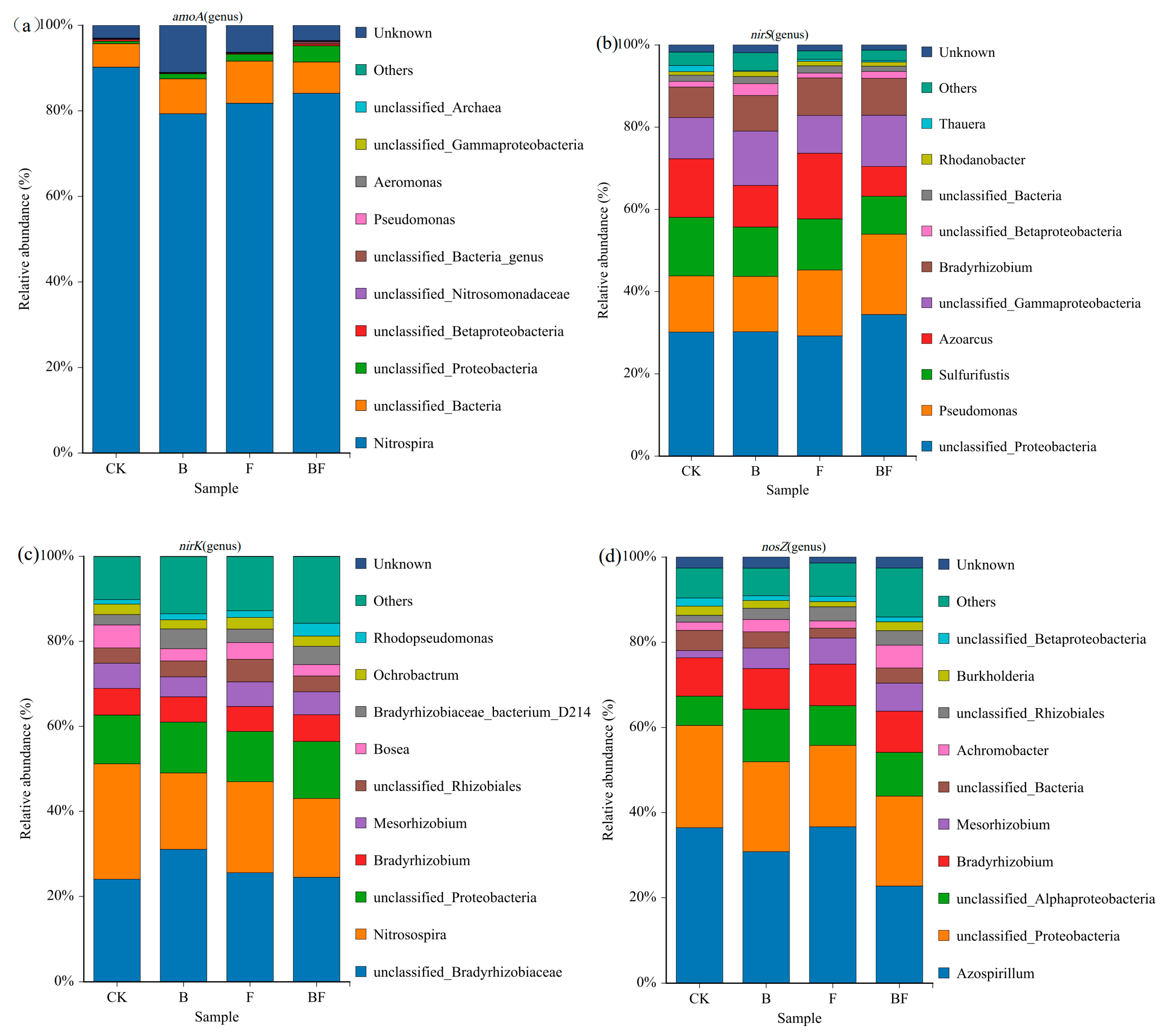
Through the analysis of nitrogen conversion microbial communities in different treatments, for α-diversity, we calculated both the Shannon and Chao1 indices. The significant differences observed among treatments were formally tested using one-way ANOVA, with the results detailed in Supplementary Figure S1a–l. For β-diversity: We performed Non-metric Multidimensional Scaling (NMDS) based on Bray–Curtis distances to visualize the community composition differences. The excellent reliability of the NMDS ordination is confirmed by a stress value of less than 0.05 for all analyses, indicating a high-fidelity representation of the underlying data. The statistical significance of the observed separation between treatment groups was further validated using ANOSIM (Analysis of Similarities). it was found that there were significant differences in α diversity and β diversity among nitrogen conversion microbial communities in different treatments (Figure S1a–l). The relative abundance of soil nitrogen-converting microorganisms after the application of biochar and organic fertilizer was compared at the subordinate level, respectively. Community composition analysis was performed at the genus level It was found that there were differences in the community composition, as shown in Figure 5a. The top 10 genera of each treatment for amoA were Nitrospira, Betaproteobacteria, Nitrosomonadaceae, Pseudomonas, Aeromonas, Gammaproteobacteria and Archaea, as shown in Figure 5b. The top 10 genera for each nirS treatment were Pseudomonas, Sulfurifustis, Azoarcus, Gammaproteobacteria, Bradyrhizobium, Betaproteobacteria, Rhodanobacter and Thauera, as shown in Figure 5c The top 10 genera of bacteria treated with nirK were Bradyrhizobiaceae, Nitrosospira, Bradyrhizobium, Mesorhizobium, Rhizobiales, Bosea, Bradyrhizobiaceae, and Ochrobactrum and Rhodopseudomonas, as shown in Figure 5d, The top 10 genera of each treated nosZ were Azospirillum, Alphaproteobacteria, Bradyrhizobium, Mesorhizobium, Achromobacter, Rhizobiales, Burkholderia and Betap roteobacteria. To further analyze the differential microorganisms among different treatments, we adopted LEfSe (LDA > 4) analysis at the genus level to identify the differential microorganisms. LDA score (log10) > 4.0 corresponds to an effect size that highlights taxa with substantial and biologically meaningful differences in abundance between groups. Among them, there were no significantly different microorganisms between amoA-type nitrifying microorganisms and nosZ-type denitrifying microorganisms at this threshold, while there were three differential microorganisms between nirS- and nirK-type denitrifying microorganisms, Azoarcus, Natrialbaceae, Vogesella (Figure S2a–c) and Afipia, bacterium_enrichment_culture_clone_B_MYnirK1 (Figure S2d,e), respectively. Treatment F significantly enriched Azoarcus and Afipia compared with treatment B, and treatment B significantly enriched Natrialbaceae, Vogesella and bacterium_enrichment_culture_clone_B_MYnirK1 compared with treatment F. It is indicated that the application of biochar and organic fertilizer changed the groups of nirS and nirK nitrogen-converting microorganisms, which might be an important reason for the inconsistency between N2O emissions and NH3 volatilization.

3.8. Correlation Analysis and Structural Equation Model of Nitrogen Runoff Loss and NH3 Volatilization Under Biochar and Organic Fertilizer Application

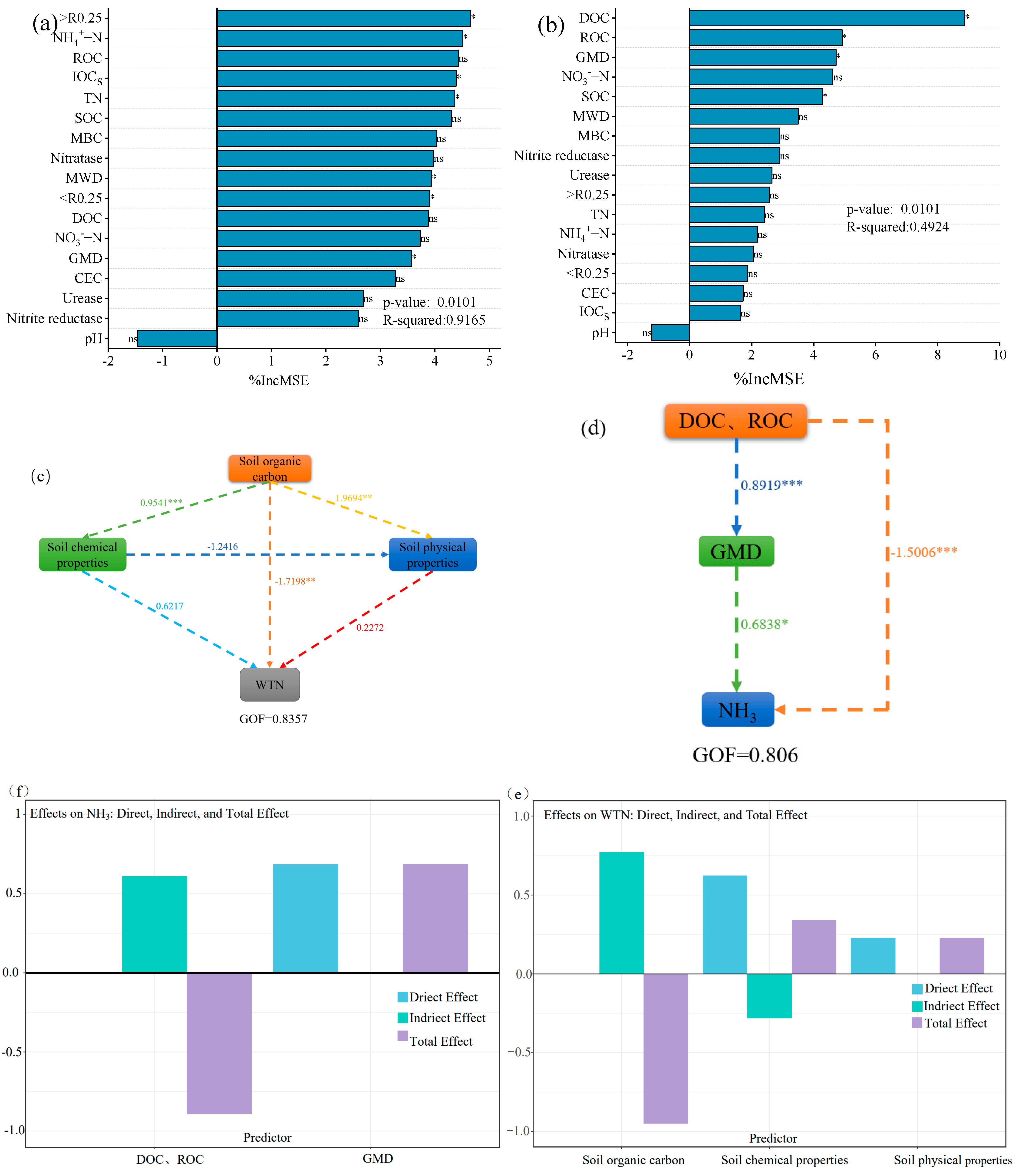
The analysis using random forest methodology, depicted in the figure, revealed the significant influence of soil carbon components and aggregate stability on nitrogen fate (Figure 6). Enhanced levels of soil organic carbon, aggregate stability, and cation exchange capacity (CEC) were found to notably mitigate nitrogen runoff loss. Particularly, aggregates smaller than 0.25 mm emerged as primary indicators of nitrogen runoff loss, while the promotion of larger aggregates stood out as a key factor in reducing such loss. The application of partial least squares structural equation modeling confirmed that soil organic carbon, aggregate stability, and large aggregates exerted direct or mediated effects on nitrogen runoff loss. Consequently, augmenting soil organic carbon content and fostering macroaggregate formation represent effective strategies for curbing nitrogen runoff loss. Subsequent random forest analysis identified geometric mean diameter (GMD), dissolved organic carbon (DOC), and readily oxidizable carbon (ROC) as principal determinants of NH3 volatilization. The structural equation model based on partial least squares further elucidated that DOC and ROC influenced NH3 volatilization by directly and indirectly impacting aggregate stability.

3.9. Analysis of Soil Nitrogen-Transforming Microbial COMMUNITIES and Key Predictors of N2O Emissions

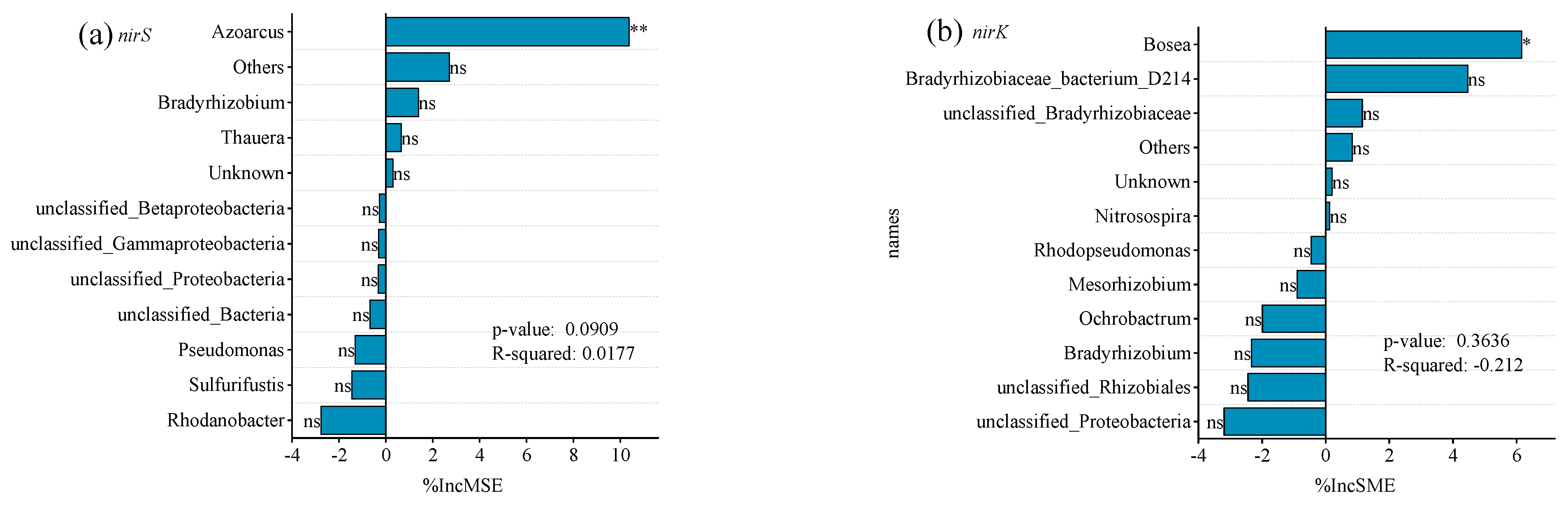
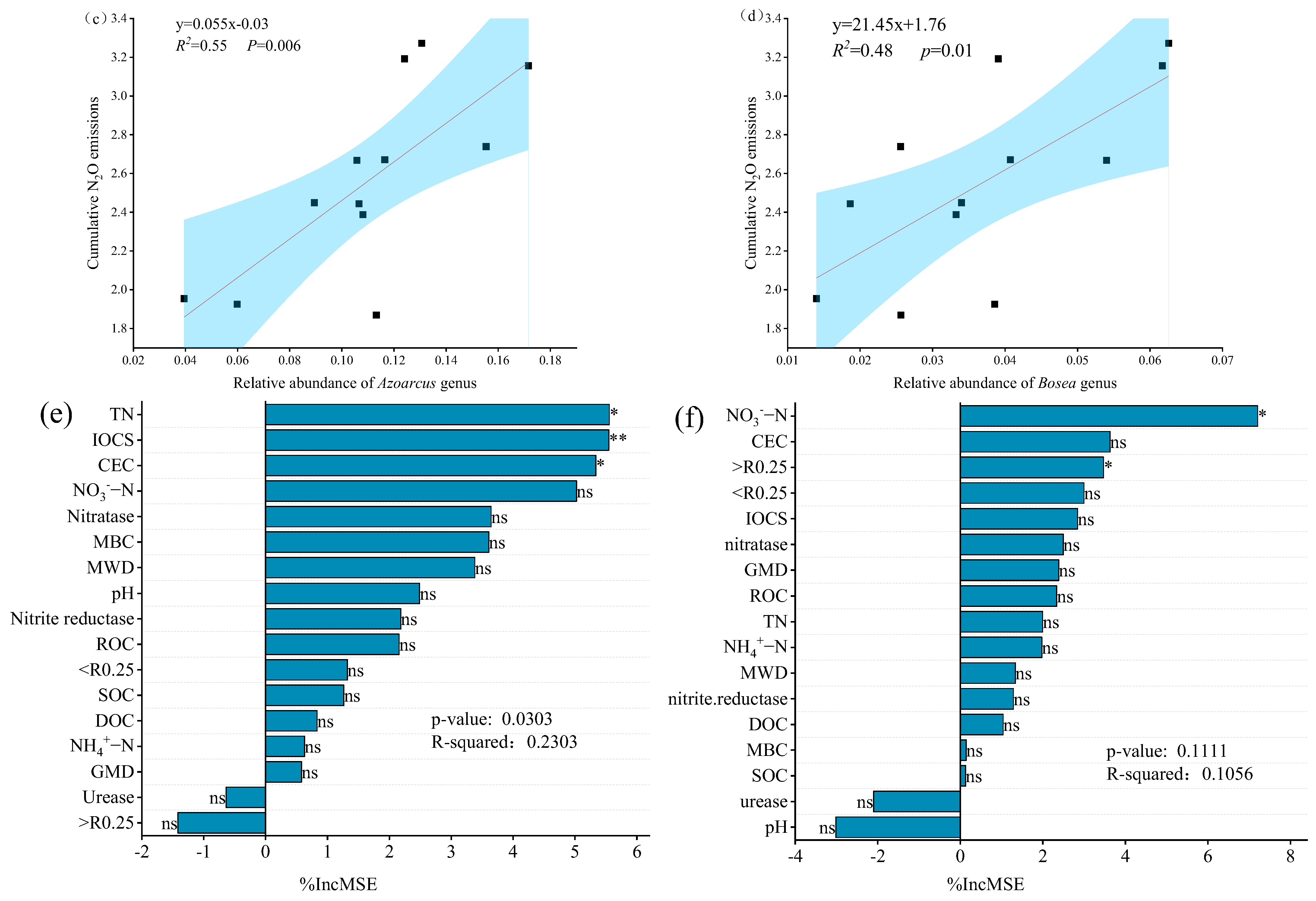
Given the distinct responses of N2O emissions to biochar and organic fertilizer applications, the merged dataset from four treatments was utilized to further analyze differential microbial taxa across treatments. At the genus level, LEfSe analysis (LDA > 4) was employed to identify significantly divergent microorganisms. Results revealed no statistically significant differences in amoA-type nitrifying microbes or nosZ-type denitrifying microbes under this threshold. However, three differential taxa were identified among nirS- and nirK-type denitrifying microbes: Azoarcus, Natrialbaceae, and Vogesella (Figure S1a–c), as well as Afipia and bacterium_enrichment_culture_clone_B_MYnirK1 (Figure S1d,e). These findings indicate that biochar and organic fertilizer applications significantly altered the composition of nirS- and nirK-type nitrogen-transforming microbial communities, which may serve as a critical factor driving the observed discrepancies in N2O emissions. Random forest analysis further identified Azoarcus and Bosea within nirS- and nirK-type nitrogen-transforming microbes as the most significant predictors of N2O emissions. Among these taxa, the relative abundances of Azoarcus and Bosea exhibited significant positive correlations with cumulative N2O emissions (R2 = 0.44, ** p = 0.02; R2 = 0.49, ** p = 0.01, respectively). The analysis demonstrated that iron oxide-coated soil (IOCS), cation exchange capacity (CEC), pH, nitratase activity, and total nitrogen (TN) content were the strongest predictors of the relative abundance of nirS-type Azoarcus. In contrast, the relative abundance of nirK-type Bosea was primarily influenced by soil NO3-N, CEC, and IOCS. Linear regression analysis revealed that the abundance of Azoarcus was significantly negatively correlated with pH, CEC, and IOCS (** p < 0.05), identifying these parameters as key inhibitory factors for Azoarcus proliferation. Similarly, the abundance of Bosea showed significant negative correlations with pH, CEC, and IOCS (** p < 0.05), suggesting these soil properties also act as primary suppressors of Bosea growth (Figure 7). This integrated analysis highlights the critical role of soil physicochemical properties in modulating microbial taxa associated with nitrification and denitrification processes, ultimately influencing N2O emission dynamics under biochar and organic fertilizer amendments.

4. Discussion

4.1. The Influence of Applying Biochar and Organic Fertilizer on the Destination of Nitrogen

The fate of nitrogen includes runoff, leaching, plant uptake, gaseous losses, and soil residual retention [18]. In this study, nitrogen loss under sole chemical fertilizer application exhibited the highest proportion, significantly surpassing treatments involving biochar and organic fertilizer. In flat vegetable fields, terraced lands, and sloping farmlands, nitrogen loss predominantly occurs through subsurface leaching [3]. During four consecutive vegetable cropping cycles in this research, both runoff losses and gaseous nitrogen losses accounted for less than 30%, with notably high soil residual rates. This phenomenon may be attributed to subsurface percolation as the dominant pathway, though unmonitored in this investigation. Consequently, future studies should prioritize monitoring subsurface leaching to clarify nitrogen fate in newly reclaimed red soils and establish theoretical foundations for emission reduction. Experimental applications of biochar and organic fertilizer in newly reclaimed red soils significantly reduced nitrogen runoff losses, N2O emissions, and NH3 volatilization while enhancing plant nitrogen uptake and soil residual retention. Biochar, inherently carrying substantial negative charges, demonstrates adsorption capacity for soil NH4+-N, thereby mitigating NH3 volatilization. This process concurrently reduces substrate availability for nitrifying bacteria, weakening nitrification and subsequently decreasing N2O emissions [27]. Furthermore, biochar’s well-developed porous structure provides natural microhabitats that accelerate microbial proliferation. This microbial enhancement may influence N2O emissions and NH3 volatilization dynamics, as numerous studies have established that these processes are regulated by nitrifying and denitrifying microorganisms, which are themselves modulated by soil pH and nutrient availability [1,28]. Following biochar application, the regulation of denitrifying microbial communities through soil pH modification and organic matter adsorption has been demonstrated to reduce N2O emissions [29]. Organic fertilizer, enriched with labile carbon substrates, enhances microbial activity upon soil incorporation, intensifying microbial competition for NH4+. This competition strengthens nitrogen immobilization, reduces substrate availability for denitrification, and thereby suppresses both N2O emissions and NH3 volatilization [30]. Biochar exhibits superior efficacy in mitigating N2O emissions compared to organic fertilizer, whereas organic fertilizer outperforms biochar in reducing NH3 volatilization. The combined application of biochar and organic fertilizer achieves optimal synergistic effects in minimizing both N2O and NH3 losses. In this study, sole chemical fertilization resulted in the highest gaseous nitrogen losses; however, these loss rates were significantly lower than previously reported values. This discrepancy is primarily attributable to the adoption of drip fertigation—a precision water and nutrient management strategy—which enhances plant nitrogen uptake efficiency and markedly reduces nitrogen losses [18]. Both individual and combined applications of biochar and organic fertilizer substantially decreased the proportion of gaseous nitrogen losses, with the combined treatment yielding the most pronounced effects. Biochar and organic fertilizer applications also significantly reduced nitrogen runoff losses, with organic fertilizer demonstrating greater efficacy than biochar. This superiority stems from organic fertilizer’s enhanced capacity to promote “cementation” processes, facilitating the aggregation of microaggregates into macroaggregates and improving soil aggregate formation and stability [31]. Random Forest analysis revealed that biochar and organic fertilizer amendments significantly improved soil physicochemical properties, directly correlating with reduced nitrogen runoff losses. Notably, in newly reclaimed red soil vegetable systems, nitrogen losses were dominated by runoff rather than gaseous pathways—a finding contrasting with observations in other agricultural systems. This divergence likely reflects site-specific agricultural management practices, particularly drip fertigation. Consequently, precision fertilization technologies exhibit substantial potential for mitigating environmental pollution and enhancing nitrogen use efficiency in intensive agriculture. Furthermore, organic carbon inputs demonstrate amplified benefits in reducing both gaseous nitrogen losses and runoff, underscoring their critical role in sustainable soil management.

4.2. Effects of Biochar and Organic Fertilizer on Soil Organic Carbon Fractions

The input of exogenous organic carbon stimulates soil priming effects and significantly alters soil organic carbon (SOC) fractions [18]. In this study, biochar and organic fertilizer applications markedly increased SOC, readily oxidizable organic carbon (ROC), water-soluble organic carbon (DOC), microbial biomass carbon (MBC), and inert organic carbon stabilized in soil (IOCS). Biochar demonstrated superior efficacy in enhancing SOC and IOCS compared to organic fertilizer, whereas organic fertilizer outperformed biochar in elevating labile organic carbon fractions (ROC, DOC, and MBC). This divergence arises from biochar’s inherent properties: as a carbon-rich organic material with high stability, it resists microbial degradation and exhibits a higher antioxidant stabilization coefficient than organic fertilizer. Upon incorporation into soil, biochar rapidly elevates organic carbon content due to its abundant oxygen-containing functional groups formed during pyrolysis, which significantly increase the relative abundance of alkyl carbon, thereby enhancing the stabilization of recalcitrant organic carbon [32]. In contrast, organic fertilizer, derived from fermented plant and animal residues, is enriched with labile organic carbon (e.g., glucose), enabling it to more effectively boost active carbon pools when introduced to soil [33]. The combined application of biochar and organic fertilizer yielded optimal improvements in MBC and IOCS, attributed to synergistic interactions between labile and stable organic carbon fractions. These interactions accelerate aggregate formation, thereby enhancing soil carbon sequestration. Our findings suggest that biochar preferentially contributes stable carbon sources, while organic fertilizer supplies labile carbon substrates. biochar alters the pathway of nitrogen retention in soil, shifting it from a short-term, microbially dominated immobilization towards a more persistent, biochar-mediated physicochemical retention. Biochar’s high specific surface area and porous structure enable direct adsorption of ammonium (NH4+) and nitrate (NO3), effectively reducing their loss via leaching or transformation into gaseous forms (e.g., N2O, NH3). This mechanism aligns directly with our observed significant reduction in cumulative nitrogen loss. The decrease in MBC can be attributed to a “substrate competition” effect: Biochar’s strong adsorption of inorganic nitrogen reduces the availability of nitrogen to soil microorganisms. Unlike the condition where organic fertilizer is applied alone, microbial proliferation is limited under nitrogen scarcity, leading to lower MBC. Furthermore, biochar is a highly stable carbon source, not readily utilized by microbes as a rapid energy source compared to organic fertilizers, which may further constrain the growth of active microbial populations. Microbial Community Shift: This selective environment may drive a shift in the microbial community—from fast-growing r-strategists to K-strategists that are more adapted to limited resources or biofilm formation on biochar surfaces. Although total biomass may be lower, these K-strategists may perform more specialized and efficient functions. In summary, the incorporation of biochar creates an environment that “reduces nitrogen loss without promoting excessive microbial proliferation”. By prioritizing nitrogen retention within the soil matrix rather than fueling microbial biomass buildup, this approach represents a more efficient and lower-loss nitrogen management strategy from both agricultural and environmental perspectives, particularly beneficial for long-term nitrogen pool development. From a long-term perspective, biochar application holds greater potential for rapid improvements in carbon sequestration and soil quality. However, when considering environmental protection and plant nitrogen utilization efficiency, the combined application of biochar and organic fertilizer emerges as the optimal strategy to mitigate environmental pollution and enhance nitrogen use efficiency.

4.3. Effects of Biochar and Organic Fertilizer Application on Soil Physical and Chemical Properties

Soil enzyme activity serves as a critical indicator for assessing nitrogen transformation processes [34]. In this study, the application of biochar and organic fertilizer significantly enhanced the activities of urease, nitrate reductase, and nitrite reductase. This enhancement is attributed to the increased soil organic carbon (SOC) following biochar and organic fertilizer inputs, which stimulated microbial proliferation and consequently elevated enzyme activity. Biochar demonstrated greater efficacy than organic fertilizer in boosting urease and nitrite reductase activities, likely due to its highly porous structure that provides abundant microbial habitats, thereby fostering microbial colonization [35]. However, the combined application of biochar and organic fertilizer showed no significant difference in urease and nitrite reductase activities compared to the control. This observation may stem from the slow-release properties of biochar and organic fertilizer, which synchronize nitrogen availability with plant demand, enhance nitrogen uptake, and subsequently reduce gaseous nitrogen losses [36]. Soil cation exchange capacity (CEC) reflects the soil’s ability to retain nutrients over extended periods, thereby influencing nutrient availability and microbial community assembly in nitrogen cycling [37]. In this study, biochar and organic fertilizer applications markedly increased CEC, primarily due to biochar’s abundant functional groups and high cation exchange potential. Random Forest analysis revealed that elevated CEC suppressed the abundance of nirS-type Azoarcus genera, thereby reducing Azoarcus-mediated N2O emissions. Collectively, biochar and organic fertilizer modulated nitrogen-transforming microbial communities via CEC modification and altered enzyme activities, ultimately mitigating N2O emissions and NH3 volatilization. Aggregate stability and the proportion of macroaggregates (>0.25 mm, R0.25) reflect soil physical conditions, which further govern nutrient availability, aeration, and nitrogen transformation dynamics. Biochar and organic fertilizer applications significantly increased geometric mean diameter (GMD), mean weight diameter (MWD), and the proportion of macroaggregates (>0.25 mm), while reducing the fraction of microaggregates (<0.25 mm). Organic fertilizer outperformed biochar in these improvements, likely due to its high content of labile organic carbon, which enhances aggregate cementation, accelerates microaggregate-to-macroaggregate transformation, and improves aggregate stability. Random Forest and partial least squares structural equation modeling (PLS-SEM) confirmed that elevated SOC and aggregate stability were the primary drivers of reduced runoff losses and NH3 volatilization. A noteworthy observation is that the total nitrogen content in the BF treatment was significantly lower than that in the B treatment (Figure 4a). This appears contradictory, as the BF treatment received both organic fertilizer and biochar. We hypothesize that this result is not due to nitrogen loss, but rather stems from the transformation and fixation of nitrogen forms under the synergistic effect of biochar and organic fertilizer. First, biochar provides a large specific surface area and abundant habitat niches. When applied together with organic fertilizer rich in readily decomposable organic matter, it may greatly stimulate the growth and activity of soil microorganisms, leading to the immobilization of a substantial amount of mineral nitrogen into microbial biomass. Second, biochar can fix nitrogen-containing organic compounds derived from the decomposition of organic fertilizer through adsorption and complexation, forming stable organic-mineral complexes. This strong biological and physicochemical immobilization, combined with the lowest nitrogen loss (Table 1) and the highest nitrate nitrogen content (Figure 4c) observed in the BF treatment, collectively indicates that nitrogen was more efficiently retained within the soil system in this treatment. However, its form shifted from the easily losable mineral nitrogen pool toward more stable pools—namely, microbial organic nitrogen and fixed organic nitrogen. In the long term, this immobilized nitrogen is expected to undergo gradual mineralization, providing a sustained nitrogen supply for crops.

4.4. Effects of Biochar and Organic Fertilizer Application on Microbial Community

Soil microorganisms play a pivotal role in biogeochemical cycles [37]. In this study, the application of biochar and organic fertilizer significantly altered the composition and diversity of nitrifying and denitrifying microbial communities. Compared to chemical fertilizers, biochar treatment has been widely reported to enhance soil microbial diversity, attributable to its porous structure and high specific surface area that provide optimal habitats for microorganisms [38]. Furthermore, the increased microbial diversity following biochar amendment may also correlate with soil property modifications, particularly the elevation of cation exchange capacity (CEC), a critical factor driving microbial diversity enhancement. Our findings demonstrate distinct effects between organic fertilizer and biochar on nitrifying microbial communities. Organic fertilizer outperformed biochar in enriching the abundance and diversity of amoA-type microorganisms. This discrepancy may stem from biochar’s unique physicochemical properties, including its porous architecture, extensive surface area, and abundant oxygen-containing functional groups (-COOH, -OH, etc.), which provide additional chemisorption sites for NH4+-N. Enhanced adsorption capacity of biochar for NH4+ ions, proportional to oxygen-functional group density, may partially inhibit microbial assimilation of NH4+-N. Consequently, organic fertilizer proves more effective in promoting the growth of amoA-type microbes utilizing NH4+-N as substrate [39]. Soil physicochemical properties substantially influence denitrification processes and consequently affect the growth of nirS-, nirK-, and nosZ-type microorganisms [21]. Biochar exhibited superior performance over organic fertilizer in enhancing the abundance and diversity of these denitrification-associated microbes. This advantage likely arises from biochar’s capacity to function as a redox mediator, facilitating accelerated electron transfer and thereby promoting microbial community enrichment. Notably, our study revealed significant positive correlations between the nirS-type denitrifier Azoarcus and N2O emissions. As a critical nitrate-reducing denitrifier [40], Azoarcus demonstrated significant negative correlations with pH, CEC, and ion-organic complex stability (IOCS). Biochar treatment markedly suppressed Azoarcus abundance through its capacity to elevate soil pH, CEC, and IOCS. Similarly, the nirK-type denitrifier Bosea, identified as a heterotrophic denitrifier [41], showed positive correlation with N2O but negative associations with NO3-N and CEC. These findings collectively indicate that biochar and organic fertilizer synergistically reduce N2O emissions, NH3 volatilization, and runoff by modulating pH, CEC, IOCS, urease activity, and total nitrogen (TN) to influence the composition of denitrifying microbial communities (e.g., Azoarcus and Bosea) and aggregate stability. The combined application demonstrates complementary effects in optimizing soil microbial ecology and mitigating nitrogen losses. The properties and efficacy of biochar are highly dependent on its feedstock and production conditions. Different plant materials (e.g., woody, herbaceous, and crop residues) vary in chemical composition and structure, resulting in biochars with distinct characteristics such as pH, pore structure, functional groups, and nutrient content. These differences subsequently lead to varied impacts on soil microorganisms and the nitrogen cycle. Therefore, caution should be exercised when extrapolating the findings of this study to other types of biochar. Future research should systematically compare the environmental behaviors of biochars derived from different feedstocks to establish a more universal theoretical framework.

5. Conclusions

The mechanisms by which biochar and organic fertilizer influence nitrogen runoff loss and gaseous emissions primarily manifest through their regulation of aggregate stability and denitrifying microbial communities. This study revealed that the application of biochar and organic fertilizer reduces nitrogen losses through two synergistic pathways modifying soil physicochemical properties, e.g., organic carbon fractions, aggregate stability, pH, and cation exchange capacity CEC to enhance aggregate formation and stability, thereby suppressing nitrogen runoff; and modulating the abundance and structure of denitrifying microbial communities to mitigate gaseous nitrogen losses. Specifically, organic fertilizer and biochar improve aggregate stability by promoting macroaggregate formation, which reduces nitrogen runoff, while simultaneously decreasing NH3 volatilization through elevated pH, CEC, and ion-organic complex stability (IOCS). Key parameters including pH, CEC, IOCS, total nitrogen (TN), and NH4+-N were identified as significant factors influencing the composition of nirS- and nirK-type denitrifying microbial communities, likely explaining the observed reduction in N2O emissions. Biochar demonstrated superior efficacy over organic fertilizer in suppressing N2O emissions, attributable to its stronger inhibitory effects on denitrifiers Azoarcus and Bosea. Conversely, organic fertilizer outperformed biochar in mitigating NH3 volatilization and water-transported nitrogen (WTN) loss due to its greater enhancement of aggregate stability. Their combined application exhibited synergistic effects, suggesting complementary mechanisms of action. Our findings demonstrate that biochar and organic fertilizer employ distinct pathways to reduce nitrogen runoff and gaseous losses: biochar primarily modifies denitrifying microbial community structure, while organic fertilizer predominantly enhances aggregate stability. These differential mitigation strategies stem from their unique regulatory effects on denitrifier community composition and aggregate stabilization processes. From a carbon sequestration and emission reduction perspective, the integrated application of biochar and organic fertilizer emerges as an effective strategy for improving agricultural sustainability. This study provides novel insights into how different carbon sources regulate physicochemical properties, nitrification, denitrification, and nitrogen loss in newly reclaimed red soils. The results advance our mechanistic understanding of soil nitrogen cycling and offer critical guidance for developing management strategies to achieve sustainable production and nitrogen loss mitigation in acidic soils. Future investigations should be integrated with DNA-based stable isotope probing (DNA-SIP) or metagenomic/metatranscriptomic approaches to track the actual metabolic activity of these key microorganisms in nitrogen transformation following biochar/organic fertilizer application, thereby clarifying expression changes in functional genes (e.g., nirS, nirK, nosZ). Furthermore, in controlled microcosm systems, 15N isotope tracing experiments should be conducted to precisely trace the fate of fertilizer nitrogen and quantify the contributions of different loss pathways, enabling more accurate assessment of the mitigation efficiency of various management practices.

Supplementary Materials

The following supporting information can be downloaded at: https://www.mdpi.com/article/10.3390/agriculture15222326/s1, Figure S1: Effects of biochar and organic fertilizer on α-diversity and β-diversity of nitrifying and denitrifying microorganisms; Figure S2: Differential microorganisms directly existing between NIRS-type and NIRK-type denitrifying microorganisms; Table S1: t Fertilizer application amount and nutrient conversion of each treatment; Table S2: Gene primers and reaction conditions used for PCR amplification of the 16Sv3-v4, amoA, nirK, nirS and nosZ genes; Table S3: Effects of biochar and organic fertilizer application on nitrogen fate.

Author Contributions

S.L.: Conceptualization, Formal analysis, Writing—original draft, Writing—review and editing. L.H.: Methodology, Visualization. C.M.: Data curation, Writing—review and editing. M.L.: Project administration, Visualization. Y.P. (Yuanyang Peng): Formal analysis. Y.P. (Yin Peng): Project administration, Data curation. X.D.: Formal analysis, Writing—review and editing. J.H.: Project administration, Data curation. All authors have read and agreed to the published version of the manuscript.

Funding

This research was funded by National Natural Science Foundation of China funded project (41967015) and Fuxian Lake Ecological Environment Protection Special Project (ZC530400201800057) and The APC was funded by Fuxian Lake Ecological Environment Protection Special Project.

Data Availability Statement

The data that support the findings of this study are available from the corresponding author upon reasonable request.

Conflicts of Interest

The authors declare that they have no known competing financial interests or personal relationships that could have appeared to influence the work reported in this paper.

References

  1. Fan, C.; Leng, Y.; Wang, X.; Wang, J.; Fu, Y.; Huang, X.; Gao, W.; Zhang, W.; Liu, H.; Ning, Z.; et al. Enhanced mitigation of N2O and NO emissions through co-application of biochar with nitrapyrin in an intensive tropical vegetable field. Agric. Ecosyst. Environ. 2024, 365, 108910. [Google Scholar] [CrossRef]
  2. Mohanty, S.; Nayak, A.K.; Swain, C.K.; Dhal, B.R.; Kumar, A.; Kumar, U.; Tripathi, R.; Shahid, M.; Behera, K.K. Impact of integrated nutrient management options on GHG emission, N loss and N use efficiency of low land rice. Soil Tillage Res. 2020, 200, 104616. [Google Scholar] [CrossRef]
  3. Huang, R.; Gao, X.; Wang, F.; Xu, G.; Long, Y.; Wang, C.; Wang, Z.; Gao, M. Effects of biochar incorporation and fertilizations on nitrogen and phosphorus losses through surface and subsurface flows in a sloping farmland of Entisol. Agric. Ecosyst. Environ. 2020, 300, 106988. [Google Scholar] [CrossRef]
  4. Ding, W.; Zhang, G.; Xie, H.; Chang, N.; Zhang, J.; Zhang, J.; Li, G.; Li, H. Balancing high yields and low N2O emissions from greenhouse vegetable fields with large water and fertilizer input: A case study of multiple-year irrigation and nitrogen fertilizer regimes. Plant Soil 2023, 483, 131–152. [Google Scholar] [CrossRef]
  5. Ma, Y.; Kang, L.; Li, Y.; Zhang, X.; Cardenas, L.M.; Chen, Q. Is sorghum a promising summer catch crop for reducing nitrate accumulation and enhancing eggplant yield in intensive greenhouse vegetable systems? Plant Soil 2024, 499, 113–125. [Google Scholar] [CrossRef]
  6. Beillouin, D.; Corbeels, M.; Demenois, J.; Berre, D.; Boyer, A.; Fallot, A.; Feder, F.; Cardinael, R. A global meta-analysis of soil organic carbon in the Anthropocene. Nat. Commun. 2023, 14, 3700. [Google Scholar] [CrossRef]
  7. Zhang, L.Y.; Jing, Y.M.; Chen, C.R.; Xiang, Y.Z.; Rashti, M.R.; Li, Y.T.; Deng, Q.; Zhang, R.D. Effects of biochar application on soil nitrogen transformation, microbial functional genes, enzyme activity, and plant nitrogen uptake: A meta-analysis of field studies. Gcb Bioenergy 2021, 13, 1859–1873. [Google Scholar] [CrossRef]
  8. Jin, P.; Chen, Z.; Wang, H.; Lv, R.; Hu, T.; Zhou, R.; Zhang, J.; Lin, X.; Liu, Q.; Xie, Z. 12-year continuous biochar application: Mitigating reactive nitrogen loss in paddy fields but without rice yield enhancement. Agric. Ecosyst. Environ. 2024, 375, 109223. [Google Scholar] [CrossRef]
  9. Zhang, S.; Cui, J.; Zhang, M.; Liu, J.; Wang, L.; Zhao, J.; Bao, Z. Diversity of active anaerobic ammonium oxidation (ANAMMOX) and nirK-type denitrifying bacteria in macrophyte roots in a eutrophic wetland. J. Soils Sediments 2021, 21, 2465–2473. [Google Scholar] [CrossRef]
  10. Zhang, L.; Jiang, M.H.; Ding, K.R.; Zhou, S.G. Iron oxides affect denitrifying bacterial communities with the nirS and nirK genes and potential N2O emission rates from paddy soil. Eur. J. Soil Biol. 2019, 93, 103093. [Google Scholar] [CrossRef]
  11. Xiao, Z.G.; Rasmann, S.; Yue, L.; Lian, F.; Zou, H.; Wang, Z.Y. The effect of biochar amendment on N-cycling genes in soils: A meta-analysis. Sci. Total Environ. 2019, 696, 133984. [Google Scholar] [CrossRef] [PubMed]
  12. Hao, D.C.; Su, X.Y.; Xie, H.T.; Bao, X.L.; Zhang, X.D.; Wang, L.F. Effects of tillage patterns and stover mulching on N2O production, nitrogen cycling genes and microbial dynamics in black soil. J. Environ. Manag. 2023, 345, 118458. [Google Scholar] [CrossRef]
  13. Hei, Z.W.; Peng, Y.T.; Hao, S.L.; Li, Y.M.; Yang, X.; Zhu, T.B.; Müller, C.; Zhang, H.Y.; Hu, H.W.; Chen, Y.L. Full substitution of chemical fertilizer by organic manure decreases soil N2O emissions driven by ammonia oxidizers and gross nitrogen transformations. Glob. Change Biol. 2023, 29, 7117–7130. [Google Scholar] [CrossRef]
  14. Liang, X.L.; Wen, X.L.; Yang, H.M.; Lu, H.; Wang, A.; Liu, S.P.; Li, Q.L. Incorporating microbial inoculants to reduce nitrogen loss during sludge composting by suppressing denitrification and promoting ammonia assimilation. Sci. Total Environ. 2024, 915, 170000. [Google Scholar] [CrossRef]
  15. Chen, Y.; Jiang, Z.Q.; Ou, J.M.; Liu, F.D.; Cai, G.Y.; Tan, K.M.; Wang, X.L. Nitrogen substitution practice improves soil quality of red soil (Ultisols) in South China by affecting soil properties and microbial community composition. Soil Tillage Res. 2024, 240, 106089. [Google Scholar] [CrossRef]
  16. Götze, H.; Buchen-Tschiskale, C.; Eder, L.; Pacholski, A. Effects of inhibitors and slit incorporation on NH3 and N2O emission processes after urea application. Agric. Ecosyst. Environ. 2025, 378, 109307. [Google Scholar] [CrossRef]
  17. Zheng, L.L.; Zhao, Q.; Lin, G.G.; Hong, X.; Zeng, D.H. Nitrogen addition impacts on soil phosphorus transformations depending upon its influences on soil organic carbon and microbial biomass in temperate larch forests across northern China. Catena 2023, 230, 107252. [Google Scholar] [CrossRef]
  18. Li, S.X.; Peng, Y.Y.; Li, M.Y.; Li, X.; Li, H.Y.; Dabu, X.; Yang, Y. Different active exogenous carbons improve the yield and quality of roses by shaping different bacterial communities. Front. Microbiol. 2025, 16, 1558322. [Google Scholar] [CrossRef]
  19. Yang, Y.; Li, C.R.; Peng, Y.; Zeng, M.; Dabu, X. Effects of biochar and organic fertilizer application on physical and chemical properties of red soil and nitrogen losses by runoff. Soil Fertil. Sci. China 2023, 4, 16–24. [Google Scholar] [CrossRef]
  20. Lv, J.L.; Zhang, Y.; Ji, C.F.; Luo, X.S.; Li, T.K.; Xiao, Q.; Dong, W.X. Influence of the combination of wheat straw to straw biochar on N2Ogas emissions from calcareous fluvo-aquic soil. J. Agric. Resour. Environ. 2025, 1–13. [Google Scholar] [CrossRef]
  21. Yan, P.; Zhang, J.; Shen, J.L.; Zhu, X.; Wang, W.; Wang, J.; Wu, J.S. Effects of combined application of organic and chemical fertilizers on N2O emission and NH3 volatilization in protected vegetable soils. Res. Agric. Mod. 2023, 44, 701–711. [Google Scholar] [CrossRef]
  22. Wu, X.; Zhao, X.Y.; Yi, G.R.; Zhang, W.Q.; Gao, R.Y.; Tang, D.K.H.; Xiao, R.; Zhang, Z.Q.; Yao, Y.Q.; Li, R.H. Promoting nitrogen conversion in aerobic biotransformation of swine slurry with the co-application of manganese sulfate and biochar. J. Environ. Manag. 2024, 356, 120604. [Google Scholar] [CrossRef]
  23. Hu, L.; Dabu, X.; Yang, Y.; Li, C.; Huang, J.L. Effect of Biochar and Organic FertilizerApplication on Nitrogen Loss in Gaseous State in Newly Reclaimed Red Soil. Chin. J. Soil Sci. 2024, 55, 1366–1375. [Google Scholar] [CrossRef]
  24. Herlemann, D.P.; Labrenz, M.; Jürgens, K.; Bertilsson, S.; Waniek, J.J.; Andersson, A.F. Transitions in bacterial communities along the 2000 km salinity gradient of the Baltic Sea. ISME J. 2011, 5, 1571–1579. [Google Scholar] [CrossRef] [PubMed]
  25. Caporaso, J.G.; Kuczynski, J.; Stombaugh, J.; Bittinger, K.; Bushman, F.D.; Costello, E.K.; Fierer, N.; Peña, A.G.; Goodrich, J.K.; Gordon, J.I.; et al. QIIME allows analysis of high-throughput community sequencing data. Nat. Methods 2010, 7, 335–336. [Google Scholar] [CrossRef]
  26. Kumar, S.; Nei, M.; Dudley, J.; Tamura, K. MEGA: A biologist-centric software for evolutionary analysis of DNA and protein sequences. Brief. Bioinform. 2008, 9, 299–306. [Google Scholar] [CrossRef]
  27. Feng, Y.Y.; Feng, Y.F.; Liu, Q.; Chen, S.; Hou, P.F.; Poinern, G.; Jiang, Z.T.; Fawcett, D.; Xue, L.H.; Lam, S.S.; et al. How does biochar aging affect NH3 volatilization and GHGs emissions from agricultural soils? Environ. Pollut. 2022, 294, 118598. [Google Scholar] [CrossRef]
  28. Wu, G.; Liang, F.; Wu, Q.; Feng, X.G.; Shang, W.D.; Li, H.W.; Li, X.X.; Che, Z.; Dong, Z.R.; Song, H. Soil pH differently affects N2O emissions from soils amended with chemical fertilizer and manure by modifying nitrification and denitrification in wheat-maize rotation system. Biol. Fertil. Soils 2024, 60, 101–113. [Google Scholar] [CrossRef]
  29. Davys, D.; Rayns, F.; Charlesworth, S.; Lillywhite, R. The effect of different biochar characteristics on soil nitrogen transformation processes: A review. Sustainability 2023, 15, 16446. [Google Scholar] [CrossRef]
  30. Gao, C.H.; El-Sawah, A.M.; Ali, D.F.I.; Hamoud, Y.A.; Shaghaleh, H.; Sheteiwy, M.S. The integration of bio and organic fertilizers improve plant growth, grain yield, quality and metabolism of hybrid maize (Zea mays L.). Agronomy 2020, 10, 319. [Google Scholar] [CrossRef]
  31. Shi, Y.L.; Liu, X.R.; Zhang, Q.W. Effects of combined biochar and organic fertilizer on nitrous oxide fluxes and the related nitrifier and denitrifier communities in a saline-alkali soil. Sci. Total Environ. 2019, 686, 199–211. [Google Scholar] [CrossRef]
  32. Chagas, J.K.M.; Nardoto, G.B.; Madari, B.E.; de Figueiredo, C.C. Seven-year effects of sewage sludge biochar on soil organic carbon pools and yield: Understanding the role of biochar on carbon sequestration and productivity. Soil Use Manag. 2024, 40, e70001. [Google Scholar] [CrossRef]
  33. Prasad, M.; Choudhary, P.; Choudhary, M.; Srinivasan, R.; Kumar, A.; Mahawer, S.K.; Kumar, A.; Palsaniya, D.R.; Kumar, S. Application of Invasive Weed Biochar as Soil Amendment Improves Soil Organic Carbon Fractions and Yield of Fodder Oat in a Semi-Arid Region. J. Soil Sci. Plant Nutr. 2024, 24, 2111–2122. [Google Scholar] [CrossRef]
  34. Li, Y.; Liu, X.; Lu, J.; Feng, H.; Chen, J.; Yang, Q.; Zhou, L.; Li, N.; Siddique, K.H.; Liang, J. Soil extracellular enzymes, soil carbon and nitrogen storage under straw return: A data synthesis. Ind. Crops Prod. 2025, 228, 120884. [Google Scholar] [CrossRef]
  35. Dang, R.; Cai, Y.; Li, J.; Kong, Y.; Jiang, T.; Chang, J.; Yao, S.; Yuan, J.; Li, G.; Wang, G. Biochar reduces gaseous emissions during poultry manure composting: Evidence from the evolution of associated functional genes. J. Clean. Prod. 2024, 452, 142060. [Google Scholar] [CrossRef]
  36. Wang, Y.; Tian, Z.; Li, X.; Zhang, M.; Fang, Y.; Xiang, Y.; Liu, Y.; Liu, E.; Jia, Z.; Siddique, K.H.; et al. Straw-derived biochar regulates soil enzyme activities, reduces greenhouse gas emissions, and enhances carbon accumulation in farmland under mulching. Field Crops Res. 2024, 317, 109547. [Google Scholar] [CrossRef]
  37. Sokol, N.W.; Slessarev, E.; Marschmann, G.L.; Nicolas, A.; Blazewicz, S.J.; Brodie, E.L.; Firestone, M.K.; Foley, M.M.; Hestrin, R.; Hungate, B.A.; et al. Life and death in the soil microbiome: How ecological processes influence biogeochemistry. Nat. Rev. Microbiol. 2022, 20, 415–430. [Google Scholar] [CrossRef]
  38. Tang, Y.; Su, X.; Wen, T.; McBratney, A.B.; Zhou, S.; Huang, F.; Zhu, Y.G. Soil properties shape the heterogeneity of denitrification and N2O emissions across large-scale flooded paddy soils. Glob. Change Biol. 2024, 30, e17176. [Google Scholar] [CrossRef]
  39. Xia, H.; Wang, J.; Riaz, M.; Babar, S.; Li, Y.; Wang, X.; Xia, X.; Liu, B.; Jiang, C. Co-application of biochar and potassium fertilizer improves soil potassium availability and microbial utilization of organic carbon: A four-year study. J. Clean. Prod. 2024, 469, 143211. [Google Scholar] [CrossRef]
  40. Philippon, T.; Tian, J.; Bureau, C.; Chaumont, C.; Midoux, C.; Tournebize, J.; Bouchez, T.; Barrière, F. Denitrifying bio-cathodes developed from constructed wetland sediments exhibit electroactive nitrate reducing biofilms dominated by the genera Azoarcus and Pontibacter. Bioelectrochemistry 2021, 140, 107819. [Google Scholar] [CrossRef]
  41. Qiao, Z.; Sun, R.; Wu, Y.; Hu, S.; Liu, X.; Chan, J.; Mi, X. Characteristics and metabolic pathway of the bacteria for heterotrophic nitrification and aerobic denitrification in aquatic ecosystems. Environ. Res. 2020, 191, 110069. [Google Scholar] [CrossRef]
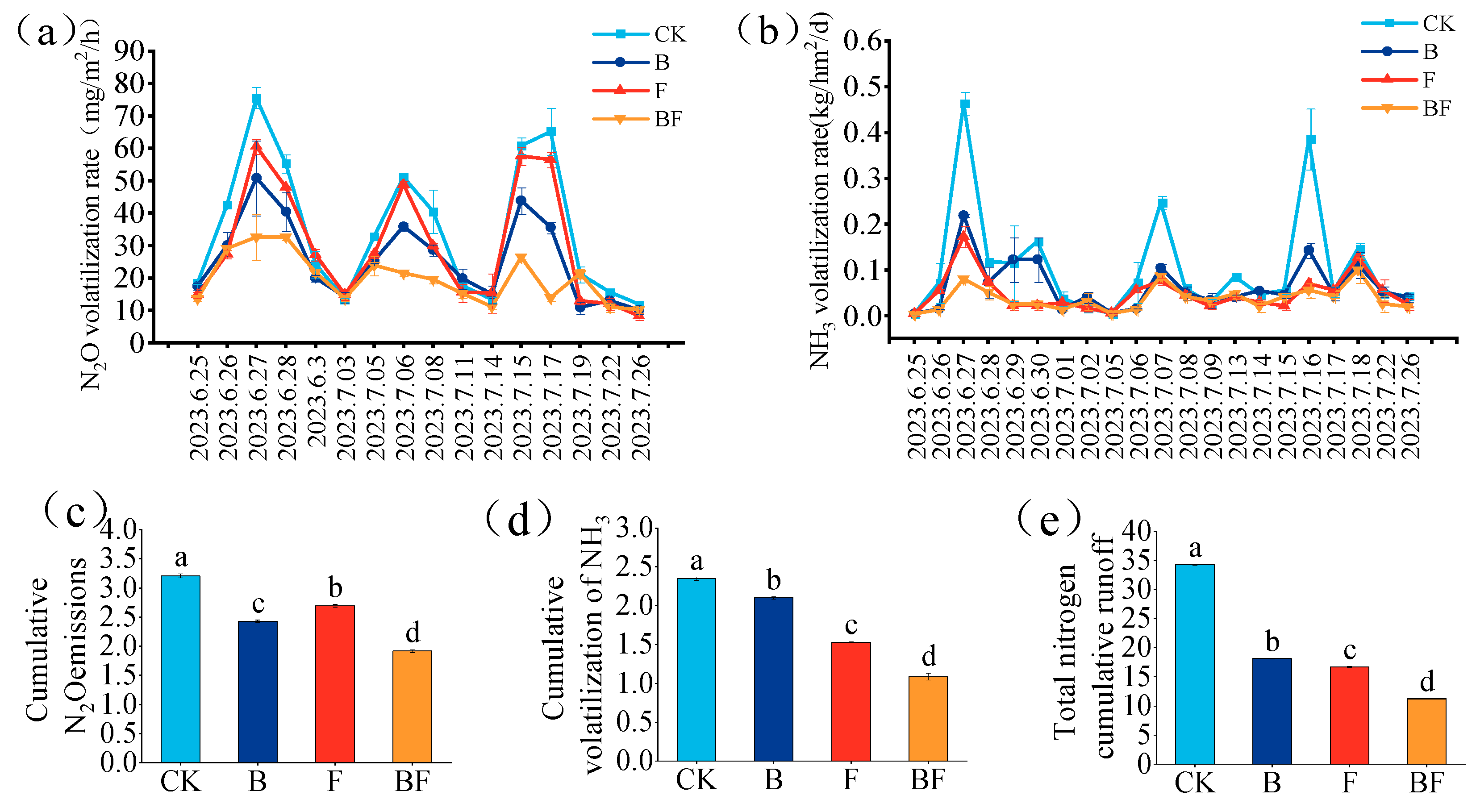
Figure 1. The temporal dynamics of N2O and NH3 emissions (a,b), the cumulative emissions of N2O and NH3 (c,d) and the cumulative loss of total nitrogen (e). Different lowercase letters in the figure indicate significant differences between different treatments (p < 0.05).
Agriculture 15 02326 g001
Figure 2. Effects of biochar and organic fertilizer on soil enzyme activities. (a) urease activity; (b) nitrate reductase activity; (c) nitrite reductase activity. Significance levels are denoted as follows: * p < 0.05, ** p < 0.01, and *** p < 0.001. The abbreviation ‘ns’ indicates not significant (p > 0.05).
Agriculture 15 02326 g002
Figure 3. Effects of biochar and organic fertilizer application on soil physical and chemical properties. >0.25 mm aggregate ratio (a), <0.25 mm aggregate ratio (b), mean weight diameter (c), geometric (al)jacquard patterning unit mean diameter (d), soil pH value (e) Soil cation exchange capacity (f). Different lowercase letters indicate that there are significant differences between different treatments (p < 0.05).
Agriculture 15 02326 g003
Figure 4. Effects of biochar and organic fertilizer application on soil nitrogen forms. Soil total nitrogen content (a), soil ammonium nitrogen content (b), soil nitrate nitrogen content (c). Different lowercase letters indicate that there are significant differences between different treatments (p < 0.05).
Agriculture 15 02326 g004
Figure 5. amoA nitrifying microorganisms (a), nirS denitrifying microorganisms (b), nirK denitrifying microorganisms (c), nosZ denitrifying microorganisms (d).
Agriculture 15 02326 g005
Figure 6. Random Forest analysis and structural equation modeling (SEM) of the effects of biochar and organic fertilizer application on nitrogen loss. (a) Random Forest analysis illustrating the influence of soil physicochemical properties on water total nitrogen (WTN) loss; (b) Random Forest analysis demonstrating the impact of soil physicochemical properties on NH3 volatilization; (c) Partial least squares structural equation modeling (PLS-SEM) elucidating the mechanisms influencing WTN loss; (d) Partial least squares structural equation modeling (PLS-SEM) delineating the mechanisms affecting NH3 volatilization; (e) Direct, indirect, and total effects of factors influencing WTN loss; (f) Direct, indirect, and total effects of factors governing NH3 volatilization. In random forest analysis, “*” indicates significant feature importance (p < 0.05), while “ns” is not significant (p ≥ 0.05). In the partial least squares structural equation model the value on the line represents the path coefficient, * 0.01 < p < 0.05, ** 0.001 < p < 0.01, *** 0.001 < p.
Agriculture 15 02326 g006
Figure 7. Analysis of soil nitrogen-transforming microbial communities and key predictors of N2O emissions. (a) N2O excretion by nirS microorganisms random forest analysis without influence (b) random forest analysis of the impact of nirK genus microorganisms on N2O emissions; (c) Linear regression analysis of nirS-type key microorganisms and N2O emissions; (d) Linear regression analysis of nirK-type key microorganisms and N2O emissions. (e) Random forest analysis of soil physicochemical properties on nirS-type key microorganisms; (f) random forest analysis of soil physicochemical properties on key microorganisms of nirK type. In random forest analysis, In linear regression analysis, the blue shaded portion represents a 95% confidence interval. In random forest analysis, “**” indicates significant feature importance (p < 0.01), “*” indicates significant feature importance (p < 0.05), while “ns” is not significant (p ≥ 0.05).
Agriculture 15 02326 g007aAgriculture 15 02326 g007b
Table 1. The effect of biochar and organic fertilizer application on the proportion of nitrogen fate (%).
TreatmentGaseous Loss RateRunoff Loss RatePlant Absorption RateSoil Residual Rate
CK2.32–5.5713.92–28.9626.20–45.4336.88–46.15
B1.72–4.288.06–24.2542.02–69.9519.98–33.99
F1.65–4.136.72–29.1634.01–50.2632.70–40.43
BF1.33–3.814.60–29.3842.66–72.0021.67–34.558
Table 2. Effects of biochar and organic fertilizer on soil organic carbon fractions.
TreatmentSOC (g/kg)ROC (g/kg)IOCS (g/kg)DOC (mg/kg)MBC (mg/kg)
CK3.07 ± 0.08 c1.79 ± 0.03 c1.63 ± 0.65 b27.59 ± 1.87 c88.98 ± 1.68 c
B7.47 ± 0.22 a2.35 ± 0.07 b4.92 ± 0.75 a34.14 ± 0.94 c108.93 ± 4.94 b
F6.39 ± 0.03 b2.53 ± 0.01 ab3.83 ± 0.34 a61.73 ± 2.43 a135.56 ± 3.56 a
BF6.10 ± 0.01 b2.85 ± 0.27 a5.03 ± 0.74 a49.11 ± 2.81 b114.58 ± 8.08 b
Note: Different lowercase letters indicate that there are significant differences between different treatments (p < 0.05).
Disclaimer/Publisher’s Note: The statements, opinions and data contained in all publications are solely those of the individual author(s) and contributor(s) and not of MDPI and/or the editor(s). MDPI and/or the editor(s) disclaim responsibility for any injury to people or property resulting from any ideas, methods, instructions or products referred to in the content.