


Abstract
Low productivity in albic soils often results in excessive nitrogen input, while straw return further increases nitrogen accumulation through decomposition. To address this issue, a three-year field experiment was conducted in albic soils of high, medium, and low fertility. Two nitrogen management strategies were assessed: nitrogen addition and reduction. Addition treatments included conventional nitrogen application rate alone (N), straw return (8250 kg ha−1) with conventional nitrogen application rate (SN), and straw return with increased nitrogen (SN+). Reduction treatments comprised SN and straw return with 10%, 20%, and 30% reduced nitrogen (SN0.9, SN0.8, and SN0.7). Soil physical properties, nutrient content, and rice yield were evaluated. Results showed that SN0.9 exhibited advantages in high-fertility albic soils, as it increased rice yield and improved some soil quality while reducing the nitrogen input by 10%. However, yield under SN0.9 declined progressively over the three years, indicating limitations of long-term application. SN performed better than both N and SN+ in medium- and low-fertility albic soils, offering better yield and soil quality improvements. However, nitrogen overaccumulation risk under continuous application should not be overlooked. These findings highlight that fertility-based nitrogen adjustment combined with straw return can simultaneously improve rice productivity and soil quality while reducing nitrogen input in albic soils.
1. Introduction
Nitrogen fertilisers play an indispensable role in modern agriculture and have significantly contributed to global food production increases over the past century [1]. However, the intensification of agricultural systems driven by population growth and food demand has resulted in the widespread overuse of nitrogen inputs [2,3]. Excessive nitrogen application is a major threat to soil health and agroecosystem sustainability, leading to issues such as soil acidification [4,5], compaction and decline in soil structure, and alterations in microbial communities [6,7,8]. In addition, nitrogen loss contributes to water eutrophication, atmospheric pollution, and increased greenhouse gas emissions [9,10], posing serious environmental and socio-economic risks worldwide.
Among vulnerable agroecological zones, albic soils, typically characterised by their poor fertility, thin tillage layers, and low organic matter content, are particularly at risk of degradation under excessive nitrogen fertilisation [11]. In China, albic soils span over 5.27 million hectares and are mainly distributed in the Northeast Plain, where they are widely used for rice cultivation [12]. The inherent fertility constraints of these soils have historically led farmers to apply high doses of nitrogen fertiliser in an attempt to maintain stable rice yields [13]. However, this practice often results in nutrient imbalances and inefficient nitrogen use, which degrade soil quality and reduce productivity over time, eventually trapping farmers in a vicious cycle of over-fertilisation and yield stagnation [14,15].
To address declining soil fertility and improve soil health, straw return to the field has been widely promoted as a sustainable agronomic practice in China and other rice-growing regions [16]. Returning crop straw can increase soil organic carbon, enhance aggregate stability, and improve physical properties such as porosity and water retention [17]. It also plays a crucial role in nutrient cycling, particularly nitrogen, by releasing nitrogen through microbial decomposition over time [18]. These benefits not only improve soil quality but also offer the potential to partially offset synthetic nitrogen inputs, supporting both environmental and agronomic goals [19].
Despite these advantages, straw return can also complicate nitrogen management, especially in albic soils with low buffering capacity [20]. The nitrogen released from decomposing straw can accumulate in low-buffer systems, increasing the risk of nitrogen oversupply and related issues, including secondary salinisation or nitrate leaching [21]. This issue is further exacerbated by the heterogeneous fertility of albic soils across regions, which makes it difficult to determine a uniform fertilisation strategy that is efficient, environmentally friendly, and sustainable [22]. Consequently, nitrogen management in albic soils under straw return must be tailored not only to crop demand but also to site-specific soil fertility characteristics [23].
Over the past decade, numerous studies have demonstrated that combining straw return with nitrogen management can maintain or increase crop yields while improving soil quality. For instance, in Northeast China’s black soils, Song et al. [24] found that straw return with a 20% nitrogen reduction maintained maize yields and enhanced nitrogen use efficiency, reducing gaseous nitrogen losses. Similarly, Ma et al. [25] reported that 10 years of straw incorporation in fluvo-aquic soils boosted wheat yield, soil organic matter, and soil enzyme activities. In a rice–maize rotation, Wang et al. [26] observed a 15% increase in grain yield and 36% rise in microbial biomass carbon following 3-year straw return and moderate nitrogen adjustment, enabling up to 26% nitrogen fertiliser reduction. These findings highlight straw’s capacity to enrich soil carbon/nitrogen pools and enable modest nitrogen fertiliser cuts without sacrificing yield. Nevertheless, most existing studies are based on single soil types or uniform nitrogen treatments, offering limited insight into how straw–nitrogen interactions function under more complex conditions such as spatially heterogeneous soil fertility.
Recent multi-site studies in Mollisols [27] and Andosols [28] and rice–wheat Cambisols further underscore this limitation by showing that agronomic nitrogen optima vary with both soil fertility and the timing of nitrogen supply. Yet, none of these studies incorporated an explicit fertility stratification with nitrogen regulation design. In paddy soils with low buffering capacity, Chen et al. [29] found that straw-derived nitrogen mineralisation often lags behind crop uptake, compromising synchrony. Similarly, Ling et al. [30] reported divergent microbial nitrogen cycling responses under identical straw–nitrogen regimes across fertility classes. Despite growing awareness of these complexities, research in albic soils, characterised by poor structure, low organic matter, and strong spatial fertility gradients, remains limited and largely undifferentiated by the soil fertility level. The long-term yield and soil impacts of contrasting nitrogen regimes under consistent straw return are especially underexplored in this context.
These gaps present three interrelated challenges. First, it remains unclear whether a uniform nitrogen fertilisation approach is suitable for albic soils under straw return or whether differentiated strategies based on soil fertility levels are required. Second, it is necessary to evaluate the trade-off between long-term nitrogen reduction, where straw N release may lag crop demand, and the degradation risk associated with sustained nitrogen addition. Third, the threshold at which nitrogen input reduction begins to impair productivity, particularly in high-fertility albic paddies, remains undefined. Addressing these challenges, by integrating stratified soil fertility with sequential nitrogen treatments under a long-term straw return framework, constitutes the central innovation of the present study. This work aims to provide a fertility-specific nitrogen management strategy for albic soils, offering new insights into sustainable nitrogen use in agroecosystems where uniform approaches may fail to meet both agronomic and environmental targets.
To address these gaps, we conducted a three-year field experiment in albic paddy soils with clearly differentiated fertility levels (high, medium, and low), integrating straw return across all treatments. Two nitrogen management strategies were examined: nitrogen addition and nitrogen reduction, enabling a comparative analysis of their impacts on rice yield, soil physical properties, and nitrogen content. The objectives of this study were to (1) evaluate the nitrogen reduction potential of long-term straw return systems in albic soils with different fertility levels; (2) assess the yield stability and soil quality implications of continuous nitrogen addition or reduction; (3) establish practical, fertility-specific nitrogen regulation strategies for rice cultivation in albic soils under straw return conditions.
2. Materials and Methods
2.1. Experimental Site
Field experiments were conducted over a three-year period at two farms: Qianjin Farm (47°34′ N, 132°17′ E) and Qinglongshan Farm (47°72′ N, 132°96′ E). The experiment lasted for three years, covering 2020, 2021, and 2022. Both farms are under the jurisdiction of the Jiansanjiang Administration Bureau and are situated in the hinterland of the Sanjiang Plain, Heilongjiang Province, China. Three specific experimental sites were selected within the two farms: Qianjin, Qianjin Three, and Qinglongshan Area. The soils at these sites were classified as Albic Luvisols (referred to as “meadow albic soil” in Chinese terminology), according to the FAO-World Reference Base (FAO-WRB) for Soil Resources [31]. The three test sites are within 5 km of each other in a straight line and share identical climatic conditions, with a mean annual accumulated temperature of 2300–2500 °C and an annual precipitation of 550–650 mm during the experimental period. Prior to the commencement of the experiments, several physicochemical properties of the soils at each site were determined (Table 1). Based on these results, the soils were then categorised into high, medium, and low fertility groups according to a fertility index calculated by Equation (1) [32]:
where black soil layer refers literally to the dark-coloured surface soil layer identified in the soil profile.
Table 1.
Selected physiochemical properties of the albic soils at the test sites in the Sanjiang Plain (China).
2.2. Experimental Design
Field experiments comprised two primary components: nitrogen fertiliser addition (+N) and reduction (−N). The +N experiment was conducted at the three sites. In contrast, the −N experiment was performed exclusively at the Qianjin Area due to the relatively low soil fertility at the other two sites.
The +N treatments included (1) N—conventional nitrogen fertilisation at 124 kg ha−1; (2) SN—straw return with conventional nitrogen fertilisation; and (3) SN+—straw return with conventional nitrogen fertilisation plus an additional 35 kg ha−1 nitrogen. The −N treatments included (1) SN—identical to that in the +N group; (2) SN0.9—straw return with a 10% reduction from conventional nitrogen fertilisation; (3) SN0.8—straw return with a 20% reduction; and (4) SN0.7—straw return with a 30% reduction. Both components employed a randomised block design with three replicates per treatment, using plots of 100 m2.
The paddy rice variety used was Long Japonica 31, a medium-maturing japonica variety widely cultivated as a local main crop in the study area, with good adaptability to the regional albic soil conditions and stable agronomic performance. In the autumn preceding the experiment, paddy rice was harvested employing a combine harvester, and all the straw was removed from the experimental plots. The straw was subsequently manually chopped into pieces less than 10 cm in length and evenly returned to the field at a rate of 8250 kg ha−1. Mechanical rotary tillage was then performed to incorporate the straw into the top 10–12 cm of soil.
The fertilisers applied included urea (46% N, produced in Daqing, China), diammonium phosphate (18% N and 46% P2O5, imported from the United States), and potash (60% K2O, imported from Canada). Conventional fertilisation rates were 124 kg pure nitrogen ha−1, 69 kg P2O5 ha−1, and 90 kg K2O ha−1. Nitrogen was applied in three stages: basal (BBCH 13–19), tillering (BBCH 20–29), and panicle initiation (BBCH 31–33) in a 4:3:3 ratio. Phosphorus was applied entirely as basal fertiliser, and potassium was split between the tillering and panicle stages in a 6:4 ratio. Basal fertilisers were applied in the spring following field inundation. Detailed straw return and nitrogen fertiliser application rates for each treatment are presented in Table 2.
Table 2.
The rates of straw and nitrogen fertiliser application for each of the treatments considered in this work.
2.3. Sampling and Determinations
To capture the cumulative effects of long-term nitrogen management under straw return, rice yield and partial factor productivity of nitrogen (PFPN) were monitored annually over the full three-year experimental period. In contrast, soil physical and chemical properties were measured only after three years of application. This decision was based on two considerations: (1) prior studies have demonstrated that most soil physicochemical responses to fertilisation adjustments stabilise or become evident only after prolonged treatment exposure, and (2) resource and labour constraints limited intensive annual soil sampling. Therefore, third-year soil measurements were considered sufficient to reflect the steady-state responses of soil to sustained treatment application.
2.3.1. Soil Sample Collection and Chemical Analysis
Soil samples were collected from each plot at five locations within the 0–20 cm soil layer using the S-shaped sampling method. Prior to collecting, all visible plant debris, stones, invasive species, and iron or manganese nodules were removed. The five subsamples from each plot were thoroughly mixed, and approximately 500 g of soil was obtained by quartering. Composite soil samples were then air-dried at room temperature and passed through 2.00 mm and 0.25 mm sieves for further analysis [33].
Soil organic matter (SOM) was determined using the potassium dichromate oxidation method [34]. Total nitrogen (TN) was measured by the Kjeldahl method [35], and available nitrogen (AN) was determined using the diffusion absorption method. Total phosphorus (TP) was determined using the molybdenum blue colorimetric method following digestion with H2SO4–HClO4. Available phosphorus (AP) was extracted with 0.5 M NaHCO3 and measured using the same method. Total potassium (TK) was measured by flame photometry after HF–HClO4 digestion, while available potassium (AK) was extracted with 1 M NH4OAc and likewise analysed by flame photometry.
2.3.2. In-Situ Soil Sampling and Physical Property Analysis
Soil samples were collected from each plot at depths of 0–10 cm, 10–20 cm, and 20–30 cm using a 100 cm3 volume ring knife, with three replicates per depth. Soil bulk density was measured using the ring knife method. Soil three-phase composition (solid, liquid, and gas) was determined with a DIK-1150 digital soil three-phase meter (Daiki Rika Kogyo Co., Ltd., 212-8 Akagi-dai, Konosu-shi, Saitama 365-0001, Japan). This device operates based on Boyle’s law to rapidly analyse phase volumes, featuring automatic calibration and a repeatability precision of ±0.5% FS at 25 °C. Soil permeability coefficient was determined using a DIK-4012 soil permeability meter (Daiki Rika Kogyo Co., Ltd., Japan), a device designed for determining saturated/unsaturated hydraulic conductivity via constant-head methods. The soil aeration coefficient was measured using a DIK-5001 soil permeability meter (Daiki Rika Kogyo Co., Ltd., Japan), which quantifies gas diffusion rates through pressure differential measurements, suitable for both laboratory and field applications. Soil field water-holding capacity (WHC) was calculated as the ratio of the weight of soil water retained at 63 cm water suction to the dry weight of soil using Equation (2) [36]:
Soil saturated water content (SWC) was calculated using the same method.
2.3.3. Rice Yield
Each year, all plots were harvested mechanically at maturity, and grain yield was calculated based on a standard moisture content of 14.5%.
2.3.4. Partial Factor Productivity of Nitrogen (PFPN)
Partial factor productivity of nitrogen (PFPN) is a widely used index to assess the agronomic efficiency of nitrogen inputs. Unlike nitrogen use efficiency (NUE), which often requires a no-nitrogen control to calculate nitrogen-derived yield increase, PFPN reflects the overall grain yield produced per unit of nitrogen applied and thus is more applicable under on-farm conditions without zero-N plots. PFPN was calculated using Equation (3) [37]:
where rice yield and nitrogen application rate are expressed on a per hectare basis (kg ha−1), and PFPN is therefore expressed in kg kg−1.
2.3.5. Statistical Analysis
One-way analysis of variance (ANOVA) was conducted to evaluate the differences in measured variables among treatments, followed by Tukey’s honest significant difference (HSD) test at a significance level of p < 0.05 [38]. Pearson correlation analysis was used to examine the relationships between variables, and correlation heatmaps were generated using Origin 2024 (Origin Lab, Northampton, MA, USA). To disentangle the direct and indirect effects of nitrogen input on rice yield and PFPN via soil physical properties and nutrient contents, structural equation modelling (SEM) was performed using the “plspm” package in the R environment. The overall model fit was assessed using the goodness-of-fit index.
3. Results
3.1. Rice Yield and PFPN
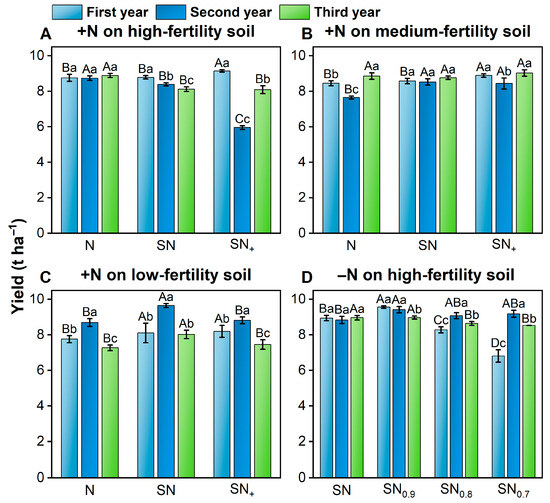
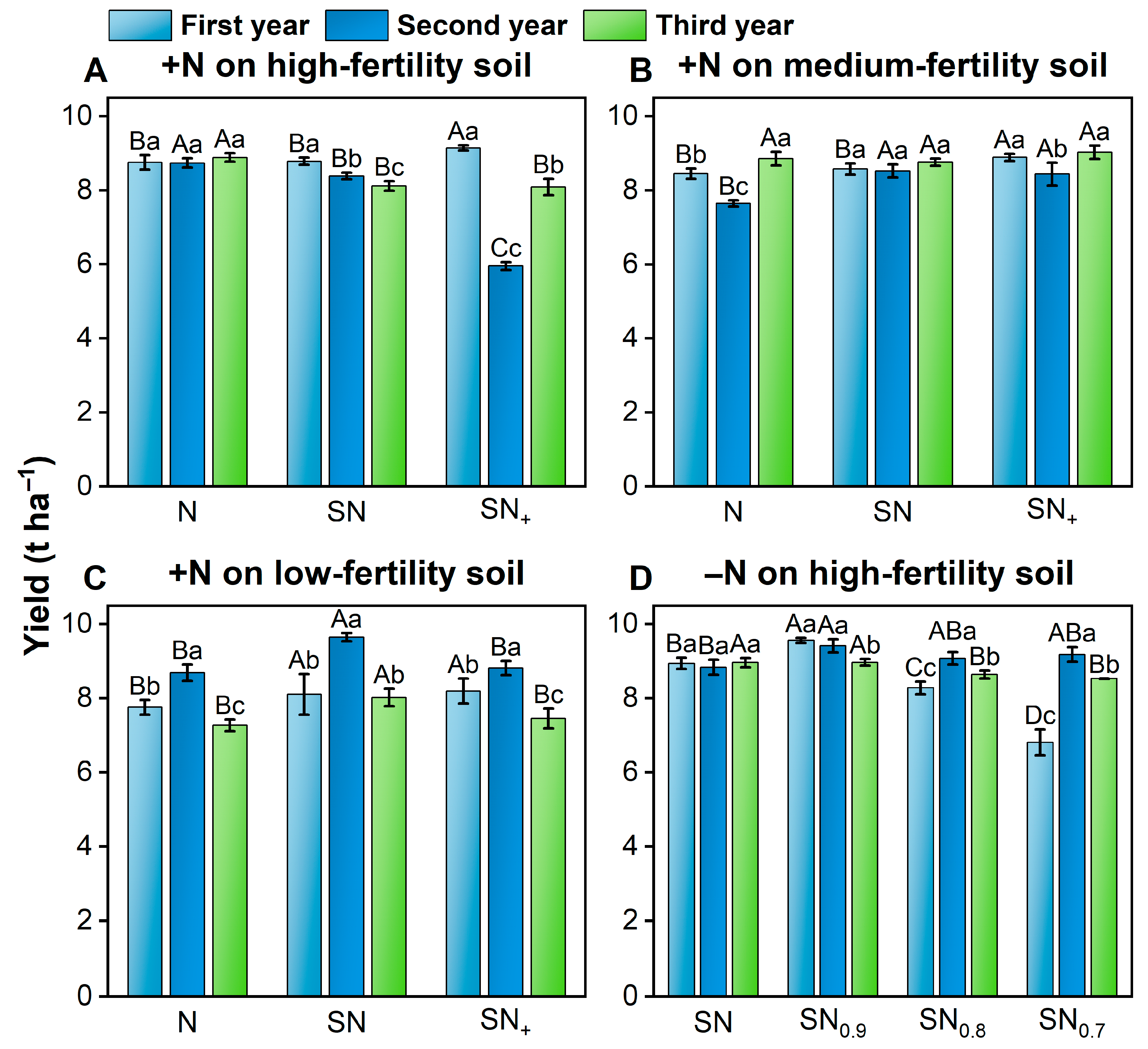
During the first year in high-fertility soils (Figure 1A), SN+ yielded a mean 4.3% more rice than the N and SN treatments. However, this advantage disappeared in the second year, when yields under SN and SN+ fell 4.02% and 31.85% below those of the N treatment, respectively (p < 0.05). The declining trend persisted into the third year, with SN and SN+ producing 8.64% and 8.97% less rice than the N treatment, respectively (p < 0.05).
Figure 1.
Rice yields under differing nitrogen fertiliser treatments in albic soils with different fertility levels over a three-year period. Panels (A–C) depict rice yield responses to +N treatments (N, SN, and SN+) across high-, medium-, and low-fertility albic soils, respectively. Panel (D) illustrates rice yield variation under −N treatments (SN, SN0.9, SN0.8, and SN0.7) in high-fertility albic soils. Data are expressed as the mean ± standard deviation. Uppercase letters indicate significant differences among treatments (p < 0.05) within the same year, while lowercase letters denote significant differences across years for the same treatment (p < 0.05).
In medium-fertility soils (Figure 1B), SN+ achieved the highest yield in the first year, exceeding the N and SN treatments by 5.19% and 3.66%, respectively (p < 0.05). Both straw-based treatments kept their yield advantage in the second year, outperforming the N treatment by 11.49% and 10.34%, respectively (p < 0.05). By the third year, yields converged across treatments, following a clear temporal pattern: the second year was the lowest point within the three-year period, and the third year rebounded to the highest yield across the period. Specifically, relative to the first year, yields under the N and SN+ treatments dropped 9.50% and 5.08% in the second year, respectively (p < 0.05), but then rebounded 15.79% and 7.01% from the second to the third year, respectively (p < 0.05), whereas SN changed only slightly (−0.57% in the second year relative to the first, then +2.75% in the third year relative to the second).
Yields in low-fertility albic soils (Figure 1C) fluctuated considerably across all treatments over the three years, with each treatment peaking in the second year. Yields increased significantly in the second year compared to the first by 12.04% for N, 19.02% for SN, and 7.57% for SN+ but declined sharply in the third year relative to the second. Notably, except for the first year, when the yield of SN+ slightly outperformed that of SN, SN consistently delivered higher yields than both N and SN+ in the second and third years, with yield advantages over N and SN+ ranging from 7.52% to 11.03% (p < 0.05).
At another high-fertility site (Figure 1D), the SN0.9 treatment, with nitrogen fertiliser input reduced to 90% of the SN treatment, consistently improved yields over the three-year period, with yields exceeding those of the SN treatment by an average of 4.5%. Yields under SN0.8 and SN0.7 were significantly lower than those of SN0.9 in the first year, with reductions of 13.37% and 28.78%, respectively (p < 0.05). Although the yields of SN0.8 and SN0.7 increased in the second and third years, they remained lower than those of SN0.9.
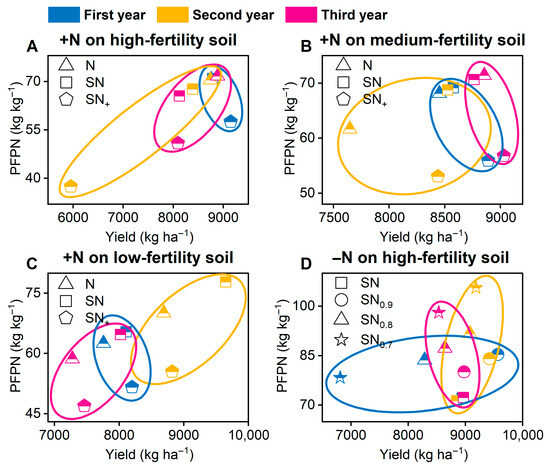
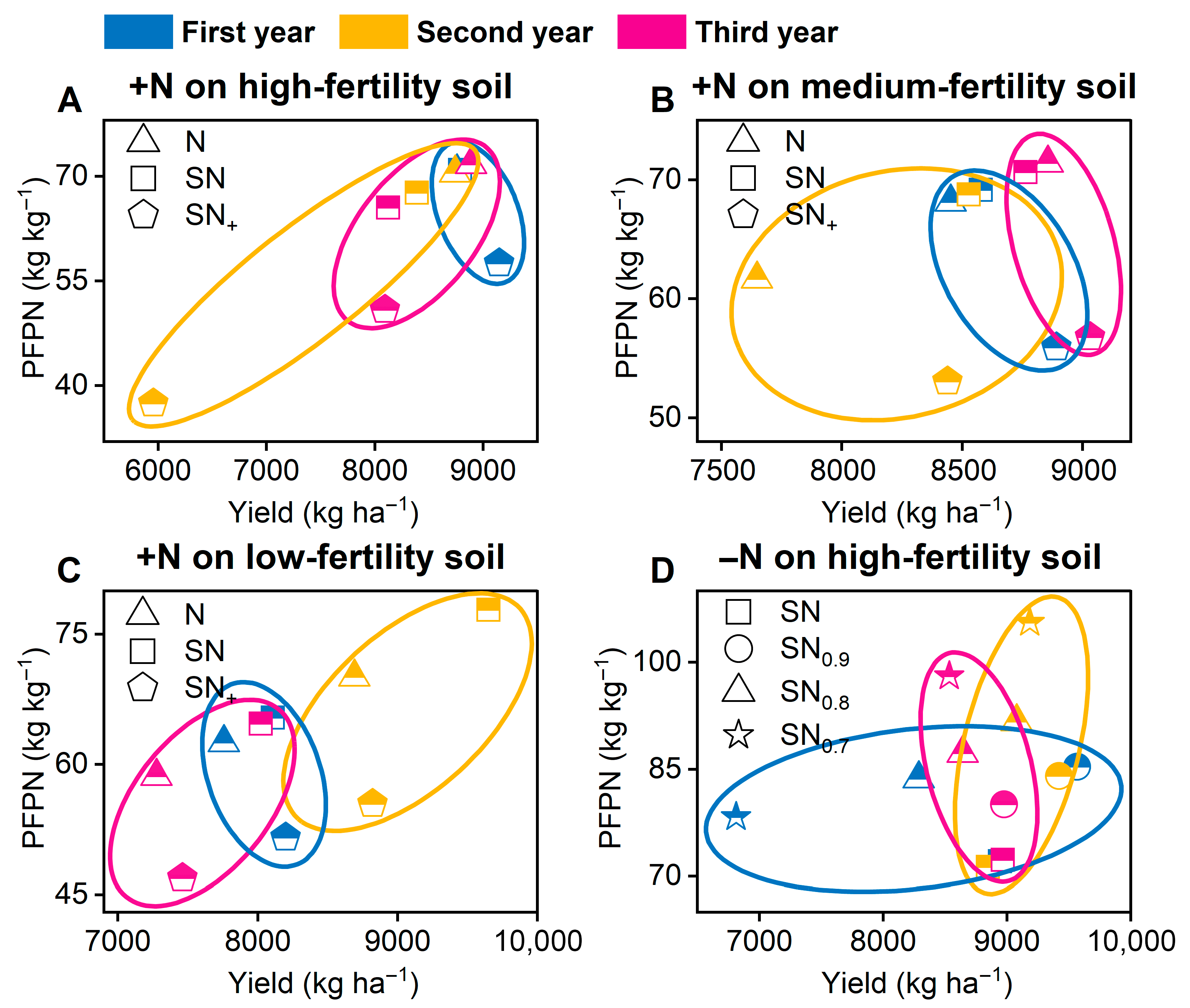
Figure 2 illustrates the joint distribution of rice yield and PFPN under differing nitrogen treatments across three years in albic soils with different fertility levels. In high-fertility soils (Figure 2A), SN+ exhibited the highest rice yield in the first year, exceeding those of N and SN by less than 400 kg ha−1. However, its PFPN was approximately 80% of the values recorded under N and SN. By the second year, both yield and PFPN declined across all treatments, particularly sharply under SN+. In the third year, except for the decline under SN, both indicators rebounded from the second year under the rest of the treatments, with the N treatment achieving the highest values for both yield and PFPN. Although SN and SN+ resulted in comparable yields in this year, PFPN under SN+ was 22.3% lower than that under SN.
Figure 2.
Joint distribution of rice yield and partial factor productivity of nitrogen (PFPN) under differing nitrogen fertiliser treatments in albic soils with different fertility levels across three years. Panels (A–C) depict +N treatments (N, SN, and SN+) in high, medium, and low-fertility soils, respectively. Panel (D) illustrates –N treatments (SN, SN0.9, SN0.8, and SN0.7) in high-fertility soils. Symbols represent treatment means for the first (blue), second (yellow), and third (magenta) years. Ellipses were manually drawn around group treatments within the same year, serving solely for visual clarification and not representing statistical confidence intervals.
Comparable performance emerged in medium-fertility soils (Figure 2B), where rice yield and PFPN for N and SN clustered relatively closely in both the first and third years. SN+ exhibited higher yields in the first and third years, but PFPN was only approximately 80% of that under N and SN. By contrast, the data points for the second year were more scattered, with both yield and PFPN values markedly lower than those in the first and third years.
The distribution of yield and PFPN differed markedly in low-fertility soils across the three years (Figure 2C). Low-fertility soils began with relatively clustered yield–PFPN points in the first year. Both variables then surged in the second year before collapsing sharply in the third. Notably, SN+ consistently showed the lowest PFPN among treatments in each year across all fertility levels (Figure 2A–C).
Nitrogen reduction in high-fertility soils (Figure 2D) initially produced a broad yield range, while PFPN fluctuated narrowly between 70 and 85 kg kg−1. SN0.9 exhibited the most favourable yield-PFPN combination. In the subsequent two years, the distributions shifted towards a more vertical orientation, reflecting relatively stable yield alongside greater variability in PFPN. Specifically, PFPN ranged from 70 to 106 kg kg−1 in the second year and from 70 to 100 kg kg−1 in the third year. In the first year, SN0.9 outperformed SN0.8. In the second and third years, the two treatments showed little difference. Moreover, the performance of both SN0.9 and SN0.8 in the third year was lower than that in the second year.
3.2. Soil Nutrient Contents
Soil nutrient contents, including nitrogen, soil organic matter (SOM), phosphorus, and potassium, were analysed to evaluate the effects of different nitrogen fertiliser management practices on soil fertility status.
3.2.1. Soil Nitrogen
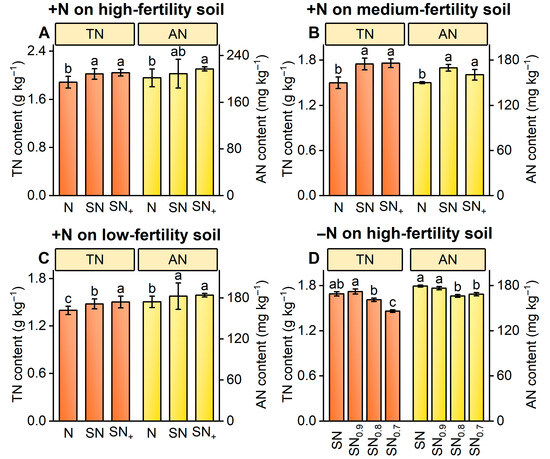
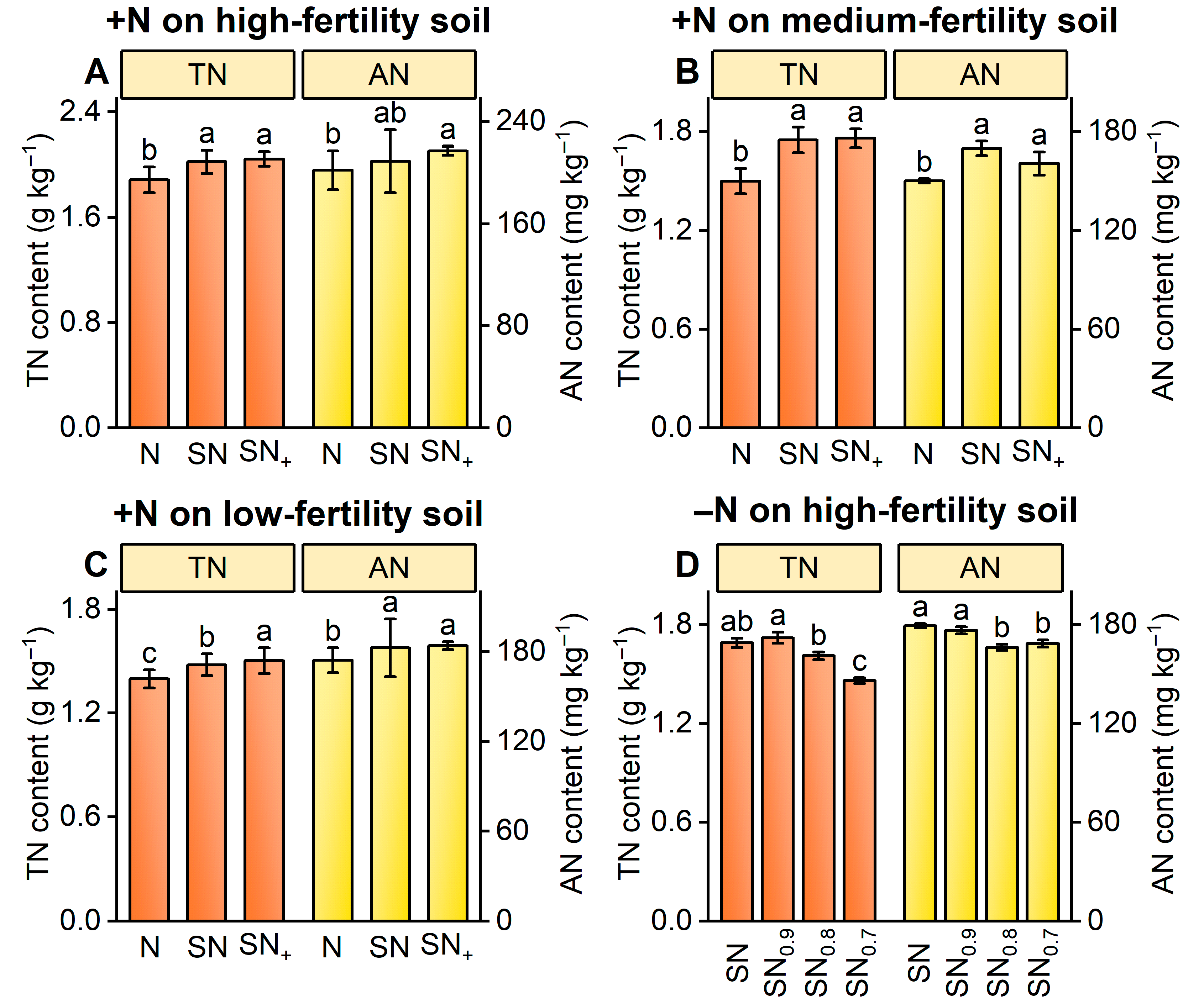
Soil nitrogen varied across treatments and soil fertility levels (Figure 3). In high-fertility soils (Figure 3A), compared to the N treatment, SN and SN+ significantly raised TN by 7.29% and 8.39%, respectively (p < 0.05), while AN increased by 3.46% under SN and 7.60% under SN+ (p < 0.05). Medium-fertility soils (Figure 3B) responded even more strongly, with TN climbing 16.59% under SN and 17.27% under SN+ and AN rising 13.19% (SN) and 7.04% (SN+), respectively, relative to the N treatment (p < 0.05). In low-fertility soils (Figure 3C), the same treatment ranking persisted. Compared to the N treatment, SN and SN+ significantly increased TN by 5.81% and 7.54%, respectively (p < 0.05), while AN also increased significantly by 4.79% and 5.56%, respectively (p < 0.05). Under nitrogen reduction in high-fertility soils (Figure 3D), SN0.9 kept TN slightly above SN, but AN dropped marginally. However, further reductions in nitrogen fertiliser input to the SN0.8 and SN0.7 levels reduced TN by 4.62% and 13.58% and AN by 7.35% and 6.05%, respectively, compared to SN (p < 0.05).
Figure 3.
Soil total nitrogen (TN) and available nitrogen (AN) under differing nitrogen fertiliser treatments in albic soils with different fertility levels after three years of application. Panels (A–C) depict TN and AN responses to +N treatments (N, SN, and SN+) across high-, medium-, and low-fertility albic soils, respectively. Panel (D) illustrates TN and AN variation under −N treatments (SN, SN0.9, SN0.8, and SN0.7) in high-fertility soils. Data are expressed as the mean ± standard deviation. Lowercase letters denote significant differences among treatments (p < 0.05).
The promoting effects of nitrogen addition treatments (SN and SN+) on soil TN and AN were dependent on the soil fertility level, with the greatest TN increases observed in medium-fertility soils. Notably, AN response to SN+ in medium-fertility soils was weaker than that to SN, differing from the trend in high- and low-fertility soils. A threshold effect was evident under nitrogen reduction in high-fertility soils: SN0.9 did not cause significant changes in TN and AN compared to SN, whereas further nitrogen reductions (SN0.8 and SN0.7) led to marked declines in both indicators.
3.2.2. Soil Organic Matter (SOM)
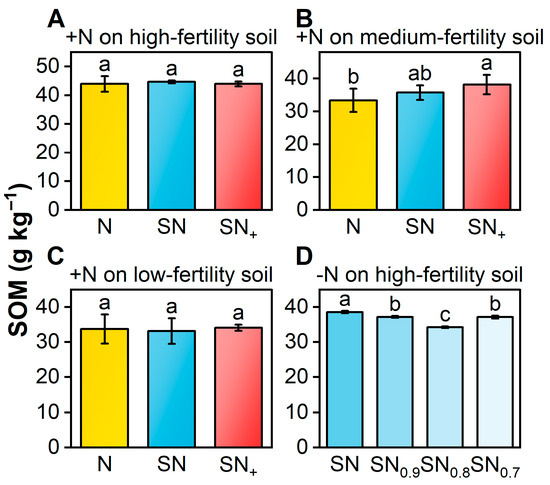
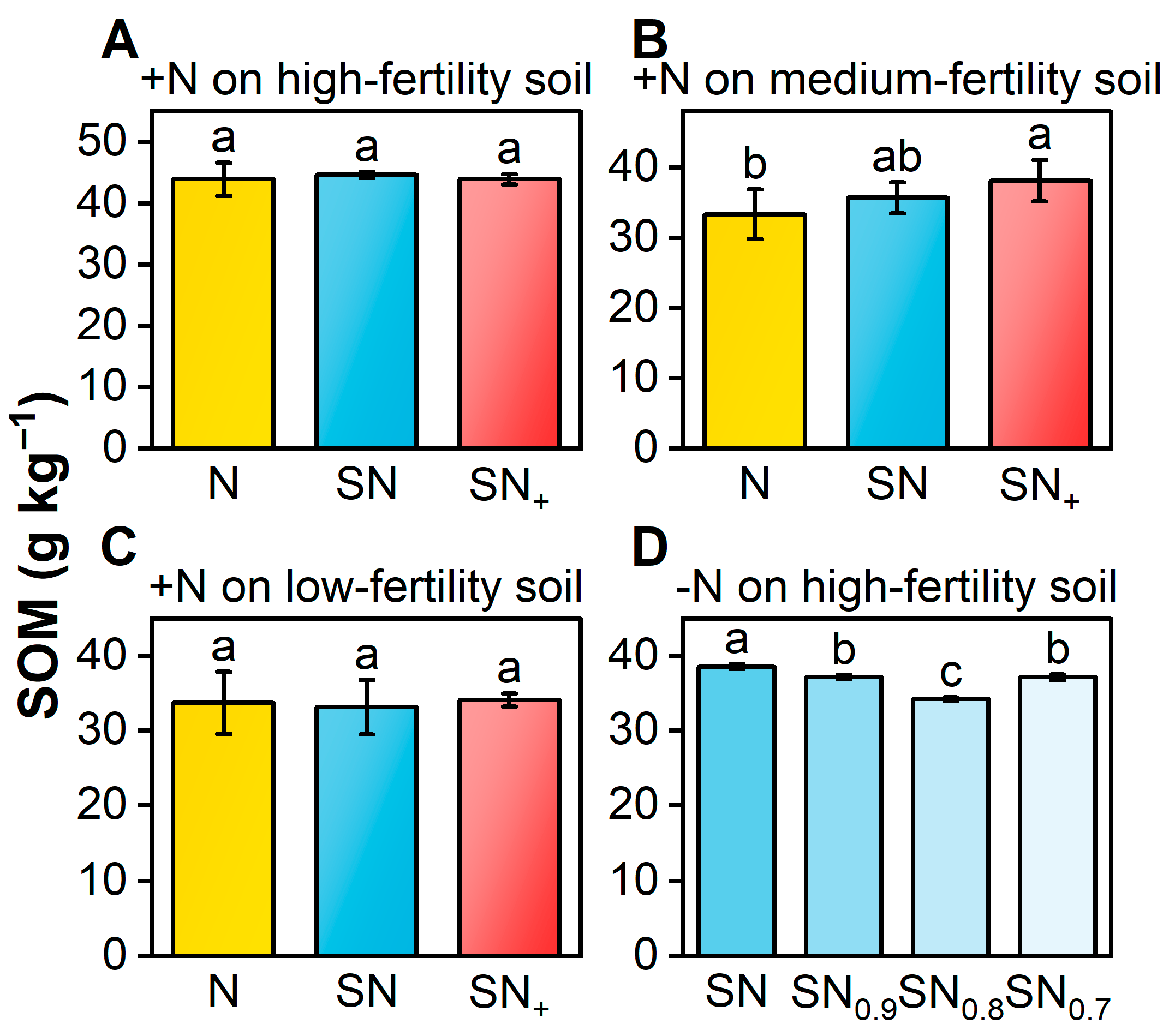
As shown in Figure 4, SOM differed by soil fertility level and nitrogen management treatments. In high-fertility soils (Figure 4A), SOM remained around 45 g kg−1 and did not differ significantly among the N, SN, and SN+ treatments. In medium-fertility soils (Figure 4B), SN and SN+ both raised SOM above the N treatment, with SN+ causing a significant 14.31% increase (p < 0.05). Low-fertility soils (Figure 4C) displayed uniform SOM ranging from 32 to 35 g kg−1, with no significant differences among treatments. Under nitrogen reduction in high-fertility soils (Figure 4D), SOM decreased progressively with reduced nitrogen input. Compared to SN, SOM under SN0.8 was significantly lower, while the concentrations under SN0.9 and SN0.7 were numerically intermediate, falling between SN and SN0.8 (p < 0.05).
Figure 4.
Soil organic matter (SOM) under differing nitrogen fertiliser treatments in albic soils with different fertility levels after three years of application. Panels (A–C) depict SOM responses to +N treatments (N, SN, and SN+) across high-, medium-, and low-fertility albic soils, respectively. Panel (D) illustrates SOM variation under −N treatments (SN, SN0.9, SN0.8, and SN0.7) in high-fertility soils. Data are expressed as the mean ± standard deviation. Lowercase letters denote significant differences among treatments (p < 0.05).
3.2.3. Soil Phosphorus
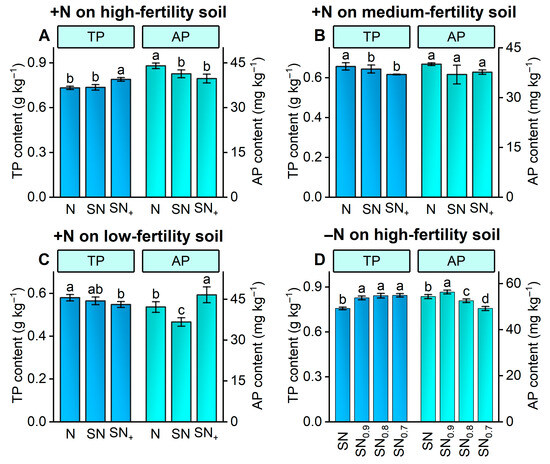
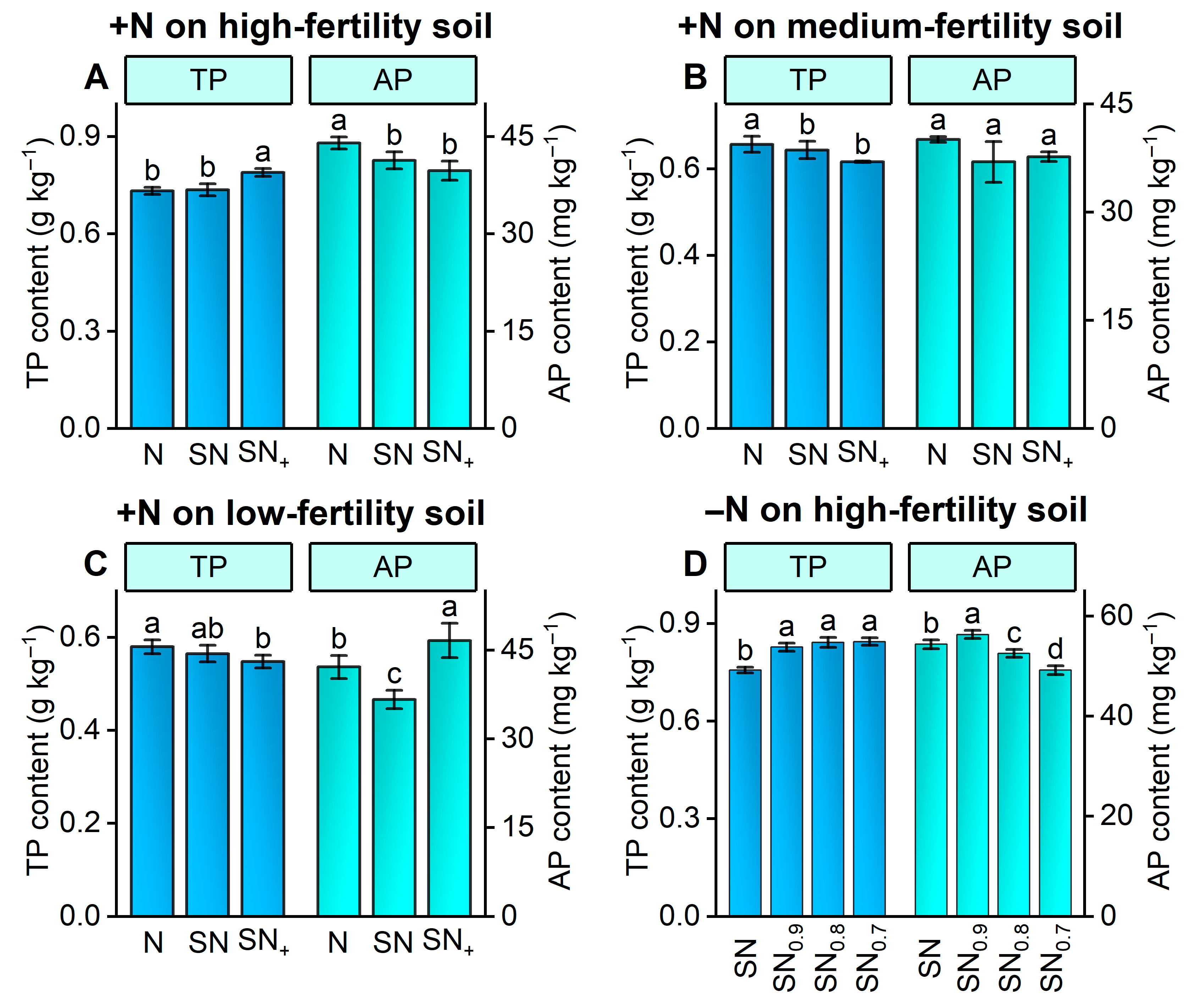
Soil phosphorus varied across nitrogen treatments and soil fertility classes (Figure 5). In high-fertility soils (Figure 5A), TP was similar under the N and SN treatments, whereas SN+ increased TP significantly by 7.50% relative to both (p < 0.05). Available phosphorus peaked under the N treatment and fell significantly under SN and SN+ by 6.13% and 9.67%, respectively (p < 0.05). Medium-fertility soil (Figure 5B) exhibited an opposite TP pattern, with SN and SN+ significantly decreasing TP by 1.99% and 6.16% under SN+, respectively, compared to the N treatment (p < 0.05). For AP, although differences were not significant, SN and SN+ showed lower values than the N treatment. In low-fertility soils (Figure 5C), SN+ significantly reduced TP by 5.52% compared to the N treatment (p < 0.05), whereas AP increased significantly by 10.64% and 27.28% in the N and SN treatments, respectively (p < 0.05). Under nitrogen reduction in high-fertility soils (Figure 5D), TP remained relatively stable across treatments, except for a significant decrease under SN (p < 0.05). Available phosphorus peaked under SN0.9 and declined progressively with further nitrogen reductions, following the sequence SN0.9 > SN > SN0.8 > SN0.7 (p < 0.05).
Figure 5.
Soil total phosphorus (TP) and available phosphorus (AP) under differing nitrogen fertiliser treatments in albic soils with different fertility levels after three years of application. Panels (A–C) depict TP and AP responses to +N treatments (N, SN, and SN+) across high-, medium-, and low-fertility albic soils, respectively. Panel (D) illustrates TP and AP variation under −N treatments (SN, SN0.9, SN0.8, and SN0.7) in high-fertility soils. Data are expressed as the mean ± standard deviation. Lowercase letters denote significant differences among treatments (p < 0.05).
3.2.4. Soil Potassium
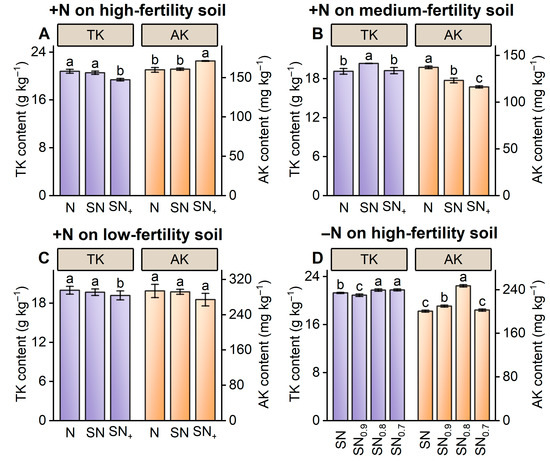
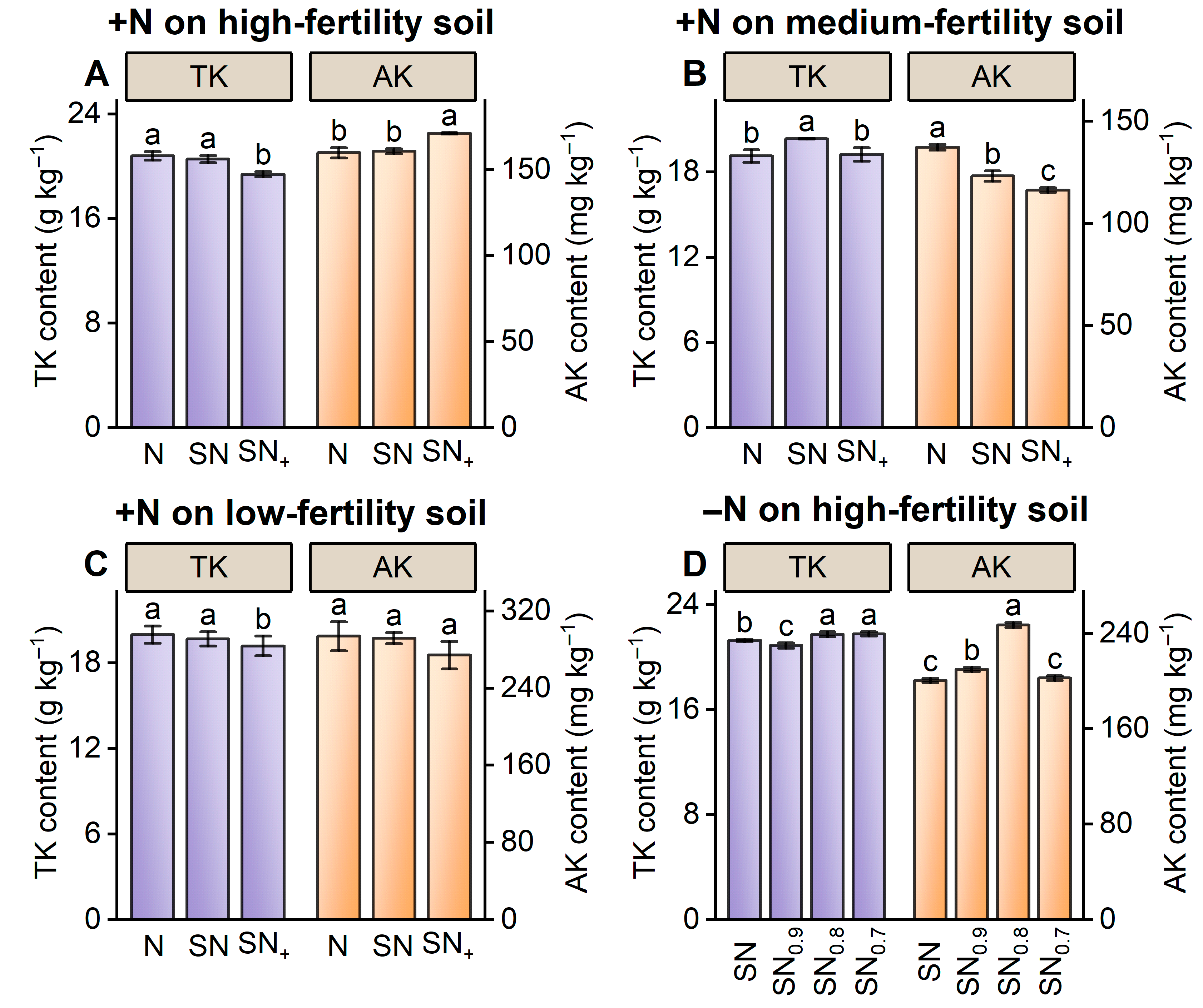
Soil potassium responded differently to nitrogen treatments across soil fertility levels (Figure 6). In high-fertility soils (Figure 6A), TK did not differ under the N and SN treatments, while SN+ decreased TK significantly by 6.21% (p < 0.05). Available potassium peaked under SN+, significantly increasing by 6.68% relative to both the N and SN treatments (p < 0.05). Medium-fertility soils (Figure 6B) displayed a different AK pattern: SN significantly increased TK by 6.00% compared to the N and SN+ treatments (p < 0.05). Available potassium decreased progressively across treatments, reaching its lowest value under SN+, 15.18% and 5.55% lower than N and SN, respectively (p < 0.05). In low-fertility soils (Figure 6C), SN+ significantly reduced TK by 2.02% compared to N and SN (p < 0.05). No significant differences in AK among treatments were observed. Under nitrogen reduction in high-fertility soils (Figure 6D), TK decreased significantly under SN0.9 compared to SN (p < 0.05) but recovered to significantly higher levels under SN0.8 and SN0.7 (p < 0.05). Available potassium increased from SN to SN0.8, then decreased under SN0.7, indicating a peak at the 20% nitrogen reduction level. Specifically, SN0.8 recorded the highest AK level, significantly higher than those under SN, SN0.9, and SN0.7 by 18.78%, 15.02%, and 17.96%, respectively (p < 0.05).
Figure 6.
Soil total potassium (TK) and available potassium (AK) under differing nitrogen fertiliser treatments in albic soils with different fertility levels after three years of application. Panels (A–C) depict TK and AK responses to +N treatments (N, SN, and SN+) across high-, medium-, and low-fertility albic soils, respectively. Panel (D) illustrates TK and AK variation under −N treatments (SN, SN0.9, SN0.8, and SN0.7) in high-fertility soils. Data are expressed as the mean ± standard deviation. Lowercase letters denote significant differences among treatments (p < 0.05).
3.3. Soil Physical Properties
Soil physical properties are fundamental indicators reflecting soil structure, water-air dynamics, and overall fertility; herein, we analysed several key parameters, including bulk density, soil three phases, permeability, aeration, and water-holding capacities.
3.3.1. Soil Bulk Density
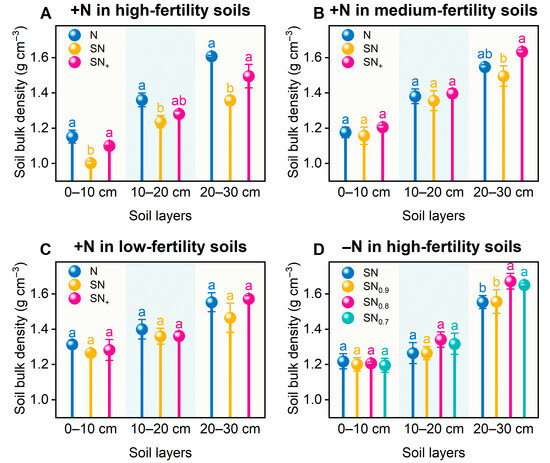
As illustrated in Figure 7, bulk density increased with depth across all fertility levels. In high-fertility soils (Figure 7A), bulk density under SN was significantly lower than that under the N treatment, with reductions of 13.04% at 0–10 cm, 9.02% at 10–20 cm, and 15.53% at 20–30 cm (p < 0.05). While SN+ also produced lower bulk density relative to the N treatment, its values remained consistently higher than those under SN. A distinct pattern emerged in medium- and low-fertility soils (Figure 7B,C): no significant differences in bulk density were observed among treatments at 0–10 cm and 10–20 cm. At 20–30 cm, bulk density under SN+ was 9.25% higher than that under SN (p < 0.05) in medium-fertility soils, whereas no significant differences occurred among treatments in low-fertility soils. Across the entire 0–30 cm profile, bulk density under SN remained consistently lower than that under N and SN+ in both fertility levels. In high-fertility soils with stepwise nitrogen fertiliser reduction (Figure 7D), bulk density under SN was comparable to that under SN0.9 across all soil layers but increased under SN0.8 and SN0.7 with moderate increases at 10–20 cm and pronounced increases at 20–30 cm (p < 0.05).
Figure 7.
Soil bulk density under differing nitrogen fertiliser treatments in albic soils with different fertility levels after three years of application. Panels (A–C) depict bulk density responses to +N treatments (N, SN, and SN+) across high-, medium-, and low-fertility albic soils, respectively. Panel (D) illustrates bulk density variation under −N treatments (SN, SN0.9, SN0.8, and SN0.7) in high-fertility soils. Data are expressed as the mean ± standard deviation. Lowercase letters denote significant differences among treatments (p < 0.05).
3.3.2. Three Phases of Soil
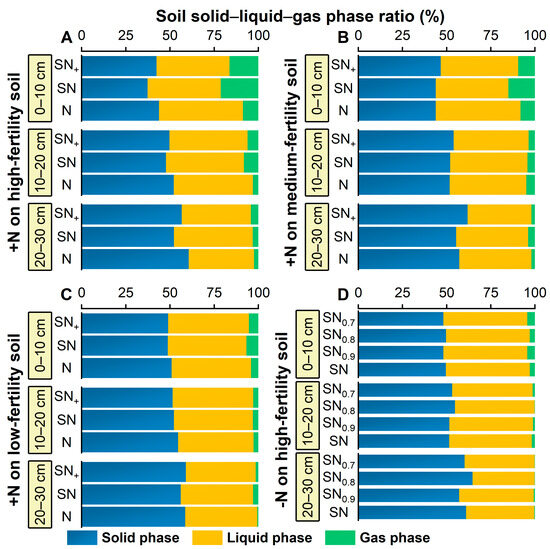
As illustrated in Figure 8, three-phase ratios followed a common vertical pattern across fertility levels: solid phases increased with depth, while liquid and gas phases declined. For high-fertility albic soils (Figure 8A), SN and SN+ consistently produced lower solid phases and higher gas phases than the N treatment throughout the profile, and SN showed the lowest solid phases and highest gas phases at 0–20 cm. The liquid phase was higher under the N treatment in the top 20 cm but peaked under SN at 20–30 cm. In medium-fertility soils (Figure 8B), SN+ gave the greatest solid phases at every depth, and N and SN were similar. SN recorded the highest gas phase across the profile. The N treatment led to the highest liquid phase at 0–10 cm. Low-fertility soils (Figure 8C) exhibited a lower solid phase under SN and SN+ than under the N treatment at all depths, while the liquid and gas phases differed little among treatments. With stepwise nitrogen reduction in high-fertility soils (Figure 8D), the solid phase under SN0.9 showed lower values than SN across all depths and increased under SN0.8 and SN0.7. The liquid phase varied little across treatments in the 0–10 cm layer but was higher under SN0.9 at deeper layers. The gas phases fluctuated among treatments without a clear trend, but SN0.9 generally maintained relatively higher values at most depths.
Figure 8.
Three phases of soil under differing nitrogen fertiliser treatments in albic soils with different fertility levels after three years of application. Panels (A–C) depict three phases’ responses to +N treatments (N, SN, and SN+) across high-, medium-, and low-fertility albic soils, respectively. Panel (D) illustrates three phases’ variations under −N treatments (SN, SN0.9, SN0.8, and SN0.7) in high-fertility soils.
3.3.3. Soil Permeability
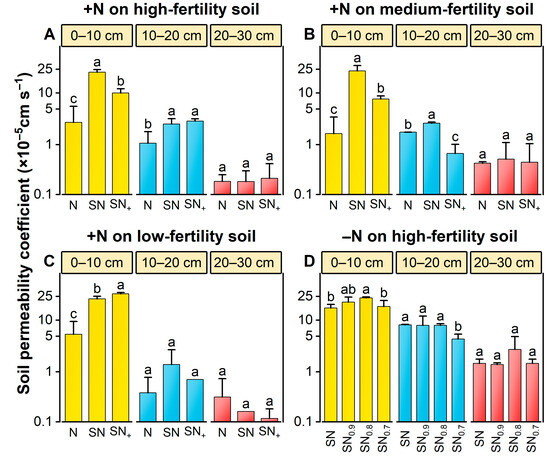
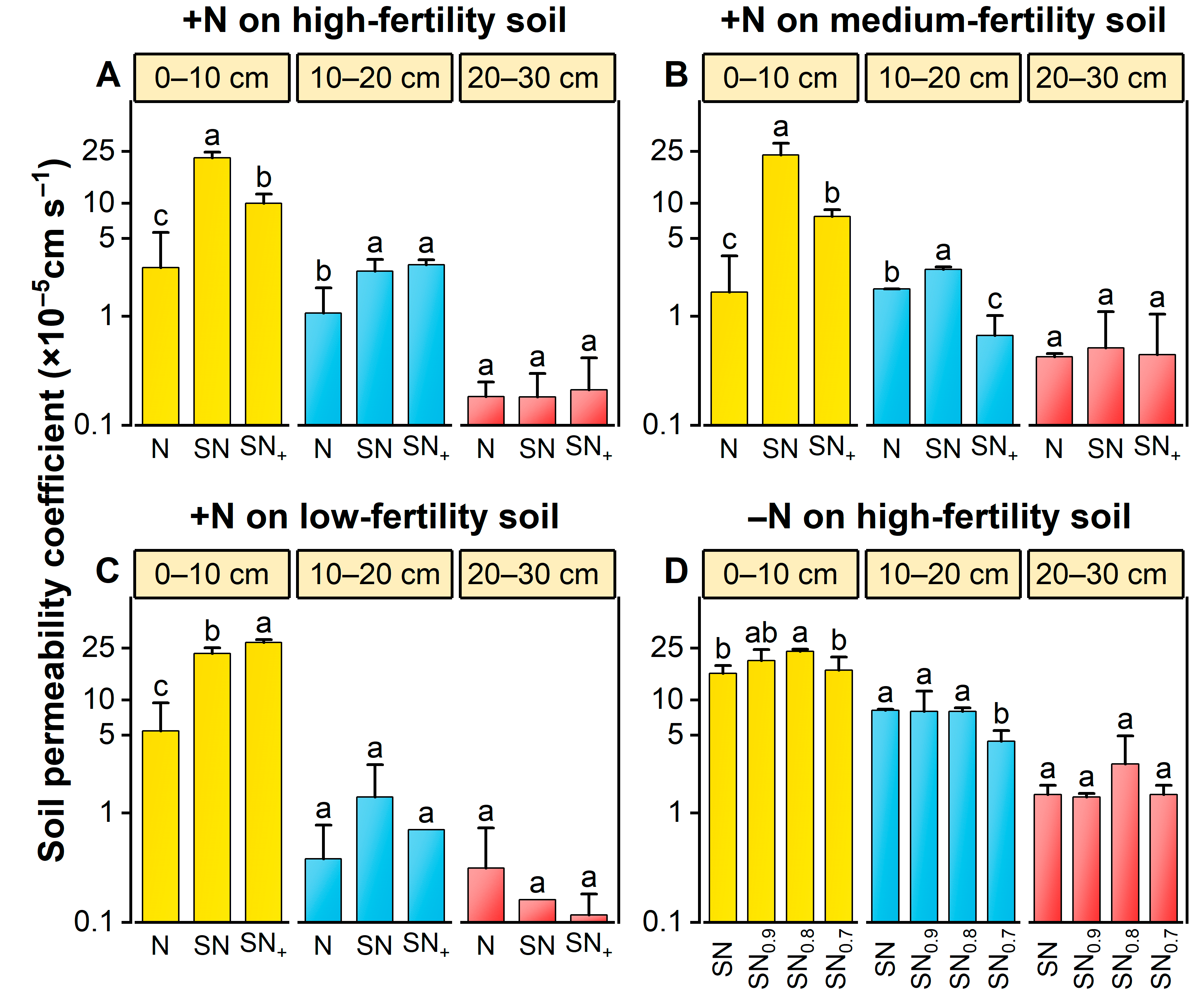
Soil permeability declined sharply with depth, yet treatment effects were largely confined to the surface layer (Figure 9). In high-fertility soils (Figure 9A), SN recorded the greatest permeability at 0–10 cm, SN+ ranked intermediate, and the N treatment was lowest. Differences narrowed at 10–20 cm and were negligible at 20–30 cm. Medium-fertility soils (Figure 9B) displayed the same ranking, SN > SN+ > N, in the surface layer, with minimal separation below 10 cm. In low-fertility soils (Figure 9C), SN and SN+ both significantly exceeded the N treatment at 0–10 cm (p < 0.05), but the gap between SN and SN+ was small. Treatment differences also narrowed below 10 cm. Under stepwise nitrogen reduction in high-fertility soils (Figure 9D), surface permeability remained high under SN0.9 and SN0.8 but fell noticeably under SN and SN0.7 (p < 0.05). Treatment effects again disappeared below 10 cm. Taken together, SN consistently maximised the near-surface permeability across the soil fertility levels. In high-fertility soils, the near-surface permeability under SN0.9 showed a numerical increase relative to SN, though the difference was not significant.
Figure 9.
Soil permeability under differing nitrogen fertiliser treatments in albic soils with different fertility levels after three years of application. Panels (A–C) depict soil permeability responses to +N treatments (N, SN, and SN+) across high-, medium-, and low-fertility albic soils, respectively. Panel (D) illustrates soil permeability variation under −N treatments (SN, SN0.9, SN0.8, and SN0.7) in high-fertility soils. Data are expressed as the mean ± standard deviation. Lowercase letters denote significant differences among treatments (p < 0.05).
3.3.4. Soil Aeration
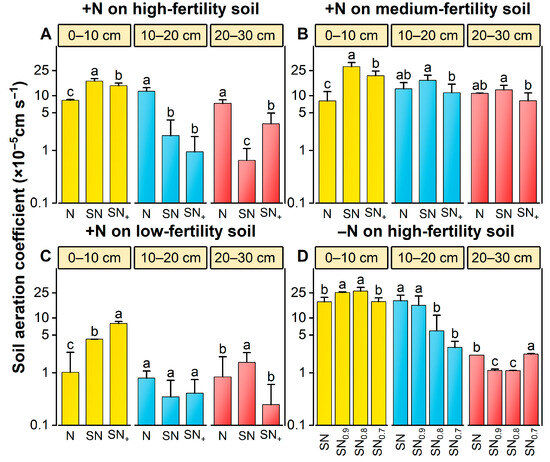
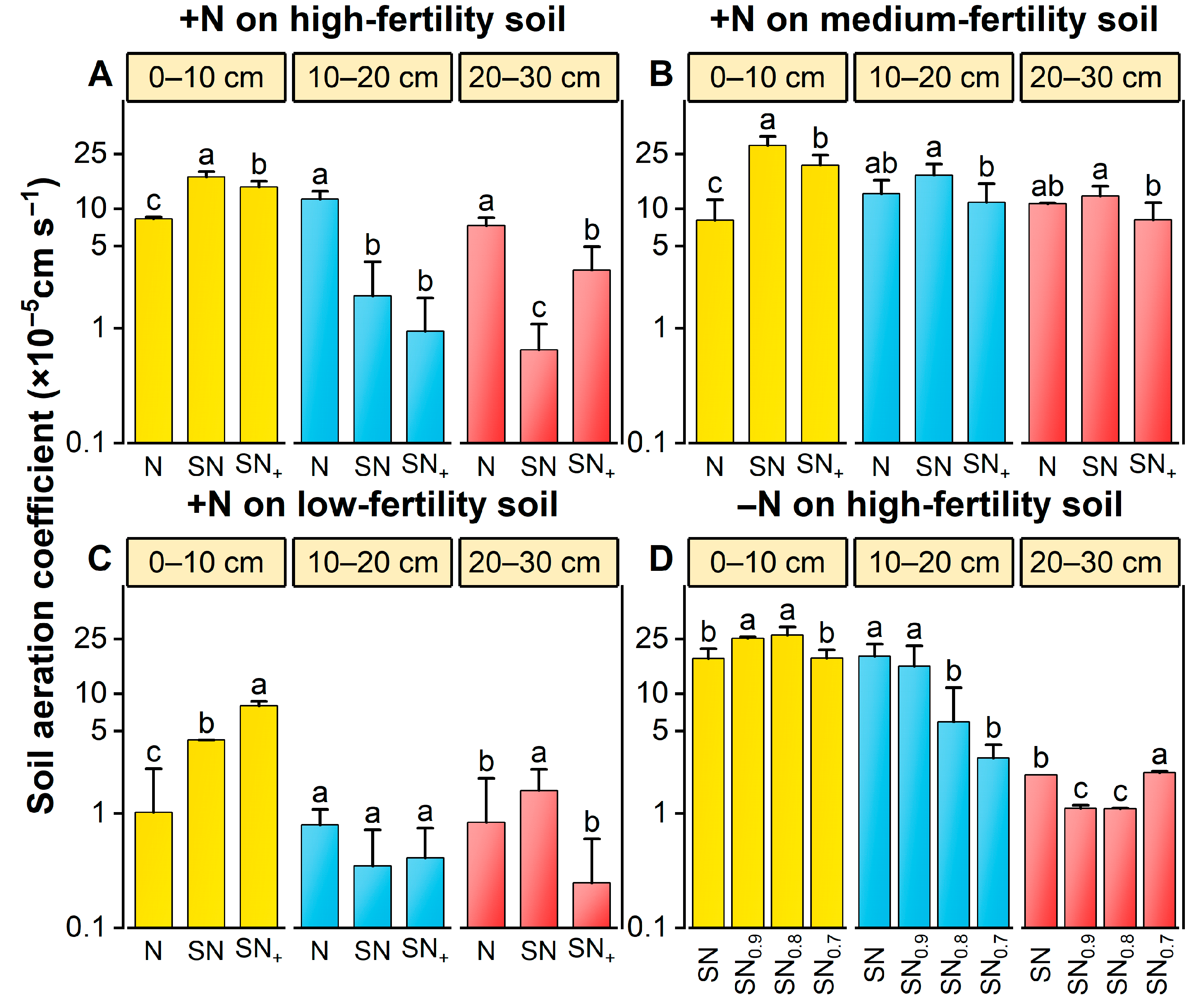
As depicted in Figure 10, soil aeration declined with depth, and the treatment effects were not limited to the surface layer. In high-fertility soils (Figure 10A), SN markedly enhanced surface aeration relative to the N treatment, and SN+ provided a moderate improvement. However, aeration under both straw-based treatments declined significantly at 10–30 cm (p < 0.05). Medium-fertility soils’ surface aeration hierarchy (Figure 10B) mirrored that of high-fertility soils, but SN remained the highest at 10–30 cm, followed by N and SN+. In low-fertility soils (Figure 10C), SN and SN+ significantly raised aeration over the N treatment at 0–10 cm (p < 0.05), while no clear trend was observed at 10–30 cm. With stepwise nitrogen reduction in high-fertility soils (Figure 10D), surface aeration increased significantly from SN to SN0.9 (p < 0.05), remained similar under SN0.8, and declined sharply under SN0.7 (p < 0.05). At 10–20 cm, aeration fell progressively with increasing the nitrogen reductions. In contrast, at 20–30 cm, aeration did not follow the trend of progressive decline with increasing the nitrogen reductions observed at 10–20 cm. Instead, aeration in the SN0.7 treatment significantly increased, whereas aeration in the SN0.9 and SN0.8 treatments was lower than that in SN.
Figure 10.
Soil aeration under differing nitrogen fertiliser treatments in albic soils with different fertility levels after three years of application. Panels (A–C) depict soil aeration responses to +N treatments (N, SN, and SN+) across high-, medium-, and low-fertility albic soils, respectively. Panel (D) illustrates soil aeration variation under −N treatments (SN, SN0.9, SN0.8, and SN0.7) in high-fertility soils. Data are expressed as the mean ± standard deviation. Lowercase letters denote significant differences among treatments (p < 0.05).
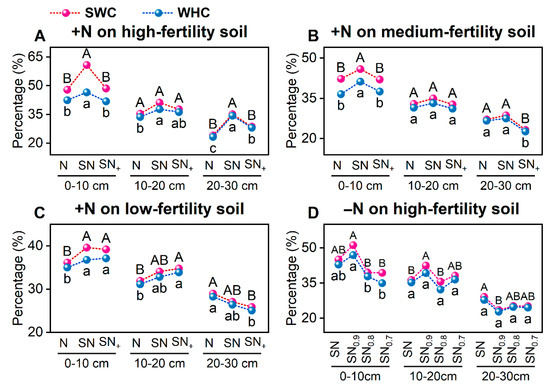
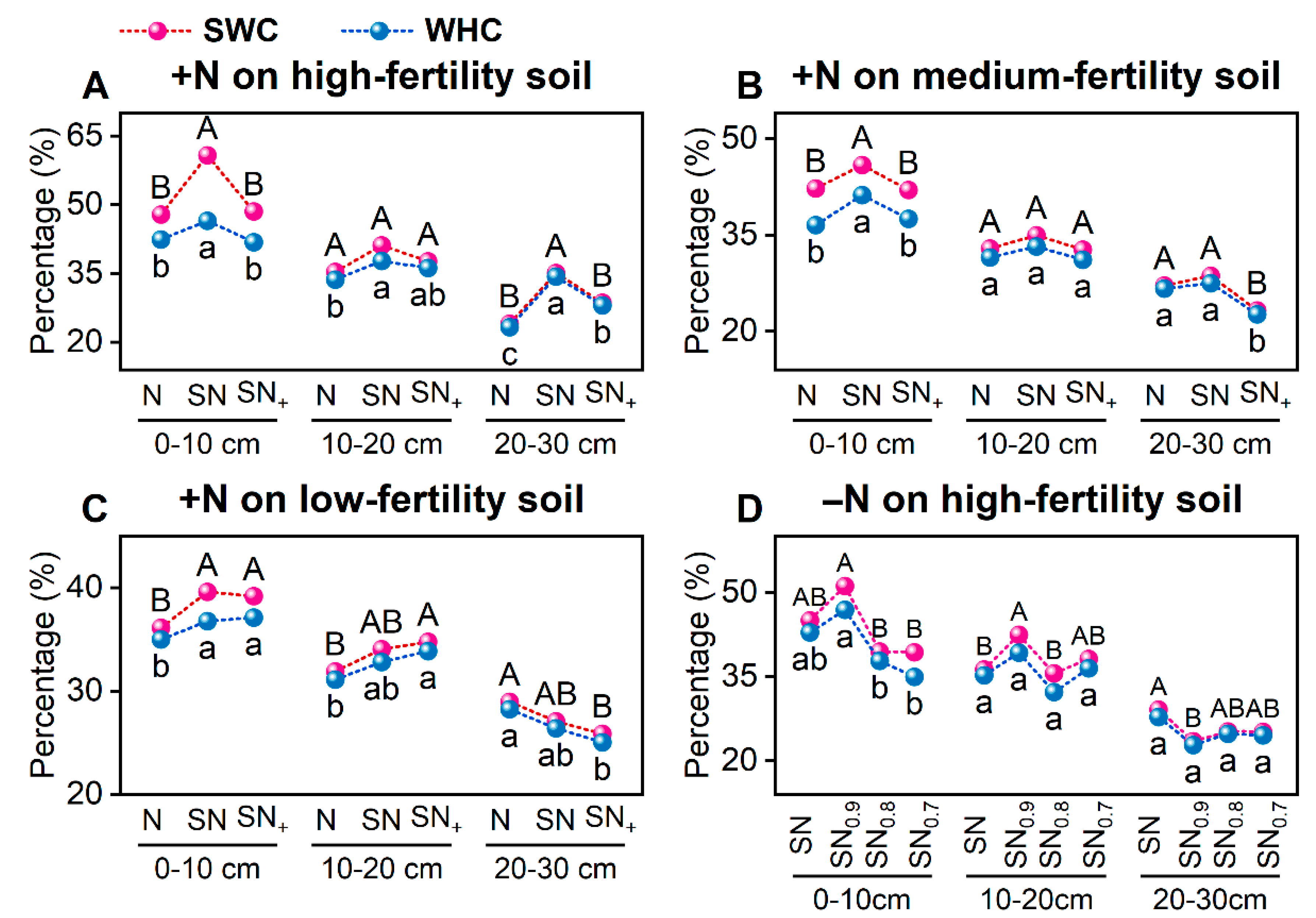
3.3.5. Soil Saturated Water Content (SWC) and Field Water-Holding Capacity (WHC)
As illustrated in Figure 11, both SWC and WHC generally decreased with the increasing soil depth and decreasing fertility levels, and WHC consistently trailed SWC. Across all treatments and fertility levels, the lowest values of both indicators remained above 20%. Inter-layer variations in SWC and WHC were more pronounced in high-fertility soils, whereas medium- and low-fertility soils exhibited narrower ranges.
Figure 11.
Soil saturated water content (SWC) and field water-holding capacity (WHC) under differing nitrogen fertiliser treatments in albic soils with different fertility levels after three years of application. Panels (A–C) depict SWC and WHC responses to +N treatments (N, SN, and SN+) across high-, medium-, and low-fertility albic soils, respectively. Panel (D) illustrates SWC and WHC variation under −N treatments (SN, SN0.9, SN0.8, and SN0.7) in high-fertility soils. Uppercase letters indicate significant differences among treatments for SWC (p < 0.05), while lowercase letters denote significant differences among treatments for WHC (p < 0.05).
For high-fertility soils (Figure 11A), SN produced the highest SWC and WHC at each layer, SN+ ranked intermediate, and the N treatment was lowest. At 0–10 cm, SN increased SWC by 26.93% and WHC by only 9.69% relative to the N treatment, with a large difference between the two indices. Improvements were evident at 10–20 cm and 20–30 cm, where SN increased SWC by 16.45% and 45.82%, respectively, and the differences between SWC and WHC narrowed with the increase in depth. In medium-fertility soils (Figure 11B), SWC and WHC under SN remained highest across all layers. The largest increases in SWC and WHC from N to SN treatment were observed at 0–10 cm, with values increasing by 8.64% and 12.83%, respectively. In deeper layers, the improvements were less evident. Compared to SN, SN+ had lower values throughout the profile and, in some cases, were even lower than the N treatment. In low-fertility albic soil (Figure 11C), treatment effects were relatively modest. In the upper two layers, SWC and WHC under SN and SN+ were higher than those under the N treatment but were lower at 20–30 cm.
With stepwise nitrogen reduction in high-fertility soils (Figure 11D), SN0.9 increased SWC by 13.55% and 16.92% at 0–10 cm and 10–20 cm, respectively, compared to SN. While SN0.8 and SN0.7 exhibited less stable performances at 0–20 cm, SWC and WHC under these treatments were consistently lower than those under SN0.9. At 20–30 cm, SWC was highest under SN, and no apparent differences were observed among the other treatments.
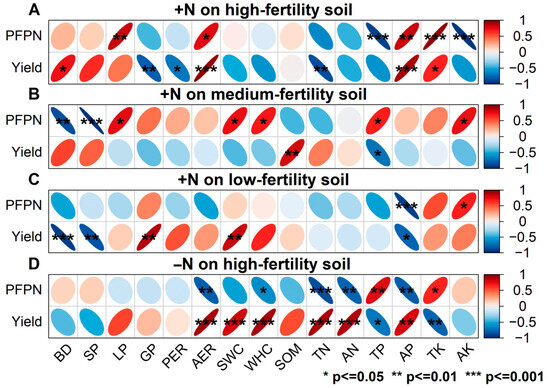
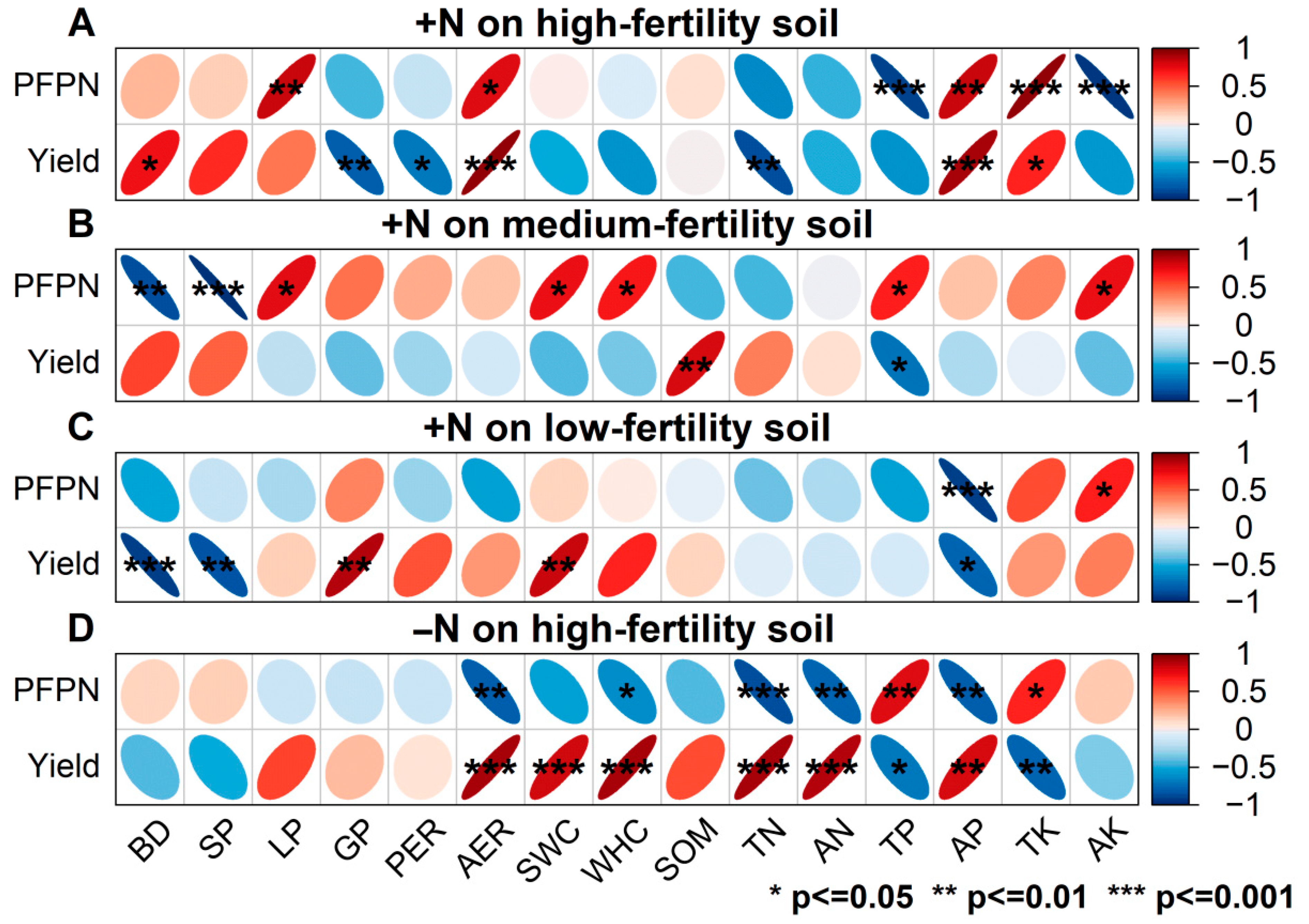
3.4. Correlation Analysis
Figure 12 illustrates the correlation patterns among soil properties, nutrient indicators, rice yield, and PFPN under varying fertility and nitrogen management conditions in the third year. In high-fertility soils with nitrogen addition (Figure 12A), yield and PFPN exhibited broadly similar correlation patterns. Both were positively correlated with BD (bulk density), SP (solid phase), LP (liquid phase), AER (aeration), AP, and TK while showing negative associations with GP (gas phase), PER (permeability), TN, AN, TP, and AK. In medium-fertility soils (Figure 12B), PFPN remained significantly positively correlated with LP, SWC, WHC, TP, and AK and negatively associated with BD and SP. Yield displayed positive associations with SOM and negative with TP. In low-fertility soils (Figure 12C), the correlation pattern became more selective. PFPN showed a significant negative correlation only with AP and a positive association with AK. Yield was positively associated with GP and SWC and negatively with BD and SP. Under nitrogen reduction in high-fertility soils (Figure 12D), yield retained significant positive correlations with AER, SWC, WHC, TN, AN, and AP, but it was negatively correlated with TP and TK. PFPN, by contrast, exhibited positive associations with TP and TK, and it was negatively correlated with AER, WHC, TN, AN, and AP.
Figure 12.
Pearson correlation analysis among soil physical properties, soil nutrient contents, rice yield, and PFPN across different fertility albic soils after three years of application. Panels (A–C) depict the +N treatments (N, SN, and SN+) in high-, medium-, and low-fertility albic soils, respectively. Panel (D) illustrates the −N treatments (SN, SN0.9, SN0.8, and SN0.7) in high-fertility albic soils. Abbreviations: BD, bulk density; SP, solid-phase ratio; LP, liquid-phase ratio; GP, gas-phase ratio; PER, permeability coefficient; AER, aeration coefficient.
Over three consecutive years of nitrogen treatments based on soil fertility levels, the factors influencing rice yield varied across fertility classes. In high-fertility soils with nitrogen addition, a negative correlation between soil nitrogen content and yield emerged in the third year, while bulk density was positively correlated with yield. However, under nitrogen reduction, the third-year correlations reversed: soil nitrogen showed a positive relationship with yield, whereas bulk density became negatively correlated. In contrast, soil nitrogen content exhibited no significant correlation with yield in medium- and low-fertility soils.
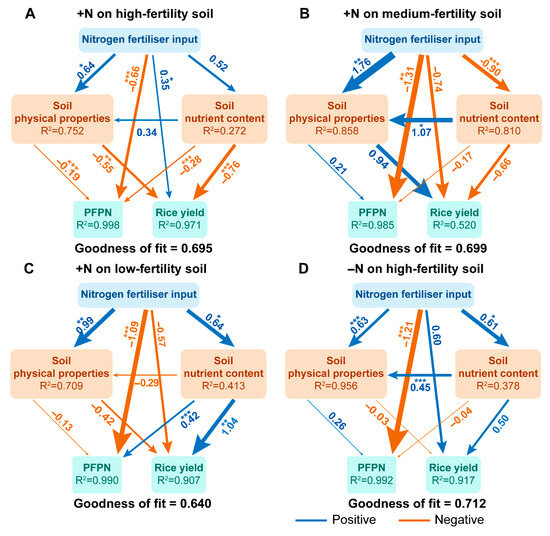
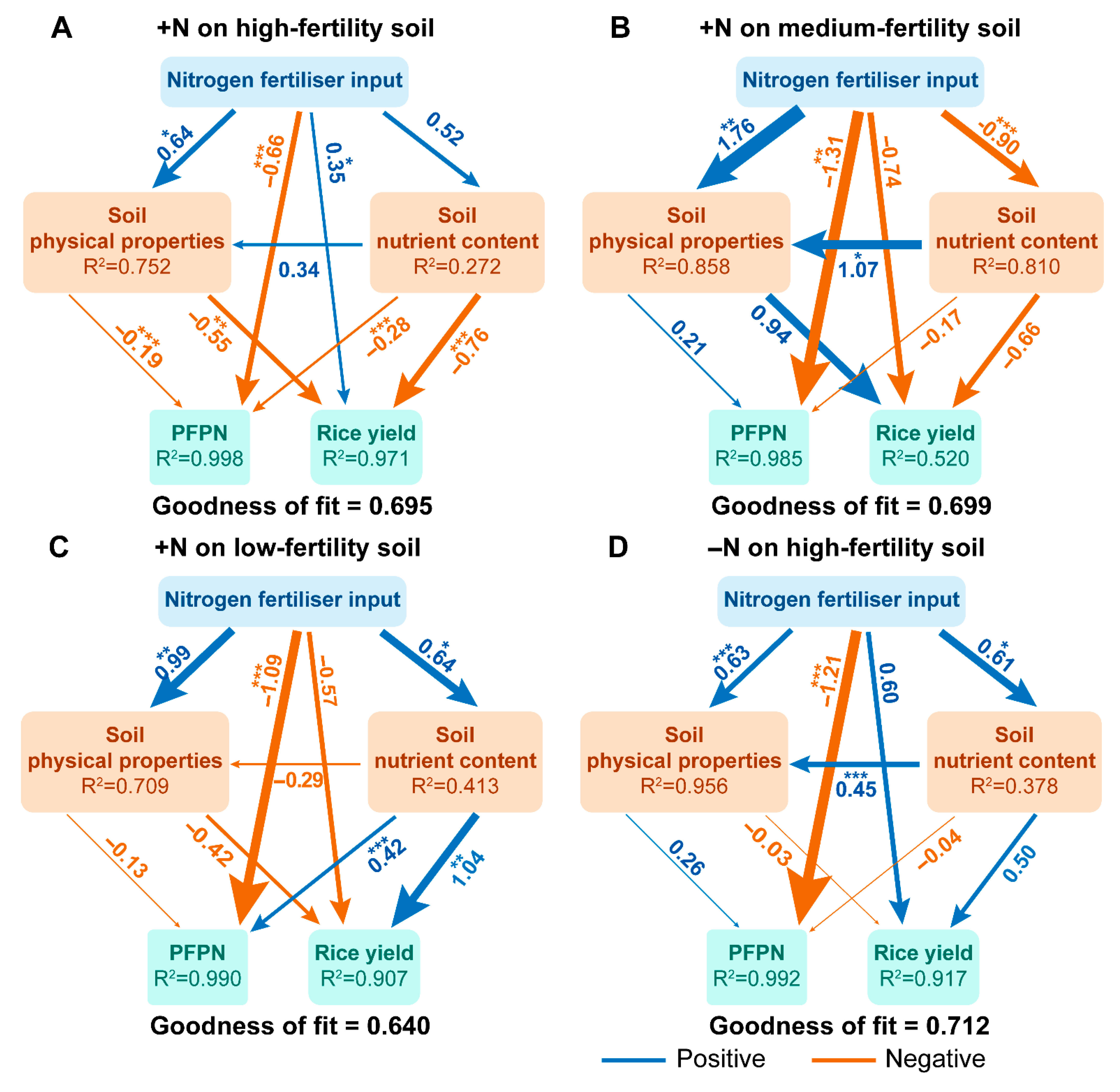
A preliminary structural equation modelling (SEM) analysis (Figure 13) was conducted to explore the potential pathways through which nitrogen input influences rice yield and PFPN via soil physical properties and nutrient content under different fertility levels and N strategies. Although limited by small sample sizes, the models suggest that soil physical properties play a more consistent and positive role than nutrient content, particularly under nitrogen reduction in high-fertility soils. Model fits and path strengths varied across scenarios, reflecting the differentiated responses to nitrogen input. These results should be interpreted with caution and serve only as preliminary indications pending further validation.
Figure 13.
Structural equation model (SEM) illustrating the effects of nitrogen input on rice yield and PFPN through soil physical properties and nutrient contents. Path coefficients represent the direction and magnitude of linear relationships between latent variables, with asterisks indicating significance levels (***: p < 0.001; **: p < 0.01; *: p < 0.05). The width of each arrow reflects the size of the standardised path coefficient. Blue solid lines denote significant positive effects, while yellow solid lines indicate significant negative effects. R2 values represent the proportion of variance explained by the corresponding predictors.
4. Discussion
Long-term optimisation of nitrogen inputs under straw return systems has been widely advocated, yet most supporting evidence derives from single-season trials or soils other than albic paddy fields [39,40,41]. To address this research gap, we conducted a three-year fertility-stratified experiment in albic paddies with dense plough pans. Aligning nitrogen rates with intrinsic soil fertility under consistent straw incorporation simultaneously enhanced rice yield, elevated the partial factor productivity of applied nitrogen (PFPN), and restrained fertiliser use. These outcomes show that chemical optimisation alone can deliver agronomic benefits even in physically constrained soils.
Fertility-specific responses further demonstrate that a uniform nitrogen rate cannot sustain productivity across contrasting albic paddies. In high-fertility soils, a 10% nitrogen reduction (SN0.9) maximised PFPN and averted the yield plateau associated with nutrient surpluses, whereas the conventional rate with straw return (SN) still improved yield in medium- and low-fertility soils. Taken together, these patterns extend integrated soil–crop management theory [42] to the albic zone and, alongside evidence that cumulative straw inputs gradually relieve plough pan constraints [43], advocate a dynamic, tiered nitrogen management framework that couples chemical optimisation with progressive physical restoration to balance profitability and resource conservation.
Across the three-year experiment, fertility-tailored nitrogen management strategies produced sharply contrasting yield–PFPN trajectories. In high-fertility soils, straw plus a 10% nitrogen cut (SN0.9) elevated the mean rice yield by 4.5% over the full-rate straw treatment (SN) while preserving higher PFPN than SN. Conversely, the N-enriched treatment (SN+) delivered only a transient yield edge, and by the third year, its PFPN had fallen 22.3% below SN. In medium-fertility soils, SN maintained relatively minor yield changes and exhibited high PFPN. Low-fertility paddies showed a different hierarchy: SN outperformed N and SN+ in the second and third years, conferring 7.52–11.03% yield gains and a 2–22 kg kg−1 PFPN advantage. These fertility-specific trade-offs mirror multi-site evidence that moderate N cuts enhance efficiency in nutrient-rich paddies yet jeopardise yield in nutrient-poor soils [44,45]. Collectively, the data confirm that a single nitrogen rate cannot maximise both yield output and PFPN across the albic landscape, underscoring the need for a dynamic, tiered scheme grounded in baseline soil fertility.
Soil properties were only measured in the third year due to their slower response dynamics and the need to assess long-term cumulative effects of treatments. Despite this limitation, the third-year data adequately captured the stable outcomes of nitrogen–straw interactions.
Third-year assays revealed divergent soil nitrogen pool dynamics. In high-fertility soils, SN increased TN by 7.29% and AN by 3.46% relative to the N treatment, whereas SN+ pushed the increments to 8.39% and 7.60%. Medium-fertility soils exhibited even greater TN enrichment, 16.596% under SN and 17.27% under SN+, hinting at legacy build-up if conventional rates persist, combining with straw return. Stepwise nitrogen reductions clarified the threshold: SN0.9 held TN slightly above SN, but cuts to SN0.8 and SN0.7 depressed TN by 4.62–13.58% and AN by 6.05–7.35%. Global syntheses link surplus soil nitrogen to heightened leaching and N2O emissions [46,47]. Our findings therefore advocate fertility-based soil testing and season-specific rate adjustment to avoid either legacy accumulation or undersupply, particularly as SN0.9 shows early signs of N draw-down, whereas SN+ risks unnecessary surpluses in less fertile paddies.
Soil physical diagnostics underscored the synergy between straw and balanced N. In high-fertility soils, SN lowered bulk density by 13.04%, 9.02%, and 15.53% at 0–10, 10–20, and 20–30 cm, respectively, compared to the N treatment. SN+ also reduced the density but remained consistently denser than SN. Reduced bulk density translated into higher SWC: SN raised SWC by 26.9% at 0–10 cm, while SN0.9 further lifted SWC by 13.6% at the same depth. Similar structural payoffs have been documented under integrated organic–inorganic fertilisation [48,49,50]. Collectively, the data indicate that physical restoration underpins the superior PFPN of SN and SN0.9, whereas SN+ may reconsolidate upper layers and erode gains.
Nutrient budgeting must move beyond nitrogen. Each tonne of incorporated rice straw supplies approximately 4.2 kg P2O5 and 17 kg K2O [51]. Given our straw load of 8.25 t ha−1, cumulative inputs approach 35 kg P2O5 and 140 kg K2O per season, matching or exceeding crop offtake. Field assays confirmed imbalances: SN+ reduced TK by 6.21% in high-fertility soils yet raised AK by 6.68%, whereas SN0.9 peaked AP under nitrogen reduction sequences. Long-term surplus P/K may depress nitrogen uptake and trigger environmental export, while K depletion under sustained SN in low-fertility fields could limit yield rebound. Integrated frameworks that synchronise cyclic SN/SN0.9 schedules with site-specific K top-ups and P offsets are therefore essential [52]. Future multi-site trials should couple full nutrient budgets with gas flux monitoring and microbial functional assays to refine flexible rotations, e.g., two years SN followed by one year SN0.9 in lower-fertility paddies, to safeguard yield, nutrient balance, and environmental integrity.
Collectively, these findings furnish a pragmatic roadmap for site-specific nitrogen stewardship in albic paddies, yet two caveats warrant emphasis. First, although a 10% nitrogen cut sustained productivity in fertile soils over three seasons, the emerging downward trend signals a potential yield penalty if reductions continue unchecked; therefore, yield and soil nitrogen status should be monitored beyond the medium term to recalibrate inputs promptly. Second, while the conventional rate under straw return raises the output in less fertile soils, it can lead to nitrogen accumulation when fertiliser efficiency plateaus, underscoring the need for adaptive, season-based adjustments. Future work should integrate long-term, multi-site yield surveillance with comprehensive nutrient budgeting—including the substantial phosphorus and potassium returned via straw—to define robust thresholds that safeguard productivity while preventing resource wastage and environmental loading.
5. Conclusions
This study has demonstrated that integrating straw return with fertility-based nitrogen management improved nitrogen use efficiency, enhanced albic soil quality, and maintained or boosted rice yield across different fertility levels. The main findings are summarised as follows:
(1) SN0.9 may serve as an effective nitrogen management strategy for high-fertility albic soils (fertility index ≥ 12). Applying this treatment for three consecutive years increased the mean rice yield by 4.5% compared to SN across three years while reducing nitrogen input by 10% (112 vs. 124 kg nitrogen ha−1). However, yields under SN0.9 declined by 9.64% from the first to the third year, indicating a risk of long-term instability under persistent reduction.
(2) In medium- and low-fertility albic soils (fertility index < 12), SN delivered 2.62–6.94% higher yields and 2.83–22.36 kg kg−1 greater PFPN than N and SN+ over three years. Nevertheless, the risk of nitrogen overaccumulation should not be overlooked, as TN increased under SN by 16.59% and 5.81% in medium- and low-fertility soils, respectively, after three years.
(3) Across all fertility levels, fertility-based nitrogen management under straw return consistently improved key soil physical properties. In high-fertility soils, SN reduced bulk density by 13.04% (0–10 cm), 9.02% (10–20 cm), and 15.53% (20–30 cm) compared to N and increased saturated water content (SWC) by 26.93% at 0–10 cm. Moreover, SN0.9 further enhanced SWC by 13.55% (0–10 cm) and 16.92% (10–20 cm) relative to SN (p < 0.05). In medium- and low-fertility soils, SN improved soil aeration and permeability by 8.5–12.3% at 0–10 cm compared to N and SN+, thereby providing a more favourable root environment for sustained yield. These fertility-specific improvements in soil structure and water–air balance contributed to higher productivity and long-term soil quality.
Limitations of this study include the three-year duration, which may not fully capture long-term yield and soil dynamics, and the focus on rice without considering broader crop rotations. Future research should extend multi-year monitoring, quantify nutrient cycling of P and K returned with straw, and examine the synchrony between straw N release and crop uptake in albic soils. Given the widespread distribution of albic soils in Northeast China, improving their productivity through site-specific nitrogen management is critical for supporting regional food security and agricultural sustainability.
Author Contributions
Writing—original draft, X.G.; data curation, Q.W., X.G. and J.L.; formal analysis, X.L. and B.W.; methodology, Q.W., Q.M. and J.Z.; investigation, X.G. and Q.W.; supervision, J.L.; software, X.L.; writing—review and editing, B.W. and Q.W.; conceptualisation, J.Z., Q.M. and J.L.; funding acquisition, Q.W. and B.W. All authors have read and agreed to the published version of the manuscript.
Funding
This work was supported by the National Key R&D Program Projects for the 14th Five Year Plan of China (2022YFD1500800), the Jilin Provincial Department of Human Resources and Social Security’s “Postdoctoral Talent Support in Jilin Province” Project (820231342418), and the National Natural Science Foundation of China Youth Science Fund Project (3220152034).
Data Availability Statement
The original contributions presented in the study are included in the article, and further inquiries can be directed to the corresponding author.
Acknowledgments
Our thanks to all the authors cited in this paper and the anonymous referees for their helpful comments and suggestions.
Conflicts of Interest
The authors declare that they have no conflicts of interest.
References
- Erisman, J.W.; Sutton, M.A.; Galloway, J.; Klimont, Z.; Winiwarter, W. How a century of ammonia synthesis changed the world. Nat. Geosci. 2008, 1, 636–639. [Google Scholar] [CrossRef] [Scilit]
- Godfray, H.C.J.; Beddington, J.R.; Crute, I.R.; Haddad, L.; Lawrence, D.; Muir, J.F.; Pretty, J.; Robinson, S.; Thomas, S.M.; Toulmin, C. Food Security: The Challenge of Feeding 9 Billion People. Science 2010, 327, 812–818. [Google Scholar] [CrossRef] [Scilit]
- Yu, X.; Keitel, C.; Zhang, Y.; Wangeci, A.N.; Dijkstra, F.A. Global meta-analysis of nitrogen fertilizer use efficiency in rice, wheat and maize. Agric. Ecosyst. Environ. 2022, 338, 108089. [Google Scholar] [CrossRef] [Scilit]
- Guo, J.H.; Liu, X.J.; Zhang, Y.; Shen, J.L.; Han, W.X.; Zhang, W.F.; Christie, P.; Goulding, K.W.T.; Vitousek, P.M.; Zhang, F.S. Significant Acidification in Major Chinese Croplands. Science 2010, 327, 1008–1010. [Google Scholar] [CrossRef] [Scilit]
- Adalibieke, W.; Cui, X.; Cai, H.; You, L.; Zhou, F. Global crop-specific nitrogen fertilization dataset in 1961–2020. Sci. Data 2023, 10, 617. [Google Scholar] [CrossRef] [Scilit]
- Wang, H.; Xu, J.; Liu, X.; Zhang, D.; Li, L.; Li, W.; Sheng, L. Effects of long-term application of organic fertilizer on improving organic matter content and retarding acidity in red soil from China. Soil Tillage Res. 2019, 195, 104382. [Google Scholar] [CrossRef] [Scilit]
- Liu, Y.; Sun, J.; Zhao, T.; Wang, L.; Zhao, C.; Fu, J.; Li, D.; Yu, H. Effects of Fe/Mg-modified lignocellulosic biochar on in vitro ruminal microorganism fermentation of corn stover. Bioresour. Technol. 2025, 421, 132172. [Google Scholar] [CrossRef] [Scilit] [PubMed]
- Li, Y.; Tremblay, J.; Bainard, L.D.; Cade-Menun, B.; Hamel, C. Long-term effects of nitrogen and phosphorus fertilization on soil microbial community structure and function under continuous wheat production. Environ. Microbiol. 2020, 22, 1066–1088. [Google Scholar] [CrossRef] [Scilit] [PubMed]
- Buckley, C.; Carney, P. The potential to reduce the risk of diffuse pollution from agriculture while improving economic performance at farm level. Environ. Sci. Policy 2013, 25, 118–126. [Google Scholar] [CrossRef] [Scilit]
- Zhang, X.; Davidson, E.A.; Mauzerall, D.L.; Searchinger, T.D.; Dumas, P.; Shen, Y. Managing nitrogen for sustainable development. Nature 2015, 528, 51–59. [Google Scholar] [CrossRef] [Scilit]
- Gao, Z. Forest Soil Management in Cold Regions; China Forestry Publishing House: Beijing, China, 1992; pp. 45–68. [Google Scholar]
- Institute of Soil Science, Chinese Academy of Sciences. Soils of China; Science Press: Beijing, China, 1978; pp. 128–134. [Google Scholar]
- Cui, Z.; Zhang, H.; Chen, X.; Zhang, C.; Ma, W.; Huang, C.; Zhang, W.; Mi, G.; Miao, Y.; Li, X.; et al. Pursuing sustainable productivity with millions of smallholder farmers. Nature 2018, 555, 363–366. [Google Scholar] [CrossRef] [Scilit]
- Zhang, S.; Zhang, G.; Wang, D.; Liu, Q.; Xu, M. Investigation into runoff nitrogen loss variations due to different crop residue retention modes and nitrogen fertilizer rates in rice-wheat cropping systems. Agric. Water Manag. 2021, 247, 106729. [Google Scholar] [CrossRef] [Scilit]
- Zhang, F.; Chen, X.; Vitousek, P. An experiment for the world. Nature 2013, 497, 33–35. [Google Scholar] [CrossRef] [Scilit]
- Wang, Y.-J.; Wei, R.; Tang, H.; Zhao, J.; Lin, C. An integrated scheduling framework for synchronizing harvesting and straw returning. Comput. Electron. Agric. 2021, 189, 106360. [Google Scholar] [CrossRef] [Scilit]
- Dhaliwal, S.S.; Naresh, R.K.; Gupta, R.K.; Panwar, A.S.; Mahajan, N.C.; Singh, R.; Mandal, A. Effect of tillage and straw return on carbon footprints, soil organic carbon fractions and soil microbial community in different textured soils under rice-wheat rotation: A review. Rev. Environ. Sci. Bio-Technol. 2020, 19, 103–115. [Google Scholar] [CrossRef] [Scilit]
- Liu, L.; Cheng, M.; Yang, L.; Gu, X.; Jin, J.; Fu, M. Regulation of straw decomposition and its effect on soil function by the amount of returned straw in a cool zone rice crop system. Sci. Rep. 2023, 13, 15673. [Google Scholar] [CrossRef] [Scilit]
- Song, J.; Song, J.; Xu, W.; Gao, G.; Bai, J.; Zhang, Z.; Yu, Q.; Hao, J.; Yang, G.; Ren, G.; et al. Straw return with fertilizer improves soil CO2 emissions by mitigating microbial nitrogen limitation during the winter wheat season. Catena 2024, 241, 108050. [Google Scholar] [CrossRef] [Scilit]
- Meng, X.; Zhang, X.; Li, Y.; Jiao, Y.; Fan, L.; Jiang, Y.; Qu, C.; Filimonenko, E.; Jiang, Y.; Tian, X.; et al. Nitrogen fertilizer builds soil organic carbon under straw return mainly via microbial necromass formation. Soil Biol. Biochem. 2024, 188, 109223. [Google Scholar] [CrossRef] [Scilit]
- Li, J.-f.; Zhong, F.-f. Nitrogen release and re-adsorption dynamics on crop straw residue during straw decomposition in an Alfisol. J. Integr. Agric. 2021, 20, 248–259. [Google Scholar] [CrossRef] [Scilit]
- Zheng, H.; Liu, D.; Liao, X.; Miao, Y.; Li, Y.; Li, J.; Yuan, J.; Chen, Z.; Ding, W. Field-aged biochar enhances soil organic carbon by increasing recalcitrant organic carbon fractions and making microbial communities more conducive to carbon sequestration. Agric. Ecosyst. Environ. 2022, 340, 108177. [Google Scholar] [CrossRef] [Scilit]
- Hu, J.; Guan, X.; Liang, X.; Wang, B.; Chen, X.; He, X.; Xie, J.; Deng, G.; Chen, J.; Li, X.; et al. Optimizing the Nitrogen Fertilizer Management to Maximize the Benefit of Straw Returning on Early Rice Yield by Modulating Soil N Availability. Agriculture 2024, 14, 1168. [Google Scholar] [CrossRef] [Scilit]
- Song, F.; Liu, M.; Qi, Z.; Zhang, Z.; Wang, B.; Yin, Z.; Xu, J.; Sun, J. Straw returning and reducing nitrogen application rates maintain maize yields and reduce gaseous nitrogen emissions from black soil maize fields. Appl. Soil Ecol. 2024, 203, 105637. [Google Scholar] [CrossRef] [Scilit]
- Ma, L.; Li, Y.; Wei, J.L.; Li, Z.S.; Zhou, X.L.; Zheng, F.L.; Wu, X.B.; Wang, L.; Liu, Z.H.; Tan, D.S. Effects of Long-term Straw Returning on Fungal Community, Enzyme Activity and Wheat Yield in Fluvo-aquic Soil. Huan Jing Ke Xue 2022, 43, 4755–4764. [Google Scholar]
- Wang, Y.; Qin, M.; Zhan, M.; Liu, T.; Yuan, J. Straw return-enhanced soil carbon and nitrogen fractions and nitrogen use efficiency in a maize–rice rotation system. Exp. Agric. 2024, 60, e5. [Google Scholar] [CrossRef] [Scilit]
- Yuan, H.; Wu, Y.; Sun, Y.; Liu, J.; Lin, L.; Xia, F.; Su, X.; Sun, Q.; Meng, J. Differential effects of biochar and straw incorporation on soil organic carbon: A case study on paddy cultivation in Northeast China. J. Environ. Manag. 2025, 390, 126284. [Google Scholar] [CrossRef] [Scilit] [PubMed]
- Chen, S.; Zhang, G.; Wang, C. How does straw-incorporation rate reduce runoff and erosion on sloping cropland of black soil region? Agric. Ecosyst. Environ. 2023, 357, 108676. [Google Scholar] [CrossRef] [Scilit]
- Chen, X.; Luo, G.; Zhu, R.; Zhang, Y.; Huang, Y.; Liao, C. Straw Returning Amount and Duration Influence Paddy Soil Organic Carbon Sequestration by Regulating Plant- and Microbe-Derived Carbon Accumulation. Land Degrad. Dev. 2025, 36, 3729–3741. [Google Scholar] [CrossRef] [Scilit]
- Ling, J.; Zhou, J.; Wu, G.; Zhao, D.-Q.; Wang, Z.-T.; Wen, Y.; Zhou, S.-L. Deep-injected straw incorporation enhances subsoil quality and wheat productivity. Plant Soil 2024, 499, 207–220. [Google Scholar] [CrossRef] [Scilit]
- Gerasimova, M.I. Chinese soil taxonomy: Between the American and the international classification systems. Eurasian Soil Sci. 2010, 43, 945–949. [Google Scholar] [CrossRef] [Scilit]
- Chaudhry, H.; Vasava, H.B.; Chen, S.; Saurette, D.; Beri, A.; Gillespie, A.; Biswas, A. Evaluating the Soil Quality Index Using Three Methods to Assess Soil Fertility. Sensors 2024, 24, 864. [Google Scholar] [CrossRef] [Scilit]
- ISO. Soil Quality—Pretreatment of Samples for Physico-Chemical Analysis; International Organization for Standardization: London, UK, 2006; p. 11464. [Google Scholar]
- Bao, S. Chemical Analysis for Agricultural Soil. In Chapter Three: Determination of Soil Organic Matter; China Agriculture Press: Beijing, China, 2000; pp. 68–70. [Google Scholar]
- Lu, R. Soil agro-chemical analyses. In Chapter 13: Soil Nitrogen Analysis; Agricultural Technical Press of China: Beijing, China, 2000; pp. 136–140. [Google Scholar]
- Adhikari, S.; Timms, W.; Mahmud, M.A.P. Optimising water holding capacity and hydrophobicity of biochar for soil amendment—A review. Sci. Total Environ. 2022, 851, 158043. [Google Scholar] [CrossRef] [Scilit] [PubMed]
- Zhang, L.; Meng, F.; Zhang, X.; Gao, Q.; Yan, L. Optimum management strategy for improving maize water productivity and partial factor productivity for nitrogen in China: A meta-analysis. Agric. Water Manag. 2024, 303, 109043. [Google Scholar] [CrossRef] [Scilit]
- St. Montgomery, D.C. Design and Analysis of Experiments, 9th ed.; John Wiley & Sons: Hoboken, NJ, USA, 2022; pp. 33–65. [Google Scholar]
- Berhane, M.; Xu, M.; Liang, Z.; Shi, J.; Wei, G.; Tian, X. Effects of long-term straw return on soil organic carbon storage and sequestration rate in North China upland crops: A meta-analysis. Glob. Change Biol. 2020, 26, 2686–2701. [Google Scholar] [CrossRef] [Scilit] [PubMed]
- Joseph, U.E.; Toluwase, A.O.; Kehinde, E.O.; Omasan, E.E.; Tolulope, A.Y.; George, O.O.; Zhao, C.; Hongyan, W. Effect of biochar on soil structure and storage of soil organic carbon and nitrogen in the aggregate fractions of an Albic soil. Arch. Agron. Soil Sci. 2020, 66, 1–12. [Google Scholar] [CrossRef] [Scilit]
- Huang, M.; Fan, L.; Zou, Y. Contrasting responses of grain yield to reducing nitrogen application rate in double- and single-season rice. Sci. Rep. 2019, 9, 92. [Google Scholar] [CrossRef] [Scilit] [PubMed]
- Chen, X.-P.; Cui, Z.-L.; Vitousek, P.M.; Cassman, K.G.; Matson, P.A.; Bai, J.-S.; Meng, Q.-F.; Hou, P.; Yue, S.-C.; Römheld, V.; et al. Integrated soil–crop system management for food security. Proc. Natl. Acad. Sci. USA 2011, 108, 6399–6404. [Google Scholar] [CrossRef] [Scilit]
- Ninkuu, V.; Liu, Z.; Qin, A.; Xie, Y.; Song, X.; Sun, X. Impact of straw returning on soil ecology and crop yield: A review. Heliyon 2025, 11, e41651. [Google Scholar] [CrossRef] [Scilit]
- Xu, C.; Han, X.; Zhuge, Y.; Xiao, G.; Ni, B.; Xu, X.; Meng, F. Crop straw incorporation alleviates overall fertilizer-N losses and mitigates N2O emissions per unit applied N from intensively farmed soils: An in situ 15N tracing study. Sci. Total Environ. 2021, 764, 142884. [Google Scholar] [CrossRef] [Scilit]
- He, M.; Dai, S.; Zhu, Q.; Wang, W.; Chen, S.; Meng, L.; Dan, X.; Huang, X.; Cai, Z.; Zhang, J.; et al. Understanding the stimulation of microbial oxidation of organic N to nitrate in plant soil systems. Soil Biol. Biochem. 2024, 190, 109312. [Google Scholar] [CrossRef] [Scilit]
- Pathak, H.; Singh, R.; Bhatia, A.; Jain, N. Recycling of rice straw to improve wheat yield and soil fertility and reduce atmospheric pollution. Paddy Water Environ. 2006, 4, 111–117. [Google Scholar] [CrossRef] [Scilit]
- Cui, S.; Zhu, X.; Cao, G. Effects of Years of Rice Straw Return on Soil Nitrogen Components from Rice–Wheat Cropped Fields. Agronomy 2022, 12, 1247. [Google Scholar] [CrossRef] [Scilit]
- Lin, H.; Zheng, J.; Zhou, M.; Xu, P.; Lan, T.; Kuang, F.; Li, Z.; Yao, Z.; Zhu, B. Crop straw incorporation increases the soil carbon stock by improving the soil aggregate structure without stimulating soil heterotrophic respiration. J. Integr. Agric. 2025, 24, 1542–1561. [Google Scholar] [CrossRef] [Scilit]
- Dai, W.; Wang, J.; Fang, K.; Cao, L.; Sha, Z.; Cao, L. Wheat Straw Incorporation Affecting Soil Carbon and Nitrogen Fractions in Chinese Paddy Soil. Agriculture 2021, 11, 803. [Google Scholar] [CrossRef] [Scilit]
- Liu, D.; Li, P.; Wu, W.; Yu, S.; Naseer, M.R.; Liu, Z.; Yu, C.; Peng, X. Integrated Straw Return with Less Power Puddling Improves Soil Fertility and Rice Yield in China’s Cold Regions. Agronomy 2024, 14, 685. [Google Scholar] [CrossRef] [Scilit]
- Chivenge, P.; Rubianes, F.; Van Chin, D.; Van Thach, T.; Khang, V.T.; Romasanta, R.R.; Van Hung, N.; Van Trinh, M. Rice Straw Incorporation Influences Nutrient Cycling and Soil Organic Matter. In Sustainable Rice Straw Management; Gummert, M., Hung, N.V., Chivenge, P., Douthwaite, B., Eds.; Springer International Publishing: Cham, Switzerland, 2020; pp. 131–144. [Google Scholar]
- Zhang, Z.; Liu, D.; Wu, M.; Xia, Y.; Zhang, F.; Fan, X. Long-term straw returning improve soil K balance and potassium supplying ability under rice and wheat cultivation. Sci. Rep. 2021, 11, 22260. [Google Scholar] [CrossRef] [Scilit]

Disclaimer/Publisher’s Note: The statements, opinions and data contained in all publications are solely those of the individual author(s) and contributor(s) and not of MDPI and/or the editor(s). MDPI and/or the editor(s) disclaim responsibility for any injury to people or property resulting from any ideas, methods, instructions or products referred to in the content. |
© 2025 by the authors. Licensee MDPI, Basel, Switzerland. This article is an open access article distributed under the terms and conditions of the Creative Commons Attribution (CC BY) license (https://creativecommons.org/licenses/by/4.0/).