Article

Application of Protein Hydrolysate Improved the Productivity of Soybean under Greenhouse Cultivation


by
Daniele Caroline Hörz Engel
1,
Daniela Feltrim
1,
Mayara Rodrigues
1,
João Leonardo Corte Baptistella
1 and
Paulo Mazzafera
1,2,*
1
Department of Crop Science, Luiz de Queiroz College of Agriculture, University of São Paulo, Cx. Postal 9, Piracicaba CEP 13418-900, SP, Brazil
2
Department of Plant Biology, Institute of Biology, University of Campinas, P.O. Box 6109, Campinas CEP 13083-862, SP, Brazil
*
Author to whom correspondence should be addressed.
Agriculture 2024, 14(8), 1205; https://doi.org/10.3390/agriculture14081205

Submission received: 17 June 2024 / Revised: 19 July 2024 / Accepted: 21 July 2024 / Published: 23 July 2024
(This article belongs to the Section Crop Production)

Abstract

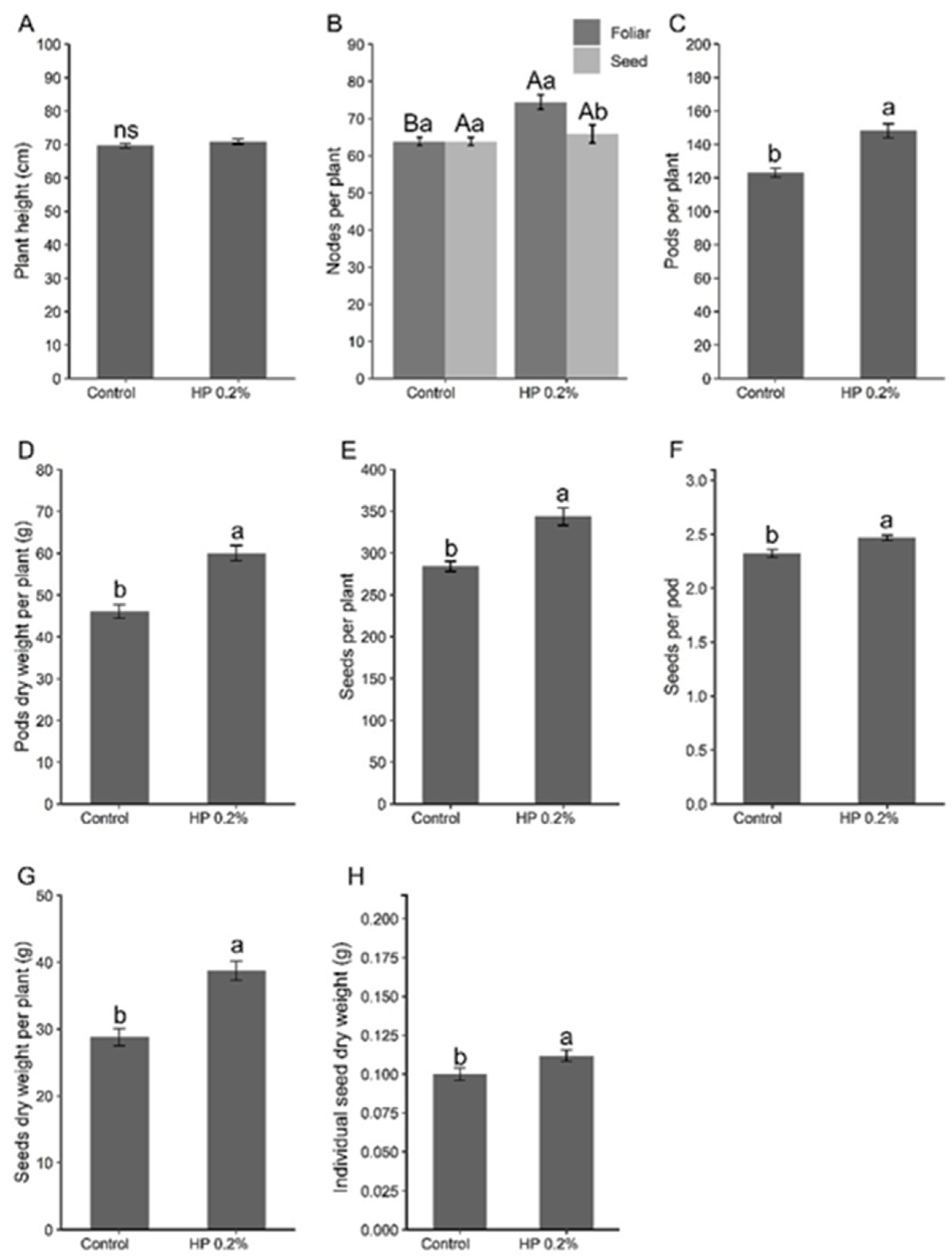
Protein hydrolysates are plant biostimulants containing amino acids, oligopeptides, and peptides in their composition. When supplied to plants, protein hydrolysates (HPs) have been identified to improve nitrogen metabolism, enhance the activity of antioxidant enzymes, boost plant defense response to stresses, and positively impact the quantity and quality of products. Soybean is a crucial global commodity, with nitrogen being the primary nutrient for crop development as it directly affects productivity. This study aimed to evaluate the effect of an HP-based biostimulant on the N metabolism in nodulated soybean plants and their productivity. A greenhouse experiment was conducted to test two modes of application of the 0.20% HP-based biostimulant. Soybean plants, growing in pots, were treated with 0.20% HP either via seed treatment or foliar application (at growth stages V3 and V5). Activities of enzymes and compounds related to N metabolism, gene expression, and productivity components were analyzed. It was observed that the mode of application did not significantly influence the results. The application of HPs increased the concentration of nitrate, amino acids, and ureides in soybean leaves. It also positively altered the expression of genes such as nitrate reductase, urease, and asparagine. Additionally, it enhanced productivity, resulting in plants with a greater number and weight of pods and grains. Therefore, it is possible to consider HPs as a stimulator for increasing soybean productivity, even under non-stressing conditions.
Keywords: Glycine max; amino acids; biostimulant; greenhouse; nitrogen Glycine max; amino acids; biostimulant; greenhouse; nitrogen