Article

The Use of Aerobic Urban Sewage Sludge in Agriculture: Potential Benefits and Contaminating Effects in Semi-Arid Zones

by
Teresa Hernández
1,*,
Román Francisco López Aragón
2 and
Carlos Garcia
1
1
Centro de Edafología y Biología Aplicada del Segura, Consejo Superior de Investigaciones Científicas (CE-BAS-CSIC), Campus Universitario de Espinardo, Edificio nº 25, P.O. Box 164, 30100 Espinardo, Murcia, Spain
2
Entidad de Saneamiento y Depuración de Aguas de la Región de Murcia, Calle Santiago Navarro 4, 1ª Planta, 30100 Espinardo, Murcia, Spain
*
Author to whom correspondence should be addressed.
Agriculture 2024, 14(7), 983; https://doi.org/10.3390/agriculture14070983

Submission received: 8 May 2024 / Revised: 11 June 2024 / Accepted: 20 June 2024 / Published: 24 June 2024
(This article belongs to the Section Agricultural Soils)

Abstract

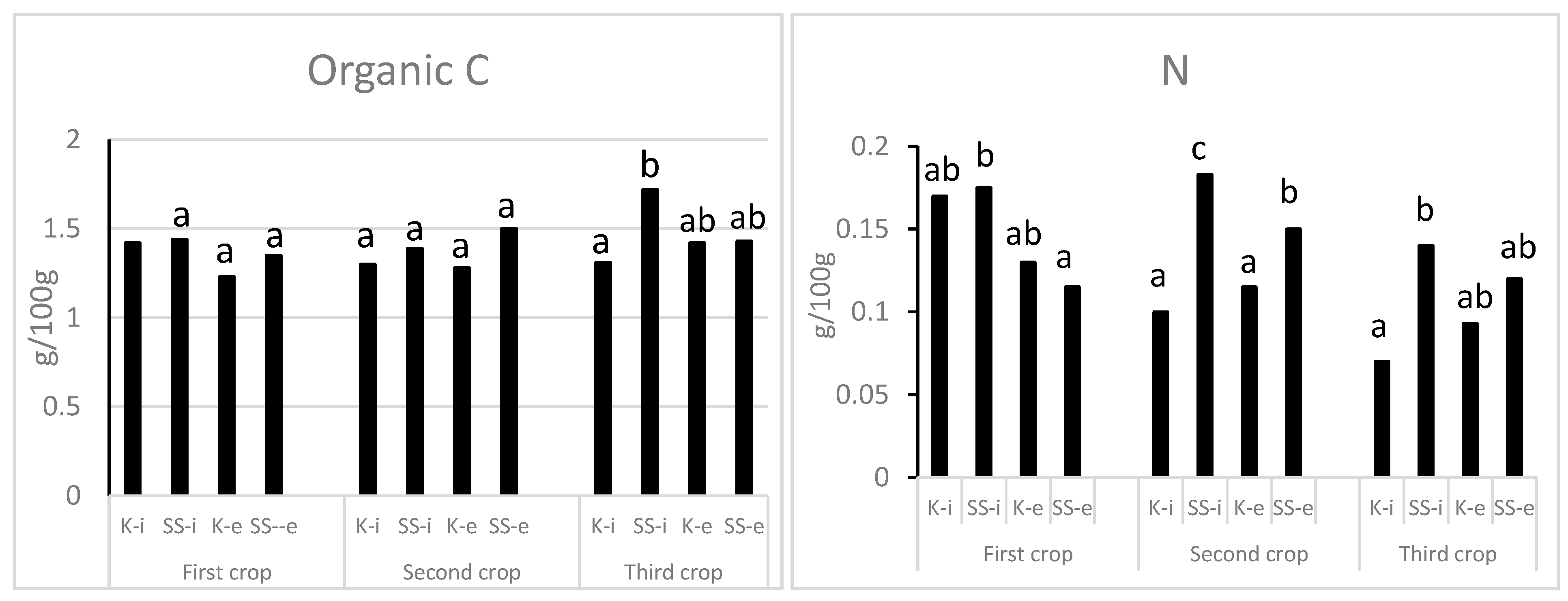
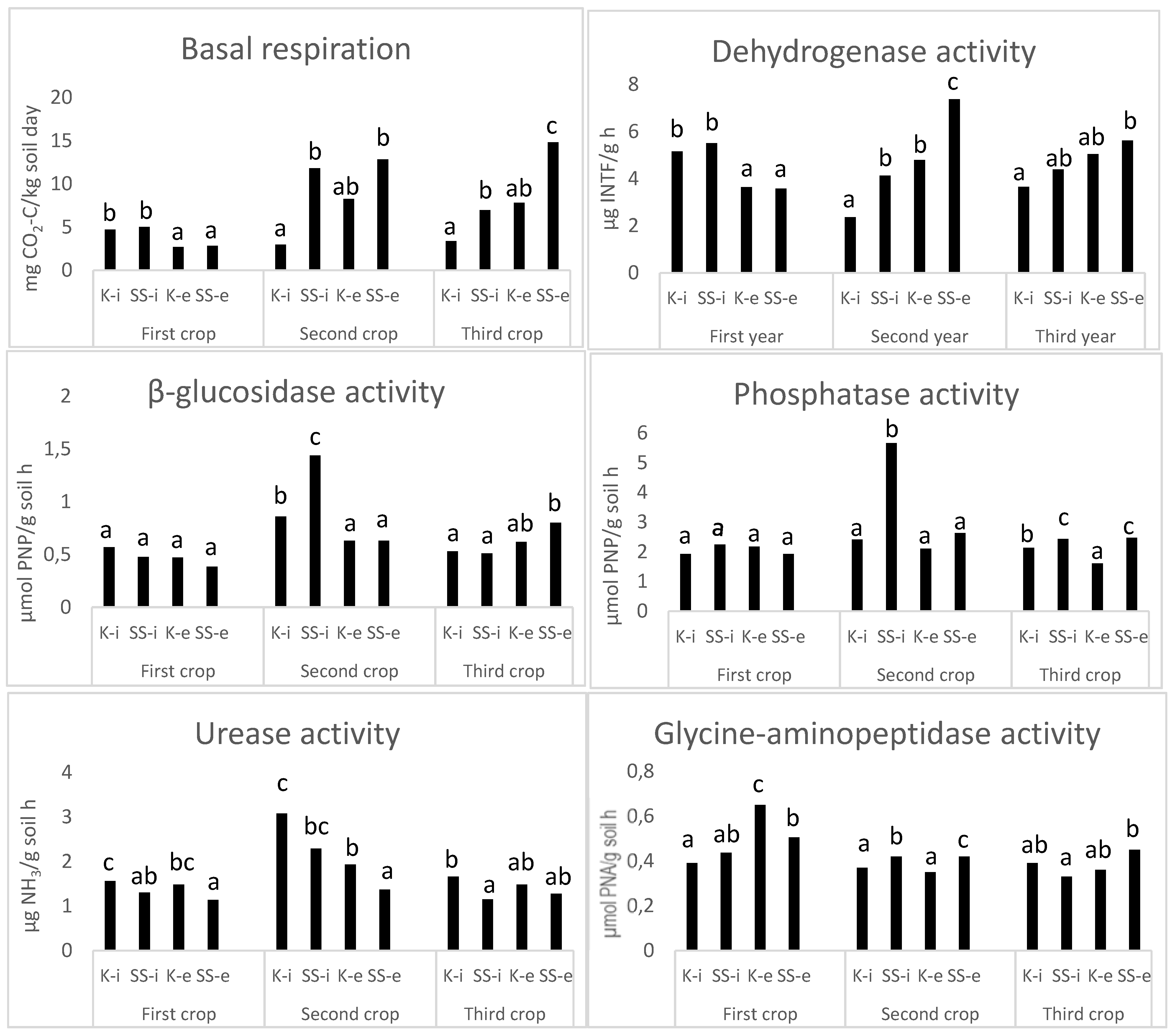
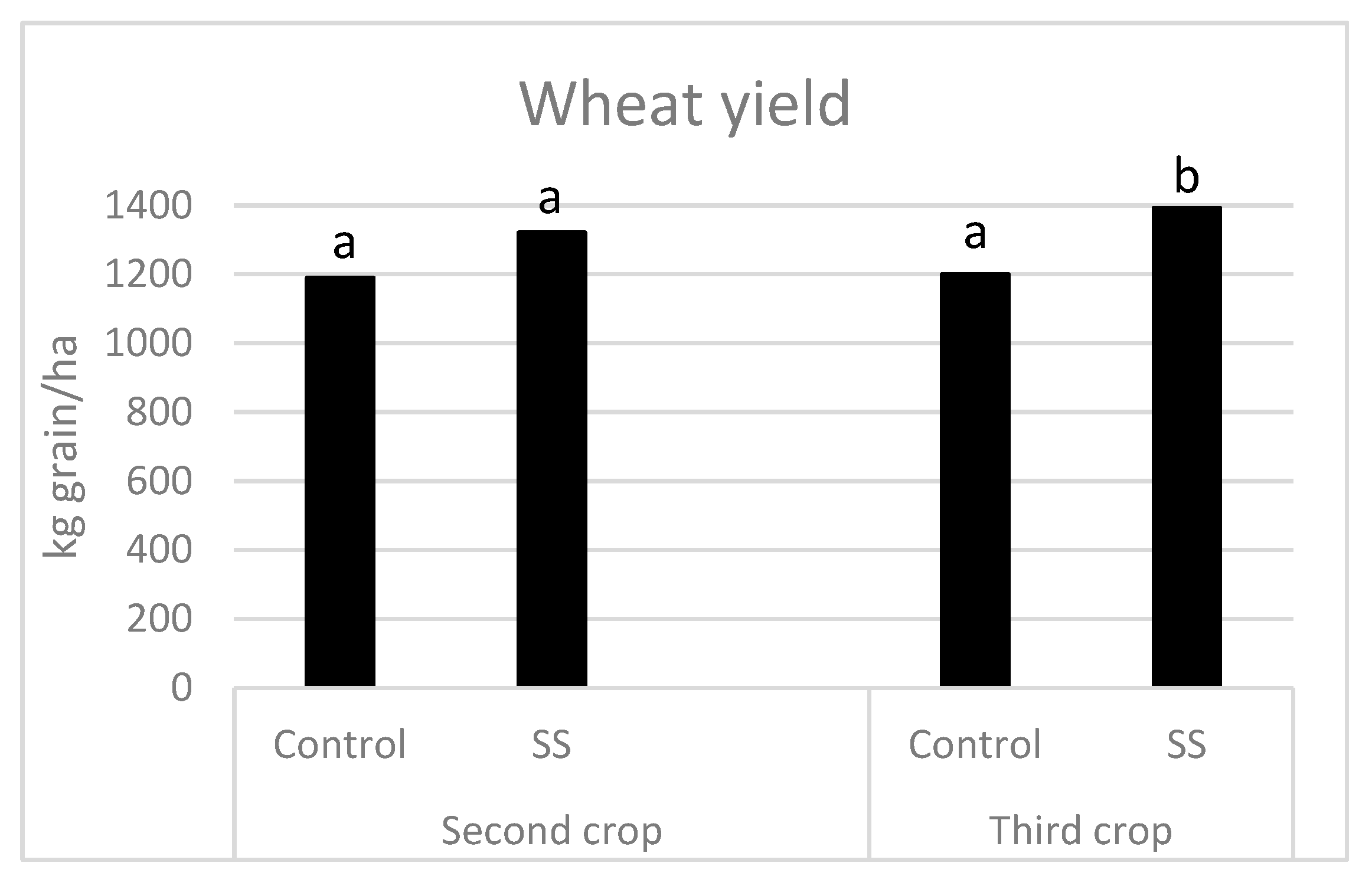
In this work, three wheat crops were planted successively under semi-arid climatic conditions; we wished to evaluate the positive and negative effects of the addition of sewage sludge (SS) on plants and soils under the conditions encountered during conventional agricultural management. SS was added to the first two crops at doses equivalent to 170 kg N/ha, and the third crop was left untreated. The soils were sampled initially and at the end of each cultivation period. At the end of the third crop’s cultivation period, the heavy metal and organic pollutant contents of grain and straw were analyzed, as well as the presence of Escherichia coli and Salmonella. The amended soils showed a higher N content, greater microbial respiration, and greater dehydrogenase and phosphatase activity than the control. The amended plants showed higher N, Ca, and K contents than the control. Yields were 11% and 16% higher in the SS-amended soils than in the control in the experiments involving the second and third crop, respectively. No problems related to salinity or the heavy metal content were observed in both the soil and plant. However, nitrate content increased in the amended soils compared to the control. Among the persistent organic compounds, only linear alkyl benzene sulphonates and polycyclic aromatic hydrocarbons increased with the addition of SS, but such differences from the control disappeared gradually. No problematic coliform content or presence of Salmonella spp. was detected in the soil or plant. We can thus conclude that SS of adequate quality can be recycled in agricultural soils, but adequate monitoring of the receiving soil is crucial.
Keywords: inorganic and organic contaminant; pathogens; semi-arid ecosystems; sewage sludge; soil microbial activity; wheat crop inorganic and organic contaminant; pathogens; semi-arid ecosystems; sewage sludge; soil microbial activity; wheat crop