Article

Motion-Control Strategy for a Heavy-Duty Transport Hexapod Robot on Rugged Agricultural Terrains
1
School of Mechanical and Aerospace Engineering, Jilin University, Changchun 130025, China
2
Weihai Institute for Bionics, Jilin University, Weihai 264207, China
3
Key Laboratory of Bionic Engineering, Ministry of Education, Jilin University, Changchun 130025, China
*
Author to whom correspondence should be addressed.
Agriculture 2023, 13(11), 2131; https://doi.org/10.3390/agriculture13112131

Submission received: 13 October 2023 / Revised: 6 November 2023 / Accepted: 9 November 2023 / Published: 11 November 2023

Abstract

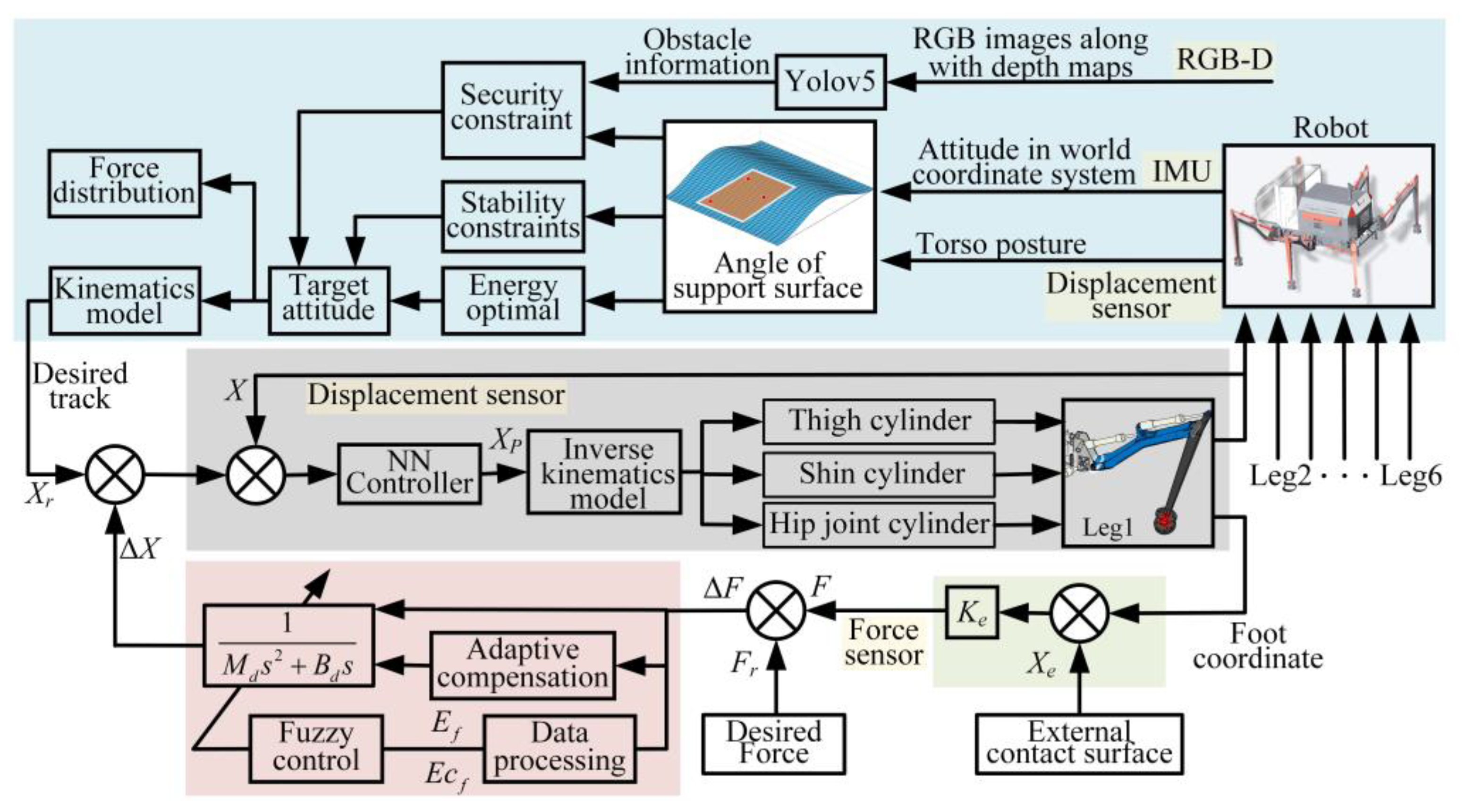
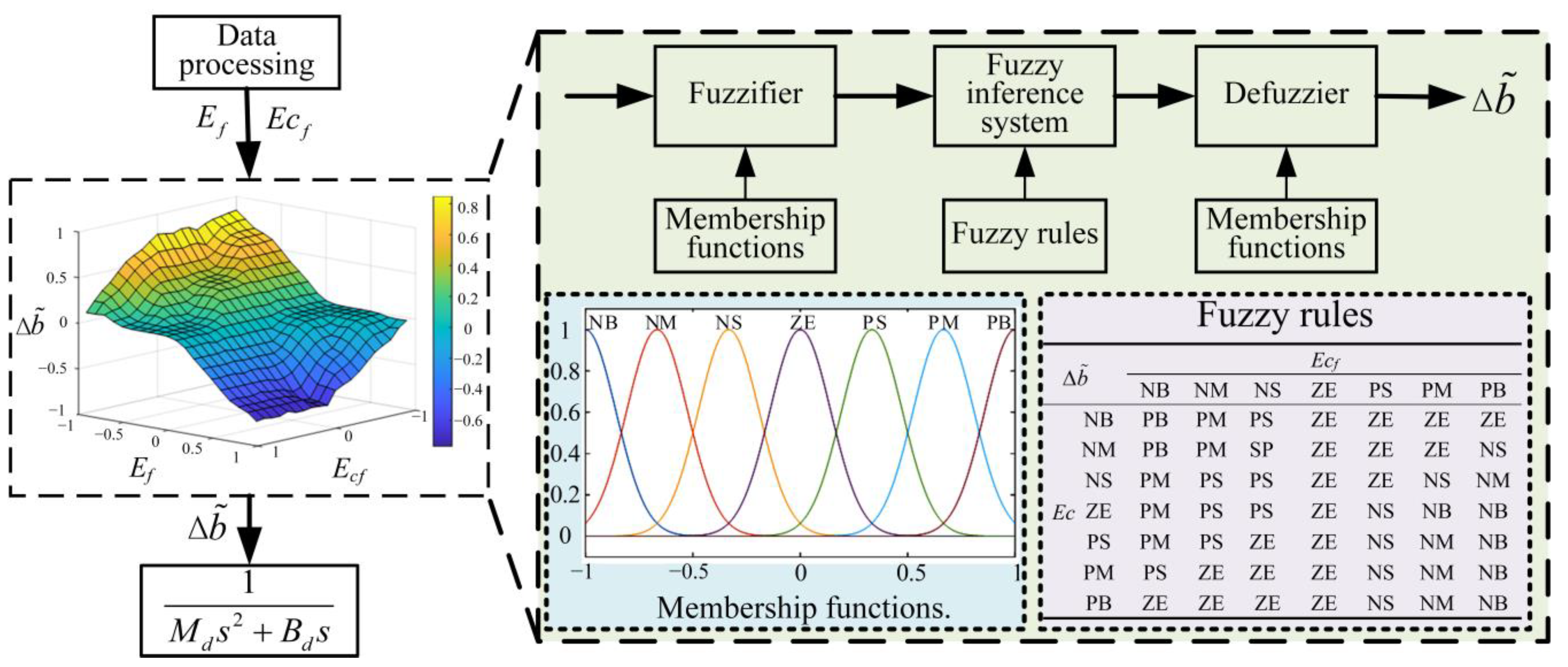
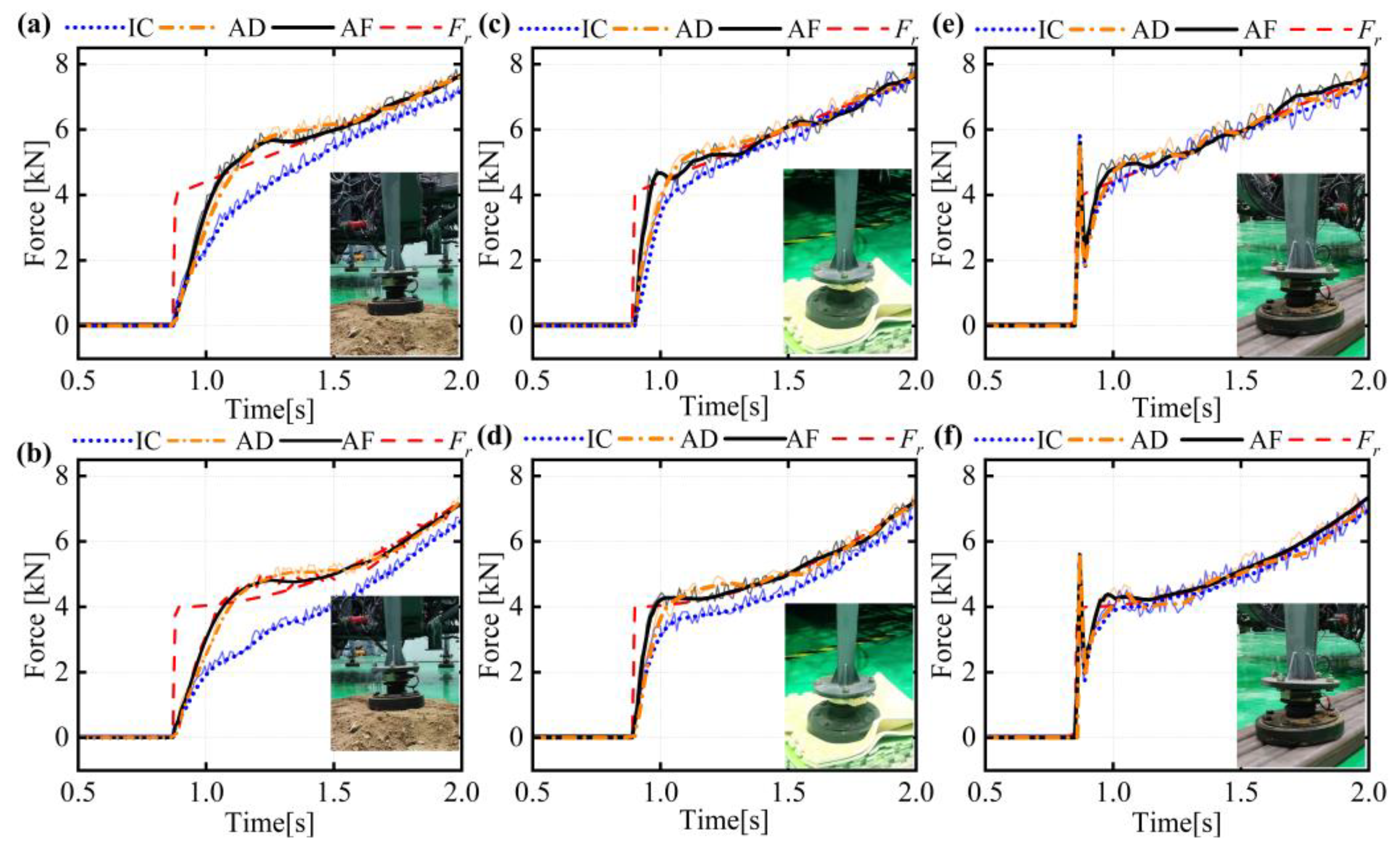
Legged agricultural transportation robots are efficient tools that can autonomously transport goods over agricultural terrain, and their introduction helps to improve the efficiency and quality of agricultural production. Their effectiveness depends on their adaptability to different environmental conditions, which is especially true for heavy-duty robots that exert ground forces. Therefore, this study proposes a motion-control strategy for a heavy-duty transport hexapod robot. Two critical tasks were accomplished in this paper: (1) estimating the support surface angle based on the robot’s foot position and body posture, and accordingly determining the motion constraint conditions on this support surface and the body posture based on energy optimization; (2) proposing an adaptive fuzzy impedance algorithm for real-time force–position composite control for adjusting foot position, in order to reduce the steady-state force tracking error caused by terrain stiffness, thus ensuring body stability through tracking of variable foot-end forces. An element of hardware in the loop control platform for a 3.55-ton device was designed and compared with the current popular force-control methods under different external contact terrains. The results show that the proposed control method can effectively reduce force errors, establish support forces faster on less-stiff environments, and reduce the torso tilt during phase switching.
Keywords: agricultural robot; environmental adaptation; adaptive impedance control; unstructured terrain agricultural robot; environmental adaptation; adaptive impedance control; unstructured terrain