Article

Mechanism of Reduction of Drought-Induced Oxidative Stress in Maize Plants by Fertilizer Seed Coating


by
Natalia Matłok
1,*,
Tomasz Piechowiak
2,
Kamil Królikowski
3 and
Maciej Balawejder
2
1
Department of Food and Agriculture Production Engineering, University of Rzeszow, St. Zelwerowicza 4, 35-601 Rzeszów, Poland
2
Department of Chemistry and Food Toxicology, University of Rzeszow, St. Ćwiklińskiej 1a, 35-601 Rzeszów, Poland
3
College of Natural Sciences, University of Rzeszow, St. Zelwerowicza 4, 35-601 Rzeszów, Poland
*
Author to whom correspondence should be addressed.
Agriculture 2022, 12(5), 662; https://doi.org/10.3390/agriculture12050662

Submission received: 11 April 2022 / Revised: 28 April 2022 / Accepted: 1 May 2022 / Published: 4 May 2022

Abstract

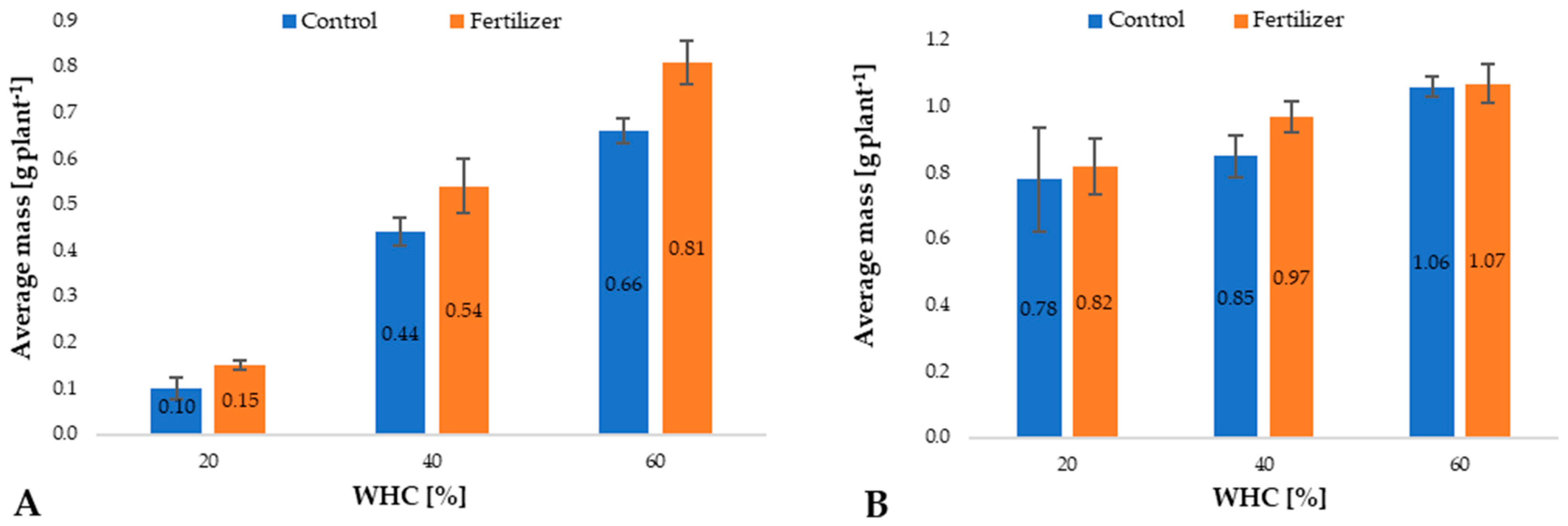
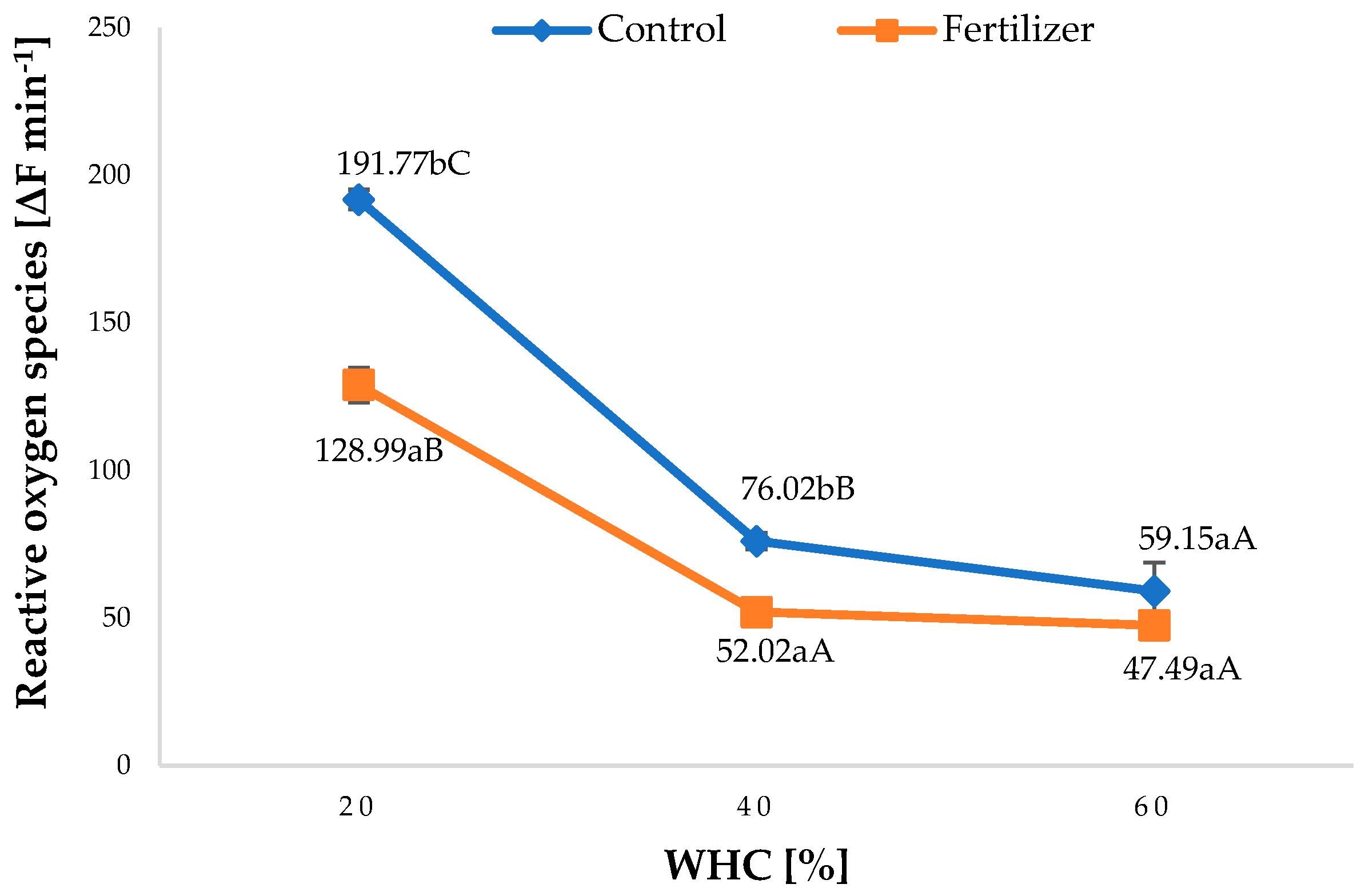
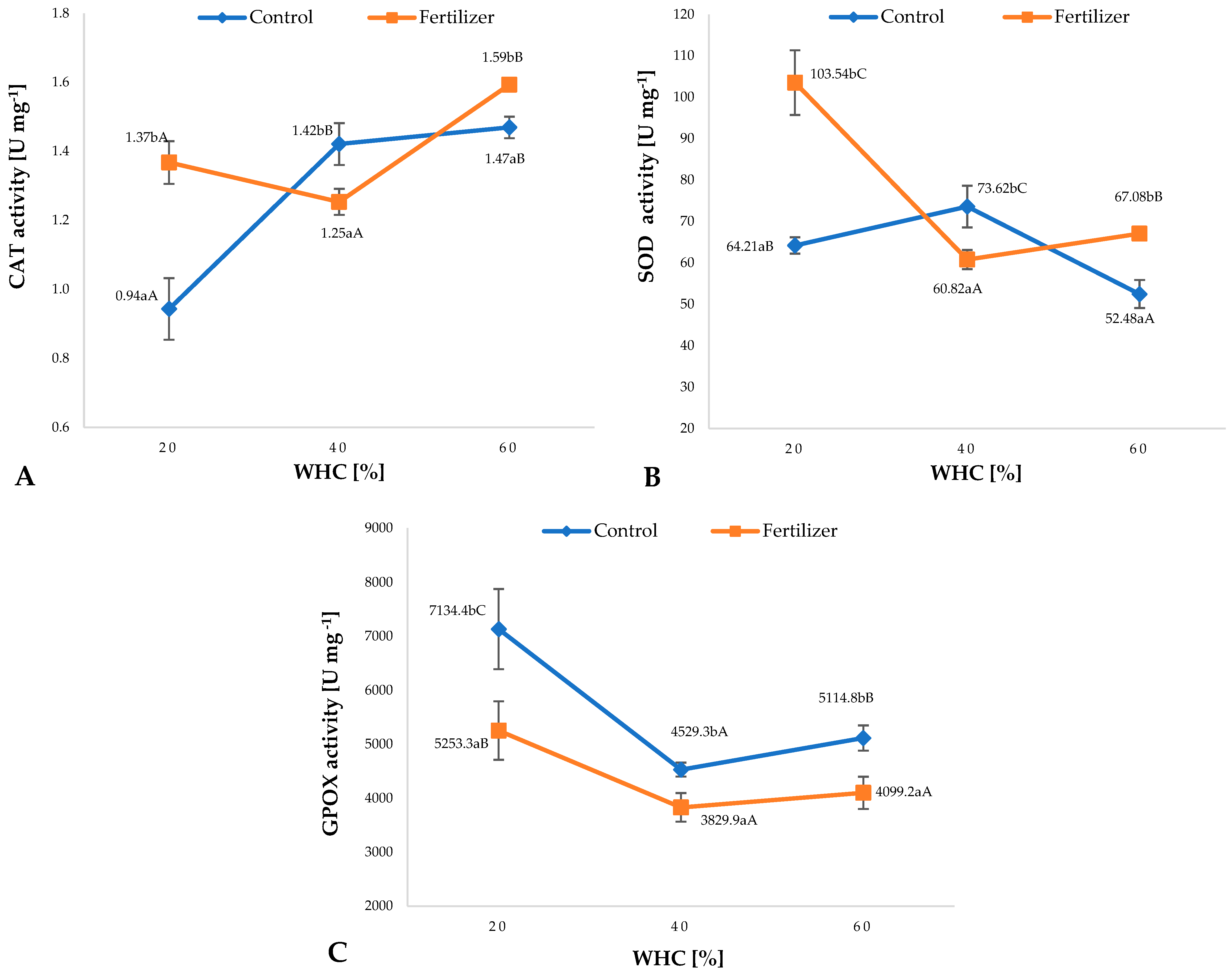
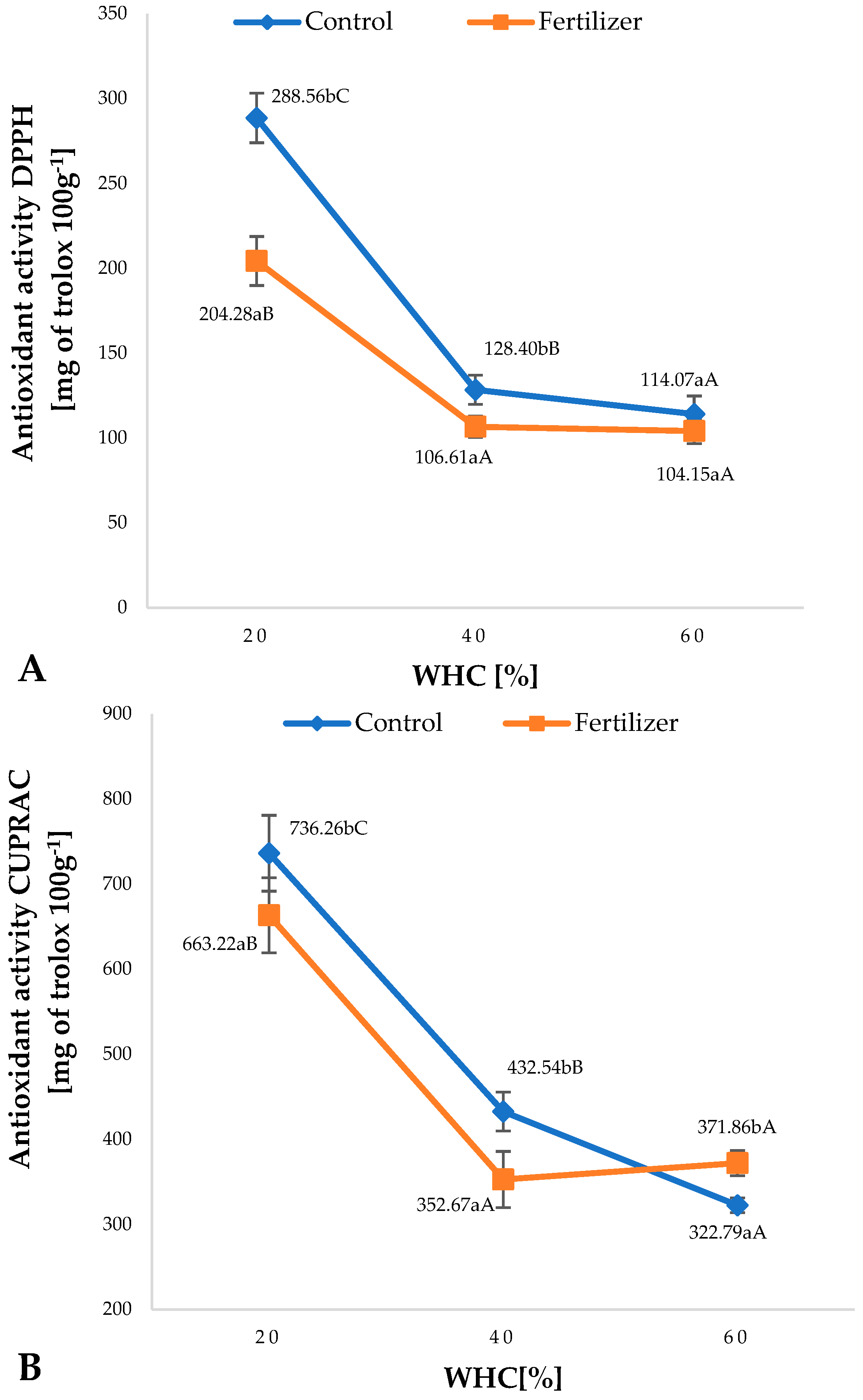
In this study, we investigated the effects of the utilization of seed coating by dedicated fertilizer on the mechanism of oxidative stress reduction in maize growing in simulated drought conditions. A strict pot experiment was conducted for this purpose in a climatic chamber with a phytotron system and controlled temperature and air humidity. Maize seeds were planted and grown in soil with 20% (extreme drought), 40%, and 60% water holding capacity (WHC). The seeds were enhanced using proposed fertilizer and applied at a rate of 2 kg t−1 seeds. The levels of ROS, as well as antioxidant enzymes SOD, CAT, and GPOX, generated by plants enhanced using the seed coating by fertilizer and by control specimens (non-enhanced), were measured 21 days after the seeds were planted. Antioxidant potential and total polyphenol contents in the plants were also determined. The findings show that under drought stress, plants produce high levels of ROS, which is responsible for oxidative stress. However, the latter phenomenon may be reduced using seed coating. Application of seed coating by fertilizer contributed to a 32.7% decrease in ROS in the case of extreme drought (soil with 20% WHC). The treatment also led to increased activity of SOD (61.2%), CAT (45.7%), and GPOX (35.8%), which shows its positive effects on activation of the enzymatic antioxidant system responsible for neutralization of ROS and for reducing the negative effects of drought.
Keywords: seed coating; oxidative stress; photosynthetic efficiency; antioxidant activities; reactive oxygen species (ROS); SOD activity; CAT activity; GPOX activity; maize seed coating; oxidative stress; photosynthetic efficiency; antioxidant activities; reactive oxygen species (ROS); SOD activity; CAT activity; GPOX activity; maize