Article

Advanced Characterization of Monofloral Honeys from Romania
Faculty of Food Engineering, Stefan cel Mare University of Suceava, 13 Universitatii Street, 720229 Suceava, Romania
*
Author to whom correspondence should be addressed.
Agriculture 2022, 12(4), 526; https://doi.org/10.3390/agriculture12040526

Submission received: 21 March 2022 / Revised: 4 April 2022 / Accepted: 6 April 2022 / Published: 8 April 2022

Abstract

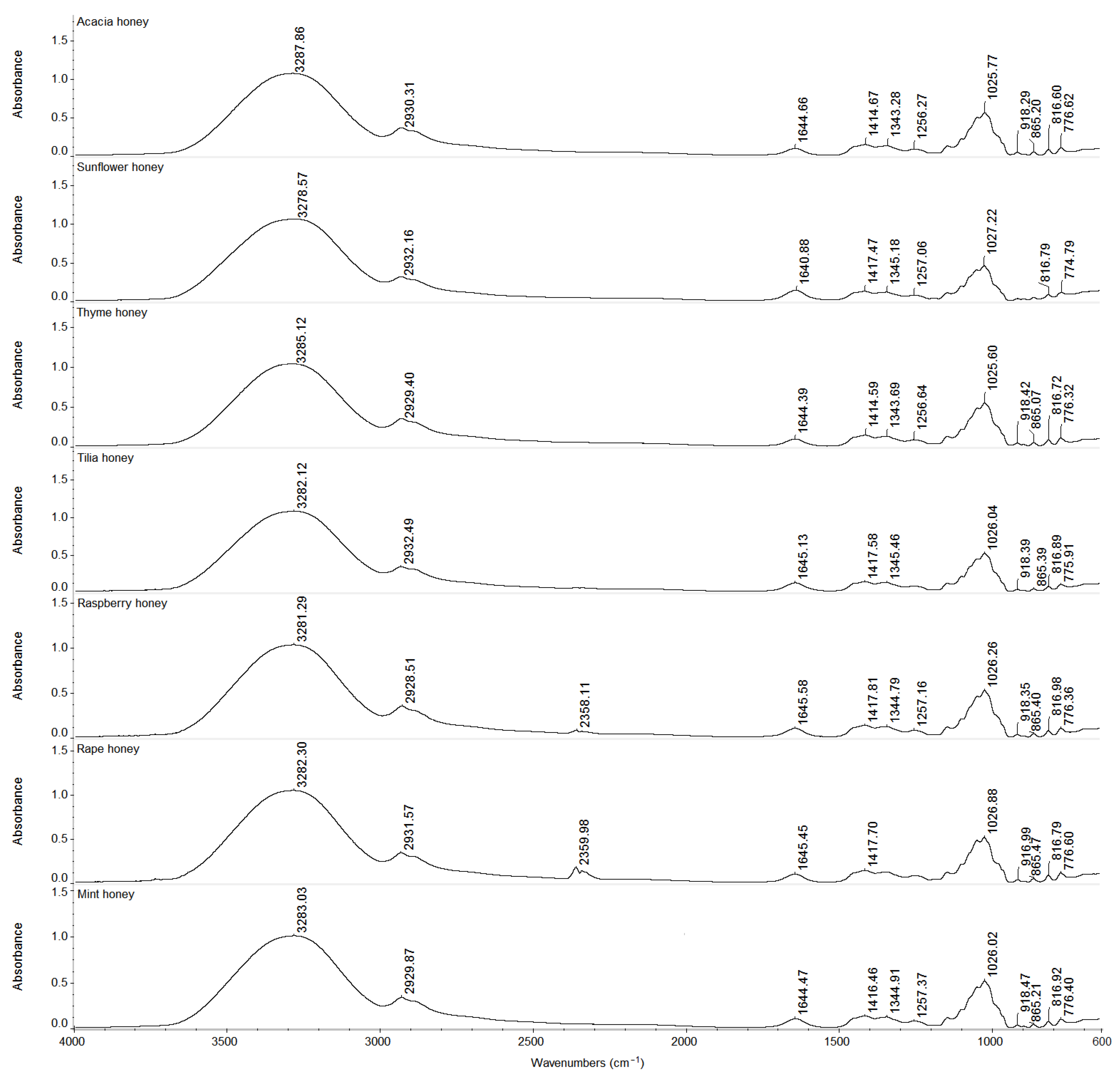
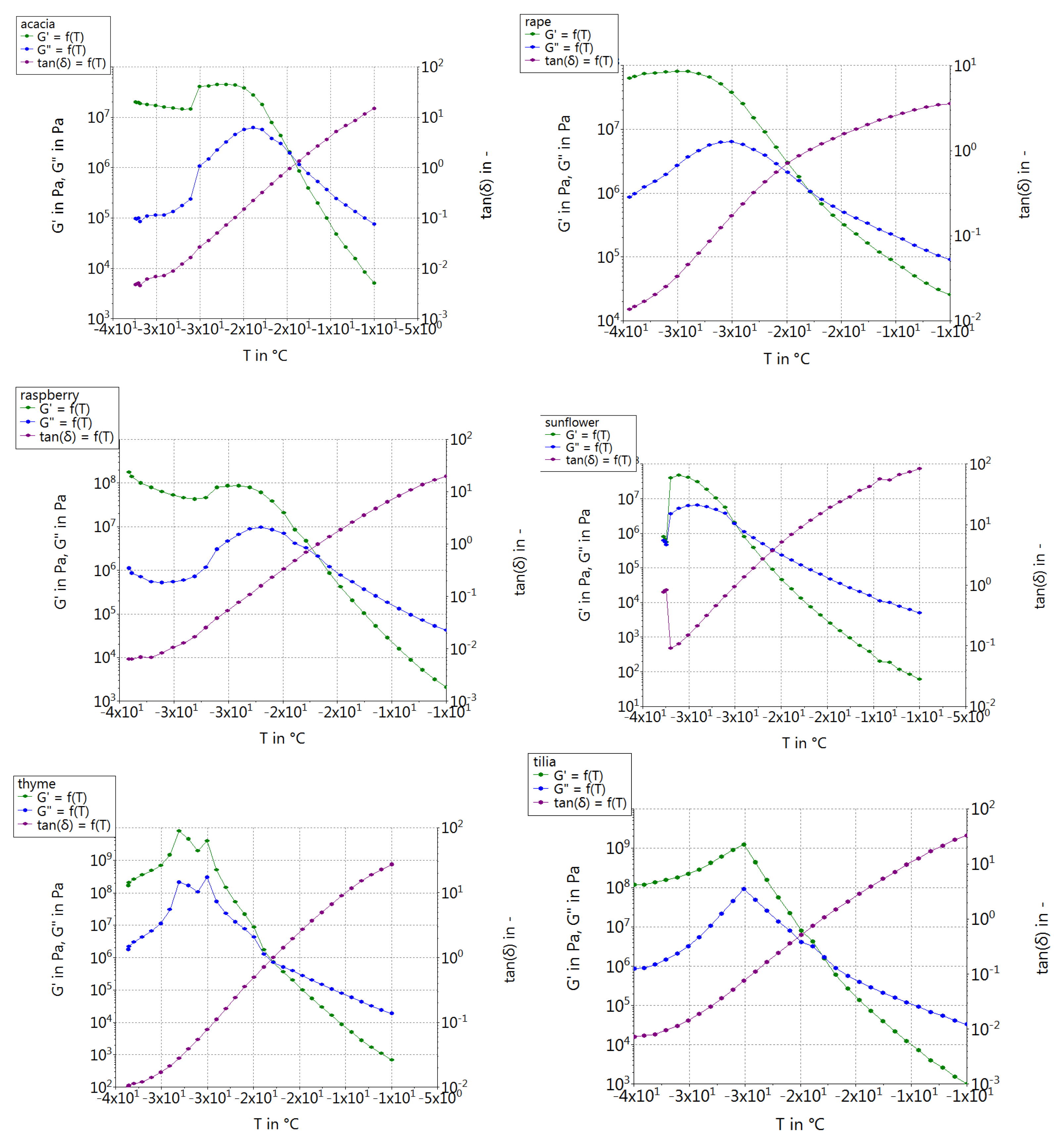
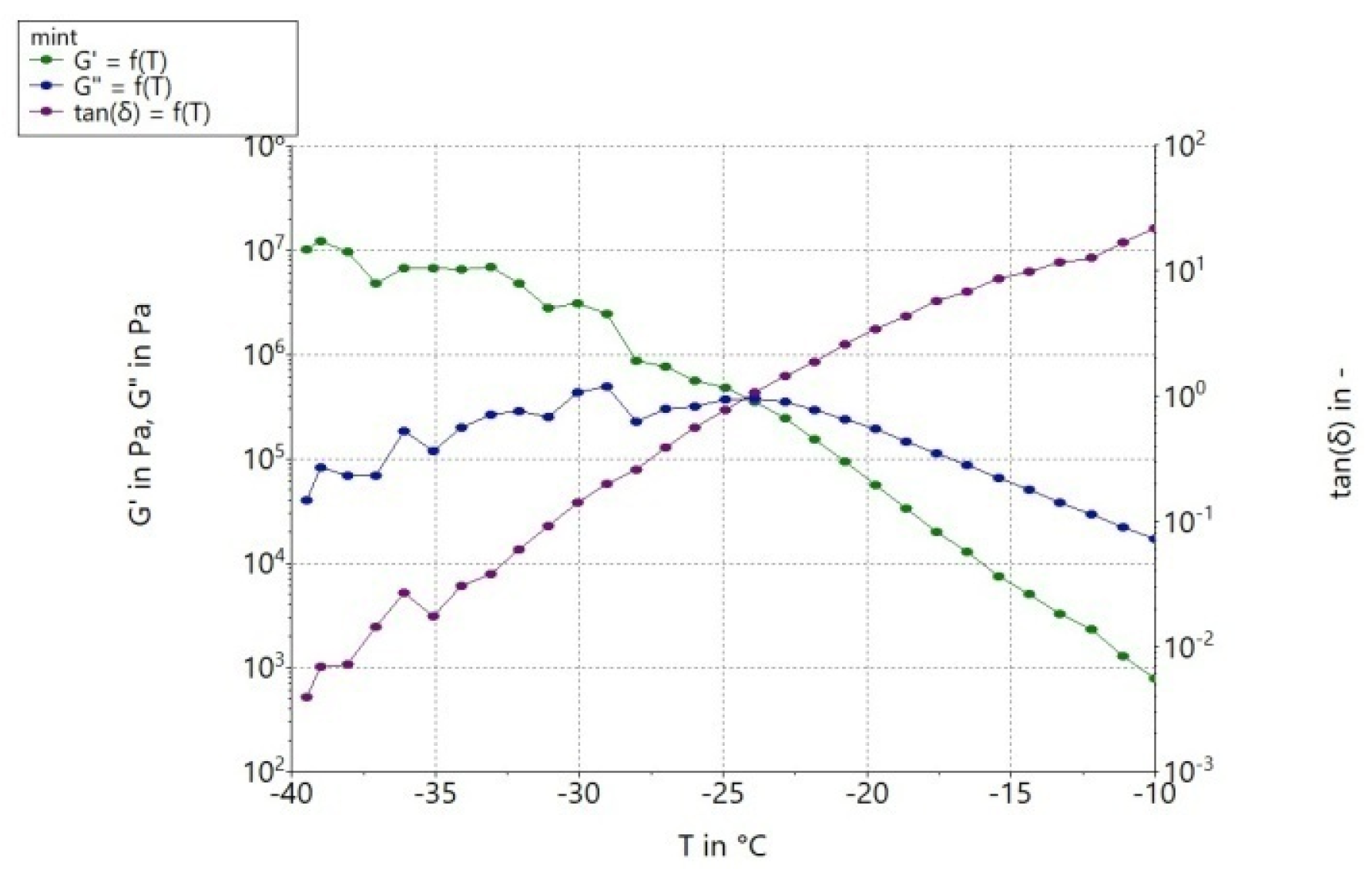
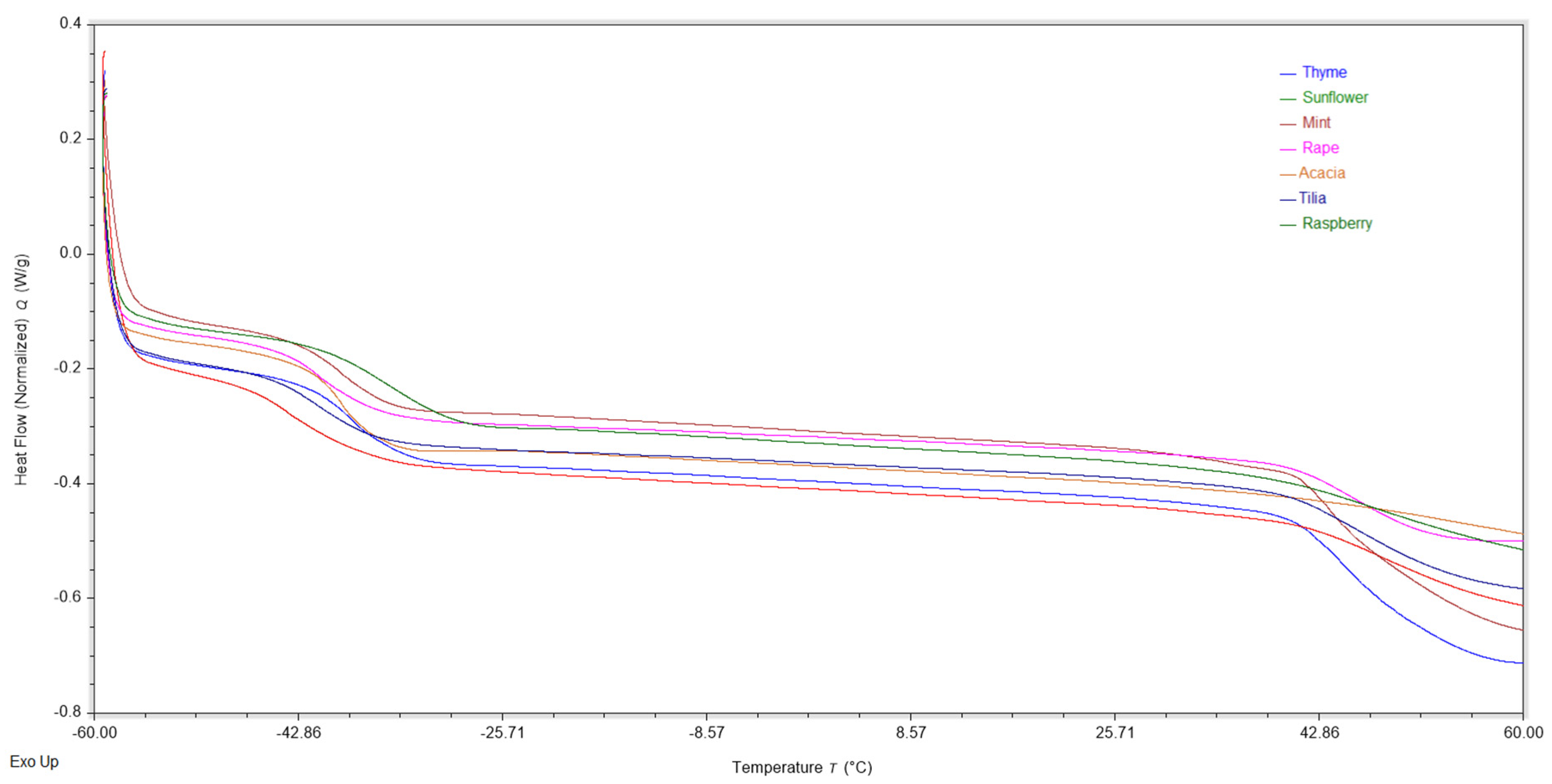
Honey’s authenticity is a major concern for producers and consumers, and this prompts research into reliable methods to determine the source of honey (botanical and geographical). This study aimed to find the botanical origin of seven samples of monofloral honey (acacia, thyme, tilia, rape, raspberry, mint and sunflower) based on pollen analysis and identification of the physicochemical characteristics of these types of honey. For these types of honey, the following parameters were determined: color, electrical conductivity, free acidity, moisture content, pH, hydroxymethylfurfural content and sugar content. Alongside pollen analysis, these methods succeeded in classifying the analyzed samples as monofloral honey. Non-destructive methods of analysis such as Fourier transform infrared spectroscopy, the determination of the rheological behavior of honey in the negative domain and the determination of the thermal behavior were also employed to characterize the honey samples. The best differentiation between samples was achieved in the spectral region between 950 and 750 cm−1, which is of interest for carbohydrate analysis in IR spectroscopy. In the negative interval, the viscous and elastic modules intersected at different temperatures, these temperatures being influenced both by the moisture of the analyzed samples and the botanical origin.
Keywords: honey; physicochemical parameters; rheological properties; differential scanning calorimetry honey; physicochemical parameters; rheological properties; differential scanning calorimetry