Article

Research on Design and Analysis Method of the Double Planetary HMCVT Based on High Efficiency Transmission

1
College of Engineering, China Agricultural University, Beijing 100091, China
2
Beijing Key Laboratory of Optimized Design for Modern Agricultural Equipment, Beijing 100091, China
3
State Key Laboratory of Power System of Tractor, Luoyang 471039, China
*
Author to whom correspondence should be addressed.
Agriculture 2022, 12(11), 1958; https://doi.org/10.3390/agriculture12111958

Submission received: 30 September 2022 / Revised: 17 November 2022 / Accepted: 17 November 2022 / Published: 20 November 2022
(This article belongs to the Section Agricultural Technology)

Abstract

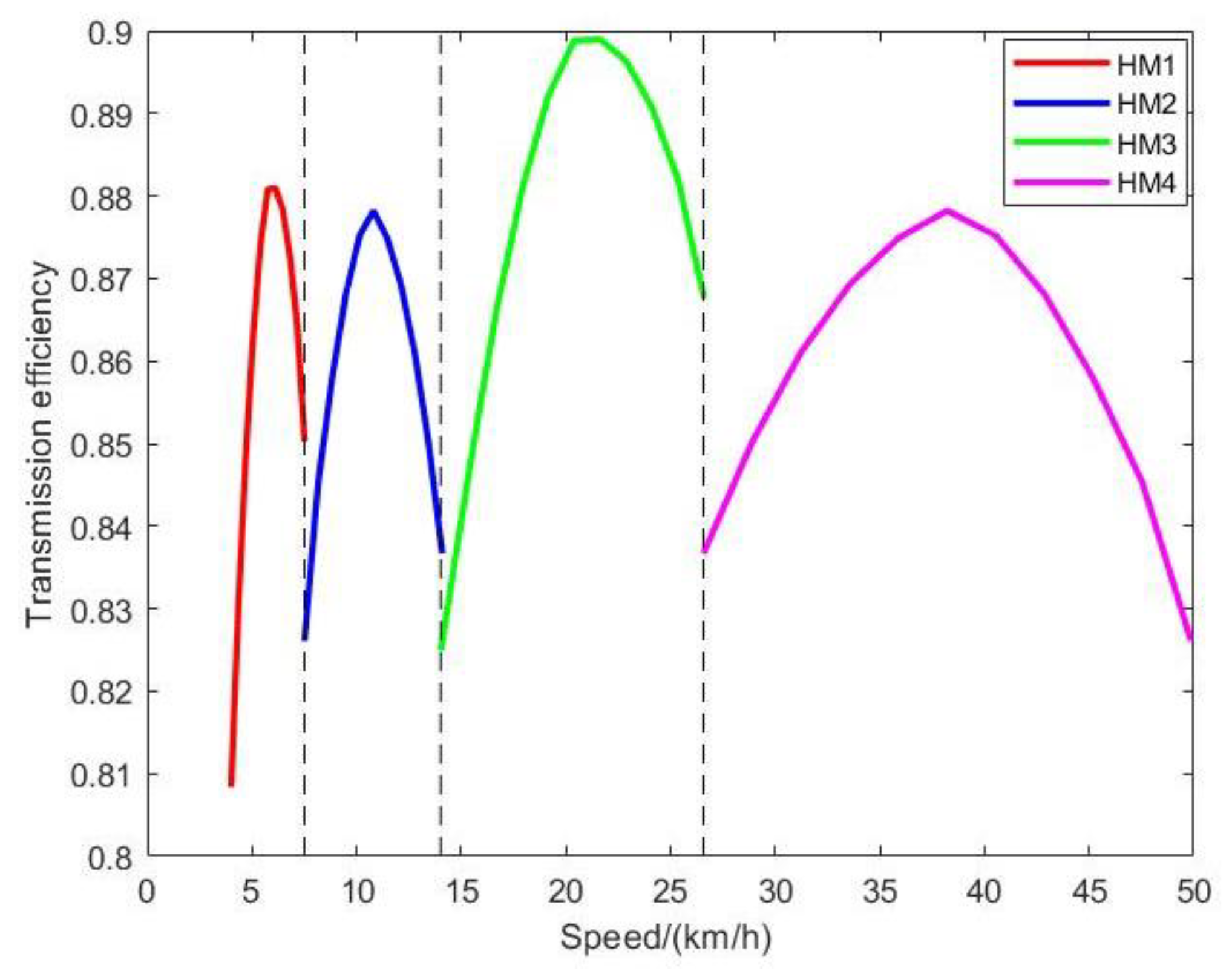
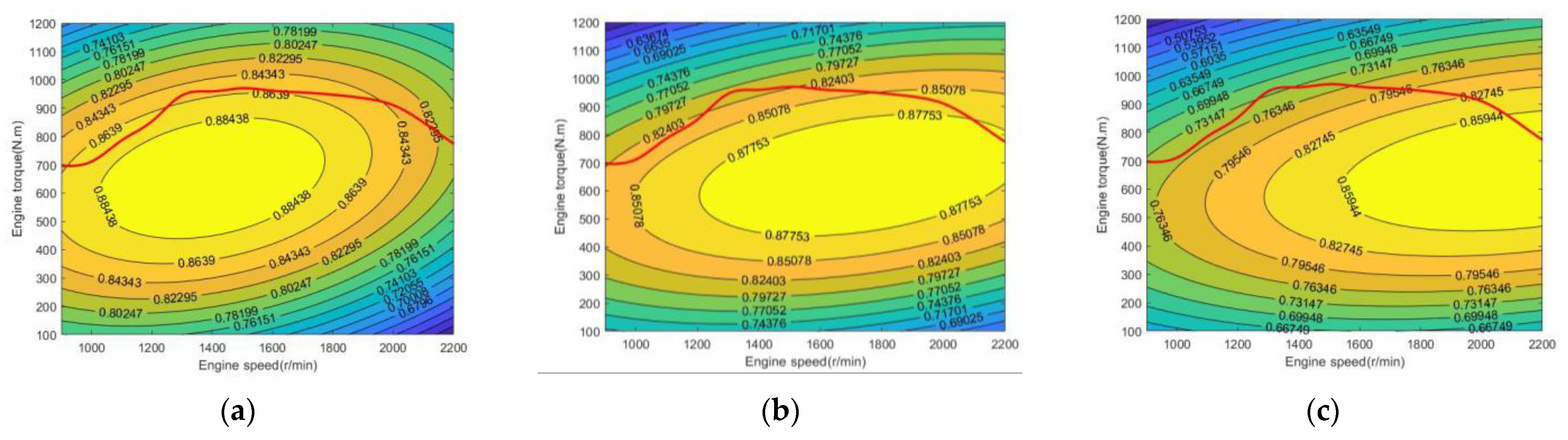
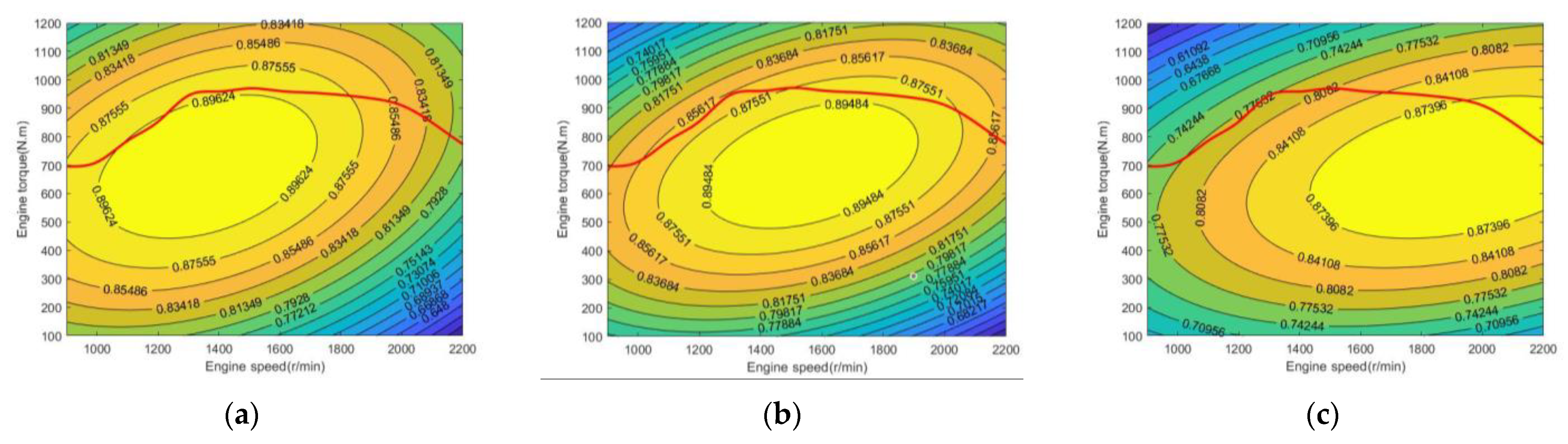
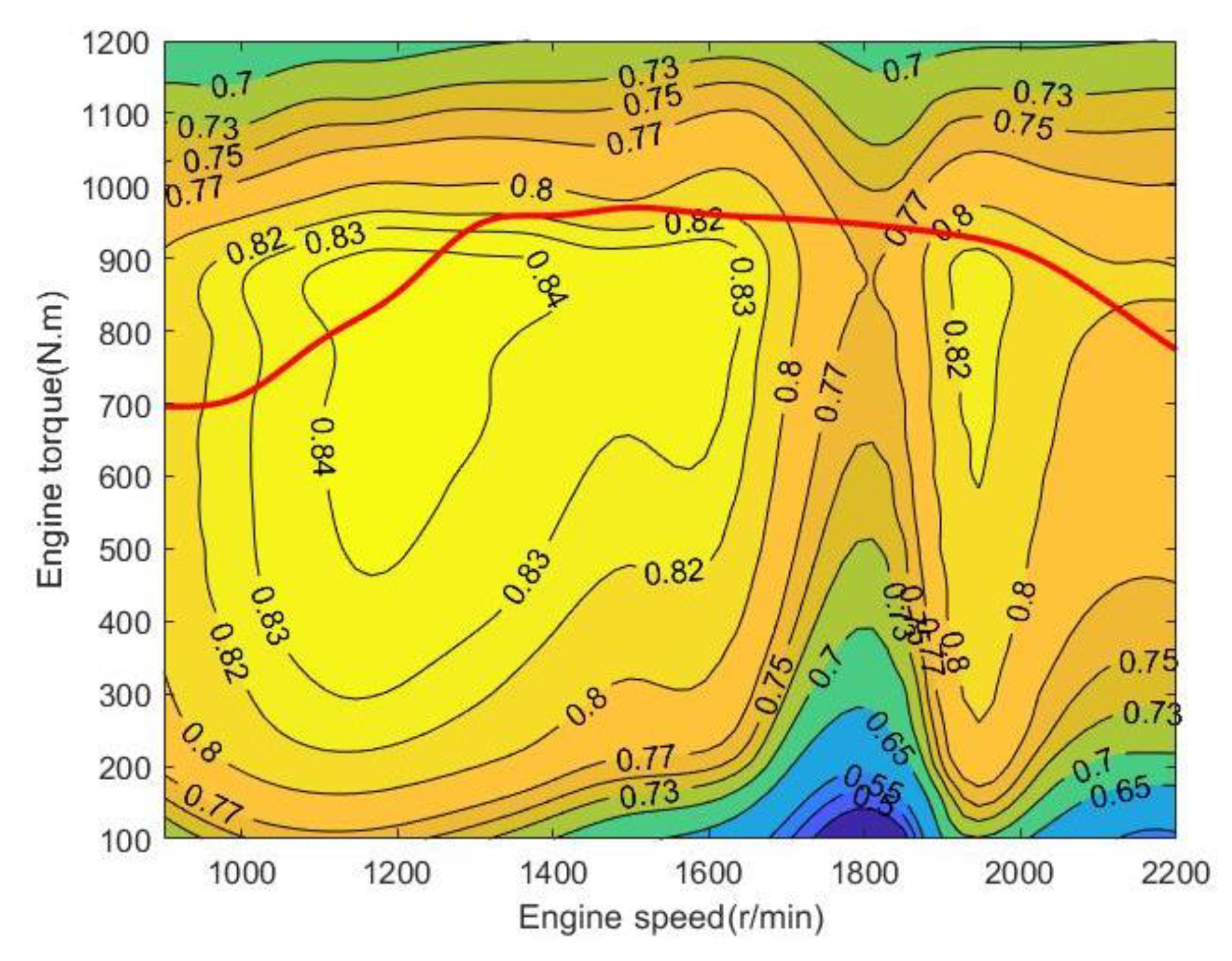
The hydro-mechanical continuously variable transmission (HMCVT) is the critical component in the transmission system of the high-horsepower tractor. However, different structural layouts have a significant influence on transmission efficiency, especially for the HMCVT with multiple planetary rows. Therefore, the double planetary HMCVT, which, based on efficiency characteristics, was designed in this study, as well as the efficiency distribution area under different loads, were analysed. First, the method of the single planetary row in structure layout is constructed and redefined, revealing the transformation law of transmission in different layouts. Moreover, the different layout efficiencies and output transmission ratios were derived as the theoretical basis for selection. Then, the obtained transmission and efficiency characteristics were selected as the best combination to design the double planetary HMCVT. The theoretical efficiency and hydraulic power shunt characteristics were analysed with the circulating power, and the influence of circulating power on operational efficiency was determined. Finally, the hardware-in-the-loop system of HMCVT was designed. Herein, a new type of variable load efficiency characteristic analysis method is proposed, which treats the engine and transmission as an efficient whole. The variational performance of the efficiency field in hydro-mechanical stages are discussed under full load and variable load. This research provides theoretical support for efficiency improvements in design and analysis of the multi-planetary HMCVT tractor.
Keywords: hydro-mechanical continuously variable transmission; transmission efficiency; variable load efficiency field; power split; hardware-in-the-loop system hydro-mechanical continuously variable transmission; transmission efficiency; variable load efficiency field; power split; hardware-in-the-loop system