

The Impact of Selective Fetal Growth Restriction or Birth Weight Discordance on Long-Term Neurodevelopment in Monochorionic Twins: A Systematic Literature Review

 ,
, 
Abstract
1. Introduction
2. Methods
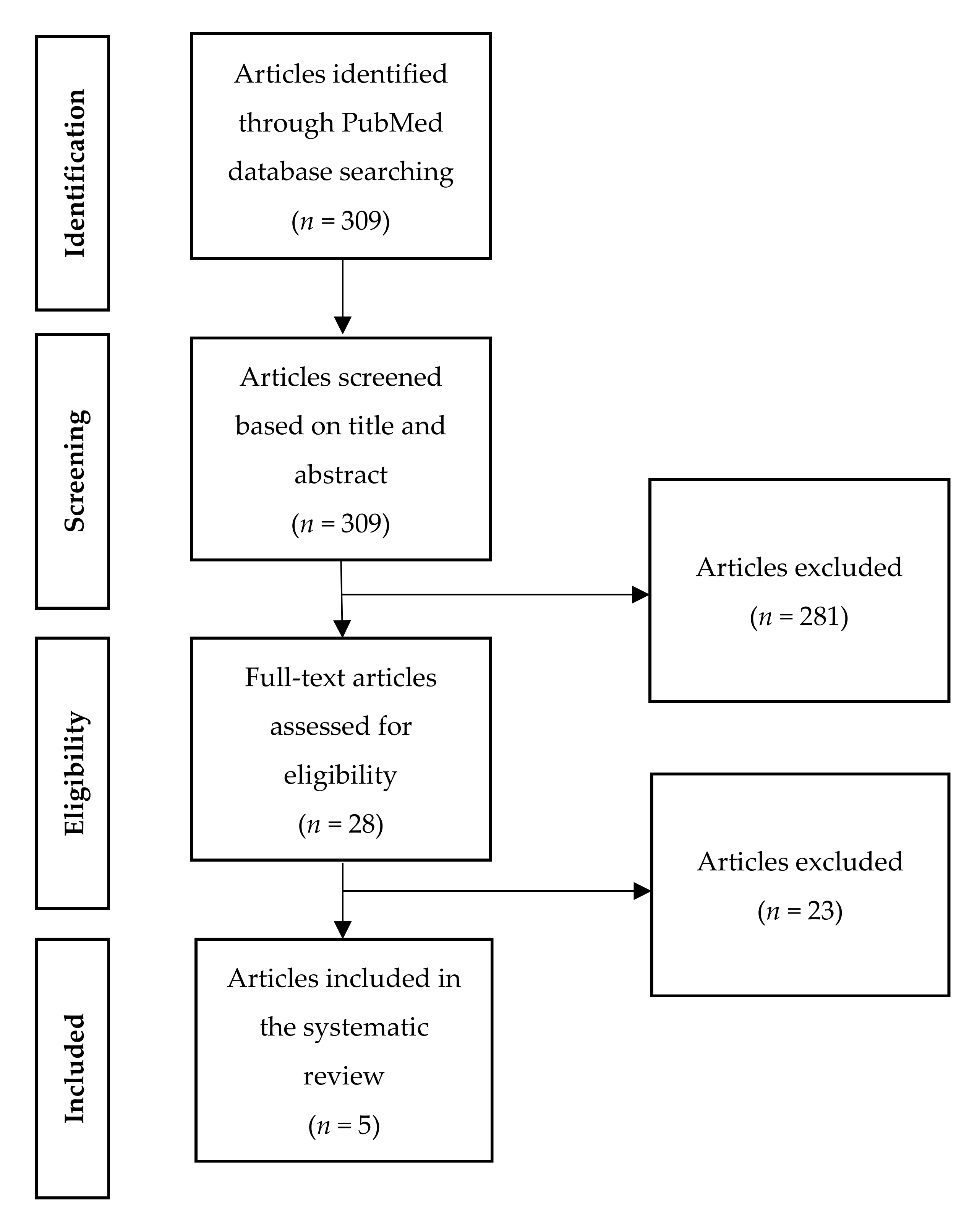
2.1. Study Selection
2.2. Quality Assessment
3. Results
Quality Assessment and Level of Evidence
4. Discussion
Author Contributions
Funding
Conflicts of Interest
References
- Bennasar, M.; Eixarch, E.; Martinez, J.M.; Gratacos, E. Selective intrauterine growth restriction in monochorionic diamniotic twin pregnancies. Semin. Fetal Neonatal Med. 2017, 22, 376–382. [Google Scholar] [CrossRef] [Scilit] [PubMed]
- Lewi, L.; Gucciardo, L.; Huber, A.; Jani, J.; Van Mieghem, T.; Done, E.; Cannie, M.; Gratacos, E.; Diemert, A.; Hecher, K.; et al. Clinical outcome and placental characteristics of monochorionic diamniotic twin pairs with early- and late-onset discordant growth. Am. J. Obstet. Gynecol. 2008, 199, 511.e1–511.e7. [Google Scholar] [CrossRef] [Scilit] [PubMed]
- Fick, A.L.; Feldstein, V.A.; Norton, M.E.; Wassel Fyr, C.; Caughey, A.B.; Machin, G.A. Unequal placental sharing and birth weight discordance in monochorionic diamniotic twins. Am. J. Obstet. Gynecol. 2006, 195, 178–183. [Google Scholar] [CrossRef] [Scilit] [PubMed]
- Gratacos, E.; Lewi, L.; Munoz, B.; Acosta-Rojas, R.; Hernandez-Andrade, E.; Martinez, J.M.; Carreras, E.; Deprest, J. A classification system for selective intrauterine growth restriction in monochorionic pregnancies according to umbilical artery Doppler flow in the smaller twin. Ultrasound Obstet. Gynecol. 2007, 30, 28–34. [Google Scholar] [CrossRef] [Scilit] [PubMed]
- Gratacos, E.; Carreras, E.; Becker, J.; Lewi, L.; Enriquez, G.; Perapoch, J.; Higueras, T.; Cabero, L.; Deprest, J. Prevalence of neurological damage in monochorionic twins with selective intrauterine growth restriction and intermittent absent or reversed end-diastolic umbilical artery flow. Ultrasound Obstet. Gynecol. 2004, 24, 159–163. [Google Scholar] [CrossRef] [Scilit] [PubMed]
- Inklaar, M.J.; van Klink, J.M.; Stolk, T.T.; van Zwet, E.W.; Oepkes, D.; Lopriore, E. Cerebral injury in monochorionic twins with selective intrauterine growth restriction: A systematic review. Prenat. Diagn. 2014, 34, 205–213. [Google Scholar] [CrossRef] [Scilit] [PubMed]
- Ishii, K.; Murakoshi, T.; Takahashi, Y.; Shinno, T.; Matsushita, M.; Naruse, H.; Torii, Y.; Sumie, M.; Nakata, M. Perinatal outcome of monochorionic twins with selective intrauterine growth restriction and different types of umbilical artery Doppler under expectant management. Fetal Diagn. Ther. 2009, 26, 157–161. [Google Scholar] [CrossRef] [Scilit] [PubMed]
- Townsend, R.; D’Antonio, F.; Sileo, F.G.; Kumbay, H.; Thilaganathan, B.; Khalil, A. Perinatal outcome of monochorionic twin pregnancy complicated by selective fetal growth restriction according to management: Systematic review and meta-analysis. Ultrasound Obstet. Gynecol. 2019, 53, 36–46. [Google Scholar] [CrossRef] [Scilit] [PubMed]
- Welch, V.; Petticrew, M.; Petkovic, J.; Moher, D.; Waters, E.; White, H.; Tugwell, P.; PRISMA-Equity Bellagio group. Extending the PRISMA statement to equity-focused systematic reviews (PRISMA-E 2012): Explanation and elaboration. J. Clin. Epidemiol. 2016, 70, 68–89. [Google Scholar] [CrossRef] [Scilit]
- Laupacis, A.; Wells, G.; Richardson, W.S.; Tugwell, P. Users’ guides to the medical literature. V. How to use an article about prognosis. Evidence-Based Medicine Working Group. JAMA 1994, 272, 234–237. [Google Scholar] [CrossRef] [Scilit] [PubMed]
- Atkins, D.; Best, D.; Briss, P.A.; Eccles, M.; Falck-Ytter, Y.; Flottorp, S.; Guyatt, G.H.; Harbour, R.T.; Haugh, M.C.; Henry, D.; et al. Grading quality of evidence and strength of recommendations. BMJ 2004, 328, 1490. [Google Scholar] [PubMed]
- Adegbite, A.L.; Castille, S.; Ward, S.; Bajoria, R. Neuromorbidity in preterm twins in relation to chorionicity and discordant birth weight. Am. J. Obstet. Gynecol. 2004, 190, 156–163. [Google Scholar] [CrossRef] [Scilit] [PubMed]
- Edmonds, C.J.; Isaacs, E.B.; Cole, T.J.; Rogers, M.H.; Lanigan, J.; Singhal, A.; Birbara, T.; Gringras, P.; Denton, J.; Lucas, A. The effect of intrauterine growth on verbal IQ scores in childhood: A study of monozygotic twins. Pediatrics 2010, 126, e1095–e1101. [Google Scholar] [CrossRef] [Scilit] [PubMed]
- Halling, C.; Malone, F.D.; Breathnach, F.M.; Stewart, M.C.; McAuliffe, F.M.; Morrison, J.J.; Dicker, P.; Manning, F.; Corcoran, J.D. Perinatal Ireland Research Consortium. Neuro-developmental outcome of a large cohort of growth discordant twins. Eur. J. Pediatr. 2016, 175, 381–389. [Google Scholar] [CrossRef] [Scilit] [PubMed]
- Rustico, M.A.; Consonni, D.; Lanna, M.; Faiola, S.; Schena, V.; Scelsa, B.; Introvini, P.; Righini, A.; Parazzini, C.; Lista, G.; et al. Selective intrauterine growth restriction in monochorionic twins: Changing patterns in umbilical artery Doppler flow and outcomes. Ultrasound Obstet. Gynecol. 2017, 49, 387–393. [Google Scholar] [CrossRef] [Scilit] [PubMed]
- Swamy, R.S.; McConachie, H.; Ng, J.; Rankin, J.; Korada, M.; Sturgiss, S.; Embleton, N.D. Cognitive outcome in childhood of birth weight discordant monochorionic twins: The long-term effects of fetal growth restriction. Arch. Dis. Child. Fetal Neonatal Ed. 2018, 103, 512–516. [Google Scholar] [CrossRef] [Scilit]
- Coutinho Nunes, F.; Domingues, A.P.; Vide Tavares, M.; Belo, A.; Ferreira, C.; Fonseca, E.; Moura, P. Monochorionic versus dichorionic twins: Are obstetric outcomes always different? J. Obstet. Gynaecol. 2016, 36, 598–601. [Google Scholar] [CrossRef] [Scilit]
- Patel, R.M. Short- and long-term outcomes for extremely preterm infants. Am. J. Perinatol. 2016, 33, 318–328. [Google Scholar] [CrossRef] [Scilit]
- Johnson, S.; Evans, T.A.; Draper, E.S.; Field, D.J.; Manktelow, B.N.; Marlow, N.; Matthews, R.; Petrou, S.; Seaton, S.E.; Smith, L.K.; et al. Neurodevelopmental outcomes following late and moderate prematurity: A population-based cohort study. Arch. Dis. Child. Fetal Neonatal Ed. 2015, 100, 301–308. [Google Scholar] [CrossRef] [Scilit]
- O’Keeffe, M.J.; O’Callaghan, M.; Williams, G.M.; Najman, J.M.; Bor, W. Learning, cognitive, and attentional problems in adolescents born small for gestational age. Pediatrics 2003, 112, 301–307. [Google Scholar] [CrossRef] [Scilit]
- de Kieviet, J.F. Long-term outcomes of very preterm birth: “White matter” matters. Dev. Med. Child. Neurol. 2013, 55, 883–884. [Google Scholar] [CrossRef] [Scilit] [PubMed]
- Li, X.; Eiden, R.D.; Epstein, L.H.; Shenassa, E.D.; Xie, C.; Wen, X. Etiological subgroups of small-for-gestational-age: Differential neurodevelopmental outcomes. PLoS ONE 2016, 11, e0160677. [Google Scholar] [CrossRef] [Scilit] [PubMed]
- Buca, D.; Pagani, G.; Rizzo, G.; Familiari, A.; Flacco, M.E.; Manzoli, L.; Liberati, M.; Fanfani, F.; Scambia, G.; D’Antonio, F. Outcome of monochorionic twin pregnancy with selective intrauterine growth restriction according to umbilical artery Doppler flow pattern of smaller twin: Systematic review and meta-analysis. Ultrasound Obstet. Gynecol. 2017, 50, 559–568. [Google Scholar] [CrossRef] [Scilit] [PubMed]
- Spruijt, M.; Steggerda, S.; Rath, M.; van Zwet, E.; Oepkes, D.; Walther, F.; Lopriore, E. Cerebral injury in twin–twin transfusion syndrome treated with fetoscopic laser surgery. Obstet. Gynecol. 2012, 120, 15–20. [Google Scholar] [CrossRef] [Scilit] [PubMed]

| Author (Year) | Study Design | Number of MC Twins with sFGR (GA at Birth) | Definition sFGR/BWD | Outcome Measures and Neurodevelopmental Evaluation | Age at Assessment |
|---|---|---|---|---|---|
| 1. Adegbite et al. (2004) [12] | Prospective | 13 (GA at birth 24–32 weeks) | ≥20% BWD or smaller twin with AC ≤ 5th centile with an abnormal UA Doppler | Overall incidence of cerebral palsy (CP) and minor neurological disabilities | 2 years |
| Developmental delay (Griffith’s mental developmental scale score) | |||||
| 2. Edmonds et al. (2010) [13] | Retrospective | Not reported (GA at birth > 32 weeks) | BWD continuous variable | Verbal intelligence-quotient (VIQ), performances intelligence quotient (PIQ) (WISC-III) | 7 years, 11 months–17 years, 3 months |
| 3. Halling et al. (2015) [14] | Prospective | 24 (mean GA at birth 35.2 (32.5–37.9) weeks) | ≥20% BWD | Bayley-III scores | 24–42 months |
| 4. Rustico et al. (2017) [15] | Retrospective | 140 (median GA at birth 32 (29–33) weeks) | EFW <10th percentile in smaller twin or EFW difference ≥25% | Level of neurological impairment (severe, moderate, mild) 1 | 12 months–7 years |
| 5. Swamy et al. (2018) [16] | Retrospective | 51 (mean GA at birth 34 (26–40) weeks) | ≥20% BWD | BASII scores QNST scores SDQ scores | 4–8.7 years |
| Author (Year) | Results | Methodological Comments | Validity |
|---|---|---|---|
| 1. Adegbite et al. (2004) [12] | Incidence of CP (p < 0.05): - BWD MC twins = 5/26 (19%) CP - BWD DC twins = 1/40 (3%) CP Overall neuromorbidity (p < 0.01): - BWD MC twins = 11/26 (42%) - BWD DC twins = 5/38 (13%) Overall neuromorbidity (p < 0.01): - BWD MC twins = 11/26 (42%) - Concordant MC twins = 6/71 (8%) | Loss-to-follow up of 13%; No corrections for possible confounders; Small study population | Adequate |
| 2. Edmonds et al. (2010) [13] | 1 kg of within-twin birth weight difference = VIQ difference of 13 points (CI: 7.1–18.9) between twins (p < 0.01) Birth weight difference < 340 g: larger twin VIQ disadvantage Birth weight difference > 340 g: smaller twin VIQ disadvantage | No chorionicity distinction; Inclusion of six twin pairs with evidence for TTTS; CP cases excluded; Broad follow-up range; Corrections for socioeconomic status, preterm birth, birth weight difference > 0.5 kg | Low |
| 3. Halling et al. (2015) [14] | BWD MC twins - 3.8 lower in language composite score (p = 0.03), - 0.8 lower in expressive language (p = 0.02), - 5.3 lower in composite motor (p = 0.002) - 1.1 lower in scaled gross motor categories (p = 0.001) | Follow-up rate of 79%; Concordant twin pairs matched for gestation as controls; Corrections for chorionicity, gender, prematurity, and birth weight | High |
| 4. Rustico et al. (2017) [15] | Mild neurodevelopmental impairment (p = 0.02) - Smaller twin = 6/80 (8%) - Larger twin = 1/111 (1%) | No psychometric test; Complete follow-up; Only within-twin pair comparison | Adequate |
| 5. Swamy et al. (2018) [16] | BASII GCA scores (p = 0.005) - Larger twin = 108.5 - Smaller twin = 105.4 Difference in GCA in 10 twin pairs with abnormal Doppler flows = 7 points (p = 0.04) | CP cases excluded; Blinded investigator; Corrections for factors shared within-twin pairs; Only within-twin pair comparison; Inclusion of six TTTS twin pairs | High |
© 2019 by the authors. Licensee MDPI, Basel, Switzerland. This article is an open access article distributed under the terms and conditions of the Creative Commons Attribution (CC BY) license (http://creativecommons.org/licenses/by/4.0/).
Share and Cite
Groene, S.G.; Tollenaar, L.S.A.; Oepkes, D.; Lopriore, E.; van Klink, J.M.M. The Impact of Selective Fetal Growth Restriction or Birth Weight Discordance on Long-Term Neurodevelopment in Monochorionic Twins: A Systematic Literature Review. J. Clin. Med. 2019, 8, 944. https://doi.org/10.3390/jcm8070944
Groene SG, Tollenaar LSA, Oepkes D, Lopriore E, van Klink JMM. The Impact of Selective Fetal Growth Restriction or Birth Weight Discordance on Long-Term Neurodevelopment in Monochorionic Twins: A Systematic Literature Review. Journal of Clinical Medicine. 2019; 8(7):944. https://doi.org/10.3390/jcm8070944
Chicago/Turabian StyleGroene, Sophie G., Lisanne S.A. Tollenaar, Dick Oepkes, Enrico Lopriore, and Jeanine M.M. van Klink. 2019. "The Impact of Selective Fetal Growth Restriction or Birth Weight Discordance on Long-Term Neurodevelopment in Monochorionic Twins: A Systematic Literature Review" Journal of Clinical Medicine 8, no. 7: 944. https://doi.org/10.3390/jcm8070944
APA StyleGroene, S. G., Tollenaar, L. S. A., Oepkes, D., Lopriore, E., & van Klink, J. M. M. (2019). The Impact of Selective Fetal Growth Restriction or Birth Weight Discordance on Long-Term Neurodevelopment in Monochorionic Twins: A Systematic Literature Review. Journal of Clinical Medicine, 8(7), 944. https://doi.org/10.3390/jcm8070944

