Personality Disorders in Functional and Idiopathic Dystonia

 , , ,
, , ,  and
and
Abstract
1. Introduction
2. Materials and Methods
2.1. Patients
2.2. Methods
2.3. Statistical Analysis
3. Results
3.1. Patient Characteristics
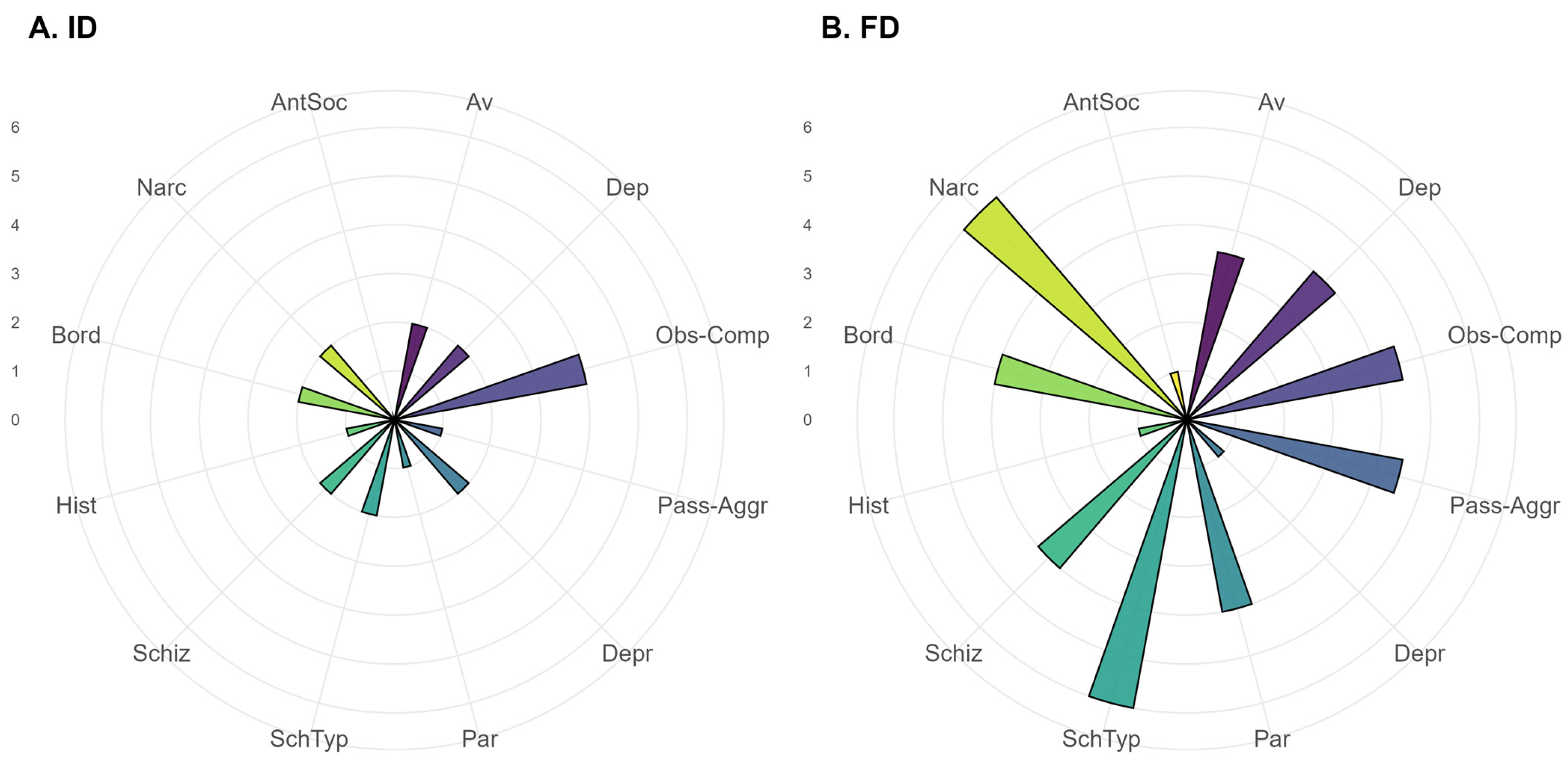
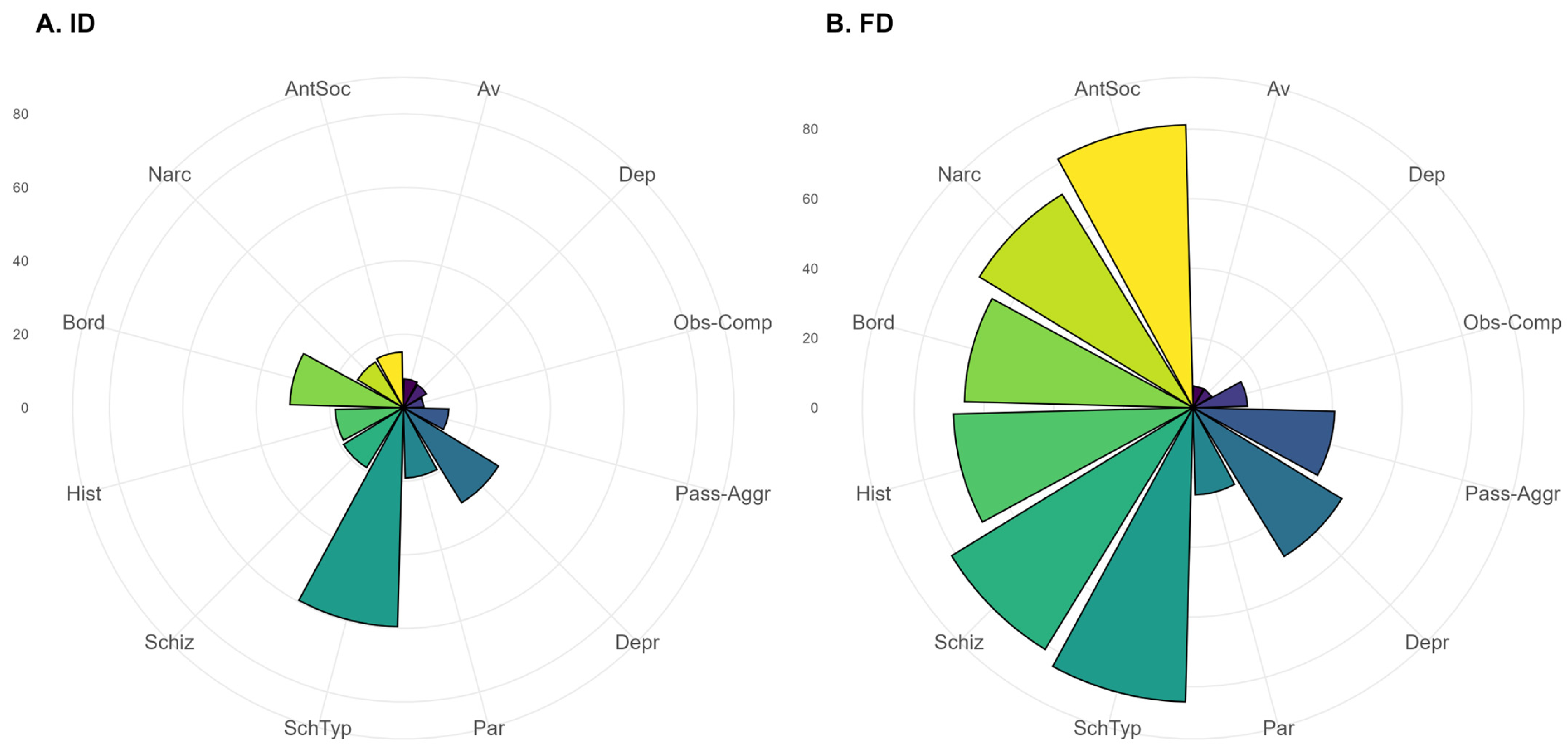
3.1.1. Pathocharacterological Profiles of ID and FD According to the Frequency and Severity of Categorical Personality Disorders According to SCID-II
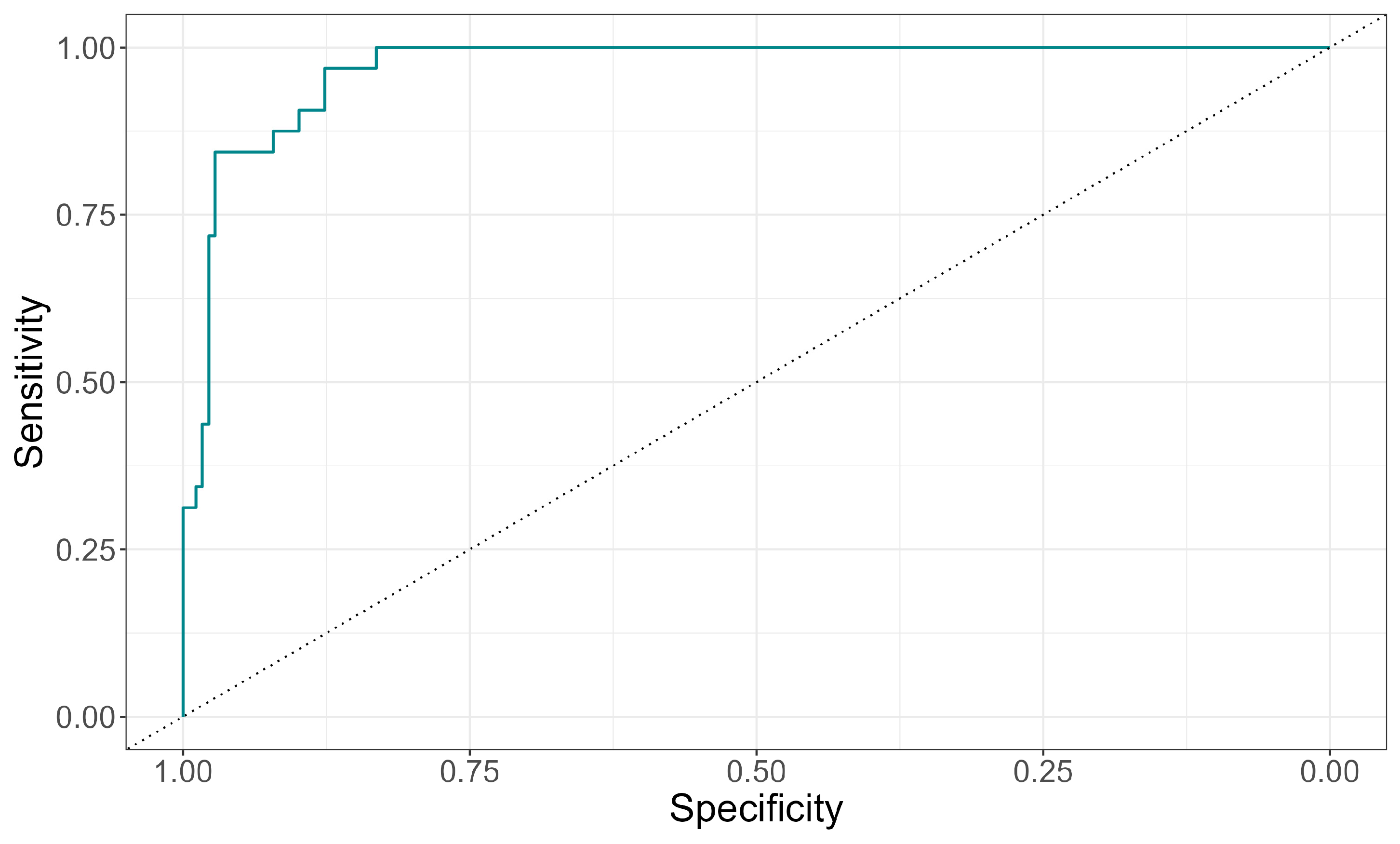
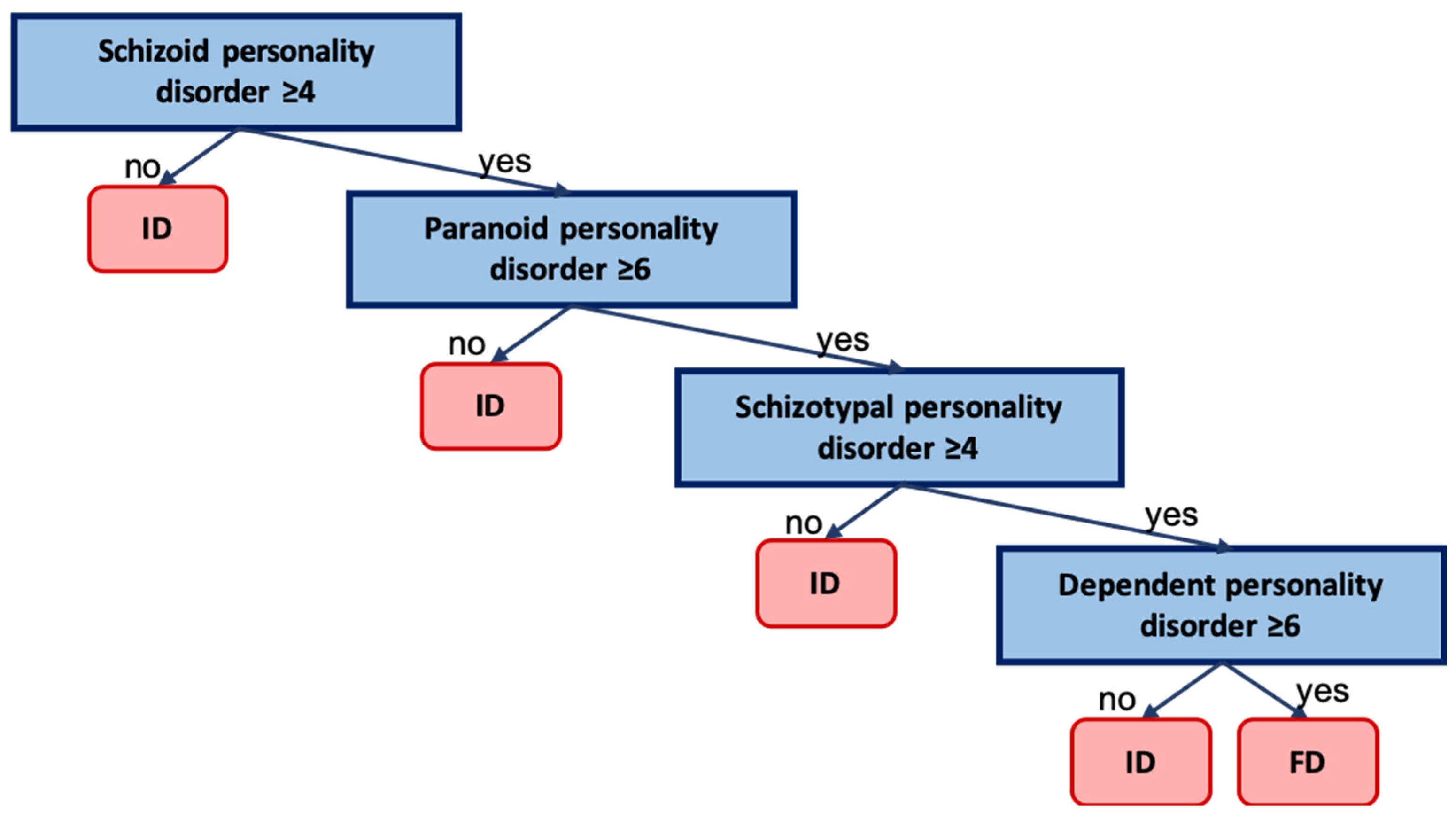
3.1.2. Construction of a Decision Tree Taking into Account Significant Predictors According to SCID-II
4. Discussion
5. Conclusions
Author Contributions
Funding
Institutional Review Board Statement
Informed Consent Statement
Data Availability Statement
Conflicts of Interest
References
- Baizabal-Carvallo, J.F.; Alonso-Juarez, M.; Jankovic, J. Functional cervical dystonia: Diagnostic accuracy of distinct clinical features. J. Neurol. 2026, 273, 31. [Google Scholar] [CrossRef]
- Giorelli, M. Functional dystonia in a guitarist: Diagnostic challenges and clinical reflections. Neurol. Sci. 2026, 47, 294. [Google Scholar] [CrossRef] [PubMed]
- Herbert, L.D.; Kim, R.; Hassan, A.A.; Wilkinson-Smith, A.; Waugh, J.L. When neurologists diagnose functional neurological disorder, why don’t they code for it? CNS Spectr. 2021, 26, 664–674. [Google Scholar] [CrossRef] [PubMed]
- Julien, F.; Bigorre, N.; Degez, F.; Celerier, S. Revisiting psychopathological hand as a functional neurological disorder: Time to reframe? Hand Surg. Rehabil. 2026, 45, 102563. [Google Scholar] [CrossRef]
- Trimble, M.; Reynolds, E.H. A brief history of hysteria: From the ancient to the modern. Handb. Clin. Neurol. 2016, 139, 3–10. [Google Scholar] [CrossRef] [PubMed]
- Bennett, K.; Diamond, C.; Hoeritzauer, I.; Gardiner, P.; McWhirter, L.; Carson, A.; Stone, J. A practical review of functional neurological disorder (FND) for the general physician. Clin. Med. 2021, 21, 28–36. [Google Scholar] [CrossRef]
- Hallett, M.; Aybek, S.; Dworetzky, B.A.; McWhirter, L.; Staab, J.P.; Stone, J. Functional neurological disorder: New subtypes and shared mechanisms. Lancet Neurol. 2022, 21, 537–550. [Google Scholar] [CrossRef]
- Morsy, S.K.; Aybek, S.; Carson, A.; Nicholson, T.R.; Stone, J.; Kamal, A.M.; Abdel-Fadeel, N.A.; Hassan, M.A.; Kanaan, R.A.A. The relationship between types of life events and the onset of functional neurological (conversion) disorder in adults: A systematic review and meta-analysis. Psychol. Med. 2022, 52, 401–418. [Google Scholar] [CrossRef]
- Canna, M.; Seligman, R. Dealing with the unknown. Functional neurological disorder (FND) and the conversion of cultural meaning. Soc. Sci. Med. 2020, 246, 112725. [Google Scholar] [CrossRef]
- Kaplan, M.J.; Privitera, M.D.; Meziane-Tani, A. Characteristics of men with conversion disorder. Epilepsy Behav. EB 2021, 114, 107556. [Google Scholar] [CrossRef]
- McLoughlin, C.; Hoeritzauer, I.; Cabreira, V.; Aybek, S.; Adams, C.; Alty, J.; Ball, H.A.; Baker, J.; Bullock, K.; Burness, C.; et al. Functional neurological disorder is a feminist issue. J. Neurol. Neurosurg. Psychiatry 2023, 94, 855–862. [Google Scholar] [CrossRef] [PubMed]
- Spagnolo, P.A.; Garvey, M.; Hallett, M. A dimensional approach to functional movement disorders: Heresy or opportunity. Neurosci. Biobehav. Rev. 2021, 127, 25–36. [Google Scholar] [CrossRef]
- Ercoli, T.; Defazio, G.; Geroin, C.; Marcuzzo, E.; Fabbrini, G.; Bono, F.; Mechelli, A.; Ceravolo, R.; Romito, L.M.; Albanese, A.; et al. Sudden Onset, Fixed Dystonia and Acute Peripheral Trauma as Diagnostic Clues for Functional Dystonia. Mov. Disord. Clin. Pract. 2021, 8, 1107–1111. [Google Scholar] [CrossRef] [PubMed]
- Newby, R.; Alty, J.; Kempster, P. Functional dystonia and the borderland between neurology and psychiatry: New concepts. Mov. Disord. Off. J. Mov. Disord. Soc. 2016, 31, 1777–1784. [Google Scholar] [CrossRef]
- Ricciardi, L.; Bologna, M.; Marsili, L.; Espay, A.J. Dysfunctional Networks in Functional Dystonia. Adv. Neurobiol. 2023, 31, 157–176. [Google Scholar] [CrossRef]
- Fonzi, L.; Picardi, A.; Monaco, V.; Buonarroti, M.; Prevete, E.; Biondi, M.; Pallagrosi, M. Clinician’s Subjective Experience in the Cross-Cultural Psychiatric Encounter. Psychopathology 2020, 53, 282–290. [Google Scholar] [CrossRef]
- Cooper, I.S.; Cullinan, T.; Riklan, M. The natural history of dystonia. Adv. Neurol. 1976, 14, 157–169. [Google Scholar] [PubMed]
- Eldridge, R.; Riklan, M.; Cooper, I.S. The limited role of psychotherapy in torsion dystonia. Experience with 44 cases. JAMA 1969, 210, 705–708. [Google Scholar] [CrossRef]
- Espay, A.J.; Aybek, S.; Carson, A.; Edwards, M.J.; Goldstein, L.H.; Hallett, M.; LaFaver, K.; LaFrance, W.C.; Lang, A.E.; Nicholson, T.; et al. Current Concepts in Diagnosis and Treatment of Functional Neurological Disorders. JAMA Neurol. 2018, 75, 1132–1141. [Google Scholar] [CrossRef]
- Finkelstein, S.A.; Diamond, C.; Carson, A.; Stone, J. Incidence and prevalence of functional neurological disorder: A systematic review. J. Neurol. Neurosurg. Psychiatry 2024, 96, e334767. [Google Scholar] [CrossRef]
- Perez, D.L.; Edwards, M.J.; Nielsen, G.; Kozlowska, K.; Hallett, M.; LaFrance, W.C., Jr. Decade of progress in motor functional neurological disorder: Continuing the momentum. J. Neurol. Neurosurg. Psychiatry 2021, 92, 668–677. [Google Scholar] [CrossRef]
- Defazio, G.; Pastore, A.; Pellicciari, R.; Pierri, G.; Gigante, A.F.; Fabio, G.; Superbo, M.; Margari, F. Personality disorders and somatization in functional and organic movement disorders. Psychiatry Res. 2017, 257, 227–229. [Google Scholar] [CrossRef] [PubMed]
- Ekanayake, V.; Kranick, S.; LaFaver, K.; Naz, A.; Webb, A.F.; LaFrance, W.C.; Hallett, M.; Voon, V. Personality traits in psychogenic nonepileptic seizures (PNES) and psychogenic movement disorder (PMD): Neuroticism and perfectionism. J. Psychosom. Res. 2017, 97, 23–29. [Google Scholar] [CrossRef]
- Luca, A.; Castro, T.L.; Mostile, G.; Donzuso, G.; Cicero, C.E.; Nicoletti, A.; Zappia, M. Personality and psychopathological characteristics in functional movement disorders. PLoS ONE 2024, 19, e0303379. [Google Scholar] [CrossRef]
- Søgaard, U.; Mathiesen, B.B.; Simonsen, E. Personality and Psychopathology in Patients with Mixed Sensory-Motor Functional Neurological Disorder (Conversion Disorder): A Pilot Study. J. Nerv. Ment. Dis. 2019, 207, 546–554. [Google Scholar] [CrossRef] [PubMed]
- Cuoco, S.; Nisticò, V.; Bisogno, R.; Tedesco, R.; Aiello, M.; Civilotti, C.; Barone, P.; Demartini, B.; Erro, R. Personality Profiles Among People with Functional Motor Disorders. J. Neuropsychiatry Clin. Neurosci. 2025. [Google Scholar] [CrossRef]
- Mavroudis, I.; Franekova, K.; Petridis, F.; Ciobîca, A.; Gabriel, D.; Anton, E.; Ilea, C.; Papagiannopoulos, S.; Kazis, D. Comorbidities Across Functional Neurological Disorder Subtypes: A Comprehensive Narrative Synthesis. Life 2025, 15, 1322. [Google Scholar] [CrossRef] [PubMed]
- Lazzari, C.; Nikolou-Walker, E.; Liu, L.Q.; Rabottini, M. Psychiatric Comorbidities in Functional Neurological Disorders and Psychogenic Non-Epileptic Seizures: A Systematic Review and Policy Recommendations for Improving Assessment and Treatment. Neuropsychiatr. Dis. Treat. 2024, 20, 2313–2331. [Google Scholar] [CrossRef]
- Rady, A.; Elfatatry, A.; Molokhia, T.; Radwan, A. Psychiatric comorbidities in patients with psychogenic nonepileptic seizures. Epilepsy Behav. EB 2021, 118, 107918. [Google Scholar] [CrossRef]
- Albanese, A.; Bhatia, K.P.; Fung, V.S.; Hallett, M.; Jankovic, J.; Klein, C.; Krauss, J.K.; Lang, A.E.; Mink, J.W.; Pandey, S.; et al. Definition and Classification of Dystonia. Mov. Disord. Off. J. Mov. Disord. Soc. 2025, 40, 1248–1259. [Google Scholar] [CrossRef]
- DSM-5-TR; Diagnostic and Statistical Manual of Mental Disorders. American Psychiatric Association Publishing: Washington, DC, USA, 2022. [CrossRef]
- Frucht, L.; Perez, D.L.; Callahan, J.; MacLean, J.; Song, P.C.; Sharma, N.; Stephen, C.D. Functional Dystonia: Differentiation From Primary Dystonia and Multidisciplinary Treatments. Front. Neurol. 2021, 11, 605262. [Google Scholar] [CrossRef]
- Ekselius, L.; Lindström, E.; von Knorring, L.; Bodlund, O.; Kullgren, G. SCID II interviews and the SCID Screen questionnaire as diagnostic tools for personality disorders in DSM-III-R. Acta Psychiatr. Scand. 1994, 90, 120–123. [Google Scholar] [CrossRef] [PubMed]
- Sergeeva, A.S.; Kirillov, B.A.; Dzhumagulova, A.F. Translation and adaptation of short five factor personality questionnaire (TIPI-RU): Convergent validity, internal consistency and test-retest reliability evaluation. Exp. Psychol. Russ. 2016, 9, 138–154. [Google Scholar] [CrossRef]
- Davidescu, E.I.; Odajiu, I.; Tulbă, D.; Mitrea, I.; Cucu, C.; Popescu, B.O. Psychological Traits and Behavioural Influences in Patients with Dystonia—An Observational Cohort Study in a Romanian Neurology Department. Life 2021, 11, 612. [Google Scholar] [CrossRef] [PubMed]
- Steinlechner, S.; Jabusch, H.-C.; Altenmüller, E.; Borngräber, F.; Hagenah, J.; Klein, C.; Lencer, R.; Schmidt, A. Personality profiles are different in musician’s dystonia and other isolated focal dystonias. Psychiatry Res. 2018, 266, 26–29. [Google Scholar] [CrossRef] [PubMed]
- Tomić, A.; Petrović, I.; Pešić, D.; Vončina, M.M.; Svetel, M.; Mišković, N.D.; Potrebić, A.; Toševski, D.L.; Kostić, V.S. Is there a specific psychiatric background or personality profile in functional dystonia? J. Psychosom. Res. 2017, 97, 58–62. [Google Scholar] [CrossRef]
- Costa, P.T.; McCrae, R.R. Revised NEO Personality Inventory (NEO PI-R) and NEO Five-Factor Inventory (NEO-FFI); Psychological Assessment Resources: Lutz, FL, USA, 1992. [Google Scholar]
- Marty, P.; de M’Uzan, M. Revue Francaise de Psychanalyse. Pensee Oper. 1963, 27, 1345–1356. [Google Scholar]
- Demartini, B.; Petrochilos, P.; Ricciardi, L.; Price, G.; Edwards, M.J.; Joyce, E. The role of alexithymia in the development of functional motor symptoms (conversion disorder). J. Neurol. Neurosurg. Psychiatry 2014, 85, 1132–1137. [Google Scholar] [CrossRef]
- Hovorka, J.; Nezádal, T.; Herman, E.; Nemcová, I.; Bajacek, M. Psychogenic non-epileptic seizures, prospective clinical experience: Diagnosis, clinical features, risk factors, psychiatric comorbidity, treatment outcome. Epileptic Disord. Int. Epilepsy J. Videotape 2007, 9, S52–S58. [Google Scholar]
- Reuber, M.; Pukrop, R.; Bauer, J.; Derfuss, R.; Elger, C.E. Multidimensional assessment of personality in patients with psychogenic non-epileptic seizures. J. Neurol. Neurosurg. Psychiatry 2004, 75, 743–748. [Google Scholar] [CrossRef]
- Kranick, S.; Ekanayake, V.; Martinez, V.; Ameli, R.; Hallett, M.; Voon, V. Psychopathology and psychogenic movement disorders. Mov. Disord. Off. J. Mov. Disord. Soc. 2011, 26, 1844–1850. [Google Scholar] [CrossRef]
- Leichsenring, F.; Heim, N.; Leweke, F.; Spitzer, C.; Steinert, C.; Kernberg, O.F. Borderline Personality Disorder: A Review. JAMA 2023, 329, 670. [Google Scholar] [CrossRef]
- Millon, T. Disorders of Personality: Introducing a DSM/ICD Spectrum from Normal to Abnormal; John Wiley & Sons: Hoboken, NJ, USA, 2011. [Google Scholar]
- Smulevich, A.B.; Lvov, A.N.; Fomina, D.S.; Romanov, D.; Lobanova, V.; Skandaryan, A.; Samotsvetova, M.D.; Sedova, E. Psychosomatic sets of symptoms in schizotypal personality disorder. SS Korsakov J. Neurol. Psychiatry 2025, 125, 46. [Google Scholar] [CrossRef]
- Schlatter, S.; Louisy, S.; Canada, B.; Thérond, C.; Duclos, A.; Blakeley, C.; Lehot, J.-J.; Rimmelé, T.; Guillot, A.; Lilot, M.; et al. Personality traits affect anticipatory stress vulnerability and coping effectiveness in occupational critical care situations. Sci. Rep. 2022, 12, 20965. [Google Scholar] [CrossRef]
- Luo, J.; Zhang, B.; Cao, M.; Roberts, B.W. The Stressful Personality: A Meta-Analytical Review of the Relation Between Personality and Stress. Personal. Soc. Psychol. Rev. Off. J. Soc. Personal. Soc. Psychol. Inc. 2023, 27, 128–194. [Google Scholar] [CrossRef] [PubMed]
- Guan, Q.; Dong, H.; Zhang, Z.; Guo, Z.; Lin, Z.; Niu, H.; Wu, Y.; Hou, H. The mediating effect of perceived stress on the relationship between big five personality traits and suboptimal health status in Chinese population: A nationwide survey in the framework of predictive, preventive, and personalized medicine. EPMA J. 2024, 15, 25–38. [Google Scholar] [CrossRef]
- Herpertz, S.C.; Schneider, I.; Renneberg, B.; Schneider, A. Patients with personality disorders in everyday clinical practice—Implications of the ICD-11. Dtsch. Ärztebl. Int. 2022, 119, 1–7. [Google Scholar] [CrossRef] [PubMed]
- Fariba, K.A.; Gupta, V.; Torrico, T.J.; Kass, E. Personality Disorder. In StatPearls; StatPearls Publishing: Treasure Island, FL, USA, 2025. Available online: http://www.ncbi.nlm.nih.gov/books/NBK556058/ (accessed on 4 March 2026).





| SCID Subscale | Idiopathic Dystonia, N = 178 | Functional Dystonia, N = 32 | χ2 | p-Value |
|---|---|---|---|---|
| Antisocial, n (%) | 14 (7.9%) | 2 (6.2%) | 0 | 1 |
| Histrionic, n (%) | 13 (7.3%) | 2 (6.2%) | 0 | 1 |
| Depressive, n (%) | 10 (5.6%) | 5 (15.6%) | 2.7 | 0.1 |
| Dependent, n (%) | 22 (12.4%) | 13 (40.6%) | 13.6 | <0.001 |
| Avoidant, n (%) | 54 (30.3%) | 16 (50%) | 3.9 | 0.049 |
| Narcissistic, n (%) | 34 (19.1%) | 8 (25%) | 0.28 | 0.6 |
| Obsessive–compulsive, n (%) | 106 (59.6%) | 27 (84.4%) | 6.17 | 0.013 |
| Paranoid, n (%) | 34 (19.1%) | 26 (81.2%) | 48.3 | <0.001 |
| Passive–aggressive, n (%) | 33 (18.5%) | 22 (68.8%) | 32.8 | <0.001 |
| Borderline, n (%) | 55 (30.9%) | 21 (65.6%) | 12.7 | <0.001 |
| Schizoid, n (%) | 26 (14.6%) | 23 (71.9%) | 46.5 | 0.001 |
| Schizotypal, n (%) | 27 (15.2%) | 26 (81.2%) | 59.3 | <0.001 |
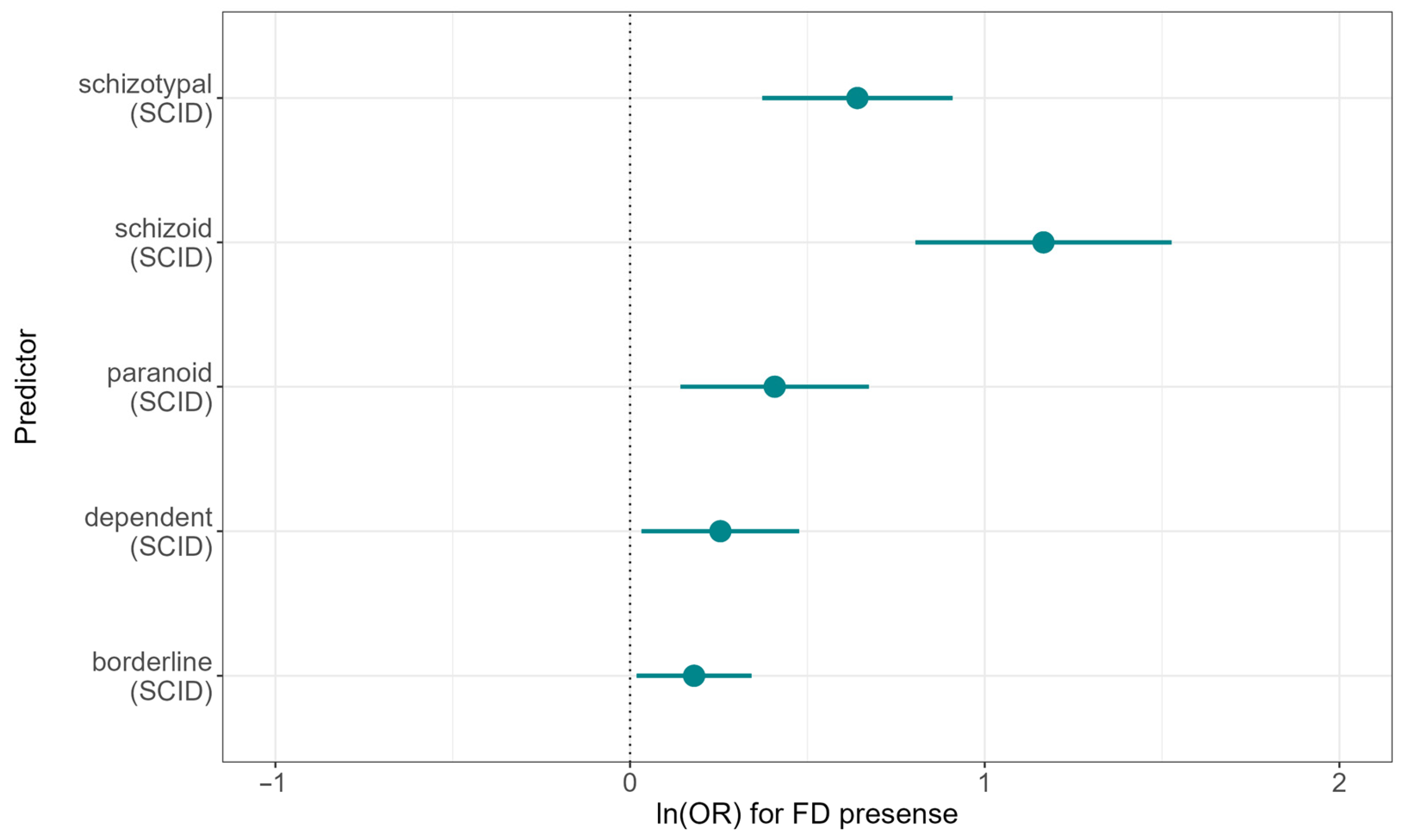
| Predictor (SCID) | Coefficient β | Standard Error β | Odds Ratio (OR) | p-Value |
|---|---|---|---|---|
| Dependent disorder | 0.25 | 0.11 | 1.29 | 0.025 |
| Paranoid disorder | 0.41 | 0.13 | 1.5 | 0.002 |
| Schizotypal disorder | 0.64 | 0.14 | 1.9 | <0.001 |
| Schizoid disorder | 1.17 | 0.18 | 3.2 | <0.001 |
| Borderline disorder | 0.18 | 0.08 | 1.2 | 0.029 |
| Factor | Idiopathic Dystonia, n = 178 | Functional Dystonia, n = 32 | p-Value |
|---|---|---|---|
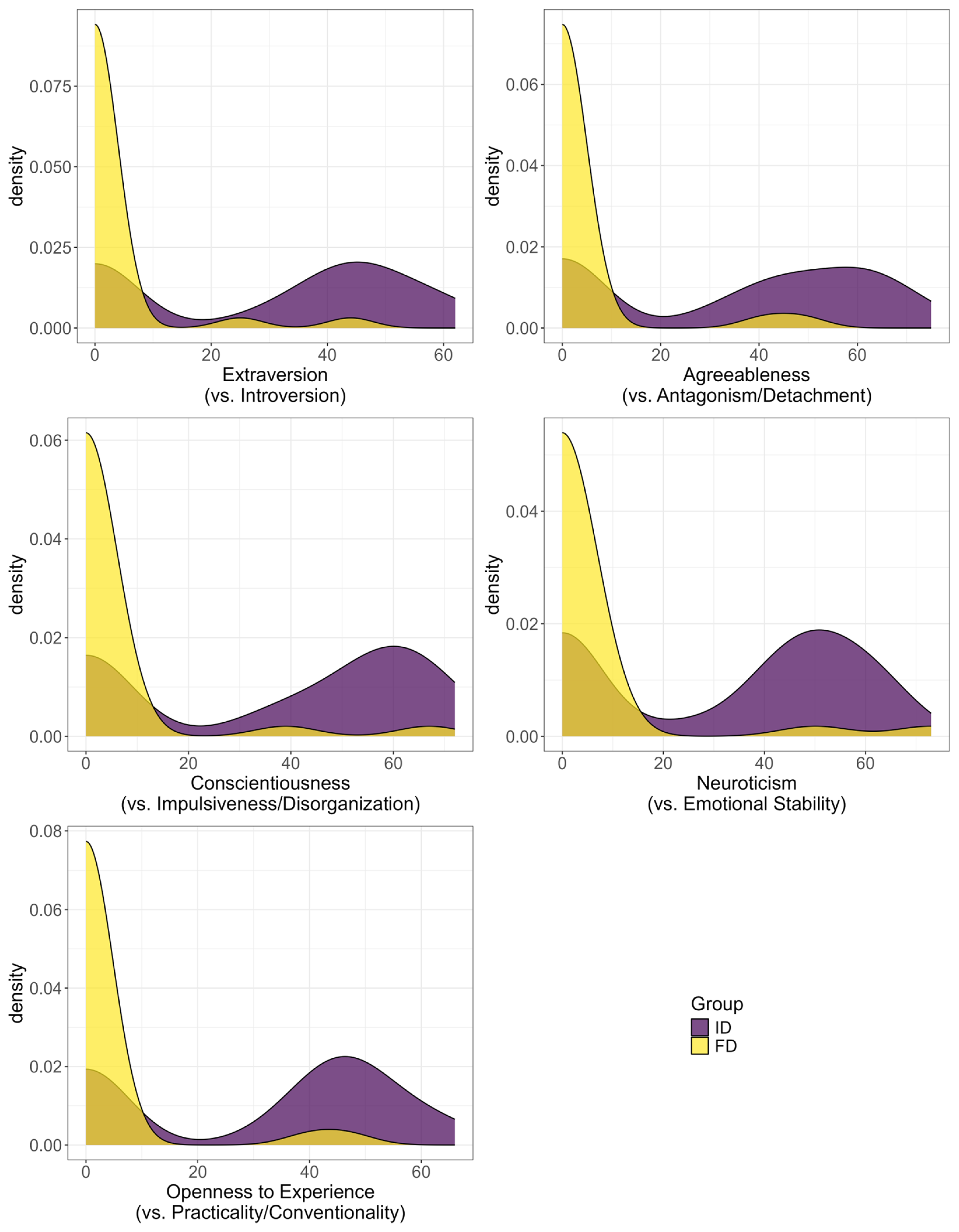
| Extraversion—introversion (higher values correspond to extraversion), M (sd) | 28.7 (23.6) | 2.1 (8.8) | <0.001 |
| Attachment—detachment (higher values correspond to attachment), M (sd) | 33.2 (27.6) | 2.8 (11.1) | <0.001 |
| Control—naturalness (higher values correspond to control), M (sd) | 35.2 (28.6) | 3.3 (13.5) | <0.001 |
| Emotionality—emotional restraint (higher values correspond to increased emotionality), M (sd) | 31 (25.6) | 3.8 (15.4) | <0.001 |
| Playfulness—practicality (higher values correspond to playfulness), M (sd) | 30.1 (24.4) | 2.7 (10.7) | <0.001 |
Disclaimer/Publisher’s Note: The statements, opinions and data contained in all publications are solely those of the individual author(s) and contributor(s) and not of MDPI and/or the editor(s). MDPI and/or the editor(s) disclaim responsibility for any injury to people or property resulting from any ideas, methods, instructions or products referred to in the content. |
© 2026 by the authors. Licensee MDPI, Basel, Switzerland. This article is an open access article distributed under the terms and conditions of the Creative Commons Attribution (CC BY) license.
Share and Cite
Tolmacheva, V.A.; Parfenov, V.A.; Romanov, D.V.; Spektor, E.D.; Volel, B.A.; Silina, E.V. Personality Disorders in Functional and Idiopathic Dystonia. J. Clin. Med. 2026, 15, 3544. https://doi.org/10.3390/jcm15093544
Tolmacheva VA, Parfenov VA, Romanov DV, Spektor ED, Volel BA, Silina EV. Personality Disorders in Functional and Idiopathic Dystonia. Journal of Clinical Medicine. 2026; 15(9):3544. https://doi.org/10.3390/jcm15093544
Chicago/Turabian StyleTolmacheva, Violetta Aleksandrovna, Vladimir Anatolyevich Parfenov, Dmitry Vladimirovich Romanov, Ekaterina Dmitrievna Spektor, Beatrisa Albertovna Volel, and Ekaterina Vladimirovna Silina. 2026. "Personality Disorders in Functional and Idiopathic Dystonia" Journal of Clinical Medicine 15, no. 9: 3544. https://doi.org/10.3390/jcm15093544
APA StyleTolmacheva, V. A., Parfenov, V. A., Romanov, D. V., Spektor, E. D., Volel, B. A., & Silina, E. V. (2026). Personality Disorders in Functional and Idiopathic Dystonia. Journal of Clinical Medicine, 15(9), 3544. https://doi.org/10.3390/jcm15093544