Review

SGLT2 Inhibitors in Clinical Practice: Cardiorenal Benefits and Risk of Fungal Infections—A Nephrologist’s Perspective

by
Wiktoria Andryszkiewicz
1,
Zuzanna Cichowska
1,
Maria Kręcicka
1 and
Sławomir Zmonarski
2,*
1
Faculty of Medicine, Wroclaw Medical University, 50-367 Wroclaw, Poland
2
Department of Nephrology, Transplantation Medicine and Internal Diseases, Wroclaw Medical University, 50-367 Wroclaw, Poland
*
Author to whom correspondence should be addressed.
J. Clin. Med. 2026, 15(9), 3395; https://doi.org/10.3390/jcm15093395
Submission received: 18 March 2026 / Revised: 12 April 2026 / Accepted: 28 April 2026 / Published: 29 April 2026
(This article belongs to the Section Nephrology & Urology)

Abstract

People affected by diabetes mellitus (DM), chronic kidney disease (CKD), or heart failure are often prescribed sodium–glucose cotransporter-2 inhibitors (SGLT2is) as a method of treatment. These drugs favorably affect glucose metabolism, as patients taking them have lower serum glucose levels. Another promising positive impact is protection against microvascular damage, cardiovascular disease, and chronic kidney disease. Nevertheless, fungal infections, urinary tract infections, and ketoacidosis are the adverse effects that might happen during the SGLT2i treatment. Fungal infections are more common among patients treated with these medications, including vulvovaginal Candidiasis in women and balanitis or balanoposthitis in men. Given the difficulty of treating fungal infections in patients with co-occurring diseases, we recommend that ongoing supervision of patients treated with SGLT2i include prevention and early detection of fungal infections.

1. Introduction

The range of clinical indications for sodium–glucose cotransporter type 2 inhibitors (SGLT2is) is steadily expanding. SGLT2is were originally used to lower glucose levels in patients with type 2 DM (DM2). Further trial evidence and clinical guideline updates have demonstrated their cardiovascular and renal benefits. This evidence led to the widespread use of SGLT2i [1,2,3,4,5]. Many indications for SGLT2i use encompass conditions that independently predispose to urogenital fungal infections. In general, people who are especially prone to fungal urinary tract infections (UTIs) include women with diabetes mellitus (DM), patients with urinary tract obstruction such as nephrolithiasis, and those with urinary tract devices such as Foley catheters and stents, as well as renal transplant recipients [6]. Symptomatic Candida infection, the most common, is more likely in female patients, diabetic patients, pregnant females, and individuals using hormonal contraceptives, antibiotics, or immunosuppressants [7]. Candida spp. can cause funguria, renal Candida, and Candida pyelonephritis [6]. Although genital fungal infections are seldom dangerous, they may significantly affect quality of life, especially in patients with comorbid conditions and functional impairments [8]. DM2 itself leads to various impairments, such as autonomic neuropathy, including diabetic bladder dysfunction and incomplete bladder emptying, which can lead to recurrent urinary tract infections, especially if glucose levels are not properly controlled [9,10,11]. Persistent glycosuria in DM patients makes them more susceptible to genital mycotic infections [12].
Physicians must understand the mechanism of action of SGLT2is and apply this knowledge to optimize patient outcomes while balancing the risk of adverse effects. SGLT2is in non-diabetic patients without hypoglycemia may lead to various adverse effects, such as hypotension secondary to excessive diuresis and natriuresis. [13]. SGLT2i use results in an average urinary glucose excretion of 40–80 g/d in patients without DM. In patients with present DM2, these values are usually higher [14]. The side effects, among others, include acute kidney injury (AKI), increased urination, urinary tract infection, and genital fungal infections. SGLT2i-related glycosuria predisposes to urogenital infections, which are more prevalent in females. The risk of vulvovaginal mycosis increases 2- to 4-fold in women, especially in those treated with dapagliflozin [12]. Glycosuria creates an environment favorable for the growth of numerous pathogens, especially Candida spp. Among them, Candida albicans can be distinguished by its ability to grow in a milieu opulent in glucose, which allows a glucose-activated protein to enhance adhesion and hinder phagocytosis by the immune system [8,15,16,17].

2. Materials and Methods

2.1. Search Strategy

This manuscript is a narrative review. A literature search was conducted on databases such as PubMed, Scopus, and Web of Science. The search included studies published in English, using keywords such as: “SGLT2 inhibitors”, “fungal infections”, “candidiasis”, “urinary tract infections”, and “chronic kidney disease”.

2.2. Inclusion and Exclusion Criteria

Studies were included if they addressed the use of SGLT2 inhibitors in relation to fungal and genitourinary infections, as well as cardiorenal benefits. We considered randomized controlled trials, observational studies, meta-analyses, clinical guidelines, and relevant English-language review articles. Studies not directly relevant to the scope of this review and lacking clinical significance were excluded.

2.3. Literature Selection

Priority was given to recent publications, particularly from the last 5–10 years, although older studies were included when considered clinically or scientifically relevant. Key studies were included where necessary to provide essential background and context. Both randomized controlled trials and observational studies, as well as review articles, were analyzed. The selection of articles was based on their relevance to the topic, methodological quality, and contribution to understanding the relationship between SGLT2 inhibitors and fungal infections.

3. Mycotic Infection in a Patient Treated with SGLT2is—Prevalence, Diagnostic and Therapeutic Pathway, and Prognosis

3.1. Prevalence of SGLT2i-Related Mycotic Infections and Clinics

In general, according to various studies, the prevalence of urogenital infections varies slightly across studies [18]. In a study from August 2020, 7.8% patients with DM2 experienced a genitourinary infection, with 98% occurring within the first few months of treatment [7]. In another study, empagliflozin had the highest number of reported fungal infections, followed by canagliflozin and dapagliflozin. Ertugliflozin showed the lowest rate [9]. Combined therapy with SGLT2is and metformin may reduce the risk of UTIs and fungal infections [9]. In some SGLT2is (dapagliflozin), the risk of UTI is dose-related in both sexes [7,13]. The flozin-related UTI may develop within the first month of therapy and continue throughout. A notably higher likelihood was found after using canagliflozin, ertugliflozin, empagliflozin, remogliflozin, dapagliflozin, and sotagliflozin, whereas no such effects were observed with the use of luseogliflozin and ipragliflozin [8,15,17].
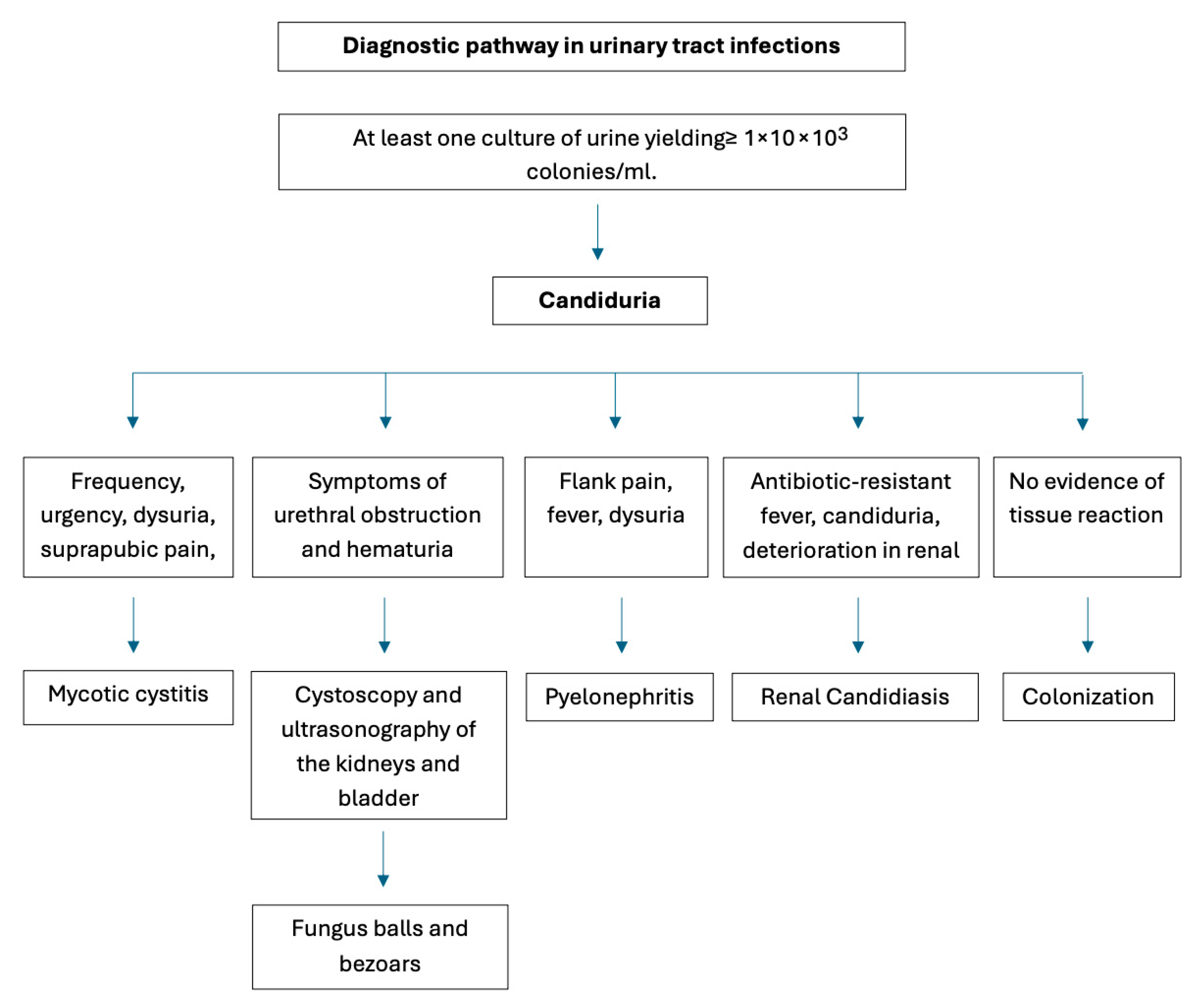
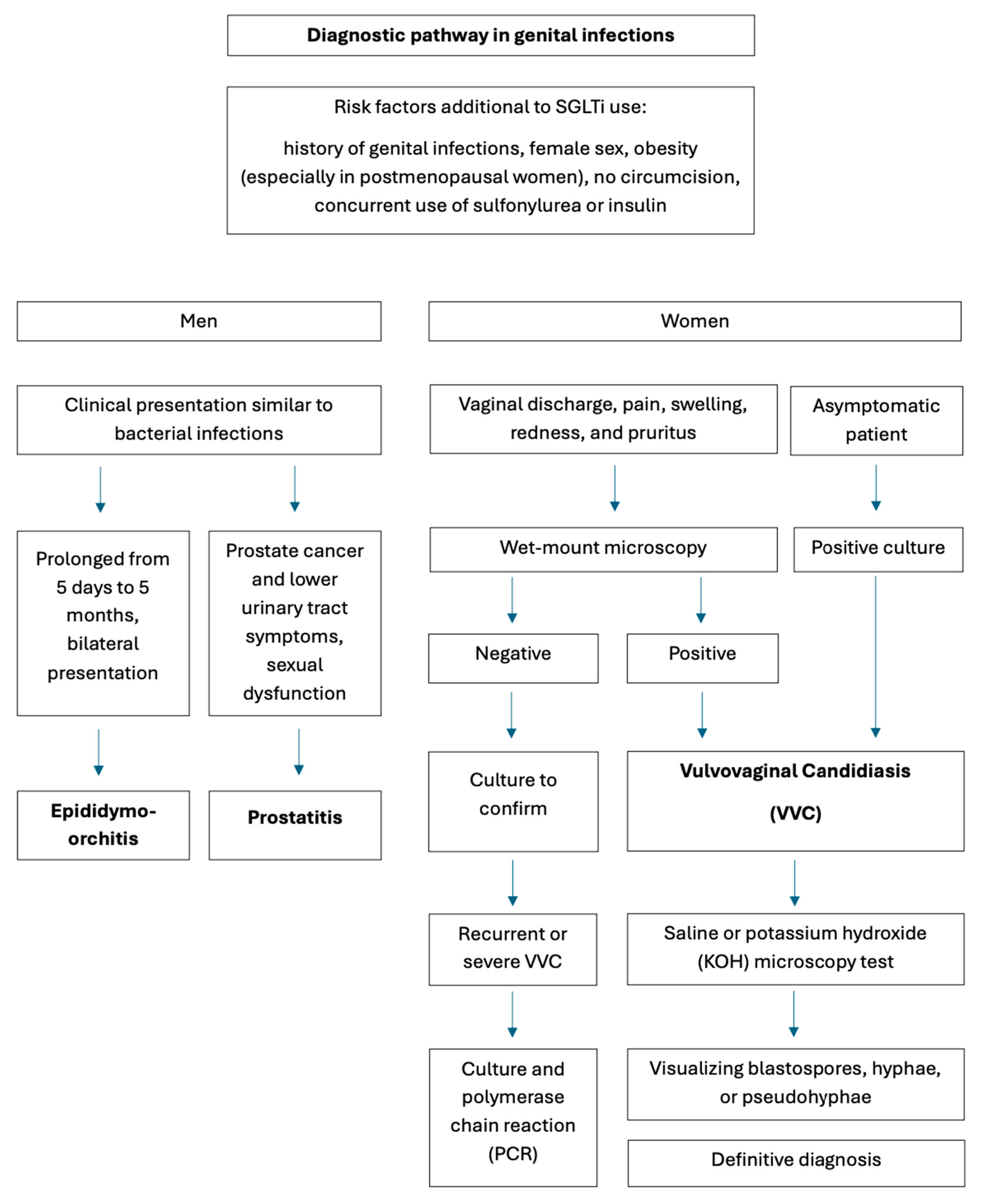
In cases of urinary tract infections, most patients with candiduria are asymptomatic. Mycotic cystitis or pyelonephritis may cause non-specific symptoms. However, it might cause antibiotic-resistant fever. In poorly controlled DM, pneumaturia, fungus balls, and bezoars may be present, and urethral obstruction symptoms are expected. Cystoscopy and ultrasonography of the kidneys and bladder are helpful [16,19]. Among various trials involving SGLT2is, genital infections continue to be the most consistent finding. They are more common in females, in which case the manifestation is vulvovaginal infection. In males, it is balanitis or balanoposthitis [12]. According to a study from August 2018, canagliflozin was associated with a significantly higher risk of genital mycotic infections compared to sitagliptin [20]. Prostatitis and epididymo-orchitis with Candida etiology may present clinically similarly to bacterial infections. In epididymo-orchitis, the symptoms tend to be prolonged from 5 days to 5 months and are usually bilateral. Candida prostatitis can mimic prostate cancer and cause lower urinary tract symptoms; it can also coexist with prostate cancer and sexual dysfunction, but rarely presents with acute abscess [19].

3.2. Diagnostic Pathway

There is no standardized definition of candiduria. Separate urine Candida colony counts do not enable differentiation between contamination, colonization, and infection. The laboratory methods available are microscopic examination (310 leukocytes/mm3) or the leukocyte esterase test. The growth of at least one culture of urine yielding ≥1 × 10³ colonies/mL indicates candiduria [11,19]. Differentiation between colonization and infection requires evidence of tissue reaction. Blood cultures for Candida are often negative [16].
The diagnosis of vulvovaginal Candidiasis (VVC) is challenging because its symptoms are not characteristic of a mycotic etiology and may resemble those of common bacterial vaginosis or trichomoniasis. Therefore, clinical diagnosis is unreliable and should be confirmed by testing, such as wet-mount microscopy, potassium hydroxide test, vaginal pH test, culture, or polymerase chain reaction (PCR). According to guidelines, all women presenting with VVC symptoms should have wet mount microscopy followed by culture if results are negative. In severe or recurrent VVC, culture and PCR are recommended [21]. Visualization of blastospores, hyphae, or pseudohyphae on saline or potassium hydroxide (KOH) microscopy is the definitive diagnosis of VVC, or a positive culture in a symptomatic patient. Wet-mount microscopy excludes the presence of clue cells, indicating bacterial etiology or motile trichomonads. However, microscopy sensitivity is poor; as many as half of patients with culture-positive symptomatic VVC have negative microscopy results, especially in cases of Candida glabrata infection [22]. Risk factors other than SGLT2is include a history of genital infections, obesity (especially in postmenopausal women), uncircumcised men, concurrent use of sulfonylurea or insulin, and make patients more susceptible to fungal GUI. For such patients, screening for infections should be part of every appointment [12]. In Figure 1 and Figure 2, an example of a diagnostic pathway for mycotic infections is shown [15,20].

3.3. Management of SGLT2i-Related Urogenital Mycotic Infections and Prognosis

The cornerstone of effective therapy is tailoring it to each patient’s circumstances and achieving better glycemic control [22]. Patients with volume depletion should be closely monitored, and the drug dose adjusted, especially in those with high-risk factors. In case of diabetic ketoacidosis and hypoglycemia, patients require education about the symptoms, as it enables early recognition. These patients need blood monitoring and insulin, if required [23].
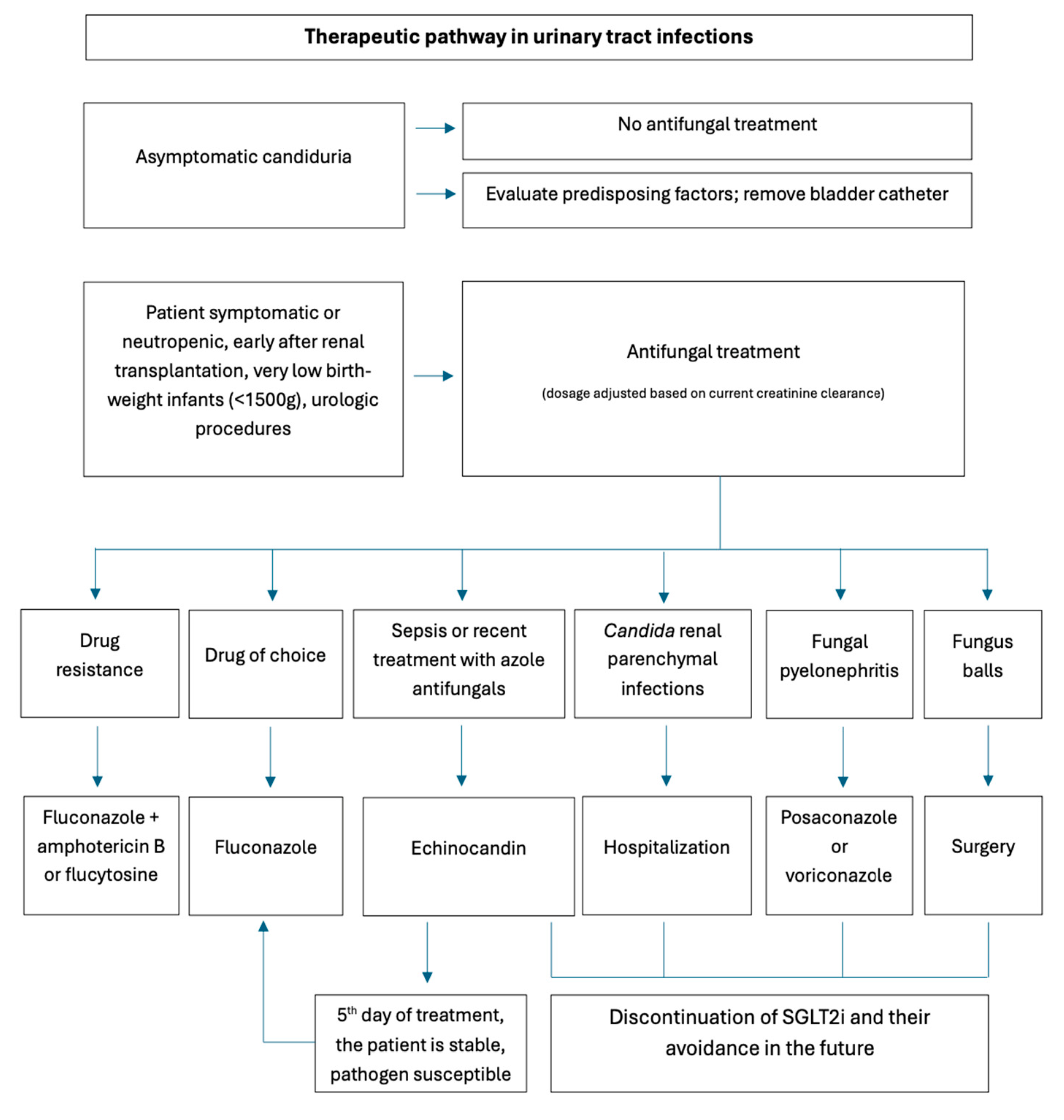
Persistent candiduria in an asymptomatic patient is a sign to evaluate possible predisposing factors, such as a bladder catheter, the removal of which is usually a sufficient treatment. Antifungal treatments are recommended if the patient is symptomatic or neutropenic, early after renal transplantation, in cases of very low birth-weight infants (<1500 g), and if the patient is undergoing urologic procedures. Later, after renal transplants, treatment of asymptomatic candiduria is not recommended. In treating symptomatic patients, fluconazole is the drug of choice, especially given its high renal excretion (up to 80% of the dose). However, it poses the risk of interactions, liver toxicity, QT interval prolongation, Candida glabrata resistance, and Candida krusei. Drug resistance poses a significant clinical challenge; the choice of antifungal agent should be guided by susceptibility testing and consultation with an infectious disease specialist. A combination of antifungal drugs and rotating therapies may be implemented to manage resistant infections. In such cases, amphotericin B or flucytosine is often added [15,16,19].
An essential factor to consider is the level at which the drug is excreted into urine. Unlike fluconazole, other antifungals do not reach high concentrations in urine and are not recommended for treating cystitis. However, posaconazole and voriconazole concentrate well in kidney tissue and can be effective treatment choices for Candida renal parenchymal infections [19]. Patients with fungal pyelonephritis need to be hospitalized. In cases involving fungus balls, surgical treatment is necessary. These severe conditions require the discontinuation of SGLT2is and their avoidance in the future [24]. In terms of dosages, the following apply: for cystitis, fluconazole 200 mg orally once daily; for pyelonephritis, 200–400 mg orally once daily. If the pyelonephritis is resistant, flucytosine 25 mg/kg orally 4 times a day is added. The dosage needs to be adjusted based on the current creatinine clearance [16]. When candiduria is accompanied by candidemia, the patient’s hemodynamic status should be evaluated. If the patient is septic or has recently received azole antifungals, echinocandins are the drugs of choice. It can be replaced with fluconazole on the fifth day of treatment, provided the pathogen is susceptible, and the patient is stable.
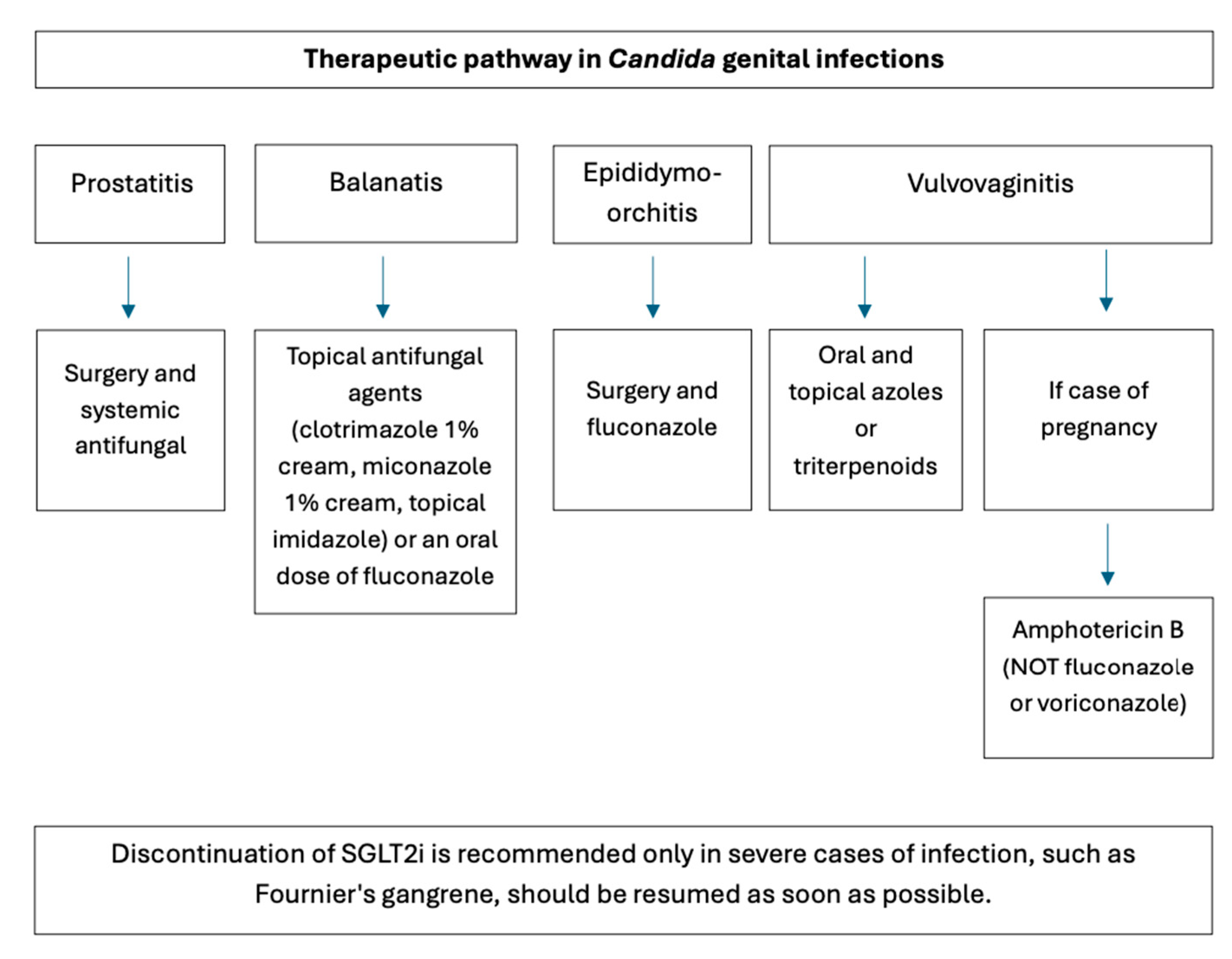
The incidence of genital infections is significantly reduced by reinforcing perineal hygiene, and prompt treatment is associated with better outcomes. Therefore, a high index of clinical suspicion is warranted during the first 3–6 months of SGLT2i therapy. For treating Candida balanitis, no studies on patients receiving SGLT2is have shown a superiority of any specific topical or oral regimen [15]. Achieving reasonable glucose control is the foundation for successful clinical management of Candida balanitis [22]. Topical antifungal agents (clotrimazole 1% cream, miconazole 1% cream, topical imidazoles) or an oral dose of fluconazole are first-line treatments and should be discussed with the patient. Testing for Candida and empiric treatment should be offered to female sexual partners of the patient with balanitis [15,25]. Candida prostatitis requires both a surgical and systemic antifungal approach. Epididymo-orchitis is usually treated with surgical intervention and fluconazole [26]. In Candida vulvovaginitis, if uncomplicated, it can be treated with oral and topical azoles or triterpenoids [15]. Vaginal Candidiasis has a higher incidence in pregnant women than in non-pregnant women. The number of antifungal agents considered safe during pregnancy is limited. Amphotericin B can be used to treat invasive fungal infections. Fluconazole may be very harmful to the fetus and cause spontaneous abortions. Voriconazole is also teratogenic [19].
According to the UK Kidney Association Clinical Practice Guideline, SGLT2is should be temporarily discontinued when treating acute pyelonephritis or urosepsis and stopped for patients being counseled on the symptoms of Fournier’s gangrene. It also states that SGLT2i therapy can be continued during treatment of mycotic genital infections, and patients with a history of recurrent mycotic genital infections could be given prophylactic antifungal treatment [27].

3.4. Prognosis

Discontinuation of SGLT2is is recommended only in severe cases of infection. It should be resumed as soon as possible, as its benefits can be lost within a few weeks, and it can pose cardiorenal risk [15]. Patients receiving SGLT2is should be offered care plans including strategies to reduce the risk of genital Candidiasis. Effective management of genital mycotic infections can help prevent unnecessary discontinuation of SGLT2i therapy (Figure 3 and Figure 4) [7]. To conclude, the overall prognosis is generally good; infections are usually mild to moderate, respond to standard antifungal therapy, and rarely require discontinuation of the SGLT2i [18].

4. Conclusions and Summary

SGLT2is are drugs used to treat an expanding spectrum of conditions, such as DM2, CKD, or heart failure. Despite the numerous benefits of treating these disorders, our review shows that susceptibility to fungal infections is increased in patients using SGLT2is. Moreover, fungal infections are more frequently reported in female patients than in male patients. In general, the overall prognosis is good; the infections are usually mild to moderate, respond to standard antifungal therapy, and rarely require discontinuation of the SGLT2is. The overall benefit-risk balance remains clearly favorable. But, given the challenges of treating fungal infections in patients with co-occurring diseases, we recommend that ongoing patient supervision for SGLT2i-treated patients include prevention and early detection. Nevertheless, it is very important to remember that aside from an increased chance of developing mycotic infections, other serious complications may occur, endangering the patient’s life and resulting in severe health problems. Because of that, SGLT2i administrations must be strictly controlled. Patients are advised to receive specific strategies and proper recommendations about genital hygiene, diet, lifestyle, drug administration, and risk factors to avoid further complications. Each decision to use drugs from the SGLT2i group ought to be made with caution and taken into consideration, considering whether the risk and potential complications do not exceed the benefits of their use.

Author Contributions

W.A.—research concept and design, literature review, preparation, writing. Z.C.—research concept and design, literature review, preparation, writing. M.K.—research concept and design, literature review, preparation, writing. S.Z. editing, final proofreading, and approval of the version for publication, founding acquisition. Authors 1–3 contributed equally to this work and shared first authorship. All authors have read and agreed to the published version of the manuscript.

Funding

This research received no external funding.

Institutional Review Board Statement

Not applicable.

Informed Consent Statement

Not applicable.

Data Availability Statement

The original contributions presented in this study are included in the article. Further inquiries can be directed to the corresponding author.

Conflicts of Interest

The authors declare no conflicts of interest.

References

  1. Fernández-Fernandez, B.; Sarafidis, P.; Soler, M.J.; Ortiz, A. EMPA-KIDNEY: Expanding the Range of Kidney Protection by SGLT2 Inhibitors. Clin. Kidney J. 2023, 16, 1187–1198. [Google Scholar] [CrossRef] [PubMed]
  2. Chewcharat, A.; Prasitlumkum, N.; Thongprayoon, C.; Bathini, T.; Medaura, J.; Vallabhajosyula, S.; Cheungpasitporn, W. Efficacy and Safety of SGLT-2 Inhibitors for Treatment of Diabetes Mellitus among Kidney Transplant Patients: A Systematic Review and Meta-Analysis. Med. Sci. 2020, 8, 47. [Google Scholar] [CrossRef]
  3. Di Costanzo, A.; Esposito, G.; Indolfi, C.; Spaccarotella, C.A.M. SGLT2 Inhibitors: A New Therapeutical Strategy to Improve Clinical Outcomes in Patients with Chronic Kidney Diseases. Int. J. Mol. Sci. 2023, 24, 8732. [Google Scholar] [CrossRef]
  4. Jabbour, S.A.; Ibrahim, N.E.; Argyropoulos, C.P. Physicians’ Considerations and Practice Recommendations Regarding the Use of Sodium-Glucose Cotransporter-2 Inhibitors. J. Clin. Med. 2022, 11, 6051. [Google Scholar] [CrossRef]
  5. Neuen, B.L.; Cherney, D.Z.; Jardine, M.J.; Perkovic, V. Sodium-Glucose Cotransporter Inhibitors in Type 2 Diabetes: Thinking beyond Glucose Lowering. CMAJ 2019, 191, E1128–E1135. [Google Scholar] [CrossRef]
  6. Sobel, J.D.; Vazquez, J.A. Fungal Infections of the Urinary Tract. World J. Urol. 1999, 17, 410–414. [Google Scholar] [CrossRef]
  7. Engelhardt, K.; Ferguson, M.; Rosselli, J.L. Prevention and Management of Genital Mycotic Infections in the Setting of Sodium-Glucose Cotransporter 2 Inhibitors. Ann. Pharmacother. 2021, 55, 543–548. [Google Scholar] [CrossRef]
  8. Lega, I.C.; Bronskill, S.E.; Campitelli, M.A.; Guan, J.; Stall, N.M.; Lam, K.; McCarthy, L.M.; Gruneir, A.; Rochon, P.A. Sodium Glucose Cotransporter 2 Inhibitors and Risk of Genital Mycotic and Urinary Tract Infection: A Population-Based Study of Older Women and Men with Diabetes. Diabetes Obes. Metab. 2019, 21, 2394–2404. [Google Scholar] [CrossRef]
  9. Aksoyalp, Z.Ş. Urinary Tract Infections and Fungal Infections Associated with SGLT-2 Inhibitors and Metformin Combination: A Real-World Study from 2013 to 2023 Based on FAERS Database. J. Clin. Pract. Res. 2024, 46, 282–289. [Google Scholar] [CrossRef] [PubMed]
  10. Agochukwu-Mmonu, N.; Pop-Busui, R.; Wessells, H.; Sarma, A.V. Autonomic Neuropathy and Urologic Complications in Diabetes. Auton. Neurosci. 2020, 229, 102736. [Google Scholar] [CrossRef] [PubMed]
  11. Nitzan, O.; Elias, M.; Chazan, B.; Saliba, W. Urinary Tract Infections in Patients with Type 2 Diabetes Mellitus: Review of Prevalence, Diagnosis, and Management. Diabetes Metab. Syndr. Obes. 2015, 8, 129. [Google Scholar] [CrossRef] [PubMed]
  12. Thong, K.Y.; Yadagiri, M.; Barnes, D.J.; Morris, D.S.; Chowdhury, T.A.; Chuah, L.L.; Robinson, A.M.; Bain, S.C.; Adamson, K.A.; Ryder, R.E.J. Clinical Risk Factors Predicting Genital Fungal Infections with Sodium–Glucose Cotransporter 2 Inhibitor Treatment: The ABCD Nationwide Dapagliflozin Audit. Prim. Care Diabetes 2018, 12, 45–50. [Google Scholar] [CrossRef]
  13. Abdelrahman, A.M.; Awad, A.S.; Abdel-Rahman, E.M. Sodium-Glucose Co-Transporter 2 Inhibitors: Mechanism of Action and Efficacy in Non-Diabetic Kidney Disease from Bench to Bed-Side. J. Clin. Med. 2024, 13, 956. [Google Scholar] [CrossRef]
  14. Kittipibul, V.; Cox, Z.L.; Chesdachai, S.; Fiuzat, M.; Lindenfeld, J.; Mentz, R.J. Genitourinary Tract Infections in Patients Taking SGLT2 Inhibitors. J. Am. Coll. Cardiol. 2024, 83, 1568–1578. [Google Scholar] [CrossRef]
  15. Gorgojo-Martínez, J.J.; Górriz, J.L.; Cebrián-Cuenca, A.; Castro Conde, A.; Velasco Arribas, M. Clinical Recommendations for Managing Genitourinary Adverse Effects in Patients Treated with SGLT-2 Inhibitors: A Multidisciplinary Expert Consensus. J. Clin. Med. 2024, 13, 6509. [Google Scholar] [CrossRef]
  16. Imam, T.H. Fungal Urinary Tract Infections-Genitourinary Disorders-MSD Manual Professional Edition. Available online: https://www.msdmanuals.com/professional/genitourinary-disorders/urinary-tract-infections-utis/fungal-urinary-tract-infections (accessed on 6 March 2025).
  17. Li, C.X.; Liu, L.Y.; Zhang, C.X.; Geng, X.H.; Gu, S.M.; Wang, Y.Q.; Liu, H.; Xie, Q.; Liang, S. Comparative Safety of Different Sodium-Glucose Transporter 2 Inhibitors in Patients with Type 2 Diabetes: A Systematic Review and Network Meta-Analysis of Randomized Controlled Trials. Front. Endocrinol. 2023, 14, 1238399. [Google Scholar] [CrossRef] [PubMed]
  18. Confederat, L.-G.; Dragostin, O.-M.; Condurache, M.-I. SGLT2 Inhibitors and the Risk of Urogenital Infections: A Concise Review. J. Clin. Med. 2025, 14, 1960. [Google Scholar] [CrossRef]
  19. Odabasi, Z.; Mert, A. Candida Urinary Tract Infections in Adults. World J. Urol. 2020, 38, 2699–2707. [Google Scholar] [CrossRef]
  20. Bundhun, P.K.; Huang, F. Adverse Drug Events Associated with Sitagliptin Versus Canagliflozin for the Treatment of Patients with Type 2 Diabetes Mellitus: A Systematic Comparison Through a Meta-Analysis. Diabetes Ther. 2018, 9, 1883–1895. [Google Scholar] [CrossRef] [PubMed]
  21. Benedict, K.; Lyman, M.; Jackson, B.R. Possible Misdiagnosis, Inappropriate Empiric Treatment, and Opportunities for Increased Diagnostic Testing for Patients with Vulvovaginal Candidiasis—United States, 2018. PLoS ONE 2022, 17, e0267866. [Google Scholar] [CrossRef]
  22. Nyirjesy, P.; Sobel, J.D. Genital Mycotic Infections in Patients With Diabetes. Postgrad. Med. 2013, 125, 33–46. [Google Scholar] [CrossRef]
  23. de Boer, I.H.; Khunti, K.; Sadusky, T.; Tuttle, K.R.; Neumiller, J.J.; Rhee, C.M.; Rosas, S.E.; Rossing, P.; Bakris, G. Diabetes Management in Chronic Kidney Disease: A Consensus Report by the American Diabetes Association (ADA) and Kidney Disease: Improving Global Outcomes (KDIGO). Diabetes Care 2022, 45, 3075. [Google Scholar] [CrossRef] [PubMed]
  24. Cherney, D.Z.I.; Dekkers, C.C.J.; Barbour, S.J.; Cattran, D.; Abdul Gafor, A.H.; Greasley, P.J.; Laverman, G.D.; Lim, S.K.; Di Tanna, G.L.; Reich, H.N.; et al. Effects of the SGLT2 Inhibitor Dapagliflozin on Proteinuria in Non-Diabetic Patients with Chronic Kidney Disease (DIAMOND): A Randomised, Double-Blind, Crossover Trial. Lancet Diabetes Endocrinol. 2020, 8, 582–593. [Google Scholar] [CrossRef] [PubMed]
  25. Vallabhaneni, S.; Mody, R.K.; Walker, T.; Chiller, T. The Global Burden of Fungal Diseases. Infect. Dis. Clin. N. Am. 2016, 30, 1–11. [Google Scholar] [CrossRef]
  26. Wisplinghoff, H.; Bischoff, T.; Tallent, S.M.; Seifert, H.; Wenzel, R.P.; Edmond, M.B. Nosocomial Bloodstream Infections in US Hospitals: Analysis of 24,179 Cases from a Prospective Nationwide Surveillance Study. Clin. Infect. Dis. 2004, 39, 309–317. [Google Scholar] [CrossRef]
  27. Roddick, A.J.; Wonnacott, A.; Webb, D.; Watt, A.; Watson, M.A.; Staplin, N.; Riding, A.; Lioudaki, E.; Kuverji, A.; El Kossi, M.; et al. UK Kidney Association Clinical Practice Guideline: Sodium-Glucose Co-Transporter-2 (SGLT-2) Inhibition in Adults with Kidney Disease 2023 UPDATE. BMC Nephrol. 2023, 24, 310. [Google Scholar] [CrossRef] [PubMed]
Figure 1. Suggested diagnostic pathway for identifying fungal urinary tract infections (authors’ original work).
Jcm 15 03395 g001
Figure 2. Suggested diagnostic pathway for identifying genital fungal infections (authors’ original work).
Jcm 15 03395 g002
Figure 3. Clinical recommendations for managing urinary tract infections in patients treated with SGLT2is (authors’ original work).
Jcm 15 03395 g003
Figure 4. Clinical recommendations for managing Candida genital mycotic infections in patients treated with SGLT2is (authors’ original work).
Jcm 15 03395 g004
Disclaimer/Publisher’s Note: The statements, opinions and data contained in all publications are solely those of the individual author(s) and contributor(s) and not of MDPI and/or the editor(s). MDPI and/or the editor(s) disclaim responsibility for any injury to people or property resulting from any ideas, methods, instructions or products referred to in the content.