Can Resistance Training Prevent Breast Cancer-Related Lymphedema? A Systematic Review with Meta-Analysis
 , , , , , , ,
Abstract
1. Introduction
2. Materials and Methods
2.1. Protocol and Registration
2.2. Selection Criteria
Type of Studies
2.3. Type of Participants or Populations of Interest
2.4. Type of Interventions
2.5. Comparators
2.6. Type of Outcomes
2.6.1. Primary Outcomes
- Occurrence of lymphedema: Considered as a dichotomous outcome (presence or absence of the event) or continuous outcome (volume or percentage change in the volume of the affected arm), according to the reports of the included studies. Only studies that used objective and predefined diagnostic criteria to determine the presence of lymphedema were accepted. Accepted methods included circumference measurement, water displacement, electrical bioimpedance, laser scanning, perimetry, or dual-energy X-ray absorptiometry (DEXA). Studies based solely on clinical judgment, without objective measurements or participants’ self-reports, were excluded.
- Quality of life (QoL): Assessed using validated self-administered instruments, both generic and specific, such as the EORTC QLQ-C30 questionnaire or other internationally recognized scales.
2.6.2. Secondary Outcomes
- Pain intensity: Measured using validated scales, such as the Visual Analog Scale (VAS).
- Upper limb function: Assessed using tools such as the Disabilities of the Arm, Shoulder, and Hand (DASH) questionnaire.
- Range of motion (ROM): Determined using goniometry or other validated measuring instruments.
- Grip strength: Assessed using dynamometry.
- Adverse events: Defined as an increase in lymphedema volume, the onset of pain related to the intervention, etc.
2.7. Duration of Follow-Up
2.8. Information and Search Sources
Search Strategy
2.9. Data Collection and Analysis
Selection of Studies
2.10. Data Extraction and Management
2.11. Assessment of Risk of Bias
2.12. Addressing Missing Data
2.13. Estimation of the Treatment Effect
2.14. Assessment of Heterogeneity
2.15. Assessment of Publication Biases
2.16. Data Synthesis
2.17. Subgroup Analysis and Investigation of Heterogeneity
2.18. Sensitivity Analysis
- For overall QoL (>6 weeks), we compared SMD versus MD because the included studies used different validated instruments to assess this outcome, and this analysis allowed us to examine whether the findings were sensitive to the choice of effect measure.
- We assessed the influence of lymphedema diagnostic criteria (≥10%, ≥5–10% excluding >3%, and all criteria combined) because the included studies applied different thresholds to define lymphedema, which could contribute to heterogeneity in the pooled estimates.
- We excluded studies with a high risk of bias to explore the stability of the findings after removing methodologically weaker evidence. In addition, because one of these studies included a very small proportion of participants with baseline lymphedema (<2%), this analysis also allowed us to explore the potential influence of that trial on the overall direction of the findings.
2.19. Summary of Findings Table
2.20. Use of Generative AI
3. Results
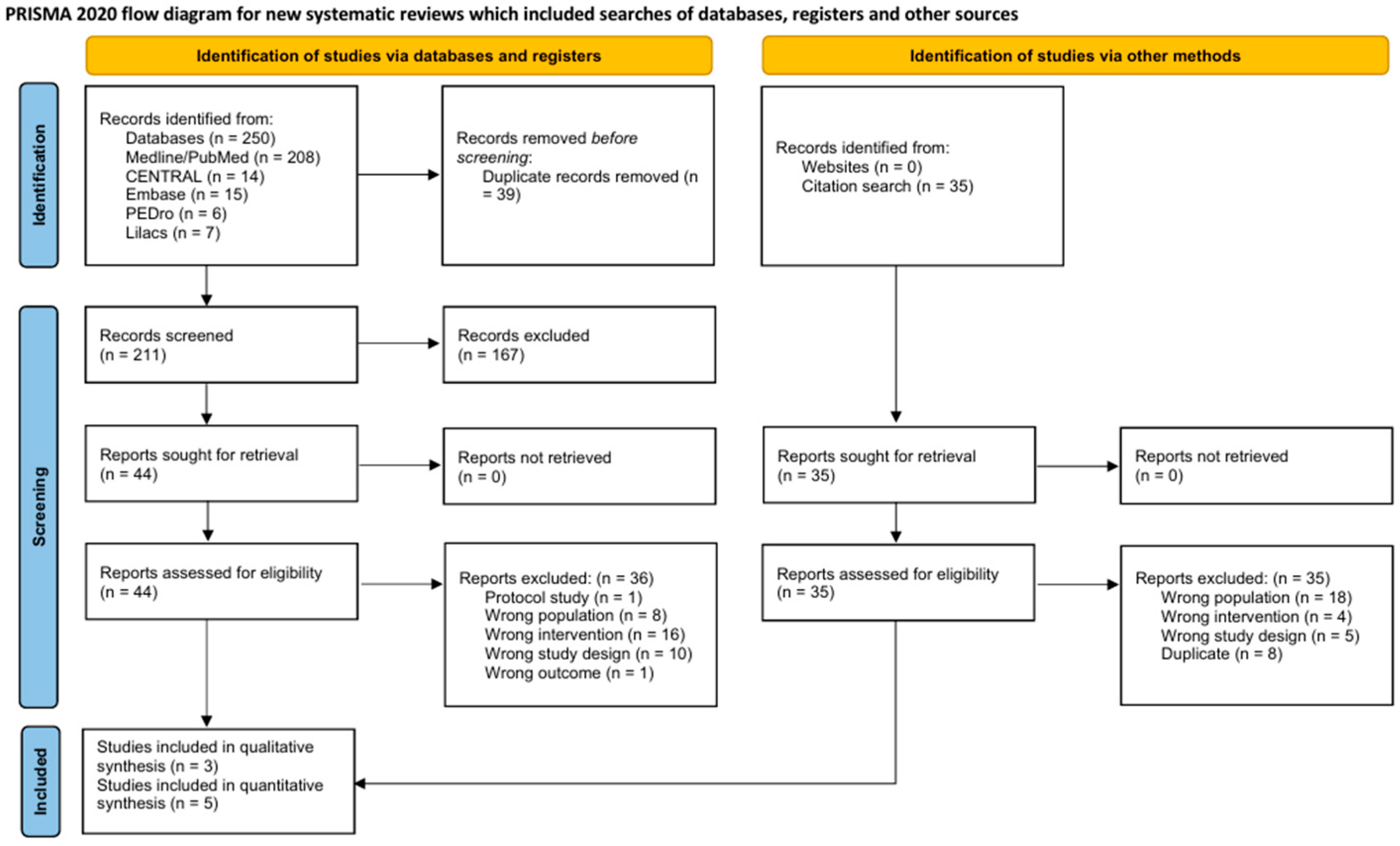
3.1. Study Selection
3.2. Characteristics of the Included Studies
3.3. Interventions and Comparisons
3.4. Outcomes
3.4.1. Primary Outcome: Occurrence of Lymphedema
3.4.2. Primary Outcome: Overall Quality of Life (QoL)
3.4.3. Secondary Outcome
3.5. Risk of Bias in the Included Studies
3.6. Effects of Interventions
3.6.1. Comparison 1 Resistance Training (RT) Versus Activity Restriction
- Occurrence of lymphedema (>6 weeks): The effect of RT on the occurrence of lymphedema remains uncertain (RR = 1.04; 95% CI: 0.51 to 2.09; one RCT [48], 204 participants, very low CoE) (see Supplementary Materials S7).
- Arm volume (>6 weeks): The effect of RT on arm volume remains uncertain (MD = −30.00; 95% CI: −73.64 to 13.64; one RCT [48], 204 participants, very low CoE) (see Supplementary Materials S7).
- Pain (>6 weeks): Evidence is inconclusive regarding the effect of RT on pain (one RCT [48], 204 participants, very low CoE). The available data were reported descriptively and suggested that RT could increase pain at 6 months, although no differences were observed at 24 months (see Supplementary Materials S7).
- Adverse events: One RCT [48] with 204 participants reported three musculoskeletal events in the RT group: two cases of adhesive capsulitis (one possibly pre-existing) and one case of supraspinatus tendinopathy. No adverse events were reported in the comparison group.
3.6.2. Comparison 2 Resistance Training (RT) Versus Usual Care/No Structured Exercise
- Occurrence of lymphedema (>3 weeks to 6 weeks): The effect of RT on the occurrence of lymphedema remains uncertain (RR = 0.50; 95% CI: 0.13 to 1.93; one RCT [24], 164 participants, very low CoE) (see Supplementary Materials S8).
- Occurrence of lymphedema (>6 weeks): The effect of RT on the occurrence of lymphedema remains uncertain (RR = 0.92; 95% CI: 0.53 to 1.61; three RCTs [26,43,46], 452 participants, very low CoE) (see Supplementary Materials S8).
- Arm volume (>6 weeks): Evidence is inconclusive regarding the effect of RT on arm volume (one RCT [44], 82 participants, very low CoE). The RT group showed a smaller increase in arm volume than the usual care group (+27.3 mL vs. +57.4 mL), but the difference was not statistically significant (p = 0.535) (see Supplementary Materials S8).
- Overall quality of life (>6 weeks): The effect of RT on overall quality of life remains uncertain (SMD = 0.25; 95% CI: −0.60 to 1.09; two RCTs [44,47], 131 participants, very low CoE). Descriptive findings from one additional RCT [46] with 60 participants suggested that RT may not have a significant effect (MD = −2.9; 95% CI: −7.0 to 2.1; moderate CoE) (see Supplementary Materials S8).
Secondary Outcomes
- Shoulder flexion (>6 weeks): Three RCTs [43,45,46] with 331 participants evaluated this outcome. RT may not have a significant effect on shoulder flexion (MD = −1.00; 95% CI: −5.64 to 3.64; one RCT [43], 130 participants, low CoE). Descriptive findings from two additional RCTs also suggested no significant effect (MD = 1.9; 95% CI: −4.5 to 8.2; RCT [45], 141 participants, very low CoE; MD = −2.0; 95% CI: −8.3 to 4.4; RCT [47], 60 participants, low CoE) (see Supplementary Materials S8).
- Shoulder abduction (>6 weeks): Two RCTs [43,46] with 271 participants evaluated this outcome. RT may not have a significant effect on shoulder abduction (MD = −2.00; 95% CI: −11.86 to 7.86; one RCT [43], 130 participants, very low CoE). Descriptive findings from one additional RCT [46] with 141 participants suggested a greater increase in shoulder abduction in the RT group (MD = 10.0; 95% CI: 3.6 to 16.5; very low CoE) (see Supplementary Materials S8).
- External shoulder rotation (>6 weeks): Two RCTs [43,46] with 281 participants evaluated this outcome. The evidence is very uncertain about the effect of RT on external shoulder rotation (MD = 1.00; 95% CI: −5.02 to 7.02; one RCT [43], 130 participants; very low CoE). Descriptive findings from one additional RCT [46] with 151 participants also suggested no clear differences between groups (MD = −1.2; 95% CI: −6.2 to 3.8; very low CoE) (see Supplementary Materials S8).
- Pain (>6 weeks): RT may not have a significant effect on pain (one RCT [45], 60 participants, moderate CoE). Descriptive findings indicated no significant differences between groups, with a similar distribution of pain scores; however, the absence of point estimates and confidence intervals limits interpretation (see Supplementary Materials S8).
- Grip strength (>6 weeks): RT may not have a clinically relevant effect on grip strength (MD = 0.2; 95% CI: −1.3 to 1.6; one RCT [45], 60 participants, low CoE) (see Supplementary Materials S8).
- Adverse events: Six studies reported adverse events with RT [24,26,43,44,45,48]. In general, the events were mild and did not affect adherence. Cases of lymphedema, muscle pain, overload, dizziness, and shoulder discomfort were reported. Some events were considered possibly related to the intervention. In one study, increases in arm volume were observed, although they did not persist in the long term.
3.6.3. Comparison 3 RT vs. Aerobic Training
- Occurrence of lymphedema (>3 to 6 weeks): The effect of RT versus aerobic training on the occurrence of lymphedema remains uncertain (RR = 0.41; 95% CI: 0.11 to 1.52; one RCT [24], 160 participants, very low CoE) (see Supplementary Materials S9).
- Adverse events: A study with 44 participants [24] reported two adverse events possibly related to the treadmill stress test. Symptoms included dizziness, hypotension, nausea, and mild diarrhea. Both events were transient and resolved quickly without relevant clinical consequences.
3.7. Additional Analyses
- Change in effect measure (SMD vs. MD): The use of MD instead of SMD for the overall QoL outcome (>6 weeks) showed a possible improvement with RT (MD: 1.34; 95% CI: 0.28 to 2.39; very low CoE) (see Supplementary Materials S10 and S11).
- Diagnostic criteria for lymphedema: We evaluated whether the diagnostic definition influenced the effect of RT, considering three scenarios based on different inter-arm volume thresholds (≥10%, ≥5–10%, and >3%). The estimates were consistent with no changes in the direction of the effect. In all cases, the CoE was very low due to imprecision (see Supplementary Materials S12 and S13).
- Exclusion of studies with high risk of bias: Excluding such studies did not change the results. For the occurrence of lymphedema (>6 weeks), uncertainty regarding the effect of RT remained after excluding studies at high risk of bias (two RCTs, n = 305; low CoE).
- In secondary outcomes related to ROM, no clinically relevant effects were observed (see Supplementary Materials S14 and S15). Because the only study rated as having a high risk of bias also included a very small proportion of participants with baseline lymphedema (<2%), this analysis allowed us to explore the potential influence of that trial on the preventive focus and the overall direction of the findings.
- Adverse events: Five studies (24, 26, 43–45) reported RT-associated events, most of which were mild and had no impact on adherence. Cases of lymphedema, muscle pain, overload, dizziness, and shoulder discomfort were reported.
4. Discussion
4.1. Summary of Key Findings
4.2. Clinical Implications
4.3. Implications for Future Research
4.4. Strengths and Limitations
5. Conclusions
6. Differences Between the Protocol and SR
- Follow-up: In the protocol, outcomes were classified as short-, medium-, and long-term. However, in the SR, they were regrouped into two categories: medium term (>3 to 6 weeks) and long term (>6 weeks).
- Definition of adverse events: While the protocol considered only increased lymphedema volume and pain, the RS broadened the definition to include musculoskeletal and general adverse events to more comprehensively assess the safety of the interventions.
- Planned and performed analyses: The protocol considered subgroup analyses by type of RT and by QoL scales. These could not be performed due to the low number of studies per outcome. Instead, sensitivity analyses not previously contemplated in the protocol were performed:
- Comparison between different effect measures (SMD vs. MD) for overall QoL.
- Application of different diagnostic criteria for lymphedema (≥10%, ≥5–10%, and >3%).
- Exclusion of studies with a high risk of bias.
- Inclusion criteria: A specific modification was made to allow an RCT with a low baseline lymphedema rate (<2%). The inclusion was justified because it met the pre-specified requirements of having separate data for eligible participants or representing ≥80% of the total sample.
- Grouping of comparators: The comparators initially proposed were regrouped into three categories: restriction of physical activity, usual care/absence of structured exercise, and structured aerobic exercise.
Supplementary Materials
Author Contributions
Funding
Institutional Review Board Statement
Informed Consent Statement
Data Availability Statement
Acknowledgments
Conflicts of Interest
Abbreviations
| BC | Breast cancer |
| BCRL | Breast cancer-related lymphedema |
| QoL | Quality of life |
| RT | Resistance training |
| CoE | Certainty of the evidence |
| ROM | Range of motion |
| RCT | Randomized clinical trials |
| SR | Systematic reviews |
| APTA | American Physical Therapy Association |
| ACSM | American College of Sports Medicine |
| VAS | Visual Analog Scale |
| CI | Confidence intervals |
| MD | Mean differences |
| SMD | Standardized mean difference |
| GRADE | Grading of Recommendations, Assessment, Development and Evaluation |
| NR | Not reported |
| SE | Standard error |
| AHT | Anti-hormone treatment |
| RM | Repetition maximum |
| VO2max | Maximal oxygen uptake |
| SWDI | Single water displacement instrument |
| ILVD | Inter-limb volume difference |
| VA | Volume of the affected arm |
| VC | Volume of the contralateral arm |
| Voldiff | Volume difference |
| Ml | Milliliters |
| % diff | Percentage difference |
| FACT-B | Functional Assessment of Cancer Therapy-Breast |
| EORTC QLQ-C30 | European Organisation for Research and Treatment of Cancer Quality of Life Questionnaire Core 30 |
References
- Bray, F.; Laversanne, M.; Sung, H.; Ferlay, J.; Siegel, R.L.; Soerjomataram, I.; Jemal, A. Global cancer statistics 2022: GLOBOCAN estimates of incidence and mortality worldwide for 36 cancers in 185 countries. CA Cancer J. Clin. 2024, 74, 229–263. [Google Scholar] [CrossRef] [Scilit]
- Lian, Y.; Sandhu, S.; Asefa, Y.; Gupta, A. The effect of exercise on reducing lymphedema severity in breast cancer survivors. Cancers 2024, 16, 1367. [Google Scholar] [CrossRef] [Scilit]
- Li, N.H.Y.; Li, C.I. Incidence rate trends of breast cancer overall and by molecular subtype by race and ethnicity and age. JAMA Netw. Open 2025, 8, e2456142. [Google Scholar] [CrossRef] [Scilit] [PubMed]
- Tomić, S.; Malenković, G.; Mujičić, E.; Šljivo, A.; Tomić, S.D. Impact of risk factors, early rehabilitation and management of lymphedema associated with breast cancer: A retrospective study of breast cancer survivors over 5 years. BMC Womens Health 2024, 24, 226. [Google Scholar] [CrossRef] [Scilit]
- Yarosh, R.A.; Nichols, H.B.; Wang, Q.; Hirschey, R.; Kent, E.E.; Carey, L.A.; Hayes, S.C.; Ogunleye, A.A.; Troester, M.A.; Butler, E.N. Patient-reported persistent lymphedema and peripheral neuropathy among long-term breast cancer survivors in the Carolina Breast Cancer Study. Cancer 2025, 131, e35650. [Google Scholar] [CrossRef] [Scilit]
- Muñoz-Alcaraz, M.N.; Pérula-de Torres, L.A.; Jiménez-Vílchez, A.J.; Rodríguez-Fernández, P.; Olmo-Carmona, M.V.; Muñoz-García, M.T.; Jorge-Gutiérrez, P.; Serrano-Merino, J.; Romero-Rodríguez, E.; Rodríguez-Elena, L.; et al. Impact of activity-oriented propioceptive antiedema therapy on the health-related quality of life of women with upper-limb lymphedema secondary to breast cancer—A randomized clinical trial. J. Clin. Med. 2022, 11, 1884. [Google Scholar] [CrossRef] [Scilit]
- Tamam, N.; Al-Mugren, K.S.; Alrebdi, H.I.; Sulieman, A.; Abdelbasset, W.K. Evaluating the quality of life and sleep quality in Saudi women with breast cancer-related lymphedema: A cross-sectional correlational study. Integr. Cancer Ther. 2021, 20, 15347354211046192. [Google Scholar] [CrossRef] [Scilit] [PubMed]
- Matsumoto, A.; Ushio, K.; Kimura, H.; Tomioka, S.; Sasada, S.; Asaeda, M.; Nakashima, Y.; Fukuhara, K.; Mikami, Y. Database study of risk factors for breast cancer-related lymphedema: A statistical analysis of 2359 cases over 10 years. Surg. Today 2025, 55, 685–692. [Google Scholar] [CrossRef] [Scilit] [PubMed]
- Hou, S.; Li, Y.; Lu, W.; Zhang, X.; Luo, H.; Qiu, J.; Lu, Z. Efficacy of intermittent pneumatic compression on breast cancer-related upper limb lymphedema: A systematic review and meta-analysis in clinical studies. Gland Surg. 2024, 13, 1358–1369. [Google Scholar] [CrossRef] [Scilit]
- Ward, L.C.; Thompson, B.; Gaitatzis, K.; Koelmeyer, L.A. Comparison of volume measurements and bioimpedance spectroscopy using a stand-on device for assessment of unilateral breast cancer-related lymphedema. Eur. J. Breast Health 2024, 20, 141–148. [Google Scholar] [CrossRef] [Scilit]
- Horisawa, N.; Yoshimura, A.; Oze, I.; Sawaki, M.; Hattori, M.; Kotani, H.; Kataoka, A.; Ozaki, Y.; Nozawa, K.; Endo, Y.; et al. Supraclavicular irradiation induces lymphedema in breast cancer patients treated with axillary lymph node dissection and taxane-containing chemotherapy. Breast J. 2024, 2024, 3250143. [Google Scholar] [CrossRef] [Scilit]
- Kumcuoğlu, M.; Günay, S.; Gökçek, B. Factors affecting the formation of lymphedema due to breast cancer (Is primary systemic treatment an independent factor in the formation of breast cancer related lymphedema?). Turk. J. Surg. 2025, 41, 248–254. [Google Scholar] [CrossRef] [Scilit]
- Turgay, T.; Karadeniz, P.G.; Maralcan, G. Quality of life for women with breast cancer-related lymphedema: The importance of collaboration between physical medicine and rehabilitation and general surgery clinics. Arch. Breast Cancer 2021, 8, 119–126. [Google Scholar] [CrossRef] [Scilit]
- Ramírez-Parada, K.; Lopez-Garzon, M.; Sanchez-Rojel, C.; Petric-Guajardo, M.; Alfaro-Barra, M.; Fernández-Verdejo, R.; Reyes-Ponce, A.; Merino-Pereira, G.; Cantarero-Villanueva, I. Effect of supervised resistance training on arm volume, quality of life and physical performance among women at high risk for breast cancer-related lymphedema: A study protocol for a randomized controlled trial (STRONG-B). Front. Oncol. 2022, 12, 850564. [Google Scholar] [CrossRef] [Scilit]
- Pitr, K. Economic and social aspects of secondary lymphedema following treatment of breast cancer. Clin. Soc. Work Health Interv. 2021, 12, 35–38. [Google Scholar] [CrossRef] [Scilit]
- Harris, S.R.; Niesen-Vertommen, S.L. Challenging the myth of exercise-induced lymphedema following breast cancer: A series of case reports. J. Surg. Oncol. 2000, 74, 95–98. [Google Scholar] [CrossRef] [Scilit]
- Erickson, V.S.; Pearson, M.L.; Ganz, P.A.; Adams, J.; Kahn, K.L. Arm edema in breast cancer patients. J. Natl. Cancer Inst. 2001, 93, 96–111. [Google Scholar] [CrossRef] [Scilit] [PubMed]
- Panchik, D.; Masco, S.; Zinnikas, P.; Hillriegel, B.; Lauder, T.; Suttmann, E.; Chinchilli, V.; McBeth, M.; Hermann, W. Effect of exercise on breast cancer-related lymphedema: What the lymphatic surgeon needs to know. J. Reconstr. Microsurg. 2019, 35, 37–45. [Google Scholar] [CrossRef] [Scilit]
- Hasenoehrl, T.; Palma, S.; Ramazanova, D.; Kölbl, H.; Dorner, T.E.; Keilani, M.; Crevenna, R. Resistance exercise and breast cancer-related lymphedema—A systematic review update and meta-analysis. Support. Care Cancer 2020, 28, 3593–3603. [Google Scholar] [CrossRef] [Scilit]
- Lane, K.; Worsley, D.; McKenzie, D. Exercise and the lymphatic system: Implications for breast-cancer survivors. Sports Med. 2005, 35, 461–471. [Google Scholar] [CrossRef] [Scilit] [PubMed]
- Stuiver, M.M.; ten Tusscher, M.R.; Agasi-Idenburg, C.S.; Lucas, C.; Aaronson, N.K.; Bossuyt, P.M. Conservative interventions for preventing clinically detectable upper-limb lymphoedema in patients who are at risk of developing lymphoedema after breast cancer therapy. Cochrane Database Syst. Rev. 2015, 2015, CD009765. [Google Scholar] [CrossRef] [Scilit]
- Davies, C.; Levenhagen, K.; Ryans, K.; Perdomo, M.; Gilchrist, L. Interventions for breast cancer-related lymphedema: Clinical practice guideline from the Academy of Oncologic Physical Therapy of APTA. Phys. Ther. 2020, 100, 1163–1179. [Google Scholar] [CrossRef] [Scilit] [PubMed]
- Campbell, K.L.; Winters-Stone, K.M.; Wiskemann, J.; May, A.M.; Schwartz, A.L.; Courneya, K.S.; Zucker, D.S.; Matthews, C.E.; Ligibel, J.A.; Gerber, L.H.; et al. Exercise guidelines for cancer survivors: Consensus statement from International Multidisciplinary Roundtable. Med. Sci. Sports Exerc. 2019, 51, 2375–2390. [Google Scholar] [CrossRef] [Scilit]
- Courneya, K.S.; Segal, R.J.; Mackey, J.R.; Gelmon, K.; Reid, R.D.; Friedenreich, C.M.; Ladha, A.B.; Proulx, C.; Vallance, J.K.; Lane, K.; et al. Effects of aerobic and resistance exercise in breast cancer patients receiving adjuvant chemotherapy: A multicenter randomized controlled trial. J. Clin. Oncol. 2007, 25, 4396–4404. [Google Scholar] [CrossRef] [Scilit] [PubMed]
- Ammitzbøll, G.; Lanng, C.; Kroman, N.; Zerahn, B.; Hyldegaard, O.; Kaae Andersen, K.; Johansen, C.; Dalton, S.O. Progressive strength training to prevent lymphoedema in the first year after breast cancer—The LYCA feasibility study. Acta Oncol. 2017, 56, 360–366. [Google Scholar] [CrossRef] [Scilit]
- Schmitz, K.H.; Ahmed, R.L.; Troxel, A.B.; Cheville, A.; Lewis-Grant, L.; Smith, R.; Bryan, C.J.; Williams-Smith, C.T.; Chittams, J. Weight lifting for women at risk for breast cancer-related lymphedema: A randomized trial. JAMA 2010, 304, 2699–2705. [Google Scholar] [CrossRef] [Scilit]
- Hayes, S.C.; Rye, S.; Disipio, T.; Yates, P.; Bashford, J.; Pyke, C.; Saunders, C.; Battistutta, D.; Eakin, E. Exercise for health: A randomized, controlled trial evaluating the impact of a pragmatic, translational exercise intervention on the quality of life, function and treatment-related side effects following breast cancer. Breast Cancer Res. Treat. 2013, 137, 175–186. [Google Scholar] [CrossRef] [Scilit]
- Kilbreath, S.L.; Refshauge, K.M.; Beith, J.M.; Lee, M. Resistance and stretching shoulder exercises early following axillary surgery for breast cancer. Rehabil. Oncol. 2006, 24, 9–14. [Google Scholar] [CrossRef] [Scilit]
- Higgins, J.P.T.; Thomas, J.; Chandler, J.; Cumpston, M.; Li, T.; Page, M.J.; Welch, V.A. (Eds.) Cochrane Handbook for Systematic Reviews of Interventions; Version 6.3; Updated February 2022; Cochrane: London, UK, 2022. [Google Scholar]
- Page, M.J.; McKenzie, J.E.; Bossuyt, P.M.; Boutron, I.; Hoffmann, T.C.; Mulrow, C.D.; Shamseer, L.; Tetzlaff, J.M.; Akl, E.A.; Brennan, S.E.; et al. The PRISMA 2020 statement: An updated guideline for reporting systematic reviews. BMJ 2021, 372, n71. [Google Scholar] [CrossRef] [Scilit] [PubMed]
- Aguilera-Eguía, R.A.; Seron, P.; Gutiérrez-Arias, R.; Zaror, C. Can resistance exercise prevent breast cancer-related lymphoedema? A systematic review and metanalysis protocol. BMJ Open 2024, 14, e080935. [Google Scholar] [CrossRef] [Scilit]
- Singleton, H.; Hodder, A.; Almilaji, O.; Ersser, S.J.; Heaslip, V.; O’Meara, S.; Boyers, D.; Roberts, A.; Scott, H.; Van Onselen, J.; et al. Educational and psychological interventions for managing atopic dermatitis (eczema). Cochrane Database Syst. Rev. 2024, 2024, CD013307. [Google Scholar] [CrossRef] [Scilit]
- Ouzzani, M.; Hammady, H.; Fedorowicz, Z.; Elmagarmid, A. Rayyan—A web and mobile app for systematic reviews. Syst. Rev. 2016, 5, 210. [Google Scholar] [CrossRef] [Scilit]
- Sterne, J.A.C.; Savović, J.; Page, M.J.; Elbers, R.G.; Blencowe, N.S.; Boutron, I.; Cates, C.J.; Cheng, H.Y.; Corbett, M.S.; Eldridge, S.M.; et al. RoB 2: A revised tool for assessing risk of bias in randomised trials. BMJ 2019, 366, l4898. [Google Scholar] [CrossRef] [Scilit]
- Higgins, J.P.T.; Thompson, S.G.; Deeks, J.J.; Altman, D.G. Measuring inconsistency in meta-analyses. BMJ 2003, 327, 557–560. [Google Scholar] [CrossRef] [Scilit]
- Guyatt, G.; Zhao, Y.; Mayer, M.; Briel, M.; Mustafa, R.; Izcovich, A.; Hultcrantz, M.; Iorio, A.; Alba, A.C.; Foroutan, F.; et al. GRADE guidance 36: Updates to GRADE’s approach to addressing inconsistency. J. Clin. Epidemiol. 2023, 158, 70–83. [Google Scholar] [CrossRef] [Scilit]
- Page, M.J.; Higgins, J.P.T.; Sterne, J.A.C. Chapter 13: Assessing risk of bias due to missing results in a synthesis. In Cochrane Handbook for Systematic Reviews of Interventions; Version 6.4; Updated August 2023; Higgins, J.P.T., Thomas, J., Chandler, J., Cumpston, M., Li, T., Page, M.J., Welch, V.A., Eds.; Cochrane: London, UK, 2023. [Google Scholar]
- Jackson, D.; Law, M.; Stijnen, T.; Viechtbauer, W.; White, I.R. A comparison of seven random-effects models for meta-analyses that estimate the summary odds ratio. Stat. Med. 2018, 37, 1059–1085. [Google Scholar] [CrossRef] [Scilit]
- Nyaga, V.N.; Arbyn, M. Methods for meta-analysis and meta-regression of binomial data: Concepts and tutorial with Stata command metapreg. Arch. Public Health 2024, 82, 14. [Google Scholar] [CrossRef] [Scilit] [PubMed]
- Deeks, J.J.; Higgins, J.P.T.; Altman, D.G.; McKenzie, J.E.; Veroniki, A.A. (Eds.) Chapter 10: Analysing data and undertaking meta-analyses. In Cochrane Handbook for Systematic Reviews of Interventions; Version 6.2; Cochrane: London, UK, 2024. [Google Scholar]
- Guyatt, G.H.; Oxman, A.D.; Kunz, R.; Woodcock, J.; Brozek, J.; Helfand, M.; Alonso-Coello, P.; Glasziou, P.; Jaeschke, R.; Akl, E.A.; et al. GRADE guidelines: 7. Rating the quality of evidence: Inconsistency. J. Clin. Epidemiol. 2011, 64, 1294–1302. [Google Scholar] [CrossRef] [Scilit] [PubMed]
- Guyatt, G.H.; Oxman, A.D.; Vist, G.E.; Kunz, R.; Falck-Ytter, Y.; Alonso-Coello, P.; Schünemann, H.J. GRADE: An emerging consensus on rating quality of evidence and strength of recommendations. BMJ 2008, 336, 924–926. [Google Scholar] [CrossRef] [Scilit]
- Ammitzbøll, G.; Johansen, C.; Lanng, C.; Andersen, E.W.; Kroman, N.; Zerahn, B.; Hyldegaard, O.; Wittenkamp, M.C.; Dalton, S.O. Progressive resistance training to prevent arm lymphedema in the first year after breast cancer surgery: Results of a randomized controlled trial. Cancer 2019, 125, 1683–1692. [Google Scholar] [CrossRef] [Scilit]
- Anderson, R.T.; Kimmick, G.G.; McCoy, T.P.; Hopkins, J.; Levine, E.; Miller, G.; Ribisl, P.; Mihalko, S.L. A randomized trial of exercise on well-being and function following breast cancer surgery: The RESTORE trial. J. Cancer Surviv. 2012, 6, 172–181. [Google Scholar] [CrossRef] [Scilit]
- Soriano-Maldonado, A.; Díez-Fernández, D.M.; Esteban-Simón, A.; Rodríguez-Pérez, M.A.; Artés-Rodríguez, E.; Casimiro-Artés, M.A.; Moreno-Martos, H.; Toro-De-Federico, A.; Hachem-Salas, N.; Bartholdy, C.; et al. Effects of a 12-week supervised resistance training program, combined with home-based physical activity, on physical fitness and quality of life in female breast cancer survivors: The EFICAN randomized controlled trial. J. Cancer Surviv. 2023, 17, 1371–1385. [Google Scholar] [CrossRef] [Scilit]
- Kilbreath, S.L.; Refshauge, K.M.; Beith, J.M.; Ward, L.C.; Lee, M.; Simpson, J.M.; Hansen, R. Upper limb progressive resistance training and stretching exercises following surgery for early breast cancer: A randomized controlled trial. Breast Cancer Res. Treat. 2012, 133, 667–676. [Google Scholar] [CrossRef] [Scilit] [PubMed]
- Schmidt, T.; Berner, J.; Jonat, W.; Weisser, B.; Röcken, C.; Van Mackelenbergh, M.; Mundhenke, C. Influence of arm crank ergometry on development of lymphoedema in breast cancer patients after axillary dissection: A randomized controlled trial. J. Rehabil. Med. 2017, 49, 78–83. [Google Scholar] [CrossRef] [Scilit] [PubMed]
- Sagen, Å.; Kåresen, R.; Risberg, M.A. Physical activity for the affected limb and arm lymphedema after breast cancer surgery: A prospective, randomized controlled trial with two years follow-up. Acta Oncol. 2009, 48, 1102–1110. [Google Scholar] [CrossRef] [Scilit]
- Lund, L.W.; Ammitzbøll, G.; Hansen, D.G.; Andersen, E.A.W.; Dalton, S.O. Adherence to a long-term progressive resistance training program, combining supervised and home-based exercise for breast cancer patients during adjuvant treatment. Acta Oncol. 2019, 58, 650–657. [Google Scholar] [CrossRef] [Scilit]
- Szuba, A.; Chacaj, A.; Koba-Wszedybyl, M.; Hawro, R.; Jasinski, R.; Tarkowski, R.; Bebenek, M.; Szewczyk, K.; Forgacz, J.; Jodkowska, A.; et al. Upper extremity lymphedema after axillary lymph node dissection: Prospective lymphoscintigraphic evaluation. Lymphology 2016, 49, 44–56. [Google Scholar] [PubMed]
- Vignes, S.; Blanchard, M.; Arrault, M.; Porcher, R. Intensive complete decongestive physiotherapy for cancer-related upper-limb lymphedema: 11 days achieved greater volume reduction than 4. Gynecol. Oncol. 2013, 131, 127–130. [Google Scholar] [CrossRef] [Scilit]
- Harvie, M.; Livingstone, K.; McMullan, D.; Pegington, M.; Lombardelli, C.; Adams, J.; Farragher, M.; Barrett, E.; Bundred, N. BE-WEL trial (breast: Evaluation of weight and exercise for lymphoedema) testing weight control and exercise programmes for women with breast cancer related lymphoedema: A feasibility trial. Breast Cancer Res. Treat. 2024, 207, 203–212. [Google Scholar] [CrossRef] [Scilit] [PubMed]
- Winkels, R.M.; Sturgeon, K.M.; Kallan, M.J.; Dean, L.T.; Zhang, Z.; Evangelisti, M.; Brown, J.C.; Sarwer, D.B.; Troxel, A.B.; Denlinger, C.; et al. The Women In Steady Exercise Research (WISER) survivor trial: The innovative transdisciplinary design of a randomized controlled trial of exercise and weight-loss interventions among breast cancer survivors with lymphedema. Contemp. Clin. Trials 2017, 61, 63–72. [Google Scholar] [CrossRef] [Scilit]
- De Vrieze, T.; Gebruers, N.; Nevelsteen, I.; Thomis, S.; De Groef, A.; Tjalma, W.A.A.; Belgrado, J.P.; Vandermeeren, L.; Monten, C.; Hanssens, M.; et al. Does manual lymphatic drainage add value in reducing suprafascial fluid accumulation and skin elasticity in patients with breast cancer-related lymphedema? Phys. Ther. 2022, 102, pzac137. [Google Scholar] [CrossRef] [Scilit] [PubMed]
- Koelmeyer, L.A.; Gaitatzis, K.; Dietrich, M.S.; Shah, C.S.; Boyages, J.; McLaughlin, S.A.; Taback, B.; Stolldorf, D.P.; Elder, E.; Hughes, T.M.; et al. Risk factors for breast cancer-related lymphedema in patients undergoing 3 years of prospective surveillance with intervention. Cancer 2022, 128, 3408–3415. [Google Scholar] [CrossRef] [Scilit]
- Muñoz-Alcaraz, M.N.; Pérula-de-Torres, L.Á.; Serrano-Merino, J.; Jiménez-Vílchez, A.J.; Olmo-Carmona, M.V.; Muñoz-García, M.T.; Bartolomé-Moreno, C.; Oliván-Blázquez, B.; Magallón-Botaya, R. Efficacy and efficiency of a new therapeutic approach based on activity-oriented proprioceptive antiedema therapy (TAPA) for edema reduction and improved occupational performance in the rehabilitation of breast cancer-related arm lymphedema in women: A controlled, randomized clinical trial. BMC Cancer 2020, 20, 1074. [Google Scholar] [CrossRef] [Scilit]
- Dönmez, A.A.; Kapucu, S. The effectiveness of a clinical and home-based physical activity program and simple lymphatic drainage in the prevention of breast cancer-related lymphedema: A prospective randomized controlled study. Eur. J. Oncol. Nurs. 2017, 31, 12–21. [Google Scholar] [CrossRef] [Scilit]
- Zhang, X.; Brown, J.C.; Paskett, E.D.; Zemel, B.S.; Cheville, A.L.; Schmitz, K.H. Changes in arm tissue composition with slowly progressive weight-lifting among women with breast cancer-related lymphedema. Breast Cancer Res. Treat. 2017, 164, 79–88. [Google Scholar] [CrossRef] [Scilit]
- Ridner, S.H.; Dietrich, M.S.; Cowher, M.S.; Taback, B.; McLaughlin, S.A.; Ajkay, N.; Boyages, J.; Koelmeyer, L.; DeSnyder, S.; Wagner, J.; et al. A randomized trial evaluating bioimpedance spectroscopy versus tape measurement for the prevention of lymphedema following treatment for breast cancer: Interim analysis. Ann. Surg. Oncol. 2019, 26, 3250–3259. [Google Scholar] [CrossRef] [Scilit]
- Cho, Y.; Do, J.; Jung, S.; Kwon, O.; Jeon, J.Y. Effects of a physical therapy program combined with manual lymphatic drainage on shoulder function, quality of life, lymphedema incidence, and pain in breast cancer patients with axillary web syndrome following axillary dissection. Support. Care Cancer 2016, 24, 2047–2057. [Google Scholar] [CrossRef] [Scilit] [PubMed]
- Temur, K.; Kapucu, S. The effectiveness of lymphedema self-management in the prevention of breast cancer-related lymphedema and quality of life: A randomized controlled trial. Eur. J. Oncol. Nurs. 2019, 40, 22–35. [Google Scholar] [CrossRef] [Scilit]
- De Oliveira, M.M.F.; Gurgel, M.S.C.; Amorim, B.J.; Ramos, C.D.; Derchain, S.; Furlan-Santos, N.; Dos Santos, C.C.; Sarian, L.O. Long term effects of manual lymphatic drainage and active exercises on physical morbidities, lymphoscintigraphy parameters and lymphedema formation in patients operated due to breast cancer: A clinical trial. PLoS ONE 2018, 13, e0189176. [Google Scholar] [CrossRef] [Scilit]
- Torres Lacomba, M.; Yuste Sánchez, M.J.; Zapico Goñi, A.; Prieto Merino, D.; Mayoral del Moral, O.; Cerezo Téllez, E.; Minayo Mogollón, E. Effectiveness of early physiotherapy to prevent lymphoedema after surgery for breast cancer: Randomised, single blinded, clinical trial. BMJ 2010, 340, b5396. [Google Scholar] [CrossRef] [Scilit] [PubMed]
- Stubblefield, M.D. The underutilization of rehabilitation to treat physical impairments in breast cancer survivors. PM R 2017, 9, S317–S323. [Google Scholar] [CrossRef] [Scilit]
- Wenczl, E. Daganatos betegekben kialakult másodlagos nyiroködéma ellátása [Management of secondary lymphedema in patients with cancer]. Orv. Hetil. 2016, 157, 488–494. [Google Scholar] [CrossRef] [Scilit]
- Byun, H.K.; Chang, J.S.; Im, S.H.; Kirova, Y.M.; Arsene-Henry, A.; Choi, S.H.; Cho, Y.U.; Park, H.S.; Kim, J.Y.; Suh, C.O.; et al. Risk of lymphedema following contemporary treatment for breast cancer: An analysis of 7617 consecutive patients from a multidisciplinary perspective. Ann. Surg. 2021, 274, 170–178. [Google Scholar] [CrossRef] [Scilit]
- Bakar, Y.; Tuğral, A.; Üyetürk, Ü. Measurement of local tissue water in patients with breast cancer-related lymphedema. Lymphat. Res. Biol. 2018, 16, 160–164. [Google Scholar] [CrossRef] [Scilit] [PubMed]
- de Oliveira, M.M.; de Rezende, L.F.; do Amaral, M.T.; Pinto e Silva, M.P.; Morais, S.S.; Gurgel, M.S. Manual lymphatic drainage versus exercise in the early postoperative period for breast cancer. Physiother. Theory Pract. 2014, 30, 384–389. [Google Scholar] [CrossRef] [Scilit] [PubMed]
- Hayes, S.C.; Reul-Hirche, H.; Turner, J. Exercise and secondary lymphedema: Safety, potential benefits, and research issues. Med. Sci. Sports Exerc. 2009, 41, 483–489. [Google Scholar] [CrossRef] [Scilit] [PubMed]
- Kilgore, L.J.; Korentager, S.S.; Hangge, A.N.; Amin, A.L.; Balanoff, C.R.; Larson, K.E.; Mitchell, M.P.; Chen, J.G.; Burgen, E.; Khan, Q.J.; et al. Reducing breast cancer-related lymphedema (BCRL) through prospective surveillance monitoring using bioimpedance spectroscopy (BIS) and patient directed self-interventions. Ann. Surg. Oncol. 2018, 25, 2948–2952. [Google Scholar] [CrossRef] [Scilit]
- Smoot, B.; Cooper, B.A.; Conley, Y.; Kober, K.; Levine, J.D.; Mastick, J.; Topp, K.; Miaskowski, C. Differences in limb volume trajectories after breast cancer treatment. J. Cancer Surviv. 2016, 10, 772–782. [Google Scholar] [CrossRef] [Scilit]
- Arinaga, Y.; Piller, N.; Sato, F.; Ishida, T.; Ohtake, T.; Kikuchi, K.; Sato-Tadano, A.; Tada, H.; Miyashita, M. The 10-min holistic self-care for patients with breast cancer-related lymphedema: Pilot randomized controlled study. Tohoku J. Exp. Med. 2019, 247, 139–147. [Google Scholar] [CrossRef] [Scilit]
- Grabenbauer, A.; Grabenbauer, A.J.; Lengenfelder, R.; Grabenbauer, G.G.; Distel, L.V. Feasibility of a 12-month-exercise intervention during and after radiation and chemotherapy in cancer patients: Impact on quality of life, peak oxygen consumption, and body composition. Radiat. Oncol. 2016, 11, 42. [Google Scholar] [CrossRef] [Scilit]
- Yuste Sánchez, M.J.; Lacomba, M.T.; Sánchez, B.S.; Merino, D.P.; da Costa, S.P.; Téllez, E.C.; Zapico Goñi, Á. Health related quality of life improvement in breast cancer patients: Secondary outcome from a simple blinded, randomised clinical trial. Breast 2015, 24, 75–81. [Google Scholar] [CrossRef] [Scilit]
- Fu, M.R.; Axelrod, D.; Guth, A.A.; Cartwright, F.; Qiu, Z.; Goldberg, J.D.; Kim, J.; Scagliola, J.; Kleinman, R.; Haber, J. Proactive approach to lymphedema risk reduction: A prospective study. Ann. Surg. Oncol. 2014, 21, 3481–3489. [Google Scholar] [CrossRef] [Scilit]
- Box, R.C.; Reul-Hirche, H.M.; Bullock-Saxton, J.E.; Furnival, C.M. Physiotherapy after breast cancer surgery: Results of a randomised controlled study to minimise lymphoedema. Breast Cancer Res. Treat. 2002, 75, 51–64. [Google Scholar] [CrossRef] [Scilit]
- Rizzi, S.K.L.A.; Haddad, C.A.S.; Elias, S.; Nazário, A.C.P.; Facina, G. Exercise protocol for shoulder movement with restricted amplitude movement for 15 or 30 days after breast-conserving surgery with oncoplastic technique: Randomized clinical trial. Mastology 2020, 30, 105. [Google Scholar] [CrossRef] [Scilit]
- Szolnoky, G.; Lakatos, B.; Keskeny, T.; Varga, E.; Varga, M.; Dobozy, A.; Kemény, L. Intermittent pneumatic compression acts synergistically with manual lymphatic drainage in complex decongestive physiotherapy for breast cancer treatment-related lymphedema. Lymphology 2009, 42, 188–194. [Google Scholar] [PubMed]
- Devoogdt, N.; Christiaens, M.R.; Geraerts, I.; Truijen, S.; Smeets, A.; Leunen, K.; Neven, P.; Van Kampen, M. Effect of manual lymph drainage in addition to guidelines and exercise therapy on arm lymphoedema related to breast cancer: Randomised controlled trial. BMJ 2011, 343, d5326. [Google Scholar] [CrossRef] [Scilit] [PubMed]
- Rezende, L.F.; Beletti, P.O.; Franco, R.L.; Moraes, S.S.; Gurgel, M.S. Exercícios livres versus direcionados nas complicações pós-operatórias de câncer de mama [Random clinical comparative trial between free and directed exercise in post-operative complications of breast cancer]. Rev. Assoc. Med. Bras. 2006, 52, 37–42. [Google Scholar] [CrossRef] [Scilit] [PubMed]
- Castro-Sánchez, A.M.; Moreno-Lorenzo, C.; Matarán-Peñarrocha, G.A.; Aguilar-Ferrándiz, M.E.; Almagro-Céspedes, I.; Anaya-Ojeda, J. Preventing lymphoedema after breast cancer surgery by elastic restraint orthotic and manual lymphatic drainage: A randomized clinical trial. Med. Clin. 2011, 137, 204–207. [Google Scholar] [CrossRef] [Scilit] [PubMed]
- Bloomquist, K.; Adamsen, L.; Hayes, S.C.; Lillelund, C.; Andersen, C.; Christensen, K.B.; Oturai, P.; Ejlertsen, B.; Tuxen, M.K.; Møller, T. Heavy-load resistance exercise during chemotherapy in physically inactive breast cancer survivors at risk for lymphedema: A randomized trial. Acta Oncol. 2019, 58, 1667–1675. [Google Scholar] [CrossRef] [Scilit]
- Ahmed, R.L.; Thomas, W.; Yee, D.; Schmitz, K.H. Randomized controlled trial of weight training and lymphedema in breast cancer survivors. J. Clin. Oncol. 2006, 24, 2765–2772. [Google Scholar] [CrossRef] [Scilit]
- Ammitzbøll, G.; Dalton, S.O. Mounting evidence supports the safety of weight lifting after breast cancer. Acta Oncol. 2019, 58, 1665–1666. [Google Scholar] [CrossRef] [Scilit]
- Bok, S.K.; Jeon, Y.; Hwang, P.S. Ultrasonographic evaluation of the effects of progressive resistive exercise in breast cancer-related lymphedema. Lymphat. Res. Biol. 2016, 14, 18–24. [Google Scholar] [CrossRef] [Scilit]
- Buchan, J.; Janda, M.; Box, R.; Schmitz, K.; Hayes, S. A randomized trial on the effect of exercise mode on breast cancer-related lymphedema. Med. Sci. Sports Exerc. 2016, 48, 1866–1874. [Google Scholar] [CrossRef] [Scilit]
- Do, J.H.; Kim, W.; Cho, Y.K.; Lee, J.; Song, E.J.; Chun, Y.M.; Jeon, J.Y. Effects of resistance exercises and complex decongestive therapy on arm function and muscular strength in breast cancer related lymphedema. Lymphology 2015, 48, 184–196. [Google Scholar] [PubMed]
- Cormie, P.; Pumpa, K.; Galvão, D.A.; Turner, E.; Spry, N.; Saunders, C.; Zissiadis, Y.; Newton, R.U. Is it safe and efficacious for women with lymphedema secondary to breast cancer to lift heavy weights during exercise: A randomised controlled trial. J. Cancer Surviv. 2013, 7, 413–424. [Google Scholar] [CrossRef] [Scilit] [PubMed]
- Cormie, P.; Galvão, D.A.; Spry, N.; Newton, R.U. Neither heavy nor light load resistance exercise acutely exacerbates lymphedema in breast cancer survivor. Integr. Cancer Ther. 2013, 12, 423–432. [Google Scholar] [CrossRef] [Scilit] [PubMed]
- Cormie, P.; Singh, B.; Hayes, S.; Peake, J.M.; Galvão, D.A.; Taaffe, D.R.; Spry, N.; Nosaka, K.; Cornish, B.; Schmitz, K.H.; et al. Acute inflammatory response to low-, moderate-, and high-load resistance exercise in women with breast cancer-related lymphedema. Integr. Cancer Ther. 2016, 15, 308–317. [Google Scholar] [CrossRef] [Scilit] [PubMed]
- Singh, B.; Newton, R.U.; Cormie, P.; Galvao, D.A.; Cornish, B.; Reul-Hirche, H.; Smith, C.; Nosaka, K.; Hayes, S.C. Effects of compression on lymphedema during resistance exercise in women with breast cancer-related lymphedema: A randomized, cross-over trial. Lymphology 2015, 48, 80–92. [Google Scholar] [PubMed]
- Fernández-Lao, C.; Cantarero-Villanueva, I.; Ariza-Garcia, A.; Courtney, C.; Fernández-de-las-Peñas, C.; Arroyo-Morales, M. Water versus land-based multimodal exercise program effects on body composition in breast cancer survivors: A controlled clinical trial. Support. Care Cancer 2013, 21, 521–530. [Google Scholar] [CrossRef] [Scilit]
- Jeon, Y.; Beom, J.; Ahn, S.; Bok, S.K. Ultrasonographic evaluation of breast cancer-related lymphedema. J. Vis. Exp. 2017, 119, 54996. [Google Scholar] [CrossRef] [Scilit]
- Johansson, K.; Hayes, S.; Speck, R.M.; Schmitz, K.H. Water-based exercise for patients with chronic arm lymphedema: A randomized controlled pilot trial. Am. J. Phys. Med. Rehabil. 2013, 92, 312–319. [Google Scholar] [CrossRef] [Scilit]
- Kim, D.S.; Sim, Y.J.; Jeong, H.J.; Kim, G.C. Effect of active resistive exercise on breast cancer-related lymphedema: A randomized controlled trial. Arch. Phys. Med. Rehabil. 2010, 91, 1844–1848. [Google Scholar] [CrossRef] [Scilit]
- Letellier, M.E.; Towers, A.; Shimony, A.; Tidhar, D. Breast cancer-related lymphedema: A randomized controlled pilot and feasibility study. Am. J. Phys. Med. Rehabil. 2014, 93, 751–761. [Google Scholar] [CrossRef] [Scilit]
- Park, J.H. The effects of complex exercise on shoulder range of motion and pain for women with breast cancer-related lymphedema: A single-blind, randomized controlled trial. Breast Cancer 2017, 24, 608–614. [Google Scholar] [CrossRef] [Scilit]
- Schmitz, K.H.; Ahmed, R.L.; Troxel, A.; Cheville, A.; Smith, R.; Lewis-Grant, L.; Bryan, C.J.; Williams-Smith, C.T.; Greene, Q.P. Weight lifting in women with breast-cancer-related lymphedema. N. Engl. J. Med. 2009, 361, 664–673. [Google Scholar] [CrossRef] [Scilit]
- Simonavice, E.; Liu, P.Y.; Ilich, J.Z.; Kim, J.S.; Arjmandi, B.H.; Panton, L.B. The effects of resistance training on physical function and quality of life in breast cancer survivors. Healthcare 2015, 3, 695–709. [Google Scholar] [CrossRef] [Scilit]
- Simonavice, E.; Liu, P.Y.; Ilich, J.Z.; Kim, J.S.; Arjmandi, B.; Panton, L.B. The effects of a 6-month resistance training and dried plum consumption intervention on strength, body composition, blood markers of bone turnover, and inflammation in breast cancer survivors. Appl. Physiol. Nutr. Metab. 2014, 39, 730–739. [Google Scholar] [CrossRef] [Scilit] [PubMed]
- Simonavice, E.; Kim, J.S.; Panton, L. Effects of resistance exercise in women with or at risk for breast cancer-related lymphedema. Support. Care Cancer 2017, 25, 9–15. [Google Scholar] [CrossRef] [Scilit] [PubMed]
- Singh, B.; Buchan, J.; Box, R.; Janda, M.; Peake, J.; Purcell, A.; Reul-Hirche, H.; Hayes, S.C. Compression use during an exercise intervention and associated changes in breast cancer-related lymphedema. Asia Pac. J. Clin. Oncol. 2016, 12, 216–224. [Google Scholar] [CrossRef] [Scilit] [PubMed]
- Zhang, L.; Fan, A.; Yan, J.; He, Y.; Zhang, H.; Zhang, H.; Zhong, Q.; Liu, F.; Luo, Q.; Zhang, L.; et al. Combining manual lymph drainage with physical exercise after modified radical mastectomy effectively prevents upper limb lymphedema. Lymphat. Res. Biol. 2016, 14, 104–108. [Google Scholar] [CrossRef] [Scilit]
- Zimmermann, A.; Wozniewski, M.; Szklarska, A.; Lipowicz, A.; Szuba, A. Efficacy of manual lymphatic drainage in preventing secondary lymphedema after breast cancer surgery. Lymphology 2012, 45, 103–112. [Google Scholar] [PubMed]
- Brown, J.C.; Schmitz, K.H. Weight lifting and physical function among survivors of breast cancer: A post hoc analysis of a randomized controlled trial. J. Clin. Oncol. 2015, 33, 2184–2189. [Google Scholar] [CrossRef] [Scilit] [PubMed]
- Brown, J.C.; Schmitz, K.H. Weight lifting and appendicular skeletal muscle mass among breast cancer survivors: A randomized controlled trial. Breast Cancer Res. Treat. 2015, 151, 385–392. [Google Scholar] [CrossRef] [Scilit] [PubMed]
- de Rezende, L.F.; Franco, R.L.; de Rezende, M.F.; Beletti, P.O.; Morais, S.S.; Gurgel, M.S. Two exercise schemes in postoperative breast cancer: Comparison of effects on shoulder movement and lymphatic disturbance. Tumori 2006, 92, 55–61. [Google Scholar] [CrossRef] [Scilit] [PubMed]


| Author/Year | Country | Study Design | N (Female) | Stage BC | Treatment | Type of Surgery | Intervention (RT) | Comparator | Sample Size | Age (y) Overall, Mean/Range (SD/SE) | Follow-Up |
|---|---|---|---|---|---|---|---|---|---|---|---|
| Ammitzbøll 2019 [43] | Denmark | RCT | 158 | I; II; III | CT; HT | Lumpectomy; mastectomy | G1: Supervised + self-administered exercise | Control group: Usual care | -G1: 82 -G2: 76 | 53 ± 10 | 12 months |
| Anderson 2012 [44] | USA | RCT | 104 | I; II; III | CT; RT | Lumpectomy; mastectomy; Sentinel Axillary | RT group: Combined exercise | Control group: Usual care + education | -G1: 52 -G2: 52 | 53.6 (range: 32–82) | 18 months |
| Courneya 2007 [24] | Canada | RCT | 242 | I; IIa; IIb; IIIa | CT; HT | Breast conservation | RT group: Supervised resistance training (RET) | G2: Aerobic exercise | -G1: 78 -G2: 82 -G3: 82 | 49.2 (range 25–78). | 6 months |
| Soriano 2023 [45] | Spain | RCT | 60 | NR | TH | Tumorectomy/mastectomy; Lymph node resection; | RT group: Supervised training | G3: Usual care | -G1: 32 -G2: 28 | 52.6 ± 8.8 | 12 weeks |
| Kilbreath 2012 [46] | Australia | RCT | 160 | I; II; III | CT; RT | Mastectomy; axillary node dissection | RT group: Resistance + stretching | Control group: Free physical activity | -G1: 81 -G2: 79 | 53.5 ± 12.1 | 6 months |
| Schmitz 2010 [26] | USA | RCT | 154 | Ductal carcinoma in situ; I; II; III | CT; RT | Nodes removed | RT group: Progressive weightlifting | Control group: Education + unsupervised exercises | -G1: 77 -G2: 77 | 56 ± 8 | 12 months |
| Schmidt 2017 [47] | Germany | RCT | 62 | NR | RT | Modified radical mastectomy; subcutaneous mastectomy; breast-conserving surgery | RT group: Arm ergometer (strength + endurance) | Control group: No structured exercise | -G1: 21 -G2: 28 | 61.6 ± 10 | 12 weeks |
| Sagen 2009 [48] | Norway | RCT | 207 | NR | RT; CT; AHT | Nodes removed; metastasized nodes; breast ablation; breast conserving; surgery, dominant side | RT group: No activity restriction | Control group: Usual care without exercise | -G1: 104 -G2: 100 | 55 ± 10 | 24 months |
| Study | RT Intervention | Duration | Frequency | Intensity/Progression | Supervision | Comparator | Comparator Classification |
|---|---|---|---|---|---|---|---|
| Sagen 2009 [48] | Progressive RT without restrictions | 6 months | 2–3 sessions/week | Gradual progression (not specified) | Full | Supervised physical activity restriction | 1. Activity restriction |
| Ammitzbøll 2019 [43] | Combined RT: supervised (phase 1) + home-based (phase 2) | 50 weeks | 2–3 sessions/week | Initial 7RM, adjusted monthly based on fatigue | Partial | No structured intervention | 2. Usual care |
| Schmitz 2010 [26] | Progressive weightlifting | 12 months | 2 sessions/week | Gradual progression (not specified) | Partial | Usual care | 2. Usual care |
| Anderson 2012 [44] | Combined RT with walking and education | 18 months | 2 sessions/week | 50–60% 1RM, gradual progression | Partial | Usual care with occasional education | 2. Usual care |
| Kilbreath 2012 [46] | Weekly RT + stretching + home exercises | 8 weeks | 1 session/week + daily home exercises | Not specified | Partial | Basic education and unsupervised exercises | 2. Usual care |
| Courneya 2007 [24] | Supervised RT | 17 weeks | 3 sessions/week | G1: 60–70% 1RM G2: 60–80% VO2max | Full | G2: Aerobic exercise G3: Usual care | 3. Aerobic 2. Usual care |
| Soriano 2023 [45] | Supervised progressive RT | 12 weeks | 2 sessions/week | 40–70% 1RM, weekly progression | Full | Daily physical activity (≥10,000 steps) | 2. Usual care |
| Schmidt 2017 [47] | Arm-ergometer RT (strength + endurance) | 12 weeks | 2 sessions/week | 60 min/session, intensity according to tolerance | Full | Usual care without supervised training | 2. Usual care |
| Author/Year | Evaluation Instrument | Type of Measurement | Assessment Time Points | Operational Definition | Formula Used | Diagnostic Criterion and Outcome Type |
|---|---|---|---|---|---|---|
| Sagen 2009 [48] | SWDI | Inter-limb volume difference (mL) | Baseline, 3, 6, and 24 months | Clinically significant increase in the affected arm | Voldiff = VA − VC; % diff = (VA − VC)/VC) × 100 | Dichotomous outcome: ≥10% inter-limb volume increase (water displacement) |
| Anderson 2012 [44] | Water displacement | Absolute volume (mL) | Every 3 months up to 18 months | Absolute increase relative to baseline value | Mean of two measurements (immersion–withdrawal) | Continuous outcome: no diagnostic cut-off applied |
| Ammitzbøll 2019 [43] | Water displacement | ILVD (inter-limb volume difference, %) | Postoperative baseline and 12 months | Subclinical lymphedema defined as >3% ILVD | ((VA − VC)/VC) × 100 | Dichotomous outcome: >3% inter-limb volume increase |
| Schmitz 2010 [26] | Water displacement | Percentage inter-limb volume difference | Baseline and 12 months | ≥5% increase in volume of the affected arm | ((VA − VC)/VC) × 100 | Dichotomous outcome: ≥5% inter-limb volume increase |
| Kilbreath 2012 [46] | Tape measure + bioimpedance | Volume estimated using geometric formula | Post-intervention and 6 months | Inter-limb volume difference calculated from circumference measurements | Volume estimated from circumference measurements | Dichotomous outcome: ≥10% inter-limb increase (circumference-based) |
| Courneya 2007 [24] | Water displacement | Inter-limb volume difference (mL) | Baseline and post-intervention | ≥200 mL increase between affected and contralateral arm | Voldiff = VA − VC | Dichotomous outcome: ≥200 mL inter-limb difference |
| Author/Year | Instrument Used | QoL Dimensions Assessed |
|---|---|---|
| Anderson 2012 [44] | FACT-B | Total quality of life |
| Schmidt 2017 [47] | EORTC QLQ C30 | Total quality of life |
| Soriano 2023 [45] | FACT-B | Total quality of life |
| Author/Year | Instrument Used | Secondary Outcome Assessed |
|---|---|---|
| Sagen 2009 [48] | Visual Analog Scale | Pain intensity |
| Kilbreath 2012 [46] | Digital inclinometer | ROM: extension, abduction, and external rotation |
| Ammitzbøll 2019 [43] | Goniometer | ROM: flexion, abduction, and external rotation |
| Soriano 2023 [45] | Electrogoniometer | Shoulder flexion ROM; handgrip strength |
| Courneya 2007 [24] | Clinical report | Adverse events |
| Schmitz 2010 [26] | Session safety log | Adverse events |
| Ammitzbøll 2019 [43] | Self-report/clinical monitoring | Adverse events |
| Soriano 2023 [45] | Supervised intervention log | Adverse events |
| Sagen 2009 [48] | Clinical report | Adverse events |
| Anderson 2012 [44] | Clinical report/safety record | Adverse events |
Disclaimer/Publisher’s Note: The statements, opinions and data contained in all publications are solely those of the individual author(s) and contributor(s) and not of MDPI and/or the editor(s). MDPI and/or the editor(s) disclaim responsibility for any injury to people or property resulting from any ideas, methods, instructions or products referred to in the content. |
© 2026 by the authors. Licensee MDPI, Basel, Switzerland. This article is an open access article distributed under the terms and conditions of the Creative Commons Attribution (CC BY) license.
Share and Cite
Aguilera-Eguía, R.A.; Zaror, C.; Gutiérrez-Arias, R.; López, O.P.; Fuentes-Barria, H.; Mansilla, B.B.; Roco-Videla, Á.; Deana, N.F.; Melo-Lonconao, M.; Bonfill, X.; et al. Can Resistance Training Prevent Breast Cancer-Related Lymphedema? A Systematic Review with Meta-Analysis. J. Clin. Med. 2026, 15, 3297. https://doi.org/10.3390/jcm15093297
Aguilera-Eguía RA, Zaror C, Gutiérrez-Arias R, López OP, Fuentes-Barria H, Mansilla BB, Roco-Videla Á, Deana NF, Melo-Lonconao M, Bonfill X, et al. Can Resistance Training Prevent Breast Cancer-Related Lymphedema? A Systematic Review with Meta-Analysis. Journal of Clinical Medicine. 2026; 15(9):3297. https://doi.org/10.3390/jcm15093297
Chicago/Turabian StyleAguilera-Eguía, Raúl Alberto, Carlos Zaror, Ruvistay Gutiérrez-Arias, Olga Patricia López, Héctor Fuentes-Barria, Barbara Burgos Mansilla, Ángel Roco-Videla, Naira Figueiredo Deana, Mariana Melo-Lonconao, Xavier Bonfill, and et al. 2026. "Can Resistance Training Prevent Breast Cancer-Related Lymphedema? A Systematic Review with Meta-Analysis" Journal of Clinical Medicine 15, no. 9: 3297. https://doi.org/10.3390/jcm15093297
APA StyleAguilera-Eguía, R. A., Zaror, C., Gutiérrez-Arias, R., López, O. P., Fuentes-Barria, H., Mansilla, B. B., Roco-Videla, Á., Deana, N. F., Melo-Lonconao, M., Bonfill, X., & Serón, P. (2026). Can Resistance Training Prevent Breast Cancer-Related Lymphedema? A Systematic Review with Meta-Analysis. Journal of Clinical Medicine, 15(9), 3297. https://doi.org/10.3390/jcm15093297