Advances in Gene Therapy for Age-Related Macular Degeneration: A Narrative Review


Abstract
1. Introduction
2. Gene Therapy Approaches and Genetic Vectors
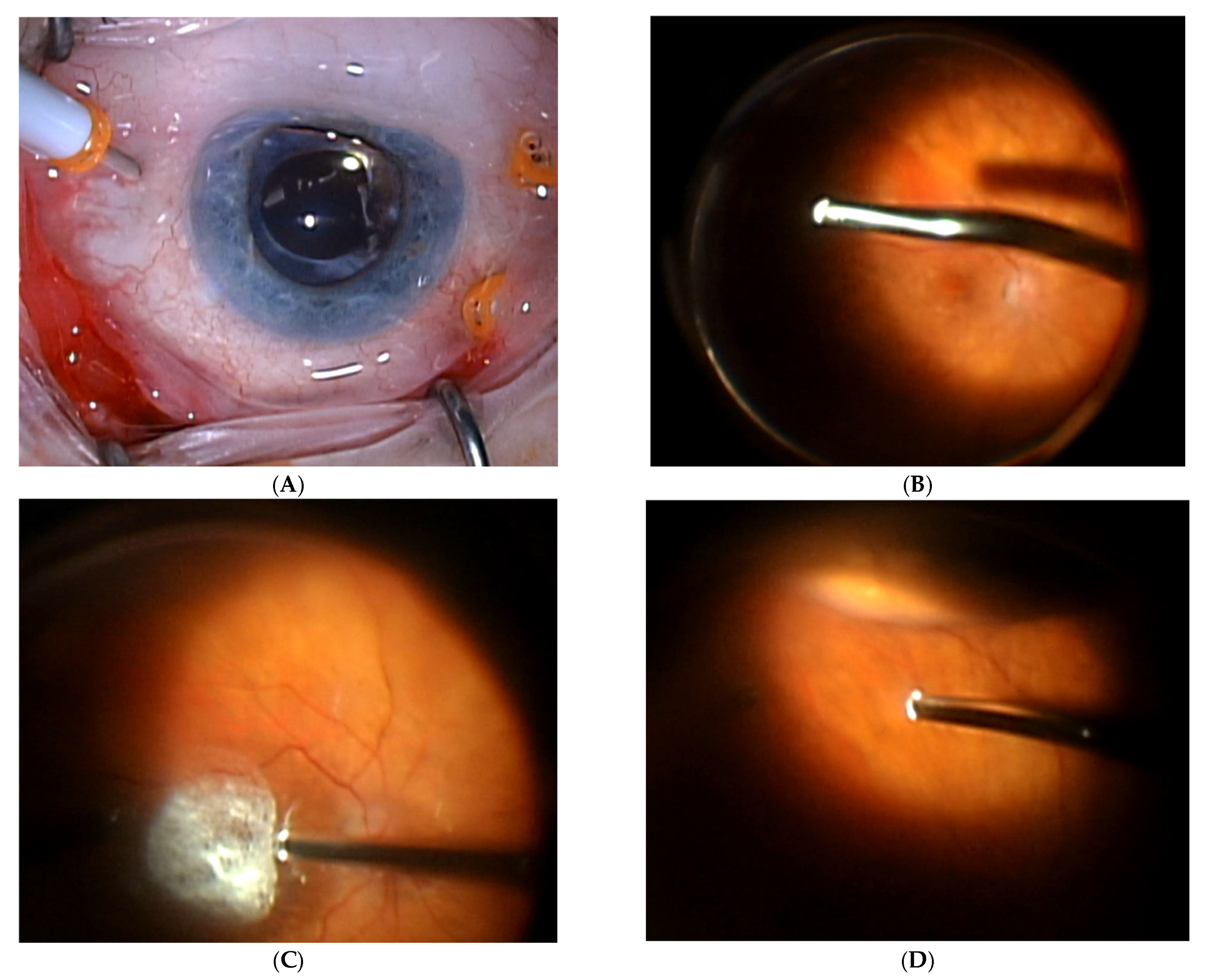
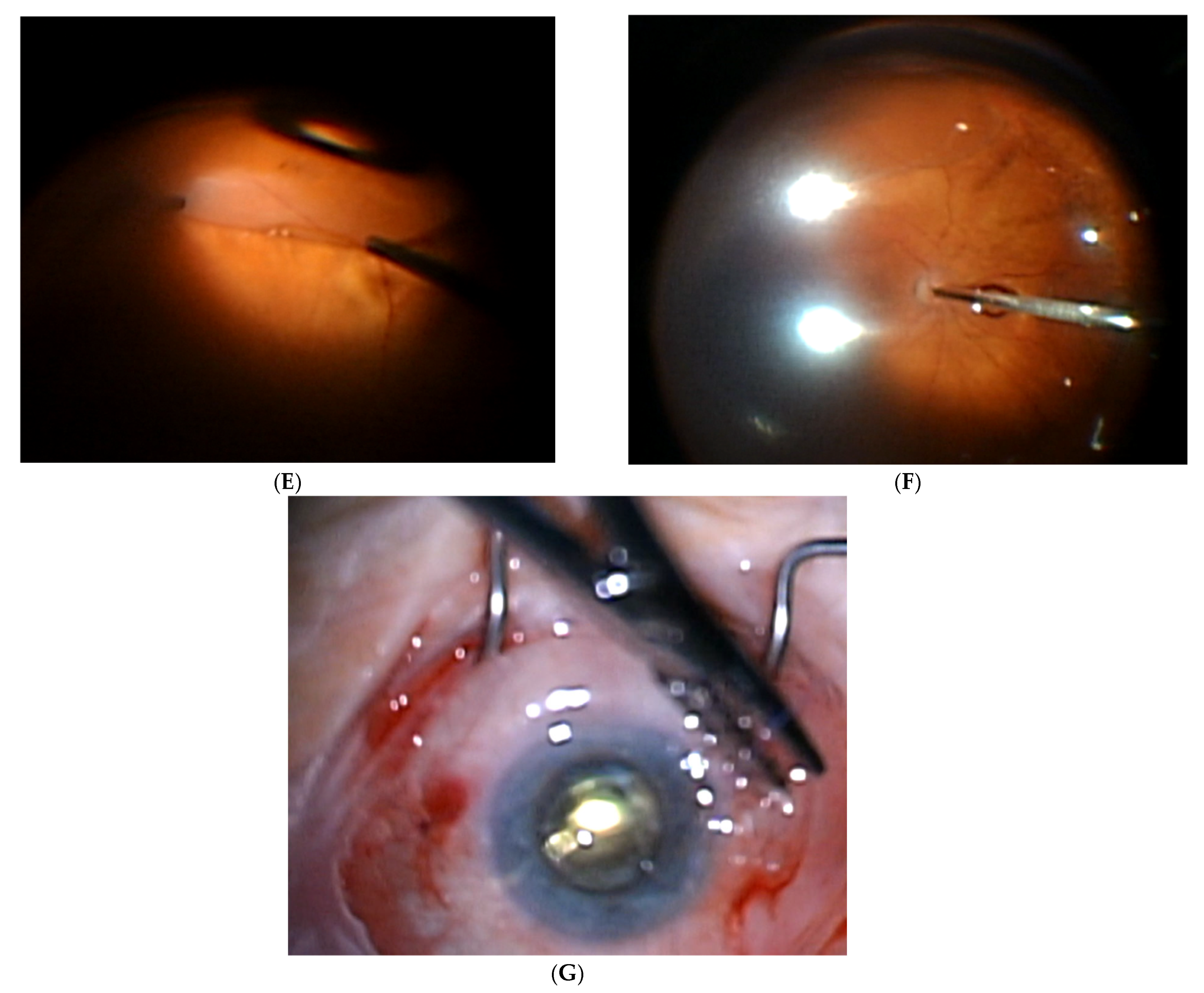
3. Routes of Administration
4. Molecular Mechanisms and Targets for Gene Therapy in Age-Related Macular Degeneration
5. Methods for the Selection of Studies
6. Gene Therapy Clinical Trials for Dry Age-Related Macular Degeneration
7. Current Gene Therapy Trials for Neovascular Age-Related Macular Degeneration
8. Challenges and Limitations of Gene Therapy
9. Limitations of This Study
10. Conclusions and Future Directions
Author Contributions
Funding
Data Availability Statement
Conflicts of Interest
References
- Rein, D.B.; Wittenborn, J.S.; Burke-Conte, Z.; Gulia, R.; Robalik, T.; Ehrlich, J.R.; Lundeen, E.A.; Flaxman, A.D. Prevalence of Age-Related Macular Degeneration in the US in 2019. JAMA Ophthalmol. 2022, 140, 1202–1208. [Google Scholar] [CrossRef]
- Furtado, J.M.; Jonas, J.B.; Tapply, I.; Fernandes, A.G.; Cicinelli, M.V.; Arrigo, A.; Leveziel, N.; Resnikoff, S.; Taylor, H.R.; Sedighi, T.; et al. Global estimates on the number of people blind or visually impaired by age-related macular degeneration: A meta-analysis from 2000 to 2020. Eye 2024, 38, 2070–2082. [Google Scholar] [CrossRef]
- Schultz, N.M.; Bhardwaj, S.; Barclay, C.; Gaspar, L.; Schwartz, J. Global Burden of Dry Age-Related Macular Degeneration: A Targeted Literature Review. Clin. Ther. 2021, 43, 1792–1818. [Google Scholar] [CrossRef] [PubMed]
- Fritsche, L.G.; Igl, W.; Bailey, J.N.; Grassmann, F.; Sengupta, S.; Bragg-Gresham, J.L.; Burdon, K.P.; Hebbring, S.J.; Wen, C.; Gorski, M.; et al. A large genome-wide association study of age-related macular degeneration highlights contributions of rare and common variants. Nat. Genet. 2016, 48, 134–143. [Google Scholar] [CrossRef]
- Seddon, J.M. Macular Degeneration Epidemiology: Nature-Nurture, Lifestyle Factors, Genetic Risk, and Gene-Environment Interactions—The Weisenfeld Award Lecture. Investig. Ophthalmol. Vis. Sci. 2017, 58, 6513–6528. [Google Scholar] [CrossRef] [PubMed]
- Bakri, S.J.; Bektas, M.; Sharp, D.; Luo, R.; Sarda, S.P.; Khan, S. Geographic atrophy: Mechanism of disease, pathophysiology, and role of the complement system. J. Manag. Care Spec. Pharm. 2023, 29, S2–S11. [Google Scholar] [CrossRef] [PubMed]
- Hushmandi, K.; Lam, H.Y.; Wong, W.M.; Tan, W.; Daryabari, S.H.; Reiter, R.J.; Farahani, N.; Kumar, A.P. Gene therapy for age-related macular degeneration: A promising frontier in vision preservation. Cell Commun. Signal. 2025, 23, 233. [Google Scholar] [CrossRef]
- Hernández-Zimbrón, L.F.; Zamora-Alvarado, R.; Ochoa-De la Paz, L.; Velez-Montoya, R.; Zenteno, E.; Gulias-Cañizo, R.; Quiroz-Mercado, H.; Gonzalez-Salinas, R. Age-Related Macular Degeneration: New Paradigms for Treatment and Management of AMD. Oxid. Med. Cell. Longev. 2018, 2018, 8374647. [Google Scholar] [CrossRef]
- Korva-Gurung, I.; Kubin, A.M.; Ohtonen, P.; Hautala, N. Visual Outcomes of Anti-VEGF Treatment on Neovascular Age-Related Macular Degeneration: A Real-World Population-Based Cohort Study. Pharmaceuticals 2023, 16, 927. [Google Scholar] [CrossRef]
- Varano, M.; Eter, N.; Winyard, S.; Wittrup-Jensen, K.U.; Navarro, R.; Heraghty, J. Current barriers to treatment for wet age-related macular degeneration (wAMD): Findings from the wAMD patient and caregiver survey. Clin. Ophthalmol. 2015, 9, 2243–2250. [Google Scholar] [CrossRef]
- Wykoff, C.C.; Garmo, V.; Tabano, D.; Menezes, A.; Kim, E.; Fevrier, H.B.; LaPrise, A.; Leng, T. Impact of Anti-VEGF Treatment and Patient Characteristics on Vision Outcomes in Neovascular Age-related Macular Degeneration: Up to 6-Year Analysis of the AAO IRIS® Registry. Ophthalmol. Sci. 2024, 4, 100421. [Google Scholar] [CrossRef] [PubMed]
- Monés, J.; Singh, R.P.; Bandello, F.; Souied, E.; Liu, X.; Gale, R. Undertreatment of Neovascular Age-Related Macular Degeneration after 10 Years of Anti-Vascular Endothelial Growth Factor Therapy in the Real World: The Need for a Change of Mindset. Ophthalmologica 2020, 243, 1–8. [Google Scholar] [CrossRef] [PubMed]
- Khurana, R.N.; Li, C.; Lum, F. Loss to Follow-up in Patients with Neovascular Age-Related Macular Degeneration Treated with Anti–VEGF Therapy in the United States in the IRIS® Registry. Ophthalmology 2023, 130, 672–683. [Google Scholar] [CrossRef] [PubMed]
- Singer, M.A.; Awh, C.C.; Sadda, S.; Freeman, W.R.; Antoszyk, A.N.; Wong, P.; Tuomi, L. HORIZON: An Open-Label Extension Trial of Ranibizumab for Choroidal Neovascularization Secondary to Age-Related Macular Degeneration. Ophthalmology 2012, 119, 1175–1183. [Google Scholar] [CrossRef]
- Rofagha, S.; Bhisitkul, R.B.; Boyer, D.S.; Sadda, S.R.; Zhang, K. Seven-Year Outcomes in Ranibizumab-Treated Patients in ANCHOR, MARINA, and HORIZON: A Multicenter Cohort Study (SEVEN-UP). Ophthalmology 2013, 120, 2292–2299. [Google Scholar] [CrossRef]
- Patel, S. Medicare spending on anti–vascular endothelial growth factor medications. Ophthalmol. Retin. 2018, 2, 785–791. [Google Scholar] [CrossRef]
- Chew, E.Y.; Lindblad, A.S.; Clemons, T. Summary results and recommendations from the age-related eye disease study. Arch. Ophthalmol. 2009, 127, 1678–1679. [Google Scholar] [CrossRef]
- Wang, H.; Zheng, J.; Zhang, Q.; Tian, Z.; Sun, Y.; Zhu, T.; Bi, Y.; Zhang, L. Efficacy and safety of complement inhibitors in patients with geographic atrophy associated with age-related macular degeneration: A network meta-analysis of randomized controlled trials. Front. Pharmacol. 2024, 15, 1410172. [Google Scholar] [CrossRef]
- Tzoumas, N.; Riding, G.; Williams, M.A.; Steel, D.H.W. Complement inhibitors for age-related macular degeneration. Cochrane Database Syst. Rev. 2023, 2023, CD009300. [Google Scholar] [CrossRef]
- Joussen, A.M.; Joeres, S.; Fawzy, N.; Heussen, F.M.A.; Llacer, H.; van Meurs, J.C.; Kirchhof, B. Autologous Translocation of the Choroid and Retinal Pigment Epithelium in Patients with Geographic Atrophy. Ophthalmology 2007, 114, 551–560. [Google Scholar] [CrossRef]
- Trincão-Marques, J.; Ayton, L.N.; Hickey, D.G.; Marques-Neves, C.; Guymer, R.H.; Edwards, T.L.; Sousa, D.C. Gene and cell therapy for age-related macular degeneration: A review. Surv. Ophthalmol. 2024, 69, 665–676. [Google Scholar] [CrossRef] [PubMed]
- Holz, F.G.; Mer, Y.L.; Muqit, M.M.K.; Hattenbach, L.-O.; Cusumano, A.; Grisanti, S.; Kodjikian, L.; Pileri, M.A.; Matonti, F.; Souied, E.; et al. Subretinal Photovoltaic Implant to Restore Vision in Geographic Atrophy Due to AMD. N. Engl. J. Med. 2026, 394, 232–242. [Google Scholar] [CrossRef]
- Berkowitz, S.T.; Finn, A.P. Gene therapy for age-related macular degeneration: Potential, feasibility, and pitfalls. Curr. Opin. Ophthalmol. 2024, 35, 170–177. [Google Scholar] [CrossRef] [PubMed]
- Anonymous. FDA approves hereditary blindness gene therapy. Nat. Biotechnol. 2018, 36, 6. [Google Scholar] [CrossRef]
- Jamil, M.U.; Waheed, N.K. Gene therapy for geographic atrophy in age-related macular degeneration: Current insights. Eye 2025, 39, 274–283. [Google Scholar] [CrossRef] [PubMed]
- Xu, D.; Khan, M.A.; Ho, A.C. Creating an Ocular Biofactory: Surgical Approaches in Gene Therapy for Acquired Retinal Diseases. Asia-Pac. J. Ophthalmol. 2021, 10, 5–11. [Google Scholar] [CrossRef]
- Zhou, H.W.; Kim, L.A. Gene Therapy in Age-related Macular Degeneration. Int. Ophthalmol. Clin. 2025, 65, 48–55. [Google Scholar] [CrossRef]
- Mehta, N.; Robbins, D.A.; Yiu, G. Ocular Inflammation and Treatment Emergent Adverse Events in Retinal Gene Therapy. Int. Ophthalmol. Clin. 2021, 61, 151–177. [Google Scholar] [CrossRef]
- Khanani, A.M.; Thomas, M.J.; Aziz, A.A.; Weng, C.Y.; Danzig, C.J.; Yiu, G.; Kiss, S.; Waheed, N.K.; Kaiser, P.K. Review of gene therapies for age-related macular degeneration. Eye 2022, 36, 303–311. [Google Scholar] [CrossRef]
- Guimaraes, T.A.C.; Georgiou, M.; Bainbridge, J.W.B.; Michaelides, M. Gene therapy for neovascular age-related macular degeneration: Rationale, clinical trials and future directions. Br. J. Ophthalmol. 2021, 105, 151–157. [Google Scholar] [CrossRef]
- Ding, K.; Shen, J.; Hafiz, Z.; Hackett, S.F.; e Silva, R.L.; Khan, M.; Lorenc, V.E.; Chen, D.; Chadha, R.; Zhang, M. AAV8-vectored suprachoroidal gene transfer produces widespread ocular transgene expression. J. Clin. Investig. 2019, 129, 4901–4911. [Google Scholar] [CrossRef]
- Planul, A.; Dalkara, D. Vectors and Gene Delivery to the Retina. Annu. Rev. Vis. Sci. 2017, 3, 121–140. [Google Scholar] [CrossRef]
- He, X.; Fu, Y.; Xu, Y.; Ma, L.; Chai, P.; Shi, H.; Yao, Y.; Ge, S.; Jia, R.; Wen, X.; et al. A Penetrable AAV2 Capsid Variant for Efficient Intravitreal Gene Delivery to the Retina. Investig. Ophthalmol. Vis. Sci. 2025, 66, 6. [Google Scholar] [CrossRef] [PubMed]
- Jiang, F.; Ma, J.; Lei, C.; Zhang, Y.; Zhang, M. Age-Related Macular Degeneration: Cellular and Molecular Signaling Mechanisms. Int. J. Mol. Sci. 2025, 26, 6174. [Google Scholar] [CrossRef]
- Ambati, J.; Fowler, B.J. Mechanisms of age-related macular degeneration. Neuron 2012, 75, 26–39. [Google Scholar] [CrossRef]
- Shughoury, A.; Sevgi, D.D.; Ciulla, T.A. Molecular Genetic Mechanisms in Age-Related Macular Degeneration. Genes 2022, 13, 1233. [Google Scholar] [CrossRef]
- Armento, A.; Ueffing, M.; Clark, S.J. The complement system in age-related macular degeneration. Cell. Mol. Life Sci. 2021, 78, 4487–4505. [Google Scholar] [CrossRef]
- Johnson, L.V.; Leitner, W.P.; Staples, M.K.; Anderson, D.H. Complement activation and inflammatory processes in Drusen formation and age related macular degeneration. Exp. Eye Res. 2001, 73, 887–896. [Google Scholar] [CrossRef]
- Anderson, D.H.; Mullins, R.F.; Hageman, G.S.; Johnson, L.V. A role for local inflammation in the formation of drusen in the aging eye. Am. J. Ophthalmol. 2002, 134, 411–431. [Google Scholar] [CrossRef] [PubMed]
- Mullins, R.F.; Warwick, A.N.; Sohn, E.H.; Lotery, A.J. From compliment to insult: Genetics of the complement system in physiology and disease in the human retina. Hum. Mol. Genet. 2017, 26, R51–R57. [Google Scholar] [CrossRef]
- Wilke, G.A.; Apte, R.S. Complement regulation in the eye: Implications for age-related macular degeneration. J. Clin. Investig. 2024, 134, e178296. [Google Scholar] [CrossRef] [PubMed]
- Khalatyan, A.S.; Shishparenok, A.N.; Avetisov, K.S.; Gladilina, Y.A.; Blinova, V.G.; Zhdanov, D.D. Association of Telomere Length in T Lymphocytes, B Lymphocytes, NK Cells and Monocytes with Different Forms of Age-Related Macular Degeneration. Biomedicines 2024, 12, 1893. [Google Scholar] [CrossRef]
- Heier, J.S.; Cohen, M.N.; Chao, D.L.; Pepio, A.; Shiraga, Y.; Capuano, G.; Rogers, A.; Ackert, J.; Sen, H.N.; Csaky, K. Phase 1 Study of JNJ-81201887 Gene Therapy in Geographic Atrophy Secondary to Age-Related Macular Degeneration. Ophthalmology 2024, 131, 1377–1388. [Google Scholar] [CrossRef]
- Heier, J.S.; Kherani, S.; Desai, S.; Dugel, P.; Kaushal, S.; Cheng, S.H.; Delacono, C.; Purvis, A.; Richards, S.; Le-Halpere, A.; et al. Intravitreous injection of AAV2-sFLT01 in patients with advanced neovascular age-related macular degeneration: A phase 1, open-label trial. Lancet 2017, 390, 50–61. [Google Scholar] [CrossRef] [PubMed]
- A Study to Evaluate Intravitreal JNJ-81201887 (AAVCAGsCD59) Compared to Sham Procedure for the Treatment of Geographic Atrophy (GA) Secondary to Age-Related Macular Degeneration (AMD). Available online: https://clinicaltrials.gov/study/NCT05811351 (accessed on 21 December 2025).
- Nielsen, J.; MacLaren, R.E.; Heier, J.S.; Steel, D.; Ivanova, T.; Sivaprasad, S.; Stanga, P.; Bailey, C.; Charbel Issa, P.; Mendonca, L.; et al. Preliminary Results from a First-in-human Phase I/II Gene Therapy Study (FOCUS) of Subretinally Delivered GT005, an Investigational AAV2 Vector, in Patients with Geographic Atrophy Secondary to Age-related Macular Degeneration. Investig. Ophthalmol. Vis. Sci. 2022, 63, 1504. [Google Scholar]
- HORIZON: A Phase II Study to Evaluate the Safety and Efficacy of Two Doses of GT005. Available online: https://www.clinicaltrials.gov/study/NCT04566445?tab=results (accessed on 21 December 2025).
- EXPLORE: A Phase II Study to Evaluate the Safety and Efficacy of Two Doses of GT005 (EXPLORE). Available online: https://clinicaltrials.gov/study/NCT04437368 (accessed on 21 December 2025).
- GT005 (PPY988): Development Program in Geographic Atrophy. Available online: https://www.novartis.com/news/gt005-ppy988-development-program-geographic-atrophy (accessed on 27 November 2025).
- Study to Assess the Safety and Efficacy of OCU410 for Geographic Atrophy (ArMaDa). Available online: https://www.clinicaltrials.gov/study/NCT06018558 (accessed on 21 December 2025).
- Ocugen, Inc. Announces Completion of Dosing in Subjects with Geographic Atrophy Secondary to DAMD in High-Dose Cohort of Phase 1/2 ARMADA Clinical Trial of OCU410—A Novel Modifiier Gene Therapy. Available online: https://ir.ocugen.com/news-releases/news-release-details/ocugen-inc-announces-completion-dosing-subjects-geographic (accessed on 27 November 2025).
- Akula, M.; McNamee, S.M.; Love, Z.; Nasraty, N.; Chan, N.P.M.; Whalen, M.; Avola, M.O.; Olivares, A.M.; Leehy, B.D.; Jelcick, A.S.; et al. Retinoic acid related orphan receptor α is a genetic modifier that rescues retinal degeneration in a mouse model of Stargardt disease and Dry AMD. Gene Ther. 2024, 31, 413–421. [Google Scholar] [CrossRef]
- Rathi, S.; Hasan, R.; Ueffing, M.; Clark, S.J. Therapeutic targeting of the complement system in ocular disease. Drug Discov. Today 2023, 28, 103757. [Google Scholar] [CrossRef] [PubMed]
- First Clinical Results Demonstrate Efficacy of VOY-101, a Novel Gene Therapy for GA. Available online: https://europe.ophthalmologytimes.com/view/first-clinical-results-demonstrate-efficacy-of-voy-101-a-novel-gene-therapy-for-geographic-atrophy-asrs-omer-trivizki (accessed on 27 November 2025).
- Study of VOY-101 in Patients With Advanced Non-Neovascular Age-Related Macular Degeneration (JOURNEY). Available online: https://clinicaltrials.gov/study/NCT06087458?term=NCT06087458&rank=1 (accessed on 27 November 2025).
- Keefe, D.; Munye, M.; Hasan, R.; Rathi, S.; Bishop, P.; Clark, S. CTx001, a gene therapy for the treatment of geographic atrophy in aged-related macular degeneration. Investig. Ophthalmol. Vis. Sci. 2023, 64, 3852. [Google Scholar]
- Complement Therapeutics Receives FDA IND Clearance to Advance CTx001 into Opti-GAIN, a Phase I/II Clinical Trial in Geographic Atrophy Secondary to AMD. Available online: https://complementtx.com/category/press-release/ (accessed on 27 November 2025).
- Campochiaro, P.A.; Nguyen, Q.D.; Shah, S.M.; Klein, M.L.; Holz, E.; Frank, R.N.; Saperstein, D.A.; Gupta, A.; Stout, J.T.; Macko, J.; et al. Adenoviral vector-delivered pigment epithelium-derived factor for neovascular age-related macular degeneration: Results of a phase I clinical trial. Hum. Gene Ther. 2006, 17, 167–176. [Google Scholar] [CrossRef]
- Rakoczy, E.P.; Lai, C.-M.; Magno, A.L.; Wikstrom, M.E.; French, M.A.; Pierce, C.M.; Schwartz, S.D.; Blumenkranz, M.S.; Chalberg, T.W.; Degli-Esposti, M.A.; et al. Gene therapy with recombinant adeno-associated vectors for neovascular age-related macular degeneration: 1 year follow-up of a phase 1 randomised clinical trial. Lancet 2015, 386, 2395–2403. [Google Scholar] [CrossRef]
- Campochiaro, P.A.; Lauer, A.K.; Sohn, E.H.; Mir, T.A.; Naylor, S.; Anderton, M.C.; Kelleher, M.; Harrop, R.; Ellis, S.; Mitrophanous, K.A. Lentiviral Vector Gene Transfer of Endostatin/Angiostatin for Macular Degeneration (GEM) Study. Hum. Gene Ther. 2017, 28, 99–111. [Google Scholar] [CrossRef]
- Shim, J.; Kim, Y.; Bak, J.; Shin, S.; Lee, K.; Hwang, Y.H.; Kong, H.Y.; Han, J.S. Preclinical evaluation of NG101, a potential AAV gene therapy for wet age-related macular degeneration. Mol. Ther.-Methods Clin. Dev. 2024, 32, 101366. [Google Scholar] [CrossRef]
- Chengdu Origen and Vanotech Announce First Patient Dosed in VAN-2401 Phase 1 Trial of Gene Therapy for Wet Age-Related Macular Degeneration. Available online: https://www.biospace.com/press-releases/chengdu-origen-and-vanotech-announce-first-patient-dosed-in-van-2401-phase-1-trial-of-gene-therapy-for-wet-age-related-macular-degeneration?utm_source=chatgpt.com (accessed on 27 November 2025).
- Sun, J.; Shen, M.; Chen, J.; Wu, Y.; Zhou, Y.; Feng, J.; Cheng, Y.; Jia, H.; Yang, X.; Gong, Y.; et al. Intravitreal Gene Therapy with LX102-C01 in Neovascular AMD: A Phase I Dose-Escalation Study of 12-Month Safety and Efficacy Outcomes. Ophthalmol. Sci. 2025, 6, 100970. [Google Scholar] [CrossRef]
- Exegenesis Bio Announces FDA Clearance of Investigational New Drug (IND) Application for EXG102-031: A Novel Gene Therapy for the Treatment of Neovascular Age-Related Macular Degeneration (nAMD). Available online: https://www.businesswire.com/news/home/20230118005295/en/Exegenesis-Bio-Announces-FDA-Clearance-of-Investigational-New-Drug-IND-Application-for-EXG102-031-A-Novel-Gene-Therapy-for-the-Treatment-of-neovascular-Age-Related-Macular-Degeneration-nAMD (accessed on 27 November 2025).
- FDA Frontera Receives FDA Clearance for FT-003 Phase 2 IND in Neovascular Age-Related Macular Degeneration. Available online: https://fronteratherapeutics.com/news/203.html (accessed on 27 November 2025).
- Skyline Therapeutics Receives FDA Clearance of IND for SKG0106, a Novel Intravitreally Delivered AAV Gene Therapy Candidate for Neovascular Age-Related Macular Degeneration. Available online: https://www.skytx.com/news-2023_07_03 (accessed on 27 November 2025).
- Li, H.; Shu, Y.; Xu, D.; Hou, J. SKG0106, an AAV vector delivered intravitreally, for effective, safe and durable treatment of nAMD. Investig. Ophthalmol. Vis. Sci. 2024, 65, 5338. [Google Scholar]
- Avirmax Biopharma Announces First Patient Dosed in Clinical Trial of ABI-110, a Groundbreaking Gene Therapy for Wet AMD Including PCV. Available online: https://www.prnewswire.com/news-releases/avirmax-biopharma-announces-first-patient-dosed-in-clinical-trial-of-abi-110-a-groundbreaking-gene-therapy-for-wet-amd-including-pcv-302313714.html (accessed on 17 November 2025).
- Khanani, A.M.; Boyer, D.S.; Wykoff, C.C.; Regillo, C.D.; Busbee, B.G.; Pieramici, D.; Danzig, C.J.; Joondeph, B.C.; Major, J.C., Jr.; Turpcu, A.; et al. Safety and efficacy of ixoberogene soroparvovec in neovascular age-related macular degeneration in the United States (OPTIC): A prospective, two-year, multicentre phase 1 study. eClinicalMedicine 2024, 67, 102394. [Google Scholar] [CrossRef] [PubMed]
- Adverum Biotechnologies Announces Positive 52-Week LUNA and 4-Year OPTIC Results, and Provides Key Pivotal Program Design Elements. Available online: https://adverum.com/press-archive/adverum-biotechnologies-announces-positive-52-week-luna-and-4-year-optic-results-and-provides-key-pivotal-program-design-elements (accessed on 27 November 2025).
- Calton, M.A.; Croze, R.H.; Burns, C.; Beliakoff, G.; Vazin, T.; Szymanski, P.; Schmitt, C.; Klein, A.; Leong, M.; Quezada, M.; et al. Design and Characterization of a Novel Intravitreal Dual-Transgene Genetic Medicine for Neovascular Retinopathies. Investig. Ophthalmol. Vis. Sci. 2024, 65, 1. [Google Scholar] [CrossRef]
- 4DMT Highlights Robust and Durable Clinical Activity for 4D-150 and Design of 4FRONT Phase 3 Program at 4D-150 Wet AMD Development Day. Available online: https://ir.4dmoleculartherapeutics.com/news-releases/news-release-details/4dmt-highlights-robust-and-durable-clinical-activity-4d-150-and (accessed on 27 November 2025).
- 4DMT Announces Accelerated 4D-150 Phase 3 Development in Wet AMD and Streamlined Organization to Drive Late-Stage Execution. Available online: https://4dmt.gcs-web.com/news-releases/news-release-details/4dmt-announces-accelerated-4d-150-phase-3-development-wet-amd (accessed on 27 November 2025).
- Safety and Tolerability of RGX-314 (Investigational Product) Gene Therapy for Neovascular AMD Trial. Available online: https://clinicaltrials.gov/study/NCT03066258 (accessed on 21 December 2025).
- Campochiaro, P.A.; Avery, R.; Brown, D.M.; Heier, J.S.; Ho, A.C.; Huddleston, S.M.; Jaffe, G.J.; Khanani, A.M.; Pakola, S.; Pieramici, D.J.; et al. Gene therapy for neovascular age-related macular degeneration by subretinal delivery of RGX-314: A phase 1/2a dose-escalation study. Lancet 2024, 403, 1563–1573. [Google Scholar] [CrossRef] [PubMed]
- REGENXBIO Announces Lancet Publication of Phase I/IIa Study Evaluating ABBV-RGX-314 as a One-Time Gene Therapy for Wet AMD. Available online: https://regenxbio.gcs-web.com/news-releases/news-release-details/regenxbio-announces-lancet-publication-phase-iiia-study?utm_source=chatgpt.com (accessed on 27 November 2025).
- Pivotal 2 Study of RGX-314 Gene Therapy in Participants with nAMD (ASCENT). Available online: https://clinicaltrials.gov/study/NCT05407636 (accessed on 21 December 2025).
- Pivotal 1 Study of ABBV-RGX-314 (Also Known as RGX-314) Gene Therapy Administered via Subretinal Delivery One Time in Participants with nAMD (ATMOSPHERE). Available online: https://clinicaltrials.gov/study/NCT04704921 (accessed on 21 December 2025).
- RGX-314 Gene Therapy Administered in the Suprachoroidal Space for Participants with Neovascular Age-Related Macular Degeneration (nAMD) (AAVIATE). Available online: https://clinicaltrials.gov/study/NCT04514653 (accessed on 21 December 2025).
- Nguyen, Q.D.; Schachar, R.A.; Nduaka, C.I.; Sperling, M.; Klamerus, K.J.; Chi-Burris, K.; Yan, E.; Paggiarino, D.A.; Rosenblatt, I.; Aitchison, R.; et al. Evaluation of the siRNA PF-04523655 versus ranibizumab for the treatment of neovascular age-related macular degeneration (MONET Study). Ophthalmology 2012, 119, 1867–1873. [Google Scholar] [CrossRef] [PubMed]
- Shen, J.; Samul, R.; Silva, R.L.; Akiyama, H.; Liu, H.; Saishin, Y.; Hackett, S.F.; Zinnen, S.; Kossen, K.; Fosnaugh, K.; et al. Suppression of ocular neovascularization with siRNA targeting VEGF receptor 1. Gene Ther. 2006, 13, 225–234. [Google Scholar] [CrossRef]
- Hassan, M.S.A.; Zhong, C.; Hassan, F.; Li, S.K. Targeting the Eye: RNA-Based Therapies, Interferences, and Delivery Strategies. Pharmaceutics 2025, 17, 1326. [Google Scholar] [CrossRef]
- Bleau, A.-M.; Jimenez, A.I.; Gramis, V.; Ruz, V.; Segerros, R.A.; Vargas, B. Clinical trial for SYL1801, a new siRNA-Based Treatment for Neovascular AMD. Investig. Ophthalmol. Vis. Sci. 2025, 66, 697. [Google Scholar]
- Tan, X.; Li, J.; Cui, B.; Wu, J.; Toischer, K.; Hasenfuß, G.; Xu, X. CRISPR/Cas13-Based Anti-RNA Viral Approaches. Genes 2025, 16, 875. [Google Scholar] [CrossRef]
- Shi, L.; Wang, S.; Wu, W.; Wang, X.; Yang, Q.; Zhang, J.; He, S.; Du, H.; Song, J.; Yang, C.; et al. Development of an RNA Targeting Based Gene Therapy Product for Neovascular Age-Related Macular Degeneration (nAMD). Investig. Ophthalmol. Vis. Sci. 2023, 64, 934. [Google Scholar]
- Open-LaBel Dose-Escalation Study for CRISPR/cas13-Rna TargetInG THerapy for the Treatment of Neovascular Age-Related Macular Degeneration in Phase I Trial (BRIGHT). Available online: https://clinicaltrials.gov/study/NCT06623279 (accessed on 21 December 2025).
- Finocchio, L.; Zeppieri, M.; Gabai, A.; Toneatto, G.; Spadea, L.; Salati, C. Recent Developments in Gene Therapy for Neovascular Age-Related Macular Degeneration: A Review. Biomedicines 2023, 11, 3221. [Google Scholar] [CrossRef] [PubMed]



| Gene Therapy | Developer/ Sponsor | Mechanism/ Target | Vector | Route of Delivery | Current /Most Recent Phase of Study | Trial ID | Year of Initiation—Year of Completion * | Status | Primary Outcome(s) | Secondary Outcomes | Preliminary Results, If Any |
|---|---|---|---|---|---|---|---|---|---|---|---|
| JNJ-1887 (AAVCAGsCD59) | Janssen Pharmaceuticals, Titusville, NJ, USA | Expression of soluble CD59 to inhibit MAC formation | AAV | Intravitreal injection | Phase 2 | NCT05811351 (PARASOL) | 2023–2026 | Active, not recruiting | Change from baseline in square root of GA lesion area in the study eye at month 18 measured by retinal imaging using FAF | Reading speed, BCLLA, retinal sensitivity by mesopic microperimetry, BCVA, NEI-VFQ-25 composite score, FRI index | None |
| OCU410 (AAV5-hRORA) | Ocugen, Malvern, PA, USA | Expression of RORA that regulates lipid metabolism, oxidative stress and inflammation pathways including CD59 | AAV | Subretinal | Phase 1/2 | NCT06018558 (ArMaDa) | 2023–2026 | Active, not recruiting | Safety, change in anatomy of ocular structures, BCVA, LLVA, IOP | Humoral and cellular immune response, shedding of viral vector, serum chemistry | 21.4% slower lesion growth from baseline in treated vs untreated fellow eyes, preservation of retinal tissue around GA lesions, stabilization of visual function as measured by LLVA |
| VOY-101 | Perceive Biotherapeutics, San Francisco, CA, USA | Expression of factor H-like protein 1 (complement system regulator) | AAV | Intravitreal | Phase 1/2a | NCT06087458 (JOURNEY) | 2023–2028 | Recruiting | GA growth rate and change in ellipsoid zone integrity at week 48 | Change in BCVA, LLVA and microperimetry; incidence of nvAMD; safety | None |
| CTx001 | Complement Therapeutics, Munich, Germany | Expression of a truncated version of Complement Receptor 1 that modulates the complement cascade | AAV | Not known | Phase 1/2 | N/A (Planned: Opti-GAIN) | N/A | IND application cleared, but the trial has not yet started | N/A | N/A | N/A |
| GT005 | Gyroscope (Novartis), Stevenage, Herefordshire, UK | Expression of CFI to inhibit complement-mediated apoptosis | AAV | Subretinal | Phase 2 | NCT04566445 (HORIZON) | 2020–2024 | Terminated | Change from baseline to week 72 in GA | Change from baseline at week 96 in GA, adverse events, BCVA, FRI index, NEI-VFQ-25 composite score, reading performance | No published data. Terminated due to insufficient efficacy |
| Gene Therapy | Developer/ Sponsor | Mechanism/ Target | Vector | Route of Delivery | Current /Most Recent Phase of Study | Trial ID | Year of Initiation—Year of Completion * | Status | Primary Outcome(s) | Secondary Outcomes | Preliminary Results, If Any |
|---|---|---|---|---|---|---|---|---|---|---|---|
| AdGVPEDF.11D | GenVec, Gaithersberg, MD, USA | Expression of PEDF that binds to and inhibits VEGF receptors | Adenovirus | Intravitreal | Phase 1 | NCT00109499 | 2002–2005 | Completed | Safety and tolerability | - | Safe and well-tolerated. However, further development was halted due to insufficient efficacy. |
| AAV2-sFLT01 | Genzyme, a Sanofi Company, Cambridge, MA, USA | Expression of sFLT-1 that binds to and inhibits VEGF | AAV | Intravitreal | Phase 1 | NCT01024998 | 2010–2018 | Completed | Maximum tolerated dose, adverse events through week 52 and up to 4 years | Decreased retinal thickness through week 52 and up to 4 years | Safe and well-tolerated. However, further development was halted due to insufficient efficacy. |
| rAAV.sFLT-1 | Lions Eye Institute, Perth, Western Australia | Expression of sFLT-1 that binds to and inhibits VEGF | AAV | Subretinal | Phase 1/2 | NCT01494805 | 2011–2017 | Completed | Ophthalmic complications, toxicity or systemic complications at 1-month post-injection | Maintenance or improvement of vision without the necessity of ranibizumab re-injections up to 3 years | Safe and well-tolerated. However, further development was halted due to insufficient efficacy. |
| RetinoStat | Oxford BioMedica, Oxford, UK | Expression of endostatin and angiostatin which are antiangiogenic proteins | Lentiviral vector based on EIAV | Subretinal | Phase 1 | NCT01301443 (GEM) | 2011–2015 | Completed | Incidence of adverse events at 24 weeks | Change in subretinal and intraretinal fluid as measured by OCT at 24 weeks | Safe and well-tolerated. However, further development was halted due to insufficient efficacy. |
| EXG102-031 | Exegenesis Bio, Horsham, PA, USA | Expression of an angiopoietin domain and VEGF receptor fusion protein that binds to and inactivates Angiopoietin-2 and VEGF | AAV | Subretinal | Phase 1 | NCT05903794 (Everest) | 2023–2026 | Active, not recruiting | Frequency, type and intensity of ocular and non-ocular adverse events throughout 52 weeks | Change in BCVA at 52 weeks, average number of supplemental anti-VEGF doses received throughout 52 weeks | None |
| LX109 | Shanghai General Hospital, Shanghai Jiao Tong University School of Medicine, Shanghai, China | Undisclosed | Undisclosed | Intravitreal | Phase 1 | NCT06022744 | 2023–2027 | Not yet recruiting | Adverse events at 4 weeks | Change in BCVA and CST, time after LX109 treatment to first salvage treatment, proportion of subjects receiving salvage treatment in study eye, etc. at various time points | None |
| KH631 | Chengdu Origen Biotechnology Co., Ltd., Chengdu, China (In collaboration with Vanotech in the US) | Expression of an anti-VEGF protein (details undisclosed) | AAV | Suprachoroidal | Phase 1 | NCT05657301 (VAN-2201) | 2023–2027 | Recruiting | Incidence of ocular and systemic adverse events, BCVA at 52 weeks | Incidence of ocular and systemic adverse events, rescue injections, BCVA at 104 weeks | None |
| KH658 | Chengdu Origen Biotechnology Co., Ltd., Chengdu, China (In collaboration with Vanotech in the US) | Expression of an anti-VEGF protein (details undisclosed) | AAV | Suprachoroidal | Phase 1 | NCT06825858 (VAN-2401) | - | Not yet recruiting | Incidence of ocular and systemic adverse events, rescue injections at 24 and 52 weeks, BCVA at 52 weeks | Change in BCVA at 24 weeks | None |
| BD311 | Shanghai BDgene, Shanghai, China | Expression of an antibody that binds to and inactivates VEGFA | Lentiviral vector (IDLV) | Suprachoroidal | Phase 1 | NCT05099094 | 2021–2025 | Active, not recruiting (in China, no US sites yet) | Adverse effects at multiple time points up to 12 months | Changes in macular intraretinal fluid, subretinal fluid, CRT, area of CNV, area of fluorescein leakage, number of rescue treatments, BCVA at multiple time points up to 12 months | None |
| HG202 | HuidaGene Therapeutics Co., Ltd., Shanghai, China | CRISPR/Cas13 based system that targets and degrades VEGFA mRNA, preventing its expression | AAV | Subretinal | Phase 1 | NCT06623279 (BRIGHT) | 2025–2031 | Not yet recruiting | Incidence and severity of ocular and systemic adverse events at 52 weeks | Mean change in BCVA at 52 weeks, mean change in annualized rate of supplemental injections at 52 weeks | None |
| SKG0106 | Skyline Therapeutics, Shanghai, China | Expression of Vb24, an anti-VEGF protein | AAV | Intravitreal | Phase 1/2a | NCT05986864 | 2024–2026 | Recruiting | Dose-limiting toxicities at 4 weeks; type, severity and incidence of ocular and systemic adverse events at 52 weeks | Change in BCVA, CST and NEI-VFQ-25 score at each visit through 52 weeks | None |
| ABI-110 | Avirmax Biopharma Inc., Hayward, CA, USA | Expression of VEGF-Trap, a recombinant protein analogous to aflibercept | AAV | Intravitreal | Phase 1/2 | NCT0655001 | 2024–2026 | Recruiting | Incidence of treatment-emergent adverse effects at 52 weeks | Change in BCVA at 52 weeks, immunogenicity, pharmacodynamics and pharmacokinetics, optimal dose | None |
| NG101 | Neuracle genetics, Inc., Seoul, Republic of Korea | Expression of aflibercept that binds to and inhibits VEGF | AAV | Subretinal | Phase 1/2a | NCT05984927 | 2023–2030 | Recruiting | Incidence of ocular and systemic adverse events at 24 weeks | Systemic immunogenic response, CST, BCVA, cumulative number of rescue therapy injections at various time points | None |
| RRG001 | Shanghai Refreshgene Technology Co., Ltd., Shanghai, China | Undisclosed | AAV | Subretinal | Phase 1/2a | NCT06141460 | 2023–2030 | Recruiting (in China, does not have US IND yet) | Incidence of ocular and systemic adverse events at 52 weeks | Change in BCVA and CRT at 52 weeks | None |
| FT-003 | Frontera Therapeutics, Bedford, MA, USA | Expression of a recombinant fusion protein analogous to aflibercept | AAV | Intravitreal | Phase 1/2 | NCT06492863 | 2023–2028 | Recruiting (in China, received IND clearance in the US in 2024) | Incidence of adverse events at 12 weeks | BCVA and OCT change at week 24 | None |
| LX102 | Innostellar Biotherapeutics Co., Ltd., Shanghai, China | Expression of VEGF-Trap, a recombinant protein analogous to aflibercept | AAV | Subretinal | Phase 2 | NCT06196840 (VENUS) | 2024–2029 | Active, not recruiting (in China, does not have US IND yet) | Mean change in BCVA at 36 weeks | Mean change in BCVA 52 weeks, mean change in CST at 36 and 52 weeks, durability of LX102 at 52 weeks, incidence of ocular and systemic adverse events at 36 and 52 weeks | None from phase 2, but data from a prior phase 1 study evaluating the intravitreal route of delivery showed a favorable safety profile |
| SYL1801 | Sylentis, S.A., Tres Cantos, Spain | Inhibition of the expression of the NRARP gene which is involved in angiogenesis | siRNA formulation | Topical drops | Phase 2 | NCT05637255 | 2022–2024 | Unknown status | Change in BCVA on day 42 | Proportion of subjects who maintained visual acuity, proportion of subjects who needed rescue medication, change from screening on leakage area, adverse events, etc. through day 42 | Low incidence of treatment-emergent adverse events. |
| AGN211745 (Sirna-027) | Allergan, Dublin, Ireland | Inhibition of the expression of the VEGF-Receptor 1 gene | Naked siRNA | Intravitreal | Phase 2 | NCT00395057 | 2007–2009 | Terminated | Percentage of patients with improvement in BCVA of 15 or more letters at month 3 | Lesion size assessed by FA and photograph, foveal thickness, and NEI- VFQ at month 3; time to treatment with standard of care at month 6 | Terminated due to lack of sufficient efficacy |
| PF-04523655 | Quark Pharmaceuticals, Fremont, CA, USA | Inhibition of the expression of the hypoxia-inducible gene RTP801 | Naked siRNA | Intravitreal | Phase 2 | NCT00713518 (MONET study) | 2009–2011 | Completed | Mean change in BCVA by week 16 | Incidence and severity of ocular and systemic adverse events, change in CST, etc. | Further development of the drug was halted due to only modest efficacy |
| Bevasiranib | OPKO Health, Inc., Miami, FL, USA | Inhibition of the expression of the VEGF gene | Naked siRNA | Intravitreal | Phase 3 | NCT00499590 (COBALT) | 2007–2009 | Terminated | Avoidance of 3 or more lines of vision loss at week 60 | Need for rescue therapy, time to rescue therapy through week 60 | Despite favorable results from early-phase trials, this was terminated due to lack of sufficient efficacy |
| Ixo-vec (ADVM-022) | Adverum Biotechnologies, Inc., Redwood City, CA, USA | Expression of an aflibercept-like protein that binds to and inhibits VEGF | AAV | Intravitreal | Phase 3 | NCT06856577 (ARTEMIS) | 2025–2030 | Recruiting | Mean change in BCVA at weeks 52 and 56 | Mean number of aflibercept injections received, percentages of participants with worsened and improved BCVA, mean change in CST, time to dry retina, change in NEI-VFQ-25, etc. all through week 56. | None from phase 3. Prior phase 1/2 data showed favorable safety and about 86% reduction in injection burden up to 4 years. |
| 4D-150 | 4D Molecular Therapeutics, Emeryville, CA, USA | Expression of an aflibercept-like protein that binds to and inhibits VEGF, as well as a microRNA sequence that inhibits the expression of VEGF-C | R-100 (novel AAV capsid) | Intravitreal | Phase 3 | NCT07064759 (4FRONT-2), NCT06864988 | 2025–2029, 2025–2028 | Recruiting | Mean change in BCVA at week 52 | Mean annualized number of aflibercept injections received, proportion of subjects not requiring aflibercept injections after week 4, mean change in CST, etc., all through weeks 52 and 104. | None from phase 3. Prior phase 1/2 data showed favorable safety and about 83% reduction in injection burden at 1 year |
| RGX-314 | AbbVie, North Chicago, IL, USA | Expression of a ranibizumab-like Fab fragment that binds to and inactivates VEGF | AAV8 | Subretinal | Phase 3 | NCT05407636 (ASCENT), NCT04704921 (ATMOSPHERE) | 2022–2027, 2020–2027 | Recruiting | Mean change in BCVA at week 54, incidence of ocular and systemic adverse events at week 50 | Proportion of participants with <2 supplemental anti-VEGF injections through week 54, proportions of participants with worsened or improved BCVA through weeks 54 and 98, mean change in central retinal thickness through weeks 54 and 98, percent reduction in anti-VEGF annualized rate through weeks 54 and 98, etc. | None from phase 3. Prior phase 1/2 data showed favorable safety and a reduction in injection burden at 2 years |
Disclaimer/Publisher’s Note: The statements, opinions and data contained in all publications are solely those of the individual author(s) and contributor(s) and not of MDPI and/or the editor(s). MDPI and/or the editor(s) disclaim responsibility for any injury to people or property resulting from any ideas, methods, instructions or products referred to in the content. |
© 2026 by the authors. Licensee MDPI, Basel, Switzerland. This article is an open access article distributed under the terms and conditions of the Creative Commons Attribution (CC BY) license.
Share and Cite
Ahmad, N.-U.-S.; Mir, T.A. Advances in Gene Therapy for Age-Related Macular Degeneration: A Narrative Review. J. Clin. Med. 2026, 15, 3097. https://doi.org/10.3390/jcm15083097
Ahmad N-U-S, Mir TA. Advances in Gene Therapy for Age-Related Macular Degeneration: A Narrative Review. Journal of Clinical Medicine. 2026; 15(8):3097. https://doi.org/10.3390/jcm15083097
Chicago/Turabian StyleAhmad, Noor-Us-Sabah, and Tahreem A. Mir. 2026. "Advances in Gene Therapy for Age-Related Macular Degeneration: A Narrative Review" Journal of Clinical Medicine 15, no. 8: 3097. https://doi.org/10.3390/jcm15083097
APA StyleAhmad, N.-U.-S., & Mir, T. A. (2026). Advances in Gene Therapy for Age-Related Macular Degeneration: A Narrative Review. Journal of Clinical Medicine, 15(8), 3097. https://doi.org/10.3390/jcm15083097