Multidisciplinary Delphi Consensus on the Clinical Use of Intranasal Carboxymethyl-β-Glucan-Resveratrol: Evidence-Based Recommendations for Upper Airway Diseases

 ,
, 
 , , and
Abstract
1. Introduction
2. Methods
2.1. Study Design
2.2. First Round: Expert Board Statement Development
2.3. Second Round: Multidisciplinary Expert Evaluation
2.4. Consensus Definition and Statistical Analysis
2.5. Ethical Considerations
3. Results
3.1. Overview of Consensus Achievement
3.2. Pathophysiological Rationale (Statements 1–8)
3.3. Resveratrol: Mechanisms of Action (Statements 9–13)
3.4. CMBG-Resveratrol Formulation (Statements 14–16)
3.5. Preclinical Evidence (Statements 17–18)
3.6. Clinical Evidence (Statements 19–22)
4. Discussion
4.1. Pathophysiological Rationale and Multitarget Approach
4.2. Molecular Mechanisms of Resveratrol and CMBG
4.3. Formulation Optimization: The Role of CMBG
4.4. Preclinical and Clinical Evidence
4.5. Safety Profile and Tolerability
4.6. Regulatory Status and Evidentiary Framework
4.7. Clinical Implications and Practical Recommendations
5. Conclusions
Author Contributions
Funding
Institutional Review Board Statement
Informed Consent Statement
Data Availability Statement
Acknowledgments
Conflicts of Interest
References
- Yang, G.; Wan, P.; Zhang, Y.; Tan, Q.; Qudus, M.S.; Yue, Z.; Luo, W.; Zhang, W.; Ouyang, J.; Li, Y.; et al. Innate Immunity, Inflammation, and Intervention in HBV Infection. Viruses 2022, 14, 2275. [Google Scholar] [CrossRef]
- Abudalo, R.A.; Alqudah, A.M.; Roarty, C.; Athamneh, R.Y.; Grieve, D.J. Oxidative stress and inflammation in COVID-19: Potential application of GLP-1 receptor agonists. Eur. Rev. Med. Pharmacol. Sci. 2023, 27, 6459–6471. [Google Scholar] [PubMed]
- Khattar, S.; Khan, S.A.; Zaidi, S.A.A.; Darvishikolour, M.; Farooq, U.; Naseef, P.P.; Kurunian, M.S.; Khan, M.Z.; Shamim, A.; Khan, M.M.U.; et al. Resveratrol from Dietary Supplement to a Drug Candidate: An Assessment of Potential. Pharmaceuticals 2022, 15, 957. [Google Scholar] [CrossRef]
- Ke, J.; Li, M.T.; Xu, S.; Ma, J.; Liu, M.Y.; Han, Y. Advances for pharmacological activities of Polygonum cuspidatum—A review. Pharm. Biol. 2023, 61, 177–188. [Google Scholar] [CrossRef]
- Lai, J.Y.; Fan, X.L.; Zhang, H.B.; Wang, S.C.; Wang, H.; Ma, X.; Zhang, Z.-Q. Polygonum cuspidatum polysaccharide: A review of its extraction and purification, structure analysis, and biological activity. J. Ethnopharmacol. 2024, 331, 118079. [Google Scholar] [CrossRef]
- Walle, T. Bioavailability of resveratrol. Ann. N. Y. Acad. Sci. 2011, 1215, 9–15. [Google Scholar] [CrossRef]
- Boocock, D.J.; Faust, G.E.; Patel, K.R.; Schinas, A.M.; Brown, V.A.; Ducharme, M.P.; Booth, T.D.; Crowell, J.A.; Perloff, M.; Gescher, A.J.; et al. Phase I dose escalation pharmacokinetic study in healthy volunteers of resveratrol, a potential cancer chemopreventive agent. Cancer Epidemiol. Biomark. Prev. 2007, 16, 1246–1252. [Google Scholar] [CrossRef] [PubMed]
- Francioso, A.; Mastromarino, P.; Restignoli, R.; Boffi, A.; d’Erme, M.; Mosca, L. Improved Stability of trans-Resveratrol in Aqueous Solutions by Carboxymethylated (1,3/1,6)-β-D-Glucan. J. Agric. Food Chem. 2014, 62, 1520–1525. [Google Scholar] [CrossRef] [PubMed]
- Xu, C.; Wang, F.; Guan, S.; Wang, L. beta-Glucans obtained from fungus for wound healing: A review. Carbohydr. Polym. 2024, 327, 121662. [Google Scholar] [CrossRef]
- De Marco Castro, E.; Calder, P.C.; Roche, H.M. beta-1,3/1,6-Glucans and Immunity: State of the Art and Future Directions. Mol. Nutr. Food Res. 2021, 65, e1901071. [Google Scholar] [CrossRef]
- Mastromarino, P.; Capobianco, D.; Cannata, F.; Nardis, C.; Mattia, E.; De Leo, A.; Restignoli, R.; Francioso, A.; Mosca, L. Resveratrol inhibits rhinovirus replication and expression of inflammatory mediators in nasal epithelia. Antivir. Res. 2015, 123, 15–21. [Google Scholar] [CrossRef]
- Francioso, A.; Cossi, R.; Fanelli, S.; Mastromarino, P.; Mosca, L. Studies on Trans-Resveratrol/Carboxymethylated (1,3/1,6)-β-d-Glucan Association for Aerosol Pharmaceutical Applications. Int. J. Mol. Sci. 2017, 18, 967. [Google Scholar] [CrossRef]
- Ciprandi, G.; Buscaglia, S.; Pesce, G.; Pronzato, C.; Ricca, V.; Parmiani, S.; Bagnasco, M.; Canonica, G.W. Minimal persistent inflammation is present at mucosal level in patients with asymptomatic rhinitis and mite allergy. J. Allergy Clin. Immunol. 1995, 96, 971–979. [Google Scholar] [CrossRef] [PubMed]
- Papi, A.; Papadopoulos, N.G.; Stanciu, L.A.; Bellettato, C.M.; Pinamonti, S.; Degitz, K.; Holgate, S.T.; Johnston, S.L. Reducing agents inhibit rhinovirus-induced up-regulation of the rhinovirus receptor intercellular adhesion molecule-1 (ICAM-1) in respiratory epithelial cells. FASEB J. 2002, 16, 1934–1936. [Google Scholar] [CrossRef]
- Varricchio, A.M.; Capasso, M.; Della Volpe, A.; Malafronte, L.; Mansi, N.; Varricchio, A.; Ciprandi, G. Resveratrol plus carboxymethyl-β-glucan in children with recurrent respiratory infections: A preliminary and real-life experience. Ital. J. Pediatr. 2014, 40, 93. [Google Scholar] [CrossRef]
- Miraglia Del Giudice, M.; Maiello, N.; Decimo, F.; Capasso, M.; Campana, G.; Leonardi, S. Resveratrol plus carboxymethyl-β-glucan may affect respiratory infections in children with allergic rhinitis. Pediatr. Allergy Immunol. 2014, 25, 724–728. [Google Scholar] [CrossRef]
- Baldassarre, M.E.; Di Mauro, A.; Labellarte, G.; Pignatelli, M.; Fanelli, M.; Schiavi, E.; Mastromarino, P.; Capozza, M.; Panza, R.; Laforgia, N. Resveratrol plus carboxymethyl-β-glucan in infants with common cold: A randomized double-blind trial. Heliyon 2020, 6, e03814. [Google Scholar] [CrossRef]
- Hasson, F.; Keeney, S.; McKenna, H. Research guidelines for the Delphi survey technique. J. Adv. Nurs. 2000, 32, 1008–1015. [Google Scholar] [CrossRef]
- Hsu, C.C.; Sandford, B.A. The Delphi technique: Making sense of consensus. Pract. Assess. Res. Eval. 2007, 12, 10. [Google Scholar] [CrossRef]
- Diamond, I.R.; Grant, R.C.; Feldman, B.M.; Pencharz, P.B.; Ling, S.C.; Moore, A.M.; Wales, P.W. Defining consensus: A systematic review recommends methodologic criteria for reporting of Delphi studies. J. Clin. Epidemiol. 2014, 67, 401–409. [Google Scholar] [CrossRef] [PubMed]
- Ciprandi, G.; Tosca, M.A. Intranasal resveratrol plus carboxymethyl-β-glucan: A promising option in clinical practice. Biomolecules 2026, 16, 285. [Google Scholar] [CrossRef]
- AlBloushi, S.; Al-Ahmad, M. Exploring the immunopathology of type 2 inflammatory airway diseases. Front. Immunol. 2024, 15, 1285598. [Google Scholar] [CrossRef]
- Damle, V.G.; Wu, K.; Arouri, D.J.; Schirhagl, R. Detecting free radicals post viral infections. Free Radic. Biol. Med. 2022, 191, 8–23. [Google Scholar] [CrossRef] [PubMed]
- Burkard, M.; Piotrowsky, A.; Leischner, C.; Detert, K.; Venturelli, S.; Marongiu, L. The Antiviral Activity of Polyphenols. Mol. Nutr. Food Res. 2025, 69, e70042. [Google Scholar] [CrossRef]
- Meng, T.; Xiao, D.; Muhammed, A.; Deng, J.; Chen, L.; He, J. Anti-Inflammatory Action and Mechanisms of Resveratrol. Molecules 2021, 26, 229. [Google Scholar] [CrossRef]
- Wątroba, M.; Szukiewicz, D. Anti-Inflammatory Properties of Resveratrol. Int. J. Mol. Sci. 2025, 26, 11710. [Google Scholar] [CrossRef]
- Santos, J.A.; de Carvaho, G.S.; Oliveira, V.; Raposo, N.R.; da Silva, A.D. Resveratrol and analogues: A review of antioxidant activity and applications to human health. Recent Pat. Food Nutr. Agric. 2013, 5, 144–153. [Google Scholar] [CrossRef] [PubMed]
- Rana, A.; Samtiya, M.; Dhewa, T.; Mishra, V.; Aluko, R.E. Health benefits of polyphenols: A concise review. J. Food Biochem. 2022, 46, e14264. [Google Scholar] [CrossRef]
- Huang, C.; Jiang, S.; Gao, S.; Wang, Y.; Cai, X.; Fang, J.; Yan, T.; Wan, C.; Cai, Y. Sirtuins: Research advances on the therapeutic role in acute kidney injury. Phytomedicine 2022, 101, 154122. [Google Scholar] [CrossRef]
- Santos, L.; Benitez-Rosendo, A.; Bresque, M.; Camacho-Pereira, J.; Calliari, A.; Escande, C. Sirtuins: The NAD(+)-Dependent Multifaceted Modulators of Inflammation. Antioxid. Redox Signal. 2023, 39, 1185–1208. [Google Scholar] [CrossRef] [PubMed]
- Dębińska, A.; Sozańska, B. Dietary Polyphenols—Natural Bioactive Compounds with Potential for Preventing and Treating Some Allergic Conditions. Nutrients 2023, 15, 4823. [Google Scholar] [CrossRef]
- Civelek, M.; Bilotta, S.; Lorentz, A. Resveratrol Attenuates Mast Cell Mediated Allergic Reactions: Potential for Use as a Nutraceutical in Allergic Diseases? Mol. Nutr. Food Res. 2022, 66, 2200170. [Google Scholar] [CrossRef]
- Fiod Riccio, B.V.; Fonseca-Santos, B.; Colerato Ferrari, P.; Chorilli, M. Characteristics, Biological Properties and Analytical Methods of Trans-Resveratrol: A Review. Crit. Rev. Anal. Chem. 2020, 50, 339–358. [Google Scholar] [CrossRef] [PubMed]
- Pando, D.; Matos, M.; Gutiérrez, G.; Pazos, C. Formulation of resveratrol entrapped niosomes for topical use. Colloids Surf. B Biointerfaces 2015, 128, 398–404. [Google Scholar] [CrossRef] [PubMed]
- Vetvicka, V.; Volny, T.; Saraswat-Ohri, S.; Vashishta, A.; Vancikova, Z.; Vetvickova, J. Glucan and resveratrol complex—Possible synergistic effects on immune system. Biomed. Pap. Med. Fac. Palacky Univ. Olomouc 2007, 151, 41–46. [Google Scholar] [CrossRef] [PubMed]
- Francioso, A.; Mastromarino, P.; Masci, A.; d’Erme, M.; Mosca, L. Chemistry, Stability and Bioavailability of Resveratrol. Med. Chem. 2014, 10, 237–245. [Google Scholar] [CrossRef]
- Mirończuk-Chodakowska, I.; Kujawowicz, K.; Witkowska, A.M. Beta-Glucans from Fungi: Biological and Health-Promoting Potential in the COVID-19 Pandemic Era. Nutrients 2021, 13, 3960. [Google Scholar] [CrossRef]
- Netea, M.G.; Domínguez-Andrés, J.; Barreiro, L.B.; Chavakis, T.; Divangahi, M.; Fuchs, E.; Joosten, L.A.B.; van der Meer, J.W.M.; Mhlanga, M.M.; Mulder, W.J.M.; et al. Defining trained immunity and its role in health and disease. Nat. Rev. Immunol. 2020, 20, 375–388. [Google Scholar] [CrossRef]
- Quintin, J.; Saeed, S.; Martens, J.H.A.; Giamarellos-Bourboulis, E.J.; Ifrim, D.C.; Logie, C.; Jacobs, L.; Jansen, T.; Kullberg, B.-J.; Wijmenga, C.; et al. Candida albicans infection affords protection against reinfection via functional reprogramming of monocytes. Cell Host Microbe 2012, 12, 223–232. [Google Scholar] [CrossRef]
- Indolfi, C.; Mignini, C.; Valitutti, F.; Bizzarri, I.; Dinardo, G.; Klain, A.; del Giudice, M.M.; Di Cara, G. Effects of Nasal Solution Incorporating Resveratrol and Carboxymethyl-β-Glucan in Preschool Non-Atopic Children with Wheezing. Nutrients 2024, 16, 2197. [Google Scholar] [CrossRef]
- Varricchio, A.; Presutti, L.; La Mantia, I.; Ciprandi, G. Inter-societal Delphi Consensus on the topical nasal treatments in Italy. Multidiscip. Respir. Med. 2024, 19, 991. [Google Scholar] [CrossRef] [PubMed]
- Pires, A.; Fortuna, A.; Alves, G.; Falcão, A. Intranasal drug delivery: How, why and what for? J. Pharm. Pharm. Sci. 2009, 12, 288–311. [Google Scholar] [CrossRef]
- Greve, J.M.; Davis, G.; Meyer, A.M.; Forte, C.P.; Yost, S.C.; Marlor, C.W.; Kamarck, M.E.; McClelland, A. The major human rhinovirus receptor is ICAM-1. Cell 1989, 56, 839–847. [Google Scholar] [CrossRef]
- Canonica, G.W.; Ciprandi, G.; Pesce, G.P.; Buscaglia, S.; Paolieri, F.; Bagnasco, M. ICAM-1 on epithelial cells in allergic subjects: A hallmark of allergic inflammation. Int. Arch. Allergy Immunol. 1995, 107, 99–102. [Google Scholar] [CrossRef]
- Ciprandi, G.; Buscaglia, S.; Pesce, G.; Villaggio, B.; Bagnasco, M.; Canonica, G.W. Allergic subjects express intercellular adhesion molecule-1 (ICAM-1 or CD54) on epithelial cells of conjunctiva after allergen challenge. J. Allergy Clin. Immunol. 1993, 91, 783–792. [Google Scholar] [CrossRef] [PubMed]
- Miraglia Del Giudice, M.; Maiello, N.; Capristo, C.; Alterio, E.; Capasso, M.; Perrone, L.; Ciprandi, G. Resveratrol plus carboxymethyl-β-glucan reduces nasal symptoms in children with pollen-induced allergic rhinitis. Curr. Med. Res. Opin. 2014, 30, 1931–1935. [Google Scholar] [CrossRef]
- Lv, C.; Zhang, Y.; Shen, L. Preliminary Clinical Effect Evaluation of Resveratrol in Adults with Allergic Rhinitis. Int. Arch. Allergy Immunol. 2018, 175, 231–236. [Google Scholar] [CrossRef]
- Frari, V.; Capuano, F.; Micera, A.; Greco, F.; Salvinelli, F. The potential role of trans-resveratrol/carboxymethylated (1.3/1.6)-β-d-glucan minimizing symptoms and improve healing after functional endoscopic sinus surgery. Eur. Rev. Med. Pharmacol. Sci. 2020, 24, 12395–12399. [Google Scholar]
- Rossi, G.A.; Sacco, O.; Capizzi, A.; Mastromarino, P. Can Resveratrol-Inhaled Formulations Be Considered Potential Adjunct Treatments for COVID-19? Front. Immunol. 2021, 12, 670955. [Google Scholar]
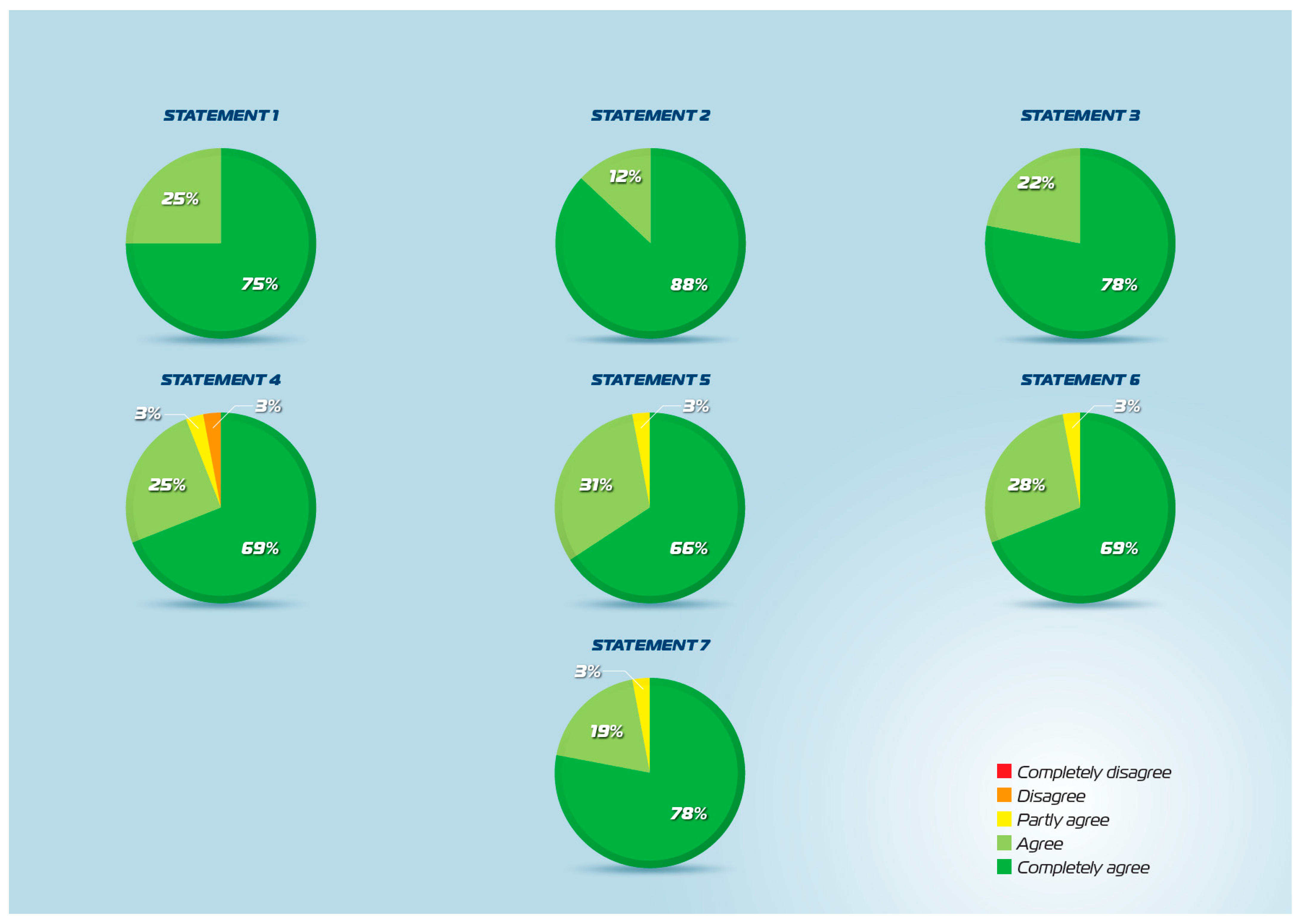



| Statement | % Agreement (Scores 4 + 5) | Mean (SD) | Median (IQR) |
|---|---|---|---|
| Pathophysiological Rationale | |||
| (1) Every acute infectious process activates the immune system and triggers an inflammatory response. These phenomena are aimed at eliminating the pathogen and restoring homeostasis. However, in conditions of defective immune function, the inflammatory reaction can progress, worsening the infection, and, if uncontrolled, can even evolve into a condition of hyperinflammation, sustained by a cytokine storm. | 100% | 4.8 (0.4) | 5 (4–5) |
| (2) The inflammatory reaction that follows an infection also generates oxidative stress, which in turn, if left unchecked, amplifies and maintains the inflammatory state. | 100% | 4.9 (0.2) | 5 (5–5) |
| (3) Respiratory allergic diseases are characterized by activation of the immune system oriented toward polarization 2. This immunological balance promotes type 2 inflammation, characterized by eosinophil infiltration. | 100% | 4.8 (0.4) | 5 (5–5) |
| (4) Type 2 allergic inflammation also generates oxidative stress, which in turn amplifies allergic inflammation. A biomarker of oxidative stress in type 2 inflammation is alveolar FeNO. | 93% | 4.7 (0.3) | 5 (4–5) |
| (5) Allergic individuals, having type 2 polarization, are more susceptible to respiratory infections, which are also more severe and longer lasting than in non-allergic individuals. | 97% | 4.6 (0.6) | 5 (4–5) |
| (6) Allergic subjects have an overexpression of ICAM-1 adhesion molecules, which, on the one hand, explain the inflammatory infiltrative phenomena and, on the other hand, justify the increased susceptibility to infections, as ICAM-1 is the main receptor for most rhinoviruses. | 97% | 4.6 (0.5) | 5 (4–5) |
| (7) Both respiratory infections and respiratory allergies are characterized by a vicious cycle involving activation of the immune system, an inflammatory response, and oxidative stress. | 97% | 4.7 (0.5) | 5 (5–5) |
| (8) Type 2 infection and inflammation are conditions that, in their acute phase, tend to amplify each other. | 97% | 4.7 (0.5) | 5 (5–5) |
| Mechanisms of Action | |||
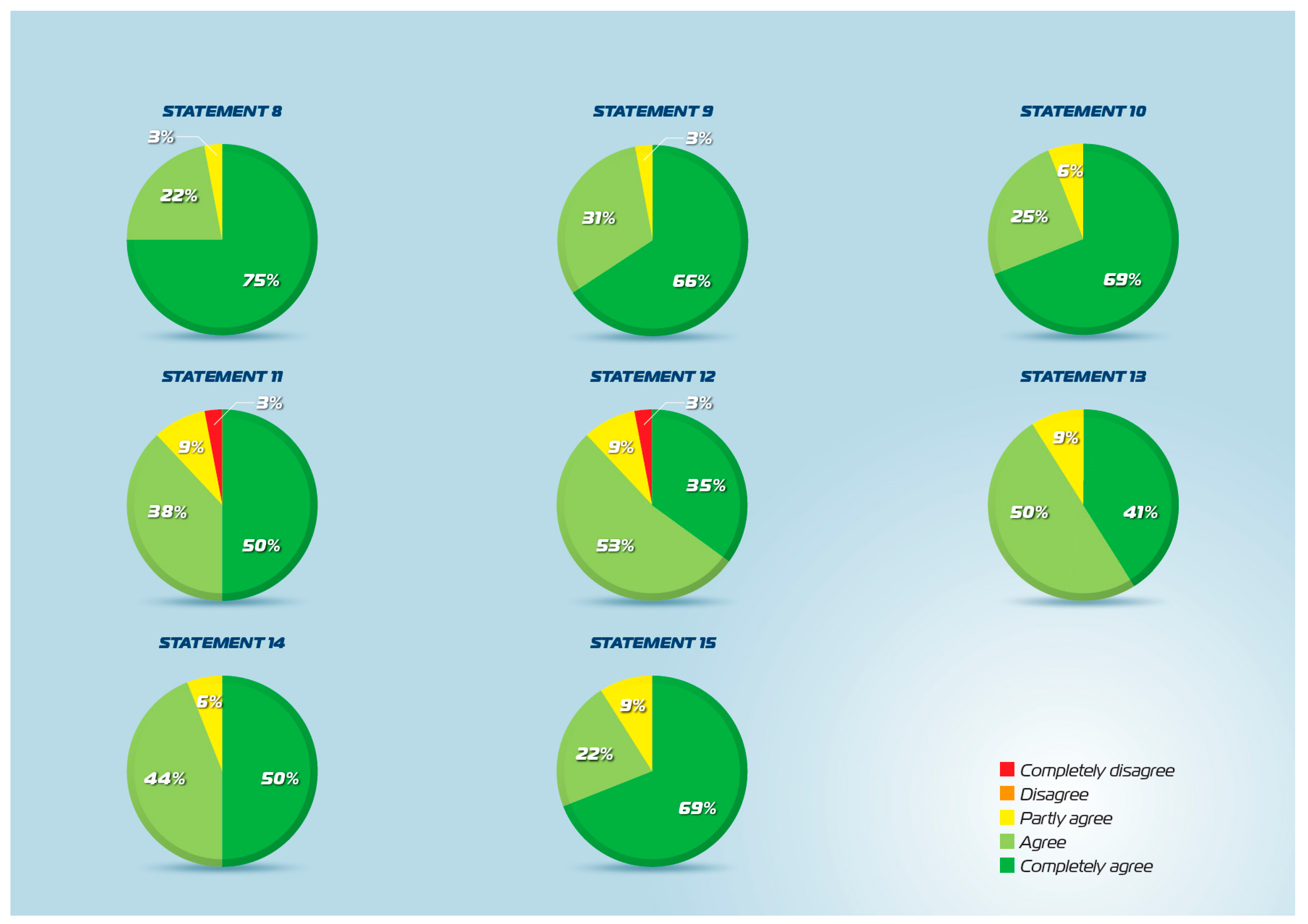
| (9) Resveratrol is a polyphenol that, being a phytoalexin, is produced by plants in response to various stimuli, especially of microbial origin, to defend the plant itself. | 97% | 4.6 (0.6) | 5 (4–5) |
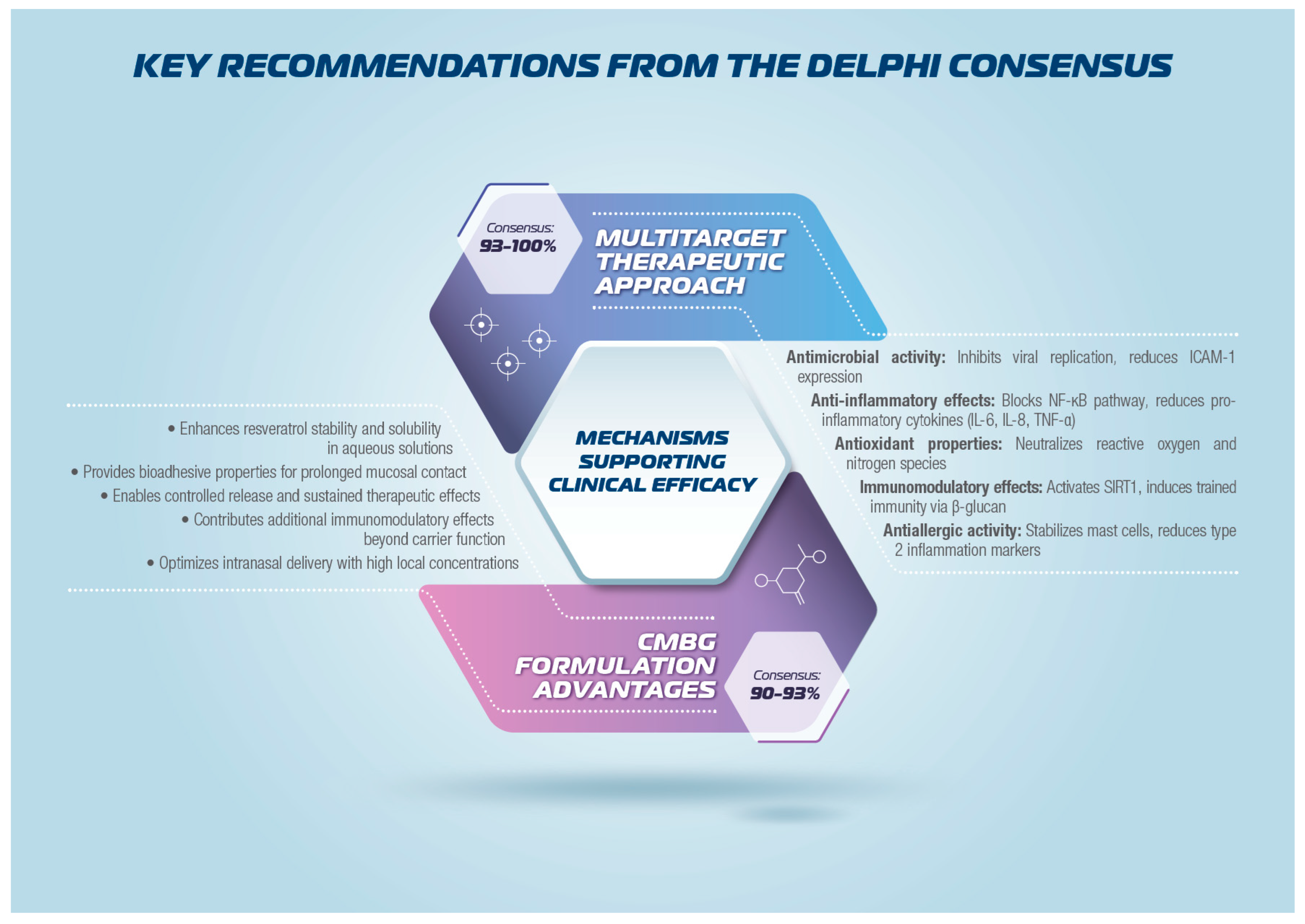
| (10) Resveratrol exerts its defensive capacity through various mechanisms of action, including antimicrobial (especially antiviral) activity, antioxidant activity, immunomodulatory activity, anti-inflammatory activity, and anti-allergic activity. | 93% | 4.6 (0.6) | 5 (4–5) |
| (11) Thanks to this pleiotropic activity, resveratrol can be used advantageously in clinical practice for various diseases. | 94% | 4.3 (0.9) | 4.5 (4–5) |
| (12) When taken orally, resveratrol has poor systemic bioavailability, so very high doses must be used, which can easily cause side effects. | 87% | 4.2 (0.9) | 4 (4–5) |
| (13) Formulations have been designed and developed that provide adequate stability and solubility in order to ensure clinically relevant efficacy even at low doses. | 93% | 4.3 (0.6) | 4.5 (4–5) |
| CMBG-Resveratrol Formulation | |||
| (14) The addition of the bioadhesive mucopolymer carboxymethyl-β-glucan (CMBG) to resveratrol results in a series of chemical-physical characteristics that allow it to be delivered to the mucous membranes, thus enabling controlled release. This makes the compound suitable for nasal administration. | 93% | 4.4 (0.6) | 4.5 (4–5) |
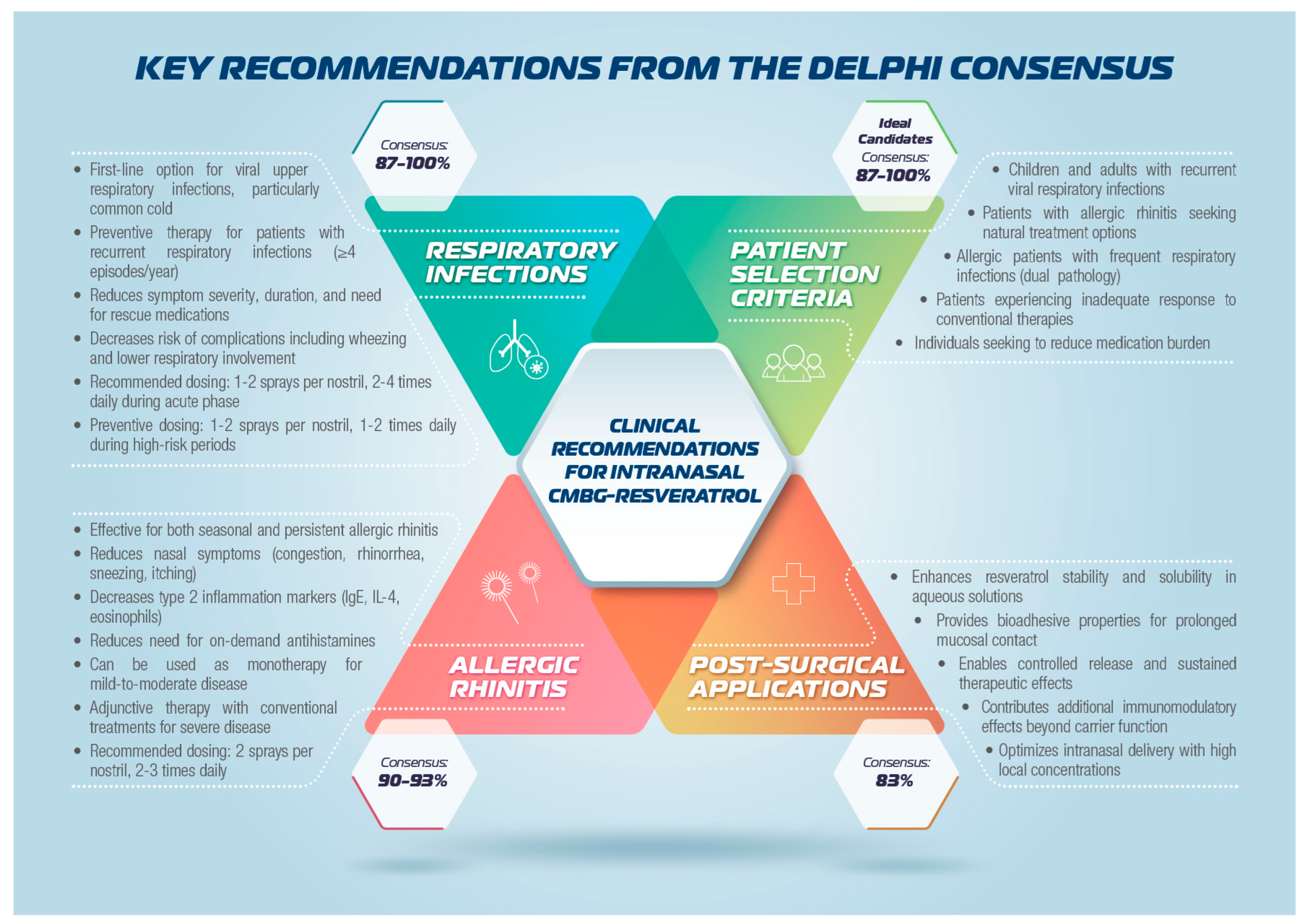
| (15) The intranasal route of the CMBG-resveratrol compound may be a suitable option for managing respiratory infections, especially those of viral etiology, and respiratory allergic diseases. | 90% | 4.6 (0.7) | 5 (4–5) |
| (16) Carboxymethyl-β-glucan has two functions: one is to stabilize and make resveratrol available topically, and the other is to stimulate the immune system (typical of glucans), also activating “Trained Immunity.” | 90% | 4.5 (0.7) | 5 (4–5) |
| Preclinical Evidence | |||
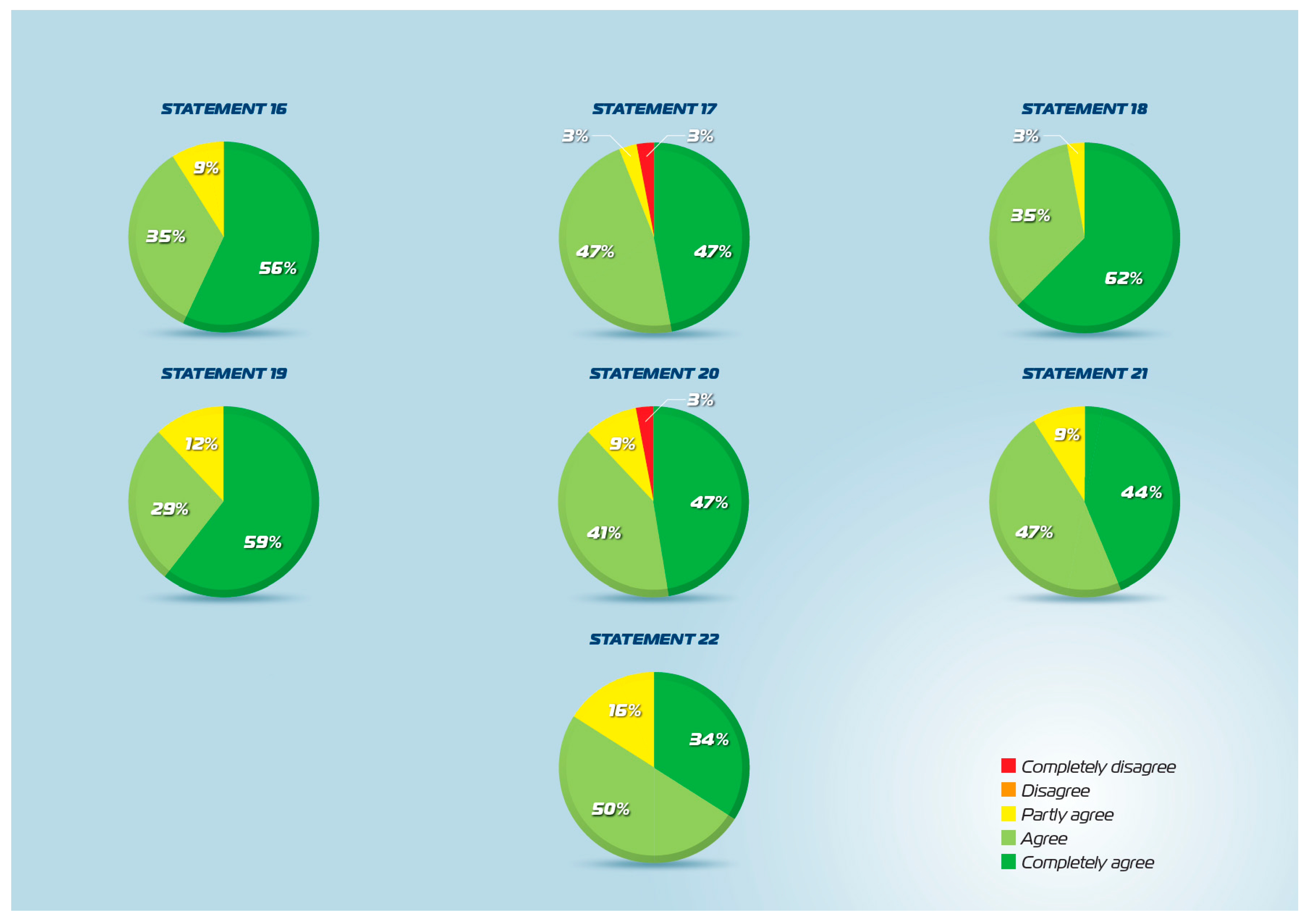
| (17) A series of preclinical in vitro studies have demonstrated that this formulation is stable, water-soluble, and suitable for nebulization. | 93% | 4.3 (0.8) | 4.5 (4–5) |
| (18) These preclinical studies confirmed antiviral and anti-inflammatory activity, including through reduced expression of ICAM-1 and pro-inflammatory cytokines. | 97% | 4.6 (0.5) | 5 (4–5) |
| Clinical Evidence | |||
| (19) A series of controlled clinical studies has demonstrated the ability of the CMBG-resveratrol combination to improve the clinical course of respiratory infections, especially those of a viral nature. | 87% | 4.5 (0.7) | 5 (4–5) |
| (20) These clinical studies have shown that the combination of CMBG and resveratrol can also prevent infections, especially viral infections, in individuals with recurrent respiratory infections. | 87% | 4.3 (0.9) | 4 (4–5) |
| (21) A clinical study has demonstrated the ability of the CMBG-resveratrol combination to reduce symptoms in patients with allergic rhinitis, while also reducing type 2 inflammation. | 90% | 4.3 (0.7) | 4 (4–5) |
| (22) The CMBG-resveratrol complex may also be useful in the post-operative course of endonasal surgery. | 83% | 4.2 (0.7) | 4 (4–5) |
Disclaimer/Publisher’s Note: The statements, opinions and data contained in all publications are solely those of the individual author(s) and contributor(s) and not of MDPI and/or the editor(s). MDPI and/or the editor(s) disclaim responsibility for any injury to people or property resulting from any ideas, methods, instructions or products referred to in the content. |
© 2026 by the authors. Licensee MDPI, Basel, Switzerland. This article is an open access article distributed under the terms and conditions of the Creative Commons Attribution (CC BY) license.
Share and Cite
Ciprandi, G.; Bettoncelli, G.; La Mantia, I.; Mastromarino, P.; Miraglia del Giudice, M.; Rossi, G.A.; Rossi, O.; Gelardi, M.; Varricchio, A. Multidisciplinary Delphi Consensus on the Clinical Use of Intranasal Carboxymethyl-β-Glucan-Resveratrol: Evidence-Based Recommendations for Upper Airway Diseases. J. Clin. Med. 2026, 15, 3087. https://doi.org/10.3390/jcm15083087
Ciprandi G, Bettoncelli G, La Mantia I, Mastromarino P, Miraglia del Giudice M, Rossi GA, Rossi O, Gelardi M, Varricchio A. Multidisciplinary Delphi Consensus on the Clinical Use of Intranasal Carboxymethyl-β-Glucan-Resveratrol: Evidence-Based Recommendations for Upper Airway Diseases. Journal of Clinical Medicine. 2026; 15(8):3087. https://doi.org/10.3390/jcm15083087
Chicago/Turabian StyleCiprandi, Giorgio, Germano Bettoncelli, Ignazio La Mantia, Paola Mastromarino, Michele Miraglia del Giudice, Giovanni Arturo Rossi, Oliviero Rossi, Matteo Gelardi, and Attilio Varricchio. 2026. "Multidisciplinary Delphi Consensus on the Clinical Use of Intranasal Carboxymethyl-β-Glucan-Resveratrol: Evidence-Based Recommendations for Upper Airway Diseases" Journal of Clinical Medicine 15, no. 8: 3087. https://doi.org/10.3390/jcm15083087
APA StyleCiprandi, G., Bettoncelli, G., La Mantia, I., Mastromarino, P., Miraglia del Giudice, M., Rossi, G. A., Rossi, O., Gelardi, M., & Varricchio, A. (2026). Multidisciplinary Delphi Consensus on the Clinical Use of Intranasal Carboxymethyl-β-Glucan-Resveratrol: Evidence-Based Recommendations for Upper Airway Diseases. Journal of Clinical Medicine, 15(8), 3087. https://doi.org/10.3390/jcm15083087