Declining eGFR and Uremia Are Associated with Remnant Cholesterol Accumulation and Reduced HDL-C in Non-Dialysis Chronic Kidney Disease

 , , , , and
Abstract
1. Introduction
2. Methods
2.1. Study Design and Population
2.2. Inclusion and Exclusion Criteria
2.3. Data Collection and Laboratory Parameters
2.4. CKD Classification
2.5. Statistical Analysis
3. Results
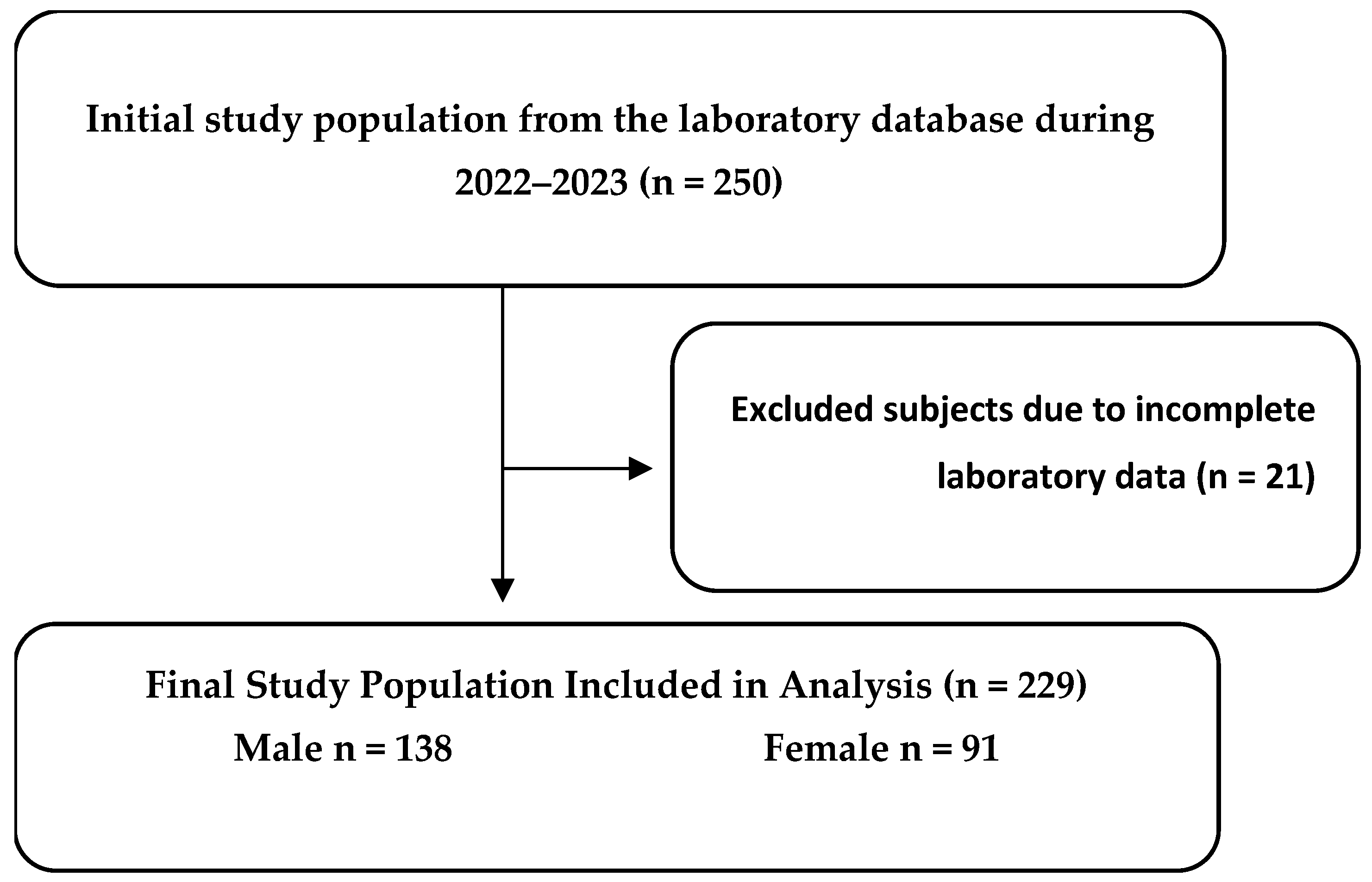
3.1. Descriptive Characteristics of the Included Subjects
3.2. Prevalence of Dyslipidemia Abnormalities in the Study Population
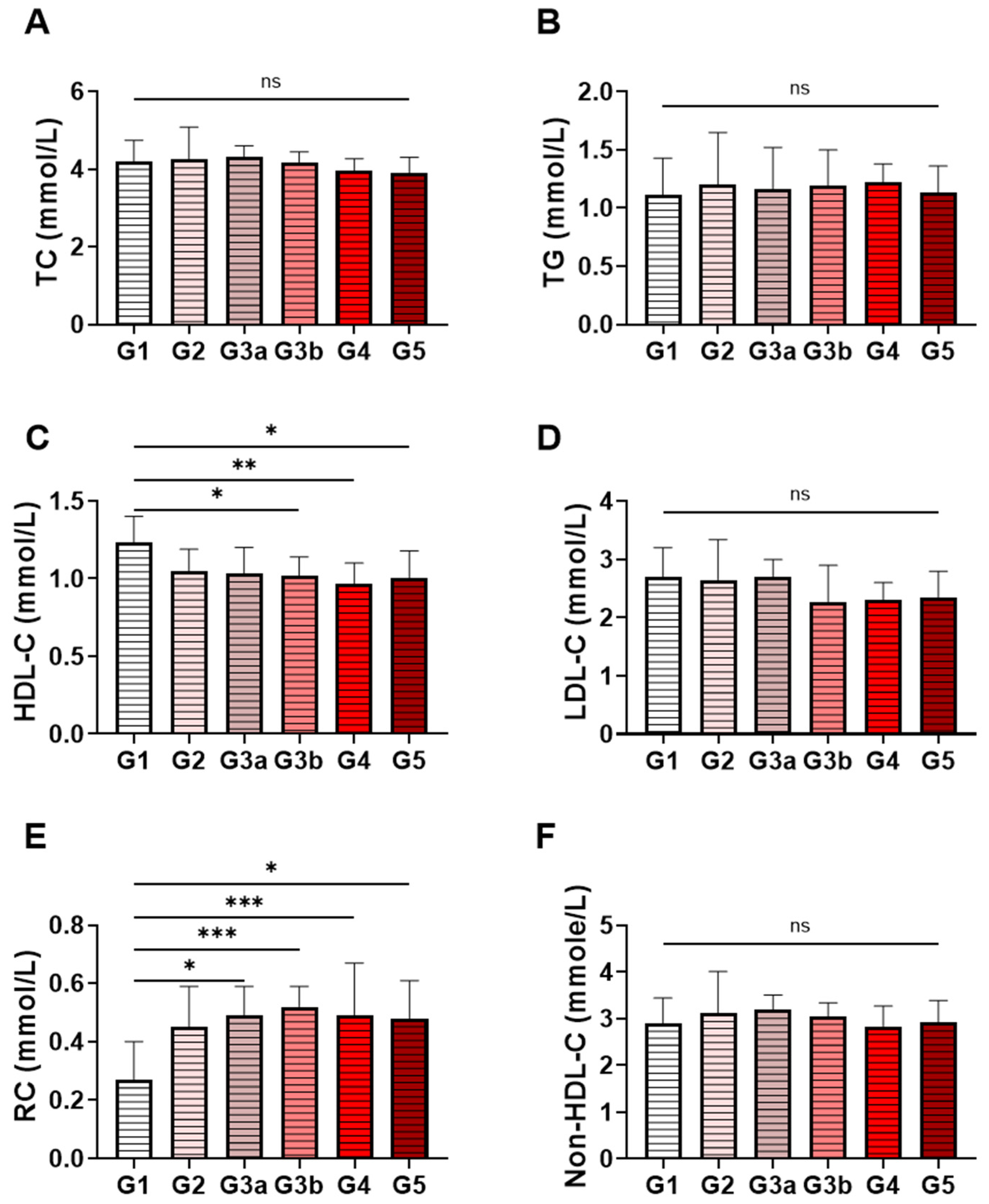
3.3. Distribution of Lipid Parameters Across eGFR-Defined CKD Stages
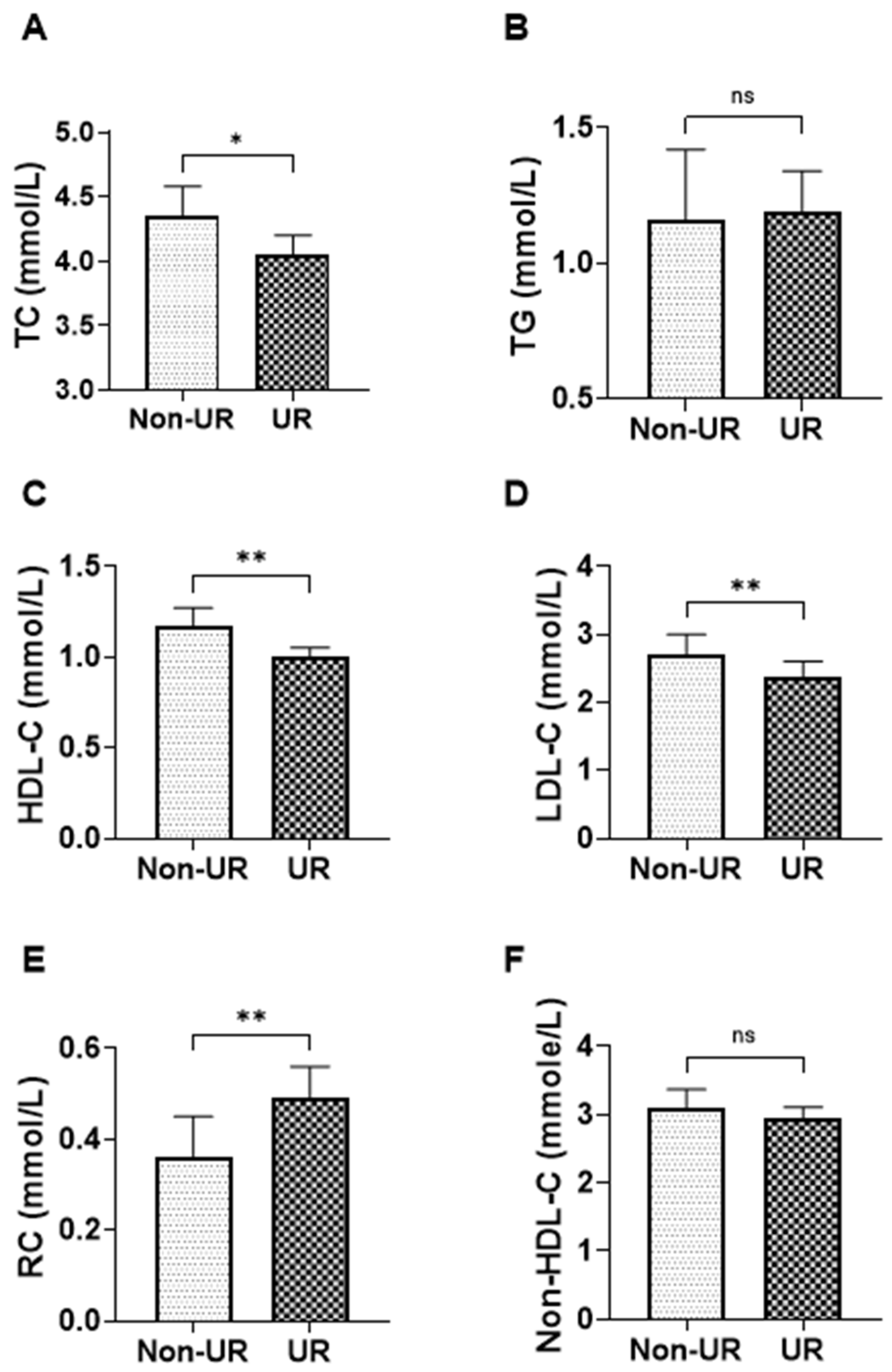
3.4. Distribution of Lipid Parameters Between Non-Uremic and Uremic CKD Patients
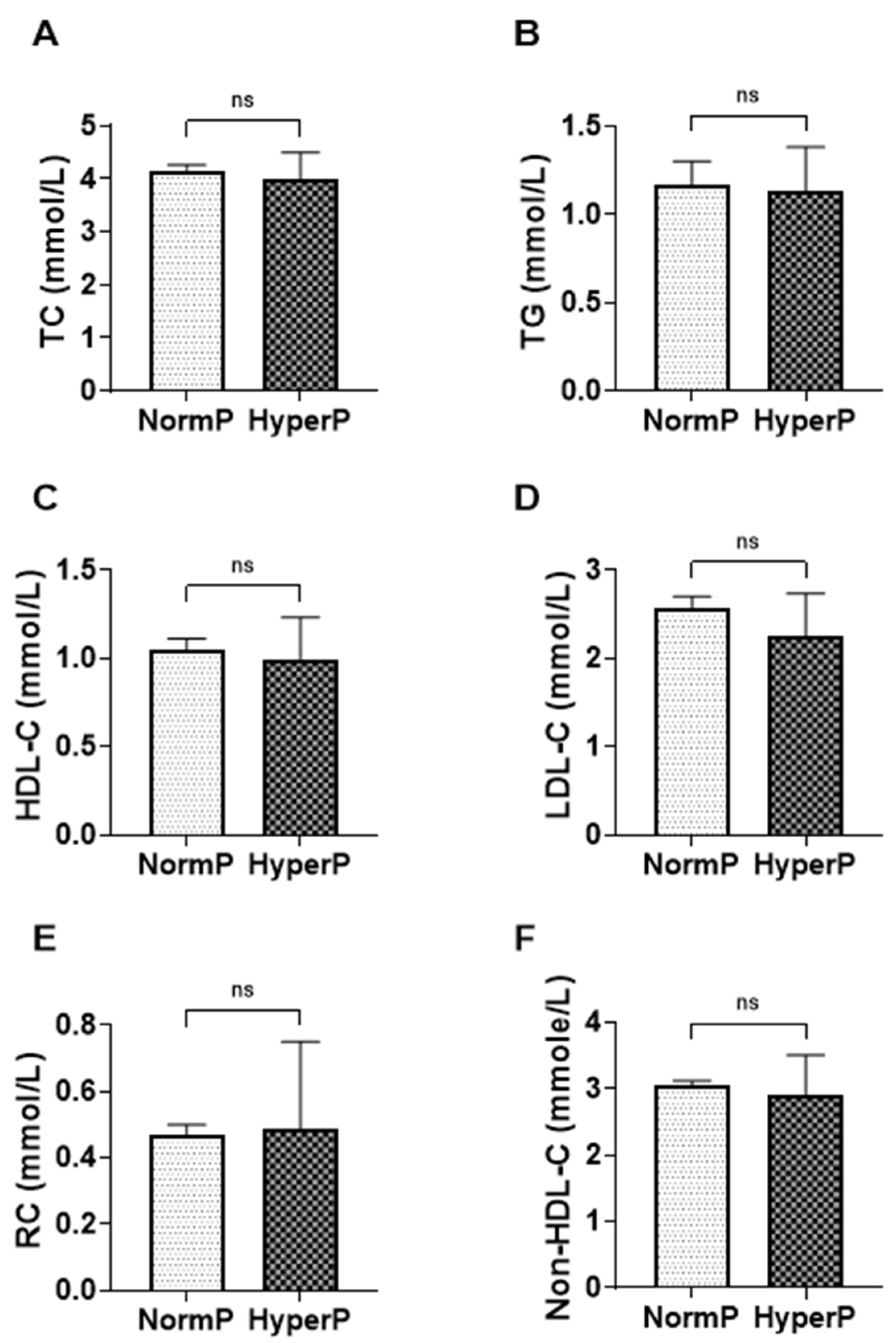
3.5. Distribution of Lipid Parameters Among CKD Patients Stratified by Phosphate Levels
3.6. Multivariable Associations of HDL-C and RC with eGFR in CKD Patients
3.7. Multivariable Associations of HDL-C and RC with BUN Levels in CKD Patients
3.8. ROC Analysis of HDL-C and Remnant Cholesterol for Identifying CKD Stages and Metabolic Complications
4. Discussion
5. Conclusions
Author Contributions
Funding
Institutional Review Board Statement
Informed Consent Statement
Data Availability Statement
Acknowledgments
Conflicts of Interest
References
- Supramanian, K.; Sekar, M.; Safwan Hadi Nor Afendi, N. Chronic Kidney Disease: Etiology, Pathophysiology, and Management Strategies to Increase Quality of Life. In Chronic Kidney Disease—Novel Insights into Pathophysiology and Treatment; IntechOpen: London, UK, 2024. [Google Scholar] [CrossRef]
- Mark, P.B.; Stafford, L.K.; Grams, M.E.; Aalruz, H.; Abd ElHafeez, S.; Abdelgalil, A.A.; Abdulkader, R.S.; Abeywickrama, H.M.; Abiodun, O.O.; Abramov, D.; et al. Global, regional, and national burden of chronic kidney disease in adults, 1990–2023, and its attributable risk factors: A systematic analysis for the Global Burden of Disease Study 2023. Lancet 2025, 406, 2461–2482. [Google Scholar] [CrossRef]
- Alshehri, M.A.; Alkhlady, H.Y.; Awan, Z.A.; Algethami, M.R.; Al Mahdi, H.B.; Daghistani, H.; Orayj, K. Prevalence of chronic kidney disease in Saudi Arabia: An epidemiological population-based study. BMC Nephrol. 2025, 26, 37. [Google Scholar] [CrossRef]
- Burmeister, J.E.; Mosmann, C.B.; Costa, V.B.; Saraiva, R.T.; Grandi, R.R.; Bastos, J.P.; Gonçalves, L.F.; Rosito, G.A. Prevalence of cardiovascular risk factors in hemodialysis patients—The CORDIAL study. Arq. Bras. Cardiol. 2014, 102, 473–479. [Google Scholar] [CrossRef] [PubMed]
- Ahmed, M.H.; Khalil, A.A. Ezetimibe as a potential treatment for dyslipidemia associated with chronic renal failure and renal transplant. Saudi J. Kidney Dis. Transplant. 2010, 21, 1021–1029. [Google Scholar]
- Balode, A.A.; Khan, Z.H. Serum Lipid Profile in Chronic Kidney Disease Patients on Haemodialysis. Indian J. Appl. Res. 2011, 3, 20–22. [Google Scholar] [CrossRef]
- Mefford, M.T.; Rosenson, R.S.; Deng, L.; Tanner, R.M.; Bittner, V.; Safford, M.M.; Coll, B.; Mues, K.E.; Monda, K.L.; Muntner, P. Trends in statin use among US adults with chronic kidney disease, 1999–2014. J. Am. Heart Assoc. 2019, 8, e010640. [Google Scholar] [CrossRef]
- Abidor, E.; Achkar, M.; Al Saidi, I.; Lather, T.; Jdaidani, J.; Agarwal, A.; El-Sayegh, S. Comprehensive Review of Lipid Management in Chronic Kidney Disease and Hemodialysis Patients: Conventional Approaches, and Challenges for Cardiovascular Risk Reduction. J. Clin. Med. 2025, 14, 643. [Google Scholar] [CrossRef]
- Mikolasevic, I.; Žutelija, M.; Mavrinac, V.; Orlic, L. Dyslipidemia in patients with chronic kidney disease: Etiology and management. Int. J. Nephrol. Renov. Dis. 2017, 10, 35–45. [Google Scholar] [CrossRef]
- Mazón-Ruiz, J.; Arroyo, D.; de Cos, M.; Riestra, M.; Sánchez-Alvarez, E.; González Bores, P.; Hernández, J.L.; Corral, P. Lipid lowering therapies in chronic kidney disease: A call to action. Atherosclerosis 2025, 411, 120563. [Google Scholar] [CrossRef] [PubMed]
- Heo, J.H.; Jo, S.H. Triglyceride-Rich Lipoproteins and Remnant Cholesterol in Cardiovascular Disease. J. Korean Med. Sci. 2023, 38, e295. [Google Scholar] [CrossRef] [PubMed]
- Kamrani, F.; Imannezhad, M.; Rezaee, A.; Darroudi, S.; Yavari Kondori, A.; Sadatian, S.; Shahri, B.; Esmaily, H.; Heidari Bakavoli, A.R.; Ghayour-Mobarhan, M.; et al. Emerging importance of remnant cholesterol compared with low-density lipoprotein cholesterol in cardiovascular risk assessment. Sci. Rep. 2025, 15, 44094. [Google Scholar] [CrossRef] [PubMed]
- Yuan, Y.; Hu, X.; Zhang, S.; Wang, W.; Yu, B.; Zhou, Y.; Ou, Y.; Dong, H. Remnant cholesterol, preinflammatory state and chronic kidney disease: Association and mediation analyses. Ren. Fail. 2024, 46, 2361094. [Google Scholar] [CrossRef] [PubMed]
- Bergmann, K. Non-HDL Cholesterol and Evaluation of Cardiovascular Disease Risk. EJIFCC 2010, 21, 64–67. [Google Scholar]
- Huynh, K. Non-HDL cholesterol levels linked with long-term risk of CVD. Nat. Rev. Cardiol. 2020, 17, 132–133. [Google Scholar] [CrossRef]
- Hansen, M.K.; Mortensen, M.B.; Warnakula Olesen, K.K.; Thrane, P.G.; Maeng, M. Non-HDL cholesterol and residual risk of cardiovascular events in patients with ischemic heart disease and well-controlled LDL cholesterol: A cohort study. Lancet Reg. Health-Eur. 2024, 36, 100774. [Google Scholar] [CrossRef]
- Hong, S.; Han, K.; Park, J.H.; Yu, S.H.; Lee, C.B.; Kim, D.S. Higher Non-High-Density Lipoprotein Cholesterol was Higher Associated with Cardiovascular Disease Comparing Higher LDL-C in Nine Years Follow Up: Cohort Study. J. Lipid Atheroscler. 2023, 12, 164–174. [Google Scholar] [CrossRef] [PubMed]
- Zhang, K.; Qi, X.; Zhu, F.; Dong, Q.; Gou, Z.; Wang, F.; Xiao, L.; Li, M.; Chen, L.; Wang, Y.; et al. Remnant cholesterol is associated with cardiovascular mortality. Front. Cardiovasc. Med. 2022, 9, 984711. [Google Scholar] [CrossRef] [PubMed]
- Navarese, E.P.; Vine, D.; Proctor, S.; Grzelakowska, K.; Berti, S.; Kubica, J.; Raggi, P. Independent Causal Effect of Remnant Cholesterol on Atherosclerotic Cardiovascular Outcomes: A Mendelian Randomization Study. Arterioscler. Thromb. Vasc. Biol. 2023, 43, E373–E380. [Google Scholar] [CrossRef] [PubMed]
- Disease, K. Global Outcomes CKD-MBD Update Work Group, I. KDIGO 2017 Clinical Practice Guideline Update for the Diagnosis, Evaluation, Prevention, and Treatment of Chronic Kidney Disease–Mineral and Bone Disorder (CKD-MBD). Kidney Int. Suppl. 2017, 7, 1–59. [Google Scholar] [CrossRef]
- Pieniazek, A.; Bernasinska-slomczewska, J.; Gwozdzinski, L. Uremic toxins and their relation with oxidative stress induced in patients with ckd. Int. J. Mol. Sci. 2021, 22, 6196. [Google Scholar] [CrossRef]
- Harlacher, E.; Wollenhaupt, J.; Baaten, C.C.F.M.J.; Noels, H. Impact of Uremic Toxins on Endothelial Dysfunction in Chronic Kidney Disease: A Systematic Review. Int. J. Mol. Sci. 2022, 23, 531. [Google Scholar] [CrossRef]
- Wojtaszek, E.; Oldakowska-Jedynak, U.; Kwiatkowska, M.; Glogowski, T.; Malyszko, J. Uremic Toxins, Oxidative Stress, Atherosclerosis in Chronic Kidney Disease, and Kidney Transplantation. Oxid. Med. Cell. Longev. 2021, 2021, 6651367. [Google Scholar] [CrossRef] [PubMed]
- Holzer, M.; Birner-Gruenberger, R.; Stojakovic, T.; El-Gamal, D.; Binder, V.; Wadsack, C.; Heinemann, A.; Marsche, G. Uremia alters HDL composition and function. J. Am. Soc. Nephrol. 2011, 22, 1631–1641. [Google Scholar] [CrossRef]
- Yamada, S.; Giachelli, C.M. Vascular calcification in CKD-MBD: Roles for phosphate, FGF23, and Klotho. Bone 2017, 100, 87–93. [Google Scholar] [CrossRef]
- Stevens, P.E.; Ahmed, S.B.; Carrero, J.J.; Foster, B.; Francis, A.; Hall, R.K.; Herrington, W.G.; Hill, G.; Inker, L.A.; Kazancıoğlu, R.; et al. KDIGO 2024 Clinical Practice Guideline for the Evaluation and Management of Chronic Kidney Disease. Kidney Int. 2024, 105, S117–S314. [Google Scholar] [CrossRef]
- Heidenreich, P.A.; Bozkurt, B.; Aguilar, D.; Allen, L.A.; Byun, J.J.; Colvin, M.M.; Deswal, A.; Drazner, M.H.; Dunlay, S.M.; Evers, L.R.; et al. 2022 AHA/ACC/HFSA Guideline for the Management of Heart Failure: A Report of the American College of Cardiology/American Heart Association Joint Committee on Clinical Practice Guidelines. Circulation 2022, 145, E895–E1032. [Google Scholar] [CrossRef]
- Quispe, R.; Martin, S.S.; Michos, E.D.; Lamba, I.; Blumenthal, R.S.; Saeed, A.; Lima, J.; Puri, R.; Nomura, S.; Tsai, M.; et al. Remnant cholesterol predicts cardiovascular disease beyond LDL and ApoB: A primary prevention study. Eur. Heart J. 2021, 42, 4324–4332. [Google Scholar] [CrossRef] [PubMed]
- Kim, S.W.; Jee, J.H.; Kim, H.J.; Jin, S.M.; Suh, S.; Bae, J.C.; Kim, S.W.; Chung, J.H.; Min, Y.K.; Lee, M.S.; et al. Non-HDL-cholesterol/HDL-cholesterol is a better predictor of metabolic syndrome and insulin resistance than apolipoprotein B/apolipoprotein A1. Int. J. Cardiol. 2013, 168, 2678–2683. [Google Scholar] [CrossRef]
- Bosman, A.; Campos-Obando, N.; Ramakers, C.; Carola Zillikens, M. Serum Phosphate in the General Population: A Need for Sex-Specific Reference Intervals. J. Clin. Endocrinol. Metab. 2025, 110, e1885–e1891. [Google Scholar] [CrossRef] [PubMed]
- Vanholder, R.; Gryp, T.; Glorieux, G. Urea and chronic kidney disease: The comeback of the century? (In uraemia research). Nephrol. Dial. Transplant. 2018, 33, 4–12. [Google Scholar] [CrossRef]
- Elías-López, D.; Vedel-Krogh, S.; Kobylecki, C.J.; Wadström, B.N.; Nordestgaard, B.G. Impaired Renal Function with Higher Remnant Cholesterol Related to Risk of Atherosclerotic Cardiovascular Disease: A Cohort Study. Arterioscler. Thromb. Vasc. Biol. 2024, 44, 2647–2658. [Google Scholar] [CrossRef] [PubMed]
- Li, Q.; Wang, T.; Shao, X.; Fan, X.; Lin, Y.; Cui, Z.; Liu, H.; Zhou, S.; Yu, P. Association of remnant cholesterol with renal function and its progression in patients with type 2 diabetes related chronic kidney disease. Front. Endocrinol. 2024, 15, 1331603. [Google Scholar] [CrossRef]
- Karakasis, P.; Patoulias, D.; Rizzo, M.; Fragakis, N.; Mantzoros, C.S. Association between remnant cholesterol and chronic kidney disease: Systematic review and meta-analysis. Diabetes Obes. Metab. 2025, 27, 2573–2583. [Google Scholar] [CrossRef]
- Sebastian-Valles, F.; Muñiz, Á.M.; Marazuela, M. Remnant Cholesterol: From Pathophysiology to Clinical Implications in Type 1 Diabetes. Endocrines 2025, 6, 46. [Google Scholar] [CrossRef]
- Choi, S.H.; Ginsberg, H.N. Increased very low density lipoprotein (VLDL) secretion, hepatic steatosis, and insulin resistance. Trends Endocrinol. Metab. 2011, 22, 353–363. [Google Scholar] [CrossRef]
- Kim, C.; Vaziri, N.D. Down-regulation of hepatic LDL receptor-related protein (LRP) in chronic renal failure. Kidney Int. 2005, 67, 1028–1032. [Google Scholar] [CrossRef] [PubMed]
- Akmal, M.; Kasim, S.E.; Soliman, A.R.; Massry, S.G. Excess parathyroid hormone adversely affects lipid metabolism in chronic renal failure. Kidney Int. 1990, 37, 854–858. [Google Scholar] [CrossRef]
- Joven, J.; Vilella, E.; Ahmad, S.; Cheung, M.C.; Brunzell, J.D. Lipoprotein heterogeneity in end-stage renal disease. Kidney Int. 1993, 43, 410–418. [Google Scholar] [CrossRef] [PubMed]
- Oh, K.H.; Kang, M.; Kang, E.; Ryu, H.; Han, S.H.; Yoo, T.H.; Kim, S.W.; Chae, D.W.; Lee, K.B.; Park, S.K.; et al. The KNOW-CKD study: What we have learned about chronic kidney diseases. Kidney Res. Clin. Pract. 2020, 39, 121–135. [Google Scholar] [CrossRef] [PubMed]
- Vaziri, N.D. Lipotoxicity and Impaired High Density Lipoprotein-Mediated Reverse Cholesterol Transport in Chronic Kidney Disease. J. Ren. Nutr. 2010, 20, S35–S43. [Google Scholar] [CrossRef]
- Cwiklińska, A.; Cackowska, M.; Wieczorek, E.; Król, E.; Kowalski, R.; Kuchta, A.; Kortas-Stempak, B.; Gliwińska, A.; Dąbkowski, K.; Zielińska, J.; et al. Progression of Chronic Kidney Disease Affects HDL Impact on Lipoprotein Lipase (LPL)-Mediated VLDL Lipolysis Efficiency. Kidney Blood Press. Res. 2018, 43, 970–978. [Google Scholar] [CrossRef]
- Reis, A.; Rudnitskaya, A.; Chariyavilaskul, P.; Dhaun, N.; Melville, V.; Goddard, J.; Webb, D.J.; Pitt, A.R.; Spickett, C.M. Top-down lipidomics of low density lipoprotein reveal altered lipid profiles in advanced chronic kidney disease. J. Lipid Res. 2015, 56, 413–422. [Google Scholar] [CrossRef]
- Duranton, F.; Cohen, G.; De Smet, R.; Rodriguez, M.; Jankowski, J.; Vanholder, R.; Argiles, A. Normal and pathologic concentrations of uremic toxins. J. Am. Soc. Nephrol. 2012, 23, 1258–1270. [Google Scholar] [CrossRef]
- Topçiu-Shufta, V.; Haxhibeqiri, V. Lipid Disorders in Uremia. In Cellular Metabolism and Related Disorders; IntechOpen: London, UK, 2020. [Google Scholar] [CrossRef]
- Turner, M.E.; Beck, L.; Hill Gallant, K.M.; Chen, Y.; Moe, O.W.; Kuro-O, M.; Moe, S.M.; Aikawa, E. Phosphate in Cardiovascular Disease: From New Insights into Molecular Mechanisms to Clinical Implications. Arterioscler. Thromb. Vasc. Biol. 2024, 44, 584–602. [Google Scholar] [CrossRef] [PubMed]
- Peng, A.; Wu, T.; Zeng, C.; Rakheja, D.; Zhu, J.; Ye, T.; Hutcheson, J.; Vaziri, N.D.; Liu, Z.; Mohan, C.; et al. Adverse effects of simulated hyper- and hypo-phosphatemia on endothelial cell function and viability. PLoS ONE 2011, 6, e23268. [Google Scholar] [CrossRef] [PubMed]
- Adeney, K.L.; Siscovick, D.S.; Ix, J.H.; Seliger, S.L.; Shlipak, M.G.; Jenny, N.S.; Kestenbaum, B.R. Association of serum phosphate with vascular and valvular calcification in moderate CKD. J. Am. Soc. Nephrol. 2009, 20, 381–387. [Google Scholar] [CrossRef] [PubMed]



| Variable | Median (IQR) or n (%) |
|---|---|
| Age | 59 (46–69) |
| Male | 138 (60.26%) |
| BMI | 27.3 (23.8–31.6) |
| eGFR | 37 (21–61) |
| BUN | 9.6 (6.00–15.95) |
| Creatinine | 158.9 (110.9–245.2) |
| % HTN | 193 (84.3%) |
| % T2D | 101 (44.1%) |
| % Smoker | 4 (1.75%) |
| Medication Class | n | % |
|---|---|---|
| Antihypertensive agents | 193 | 84.3% |
| Lipid-lowering therapy | 128 | 55.9% |
| Atorvastatin | 89 | 38.9% |
| Rosuvastatin | 39 | 17.0% |
| Antidiabetic therapy | 98 | 42.8% |
| Diuretics | 97 | 42.3% |
| CKD-related metabolic therapy | 85 | 37.1% |
| Vitamin/mineral supplementation | 120 | 52.4% |
| Iron/hematologic therapy | 90 | 39.3% |
| Antiplatelet/anticoagulant therapy | 64 | 27.9% |
| Gastroprotective therapy | 102 | 44.5% |
| Immunosuppressive/anti-inflammatory drugs | 63 | 27.5% |
| Lipid Parameter | Clinical Threshold (mmol/L) | Median (IQR), mmol/L | Abnormal n (%) |
|---|---|---|---|
| Total cholesterol (TC) | ≥5.2 | 4.14 (3.48–4.74) | 47 (20.52%) |
| Triglycerides (TG) | ≥1.7 | 1.17 (0.92–1.79) | 59 (25.76%) |
| LDL cholesterol (LDL-C) | ≥3.4 | 2.52 (1.90–3.13) | 43 (18.78%) |
| HDL cholesterol (HDL-C) | ≤1.0 (men)/≤1.2 (women) | 1.04 (0.87–1.24) | 114 (49.78%) |
| Remnant cholesterol (RC) | ≥0.6 | 0.47 (0.32–0.69) | 72 (31.44%) |
| Non-HDL cholesterol | ≥3.9 | 3.03 (2.42–3.68) | 46 (20.09%) |
| Variable | Model 1 β (95% CI) | q Value | Model 2 β (95% CI) | q Value | Model 3 β (95% CI) | q Value |
|---|---|---|---|---|---|---|
| HDL-C | 59.6 (26.7 to 92.4) | 0.0004 | 55.6 (25.6 to 85.7) | 0.0006 | 48.8 (19.3 to 78.4) | 0.003 |
| R2 | 0.053 | 0.285 | 0.340 | |||
| RC | −27.0 (−38.5 to −15.6) | <0.0001 | −19.8 (−30.3 to −9.3) | 0.0006 | −19.9 (−30.1 to −9.7) | 0.0005 |
| R2 | 0.087 | 0.286 | 0.351 |
| Variable | Model 1 β (95% CI) | q Value | Model 2 β (95% CI) | q Value | Model 3 β (95% CI) | q Value |
|---|---|---|---|---|---|---|
| HDL-C | −15.3 (−22.8 to −7.8) | <0.0001 | −16.4 (−24.1 to −8.8) | 0.0004 | −14.3 (−21.9 to −6.8) | 0.0014 |
| R2 | 0.066 | 0.122 | 0.181 | |||
| RC | 3.5 (0.7–6.2) | 0.013 | 3.3 (0.6–6.1) | 0.0374 | 3.4 (0.7–6.0) | 0.0315 |
| R2 | 0.027 | 0.076 | 0.153 |
| HDL-C (AUC, 95% CI) | p Value | RC (AUC, 95% CI) | p Value | |
|---|---|---|---|---|
| G2 | 0.66 (0.52 to 0.80) | 0.0297 | 0.68 (0.54 to 0.82) | 0.0169 |
| G3a | 0.65 (0.51 to 0.79) | 0.0375 | 0.71 (0.58 to 0.84) | 0.0034 |
| G3b | 0.68 (0.56 to 0.81) | 0.0069 | 0.75 (0.64 to 0.87) | 0.0002 |
| G4 | 0.71 (0.60 to 0.83) | 0.0013 | 0.78 (0.67 to 0.89) | <0.0001 |
| G5 | 0.71 (0.58 to 0.85) | 0.0051 | 0.71 (0.58 to 0.85) | 0.0052 |
| Uremia | 0.66 (0.58 to 0.74) | <0.001 | 0.65 (0.57 to 0.74) | <0.001 |
| Hyperphosphatemia | 0.58 (0.48 to 0.68) | 0.1339 | 0.53 (0.43 to 0.64) | 0.4916 |
Disclaimer/Publisher’s Note: The statements, opinions and data contained in all publications are solely those of the individual author(s) and contributor(s) and not of MDPI and/or the editor(s). MDPI and/or the editor(s) disclaim responsibility for any injury to people or property resulting from any ideas, methods, instructions or products referred to in the content. |
© 2026 by the authors. Licensee MDPI, Basel, Switzerland. This article is an open access article distributed under the terms and conditions of the Creative Commons Attribution (CC BY) license.
Share and Cite
Alyami, H.; Alshuweishi, F.A.; Baghdadi, N.A.; Al-Sharafa, M.M.; Jaber Alqahtani, A.; Alshuweishi, Y. Declining eGFR and Uremia Are Associated with Remnant Cholesterol Accumulation and Reduced HDL-C in Non-Dialysis Chronic Kidney Disease. J. Clin. Med. 2026, 15, 2918. https://doi.org/10.3390/jcm15082918
Alyami H, Alshuweishi FA, Baghdadi NA, Al-Sharafa MM, Jaber Alqahtani A, Alshuweishi Y. Declining eGFR and Uremia Are Associated with Remnant Cholesterol Accumulation and Reduced HDL-C in Non-Dialysis Chronic Kidney Disease. Journal of Clinical Medicine. 2026; 15(8):2918. https://doi.org/10.3390/jcm15082918
Chicago/Turabian StyleAlyami, Hanan, Fahd A. Alshuweishi, Nadiah A. Baghdadi, Meshal Marzoog Al-Sharafa, Ali Jaber Alqahtani, and Yazeed Alshuweishi. 2026. "Declining eGFR and Uremia Are Associated with Remnant Cholesterol Accumulation and Reduced HDL-C in Non-Dialysis Chronic Kidney Disease" Journal of Clinical Medicine 15, no. 8: 2918. https://doi.org/10.3390/jcm15082918
APA StyleAlyami, H., Alshuweishi, F. A., Baghdadi, N. A., Al-Sharafa, M. M., Jaber Alqahtani, A., & Alshuweishi, Y. (2026). Declining eGFR and Uremia Are Associated with Remnant Cholesterol Accumulation and Reduced HDL-C in Non-Dialysis Chronic Kidney Disease. Journal of Clinical Medicine, 15(8), 2918. https://doi.org/10.3390/jcm15082918