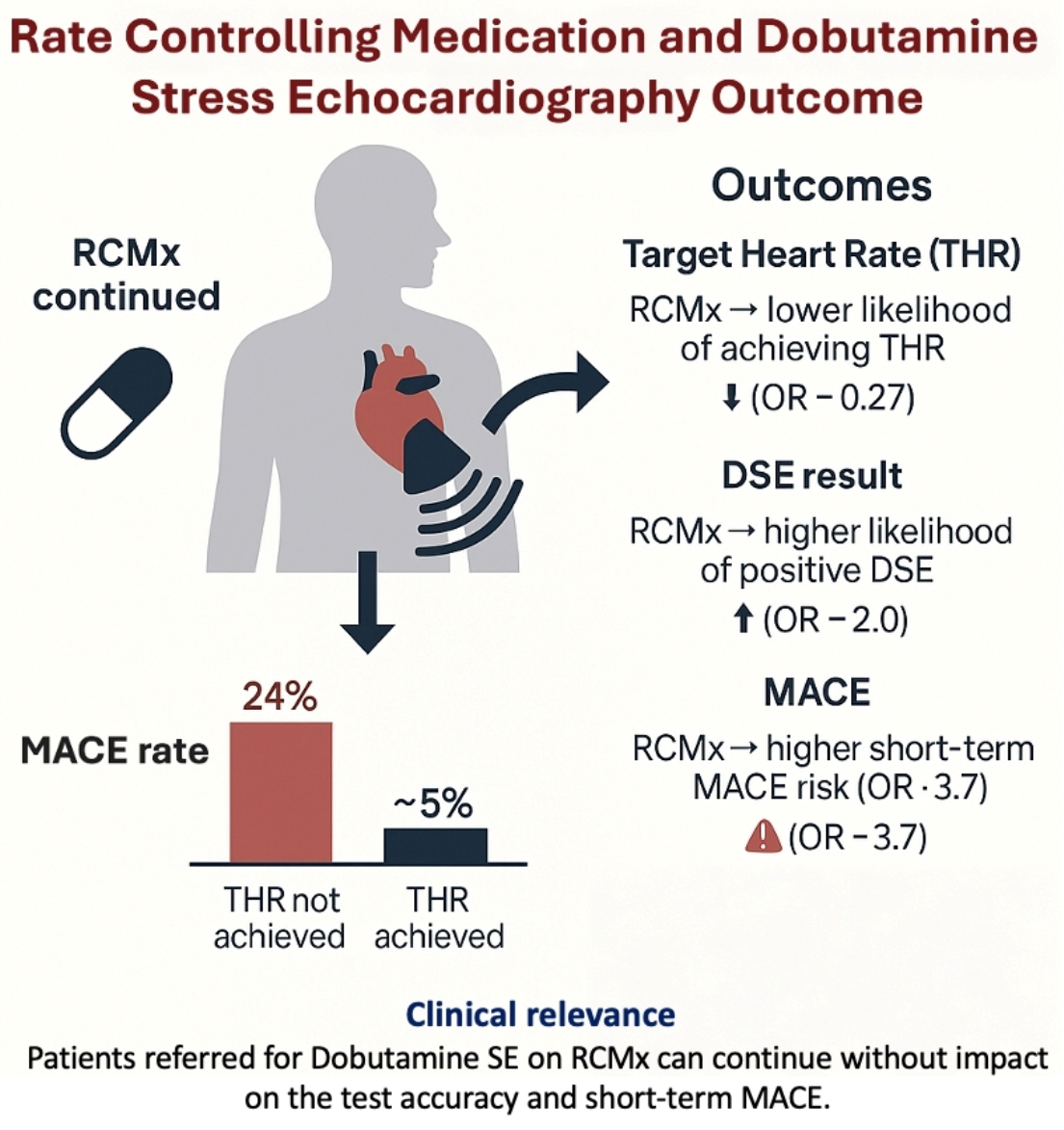
The Effect of Rate-Controlling Medication on the Performance and Outcome of Dobutamine Stress Echocardiography in the Assessment of Patients with Suspected Angina: A Retrospective Cohort Study

 ,
,
Abstract
1. Introduction
2. Methods
2.1. Patients and Protocol
2.2. Outcome Measures
2.3. Statistical Analysis
2.4. Missing Data Handling
3. Results
3.1. General Results
3.2. Difference in Cardiovascular Risk and Medication Between Groups of Patients with and Without RCMx (Table 1)
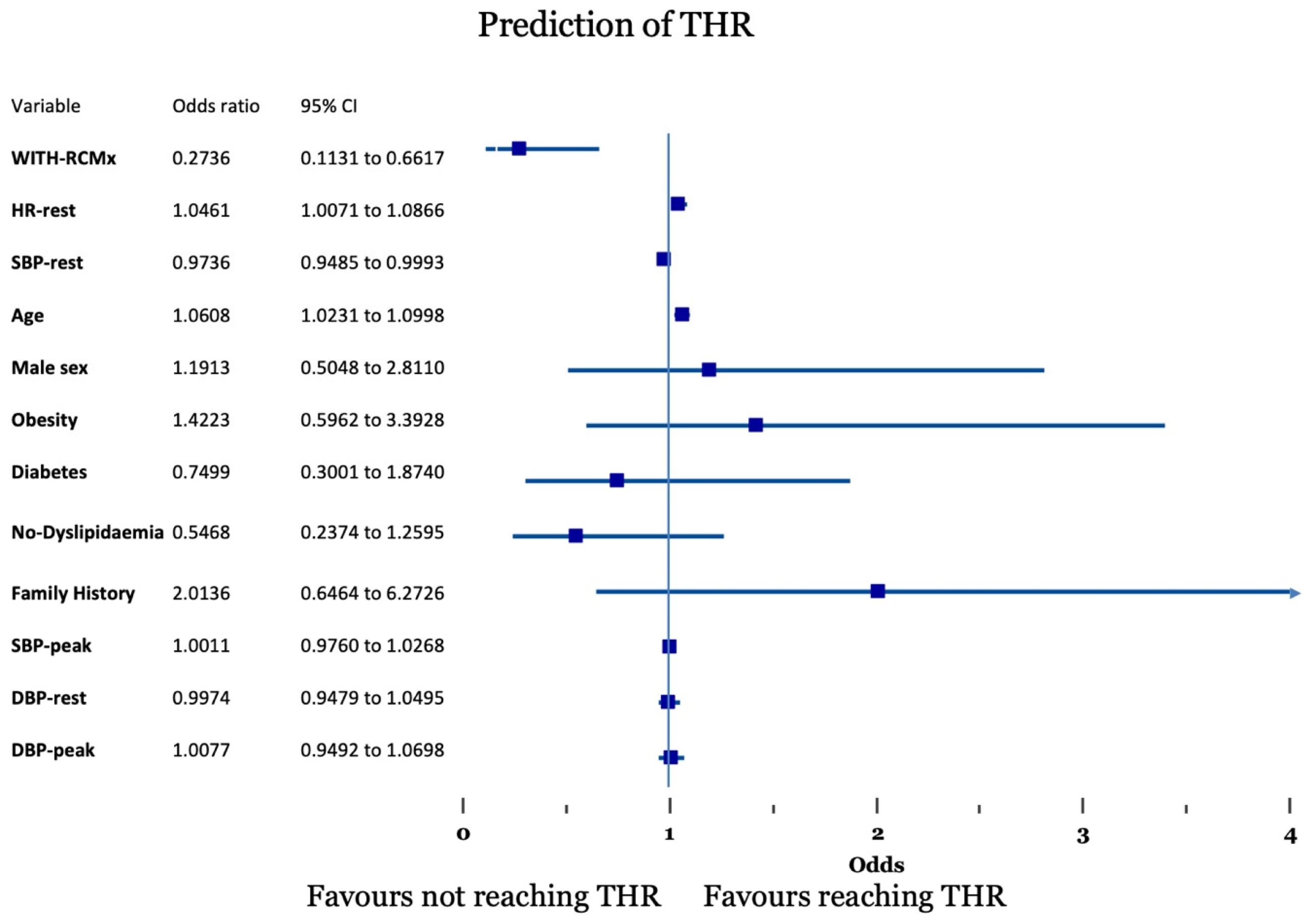
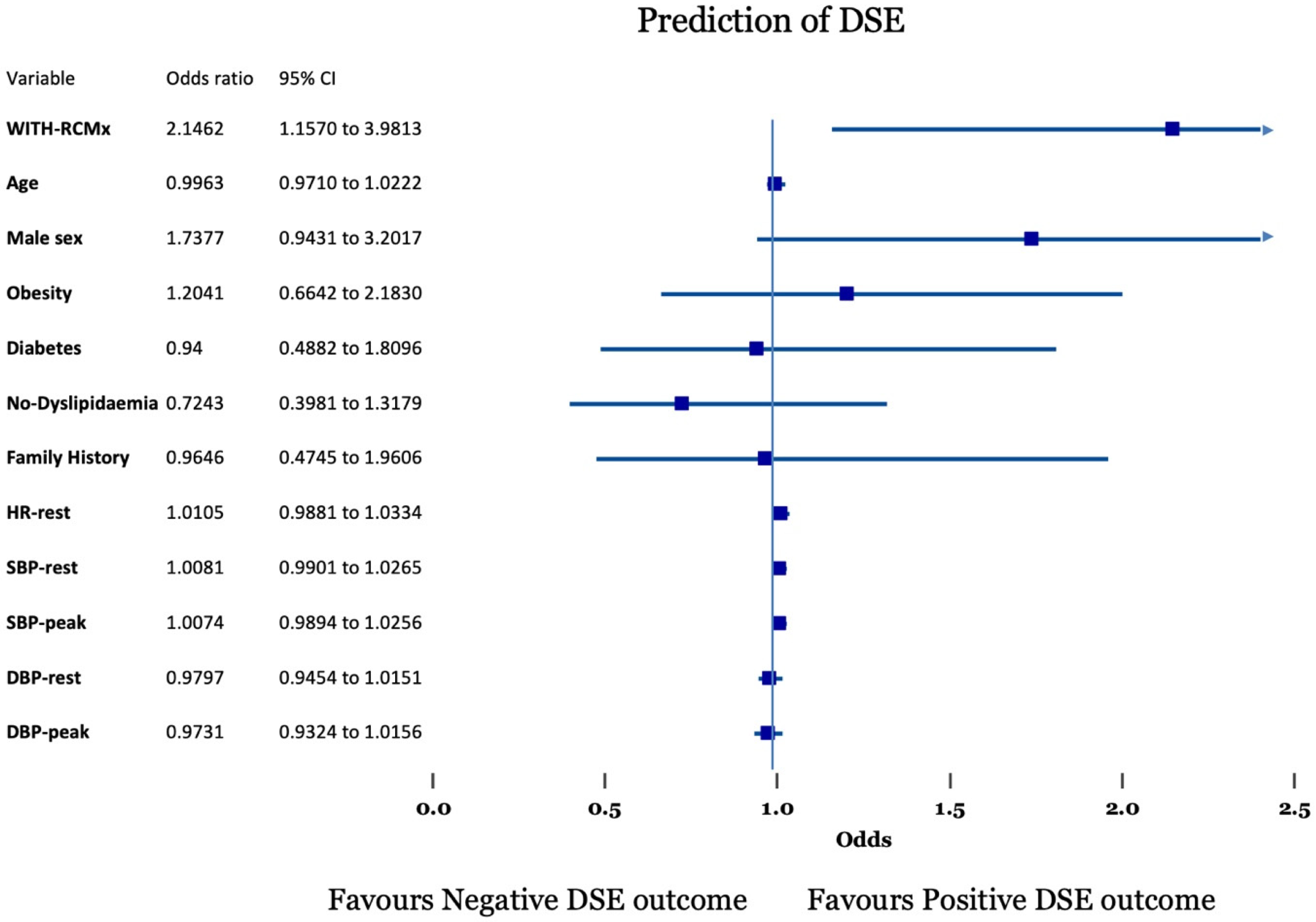
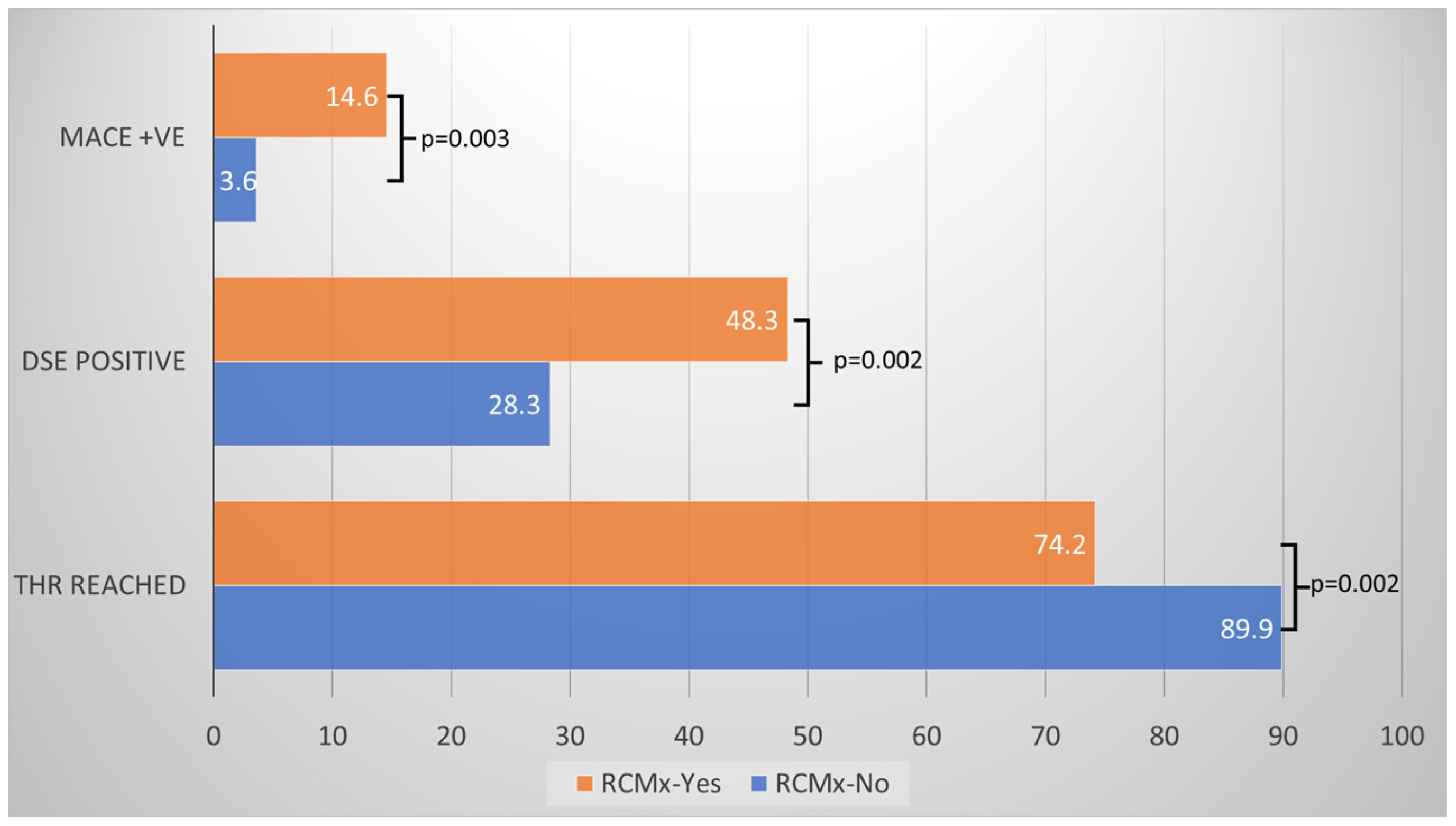
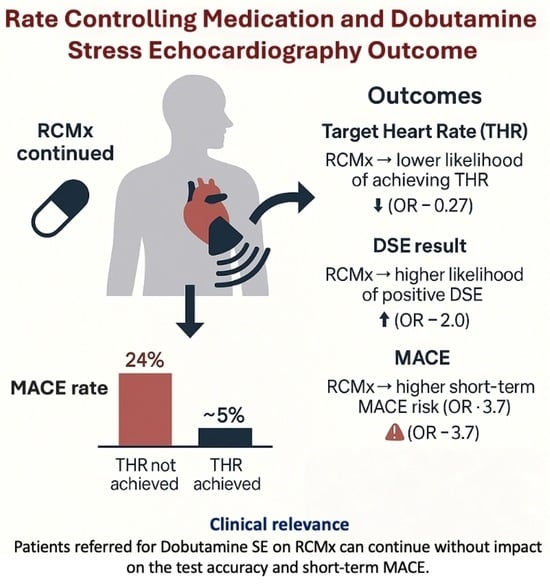
3.3. The Effect of RCMx on Dobutamine SE Parameters (Table 1)
3.4. The Effect of RCMx on Composite MACEs (Table 1 and Table 2)

| WITH RCMx (N = 89) | WITHOUT RCMx (N = 138) | |||||
|---|---|---|---|---|---|---|
| THR Achieved | THR Not Achieved | p | THR Achieved | THR not Achieved | p | |
| N | 66 (74%) | 23 (26%) | <0.001 | 124 (90%) | 14 (10%) | <0.001 |
| Age | 71 (61–77) | 67 (60–73) | 0.1118 | 69 (56–750 | 59 (51–66) | 0.0515 |
| Male sex | 40 (61) | 13 (57) | 0.7325 | 51 (41) | 7 (50) | 0.5254 |
| Height (cm) | 166 (160–174) | 168 (160–181) | 0.2202 | 166 (160–173) | 170 (157–177) | 0.5064 |
| Weight (kg) | 84 (73–97) | 79 (65–94) | 0.2747 | 77 (67–87) | 85 (80–111) | 0.0127 |
| BSA (m2) | 1.90 (1.80–2.10) | 1.90 (1.72–2.18) | 0.7775 | 1.90 (1.70–2.00) | 2.00 (1.87–2.12) | 0.0131 |
| Cardiovascular risk factors | ||||||
| Hypertension | 46 (70) | 14 (61) | 0.4393 | 69 (56) | 9 (64) | 0.538 |
| Dyslipidaemia | 38 (58) | 11 (48) | 0.4209 | 64 (52) | 4 (29) | 0.1034 |
| Smoker | 11 (17) | 5 (22) | 0.2154 | 27 (22) | 1 (7) | 0.3924 |
| Diabetes mellitus | 26 (39%) | 11 (48%) | 0.4823 | 27 (22) | 2 (14) | 0.5160 |
| Obesity | 32 (48.5%) | 6 (26%) | 0.0629 | 37 (30) | 6 (43) | 0.3205 |
| Family history of CAD | 13 (20) | 4 (17) | 0.8097 | 35 (28) | 1 (7) | 0.0897 |
| Medications | ||||||
| Beta receptor blockers | 62 (94) | 21 (91) | 0.666 | 0 (0) | 0 (0) | 1.000 |
| Rate-controlling calcium channel blockers | 4 (6) | 2 (9) | 0.666 | 0 (0) | 0 (0) | 1.000 |
| DHP-calcium channel blockers | 22 (33) | 6 (26) | 0.5612 | 29 (23) | 6 (43) | 0.1138 |
| ACE-I/ARB | 38 (58) | 14 (61) | 0.7837 | 40 (32) | 6 (43) | 0.4269 |
| Anti-platelets | 44 (67) | 16 (70) | 0.799 | 50 (40) | 6 (43) | 0.8553 |
| Nitrate | 28 (42) | 7 (30) | 0.3135 | 26 (21) | 3 (21) | 0.9681 |
| DSE parameters | ||||||
| HR at rest (bpm)—imputed | 69.5 (60.0–78.0) | 63.0 (56.0–71.0) | 0.051 | 73 (64–80) | 72 (63–82) | 0.5462 |
| HR at peak (bpm) | 135 (128–143) | 116 (114–124) | <0.001 | 140 (130–148) | 131 (126–136) | 0.0139 |
| SBP rest (mmHg)—imputed | 137 (117–160) | 138 (130.3–155.3) | 0.305 | 138 (120–157) | 150 (124–175) | 0.2318 |
| SBP peak (mmHg)—imputed | 136 (122–153) | 139 (124–169) | 0.3484 | 136 (119–154) | 135 (121–177) | 0.5701 |
| DBP rest (mmHg)—imputed | 72 (64–77) | 74 (67–78) | 0.686 | 74 (68–82) | 78 (72–82) | 0.1965 |
| DBP peak (mmHg)—imputed | 67 (58–72) | 67 (59–76) | 0.502 | 67 (60–74) | 68 (58–78) | 0.7110 |
| THR at peak (% of MTHR) | 89 (87–92) | 79 (71–81) | <0.001 | 89 (87–94) | 84 (81–84) | <0.001 |
| Double product (mmHg*bpm) | 18,617 (16,320–21,708) | 16,100 (14,707–18,697) | 0.0189 | 19,040 (16,479–22,024) | 18,176 (16,214–3010) | 0.8105 |
| WMSI at rest | 1.00 (1.00–1.06) | 1.00 (1.00–1.04) | 0.7714 | 1.00 (1.00–1.00) | 1.00 (1.00–1.06) | 0.2229 |
| WMSI at peak | 1.06 (1.00–1.18) | 1.06 (1.00–1.23) | 0.7896 | 1.00 (1.00–1.06) | 1.00 (1.00–1.06) | 0.7208 |
| Delta WMSI | 0.00 (0.00–0.18) | 0.00 (0.00–0.18) | 0.7222 | 0.00 (0.00–0.060) | 0.00 (0.00–0.060) | 0.4998 |
| Positive DSE (inducible ischaemia) | 32 (48) | 11 (48) | 0.9568 | 34 (27) | 5 (36) | 0.5150 |
| Biphasic response (viable ischaemic) | 16 (24) | 5 (22) | 0.8858 | 14 (11) | 4 (29) | 0.089 |
| Number of LV segments with inducible ischaemia | ||||||
| 0 | 33(50) | 12 (52) | 0.680 | 90 (73) | 9 (64) | 0.839 |
| 1–2 | 20 (30) | 7 (30) | 0.791 | 30 (24.0) | 3 (21) | 0.486 |
| 3–4 | 12 (18) | 3 (13) | 0.478 | 3 (2) | 2 (14) | 0.045 |
| ≥5 | 1 (2) | 1 (4) | 0.553 | 1 (1) | 0 (0.0) | 0.742 |
| MACE | 6 (9.1) | 7 (30) | 0.0131 | 3 (2.4) | 2 (14.3) | 0.0248 |
3.5. Predictors of the Outcome Measures (THR, Dobutamine SE Outcome, and MACE)
4. Discussion
4.1. Explanation of the Findings
4.2. Clinical Translation
5. Limitations
6. Conclusions
Supplementary Materials
Author Contributions
Funding
Institutional Review Board Statement
Informed Consent Statement
Data Availability Statement
Conflicts of Interest
Abbreviations and Acronyms
| RCMx | Rate Controlling Medical Treatment |
| WMSI | Wall Motion Score Index |
| CAD | Coronary Artery Disease |
| THR | Target Heart Rate |
| SE | Stress Echocardiography |
| MACE | Major Adverse Cardiovascular Event |
| MPS | Myocardial Perfusion Scintigraphy |
| SE | Stress Echocardiography |
| RCT | Randomised Control Trials |
| CCTA | Coronary Computed Tomography Angiography |
| ECG | Electrocardiogram |
| SPECT | Single-photon Emission Computed Tomography |
| ESC | European Society of Cardiology |
References
- Vrints, C.; Andreotti, F.; Koskinas, K.C.; Rossello, X.; Adamo, M.; Ainslie, J.; Banning, A.P.; Budaj, A.; Buechel, R.R.; Chiariello, G.A.; et al. 2024 ESC Guidelines for the management of chronic coronary syndromes. Eur. Heart J. 2024, 45, 3415–3537. [Google Scholar] [CrossRef] [PubMed]
- Gulati, M.; Levy, P.D.; Mukherjee, D.; Amsterdam, E.; Bhatt, D.L.; Birtcher, K.K.; Blankstein, R.; Boyd, J.; Bullock-Palmer, R.P.; Conejo, T.; et al. 2021 AHA/ACC/ASE/CHEST/SAEM/SCCT/SCMR guideline for the evaluation and diagnosis of chest pain: Executive summary: A report of the American College of Cardiology/American Heart Association Joint Committee on Clinical Practice Guidelines. J. Am. Coll. Cardiol. 2021, 78, 2218–2261. [Google Scholar] [CrossRef] [PubMed]
- Woodward, W.; Johnson, C.L.; Krasner, S.; O’Driscoll, J.; McCourt, A.; Dockerill, C.; Balkhausen, K.; Chandrasekaran, B.; Firoozan, S.; Kardos, A.; et al. Long-term outcomes after stress echocardiography in real-world practice: A 5-year follow-up of the UK EVAREST study. Eur. Heart J.-Cardiovasc. Imaging 2025, 26, 187–196. [Google Scholar] [CrossRef] [PubMed]
- Ihekwaba, U.; Johnson, N.; Choi, J.S.; Savarese, G.; Orsini, N.; Khoo, J.; Squire, I.; Kardos, A. Long-term prognostic value of contemporary stress echocardiography in patients with suspected or known coronary artery disease: Systematic review and meta-analysis. Heart 2024, 110, 1349–1356. [Google Scholar] [CrossRef] [PubMed]
- Cortigiani, L.; Ciampi, Q.; Zagatina, A.; Kalinina, E.; Padang, R.; Kane, G.C.; Villarraga, H.R.; Arruda-Olson, A.M.; Gaibazzi, N.; Donelli, D.; et al. Chronotropic incompetence during exercise or pharmacological stress is associated with reduced survival in patients with chronic coronary syndromes. Eur. J. Prev. Cardiol. 2025, zwaf492. [Google Scholar] [CrossRef] [PubMed]
- Kardos, A.; Johnson, C.; Leeson, P. Chronotropic incompetency during stress echocardiography: A new paradigm for mortality and cardiac event prediction? Eur. J. Prev. Cardiol. 2025, zwaf550. [Google Scholar] [CrossRef] [PubMed]
- Sicari, R. Anti-ischemic therapy and stress testing: Pathophysiologic, diagnostic and prognostic implications. Cardiovasc. Ultrasound 2004, 2, 14. [Google Scholar] [CrossRef] [PubMed]
- Slome, R. Withdrawal of propranolol and myocardial infarction. Lancet 1973, 301, 156. [Google Scholar] [CrossRef] [PubMed]
- Miller, R.R.; Olson, H.G.; Amsterdam, E.A.; Mason, D.T. Propranolol-Withdrawal Rebound Phenomenon—Exacerbation of Coronary Events after Abrupt Cessation of Antianginal Therapy. N. Engl. J. Med. 1975, 293, 416–418. [Google Scholar] [CrossRef] [PubMed]
- Pellikka, P.A.; Arruda-Olson, A.; Chaudhry, F.A.; Chen, M.H.; Marshall, J.E.; Porter, T.R.; Sawada, S.G. Guidelines for performance, interpretation, and application of stress echocardiography in ischemic heart disease: From the American Society of Echocardiography. J. Am. Soc. Echocardiogr. 2020, 33, 1–41.e8. [Google Scholar] [CrossRef] [PubMed]
- Picano, E.; Pierard, L.; Peteiro, J.; Djordjevic-Dikic, A.; Sade, L.E.; Cortigiani, L.; Van De Heyning, C.M.; Celutkiene, J.; Gaibazzi, N.; Ciampi, Q.; et al. The clinical use of stress echocardiography in chronic coronary syndromes and beyond coronary artery disease: A clinical consensus statement from the European Association of Cardiovascular Imaging of the ESC. Eur. Heart J. Cardiovasc. Imaging 2024, 25, e65–e90. [Google Scholar] [CrossRef] [PubMed]
- Karagiannis, S.E.; Bax, J.J.; Elhendy, A.; Feringa, H.H.; Cokkinos, D.V.; van Domburg, R.; Simoons, M.; Poldermans, D. Enhanced sensitivity of dobutamine stress echocardiography by observing wall motion abnormalities during the recovery phase after acute beta-blocker administration. Am. J. Cardiol. 2006, 97, 462–465. [Google Scholar] [CrossRef] [PubMed]
- Elhendy, A.; O’Leary, E.L.; Xie, F.; McGrain, A.C.; Anderson, J.R.; Porter, T.R. Comparative accuracy of real-time myocardial contrast perfusion imaging and wall motion analysis during dobutamine stress echocardiography for the diagnosis of coronary artery disease. J. Am. Coll. Cardiol. 2004, 44, 2185–2191. [Google Scholar] [CrossRef] [PubMed]


| Total | WITH RCMx | WITHOUT RCMx | p | |
|---|---|---|---|---|
| N | 227 | 89 (39) | 138 (61) | 0.0012 |
| Age | 69 (59–76) | 69 (61–77) | 68 (55–75) | 0.1191 # |
| Male sex | 111 (49) | 53(60) | 58 (40) | 0.010 $ |
| Height (cm) | 167 (160–174) | 166 (160–176) | 167 (160–173) | 0.6600 # |
| Weight (kg) | 80 (71–92) | 82 (73–96) | 77 (68–88) | 0.0555 # |
| BSA (m2) | 1.90 (1.70–2.00) | 1.90 (1.80–2.10) | 1.90 (1.70–2.00) | 0.0879 # |
| Cardiovascular risk factors | ||||
| Hypertension | 138 (61) | 60 (67) | 78 (57) | 0.1015 $ |
| Dyslipidaemia | 117 (52) | 49 (55) | 68 (49) | 0.3959 $ |
| Smoker | 44 (19) | 16 (18) | 28 (20) | 0.3523 $ |
| Former smoker | 27 (12) | 14 (16) | 13 (9) | 0.1105 $ |
| Diabetes mellitus | 66 (29) | 37 (42) | 29 (21) | 0.0009 $ |
| Obesity | 81 (36) | 38 (43) | 43 (31) | 0.0771 $ |
| Family history of CAD | 53 (23) | 17 (19) | 36 (26) | 0.2255 $ |
| Medications | ||||
| Beta receptor blockers | 83 (37) | 83 (93) | 0 (0) | <0.0001 $ |
| Rate-controlling calcium channel blockers | 6 (3) | 6 (7) | 0 (0) | 0.0020 $ |
| DHP-calcium channel blockers | 63 (28) | 28 (31) | 35 (25) | 0.3175 $ |
| ACE-I/ARB | 98 (43) | 52(58) | 46 (33) | 0.0002 $ |
| Anti-platelets | 116 (51) | 60 (67) | 56 (41) | 0.0001 $ |
| Nitrate | 64 (28) | 35 (39) | 29 (21) | 0.0028 $ |
| Other antianginals | 17 (8) | 11 (12) | 6 (4) | 0.0255 $ |
| DSE parameters | ||||
| HR at rest (bpm) | 71 (63–80) | 68 (57–78) | 74 (64–81) | 0.0004 # |
| HR at peak (bpm) | 135 (127–144) | 132 (122–140) | 140 (130–147) | <0.0001 # |
| SBP rest (mmHg) | 138 (120–160) | 138 (119–159) | 140 (120–160) | 0.7490 # |
| SBP peak (mmHg) | 136 (120–158) | 137 (122–159) | 135 (119–156) | 0.5261 # |
| DBP rest (mmHg) | 74 (67–80) | 72 (65–78) | 76 (68–82) | 0.0219 # |
| DBP peak (mmHg) | 67 (58–74) | 65 (58–74) | 67 (58–75) | 0.4687 # |
| THR achieved | 190 (84) | 66 (74) | 124 (90) | 0.0018 $ |
| THR at peak (% of MTHR) | 88 (85–92) | 87 (84–91) | 89 (86–93) | 0.0038 # |
| Double product (mmHg*bpm) | 18,304 (16,037–21,714) | 18,161 (15,358–21,223) | 19,040 (16,256–22,032) | 0.0852 # |
| WMSI at rest | 1.00(1.00–1.06) | 1.00 (1.00–1.06) | 1.00 (1.00–1.00) | 0.0702 # |
| WMSI at peak | 1.00(1.00–1.12) | 1.06 (1.00–1.20) | 1.00 (1.00–1.06) | <0.0001 # |
| Delta WMSI | 0.000 (0.000–0.060) | 0.00 (0.00–0.19) | 0.00 (0.00–0.060) | 0.0002 # |
| Positive DSE (inducible ischaemia) | 82 (36) | 43(48) | 39 (28) | 0.0022 $ |
| Biphasic response (viable ischaemic) | 39 (18) | 21 (24) | 18 (13) | 0.0329 $ |
| Number of inducible ischaemic LV segments | ||||
| 0 | 144 (63) | 40 (43) | 104 (77) | 0.0001 $ |
| 1–2 | 60 (26) | 38 (41) | 22 (16) | 0.0001 $ |
| 3–4 | 20 (9) | 13 (14) | 7 (5) | 0.0180 $ |
| ≥5 | 3 (1) | 1 (1) | 2 (1) | 1.000 $ |
| MACE | 18 (8) | 13 (15) | 5 (4) | 0.0028 $ |
| MACEs | With RCMx (n = 13) | Without RCMx (n = 5) |
|---|---|---|
| Death | 2 | 3 |
| Non-fatal MI | 3 | 0 |
| Unplanned revascularisation | 2 | 0 |
| Stroke | 2 | 2 |
| Admission with progressive angina | 4 | 0 |
Disclaimer/Publisher’s Note: The statements, opinions and data contained in all publications are solely those of the individual author(s) and contributor(s) and not of MDPI and/or the editor(s). MDPI and/or the editor(s) disclaim responsibility for any injury to people or property resulting from any ideas, methods, instructions or products referred to in the content. |
© 2026 by the authors. Licensee MDPI, Basel, Switzerland. This article is an open access article distributed under the terms and conditions of the Creative Commons Attribution (CC BY) license.
Share and Cite
Hariharan, L.; Amjad, M.Z.; John, E.T.; Cospite, V.; Chattopadhyay, S.; Kardos, A. The Effect of Rate-Controlling Medication on the Performance and Outcome of Dobutamine Stress Echocardiography in the Assessment of Patients with Suspected Angina: A Retrospective Cohort Study. J. Clin. Med. 2026, 15, 2850. https://doi.org/10.3390/jcm15082850
Hariharan L, Amjad MZ, John ET, Cospite V, Chattopadhyay S, Kardos A. The Effect of Rate-Controlling Medication on the Performance and Outcome of Dobutamine Stress Echocardiography in the Assessment of Patients with Suspected Angina: A Retrospective Cohort Study. Journal of Clinical Medicine. 2026; 15(8):2850. https://doi.org/10.3390/jcm15082850
Chicago/Turabian StyleHariharan, Laya, Muhammad Zohaib Amjad, Emil Tom John, Valentina Cospite, Sudipta Chattopadhyay, and Attila Kardos. 2026. "The Effect of Rate-Controlling Medication on the Performance and Outcome of Dobutamine Stress Echocardiography in the Assessment of Patients with Suspected Angina: A Retrospective Cohort Study" Journal of Clinical Medicine 15, no. 8: 2850. https://doi.org/10.3390/jcm15082850
APA StyleHariharan, L., Amjad, M. Z., John, E. T., Cospite, V., Chattopadhyay, S., & Kardos, A. (2026). The Effect of Rate-Controlling Medication on the Performance and Outcome of Dobutamine Stress Echocardiography in the Assessment of Patients with Suspected Angina: A Retrospective Cohort Study. Journal of Clinical Medicine, 15(8), 2850. https://doi.org/10.3390/jcm15082850