Seasonal Variation of Plaque Psoriasis in Relation to Individualized MED-Adjusted Ultraviolet Exposure: A Cross-Sectional Study in Poland

 ,
,  , ,
, , 
Abstract
1. Introduction
2. Materials and Methods
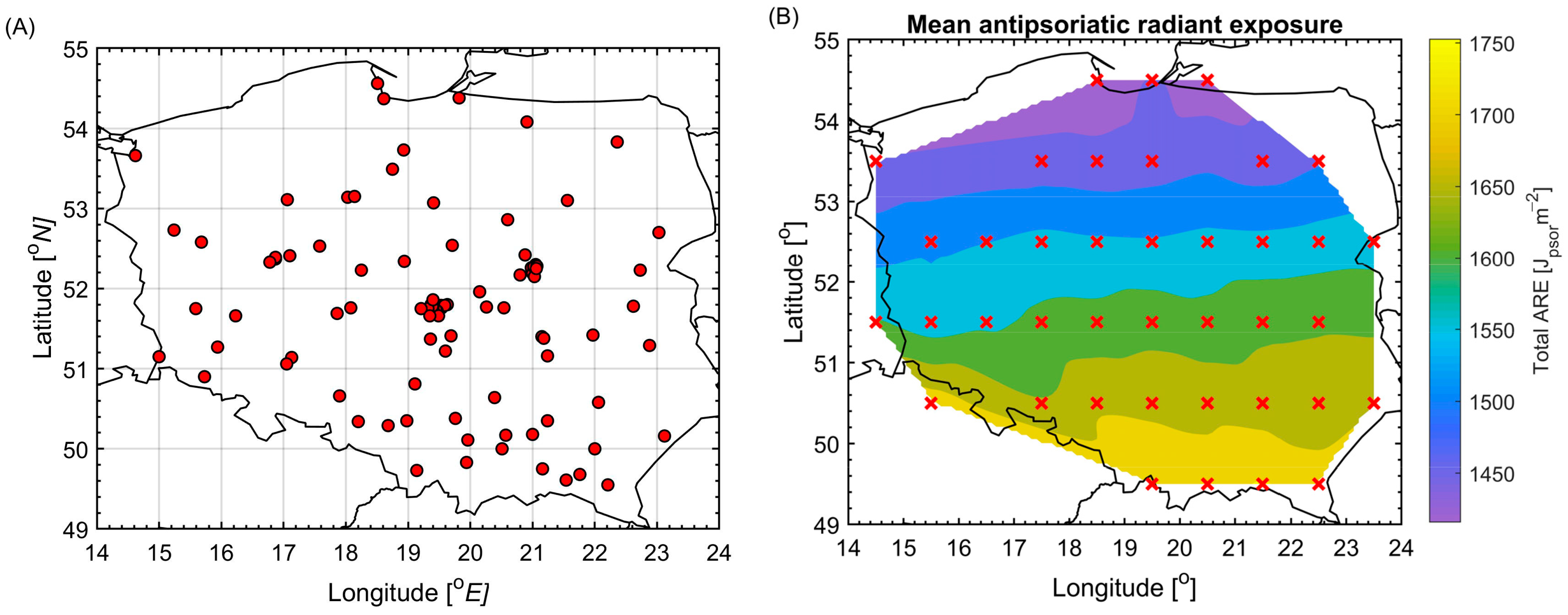
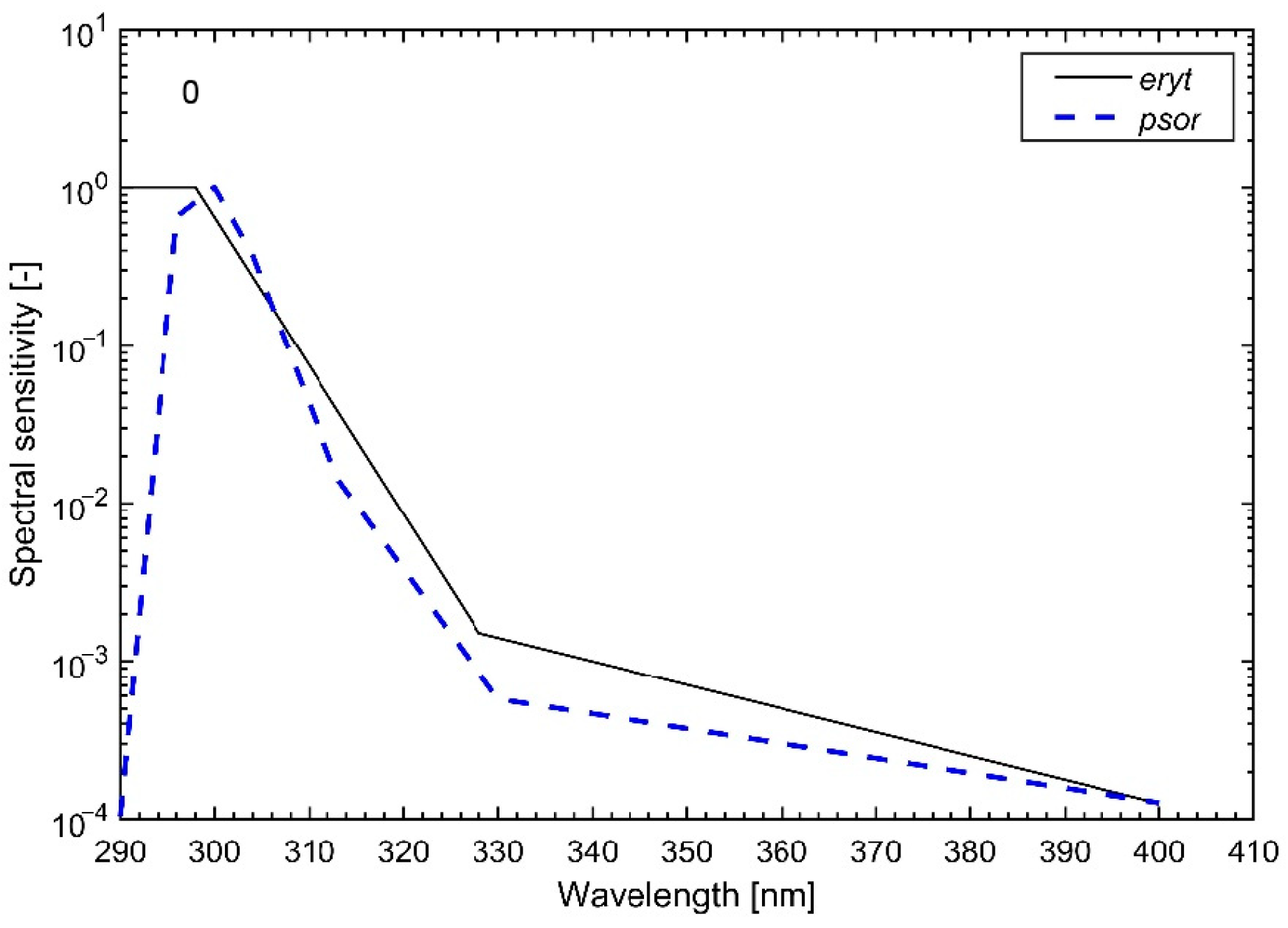
- Ambient UV—total ARE (Jpsor/m2) accumulated between 06:00 and 18:00, calculated from a model of UV distribution over Poland derived from various satellite observations (for more details see Appendix A) and assigned to geocoded residential locations.
- Declared daily ARE (behavioral exposure)—ambient ARE weighted by self-reported average daily time spent outdoors in each season.
- Ambient UV normalized to MED—total (6:00–18:00) ambient ARE divided by individual minimal erythema dose (MED), derived from self-declared phototype, reflecting estimated biologically effective UV dose.
- Declared daily ARE normalized to MED (declared UV/MED)—behaviorally weighted UV exposure further normalized by phototype-specific MED, representing individualized, behavior-adjusted biologically effective UV exposure.
3. Results
3.1. Study Population Characteristics
3.2. Primary Outcome: Seasonality Prevalence
3.3. Seasonal Patterns
3.4. Environmental Trigger Perceptions
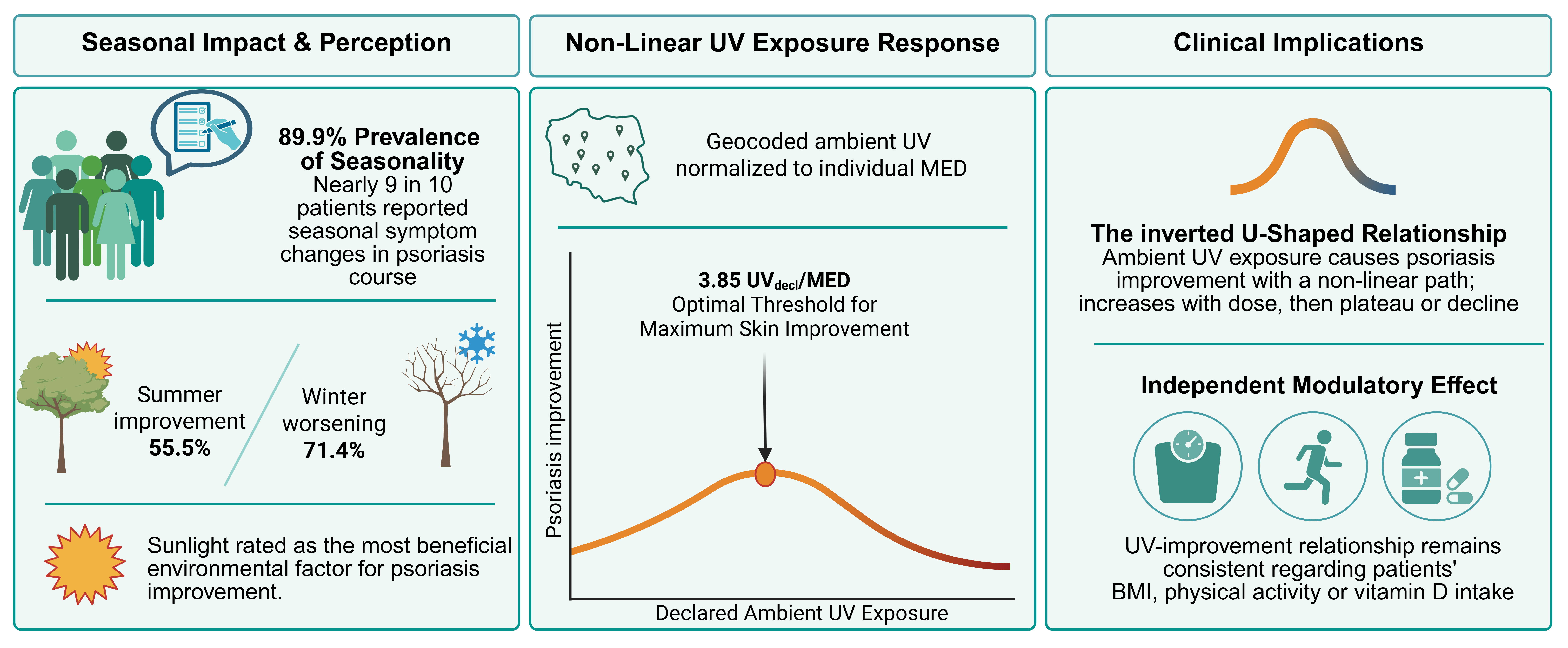
- Summer improvement ↔ beneficial high-sun perception: ρ = 0.444, p < 0.001.
- Winter worsening ↔ detrimental low-sun perception: ρ = 0.312, p < 0.001.
3.5. Ambient Antipsoriatic Radiant Exposure and Seasonal Psoriasis Course
3.5.1. Ultraviolet Exposure Distribution
3.5.2. Association Between UV Exposure and Seasonal Improvement
- Q2: OR 3.42 (95% CI 1.60–7.34), p = 0.002.
- Q3: OR 5.34 (95% CI 2.50–11.43), p < 0.001.
- Q4: OR 4.65 (95% CI 2.04–10.58), p < 0.001.
3.5.3. Association Between UV Exposure and Seasonal Worsening
- Q2: OR 0.29 (95% CI 0.15–0.55), p < 0.001.
- Q3: OR 0.21 (95% CI 0.11–0.40), p < 0.001.
- Q4: OR 0.16 (95% CI 0.08–0.33), p < 0.001.
3.5.4. Continuous and Non-Linear Exposure Modeling
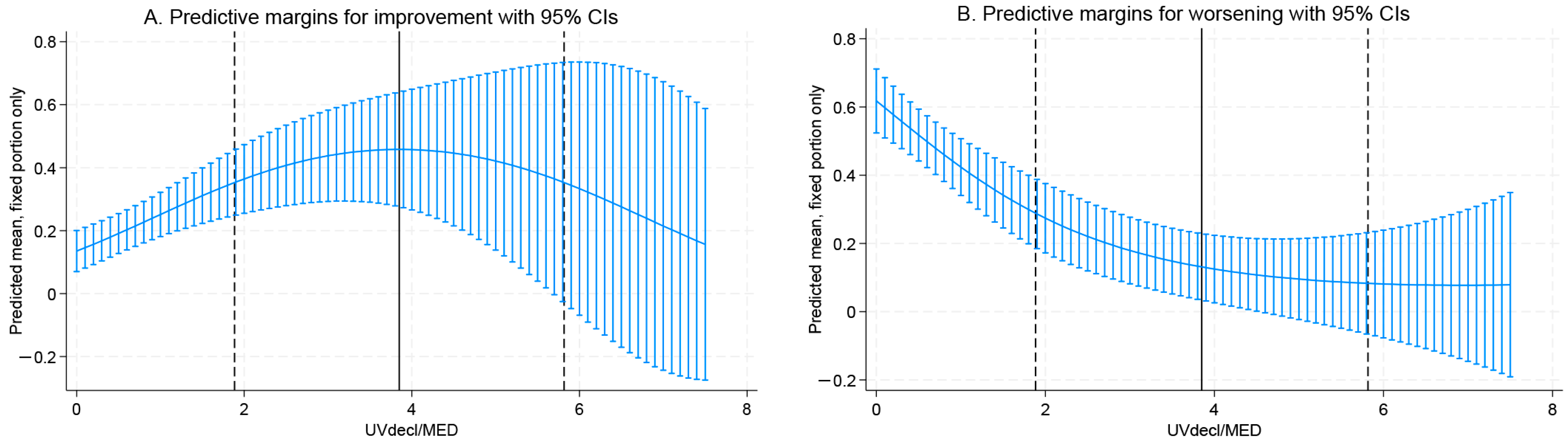
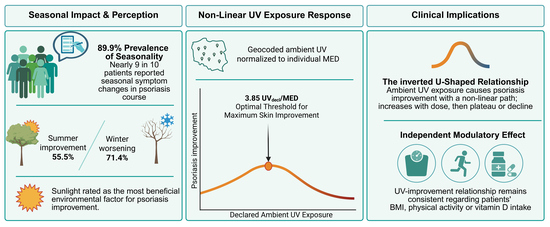
- 1.73-fold higher odds of improvement (OR 1.73, 95% CI 1.32–2.27, p < 0.001).
- 0.53-fold lower odds of worsening (OR 0.53, 95% CI 0.42–0.67, p < 0.001).
3.5.5. Sensitivity Analysis Including Shift Work
4. Discussion
Study Limitations and Future Directions
5. Conclusions
Author Contributions
Funding
Institutional Review Board Statement
Informed Consent Statement
Data Availability Statement
Acknowledgments
Conflicts of Interest
Abbreviations
| AhR | Aryl Hydrocarbon Receptor |
| ARE | Antipsoriatic Radiant Exposure |
| BMI | Body Mass Index |
| CI | Confidence Interval |
| ID | Identifier (Participant ID) |
| IL | Interleukin (e.g., IL-17, IL-22, IL-23) |
| Jeryt, Jpsor | Joules weighted according erythemal and antipsoriatic action spectrum, respectively |
| MED | Minimal Erythema Dose |
| OR | Odds Ratio |
| PASI | Psoriasis Area and Severity Index |
| PGA | Physician Global Assessment |
| PM | Particulate Matter (e.g., PM2.5, PM10) |
| Q | Quartile (e.g., Q1–Q4) |
| TEWL | Transepidermal Water Loss |
| Th17 | T helper 17 cells |
| UV | Ultraviolet |
Appendix A

References
- Armstrong, A.W.; Blauvelt, A.; Callis Duffin, K.; Huang, Y.H.; Savage, L.J.; Guo, L.; Merola, J.F. Psoriasis. Nat. Rev. Dis. Primers 2025, 11, 45. [Google Scholar] [CrossRef] [PubMed]
- Jensen, N.C.; Robins, J.; Snyder, A.M.; Harris, R.; Ferris, L.K.; Johnson, L. Psoriasis in the transplant population. Arch. Dermatol. Res. 2023, 315, 1109–1128. [Google Scholar] [CrossRef] [PubMed]
- Lane, C.G.; Crawford, G.M. Psoriasis: A statistical study of two hundred and thirty-one cases. Arch. Dermatol. Syphilol. 1937, 35, 1051–1061. [Google Scholar] [CrossRef]
- Lomholt, G. Psoriasis on the Faroe Islands; a preliminary report. Acta Derm. Venereol. 1954, 34, 92. [Google Scholar]
- Hellgren, L. Psoriasis. A statistical, clinical and laboratory investigation of 255 psoriatics and matched healthy controls. Acta Derm. Venereol. 1964, 44, 191–207. [Google Scholar]
- Jensen, K.K.; Serup, J.; Alsing, K.K. Psoriasis and seasonal variation: A systematic review on reports from Northern and Central Europe-Little overall variation but distinctive subsets with improvement in summer or wintertime. Skin. Res. Technol. 2022, 28, 180–186. [Google Scholar] [CrossRef]
- Ferguson, F.J.; Lada, G.; Hunter, H.J.A.; Bundy, C.; Henry, A.L.; Griffiths, C.E.M.; Kleyn, C.E. Diurnal and seasonal variation in psoriasis symptoms. J. Eur. Acad. Dermatol. Venereol. 2021, 35, e45–e47. [Google Scholar] [CrossRef]
- Purzycka-Bohdan, D.; Kisielnicka, A.; Zabłotna, M.; Nedoszytko, B.; Nowicki, R.J.; Reich, A.; Samotij, D.; Szczęch, J.; Krasowska, D.; Bartosińska, J.; et al. Chronic Plaque Psoriasis in Poland: Disease Severity, Prevalence of Comorbidities, and Quality of Life. J. Clin. Med. 2022, 11, 1254. [Google Scholar] [CrossRef]
- Wu, Q.; Xu, Z.; Dan, Y.L.; Zhao, C.N.; Mao, Y.M.; Liu, L.N.; Pan, H.F. Seasonality and global public interest in psoriasis: An infodemiology study. Postgrad. Med. J. 2020, 96, 139–143. [Google Scholar] [CrossRef]
- Kardeş, S. Seasonal variation in the internet searches for psoriasis. Arch. Dermatol. Res. 2019, 311, 461–467. [Google Scholar] [CrossRef] [PubMed]
- Liang, H.; Kirk, B.; Polinski, J.M.; Yue, X.; Kilpatrick, R.D.; Gelfand, J.M. Impact of Season and Other Factors on Initiation, Discontinuation, and Switching of Systemic Drug Therapy in Patients with Psoriasis: A Retrospective Study. JID Innov. 2023, 3, 100171. [Google Scholar] [CrossRef]
- Zheng, X.; Wang, Q.; Luo, Y.; Lu, W.; Jin, L.; Chen, M.; Zhu, W.; Kuang, Y. Seasonal Variation of Psoriasis and Its Impact in the Therapeutic Management: A Retrospective Study on Chinese Patients. Clin. Cosmet. Investig. Dermatol. 2021, 14, 459–465. [Google Scholar] [CrossRef]
- Gu, X.; Wang, X.; Bin, Y.; Xue, R.; Zhu, G. Global Trends and Future Predictions of Psoriasis Burden: Insights from the GBD 2021 Study. Psoriasis 2025, 15, 569–580. [Google Scholar] [CrossRef]
- Plikus, M.V.; Van Spyk, E.N.; Pham, K.; Geyfman, M.; Kumar, V.; Takahashi, J.S.; Andersen, B. The circadian clock in skin: Implications for adult stem cells, tissue regeneration, cancer, aging, and immunity. J. Biol. Rhythm. 2015, 30, 163–182. [Google Scholar] [CrossRef]
- Kubota, K.; Kamijima, Y.; Sato, T.; Ooba, N.; Koide, D.; Iizuka, H.; Nakagawa, H. Epidemiology of psoriasis and palmoplantar pustulosis: A nationwide study using the Japanese national claims database. BMJ Open 2015, 5, e006450. [Google Scholar] [CrossRef]
- Harvell, J.D.; Selig, D.J. Seasonal variations in dermatologic and dermatopathologic diagnoses: A retrospective 15-year analysis of dermatopathologic data. Int. J. Dermatol. 2016, 55, 1115–1118. [Google Scholar] [CrossRef] [PubMed]
- Brito, L.A.R.; Nascimento, A.; Marque, C.; Miot, H.A. Seasonality of the hospitalizations at a dermatologic ward (2007–2017). An. Bras. Dermatol. 2018, 93, 755–758. [Google Scholar] [CrossRef] [PubMed]
- Gu, X.; Li, Z.; Su, J. Air pollution and skin diseases: A comprehensive evaluation of the associated mechanism. Ecotoxicol. Environ. Saf. 2024, 278, 116429. [Google Scholar] [CrossRef] [PubMed]
- Niedźwiedź, M.; Skibińska, M.; Ciążyńska, M.; Noweta, M.; Czerwińska, A.; Krzyścin, J.; Narbutt, J.; Lesiak, A. Psoriasis and Seasonality: Exploring the Genetic and Epigenetic Interactions. Int. J. Mol. Sci. 2024, 25, 11670. [Google Scholar] [CrossRef]
- Webb, A.R.; Engelsen, O. Calculated ultraviolet exposure levels for a healthy vitamin D status. Photochem. Photobiol. 2006, 82, 1697–1703. [Google Scholar] [CrossRef]
- Heckman, C.J.; Chandler, R.; Kloss, J.D.; Benson, A.; Rooney, D.; Munshi, T.; Darlow, S.D.; Perlis, C.; Manne, S.L.; Oslin, D.W. Minimal Erythema Dose (MED) testing. J. Vis. Exp. 2013, e50175. [Google Scholar] [CrossRef] [PubMed]
- Fitzpatrick, T.B. The validity and practicality of sun-reactive skin types I through VI. Arch. Dermatol. 1988, 124, 869–871. [Google Scholar] [CrossRef]
- Laird, N.M.; Ware, J.H. Random-effects models for longitudinal data. Biometrics 1982, 38, 963–974. [Google Scholar] [PubMed]
- Neuhaus, J.M. Statistical methods for longitudinal and clustered designs with binary responses. Stat. Methods Med. Res. 1992, 1, 249–273. [Google Scholar] [CrossRef]
- Langan, E.A.; Kunstner, A.; Miodovnik, M.; Zillikens, D.; Thaci, D.; Baines, J.F.; Ibrahim, S.M.; Solbach, W.; Knobloch, J.K. Combined culture and metagenomic analyses reveal significant shifts in the composition of the cutaneous microbiome in psoriasis. Br. J. Dermatol. 2019, 181, 1254–1264. [Google Scholar] [CrossRef]
- Langley, R.G.; Krueger, G.G.; Griffiths, C.E. Psoriasis: Epidemiology, clinical features, and quality of life. Ann. Rheum. Dis. 2005, 64, ii18–ii23. [Google Scholar] [CrossRef] [PubMed]
- Chandran, V.; Raychaudhuri, S.P. Geoepidemiology and environmental factors of psoriasis and psoriatic arthritis. J. Autoimmun. 2010, 34, J314–J321. [Google Scholar] [CrossRef]
- Parisi, R.; Iskandar, I.Y.K.; Kontopantelis, E.; Augustin, M.; Griffiths, C.E.M.; Ashcroft, D.M.; Global Psoriasis Atlas. National, regional, and worldwide epidemiology of psoriasis: Systematic analysis and modelling study. BMJ 2020, 369, m1590. [Google Scholar] [CrossRef]
- Pascoe, V.L.; Kimball, A.B. Seasonal variation of acne and psoriasis: A 3-year study using the Physician Global Assessment severity scale. J. Am. Acad. Dermatol. 2015, 73, 523–525. [Google Scholar] [CrossRef]
- Mrowietz, U.; Dieckmann, T.; Gerdes, S.; Szymczak, S.; von Spreckelsen, R.; Körber, A. ActiPso: Definition of activity types for psoriatic disease: A novel marker for an advanced disease classification. J. Eur. Acad. Dermatol. Venereol. 2021, 35, 2027–2033. [Google Scholar] [CrossRef]
- Kurz, B.; Berneburg, M.; Baumler, W.; Karrer, S. Phototherapy: Theory and practice. J. Dtsch. Dermatol. Ges. 2023, 21, 882–897. [Google Scholar] [CrossRef]
- Krzyscin, J.W.; Jaroslawski, J.; Rajewska-Wiech, B.; Sobolewski, P.S.; Narbutt, J.; Lesiak, A.; Pawlaczyk, M. Effectiveness of heliotherapy for psoriasis clearance in low and mid-latitudinal regions: A theoretical approach. J. Photochem. Photobiol. B 2012, 115, 35–41. [Google Scholar] [CrossRef]
- Weatherhead, S.C.; Farr, P.M.; Jamieson, D.; Hallinan, J.S.; Lloyd, J.J.; Wipat, A.; Reynolds, N.J. Keratinocyte apoptosis in epidermal remodeling and clearance of psoriasis induced by UV radiation. J. Investig. Dermatol. 2011, 131, 1916–1926. [Google Scholar] [CrossRef]
- Zhang, P.; Wu, M.X. A clinical review of phototherapy for psoriasis. Lasers Med. Sci. 2018, 33, 173–180. [Google Scholar] [CrossRef] [PubMed]
- Addison, R.; Weatherhead, S.C.; Pawitri, A.; Smith, G.R.; Rider, A.; Grantham, H.J.; Cockell, S.J.; Reynolds, N.J. Therapeutic wavelengths of ultraviolet B radiation activate apoptotic, circadian rhythm, redox signalling and key canonical pathways in psoriatic epidermis. Redox Biol. 2021, 41, 101924. [Google Scholar] [CrossRef] [PubMed]
- Gu, X.; Nylander, E.; Coates, P.J.; Fahraeus, R.; Nylander, K. Correlation between Reversal of DNA Methylation and Clinical Symptoms in Psoriatic Epidermis Following Narrow-Band UVB Phototherapy. J. Investig. Dermatol. 2015, 135, 2077–2083. [Google Scholar] [CrossRef]
- Pacifico, A.; Damiani, G.; Iacovelli, P.; Conic, R.R.Z.; Scarabello, A.; Filoni, A.; Malagoli, P.; Bragazzi, N.L.; Pigatto, P.D.M.; Morrone, A. Photoadaptation to ultraviolet B TL01 in psoriatic patients. J. Eur. Acad. Dermatol. Venereol. 2020, 34, 1750–1754. [Google Scholar] [CrossRef]
- Reichrath, J.; Saternus, R.; Vogt, T. Challenge and perspective: The relevance of ultraviolet (UV) radiation and the vitamin D endocrine system (VDES) for psoriasis and other inflammatory skin diseases. Photochem. Photobiol. Sci. 2017, 16, 433–444. [Google Scholar] [CrossRef] [PubMed]
- Dai, Q.; Zhang, Y.; Liu, Q.; Zhang, C. Efficacy and safety of vitamin D supplementation on psoriasis: A systematic review and meta-analysis. PLoS ONE 2023, 18, e0294239. [Google Scholar] [CrossRef]
- Weiss, G.; Shemer, A.; Trau, H. The Koebner phenomenon: Review of the literature. J. Eur. Acad. Dermatol. Venereol. 2002, 16, 241–248. [Google Scholar] [CrossRef]
- Wolf, P.; Weger, W.; Patra, V.; Gruber-Wackernagel, A.; Byrne, S.N. Desired response to phototherapy vs photoaggravation in psoriasis: What makes the difference? Exp. Dermatol. 2016, 25, 937–944. [Google Scholar] [CrossRef]
- Roszkiewicz, M.; Dopytalska, K.; Szymanska, E.; Jakimiuk, A.; Walecka, I. Environmental risk factors and epigenetic alternations in psoriasis. Ann. Agric. Environ. Med. 2020, 27, 335–342. [Google Scholar] [CrossRef]
- Cravello, B.; Ferri, A. Relationships between skin properties and environmental parameters. Skin. Res. Technol. 2008, 14, 180–186. [Google Scholar] [CrossRef]
- Denda, M.; Sato, J.; Tsuchiya, T.; Elias, P.M.; Feingold, K.R. Low humidity stimulates epidermal DNA synthesis and amplifies the hyperproliferative response to barrier disruption: Implication for seasonal exacerbations of inflammatory dermatoses. J. Investig. Dermatol. 1998, 111, 873–878. [Google Scholar] [CrossRef] [PubMed]
- Green, M.; Kashetsky, N.; Feschuk, A.; Maibach, H.I. Transepidermal water loss (TEWL): Environment and pollution—A systematic review. Skin. Health Dis. 2022, 2, e104. [Google Scholar] [CrossRef] [PubMed]
- Abolhasani, R.; Araghi, F.; Tabary, M.; Aryannejad, A.; Mashinchi, B.; Robati, R.M. The impact of air pollution on skin and related disorders: A comprehensive review. Dermatol. Ther. 2021, 34, e14840. [Google Scholar] [CrossRef] [PubMed]
- Kamiya, K.; Kishimoto, M.; Sugai, J.; Komine, M.; Ohtsuki, M. Risk Factors for the Development of Psoriasis. Int. J. Mol. Sci. 2019, 20, 4347. [Google Scholar] [CrossRef]
- Bellinato, F.; Adami, G.; Vaienti, S.; Benini, C.; Gatti, D.; Idolazzi, L.; Fassio, A.; Rossini, M.; Girolomoni, G.; Gisondi, P. Association Between Short-term Exposure to Environmental Air Pollution and Psoriasis Flare. JAMA Dermatol. 2022, 158, 375–381. [Google Scholar] [CrossRef]
- Armstrong, A.W.; Harskamp, C.T.; Dhillon, J.S.; Armstrong, E.J. Psoriasis and smoking: A systematic review and meta-analysis. Br. J. Dermatol. 2014, 170, 304–314. [Google Scholar] [CrossRef]
- Afaq, F.; Zaid, M.A.; Pelle, E.; Khan, N.; Syed, D.N.; Matsui, M.S.; Maes, D.; Mukhtar, H. Aryl hydrocarbon receptor is an ozone sensor in human skin. J. Investig. Dermatol. 2009, 129, 2396–2403. [Google Scholar] [CrossRef]
- Belzer, A.; Parker, E.R. Climate Change, Skin Health, and Dermatologic Disease: A Guide for the Dermatologist. Am. J. Clin. Dermatol. 2023, 24, 577–593. [Google Scholar] [CrossRef]
- Luengas-Martinez, A.; Paus, R.; Iqbal, M.; Bailey, L.; Ray, D.W.; Young, H.S. Circadian rhythms in psoriasis and the potential of chronotherapy in psoriasis management. Exp. Dermatol. 2022, 31, 1800–1809. [Google Scholar] [CrossRef]
- Duan, J.; Greenberg, E.N.; Karri, S.S.; Andersen, B. The circadian clock and diseases of the skin. FEBS Lett. 2021, 595, 2413–2436. [Google Scholar] [CrossRef] [PubMed]
- Hirotsu, C.; Rydlewski, M.; Araujo, M.S.; Tufik, S.; Andersen, M.L. Sleep loss and cytokines levels in an experimental model of psoriasis. PLoS ONE 2012, 7, e51183. [Google Scholar] [CrossRef]
- Shaw, P.A.; Gustafson, P.; Carroll, R.J.; Deffner, V.; Dodd, K.W.; Keogh, R.H.; Kipnis, V.; Tooze, J.A.; Wallace, M.P.; Küchenhoff, H.; et al. STRATOS guidance document on measurement error and misclassification of variables in observational epidemiology: Part 2-More complex methods of adjustment and advanced topics. Stat. Med. 2020, 39, 2232–2263. [Google Scholar] [CrossRef]
- van Smeden, M.; Lash, T.L.; Groenwold, R.H.H. Reflection on modern methods: Five myths about measurement error in epidemiological research. Int. J. Epidemiol. 2020, 49, 338–347. [Google Scholar] [CrossRef]
- Brochez, L.; Garbe, C.; Amaral, T.; Arenberger, P.; Astratinei, V.; Autier, P.; Berwick, M.; Bylaite, M.; Boonen, B.; Del Marmol, V.; et al. Messages for ultraviolet-radiation protection to fair-skinned populations. J. Eur. Acad. Dermatol. Venereol. 2025, 40, 576–582. [Google Scholar] [CrossRef]
- Geisler, A.N.; Austin, E.; Nguyen, J.; Hamzavi, I.; Jagdeo, J.; Lim, H.W. Visible light. Part II: Photoprotection against visible and ultraviolet light. J. Am. Acad. Dermatol. 2021, 84, 1233–1244. [Google Scholar] [CrossRef] [PubMed]
- Lewandowski, M.; Łukowicz, P.; Świetlik, D.; Jendrysik, B.; Barańska-Rybak, W. Comparing physician and artificial intelligence ChatGPT-4 responses to common patient questions regarding hidradenitis suppurativa: A single-blind study. Postep. Dermatol. Alergol. 2025, 42, 460–466. [Google Scholar] [CrossRef]
- Boostani, M.; Bánvölgyi, A.; Goldust, M.; Cantisani, C.; Pietkiewicz, P.; Lőrincz, K.; Holló, P.; Wikonkál, N.M.; Paragh, G.; Kiss, N. Diagnostic Performance of GPT-4o and Gemini Flash 2.0 in Acne and Rosacea. Int. J. Dermatol. 2025, 64, 1881–1882. [Google Scholar] [CrossRef] [PubMed]
- Boostani, M.; Bánvölgyi, A.; Zouboulis, C.C.; Goldfarb, N.; Suppa, M.; Goldust, M.; Lőrincz, K.; Kiss, T.; Nádudvari, N.; Holló, P.; et al. Large language models in evaluating hidradenitis suppurativa from clinical images. J. Eur. Acad. Dermatol. Venereol. 2025, 39, e1052–e1055. [Google Scholar] [CrossRef] [PubMed]
- Kim, B.; Kim, T. AI in extreme weather events prediction and response: A systematic topic-model review (2015–2024). Front. Environ. Sci. 2025, 13, 1659344. [Google Scholar] [CrossRef]
- Czerwińska, A.; Krzyścin, J. Measurements of biologically effective solar radiation using erythemal weighted broadband meters. Photochem. Photobiol. Sci. 2024, 23, 479–492. [Google Scholar] [CrossRef]
- Allaart, M.; van Weele, M.; Fortuin, P.; Kelder, H. An empirical model to predict the UV-index based on solar zenith angles and total ozone. Meteorol. Appl. 2004, 11, 59–65. [Google Scholar] [CrossRef]
- CAMS. CAMS Solar Radiation Time-Series; Copernicus Atmosphere Monitoring Service (CAMS): Bonn, Germany, 2020. [Google Scholar] [CrossRef]
- Czerwińska, A.; Krzyścin, J. Modeling of Biologically Effective Daily Radiant Exposures over Europe from Space Using SEVIRI Measurements and MERRA-2 Reanalysis. Remote Sens. 2024, 16, 3797. [Google Scholar] [CrossRef]



| Characteristic | Value |
|---|---|
| Demographics | |
| Age, years, mean ± SD (range) | 43.5 ± 12.5 (18–71) |
| Female sex, n (%) | 82 (68.9) |
| BMI, kg/m2, mean ± SD | 27.2 ± 4.9 |
| Any comorbidity, n (%) | 62 (52.1) |
| Shift work (any night), n (%) | 29 (24.4) |
| Any physical activity, n (%) | 97 (81.5) |
| Outdoor exposure (time outdoors per day) | |
| <2 h, n (%) | 58 (48.7) |
| 2–4 h, n (%) | 33 (27.7) |
| ≥4 h, n (%) | 28 (23.5) |
| Self-reported skin phototypes | |
| Type I, n (%) | 5 (4.2) |
| Type II, n (%) | 19 (16.0) |
| Type III, n (%) | 48 (40.3) |
| Type IV, n (%) | 36 (30.3) |
| Type V, n (%) | 11 (9.2) |
| Psoriasis lesion locations (multiple choice) | |
| Scalp, n (%) | 78 (65.5) |
| Elbows, n (%) | 92 (77.3) |
| Knees, n (%) | 89 (74.8) |
| Lower legs (shins), n (%) | 76 (63.9) |
| Nails, n (%) | 45 (37.8) |
| Face, n (%) | 32 (26.9) |
| Genitals, n (%) | 28 (23.5) |
| Hands, n (%) | 41 (34.5) |
| Feet, n (%) | 35 (29.4) |
| Trunk (chest/back/abdomen), n (%) | 67 (56.3) |
| Arms (upper), n (%) | 54 (45.4) |
| Inverse (axillae/groin), n (%) | 19 (16.0) |
| UV exposure | |
| Individual ambient ARE, Jpsor/m2, mean ± SD | 494 ± 440 |
| Season | Strong Worsening (1) | Moderate Worsening (2) | Mild Worsening (3) | No Change (4) | Mild Improvement (5) | Moderate Improvement (6) | Strong Improvement (7) |
|---|---|---|---|---|---|---|---|
| Spring | 6 (5.0%) | 14 (11.8%) | 25 (21.0%) | 39 (32.8%) | 23 (19.3%) | 8 (6.7%) | 4 (3.4%) |
| Summer | 5 (4.2%) | 8 (6.7%) | 6 (5.0%) | 34 (28.6%) | 28 (23.5%) | 19 (16.0%) | 19 (16.0%) |
| Autumn | 16 (13.4%) | 24 (20.2%) | 35 (29.4%) | 31 (26.1%) | 7 (5.9%) | 4 (3.4%) | 2 (1.7%) |
| Winter | 32 (26.9%) | 29 (24.4%) | 24 (20.2%) | 22 (18.5%) | 4 (3.4%) | 5 (4.2%) | 3 (2.5%) |
| Exposure Factor | Worsening (1–3), n (%) | Neutral (4), n (%) | Improvement (5–7), n (%) | Median | p vs. Neutral |
|---|---|---|---|---|---|
| High sunlight | 20 (16.8) | 29 (24.4) | 70 (58.8) | 5 | <0.001 |
| Low sunlight | 56 (47.1) | 50 (42.0) | 13 (10.9) | 3 | <0.001 |
| High humidity | 43 (36.1) | 65 (54.6) | 11 (9.2) | 3 | <0.001 |
| Low humidity | 33 (27.7) | 68 (57.1) | 18 (15.1) | 3 | 0.025 |
| High air pollution | 44 (37.0) | 70 (58.8) | 5 (4.2) | 3 | <0.001 |
| Low air pollution | 17 (14.3) | 82 (68.9) | 20 (16.8) | 4 | 0.657 |
| High physical activity | 31 (26.1) | 67 (56.3) | 21 (17.6) | 4 | 0.130 |
| Low physical activity | 33 (27.7) | 78 (65.5) | 8 (6.7) | 3 | <0.001 |
| Season | N | Mean | SD | Min | p10 | p25 | Median | p75 | p90 | Max |
|---|---|---|---|---|---|---|---|---|---|---|
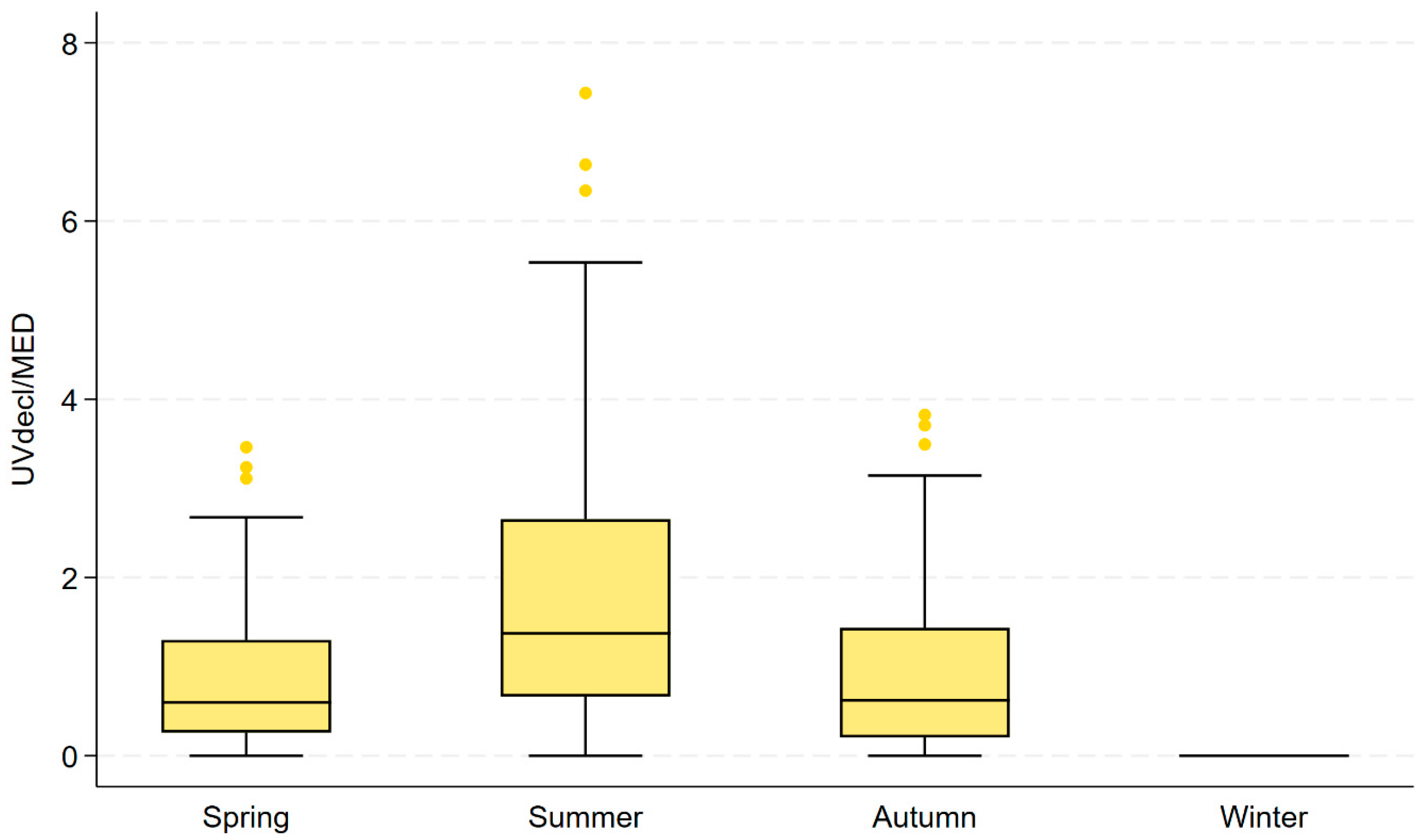
| Spring | 119 | 0.883 | 0.801 | 0.000 | 0.077 | 0.259 | 0.598 | 1.298 | 2.167 | 3.462 |
| Summer | 119 | 1.878 | 1.615 | 0.000 | 0.237 | 0.664 | 1.372 | 2.655 | 4.517 | 7.436 |
| Autumn | 119 | 0.948 | 0.928 | 0.000 | 0.048 | 0.207 | 0.622 | 1.437 | 2.451 | 3.824 |
| Winter | 119 | 0.000 | 0.000 | 0.000 | 0.000 | 0.000 | 0.000 | 0.000 | 0.000 | 0.000 |
| Total | 476 | 0.927 | 1.210 | 0.000 | 0.000 | 0.000 | 0.504 | 1.382 | 2.480 | 7.436 |
| Variable | OR | 95% CI | p-Value |
|---|---|---|---|
| UVdecl/MED quartiles | |||
| Q2 vs. Q1 | 3.42 | 1.60–7.34 | 0.002 |
| Q3 vs. Q1 | 5.34 | 2.50–11.43 | <0.001 |
| Q4 vs. Q1 | 4.65 | 2.04–10.58 | <0.001 |
| Any physical activity | 0.75 | 0.33–1.66 | 0.473 |
| Vitamin D supplementation | 1.09 | 0.56–2.14 | 0.800 |
| BMI (per 1 kg/m2) | 1.02 | 0.96–1.09 | 0.507 |
| Exposed lesions | 1.08 | 0.50–2.30 | 0.851 |
| Variable | OR | 95% CI | p-Value |
|---|---|---|---|
| UVdecl/MED quartiles | |||
| Q2 vs. Q1 | 0.29 | 0.15–0.55 | <0.001 |
| Q3 vs. Q1 | 0.21 | 0.11–0.40 | <0.001 |
| Q4 vs. Q1 | 0.16 | 0.08–0.33 | <0.001 |
| Any physical activity | 0.55 | 0.25–1.19 | 0.127 |
| Vitamin D supplementation | 1.17 | 0.62–2.22 | 0.623 |
| BMI (per 1 kg/m2) | 0.96 | 0.90–1.02 | 0.147 |
| Exposed lesions | 1.61 | 0.78–3.33 | 0.195 |
Disclaimer/Publisher’s Note: The statements, opinions and data contained in all publications are solely those of the individual author(s) and contributor(s) and not of MDPI and/or the editor(s). MDPI and/or the editor(s) disclaim responsibility for any injury to people or property resulting from any ideas, methods, instructions or products referred to in the content. |
© 2026 by the authors. Licensee MDPI, Basel, Switzerland. This article is an open access article distributed under the terms and conditions of the Creative Commons Attribution (CC BY) license.
Share and Cite
Niedźwiedź, M.; Czerwińska, A.; Krzyścin, J.; Narbutt, J.; Lesiak, A. Seasonal Variation of Plaque Psoriasis in Relation to Individualized MED-Adjusted Ultraviolet Exposure: A Cross-Sectional Study in Poland. J. Clin. Med. 2026, 15, 2708. https://doi.org/10.3390/jcm15072708
Niedźwiedź M, Czerwińska A, Krzyścin J, Narbutt J, Lesiak A. Seasonal Variation of Plaque Psoriasis in Relation to Individualized MED-Adjusted Ultraviolet Exposure: A Cross-Sectional Study in Poland. Journal of Clinical Medicine. 2026; 15(7):2708. https://doi.org/10.3390/jcm15072708
Chicago/Turabian StyleNiedźwiedź, Michał, Agnieszka Czerwińska, Janusz Krzyścin, Joanna Narbutt, and Aleksandra Lesiak. 2026. "Seasonal Variation of Plaque Psoriasis in Relation to Individualized MED-Adjusted Ultraviolet Exposure: A Cross-Sectional Study in Poland" Journal of Clinical Medicine 15, no. 7: 2708. https://doi.org/10.3390/jcm15072708
APA StyleNiedźwiedź, M., Czerwińska, A., Krzyścin, J., Narbutt, J., & Lesiak, A. (2026). Seasonal Variation of Plaque Psoriasis in Relation to Individualized MED-Adjusted Ultraviolet Exposure: A Cross-Sectional Study in Poland. Journal of Clinical Medicine, 15(7), 2708. https://doi.org/10.3390/jcm15072708