Effectiveness of Percutaneous Needle Electrolysis (PNE) and Intramuscular Electrical Stimulation (IMES) in the Management of Myofascial Pain Syndrome and Tendinopathies: A Systematic Review

 , , , and
Abstract
1. Introduction
2. Materials and Methods
2.1. Eligibility Criteria
2.2. Information Sources
2.3. Search Strategy
2.4. Selection Process
2.5. Data Collection
2.6. Data Items
2.6.1. Primary Outcomes
2.6.2. Secondary Outcomes
2.6.3. Other Variables
2.7. Study Risk of Bias Assessment
2.8. Effect Measures
2.9. Synthesis Methods
3. Results
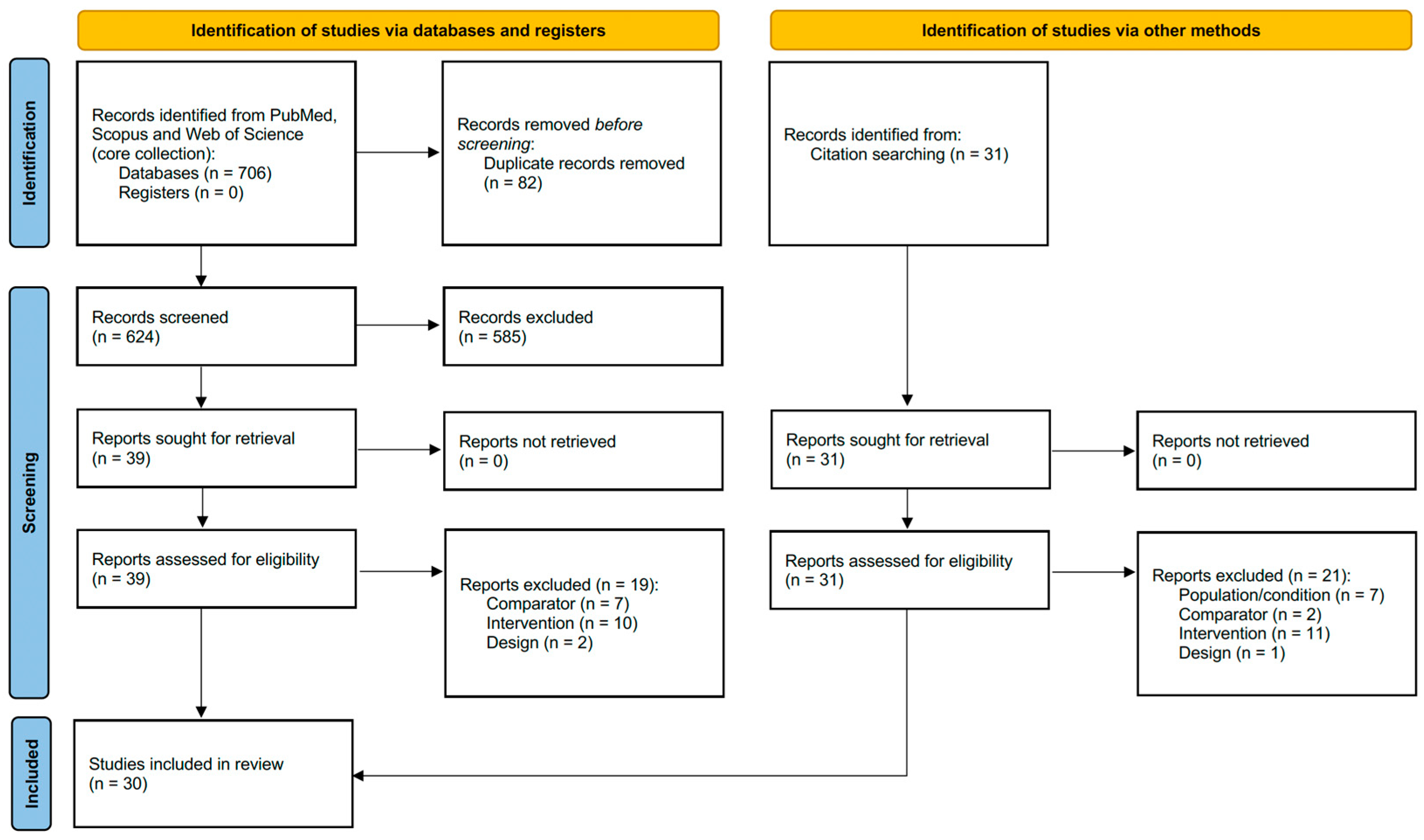
3.1. Study Selection
3.2. Study Characteristics

| Study | Study Design | Condition | N | Age (Mean ± SD or Range) | Sex | Location of Symptoms | Intervention Group | Electrical Parameters | Number of Sessions/Treatments | Comparator | Primary Outcomes | Secondary Outcomes |
|---|---|---|---|---|---|---|---|---|---|---|---|---|
| Rodríguez-Huguet et al. [25] | Single-blinded, prospective and longitudinal randomized clinical trial | Supraspinatus tendinopathy | Total: 36 PE: 18 Dry Needling: 18 | Range: 25–60 years | Not specified in the text | Supraspinatus tendon (shoulder) | Percutaneous electrolysis (PE) + eccentric exercise program | 350 µA for 1.2 min | Weekly session for 4 weeks (4 sessions total) | Trigger point dry needling + eccentric exercise program | Pain intensity (NPRS) | Pressure pain threshold and range of motion |
| Lopez-Martos et al. [10] | Randomized, double-blind, single-center clinical trial | Myofascial pain syndrome (MPS) in the lateral pterygoid muscle (LPM) | Total: 60 | Range: 18–65 years | Not specified in the text | Lateral pterygoid muscle (LPM) | PNE group: Percutaneous needle electrolysis DDN group: Deep dry needling | PNE: 2 mA for 3 s, three times DDN: Not applicable, but simulated noise | 3 consecutive weeks (once per week) | Sham needle puncture (SNP): Needle pressed against skin with its protective tube | Pain at rest and with mastication (VAS), Maximum interincisal opening (MIO), and TMJ involvement (100-point questionnaire) | Patient and observer efficacy scores, tolerability, and adverse events |
| Abat et al. [42] | Randomized controlled trial (single-blind) | Patellar tendinopathy | Total: 60 USGET: 30 Electro-physiotherapy: 30 | USGET: 31.2 ± 6.5 years Electro-physiotherapy: 30.9 ± 5.9 years | Male: 51 Female: 13 | Patellar tendon (knee) | Ultrasound-guided galvanic electrolysis technique (USGET) + eccentric exercise | USGET: 2 mA intensity | Treatments for 2 months or until symptoms are not present (VISA-P ≥ 90) | Standard electrophysiotherapy + eccentric exercises | Symptoms, function, and ability to perform sport (VISA-P score) | Not specified in the methods section provided |
| Miguel-Valtierra et al. [40] | Randomized, parallel-group clinical trial | Subacromial pain syndrome | Total: 50 Each group: 25 | Range: 18–65 years | Not specified in the text | Supraspinatus tendon (shoulder) | Manual therapy and exercise + US-guided percutaneous electrolysis | 350 mA intensity for 90 s | Once per week for 5 weeks | Manual therapy and exercise alone | Shoulder pain related disability (DASH) | Mean, worst, and lowest shoulder pain intensity (NPRS), function (SPADI), pressure pain sensitivity (PPTs), self-perceived improvement (GROC) |
| Fernández-Rodríguez et al. [46] | Parallel, group-blinded, randomized, placebo-controlled trial | Chronic painful heel pain (CPHP)/Plantar fasciopathy | Total: 73 PNE: 39 Sham: 34 | Mean: 45.1 ± 11.4 years | Female: 60.5% | Plantar fascia (heel) | Ultrasound-guided PNE + exercise program | 28 mC (microcoulombs) of cathodal PNE | Once per week for 5 weeks | Sham intervention + exercise program | “First step” pain (NPRS) | Function (FAAM activities of daily living subscale), plantar fascia thickness, and adverse events |
| Rodríguez-Huguet et al. [47] | Single-blind randomized controlled clinical trial | Lateral epicondylitis (LE) | Total: 32 Each group: 16 | Range: 18–60 years | Not specified in the text | Common extensor tendon (epicondyle) | Percutaneous electrolysis (PE) + eccentric exercise protocol | 350 µA for 1.2 min | Once per week for 4 weeks | Trigger point dry needling (TDN) + eccentric exercise protocol | Pain intensity (NPRS) | Pressure pain threshold (PPT), elbow joint motion, and quality of life (SF-12) |
| Moreno et al. [48] | Single-blind randomized controlled clinical trial | Adductor-related groin pain (ALErGP) | Total: 22 Study group: 12 Control group: 10 | Mean: 26.0 ± 4.7 years | 100% male | Adductor longus (pubic tubercle) | Ultrasound-guided EPI® + standardized active physical therapy (APT) | 3 mA current intensity 5 s duration 3 applications per session | Two sessions per week during Phase 1 of APT (number of sessions depended on symptomatic improvement) | Standardized active physical therapy (APT) program alone | Pain (NRS) | Patient-Specific Functional Scale (PSFS) |
| Al-Boloushi et al. [43] | Prospective, parallel-group RCT with blinded outcome assessment | Chronic painful heel pain (PHP) | Total: 102 DN: 51 PNE: 51 | Range: 21–60 years | Not specified in the text | Plantar and calf muscles | Percutaneous needle electrolysis (PNE) + self-stretching protocol | 1.5 mA (intensity adapted to patient tolerance) | Once per week for 4 sessions | Dry needling (DN) + self-stretching protocol | Foot Pain domain (FHSQ) | Foot Function, Footwear and General Foot Health (FHSQ), average and maximum pain (VAS), and Quality of life (EQ-5D-5L) |
| López-Royo et al. [39] | RCT with blinded assessors and participants | Patellar tendinopathy (PT) | Total: 57 PNE: 19 DN: 19 Sham: 19 | Range: 18–45 years | Not specified in the text | Inferior pole of the patella | PNE + EE (Percutaneous needle electrolysis + eccentric exercise) DN + EE (Dry needling + eccentric exercise) | PNE: 3 mA galvanic current for 3 s | 4 sessions, every 2 weeks (over 8 weeks) | Sham needling + EE (sham needle on the treatment zone + eccentric exercise) | Disability (VISA-P questionnaire) | Pain level (VAS), Quality of life (SF-36), and Ultrasonographic measures (echointensity, echovariation, neovascularization) |
| de la Barra Ortiz et al. [49] | Randomized double-blind clinical trial | Myofascial trigger points (MTrPs) in shorter upper trapezius muscle | Total: 48 MEP: 24 Control: 24 | Mean: 22 years | Male: 23 Female: 25 | Shorter upper trapezius muscle | Microelectrolysis (MEP) + therapeutic ultrasound | 0.6 mA at the needle | Single intervention | Therapeutic ultrasound alone | Pressure pain threshold (PPT) and Pain intensity (PI) (VAS) | Not specified in the text |
| Byeon et al., 2003 [33] | Randomized controlled trial (RCT) | Myofascial pain syndrome in upper trapezius muscle | Total: 30 Dry Needling: 10 IMES: 10 IMS: 10 | Mean: 50.7 ± 10.1 years Range: 37–67 years | Male: 18 Female: 12 | Upper trapezius muscle | Intramuscular electrical stimulation (IMES) and Intramuscular stimulation (IMS) | IMES: 10 Hz biphasic wave, 15 min, at 3× sensory threshold IMS: 10 Hz biphasic wave, 15 min, at 3× sensory threshold | 3 times per week for 2 weeks | Dry needling | Pain (Visual Analog Scale) and Pain (McGill Pain Questionnaire) | Passive range of motion of cervical lateral flexion |
| Sumen et al. [50] | Randomized controlled trial (RCT) | Myofascial pain syndrome (MPS) in upper trapezius muscle | Total: 47 Group 1: 16 Group 2: 15 Group 3: 16 | Mean: 39.0 ± 11.65 years Range: 18–65 years | Female: 32 Male: 15 | Upper trapezius muscle | Intramuscular stimulation (IMS) + stretching exercises | 80 Hz frequency, current increased until patient feels it | 10 sessions (20 min per session) | Group 1: Stretching exercises + LLLT Group 3: Stretching exercises alone | Pain intensity (VAS), Pain threshold (PT) | Active range of motion (ROM) of the cervical spine, Neck disability index (NDI) |
| Medeiros et al. [36] | Randomized, double-blind, factorial design, and controlled placebo-sham clinical trial | Myofascial pain syndrome (MPS) | Total: 44 | Range: 19–75 years | 100% female | Not specified in the text | Deep Intramuscular Stimulation Therapy (DIMST) + rTMS | DIMST: 2 Hz frequency, 20 min duration | 10 sessions | Sham-DIMST (sham electroacupuncture device) or rTMS/Sham-rTMS | Pain (VAS) and BDNF serum level | Peripheral biomarkers (S100b, LDH, TNF-a, IL-6, IL-10, SOD, catalase activity, GPx, protein carbonyls, ROS), Cortical excitability parameters (MEP, ICF, CSP, SICI) |
| Hadizadeh et al. [51] | Randomized double-blind clinical trial | Myofascial trigger points (MTrP) in upper trapezius muscle | Total: 16 IMES: 8 Placebo: 8 | Range: 18–40 years | Not specified in the text | Upper trapezius muscle | Intramuscular electrical stimulation (IMES) | Burst frequency of 2 Hz, pulse width of 200 µs | Single session (10 min) | Dry needling alone (placebo) | Pain intensity (VAS) | Cervical spine lateral flexion Range of Motion (ROM) |
| Botelho et al. [19] | Randomized, double-blind, two-group parallel, clinical trial | Myofascial pain syndrome (MPS) in the upper body part | Total: 24 Each group: 12 | Range: 19–65 years | 100% female | Splenius capitis and semispinalis capitis (upper body) | Electrical Intramuscular Stimulation (EIMS) | 2 Hz frequency, 20 min duration | 10 sessions | Sham of Intramuscular Electrical Stimulation (EIMS) | Disability (Brazilian Profile of Chronic Pain: Screen) and Pain (VAS) | Analgesic doses, Numerical Pain Rating Scale (NPRS), Heat pain threshold (HPT), Sleep quality (VASQS), Cortical excitability (MEP, ICF, CSP, SICI), BDNF serum level |
| Brennan et al. [35] | Randomized controlled trial (RCT) | Active myofascial trigger points (MTrPs) in the upper trapezius muscle | Total: 45 DN: 25 DN/IMES: 20 | DN: 26.32 ± 8.94 years DN/IMES: 28 ± 9.99 years | Male: 8 Female: 37 | Upper trapezius muscle | Dry Needling (DN) with Intramuscular Electrical Stimulation (IMES) | Approx. 10 Hz frequency, intensity increased until strong but tolerable | 1 treatment per week for 6 weeks | Dry Needling (DN) alone | Neck Disability Index (NDI) and Numeric Pain Rating Scale (NPRS) | Not specified in the text |
| Conti et al. [31] | Single-blind, randomized clinical trial | Myofascial pain syndrome (MPS) and sleep bruxism | Total: 15 Active: 7 Control: 8 | Active: 37.3 ± 8.9 years Control: 31.9 ± 12.3 years Range: 20–50 years | Male: 3 Female: 12 | Masseter and anterior temporalis muscles (jaw) | Transcutaneous electrical stimulation (as a feedback mechanism from EMG) | Not specified in the text, intensity was adjusted by patient to a non-painful level | At least 10 nights | Device that recorded EMG activity but did not provide stimulation | Pain intensity (VAS) | Pressure pain threshold (PPT), number of EMG events per hour (EMG/h) |
| Shanmugam et al. [52] | Randomized clinical trial | Myofascial trigger points (MTrPs) in the upper trapezius muscle | Total: 36 Group 1: 12 Group 2: 12 Group 3: 12 | Range: 18–25 years | 100% male | Upper trapezius muscle (UT) | IMES with IEP (Intramuscular Electrical Stimulation with Injured Electrode Polarity) and IMES with CEP (Intramuscular Electrical Stimulation with Conventional Electrode Polarity) | 5 Hz frequency, 500-µs pulse duration, intensity tolerable by participants (0–140 mA) | Single session (10 min) | Sham-IMES (very minimal intensity) | Pressure pain threshold (PPT) and Upper trapezius (UT) muscle activity (EMG RMS) | Pain severity (VAS) and UT muscle length |
| Hadizadeh et al. [37] | Double-blind, randomized controlled trial | Myofascial trigger points (MTrPs) in upper trapezius muscle | Total: 30 IMES: 15 Placebo: 15 | Range: 18–40 years | Not specified in the text | Upper trapezius muscle | Intramuscular electrical stimulation (IMES) | Burst frequency of 2 Hz, pulse duration of 200 µs, intensity increased until painless contractions created | Single session (10 min) | Dry needling with sham electrical current (placebo) | Pain (VAS) and disability (NDI) | Pressure pain threshold (PPT) and cervical lateral flexion ROM |
| León-Hernández et al. [38] | Single-blinded randomized controlled trial | Chronic non-specific neck pain | Total: 62 DN: 31 DN + PENS: 31 | Mean: 25 ± 8 years Range: 18–48 years | Male: 16 Female: 46 | Upper trapezius muscle | Dry Needling (DN) with Percutaneous Electrical Nerve Stimulation (PENS) | 2 Hz frequency, 120 µs pulse width, intensity to be well tolerated and not painful | Single treatment (15 min) | Dry Needling (DN) alone | Post-needling soreness (VAS), Neck pain intensity (VAS), and Disability (NDI) | Pressure pain threshold (PPT) and Cervical Range of Motion (CROM) |
| Garcia-de-Miguel et al. [41] | Randomized controlled trial (RCT) | Non-traumatic unilateral mechanical neck pain with active MTrP in levator scapulae | Total: 44 DN: 22 PENS: 22 | Range: 18+ years | Not specified in the text | Levator scapulae muscle | Percutaneous Electrical Nerve Stimulation (PENS) + dry needling | 2 Hz frequency, 100 µs pulse width, intensity to patient’s tolerance (max 3 mA) | Single treatment (20 min) | Dry Needling (DN) alone | Pain intensity (VAS), pressure pain threshold (PPT), side-bending strength, and range of movement | Disability (NDI) |
| Pérez-Palomares et al. [32] | Pragmatic clinical trial | Nonspecific chronic low back pain (CLBP) | Total: 122 PENS: 67 DN: 68 | Mean: 45.85 ± 14.4 years | Male: 31 Female: 91 | Deep lumbar paraspinal muscles, quadratus lumborum, and gluteus medius | Percutaneous Electrical Nerve Stimulation (PENS) | 4 Hz frequency, 0.3 ms pulse duration | 9 sessions over 3 weeks | Dry Needling (DN) | Perceived pain (VAS), pain tolerance (PPT), sleep quality (VAS), and quality of life (Oswestry Disability Index) | Not specified in the methods section provided |
| Niddam et al. [53] | Randomized controlled trial (RCT) using fMRI | Myofascial pain syndrome (MPS) | Total: 24 G1: 12 G2: 12 | Not specified in the text | Not specified in the text | Upper left trapezius muscle | Intramuscular electrical stimulation (IMES) | 2 Hz frequency, 1 ms pulse, intensity to be “intense but nonpainful” and induce visible muscle contraction | Single intervention (3 min) | Not applicable, as it was a within-subject, between-session comparison with a sham-like protocol | Psychophysical pain threshold (PT) and Pressure pain threshold (PPT) | Not applicable, as the primary outcomes are psychophysical, not clinical. The main purpose was to analyze brain activity. |
| Di Gesù et al. [24] | Randomized controlled pilot study (RCT), single-blind | Unilateral non-insertional Achilles tendinopathy (AT) | Total: 50 EG: 25 CG: 25 | Mean: 40.92 ± 9.70 years Range: 25–60 years | Male: 32 (64%) Female: 18 (36%) | Achilles tendon | High-intensity ultrasound-guided galvanic electrolysis technique (HI-USGET) + eccentric exercises | 2 mA intensity for 10 s; 100 µs pulse width; 100 Hz frequency | 3 treatments (15 days apart) + 8 weeks of exercises | Eccentric exercises alone | Severity of condition (VISA-A) | Pain intensity (VAS) |
| Doménech-García et al. [54] | Randomized double-blinded controlled trial (RCT), three-arm | Anterior knee pain/Patellar tendinopathy | Total: 42 Each group: 14 | Range: 18–45 years | Not specified in the text | Patellar tendon (knee) | Percutaneous Needle Electrolysis (PNE) + eccentric exercise program | 3 mA galvanic current for 3 s per insertion (3 insertions) | 4 sessions over 8 weeks + daily eccentric exercises | Dry needling (with 0 mA current) + exercises and Sham needle + exercises | Clinical pain reduction after intervention and needle-related pain intensity | Clinical pain intensity, needle-related pain during intervention, time until pain disappears, VISA-p, and ultrasonographic measures |
| Ga et al. [55] | Randomized controlled trial (RCT) | Chronic myofascial pain syndrome (MPS) | Total: 43 IMS: 21 TPI: 22 | Not specified in the provided text | Male: 5 Female: 38 | Upper trapezius muscle | Intramuscular Stimulation (IMS) + self-stretching exercises | “Grasping and winding up” nerve root stimulation at C3–5 level (specific electrical parameters not mentioned in the text) | Treatments at weeks 0, 1, and 2 + daily self-stretching exercises | Trigger Point Injection (TPI) with 0.5% lidocaine + self-stretching exercises | Pain intensity (VAS, Wong-Baker FACES) and Pain pressure threshold scores (PTS) | Passive range of motion (ROM) and Depression (GDS-SF) |
| Hadizadeh et al. [45] | Randomized, single-blind clinical trial (RCT) | Chronic myofascial pain syndrome (MPS) with active trigger points (TrPs) | Total: 30 IMES: 15 DN: 15 | Range: 18–50 years | Male: 6 Female: 24 | Upper trapezius (UT) muscle | Intramuscular Electrical Stimulation (IMES) | Burst current, 2 Hz frequency, 200 µs pulse width, 10 min duration. Intensity increased until painless contraction. | 3 sessions during one week | Dry Needling (DN) | Cervical lateral flexion ROM and TrP circumference (CIR) | Pain intensity (VAS), pain pressure threshold (PPT), NDI, TrP diameters, TrP stiffness, and blood circulation |
| Zuccolotto Moro et al. [44] | Prospective, randomized, open-label clinical trial | Myofascial pain syndrome (MPS) | Total: 90 (30 per group) | Range: > 18 years | Not specified | Upper trapezius muscle (neck and shoulders) | Group 2: TrP needling with electrical stimulation | Direct current, 2 Hz frequency, 200 ms pulse duration, 3–4 mA intensity | 7 weekly sessions | Group 1: Dry needling (DN) of TrPs<br>Group 3: Motor point/nerve needling with electrical stimulation | Pain score (VAS) | Health-related quality of life (SF-12) |
| Sharma et al. [34] | Randomized clinical trial (RCT) | Active myofascial trigger points (TrPs) | Total: 45 DN: 15 DN/IMES [2 Hz]: 15 DN/IMES [100 Hz]: 15 | Mean: 23.33 ± 1.99 years Range: 18–30 years | Male: 23 Female: 22 | Upper trapezius muscle | Dry Needling (DN) with Intramuscular Electrical Stimulation (IMES) | Biphasic current, 200 µs pulse width, at two different frequencies: 2 Hz and 100 Hz | Single intervention (10 min) | Dry Needling (DN) alone | Numeric pain rating scale (NPRS) and Pain pressure threshold (PPT) | Not specified in the text |
| Rejas-Fernández et al. [56] | Randomized clinical trial | Tibialis posterior tendinopathy | Total: 46 percutaneous electrolysis + manual therapy/exercise: 23 MT/exercise: 23 | Adults | Not specified | Tibialis posterior tendon/medial ankle-foot region | Ultrasound-guided percutaneous electrolysis + manual therapy and exercise program | Not specified | 1 session/week for 4 weeks (4 sessions total); PE applied at each treatment session | Manual therapy and exercise program alone | Pain intensity (Numerical Pain Rating Scale, NPRS) | Disability (Foot and Ankle Ability Measure, FAAM-ADL and FAAM-Sports) |
3.3. Risk of Bias in Studies
3.4. Results of Individual Studies
3.4.1. Percutaneous Needle Electrolysis (PNE)
3.4.2. Intramuscular Electrical Stimulation (IMES)
3.4.3. Safety and Adverse Effects
4. Discussion
4.1. Percutaneous Needle Electrolysis (PNE)
4.2. Intramuscular Electrical Stimulation (IMES)
4.3. Study Limitations and Future Research
4.4. Practical Applications
5. Conclusions
Supplementary Materials
Author Contributions
Funding
Institutional Review Board Statement
Informed Consent Statement
Data Availability Statement
Conflicts of Interest
Abbreviations
| ALErGP | Adductor-related groin pain |
| ADL | Activities of daily living |
| APT | Active physical therapy |
| AT | Achilles tendinopathy |
| BDNF | Brain-derived neurotrophic factor |
| CCT | Controlled clinical trial |
| CEP | Conventional electrode polarity |
| CES | Contingent electrical stimulation |
| CLBP | Chronic low back pain |
| CPHP | Chronic painful heel pain |
| CROM | Cervical range of motion |
| CSP | Cortical silent period |
| DASH | Disabilities of the Arm, Shoulder and Hand |
| DDN | Deep dry needling |
| DIMST | Deep intramuscular stimulation therapy |
| DN | Dry needling |
| EE | Eccentric exercise |
| EG | Experimental group |
| EIMS | Electrical intramuscular stimulation |
| EMG | Electromyography |
| EMG/h | Electromyographic events per hour |
| EPI | Electrolysis Percutaneous Intratissue |
| EQ-5D-5L | EuroQol 5-Dimension 5-Level |
| FAAM | Foot and Ankle Ability Measure |
| FHSQ | Foot Health Status Questionnaire |
| fMRI | Functional magnetic resonance imaging |
| GDS-SF | Geriatric Depression Scale-Short Form |
| GFH | General foot health |
| GROC | Global Rating of Change |
| HI-USGET | High-intensity ultrasound-guided galvanic electrolysis technique |
| HPT | Heat pain threshold |
| ICF | Intracortical facilitation |
| IEP | Inverse electrode polarity |
| IMES | Intramuscular electrical stimulation |
| IMS | Intramuscular stimulation |
| ICTRP | International Clinical Trials Registry Platform |
| LE | Lateral epicondylitis |
| LDH | Lactate dehydrogenase |
| LLLT | Low-level laser therapy |
| LPM | Lateral pterygoid muscle |
| MD | Mean difference |
| MEP | Motor evoked potentials |
| MEP (microelectrolysis) | Percutaneous microelectrolysis |
| MeSH | Medical Subject Headings |
| MIO | Maximum interincisal opening |
| MPS | Myofascial pain syndrome |
| MTrP/MTrPs | Myofascial trigger point(s) |
| NDI | Neck Disability Index |
| NPI | Neck pain intensity |
| NPRS | Numerical Pain Rating Scale |
| NRS | Numeric rating scale |
| OR | Odds ratio |
| PE | Percutaneous electrolysis |
| PENS | Percutaneous electrical nerve stimulation |
| PICOS | Population, Intervention, Comparator, Outcomes, Study Design |
| PI | Pain intensity |
| PNE | Percutaneous needle electrolysis |
| PNM | Percutaneous neuromodulation |
| PNS | Post-needling soreness |
| PPT | Pressure pain threshold |
| PRISMA | Preferred Reporting Items for Systematic Reviews and Meta-Analyses |
| PROs | Patient-reported outcomes |
| PSFS | Patient-Specific Functional Scale |
| PT | Patellar tendinopathy |
| PTS | Pain pressure threshold scores |
| QoL | Quality of life |
| rTMS | Repetitive transcranial magnetic stimulation |
| RCT/RCTs | Randomized controlled trial(s) |
| RoB 2 | Risk of Bias tool for randomized trials |
| ROBINS-I | Risk Of Bias In Non-randomized Studies of Interventions |
| ROM | Range of motion |
| RR | Risk ratio |
| RMS | Root mean square |
| ROS | Reactive oxygen species |
| SF-12 | Short Form-12 (health survey) |
| SF-36 | Short Form-36 (health survey) |
| SICI | Short intracortical inhibition |
| SMD | Standardized mean difference |
| SNP | Sham needle puncture |
| SOD | Superoxide dismutase |
| SPADI | Shoulder Pain and Disability Index |
| TDN | Trigger point dry needling |
| TENS | Transcutaneous electrical nerve stimulation |
| TMJ | Temporomandibular joint |
| TPI | Trigger point injection |
| TrP/TrPs | Myofascial trigger point(s) |
| TNF-alpha | Tumor necrosis factor alpha |
| US | Ultrasound |
| USGET | Ultrasound-guided galvanic electrolysis technique |
| UT | Upper trapezius |
| VAS | Visual Analogue Scale |
| VAS-QS/VASQS | Visual Analogue Scale-Quality of Sleep |
| VISA-A | Victorian Institute of Sports Assessment-Achilles |
| VISA-P | Victorian Institute of Sports Assessment-Patellar |
| WHO | World Health Organization |
References
- Sprenger, T.; Tölle, T.R. Pain Relief by Electrostimulation of Myofascial Trigger Points: Peripheral or Central Mechanisms? Clin. J. Pain 2007, 23, 638–639. [Google Scholar] [CrossRef]
- Hong, C.Z. Myofascial Pain Therapy. J. Musculoskelet. Pain 2004, 12, 37–43. [Google Scholar] [CrossRef]
- Gerwin, R. The Enigma of Muscle Pain: A Neglected Entity. Pain Med. 2019, 20, 1261–1264. [Google Scholar] [CrossRef]
- Crane, J.D.; Ogborn, D.I.; Cupido, C.; Melov, S.; Hubbard, A.; Bourgeois, J.M.; Tarnopolsky, M.A. Massage Therapy Attenuates Inflammatory Signaling after Exercise-Induced Muscle Damage. Sci. Transl. Med. 2012, 4, 119ra13. [Google Scholar] [CrossRef]
- Ma, V.Y.; Chan, L.; Carruthers, K.J. The Incidence, Prevalence, Costs and Impact on Disability of Common Conditions Requiring Rehabilitation in the US: Stroke, Spinal Cord Injury, Traumatic Brain Injury, Multiple Sclerosis, Osteoarthritis, Rheumatoid Arthritis, Limb Loss, and Back Pain. Arch. Phys. Med. Rehabil. 2014, 95, 986. [Google Scholar] [CrossRef]
- Rodríguez-Mansilla, J.; González-Sánchez, B.; De Toro García, Á.; Valera-Donoso, E.; Garrido-Ardila, E.M.; Jiménez-Palomares, M.; López-Arza, M.V.G. Effectiveness of Dry Needling on Reducing Pain Intensity in Patients with Myofascial Pain Syndrome: A Meta-Analysis. J. Tradit. Chin. Med. 2016, 36, 1–13. [Google Scholar] [CrossRef] [PubMed]
- Nicolakis, P.; Erdogmus, B.; Kopf, A.; Nicolakis, M.; Piehslinger, E.; Fialka-Moser, V. Effectiveness of Exercise Therapy in Patients with Myofascial Pain Dysfunction Syndrome. J. Oral Rehabil. 2002, 29, 362–368. [Google Scholar] [CrossRef]
- Sahin, N.; Albayrak, I.; Ugurlu, H. Effect of Different Transcutaneous Electrical Stimulation Modalities on Cervical Myofascial Pain Syndrome. J. Musculoskelet. Pain 2011, 19, 18–23. [Google Scholar] [CrossRef]
- Xiong, J.; Zhou, X.; Luo, X.; Gong, X.; Jiang, L.; Luo, Q.; Zhang, S.; Jiang, C.; Pu, T.; Liu, J.; et al. Acupuncture Therapy on Myofascial Pain Syndrome: A Systematic Review and Meta-Analysis. Front. Neurol. 2024, 15, 1374542. [Google Scholar] [CrossRef] [PubMed]
- Lopez-Martos, R.; Gonzalez-Perez, L.; Ruiz-Canela-Mendez, P.; Urresti-Lopez, F.; Gutierrez-Perez, J.; Infante-Cossio, P. Randomized, Double-Blind Study Comparing Percutaneous Electrolysis and Dry Needling for the Management of Temporomandibular Myofascial Pain. Med. Oral Patol. Oral Cir. Bucal 2018, 23, E454–E462. [Google Scholar] [CrossRef]
- Hadizadeh, M.; Rahimi, A.; Javaherian, M.; Velayati, M.; Dommerholt, J. The Efficacy of Intramuscular Electrical Stimulation in the Management of Patients with Myofascial Pain Syndrome: A Systematic Review. Chiropr. Man. Therap. 2021, 29, 40. [Google Scholar] [CrossRef] [PubMed]
- Perreault, T.; Arendt-Nielson, L.; Fernández-de-las-Peñas, C.; Dommerholt, J.; Herrero, P.; Hubbard, R. Intramuscular Electrical Stimulation for the Treatment of Trigger Points in Patients with Chronic Migraine: A Protocol for a Pilot Study Using a Single-Case Experimental Design. Medicina 2023, 59, 1380. [Google Scholar] [CrossRef] [PubMed]
- Margalef, R.; Bosque, M.; Minaya-Muñoz, F.; Valera-Garrido, F.; Santafe, M.M. Safety Analysis of Percutaneous Needle Electrolysis: A Study of Needle Composition, Morphology, and Electrical Resistance. Acupunct. Med. 2021, 39, 471–477. [Google Scholar] [CrossRef]
- Perreault, T.; Ball, A.; Dommerholt, J.; Theiss, R.; Fernández-de-las-Peñas, C.; Butts, R. Intramuscular Electrical Stimulation to Trigger Points: Insights into Mechanisms and Clinical Applications—A Scoping Review. J. Clin. Med. 2022, 11, 6039. [Google Scholar] [CrossRef]
- Vance, C.G.T.; Dailey, D.L.; Chimenti, R.L.; Van Gorp, B.J.; Crofford, L.J.; Sluka, K.A. Using TENS for Pain Control: Update on the State of the Evidence. Medicina 2022, 58, 1332. [Google Scholar] [CrossRef]
- Hahm, T.S. Electroacupuncture. Korean J. Anesthesiol. 2009, 57, 3. [Google Scholar] [CrossRef]
- Moayedi, M.; Davis, K.D. Theories of Pain: From Specificity to Gate Control. J. Neurophysiol. 2013, 109, 5–12. [Google Scholar] [CrossRef]
- Martínez-Silván, D.; Santomé-Martínez, F.; Champón-Chekroun, A.M.; Velázquez-Saornil, J.; Gómez-Merino, S.; Cos-Morera, M.A.; Morral-Fernández, A.; Mascaró-Vilella, A.; Ricis-Guerra, M.; García-Bol, F.; et al. Clinical Use of Percutaneous Needle Electrolysis in Musculoskeletal Injuries: A Critical and Systematic Review of the Literature. Apunt. Sports Med. 2022, 57, 100396. [Google Scholar] [CrossRef]
- Botelho, L.; Angoleri, L.; Zortea, M.; Deitos, A.; Brietzke, A.; Torres, I.L.S.; Fregni, F.; Caumo, W. Insights About the Neuroplasticity State on the Effect of Intramuscular Electrical Stimulation in Pain and Disability Associated with Chronic Myofascial Pain Syndrome (MPS): A Double-Blind, Randomized, Sham-Controlled Trial. Front. Hum. Neurosci. 2018, 12, 388. [Google Scholar] [CrossRef]
- Gómez-Chiguano, G.F.; Navarro-Santana, M.J.; Cleland, J.A.; Arias-Buría, J.L.; Fernández-de-las-Peñas, C.; Ortega-Santiago, R.; Plaza-Manzano, G. Effectiveness of Ultrasound-Guided Percutaneous Electrolysis for Musculoskeletal Pain: A Systematic Review and Meta-Analysis. Pain Med. 2021, 22, 1055–1071. [Google Scholar] [CrossRef]
- Asensio-Olea, L.; Leirós-Rodríguez, R.; Marqués-Sánchez, M.P.; de Carvalho, F.O.; Maciel, L.Y.S. Efficacy of Percutaneous Electrolysis for the Treatment of Tendinopathies: A Systematic Review and Meta-Analysis. Clin. Rehabil. 2023, 37, 747–759. [Google Scholar] [CrossRef]
- Da Silva, A.C.T.; Kamonseki, D.H.; de Azevedo, L.M.V.; de Araújo, J.N.; Magalhães, G.C.; Oliveira, V.M.A. de Effect of Percutaneous Electrolysis on Pain and Disability in Individuals with Tendinopathy: Systematic Review and Meta-Analysis. J. Bodyw. Mov. Ther. 2024, 40, 640–649. [Google Scholar] [CrossRef]
- Ferreira, M.H.L.; Araujo, G.A.S.; De-La-Cruz-Torres, B. Effectiveness of Percutaneous Needle Electrolysis to Reduce Pain in Tendinopathies: A Systematic Review with Meta-Analysis. J. Sport Rehabil. 2024, 33, 307–316. [Google Scholar] [CrossRef] [PubMed]
- Di Gesù, M.; Alito, A.; Borzelli, D.; Romeo, D.; Bonomolo, F.; Calafiore, D.; de Sire, A. Efficacy of Ultrasound-Guided Galvanic Electrolysis Technique and Physical Therapy in Patients with Achilles’ Tendinopathy: A Pilot Randomised Controlled Trial. J. Back Musculoskelet. Rehabil. 2024, 37, 1177–1188. [Google Scholar] [CrossRef]
- Rodríguez-Huguet, M.; Góngora-Rodríguez, J.; Rodríguez-Huguet, P.; Ibañez-Vera, A.J.; Rodríguez-Almagro, D.; Martín-Valero, R.; Díaz-Fernández, Á.; Lomas-Vega, R. Effectiveness of Percutaneous Electrolysis in Supraspinatus Tendinopathy: A Single-Blinded Randomized Controlled Trial. J. Clin. Med. 2020, 9, 1837. [Google Scholar] [CrossRef] [PubMed]
- Solomons, L.; Lee, J.J.Y.; Bruce, M.; White, L.D.; Scott, A. Intramuscular Stimulation vs Sham Needling for the Treatment of Chronic Midportion Achilles Tendinopathy: A Randomized Controlled Clinical Trial. PLoS ONE 2020, 15, e0238579. [Google Scholar] [CrossRef] [PubMed]
- Page, M.J.; McKenzie, J.E.; Bossuyt, P.M.; Boutron, I.; Hoffmann, T.C.; Mulrow, C.D.; Shamseer, L.; Tetzlaff, J.M.; Akl, E.A.; Brennan, S.E.; et al. The PRISMA 2020 Statement: An Updated Guideline for Reporting Systematic Reviews. BMJ 2021, 372, n71. [Google Scholar] [CrossRef]
- Moore, T.H.M.; Higgins, J.P.T.; Dwan, K. Ten Tips for Successful Assessment of Risk of Bias in Randomized Trials Using the RoB 2 Tool: Early Lessons from Cochrane. Cochrane Evid. Synth. Methods 2023, 1, e12031. [Google Scholar] [CrossRef]
- Sterne, J.A.C.; Savović, J.; Page, M.J.; Elbers, R.G.; Blencowe, N.S.; Boutron, I.; Cates, C.J.; Cheng, H.-Y.; Corbett, M.S.; Eldridge, S.M.; et al. RoB 2: A Revised Tool for Assessing Risk of Bias in Randomised Trials. BMJ 2019, 366, l4898. [Google Scholar] [CrossRef]
- Sterne, J.A.; Hernán, M.A.; Reeves, B.C.; Savović, J.; Berkman, N.D.; Viswanathan, M.; Henry, D.; Altman, D.G.; Ansari, M.T.; Boutron, I.; et al. ROBINS-I: A Tool for Assessing Risk of Bias in Non-Randomised Studies of Interventions. BMJ 2016, 355, i4919. [Google Scholar] [CrossRef]
- Conti, P.C.R.; Stuginski-Barbosa, J.; Bonjardim, L.R.; Soares, S.; Svensson, P. Contingent Electrical Stimulation Inhibits Jaw Muscle Activity during Sleep but Not Pain Intensity or Masticatory Muscle Pressure Pain Threshold in Self-Reported Bruxers: A Pilot Study. Oral Surg. Oral Med. Oral Pathol. Oral Radiol. 2014, 117, 45–52. [Google Scholar] [CrossRef]
- Pérez-Palomares, S.; Oliván-Blázquez, B.; Magallón-Botaya, R.; De-la-Torre-Beldarraín, M.L.; Gaspar-Calvo, E.; Romo-Calvo, L.; García-Lázaro, R.; Serrano-Aparicio, B. Percutaneous Electrical Nerve Stimulation Versus Dry Needling: Effectiveness in the Treatment of Chronic Low Back Pain. J. Musculoskelet. Pain 2010, 18, 23–30. [Google Scholar] [CrossRef]
- Byeon, H.T.; Park, S.H.; Ko, M.H.; Seo, J.H. Effects of Intramuscular Stimulation in Myofascial Pain Syndrome of Upper Trapezius Muscle. Ann. Rehabil. Med. 2003, 27, 753756. [Google Scholar]
- Sharma, M.K.; Chaudhary, S.; Shenoy, S. Short-Term Effect of Frequency Specific Intramuscular Electrical Stimulation on Post Dry Needling Soreness of Upper Fibers of Trapezius: A Randomized Controlled Trial. J. Bodyw. Mov. Ther. 2024, 40, 217–223. [Google Scholar] [CrossRef]
- Brennan, K.; Elifritz, K.M.; Comire, M.M.; Jupiter, D.C. Rate and Maintenance of Improvement of Myofascial Pain with Dry Needling Alone vs. Dry Needling with Intramuscular Electrical Stimulation: A Randomized Controlled Trial. J. Man. Manip. Ther. 2021, 29, 216–226. [Google Scholar] [CrossRef]
- Medeiros, L.F.; Caumo, W.; Dussán-Sarria, J.; Deitos, A.; Brietzke, A.; Laste, G.; Campos-Carraro, C.; de Souza, A.; Scarabelot, V.L.; Cioato, S.G.; et al. Effect of Deep Intramuscular Stimulation and Transcranial Magnetic Stimulation on Neurophysiological Biomarkers in Chronic Myofascial Pain Syndrome. Pain Med. 2015, 17, 122–135. [Google Scholar] [CrossRef]
- Hadizadeh, M.; Bashardoust Tajali, S.; Moghadam, B.A.; Jalaei, S.; Bazzaz, M. Effects of Intramuscular Electrical Stimulation on Pain and Dysfunction Following Upper Trapezius Trigger Points. J. Mod. Rehabil. 2022, 17, 1. [Google Scholar] [CrossRef]
- León-Hernández, J.V.; Martín-Pintado-Zugasti, A.; Frutos, L.G.; Alguacil-Diego, I.M.; de la Llave-Rincón, A.I.; Fernandez-Carnero, J. Immediate and Short-Term Effects of the Combination of Dry Needling and Percutaneous TENS on Post-Needling Soreness in Patients with Chronic Myofascial Neck Pain. Braz. J. Phys. Ther. 2016, 20, 422–431. [Google Scholar] [CrossRef] [PubMed]
- López-Royo, M.P.; Ríos-Díaz, J.; Galán-Díaz, R.M.; Herrero, P.; Gómez-Trullén, E.M. A Comparative Study of Treatment Interventions for Patellar Tendinopathy: A Randomized Controlled Trial. Arch. Phys. Med. Rehabil. 2021, 102, 967–975. [Google Scholar] [CrossRef]
- de Miguel Valtierra, L.; Salom Moreno, J.; Fernández-de-las-Peñas, C.; Cleland, J.A.; Arias-Buría, J.L. Ultrasound-Guided Application of Percutaneous Electrolysis as an Adjunct to Exercise and Manual Therapy for Subacromial Pain Syndrome: A Randomized Clinical Trial. J. Pain 2018, 19, 1201–1210. [Google Scholar] [CrossRef] [PubMed]
- Garcia-de-Miguel, S.; Pecos-Martin, D.; Larroca-Sanz, T.; Sanz-de-Vicente, B.; Garcia-Montes, L.; Fernandez-Matias, R.; Gallego-Izquierdo, T. Short-Term Effects of PENS versus Dry Needling in Subjects with Unilateral Mechanical Neck Pain and Active Myofascial Trigger Points in Levator Scapulae Muscle: A Randomized Controlled Trial. J. Clin. Med. 2020, 9, 1665. [Google Scholar] [CrossRef] [PubMed]
- Abat, F.; Sánchez-Sánchez, J.L.; Martín-Nogueras, A.M.; Calvo-Arenillas, J.I.; Yajeya, J.; Méndez-Sánchez, R.; Monllau, J.C.; Gelber, P.E. Randomized Controlled Trial Comparing the Effectiveness of the Ultrasound-Guided Galvanic Electrolysis Technique (USGET) versus Conventional Electro-Physiotherapeutic Treatment on Patellar Tendinopathy. J. Exp. Orthop. 2016, 3, 34. [Google Scholar] [CrossRef]
- Al-Boloushi, Z.; Gómez-Trullén, E.M.; Arian, M.; Fernández, D.; Herrero, P.; Bellosta-López, P. Comparing Two Dry Needling Interventions for Plantar Heel Pain: A Randomised Controlled Trial. BMJ Open 2020, 10, e038033. [Google Scholar] [CrossRef]
- Moro, M.Z.; de Oliveira Vidal, E.I.; Pinheiro Módolo, N.S.; Bono Fukushima, F.; Moreira de Barros, G.A. Dry Needling, Trigger Point Electroacupuncture and Motor Point Electroacupuncture for the Treatment of Myofascial Pain Syndrome Involving the Trapezius: A Randomised Clinical Trial. Acupunct. Med. 2024, 42, 3–13. [Google Scholar] [CrossRef]
- Hadizadeh, M.; Rahimi, A.; Velayati, M.; Javaherian, M.; Naderi, F.; Keshtkar, A.; Dommerholt, J. A Comparative Study of Sonographic and Clinical Parameters in Patient with Upper Trapezius Muscle Trigger Point Following Dry Needling and Intramuscular Electrical Stimulation: A Randomized Control Trial. Chiropr. Man. Therap. 2025, 33, 14. [Google Scholar] [CrossRef]
- Fernández-Rodríguez, T.; Fernández-Rolle, Á.; Truyols-Domínguez, S.; Benítez-Martínez, J.C.; Casaña-Granell, J. Prospective Randomized Trial of Electrolysis for Chronic Plantar Heel Pain. Foot Ankle Int. 2018, 39, 1039–1046. [Google Scholar] [CrossRef]
- Rodríguez-Huguet, M.; Góngora-Rodríguez, J.; Lomas-Vega, R.; Martín-Valero, R.; Díaz-Fernández, Á.; Obrero-Gaitán, E.; Ibáñez-Vera, A.J.; Rodríguez-Almagro, D. Percutaneous Electrolysis in the Treatment of Lateral Epicondylalgia: A Single-Blind Randomized Controlled Trial. J. Clin. Med. 2020, 9, 2068. [Google Scholar] [CrossRef] [PubMed]
- Moreno, C.; Mattiussi, G.; Núñez, F.J.; Messina, G.; Rejc, E. Intratissue Percutaneous Electolysis Combined with Active Physical Therapy for the Treatment of Adductor Longus Enthesopathy-Related Groin Pain: A Randomized Trial. J. Sports Med. Phys. Fitness 2017, 57, 1318–1329. [Google Scholar] [CrossRef]
- De la Ortiz, H.A.B.; Cancino, J.O.; Peña, F.S.; León, F.S.; Donoso, E.M.; Gaete, V.T. Effectiveness of Percutaneous Microelectrolysis and Ultrasound in the Decrease of Pain in Myofascial Trigger Points: Evaluation through Algometry and Visual Analog Scale. Physiother. Q. 2020, 28, 1–8. [Google Scholar] [CrossRef]
- Sumen, A.; Sarsan, A.; Alkan, H.; Yildiz, N.; Ardic, F. Efficacy of Low Level Laser Therapy and Intramuscular Electrical Stimulation on Myofascial Pain Syndrome. J. Back Musculoskelet. Rehabil. 2015, 28, 153–158. [Google Scholar] [CrossRef] [PubMed]
- Hadizadeh, M.; Bashardoust Tajali, S.; Attarbashi Moghadam, B.; Jalaie, S.; Bazzaz, M. Effects of Intramuscular Electrical Stimulation on Symptoms Following Trigger Points; A Controlled Pilot Study. J. Mod. Rehabil. 2017, 11, 3. [Google Scholar] [CrossRef]
- Shanmugam, S.; dos Anjos, F.V.; Ferreira, A.d.S.; Muthukrishnan, R.; Kandakurti, P.K.; Durairaj, S. Effectiveness of Intramuscular Electrical Stimulation Using Conventional and Inverse Electrode Placement Methods on Pressure Pain Threshold and Electromyographic Activity of the Upper Trapezius Muscle with Myofascial Trigger Points: A Randomized Clinical Trial. Korean J. Pain 2025, 38, 187–197. [Google Scholar] [CrossRef] [PubMed]
- Niddam, D.M.; Chan, R.-C.; Lee, S.-H.; Yeh, T.-C.; Hsieh, J.-C. Central Modulation of Pain Evoked from Myofascial Trigger Point. Clin. J. Pain 2007, 23, 440–448. [Google Scholar] [CrossRef] [PubMed]
- Doménech-García, V.; Pecos-Martín, D.; Blasco-Abadía, J.; Bellosta-López, P.; López-Royo, M.P. Placebo and Nocebo Effects of Percutaneous Needle Electrolysis and Dry-Needling: An Intra and Inter-Treatment Sessions Analysis of a Three-Arm Randomized Double-Blinded Controlled Trial in Patients with Patellar Tendinopathy. Front. Med. 2024, 11, 1381515. [Google Scholar] [CrossRef] [PubMed]
- Ga, H.; Koh, H.; Choi, J.; Kim, C. Intramuscular and Nerve Root Stimulation vs Lidocaine Injection to Trigger Points in Myofascial Pain Syndrome. J. Rehabil. Med. 2007, 39, 374–378. [Google Scholar] [CrossRef]
- Rejas-Fernández, A.; de-la-Llave-Rincón, A.I.; Romero-Morales, C.; Fernández-de-las-Peñas, C.; Cleland, J.A.; Arias-Buría, J.L. Ultrasound-Guided Application of Percutaneous Electrolysis as an Adjunct to Exercise and Manual Therapy for Tibialis Posterior Tendinopathy: A Randomized Clinical Trial. J. Pain 2026, 42, 106236. [Google Scholar] [CrossRef]

| Database | Field Model | Search String |
|---|---|---|
| PubMed | Title/Abstract | (“percutaneous needle electrolysis”[Title/Abstract] OR “galvanic electrolysis”[Title/Abstract] OR “percutaneous electrolysis”[Title/Abstract] OR “needle electrolysis”[Title/Abstract] OR “PNE”[Title/Abstract] OR “electrolysis”[Title/Abstract] OR “intramuscular electrical stimulation”[Title/Abstract] OR “IMES”[Title/Abstract] OR “EIMS”[Title/Abstract] OR “electrical intramuscular stimulation”[Title/Abstract] OR “intramuscular stimulation”[Title/Abstract] OR “electrotherapy”[Title/Abstract] OR “electroacupuncture”[Title/Abstract]) AND (“myofascial pain syndrome”[Title/Abstract] OR “myofascial pain”[Title/Abstract] OR “trigger point”[Title/Abstract] OR “muscle pain”[Title/Abstract] OR “tendinopathy”[Title/Abstract] OR “tendinopathies”[Title/Abstract]) |
| Scopus | Title/Abstract | TITLE-ABS(“percutaneous needle electrolysis” OR “galvanic electrolysis” OR “percutaneous electrolysis” OR “needle electrolysis” OR “PNE” OR “electrolysis” OR “intramuscular electrical stimulation” OR “IMES” OR “EIMS” OR “electrical intramuscular stimulation” OR “intramuscular stimulation” OR “electrotherapy” OR “electroacupuncture”) AND TITLE-ABS(“myofascial pain syndrome” OR “myofascial pain” OR “trigger point” OR “muscle pain” OR “tendinopathy” OR “tendinopathies”) |
| Web of Science Core Collection | Topic | ((TI=(“percutaneous needle electrolysis” OR “galvanic electrolysis” OR “percutaneous electrolysis” OR “needle electrolysis” OR “PNE” OR “electrolysis” OR “intramuscular electrical stimulation” OR “IMES” OR “EIMS” OR “electrical intramuscular stimulation” OR “intramuscular stimulation” OR “electrotherapy” OR “electroacupuncture”)) OR (AB=(“percutaneous needle electrolysis” OR “galvanic electrolysis” OR “percutaneous electrolysis” OR “needle electrolysis” OR “PNE” OR “electrolysis” OR “intramuscular electrical stimulation” OR “IMES” OR “EIMS” OR “electrical intramuscular stimulation” OR “intramuscular stimulation” OR “electrotherapy” OR “electroacupuncture”))) AND ((TI=(“myofascial pain syndrome” OR “myofascial pain” OR “trigger point” OR “muscle pain” OR “tendinopathy” OR “tendinopathies”)) OR (AB=(“myofascial pain syndrome” OR “myofascial pain” OR “trigger point” OR “muscle pain” OR “tendinopathy” OR “tendinopathies”))) |
| Study | Random Sequence Generation | Deviations from the Intended Interventions | Missing Outcome Data | Measurement of the Outcome | Selection of the Reported Result | Overall Bias |
|---|---|---|---|---|---|---|
| Rodríguez-Huguet et al. [25] |  |  | | | | |
| Lopez-Martos et al. [10] | |  | | | | |
| Abat et al. [42] | | | | | | |
| Miguel-Valtierra et al. [40] | | | | | | |
| Fernández-Rodríguez et al. [46] | | | | | | |
| Rodríguez-Huguet et al. [47] | | | | | | |
| Rejas-Fernández et al. [56] | | | | | | |
| Moreno et al. [48] | | | | | | |
| Al-Boloushi et al. [43] | | | | | | |
| López-Royo et al. [39] | | | | | | |
| de la Barra Ortiz et al. [49] | | | | | | |
| Byeon et al. [33] | | | | | | |
| Sumen et al. [50] | | | | | | |
| Medeiros et al. [36] | | | | | | |
| Hadizadeh et al. [51] | | | | | | |
| Botelho et al. [19] | | | | | | |
| Brennan et al. [35] | | | | | | |
| Conti et al. [31] | | | | | | |
| Shanmugam et al. [52] | | | | | | |
| Hadizadeh et al. [37] | | | | | | |
| León-Hernández et al. [38] | | | | | | |
| Garcia-de-Miguel et al. [41] | | | | | | |
| Pérez-Palomares et al. [32] | | | | | | |
| Niddam et al. [53] | | | | | | |
| Di Gesù et al. [24] | | | | | | |
| Doménech-García et al. [54] | | | | | | |
| Ga et al. [55] | | | | | | |
| Hadizadeh et al. [45] | | | | | | |
| Zuccolotto Moro et al. [44] | | | | | | |
| Sharma et al. [34] | | | | | | |
: low risk; : some concerns; :high risk.| Study | Main Findings from Primary Outcomes | Main Findings From Secondary Outcomes |
|---|---|---|
| Lopez-Martos et al. [10] | Pain Intensity (Pain at rest): PNE significantly better than Sham Needling Procedure (SNP) at Day 28, Day 42, and Day 70. Deep Dry Needling (DDN) significantly better than SNP at Day 42 and Day 70. PNE significantly better than DDN at Day 28 and Day 42. Pain Intensity (Pain on mastication): PNE significantly better than SNP at Day 28, Day 42, and Day 70. DDN significantly better than SNP at Day 42 and Day 70. PNE was not significantly better than DDN in pain on mastication at any measured time point. Functional Improvement (MIO): PNE significantly better than DDN and SNP in Maximum Interincisal Opening (MIO) at all measured time points. | Patient-Reported Outcomes (Efficacy): PNE significantly better than SNP in patient-reported efficacy at all time points. PNE significantly better than DDN in patient-reported efficacy at Day 70. PNE significantly better than DDN and SNP in observer-reported efficacy. Safety/Adverse Effects: One self-limiting hematoma was reported in the PNE group. No significant differences were found in treatment tolerance between PNE, DDN, and SNP. |
| de la Barra Ortiz et al. [49] | Pain Intensity (PI): Percutaneous Microelectrolysis (MEP), a form of PNE, significantly decreased Pain Intensity (PI) in the experimental group at all re-evaluation sessions (Day 1: p = 0.0001; Day 3: p = 0.0001; Day 7: p = 0.0008). MEP was not significantly better than therapeutic ultrasound (control group) in decreasing pain intensity (PI) at any measured time point (Day 1: p = 0.3557; Day 3: p = 0.2055; Day 7: p = 0.2457). | Pressure Pain Threshold (PPT): MEP significantly increased Pressure Pain Threshold (PPT) in the experimental group at all re-evaluation sessions (Day 1: p = 0.0000; Day 3: p = 0.0000; Day 7: p = 0.0000). MEP was significantly better than therapeutic ultrasound (control group) in increasing Pressure Pain Threshold (PPT) at the second re-evaluation session (Day 3: p = 0.0032). MEP was not significantly better than therapeutic ultrasound (control group) in increasing PPT at Day 1 (p = 0.0520) or Day 7 (p = 0.0548). Safety/Adverse Effects: No adverse events were reported in association with the trial intervention. MEP was not reported as significantly different from therapeutic ultrasound (control group) regarding the occurrence of adverse events. |
| Garcia-de-Miguel et al. [41] | Pain Intensity (VAS): Percutaneous Electrical Nerve Stimulation (PENS), a form of IMES, was not significantly better than Dry Needling (DN) in pain intensity (Visual Analogue Scale—VAS) at any measured time point (p = 0.67 for time-by-group interaction). Functional Improvement (ROM): Mixed results. IMES (PENS) showed significantly greater improvement in cervical flexion ROM immediately post-treatment (p = 0.046 for time-by-group interaction, with PENS showing 7.29 mean difference vs. DN). No consistent significant differences for other ROM measures (extension, rotation, side-bending) between groups across all time points. IMES (PENS) was significantly better than DN in cervical flexion ROM immediately post-treatment but not consistently across all ROM measures or time points. Neuromuscular Performance (Side-Bending Strength): IMES (PENS) was not significantly better than DN in side-bending strength (p = 0.65 for time-by-group interaction). | Disability (NDI): IMES (PENS) showed significantly greater improvements in Neck Disability Index (NDI) compared to DN (mean difference, 3.27; 95% CI, 0.27–6.27; p = 0.03 for time-by-group interaction). IMES (PENS) was significantly better than DN in disability (NDI). Pressure Pain Threshold (PPT): IMES (PENS) showed significantly greater improvements in Pressure Pain Threshold (PPT) compared to DN (mean difference, 0.88–1.35; p < 0.01 for time-by-group interaction). IMES (PENS) was significantly better than DN in Pressure Pain Threshold (PPT). Safety/Adverse Effects: No adverse events were reported in the provided text. IMES (PENS) was not reported as significantly different from DN regarding safety or adverse effects. |
| Study | Main Findings from Primary Outcomes | Main Findings from Secondary Outcomes |
|---|---|---|
| Rodríguez-Huguet et al. [25] | Pain Intensity (NPRS): Percutaneous Electrolysis (PNE) significantly better than Trigger Point Dry Needling (TDN) in pain intensity (Numerical Pain Rating Scale—NPRS) at all time points (post-treatment, 1-month, 1-year), with long-term significance (p = 0.002). Functional Improvement (ROM): PNE significantly better than TDN in Range of Motion (ROM) for Abduction, Extension, Internal Rotation, and External Rotation at all time points, and for Flexion at 1-month and 1-year. PNE was not significantly better than TDN for cervical flexion at the end of treatment. | Pressure Pain Threshold (PPT): PNE significantly better than TDN in proximal, middle, and distal Pressure Pain Threshold (PPT) at all time points (post-treatment, 1-month, 1-year). Safety/Adverse Effects: No significant comparative differences in safety or adverse effects were explicitly reported. |
| López-Royo et al. [39] | Pain Intensity (VAS): PNE combined with eccentric exercise (EE) showed significant within-group improvements in Visual Analogue Scale (VAS) pain at 10 weeks (p = 0.02) and 22 weeks (p < 0.05). PNE (combined with EE) was not significantly better than Dry Needling (DN) (combined with EE) or the control group (EE with sham needle) in mean or maximum VAS pain. Functional Improvement (VISA-p): PNE combined with EE showed significant within-group improvements in disability (Victorian Institute of Sports Assessment Questionnaire, patellar tendon—VISA-p) at 10 weeks and 22 weeks (p < 0.01). PNE (combined with EE) was not significantly better than DN (combined with EE) or the control group (EE with sham needle) in disability (VISA-p). | Quality of Life (SF-36): PNE combined with EE showed significant within-group improvement in Quality of Life (Short Form-36—SF-36) at 10 weeks (p = 0.01), but this was not maintained at 22 weeks. PNE (combined with EE) was not significantly better than DN (combined with EE) or the control group (EE with sham needle) in quality of life (SF-36). Structural Abnormalities (Ultrasound): No statistically significant changes were observed in tendon structure parameters (thickness, neovascularization, echointensity, echovariation, total area of vessels, mean area or vessel) over time or between groups. PNE (combined with EE) was not significantly different from DN (combined with EE) or the control group (EE with sham needle) in structural abnormalities (ultrasound parameters). Safety/Adverse Effects: Not explicitly reported, but no mention of adverse events in the provided text. PNE (combined with EE) was not reported as significantly different from DN (combined with EE) or the control group (EE with sham needle) regarding the occurrence of adverse events. |
| Di Gesù et al. [24] | Pain Intensity (VAS): Ultrasound-guided Galvanic Electrolysis Technique (USGET), a form of PNE, combined with eccentric exercise showed significantly greater pain reduction (Visual Analogue Scale—VAS) in the experimental group compared to the control group at T2 (1 month follow-up) (p = 0.002). At T3 (2 months follow-up), both groups improved in VAS, but the difference between groups was not statistically significant (p = 0.404). PNE (USGET) was significantly better than conventional eccentric exercise in pain intensity (VAS) at T2. Functional Improvement (VISA-A): PNE (USGET) combined with eccentric exercise showed significantly greater improvement in Achilles tendinopathy severity (Victorian Institute of Sport Assessment-Achilles—VISA-A) at T2 (p = 0.010) and T3 (p < 0.001) compared to conventional eccentric exercise. Specifically, at T3, the experimental group showed greater improvement across VISA-A subscales: Pain (p = 0.004), Function (p = 0.003), and Sport (p = 0.002). PNE (USGET) was significantly better than conventional eccentric exercise in VISA-A and its subscales (Pain, Function, Sport) at T2 and T3. | Safety/Adverse Effects: No adverse events were reported during the study and treatment with HI-USGET. PNE (USGET) was not reported as significantly different from conventional eccentric exercise regarding the occurrence of adverse events. |
| Doménech-García et al. [54] | Pain Intensity (Clinical pain reduction): Percutaneous needle electrolysis (PNE) was not significantly better than sham PNE groups (dry needling or sham needles) in terms of clinical pain reduction (p = 0.424). Clinical pain decreased in all groups (p < 0.001). | Needle-related pain during needle intervention: The double-sham group showed a lower percentage of participants reporting needle-related pain during needle intervention (p = 0.005). Needle-related pain intensity after needle intervention: Needle-related pain intensity after needle intervention was similar between groups (p = 0.682). PNE was not significantly different from sham PNE groups in needle-related pain intensity after needle intervention. Safety/Adverse Effects: No adverse events were reported other than the needle-related pain itself. PNE was not reported as significantly different from sham PNE groups regarding safety or adverse effects. |
| Rejas-Fernández et al. [56] | Pain intensity (NPRS): Ultrasound-guided percutaneous electrolysis (PE) added to manual therapy and exercise produced significantly greater pain reduction than manual therapy and exercise alone at all follow-ups: post-treatment (Δ −3.4, 95% CI −4.8 to −2.0), 3 months (Δ −3.4, 95% CI −5.0 to −1.8), and 6 months (Δ −2.6, 95% CI −4.2 to −1.0). | Disability (Foot and Ankle Ability Measure, FAAM): The PE group showed significantly greater improvement than the comparator group in both FAAM-Sports and FAAM-ADL at all assessed time points. For post-treatment, FAAM-Sports Δ 49.6 (95% CI 34.6 to 64.6) and FAAM-ADL Δ 26.9 (95% CI 14.6 to 39.2); for 3 months, FAAM-Sports Δ 31.6 (95% CI 14.8 to 48.4) and FAAM-ADL Δ 4.9 (95% CI 2.0 to 7.8); for 6 months, FAAM-Sports Δ 17.4 (95% CI 2.0 to 32.8) and FAAM-ADL Δ 2.4 (95% CI 1.0 to 3.8). |
| Study | Main Findings from Primary Outcomes | Main Findings from Secondary Outcomes |
|---|---|---|
| Miguel-Valtierra et al. [40] Subacromial pain syndrome | Functional Improvement (DASH): The inclusion of Ultrasound (US)-guided PNE into manual therapy and exercise showed no significant differences for related disability (Disabilities of the Arm, Shoulder and Hand—DASH) at any follow-up (p = 0.051). PNE was not significantly better than manual therapy and exercise alone in overall shoulder-related disability (DASH). Functional Improvement (SPADI): US-guided PNE showed significantly greater changes in function (Shoulder Pain and Disability Index—SPADI) (p < 0.001) with large effect sizes compared to manual therapy and exercise alone at all follow-ups. PNE was significantly better than manual therapy and exercise alone in shoulder function (SPADI). | Pain Intensity (Shoulder Pain): US-guided PNE showed significantly greater changes in shoulder pain (p < 0.001) with large effect sizes compared to manual therapy and exercise alone at all follow-ups. PNE was significantly better than manual therapy and exercise alone in mean, worst, and least shoulder pain intensity. Pressure Pain Thresholds (PPTs): No statistically significant between-group differences in PPTs were found at any location. PNE was not significantly better than manual therapy and exercise alone in Pressure Pain Thresholds (PPTs). Patient-Reported Outcomes (GROC): Significantly more patients in the US-guided PNE group achieved a successful outcome based on Global Rating of Change (GROC) at 3 (p = 0.006) and 6 (p < 0.001) months. PNE was significantly better than manual therapy and exercise alone in the proportion of patients achieving a successful outcome (GROC). Safety/Adverse Effects: Muscle soreness (24%) was experienced in the PNE group, resolving spontaneously within 24–36 hours. Comparative differences in safety and adverse effects were not explicitly reported as significant. |
| Fernández-Rodríguez et al. [46] Chronic painful heel pain/plantar fasciopathy | Pain Intensity (NPRS): Ultrasound-guided PNE significantly better than placebo puncture in pain (Numerical Pain Rating Scale—NPRS) at 1, 12, and 24 weeks (p < 0.001). PNE was significantly better than placebo puncture in pain intensity (NPRS). Functional Improvement (FAAM ADL): Ultrasound-guided PNE significantly better than placebo puncture in function and disability (Foot and Ankle Ability Measure Activities of Daily Living Subscale—FAAM ADL) at 1, 12, and 24 weeks (p < 0.002). PNE was significantly better than placebo puncture in functional improvement (FAAM ADL). | Fascia Thickness: Ultrasound-guided PNE showed a significant decrease in plantar fascia thickness at 24 weeks compared to baseline, but the authors could not conclude true improvements. PNE was significantly better than placebo puncture in decreasing fascia thickness, though this effect was not definitively confirmed as a true biological change by the authors. Safety/Adverse Effects: No adverse events were reported in association with the trial intervention. PNE was not significantly different from placebo puncture regarding the occurrence of adverse events. |
| Rodríguez-Huguet et al. [47] | Pain Intensity (NPRS): PNE significantly better than Trigger Point Dry Needling (TDN) in pain intensity (Numerical Pain Rating Scale—NPRS) at post-treatment (p < 0.001), 1-month (p < 0.001), and 3-month (p < 0.001) follow-ups. PNE was significantly better than TDN in pain intensity (NPRS). Functional Improvement (ROM): PNE significantly better than TDN in elbow flexion Range of Motion (ROM) at post-treatment (p = 0.006), 1-month (p = 0.036), and 3-month (p = 0.003) follow-ups. PNE was not significantly better than TDN in elbow Extension, Supination, or Pronation ROM. | Quality of Life (SF-12): PNE was not significantly better than TDN in quality of life (Mental Component Score—MCS-SF12, Physical Component Score—PCS-SF12 of the SF-12 questionnaire). Safety/Adverse Effects: No significant comparative differences in safety or adverse effects were explicitly reported. |
| Moreno et al. [48] Adductor-related groin pain | Pain Intensity (VAS): Electrolysis Percutaneous Intratissue (EPI®), a form of PNE, in all intervention groups (Trigger Points—TP, Tendon—T, Trigger Points and Tendon—TTP) significantly reduced perceived pain (Visual Analogue Scale—VAS) compared to the Control Group (CT) at all measured time points (p < 0.001). The TTP group showed the best results. PNE (TTP group) was significantly better than PNE (T group) and PNE (TP group) in pain reduction. PNE (T group) and PNE (TP group) were not significantly different in pain reduction after two applications. | Safety/Adverse Effects: No specific adverse events or their statistical comparison between groups were reported. PNE (EPI®) was not reported as significantly different from control regarding safety or adverse effects. |
| Al-Boloushi et al. [43] Chronic painful heel pain/plantar heel pain | Pain Intensity (Foot Pain domain): Percutaneous Needle Electrolysis (PNE) and Dry Needling (DN) both significantly improved the Foot Pain domain of the Foot Health Status Questionnaire (FHSQ) at all time points (p < 0.001). PNE was not significantly better than DN in the Foot Pain domain. Pain Intensity (VAS): PNE and DN both significantly decreased Numerical Rating Scale Pain Visual Analogue Scale (VAS) scores at all time points (p < 0.001). PNE was not significantly better than DN in VAS average pain at 4 weeks. PNE was not significantly better than DN in VAS maximum pain at 4 weeks. (Note: DN showed benefit over PNE for VAS average (p = 0.009) and VAS maximum (p = 0.043) at 4 weeks). Functional Improvement (Foot Function domain): PNE and DN both significantly improved the Foot Function domain of FHSQ (p < 0.001). PNE was not significantly better than DN in the Foot Function domain. Functional Improvement (Footwear, GFH domains): PNE and DN both significantly improved Footwear and General Foot Health (GFH) domains of FHSQ (p = 0.031 and p < 0.001 respectively for DN; p < 0.001 for both for PNE). PNE was not significantly better than DN in the Footwear domain or the General Foot Health (GFH) domain. | Quality of Life (QoL): PNE and DN both improved Quality of Life (EuroQoL-5 dimensions—EQ-5D-5L) at 4 weeks. PNE showed improvements at 8 weeks and 52 weeks. PNE was significantly better than DN in Quality of Life (QoL) at 52 weeks (p < 0.05). Safety/Adverse Effects: Two small hematomas were reported in the PNE group and one in the DN group; no serious adverse events occurred. PNE was not significantly different from DN regarding the occurrence of reported minor adverse events. |
| León-Hernández et al. [38] Chronic non-specific neck pain | Pain Intensity (NPI): Percutaneous Electrical Nerve Stimulation (PENS), a form of IMES, combined with Dry Needling (DN + PENS) showed significant between-group differences in Neck Pain Intensity (NPI) compared to DN alone immediately after treatment (p < 0.05). IMES (PENS) was significantly better than DN alone in neck pain intensity (NPI) immediately after treatment. Functional Improvement (CROM): No statistically significant changes were observed in any cervical Range of Motion (CROM) movements for the time × group interaction (p > 0.05 in all), meaning no differences between groups were found. IMES (PENS) was not significantly better than DN alone in cervical Range of Motion (CROM). Functional Improvement (NDI): No significant between-group differences in Neck Disability Index (NDI) were found at 72 h post-treatment (p > 0.05). IMES (PENS) was not significantly better than DN alone in neck disability (NDI). | Pain Intensity (PNS): IMES (PENS) combined with DN showed significant between-group differences in post-needling soreness (PNS) compared to DN alone at all follow-up periods (p < 0.05). IMES (PENS) was significantly better than DN alone in post-needling soreness (PNS). Pressure Pain Threshold (PPT): IMES (PENS) combined with DN showed a higher improvement in Pressure Pain Threshold (PPT) compared to DN alone immediately post-DN (p < 0.05). IMES (PENS) was significantly better than DN alone in Pressure Pain Threshold (PPT) immediately post-DN. Safety/Adverse Effects: No adverse events were reported in the provided text. IMES (PENS) was not reported as significantly different from DN alone regarding safety or adverse effects. |
| Pérez-Palomares et al. [32] Nonspecific chronic low back pain | Pain Intensity (VAS): The improvement in perceived pain (Visual Analog Scale—VAS) was similar for both Percutaneous Electrical Nerve Stimulation (PENS) and Dry Needling (DN) groups (p = 0.94). PENS was not significantly better than DN in perceived pain (VAS). Functional Improvement (Oswestry Disability Index—other sections): No significant differences were found between PENS and DN therapies for other sections of the Oswestry Disability Index (personal care p = 0.94, walking p = 0.86, sitting p = 0.51, standing p = 0.26, social life p = 0.18). PENS was not significantly better than DN in other sections of the Oswestry Disability Index. | Quality of Life (Oswestry Disability Index—“lifting weight”): Improvement in “lifting weight” was significantly greater for the Dry Needling (DN) technique compared to Percutaneous Electrical Nerve Stimulation (PENS) (p = 0.03). PENS was not significantly better than DN in the “lifting weight” section of the Oswestry Disability Index. Sleep Quality (VAS): The improvement in sleep quality (Visual Analog Scale—VAS) was similar for both PENS and DN groups (p = 0.68). PENS was not significantly better than DN in sleep quality (VAS). Safety/Adverse Effects: Limited adverse effects were mentioned generally for dry needling as a useful tool, but no specific comparative adverse events were reported for PENS vs. DN in this study. PENS was not reported as significantly different from DN regarding safety or adverse effects. |
| Study | Main Findings from Primary Outcomes | Main Findings from Secondary Outcomes |
| Byeon et al., 2003 [33] | Pain Intensity (VAS): Intramuscular Stimulation (IMS) showed significant reduction in Visual Analogue Scale (VAS) at 1 week compared to Dry Needling (DN) and Intramuscular Electrical Stimulation (IMES) (p < 0.05). IMS was significantly better than DN and IMES in VAS from 1 week after treatment. Functional Improvement (PROM): IMS showed significant increase in cervical Passive Range of Motion (PROM) from 3 days after treatment, while DN and IMES did not show significant increase. IMS was significantly better than DN and IMES in cervical Passive Range of Motion (PROM) from 3 days after treatment. | Pain Intensity (MPQ): All groups showed significant within-group reduction in McGill Pain Questionnaire (MPQ) scores from 2 weeks after treatment. IMS was not significantly different from DN or IMES in McGill Pain Questionnaire (MPQ) scores. Quality of Life (QoL): Not reported in the provided text. IMS was not reported as significantly different from DN or IMES in Quality of Life (QoL). Safety/Adverse Effects: Not explicitly reported in the provided text for this study. IMS was not reported as significantly different from DN or IMES regarding safety or adverse effects. Safety/Adverse Effects: Not explicitly reported in the provided text for this study. IMS was not reported as significantly different from DN or IMES regarding safety or adverse effects. |
| Sumen et al. [50] | Pain Intensity (VAS): Intramuscular Electrical Stimulation (IMS) and Low-Level Laser Therapy (LLLT) both showed significantly lower pain scores (Visual Analogue Scale—VAS) compared to the stretching exercise control group at one month after treatment (IMS: p = 0.001; LLLT: p = 0.016). IMS was not significantly different from LLLT in pain intensity (VAS) at any evaluated time point. Functional Improvement (NDI, ROM): IMS and LLLT both showed significant within-group improvements in Neck Disability Index (NDI) and cervical Range of Motion (ROM). IMS was not significantly different from the stretching exercise control group in NDI or ROM. LLLT was not significantly different from the stretching exercise control group in NDI or ROM. IMS was not significantly different from LLLT in NDI or ROM at any evaluated time point. | Pain Threshold (PT): IMS showed significantly higher pain threshold scores (PT) compared to the stretching exercise control group at one month after treatment (p = 0.017). LLLT did not show a significantly higher pain threshold compared to the stretching exercise control group. IMS was not significantly different from LLLT in pain threshold (PT) at any evaluated time point. Safety/Adverse Effects: Not explicitly reported in the provided text. IMS was not reported as significantly different from LLLT or the stretching exercise control group regarding safety or adverse effects. |
| Medeiros et al. [36] | Pain Intensity (VAS): Deep Intramuscular Stimulation Therapy (DIMST), a form of IMES, significantly reduced pain intensity (Visual Analogue Scale—VAS) compared to sham-DIMST both immediately before and after the intervention (p < 0.05). IMES (DIMST) was significantly better than sham-DIMST in pain intensity (VAS). Neuromuscular Performance (Synergistic Effect): There was no observed synergistic effect related to the association of rTMS and DIMST for pain reduction. IMES (DIMST) in combination with rTMS was not significantly better than individual components for synergistic effects. | Neurophysiological Parameters (MEP): No significant change in Motor Evoked Potentials (MEP) directly attributable to DIMST alone. There was a tendency for an increase in MEP with rTMS + DIMST (p = 0.08), but this was not statistically significant. IMES (DIMST) was not significantly better than sham-DIMST in neurophysiological parameters (MEP amplitude). Safety/Adverse Effects: No serious or moderate side effects were observed. IMES (DIMST) was not significantly different from sham-DIMST regarding safety or adverse effects. Biochemical Parameters: No significant changes were found in serum levels of BDNF, S100b, lactate dehydrogenase, inflammatory markers (TNF-α, IL-6, IL-10), or oxidative stress parameters. IMES (DIMST) was not significantly better than sham-DIMST in any peripheral biochemical parameters. |
| Hadizadeh et al. [51] | Pain Intensity (VAS): Intramuscular Electrical Stimulation (IMES) showed significant improvement in Visual Analogue Scale (VAS) pain scores one week after intervention compared to the placebo group (p = 0.048). IMES was not significantly different from placebo in VAS immediately after treatment. IMES was significantly better than placebo in pain intensity (VAS) one week after treatment. Functional Improvement (ROM): IMES showed significantly higher cervical Range of Motion (ROM) one week after treatment compared to the placebo group (p = 0.019). IMES was not significantly different from placebo in ROM immediately after treatment. IMES was significantly better than placebo in Range of Motion (ROM) one week after treatment. | Safety/Adverse Effects: Not explicitly reported in the provided text. IMES was not significantly different from placebo regarding the occurrence of adverse events. |
| Botelho et al. [19] | Pain Intensity (Daily Pain Scores): Intramuscular Electrical Stimulation (EIMS), a form of IMES, significantly decreased daily pain scores by −73.02% compared to the sham group at 3 months of follow-up (p < 0.001). IMES was significantly better than sham in daily pain scores. Pain Intensity (NPS during CPM-task): EIMS significantly reduced Numerical Pain Scale (NPS0-10) scores during the Conditioned Pain Modulation (CPM)-task compared to sham (mean difference −1.25, p = 0.01). IMES was significantly better than sham in NPS during the CPM-task. Functional Improvement (Disability due to pain—B-PCP:S): EIMS significantly improved disability due to pain (Brazilian Profile of Chronic Pain: Screen—B-PCP:S score) by −43.19% compared to the sham group at 3 months of follow-up (p < 0.0001). IMES was significantly better than sham in disability due to pain (B-PCP:S). | Safety/Adverse Effects: No severe or moderate side effects were observed. IMES was not significantly different from sham regarding the occurrence of severe or moderate side effects. Analgesic Use: The relative risk for using analgesics was 2.95 (95% CI, 1.36 to 6.30) in the sham group, indicating significantly lower analgesic use in the EIMS group (p < 0.01). IMES was significantly better than sham in reducing analgesic use. Neurophysiological Changes (MEP, SICI, ICF, CSP): EIMS significantly decreased Motor Evoked Potentials (MEP) by 28.79% (p = 0.02) and significantly increased Short Intracortical Inhibition (SICI) by 37.41% (p = 0.005) compared to sham. EIMS was not significantly different from sham in Intracortical Facilitation (ICF) or Current Silent Period (CSP). IMES was significantly better than sham in MEP and SICI. Sleep Quality (VAS-QS): EIMS improved previous night sleep quality (Visual Analogue Scale—Quality of Sleep—VAS-QS) by 12.75% compared to habitual sleep quality (p = 0.004). IMES was significantly better than sham in previous night sleep quality (VAS-QS). Neuroplasticity Markers (BDNF): A significant increase in serum Brain-Derived Neurotrophic Factor (BDNF) induced by EIMS predicted its long-term impact on chronic MPS symptoms. Higher baseline MEP amplitude and a greater increase in serum BDNF were predictors of EIMS effect on pain and disability. IMES was significantly better than sham in increasing serum BDNF. |
| Brennan et al. [35] | Pain Intensity (NPRS): Both Dry Needling (DN) and Dry Needling with Intramuscular Electrical Stimulation (DN/IMES) showed significant within-group improvement in pain (Numerical Pain Rating Scale—NPRS) between weeks 0–6 (DN: p = 0.017; DN/IMES: p = 0.018). DN/IMES was not significantly better than DN alone in pain intensity (NPRS) at week 6 or 12. Functional Improvement (NDI): Both DN and DN/IMES showed significant within-group improvement in disability (Neck Disability Index—NDI) between weeks 0–6 (DN: p = 0.008; DN/IMES: p < 0.001). DN/IMES was not significantly better than DN alone in disability (NDI) at week 6 or 12. | Safety/Adverse Effects: Three participants experienced a vasovagal response. IMES (combined with DN) was not significantly different from DN alone regarding the occurrence of vasovagal responses (adverse events). |
| Conti et al. [31] | Pain Intensity (PI): Contingent Electrical Stimulation (CES), a form of IMES, did not show significant differences in present pain intensity (PI) levels at any phase. IMES (CES) was not significantly better than the inactive device (control group) in present pain intensity (PI). Neuromuscular Performance (EMG/h): CES significantly reduced electromyographic events per hour of sleep (EMG/h) by 35% in Phase 2 (p = 0.004) and maintained a 38.4% reduction in Phase 3 compared to baseline. The mean EMG activity was lower in the active group than the control group in Phase 2. IMES (CES) was significantly better than the inactive device (control group) in electromyographic events per hour of sleep (EMG/h) in Phase 2, but not significantly better in Phase 3. | Pressure Pain Threshold (PPT): CES did not show significant differences in pressure pain threshold (PPT) levels at any phase. IMES (CES) was not significantly better than the inactive device (control group) in pressure pain threshold (PPT). |
| Shanmugam et al. [52] | Pain Intensity (VAS): Intramuscular Electrical Stimulation (IMES) using both Inverse Electrode Placement (IEP) and Conventional Electrode Placement (CEP) significantly reduced upper trapezius (UT) pain severity (Visual Analogue Scale—VAS) compared to sham-IMES at day three follow-up (p = 0.001 for IEP, p = 0.007 for CEP). IMES (IEP) and IMES (CEP) were significantly better than sham-IMES in reducing pain severity (VAS). IMES (IEP) was not significantly better than IMES (CEP) in reducing pain severity (VAS). Functional Improvement (ROM): IMES (both IEP and CEP) significantly improved upper trapezius (UT) muscle length (Range of Motion—ROM) compared to sham-IMES at day three follow-up (p < 0.001 for IEP, p < 0.001 for CEP). IMES (IEP) and IMES (CEP) were significantly better than sham-IMES in improving UT muscle length (ROM). IMES (IEP) was not significantly better than IMES (CEP) in improving UT muscle length (ROM). | Pressure Pain Threshold (PPT): IMES (both IEP and CEP) significantly increased upper trapezius (UT) Pressure Pain Threshold (PPT) compared to sham-IMES at day three follow-up (p < 0.001 for IEP, p < 0.001 for CEP). IMES (IEP) and IMES (CEP) were significantly better than sham-IMES in increasing UT Pressure Pain Threshold (PPT). IMES (IEP) was not significantly better than IMES (CEP) in increasing UT Pressure Pain Threshold (PPT). Neuromuscular Performance (EMG activity—RMS): IMES (both IEP and CEP) significantly reduced Root Mean Square (RMS) activity compared to sham-IMES at day three follow-up (p = 0.002 for IEP, p = 0.004 for CEP). IMES (IEP) and IMES (CEP) were significantly better than sham-IMES in reducing EMG (RMS) activity. IMES (IEP) was not significantly better than IMES (CEP) in reducing EMG (RMS) activity. Safety/Adverse Effects: No specific adverse events were reported for either group. IMES (IEP) and IMES (CEP) were not reported as significantly different from sham-IMES regarding safety or adverse effects. |
| Hadizadeh et al. [37] | Functional Improvement (ROM): Intramuscular Electrical Stimulation (IMES) showed significantly greater neck Range of Motion (ROM) increment compared to Dry Needling (DN) post-intervention and one month after intervention (p = 0.000). IMES was significantly better than DN in neck Range of Motion (ROM). Neuromuscular Performance (TrP Circumference): IMES showed significantly greater TrP circumference decrement compared to DN post-intervention and one month after intervention (p = 0.000). IMES was significantly better than DN in reducing TrP circumference. Neuromuscular Performance (TrP Longitudinal Diameter): IMES showed significantly greater TrP longitudinal diameter changes compared to DN post-intervention and one month after intervention (p = 0.000). IMES was significantly better than DN in TrP longitudinal diameter. | Pain Intensity (VAS): IMES did not show a significant difference in pain reduction (Visual Analogue Scale—VAS) between groups post-intervention or one month after intervention. IMES was not significantly better than DN in pain intensity (VAS). Pressure Pain Threshold (PPT): IMES showed significantly greater Pressure Pain Threshold (PPT) improvement compared to DN post-intervention and one month after intervention. IMES was significantly better than DN in Pressure Pain Threshold (PPT). Disability (NDI): IMES did not show a significant difference in Neck Disability Index (NDI) changes compared to DN. IMES was not significantly different from DN in neck disability (NDI). Safety/Adverse Effects: Safety and adverse effects were not explicitly reported as significantly different between groups. |
| Niddam et al. [53] | Pain Intensity (PT to IMES stimuli): Low-intensity intramuscular electrostimulation (IMES) led to a significant increase in pain tolerance (PT) after intervention for responders (10 of 21 patients, p = 0.041). IMES was significantly better than control (implied by responder analysis) in increasing pain tolerance (PT) for a subgroup of patients. Neuromuscular Performance (PAG activity): IMES intervention significantly modulated Periaqueductal Gray (PAG) activity to painful stimuli more in responders than in nonresponders (p = 0.009). Change in PAG activity correlated with change in pressure pain threshold (r = 0.455, p = 0.0382). IMES was significantly better than control (implied by responder analysis) in modulating PAG activity. | Pressure Pain Threshold (PPT): 12 of 21 patients showed a significant increase in post-intervention Pressure Pain Threshold (PPT) (p < 0.0001 for PPT-change between responders and nonresponders). IMES was significantly better than control (implied by responder analysis) in increasing Pressure Pain Threshold (PPT). Safety/Adverse Effects: Not explicitly reported in the provided text. IMES was not reported as significantly different from control regarding safety or adverse effects. |
| Ga et al. [55] | Pain Intensity (Wong-Baker FACES, VAS): Intramuscular Stimulation (IMS) resulted in a significant reduction in Wong-Baker FACES pain scale scores at all visits and was more effective than 0.5% lidocaine injection to trigger points (TPI). However, there was no significant between-group difference in Visual Analogue Scale (VAS) pain. IMS was significantly better than TPI in Wong-Baker FACES pain scale scores, but not significantly better in VAS pain. Functional Improvement (Passive Cervical ROM): All passive cervical Ranges of Motion (ROMs) significantly increased in both groups. IMS was significantly better than TPI only in extension of the ROM. | Patient-Reported Outcomes (GDS-SF): IMS resulted in significant improvement on the Geriatric Depression Scale—Short Form (GDS-SF) at the end of the first month after treatment (p = 0.024). IMS was significantly better than TPI in the Geriatric Depression Scale—Short Form. Safety/Adverse Effects: Post-treatment soreness was noted in 54.6% of the IMS group and 38.1% of the TPI group, with no significant differences in number or duration. Gross subcutaneous hemorrhage (>4 cm2) was seen in only one TPI patient. IMS was not significantly different from TPI regarding post-treatment soreness or hemorrhage. Pressure Pain Threshold (PTS): No significant pre- and post-treatment difference in trigger point pain pressure threshold scores (PTS) was found between both groups at all visits (p > 0.05). IMS was not significantly better than TPI in trigger point pain pressure threshold scores (PTS). |
| Hadizadeh et al. [45] | Pain Intensity (VAS): Intramuscular Electrical Stimulation (IMES) showed significantly lower pain (Visual Analogue Scale—VAS) one week after treatment compared to the placebo group (p < 0.05). IMES was significantly better than placebo in pain intensity (VAS) one week after treatment. Functional Improvement (ROM): IMES showed significantly greater cervical Range of Motion (ROM) immediately after and one week after the intervention compared to the placebo group (p < 0.05). IMES was significantly better than placebo in cervical Range of Motion (ROM) immediately after and one week after treatment. | Pressure Pain Threshold (PPT): IMES showed significantly higher Pressure Pain Threshold (PPT) one week after the intervention compared to the placebo group (p < 0.05). IMES was significantly better than placebo in Pressure Pain Threshold (PPT) one week after treatment. Disability (NDI): Disability in both groups decreased, but there was no significant difference between the IMES and placebo groups. IMES was not significantly different from placebo in neck disability (NDI). Safety/Adverse Effects: No adverse events were reported other than needle-related pain and post-puncture pain, which were outcome measures. IMES was not reported as significantly different from placebo regarding safety or adverse effects. |
| Zuccolotto Moro et al. [44] | Pain Intensity (VAS): Electroacupuncture of motor points and/or the spinal accessory nerve (Motor Point EA/SAN) showed significantly lower average pain levels (Visual Analogue Scale—VAS) compared to dry needling of trigger points (DN) across repeated assessments (mean difference = 0.98; p = 0.012). No significant differences in pain scores were found between DN and intramuscular electrical stimulation of trigger points (IMES of TrPs). Motor Point EA/SAN was significantly better than DN in pain intensity (VAS). IMES of TrPs was not significantly better than DN in pain intensity (VAS). Functional Improvement: Not explicitly reported as a primary outcome with comparative group differences beyond pain relief and quality of life. | Quality of Life (SF-12): No significant differences were found in quality of life (12-item Short Form health questionnaire—SF-12) across the three groups at the end of the treatment period. Motor Point EA/SAN was not significantly different from DN or IMES of TrPs in quality of life (SF-12). IMES of TrPs was not significantly different from DN in quality of life (SF-12). Safety/Adverse Effects: Not explicitly reported in the provided text. |
| Sharma et al. [34] | Pain Intensity (NPRS): Both dry needling with Intramuscular Electrical Stimulation (DN/IMES) at 2 Hz and 100 Hz frequencies showed statistically significant improvement in Numeric Pain Rating Scale (NPRS) (p = 0.001 and p = 0.00005, respectively), while the DN group showed no significant improvement (p = 0.726). DN/IMES [f-100 Hz] showed more significant improvement than DN/IMES [f-2 Hz] (p = 0.006). Both DN/IMES groups were significantly better than DN alone (p = 0.013 for DN/IMES [f-2 Hz] vs. DN; p = 0.000002 for DN/IMES [f-100 Hz] vs. DN). Functional Improvement: Not explicitly reported as a primary outcome with comparative group differences beyond pain/soreness related to trigger points. | Pressure Pain Threshold (PPT): Both DN/IMES at 2 Hz and 100 Hz frequencies showed statistically significant improvement in Pain Pressure Threshold (PPT) (p = 0.004 and p = 0.0002, respectively), while the DN group showed no significant improvement (p = 0.238). DN/IMES [f-100 Hz] was significantly better than DN/IMES [f-2 Hz] (p = 0.012) and DN alone (p = 0.000117). DN/IMES [f-2 Hz] was not significantly better than DN alone (p = 0.291). Safety/Adverse Effects: Not explicitly reported in the provided text. |
Disclaimer/Publisher’s Note: The statements, opinions and data contained in all publications are solely those of the individual author(s) and contributor(s) and not of MDPI and/or the editor(s). MDPI and/or the editor(s) disclaim responsibility for any injury to people or property resulting from any ideas, methods, instructions or products referred to in the content. |
© 2026 by the authors. Licensee MDPI, Basel, Switzerland. This article is an open access article distributed under the terms and conditions of the Creative Commons Attribution (CC BY) license.
Share and Cite
Trybulski, R.; Olaniszyn, G.; Smoter, M.; Bas, O.; Tyravska, O.; Kuszewski, M.; Walicka-Cupryś, K. Effectiveness of Percutaneous Needle Electrolysis (PNE) and Intramuscular Electrical Stimulation (IMES) in the Management of Myofascial Pain Syndrome and Tendinopathies: A Systematic Review. J. Clin. Med. 2026, 15, 2572. https://doi.org/10.3390/jcm15072572
Trybulski R, Olaniszyn G, Smoter M, Bas O, Tyravska O, Kuszewski M, Walicka-Cupryś K. Effectiveness of Percutaneous Needle Electrolysis (PNE) and Intramuscular Electrical Stimulation (IMES) in the Management of Myofascial Pain Syndrome and Tendinopathies: A Systematic Review. Journal of Clinical Medicine. 2026; 15(7):2572. https://doi.org/10.3390/jcm15072572
Chicago/Turabian StyleTrybulski, Robert, Gracjan Olaniszyn, Małgorzata Smoter, Olha Bas, Oksana Tyravska, Michał Kuszewski, and Katarzyna Walicka-Cupryś. 2026. "Effectiveness of Percutaneous Needle Electrolysis (PNE) and Intramuscular Electrical Stimulation (IMES) in the Management of Myofascial Pain Syndrome and Tendinopathies: A Systematic Review" Journal of Clinical Medicine 15, no. 7: 2572. https://doi.org/10.3390/jcm15072572
APA StyleTrybulski, R., Olaniszyn, G., Smoter, M., Bas, O., Tyravska, O., Kuszewski, M., & Walicka-Cupryś, K. (2026). Effectiveness of Percutaneous Needle Electrolysis (PNE) and Intramuscular Electrical Stimulation (IMES) in the Management of Myofascial Pain Syndrome and Tendinopathies: A Systematic Review. Journal of Clinical Medicine, 15(7), 2572. https://doi.org/10.3390/jcm15072572