Cardiac Syncope: An Underestimated Cause of Unexplained Syncope in the Elderly-Data from a Single High-Volume Syncope Unit

 , , , ,
Abstract
1. Introduction
2. Methods
2.1. Study Design and Patient Population
2.2. Ethical Considerations
2.3. Statistical Analysis
3. Results
3.1. Study Population
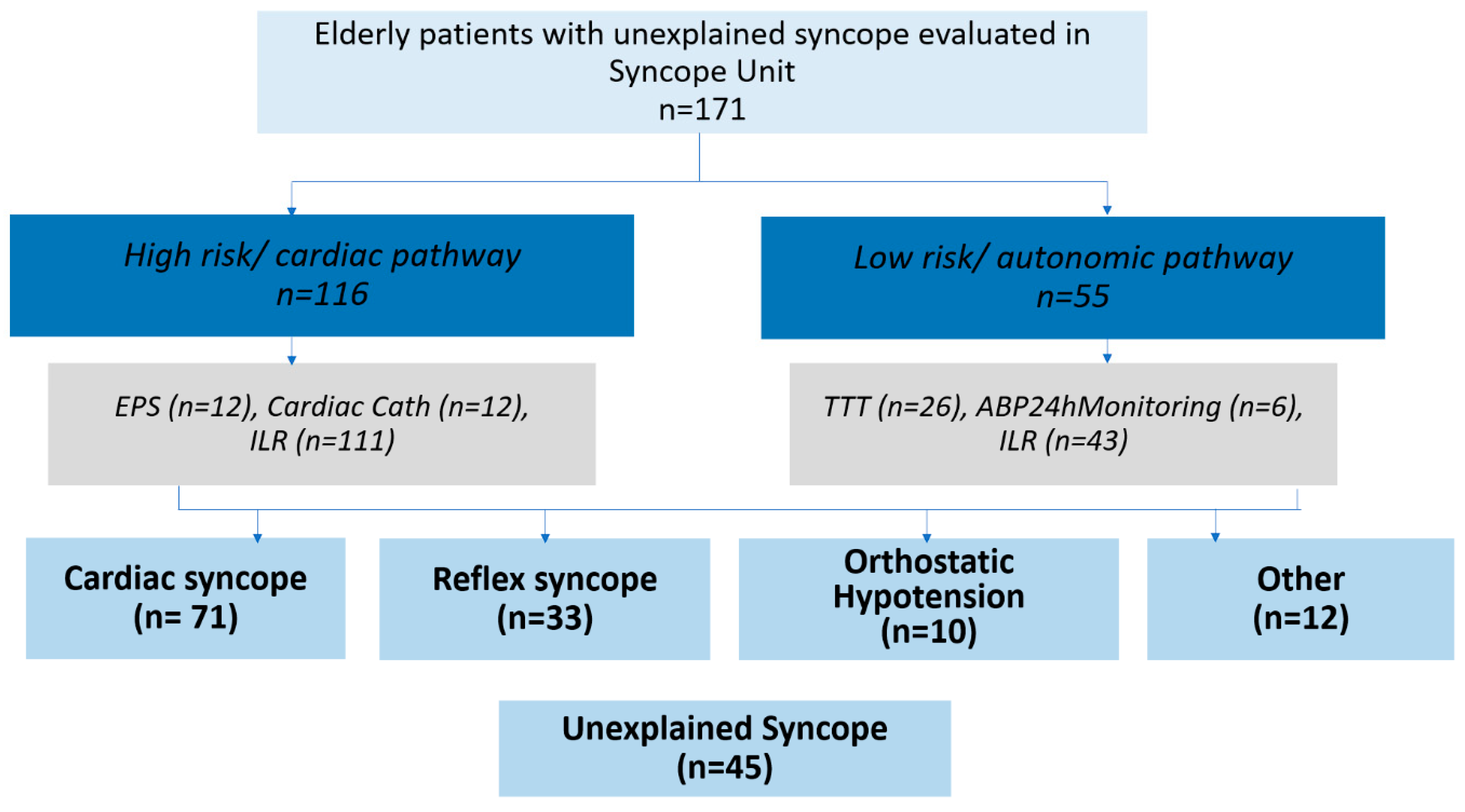
3.2. Initial Evaluation and Diagnostic Investigations
3.3. Implantable Loop Recorder Findings
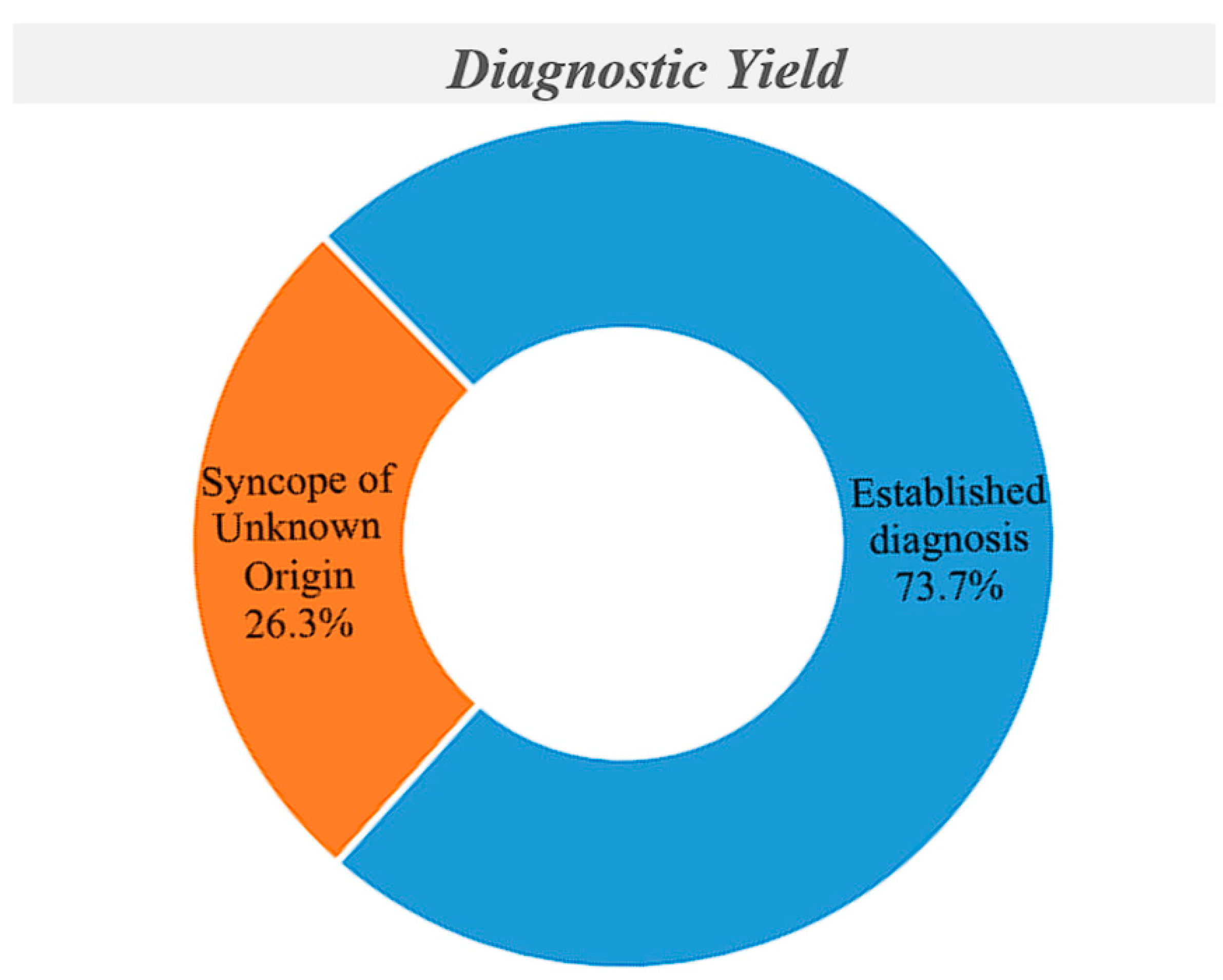
3.4. Primary Endpoint

3.5. Secondary Endpoints
3.6. Therapy
4. Discussion
- (a)
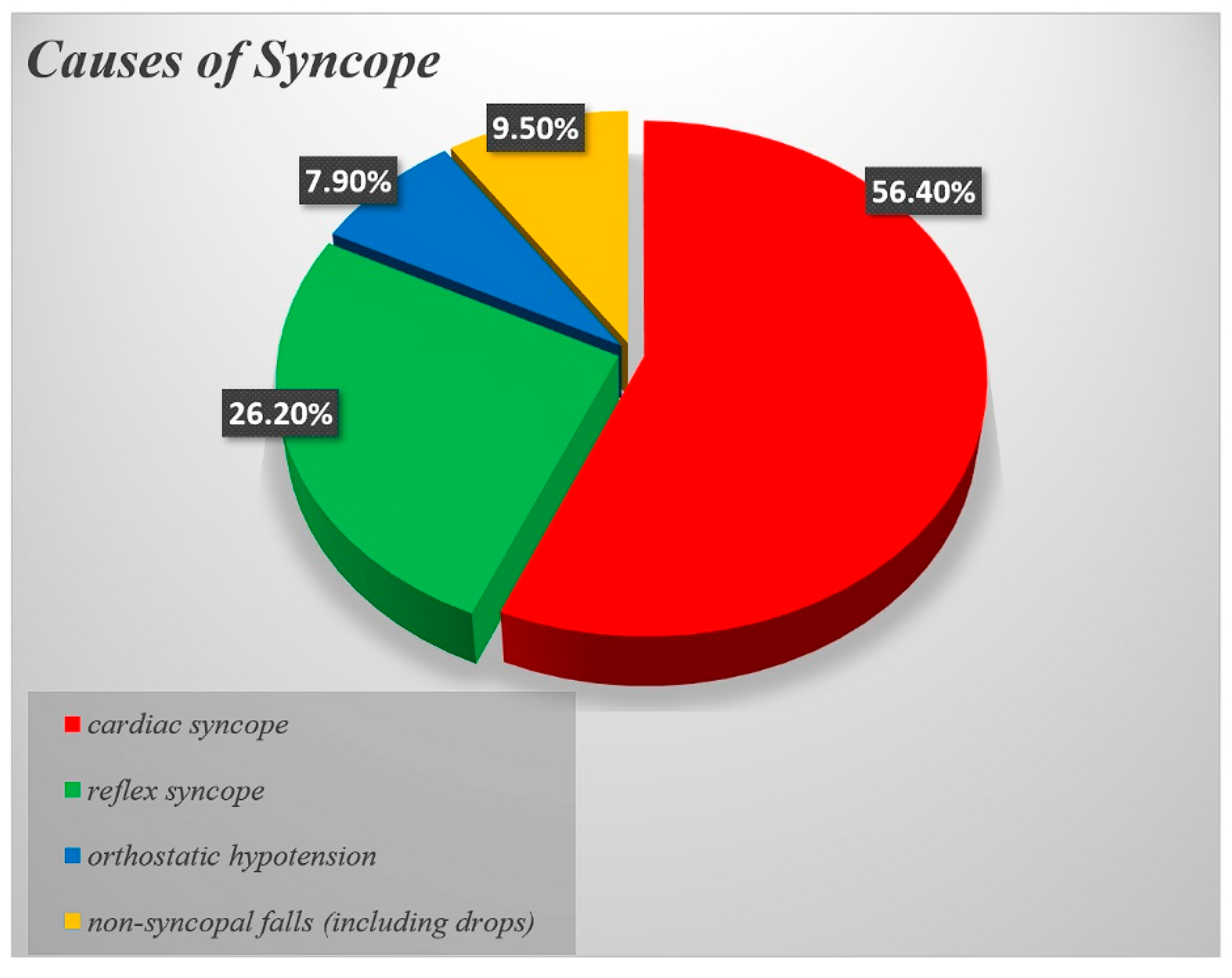
- Reflex syncope, including vasovagal syncope and carotid sinus syndrome, is considered to be the most common type of syncope in older adults. In these patients, due to the reduction in the vagal tone, vasodepressor syncope is more common, often occurring without prodromals. In addition, vasovagal syncope may occur under conditions associated with a sudden change in the autonomic tone such as micturition, defecation, exercise, or coughing. Moreover, carotid sinus syndrome is increasingly common at older ages where stiffness of the carotid vasculature is increased due to atherosclerosis and ageing.
- (b)
- Orthostatic hypotension is also common in the elderly, occurring in up to 30% among patients older than 75 years old. Underlying autonomic insufficiency, either idiopathic or resulting from comorbid conditions such as diabetes, amyloidosis, or neurological disorders, should be considered in older adults, especially in recurrent syncope. Postprandial syncope (defined as syncope that occurs following a meal) is a common subtype of orthostatic hypotension, attributed to venous pooling in the splanchnic vessels, resulting in reduction in the effective blood volume.
- (c)
- Cardiac syncope, due to arrhythmias or cardiac structural diseases (e.g., aortic stenosis), is considered to be a less common cause of syncope in older adults compared to reflex syncope; however, it is associated with worse outcomes. The prevalence of bradycardias is increasing with age and may result from medications, sick sinus syndrome, or atrioventricular block, whereas atrial and ventricular tachycardias may also result in syncope through a reduction in stroke volume as a result of incomplete myocardial relaxation and filling.
5. Conclusions
Author Contributions
Funding
Institutional Review Board Statement
Informed Consent Statement
Data Availability Statement
Conflicts of Interest
References
- Ageing Europe—Statistics on Population Developments. Statistics Explained. 15 November 2023. Available online: https://ec.europa.eu/eurostat/statistics-explained/SEPDF/cache/80393.pdf (accessed on 28 December 2025).
- Brignole, M.; Moya, A.; de Lange, F.J.; Deharo, J.C.; Elliott, P.M.; Fanciulli, A.; Fedorowski, A.; Furlan, R.; Kenny, R.A.; Martín, A.; et al. 2018 ESC guidelines for the diagnosis and management of syncope. Eur. Heart J. 2018, 39, 1883–1948. [Google Scholar] [CrossRef]
- Soteriades, E.S.; Evans, J.C.; Larson, M.G.; Chen, M.H.; Chen, L.; Benjamin, E.J.; Levy, D. Incidence and prognosis of syncope. N. Engl. J. Med. 2002, 347, 878–885. [Google Scholar] [CrossRef]
- Wong, W. Complexity of Syncope in Elderly People: A Comprehensive Geriatric Approach. Hong Kong Med. J. 2018, 24, 182–190. [Google Scholar] [CrossRef]
- Ungar, A.; Galizia, G.; Morrione, A.; Mussi, C.; Noro, G.; Ghirelli, L.; Masotti, G.; Rengo, F.; Marchionni, N.; Abete, P. Two-year morbidity and mortality in elderly patients with syncope. Age Ageing 2011, 40, 696–702. [Google Scholar] [CrossRef] [PubMed]
- Sun, B.C.; Emond, J.A.; Camargo, C.A. Characteristics and admission patterns of patients presenting with syncope to U.S. emergency departments, 1992–2000. Acad. Emerg. Med. 2004, 11, 1029–1034. [Google Scholar] [CrossRef]
- Marrison, V.K.; Fletcher, A.; Parry, S.W. The older patient with syncope: Practicalities and controversies. Int. J. Cardiol. 2012, 155, 9–13. [Google Scholar] [CrossRef] [PubMed]
- McCarthy, K.; Ward, M.; Romero Ortuño, R.; Kenny, R.A. Syncope, Fear of Falling and Quality of Life Among Older Adults: Findings from the Irish Longitudinal Study on Aging (TILDA). Front. Cardiovasc. Med. 2020, 7, 7. [Google Scholar] [CrossRef] [PubMed]
- O’Brien, H.; Kenny, R.A. Syncope in the elderly. Eur. Cardiol. 2014, 9, 28–36. [Google Scholar] [CrossRef]
- Kenny, R.A.; Brignole, M.; Dan, G.A.; Deharo, J.C.; van Dijk, J.G.; Doherty, C.; Hamdan, M.; Moya, A.; Parry, S.W.; Sutton, R.; et al. Syncope Unit: Rationale and requirement—The European Heart Rhythm Association position statement endorsed by the Heart Rhythm Society. Europace 2015, 17, 1325–1340. [Google Scholar] [CrossRef] [PubMed]
- Fedorowski, A.; Kulakowski, P.; Brignole, M.; de Lange, F.J.; Kenny, R.A.; Moya, A.; Rivasi, G.; Sheldon, R.; Van Dijk, G.; Sutton, R.; et al. Twenty-five years of research on syncope. Europace 2023, 25, euad163. [Google Scholar] [CrossRef] [PubMed]
- Groppelli, A.; Russo, V.; Parente, E.; Comune, A.; de Lange, F.J.; Rivasi, G.; Rafanelli, M.; Deharo, J.C.; Francisco-Pascual, J.; Maggi, R.; et al. Mechanism of syncope: Role of ambulatory blood pressure monitoring and cardiovascular autonomic function assessment. Eur. Heart J. 2025, 46, 827–835. [Google Scholar] [CrossRef] [PubMed]
- Brignole, M.; Moya, A.; Menozzi, C.; Garcia-Civera, R.; Sutton, R. Proposed electrocardiographic classification of spontaneous syncope documented by an implantable loop recorder. Europace 2005, 7, 14–18. [Google Scholar] [CrossRef]
- Podoleanu, C.; DaCosta, A.; Defaye, P.; Taieb, J.; Galley, D.; Bru, P.; Maury, P.; Mabo, P.; Boveda, S.; Cellarier, G.; et al. FRESH investigators. Early use of an implantable loop recorder in syncope evaluation: A randomized study in the context of the French healthcare system (FRESH study). Arch. Cardiovasc. Dis. 2014, 107, 546–552. [Google Scholar] [CrossRef] [PubMed]
- Sulke, N.; Sugihara, C.; Hong, P.; Patel, N.; Freemantle, N. The benefit of a remotely monitored implantable loop recorder as a first line investigation in unexplained syncope: The EaSyAS II trial. Europace 2016, 18, 912–918. [Google Scholar] [CrossRef]
- Russo, V.; Rago, A.; Grimaldi, N.; Chianese, R.; Viggiano, A.; D’Alterio, G.; Colonna, D.; Mattera Iacono, A.; Papa, A.A.; Spadaro Guerra, A.; et al. Remote monitoring of implantable loop recorders reduces time to diagnosis in patients with unexplained syncope: A multicenter propensity score-matched study. Front. Cardiovasc. Med. 2023, 10, 1193805. [Google Scholar] [CrossRef]
- Brignole, M.; Menozzi, C.; Maggi, R.; Solano, A.; Donateo, P.; Bottoni, N.; Lolli, G.; Quartieri, F.; Croci, F.; Oddone, D.; et al. The usage and diagnostic yield of the implantable loop-recorder in detection of the mechanism of syncope and in guiding effective antiarrhythmic therapy in older people. Europace 2005, 7, 273–279. [Google Scholar] [CrossRef] [PubMed]
- Ruwald, M.H.; Lock Hansen, M.; Lamberts, M.; Vinther, M.; Torp-Pedersen, C.; Hansen, J.; Gislason, G.H. Unexplained Syncope and Diagnostic Yield of Tests in Syncope According to the ICD-10 Discharge Diagnosis. J. Clin. Med. Res. 2013, 5, 441–450. [Google Scholar] [CrossRef][Green Version]
- Bhangu, J.; McMahon, C.G.; Hall, P.; Bennett, K.; Rice, C.; Crean, P.; Sutton, R.; Kenny, R.A. Long-term cardiac monitoring in older adults with unexplained falls and syncope. Heart 2016, 102, 681–686. [Google Scholar] [CrossRef]
- Gatzoulis, K.A.; Karystinos, G.; Gialernios, T.; Sotiropoulos, H.; Synetos, A.; Dilaveris, P.; Sideris, S.; Kalikazaros, I.; Olshansky, B.; Stefanadis, C.I. Correlation of noninvasive electrocardiography with invasive electrophysiology in syncope of unknown origin: Implications from a large syncope database. Ann. Noninvasive Electrocardiol. 2009, 14, 119–127. [Google Scholar] [CrossRef]
- Sheldon, R.S.; Lei, L.Y.; Solbiati, M.; Chew, D.S.; Raj, S.R.; Costantino, G.; Morillo, C.; Sandhu, R.K. Electrophysiology studies for predicting atrioventricular block in patients with syncope: A systematic review and meta-analysis. Heart Rhythm 2021, 18, 1310–1317. [Google Scholar] [CrossRef]
- Goyal, P.; Maurer, M.S. Syncope in older adults. J. Geriatr. Cardiol. 2016, 13, 380–386. [Google Scholar] [CrossRef] [PubMed]
- Sutton, R.; Brignole, M.; Benditt, D.G. Key challenges in the current management of syncope. Nat. Rev. Cardiol. 2012, 9, 590–598. [Google Scholar] [CrossRef] [PubMed]
- Fedele, D.; Casuso Alvarez, M.; Maida, A.; Vasumini, N.; Amicone, S.; Canton, L.; Di Leo, M.; Basile, M.; Manaresi, T.; Angeli, F.; et al. Prevention of atrial fibrillation with SGLT2 inhibitors across the spectrum of cardiovascular disorders: A meta-analysis of randomized controlled trials. Eur. Heart J. Cardiovasc. Pharmacother. 2025, 11, 441–450. [Google Scholar] [CrossRef]
- Kasiak, P.S.; Buchalska, B.; Kowalczyk, W.; Wyszomirski, K.; Krzowski, B.; Grabowski, M.; Balsam, P. The Path of a Cardiac Patient-From the First Symptoms to Diagnosis to Treatment: Experiences from the Tertiary Care Center in Poland. J. Clin. Med. 2022, 11, 5276. [Google Scholar] [CrossRef] [PubMed]


| Characteristics | Population (n = 171) |
|---|---|
| Female, n (%) | 81 (47.4%) |
| Age, years | 76.4 ± 6.6 |
| Characteristics of syncope/presyncope | |
| Syncope ± presyncope | 158 (92.4%) |
| Presyncope only | 13 (7.6%) |
| Traumatic syncope, n (%) | 127 (74.3%) |
| Νumber of episodes | 6.2 ± 3.8 |
| Prodromes 1, n (%) | 114 (66.7%) |
| Predisposing factors 2 | 31 (18.1%) |
Position, n (%)
| 17 (9.9%) 91 (53.2%) 122 (71.3%) 15 (8.8%) |
Exertion status, n (%)
| 117 (68.4%) 90 (52.6%) 9 (5.3%) 1 (0.6%) |
| Presyncope, n (%) | 109 (63.7%) |
| Palpitations, n (%) | 25 (14.6%) |
| Post syncope symptoms, n (%) | 141 (82.5%) |
| Mean recovery time (min) | 5.6 ± 4.1 |
| Clinical Characteristics | |
| Arterial Hypertension, n (%) | 106 (62%) |
| Dyslipidaemia, n (%) | 95 (55.6%) |
| Diabetes Mellitus, n (%) | 26 (15.2%) |
| Smoking, n (%) | 37 (21.6%) |
| Coronary Heart Disease, n (%) | 30 (17.5%) |
| Non-Ischaemic Dilated Cardiomyopathy, n (%) | 1 (0.6%) |
| Hypertrophic Cardiomyopathy, n (%) | 2 (1.2%) |
| Atrial Fibrillation 4, n (%) | 28 (16.4%) |
| Pacemaker, n (%) | 3 (1.8%) |
| Valvular Heart Disease 3, n (%) | 11 (6.4%) |
| Mitral Valve Prolapse, n (%) | 3 (1.8%) |
| AVNRT, n (%) | 1 (0.6%) |
| Previous Stroke, n (%) | 6 (3.5%) |
| Carotid stenosis not requiring operation, n (%) | 11 (6.4%) |
| History of cancer, n (%) | 9 (5.3%) |
| History of thyroid disease, n (%) | 33 (19.3%) |
| History of Parkinson disease on medication, n (%) | 6 (3.5%) |
| History of prostate hyperplasia on medication, n (%) | 12 (7.1%) |
| Receiving medication for dementia, n (%) | 14 (8.2%) |
| Receiving antiepileptic therapy, n (%) | 4 (2.3%) |
| Receiving any chronic medication, n (%) | 164 (96%) |
| Receiving antiplatelet or anticoagulant medication, n (%) | 67 (39.2%) |
| 12-lead ECG abnormalities on presentation, n (%) (Sinus Bradycardia, 1st degree AV block, Bifascicular block, Atrial Fibrillation, Left Anterior Fascicular Block, Right Bundle Branch Block, Left Bundle Branch Block, n Incomplete Right Bundle Branch Block, Left Ventricular Hypertrophy, Ischaemic Changes, T-wave inversion, Prolonged QT, Early Repolarisation, premature Atrial Contractions, Premature Ventricular Contractions, Paced) | 74 (43.3%) |
| Test Performed | Population (n = 171) |
|---|---|
| Carotid Massage, n (%) | 58 (33.9%) |
| Active Standing, n (%) | 171 (100%) |
| Haematology/Biochemistry, n (%) | 171 (100%) |
| Echocardiogram, n (%) | 171 (100%) |
| Left Ventricular Ejection Fraction | 54 ± 10% |
| ECG Monitoring, n (%) | 24 (14%) |
| 24 h ambulatory ECG recording, n (%) | 171 (100%) |
| Treadmill ECG stress test, SPECT or stress echo test, n (%) | 42 (24.6%) |
| Coronary Catheterization, n (%) | 12 (7.2%) |
| Tilt Table Test, n (%) | 26 (15.2%) |
| Electrophysiological Study, n (%) | 13 (7.6%) |
| Implantable Loop Recorder insertion, n (%) | 154 (90.1%) |
| Central Nervous System Computerised Tomography and/or Magnetic Resonance Imaging performed for syncope investigation, n (%) | 4 (2.3%) |
| 24 h Ambulatory Blood Pressure Monitoring (24 hABPM), n (%) | 6 (3.5%) |
| Population (n = 171) | |
|---|---|
| Mean Follow-up time, m | 40.5 ± 20 |
| Established final diagnosis, n (%) | 126 (73.7%) |
| Cause of syncope, n (%) | |
| 33 (26.2%) 1 (3%) 1 |
| 71 (56.4%) 59 (83.1%) 2 6 (8.5%) 2 1 (1.4%) 2 5 (7.0%) 2 |
| 10 (7.9%) |
| 12 (9.5%) |
| Established ECG-based diagnosis, n (%) | 67 (53.2%) |
| Time to final-diagnosis, months | 4.8 ± 3.3 |
Disclaimer/Publisher’s Note: The statements, opinions and data contained in all publications are solely those of the individual author(s) and contributor(s) and not of MDPI and/or the editor(s). MDPI and/or the editor(s) disclaim responsibility for any injury to people or property resulting from any ideas, methods, instructions or products referred to in the content. |
© 2026 by the authors. Licensee MDPI, Basel, Switzerland. This article is an open access article distributed under the terms and conditions of the Creative Commons Attribution (CC BY) license.
Share and Cite
Archontakis, S.; Oikonomou, E.; Milaras, N.; Dourvas, P.; Klogkeri, T.; Kalantzis, D.; Markakos, A.; Ampeliotis, M.; Papadima, A.; Venetsanos, D.; et al. Cardiac Syncope: An Underestimated Cause of Unexplained Syncope in the Elderly-Data from a Single High-Volume Syncope Unit. J. Clin. Med. 2026, 15, 2450. https://doi.org/10.3390/jcm15062450
Archontakis S, Oikonomou E, Milaras N, Dourvas P, Klogkeri T, Kalantzis D, Markakos A, Ampeliotis M, Papadima A, Venetsanos D, et al. Cardiac Syncope: An Underestimated Cause of Unexplained Syncope in the Elderly-Data from a Single High-Volume Syncope Unit. Journal of Clinical Medicine. 2026; 15(6):2450. https://doi.org/10.3390/jcm15062450
Chicago/Turabian StyleArchontakis, Stefanos, Evangelos Oikonomou, Nikias Milaras, Panagiotis Dourvas, Tzonatan Klogkeri, Dimitrios Kalantzis, Anastasios Markakos, Michail Ampeliotis, Artemis Papadima, Dimitrios Venetsanos, and et al. 2026. "Cardiac Syncope: An Underestimated Cause of Unexplained Syncope in the Elderly-Data from a Single High-Volume Syncope Unit" Journal of Clinical Medicine 15, no. 6: 2450. https://doi.org/10.3390/jcm15062450
APA StyleArchontakis, S., Oikonomou, E., Milaras, N., Dourvas, P., Klogkeri, T., Kalantzis, D., Markakos, A., Ampeliotis, M., Papadima, A., Venetsanos, D., Tsalamandris, S., Syrseloudis, D., & Sideris, S. (2026). Cardiac Syncope: An Underestimated Cause of Unexplained Syncope in the Elderly-Data from a Single High-Volume Syncope Unit. Journal of Clinical Medicine, 15(6), 2450. https://doi.org/10.3390/jcm15062450