Radiation-Induced Meningiomas: Systematic Review with Pooled Case Analysis and Case Series of Long Latency, Aggressive Behavior, and Clinical Outcomes
Abstract
1. Introduction
2. Materials and Methods
2.1. Design of the Study
2.2. Case Reports
2.3. Literature Review: Search Strategy and Data Extraction
2.4. Selection Criteria
2.5. Outcome Measures
2.6. Subgroup Datasets
2.7. Statistical Analysis
2.8. Quality Assessment
3. Results
3.1. Case Series
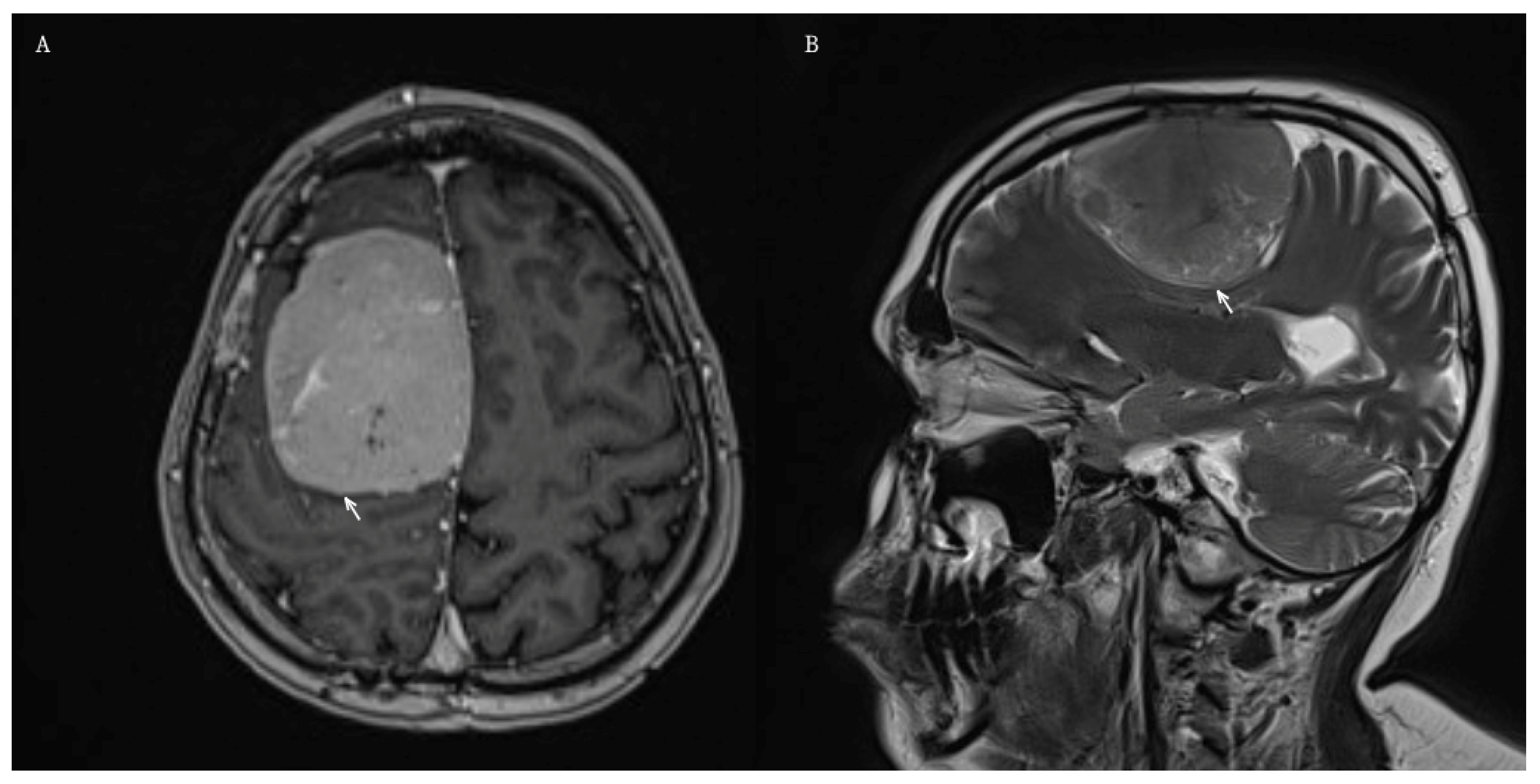
3.1.1. Case 1 (2007, 2013, and 2022)
3.1.2. Case 2 (2017 and 2019)
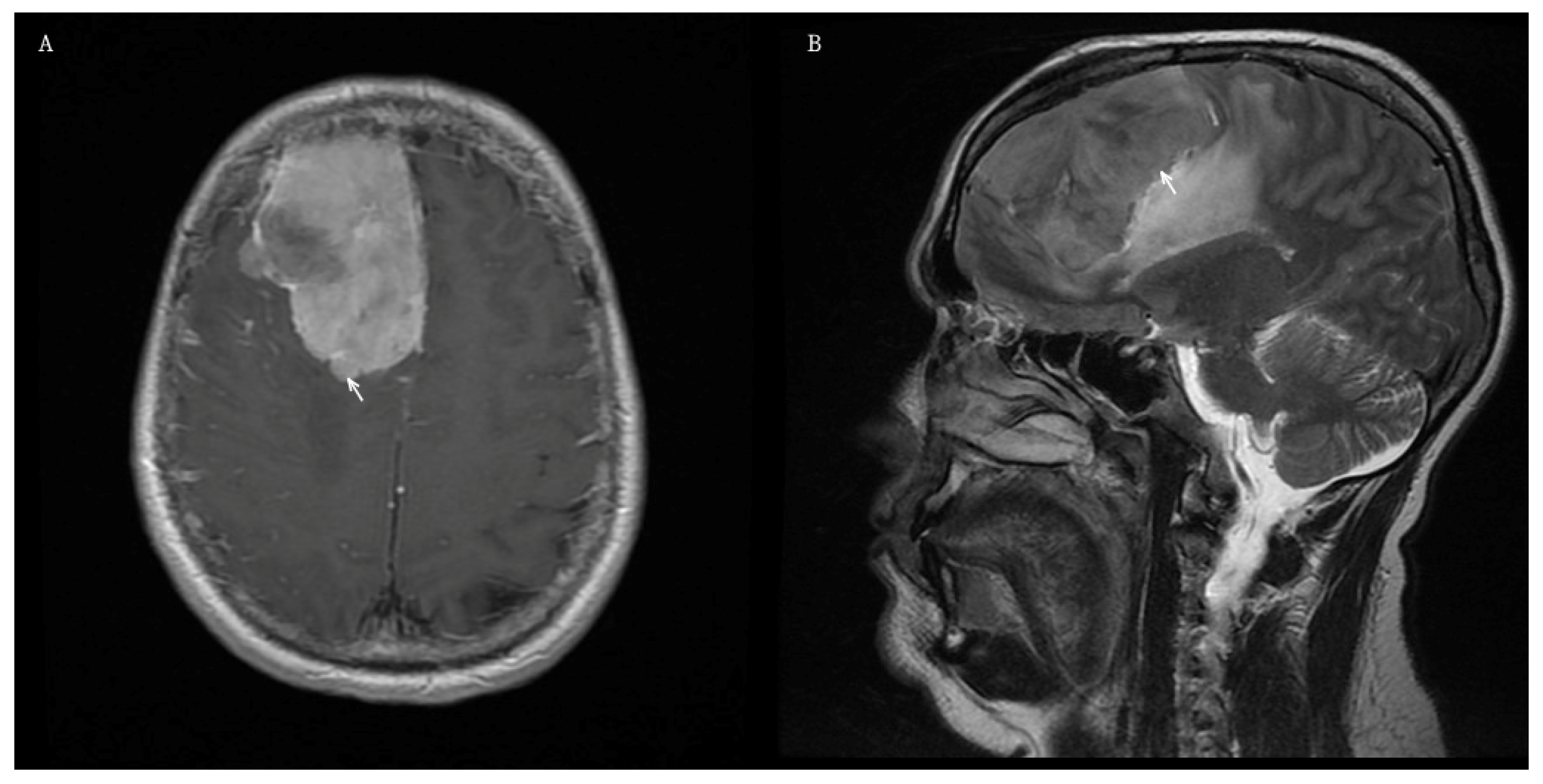
3.1.3. Case 3 (2023)
3.1.4. Case 4 (2025)
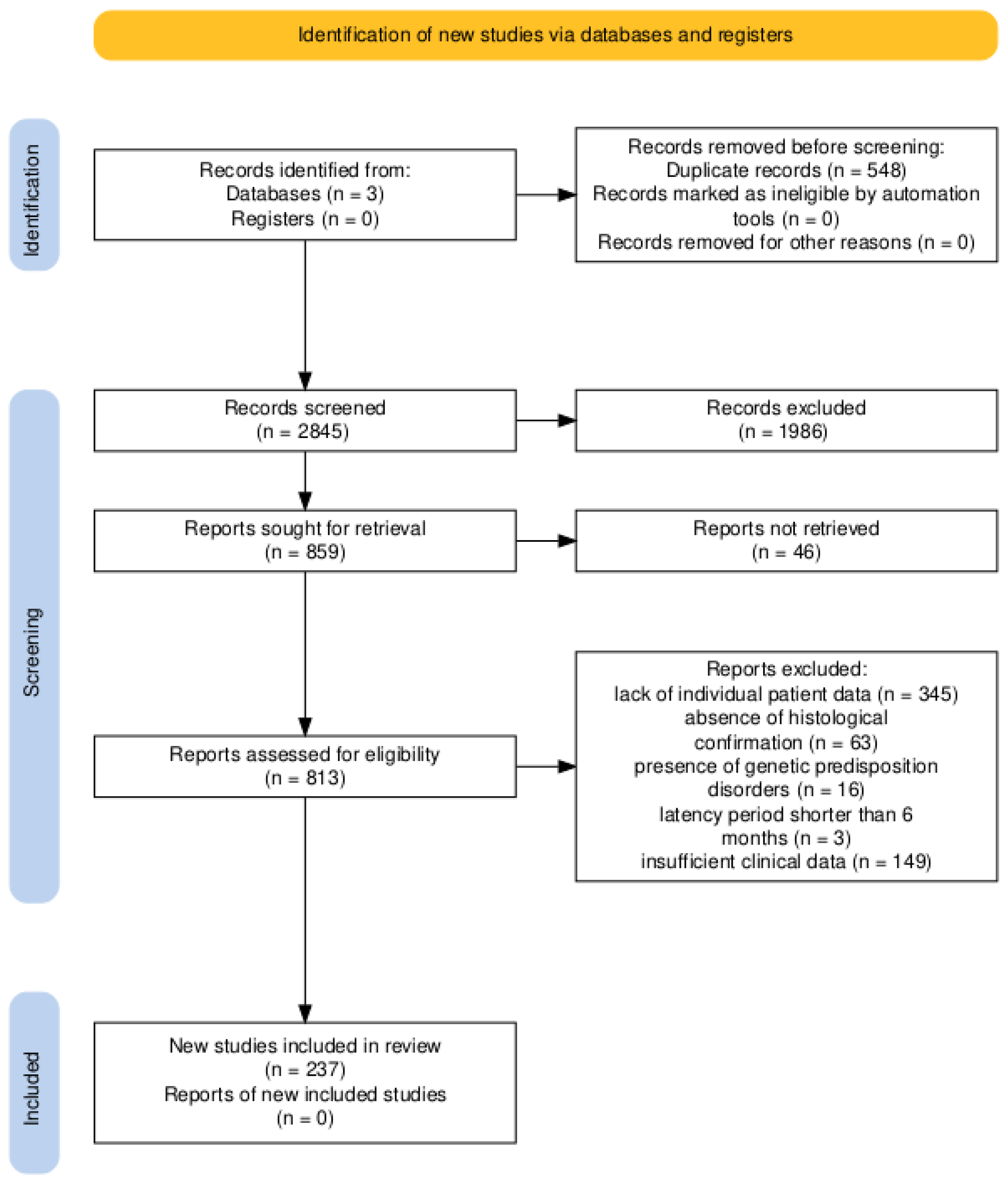
3.2. Search Results
3.3. Baseline Characteristics
3.4. Sub-Analyses
3.4.1. Data Availability
Primary Tumor Categories
- Primary tumor category and latency period
- 2.
- Primary tumor category and WHO grade of RIMs
- 3.
- Primary tumor category and RIM tumor multiplicity
Dose of Irradiation
- 1.
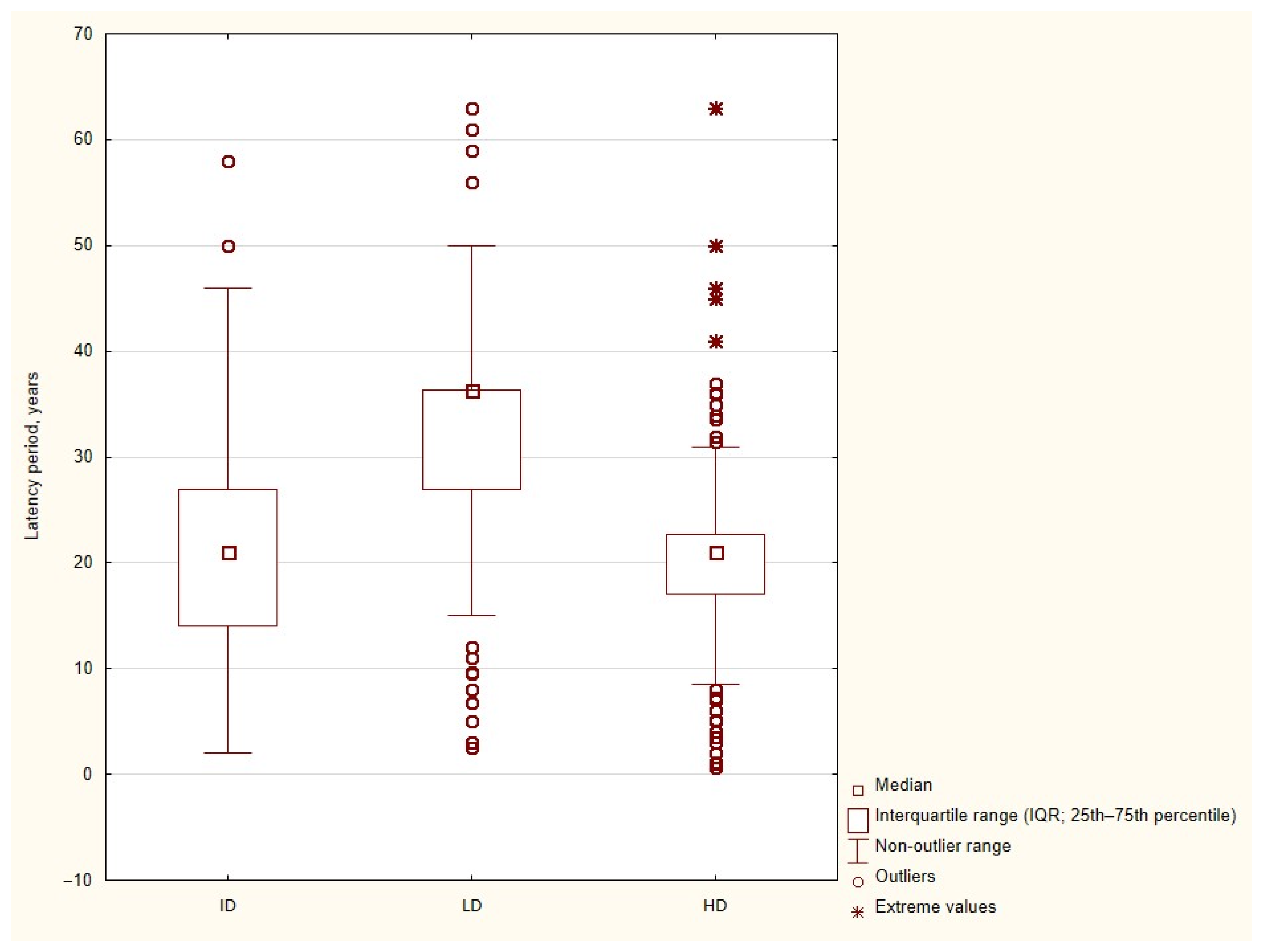
- Radiation dose and latency period
- 2.
- Radiation dose and RIM multiplicity
RIM Recurrence
WHO Grade of RIM
Latency Period
Age at Irradiation
4. Discussion
4.1. Radiation-Induced Meningiomas Versus Sporadic Meningiomas
4.2. Primary Tumor Category and Histological Grade
4.3. Age at Irradiation and Latency Period
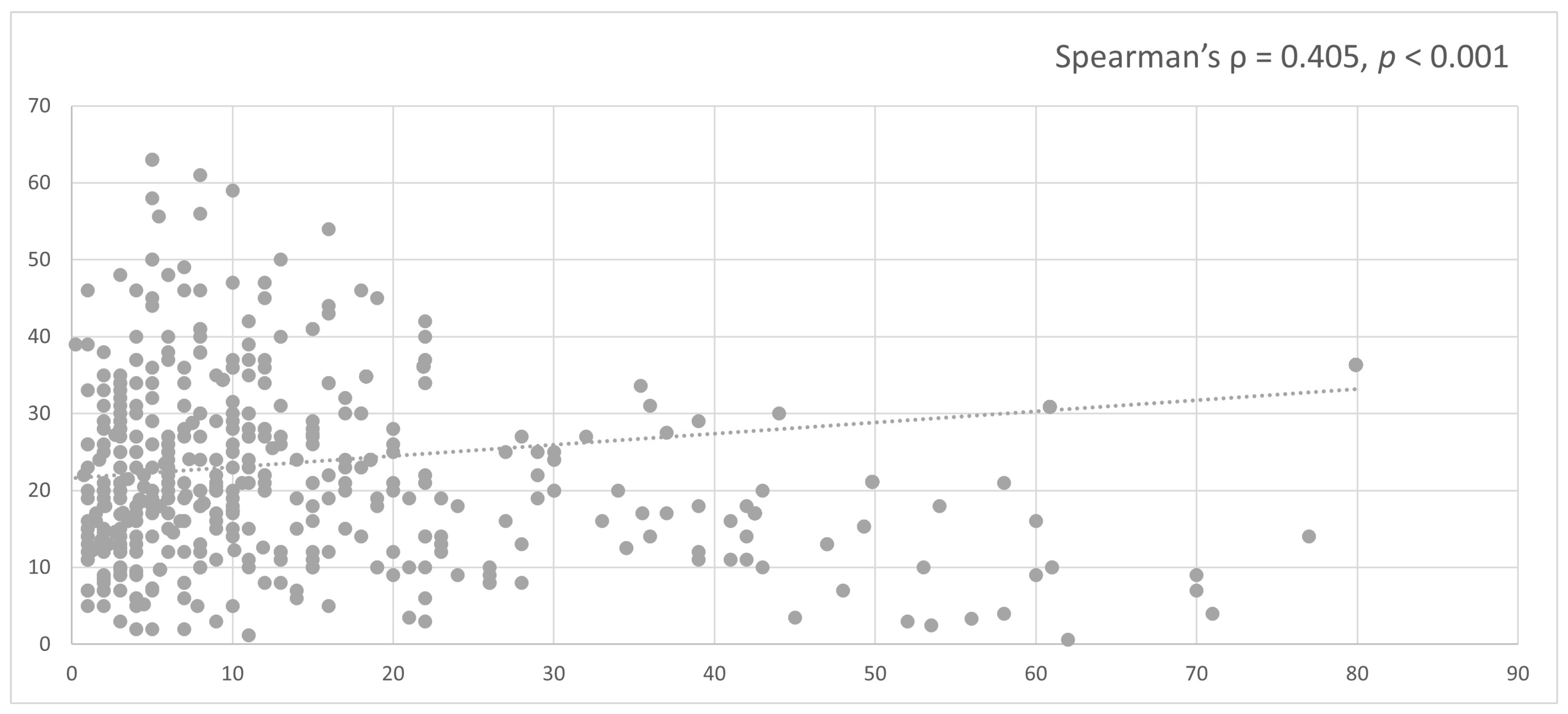
4.4. Radiation Dose and Latency: Implications for Surveillance
4.5. Radiation Dose, WHO Grade, and Multiplicity
4.6. Clinical Implications
4.7. Limitations
5. Conclusions
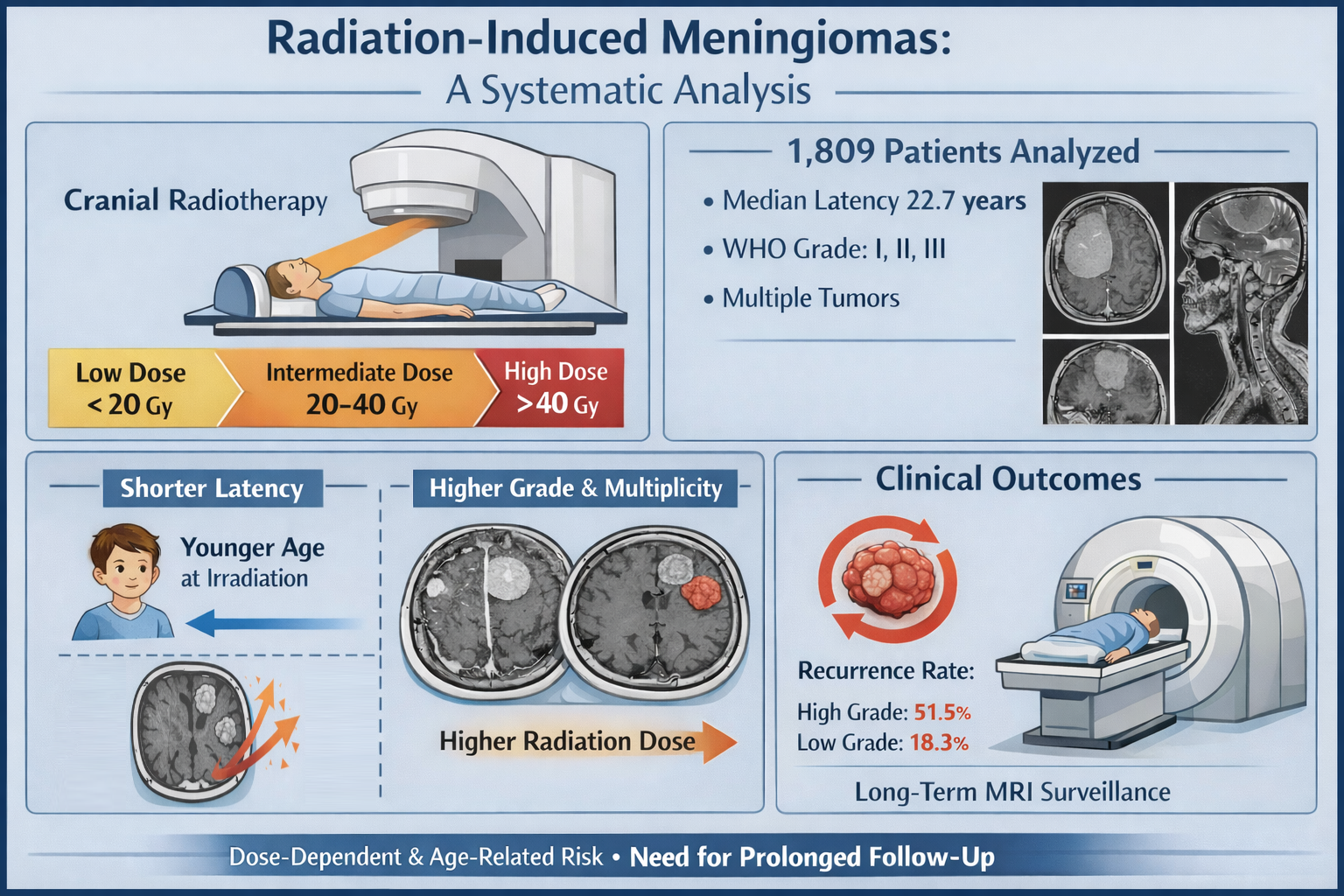
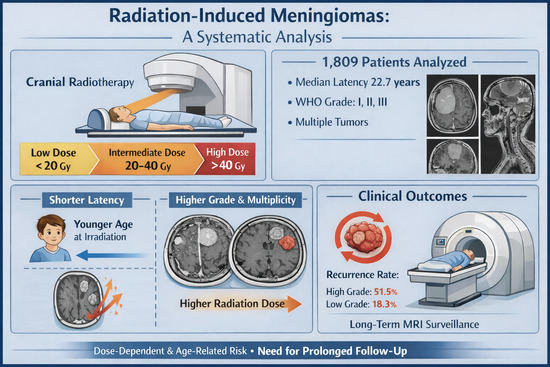
- RIMs constitute a distinct subgroup of meningiomas with longer but dose-dependent latency, higher rates of high-grade histology, increased tumor multiplicity, and a substantial risk of recurrence compared with sporadic meningiomas.
- The latency period of RIMs is significantly influenced by radiation dose and age at irradiation; higher doses and younger age at exposure are associated with earlier tumor development.
- The histological aggressiveness of RIMs appears to be independent of the primary tumor type treated with radiotherapy, suggesting that ionizing radiation itself is the principal driver of malignant transformation.
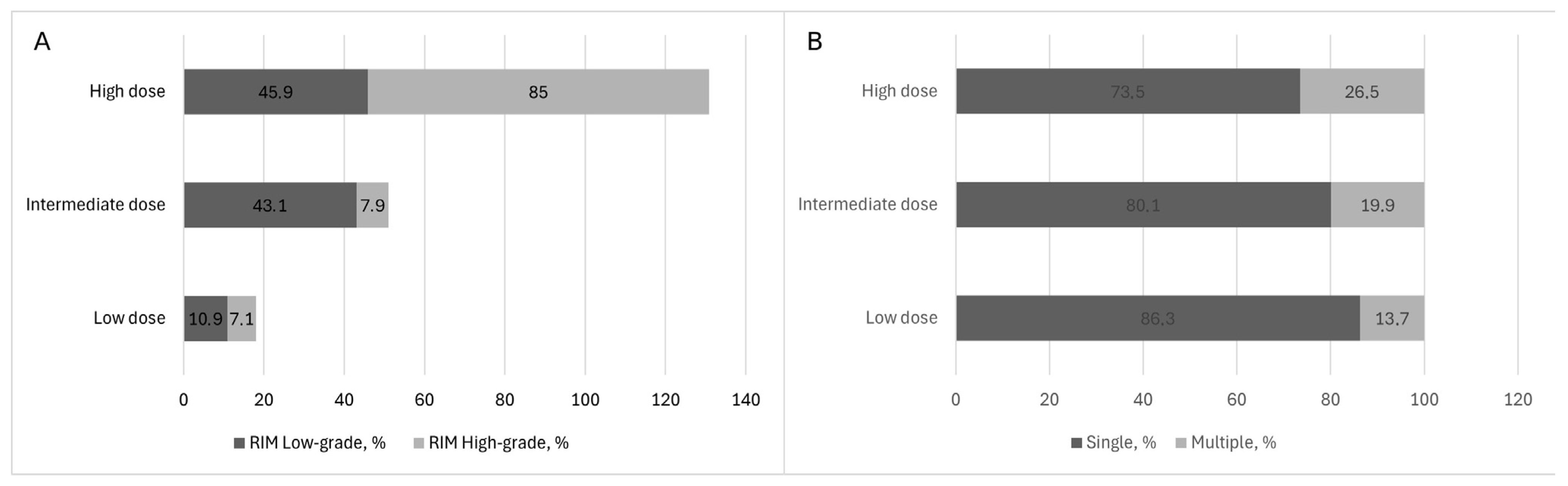
- Higher radiation doses used for treatment of the primary disease are associated with a higher WHO grade and increased tumor multiplicity of subsequent RIMs.
- The observed latency patterns highlight the importance of long-term follow-up in patients previously exposed to cranial radiotherapy, particularly those irradiated during childhood.
- These findings suggest that long-term neuroimaging surveillance may warrant consideration in survivors of cranial radiotherapy, with the timing of imaging potentially guided by radiation dose and age at exposure.
Supplementary Materials
Author Contributions
Funding
Institutional Review Board Statement
Informed Consent Statement
Data Availability Statement
Conflicts of Interest
Abbreviations
| RIM | Radiation-induced meningioma |
| SD | Standard deviation |
| IQR | Interquartile range |
| JBI | Joanna Briggs Institute |
| WHO | World Health Organization |
References
- Benjamin, C.; Shah, J.K.; Kondziolka, D. Radiation-induced meningiomas. Handb. Clin. Neurol. 2020, 169, 273–284. [Google Scholar] [CrossRef] [PubMed]
- Wang, J.Z.; Agnihotri, S.; Zadeh, G. Radiation-Induced Meningiomas. Adv. Exp. Med. Biol. 2023, 1416, 159–173. [Google Scholar] [CrossRef] [PubMed]
- Umansky, F.; Shoshan, Y.; Rosenthal, G.; Fraifeld, S.; Spektor, S. Radiation-induced meningioma. Neurosurg. Focus 2008, 24, E7. [Google Scholar] [CrossRef] [PubMed]
- Shoshan, Y.; Chernova, O.; Juen, S.S.; Somerville, R.P.; Israel, Z.; Barnett, G.H.; Cowell, J.K. Radiation-induced meningioma: A distinct molecular genetic pattern? J. Neuropathol. Exp. Neurol. 2000, 59, 614–620. [Google Scholar] [CrossRef] [PubMed]
- Salviat, F.; Gauthier-Villars, M.; Carton, M.; Cassoux, N.; Rouic, L.L.-L.; Dehainault, C.; Levy, C.; Golmard, L.; Aerts, I.; Doz, F.; et al. Association between genotype and phenotype in consecutive unrelated individuals with retinoblastoma. JAMA Ophthalmol. 2020, 138, 843–850. [Google Scholar] [CrossRef]
- Haddaway, N.R.; Page, M.J.; Pritchard, C.C.; McGuinness, L.A. PRISMA2020: An R package and Shiny app for producing PRISMA 2020-compliant flow diagrams, with interactivity for optimised digital transparency and Open Synthesis. Campbell Syst. Rev. 2022, 18, e1230. [Google Scholar] [CrossRef] [PubMed]
- Wiemels, J.; Wrensch, M.; Claus, E.B. Epidemiology and etiology of meningioma. J. Neurooncol. 2010, 99, 307–314. [Google Scholar] [CrossRef] [PubMed] [PubMed Central]
- Robert, S.M.; Vetsa, S.; Nadar, A.; Vasandani, S.; Youngblood, M.W.; Gorelick, E.; Jin, L.; Marianayagam, N.; Erson-Omay, E.Z.; Günel, M.; et al. The integrated multiomic diagnosis of sporadic meningiomas: A review of its clinical implications. J. Neurooncol. 2022, 156, 205–214. [Google Scholar] [CrossRef] [PubMed]
- Fahlström, A.; Dwivedi, S.; Drummond, K. Multiple meningiomas: Epidemiology, management, and outcomes. Neurooncol. Adv. 2023, 5, i35–i48. [Google Scholar] [CrossRef] [PubMed] [PubMed Central]
- Gurses, M.E.; Zengin, H.Y.; Shikhaliyeva, A.; Askun, C.S.; Mut, M. Early Postoperative Adjuvant Radiotherapy Versus Active Monitoring After Gross Total Resection for Atypical Meningiomas: Factors Associated with Early Recurrence. Turk. Neurosurg. 2023, 33, 635–641. [Google Scholar] [CrossRef] [PubMed]
- Zeng, Q.; Tian, Z.; Gao, Q.; Xu, P.; Shi, F.; Zhang, J.; Guo, Z. Effectiveness of Postoperative Radiotherapy in Patients with Atypical Meningiomas After Gross Total Resection: Analysis of 260 Cases. World Neurosurg. 2022, 162, e580–e586. [Google Scholar] [CrossRef] [PubMed]
- Lam Shin Cheung, V.; Kim, A.; Sahgal, A.; Das, S. Meningioma recurrence rates following treatment: A systematic analysis. J. Neurooncol. 2018, 136, 351–361. [Google Scholar] [CrossRef] [PubMed]
- Suzuki, K.; Yamashita, S. Low-dose radiation exposure and carcinogenesis. Jpn. J. Clin. Oncol. 2012, 42, 563–568. [Google Scholar] [CrossRef] [PubMed]
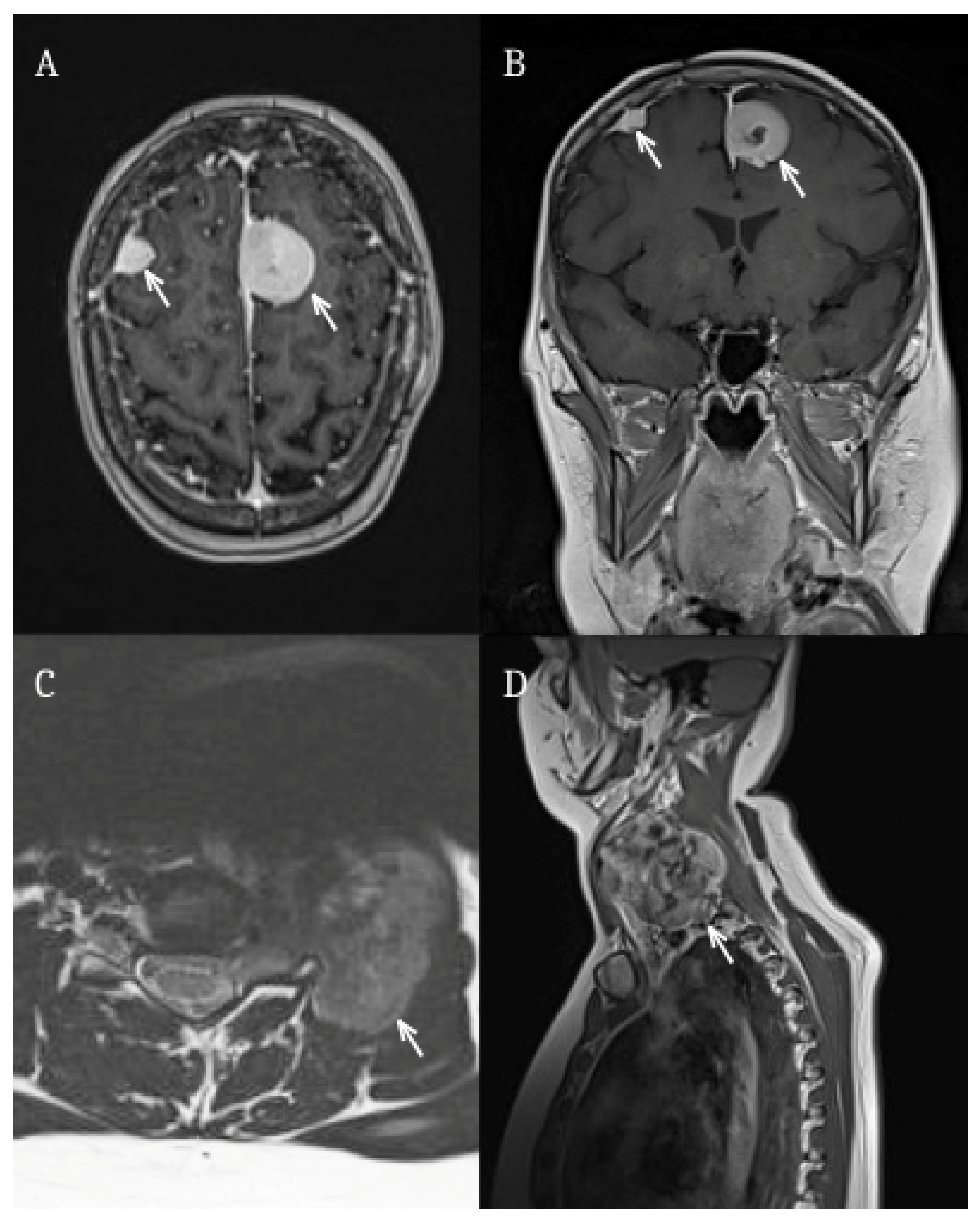



| Case | Sex | Age at Irradiation | Age at RIM Diagnosis | Primary Disease | Latency Period, Years | Radiation Dose, Gy | Multiplicity | GTR | WHO Grade | Follow-Up, Months | Recurrence |
|---|---|---|---|---|---|---|---|---|---|---|---|
| 1 | M | 2 | 22 | NB | 20 | 16 | No | Yes | 2 | 216 | Yes |
| 2 | M | 2.5 | 26 | ALL | 24 | 24 | Yes | Yes | 1 | 96 | Yes |
| 3 | M | 7 | 38 | ALL | 31 | 24 | No | Yes | 1 | 24 | No |
| 4 | M | 11 | 40 | EPE | 29 | 50 | No | Yes | 2 | 6 | No |
| Variable | Available Studies (n) | Available Cases (n) |
|---|---|---|
| Latency period | 217 | 1303 |
| RIM WHO grade | 110 | 1019 |
| Radiation dose | 223 | 1478 |
| Primary tumor | 232 | 1746 |
| Recurrence | 102 | 440 |
| Multiplicity | 191 | 1047 |
| Age of irradiation | 203 | 980 |
| Tumor Category | Tumors List | Count, n (%) |
|---|---|---|
| Skin disease of the head | Tinea capitis, microsporosis, cutaneous angioma, skin hemangioma, basal cell carcinoma, unspecified scalp cancer, acne vulgaris, sebaceous naevus, unspecified scalp angioma, unspecified scalp lesion, breast cancer scalp metastasis, melanoma, unspecified primary skin carcinoma, abscess, and scalp infection | 530 (48.05%) |
| Acute leukemia | ALL, AML, and other leukemia | 378 (34.27%) |
| Victim of a Nuclear Incident | The explosion of the atomic bomb (Nagasaki) and exposure to Chernobyl irradiation | 204 (18.50%) |
| Other | Otitis media, hypertrophic tonsils, schwannoma, Langerhans cell histiocytosis, CNS lymphoma, Graves ophthalmopathy, neurinoma, ganglioglioma, meningioma, AVM, unspecified CNS tumors, and an interventional embolization procedure for a brain aneurysm | 180 (16.32%) |
| Medulloblastoma | Medulloblastoma | 137 (12.42%) |
| LGG | Oligodendroglioma, astrocytoma, thalamic glioma, spongioblastoma, pontine glioma, pilocytic astrocytoma, optic nerve glioma, and unspecified LGG | 98 (8.88%) |
| Sellar/suprasellar tumor | PitNET tumor, craniopharyngioma, and suprasellar germ cell tumor | 62 (5.62%) |
| Non-CNS lymphoma | Hodgkin lymphoma, non-Hodgkin lymphoma, T-cell lymphoma, Burkitt lymphoma, and unspecified lymphoma | 39 (3.54%) |
| Ependymoma/subependymoma | Ependymoma, subependymoma, and anaplastic ependymoma | 33 (2.99%) |
| Germ cell tumor | Germ cell tumor and germinoma | 19 (1.72%) |
| Soft tissue tumor | Ewing sarcoma, osteosarcoma, rhabdomyosarcoma, unspecified face tumor, carcinoma of the tongue, and unspecified soft tissue tumor | 19 (1.72%) |
| Head and Neck Tumor | Parotid gland tumor, retroauricular tumor, thyroid tumor, nasal implant, facial angioma, oral squamous cell carcinoma, nasopharyngeal tumor, papilloma, and lineal tumor | 11 (1.00%) |
| HGG | Anaplastic astrocytoma, glioblastoma, anaplastic oligoastrocytoma, anaplastic oligodendroglioma, and unspecified HGG | 8 (0.73%) |
| Other CNS embryonal tumor | Olfactory neuroblastoma, atypical teratoid/rhabdoid tumor, ganglioneuroblastoma, and metastatic neuroblastoma | 8 (0.73%) |
| PNET | PNET | 8 (0.73%) |
| Pineal tumor | Pineal tumor | 5 (0.45%) |
| Ventricular tumor | 3rd ventricle tumor and unspecified ventricle tumor | 4 (0.36%) |
| Posterior fossa tumor | Posterior fossa tumor other than medulloblastoma | 3 (0.27%) |
| Primary Tumor Category | Latency Distribution | RIM WHO Grade | Multiplicity | ||||||
|---|---|---|---|---|---|---|---|---|---|
| n | Median Latency (IQR), Years | Range, Years | n | Low-Grade, n (%) | High-Grade, n (%) | n | Single, n (%) | Multiple, n (%) | |
| Medulloblastoma | 68 | 16 (11–23) | 1.2–36 | 29 | 20 (69.0%) | 9 (31.0%) | 58 | 43 (74.1%) | 15 (25.9%) |
| LGG | 48 | 20 (12–26.3) | 3–50 | 19 | 17 (89.5%) | 2 (10.5%) | 39 | 33 (84.6%) | 6 (15.4%) |
| Acute leukemia | 126 | 20.5 (16–26.7) | 5–41 | 60 | 45 (75%) | 15 (25%) | 115 | 95 (82.6%) | 20 (17.4%) |
| Skin disease of the head | 393 | 36.3 (29.5–36.6) | 2–63 | 100 | 88 (88%) | 12 (12%) | 380 | 325 (85.5%) | 55 (14.5%) |
| Sellar/suprasellar tumor | 57 | 20 (11–27) | 1–36 | 24 | 16 (66.7%) | 8 (33.3%) | 47 | 40 (85.1%) | 7 (14.9%) |
| Ependymoma/ subependymoma | 27 | 20 (12.2–26) | 7–41 | 12 | 7 (58.3%) | 5 (41.7%) | 23 | 16 (69.6%) | 7 (30.4%) |
| Non-CNS lymphoma | 13 | 19 (11–23) | 5–27.3 | 7 | 6 (85.7%) | 1 (14.3%) | 13 | 10 (76.9%) | 3 (23.1%) |
| Other | 15 | 15 (8.8–33) | 2.5–59 | 8 | 6 (75.0%) | 2 (25.0%) | 13 | 9 (69.2%) | 4 (30.8%) |
| Victim of a Nuclear Incident | 68 | 9.4 (9.4–9.4) | 9.4–9.4 | 88 | 84 (95%) | 4 (5%) | - | - | - |
| WHO Grade | Radiation Dose Category | Total | ||
|---|---|---|---|---|
| Low Dose | Intermediate Dose | High Dose | ||
| Low-grade, n (%) | 59 (10.9%) | 233 (43.1%) | 248 (45.9%) | 540 |
| High-grade, n (%) | 19 (7.1%) | 21 (7.9%) | 226 (85.0%) | 266 |
| Single, n (%) | 366 (86.3%) | 117 (80.1%) | 175 (73.5%) | 658 |
| Multiple, n (%) | 58 (13.7%) | 29 (19.9%) | 63 (26.5%) | 150 |
| WHO Grade | Radiation Dose | ||||
|---|---|---|---|---|---|
| Low-Grade | High-Grade | Low Dose | Intermediate Dose | High Dose | |
| No recurrence, n (%) | 143 (81.7%) | 32 (48.5%) | 131 (76.6%) | 57 (72.2%) | 134 (79.3%) |
| Recurrence, n (%) | 32 (18.3%) | 34 (51.5%) | 40 (23.4%) | 22 (27.8%) | 35 (20.7%) |
Disclaimer/Publisher’s Note: The statements, opinions and data contained in all publications are solely those of the individual author(s) and contributor(s) and not of MDPI and/or the editor(s). MDPI and/or the editor(s) disclaim responsibility for any injury to people or property resulting from any ideas, methods, instructions or products referred to in the content. |
© 2026 by the authors. Licensee MDPI, Basel, Switzerland. This article is an open access article distributed under the terms and conditions of the Creative Commons Attribution (CC BY) license.
Share and Cite
Krzemińska, A.; Więcław, J.; Koźba-Gosztyła, M.; Czapiga, B. Radiation-Induced Meningiomas: Systematic Review with Pooled Case Analysis and Case Series of Long Latency, Aggressive Behavior, and Clinical Outcomes. J. Clin. Med. 2026, 15, 2356. https://doi.org/10.3390/jcm15062356
Krzemińska A, Więcław J, Koźba-Gosztyła M, Czapiga B. Radiation-Induced Meningiomas: Systematic Review with Pooled Case Analysis and Case Series of Long Latency, Aggressive Behavior, and Clinical Outcomes. Journal of Clinical Medicine. 2026; 15(6):2356. https://doi.org/10.3390/jcm15062356
Chicago/Turabian StyleKrzemińska, Anastasija, Jakub Więcław, Marta Koźba-Gosztyła, and Bogdan Czapiga. 2026. "Radiation-Induced Meningiomas: Systematic Review with Pooled Case Analysis and Case Series of Long Latency, Aggressive Behavior, and Clinical Outcomes" Journal of Clinical Medicine 15, no. 6: 2356. https://doi.org/10.3390/jcm15062356
APA StyleKrzemińska, A., Więcław, J., Koźba-Gosztyła, M., & Czapiga, B. (2026). Radiation-Induced Meningiomas: Systematic Review with Pooled Case Analysis and Case Series of Long Latency, Aggressive Behavior, and Clinical Outcomes. Journal of Clinical Medicine, 15(6), 2356. https://doi.org/10.3390/jcm15062356