The Effects of Helicobacter pylori on the Treatment Outcomes of Peptic Ulcer in Patients with Liver Cirrhosis: A Systematic Review and Network Meta-Analysis

Abstract
1. Introduction
2. Materials and Methods
2.1. Eligibility Criteria
2.2. Literature Search
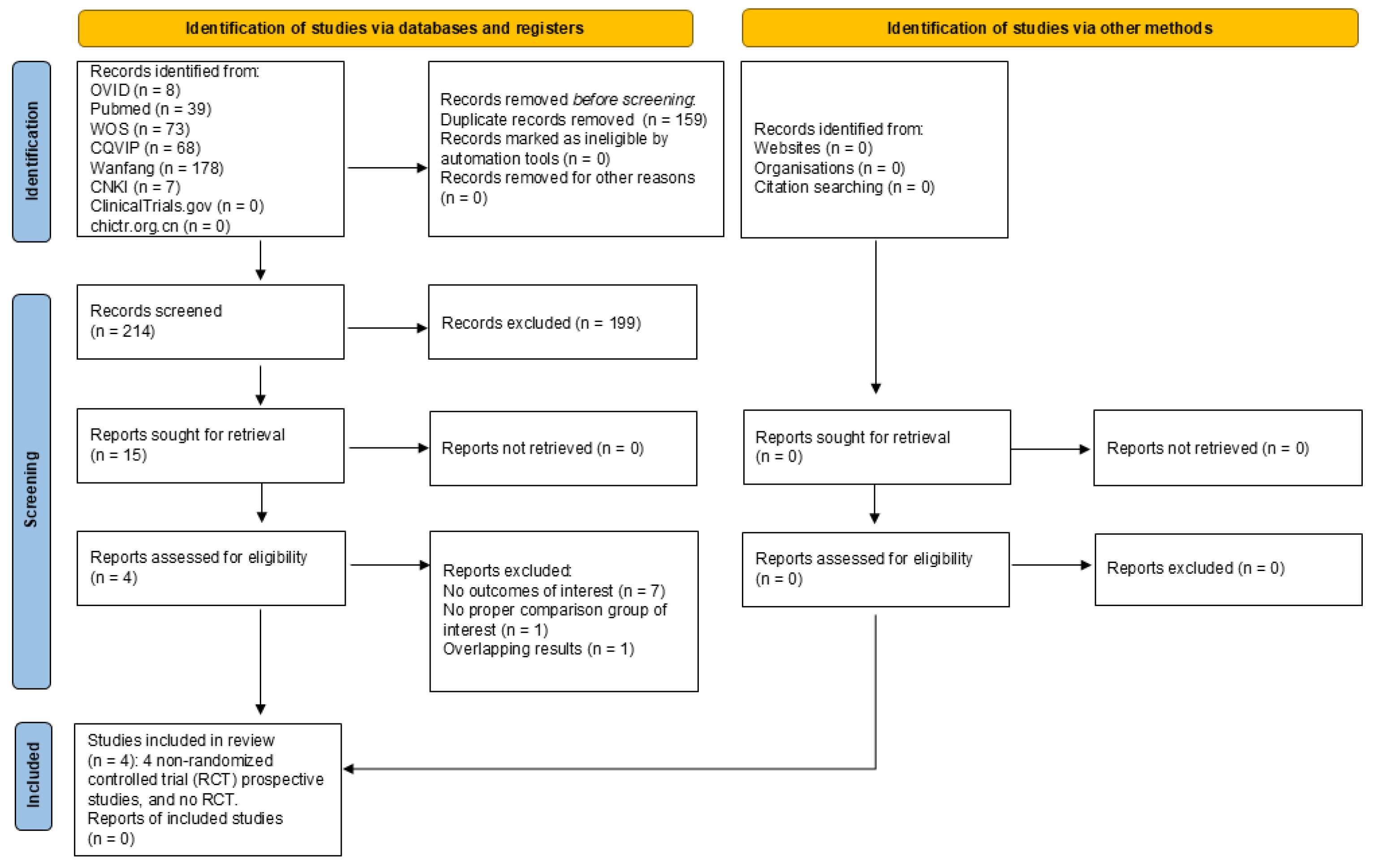
2.3. Study Selection
2.4. Data Extraction
2.5. Quality Assessment
2.6. Geometry of the Network
2.7. Statistical Analysis
3. Results
3.1. Characteristics of the Included Studies
3.2. Quality Assessment and Risk of Bias
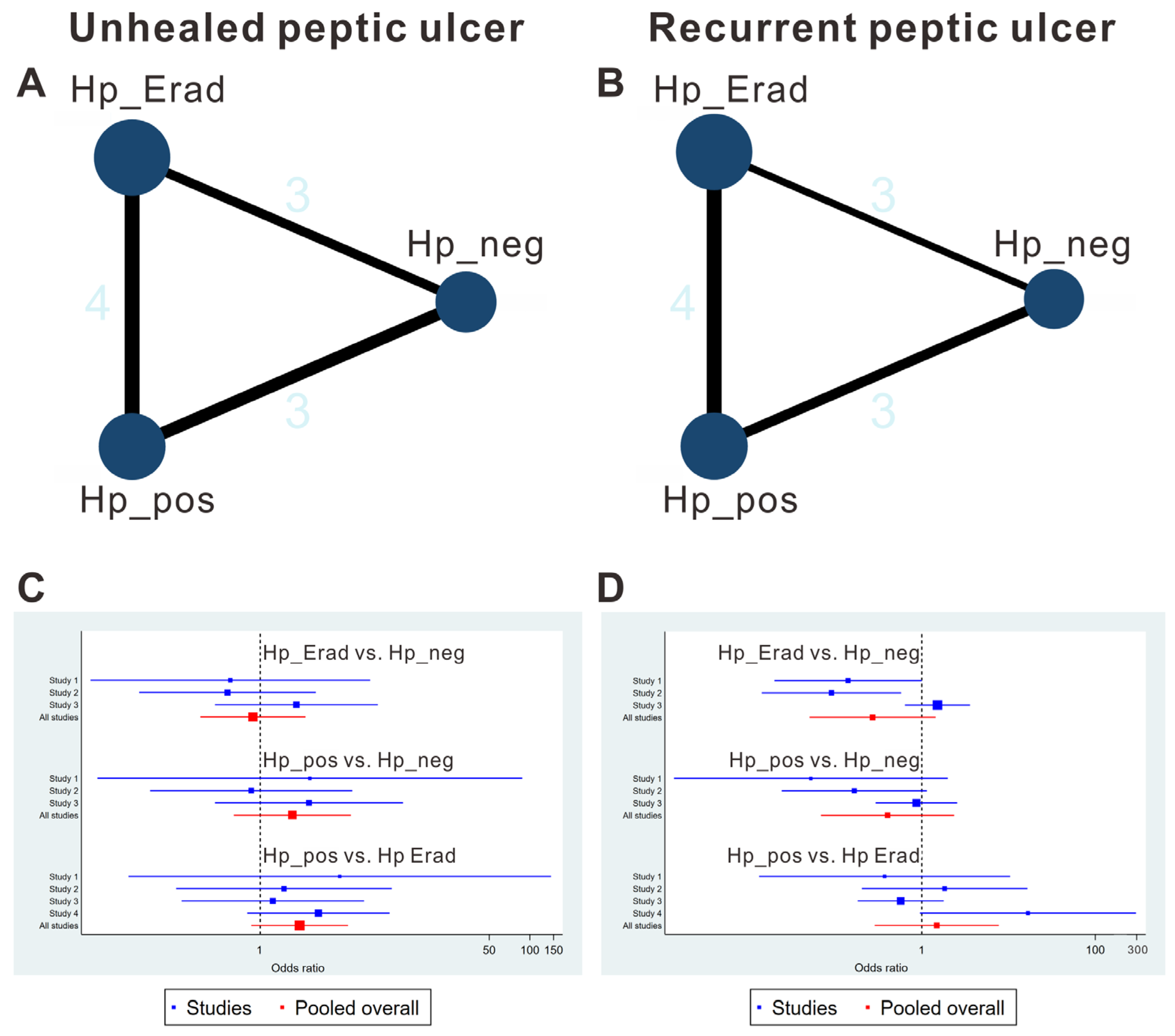
3.3. Network Diagram
3.4. Evaluation of Transitivity
3.5. Assessment of Inconsistency
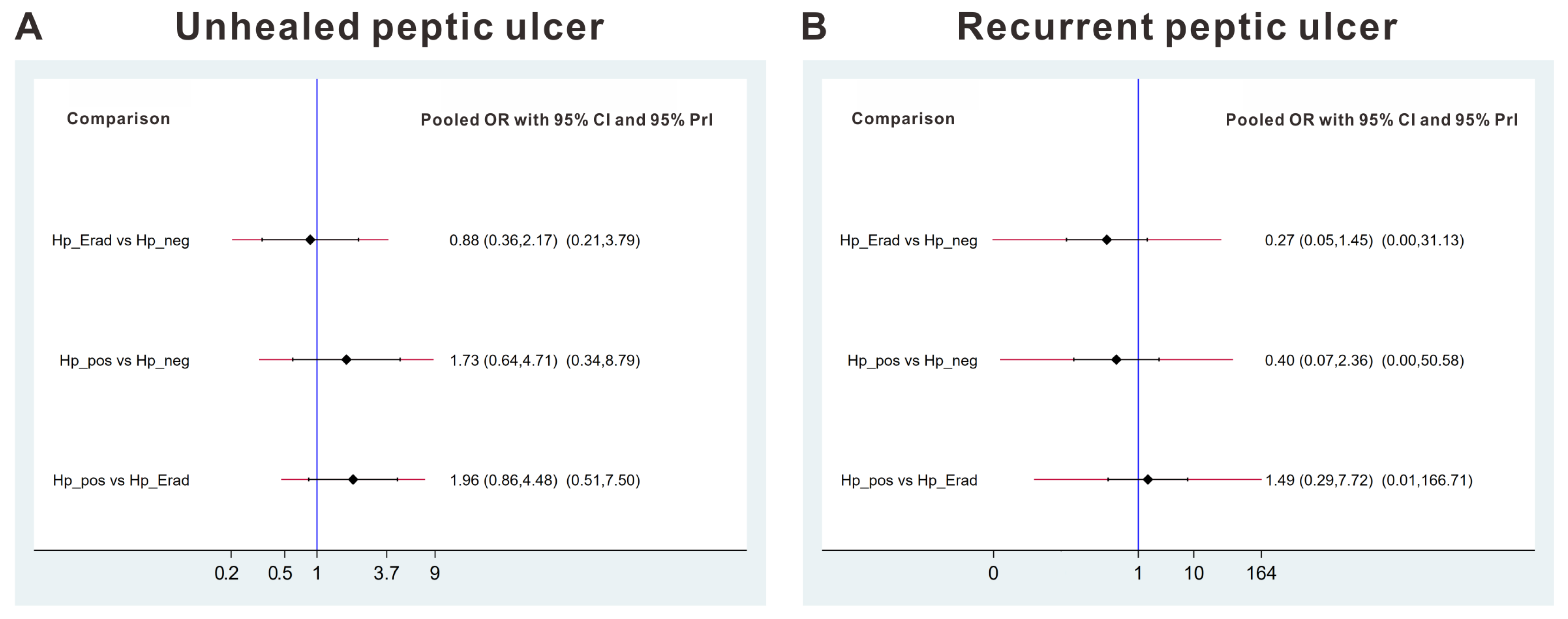
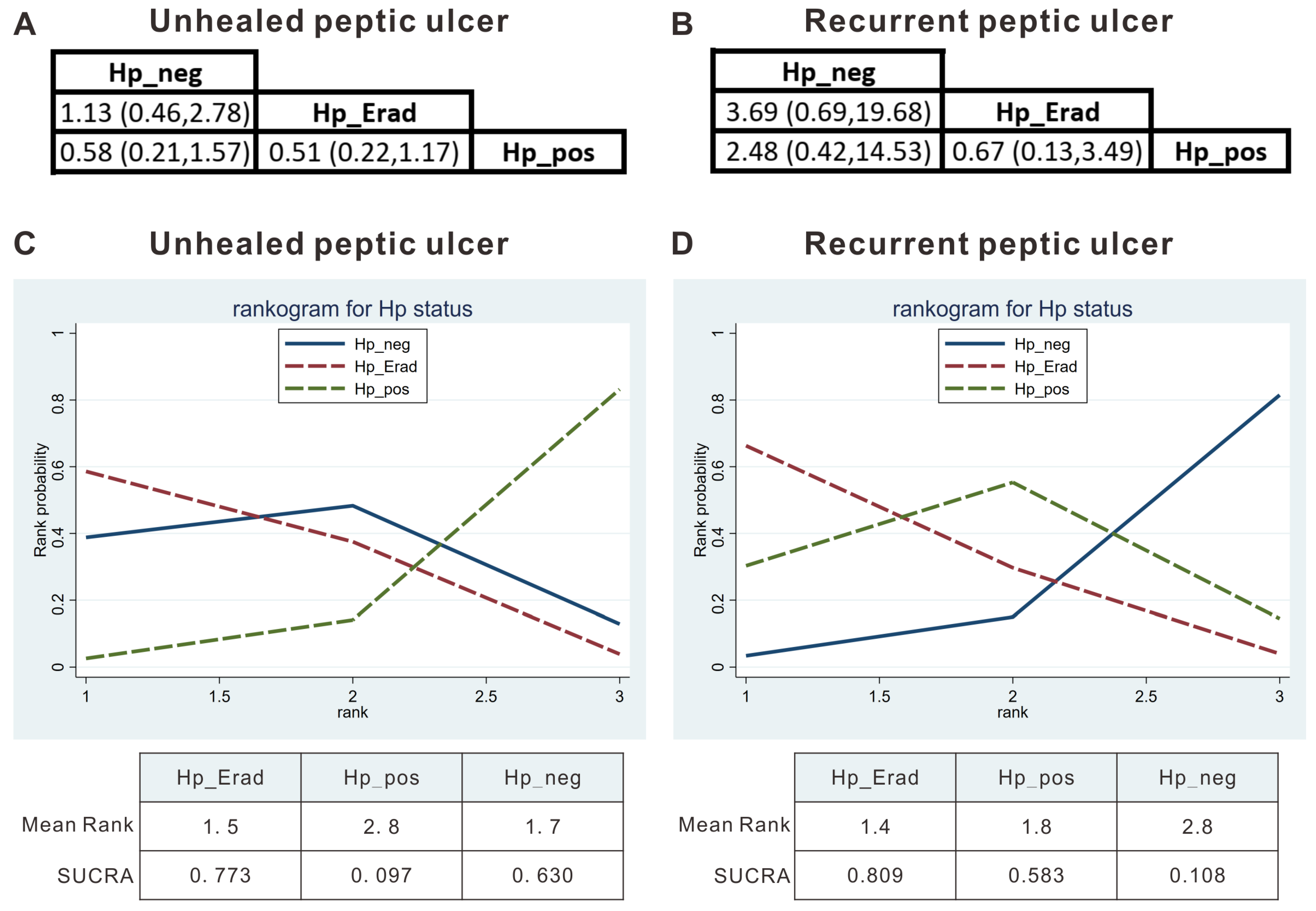
3.6. Synthesis of Results
3.6.1. Unhealed Peptic Ulcer
3.6.2. Recurrent Peptic Ulcer
3.7. Other Results
3.8. Comparison-Adjusted Funnel Plot
4. Discussion
5. Conclusions
Supplementary Materials
Author Contributions
Funding
Institutional Review Board Statement
Informed Consent Statement
Data Availability Statement
Acknowledgments
Conflicts of Interest
References
- O’connor, H.J. Forty years of Helicobacter pylori infection and changes in findings at esophagogastroduodenoscopy. Helicobacter 2023, 28, e13026. [Google Scholar] [CrossRef]
- Moss, S.F.; Shah, S.C.; Tan, M.C.; El-Serag, H.B. Evolving Concepts in Helicobacter pylori Management. Gastroenterology 2024, 166, 267–283. [Google Scholar] [CrossRef] [PubMed]
- Li, Y.; Choi, H.; Leung, K.; Jiang, F.D.; Graham, Y.; Leung, W.K. Global prevalence of Helicobacter pylori infection between 1980 and 2022: A systematic review and meta-analysis. Lancet Gastroenterol. Hepatol. 2023, 8, 553–564. [Google Scholar] [CrossRef] [PubMed]
- Chen, Y.C.; Malfertheiner, P.; Yu, H.T.; Kuo, C.L.; Chang, Y.Y.; Meng, F.T.; Wu, Y.X.; Hsiao, J.L.; Chen, M.J.; Lin, K.P.; et al. Global Prevalence of Helicobacter pylori Infection and Incidence of Gastric Cancer Between 1980 and 2022. Gastroenterology 2024, 166, 605–619. [Google Scholar] [CrossRef] [PubMed]
- Beydoun, M.A.; Beydoun, H.A.; Hu, Y.H.; El-Hajj, Z.W.; Georgescu, M.F.; Noren Hooten, N.; Li, Z.; Weiss, J.; Lyall, D.M.; Waldstein, S.R.; et al. Helicobacter pylori, persistent infection burden and structural brain imaging markers. Brain Commun. 2024, 6, fcae088. [Google Scholar] [CrossRef]
- Wizenty, J.; Koop, P.H.; Clusmann, J.; Tacke, F.; Trautwein, C.; Schneider, K.M.; Sigal, M.; Schneider, C.V. Association of Helicobacter pylori Positivity With Risk of Disease and Mortality. Clin. Transl. Gastroenterol. 2023, 14, e00610. [Google Scholar] [CrossRef]
- Lee, Y.C.; Dore, M.P.; Graham, D.Y. Diagnosis and Treatment of Helicobacter pylori Infection. Annu. Rev. Med. 2022, 73, 183–195. [Google Scholar] [CrossRef]
- Malfertheiner, P.; Camargo, M.C.; El-Omar, E.; Liou, J.M.; Peek, R.; Schulz, C.; Smith, S.I.; Suerbaum, S. Helicobacter pylori infection. Nat. Rev. Dis. Primers 2023, 9, 19. [Google Scholar] [CrossRef]
- Yang, P.; Zheng, Y.; Zhang, L.; Hou, X. Incidence and characteristics of death from peptic ulcer among cancer patients in the United States. Sci. Rep. 2021, 11, 23579. [Google Scholar] [CrossRef]
- Malfertheiner, P.; Megraud, F.; Rokkas, T.; Gisbert, J.P.; Liou, J.M.; Schulz, C.; Gasbarrini, A.; Hunt, R.H.; Leja, M.; O’Morain, C.; et al. Management of Helicobacter pylori infection: The Maastricht VI/Florence consensus report. Gut 2022, 71, 1724–1762. [Google Scholar] [CrossRef]
- Chang, S.S.; Hu, H.Y. Helicobacter pylori: Effect of coexisting diseases and update on treatment regimens. World J. Gastrointest. Pharmacol. Ther. 2015, 6, 127–136. [Google Scholar] [CrossRef] [PubMed]
- Wei, L.; Ding, H.G. Helicobacter pylori infection and peptic ulcer disease in cirrhotic patients: An updated meta-analysis. World J. Clin. Cases 2021, 9, 7073–7084. [Google Scholar] [CrossRef]
- Ding, S.Z.; Du, Y.Q.; Lu, H.; Wang, W.H.; Cheng, H.; Chen, S.Y.; Chen, M.H.; Chen, W.C.; Chen, Y.; Fang, J.Y.; et al. Chinese Consensus Report on Family-Based Helicobacter pylori Infection Control and Management (2021 Edition). Gut 2022, 71, 238–253. [Google Scholar] [CrossRef] [PubMed]
- Katelaris, P.; Hunt, R.; Bazzoli, F.; Cohen, H.; Fock, K.M.; Gemilyan, M.; Malfertheiner, P.; Megraud, F.; Piscoya, A.; Quach, D.; et al. Helicobacter pylori World Gastroenterology Organization Global Guideline. J. Clin. Gastroenterol. 2023, 57, 111–126. [Google Scholar] [CrossRef] [PubMed]
- Sharma, N.R.; Wagle, A.; Bist, M.; Panthi, B.; Pokhrel Dahal, R.; Rokaya, R.; Shrestha, R.; Pokhrel, M. Clarithromycin-induced acute liver injury in a patient with positive Helicobacter pylori: A case report and review of the literature. Ann. Med. Surg. 2023, 85, 4629–4632. [Google Scholar] [CrossRef]
- Jonaitis, P.; Kupcinskas, J.; Gisbert, J.P.; Jonaitis, L. Helicobacter pylori Eradication Treatment in Older Patients. Drugs Aging 2024, 41, 141–151. [Google Scholar] [CrossRef]
- Ansari, S.; Yamaoka, Y. Helicobacter pylori Infection, Its Laboratory Diagnosis, and Antimicrobial Resistance: A Perspective of Clinical Relevance. Clin. Microbiol. Rev. 2022, 35, e0025821. [Google Scholar] [CrossRef]
- Hutton, B.; Salanti, G.; Caldwell, D.M.; Chaimani, A.; Schmid, C.H.; Cameron, C.; Ioannidis, J.P.; Straus, S.; Thorlund, K.; Jansen, J.P.; et al. The PRISMA extension statement for reporting of systematic reviews incorporating network meta-analyses of health care interventions: Checklist and explanations. Ann. Intern. Med. 2015, 162, 777–784. [Google Scholar] [CrossRef]
- Nikolakopoulou, A.; Higgins, J.P.T.; Papakonstantinou, T.; Chaimani, A.; Del Giovane, C.; Egger, M.; Salanti, G. CINeMA: An approach for assessing confidence in the results of a network meta-analysis. PLoS Med. 2020, 17, e1003082. [Google Scholar] [CrossRef]
- Van Valkenhoef, G.; Dias, S.; Ades, A.E.; Welton, N.J. Automated generation of node-splitting models for assessment of inconsistency in network meta-analysis. Res. Synth. Methods 2016, 7, 80–93. [Google Scholar] [CrossRef]
- Lo, G.H.; Yu, H.C.; Chan, Y.C.; Chen, W.C.; Hsu, P.I.; Lin, C.K.; Lai, K.H. The effects of eradication of Helicobacter pylori on the recurrence of duodenal ulcers in patients with cirrhosis. Gastrointest. Endosc. 2005, 62, 350–356. [Google Scholar] [CrossRef]
- Mitrica, D.; Plesa, A.; Constantinescu, R.; Drug, V.; Stanciu, C. Efficacy of Helicobacter pylori eradication therapy in cirrhotic patients with peptic ulcer disease. Med.-Surg. J. 2011, 115, 367–374. [Google Scholar]
- Mo, M.; Peng, G. Effect of eradication of Helicobacter pylori with quadruple therapy on posthepatitic cirrhosis accompanied with peptic ulcer. Acta Acad. Med. Mil. Tertiae 2003, 25, 721–723. [Google Scholar]
- Tzathas, C.; Triantafyllou, K.; Mallas, E.; Triantafyllou, G.; Ladas, S.D. Effect of Helicobacter pylori eradication and antisecretory maintenance therapy on peptic ulcer recurrence in cirrhotic patients: A prospective, cohort 2-year follow-up study. J. Clin. Gastroenterol. 2008, 42, 744–749. [Google Scholar] [CrossRef] [PubMed]
- Villalan, R.; Maroju, N.K.; Kate, V.; Ananthakrishnan, N. Is Helicobacter pylori eradication indicated in cirrhotic patients with peptic ulcer disease? Trop. Gastroenterol. 2006, 27, 166–168. [Google Scholar] [PubMed]
- Zhang, Z.; Yan, W.; Zhang, X.; Wang, J.; Zhang, Z.; Lin, Z.; Wang, L.; Chen, J.; Liu, D.; Zhang, W.; et al. Peptic ulcer disease burden, trends, and inequalities in 204 countries and territories, 1990–2019: A population-based study. Ther. Adv. Gastroenterol. 2023, 16, 17562848231210375. [Google Scholar] [CrossRef]
- Shah, H.; Yang, T.J.; Wudexi, I.; Solanki, S.; Patel, S.; Rajan, D.; Rodas, A.; Dajjani, M.; Chakinala, R.C.; Shah, P.; et al. Trends and outcomes of peptic ulcer disease in patients with cirrhosis. Postgrad. Med. 2020, 132, 773–780. [Google Scholar] [CrossRef]
- Ardevol, A.; Ibanez-Sanz, G.; Profitos, J.; Aracil, C.; Castellvi, J.M.; Alvarado, E.; Cachero, A.; Horta, D.; Minana, J.; Gomez-Pastrana, B.; et al. Survival of patients with cirrhosis and acute peptic ulcer bleeding compared with variceal bleeding using current first-line therapies. Hepatology 2018, 67, 1458–1471. [Google Scholar] [CrossRef]
- Chey, W.D.; Howden, C.W.; Moss, S.F.; Morgan, D.R.; Greer, K.B.; Grover, S.; Shah, S.C. ACG Clinical Guideline: Treatment of Helicobacter pylori Infection. Am. J. Gastroenterol. 2024, 119, 1730–1753. [Google Scholar] [CrossRef]
- Alsohaibani, F.; Peedikayil, M.; Alshahrani, A.; Somily, A.; Alsulaiman, R.; Azzam, N.; Almadi, M. Practice guidelines for the management of Helicobacter pylori infection: The Saudi H. pylori Working Group recommendations. Saudi J. Gastroenterol. 2022, 29, 326–346. [Google Scholar] [CrossRef]
- Medakina, I.; Tsapkova, L.; Polyakova, V.; Nikolaev, S.; Yanova, T.; Dekhnich, N.; Khatkov, I.; Bordin, D.; Bodunova, N. Helicobacter pylori Antibiotic Resistance: Molecular Basis and Diagnostic Methods. Int. J. Mol. Sci. 2023, 24, 9433. [Google Scholar] [CrossRef] [PubMed]
- Zhao, H.; Yan, P.; Zhang, N.; Feng, L.; Chu, X.; Cui, G.; Qin, Y.; Yang, C.; Wang, S.; Yang, K. The recurrence rate of Helicobacter pylori in recent 10 years: A systematic review and meta-analysis. Helicobacter 2021, 26, e12852. [Google Scholar] [CrossRef] [PubMed]
- Ristić, M.; Korica, B.; Milivojević, V. Frequency of Helicobacter pylori infection and antibiotic resistance in patients with acute liver decompensation. Med. Podml. 2023, 74, 62–68. [Google Scholar] [CrossRef]
- Hsu, Y.C.; Lin, J.T.; Chen, T.T.; Wu, M.S.; Wu, C.Y. Long-term risk of recurrent peptic ulcer bleeding in patients with liver cirrhosis: A 10-year nationwide cohort study. Hepatology 2012, 56, 698–705. [Google Scholar] [CrossRef]
- Qiao, G.; Feng, L.; Wang, M.; Wang, C.; Li, C.; Han, S.; Wang, Y.; Li, S.; Xin, S. Eradication of Helicobacter pylori that contributes to hepatogenic ulcer is beneficial to the healing of hepatogenic ulcer. BMC Gastroenterol. 2025, 25, 359. [Google Scholar] [CrossRef]
- Mori, H.; Iino, C.; Fujieda, T. Targeting Helicobacter pylori in liver-impaired populations: A systematic review of efficacy and safety. J. Clin. Biochem. Nutr. 2025, 77, 203–208. [Google Scholar] [CrossRef]
- Chang, S.S.; Hu, H.Y. Helicobacter pylori is not the predominant etiology for liver cirrhosis patients with peptic ulcer disease. Eur. J. Gastroenterol. Hepatol. 2013, 25, 159–165. [Google Scholar] [CrossRef]
- Bang, C.S.; Baik, G.H.; Kim, J.H.; Kim, J.B.; Suk, K.T.; Yoon, J.H.; Kim, Y.S.; Kim, D.J. Peptic ulcer disease in liver cirrhosis and chronic hepatitis: Impact of portal hypertension. Scand. J. Gastroenterol. 2014, 49, 1051–1057. [Google Scholar] [CrossRef]
- Yin, Y.; Ji, F.; Romeiro, F.G.; Sun, M.; Zhu, Q.; Ma, D.; Yuan, S.; He, Y.; Liu, X.; Philips, C.A.; et al. Impact of peptic ulcer bleeding on the inhospital outcomes of cirrhotic patients with acute gastrointestinal bleeding: An international multicenter study. Expert Rev. Gastroenterol. Hepatol. 2024, 18, 473–483. [Google Scholar] [CrossRef]
- Elkablawy, S.M.; Shaban, A.E.; Mostafa, T.M. Clinical study evaluating the gastroprotective effect of carvedilol in patients with ischemic heart disease on aspirin therapy. Inflammopharmacology 2025, 33, 6831–6838. [Google Scholar] [CrossRef]
- Ahmed, I.; Elkablawy, M.A.; El-Agamy, D.S.; Bazarbay, A.A.; Ahmed, N. Carvedilol safeguards against aspirin-induced gastric damage in rats. Hum. Exp. Toxicol. 2020, 39, 1257–1267. [Google Scholar] [CrossRef]



| Author (Year) | Study Design | Population | Exclusion Criteria | Initial Tests of Hp | Testing for Eradication Success | Hp Eradication Therapy | Groups |
|---|---|---|---|---|---|---|---|
| Tzathas C. (2008) [24] | Prospective cohort study | Cirrhosis with peptic ulcer (duodenal and gastric) | (1) previous gastric surgery, (2) aspirin or nonsteroidal anti-inflammatory drug (NSAID) use within 2 months before study entry, (3) antisecretory drug (H2 receptor antagonist or proton pump inhibitor) use within 2 months before study entry, (4) history of H. pylori eradication therapy, (5) active variceal bleeding or stigmata of recent variceal bleeding at endoscopy, (6) hepatic encephalopathy, (7) hepatocellular carcinoma, (8) other debilitating diseases, that is, malignancy, heart or kidney failure, chronic obstructive pulmonary disease, and stroke | H. pylori-positive: either a positive urease test or a typical microscopic appearance. | H. pylori-eradicated: both rapid urease test and histologic examination results were negative. | Omeprazole 20 mg, amoxicillin 1 g, and clarythromycin 500 mg, all twice daily for 7 days. If the previous attempt failed, then a 2-week regimen with omeprazole 20 mg twice daily, bismuth subcitrate 125 mg 4 times daily, metronidazole 500 mg thrice daily, and tetracycline hydrochloride 500 mg 4 times daily. | Hp_pos Hp_Erad Hp_neg |
| Mitrică D. (2011) [22] | Prospective cohort study | Cirrhosis with peptic ulcer (duodenal and gastric) | Patients with a history of malignancy, gastric surgery, H. pylori eradication, presence of significant comorbidities, active variceal bleeding, hepatic encephalopathy and those who had taken PPIs, antibiotics, bismuth compounds and/or non-steroidal anti-inflammatory drugs four weeks before endoscopy | H. pylori-positive: both a positive urease test and a typical microscopic appearance. | H. pylori-eradicated: both rapid urease test and histologic examination results were negative. | Omeprazole (standard dose, twice a day) combined with amoxicillin (1.0 g twice a day) and clarithromycin (500 mg twice a day) for 1 week. No retreatment of Helicobacter pylori if the previous attempt failed. | Hp_pos Hp_Erad Hp_neg |
| Lo G. H. (2005) [21] | Prospective cohort study | Cirrhosis with duodenal ulcers | (1) malignancy, uremia, cerebrovascular accident, heart failure, chronic obstructive pulmonary disease, or other debilitating illness; (2) Child-Pugh’s scores O10; (3) taking NSAIDs or aspirin within 1 month before the initial endoscopy; (4) undergone antisecretory therapy, such as H2-receptor blocker or proton pump inhibitor within 3 months before the study; (5) had received eradication therapy of H. pylori before this study; (6) had previous gastric resection; (7) had bleeding from gastroesophageal varices or a peptic ulcer within 2 months before this study; and (8) unwilling to receive follow-up endoscopy. | H. pylori-positive: either a positive urease test or a typical microscopic appearance. | H. pylori-eradicated: both rapid urease test and histologic examination results were negative. | 20 mg pantoprazole or 30 mg lansoprazole combined with 1000 mg amoxicillin and 500 mg clarithromycin twice a day for 1 week. No retreatment of Helicobacter pylori if the previous attempt failed. | Hp_pos Hp_Erad Hp_neg |
| Mo M. (2003) [23] | Prospective cohort study | Cirrhosis with peptic ulcer (duodenal and gastric) | Patients on bismuth, antibiotics or proton pump inhibitor within recent 1 month. Patients on long-term NSAIDs. Patients with pregnancy, lactation period, gastrinoma, severe encephalopathy, lung and heart diseases, or evidence of esophagogastric variceal bleeding | H. pylori-positive: both a positive urease test and a typical microscopic appearance. | H. pylori-eradicated: both rapid urease test and histologic examination results were negative. | 20 mg omeprazole combined with 240 mg bismuth, 500 mg Tinidazole and 250 mg clarithromycin twice a day for 2 weeks. No retreatment of Helicobacter pylori if the previous attempt failed. | Hp_pos Hp_Erad |
| Author (Year) | Groups | Unhealed Peptic Ulcer | Recurrent Peptic Ulcer | ||
|---|---|---|---|---|---|
| e | n | e | n | ||
| Tzathas C. (2008) [24] | Hp_pos | 0 | 1 | 0 | 1 |
| Hp_Erad | 1 | 18 | 8 | 17 | |
| Hp_neg | 1 | 11 | 9 | 10 | |
| Mitrică D. (2011) [22] | Hp_pos | 3 | 8 | 2 | 8 |
| Hp_Erad | 4 | 14 | 2 | 13 | |
| Hp_neg | 7 | 17 | 10 | 15 | |
| Lo G. H. (2005) [21] | Hp_pos | 3 | 18 | 8 | 18 |
| Hp_Erad | 5 | 36 | 21 | 36 | |
| Hp_neg | 4 | 50 | 24 | 50 | |
| Mo M. (2003) [23] | Hp_pos | 7 | 13 | 13 | 13 |
| Hp_Erad | 19 | 63 | 39 | 63 | |
Disclaimer/Publisher’s Note: The statements, opinions and data contained in all publications are solely those of the individual author(s) and contributor(s) and not of MDPI and/or the editor(s). MDPI and/or the editor(s) disclaim responsibility for any injury to people or property resulting from any ideas, methods, instructions or products referred to in the content. |
© 2026 by the authors. Licensee MDPI, Basel, Switzerland. This article is an open access article distributed under the terms and conditions of the Creative Commons Attribution (CC BY) license.
Share and Cite
Zhang, L.; Lin, J.; Li, X. The Effects of Helicobacter pylori on the Treatment Outcomes of Peptic Ulcer in Patients with Liver Cirrhosis: A Systematic Review and Network Meta-Analysis. J. Clin. Med. 2026, 15, 2283. https://doi.org/10.3390/jcm15062283
Zhang L, Lin J, Li X. The Effects of Helicobacter pylori on the Treatment Outcomes of Peptic Ulcer in Patients with Liver Cirrhosis: A Systematic Review and Network Meta-Analysis. Journal of Clinical Medicine. 2026; 15(6):2283. https://doi.org/10.3390/jcm15062283
Chicago/Turabian StyleZhang, Linhao, Jinli Lin, and Xueying Li. 2026. "The Effects of Helicobacter pylori on the Treatment Outcomes of Peptic Ulcer in Patients with Liver Cirrhosis: A Systematic Review and Network Meta-Analysis" Journal of Clinical Medicine 15, no. 6: 2283. https://doi.org/10.3390/jcm15062283
APA StyleZhang, L., Lin, J., & Li, X. (2026). The Effects of Helicobacter pylori on the Treatment Outcomes of Peptic Ulcer in Patients with Liver Cirrhosis: A Systematic Review and Network Meta-Analysis. Journal of Clinical Medicine, 15(6), 2283. https://doi.org/10.3390/jcm15062283