Hypoattenuation Pattern on Contrast-Enhanced Computed Tomography Predicts Poor Prognosis in Patients with Pancreatic Neuroendocrine Tumors

 , , , ,
  and
and
Abstract
1. Introduction
2. Materials and Methods
2.1. Patient Population
Diagnosis and Confirmation of the Grading of PanNET
2.2. Imaging Protocol
2.3. Statistical Analysis
3. Results
3.1. Patient Characteristics for All Participants
3.2. Clinical Outcomes of All Cases with PanNET
3.3. Patient Characteristics and Clinical Outcomes of Cases with PanNET G2
3.4. Patient Characteristics and Clinical Outcomes of Cases with PanNET G1 and G3
4. Discussion
Supplementary Materials
Author Contributions
Funding
Institutional Review Board Statement
Informed Consent Statement
Data Availability Statement
Acknowledgments
Conflicts of Interest
Abbreviations
| CECT | contrast-enhanced computed tomography |
| PanNET | pancreatic neuroendocrine tumor |
| OS | overall survival |
| G | grade |
| PanNENs | pancreatic neuroendocrine neoplasms |
| WHO | World Health Organization |
| PanNEC | pancreatic neuroendocrine carcinoma |
| EUS-TA | endoscopic ultrasound-guided tissue acquisition |
| UICC | Union for International Cancer Control |
| HU | Hounsfield units |
| PRRT | peptide receptor radionuclide therapy |
| TACE | transcatheter arterial chemoembolization |
| HR | hazard ratio |
| CI | confidence interval |
| PFS | progression-free survival |
References
- Han, X.; Xu, X.; Ma, H.; Ji, Y.; Wang, D.; Kuang, T.; Wu, W.; Song, B.; Li, G.; Jin, G.; et al. Clinical relevance of different WHO grade 3 pancreatic neuroendocrine neoplasms based on morphology. Endocr. Connect. 2018, 7, 355–363. [Google Scholar] [CrossRef]
- Halfdanarson, T.R.; Rabe, K.G.; Rubin, J.; Petersen, G.M. Pancreatic neuroendocrine tumors (PNETs): Incidence, prognosis and recent trend toward improved survival. Ann. Oncol. 2008, 19, 1727–1733. [Google Scholar] [CrossRef] [PubMed]
- Rindi, G.; Klimstra, D.S.; Abedi-Ardekani, B.; Asa, S.L.; Bosman, F.T.; Brambilla, E.; Busam, K.J.; de Krijger, R.R.; Dietel, M.; El-Naggar, A.K.; et al. A common classification framework for neuroendocrine neoplasms: An International Agency for Research on Cancer (IARC) and World Health Organization (WHO) expert consensus proposal. Mod. Pathol. 2018, 31, 1770–1786. [Google Scholar] [CrossRef]
- Ohmoto, A.; Rokutan, H.; Yachida, S. Pancreatic neuroendocrine neoplasms: Basic biology, current treatment strategies and prospects for the future. Int. J. Mol. Sci. 2017, 18, 143. [Google Scholar] [CrossRef]
- Kim, D.W.; Kim, H.J.; Kim, K.W.; Byun, J.H.; Kim, S.Y.; Song, K.B.; Ramaiya, N.H.; Tirumani, S.H.; Hong, S.M. Prognostic value of CT findings to predict survival outcomes in patients with pancreatic neuroendocrine neoplasms: A single institutional study of 161 patients. Eur. Radiol. 2016, 26, 1320–1329. [Google Scholar] [CrossRef] [PubMed]
- Hyodo, R.; Suzuki, K.; Ogawa, H.; Komada, T.; Naganawa, S. Pancreatic neuroendocrine tumors containing areas of iso- or hypoattenuation in dynamic contrast-enhanced computed tomography: Spectrum of imaging findings and pathological grading. Eur. J. Radiol. 2015, 84, 2103–2109. [Google Scholar] [CrossRef] [PubMed]
- Kim, D.W.; Kim, H.J.; Kim, K.W.; Byun, J.H.; Song, K.B.; Kim, J.H.; Hong, S.M. Neuroendocrine neoplasms of the pancreas at dynamic enhanced CT: Comparison between grade 3 neuroendocrine carcinoma and grade 1/2 neuroendocrine tumour. Eur. Radiol. 2015, 25, 1375–1383. [Google Scholar] [CrossRef]
- Vagefi, P.A.; Razo, O.; Deshpande, V.; McGrath, D.J.; Lauwers, G.Y.; Thayer, S.P.; Warshaw, A.L.; Fernández-Del Castillo, C. Evolving patterns in the detection and outcomes of pancreatic neuroendocrine neoplasms: The Massachusetts General Hospital experience from 1977 to 2005. Arch. Surg. 2007, 142, 347–354. [Google Scholar] [CrossRef]
- Grama, D.; Eriksson, B.; Mårtensson, H.; Cedermark, B.; Ahrén, B.; Kristoffersson, A.; Rastad, J.; Oberg, K.; Akerström, G. Clinical characteristics, treatment and survival in patients with pancreatic tumors causing hormonal syndromes. World J. Surg. 1992, 16, 632–639. [Google Scholar] [CrossRef] [PubMed]
- Madeira, I.; Terris, B.; Voss, M.; Denys, A.; Sauvanet, A.; Flejou, J.F.; Vilgrain, V.; Belghiti, J.; Bernades, P.; Ruszniewski, P. Prognostic factors in patients with endocrine tumours of the duodenopancreatic area. Gut 1998, 43, 422–427. [Google Scholar] [CrossRef]
- Strosberg, J.R.; Cheema, A.; Weber, J.; Han, G.; Coppola, D.; Kvols, L.K. Prognostic validity of a novel American Joint Committee on Cancer Staging Classification for pancreatic neuroendocrine tumors. J. Clin. Oncol. Off. J. Am. Soc. Clin. Oncol. 2011, 29, 3044–3049. [Google Scholar] [CrossRef]
- Møller, S.; Langer, S.W.; Slott, C.; Krogh, J.; Hansen, C.P.; Kjaer, A.; Holmager, P.; Klose, M.; Garbyal, R.S.; Knigge, U.; et al. Recurrence-Free Survival and Disease-Specific Survival in Patients with Pancreatic Neuroendocrine Neoplasms: A Single-Center Retrospective Study of 413 Patients. Cancers 2023, 16, 100. [Google Scholar] [CrossRef]
- Pellegrino, F.; Granata, V.; Fusco, R.; Grassi, F.; Tafuto, S.; Perrucci, L.; Tralli, G.; Scaglione, M. Diagnostic management of gastroenteropancreatic neuroendocrine neoplasms: Technique optimization and tips and tricks for radiologists. Tomography 2023, 9, 217–246. [Google Scholar] [CrossRef] [PubMed]
- Hashimoto, S.; Taguchi, H.; Higashi, M.; Hatanaka, K.; Fujita, T.; Iwaya, H.; Nakazawa, J.; Arima, S.; Iwashita, Y.; Sasaki, F.; et al. Diagnostic efficacy of liquid-based cytology for solid pancreatic lesion samples obtained with endoscopic ultrasound-guided fine-needle aspiration: Propensity score-matched analysis. Dig. Endosc. 2017, 29, 608–616. [Google Scholar] [CrossRef] [PubMed]
- Tacelli, M.; Bina, N.; Crinò, S.F.; Facciorusso, A.; Celsa, C.; Vanni, A.S.; Fantin, A.; Antonini, F.; Falconi, M.; Monica, F.; et al. Reliability of grading preoperative pancreatic neuroendocrine tumors on EUS specimens: A systematic review with meta-analysis of aggregate and individual data. Gastrointest. Endosc. 2022, 96, 898–908.e23. [Google Scholar] [CrossRef]
- Kos-Kudła, B.; Castaño, J.P.; Denecke, T.; Grande, E.; Kjaer, A.; Koumarianou, A.; de Mestier, L.; Partelli, S.; Perren, A.; Stättner, S.; et al. European Neuroendocrine Tumour Society (ENETS) 2023 guidance paper for nonfunctioning pancreatic neuroendocrine tumours. J. Neuroendocrinol. 2023, 35, e13343. [Google Scholar] [CrossRef]
- Rodallec, M.; Vilgrain, V.; Couvelard, A.; Rufat, P.; O’Toole, D.; Barrau, V.; Sauvanet, A.; Ruszniewski, P.; Menu, Y. Endocrine pancreatic tumours and helical CT: Contrast enhancement is correlated with microvascular density, histoprognostic factors and survival. Pancreatology 2006, 6, 77–85. [Google Scholar] [CrossRef]
- Worhunsky, D.J.; Krampitz, G.W.; Poullos, P.D.; Visser, B.C.; Kunz, P.L.; Fisher, G.A.; Norton, J.A.; Poultsides, G.A. Pancreatic neuroendocrine tumours: Hypoenhancement on arterial phase computed tomography predicts biological aggressiveness. HPB 2014, 16, 304–311. [Google Scholar] [CrossRef] [PubMed]
- Xu, W.; Yan, H.; Xu, L.; Li, M.; Gao, W.; Jiang, K.; Wu, J.; Miao, Y. Correlation between radiologic features on contrast-enhanced CT and pathological tumor grades in pancreatic neuroendocrine neoplasms. J. Biomed. Res. 2020, 35, 179–188. [Google Scholar] [CrossRef]
- Andreasi, V.; Ricci, C.; Partelli, S.; Guarneri, G.; Ingaldi, C.; Muffatti, F.; Crippa, S.; Casadei, R.; Falconi, M. Predictors of disease recurrence after curative surgery for nonfunctioning pancreatic neuroendocrine neoplasms (NF-PanNENs): A systematic review and meta-analysis. J. Endocrinol. Investig. 2022, 45, 705–718. [Google Scholar] [CrossRef]
- Poncet, G.; Villaume, K.; Walter, T.; Pourreyron, C.; Theillaumas, A.; Lépinasse, F.; Hervieu, V.; Cordier-Bussat, M.; Scoazec, J.Y.; Roche, C. Angiogenesis and tumor progression in neuroendocrine digestive tumors. J. Surg. Res. 2009, 154, 68–77. [Google Scholar] [CrossRef]
- Benedetti, G.; Mori, M.; Panzeri, M.M.; Barbera, M.; Palumbo, D.; Sini, C.; Muffatti, F.; Andreasi, V.; Steidler, S.; Doglioni, C.; et al. CT-derived radiomic features to discriminate histologic characteristics of pancreatic neuroendocrine tumors. Radiol. Med. 2021, 126, 745–760. [Google Scholar] [CrossRef] [PubMed]
- d’Assignies, G.; Couvelard, A.; Bahrami, S.; Vullierme, M.P.; Hammel, P.; Hentic, O.; Sauvanet, A.; Bedossa, P.; Ruszniewski, P.; Vilgrain, V. Pancreatic endocrine tumors: Tumor blood flow assessed with perfusion CT reflects angiogenesis and correlates with prognostic factors. Radiology 2009, 250, 407–416. [Google Scholar] [CrossRef] [PubMed]
- Takumi, K.; Fukukura, Y.; Higashi, M.; Ideue, J.; Umanodan, T.; Hakamada, H.; Kanetsuki, I.; Yoshiura, T. Pancreatic neuroendocrine tumors: Correlation between the contrast-enhanced computed tomography features and the pathological tumor grade. Eur. J. Radiol. 2015, 84, 1436–1443. [Google Scholar] [CrossRef] [PubMed]
- Yang, B.; Chen, H.Y.; Zhang, X.Y.; Pan, Y.; Lu, Y.F.; Yu, R.S. The prognostic value of multidetector CT features in predicting overall survival outcomes in patients with pancreatic neuroendocrine tumors. Eur. J. Radiol. 2020, 124, 108847. [Google Scholar] [CrossRef]
- Ito, T.; Masui, T.; Komoto, I.; Doi, R.; Osamura, R.Y.; Sakurai, A.; Ikeda, M.; Takano, K.; Igarashi, H.; Shimatsu, A.; et al. JNETS clinical practice guidelines for gastroenteropancreatic neuroendocrine neoplasms: Diagnosis, treatment, and follow-up: A synopsis. J. Gastroenterol. 2021, 56, 1033–1044. [Google Scholar] [CrossRef]
- Deng, B.Y.; Yang, M.; Wen, J.Y.; Hou, S.Z.; Chen, Y.; Tian, B.L.; Liu, X.B.; Zhang, Y. Survivals of patients with pancreatic neuroendocrine carcinomas: An in-depth analysis by the American Joint Committee on Cancer 8th tumor-node-metastasis staging manual. Medicine 2020, 99, e18736. [Google Scholar] [CrossRef]
- Pape, U.F.; Berndt, U.; Müller-Nordhorn, J.; Böhmig, M.; Roll, S.; Koch, M.; Willich, S.N.; Wiedenmann, B. Prognostic factors of long-term outcome in gastroenteropancreatic neuroendocrine tumours. Endocr. Relat. Cancer 2008, 15, 1083–1097. [Google Scholar] [CrossRef]
- Kasumova, G.G.; Tabatabaie, O.; Eskander, M.F.; Tadikonda, A.; Ng, S.C.; Tseng, J.F. National rise of primary pancreatic carcinoid tumors: Comparison to functional and nonfunctional pancreatic neuroendocrine tumors. J. Am. Coll. Surg. 2017, 224, 1057–1064. [Google Scholar] [CrossRef]
- Primavesi, F.; Klieser, E.; Cardini, B.; Marsoner, K.; Fröschl, U.; Thalhammer, S.; Fischer, I.; Hauer, A.; Urbas, R.; Kiesslich, T.; et al. Exploring the surgical landscape of pancreatic neuroendocrine neoplasia in Austria: Results from the ASSO pNEN study group. Eur. J. Surg. Oncol. 2019, 45, 198–206. [Google Scholar] [CrossRef]
- Taki, K.; Hashimoto, D.; Nakagawa, S.; Ozaki, N.; Tomiyasu, S.; Ohmuraya, M.; Arima, K.; Kaida, T.; Higashi, T.; Sakamoto, K.; et al. Significance of lymph node metastasis in pancreatic neuroendocrine tumor. Surg. Today 2017, 47, 1104–1110. [Google Scholar] [CrossRef]
- Gao, S.; Pu, N.; Liu, L.; Li, C.; Xu, X.; Wang, X.; Lou, W. The latest exploration of staging and prognostic classification for pancreatic neuroendocrine tumors: A large population-based study. J. Cancer 2018, 9, 1698–1706. [Google Scholar] [CrossRef] [PubMed]
- Miao, D.L.; Song, W.; Qian, J.; Zhu, Z.G.; Wu, Q.; Lv, C.G.; Chen, L. Development and validation of a nomogram for predicting overall survival in pancreatic NeuroendocrineTumors. Transl. Oncol. 2018, 11, 1097–1103. [Google Scholar] [CrossRef]
- Crippa, S.; Partelli, S.; Zamboni, G.; Scarpa, A.; Tamburrino, D.; Bassi, C.; Pederzoli, P.; Falconi, M. Incidental diagnosis as prognostic factor in different tumor stages of nonfunctioning pancreatic endocrine tumors. Surgery 2014, 155, 145–153. [Google Scholar] [CrossRef]
- Sharpe, S.M.; In, H.; Winchester, D.J.; Talamonti, M.S.; Baker, M.S. Surgical resection provides an overall survival benefit for patients with small pancreatic neuroendocrine tumors. J. Gastrointest. Surg. 2015, 19, 117–123. [Google Scholar] [CrossRef]
- Zhang, X.; Song, J.; Liu, P.; Mazid, M.A.; Lu, L.; Shang, Y.; Wei, Y.; Gong, P.; Ma, L. A modified M-stage classification based on the metastatic patterns of pancreatic neuroendocrine neoplasms: A population-based study. BMC Endocr. Disord. 2018, 18, 73. [Google Scholar] [CrossRef]
- Li, G.; Tian, M.L.; Bing, Y.T.; Tao, L.Y.; Wang, H.Y.; Jiang, B.; Yuan, C.H.; Xiu, D.R. Clinicopathological features and prognosis factors for survival in elderly patients with pancreatic neuroendocrine tumor: A STROBE-compliant article. Medicine 2019, 98, e14576. [Google Scholar] [CrossRef] [PubMed]
- Panzuto, F.; Merola, E.; Pavel, M.E.; Rinke, A.; Kump, P.; Partelli, S.; Rinzivillo, M.; Rodriguez-Laval, V.; Pape, U.F.; Lipp, R.; et al. Stage IV gastro-entero-pancreatic neuroendocrine neoplasms: A risk score to predict clinical outcome. Oncologist 2017, 22, 409–415. [Google Scholar] [CrossRef]
- Zhang, I.Y.; Zhao, J.; Fernandez-Del Castillo, C.; Braun, Y.; Razmdjou, S.; Warshaw, A.L.; Lillemoe, K.D.; Ferrone, C.R. Operative versus nonoperative management of nonfunctioning pancreatic neuroendocrine tumors. J. Gastrointest. Surg. 2016, 20, 277–283. [Google Scholar] [CrossRef]
- Di Leo, M.; Poliani, L.; Rahal, D.; Auriemma, F.; Anderloni, A.; Ridolfi, C.; Spaggiari, P.; Capretti, G.; Di Tommaso, L.; Preatoni, P.; et al. Pancreatic Neuroendocrine Tumours: The Role of Endoscopic Ultrasound Biopsy in Diagnosis and Grading Based on the WHO 2017 Classification. Dig. Dis. 2019, 37, 325–333. [Google Scholar] [CrossRef] [PubMed]
- Fujimori, N.; Osoegawa, T.; Lee, L.; Tachibana, Y.; Aso, A.; Kubo, H.; Kawabe, K.; Igarashi, H.; Nakamura, K.; Oda, Y.; et al. Efficacy of endoscopic ultrasonography and endoscopic ultrasonography-guided fine-needle aspiration for the diagnosis and grading of pancreatic neuroendocrine tumors. Scand. J. Gastroenterol. 2016, 51, 245–252. [Google Scholar] [CrossRef] [PubMed]
- Pezzilli, R.; Partelli, S.; Cannizzaro, R.; Pagano, N.; Crippa, S.; Pagnanelli, M.; Falconi, M. Ki-67 prognostic and therapeutic decision driven marker for pancreatic neuroendocrine neoplasms (PNENs): A systematic review. Adv. Med. Sci. 2016, 61, 147–153. [Google Scholar] [CrossRef] [PubMed]



| Total n = 80 | Hyperattenuation Group n = 64 | Hypoattenuation Group n = 16 | p-Value | |
|---|---|---|---|---|
| Age (years), median (range) | 64 (14–89) | 63 (14–89) | 73 (55–86) | 0.466 |
| Sex, n (%) | 1 | |||
| Male/Female | 39/41 (49/51) | 31/33 (48/52) | 8/8 (50/50) | |
| Tumor functionality, n (%) | 0.768 | |||
| Functional/Non-functional | 23/57 (29/71) | 18/46 (28/72) | 5/11 (31/69) | |
| Location, n (%) | 1 | |||
| Head/Body and tail | 46/34 (58/42) | 37/27 (58/42) | 9/7 (56/44) | |
| Tumor size(mm), median (range) | 18 (6–150) | 15 (6–105) | 33 (13–150) | <0.001 |
| Number of tumors, n (%) | 0.679 | |||
| Single/Multiple | 71/9 (89/11) | 56/8 (88/13) | 15/1 (94/6) | |
| Metastasis, n (%) | 18 (23) | 8 (13) | 10 (63) | <0.001 |
| Liver | 13 (16) | 5 (8) | 8 (50) | |
| Lymph node | 12 (15) | 5 (8) | 7 (44) | |
| Ki-67 LI (%), median (range) | 2 (0–50) | 1.9 (0–30) | 6.5 (13–150) | 0.002 |
| UICC stage, n (%) | <0.001 | |||
| I/II/III/IV | 38/23/4/15 (48/29/5/19) | 36/19/3/6 (56/30/5/9) | 2/4/1/9 (13/25/6/56) | |
| Resection, n (%) | 63 (79) | 54 (84) | 9 (56) | 0.894 |
| Curative-intent surgery | 57 (71) | 51 (80) | 6 (38) | 0.033 |
| Debulking-intent surgery | 6 (8) | 3 (5) | 3 (19) | |
| 2017 WHO classification, n (%) | 0.003 | |||
| PanNET-G1/G2/G3 | 45/31/4 (56/39/5) | 41/22/1 (64/34/2) | 4/9/3 (25/56/19) | |
| Internal contrast pattern of the tumor, n (%) | 0.020 | |||
| Homogeneous/Heterogeneous | 32/48 (40/60) | 30/34 (47/53) | 2/14 (13/88) | |
| Cystic component in the tumor, n (%) | 13 (16) | 10 (16) | 3 (19) | 0.717 |
| MPD dilation ≥ 5 mm, n (%) | 6 (8) | 2 (3) | 4 (25) | 0.013 |
| Calcification in the tumor, n (%) | 3 (4) | 1 (2) | 2 (13) | 0.100 |
| Univariate Analysis | Multivariate Analysis | ||||
|---|---|---|---|---|---|
| Hazard Ratio (95% CI) | p-Value | Hazard Ratio (95% CI) | p-Value | ||
| Age (years) | <60 (n = 26) | Reference | 0.082 | ||
| ≥60 (n = 54) | 3.98 (0.84–18.94) | ||||
| Sex | Female (n = 41) | Reference | 0.176 | ||
| Male (n = 39) | 2.29 (0.69–7.64) | ||||
| Tumor functionality | Functional (n = 23) | Reference | 0.961 | ||
| Non-functional (n = 57) | 0.97 (0.29–3.26) | ||||
| Location | Head (n = 46) | Reference | 0.918 | ||
| Body/Tail (n = 34) | 1.06 (0.34–3.35) | ||||
| Liver metastasis | Absence (n = 67) | Reference | 0.004 | ||
| Presence (n = 13) | 5.40 (1.74–16.77) | ||||
| Treatment | Resection (n = 63) | Reference | 0.007 | ||
| Non-resection (n = 17) | 5.10 (1.56–16.64) | ||||
| Tumor size (mm) | <30 (n = 60) | Reference | 0.002 | ||
| ≥30 (n = 20) | 6.73 (2.02–22.40) | ||||
| Grade | G1 (n = 45) | Reference | 0.007 | Reference | 0.034 |
| G2-3 (n = 35) | 16.75 (2.16–129.90) | 9.48 (1.18–76.06) | |||
| Internal contrast pattern | Homogeneous (n = 32) | Reference | 0.313 | ||
| Heterogeneous (n = 48) | 1.97 (0.53–7.31) | ||||
| Cystic component | Absence (n = 67) | Reference | 0.280 | ||
| Presence (n = 13) | 2.07 (0.55–7.77) | ||||
| MPD dilation ≥5 mm | Absence (n = 74) | Reference | 0.012 | ||
| Presence (n = 6) | 4.70 (1.41–15.68) | ||||
| Calcification | Absence (n = 77) | Reference | 0.024 | ||
| Presence (n = 3) | 5.86 (1.26–27.30) | ||||
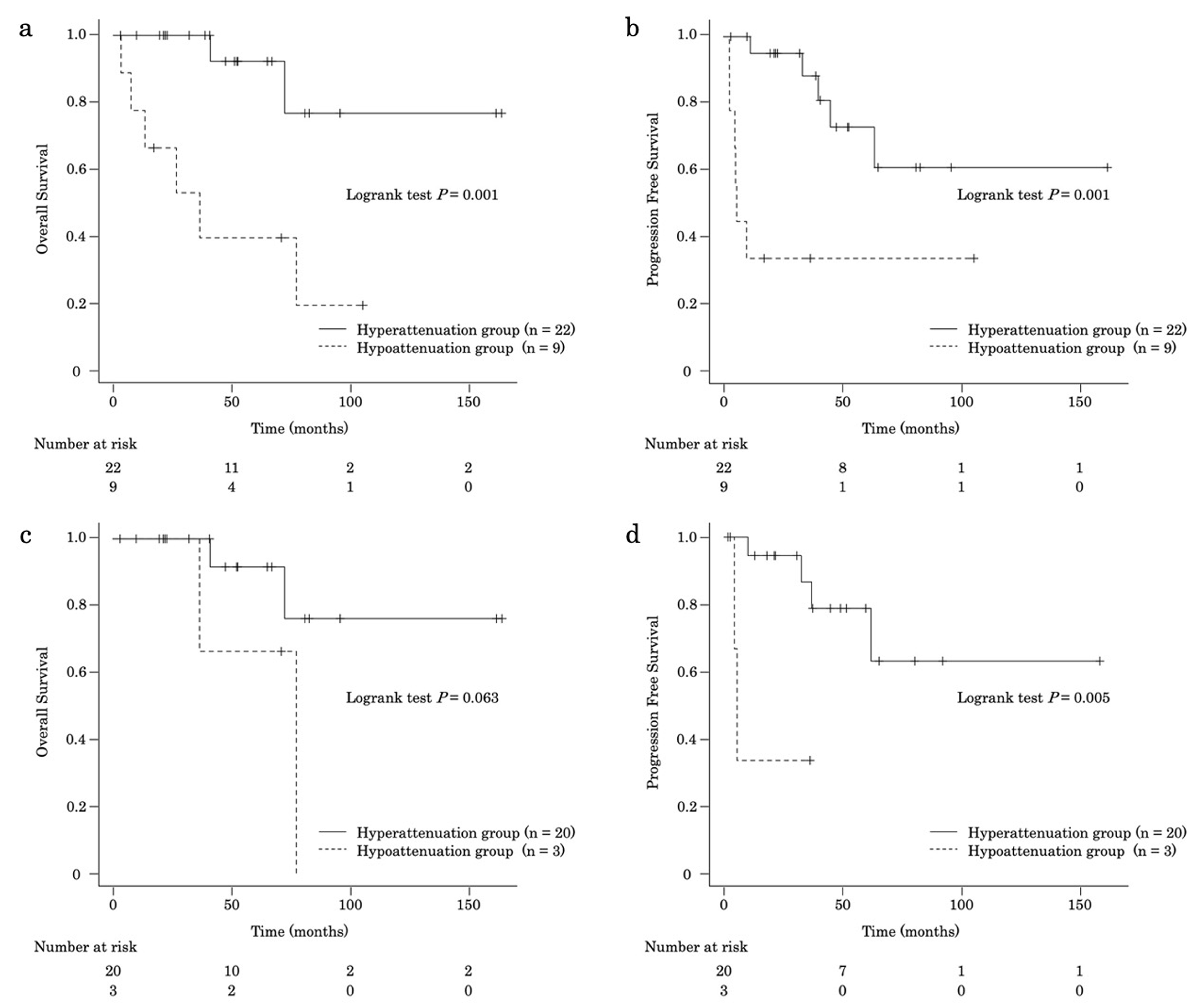
| Contrast pattern | Hyperattenuation (n = 64) | Reference | <0.001 | Reference | <0.001 |
| Hypoattenuation (n = 16) | 15.31 (4.13–56.73) | 9.45 (2.49–35.81) | |||
| Total n = 31 | Hyperattenuation n = 22 | Hypoattenuation n = 9 | p-Value | |
|---|---|---|---|---|
| Age (years), median (range) | 64 (20–80) | 61 (30–80) | 73 (20–80) | 0.056 |
| Sex, n (%) | 0.456 | |||
| Male/Female | 17/14 (55/45) | 11/11 (50/50) | 6/3 (67/33) | |
| Tumor functionality, n (%) | 0.639 | |||
| Functional/Non-functional | 7/24 (23/77) | 6/16 (27/73) | 1/8 (11/89) | |
| Location, n (%) | 0.253 | |||
| Head/Body and Tail | 19/12 (61/39) | 15/7 (68/32) | 4/5 (44/56) | |
| Tumor size (mm), median (range) | 30 (9–150) | 22.5 (9–105) | 37 (23–150) | 0.042 |
| Number of tumors, n (%) | 1 | |||
| Single/Multiple | 28/3 (90/10) | 20/2 (91/9) | 8/1 (89/11) | |
| Metastasis, n (%) | 13 (42) | 5 (23) | 8 (89) | 0.001 |
| Liver | 10 (32) | 3 (14) | 7 (78) | |
| Lymph node | 7 (23) | 2 (9) | 5 (56) | |
| Ki-67 LI (%), median (range) | 5 (3–18) | 5 (3–18) | 7 (3–15) | 0.444 |
| UICC stage, n (%) | 0.009 | |||
| I/II/III/IV | 7/10/3/11 (23/32/10/35) | 7/9/2/4 (32/41/9/18) | 0/1/1/7 (0/11/11/78) | |
| Resection, n (%) | 23 (74) | 20 (91) | 3 (33) | 0.003 |
| Curative-intent surgery | 19 (61) | 17 (77) | 1 (11) | 0.107 |
| Debulking-intent surgery | 4 (13) | 3 (14) | 2 (22) | |
| Internal contrast pattern of the tumor, n (%) | 0.689 | |||
| Homogeneous/Heterogeneous | 9/22 (29/71) | 7/15 (32/68) | 2/7 (22/78) | |
| Cystic component in the tumor, n (%) | 7 (23) | 5 (23) | 2 (22) | 1 |
| MPD dilation ≥5 mm, n (%) | 5 (16) | 2 (9) | 3 (33) | 0.131 |
| Calcification in the tumor, n (%) | 2 (6) | 0 (0) | 2 (22) | 0.100 |
| Univariate Analysis | Multivariate Analysis | ||||
|---|---|---|---|---|---|
| Hazard Ratio (95% CI) | p-Value | Hazard Ratio (95% CI) | p-Value | ||
| Age (years) | <60 (n = 11) | Reference | 0.110 | ||
| ≥60 (n = 20) | 5.58 (0.68–45.84) | ||||
| Gender | Female (n = 14) | Reference | 0.139 | ||
| Male (n = 17) | 3.37 (0.68–16.84) | ||||
| Tumor functionality | Functional (n = 7) | Reference | 0.792 | ||
| Non-functional (n = 24) | 1.24 (0.25–6.26) | ||||
| Location | Head (n = 19) | Reference | 0.255 | ||
| Body/Tail (n = 12) | 2.25 (0.56–9.12) | ||||
| Liver metastasis | Absence (n = 21) | Reference | 0.106 | ||
| Presence (n = 10) | 3.27 (0.78–13.78) | ||||
| Treatment | Resection (n = 23) | Reference | 0.033 | ||
| Non-resection (n = 8) | 4.61 (1.13–18.79) | ||||
| Ki-67 LI | ≤5 (n = 17) | Reference | 0.194 | ||
| >5 (n = 14) | 2.91 (0.58–14.54) | ||||
| Tumor size (mm) | <30 (n = 14) | Reference | 0.076 | ||
| ≥30 (n = 17) | 6.67 (0.82–54.37) | ||||
| Internal contrast pattern | Homogeneous (n = 9) | Reference | 0.965 | ||
| Heterogeneous (n = 22) | 1.04 (0.21–5.14) | ||||
| Cystic component | Absence (n = 24) | Reference | 0.284 | ||
| Presence (n = 7) | 2.20 (0.52–9.25) | ||||
| MPD dilation ≥5 mm | Absence (n = 26) | Reference | 0.058 | ||
| Presence (n = 5) | 3.88 (0.96–15.7) | ||||
| Calcification | Absence (n = 29) | Reference | 0.069 | ||
| Presence (n = 2) | 4.62 (0.89–23.97) | ||||
| Contrast pattern | Hyperattenuation (n = 22) | Reference | 0.007 | Reference | 0.007 |
| Hypoattenuation (n = 9) | 9.13 (1.83–45.51) | 9.13 (1.83–45.51) | |||
Disclaimer/Publisher’s Note: The statements, opinions and data contained in all publications are solely those of the individual author(s) and contributor(s) and not of MDPI and/or the editor(s). MDPI and/or the editor(s) disclaim responsibility for any injury to people or property resulting from any ideas, methods, instructions or products referred to in the content. |
© 2026 by the authors. Licensee MDPI, Basel, Switzerland. This article is an open access article distributed under the terms and conditions of the Creative Commons Attribution (CC BY) license.
Share and Cite
Kojima, I.; Hashimoto, S.; Yamazato, Y.; Shibata, R.; Kamikihara, Y.; Toyodome, K.; Hamada, T.; Hinokuchi, M.; Arima, S.; Tanoue, S.; et al. Hypoattenuation Pattern on Contrast-Enhanced Computed Tomography Predicts Poor Prognosis in Patients with Pancreatic Neuroendocrine Tumors. J. Clin. Med. 2026, 15, 2252. https://doi.org/10.3390/jcm15062252
Kojima I, Hashimoto S, Yamazato Y, Shibata R, Kamikihara Y, Toyodome K, Hamada T, Hinokuchi M, Arima S, Tanoue S, et al. Hypoattenuation Pattern on Contrast-Enhanced Computed Tomography Predicts Poor Prognosis in Patients with Pancreatic Neuroendocrine Tumors. Journal of Clinical Medicine. 2026; 15(6):2252. https://doi.org/10.3390/jcm15062252
Chicago/Turabian StyleKojima, Issei, Shinichi Hashimoto, Yu Yamazato, Ryusuke Shibata, Yusuke Kamikihara, Koshiro Toyodome, Takafumi Hamada, Makoto Hinokuchi, Shiho Arima, Shiroh Tanoue, and et al. 2026. "Hypoattenuation Pattern on Contrast-Enhanced Computed Tomography Predicts Poor Prognosis in Patients with Pancreatic Neuroendocrine Tumors" Journal of Clinical Medicine 15, no. 6: 2252. https://doi.org/10.3390/jcm15062252
APA StyleKojima, I., Hashimoto, S., Yamazato, Y., Shibata, R., Kamikihara, Y., Toyodome, K., Hamada, T., Hinokuchi, M., Arima, S., Tanoue, S., Sasaki, F., Ejima, F., Takumi, K., Yoshiura, T., & Kanmura, S. (2026). Hypoattenuation Pattern on Contrast-Enhanced Computed Tomography Predicts Poor Prognosis in Patients with Pancreatic Neuroendocrine Tumors. Journal of Clinical Medicine, 15(6), 2252. https://doi.org/10.3390/jcm15062252