Association Between Maternal C-Reactive Protein (CRP) Levels and Adverse Neonatal Outcomes: A Systematic Review and Meta-Analysis

 , , , , , , and
Abstract
1. Introduction
2. Methods
2.1. Study Protocol
2.2. Search Strategy
2.3. Eligibility Criteria and Study Selection
2.4. Data Extraction, Quality of Studies, and Certainty of Evidence
2.5. Statistical Analysis
3. Result
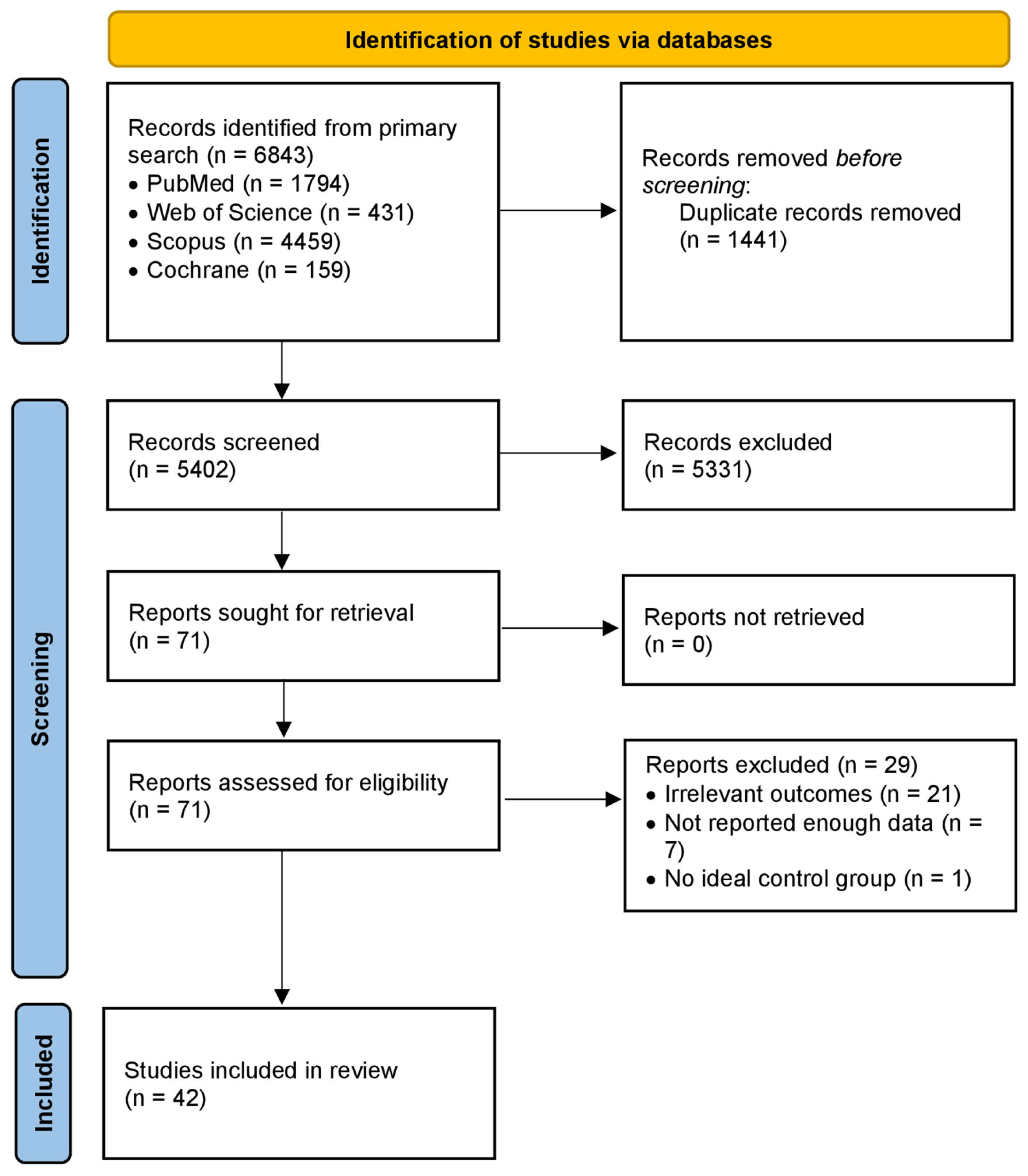
3.1. Study Selection
3.2. Main Characteristics of the Included Studies
3.3. Risk of Bias (NOS Assessment)
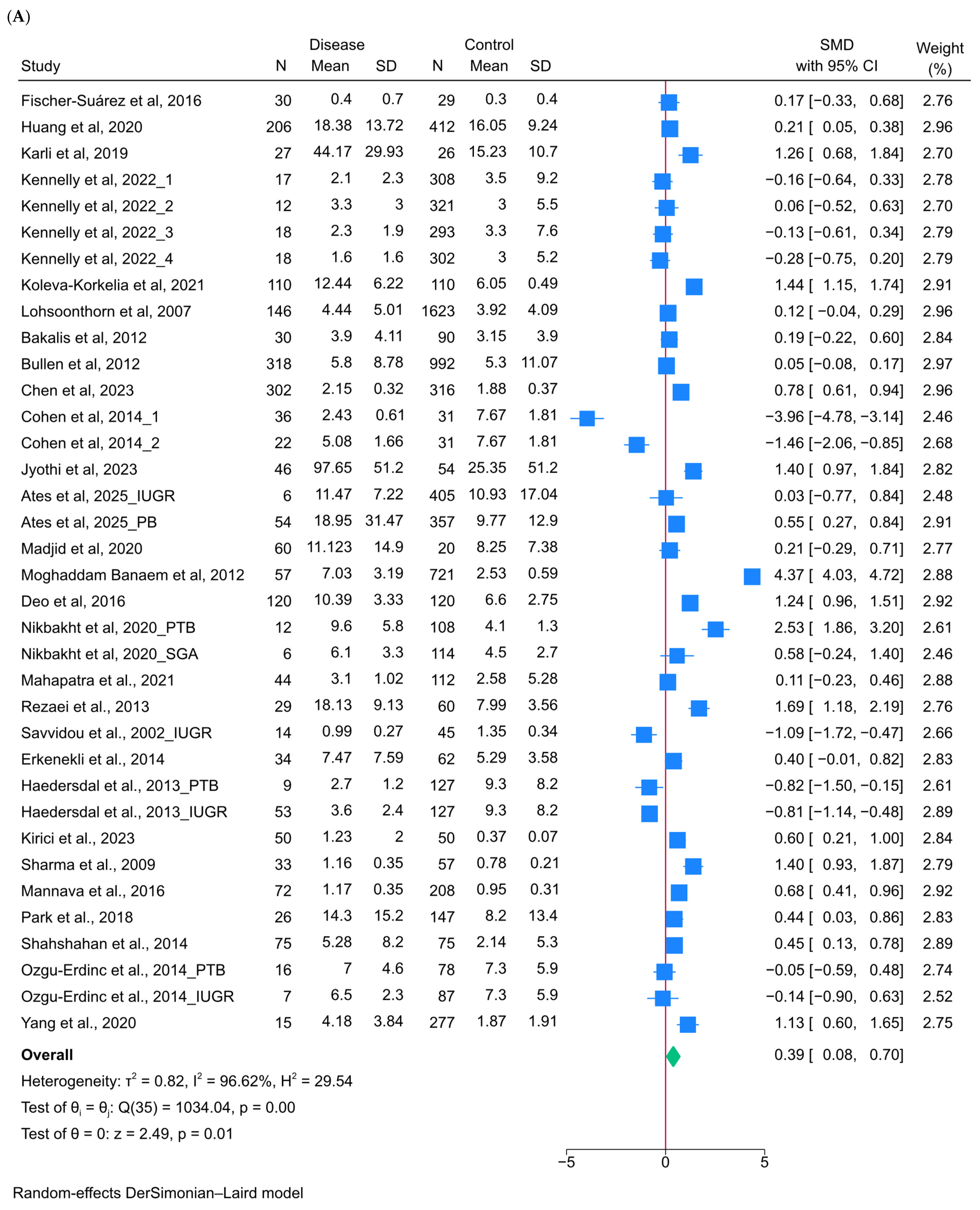
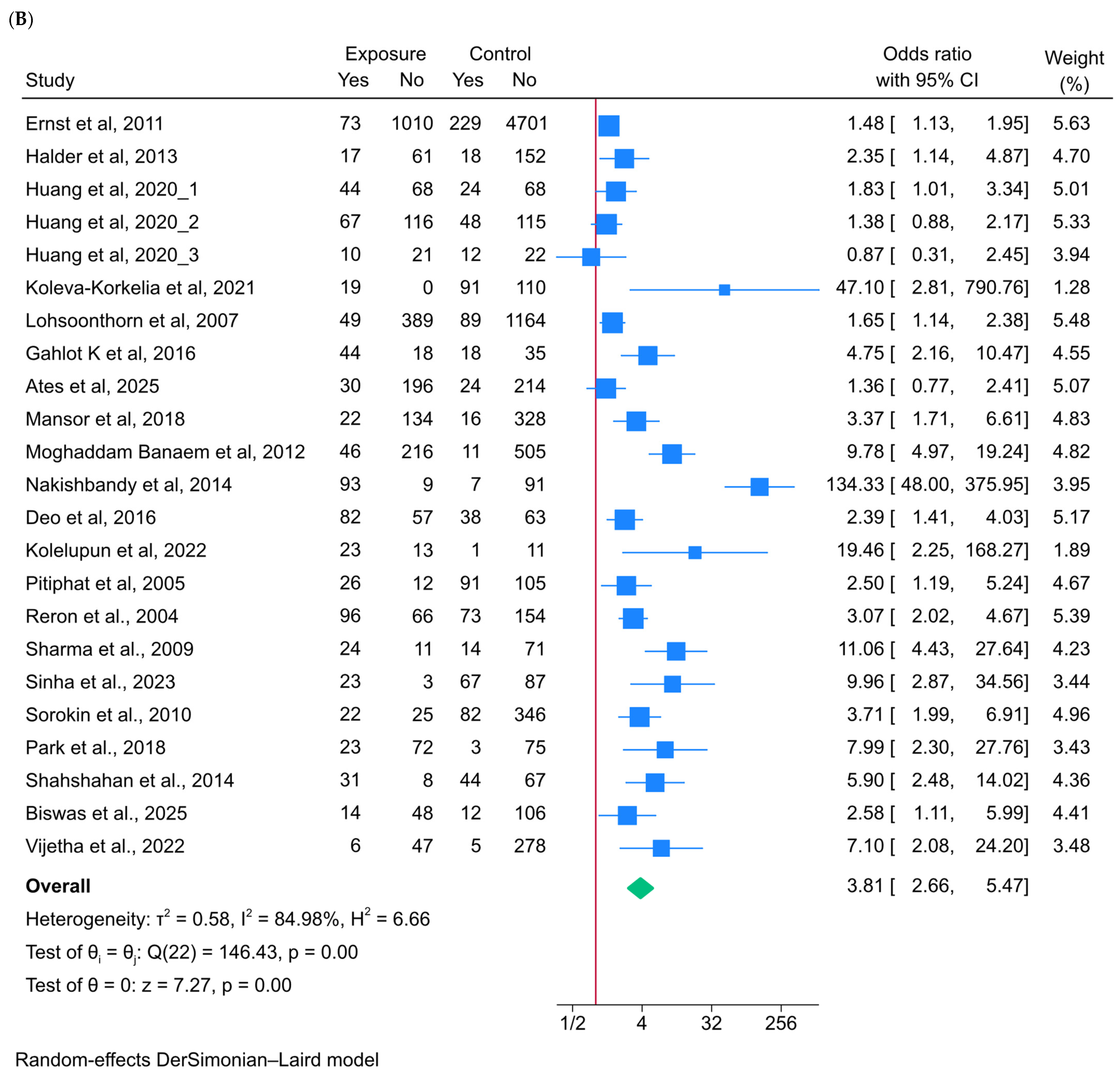
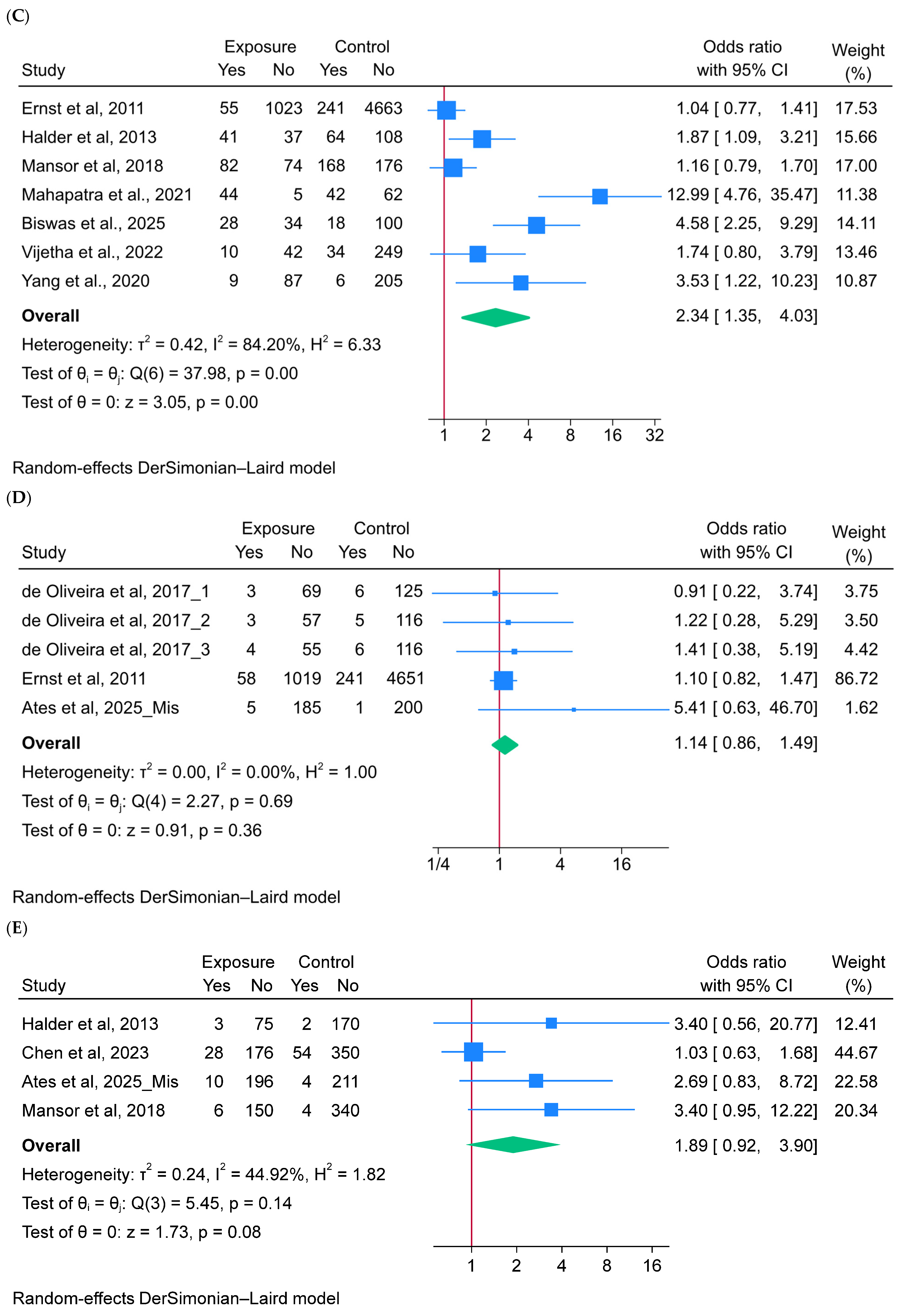
3.4. Quantitative Synthesis
4. Discussion
5. Conclusions
Supplementary Materials
Author Contributions
Funding
Institutional Review Board Statement
Informed Consent Statement
Data Availability Statement
Conflicts of Interest
References
- Bowman, C.E.; Arany, Z.; Wolfgang, M.J. Regulation of maternal–fetal metabolic communication. Cell. Mol. Life Sci. 2021, 78, 1455–1486. [Google Scholar] [CrossRef] [PubMed]
- Haddad-Tóvolli, R.; Claret, M. Metabolic and feeding adjustments during pregnancy. Nat. Rev. Endocrinol. 2023, 19, 564–580. [Google Scholar] [CrossRef] [PubMed]
- Cao, G.; Liu, J.; Liu, M. Global, regional, and national incidence and mortality of neonatal preterm birth, 1990–2019. JAMA Pediatr. 2022, 176, 787–796. [Google Scholar] [CrossRef] [PubMed]
- Rosa-Mangeret, F.; Benski, A.-C.; Golaz, A.; Zala, P.Z.; Kyokan, M.; Wagner, N.; Muhe, L.M.; Pfister, R.E. 2.5 million annual deaths—Are neonates in low-and middle-income countries too small to be seen? A bottom-up overview on neonatal morbi-mortality. Trop. Med. Infect. Dis. 2022, 7, 64. [Google Scholar] [CrossRef]
- Ohuma, E.O.; Moller, A.-B.; Bradley, E.; Chakwera, S.; Hussain-Alkhateeb, L.; Lewin, A.; Okwaraji, Y.B.; Mahanani, W.R.; Johansson, E.W.; Lavin, T. National, regional, and global estimates of preterm birth in 2020, with trends from 2010: A systematic analysis. Lancet 2023, 402, 1261–1271. [Google Scholar] [CrossRef]
- Darmstadt, G.L.; Al Jaifi, N.H.; Arif, S.; Bahl, R.; Blennow, M.; Cavallera, V.; Chou, D.; Chou, R.; Comrie-Thomson, L.; Edmond, K. New World Health Organization recommendations for care of preterm or low birth weight infants: Health policy. EClinicalMedicine 2023, 63, 102155. [Google Scholar] [CrossRef]
- Okwaraji, Y.B.; Krasevec, J.; Bradley, E.; Conkle, J.; Stevens, G.A.; Gatica-Domínguez, G.; Ohuma, E.O.; Coffey, C.; Fernandez, D.G.E.; Blencowe, H. National, regional, and global estimates of low birthweight in 2020, with trends from 2000: A systematic analysis. Lancet 2024, 403, 1071–1080. [Google Scholar] [CrossRef]
- Chawla, D.; Agarwal, R. Preterm births and deaths: From counting to classification. Lancet Glob. Health 2022, 10, e1537–e1538. [Google Scholar] [CrossRef]
- Zahedi-Spung, L.D.; Raghuraman, N.; Macones, G.A.; Cahill, A.G.; Rosenbloom, J.I. Neonatal morbidity and mortality by mode of delivery in very preterm neonates. Am. J. Obstet. Gynecol. 2022, 226, 114.e1–114.e7. [Google Scholar] [CrossRef]
- Khazaei, Z.; Bagheri, M.M.; Goodarzi, E.; Moayed, L.; Abadi, N.E.; Bechashk, S.M.; Mohseni, S.; Safizadeh, M.; Behseresht, M.; Naghibzadeh-Tahami, A. Risk factors associated with low birth weight among infants: A nested case-control study in Southeastern Iran. Int. J. Prev. Med. 2021, 12, 159. [Google Scholar] [CrossRef]
- Moradi, G.; Zokaeii, M.; Goodarzi, E.; Khazaei, Z. Maternal risk factors for low birth weight infants: A nested case-control study of rural areas in Kurdistan (western of Iran). J. Prev. Med. Hyg. 2021, 62, E399. [Google Scholar] [PubMed]
- Grillo, M.A.; Mariani, G.; Ferraris, J.R. Prematurity and low birth weight in neonates as a risk factor for obesity, hypertension, and chronic kidney disease in pediatric and adult age. Front. Med. 2022, 8, 769734. [Google Scholar] [CrossRef] [PubMed]
- Bane, S.; Simard, J.F.; Wall-Wieler, E.; Butwick, A.J.; Carmichael, S.L. Subsequent risk of stillbirth, preterm birth, and small for gestational age: A cross-outcome analysis of adverse birth outcomes. Paediatr. Perinat. Epidemiol. 2022, 36, 815–823. [Google Scholar] [CrossRef] [PubMed]
- Wołejszo, S.; Genowska, A.; Motkowski, R.; Strukcinskiene, B.; Klukowski, M.; Konstantynowicz, J. Insights into prevention of health complications in small for gestational Age (SGA) births in relation to maternal characteristics: A narrative review. J. Clin. Med. 2023, 12, 531. [Google Scholar] [CrossRef]
- Sahin, R.; Tanacan, A.; Serbetci, H.; Agaoglu, Z.; Karagoz, B.; Haksever, M.; Kara, O.; Şahin, D. The role of first-trimester NLR (neutrophil to lymphocyte ratio), systemic immune-inflammation index (SII), and, systemic immune-response index (SIRI) in the prediction of composite adverse outcomes in pregnant women with systemic lupus erythematosus. J. Reprod. Immunol. 2023, 158, 103978. [Google Scholar] [CrossRef]
- Han, V.X.; Patel, S.; Jones, H.F.; Nielsen, T.C.; Mohammad, S.S.; Hofer, M.J.; Gold, W.; Brilot, F.; Lain, S.J.; Nassar, N. Maternal acute and chronic inflammation in pregnancy is associated with common neurodevelopmental disorders: A systematic review. Transl. Psychiatry 2021, 11, 71. [Google Scholar] [CrossRef]
- Hashemipour, S.; Kalantarian, S.S.; Panahi, H.; Kelishomi, S.E.; Ghasemi, A.; Chopani, S.M.; Kolaji, S.; Badri, M.; Ghobadi, A.; Khairkhahan, S.M.R.H. The association of inflammatory markers in early pregnancy with the development of gestational diabetes: Qazvin maternal and neonatal metabolic study (QMNS). BMC Pregnancy Childbirth 2025, 25, 135. [Google Scholar] [CrossRef]
- Morelli, S.S.; Mandal, M.; Goldsmith, L.T.; Kashani, B.N.; Ponzio, N.M. The maternal immune system during pregnancy and its influence on fetal development. Res. Rep. Biol. 2015, 6, 171–189. [Google Scholar] [CrossRef]
- Fragoso, M.B.T.; Ferreira, R.C.; Tenório, M.C.d.S.; Moura, F.A.; de Araújo, O.R.P.; Bueno, N.B.; Goulart, M.O.F.; de Oliveira, A.C.M. Biomarkers of inflammation and redox imbalance in umbilical cord in pregnancies with and without preeclampsia and consequent perinatal outcomes. Oxidative Med. Cell. Longev. 2021, 2021, 9970627. [Google Scholar] [CrossRef]
- Dockree, S.; Brook, J.; James, T.; Shine, B.; Impey, L.; Vatish, M. Pregnancy-specific reference intervals for C-reactive protein improve diagnostic accuracy for infection: A longitudinal study. Clin. Chim. Acta 2021, 517, 81–85. [Google Scholar] [CrossRef]
- Stanimirovic, J.; Radovanovic, J.; Banjac, K.; Obradovic, M.; Essack, M.; Zafirovic, S.; Gluvic, Z.; Gojobori, T.; Isenovic, E.R. Role of C-reactive protein in diabetic inflammation. Mediat. Inflamm. 2022, 2022, 3706508. [Google Scholar] [CrossRef] [PubMed]
- Mertens, K.; Muys, J.; Jacquemyn, Y. Postpartum C-reactive protein: A limited value to detect infection or inflammation. Facts Views Vis. ObGyn 2020, 11, 243. [Google Scholar]
- Amirian, A.; Rahnemaei, F.A.; Abdi, F. Role of C-reactive Protein (CRP) or high-sensitivity CRP in predicting gestational diabetes Mellitus: Systematic review. Diabetes Metab. Syndr. Clin. Res. Rev. 2020, 14, 229–236. [Google Scholar] [CrossRef] [PubMed]
- Rahnemaei, F.A.; Abdi, F. C-reactive protein or high-sensitivity CRP as a predictor for gestational diabetes: Recommended or not? J. Obstet. Gynaecol. 2021, 41, 495. [Google Scholar] [CrossRef]
- Ates, M.; Calis, P.; Artiktay, A.G.; Yilmaz, C.; Hirfanoglu, I.M.; Erdem, A.; Erdem, M. Associations of CRP and PCT levels with obstetric and neonatal outcomes: A prospective study. BMC Pregnancy Childbirth 2025, 25, 873. [Google Scholar] [CrossRef]
- Nikbakht, R.; Moghadam, E.K.; Nasirkhani, Z. Maternal serum levels of C-reactive protein at early pregnancy to predict fetal growth restriction and preterm delivery: A prospective cohort study. Int. J. Reprod. Biomed. 2020, 18, 157. [Google Scholar] [CrossRef]
- Park, H.; Park, K.H.; Kim, Y.M.; Kook, S.Y.; Jeon, S.J.; Yoo, H.-N. Plasma inflammatory and immune proteins as predictors of intra-amniotic infection and spontaneous preterm delivery in women with preterm labor: A retrospective study. BMC Pregnancy Childbirth 2018, 18, 146. [Google Scholar] [CrossRef]
- Huang, S.; Tian, J.; Liu, C.; Long, Y.; Cao, D.; Wei, L.; Zhu, X.; Tang, R.; Liu, W.; Zeng, D. Elevated C-reactive protein and complement C3 levels are associated with preterm birth: A nested case–control study in Chinese women. BMC Pregnancy Childbirth 2020, 20, 131. [Google Scholar] [CrossRef]
- Sadiq, A.M.; Hussein, C.M.; Yousif, M.; Mohammed, R. Correlation Between Highly Sensitive C-Reactive Protein Level in Cases of Preeclampsia with or without Intrauterine-Growth Restriction. Indian J. Forensic Med. Toxicol. 2020, 17, 2–4. [Google Scholar] [CrossRef]
- Kara, A.E.; Guney, G.; Tokmak, A.; Ozaksit, G. The role of inflammatory markers hs-CRP, sialic acid, and IL-6 in the pathogenesis of preeclampsia and intrauterine growth restriction. Eur. Cytokine Netw. 2019, 30, 29–33. [Google Scholar] [CrossRef]
- Witteveen, A.B.; Henrichs, J.; Bellers, M.; van Oenen, E.; Verhoeven, C.J.; Vrijkotte, T.G. Mediating role of C-reactive protein in associations between pre-pregnancy BMI and adverse maternal and neonatal outcomes: The ABCD-study cohort. J. Matern.-Fetal Neonatal Med. 2022, 35, 2867–2875. [Google Scholar] [CrossRef]
- Ernst, G.D.; De Jonge, L.L.; Hofman, A.; Lindemans, J.; Russcher, H.; Steegers, E.A.; Jaddoe, V.W. C-reactive protein levels in early pregnancy, fetal growth patterns, and the risk for neonatal complications: The Generation R Study. Am. J. Obstet. Gynecol. 2011, 205, 132.e1–132.e12. [Google Scholar] [CrossRef] [PubMed]
- Couture, C.; Brien, M.-E.; Boufaied, I.; Duval, C.; Dal Soglio, D.; Enninga, E.A.L.; Cox, B.; Girard, S. Proinflammatory changes in the maternal circulation, maternal–fetal interface, and placental transcriptome in preterm birth. Am. J. Obstet. Gynecol. 2023, 228, 332.e1–332.e17. [Google Scholar] [CrossRef] [PubMed]
- Hutton, B.; Catalá-López, F.; Moher, D. La extensión de la declaración PRISMA para revisiones sistemáticas que incorporan metaanálisis en red: PRISMA-NMA. Med. Clínica 2016, 147, 262–266. [Google Scholar] [CrossRef] [PubMed]
- Brooke, B.S.; Schwartz, T.A.; Pawlik, T.M. MOOSE reporting guidelines for meta-analyses of observational studies. JAMA Surg. 2021, 156, 787–788. [Google Scholar] [CrossRef]
- Page, M.J.; McKenzie, J.E.; Bossuyt, P.M.; Boutron, I.; Hoffmann, T.C.; Mulrow, C.D.; Shamseer, L.; Tetzlaff, J.M.; Akl, E.A.; Brennan, S.E. The PRISMA 2020 statement: An updated guideline for reporting systematic reviews. BMJ 2021, 372, 71. [Google Scholar] [CrossRef]
- Quinn, J.-A.; Munoz, F.M.; Gonik, B.; Frau, L.; Cutland, C.; Mallett-Moore, T.; Kissou, A.; Wittke, F.; Das, M.; Nunes, T. Preterm birth: Case definition & guidelines for data collection, analysis, and presentation of immunisation safety data. Vaccine 2016, 34, 6047–6056. [Google Scholar] [CrossRef]
- Hughes, M.M.; Black, R.E.; Katz, J. 2500-g low birth weight cutoff: History and implications for future research and policy. Matern. Child Health J. 2017, 21, 283–289. [Google Scholar] [CrossRef]
- Damhuis, S.E.; Ganzevoort, W.; Gordijn, S.J. Abnormal fetal growth: Small for gestational age, fetal growth restriction, large for gestational age: Definitions and epidemiology. Obstet. Gynecol. Clin. N. Am. 2021, 48, 267–279. [Google Scholar] [CrossRef]
- Kelly, K.; Meaney, S.; Leitao, S.; O’Donoghue, K. A review of stillbirth definitions: A rationale for change. Eur. J. Obstet. Gynecol. Reprod. Biol. 2021, 256, 235–245. [Google Scholar] [CrossRef]
- Wells, G.A.; Shea, B.; O’Connell, D.; Peterson, J.; Welch, V.; Losos, M.; Tugwell, P. The Newcastle-Ottawa Scale (NOS) for Assessing the Quality of Nonrandomised Studies in Meta-Analyses. 2000. Available online: http://www.ohri.ca/programs/clinical_epidemiology/oxford.asp (accessed on 18 July 2025).
- Guyatt, G.H.; Oxman, A.D.; Vist, G.E.; Kunz, R.; Falck-Ytter, Y.; Alonso-Coello, P.; Schünemann, H.J. GRADE: An emerging consensus on rating quality of evidence and strength of recommendations. BMJ 2008, 336, 924–926. [Google Scholar] [CrossRef]
- DerSimonian, R.; Laird, N. Meta-analysis in clinical trials. Control. Clin. Trials 1986, 7, 177–188. [Google Scholar] [CrossRef] [PubMed]
- Higgins, J.P.; Thompson, S.G.; Deeks, J.J.; Altman, D.G. Measuring inconsistency in meta-analyses. BMJ 2003, 327, 557–560. [Google Scholar] [CrossRef] [PubMed]
- Antoniou, M.-C.; Quansah, D.Y.; Gilbert, L.; Arhab, A.; Schenk, S.; Lacroix, A.; Stuijfzand, B.; Horsch, A.; Puder, J.J. Association between maternal and fetal inflammatory biomarkers and offspring weight and BMI during the first year of life in pregnancies with GDM: MySweetheart study. Front. Endocrinol. 2024, 15, 1333755. [Google Scholar] [CrossRef] [PubMed]
- Bucak, M.; Seyhanli, Z.; Cakir, B.T.; Ulusoy, C.O.; Karabay, G.; Aktemur, G.; Akkus, F.; Yılmaz, Z.V. The role of the neutrophil-to-lymphocyte ratio (NLR), platelet-to-lymphocyte ratio (PLR), C-reactive protein (CRP) and fibrinogen in predicting the latent period after preterm premature rupture of membranes between 24 and 34 weeks. Perinat. J. 2024, 32, 216–225. [Google Scholar]
- Chen, Y.-C.S.; Mirzakhani, H.; Knihtilä, H.; Fichorova, R.N.; Luu, N.; Laranjo, N.; Jha, A.; Kelly, R.S.; Weiss, S.T.; Litonjua, A.A. The association of prenatal C-reactive protein and interleukin-8 levels with maternal characteristics and preterm birth. Am. J. Perinatol. 2024, 41, e843–e852. [Google Scholar]
- Christensen, S.H.; Rom, A.L.; Greve, T.; Lewis, J.I.; Frøkiær, H.; Allen, L.H.; Mølgaard, C.; Renault, K.M.; Michaelsen, K.F. Maternal inflammatory, lipid and metabolic markers and associations with birth and breastfeeding outcomes. Front. Nutr. 2023, 10, 1223753. [Google Scholar] [CrossRef]
- Gogeneni, H.; Buduneli, N.; Ceyhan-Öztürk, B.; Gümüş, P.; Akcali, A.; Zeller, I.; Renaud, D.E.; Scott, D.A.; Özçaka, Ö. Increased infection with key periodontal pathogens during gestational diabetes mellitus. J. Clin. Periodontol. 2015, 42, 506–512. [Google Scholar] [CrossRef]
- Kelly, R.S.; Lee-Sarwar, K.; Chen, Y.-C.; Laranjo, N.; Fichorova, R.; Chu, S.H.; Prince, N.; Lasky-Su, J.; Weiss, S.T.; Litonjua, A.A. Maternal inflammatory biomarkers during pregnancy and early life neurodevelopment in offspring: Results from the VDAART study. Int. J. Mol. Sci. 2022, 23, 15249. [Google Scholar] [CrossRef]
- Khairnar, M.S.; Pawar, B.R.; Marawar, P.P.; Khairnar, D.M. Estimation of changes in C-reactive protein level and pregnancy outcome after nonsurgical supportive periodontal therapy in women affected with periodontitis in a rural set up of India. Contemp. Clin. Dent. 2015, 6, S5–S11. [Google Scholar] [CrossRef]
- Chen, J.; Navais, P.S.; Xu, H.; Flatley, C.; Bacelis, J.; Monangi, N.; Kacerovsky, M.; Hallman, M.; Teramo, K.; Lawlor, D.A. Interrogating the causal effects of maternal circulating CRP on gestational duration and birth weight. medRxiv 2022. [Google Scholar] [CrossRef]
- Hackney, D.N.; Macpherson, T.A.; Dunigan, J.T.; Simhan, H.N. First-trimester maternal plasma concentrations of C-reactive protein in low-risk patients and the subsequent development of chorioamnionitis. Am. J. Perinatol. 2008, 25, 407–411. [Google Scholar] [CrossRef] [PubMed]
- Hastie, C.E.; Smith, G.C.; Mackay, D.F.; Pell, J.P. Association between preterm delivery and subsequent C-reactive protein: A retrospective cohort study. Am. J. Obstet. Gynecol. 2011, 205, 556. e551–556. e554. [Google Scholar] [CrossRef] [PubMed]
- James, U.A.; Imaralu, J.O.; Esiaba, I. Evaluation of Serum Interleukin-6 and C-Reactive Protein Levels among Women During Term Labour. J. Adv. Med. Med. Res. 2020, 32, 69–76. [Google Scholar] [CrossRef]
- Kidd, M.G.; McDade, T.W. Association between C-reactive protein response to influenza vaccine during pregnancy and birth outcomes. Am. J. Hum. Biol. 2022, 34, e23569. [Google Scholar] [CrossRef]
- Kim, H.; Hwang, J.; Ha, E.; Park, H.; Ha, M.; Lee, S.; Hong, Y.; Chang, N. Association of maternal folate nutrition and serum C-reactive protein concentrations with gestational age at delivery. Eur. J. Clin. Nutr. 2011, 65, 350–356. [Google Scholar] [CrossRef]
- Kyaw, E.M.M.; San, C. Association Between Maternal Serum C-Reactive Protein in Early Pregnancy and Spontaneous Preterm Delivery: A Prospective Hospital-Based Study in Yangon, Myanmar. Res. J. Pharm. Technol. 2025, 18, 4999–5002. [Google Scholar] [CrossRef]
- Manoppo, M.; Tendean, H.M.; Sondakh, J.M. High Sensitivity CReactive Protein (hsCRP) Level on Premature Rupture of Membrane (PROM) at Term Pregnancy. Indones. J. Obstet. Gynecol. 2017, 5, 12–15. [Google Scholar] [CrossRef]
- Ng, P.; Cheng, S.; Chui, K.; Fok, T.; Wong, M.; Wong, W.; Wong, R.; Cheung, K. Diagnosis of late onset neonatal sepsis with cytokines, adhesion molecule, and C-reactive protein in preterm very low birthweight infants. Arch. Dis. Child.-Fetal Neonatal Ed. 1997, 77, F221–F227. [Google Scholar] [CrossRef]
- Parvatikar, S. A Comparative Study of Serum Uric Acid C Reactive Protein and Serum Calcium in Preeclampsia and Normal Pregnancy; Rajiv Gandhi University of Health Sciences (India): Karnataka, India, 2013. [Google Scholar]
- Paul, K.; Boutain, D.; Agnew, K.; Thomas, J.; Hitti, J. The relationship between racial identity, income, stress and C-reactive protein among parous women: Implications for preterm birth disparity research. J. Natl. Med. Assoc. 2008, 100, 540–546. [Google Scholar] [CrossRef]
- Pieczyńska, J.; Płaczkowska, S.; Pawlik-Sobecka, L.; Kokot, I.; Sozański, R.; Grajeta, H. Association of dietary inflammatory index with serum IL-6, IL-10, and CRP concentration during pregnancy. Nutrients 2020, 12, 2789. [Google Scholar] [CrossRef]
- Keenan-Devlin, L.S.; Caplan, M.; Freedman, A.; Kuchta, K.; Grobman, W.; Buss, C.; Adam, E.K.; Entringer, S.; Miller, G.E.; Borders, A.E. Using principal component analysis to examine associations of early pregnancy inflammatory biomarker profiles and adverse birth outcomes. Am. J. Reprod. Immunol. 2021, 86, e13497. [Google Scholar] [CrossRef] [PubMed]
- Ryu, H.K.; Moon, J.H.; Heo, H.J.; Kim, J.W.; Kim, Y.H. Maternal c-reactive protein and oxidative stress markers as predictors of delivery latency in patients experiencing preterm premature rupture of membranes. Int. J. Gynecol. Obstet. 2017, 136, 145–150. [Google Scholar] [CrossRef] [PubMed]
- Chul Sung, K.; Suh, J.Y.; Kim, B.S.; Kang, J.H.; Kim, H.; Lee, M.H.; Park, J.R.; Kim, S.W. High sensitivity C-reactive protein as an independent risk factor for essential hypertension. Am. J. Hypertens. 2003, 16, 429–433. [Google Scholar] [CrossRef] [PubMed]
- Ali, M.; Hameed, B.; Kamel, W. The association of serum cancer antigen 125 and c–reactive protein level with the severity of preeclampsia. Karbala J. Med. 2012, 5, 1322–1328. [Google Scholar]
- Seyhanli, Z.; Bayraktar, B.; Cakir, B.T.; Bucak, M.; Karabay, G.; Aktemur, G.; Yigit, A.; Yucel, K.Y.; Yılmaz, Z.V. The Efficacy of C-Reactive Protein (CRP) to Albumin Ratio (CAR) and Fibrinogen to CRP Ratio (FCR) in Predicting the Latent Period of Preterm Labor. Am. J. Reprod. Immunol. 2024, 92, e13899. [Google Scholar] [CrossRef]
- Shafiq, M.; Mathad, J.S.; Naik, S.; Alexander, M.; Yadana, S.; Araújo-Pereira, M.; Kulkarni, V.; Deshpande, P.; Kumar, N.P.; Babu, S. Association of maternal inflammation during pregnancy with birth outcomes and infant growth among women with or without HIV in India. JAMA Netw. Open 2021, 4, e2140584. [Google Scholar] [CrossRef]
- Song, J.S.; Woo, S.J.; Park, K.H.; Kim, H.; Lee, K.-N.; Kim, Y.M. Association of inflammatory and angiogenic biomarkers in maternal plasma with retinopathy of prematurity in preterm infants. Eye 2023, 37, 1802–1809. [Google Scholar] [CrossRef]
- Suwardewa, T.G.A.; Sanjaya, I.N.H.; Anantasika, A.A.N.; Aryana, M.B.D.; Widiyanti, E.S.; Kurniawan, P.I. Correlation between group B Streptococcus infection in the vagina with maternal serum C-reactive protein levels in preterm labor. Eur. J. Med. Health Sci. 2022, 4, 18–21. [Google Scholar] [CrossRef]
- Yeates, A.J.; McSorley, E.M.; Mulhern, M.S.; Spence, T.; Crowe, W.; Grzesik, K.; Thurston, S.; Watson, G.; Myers, G.; Davidson, P. Associations between maternal inflammation during pregnancy and infant birth outcomes in the Seychelles Child Development Study. J. Reprod. Immunol. 2020, 137, 102623. [Google Scholar] [CrossRef]
- Bakalis, S.P.; Poon, L.C.; Vayna, A.-M.; Pafilis, I.; Nicolaides, K.H. C-reactive protein at 11–13 weeks’ gestation in spontaneous early preterm delivery. J. Matern.-Fetal Neonatal Med. 2012, 25, 2475–2478. [Google Scholar] [CrossRef] [PubMed]
- Biswas, J.; Datta, M.; Kar, K.; Mitra, D.; Jyothi, L.; Maitra, A. Role of serum high-sensitive C-reactive protein to predict severity of pre-eclampsia in a high-population resource-poor country: A prospective observational study. J. Rural. Med. 2025, 20, 71–77. [Google Scholar] [CrossRef] [PubMed]
- Bullen, B.L.; Jones, N.M.; Holzman, C.B.; Tian, Y.; Senagore, P.K.; Thorsen, P.; Skogstrand, K.; Hougaard, D.M.; Sikorskii, A. C-reactive protein and preterm delivery: Clues from placental findings and maternal weight. Reprod. Sci. 2013, 20, 715–722. [Google Scholar] [CrossRef] [PubMed]
- Chen, Y.-Y.; Zhou, Y.-B.; Yang, J.; Hua, Y.-M.; Yuan, P.-B.; Liu, A.-P.; Wei, Y. Serum hsCRP in early pregnancy and preterm delivery in twin gestations: A prospective cohort study. BMC Pregnancy Childbirth 2023, 23, 123. [Google Scholar] [CrossRef]
- Cohen, Y.; Ascher-Landsberg, J.; Cohen, A.; Lessing, J.B.; Grisaru, D. The role of C-reactive protein measurement as a diagnostic aid in early pregnancy. Eur. J. Obstet. Gynecol. Reprod. Biol. 2014, 176, 64–67. [Google Scholar] [CrossRef]
- de Oliveira, L.C.; Franco-Sena, A.B.; Farias, D.R.; Rebelo, F.; Kac, G. Maternal C-reactive protein concentrations during pregnancy and birth weight in a prospective cohort in Rio de Janeiro, Brazil. J. Matern.-Fetal Neonatal Med. 2017, 30, 2346–2353. [Google Scholar] [CrossRef]
- Deo, S.; Jaiswar, S.; Sankhwar, P.; Kumari, P.; Singh, S. Evaluation of CRP as a preindicative marker in women with Preterm Labour and Preterm Prelabour Rupture of Membrane (PPROM). Int. J. Life-Sci. Sci. Res. 2016, 2, 466–471. [Google Scholar] [CrossRef]
- Erkenekli, K.; Keskin, U.; Uysal, B.; Kurt, Y.; Sadir, S.; Çayci, T.; Ergün, A.; Erkaya, S.; Danişman, N.; Uygur, D. Levels of neopterin and C-reactive protein in pregnant women with fetal growth restriction. J. Obstet. Gynaecol. 2015, 35, 225–228. [Google Scholar] [CrossRef]
- Fischer-Suárez, N.; Fernández-Alonso, A.M.; Herrera-Muñoz, A.; Chedraui, P.; Pérez-López, F.R. Maternal serum 25-hydroxyvitamin D and C-reactive protein levels in pregnancies complicated with threatened preterm labour. Gynecol. Endocrinol. 2016, 32, 777–781. [Google Scholar] [CrossRef]
- Gahlot, K.; Pandey, K.; Singh, P.P.; Gahlot, V.; Mourya, R. To evaluate diagnostic efficacy of maternal serum C-reactive protein to predict preterm labour. Int. J. Reprod. Contracept. Obstet. Gynecol. 2016, 5, 4001–4004. [Google Scholar] [CrossRef]
- Haedersdal, S.; Salvig, J.D.; Aabye, M.; Thorball, C.W.; Ruhwald, M.; Ladelund, S.; Eugen-Olsen, J.; Secher, N.J. Inflammatory markers in the second trimester prior to clinical onset of preeclampsia, intrauterine growth restriction, and spontaneous preterm birth. Inflammation 2013, 36, 907–913. [Google Scholar] [CrossRef] [PubMed]
- Halder, A.; Agarwal, R.; Sharma, S.; Agarwal, S. Predictive significance of C reactive protein in spontaneous preterm delivery: A prospective cohort study. Int. J. Reprod. Contracept. Obstet. Gynecol. 2013, 2, 47–51. [Google Scholar] [CrossRef]
- Jyothi, V.J.; Farheen, S.; Deepthi, M.; Swapna, L. Evaluation of screening efficacy of IL6, IL8, CRP and salivary progesterone in predicting preterm pregnancy. Int. J. Reprod. Contracept. Obstet. Gynecol. 2023, 12, 941. [Google Scholar] [CrossRef]
- Karlı, P.; Özdemir, A.Z.; Ayan, D. Maternal serum and fetal cord blood C-reactive protein levels but not procalcitonin levels are increased in idiopathic intrauterine growth restriction. Med. Sci. Monit. Int. Med. J. Exp. Clin. Res. 2019, 25, 6512. [Google Scholar] [CrossRef]
- Kennelly, M.A.; Killeen, S.L.; Phillips, C.M.; Alberdi, G.; Lindsay, K.L.; Mehegan, J.; Cronin, M.; McAuliffe, F.M. Maternal C3 complement and C-reactive protein and pregnancy and fetal outcomes: A secondary analysis of the PEARS RCT-An mHealth-supported, lifestyle intervention among pregnant women with overweight and obesity. Cytokine 2022, 149, 155748. [Google Scholar] [CrossRef]
- Kirici, P.; Çağıran, F.; Kali, Z.; Tanriverdi, E.; Mavral, N.; Ecin, S. Determination of maternal serum pro-inflammatory cytokine changes in intrauterine growth restriction. Eur. Rev. Med. Pharmacol. Sci. 2023, 27, 1996–2001. [Google Scholar]
- Kolelupun, M.; Surya, I.G.P.; Sanjaya, I.N.H.; Suwardewa, T.G.A.; Megadhana, I.W.; Putra, I.G.M.; Budiana, I.N.G.; Putra, I.W.A. High level of highly sensitivity c-reactive protein levels (hs-CRP) as a risk factor for preterm delivery. Bali Med. J. 2022, 11, 40–43. [Google Scholar] [CrossRef]
- Koleva-Korkelia, I.; Karamalakova, Y. C-reactive protein levels-indicator for prognosis of spontaneous preterm birth in bulgarian women. Proc. CBU Med. Pharm. 2021, 2, 80. [Google Scholar] [CrossRef]
- Lohsoonthorn, V.; Qiu, C.; Williams, M.A. Maternal serum C-reactive protein concentrations in early pregnancy and subsequent risk of preterm delivery. Clin. Biochem. 2007, 40, 330–335. [Google Scholar] [CrossRef]
- Madjid, T.H.; Prasetyawati, R.D.; Nathania, N.; Iswari, W.A.; Aziz, M.A.; Pusianawati, D.; Effendi, J.S. C-reactive protein concentration in very early, early and late preterm labour. Indones. J. Obstet. Gynecol. Sci. 2020, 3, 99–105. [Google Scholar] [CrossRef]
- Mahapatra, A.; Nayak, R.; Satpathy, A.; Pati, B.K.; Mohanty, R.; Mohanty, G.; Beura, R. Maternal periodontal status, oral inflammatory load, and systemic inflammation are associated with low infant birth weight. J. Periodontol. 2021, 92, 1107–1116. [Google Scholar] [CrossRef] [PubMed]
- Mannava, P.; Gokhale, S.; Pujari, S.; Biswas, K.P.; Kaliappan, S.; Vijapure, S. Comparative evaluation of C-reactive Proteins in pregnant women with and without periodontal pathologies: A prospective cohort analysis. J. Contemp. Dent. Pract. 2016, 17, 480–483. [Google Scholar] [CrossRef] [PubMed]
- Mansor, A.E.; Farag, A.M. The predictve value of Early Second Trimester C-Reactive Protein for detection of preterm labour and neonatal outcome. MJMR (Minia J. Med. Res.) 2018, 29, 238–242. [Google Scholar]
- Moghaddam Banaem, L.; Mohamadi, B.; Asghari Jaafarabadi, M.; Aliyan Moghadam, N. Maternal serum C-reactive protein in early pregnancy and occurrence of preterm premature rupture of membranes and preterm birth. J. Obstet. Gynaecol. Res. 2012, 38, 780–786. [Google Scholar] [CrossRef]
- Nakishbandy, B.M.N.; Barawi, S.A. Level of C-reactive protein as an indicator for prognosis of premature uterine contractions. J. Prenat. Med. 2014, 8, 25. [Google Scholar]
- Ozgu-Erdinc, A.S.; Cavkaytar, S.; Aktulay, A.; Buyukkagnici, U.; Erkaya, S.; Danisman, N. Mid-trimester maternal serum and amniotic fluid biomarkers for the prediction of preterm delivery and intrauterine growth retardation. J. Obstet. Gynaecol. Res. 2014, 40, 1540–1546. [Google Scholar] [CrossRef]
- Pitiphat, W.; Gillman, M.W.; Joshipura, K.J.; Williams, P.L.; Douglass, C.W.; Rich-Edwards, J.W. Plasma C-reactive protein in early pregnancy and preterm delivery. Am. J. Epidemiol. 2005, 162, 1108–1113. [Google Scholar] [CrossRef]
- Reroń, A.; Huras, H.; Szymik, M.; Jaworowski, A. C-reactive protein as a predictor of threatening preterm delivery. Neuroendocrinol. Lett. 2004, 25, 302–306. [Google Scholar]
- Rezaei, M.; Shahgheibi, S.; Shahoei, R.; Zadvakili, F.; Farhadifar, F.; Noori, N.; Saiedalshoiadaei, F. Cervicovaginal biomarkers and C-reactive protein levels in preterm and term labor. Life Sci. J. 2013, 10, 368–371. [Google Scholar]
- Rzepka, R.; Dołęgowska, B.; Rajewska, A.; Sałata, D.; Budkowska, M.; Kwiatkowski, S.; Torbé, A. Diagnostic Potential of Evaluation of SDF-1α and sRAGE Levels in Threatened Premature Labor. BioMed Res. Int. 2016, 2016, 2719460. [Google Scholar] [CrossRef]
- Savvidou, M.D.; Lees, C.C.; Parra, M.; Hingorani, A.D.; Nicolaides, K.H. Levels of C-reactive protein in pregnant women who subsequently develop pre-eclampsia. BJOG Int. J. Obstet. Gynaecol. 2002, 109, 297–301. [Google Scholar]
- Shahshahan, Z.; Rasouli, O. The use of maternal C-reactive protein in the predicting of preterm labor and tocolytic therapy in preterm labor women. Adv. Biomed. Res. 2014, 3, 154. [Google Scholar] [CrossRef] [PubMed]
- Sharma, A.; Ramesh, A.; Thomas, B. Evaluation of plasma C-reactive protein levels in pregnant women with and without periodontal disease: A comparative study. J. Indian Soc. Periodontol. 2009, 13, 145–149. [Google Scholar] [CrossRef] [PubMed]
- Sinha, S.; Seth, S.; Rai, P. Study of Cervical Mucus Cytology and Serum Inflammatory Biomarkers in Preterm Labour Compared to Term Pregnancy Cases in a Tertiary Care Center of Western Uttar Pradesh (UP), India. Cureus 2023, 15, e48884. [Google Scholar] [CrossRef] [PubMed]
- Sorokin, Y.; Romero, R.; Mele, L.; Wapner, R.J.; Iams, J.D.; Dudley, D.J.; Spong, C.Y.; Peaceman, A.M.; Leveno, K.J.; Harper, M. Maternal serum interleukin-6, C-reactive protein, and matrix metalloproteinase-9 concentrations as risk factors for preterm birth <32 weeks and adverse neonatal outcomes. Am. J. Perinatol. 2010, 27, 631–640. [Google Scholar]
- Vijetha, K.L.; Sujatha, P.; Kate, N.V.; Vaithiyanadhan, U.; Gopal, V. Correlation of levels of serum C reactive protein in second trimester with fetomaternal outcome. Int. J. Reprod. Contracept. Obstet. Gynecol. 1930, 11, 865. [Google Scholar] [CrossRef]
- Yang, Y.; Kan, H.; Yu, X.; Yang, Y.; Li, L.; Zhao, M. Relationship between dietary inflammatory index, hs-CRP level in the second trimester and neonatal birth weight: A cohort study. J. Clin. Biochem. Nutr. 2020, 66, 163–167. [Google Scholar] [CrossRef]
- Rebelo, F.; Schluessel, M.M.; Vaz, J.S.; Franco-Sena, A.B.; Pinto, T.J.; Bastos, F.I.; Adegboye, A.R.; Kac, G. C-reactive protein and later preeclampsia: Systematic review and meta-analysis taking into account the weight status. J. Hypertens. 2013, 31, 16–26. [Google Scholar] [CrossRef]
- Hamadeh, R.; Mohsen, A.; Kobeissy, F.; Karouni, A.; Akoum, H. C-reactive protein for prediction or early detection of pre-eclampsia: A systematic review. Gynecol. Obstet. Investig. 2021, 86, 13–26. [Google Scholar] [CrossRef]
- Zhang, J.; Luo, W.; Huang, P.; Peng, L.; Huang, Q. Maternal C-reactive protein and cytokine levels during pregnancy and the risk of selected neuropsychiatric disorders in offspring: A systematic review and meta-analysis. J. Psychiatr. Res. 2018, 105, 86–94. [Google Scholar] [CrossRef]
- Lucaroni, F.; Morciano, L.; Rizzo, G.; D’Antonio, F.; Buonuomo, E.; Palombi, L.; Arduini, D. Biomarkers for predicting spontaneous preterm birth: An umbrella systematic review. J. Matern.-Fetal Neonatal Med. 2018, 31, 726–734. [Google Scholar] [CrossRef] [PubMed]
- Wei, S.-Q.; Fraser, W.; Luo, Z.-C. Inflammatory cytokines and spontaneous preterm birth in asymptomatic women: A systematic review. Obstet. Gynecol. 2010, 116, 393–401. [Google Scholar] [CrossRef] [PubMed]
- van de Laar, R.; van der Ham, D.P.; Oei, S.G.; Willekes, C.; Weiner, C.P.; Mol, B.W. Accuracy of C-reactive protein determination in predicting chorioamnionitis and neonatal infection in pregnant women with premature rupture of membranes: A systematic review. Eur. J. Obstet. Gynecol. Reprod. Biol. 2009, 147, 124–129. [Google Scholar] [CrossRef]
- Brown, A.S.; Sourander, A.; Hinkka-Yli-Salomäki, S.; McKeague, I.W.; Sundvall, J.; Surcel, H.-M. Elevated maternal C-reactive protein and autism in a national birth cohort. Mol. Psychiatry 2014, 19, 259–264. [Google Scholar] [CrossRef]
- Chudal, R.; Brown, A.S.; Gyllenberg, D.; Hinkka-Yli-Salomäki, S.; Sucksdorff, M.; Surcel, H.-M.; Upadhyaya, S.; Sourander, A. Maternal serum C-reactive protein (CRP) and offspring attention deficit hyperactivity disorder (ADHD). Eur. Child Adolesc. Psychiatry 2020, 29, 239–247. [Google Scholar] [CrossRef]
- Humberg, A.; Fortmann, I.; Siller, B.; Kopp, M.V.; Herting, E.; Göpel, W.; Härtel, C. German Neonatal Network; German Center for Lung Research and Priming Immunity at the beginning of life (PRIMAL) Consortium. Preterm birth and sustained inflammation: Consequences for the neonate. Semin. Immunopathol. 2020, 42, 451–468. [Google Scholar] [CrossRef]
- Romero, R.; Espinoza, J.; Gonçalves, L.F.; Kusanovic, J.P.; Friel, L.; Hassan, S. The role of inflammation and infection in preterm birth. Semin. Reprod. Med. 2007, 25, 21–39. [Google Scholar] [CrossRef]
- Socha, M.W.; Flis, W.; Pietrus, M.; Wartęga, M.; Stankiewicz, M. Signaling pathways regulating human cervical ripening in preterm and term delivery. Cells 2022, 11, 3690. [Google Scholar] [CrossRef]
- Adu-Bonsaffoh, K.; Bayor, F. Pathophysiological mechanisms of maternal pro-inflammatory mediators in preterm labour. J. Physiol. Pathophysiol. 2022, 13, 1–16. [Google Scholar] [CrossRef]
- Adan, R.; Özdemir, S.; Şahin, F.; Ömeroğlu, İ.; Aşıcıoğlu, O. The Association Between C-Reactive Protein and the Duration of the Latent Phase of Labor in Women with Term Premature Rupture of Membranes. Anatol. J. Obstet. Gynecol. Res. 2025, 1, 104–108. [Google Scholar] [CrossRef]
- Parisi, F.; Milazzo, R.; Savasi, V.M.; Cetin, I. Maternal low-grade chronic inflammation and intrauterine programming of health and disease. Int. J. Mol. Sci. 2021, 22, 1732. [Google Scholar] [CrossRef]
- Chen, X.; Zhang, M.; Zhou, N.; Zhou, W.; Qi, H. Associations between genetically predicted concentrations of circulating inflammatory cytokines and the risk of ten pregnancy-related adverse outcomes: A two-sample Mendelian randomization study. Cytokine 2024, 180, 156661. [Google Scholar] [CrossRef]
- Garciéa, R.G.; Celedón, J.; Sierra-Laguado, J.; Alarcón, M.A.; Luengas, C.; Silva, F.; Arenas-Mantilla, M.; López-Jaramillo, P. Raised C-reactive protein and impaired flow-mediated vasodilation precede the development of preeclampsia. Am. J. Hypertens. 2007, 20, 98–103. [Google Scholar] [CrossRef] [PubMed]
- Weckman, A.M.; Ngai, M.; Wright, J.; McDonald, C.R.; Kain, K.C. The impact of infection in pregnancy on placental vascular development and adverse birth outcomes. Front. Microbiol. 2019, 10, 1924. [Google Scholar] [CrossRef]
- Beltempo, M.; Viel-Thériault, I.; Thibeault, R.; Julien, A.-S.; Piedboeuf, B. C-reactive protein for late-onset sepsis diagnosis in very low birth weight infants. BMC Pediatr. 2018, 18, 16. [Google Scholar] [CrossRef]
- Ozkan, S.; Firatligil, F.B.; Sucu, S.; Dereli, M.L.; Kurt, D.; Yigit, A.; Reis, Y.A.; Yucel, K.Y.; Celen, S.; Engin-Ustun, Y. Can inflammatory biomarkers based on first trimester complete blood count parameters predict placental abruption?: A case-control study. J. Reprod. Immunol. 2024, 164, 104279. [Google Scholar] [CrossRef]



| Study | Country | Sample Size (N) | Study Design | Trimester of CRP Evaluation | CRP Type | Age of Participants (years) | Neonatal Complications Evaluated | Newcastle–Ottawa Scale (NOS) Assessment | ||||
|---|---|---|---|---|---|---|---|---|---|---|---|---|
| Cases | Controls | Selection | Comparability | Outcome | Total | |||||||
| Ates et al., 2025 [25] | Turkey | 411 | Prospective cohort | Mix | CRP | 30.7 ± 5.4 | 29.1 ± 4.9 | PTB, IUGR | ★★★ | ★★☆ | ★★★ | 8/9 |
| Bakalis et al., 2012 [73] | UK | 120 | Prospective cohort | 1st | hs-CRP | 33.0 (29.2–37.9) (median, IQR) | 32.9 (28.0–36.7) (median, IQR) | PTB | ★★★ | ★★☆ | ★★★ | 8/9 |
| Biswas et al., 2025 [74] | India | 180 | Prospective cohort | 3rd | hs-CRP | 21.9 ± 4.3 | 21.9 ± 3.3 | LBW, PTB, IUGR | ★★★ | ★★★ | ★★★ | 9/9 |
| Bullen et al., 2012 [75] | USA | 1310 | Prospective cohort | 2nd | CRP | NR | NR | PTB | ★★★ | ★★★ | ★★★ | 9/9 |
| Chen et al., 2023 [76] | China | 618 | Prospective cohort | 1st | hs-CRP | 33.7 | 32.6 | PTB | ★★★ | ★★★ | ★★★ | 9/9 |
| Cohen et al., 2014 [77] | Israel | 89 | Prospective observational | 1st | CRP | 29.0 ± 7.6 | 32.2 ± 4.8 | IUGR | ★★★ | ★☆☆ | ★★★ | 7/9 |
| de Oliveira et al., 2017 [78] | Brazil | 203 | Prospective Cohort | Mix | hs-CRP | 20–40 | SGA | ★★★ | ★★☆ | ★★★ | 8/9 | |
| Deo et al., 2016 [79] | India | 240 | Case–Control | Mix | CRP | 25.3 ± 3.1 | 24.9 ± 3.3 | PTB | ★★☆ | ★☆☆ | ★★☆ | 5/9 |
| Erkenekli et al., 2014 [80] | Turkey | 96 | Case–Control | 3rd | CRP | 26.3 ± 5.1 | 26.82 ± 5.27 | IUGR | ★★★ | ★★☆ | ★★★ | 8/9 |
| Ernst et al., 2011 [32] | Netherlands | 6016 | Prospective Cohort | 1st | hs-CRP | 29.8 ± 5.1 | PTB, LBW, SGA | ★★★ | ★★★ | ★★★ | 9/9 | |
| Fischer-Suárez et al., 2016 [81] | Spain | 123 | Prospective Case–Control | 3rd | hs-CRP | 27.2 ± 6.9 | 31.8 ± 4.0 | PTB | ★★★ | ★☆☆ | ★★☆ | 6/9 |
| Gahlot et al., 2016 [82] | India | 112 | Prospective Cohort | Mix | CRP | 21–25 | PTB | ★★☆ | ★☆☆ | ★★☆ | 5/9 | |
| Haedersdal et al., 2013 [83] | Denmark | 218 | Case–Control | 2nd | CRP | 26.9 (18.2–37.3) (Median, range) | 27.5 (17.5–37.8) (Median, range) | PTB, IUGR | ★★★ | ★★☆ | ★★★ | 8/9 |
| Halder et al., 2013 [84] | India | 250 | Prospective Cohort | 1st | CRP | NR | NR | PTB, LBW, IUGR | ★★★ | ★☆☆ | ★★☆ | 6/9 |
| Huang et al., 2020 [28] | China | 618 | Case–Control | Mix | CRP | 28.3 ± 5.3 | 28.2 ± 4.7 | PTB | ★★★ | ★★★ | ★★★ | 9/9 |
| Jyothi et al., 2023 [85] | India | 100 | Prospective Cohort | 2nd | CRP | 25.4 ± 4.0 | 26.4 ± 3.4 | PTB, LBW | ★★★ | ★★☆ | ★★★ | 8/9 |
| Karli et al., 2019 [86] | Turkey | 53 | Prospective Case–Control | 3rd | CRP | 31 (27–34) (Median, IQR) | 28.5 (24.7–32) (Median, IQR) | IUGR, LBW | ★★☆ | ★★☆ | ★★★ | 7/9 |
| Kennelly et al., 2022 [87] | Ireland | 406 | Prospective Cohort | 2nd | CRP | 32.9 ± 4.6 | 32.2 ± 4.1 | PTB, LBW, SGA | ★★★ | ★★★ | ★★★ | 9/9 |
| Kirici et al., 2023 [88] | Turkey | 100 | Case–Control | 3rd | hs-CRP | 28 (25–31) (Median, IQR) | 29 (25–32) (Median, IQR) | IUGR, LBW | ★★☆ | ★★☆ | ★★★ | 7/9 |
| Kolelupun et al., 2022 [89] | Indonesia | 48 | Case–Control | 3rd | hs-CRP | 27 (17–34) (Median, range) | 28 (17–34) (Median, range) | PTB | ★★☆ | ★☆☆ | ★★☆ | 5/9 |
| Koleva-Korkelia et al., 2021 [90] | Bulgaria | 220 | Case–Control | 3rd | CRP | 31.8 ± 4.1 | 26.9 ± 5.8 | PTB | ★★★ | ★☆☆ | ★★☆ | 6/9 |
| Lohsoonthorn et al., 2007 [91] | USA | 1769 | Prospective Cohort | 1st | CRP | 32.2 ± 0.5 | 32.1 ± 0.1 | PTB | ★★★ | ★★★ | ★★★ | 9/9 |
| Madjid et al., 2020 [92] | Indonesia | 80 | Case–Control | 3rd | CRP | NR | NR | PTB | ★★☆ | ★☆☆ | ★★☆ | 5/9 |
| Mahapatra et al., 2021 [93] | India | 156 | Prospective Cohort | Mix | CRP | 26.6 ± 3.9 | PTB, LBW | ★★★ | ★★★ | ★★★ | 9/9 | |
| Mannava et al., 2016 [94] | India | 210 | Prospective Cohort | 2nd | CRP | 20–35 | PTB | ★★☆ | ★☆☆ | ★★☆ | 5/9 | |
| Mansor & Farag, 2018 [95] | Egypt | 500 | Prospective Cohort | 2nd | hs-CRP | NR | NR | PTB, LBW | ★★★ | ★☆☆ | ★★☆ | 6/9 |
| Moghaddam Banaem et al., 2012 [96] | Iran | 778 | Prospective Cohort | 1st | hs-CRP | 26 (23–28) (Median, 95% CI) | 26 (25–26) (Median, 95% CI) | PTB | ★★★ | ★★★ | ★★★ | 9/9 |
| Nakishbandy & Barawi, 2014 [97] | Iraq | 200 | Case–Control | 2nd | hs-CRP | 27.7 ± 5.9 | 28.9 ± 6.1 | PTB | ★★☆ | ★☆☆ | ★★☆ | 5/9 |
| Nikbakht et al., 2020 [26] | Iran | 120 | Prospective Cohort | 1st | CRP | 26.5 ± 4.4 | PTB, SGA | ★★★ | ★★☆ | ★★★ | 8/9 | |
| Ozgu-Erdinc et al., 2014 [98] | Turkey | 94 | Prospective Cohort | 2nd | hs-CRP | 35 (23–40) (Median, range) | 35 (19–44) (Median, range) | PTB, IUGR | ★★★ | ★☆☆ | ★★☆ | 6/9 |
| Park et al., 2018 [27] | South Korea | 173 | Retrospective Cohort | 3rd | CRP | 33.0 ± 4.0 | 31.3 ± 4.0 | PTB | ★★★ | ★★☆ | ★★★ | 8/9 |
| Pitiphat et al., 2005 [99] | USA | 234 | Nested Case–Control | 1st | hs-CRP | NR | NR | PTB | ★★★ | ★★★ | ★★★ | 9/9 |
| Reron et al., 2004 [100] | Poland | 389 | Retrospective Cohort | 3rd | CRP | 27.5 ± 6.1 | 27.5 ± 6.1 | PTB | ★★☆ | ★☆☆ | ★★☆ | 5/9 |
| Rezaei et al., 2013 [101] | Iran | 89 | Nested Cohort | 3rd | CRP | 22.3 ± 3.7 | 22.7 ± 2.6 | PTB | ★★★ | ★★☆ | ★★★ | 8/9 |
| Rzepka et al., 2016 [102] | Poland | 211 | Prospective Cohort | 3rd | CRP | 30.2 ± 6.2 | 27.9 ± 5.9 | PTB | ★★★ | ★★★ | ★★★ | 9/9 |
| Savvidou et al., 2002 [103] | UK | 90 | Cross-sectional | 2nd | hs-CRP | 26.9 ± 6.0 | 29 ± 5.5 | IUGR | ★★★ | ★★☆ | ★★★ | 8/9 |
| Shahshahan et al., 2014 [104] | Iran | 150 | Prospective Cohort | 3rd | CRP | 28.1 ± 4.6 | 27.1 ± 4.9 | PTB | ★★★ | ★☆☆ | ★★★ | 7/9 |
| Sharma et al., 2009 [105] | India | 90 | Prospective Cohort | 2nd | CRP | 18–35 | PTB | ★★☆ | ★☆☆ | ★★☆ | 5/9 | |
| Sinha et al., 2023 [106] | India | 180 | Cross-sectional | 3rd | CRP | 26.5 ± 4.1 | 26.1 ± 3.1 | PTB | ★★☆ | ★☆☆ | ★★☆ | 5/9 |
| Sorokin et al., 2010 [107] | USA | 475 | Prospective Cohort | 3rd | CRP | NR | NR | PTB | ★★★ | ★★☆ | ★★★ | 8/9 |
| Vijetha et al., 2022 [108] | India | 359 | Prospective Cohort | 2nd | CRP | 20–30 | PTB, LBW, IUGR, Stillbirth | ★★☆ | ★☆☆ | ★☆☆ | 4/9 | |
| ang et al., 2020 [109] | China | 307 | Prospective Cohort | 2nd | hs-CRP | 28.3 ± 3.9 | 28.3 ± 3.1 | LBW | ★★★ | ★★☆ | ★★★ | 8/9 |
| Variable | Sub-Grouped by | No. of Studies | Effect Size (SMD) | 95% CI | I2 (%) | p for Heterogeneity | |
|---|---|---|---|---|---|---|---|
| CRP levels and neonatal complications | Age | Young adult (20–30) | 20 | 0.74 | 0.28, 1.21 | 97.40 | 0.000 |
| Middle-aged adult (31–50) | 15 | −0.08 | −0.47, 0.31 | 94.40 | 0.000 | ||
| Neonatal Complication | Preterm Birth (PTB) | 21 | 0.77 | 0.40, 1.14 | 97.22 | 0.000 | |
| IUGR | 8 | −0.44 | −1.30, 0.42 | 96.32 | 0.000 | ||
| SGA | 3 | −0.05 | −0.46, 0.36 | 37.71 | 0.200 | ||
| LBW | 2 | 0.60 | −0.39, 1.59 | 89.89 | 0.000 | ||
| CRP type | CRP | 23 | 0.14 | −0.15, 0.43 | 94.40 | 0.000 | |
| hs-CRP | 13 | 0.87 | 0.15, 1.58 | 97.58 | 0.000 | ||
| Pregnancy Trimester | 1st | 10 | 0.31 | −0.48, 1.09 | 98.6 | 0.000 | |
| 2nd | 13 | 0.23 | −0.12, 0.59 | 91.0 | 0.000 | ||
| 3rd | 9 | 0.69 | 0.28, 1.10 | 89.2 | 0.000 | ||
| Mix | 2 | 0.43 | 0.00, 0.87 | 30.8 | 0.230 | ||
| Variable | Sub-Grouped by | No. of Studies | Effect Size (OR) | 95% CI | I2 (%) | p for Heterogeneity | |
| Preterm birth (PTB) | Age | Young adult (20–30) | 18 | 3.94 | 2.55, 6.07 | 87.2 | 0.000 |
| Middle-aged adult (31–50) | 5 | 3.24 | 1.69, 6.22 | 68.4 | 0.010 | ||
| CRP Type | CRP | 15 | 2.72 | 1.98, 3.73 | 67.3 | 0.000 | |
| hs-CRP | 8 | 6.84 | 2.69, 17.44 | 93.1 | 0.000 | ||
| CRP cut-off | 3.0–5.9 mg/L | 2 | 6.51 | 3.20, 13.25 | 0.0 | 0.700 | |
| 6–8.9 mg/L | 15 | 4.71 | 2.89, 7.66 | 86.1 | 0.000 | ||
| ≥9 mg/L | 6 | 1.83 | 1.19, 2.81 | 66.0 | 0.010 | ||
| Pregnancy Trimester | 1st | 6 | 2.41 | 1.49, 3.89 | 81.6 | 0.000 | |
| 2nd | 6 | 4.26 | 2.15, 8.45 | 79.1 | 0.000 | ||
| 3rd | 11 | 6.14 | 2.88, 13.09 | 86.7 | 0.000 | ||
| Small for gestational age (SGA) | Age | Young adult (20–30) | 2 | 1.68 | 0.42, 6.67 | 51.4 | 0.150 |
| Middle-aged adult (31–50) | 3 | 1.17 | 0.52, 2.61 | 0.0 | 0.900 | ||
| Low-birth weight (LBW) | CRP Type | CRP | 4 | 2.39 | 1.08, 5.30 | 84.8 | 0.000 |
| hs-CRP | 3 | 2.43 | 0.80, 7.40 | 88.5 | 0.000 | ||
| CRP cut-off | 3.0–5.9 mg/L | 2 | 6.86 | 1.92, 24.55 | 67.1 | 0.080 | |
| 6–8.9 mg/L | 4 | 1.95 | 1.11, 3.44 | 73.9 | 0.010 | ||
| Pregnancy Trimester | 1st trimester | 2 | 1.33 | 0.76, 2.35 | 71.0 | 0.060 | |
| 2nd trimester | 4 | 2.89 | 1.06, 7.94 | 86.0 | 0.000 | ||
Disclaimer/Publisher’s Note: The statements, opinions and data contained in all publications are solely those of the individual author(s) and contributor(s) and not of MDPI and/or the editor(s). MDPI and/or the editor(s) disclaim responsibility for any injury to people or property resulting from any ideas, methods, instructions or products referred to in the content. |
© 2026 by the authors. Licensee MDPI, Basel, Switzerland. This article is an open access article distributed under the terms and conditions of the Creative Commons Attribution (CC BY) license.
Share and Cite
Mahereen, R.; Alsatli, A.; Albader, F.S.; Alqabbaa, R.I.; Abu Shehadeh, L.; Behairy, M.; Alaliw, G.; Alzahrani, L.T.; Alrafi, M.A.; Alganas, N.S.; et al. Association Between Maternal C-Reactive Protein (CRP) Levels and Adverse Neonatal Outcomes: A Systematic Review and Meta-Analysis. J. Clin. Med. 2026, 15, 2114. https://doi.org/10.3390/jcm15062114
Mahereen R, Alsatli A, Albader FS, Alqabbaa RI, Abu Shehadeh L, Behairy M, Alaliw G, Alzahrani LT, Alrafi MA, Alganas NS, et al. Association Between Maternal C-Reactive Protein (CRP) Levels and Adverse Neonatal Outcomes: A Systematic Review and Meta-Analysis. Journal of Clinical Medicine. 2026; 15(6):2114. https://doi.org/10.3390/jcm15062114
Chicago/Turabian StyleMahereen, Rutaba, Abdullah Alsatli, Faiza Said Albader, Rawan Ibrahim Alqabbaa, Lamar Abu Shehadeh, Mohamad Behairy, Ghezlan Alaliw, Lamees Tarek Alzahrani, Maria Abdulaziz Alrafi, Nojoud Sulaiman Alganas, and et al. 2026. "Association Between Maternal C-Reactive Protein (CRP) Levels and Adverse Neonatal Outcomes: A Systematic Review and Meta-Analysis" Journal of Clinical Medicine 15, no. 6: 2114. https://doi.org/10.3390/jcm15062114
APA StyleMahereen, R., Alsatli, A., Albader, F. S., Alqabbaa, R. I., Abu Shehadeh, L., Behairy, M., Alaliw, G., Alzahrani, L. T., Alrafi, M. A., Alganas, N. S., Altaho, N. A., Baradwan, S., Mohamed, A. M., & Abu-Zaid, A. (2026). Association Between Maternal C-Reactive Protein (CRP) Levels and Adverse Neonatal Outcomes: A Systematic Review and Meta-Analysis. Journal of Clinical Medicine, 15(6), 2114. https://doi.org/10.3390/jcm15062114