


Abstract
Patients with lower limb paralysis following acute ischemic stroke (AIS) are at a markedly increased risk of deep vein thrombosis (DVT), which may lead to pulmonary embolism and substantially higher mortality and disability. This review comprehensively reviews studies from the past decade on the epidemiology, pathophysiology, and prevention of DVT in AIS patients with lower limb paralysis. The pathogenesis of DVT in this population is multifactorial, involving venous stasis due to immobility, stroke-induced hypercoagulability, endothelial dysfunction, neutrophil extracellular trap-mediated immunothrombosis, and autonomic dysregulation. Effective prevention requires individualized risk stratification, integrating clinical assessment, biomarkers, and imaging tools. Current prophylactic strategies include pharmacological anticoagulation (primarily low-molecular-weight heparin), mechanical interventions (such as intermittent pneumatic compression), and early mobilization and rehabilitation. While combined approaches have demonstrated significant benefits, challenges remain regarding the timing of anticoagulation, balancing bleeding risks, extended thromboprophylaxis, and novel immunothrombosis targets. Future research should focus on personalized prevention protocols, the application of artificial intelligence-based predictive models, and innovative therapies targeting endothelial injury and immune-mediated thrombosis, aiming to improve thromboprophylaxis and overall outcomes in this high-risk population.
1. Introduction
Acute ischemic stroke (AIS) remains a leading cause of death and long-term disability worldwide, accounting for substantial healthcare and socioeconomic burdens [1,2]. Despite major advances in acute stroke management, particularly intravenous thrombolysis and endovascular thrombectomy, stroke-related complications continue to significantly affect patient outcomes [3]. Among these complications, deep vein thrombosis (DVT) is one of the most common yet frequently under-recognized conditions [4], especially in patients with severe neurological deficits such as lower limb paralysis.
The development of DVT following AIS is clinically significant not only because of local venous complications, including limb swelling, pain, and delayed rehabilitation, but also due to its potential progression to pulmonary embolism (PE), a life-threatening condition associated with increased mortality [5,6]. Epidemiological studies consistently demonstrate that stroke patients may have a higher risk of venous thromboembolism (VTE) compared with the general hospitalized population, with immobilized patients representing the highest-risk subgroup.
Lower limb paralysis is a hallmark of moderate-to-severe AIS and serves as a critical determinant of venous stasis [7,8]. The loss of voluntary muscle contraction compromises the calf muscle pump mechanism, leading to impaired venous return and blood pooling in the deep veins of the lower extremities [9,10]. This pathophysiological alteration fulfills a central component of Virchow’s triad and creates a permissive environment for thrombogenesis. Importantly, immobility alone does not fully explain the heightened thrombotic risk observed after stroke. Increasing evidence suggests that AIS induces a systemic prothrombotic state characterized by endothelial dysfunction, inflammatory activation, and dysregulation of coagulation and fibrinolytic pathways [11,12].
Over the past decade, research has expanded our understanding of stroke-associated DVT beyond traditional concepts of immobility. Stroke-induced immunothrombosis, neutrophil extracellular trap (NET) formation, endothelial activation, and autonomic dysregulation have emerged as critical contributors to venous thrombosis [11]. Concurrently, preventive strategies have evolved from routine anticoagulation toward integrated, individualized approaches combining pharmacological, mechanical, and rehabilitative interventions [13,14].
Despite these advances, optimal DVT prevention in AIS patients with lower limb paralysis remains challenging. Clinical decisions must balance the benefits of anticoagulation against the risk of hemorrhagic transformation, particularly in the acute phase of ischemic stroke. Furthermore, heterogeneity in patient characteristics, stroke severity, and comorbidities necessitates refined risk stratification tools and personalized prophylactic regimens.
This review aims to provide a comprehensive synthesis of current evidence regarding the epidemiology, pathophysiological mechanisms, and preventive strategies for DVT in AIS patients with lower limb paralysis (Figure 1). By integrating findings from clinical and preclinical studies published over the past decade, we seek to identify knowledge gaps, highlight emerging therapeutic targets, and propose future directions for improving DVT prevention and patient outcomes.
Figure 1.
Overview of DVT in acute ischemic stroke (AIS) patients with lower limb paralysis.
2. Search Strategy and Study Selection
A comprehensive literature search was performed in PubMed, Embase, and Web of Science for articles published between January 2015 and October 2025. The search strategy combined terms related to acute ischemic stroke, lower limb paralysis, deep vein thrombosis, and preventive interventions. We included original studies, systematic reviews, and guidelines focusing on DVT prevention in AIS patients with lower limb paralysis, prioritizing evidence from high-quality studies while noting when data were extrapolated from non-stroke populations.
3. Epidemiology of Deep Vein Thrombosis in Acute Ischemic Stroke with Lower Limb Paralysis
The reported incidence of DVT in AIS varies widely depending on study design, diagnostic modality, timing of assessment, and patient population. Earlier studies relying on clinical symptoms alone underestimated the true burden of DVT, as a substantial proportion of cases, particularly distal DVT, remain asymptomatic. With the increased application of conventional duplex ultrasound examinations, contemporary research indicates that the detection rate of deep vein thrombosis in patients has risen, thereby effectively enhancing the quality of research [15,16,17].
Studies have demonstrated that lower limb paralysis is a major independent predictor of post-stroke DVT [18,19]. In a large cohort study involving 679 acute stroke patients, the overall incidence of DVT was 21.1% in ischemic stroke, with intermuscular and distal calf veins being the most commonly affected sites [19]. Patients with hemiplegia or paraplegia exhibited significantly higher DVT rates than those with mild motor deficits. Notably, hemorrhagic stroke patients demonstrated an even higher incidence, underscoring the complex interplay between stroke subtype and thrombotic risk. These findings from hemorrhagic stroke populations may not be directly generalizable to AIS due to differences in coagulopathy and management protocols.
The timing of DVT occurrence after AIS is another critical consideration. Most events occur within the first weeks following stroke onset, coinciding with the period of maximal immobility and inflammatory response. However, studies have shown that the risk persists beyond hospital discharge, particularly in patients with prolonged paralysis, limited rehabilitation participation, or additional risk factors such as infection or malignancy [20,21]. This prolonged vulnerability supports the rationale for extended-duration thromboprophylaxis in selected high-risk patients [22,23,24].
Geographic and healthcare system differences further influence DVT epidemiology [25,26]. Studies from Asia report DVT incidences comparable to or slightly lower than those observed in Western populations, although differences in screening practices and prophylaxis protocols complicate direct comparisons [27]. Importantly, disaster-related immobilization studies, such as those conducted after major earthquakes in Japan, provide compelling evidence that immobility alone can precipitate DVT, with reported incidences of 10–30% within one to two weeks among individuals confined to shelters [28]. These findings offer valuable insights into the mechanisms underlying DVT in immobilized stroke patients.
From a prognostic standpoint, the occurrence of DVT after AIS is associated with worse functional outcomes and increased mortality [29]. Patients who develop DVT are more likely to experience delayed rehabilitation, prolonged hospitalization, and recurrent medical complications [30]. Pulmonary embolism remains a leading cause of sudden death in stroke patients [31], emphasizing the need for early identification and effective prevention strategies.
4. Pathophysiological Mechanisms of DVT in AIS with Lower Limb Paralysis
4.1. Venous Stasis and Failure of the Neuromuscular Pump
Venous stasis represents the most immediate and intuitive mechanism linking lower limb paralysis to DVT formation [32]. Under physiological conditions, rhythmic contraction of calf and thigh muscles propels venous blood toward the heart, aided by unidirectional venous valves [33,34,35]. Lower limb paralysis disrupts this neuromuscular pump, resulting in reduced venous flow velocity, increased venous pressure, and blood pooling in deep veins [36]. Prolonged venous stasis leads to hypoxia within the venous wall, promoting endothelial activation and local inflammatory responses that further predispose to thrombosis [37,38]. Experimental models show that sustained stasis alters venous valve geometry, causing leaflet deformation and microinjury, which serve as niduses for thrombus initiation [39].
Clinical observations reinforce the importance of venous stasis. Bed rest exceeding three days has been identified as an independent risk factor for post-stroke DVT, even after adjusting for age and comorbidities [40]. Conversely, restoration of muscle tone and early mobilization significantly reduce thrombotic risk [41], highlighting the dynamic and potentially reversible nature of stasis-induced thrombogenesis.
4.2. Stroke-Induced Hypercoagulable State
Beyond mechanical stasis, AIS induces a systemic hypercoagulable state that amplifies thrombosis risk [11]. Cerebral ischemia triggers a cascade of inflammatory and neurohumoral responses that extend well beyond the central nervous system [42,43]. Elevated levels of procoagulant factors such as fibrinogen, factor VIII, and von Willebrand factor have been documented in the acute phase of ischemic stroke [44,45]. Simultaneously, natural anticoagulant pathways involving protein C, protein S, and antithrombin may be suppressed [46,47].
Platelet activation is another hallmark of stroke-associated hypercoagulability. Increased platelet reactivity and aggregation have been observed following AIS, driven in part by inflammatory mediators and endothelial activation [48]. These changes contribute not only to arterial thrombosis but also to venous clot formation, particularly in the context of venous stasis. Systemic inflammation plays a central role in maintaining this hypercoagulable milieu [49]. Elevated circulating cytokines, including interleukin-1β and tumor necrosis factor-α, enhance tissue factor expression on endothelial cells and monocytes, tipping the hemostatic balance toward thrombosis [50,51]. Reduced fibrinolytic activity, mediated by increased plasminogen activator inhibitor-1 (PAI-1), further impairs clot resolution. Together, these alterations establish a prothrombotic state that persists for days to weeks after AIS, explaining why DVT risk remains elevated even after partial mobilization. Importantly, this hypercoagulability interacts synergistically with venous stasis and endothelial injury, reinforcing the multifactorial nature of stroke-associated DVT.
4.3. Vascular Endothelial Dysfunction and Stroke-Associated Thrombogenesis
Vascular endothelial cells play a central role in maintaining vascular homeostasis by regulating anticoagulant, antiplatelet, and fibrinolytic functions [52,53,54]. Following acute ischemic stroke, endothelial integrity is profoundly disrupted, both locally within the cerebral vasculature and systemically throughout the circulation [55,56,57]. This widespread endothelial dysfunction represents a critical mechanistic link between cerebral ischemia and peripheral venous thrombosis.
Ischemia–reperfusion injury after AIS leads to excessive production of reactive oxygen species (ROS), mitochondrial dysfunction, and activation of inflammatory signaling pathways within endothelial cells [58,59,60]. These processes result in loss of endothelial barrier function, increased permeability, and a phenotypic shift from an antithrombotic to a prothrombotic state. Activated endothelial cells upregulate adhesion molecules such as E-selectin, intercellular adhesion molecule-1 (ICAM-1), and vascular cell adhesion molecule-1 (VCAM-1), facilitating leukocyte rolling, adhesion, and transmigration [61,62]. This leukocyte–endothelial interaction is a critical early step in thrombus formation.
Endothelial cells also actively contribute to coagulation through the release of prothrombotic mediators. Increased expression of tissue factor initiates the extrinsic coagulation cascade, while enhanced secretion of von Willebrand factor (vWF) promotes platelet adhesion and aggregation [63]. Notably, elevated circulating vWF levels have been consistently observed in AIS patients and are associated with worse outcomes and higher thrombotic risk [64,65]. The imbalance between vWF and its cleaving protease ADAMTS13 further exacerbates thrombogenicity, particularly in conditions of systemic inflammation [66,67].
Recent experimental studies have identified specific intracellular signaling pathways linking inflammatory cytokines to endothelial thrombogenic responses. The Gab2–MALT1 signaling axis has emerged as a key regulator of IL-1β-induced endothelial activation [68,69]. Activation of this pathway promotes Weibel–Palade body exocytosis, resulting in rapid surface expression of P-selectin and release of vWF. Inhibition of MALT1 protease activity markedly reduced endothelial inflammation and neutrophil recruitment [70,71], potentially exerting a mitigating effect on venous thrombosis. These findings indicate that endothelial cells are not passive bystanders but active participants in the process of stroke-associated venous thrombosis.
Moreover, endothelial cell death modalities such as pyroptosis and ferroptosis have been implicated in vascular injury after stroke [72,73]. Oxidative stress-induced lipid peroxidation and inflammasome activation contribute to endothelial dysfunction, amplifying inflammatory and procoagulant signaling [74]. Therapeutic agents targeting endothelial oxidative stress and inflammatory pathways, including peroxisome proliferator-activated receptor gamma (PPARγ) agonists and endothelial nitric oxide synthase (eNOS) activators, have demonstrated protective effects in preclinical deep vein thrombosis models, indicating their potential translational medical significance [75,76].
Clinical Implications: The recognition of endothelial dysfunction as a central driver of stroke-associated thrombosis has direct clinical relevance. Elevated circulating levels of von Willebrand factor (vWF) and soluble adhesion molecules (e.g., ICAM-1, VCAM-1) may serve as useful biomarkers for identifying AIS patients at heightened risk of DVT, potentially guiding more aggressive prophylactic strategies. Furthermore, therapeutic agents targeting endothelial oxidative stress and inflammatory pathways, such as peroxisome proliferator-activated receptor gamma (PPARγ) agonists and endothelial nitric oxide synthase (eNOS) activators, have demonstrated protective effects in preclinical DVT models. Although not yet incorporated into routine clinical practice, these agents represent promising avenues for future adjunctive thromboprophylaxis, particularly in patients with contraindications to anticoagulation.
4.4. Neutrophil Extracellular Traps and Immunothrombosis
Over the past decade, the concept of immunothrombosis has fundamentally reshaped our understanding of venous thromboembolism. Rather than being driven solely by coagulation abnormalities, thrombosis is now recognized as an immune-mediated process involving complex interactions between leukocytes, platelets, and the endothelium [77]. Neutrophil extracellular traps (NETs) have emerged as central mediators of this process in both arterial and venous thrombosis [78,79]. NETs are web-like structures composed of decondensed chromatin decorated with histones, myeloperoxidase, neutrophil elastase, and other proteolytic enzymes [80]. While NET formation (NETosis) serves a physiological role in host defense, excessive or dysregulated NET release promotes thrombosis by providing a scaffold for platelet adhesion, fibrin deposition, and coagulation factor activation [81]. NETs directly activate factor XII and enhance thrombin generation, thereby linking innate immunity to the coagulation cascade [82]. Acute ischemic stroke is a potent trigger of systemic NETosis [83]. Circulating markers of NET formation, including cell-free DNA, citrullinated histone H3, and myeloperoxidase–DNA complexes, are significantly elevated in AIS patients and correlate with stroke severity [84]. Experimental stroke models demonstrate that cerebral ischemia induces neutrophil activation not only within the brain but also in peripheral vascular beds, including the venous system [85].
In the context of lower limb paralysis, NET-mediated thrombosis is further facilitated by venous stasis and endothelial activation. Stagnant blood flow prolongs the interaction time between neutrophils, platelets, and the vessel wall, creating favorable conditions for NET deposition [86]. Endothelial-derived P-selectin and vWF promote neutrophil tethering, while inflammatory cytokines such as IL-1β and TNF-α amplify NET release [87]. Once formed, NETs stabilize venous thrombi and render them more resistant to endogenous fibrinolysis.
Importantly, experimental studies suggest that targeting NETs may represent a novel strategy for DVT prevention [88]. DNase I treatment, which degrades extracellular DNA, significantly reduces thrombus size in murine venous thrombosis models [89]. Similarly, inhibition of peptidylarginine deiminase 4 (PAD4), a key enzyme required for NET formation, attenuates thrombosis without impairing hemostasis [90,91]. Although these approaches remain investigational, they provide compelling proof-of-concept for immune-targeted thromboprophylaxis in stroke patients.
Clinical Implications: The emerging concept of immunothrombosis highlights the critical role of inflammation in DVT pathogenesis and opens new therapeutic possibilities. Neutrophil extracellular traps (NETs) and their components (e.g., cell-free DNA, myeloperoxidase) are detectable in plasma and may serve as novel biomarkers for thrombotic risk stratification in AIS patients. Pharmacological strategies targeting NET formation or degradation, including DNase I, PAD4 inhibitors, and agents that disrupt the Gab2-MALT1 signaling pathway, are currently under investigation and may eventually complement conventional anticoagulation. From a practical standpoint, minimizing systemic inflammation through early infection control, adequate hydration, and prompt management of comorbidities represents an immediately actionable approach to reducing immunothrombotic risk in the stroke unit.
4.5. Autonomic Nervous System Dysregulation and Venous Hemodynamics
The autonomic nervous system (ANS) plays a critical yet underappreciated role in regulating vascular tone and venous capacitance. Acute ischemic stroke frequently disrupts central autonomic control, resulting in sympathetic–parasympathetic imbalance [92,93]. This dysregulation has profound implications for venous hemodynamics and thrombosis risk.
Sympathetic activation following stroke can lead to abnormal vasoconstriction or vasodilation in peripheral veins, altering venous capacitance and pressure [94,95]. Impaired sympathetic regulation of venous smooth muscle tone reduces the efficiency of venous return, particularly in the lower extremities [10]. This effect is compounded by lower limb paralysis, which eliminates the compensatory action of the skeletal muscle pump.
Clinical studies have demonstrated that stroke patients with autonomic dysfunction exhibit greater variability in blood pressure and heart rate, as well as impaired microcirculatory perfusion [96]. These hemodynamic disturbances contribute to endothelial shear stress abnormalities, which promote endothelial activation and prothrombotic signaling. In animal models, physical interventions regulating autonomic nervous system activity, such as intermittent pneumatic compression combined with local heat therapy, have been demonstrated to enhance venous blood flow velocity, mitigate venous valve deformation, and reduce thrombotic risk [97].
These findings underscore the importance of considering neurovascular interactions in the pathogenesis of DVT after stroke. They also provide a physiological rationale for mechanical prophylactic strategies that aim to restore venous flow dynamics in immobilized patients.
4.6. Systemic Modifiers: Infection, Dehydration, and COVID-19
Systemic conditions frequently encountered in AIS patients further modulate thrombosis risk. Post-stroke infections, particularly pneumonia and urinary tract infections, are common complications that markedly increase the likelihood of DVT [98]. Inflammatory responses associated with infection amplify cytokine release, endothelial activation, and coagulation pathway activation. Retrospective studies have identified pulmonary infection as a strong independent predictor of post-stroke DVT, with odds ratios exceeding four in some cohorts [99].
Dehydration is another critical yet often overlooked contributor to hypercoagulability in AIS [100]. Dysphagia, reduced consciousness, and inadequate fluid intake lead to hemoconcentration and increased blood viscosity, thereby promoting venous stasis and clot formation [101]. Maintaining adequate hydration is therefore a simple but essential component of comprehensive DVT prevention.
The COVID-19 pandemic has added a new layer of complexity to thrombosis management in stroke patients. SARS-CoV-2 infection induces a profound prothrombotic state characterized by endothelialitis, platelet activation, and widespread immunothrombosis [102]. Critically ill COVID-19 patients exhibit exceptionally high rates of venous thromboembolism, and AIS patients with concurrent COVID-19 infection appear to face compounded thrombotic risk [103,104]. Endothelial injury, NET overproduction, and dysregulated coagulation converge in this setting, highlighting shared mechanisms between viral infection and stroke-associated thrombosis. However, these findings originate from COVID-19 cohorts and may not be fully generalizable to the routine AIS population without concomitant infections.
4.7. Genetic and Individual Susceptibility Factors
Although acquired risk factors predominate in AIS-associated DVT, genetic predisposition may influence individual susceptibility [105,106]. Inherited thrombophilias such as protein C deficiency, protein S deficiency, antithrombin deficiency, and factor V Leiden mutation are relatively rare but can markedly increase venous thrombotic risk [107,108]. These conditions impair endogenous anticoagulant pathways, leading to unchecked thrombin generation.
Case reports and small series have documented severe or recurrent DVT in young stroke patients later diagnosed with inherited thrombophilia [109,110,111]. While routine genetic screening is not recommended for all AIS patients, consideration of underlying thrombophilia is warranted in individuals with unexplained, recurrent, or extensive thrombotic events, particularly when occurring at a young age or in the absence of traditional risk factors. Recognition of genetic susceptibility may influence decisions regarding the intensity and duration of anticoagulation.
5. Risk Stratification and Predictive Models for DVT in AIS with Lower Limb Paralysis
Effective prevention of deep vein thrombosis in acute ischemic stroke patients with lower limb paralysis requires accurate identification of individuals at the highest risk. However, risk stratification in this population remains challenging due to the heterogeneity of stroke severity, comorbidities, and dynamic changes in coagulation and inflammatory status. Over the past decade, increasing efforts have been directed toward developing predictive models that integrate clinical, laboratory, and imaging variables to improve individualized risk assessment. Table 1 summarizes the key DVT risk factors specific to AIS patients with lower limb paralysis, categorized by patient-related, stroke-related, and complication-related domains.
Table 1.
Summary of DVT risk factors specific to AIS patients with lower limb paralysis.
5.1. Clinical Risk Factors
Traditional clinical risk factors form the foundation of DVT risk assessment in AIS patients. Advanced age, severity of neurological deficit, and degree of immobility are consistently identified as strong predictors [112,113]. Patients with higher National Institutes of Health Stroke Scale (NIHSS) scores, reflecting more severe motor impairment and reduced consciousness, exhibit substantially higher DVT incidence [114,115]. Lower limb paralysis, particularly complete hemiplegia or paraplegia, is among the most robust predictors, underscoring the central role of venous stasis [7].
Prolonged bed rest is another well-established risk factor. Observational studies demonstrate that immobilization exceeding three days independently increases DVT risk, even after adjustment for age and comorbidities [40]. Additional clinical factors include a prior history of venous thromboembolism, active malignancy, obesity, heart failure, and acute infections such as pneumonia [116]. These clinical variables are easily assessed at the bedside and form the basis of initial risk stratification.
5.2. Laboratory Biomarkers
Laboratory biomarkers provide objective insights into the underlying prothrombotic state. Among these, D-dimer remains the most widely studied marker [117,118,119]. Elevated D-dimer levels are common after AIS due to cerebral ischemia and inflammation; however, markedly increased or rising D-dimer levels have been associated with subsequent DVT development [8]. D-dimer testing is routinely available in most clinical laboratories and can be serially monitored.
Inflammatory markers such as C-reactive protein (CRP), interleukin-6, and neutrophil-to-lymphocyte ratio (NLR) have also been linked to an increased DVT risk [120]. These markers reflect the intensity of systemic inflammation and immunothrombosis, processes increasingly recognized as central to stroke-associated venous thrombosis. Elevated fibrinogen levels and increased factor VIII activity further indicate a hypercoagulable state and have been associated with poor clinical outcomes [121].
While CRP and NLR are routinely measured in many institutions, their role in DVT prediction specifically remains adjunctive. Markers of endothelial dysfunction, including von Willebrand factor and soluble P-selectin, represent emerging candidates for risk stratification [122,123]. Elevated vWF levels correlate with stroke severity, endothelial activation, and thrombotic events. However, these assays are not yet routinely available in most clinical laboratories and should be considered experimental tools requiring further validation.
5.3. Imaging-Based Risk Assessment
Imaging modalities play a complementary role in DVT risk stratification [124]. Baseline lower extremity duplex ultrasonography can identify asymptomatic distal thrombosis, which may progress proximally if untreated. However, routine screening of all AIS patients remains controversial due to resource limitations and variable cost-effectiveness. Advanced neuroimaging may also provide indirect risk indicators. Large infarct volume, involvement of motor pathways, and severe white matter damage are associated with prolonged immobility and autonomic dysfunction, indirectly increasing DVT risk [125]. While these neuroimaging features are routinely assessed for clinical management, their integration into formal DVT prediction models remains investigational.
5.4. Nomograms and Multivariable Predictive Models
To overcome the limitations of single-factor assessment, several studies have developed multivariable predictive models and nomograms for post-stroke DVT [126,127,128]. These tools typically integrate age, stroke severity (NIHSS score), duration of immobilization, laboratory markers (e.g., D-dimer), and comorbidities.
Recent nomogram-based studies demonstrate moderate-to-high predictive accuracy in derivation cohorts [129]. However, it is important to note that most of these models have undergone only internal validation; few have been externally validated in independent populations or prospectively tested. Therefore, while promising, their use in routine clinical practice is not yet widespread and should be considered investigational.
5.5. Artificial Intelligence and Machine Learning Approaches
Advances in artificial intelligence (AI) and machine learning have opened new avenues for DVT risk prediction in AIS [130,131,132]. Machine learning algorithms can process high-dimensional data, including clinical variables, laboratory trends, and imaging features, to identify complex, nonlinear associations that may be overlooked by traditional statistical methods. Recent studies applying random forest, support vector machine, and neural network models have demonstrated superior predictive performance compared with conventional logistic regression models [133]. Despite these promising results, these approaches remain largely investigational. They require further external validation in large, multicenter cohorts, integration with electronic health record systems, and prospective testing before they can be recommended for routine clinical implementation.
6. Pharmacological Prophylaxis of DVT in AIS with Lower Limb Paralysis
Pharmacological thromboprophylaxis remains the cornerstone of DVT prevention in acute ischemic stroke patients with lower limb paralysis. However, optimal agent selection, timing, and duration of therapy require careful consideration of both thrombotic and hemorrhagic risks. Throughout this section, we explicitly distinguish between evidence derived from stroke-specific populations and data extrapolated from studies of general medical inpatients, highlighting areas where AIS-focused randomized trials are lacking.
6.1. Low-Molecular-Weight Heparin Versus Unfractionated Heparin
Low-molecular-weight heparin (LMWH) is generally preferred over unfractionated heparin (UFH) for DVT prophylaxis in AIS [134]. Multiple randomized trials and meta-analyses have demonstrated that LMWH is more effective in reducing the incidence of DVT and pulmonary embolism [135]. Notably, while some individual trials included mixed populations of medically ill patients, stroke-specific meta-analyses have consistently confirmed the superiority of LMWH over UFH in AIS cohorts. LMWH offers several practical advantages, including predictable pharmacokinetics, once- or twice-daily dosing, and a lower risk of heparin-induced thrombocytopenia. Enoxaparin is the most commonly used LMWH in stroke units worldwide [136]. In contrast, UFH requires frequent dosing and laboratory monitoring, which may increase nursing workload and variability in anticoagulant effect.
6.2. Timing of Anticoagulation After Thrombolysis or Thrombectomy
The timing of pharmacological prophylaxis initiation is critical in AIS, particularly in patients receiving reperfusion therapies [137,138]. Following intravenous thrombolysis with tissue plasminogen activator (tPA), anticoagulation is typically deferred until follow-up neuroimaging confirms the absence of intracranial hemorrhage [139,140]. In patients undergoing mechanical thrombectomy, timing decisions are influenced by infarct size, hemorrhagic risk, and post-procedural stability. Although early anticoagulation may reduce DVT risk, premature initiation increases the risk of hemorrhagic transformation. Therefore, individualized assessment remains essential.
6.3. Standard In-Hospital Prophylaxis
Standard in-hospital thromboprophylaxis with LMWH typically lasts throughout the acute hospitalization period (generally 6–14 days) [141]. This practice is supported by stroke-specific evidence from multiple randomized trials demonstrating significant DVT risk reduction with LMWH compared to placebo or UFH. Current guidelines uniformly recommend pharmacological prophylaxis for immobilized AIS patients in the absence of contraindications.
6.4. Extended Thromboprophylaxis
A meta-analysis of four randomized trials (APEX, EXCLAIM, MAGELLAN, and MARINER) including 4330 AIS patients demonstrated that extended thromboprophylaxis for 4–5 weeks reduced VTE risk compared to standard-duration prophylaxis (RR 0.67; 13 fewer per 1000) without a significant increase in major bleeding (RR 1.10; 1 more per 1000) [24]. However, these findings derive from subgroup analyses of trials in medically ill populations, not from AIS-dedicated studies, and patients on dual antiplatelets or thrombolysis were excluded, limiting generalizability [24].
Based on the available extrapolated evidence, AIS patients with persistent lower limb paralysis, severe immobility (e.g., NIHSS motor score ≥ 2 for leg beyond 7 days), active cancer, or markedly elevated D-dimer levels (>3× upper limit of normal at day 7) may benefit most from extended prophylaxis [24,142]. Suggested duration ranges from 4 to 6 weeks post-discharge, using regimens evaluated in the trials (e.g., rivaroxaban 10 mg daily, enoxaparin 40 mg daily). These recommendations are based on limited evidence and should be individualized with careful assessment of bleeding risk. AIS-specific randomized trials are urgently needed to establish definitive criteria and optimal regimens.
6.5. Direct Oral Anticoagulants: Emerging Evidence and Controversies
Direct oral anticoagulants (DOACs), including factor Xa inhibitors and direct thrombin inhibitors, have transformed long-term VTE prevention in other clinical settings [143,144]. Their role in primary DVT prophylaxis after AIS, however, remains under investigation. Trials in medically ill patients have demonstrated that agents such as rivaroxaban and betrixaban reduce post-discharge VTE risk when used for extended prophylaxis [145,146]. While these findings are encouraging, stroke-specific evidence is limited. Concerns regarding intracranial bleeding, optimal dosing, and patient selection have precluded routine DOAC use in the acute stroke setting. Future randomized trials focusing on high-risk AIS patients are needed to clarify their safety and efficacy.
6.6. Bleeding Risk and Hemorrhagic Transformation
A central challenge in pharmacological prophylaxis is balancing thrombosis prevention against bleeding risk. Hemorrhagic transformation is a feared complication of AIS, particularly in patients with large infarcts, uncontrolled hypertension, or recent reperfusion therapy [147]. Risk stratification tools that integrate clinical factors, imaging findings, and biomarkers may aid in identifying patients who can safely receive anticoagulation [148]. In practice, close neurological monitoring and repeat imaging are essential when initiating or intensifying anticoagulant therapy. Evidence guiding bleeding risk assessment in the context of DVT prophylaxis is derived from both stroke-specific observational studies and extrapolated data from general medical populations.
6.7. Evidence Gaps and Future Directions
This review highlights several critical evidence gaps in pharmacological DVT prophylaxis for AIS patients with lower limb paralysis. First, dedicated randomized controlled trials evaluating extended prophylaxis specifically in AIS populations are urgently needed to validate the efficacy and safety of this approach. Second, the role of DOACs for primary DVT prevention in acute AIS remains undefined and requires prospective investigation. Third, the optimal timing of anticoagulation initiation after reperfusion therapies (particularly mechanical thrombectomy) lacks high-quality evidence and warrants further study. Fourth, head-to-head comparisons of different LMWH agents and dosing strategies in AIS patients are limited. Addressing these gaps through well-designed clinical trials will be essential to refining evidence-based recommendations for this high-risk population.
7. Mechanical Prophylaxis for DVT Prevention in AIS Patients with Lower Limb Paralysis
Mechanical prophylaxis represents a critical component of DVT prevention in acute ischemic stroke patients with lower limb paralysis, particularly for individuals with contraindications to pharmacological anticoagulation or a high bleeding risk. By enhancing venous return and reducing venous stasis, mechanical methods directly address one of the central elements of Virchow’s triad. In Figure 2, a flowchart detailing the prophylaxis protocol for deep vein thrombosis in patients with lower limb paralysis due to ischemic stroke is presented.
Figure 2.
Proposed algorithm for DVT prevention in AIS patients with lower limb paralysis.
7.1. Intermittent Pneumatic Compression (IPC)
Intermittent pneumatic compression (IPC) devices are the most extensively studied mechanical modality in stroke populations [149,150]. IPC functions by rhythmically inflating and deflating cuffs placed around the lower limbs, thereby simulating the physiological muscle pump and increasing venous blood flow velocity.
Large randomized controlled trials over the past decade have demonstrated that IPC significantly reduces the incidence of proximal DVT in immobile stroke patients [4]. The landmark CLOTS-3 trial showed a relative risk reduction for DVT when IPC was applied early and consistently [151,152]. Subsequent real-world studies and meta-analyses confirmed these findings, particularly in patients with severe motor deficits and prolonged immobility. Importantly, IPC is associated with minimal bleeding risk, making it especially valuable in patients with hemorrhagic transformation risk or recent thrombolysis. However, adherence remains a challenge. Discomfort, skin irritation, and device interruptions may reduce effective usage time. Education of nursing staff and patients, along with regular skin inspection, is essential to maximize benefit.
7.2. Graduated Compression Stockings (GCS)
Graduated compression stockings were historically used for DVT prevention; however, evidence accumulated over the last decade has demonstrated limited efficacy in stroke patients. Multiple trials have failed to show a significant reduction in DVT incidence with GCS use, and concerns regarding skin breakdown, ischemia, and poor tolerance have further limited their role [153,154,155]. Therefore, patients with AIS should also avoid the use of GCS, particularly those with sensory impairment or peripheral arterial disease. In selected cases where IPC is unavailable, GCS may be considered with caution, but they should not replace IPC as first-line mechanical prophylaxis [155].
7.3. Combined Mechanical and Pharmacological Strategies
Increasing evidence supports the synergistic use of mechanical and pharmacological prophylaxis [156]. Combining IPC with low-molecular-weight heparin has been shown to further reduce DVT incidence compared with either modality alone, without a proportional increase in bleeding risk [157]. For patients with lower limb paralysis who remain immobile beyond the acute phase, this combined approach may hold particular clinical relevance as a targeted therapeutic strategy. Table 2 provides a comprehensive comparison of pharmacological, mechanical, and rehabilitative prophylactic strategies for DVT prevention in AIS patients.
Table 2.
Comparison of prophylactic strategies for DVT prevention in AIS patients.
8. Early Rehabilitation and Mobilization as a Cornerstone of DVT Prevention
Beyond pharmacological and mechanical measures, early rehabilitation and mobilization play a pivotal role in preventing DVT while simultaneously promoting neurological recovery. Lower limb paralysis directly impairs venous return, and restoring even partial muscle activity can substantially reduce venous stasis.
8.1. Timing and Safety of Early Mobilization
Early mobilization within 24 h after AIS has been shown to be safe in carefully selected patients [158,159]. While ultra-early intensive mobilization may not improve functional outcomes in all cases, gradual and structured mobilization strategies are associated with reduced medical complications, including DVT. Passive range-of-motion exercises, bedside sitting, and assisted standing can be initiated even in patients with severe paralysis [160,161]. These interventions stimulate venous flow, prevent muscle atrophy, and improve endothelial function. Importantly, mobilization protocols must be individualized based on stroke severity, hemodynamic stability, and hemorrhagic risk.
8.2. Neuromuscular Electrical Stimulation
Neuromuscular electrical stimulation (NMES) has emerged as an adjunctive tool for DVT prevention in patients unable to voluntarily activate lower limb muscles [162]. NMES induces rhythmic muscle contractions, mimicking the physiological muscle pump. Randomized trials have demonstrated that NMES increases venous blood flow velocity and reduces calf vein diameter, markers associated with decreased thrombosis risk [163,164]. When combined with IPC or anticoagulation, NMES may offer additional protective effects, particularly in patients with profound paralysis or prolonged immobilization [165].
8.3. Rehabilitation Intensity and Long-Term Protection
Sustained rehabilitation engagement throughout hospitalization and early post-discharge periods is essential. Patients who transition rapidly from bed rest to ambulation demonstrate significantly lower rates of DVT and pulmonary embolism [166]. Rehabilitation intensity should progressively increase as neurological recovery permits, reinforcing the concept that DVT prevention is a dynamic, ongoing process rather than a one-time intervention.
9. Multidisciplinary and Integrated Management Approaches
Optimal DVT prevention in AIS patients with lower limb paralysis requires a coordinated, multidisciplinary approach. Neurologists, rehabilitation physicians, nurses, hematologists, and physical therapists must collaborate to balance thrombotic and bleeding risks while promoting recovery.
9.1. Stroke Unit-Based Protocols
Dedicated stroke units with standardized DVT prevention protocols have consistently demonstrated lower complication rates and improved outcomes [167]. These protocols typically integrate early risk stratification, prompt initiation of IPC, timely anticoagulation, and early rehabilitation. Standardization reduces variability in care delivery and ensures that high-risk patients do not experience delays in prophylaxis. Importantly, protocols should be flexible enough to accommodate individualized clinical judgment.
9.2. Nursing-Led Surveillance and Education
Nurses play a central role in DVT prevention through daily risk reassessment, device management, and patient education [168]. Regular limb inspection, monitoring of skin integrity, and ensuring compliance with IPC significantly influence prophylactic effectiveness. Patient and caregiver education is equally critical, particularly during transitions of care. Awareness of DVT symptoms and adherence to prescribed prophylactic measures after discharge can prevent late thromboembolic events.
10. Challenges, Knowledge Gaps, and Future Directions
Despite substantial progress, several challenges remain in DVT prevention for AIS patients with lower limb paralysis. First, the optimal duration of prophylaxis remains uncertain. While extended prophylaxis shows promise, stroke-specific randomized trials are limited. Second, the integration of biomarkers and predictive models into routine practice is still evolving. Third, emerging therapies targeting immunothrombosis, neutrophil extracellular traps, and endothelial dysfunction require further clinical validation.
Future research should prioritize large, stroke-specific trials of extended anticoagulation and validation of AI-based risk prediction tools. Exploration of personalized prophylaxis based on genetic and biomarker profiles and the development of wearable technologies to monitor mobility and venous flow in real time are also needed.
11. Conclusions
Acute ischemic stroke patients with lower limb paralysis represent a uniquely vulnerable population with a markedly elevated risk of deep vein thrombosis. The pathogenesis of DVT in this group is multifactorial, encompassing venous stasis due to immobility, endothelial injury, hypercoagulability, and systemic inflammation.
Over the past decade, significant advances have been made in understanding these mechanisms and translating them into effective preventive strategies. Pharmacological anticoagulation, mechanical prophylaxis, early rehabilitation, and multidisciplinary care form the foundation of contemporary DVT prevention. Increasingly, personalized approaches that integrate clinical risk factors, biomarkers, and dynamic assessment are shaping future practice.
In conclusion, optimal prevention of DVT in AIS patients with lower limb paralysis requires a comprehensive, individualized, and evolving strategy. Continued interdisciplinary collaboration and high-quality research are essential to refining prevention protocols, reducing thromboembolic complications, and ultimately improving functional recovery and survival in this high-risk population.
Author Contributions
Conceptualization, J.P. and L.F.; methodology, J.P., S.L. and L.F.; validation, S.L. and L.F.; resources, J.P. and L.F.; writing—original draft preparation, J.P. and S.L.; writing—review and editing, J.P., S.L. and L.F.; visualization, J.P. and S.L.; supervision, L.F.; project administration, L.F. All authors have read and agreed to the published version of the manuscript.
Funding
This research received no external funding.
Institutional Review Board Statement
Not applicable.
Informed Consent Statement
Not applicable.
Data Availability Statement
No new data were created or analyzed in this study. Data sharing is not applicable to this article.
Conflicts of Interest
The authors declare no conflicts of interest.
Abbreviations
The following abbreviations are used in this manuscript:
| AIS | Acute Ischemic Stroke |
| ANS | Autonomic Nervous System |
| CRP | C-reactive Protein |
| DOACs | Direct Oral Anticoagulants |
| DVT | Deep Vein Thrombosis |
| eNOS | Endothelial Nitric Oxide Synthase |
| GCS | Graduated Compression Stockings |
| ICAM-1 | Intercellular Adhesion Molecule-1 |
| IPC | Intermittent Pneumatic Compression |
| LMWH | Low-Molecular-Weight Heparin |
| NETs | Neutrophil Extracellular Traps |
| NIHSS | National Institutes of Health Stroke Scale |
| NLR | Neutrophil-to-Lymphocyte Ratio |
| NMES | Neuromuscular Electrical Stimulation |
| PAI-1 | Plasminogen Activator Inhibitor-1 |
| PE | Pulmonary Embolism |
| PPARγ | Peroxisome Proliferator-Activated Receptor Gamma |
| ROS | Reactive Oxygen Species |
| tPA | Tissue Plasminogen Activator |
| UFH | Unfractionated Heparin |
| VCAM-1 | Vascular Cell Adhesion Molecule-1 |
| VTE | Venous Thromboembolism |
| vWF | von Willebrand Factor |
References
- Zhu, Y.; Fan, K.; Zhao, X.; Hou, K. The Association Between Serum Pentraxin-3 Level at Admission and the Functional Outcome of Patients After Acute Ischemic Stroke: A Meta-Analysis. Balk. Med. J. 2025, 42, 201–211. [Google Scholar] [CrossRef] [Scilit] [PubMed]
- Chen, X.; An, H.; Wu, D.; Ji, X. Research progress of selective brain cooling methods in the prehospital care for stroke patients: A narrative review. Brain Circ. 2023, 9, 16–20. [Google Scholar] [CrossRef] [Scilit]
- Qian, N.; Lu, C.; Wei, T.; Yang, W.; Han, H.; Wang, M.; Shi, Q.; Yang, Y.; Xi, H.; He, W. The global burden of stroke attributable to high alcohol use from 1990 to 2021: An analysis for the global burden of disease study 2021. PLoS ONE 2025, 20, e0328135. [Google Scholar] [CrossRef] [Scilit]
- Han, L.; Yang, J.M.; Qian, W.Y.; Xu, X.P.; Tung, T.H.; Liu, Y.; Wang, F. Risk factors for lower extremity deep vein thrombosis in acute stroke patients following endovascular thrombectomy: A retrospective cohort study. Front. Neurol. 2023, 14, 1249365. [Google Scholar] [CrossRef] [Scilit]
- Keller, K.; Wöllner, J.; Schmitt, V.H.; Ostad, M.A.; Sagoschen, I.; Münzel, T.; Espinola-Klein, C.; Hobohm, L. Risk Factors for Pulmonary Embolism in Patients with Paralysis and Deep Venous Thrombosis. J. Clin. Med. 2021, 10, 5412. [Google Scholar] [CrossRef] [Scilit]
- Shah, S.S.; Abdi, A.; Özcem, B.; Basgut, B. The rational use of thromboprophylaxis therapy in hospitalized patients and the perspectives of health care providers in Northern Cyprus. PLoS ONE 2020, 15, e0235495. [Google Scholar] [CrossRef] [Scilit]
- Cheng, H.R.; Huang, G.Q.; Wu, Z.Q.; Wu, Y.M.; Lin, G.Q.; Song, J.Y.; Liu, Y.T.; Luan, X.Q.; Yuan, Z.Z.; Zhu, W.Z.; et al. Individualized predictions of early isolated distal deep vein thrombosis in patients with acute ischemic stroke: A retrospective study. BMC Geriatr. 2021, 21, 140. [Google Scholar] [CrossRef] [Scilit]
- Ha, S.H.; Kim, Y.J.; Heo, S.H.; Chang, D.I.; Kim, B.J. Prediction of deep vein thrombosis by ultrasonography and D-dimer in Asian patients with ischemic stroke. BMC Neurol. 2020, 20, 257. [Google Scholar] [CrossRef] [Scilit]
- Fadil, R.; Huether, A.X.A.; Verma, A.K.; Brunnemer, R.; Blaber, A.P.; Lou, J.S.; Tavakolian, K. Effect of Parkinson’s Disease on Cardio-postural Coupling During Orthostatic Challenge. Front. Physiol. 2022, 13, 863877. [Google Scholar] [CrossRef] [Scilit] [PubMed]
- Hall, B.; Sikora, M.; Jonas, D.; Matthews, E.; Żebrowska, A. Handcycling Training in Men with Spinal Cord Injury Increases Tolerance To High Intensity Exercise. J. Hum. Kinet. 2022, 82, 233–241. [Google Scholar] [CrossRef] [Scilit] [PubMed]
- Chen, D.; Bhaskar, S.M.M. Pulmonary Embolism in Acute Ischaemic Stroke: Evolving Evidence, Diagnostic Challenges, and a Novel Thromboinflammatory Axis Hypothesis. Int. J. Mol. Sci. 2025, 26, 6733. [Google Scholar] [CrossRef] [Scilit]
- Trifan, G.; Hillmann, M.; Testai, F.D. Acute Stroke as the Presenting Symptom of SARS-CoV-2 Infection in a Young Patient with Cerebral Autosomal Dominant Arteriopathy with Subcortical Infarcts and Leukoencephalopathy. J. Stroke Cerebrovasc. Dis. 2020, 29, 105167. [Google Scholar] [CrossRef] [Scilit] [PubMed]
- Zhuang, Z.; Ai, D.; Yao, Y.; Zheng, L.; Qin, J.; Chen, D.; Chai, S.; Lu, J.; Jiang, Q.; Li, X. The changes of the calf-vein deformation and femoral vein peak velocity during ankle pump exercise with or without graduated compression stockings. BMC Musculoskelet. Disord. 2022, 23, 435. [Google Scholar] [CrossRef] [Scilit] [PubMed]
- Kacała, A.; Dorochowicz, M.; Fischer, J.; Korbecki, A.; Truszyński, A.; Madura, A.; Dyś, K.; Szuba, A.; Guziński, M. Interventional Procedures in Deep Venous Thrombosis Treatment: A Review of Techniques, Outcomes, and Patient Selection. Medicina 2025, 61, 1476. [Google Scholar] [CrossRef] [Scilit] [PubMed]
- Arnoldussen, C.; Notten, P.; Brans, R.; Vroegindeweij, D.; Tick, L.W.; van de Poel, M.H.W.; Wikkeling, O.R.M.; Vleming, L.J.; Koster, A.; Jie, K.G.; et al. Clinical impact of assessing thrombus age using magnetic resonance venography prior to catheter-directed thrombolysis. Eur. Radiol. 2022, 32, 4555–4564. [Google Scholar] [CrossRef] [Scilit]
- Schafer, K.; Goldschmidt, E.; Oostra, D.; Kaminski, B.; Mattin, M.; Lurie, F. Defining the role of risk stratification and duplex ultrasound in the diagnosis of acute lower extremity deep vein thrombosis. J. Vasc. Surg. Venous Lymphat. Disord. 2022, 10, 1021–1027. [Google Scholar] [CrossRef] [Scilit]
- Shiraishi, T.; Sakai, K.; Mitsumura, H.; Arai, A.; Sato, T.; Komatsu, T.; Omoto, S.; Murakami, H.; Iguchi, Y. Diagnostic Yield of Early Examination for Venous Thrombosis in Patients with Cryptogenic Stroke and a Right-to-left Shunt. Intern. Med. 2020, 59, 1023–1028. [Google Scholar] [CrossRef] [Scilit]
- Kakuda, W.; Nakajima, M.; Oki, K.; Koyama, T.; Oyama, N.; Koga, M.; Hayase, M.; Ohta, T.; Iguchi, Y.; Fujimoto, S.; et al. Evidence and Recommendations for Acute Stroke Rehabilitation from the Japan Stroke Society: Abridged Secondary Publication of the Japanese-language Version. Prog. Rehabil. Med. 2024, 9, 20240015. [Google Scholar] [CrossRef] [Scilit]
- Liu, X.C.; Chen, X.W.; Li, Z.L.; Wang, S.C.; Chen, C. Anatomical distribution of lower-extremity deep venous thrombosis in patients with acute stroke. J. Stroke Cerebrovasc. Dis. 2020, 29, 104866. [Google Scholar] [CrossRef] [Scilit]
- Bristogiannis, S.; Swan, D.; Thachil, J. Thromboprophylaxis in COVID-19-Rationale and considerations. Adv. Biol. Regul. 2021, 81, 100819. [Google Scholar] [CrossRef] [Scilit]
- Brüggemann, R.A.G.; Alnima, T.; Brouns, S.H.A.; Hanssen, N.M.J.; Schols, J.; Ten Cate, H.; Spaetgens, B.; Ten Cate-Hoek, A.J. A known unknown? Pharmacological prevention of venous thromboembolism in nursing home residents. J. Am. Geriatr. Soc. 2021, 69, 3338–3343. [Google Scholar] [CrossRef] [Scilit]
- Hull, R.D. Relevance of immobility and importance of risk assessment management for medically ill patients. Clin. Appl. Thromb./Hemost. 2013, 19, 268–276. [Google Scholar] [CrossRef] [Scilit]
- Coleman, C.I.; Piazza, G.; Ashton, V.; Bunz, T.J.; Spyropoulos, A.C. Identification and Outcomes of Hospitalized Medically Ill Patients Who Are Candidates for Extended Duration Thromboprophylaxis. TH Open 2020, 4, e344–e350. [Google Scholar] [CrossRef] [Scilit]
- Valeriani, E.; Potere, N.; Candeloro, M.; Spoto, S.; Porreca, E.; Rutjes, A.W.; Di Nisio, M. Extended venous thromboprophylaxis in patients hospitalized for acute ischemic stroke: A systematic review and meta-analysis. Eur. J. Intern. Med. 2022, 95, 80–86. [Google Scholar] [CrossRef] [Scilit]
- Tafur, A.J.; Brenner, B.; Demelo-Rodríguez, P.; Guirado, L.; Pedrajas, J.M.; Mazzolai, L.; Montenegro, A.C.; Tirado, R.; Villalobos, A.; Monreal, M. Venous Thromboembolism Outcomes by Geographic Region and Self-Reported Race: Insights from the RIETE Registry. Thromb. Haemost. 2026, 126, 297–309. [Google Scholar] [CrossRef] [Scilit] [PubMed]
- Afifi, A.M.; Leverich, M.; Tadrousse, K.; Ren, G.; Nazzal, M. Racial, biological sex, and geographic disparities of venous thromboembolism in the United States, 2016 to 2019. J. Vasc. Surg. Venous Lymphat. Disord. 2024, 12, 101908. [Google Scholar] [CrossRef] [Scilit]
- Angchaisuksiri, P.; Goto, S.; Farjat, A.E.; Fryk, H.; Bang, S.-M.; Chiang, C.-E.; Jing, Z.-C.; Kondo, K.; Sathar, J.; Tse, E.; et al. Venous thromboembolism in Asia and worldwide: Emerging insights from GARFIELD-VTE. Thromb. Res. 2021, 201, 63–72. [Google Scholar] [CrossRef] [Scilit] [PubMed]
- Kamada, K.; Fukaya, E.; Iwata, E.; Uchida, D.; Mo, M.; Hanzawa, K.; Ueda, S.; Azuma, N. Disaster-associated venous thromboembolism countermeasures in Japan: Insights from past major earthquakes. J. Vasc. Surg. Venous Lymphat. Disord. 2025, 14, 102312. [Google Scholar] [CrossRef] [Scilit] [PubMed]
- Rodrigues, R.F.; Hidalgo, R.C.T.; Batista, S.; Lopes, J.B.; Mantovani, G.P.; Oliveira, P.H.M.; Nishizima, A.; Corin, A.S.; Macedo, L.; Maximiano, M.L.B.; et al. Prognostic biomarkers in ischemic stroke treated with mechanical thrombectomy: A systematic review. Arq. Neuro-Psiquiatr. 2025, 83, 1–7. [Google Scholar] [CrossRef] [Scilit]
- Bonaiuti, D.; Sioli, P.; Fumagalli, L.; Beghi, E.; Agostoni, E. Acute medical complications in patients admitted to a stroke unit and safe transfer to rehabilitation. Neurol. Sci. 2011, 32, 619–623. [Google Scholar] [CrossRef] [Scilit]
- Zhang, P.; Bian, Y.; Xu, F.; Lian, L.; Zhu, S.; Tang, Z.; Wang, F. The Incidence and Characteristics of Venous Thromboembolism in Neurocritical Care Patients: A Prospective Observational Study. Clin. Appl. Thromb./Hemost. 2020, 26, 1076029620907954. [Google Scholar] [CrossRef] [Scilit]
- Olaf, M.; Cooney, R. Deep Venous Thrombosis. Emerg. Med. Clin. N. Am. 2017, 35, 743–770. [Google Scholar] [CrossRef] [Scilit]
- Ghorbanzadeh, A.; Abud, A.; Liedl, D.; Rooke, T.; Wennberg, P.; Wysokinski, W.; McBane, R.; Houghton, D.E. Reduced calf muscle pump function is not explained by handgrip strength measurements. J. Vasc. Surg. Venous Lymphat. Disord. 2024, 12, 101869. [Google Scholar] [CrossRef] [Scilit]
- Zhang, Q.; Lu, L.; Song, J.L.; Wang, L. Effects of exercise in treating patients with venous leg ulcers: A systematic review and meta-analysis. Int. Wound J. 2023, 20, 1776–1783. [Google Scholar] [CrossRef] [Scilit] [PubMed]
- Niccolini, G.; Manuello, A.; Capone, A.; Marongiu, G.; Dell’Osa, A.H.; Fois, A.; Velluzzi, F.; Concu, A. Possible Assessment of Calf Venous Pump Efficiency by Computational Fluid Dynamics Approach. Front. Physiol. 2020, 11, 1003. [Google Scholar] [CrossRef] [Scilit]
- Chen, X.; Sui, Z.; Ting, J.; Qi, M.; Yin, Y.; He, F. Analysis of the current status and influencing factors of LEDVT in patients with acute hemorrhagic stroke. Medicine 2025, 104, e41759. [Google Scholar] [CrossRef] [Scilit]
- Wang, W.; Sun, Q.; Bao, Y.; Liang, M.; Meng, Q.; Chen, H.; Li, J.; Wang, H.; Li, H.; Shi, Y.; et al. Analysis of Risk Factors for Thromboembolic Events in 88 Patients with COVID-19 Pneumonia in Wuhan, China: A Retrospective Descriptive Report. Med. Sci. Monit. 2021, 27, e929708. [Google Scholar] [CrossRef] [Scilit]
- Bovill, E.G.; van der Vliet, A. Venous valvular stasis-associated hypoxia and thrombosis: What is the link? Annu. Rev. Physiol. 2011, 73, 527–545. [Google Scholar] [CrossRef] [Scilit]
- Wang, B.; Feng, L.; Xu, L.; Gao, H.; Luo, X.; Qi, N. Three-dimensional fluid-structure interaction modelling of the venous valve using immersed boundary/finite element method. Comput. Biol. Med. 2025, 185, 109450. [Google Scholar] [CrossRef] [Scilit] [PubMed]
- Chen, W.; Cui, C.; Lai, C. Developing a predictive model for lower extremity deep vein thrombosis in acute ischemic stroke using a nomogram. Front. Neurol. 2025, 16, 1506959. [Google Scholar] [CrossRef] [Scilit] [PubMed]
- Huang, Y.; Guo, C.; Song, K.; Li, C.; Ding, N. Association of clinical and laboratory variables with in-hospital incidence of deep vein thrombosis in patients after acute ischemic stroke: A retrospective study. Medicine 2021, 100, e24601. [Google Scholar] [CrossRef] [Scilit]
- Larrea, A.; Elexpe, A.; Díez-Martín, E.; Torrecilla, M.; Astigarraga, E.; Barreda-Gómez, G. Neuroinflammation in the Evolution of Motor Function in Stroke and Trauma Patients: Treatment and Potential Biomarkers. Curr. Issues Mol. Biol. 2023, 45, 8552–8585. [Google Scholar] [CrossRef] [Scilit] [PubMed]
- Tomas-Sanchez, C.; Blanco-Alvarez, V.M.; Gonzalez-Barrios, J.A.; Martinez-Fong, D.; Garcia-Robles, G.; Soto-Rodriguez, G.; Brambila, E.; Torres-Soto, M.; Gonzalez-Vazquez, A.; Aguilar-Peralta, A.K.; et al. Prophylactic Chronic Zinc Administration Increases Neuroinflammation in a Hypoxia-Ischemia Model. J. Immunol. Res. 2016, 2016, 4039837. [Google Scholar] [CrossRef] [Scilit] [PubMed]
- Gómez-Mesa, J.E.; Galindo-Coral, S.; Montes, M.C.; Muñoz Martin, A.J. Thrombosis and Coagulopathy in COVID-19. Curr. Probl. Cardiol. 2021, 46, 100742. [Google Scholar] [CrossRef] [Scilit] [PubMed]
- Kutal, S.; Tulkki, L.J.; Sarkanen, T.; Redfors, P.; Jood, K.; Nordanstig, A.; Yeşilot, N.; Sezgin, M.; Ylikotila, P.; Zedde, M.; et al. Association Between Self-Perceived Stress and Cryptogenic Ischemic Stroke in Young Adults: A Case-Control Study. Neurology 2025, 104, e213369. [Google Scholar] [CrossRef] [Scilit]
- Hashem, S.S.; Helmy, S.M.; El-Fayomy, N.M.; Oraby, M.I.; Menshawy, M.; Dawood, N.A.; Hashem, H.S. Predictors of stroke outcome: The role of hemorheology, natural anticoagulants, and serum albumin. Egypt. J. Neurol. Psychiatry Neurosurg. 2018, 54, 18. [Google Scholar] [CrossRef] [Scilit]
- Moheimani, F.; Jackson, D.E. Venous thromboembolism: Classification, risk factors, diagnosis, and management. ISRN Hematol. 2011, 2011, 124610. [Google Scholar] [CrossRef] [Scilit]
- Shaik, N.F.; Regan, R.F.; Naik, U.P. Platelets as drivers of ischemia/reperfusion injury after stroke. Blood Adv. 2021, 5, 1576–1584. [Google Scholar] [CrossRef] [Scilit]
- Aksu, K.; Donmez, A.; Keser, G. Inflammation-induced thrombosis: Mechanisms, disease associations and management. Curr. Pharm. Des. 2012, 18, 1478–1493. [Google Scholar] [CrossRef] [Scilit]
- Hantrakool, S.; Kumfu, S.; Chattipakorn, S.C.; Chattipakorn, N. Effects of Particulate Matter on Inflammation and Thrombosis: Past Evidence for Future Prevention. Int. J. Environ. Res. Public Health 2022, 19, 8771. [Google Scholar] [CrossRef] [Scilit]
- Tuttolomondo, A.; Di Raimondo, D.; Pecoraro, R.; Arnao, V.; Pinto, A.; Licata, G. Inflammation in ischemic stroke subtypes. Curr. Pharm. Des. 2012, 18, 4289–4310. [Google Scholar] [CrossRef] [Scilit] [PubMed]
- Han, Q.; Yu, Y.; Liu, X.; Guo, Y.; Shi, J.; Xue, Y.; Li, Y. The Role of Endothelial Cell Mitophagy in Age-Related Cardiovascular Diseases. Aging Dis. 2024, 16, 2151–2176. [Google Scholar] [CrossRef] [Scilit]
- Huang, Y.; Song, C.; He, J.; Li, M. Research progress in endothelial cell injury and repair. Front. Pharmacol. 2022, 13, 997272. [Google Scholar] [CrossRef] [Scilit]
- Gu, S.X.; Tyagi, T.; Jain, K.; Gu, V.W.; Lee, S.H.; Hwa, J.M.; Kwan, J.M.; Krause, D.S.; Lee, A.I.; Halene, S.; et al. Thrombocytopathy and endotheliopathy: Crucial contributors to COVID-19 thromboinflammation. Nat. Rev. Cardiol. 2021, 18, 194–209. [Google Scholar] [CrossRef] [Scilit]
- Qiu, Y.M.; Zhang, C.L.; Chen, A.Q.; Wang, H.L.; Zhou, Y.F.; Li, Y.N.; Hu, B. Immune Cells in the BBB Disruption After Acute Ischemic Stroke: Targets for Immune Therapy? Front. Immunol. 2021, 12, 678744. [Google Scholar] [CrossRef] [Scilit] [PubMed]
- Shaafi, S.; Sharifipour, E.; Rahmanifar, R.; Hejazi, S.; Andalib, S.; Nikanfar, M.; Baradarn, B.; Mehdizadeh, R. Interleukin-6, a reliable prognostic factor for ischemic stroke. Iran. J. Neurol. 2014, 13, 70–76. [Google Scholar]
- Cosky, E.E.P.; Ding, Y. The role of vascular endothelial growth factor in angiogenesis and brain circulation after stroke. Brain Circ. 2018, 4, 73–75. [Google Scholar] [CrossRef] [Scilit] [PubMed]
- Dugbartey, G.J. Cellular and molecular mechanisms of cell damage and cell death in ischemia-reperfusion injury in organ transplantation. Mol. Biol. Rep. 2024, 51, 473. [Google Scholar] [CrossRef] [Scilit]
- Fan, F.; Lei, M. Mechanisms Underlying Curcumin-Induced Neuroprotection in Cerebral Ischemia. Front. Pharmacol. 2022, 13, 893118. [Google Scholar] [CrossRef] [Scilit]
- Li, G.; Zhao, Y.; Ma, W.; Gao, Y.; Zhao, C. Systems-level computational modeling in ischemic stroke: From cells to patients. Front. Physiol. 2024, 15, 1394740. [Google Scholar] [CrossRef] [Scilit]
- Herrero-Fernandez, B.; Gomez-Bris, R.; Somovilla-Crespo, B.; Gonzalez-Granado, J.M. Immunobiology of Atherosclerosis: A Complex Net of Interactions. Int. J. Mol. Sci. 2019, 20, 5293. [Google Scholar] [CrossRef] [Scilit]
- Nappi, F. To Gain Insights into the Pathophysiological Mechanisms of the Thrombo-Inflammatory Process in the Atherosclerotic Plaque. Int. J. Mol. Sci. 2023, 25, 47. [Google Scholar] [CrossRef] [Scilit]
- Gutierrez Amezcua, J.M.; Jain, R.; Kleinman, G.; Muh, C.R.; Guzzetta, M.; Folkerth, R.; Snuderl, M.; Placantonakis, D.G.; Galetta, S.L.; Hochman, S.; et al. COVID-19-Induced Neurovascular Injury: A Case Series with Emphasis on Pathophysiological Mechanisms. SN Compr. Clin. Med. 2020, 2, 2109–2125. [Google Scholar] [CrossRef] [Scilit] [PubMed]
- Tóth, N.K.; Székely, E.G.; Czuriga-Kovács, K.R.; Sarkady, F.; Nagy, O.; Lánczi, L.I.; Berényi, E.; Fekete, K.; Fekete, I.; Csiba, L.; et al. Elevated Factor VIII and von Willebrand Factor Levels Predict Unfavorable Outcome in Stroke Patients Treated with Intravenous Thrombolysis. Front. Neurol. 2017, 8, 721. [Google Scholar] [CrossRef] [Scilit] [PubMed]
- Xiang, Y.; Hwa, J. Regulation of VWF expression, and secretion in health and disease. Curr. Opin. Hematol. 2016, 23, 288–293. [Google Scholar] [CrossRef] [Scilit]
- Wadowski, P.P.; Panzer, B.; Józkowicz, A.; Kopp, C.W.; Gremmel, T.; Panzer, S.; Koppensteiner, R. Microvascular Thrombosis as a Critical Factor in Severe COVID-19. Int. J. Mol. Sci. 2023, 24, 2492. [Google Scholar] [CrossRef] [Scilit]
- Favaloro, E.J. To Clot or Not to Clot: Is That the Question? J. Clin. Med. 2023, 12, 2381. [Google Scholar] [CrossRef] [Scilit]
- Kondreddy, V.; Banerjee, R.; Devi, B.; Muralidharan, K.; Piramanayagam, S. Inhibition of the MALT1-LPCAT3 axis protects cartilage degeneration and osteoarthritis. Cell Commun. Signal. CCS 2024, 22, 189. [Google Scholar] [CrossRef] [Scilit]
- Kondreddy, V.; Keshava, S.; Das, K.; Magisetty, J.; Rao, L.V.M.; Pendurthi, U.R. The Gab2-MALT1 axis regulates thromboinflammation and deep vein thrombosis. Blood 2022, 140, 1549–1564. [Google Scholar] [CrossRef] [Scilit] [PubMed]
- Li, Y.; Huang, S.; Huang, X.; Li, X.; Falcon, A.; Soutar, A.; Bornancin, F.; Jiang, Z.; Xin, H.B.; Fu, M. Pharmacological inhibition of MALT1 protease activity suppresses endothelial activation via enhancing MCPIP1 expression. Cell. Signal. 2018, 50, 1–8. [Google Scholar] [CrossRef] [Scilit]
- Demeyer, A.; Driege, Y.; Skordos, I.; Coudenys, J.; Lemeire, K.; Elewaut, D.; Staal, J.; Beyaert, R. Long-Term MALT1 Inhibition in Adult Mice Without Severe Systemic Autoimmunity. iScience 2020, 23, 101557. [Google Scholar] [CrossRef] [Scilit]
- Zhu, C.; Zhang, X.; Huang, B.; Wang, X.; Wang, H. FTO-m(6)A demethylation in cerebral I/R injury: Dual regulation of cell death and neuroinflammation towards therapeutic translation: A review. Int. J. Biol. Macromol. 2025, 328, 147739. [Google Scholar] [CrossRef] [Scilit]
- Liu, S.; Luo, W.; Wang, Y. Emerging role of PARP-1 and PARthanatos in ischemic stroke. J. Neurochem. 2022, 160, 74–87. [Google Scholar] [CrossRef] [Scilit]
- Lei, S.; Liu, C.; Zheng, T.X.; Fu, W.; Huang, M.Z. The relationship of redox signaling with the risk for atherosclerosis. Front. Pharmacol. 2024, 15, 1430293. [Google Scholar] [CrossRef] [Scilit] [PubMed]
- Shang, F.; Zhang, J.; Li, Z.; Zhang, J.; Yin, Y.; Wang, Y.; Marin, T.L.; Gongol, B.; Xiao, H.; Zhang, Y.Y.; et al. Cardiovascular Protective Effect of Metformin and Telmisartan: Reduction of PARP1 Activity via the AMPK-PARP1 Cascade. PLoS ONE 2016, 11, e0151845. [Google Scholar] [CrossRef] [Scilit]
- Shou, X.; Zhou, R.; Zhu, L.; Ren, A.; Wang, L.; Wang, Y.; Zhou, J.; Liu, X.; Wang, B. Emodin, A Chinese Herbal Medicine, Inhibits Reoxygenation-Induced Injury in Cultured Human Aortic Endothelial Cells by Regulating the Peroxisome Proliferator-Activated Receptor-γ (PPAR-γ) and Endothelial Nitric Oxide Synthase (eNOS) Signaling Pathway. Med. Sci. Monit. 2018, 24, 643–651. [Google Scholar] [CrossRef] [Scilit]
- Scridon, A. Platelets and Their Role in Hemostasis and Thrombosis-From Physiology to Pathophysiology and Therapeutic Implications. Int. J. Mol. Sci. 2022, 23, 12772. [Google Scholar] [CrossRef] [Scilit] [PubMed]
- Li, S.; Gao, L.; Zhang, S.; Zhao, Q.; Yang, T.; Duan, A.; Wang, Y.; Wang, Q.; Zhao, Z.; Luo, Q.; et al. Association of Systemic Inflammatory Response Index with Disease Severity and Adverse Outcome in Chronic Thromboembolic Pulmonary Hypertension. J. Inflamm. Res. 2025, 18, 8217–8231. [Google Scholar] [CrossRef] [Scilit] [PubMed]
- Döring, Y.; Libby, P.; Soehnlein, O. Neutrophil Extracellular Traps Participate in Cardiovascular Diseases: Recent Experimental and Clinical Insights. Circ. Res. 2020, 126, 1228–1241. [Google Scholar] [CrossRef] [Scilit]
- Gao, X.; Zhao, X.; Li, J.; Liu, C.; Li, W.; Zhao, J.; Li, Z.; Wang, N.; Wang, F.; Dong, J.; et al. Neutrophil extracellular traps mediated by platelet microvesicles promote thrombosis and brain injury in acute ischemic stroke. Cell Commun. Signal. CCS 2024, 22, 50. [Google Scholar] [CrossRef] [Scilit]
- Lopez, S.; Martinez-Perez, A.; Rodriguez-Rius, A.; Viñuela, A.; Brown, A.A.; Martin-Fernandez, L.; Vilalta, N.; Arús, M.; Panousis, N.I.; Buil, A.; et al. Integrated GWAS and Gene Expression Suggest ORM1 as a Potential Regulator of Plasma Levels of Cell-Free DNA and Thrombosis Risk. Thromb. Haemost. 2022, 122, 1027–1039. [Google Scholar] [CrossRef] [Scilit]
- Gong, F.; Zheng, X.; Zhao, S.; Liu, H.; Chen, E.; Xie, R.; Li, R.; Chen, Y. Disseminated intravascular coagulation: Cause, molecular mechanism, diagnosis, and therapy. MedComm 2025, 6, e70058. [Google Scholar] [CrossRef] [Scilit]
- Kim, S.W.; Lee, H.; Lee, H.K.; Kim, I.D.; Lee, J.K. Neutrophil extracellular trap induced by HMGB1 exacerbates damages in the ischemic brain. Acta Neuropathol. Commun. 2019, 7, 94. [Google Scholar] [CrossRef] [Scilit] [PubMed]
- He, Y.; Bai, Y.; Huang, Q.; Xia, J.; Feng, J. Identification of potential biological processes and key genes in diabetes-related stroke through weighted gene co-expression network analysis. BMC Med. Genom. 2024, 17, 8. [Google Scholar] [CrossRef] [Scilit] [PubMed]
- Dostovic, Z.; Dostovic, E.; Smajlovic, D.; Ibrahimagic, O.C.; Avdic, L. Brain Edema After Ischaemic Stroke. Med. Arch. 2016, 70, 339–341. [Google Scholar] [CrossRef] [Scilit]
- Sacchetti, S.; Puricelli, C.; Mennuni, M.; Zanotti, V.; Giacomini, L.; Giordano, M.; Dianzani, U.; Patti, G.; Rolla, R. Research into New Molecular Mechanisms in Thrombotic Diseases Paves the Way for Innovative Therapeutic Approaches. Int. J. Mol. Sci. 2024, 25, 2523. [Google Scholar] [CrossRef] [Scilit] [PubMed]
- Dinda, B.; Dinda, S.; Dinda, M. Therapeutic potential of green tea catechin, (-)-epigallocatechin-3-O-gallate (EGCG) in SARS-CoV-2 infection: Major interactions with host/virus proteases. Phytomed. Plus 2023, 3, 100402. [Google Scholar] [CrossRef] [Scilit]
- Branzk, N.; Papayannopoulos, V. Molecular mechanisms regulating NETosis in infection and disease. Semin. Immunopathol. 2013, 35, 513–530. [Google Scholar] [CrossRef] [Scilit]
- Hao, X.; Zeng, Z.; Liang, L.; Feng, Z.; Li, W.; Xiong, B.; Guo, P.; Zhang, Q.; Chen, Y.; Feng, H.; et al. The Role of Neutrophil Extracellular Traps in Early Microthrombosis and Brain Injury After Subarachnoid Hemorrhage in Mice. Transl. Stroke Res. 2023, 14, 752–765. [Google Scholar] [CrossRef] [Scilit]
- He, W.; Yan, L.; Hu, D.; Hao, J.; Liou, Y.C.; Luo, G. Neutrophil heterogeneity and plasticity: Unveiling the multifaceted roles in health and disease. MedComm 2025, 6, e70063. [Google Scholar] [CrossRef] [Scilit]
- Savchenko, A.S.; Martinod, K.; Seidman, M.A.; Wong, S.L.; Borissoff, J.I.; Piazza, G.; Libby, P.; Goldhaber, S.Z.; Mitchell, R.N.; Wagner, D.D. Neutrophil extracellular traps form predominantly during the organizing stage of human venous thromboembolism development. J. Thromb. Haemost. JTH 2014, 12, 860–870. [Google Scholar] [CrossRef] [Scilit]
- Rizos, T.; Bartsch, A.J.; Johnson, T.D.; Dittgen, F.; Nichols, T.E.; Malzahn, U.; Veltkamp, R. Voxelwise distribution of acute ischemic stroke lesions in patients with newly diagnosed atrial fibrillation: Trigger of arrhythmia or only target of embolism? PLoS ONE 2017, 12, e0177474. [Google Scholar] [CrossRef] [Scilit]
- Kumar, H.N.; Jeevanandham, S.; Ganesh, M.S.; Sabana, M.A.; Manivasakam, P. Emerging Strategies and Effective Prevention Measures for Investigating the Association Between Stroke and Sudden Cardiac Fatality. Curr. Cardiol. Rev. 2024, 20, 35–44. [Google Scholar] [CrossRef] [Scilit] [PubMed]
- Bruno, R.M.; Ghiadoni, L.; Seravalle, G.; Dell’oro, R.; Taddei, S.; Grassi, G. Sympathetic regulation of vascular function in health and disease. Front. Physiol. 2012, 3, 284. [Google Scholar] [CrossRef] [Scilit] [PubMed]
- Foster, J.; Gagnon, D.; Jarrard, C.P.; Atkins, W.C.; McKenna, Z.; Romero, S.A.; Crandall, C.G. Compensatory reserve index during central hypovolemia and volume loading in healthy young and older hyperthermic adults: A pilot study. Physiol. Rep. 2024, 12, e16177. [Google Scholar] [CrossRef] [Scilit]
- Scheitz, J.F.; Sposato, L.A.; Schulz-Menger, J.; Nolte, C.H.; Backs, J.; Endres, M. Stroke-Heart Syndrome: Recent Advances and Challenges. J. Am. Heart Assoc. 2022, 11, e026528. [Google Scholar] [CrossRef] [Scilit]
- Sakai, K.; Takahira, N.; Tsuda, K.; Akamine, A. A novel device for lower leg intermittent pneumatic compression synchronized with active ankle exercise for prevention of deep vein thrombosis. Phlebology 2022, 37, 507–515. [Google Scholar] [CrossRef] [Scilit]
- Jung, M.; Park, H.Y.; Park, G.Y.; Lee, J.I.; Kim, Y.; Kim, Y.H.; Lim, S.H.; Yoo, Y.J.; Im, S. Post-Stroke Infections: Insights from Big Data Using Clinical Data Warehouse (CDW). Antibiotics 2023, 12, 740. [Google Scholar] [CrossRef] [Scilit]
- Tashima, H.; Ito, M.; Kawakami, M.; Ishii, R.; Miyazaki, Y.; Akimoto, T.; Tsujikawa, M.; Kobayashi, K.; Kondo, K.; Tsuji, T. Risk Factors for Post-Stroke Pneumonia in a Patient Population with Subacute Stroke: A Retrospective Cohort Study. J. Clin. Med. 2023, 12, 5835. [Google Scholar] [CrossRef] [Scilit]
- Matsumoto, K.; Goto, F.; Maezawa, M.; Nakao, S.; Miyasaka, K.; Hirofuji, S.; Shiota, K.; Ichihara, N.; Yamashita, M.; Nokura, Y.; et al. A retrospective study of seasonal variation in sodium-glucose co-transporter 2 inhibitor-related adverse events using the Japanese adverse drug event report database. Sci. Rep. 2024, 14, 30072. [Google Scholar] [CrossRef] [Scilit] [PubMed]
- Wang, J.D.J.; Chan, C.K.M.; Chua, W.Y.; Chao, Y.; Chan, L.L.; Tan, E.K. A Systemic Review and Meta-Analysis of the Risk of Venous Thromboembolic Events in Parkinson’s Patients. Eur. J. Neurol. 2025, 32, e70047. [Google Scholar] [CrossRef] [Scilit]
- Xu, F.; Tao, Y.; Chen, L.; Zhang, Y.; Wang, B.; Han, J.; Deng, C.; Liu, W.; Fan, G.; Liang, R.; et al. Real-world practices of low-molecular-weight heparin for venous thromboembolism prophylaxis in patients hospitalized with COVID-19: A multicenter prospective study from China. Thromb. J. 2025, 23, 69. [Google Scholar] [CrossRef] [Scilit]
- van Dam, L.F.; Kroft, L.J.M.; van der Wal, L.I.; Cannegieter, S.C.; Eikenboom, J.; de Jonge, E.; Huisman, M.V.; Klok, F.A. Clinical and computed tomography characteristics of COVID-19 associated acute pulmonary embolism: A different phenotype of thrombotic disease? Thromb. Res. 2020, 193, 86–89. [Google Scholar] [CrossRef] [Scilit] [PubMed]
- Al-Dorzi, H.M.; Alqirnas, M.Q.; Hegazy, M.M.; Alghamdi, A.S.; Alotaibi, M.T.; Albogami, M.T.; Alhafi, M.M.; Alwadani, S.; Elsharkawi, A.; Arabi, Y.M. Prevalence and Risk Factors of Venous Thromboembolism in Critically Ill Patients with Severe COVID-19 and the Association between the Dose of Anticoagulants and Outcomes. J. Crit. Care Med. 2022, 8, 249–258. [Google Scholar] [CrossRef] [Scilit] [PubMed]
- Donatti, A.; Canto, A.M.; Godoi, A.B.; da Rosa, D.C.; Lopes-Cendes, I. Circulating Metabolites as Potential Biomarkers for Neurological Disorders-Metabolites in Neurological Disorders. Metabolites 2020, 10, 389. [Google Scholar] [CrossRef] [Scilit]
- Wu, Y.B.; Huang, Z.G.; He, W.B.; You, S.; Zhang, S.L.; Cai, Y.W.; Meng, Y.L.; Gao, Q.Y.; Wang, J.F.; Zhang, H.F.; et al. Interplay of Acquired Risk Factors, Age, and Genetic Predisposition in Incident Stroke: A Prospective Cohort Study. J. Am. Heart Assoc. 2025, 14, e040962. [Google Scholar] [CrossRef] [Scilit]
- Kim, K.A.; Choi, S.Y.; Kim, R. Endovascular Treatment for Lower Extremity Deep Vein Thrombosis: An Overview. Korean J. Radiol. 2021, 22, 931–943. [Google Scholar] [CrossRef] [Scilit] [PubMed]
- Chiasakul, T.; De Jesus, E.; Tong, J.; Chen, Y.; Crowther, M.; Garcia, D.; Chai-Adisaksopha, C.; Messé, S.R.; Cuker, A. Inherited Thrombophilia and the Risk of Arterial Ischemic Stroke: A Systematic Review and Meta-Analysis. J. Am. Heart Assoc. 2019, 8, e012877. [Google Scholar] [CrossRef] [Scilit]
- Nanda Palanisamy, N.; Kalyanasundaram, B.V.; Selvam, N.K. Protein S Deficiency Unmasked by Young-Onset Stroke: A Case Report. Cureus 2025, 17, e78846. [Google Scholar] [CrossRef] [Scilit]
- Giacaman, N.; Tos, S.M.; Ibdah, M.G.; Ismail, M.K.M.; Ellahham, N.H. A child diagnosed with midaortic syndrome and inherited thrombophilia after presenting with a stroke: A case report. Ann. Med. Surg. 2022, 81, 104455. [Google Scholar] [CrossRef] [Scilit]
- Griffiths, D.; Sturm, J. Epidemiology and etiology of young stroke. Stroke Res. Treat. 2011, 2011, 209370. [Google Scholar] [CrossRef] [Scilit] [PubMed]
- Grube, M.M.; Koennecke, H.C.; Walter, G.; Meisel, A.; Sobesky, J.; Nolte, C.H.; Wellwood, I.; Heuschmann, P.U. Influence of acute complications on outcome 3 months after ischemic stroke. PLoS ONE 2013, 8, e75719. [Google Scholar] [CrossRef] [Scilit]
- Kis, B.; Neuhaus, A.A.; Harston, G.; Joly, O.; Carone, D.; Gerry, S.; Chadaide, Z.; Pánczél, A.; Czifrus, E.; Csike, V.; et al. Automated quantification of atrophy and acute ischemic volume for outcome prediction in endovascular thrombectomy. Front. Neurol. 2022, 13, 1056532. [Google Scholar] [CrossRef] [Scilit] [PubMed]
- Lai, Y.; Jou, E.; Mofatteh, M.; Nguyen, T.N.; Ho, J.S.Y.; Diana, F.; Dmytriw, A.A.; He, J.; Yan, W.; Chen, Y.; et al. 7-Day National Institutes of Health Stroke Scale as a surrogate marker predicting ischemic stroke patients’ outcome following endovascular therapy. Transl. Neurosci. 2023, 14, 20220307. [Google Scholar] [CrossRef] [Scilit]
- Sha, Y.; Han, G.; Hong, Y.; Wu, J.; Tang, M.; Zhu, Y.; Zhou, L.; Ni, J. Distinct lesion features and underlying mechanisms in patients with acute multiple infarcts in multiple cerebral territories. Front. Neurol. 2022, 13, 1102505. [Google Scholar] [CrossRef] [Scilit]
- Hindi, H.; Dongmo, G.; Goodwin, A.; Jones, S.; Loveridge, K. Imaging findings and interventional management of deep venous thrombosis. J. Clin. Imaging Sci. 2022, 12, 26. [Google Scholar] [CrossRef] [Scilit]
- Chen, I.W.; Wang, W.T.; Hung, K.C. Association between neutrophile-to-lymphocyte ratio and risk of deep vein thrombosis in patient receiving lower extremity orthopedic surgery: A meta-analysis. PLoS ONE 2025, 20, e0319107. [Google Scholar] [CrossRef] [Scilit]
- Chen, D.; Li, Q.; Rong, Z.; Yao, Y.; Xu, Z.; Shi, D.; Jiang, Q. Incidence and risk factors of deep venous thrombosis following arthroscopic posterior cruciate ligament reconstruction. Medicine 2017, 96, e7074. [Google Scholar] [CrossRef] [Scilit]
- Signorelli, S.S.; Oliveri Conti, G.; Fiore, M.; Cangiano, F.; Zuccarello, P.; Gaudio, A.; Ferrante, M. Platelet-Derived Microparticles (MPs) and Thrombin Generation Velocity in Deep Vein Thrombosis (DVT): Results of a Case-Control Study. Vasc. Health Risk Manag. 2020, 16, 489–495. [Google Scholar] [CrossRef] [Scilit]
- Chen, L.; Zhang, L.; Li, Y.; Zhang, Q.; Fang, Q.; Tang, X. Association of the Neutrophil-to-Lymphocyte Ratio with 90-Day Functional Outcomes in Patients with Acute Ischemic Stroke. Brain Sci. 2024, 14, 250. [Google Scholar] [CrossRef] [Scilit] [PubMed]
- Pardo, K.; Harnof, O.; Barnea, R.; Naftali, J.; Kenan, G.; Auriel, E.; Peretz, S. Arterial floating mural thrombi are a characteristic imaging pattern in SARS-CoV-2-related ischemic stroke. PLoS ONE 2024, 19, e0311622. [Google Scholar] [CrossRef] [Scilit]
- Yu, L.; Boyle, P.A.; Wilson, R.S.; Levine, S.R.; Schneider, J.A.; Bennett, D.A. Purpose in life and cerebral infarcts in community-dwelling older people. Stroke 2015, 46, 1071–1076. [Google Scholar] [CrossRef] [Scilit]
- Shi, L.; Wei, C.; Ye, G.; Zhao, P.; Ma, S.; Qi, Y.; Zhou, R.; Zhang, Y.; Zhang, Y.; Meng, L.; et al. Overall leukocyte levels link risk factors to Von Willebrand factor and Neutrophil Extracellular Traps in stroke thrombi: A Structural Equation Modeling analysis. Front. Neurol. 2025, 16, 1515596. [Google Scholar] [CrossRef] [Scilit]
- D’Oria, M.; Girardi, L.; Amgad, A.; Sherif, M.; Piffaretti, G.; Ruaro, B.; Calvagna, C.; Dueppers, P.; Lepidi, S.; Donadini, M.P. Expert-Based Narrative Review on Compression UltraSonography (CUS) for Diagnosis and Follow-Up of Deep Venous Thrombosis (DVT). Diagnostics 2025, 15, 82. [Google Scholar] [CrossRef] [Scilit]
- Balch, M.H.H.; Nimjee, S.M.; Rink, C.; Hannawi, Y. Beyond the Brain: The Systemic Pathophysiological Response to Acute Ischemic Stroke. J. Stroke 2020, 22, 159–172. [Google Scholar] [CrossRef] [Scilit]
- Liu, L.; Li, L.; Zhou, J.; Ye, Q.; Meng, D.; Xu, G. Machine learning-based prediction model of lower extremity deep vein thrombosis after stroke. J. Thromb. Thrombolysis 2024, 57, 1133–1144. [Google Scholar] [CrossRef] [Scilit]
- Liu, L.; Zhao, B.; Xu, G.; Zhou, J. A nomogram for individualized prediction of lower extremity deep venous thrombosis in stroke patients: A retrospective study. Medicine 2022, 101, e31585. [Google Scholar] [CrossRef] [Scilit] [PubMed]
- Pan, X.; Wang, Z.; Chen, Q.; Xu, L.; Fang, Q. Development and Validation of a Nomogram for Lower Extremity Deep Venous Thrombosis in Patients after Acute Stroke. J. Stroke Cerebrovasc. Dis. 2021, 30, 105683. [Google Scholar] [CrossRef] [Scilit]
- Zhou, L.; Wu, Y.; Wang, J.; Wu, H.; Tan, Y.; Chen, X.; Song, X.; Wang, Y.; Yang, Q. Developing and Validating a Nomogram Model for Predicting Ischemic Stroke Risk. J. Pers. Med. 2024, 14, 777. [Google Scholar] [CrossRef] [Scilit] [PubMed]
- Kongwatcharapong, J.; Sornkhamphan, A.; Kaveeta, C.; Nathisuwan, S. Validation and comparison of the stroke prognosis instrument (SPI-II) and the essen stroke risk score (ESRS) in predicting stroke recurrence in Asian population. BMC Neurol. 2023, 23, 287. [Google Scholar] [CrossRef] [Scilit] [PubMed]
- Li, B.; Enichen, E.J.; Heydari, K.; Kvedar, J.C. Artificial intelligence guided imaging as a tool to fill gaps in health care delivery. NPJ Digit. Med. 2025, 8, 248. [Google Scholar] [CrossRef] [Scilit]
- Nothnagel, K.; Aslam, M.F. Evaluating the benefits of machine learning for diagnosing deep vein thrombosis compared with gold standard ultrasound: A feasibility study. BJGP Open 2024, 8, BJGPO.2024.0057. [Google Scholar] [CrossRef] [Scilit]
- van Os, H.J.A.; Ramos, L.A.; Hilbert, A.; van Leeuwen, M.; van Walderveen, M.A.A.; Kruyt, N.D.; Dippel, D.W.J.; Steyerberg, E.W.; van der Schaaf, I.C.; Lingsma, H.F.; et al. Predicting Outcome of Endovascular Treatment for Acute Ischemic Stroke: Potential Value of Machine Learning Algorithms. Front. Neurol. 2018, 9, 784. [Google Scholar] [CrossRef] [Scilit]
- Amin, A.N.; Lin, J.; Thompson, S.; Wiederkehr, D. Rate of deep-vein thrombosis and pulmonary embolism during the care continuum in patients with acute ischemic stroke in the United States. BMC Neurol. 2013, 13, 17. [Google Scholar] [CrossRef] [Scilit]
- Zhang, Y.; Guo, S.; Xu, J. Multifunctional applications and research advances of low-molecular-weight heparin. Front. Pharmacol. 2025, 16, 1585762. [Google Scholar] [CrossRef] [Scilit] [PubMed]
- Pineo, G.F.; Lin, J.; Annemans, L. The economic impact of enoxaparin versus unfractionated heparin for prevention of venous thromboembolism in acute ischemic stroke patients. Clin. Outcomes Res. CEOR 2012, 4, 99–107. [Google Scholar] [CrossRef] [Scilit] [PubMed]
- Noseda, R.; Rea, F.; Pagnamenta, A.; Agazzi, P.; Bianco, G.; Sihabdeen, S.; Seiffge, D.; Michel, P.; Nedeltchev, K.; Bonati, L.; et al. Sex Differences in Outcomes of Intravenous Thrombolysis in Acute Ischemic Stroke Patients with Preadmission Use of Antiplatelets. CNS Drugs 2023, 37, 351–361. [Google Scholar] [CrossRef] [Scilit] [PubMed]
- Palaiodimou, L.; Stefanou, M.I.; Katsanos, A.H.; Paciaroni, M.; Sacco, S.; De Marchis, G.M.; Shoamanesh, A.; Malhotra, K.; de Sousa, D.A.; Lambadiari, V.; et al. Early Anticoagulation in Patients with Acute Ischemic Stroke Due to Atrial Fibrillation: A Systematic Review and Meta-Analysis. J. Clin. Med. 2022, 11, 4981. [Google Scholar] [CrossRef] [Scilit]
- Harada, M.; Morita, N.; Uno, M.; Satomi, J.; Izumi, Y.; Asanuma, K.; Nishitani, H.; Kaji, R.; Nagahiro, S. Incidence and clinical correlation of intracranial hemorrhages observed by 3-tesla gradient echo T(2)*-weighted images following intravenous thrombolysis with recombinant tissue plasminogen activator. Cerebrovasc. Dis. 2010, 29, 571–575. [Google Scholar] [CrossRef] [Scilit]
- Amlie-Lefond, C.; Shaw, D.W.W.; Cooper, A.; Wainwright, M.S.; Kirton, A.; Felling, R.J.; Abraham, M.G.; Mackay, M.T.; Dowling, M.M.; Torres, M.; et al. Risk of Intracranial Hemorrhage Following Intravenous tPA (Tissue-Type Plasminogen Activator) for Acute Stroke Is Low in Children. Stroke 2020, 51, 542–548. [Google Scholar] [CrossRef] [Scilit]
- Di Nisio, M.; Porreca, E. Prevention of venous thromboembolism in hospitalized acutely ill medical patients: Focus on the clinical utility of (low-dose) fondaparinux. Drug Des. Dev. Ther. 2013, 7, 973–980. [Google Scholar] [CrossRef] [Scilit]
- Nalbandian, A.; Sehgal, K.; Gupta, A.; Madhavan, M.V.; McGroder, C.; Stevens, J.S.; Cook, J.R.; Nordvig, A.S.; Shalev, D.; Sehrawat, T.S.; et al. Post-acute COVID-19 syndrome. Nat. Med. 2021, 27, 601–615. [Google Scholar] [CrossRef] [Scilit] [PubMed]
- Al Rowily, A.; Jalal, Z.; Price, M.J.; Abutaleb, M.H.; Almodiaemgh, H.; Al Ammari, M.; Paudyal, V. Prevalence, contributory factors and severity of medication errors associated with direct-acting oral anticoagulants in adult patients: A systematic review and meta-analysis. Eur. J. Clin. Pharmacol. 2022, 78, 623–645. [Google Scholar] [CrossRef] [Scilit] [PubMed]
- Kampouraki, E.; Abohelaika, S.; Avery, P.; Biss, T.; Murphy, P.; Wynne, H.; Kamali, F. Elderly people are inherently sensitive to the pharmacological activity of rivaroxaban: Implications for DOAC prescribing. J. Thromb. Thrombolysis 2021, 52, 170–178. [Google Scholar] [CrossRef] [Scilit]
- Raskob, G.E.; Spyropoulos, A.C.; Cohen, A.T.; Weitz, J.I.; Ageno, W.; De Sanctis, Y.; Lu, W.; Xu, J.; Albanese, J.; Sugarmann, C.; et al. Association Between Asymptomatic Proximal Deep Vein Thrombosis and Mortality in Acutely Ill Medical Patients. J. Am. Heart Assoc. 2021, 10, e019459. [Google Scholar] [CrossRef] [Scilit] [PubMed]
- Jordan Bruno, X.; Koh, I.; Lutsey, P.L.; Walker, R.F.; Roetker, N.S.; Wilkinson, K.; Smith, N.L.; Plante, T.B.; Repp, A.B.; Holmes, C.E.; et al. Venous thrombosis risk during and after medical and surgical hospitalizations: The medical inpatient thrombosis and hemostasis (MITH) study. J. Thromb. Haemost. JTH 2022, 20, 1645–1652. [Google Scholar] [CrossRef] [Scilit]
- Abcede, H.G.; Ovbiagele, B. Update on antithrombotic therapy for stroke prevention in atrial fibrillation. Curr. Treat. Options Cardiovasc. Med. 2010, 12, 250–260. [Google Scholar] [CrossRef] [Scilit]
- Lubitz, S.A.; Bauer, K.A.; Benjamin, E.J.; Besdine, R.W.; Forman, D.E.; Gurol, M.E.; Reddy, V.Y.; Singer, D.E. Stroke prevention in atrial fibrillation in older adults: Existing knowledge gaps and areas for innovation: A summary of an American Federation for Aging research seminar. J. Am. Geriatr. Soc. 2013, 61, 1798–1803. [Google Scholar] [CrossRef] [Scilit]
- McWilliams, D.; Zamani, R.; Limaye, S. Assessing the Quality of Use of Venous Thromboembolism (VTE) Prophylactic Devices for Stroke Patients at Leeds General Infirmary: An Audit and Re-audit. Cureus 2024, 16, e75636. [Google Scholar] [CrossRef] [Scilit]
- Li, L.; Murthy, S.B. Cardiovascular Events After Intracerebral Hemorrhage. Stroke 2022, 53, 2131–2141. [Google Scholar] [CrossRef] [Scilit]
- Dennis, M.; Sandercock, P.; Murray, G.; Forbes, J. Does intermittent pneumatic compression reduce the risk of post stroke deep vein thrombosis? The CLOTS 3 trial: Statistical analysis plan. Trials 2013, 14, 66. [Google Scholar] [CrossRef] [Scilit]
- Dennis, M.; Sandercock, P.; Graham, C.; Forbes, J.; Smith, J. The Clots in Legs Or sTockings after Stroke (CLOTS) 3 trial: A randomised controlled trial to determine whether or not intermittent pneumatic compression reduces the risk of post-stroke deep vein thrombosis and to estimate its cost-effectiveness. Health Technol. Assess. 2015, 19, 1–90. [Google Scholar] [CrossRef] [Scilit]
- Sugiyama, T.; Katano, T.; Shimura, T.; Ebi, M.; Ozeki, T.; Mizushima, T.; Hirata, Y.; Ito, K.; Ozeki, K.; Yamaguchi, Y.; et al. Low incidence of deep vein thrombosis after double-balloon endoscopy and colorectal submucosal dissection: Multicenter, prospective study. Endosc. Int. Open 2024, 12, E1417–E1424. [Google Scholar] [CrossRef] [Scilit]
- Turner, B.R.H.; Machin, M.; Salih, M.; Jasionowska, S.; Lawton, R.; Siracusa, F.; Gwozdz, A.M.; Shalhoub, J.; Davies, A.H. An Updated Systematic Review and Meta-analysis of the Impact of Graduated Compression Stockings in Addition to Pharmacological Thromboprophylaxis for Prevention of Venous Thromboembolism in Surgical Inpatients. Ann. Surg. 2024, 279, 29–36. [Google Scholar] [CrossRef] [Scilit]
- Herring, B.; Lowen, D.; Ho, P.; Hodgson, R. A systematic review of venous thromboembolism mechanical prophylaxis devices during surgery. Langenbeck’s Arch. Surg. 2023, 408, 410. [Google Scholar] [CrossRef] [Scilit] [PubMed]
- Li, R.; Jiang, J.; Song, Y.; Zhang, J.; Wu, Y.; Wu, L.; Zhu, X.; Zeng, L. Prognostic Nomogram for Predicting Lower Extremity Deep Venous Thrombosis in Neurointensive Care Unit Patients: A Prospective Observational Study. Front. Neurol. 2021, 12, 761029. [Google Scholar] [CrossRef] [Scilit]
- Al-Dorzi, H.M.; Al-Dawood, A.; Al-Hameed, F.M.; Burns, K.E.A.; Mehta, S.; Jose, J.; Alsolamy, S.; Abdukahil, S.A.I.; Afesh, L.Y.; Alshahrani, M.S.; et al. The effect of intermittent pneumatic compression on deep-vein thrombosis and ventilation-free days in critically ill patients with heart failure. Sci. Rep. 2022, 12, 8519. [Google Scholar] [CrossRef] [Scilit]
- Arnold, S.M.; Dinkins, M.; Mooney, L.H.; Freeman, W.D.; Rawal, B.; Heckman, M.G.; Davis, O.A. Very early mobilization in stroke patients treated with intravenous recombinant tissue plasminogen activator. J. Stroke Cerebrovasc. Dis. 2015, 24, 1168–1173. [Google Scholar] [CrossRef] [Scilit]
- Yanase, L.; Clark, D.; Baraban, E.; Stuchiner, T. A Retrospective Analysis of Ischemic Stroke Patients Supports That Very Early Mobilization Within 24 Hours After Intravenous Alteplase Is Safe and Possibly Beneficial. J. Neurosci. Nurs. 2023, 55, 188–193. [Google Scholar] [CrossRef] [Scilit] [PubMed]
- Tseng, C.N.; Chen, C.C.; Wu, S.C.; Lin, L.C. Effects of a range-of-motion exercise programme. J. Adv. Nurs. 2007, 57, 181–191. [Google Scholar] [CrossRef] [Scilit] [PubMed]
- Logan, A.; Freeman, J.; Kent, B.; Pooler, J.; Creanor, S.; Vickery, J.; Enki, D.; Barton, A.; Marsden, J. Standing Practice In Rehabilitation Early after Stroke (SPIRES): A functional standing frame programme (prolonged standing and repeated sit to stand) to improve function and quality of life and reduce neuromuscular impairment in people with severe sub-acute stroke-a protocol for a feasibility randomised controlled trial. Pilot Feasibility Stud. 2018, 4, 66. [Google Scholar] [CrossRef] [Scilit]
- Hajibandeh, S.; Hajibandeh, S.; Antoniou, G.A.; Scurr, J.R.; Torella, F. Neuromuscular electrical stimulation for the prevention of venous thromboembolism. Cochrane Database Syst. Rev. 2017, 11, Cd011764. [Google Scholar] [CrossRef] [Scilit]
- Flodin, J.; Wallenius, P.; Guo, L.; Persson, N.K.; Ackermann, P. Wearable Neuromuscular Electrical Stimulation on Quadriceps Muscle Can Increase Venous Flow. Ann. Biomed. Eng. 2023, 51, 2873–2882. [Google Scholar] [CrossRef] [Scilit]
- Yang, J.; Qi, H.; Huang, J.; Xu, M.; Xue, Z.; Wang, Y. Effectiveness of neuromuscular electrical stimulation on venous thromboprophylaxis in surgical patients: A systematic review and meta-analysis. Complement. Ther. Clin. Pract. 2025, 58, 101932. [Google Scholar] [CrossRef] [Scilit]
- Natarajan, I.; Griffin, A.; Sekaran, L.; Sethuraman, S.; Sword, J. Can neuromuscular electrostimulation fulfil an unmet need for mechanical thromboprophylaxis in acute stroke patients? A real-world retrospective analysis. medRxiv 2025. [Google Scholar] [CrossRef] [Scilit]
- Izcovich, A.; Popoff, F.; Rada, G. Early mobilization versus bed rest for deep vein thrombosis. Medwave 2016, 16, e6478. [Google Scholar] [CrossRef] [Scilit] [PubMed]
- Chen, X.; Feng, L.; Wang, R.; Tu, S.; Wei, D.; Peng, C. Evaluating the impact of an evidence-based standardized nursing protocol on lower-extremity deep vein thrombosis prevention in acute stroke patients: A retrospective analysis. Medicine 2025, 104, e43155. [Google Scholar] [CrossRef] [Scilit] [PubMed]
- Alyousef, H.A.; Badawi, S.E.A.; Elghoneimy, Y.A.; Alameri, R.A.; Almutairi, A.M. Nurses’ Knowledge and Practices Regarding the Prevention of Deep Vein Thrombosis in Saudi Arabia: Descriptive Cross-Sectional Study. Med. Arch. 2022, 76, 447–453. [Google Scholar] [CrossRef] [Scilit]
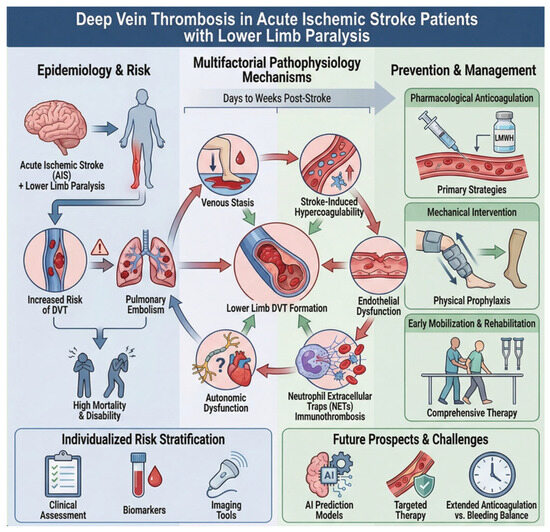
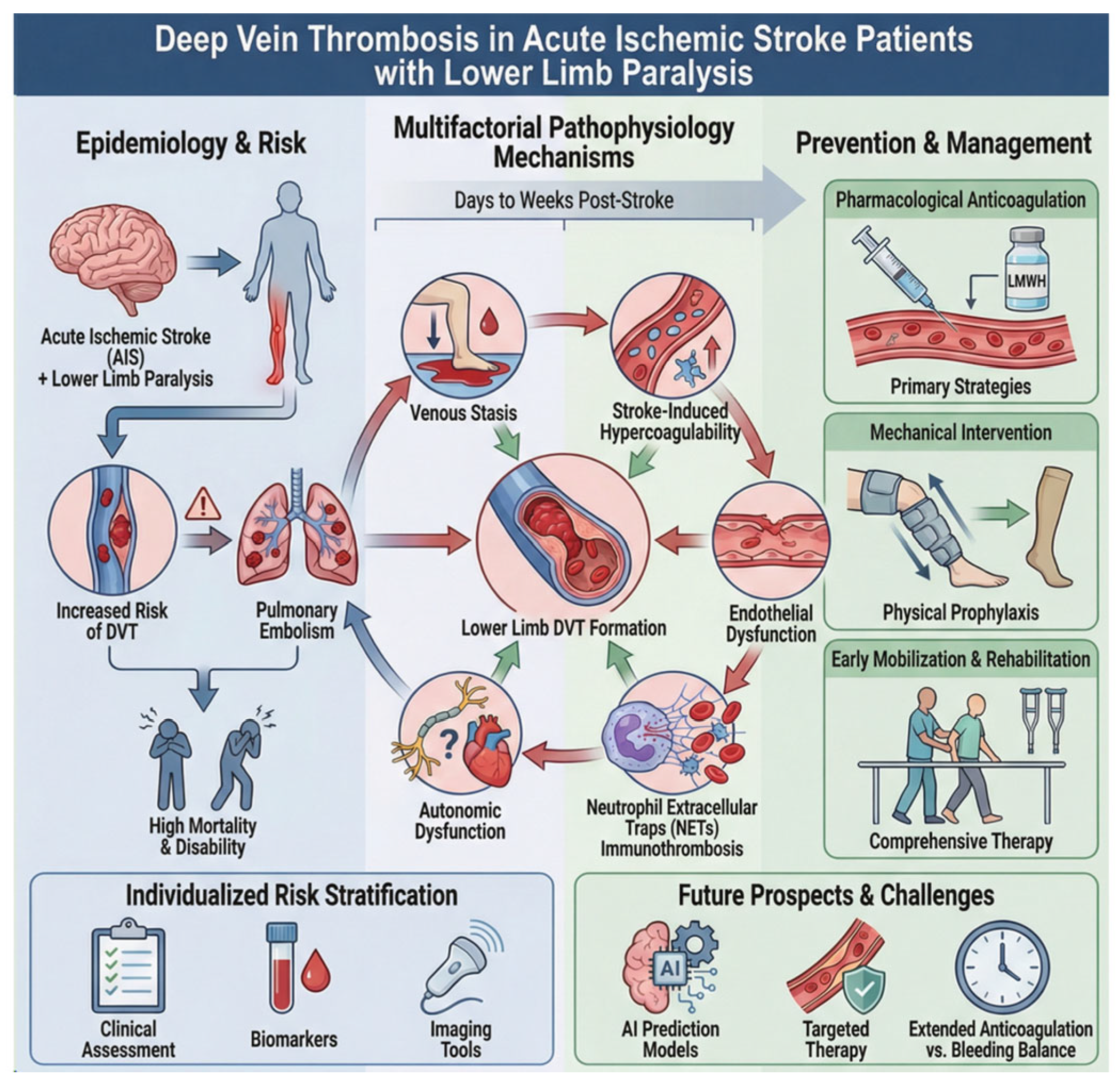
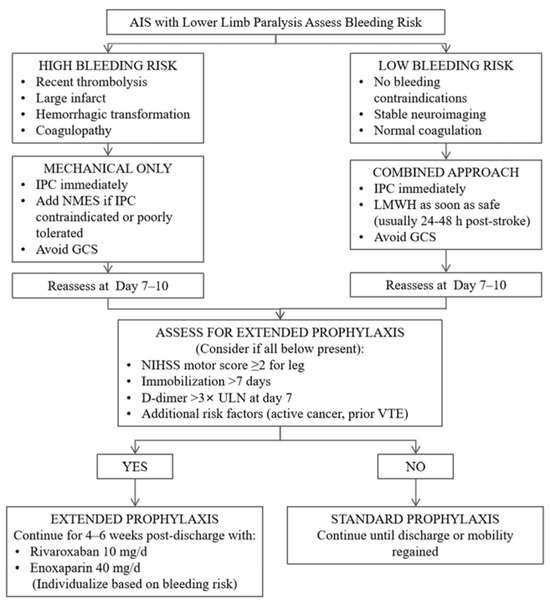
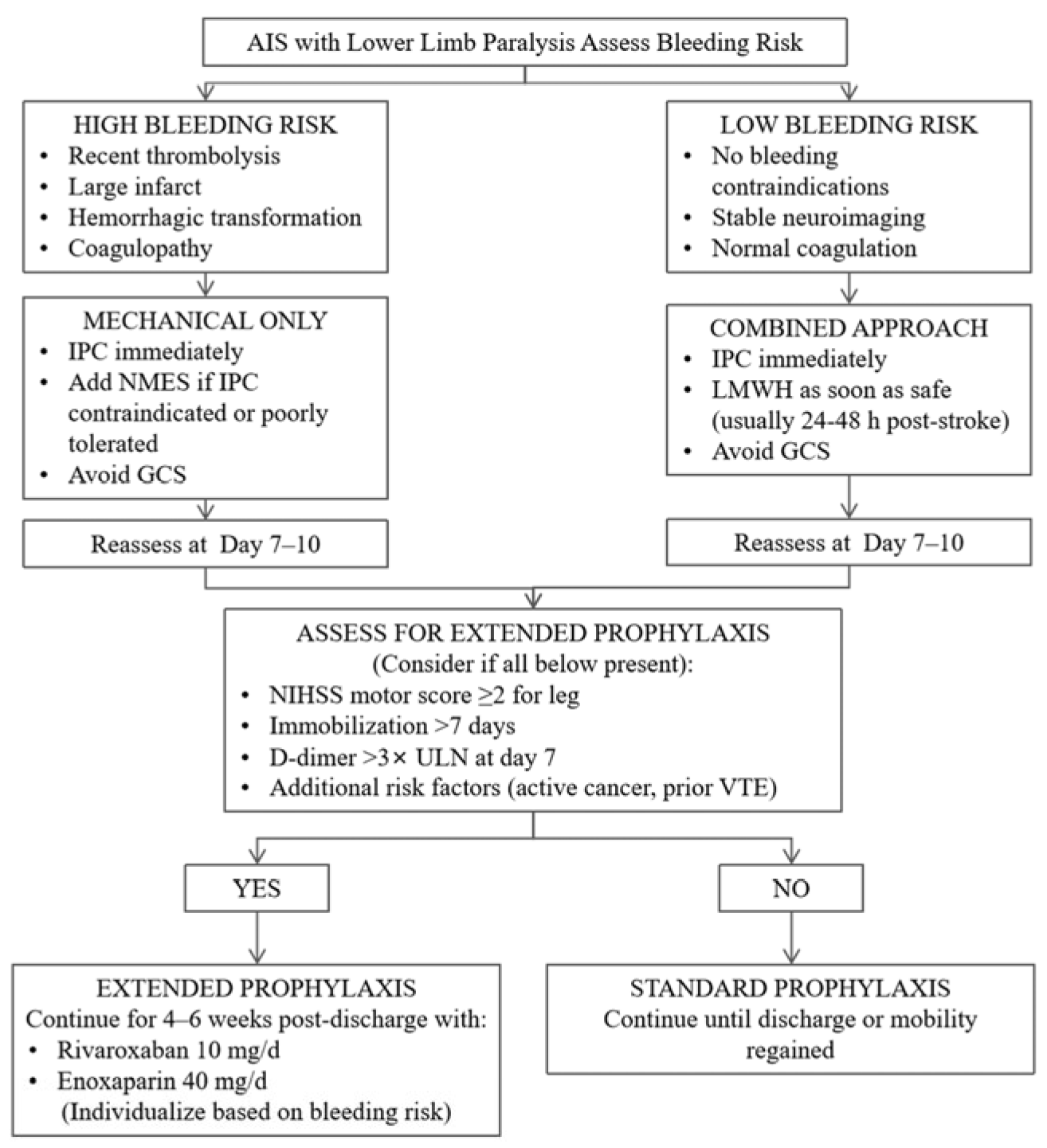

Disclaimer/Publisher’s Note: The statements, opinions and data contained in all publications are solely those of the individual author(s) and contributor(s) and not of MDPI and/or the editor(s). MDPI and/or the editor(s) disclaim responsibility for any injury to people or property resulting from any ideas, methods, instructions or products referred to in the content. |
© 2026 by the authors. Licensee MDPI, Basel, Switzerland. This article is an open access article distributed under the terms and conditions of the Creative Commons Attribution (CC BY) license.