Multilevel Interventions to Improve Medication Adherence in Older Adults: A Systematic Review and Meta-Analysis of Cognitive, Digital, Behavioral, and Socioeconomic Strategies (2015–2025)



Abstract
1. Introduction
2. Materials and Methods
2.1. Study Protocol and Registration
2.2. Search Strategy and Data Collection
2.3. Eligibility Criteria
2.4. Risk-of-Bias Assessment Method
2.5. Certainty-of-Evidence Assessment
3. Results
3.1. Study Selection
3.2. Study Characteristics
3.3. Risk-of-Bias Assessment Findings
3.4. Subgroup Summaries and Sensitivity Analysis
3.5. Certainty of Evidence
4. Discussion
4.1. Cognitive Impairment and Frailty
Caregiver Integration and E-Health Support
4.2. Socioeconomic and System Barriers
Policy Implications and Interventions
4.3. Digital Health Adoption
4.3.1. Apps and Mobile/Watch-Based Medication Management Tools
4.3.2. User-Centered Design
4.3.3. Mobile Drug Management Application
4.3.4. Digital Literacy Support
4.3.5. Challenges and Barriers to Digital Health Adoption
4.4. Polypharmacy in Elderly People
4.4.1. Challenges and Barriers in Polypharmacy Management
4.4.2. Simplification
4.4.3. Deprescribing
4.4.4. Shared Decision-Making
4.5. Psychological and Behavioral Factors
4.5.1. Mental Health Integration
4.5.2. Clinical Evidence
4.5.3. Psychological and Behavioral Barriers to Adherence
4.5.4. Health Outcomes
4.6. Comparison with Prior Systematic Reviews
4.7. Limitations and Certainty of the Evidence
5. Future Perspective
6. Conclusions
Supplementary Materials
Author Contributions
Funding
Data Availability Statement
Acknowledgments
Conflicts of Interest
Abbreviations
| ACEI | Angiotensin-Converting Enzyme Inhibitor |
| AUC | Area Under the Curve |
| CCB | Calcium Channel Blocker |
| COPD | Chronic Obstructive Pulmonary Disease |
| HIV | Human Immunodeficiency Virus |
| INAS | Intentional Non-Adherence Scale |
| MCI | Mild Cognitive Impairment |
| MTM | Medication Therapy Management |
| ODT | Orally Disintegrating Tablet |
| SMS | Short Message System |
| T2DM | Type 2 Diabetes Mellitus |
| UCD | User-Centered Design |
References
- WHO. Ageing and Health—Fact Sheet. Age Ageing 2023, 52, iv3–iv5. [Google Scholar] [CrossRef]
- Lim, D.; Woo, K. Medication adherence and related factors among older adults with type 2 diabetes who use home health care. Geriatr. Nurs. 2025, 61, 270–277. [Google Scholar] [CrossRef] [PubMed]
- Rodgers, J.E.; Thudium, E.M.; Beyhaghi, H.; Sueta, C.A.; Alburikan, K.A.; Kucharska-Newton, A.M.; Chang, P.P.; Stearns, S.C. Predictors of Medication Adherence in the Elderly: The Role of Mental Health. Med. Care Res. Rev. 2018, 75, 746–761. [Google Scholar] [CrossRef] [PubMed]
- Algameel, M. Patterns of medication use and adherence to medications among residents in the elderly homes. Pak. J. Med. Sci. 2020, 36, 729–734. [Google Scholar] [CrossRef] [PubMed]
- Cheng, K.K.W.; Young, S.L.; Donaldson, S.; Malcolm, T.R.; Tatham, A.J. Adherence to topical glaucoma therapy in patients attending virtual clinics. Eye 2023, 37, 1922–1927. [Google Scholar] [CrossRef]
- Campbell, N.L.; Perkins, A.J.; Gao, S.; Skaar, T.C.; Li, L.; Hendrie, H.C.; Fowler, N.; Callahan, C.M.; Boustani, M.A. Adherence and Tolerability of Alzheimer’s Disease Medications: A Pragmatic Randomized Trial. J. Am. Geriatr. Soc. 2017, 65, 1497–1504. [Google Scholar] [CrossRef]
- WHO. Adherence to Long-Term Therapies: Evidence for Action; World Health Organization: Geneva, Switzerland, 2003. [Google Scholar]
- Ibrahim, N.A.; Wong, Y.Y.; Lean, Q.Y.; Ramasamy, K.; Lim, S.M.; Tan, M.P.; Majeed, A.B.A. Medication self-management among older adults with cognitive frailty. Res. Soc. Adm. Pharm. 2024, 20, 172–181. [Google Scholar] [CrossRef]
- Adachi, T.; Tsunekawa, Y.; Tanimura, D. Association between cognitive impairment and medication adherence score, including psychological aspects in older patients with cardiovascular disease. Geriatr. Nurs. 2025, 62, 229–235. [Google Scholar] [CrossRef]
- Muñoz-Contreras, M.C.; Segarra, I.; López-Román, F.J.; Galera, R.N.; Cerdá, B. Role of caregivers on medication adherence management in polymedicated patients with Alzheimer’s disease or other types of dementia. Front. Public Health 2022, 10, 987936. [Google Scholar] [CrossRef]
- O’Conor, R.; Russell, A.M.; Pack, A.; Oladejo, D.; Filec, S.; Rogalski, E.; Morhardt, D.; Lindquist, L.A.; Wolf, M.S. Managing medications among individuals with mild cognitive impairment and dementia: Patient-caregiver perspectives. J. Am. Geriatr. Soc. 2024, 72, 3011–3021. [Google Scholar] [CrossRef]
- Stuart, B.C.; Loh, F.E.; Dougherty, J.S. Affordability and adherence gains for Medicare Part D low-income subsidy recipients when low-income subsidy benefits expanded in 2024. J. Manag. Care Spec. Pharm. 2024, 30, 728–735. [Google Scholar] [CrossRef] [PubMed]
- Park, Y.; Kim, S.R.; So, H.Y.; Jo, S.; Lee, S.H.; Hwang, Y.S.; Kim, M.S.; Chung, S.J. Effect of mobile health intervention for self-management on self-efficacy, motor and non-motor symptoms, self-management, and quality of life in people with Parkinson’s disease: Randomized controlled trial. Geriatr. Nurs. 2022, 46, 90–97. [Google Scholar] [CrossRef]
- Dong, R.; Sun, S.; Sun, Y.; Wang, Y.; Zhang, X. The association of depressive symptoms and medication adherence in asthma patients: The mediation effect of medication beliefs. Res. Soc. Adm. Pharm. 2024, 20, 335–344. [Google Scholar] [CrossRef]
- Yaegashi, H.; Haga, M.; Misawa, F.; Mizuno, Y.; Suzuki, T.; Takeuchi, H. Intentional non-adherence to antipsychotic medication in patients with schizophrenia. Schizophr. Res. 2024, 274, 427–432. [Google Scholar] [CrossRef]
- PRISMA Group. PRISMA Statement. 2021. Available online: https://www.prisma-statement.org/ (accessed on 15 August 2025).
- Weir, K.R.; Jungo, K.T.; Streit, S. Older adults’ adherence to medications and willingness to deprescribe: A substudy of a randomized clinical trial. Br. J. Clin. Pharmacol. 2024, 90, 905–911. [Google Scholar] [CrossRef]
- Solmaz, T.; Altay, B. The role of training and medication reminder wristwatch in adherence to treatment in geriatric patients diagnosed with hypertension: A randomized controlled trial. Geriatr. Gerontol. Int. 2024, 24, 1189–1195. [Google Scholar] [CrossRef]
- Ranjbar, H.; Sadeghi-Vazin, K.; Bakhshi, M. The cost-effectiveness of peer education on medication adherence in the elderly with hypertension: A randomized controlled trial. BMC Public Health 2024, 24, 3268. [Google Scholar] [CrossRef] [PubMed]
- Poorcheraghi, H.; Negarandeh, R.; Pashaeypoor, S.; Jorian, J. Effect of using a mobile drug management application on medication adherence and hospital readmission among elderly patients with polypharmacy: A randomized controlled trial. BMC Health Serv. Res. 2023, 23, 1192. [Google Scholar] [CrossRef]
- Dierick, B.J.H.; Achterbosch, M.; Eikholt, A.A.; Been-Buck, S.; Klemmeier, T.; van de Hei, S.J.; Hagedoorn, P.; Kerstjens, H.A.; Kocks, J.W.; van Boven, J.F. Electronic monitoring with a digital smart spacer to support personalized inhaler use education in patients with asthma: The randomized controlled OUTERSPACE trial. Respir. Med. 2023, 218, 107376. [Google Scholar] [CrossRef]
- Vluggen, S.; Candel, M.; Hoving, C.; Schaper, N.C.; de Vries, H. A Web-Based Computer-Tailored Program to Improve Treatment Adherence in Patients with Type 2 Diabetes: Randomized Controlled Trial. J. Med. Internet Res. 2021, 23, e18524. [Google Scholar] [CrossRef] [PubMed]
- Greer, J.A.; Jacobs, J.M.; Pensak, N.; Nisotel, L.E.; Fishbein, J.N.; MacDonald, J.J.; Ream, M.E.; Walsh, E.A.; Buzaglo, J.; Muzikansky, A.; et al. Randomized trial of a smartphone mobile app to improve symptoms and adherence to oral therapy for cancer. JNCCN J. Nat. Compr. Cancer Netw. 2020, 18, 133–141. [Google Scholar] [CrossRef]
- Akhu-Zaheya, L.M.; Shiyab, W.Y. The effect of short message system (SMS) reminder on adherence to a healthy diet, medication, and cessation of smoking among adult patients with cardiovascular diseases. Int. J. Med. Inform. 2017, 98, 65–75. [Google Scholar] [CrossRef] [PubMed]
- Liu, X.; Thompson, J.; Dong, H.; Sweeney, S.; Li, X.; Yuan, Y.; Wang, X.; He, W.; Thomas, B.; Xu, C.; et al. Digital adherence technologies to improve tuberculosis treatment outcomes in China: A cluster-randomised superiority trial. Lancet Glob. Health 2023, 11, e693–e703. [Google Scholar] [CrossRef] [PubMed]
- Kanyongo, W.; Ezugwu, A.E.; Moyo, T.; Fonou Dombeu, J.V. Machine learning-based classification of medication adherence among patients with noncommunicable diseases. Inform. Med. Unlocked 2025, 52, 101611. [Google Scholar] [CrossRef]
- Sato, S.; Sasabuchi, Y.; Okada, A.; Yasunaga, H. Do Orally Disintegrating Tablets Facil. Med. Adherence Clin. Outcomes Patients Post-Stroke Dysphagia? Dysphagia 2025, 40, 381–387. [Google Scholar] [CrossRef]
- Cahaya, N.; Kristina, S.A.; Widayanti, A.W.; Green, J.A. Pharmacist-led Si-care (schizophrenia care) model to improve medication adherence and symptom management in schizophrenia. Explor. Res. Clin. Soc. Pharm. 2024, 16, 100544. [Google Scholar] [CrossRef]
- Lui, S.S.Y.; Lam, J.P.Y.; Lam, J.W.S.; Chui, W.W.H.; Mui, J.H.C.; Siu, B.W.M.; Cheng, K.; Cheung, E.F.; Chan, R.C. Cognitive insight is correlated with cognitive impairments and contributes to medication adherence in schizophrenia patients. Asian J. Psychiatry 2021, 60, 102644. [Google Scholar] [CrossRef] [PubMed]
- Yassen, A.O.; Mahmud, N.M.; Bilal, A.D.; Abd Wahab, M.S. Antidepressant adherence among outpatients with major depressive disorder. Pharmacia 2024, 71, 1–10. [Google Scholar] [CrossRef]
- Song, X.; Wu, J.; Yang, Y.; Xu, W.; Shi, X.; Dong, K.; Li, M.; Chen, X.; Wang, Y.; Bian, X.; et al. The Impact of Medication Regimen Adjustment Ratio on Adherence and Glycemic Control in Patients with Type 2 Diabetes and Mild Cognitive Impairment. Biomedicines 2024, 12, 2110. [Google Scholar] [CrossRef]
- Oh, E.H.; Kim, C.J.; Schlenk, E.A. A predictive model for medication adherence in older adults with heart failure. Eur. J. Cardiovasc. Nurs. 2024, 23, 635–643. [Google Scholar] [CrossRef]
- Meena, G.K.; Yadav, A.; Saha, R. Comparison of personality factors, adherence to medication and quality of life in bipolar disorder-I patients with or without substance use disorder. J. Affect. Disord. Rep. 2024, 16, 100777. [Google Scholar] [CrossRef]
- Mamo, B.; Feyissa, A.M.; Mengesha, T.; Ayele, B.A.; Mamushet Yifru, Y. Association between cognitive impairment and antiseizure medication adherence among people with epilepsy in Addis Ababa, Ethiopia. Epilepsy Behav. 2024, 152, 109651. [Google Scholar] [CrossRef]
- Lampridou, S.; Rawasdheh, M.; Saghdaoui, L.B.; Wells, M.; Davies, A.H. Factors affecting adherence to medication, smoking cessation, and exercise in patients with peripheral artery disease. JVS Vasc. Insights 2024, 2, 100074. [Google Scholar] [CrossRef]
- Iovino, P.; Obbia, P.; De Luca, V.; Donnoli, C.; Patumi, L.; Leonardini, L.; Palummeri, E.; Ruatta, M.; Basso, A.M.; Longobucco, Y.; et al. Development and Preliminary Psychometric Testing of a Brief Tool to Measure Medication Adherence in Older Populations. Clin. Interv. Aging 2024, 19, 1765–1772. [Google Scholar] [CrossRef]
- Finger, B.M.; Bourke, A.M.; Lammers, G.J.; Veauthier, C.; Yildizli, M.; Müller, S.; Triller, A.; Kallweit, U. Barriers to therapy adherence in narcolepsy. Sleep Med. 2024, 121, 151–159. [Google Scholar] [CrossRef] [PubMed]
- Dong, X.; Tsang, C.C.S.; Wan, J.Y.; Chisholm-Burns, M.A.; Finch, C.K.; Tsao, J.W.; Browning, J.A.; Garuccio, J.; Zeng, R.; Wang, J. Effects of Medicare Part D medication therapy management on racial/ethnic disparities in adherence to antidementia medications among patients with Alzheimer’s disease and related dementias: An observational study. Explor. Res. Clin. Soc. Pharm. 2024, 13, 100420. [Google Scholar] [CrossRef] [PubMed]
- Chen, Y.-L.; Nguyen, P.-A.; Chien, C.-H.; Hsu, M.-H.; Liou, D.-M.; Yang, H.-C. Machine learning-based prediction of medication refill adherence among first-time insulin users with type 2 diabetes. Diabetes Res. Clin. Pract. 2024, 207, 111033. [Google Scholar] [CrossRef]
- Sutlu, S. Medication Adherence and its Affecting Factors among Older Adults. Anatol. J. Fam. Med. 2023, 6, 81–86. [Google Scholar] [CrossRef]
- Rea, F.; Morabito, G.; Savaré, L.; Pathak, A.; Corrao, G.; Mancia, G. Adherence and related cardiovascular outcomes to single pill vs. separate pill administration of antihypertensive triple-combination therapy. J. Hypertens. 2023, 41, 1466–1473. [Google Scholar] [CrossRef]
- Qin, X.; Hung, J.; Knuiman, M.W.; Briffa, T.G.; Teng, T.H.K.; Sanfilippo, F.M. Evidence-based medication adherence among seniors in the first year after heart failure hospitalisation and subsequent long-term outcomes: A restricted cubic spline analysis of adherence-outcome relationships. Eur. J. Clin. Pharmacol. 2023, 79, 553–567. [Google Scholar] [CrossRef]
- Hartch, C.E.; Dietrich, M.S.; Stolldorf, D.P. Effect of a Medication Adherence Mobile Phone App on Medically Underserved Patients with Chronic Illness: Preliminary Efficacy Study. JMIR Form. Res. 2023, 7, e50579. [Google Scholar] [CrossRef]
- Dreyer, A.J.; Nightingale, S.; Andersen, L.S.; Lee, J.S.; Gouse, H.; Safren, S.A.; O’cLeirigh, C.; Thomas, K.G.F.; Joska, J. Cognitive Performance, as well as Depression, Alcohol Use, and Gender, predict Anti-Retroviral Therapy Adherence in a South African Cohort of People with HIV and Comorbid Major Depressive Disorder. AIDS Behav. 2023, 27, 2681–2694. [Google Scholar] [CrossRef]
- Shapira, A.; Kane, N.S.; Tanenbaum, M.L.; Hoogendoorn, C.J.; Gonzalez, J.S. Memory complaints moderate the concordance between self-report and electronically monitored adherence in adults with type 2 diabetes. J. Diabetes Complicat. 2022, 36, 108205. [Google Scholar] [CrossRef] [PubMed]
- Senoo, K.; Miki, T.; Ohkura, T.; Iwakoshi, H.; Nishimura, T.; Shiraishi, H.; Teramukai, S.; Matoba, S. A Smartphone App to Improve Oral Anticoagulation Adherence in Patients with Atrial Fibrillation: Prospective Observational Study. JMIR mHealth uHealth 2022, 10, e30807. [Google Scholar] [CrossRef] [PubMed]
- Ping, Y.; Visaria, A.; Suppiah, S.D.; Tan, Y.W.; Malhotra, R. Prevalence and correlates of medication reminder app ‘use and use intention’ among older adults. Explor. Res. Clin. Soc. Pharm. 2022, 6, 100150. [Google Scholar] [CrossRef]
- Stuart, B.C.; Timmons, V.; Loh, F.H.E.; Dai, M.; Xu, J. Can one or two simple questions predict poor medication adherence? J. Eval. Clin. Pract. 2021, 27, 75–83. [Google Scholar] [CrossRef]
- Alatawi, Y.; Hansen, R.A.; Chou, C.; Qian, J.; Suppiramaniam, V.; Cao, G. The impact of cognitive impairment on survival and medication adherence among older women with breast cancer. Breast Cancer 2021, 28, 277–288. [Google Scholar] [CrossRef] [PubMed]
- Hylek, E.M. The importance of adherence and persistence in the elderly atrial fibrillation patient. Eur. Heart J. Suppl. 2020, 22, I38–I42. [Google Scholar] [CrossRef]
- Lee, L.; Patel, T.; Molnar, F.; Seitz, D. Optimizing medications in older adults with cognitive impairment. Can. Fam. Phys. 2018, 64, 646–652. [Google Scholar]
- Fallah, M.; Yasini, M. A Medication Reminder Mobile App: Does It Work for Different Age Ranges. Stud. Health Technol. Inform. 2017, 235, 68–72. [Google Scholar] [CrossRef]
- Lima, S.; Gago, M.; Garrett, C.; Pereira, M.G. Medication adherence in Alzheimer’s disease: The mediator role of mindfulness. Arch. Gerontol. Geriatr. 2016, 67, 92–97. [Google Scholar] [CrossRef] [PubMed]
- Page, M.J.; McKenzie, J.E.; Bossuyt, P.M.; Boutron, I.; Hoffmann, T.C.; Mulrow, C.D.; Shamseer, L.; Tetzlaff, J.M.; Akl, E.A.; Brennan, S.E.; et al. The PRISMA 2020 statement: An updated guideline for reporting systematic reviews. BMJ 2021, 372, n71. [Google Scholar] [CrossRef] [PubMed]



| Ref. | Name of Trial | Status | Diagnosis | Dosage Form/ Device | Outcome | NCT Number |
|---|---|---|---|---|---|---|
| [17] | Older adults’ adherence to medications and willingness to deprescribe: A substudy of a randomized clinical trial | Completed | Multimorbidity (≥3 chronic conditions) and polypharmacy (≥5 medications) | General medications |
| NCT03724539 |
| [18] | The role of training and medication reminder wristwatch in adherence to treatment in geriatric patients diagnosed with hypertension: A randomized controlled trial | Completed | Hypertension in geriatric patients | Oral antihypertensive medications + medication reminder wristwatch. |
| NCT05291000 |
| [19] | The cost-effectiveness of peer education on medication adherence in the elderly with hypertension: A randomized controlled trial | Completed | Hypertension in elderly patients | Oral antihypertensive medications. |
| IRCT20180519039710N1 |
| [20] | Effect of using a mobile drug management application on medication adherence and hospital readmission among elderly patients with polypharmacy: a randomized controlled trial | Completed | Polypharmacy in elderly patients | Mobile drug management application + oral medications. |
| IRCT20191231045966N1 |
| [21] | Electronic monitoring with a digital smart spacer to support personalized inhaler use education in patients with asthma: The randomized controlled OUTERSPACE trial | Completed | Asthma | Digital smart spacer + pressurized metered-dose inhaler with spacer. |
| NL9637 |
| [13] | Effect of mobile health intervention for self-management on self-efficacy, motor and non-motor symptoms, self-management, and quality of life in people with Parkinson’s disease: Randomized controlled trial | Completed | Parkinson’s disease | Mobile health tools (apps, smartwatches, text messages, phone counseling). |
| KCT0006790 |
| [22] | A web-based computer-tailored program to improve treatment adherence in patients with type 2 diabetes: Randomized controlled trial | Completed | Type 2 diabetes mellitus | Web-based computer-tailored Electronic Health program. |
| NL6664 |
| [23] | Randomized trial of a smartphone mobile app to improve symptoms and adherence to oral therapy for cancer | Completed | Cancer (various types) | Smartphone mobile app for oral cancer therapy adherence. |
| NCT02157519 |
| [6] | Adherence and tolerability of Alzheimer’s disease medications: A pragmatic randomized trial | Completed | Alzheimer’s disease | Oral acetylcholinesterase inhibitors (donepezil, galantamine, rivastigmine). |
| NCT01362686 |
| [24] | The effect of short message system (SMS) reminder on adherence to a healthy diet, medication, and cessation of smoking among adult patients with cardiovascular diseases | Completed | Cardiovascular diseases | Short Message System (SMS) reminders. |
| Not available |
| [25] | Digital adherence technologies to improve tuberculosis treatment outcomes in China: A cluster-randomised superiority trial | Completed | Tuberculosis | Digital adherence technologies (medication monitor, adherence data review). |
| ISRCTN35812455 |
| Ref. | Title of Study | Investigated Patient Population | Diagnosis | Dosage Form/ Device | Outcome |
|---|---|---|---|---|---|
| [2] | Medication adherence and related factors among older adults with type 2 diabetes who use home health care | Older adults aged 65 years or older with type 2 diabetes in South Korea | Type 2 diabetes mellitus | Oral Hypoglycaemic Agents |
|
| [26] | Machine learning-based classification of medication adherence among patients with noncommunicable diseases | Diabetic and hypertensive patients in Harare, Zimbabwe | Diabetes and hypertension | Not specified | Random Forest Model Performance:
|
| [27] | Do Orally Disintegrating Tablets Facilitate Medical Adherence and Clinical Outcomes in Patients with Post-stroke Dysphagia? | Patients aged 65 years or older with post-stroke dysphagia in Japan | Post-stroke dysphagia | Orally Disintegrating Tablets (ODTs) |
|
| [9] | Association between cognitive impairment and medication adherence score, including psychological aspects in older patients with cardiovascular disease | Older patients hospitalized for cardiovascular disease (median age: 74 years; 61% men) | Cardiovascular disease | Not specified | Lower Medication Adherence Scores:
|
| [11] | Managing medications among individuals with mild cognitive impairment and dementia: Patient-caregiver perspectives | Individuals with mild cognitive impairment (MCI) or dementia and their family caregivers | Mild cognitive impairment and dementia | Not specified | Independent Medication Management:
|
| [8] | Medication self-management among older adults with cognitive frailty | Home-dwelling older adults with cognitive frailty | Cognitive frailty | Not specified | Difficulties in Medication Self-Management:
|
| [28] | Pharmacist-led Si-care (schizophrenia care) model to improve medication adherence and symptom management in schizophrenia | Schizophrenia outpatients in Banjarmasin, Indonesia | Schizophrenia | Oral antipsychotics | Improvement in Medication Adherence:
|
| [29] | Cognitive insight is correlated with cognitive impairments and contributes to medication adherence in schizophrenia patients | 90 clinically stable outpatients with schizophrenia in Hong Kong | Schizophrenia | Oral antipsychotic medications | Influence on Medication Adherence:
|
| [30] | Antidepressant adherence among outpatients with major depressive disorder | Outpatients aged 18 to 65 years with Major Depressive Disorder in Erbil, Iraq | Major Depressive Disorder | Antidepressants (primarily Selective Serotonin Reuptake Inhibitor) |
|
| [15] | Intentional non-adherence to antipsychotic medication in patients with schizophrenia | Outpatients diagnosed with schizophrenia spectrum disorders in Tokyo and Yamanashi, Japan | Schizophrenia | Oral antipsychotics |
|
| [12] | Affordability and adherence gains for Medicare Part D low-income subsidy recipients when low-income subsidy benefits expanded in 2024 | Medicare Part D low-income subsidy recipients | Cost-related nonadherence | Not specified | Cost-Related Nonadherence:
|
| [31] | The Impact of Medication Regimen Adjustment Ratio on Adherence and Glycemic Control in Patients with Type 2 Diabetes and Mild Cognitive Impairment | Patients with Type 2 Diabetes Mellitus (T2DM) and mild cognitive impairment (MCI) | Type 2 Diabetes Mellitus and mild cognitive impairment | Antidiabetic medications | High Ratio of Medication Adjustment:
|
| [32] | A predictive model for medication adherence in older adults with heart failure | Older adults with heart failure | Heart failure | Cardiovascular medications (e.g., angiotensin receptor blockers, beta-blockers, diuretics) |
|
| [33] | Comparison of personality factors, adherence to medication and quality of life in bipolar disorder-I patients with or without substance use disorder | Bipolar disorder-I patients with or without substance use disorder | Bipolar disorder-I and substance use disorder | Not specified | Significant Differences in Personality Factors:
|
| [34] | Association between cognitive impairment and antiseizure medication adherence among people with epilepsy in Addis Ababa, Ethiopia | People with epilepsy in Addis Ababa, Ethiopia | Epilepsy and cognitive impairment | Antiseizure medications | High Rate of Cognitive Impairment:
|
| [35] | Factors affecting adherence to medication, smoking cessation, and exercise in patients with peripheral artery disease | Patients with peripheral artery disease | Peripheral artery disease | Antiplatelet and statin medications | Low Adherence to Medications:
|
| [36] | Development and Preliminary Psychometric Testing of a Brief Tool to Measure Medication Adherence in Older Populations | Community-dwelling older adults affected by chronic diseases | Chronic diseases in older adults | Not specified | Therapeutic Adherence Scale:
|
| [37] | Barriers to therapy adherence in narcolepsy | Patients with narcolepsy | Narcolepsy | Narcolepsy medications | Adherence Barriers in Narcolepsy Patients:
|
| [38] | Effects of Medicare Part D medication therapy management on racial/ethnic disparities in adherence to antidementia medications among patients with Alzheimer’s disease and related dementias | Patients with Alzheimer’s disease and related dementias | Alzheimer’s disease and related dementias | Antidementia medications | Medicare Part D MTM and Racial/Ethnic Disparities:
|
| [14] | The association of depressive symptoms and medication adherence in asthma patients: The mediation effect of medication beliefs | Asthma patients | Asthma | Inhaled corticosteroids | Depressive Symptoms and Medication Adherence:
|
| [39] | Machine learning-based prediction of medication refill adherence among first-time insulin users with type 2 diabetes | 4134 patients from Taiwan, adult T2DM naïve insulin users | Type 2 diabetes mellitus (T2DM) | Insulin injections | Machine Learning Model for Insulin Adherence:
|
| [40] | Medication Adherence and its Affecting Factors among Older Adults | 348 older adults aged 65 and over living in Burdur, Turkey | Medication adherence in older adults | Various medications (oral and injectable) | Factors Associated with Nonadherence:
|
| [41] | Adherence and related cardiovascular outcomes to single pill vs. separate pill administration of antihypertensive triple-combination therapy | 28,210 patients aged 40 years or older in Lombardy, Italy | Hypertension | Single-pill combination of perindopril/amlodipine/indapamide vs. two-pill combination of ACEI/CCB/diuretic | Three-drug single-pill combination vs. Two-pill Combination:
|
| [42] | Evidence-based medication adherence among seniors in the first year after heart failure hospitalisation and subsequent long-term outcomes: a restricted cubic spline analysis of adherence-outcome relationships | 4234 patients aged 65 –84 years in Western Australia | Heart failure | Renin–angiotensin system inhibitors and β-blockers | Adherence to Renin–Angiotensin System Inhibitors and β-Blockers:
|
| [43] | Effect of a Medication Adherence Mobile Phone App on Medically Underserved Patients with Chronic Illness: Preliminary Efficacy Study | 10 medically underserved adult patients with various chronic illnesses in the northeast United States | Chronic illnesses | Mobile phone app (Medisafe) | Medication Self-Efficacy and Adherence:
|
| [44] | Cognitive Performance, as well as Depression, Alcohol Use, and Gender, predict Anti-Retroviral Therapy Adherence in a South African Cohort of People with HIV and Comorbid Major Depressive Disorder | People with HIV and comorbid major depressive disorder | HIV | Anti-retroviral therapy | ART Adherence and Cognitive Performance:
|
| [5] | Adherence to topical glaucoma therapy in patients attending virtual clinics | Patients with glaucoma | Glaucoma | Topical glaucoma medications | Virtual Glaucoma Clinics and Adherence:
|
| [45] | Memory complaints moderate the concordance between self-reported and electronically monitored adherence in adults with type 2 diabetes | Adults with type 2 diabetes | Type 2 diabetes | Oral diabetes-related medications | Memory Complaints and Adherence Monitoring:
|
| [46] | A Smartphone App to Improve Oral Anticoagulation Adherence in Patients with Atrial Fibrillation: Prospective Observational Study | Elderly patients with atrial fibrillation | Atrial Fibrillation | Oral anticoagulants | Smart Atrial Fibrillation App and Medication Adherence:
|
| [47] | Prevalence and correlates of medication reminder app ‘use and use intention’ among older adults | Older adults in Singapore | General medication adherence | Medication reminder apps | Medication Reminder App Use in Singapore:
|
| [10] | Role of caregivers on medication adherence management in polymedicated patients with Alzheimer’s disease or other types of dementia | Patients with Alzheimer’s disease or other types of dementia | Alzheimer’s disease and other dementias | Various medications | Caregivers and Medication Adherence in Dementia:
|
| [48] | Can One or Two Simple Questions Predict Poor Medication Adherence? | 940 Medicare beneficiaries with diabetes enrolled in Part D plans in 2009 | Medication adherence in patients with type 2 diabetes | Oral antidiabetic drugs | Patient activation status and adherence:
|
| [49] | The impact of cognitive impairment on survival and medication adherence among older women with breast cancer | Older female patients diagnosed with breast cancer | Cognitive impairment and breast cancer | Not specified (focus on medication adherence) | Cognitive Impairments and Mortality Rates:
|
| [50] | The importance of adherence and persistence in the elderly atrial fibrillation patient | Elderly patients with atrial fibrillation | Atrial fibrillation | Oral anticoagulants | Medication Adherence in Elderly Atrial Fibrillation Patients:
|
| [4] | Patterns of medication use and adherence to medications among residents in the elderly homes | Elderly residents in nursing homes in Damanhour, Egypt | General medication adherence | Various medications | Medication Adherence in Nursing Homes:
|
| [3] | Predictors of medication adherence in the elderly: The role of mental health | Elderly participants in the Atherosclerosis Risk in Communities Study | General medication adherence | Various medications | Mental Health and Medication Adherence in the Elderly:
|
| [51] | Optimizing medications in older adults with cognitive impairment: Considerations for primary care clinicians | Older adults with cognitive impairment | Cognitive impairment | Various medications | Medication Optimization in Cognitive Impairment:
|
| [52] | A Medication Reminder Mobile App: Does It Work for Different Age Ranges | 60 users (30 under 50 years old and 30 over 50 years old) | Medication adherence in patients with chronic diseases | Mobile application (Android platform) | App Acceptance and Usability:
|
| [53] | Medication adherence in Alzheimer’s disease: The mediator role of mindfulness | Patients with mild Alzheimer’s disease | Alzheimer’s disease | Various medications | Medication Adherence in Mild Alzheimer’s disease Patients:
|
| Study Ref. | D1: Randomization | D2: Deviations | D3: Missing Data | D4: Measurement | D5: Selection | Overall |
|---|---|---|---|---|---|---|
| [18] | Low risk | Some concerns | Low risk | High risk | Low risk | High risk |
| [19] | Low risk | Some concerns | Low risk | High risk | Low risk | High risk |
| [20] | Low risk | Some concerns | Low risk | High risk | Low risk | High risk |
| [21] | Low risk | Low risk | Low risk | Low risk | Low risk | Low risk |
| [13] | Low risk | Some concerns | Some concerns | Some concerns | Low risk | Some concerns |
| [22] | Low risk | Low risk | Some concerns | Some concerns | Low risk | Some concerns |
| [23] | Low risk | Some concerns | Low risk | Some concerns | Low risk | Some concerns |
| [24] | Some concerns | Some concerns | Low risk | High risk | Some concerns | High risk |
| [6] | Low risk | Low risk | Some concerns | Low risk | Low risk | Some concerns |
| [25] | Low risk | Low risk | Low risk | Low risk | Low risk | Low risk |
| Outcome | Trials (N) | Effect (95% CI) | Risk of Bias | Inconsistency | Indirectness | Imprecision | Publication Bias | Certainty |
|---|---|---|---|---|---|---|---|---|
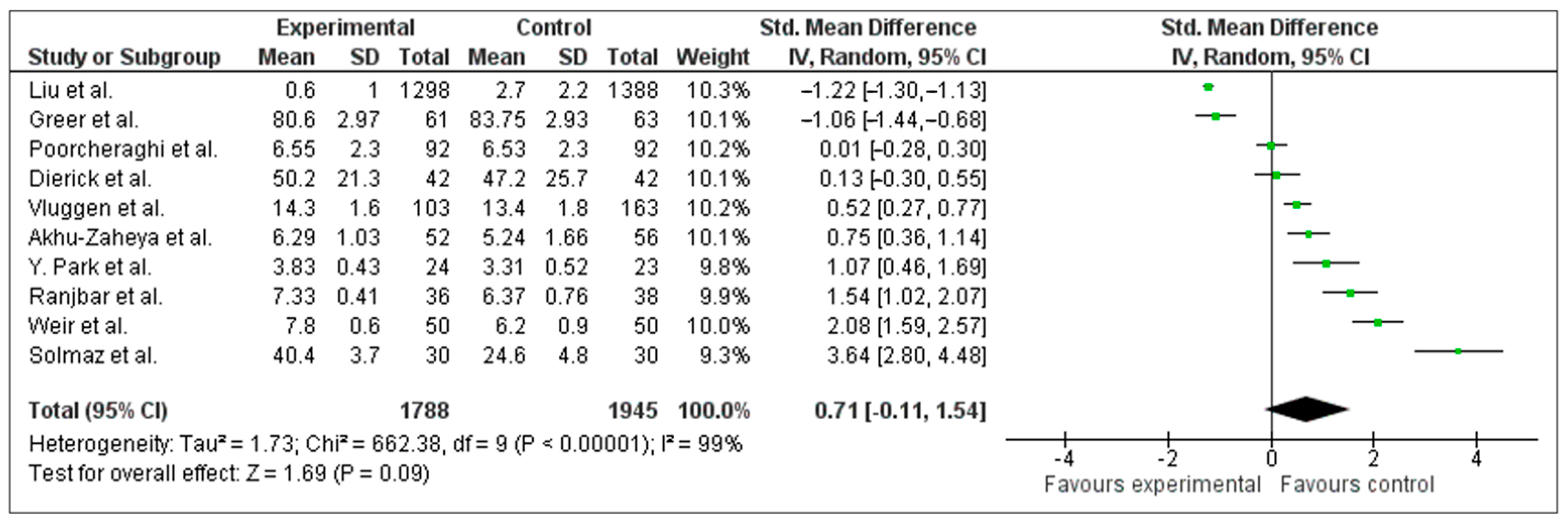
| Medication adherence (SMD) | 10 (3733) | 0.71 (0.11–1.54) | Serious (−1) | Very serious (−2) | Not serious (0) | Not serious (0) | Undetected | Very Low |
Disclaimer/Publisher’s Note: The statements, opinions and data contained in all publications are solely those of the individual author(s) and contributor(s) and not of MDPI and/or the editor(s). MDPI and/or the editor(s) disclaim responsibility for any injury to people or property resulting from any ideas, methods, instructions or products referred to in the content. |
© 2026 by the authors. Licensee MDPI, Basel, Switzerland. This article is an open access article distributed under the terms and conditions of the Creative Commons Attribution (CC BY) license.
Share and Cite
Mehany, O.; Artner, A.; Sebők, S.; Hankó, B.; Zelkó, R. Multilevel Interventions to Improve Medication Adherence in Older Adults: A Systematic Review and Meta-Analysis of Cognitive, Digital, Behavioral, and Socioeconomic Strategies (2015–2025). J. Clin. Med. 2026, 15, 2069. https://doi.org/10.3390/jcm15052069
Mehany O, Artner A, Sebők S, Hankó B, Zelkó R. Multilevel Interventions to Improve Medication Adherence in Older Adults: A Systematic Review and Meta-Analysis of Cognitive, Digital, Behavioral, and Socioeconomic Strategies (2015–2025). Journal of Clinical Medicine. 2026; 15(5):2069. https://doi.org/10.3390/jcm15052069
Chicago/Turabian StyleMehany, Olivia, Anna Artner, Szilvia Sebők, Balázs Hankó, and Romána Zelkó. 2026. "Multilevel Interventions to Improve Medication Adherence in Older Adults: A Systematic Review and Meta-Analysis of Cognitive, Digital, Behavioral, and Socioeconomic Strategies (2015–2025)" Journal of Clinical Medicine 15, no. 5: 2069. https://doi.org/10.3390/jcm15052069
APA StyleMehany, O., Artner, A., Sebők, S., Hankó, B., & Zelkó, R. (2026). Multilevel Interventions to Improve Medication Adherence in Older Adults: A Systematic Review and Meta-Analysis of Cognitive, Digital, Behavioral, and Socioeconomic Strategies (2015–2025). Journal of Clinical Medicine, 15(5), 2069. https://doi.org/10.3390/jcm15052069