The Influence of Pharmacological Agents Used During General Anesthesia on the Intensity of Postoperative Pain and the Occurrence of Post-Anesthetic Delirium—A Scoping Review

 , ,
, ,  , , and
Abstract
1. Introduction
Aim
2. Methods
2.1. Study Design
2.2. Identifying the Research Question
- Can pharmacological agents used during general anesthesia prevent or exacerbate postoperative delirium?
- What is the effectiveness of pharmacological agents used during anesthesia in preventing postoperative pain?
- Which rating scales are most commonly used to assess delirium and pain intensity in the postoperative period?
2.3. Identifying Relevant Studies
2.4. Charting the Data
2.5. Collating, Summarizing, and Reporting the Results
3. Results
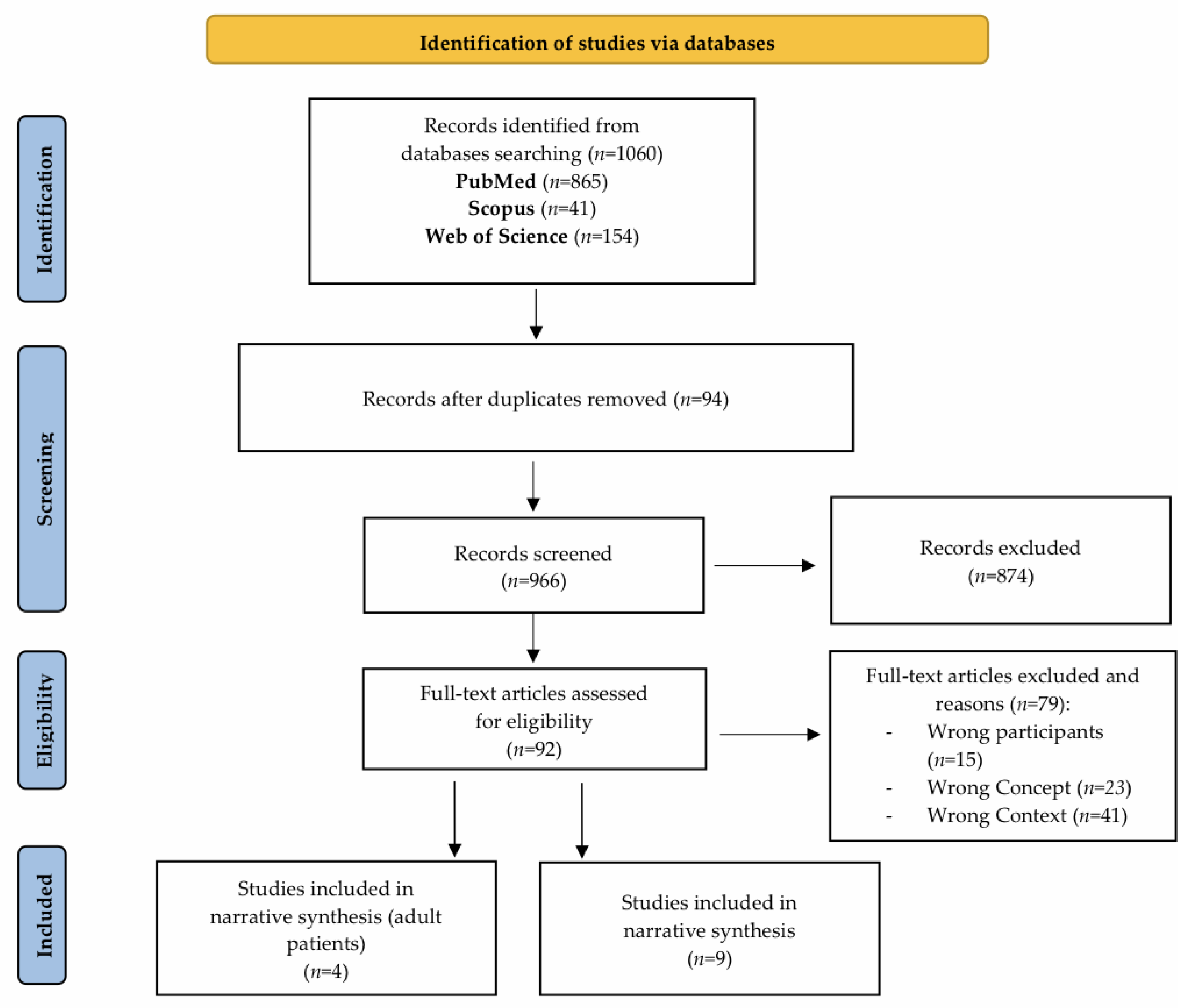
3.1. Study Selection
3.2. Study Characteristics
4. Discussion
4.1. Comparison of the Effectiveness of Anesthetic Agents in Preventing Postoperative Delirium
4.2. Comparison of the Effectiveness of Anesthetic Agents in Pain Prevention
4.3. Assessment of Pain Intensity and Delirium
4.4. Pain–Delirium Relationship
5. Limitations of the Review
6. Conclusions
Supplementary Materials
Author Contributions
Funding
Institutional Review Board Statement
Informed Consent Statement
Data Availability Statement
Conflicts of Interest
References
- Yaregal Melesse, D.; Teshale Tesema, T.; Ayinie Mekonnen, Z.; Chekol, W.B.; Admass, B.A.; Mengie Workie, M. Predictors of postoperative delirium in paediatric patients undergoing surgery under general anaesthesia at Amhara Regional State Tertiary Hospitals: A multicenter prospective study. Front. Pediatr. 2024, 12, 1348789. [Google Scholar] [CrossRef]
- Inouye, S.K.; Westendorp, R.G.; Saczynski, J.S. Delirium in elderly people. Lancet 2014, 383, 911–922. [Google Scholar] [CrossRef]
- Lee, S.J.; Sung, T.Y. Emergence agitation: Current knowledge and unresolved questions. Korean J. Anesthesiol. 2020, 73, 471–485. [Google Scholar] [CrossRef]
- Oh, E.S.; Fong, T.G.; Hshieh, T.T.; Inouye, S.K. Delirium in Older Persons: Advances in Diagnosis and Treatment. JAMA 2017, 318, 1161–1174. [Google Scholar] [CrossRef]
- López Segura, M.; Busto-Aguirreurreta, N. Postoperative agitation or delirium in paediatric patients. What we know and how to avoid it. Rev. Española Anestesiol. Reanim. (Engl. Ed.) 2023, 70, 467–472. [Google Scholar]
- Saczynski, J.S.; Marcantonio, E.R.; Quach, L.; Fong, T.G.; Gross, A.; Inouye, S.K.; Jones, R.N. Cognitive trajectories after postoperative delirium. N. Engl. J. Med. 2012, 367, 30–39. [Google Scholar] [CrossRef] [PubMed]
- Brown, C.H., 4th; LaFlam, A.; Max, L.; Wyrobek, J.; Neufeld, K.J.; Kebaish, K.M.; Cohen, D.B.; Walston, J.D.; Hogue, C.W.; Riley, L.H. Delirium After Spine Surgery in Older Adults: Incidence, Risk Factors, and Outcomes. J. Am. Geriatr. Soc. 2016, 64, 2101–2108. [Google Scholar] [CrossRef] [PubMed]
- Pandharipande, P.P.; Girard, T.D.; Jackson, J.C.; Morandi, A.; Thompson, J.L.; Pun, B.T.; Brummel, N.E.; Hughes, C.G.; Vasilevskis, E.E.; Shintani, A.K.; et al. Long-term cognitive impairment after critical illness. N. Engl. J. Med. 2013, 369, 1306–1316. [Google Scholar] [CrossRef]
- Robinson, T.N.; Raeburn, C.D.; Tran, Z.V.; Angles, E.M.; Brenner, L.A.; Moss, M. Postoperative delirium in the elderly: Risk factors and outcomes. Ann. Surg. 2009, 249, 173–178. [Google Scholar] [CrossRef]
- Khan, B.A.; Zawahiri, M.; Campbell, N.L.; Fox, G.C.; Weinstein, E.J.; Nazir, A.; Farber, M.O.; Buckley, J.D.; Maclullich, A.; Boustani, M.A. Delirium in hospitalized patients: Implications of current evidence on clinical practice and future avenues for research—A systematic evidence review. J. Hosp. Med. 2012, 7, 580–589. [Google Scholar] [CrossRef]
- Olin, K.; Eriksdotter-Jönhagen, M.; Jansson, A.; Herrington, M.K.; Kristiansson, M.; Permert, J. Postoperative delirium in elderly patients after major abdominal surgery. Br. J. Surg. 2005, 92, 1559–1564. [Google Scholar] [CrossRef]
- Schmitt, E.M.; Marcantonio, E.R.; Alsop, D.C.; Jones, R.N.; Rogers, S.O., Jr.; Fong, T.G.; Metzger, E.; Inouye, S.K.; SAGES Study Group. Novel risk markers and long-term outcomes of delirium: The successful aging after elective surgery (SAGES) study design and methods. J. Am. Med. Dir. Assoc. 2012, 13, 818.e1–818.e10. [Google Scholar] [CrossRef]
- Sieber, F.E.; Zakriya, K.J.; Gottschalk, A.; Blute, M.R.; Lee, H.B.; Rosenberg, P.B.; Mears, S.C. Sedation depth during spinal anesthesia and the development of postoperative delirium in elderly patients undergoing hip fracture repair. Mayo Clin. Proc. 2010, 85, 18–26. [Google Scholar] [CrossRef]
- Vaurio, L.E.; Sands, L.P.; Wang, Y.; Mullen, E.A.; Leung, J.M. Postoperative delirium: The importance of pain and pain management. Anesth. Analg. 2006, 102, 1267–1273. [Google Scholar] [CrossRef] [PubMed]
- Hshieh, T.T.; Yang, T.; Gartaganis, S.L.; Yue, J.; Inouye, S.K. Hospital Elder Life Program: Systematic Review and Meta-analysis of Effectiveness. Am. J. Geriatr. Psychiatry 2018, 26, 1015–1033. [Google Scholar] [CrossRef] [PubMed]
- Neuman, M.D.; Feng, R.; Carson, J.L.; Gaskins, L.J.; Dillane, D.; Sessler, D.I.; Sieber, F.; Magaziner, J.; Marcantonio, E.R.; Mehta, S.; et al. Spinal Anesthesia or General Anesthesia for Hip Surgery in Older Adults. N. Engl. J. Med. 2021, 385, 2025–2035. [Google Scholar] [CrossRef] [PubMed]
- Peters, M.; Godfrey, C.; McInerney, P.; Baldini Soares, C.; Khalil, H.; Parker, D. The Joanna Briggs Institute Reviewers’ Manual 2015: Methodology for JBI Scoping Reviews; The Joanna Briggs Institute: Adelaide, Australia, 2015; pp. 1–24. [Google Scholar]
- Peters, M.D.J.; Marnie, C.; Tricco, A.C.; Pollock, D.; Munn, Z.; Alexander, L.; McInerney, P.; Godfrey, C.M.; Khalil, H. Updated methodological guidance for the conduct of scoping reviews. JBI Evid. Synth. 2020, 18, 2119–2126. [Google Scholar] [CrossRef]
- Tricco, A.C.; Lillie, E.; Zarin, W.; O’Brien, K.K.; Colquhoun, H.; Levac, D.; Moher, D.; Peters, M.D.J.; Horsley, T.; Weeks, L.; et al. PRISMA extension for scoping reviews (PRISMA-ScR): Checklist and explanation. Ann. Intern. Med. 2018, 169, 467–473. [Google Scholar] [CrossRef]
- Arksey, H.; O’Malley, L. Scoping studies: Towards a methodological framework. Int. J. Soc. Res. Methodol. Theory Pract. 2005, 8, 19–32. [Google Scholar] [CrossRef]
- Li, L.Q.; Wang, C.; Xu, H.Y.; Lu, H.L.; Zhang, H.Z. Effects of different doses of intranasal dexmedetomidine on preoperative sedation and postoperative agitation in pediatric with total intravenous anesthesia undergoing adenoidectomy with or without tonsillectomy. Medicine 2018, 97, e12140. [Google Scholar] [CrossRef]
- Pan, Y.; Wang, Y.; Lie, D.; Liu, D.; Chen, X.; Wu, Z.; Chen, L.; Wang, H.; Peng, L.; Liang, H.; et al. Effectiveness of analgesia with hydromorphone hydrochloride for postoperative pain following surgical repair of structural congenital malformations in children: A randomized controlled trial. BMC Anesthesiol. 2021, 21, 192. [Google Scholar] [CrossRef]
- Zhao, N.; Zeng, J.; Fan, L.; Zhang, C.; Wu, Y.; Wang, X.; Gao, F.; Yu, C. The Effect of Alfentanil on Emergence Delirium Following General Anesthesia in Children: A Randomized Clinical Trial. Paediatr. Drugs 2022, 24, 413–421. [Google Scholar] [CrossRef] [PubMed]
- Yao, Y.; Sun, Y.; Lin, J.; Chen, W.; Lin, Y.; Zheng, X. Intranasal dexmedetomidine versus oral midazolam premedication to prevent emergence delirium in children undergoing strabismus surgery: A randomised controlled trial. Eur. J. Anaesthesiol. 2020, 37, 1143–1149. [Google Scholar] [CrossRef] [PubMed]
- Koceroglu, I.; Devrim, S.; Bingol Tanriverdi, T.; Gura Celik, M. The effects of dexmedetomidine and tramadol on post-operative pain and agitation, and extubation quality in paediatric patients undergoing adenotonsillectomy surgery: A randomized trial. J. Clin. Pharm. Ther. 2020, 45, 340–346. [Google Scholar] [CrossRef] [PubMed]
- Abdel-Rahman, K.A.; Abd-Elshafy, S.K.; Sayed, J.A. Efeito de duas doses diferentes de dexmedetomidina na incidência de agitação ao despertar após cirurgia para correção de estrabismo: Um ensaio clínico randômico [Effect of two different doses of dexmedetomidine on the incidence of emergence agitation after strabismus surgery: A randomized clinical trial]. Braz. J. Anesthesiol. 2018, 68, 571–576. [Google Scholar] [CrossRef]
- Sun, Y.; Li, Y.; Sun, Y.; Wang, X.; Ye, H.; Yuan, X. Dexmedetomidine Effect on Emergence Agitation and Delirium in Children Undergoing Laparoscopic Hernia Repair: A Preliminary Study. J. Int. Med. Res. 2017, 45, 973–983. [Google Scholar] [CrossRef]
- Lee, J.H.; Choi, S.; Lee, M.; Jang, Y.E.; Kim, E.H.; Kim, J.T.; Kim, H.S. Effect of magnesium supplementation on emergence delirium and postoperative pain in children undergoing strabismus surgery: A prospective randomised controlled study. BMC Anesthesiol. 2020, 20, 289. [Google Scholar] [CrossRef]
- Yang, X.; Lin, C.; Chen, S.; Huang, Y.; Cheng, Q.; Yao, Y. Remimazolam for the Prevention of Emergence Delirium in Children Following Tonsillectomy and Adenoidectomy Under Sevoflurane Anesthesia: A Randomized Controlled Study. Drug Des. Devel Ther. 2022, 16, 3413–3420. [Google Scholar] [CrossRef]
- Liu, T.; Zhao, H.; Zhao, X.; Qu, M. Comparison of Remimazolam and Propofol on Postoperative Delirium in Elderly Patients Undergoing Radical Resection of Colon Cancer: A Single-Center Prospective Randomized Controlled Study. Med. Sci. Monit. 2024, 30, e943784. [Google Scholar] [CrossRef]
- Avidan, M.S.; Maybrier, H.R.; Abdallah, A.B.; Jacobsohn, E.; Vlisides, P.E.; Pryor, K.O.; Veselis, R.A.; Grocott, H.P.; Emmert, D.A.; Rogers, E.M.; et al. Intraoperative ketamine for prevention of postoperative delirium or pain after major surgery in older adults: An international, multicentre, double-blind, randomised clinical trial. Lancet 2017, 390, 267–275, Erratum in Lancet 2017, 390, 230. https://doi.org/10.1016/S0140-6736(17)31708-7. [Google Scholar] [CrossRef]
- Fathy, W.; Hussein, M.; Elanwar, R.; Elmoutaz, H.; Abdelsadek, D.A.; Kassim, D.Y. Effect of intra-operative Magnesium sulphate on the occurrence of post-operative delirium and insomnia in patients undergoing lumbar fixation: A randomized controlled trial. BMC Anesthesiol. 2024, 24, 289. [Google Scholar] [CrossRef]
- Abdelaziz, T.S.A.; Mohammed Elsayed, H.E.; Kamal Eldin, D.M.; Ibrahim, I.M. “The effect of intramuscular dexmedetomidine versus oral gabapentin premedication on the emergence agitation after rhinoplasty”. A prospective, randomized, double-blind controlled trial. BMC Anesthesiol. 2025, 25, 50. [Google Scholar] [CrossRef] [PubMed]
- Lee, Y.L.; Wong, J.; Ng, S.Y. Delirium in patients following general anaesthesia. Ann. Acad. Med. Singap. 2022, 51, 71–73. [Google Scholar] [CrossRef] [PubMed]
- Turkel, S.B.; Trzepacz, P.T.; Tavaré, C.J. Comparing symptoms of delirium in adults and children. Psychosomatics 2006, 47, 320–324. [Google Scholar] [CrossRef]
- Leentjens, A.F.; Schieveld, J.N.; Leonard, M.; Lousberg, R.; Verhey, F.R.; Meagher, D.J. A comparison of the phenomenology of pediatric, adult, and geriatric delirium. J. Psychosom. Res. 2008, 64, 219–223. [Google Scholar] [CrossRef] [PubMed]
- Elsharkawy, H.; Clark, J.D.; El-Boghdadly, K. Evidence for regional anesthesia in preventing chronic postsurgical pain. Reg. Anesth. Pain Med. 2025, 50, 153–159. [Google Scholar] [CrossRef]
- Zhuang, X.; He, Y.; Liu, Y.; Li, J.; Ma, W. The effects of anesthesia methods and anesthetics on postoperative delirium in the elderly patients: A systematic review and network meta-analysis. Front. Aging Neurosci. 2022, 14, 935716. [Google Scholar] [CrossRef]
- Smith, H.A.B.; Besunder, J.B.; Betters, K.A.; Johnson, P.N.; Srinivasan, V.; Stormorken, A.; Farrington, E.; Golianu, B.; Godshall, A.J.; Acinelli, L.; et al. 2022 Society of Critical Care Medicine Clinical Practice Guidelines on Prevention and Management of Pain, Agitation, Neuromuscular Blockade, and Delirium in Critically Ill Pediatric Patients with Consideration of the ICU Environment and Early Mobility. Pediatr. Crit. Care Med. 2022, 23, e74–e110. [Google Scholar] [CrossRef]
- Bradford, C.V.; Fung, M.; Wang, A.; Benefield, E.C.; Bashqoy, F.; Neely, S.B.; Johnson, P.N. Delirium Assessment Treatment Strategies in Critically Ill Pediatric Patients: A Pediatric Pharmacy Association Practice-Based Research Network Survey Study. J. Pediatr. Pharmacol. Ther. 2023, 28, 540–552. [Google Scholar] [CrossRef]
- Sadlonova, M.; Duque, L.; Smith, D.; Madva, E.N.; Amonoo, H.L.; Vogelsang, J.; Staton, S.C.; von Arnim, C.A.F.; Huffman, J.C.; Celano, C.M. Pharmacologic treatment of delirium symptoms: A systematic review. Gen. Hosp. Psychiatry 2022, 79, 60–75. [Google Scholar] [CrossRef]
- Fischer, T.; Hosie, A.; Luckett, T.; Agar, M.; Phillips, J. Strategies for Pain Assessment in Adult Patients with Delirium: A Scoping Review. J. Pain Symptom Manag. 2019, 58, 487–502.e11. [Google Scholar] [CrossRef] [PubMed]
- Schieveld, J.N.; van Zwieten, J.J. From pediatrics to geriatrics: Toward a unified standardized screening tool for delirium: A thought experiment. Crit. Care Med. 2016, 44, 1778–1780. [Google Scholar] [CrossRef] [PubMed]
- Aszkiełowicz, A.; Kapłan, C.; Kapica, P.; Marszałek, R. Remimazolam: A comprehensive review. Anaesthesiol. Intensive Ther. 2025, 57, e257–e266. [Google Scholar] [CrossRef] [PubMed]
- Aldecoa, C.; Bettelli, G.; Bilotta, F.; Sanders, R.D.; Aceto, P.; Audisio, R.; Cherubini, A.; Cunningham, C.; Dabrowski, W.; Forookhi, A.; et al. Update of the European Society of Anaesthesiology and Intensive Care Medicine evidence-based and consensus-based guideline on postoperative delirium in adult patients. Eur. J. Anaesthesiol. 2024, 41, 81–108. [Google Scholar] [CrossRef]
- lvarez-Bastidas, L.; Morales-Vera, E.; Valle-Leal, J.G.; Marroquín-González, J. Delirium in the elderly patient after anesthesia: Associated factors. Colomb. J. Anesthesiol. 2018, 46, 273–278. [Google Scholar] [CrossRef]
- Lin, N.; Liu, K.; Feng, J.; Chen, R.; Ying, Y.; Lv, D.; Zhou, Y.; Xu, H. Development and validation of a postoperative delirium prediction model for pediatric patients: A prospective, observational, single-center study. Medicine 2021, 100, e25894. [Google Scholar] [CrossRef]
- Khan, B.A.; Guzman, O.; Campbell, N.L.; Walroth, T.; Tricker, J.L.; Hui, S.L.; Perkins, A.; Zawahiri, M.; Buckley, J.D.; Farber, M.O.; et al. Comparison and agreement between the Richmond Agitation-Sedation Scale and the Riker Sedation-Agitation Scale in evaluating patients’ eligibility for delirium assessment in the ICU. Chest 2012, 142, 48–54. [Google Scholar] [CrossRef]
- White, N.; Bazo-Alvarez, J.C.; Koopmans, M.; West, E.; Sampson, E.L. Understanding the association between pain and delirium in older hospital inpatients: Systematic review and meta-analysis. Age Ageing 2024, 53, afae073. [Google Scholar] [CrossRef]
- Szczupak, M.; Kobak, J.; Wiśniewski, J.; Wierzchowska, J.; Krupa-Nurcek, S. Association Between Postoperative Pain Intensity and Delirium in Cardiac and Neurosurgical Patients: A Retrospective Pilot Study. J. Clin. Med. 2025, 14, 8840. [Google Scholar] [CrossRef]
- Sampson, E.L.; West, E.; Fischer, T. Pain and delirium: Mechanisms, assessment, and management. Eur. Geriatr. Med. 2020, 11, 45–52. [Google Scholar] [CrossRef]
- Janjua, M.S.; Spurling, B.C.; Arthur, M.E. Postoperative Delirium. [Updated 12 February 2023]. In StatPearls [Internet]; StatPearls Publishing: Treasure Island, FL, USA, 2025. Available online: https://www.ncbi.nlm.nih.gov/sites/books/NBK534831/ (accessed on 15 January 2026).
- Fields, A.; Huang, J.; Schroeder, D.; Sprung, J.; Weingarten, T. Agitation in adults in the post-anaesthesia care unit after general anaesthesia. Br. J. Anaesth. 2018, 121, 1052–1058. [Google Scholar] [CrossRef]


| Inclusion Criteria | Exclusion Criteria | |
|---|---|---|
| Participants (P) | Patients aged 6 months to 95 years undergoing various surgical procedures. | No data were available for patients who did not undergo surgical procedures. |
| Concept (C) | Pharmacological interventions administered intraoperatively | No intraoperative pharmacotherapy related to delirium or pain |
| Context (C) | Surgical procedures requiring general anesthesia, with assessment of the effectiveness of various agents in reducing postoperative delirium and pain | Absence of anesthesia or presence of other procedure-related diseases |
| Study Type (S) | double-blind placebo-controlled randomized trial, prospective randomized controlled trial, randomized controlled trial | Other studies |
| Years considered/Time period | All evidence published in the last 10 years, period 2015–2025 | Publications published before 2015 |
| Language | English | Other languages |
| Databases | MEDLINE (PubMed), Web of Science (WoS), Scopus | Other databases |
| Search strategy | PubMed: (((adult OR pediatric) AND (general anesthesia OR anesthesia OR surgery)) AND (postoperative pain OR pain management)) AND (postoperative delirium) Results: 865 Limits: Language and years WoS: (((TS = (adult OR pediatric)) AND TS = (“general anesthesia” OR anesthesia OR surgery)) AND TS = (“postoperative pain” OR “pain management”)) AND TS = (“postoperative delirium”) Results: 41 Limits: Language and years Scopus: (ALL (adult OR pediatric) AND TITLE-ABS-KEY (general AND anesthesia OR anesthesia OR surgery) AND TITLE-ABS-KEY (postoperative AND pain OR pain AND management) AND TITLE-ABS-KEY (postoperative AND delirium)) Results: 154 Limits: Language and years | n/a |
| Keywords | “delirium”, “pain”, “general anesthesia”, “postoperative pain”, “postoperative delirium” | n/a |
| Author | Country | Type of Study | Type of Procedure | Purpose of the Study | Study Group | Type of Anesthesia | Medicines/ Group Size | Delirium Assessment | Scales Used to Assess Pain Intensity | Conclusions |
|---|---|---|---|---|---|---|---|---|---|---|
| Li L.Q. et al. 2018 [21] | China | DB-RCT | Adenoidectomy with or without tonsillectomy | This study aimed to investigate the effects of different doses of intranasal dexmedetomidine on the preoperative sedation and postoperative agitation in pediatric patients with TIVA for adenoidectomy with or without tonsillectomy. |
| TIVA | Twenty-five to 40 min before surgery, the D1 (n = 30) and D2 (n = 30) groups received intranasally dexmedetomidine 1 μg kg−1 or 2 μg kg−1, respectively, while the S (n = 30) group received saline of the same volume. | PAED As for the PAED scale scores, there was a significant difference between the D2 and S groups (p = 0.029), while there was no significant difference between the D1 and S groups (p = 0.087), or between the D1 and D2 groups (p = 0.890) | CHEOPS There was a significant difference in CHEOPS scores between the D2 and S groups (p = 0.013), while there was no significant difference between the D1 and S groups (p = 0.483), or between the D1 and D2 groups (p = 0.199) | The intranasal dexmedetomidine of 1 or 2 μg kg−1 25 to 40 min before induction of anesthesia could deliver effective preoperative sedation, reducing the children’s distress of separation from parents. Moreover, intranasal dexmedetomidine of 2 μg kg−1 could deliver more effective postoperative analgesia and reduce postoperative agitation, without prolonging postoperative recovery or causing severe adverse events. |
| Pan Y. et al. 2021 [22] | China | RCT | Surgical repair of structural congenital malformations in children | To compare the effectiveness of hydromorphone hydrochloride and sufentanil, combined with flurbiprofen axetil, for postoperative analgesia in pediatric patients. |
| TIVA | Patients were randomized 1:1:1 into 3 groups: hydromorphone hydrochloride 0.1 mg/kg (H1, n = 74), hydromorphone hydrochloride 0.2 mg/kg (H2, n = 74), or sufentanil 1.5 µg/kg (S, n = 74). | PAED There were no significant differences in the PAED scale. | FLACC The FLACC pain score was significantly lower in patients who received hydromorphone hydrochloride 0.1 mg/kg (p < 0.01) or hydromorphone hydrochloride 0.2 mg/kg (p = 0.01) compared to patients who received sufentanil 1.5 μg/kg. There was no significant difference in FLACC pain score in patients who received hydromorphone hydrochloride 0.1 mg/kg or hydromorphone hydrochloride 0.2 mg/kg | Hydromorphone hydrochloride is a more effective analgesic than sufentanil for postoperative pain in pediatric patients following surgical repair of a structural congenital malformation under general anesthesia Hydromorphone hydrochloride and sufentanil had similar safety profiles in this patient population (side effects of the pain control methods were not evaluated). |
| Zhao N. et al. 2022 [23] | China | RCT | ambulatory dental treatment | The study aimed to investigate the effects of alfentanil intravenous infusion on emergence delirium and other perioperative complications. |
| General anesthesia | Alfentanil was administered as a continuous infusion from the beginning to the end of the operation at two doses: group Alf2 (n = 57) received 0.2 μg/kg/ min of alfentanil and group Alf4 (n = 57) received 0.4 μg/kg/min of alfentanil. The control group was given saline (group Sal) (n = 57). | PAED There were no significant differences between group Alf2 (6.4 ± 3.5) and group Alf4 (5.8 ± 3.8) PAED scores (mean difference 0.579 [95% confidence interval {CI} −1.279 to 2.437], p = 0.742), and scores were significantly lower than those for the saline control patients (9.6 ± 5.1) | mCHEOPS Pain scores in group Alf2 (2.4 ± 1.5) and group Alf4 (2.1 ± 1.6) were similar (mean difference 0.386 [95% CI −0.425 to 1.197], p = 0.5) and were significantly lower than those in group Sal (4.1 ± 2.3) (mean difference −1.665 [95% CI −2.472 to −0.858], p < 0.01, and mean difference −2.051 [95% CI −2.858 to −1.244], p < 0.01, respectively) | Intravenous infusion of 0.2 μg/kg/min and 0.4 μg/kg/min alfentanil decreased the incidence of emergence delirium in the post-anesthesia care unit. |
| Yao Y. et al. 2020 [24] | China | RCT | strabismus surgery | To identify the effectiveness of pre-operative intranasal dexmedetomidine for emergence delirium in the pediatric patient population following general anesthesia |
| General anesthesia | Patients in Group D (n = 52) received intranasal dexmedetomidine (2 mg kg−1) 45 min and oral 0.9% saline 30 min before induction of anesthesia. Patients in Group M (n = 50) received intranasal 0.9% saline 45 min and oral midazolam (0.5 mg kg−1) 30 min before induction of anesthesia. Patients in Group P (n = 51) received intranasal 0.9% saline 45 min and oral 0.9% saline 30 min before the installation of anesthesia. | PAED The incidence of emergence delirium in Group D was significantly lower than that in Group M (p < 0.001, RR ¼ 0.262, 95% CI 0.116 to 0.592) and in Group P (p < 0.001, RR ¼ 0.235, 95% CI 0.105 to 0.525). There were no significant differences between Groups M and P (P ¼ 0.256, RR ¼ 0.898, 95% CI 0.59 to 1.366). | CHEOPS There were no significant between-group differences in the postoperative pain scores (modi- fied CHEOPS) in the PACU (P ¼ 0.269). | Intranasal dexmedetomidine was more effective than oral midazolam in reducing the incidence of wakefulness delirium and improving the quality of awakening in children without prolonging the awakening time or increasing the adverse events |
| Koceroglu I. et al. 2020 [25] | Turkey | RCT | adenotonsillotomy | Comparison of the effects of dexmedetomidine and tramadol on postoperative pain, agitation and quality of extubation in children after adenotonsillectomy |
| General anesthesia | Patients randomized into the dexmedetomidine group (group D, n = 30) and the tramadol group (group T, n = 30) received 1 μg/kg dexmedetomidine or 1.5 mg/kg tramadol, respectively. | PPSS | SAS | Both dexmedetomidine and tramadol effectively reduced postoperative pain and agitation, with dexmedetomidine providing better extubation quality. |
| Patients in the dexmedetomidine group had significantly lower post-operative PPSS and Riker SAS scores than patients in the tramadol group. | ||||||||||
| Abdel-Rahman K.A. et al. 2018 [26] | Egypt | RCT | strabismus surgery | Assessment of the effect of two different doses of dexmedetomidine on the incidence of agitation and delirium following strabismus surgery in children |
| General anesthesia | The first group was high Dex group (n = 30), in which children received 0.5 μg kg−1 of dexmedetomidine diluted in 10 mL of normal saline. The second group is low Dex group (n = 30) in which children received 0.25 μg kg−1 of dexmedetomidine diluted in 10 mL of normal saline. | PAED Regarding the number of patients who suffered from emergence agitation with PAED score > 10, there was 1 (3.3%) case in high Dex group, 4 (13.3%) cases in low Dex group, and 10 (33.3%) cases in the placebo group. A significant difference was found in the incidence of EA between the three studied groups | FLACC Maximum FLACC score measured in the median PACU was significantly lower in high Dex groups (1.5), while in the low Dex group it was (2) compared to placebo group (5), with no significant difference between the two Dex groups | Both doses of dexmedetomidine reduced the incidence of agitation and delirium, with the 0.5 μg/kg dose being more effective. |
| Sun Y. et al. 2017 [27] | China | RCT | laparoscopic inguinal hernia repair | Evaluation of the efficacy of dexmedetomidine in preventing agitation and delirium in children after laparoscopic hernioplasty |
| General anesthesia | Children were randomized 1:1 to one of four groups (n ¼ 25/group) using a computer- generated random numbers table: a control group (group C, which received saline) and three treatment groups, which were given different Dex doses (D1, D2, and D3 groups receiving doses of 0.25, 0.5, and 1.0 mg/kg, respectively) | Five-point scale for emergence agitation and delirium The frequency of EA shows a declining trend with increasing doses of Dex (P ¼ 0.001) | CHIPPS Dex reduced the pain of the children, as shown by the CHIPPS score (p < 0.001), with Dex at 0.5 and 1.0 mg/kg having better efficacy than at 0.25 mg/kg. | Dexmedetomidine significantly reduced the frequency and severity of post-arousal agitation and delirium. It also reduced pain and improved recovery. |
| Lee J.L. et al. 2020 [28] | South Korea | RCT | strabismus surgery | Evaluation of the effects of magnesium supplementation during general anesthesia on emergence delirium and postoperative pain in children undergoing strabismus surgery |
| General anesthesia with Sevoflurane | The magnesium group received an initial loading dose of 30 mg/kg magnesium sulfate over 10 min and, then, continuous infusion of 10 mg/kg per h until 10 min before the end of the surgery. The control group received an equal volume of normal saline via the same regimen. | PAED There were 26 of 33 (78.8%) and 27 of 32 (84.4%) children with emergence delirium in the control and the magnesium groups, respectively (odds ratio 0.69, 95% CI 0.19–2.44; p = 0.561). | CHEOPS The PAED and pain scores of the two groups did not differ significantly. | Magnesium supplementation had no significant effect on emergence agitation or postoperative pain in children who had undergone strabismus surgery. |
| Yang X. et al. 2022 [29] | China | DB-RCT | Tonsillectomy and adenoidectomy | To identify the effectiveness of remimazolam at the end of tonsillectomy and adenoidectomy for preventing emergence delirium in children under Sevoflurane anesthesia |
| General anesthesia with Sevoflurane | Patients were randomly assigned to receive either remimazolam 0.2 mg kg −1 (intervention, n = 52) or 0.9% normal saline (control, n = 52) at the end of the procedure. | PAED The peak PAED scores (median [IQR]) were lower in the remimazolam group than in the saline group (7 [6–8] vs. 9 [8–11], p < 0.001), with a median difference of −2 (95% CI −1 to −3). Emergence delirium occurred in 6 of 51 (12%) patients receiving remimazolam versus 22 of 50 (44%) patients receiving saline (risk difference 32% [95% CI, 16% to 49%], relative risk = 0.27 [95% CI, 0.12 to 0.60]; p < 0.001) | FLACC The peak FLACC pain score was 2.0 (IQR, 1.0–2.0) in the remimazolam group and 2.0 (IQR, 2.0–2.0) in the control group. | Administration of remimazolam at a dose of 0.2 mg/kg at the end of surgery reduces the incidence of recovery delirium without delaying discharge from the postoperative care unit (PACU) in children after tonsillectomy and adenoidectomy performed under Sevoflurane anesthesia. |
| Author | Country | Type of Study | Type of Prodecure | Purpose of the Study | Study Group | Type of Anesthesia | Medicines | Delirium Assessment | Scales Used to Assess Pain Intensity | Conclusions |
|---|---|---|---|---|---|---|---|---|---|---|
| Liu T. et al. 2024 [30] | China | RCT | Colon cancer | Comparison of the effects of remimazolam and propofol on the occurrence and duration of postoperative delirium in elderly patients undergoing radical resection of colon cancer |
| General anesthesia | remimazolam group (group R n = 50) propofol group (group P n = 50) | CAM-ICU There was no statistically significant difference in the incidence and duration of postoperative delirium between the 2 groups (p > 0.05). | VAS There were no significant differences in VAS scores, remifentanil consumption, and adverse reactions, including nausea and vomiting, hypoxemia, and respiratory depression between the 2 groups (p > 0.05) | Remimazolam did not reduce or increase the frequency or duration of postoperative delirium compared with propofol. There were no significant differences in pain or the incidence of adverse events. |
| Avidan MS. et al. 2017 [31] | USA Canada India South Korea | DB-RCT | Cardiac and noncardiac surgery | Evaluation of the effect of intraoperative ketamine on the incidence of postoperative delirium and its impact on pain and opioid injury |
| General anesthesia and regional | (1:1:1 ratio −0.5 mg/kg ketamine [Lo-K n = 227]: 1 mg/kg ketamine [Hi-K n = 223]: saline placebo [P n = 222]) | CAM CAM-ICU DSM-IV The incidence of delirium over postoperative days 1 to 3 was 19.82% in group P, 17.65% in group Lo-K, and 21.30% in group Hi-K. For the primary outcome of the PODCAST study, i.e., postoperative delirium incidence in the combined ketamine groups compared with those who received placebo, there was no difference found (19.45%). | BPS, BPS-IN VAS By VAS measurements, there were no apparent differences among the three groups in pain at any of the postoperative time points. | The administration of a subanaesthetic ketamine dose during surgery is not useful in preventing postoperative delirium (primary outcome) or reducing postoperative pain |
| Fathy W. et al. 2024 [32] | India | RCT | Lumbar fixation | To evaluate the effect of intra- operative administration of Magnesium sulfate on the occurrence of post-operative delirium and insomnia |
| General anesthesia | Group Magnesium sulfate (n = 40) 30 mg/kg was administered over 10 min followed by as a maintenance dose of 10 mg/kg/h Control group (n = 40) general anesthesia only. | MDAS Post-operative MDAS scores were similar between Magnesium sulfate groups and control group {mean difference −0.85 (95% CI −2.2 to 0.5)} | VAS Magnesium sulfate group had lower post-operative VAS score {mean difference − 1.3 (95% CI −2.3 to −0.3)}. | Magnesium sulfate administration reduced the severity of postoperative insomnia and pain. No significant effect was observed on the occurrence of postoperative delirium. |
| Abdelaziz TSA. et al. 2025 [33] | Egypt | DB-RCT | Rhinoplasty | To evaluate and compare the effect of preoperative premedication with intramuscular dexmedetomidine and oral gabapentin on the incidence and severity of post-anesthetic agitation (EA) and postoperative pain in patients undergoing rhinoplasty. |
| General anesthesia | Group C, n = 51 (the control group), did not receive premedication. Group D n = 51 (dexmedetomidine group) received (1 µg/kg) intramuscular dexmedetomidine 30 min before the operation. Group G n = 51 (gabapentin group) received 600 mg of gabapentin 30 min before the operation by mouth. | RSAS The results showed statistically significant differences in EA scores (p value 0.002) and midazolam consumption (p value 0.01) with the lowest values in Group D. Moreover, the incidence of EA was 17.6% (9/51) in Group D, 41.2% (21/51) in Group G, and 56.9% (29/51) in Group C with a p-value < 0.001 | VAS There were significant differences in VAS scores at 4, 8, and 12 h with the highest median (range) values in group C 4(3–6) in comparison to group D 2(1–3) and group G 2(1–3) and (p-value < 0.001) | Intramuscular premedication with dexmedetomidine (1 µg/kg) was more effective than oral gabapentin (600 mg) in reducing the frequency and severity of EA and in reducing postoperative pain. |
| Parameter | Results | |
|---|---|---|
| Types of study | Double-blind placebo-controlled randomized trial: 4 Randomized controlled trials: 9 | |
| Country | China: 7 | |
| Turkey: 1 | ||
| Egypt: 2 | ||
| South Korea: 1 | ||
| India: 1 | ||
| USA, Canada, India, South Korea: 1 | ||
| Age | Kids: from 6 months to 10 years Adults: from 18 years to 92 years of age | |
| Type of anesthesia | TIVA: 2 General anesthesia:11 | |
| Methods of assessing delirium | kids | PAED, PPSS, 5-point scale for emergency agitation and delirium |
| adults | CAM, CAM-ICU, DSM-IV, MDAS, RSAS | |
| Pain assessment methods | kids | CHEOPS, FLACC, mCHEOPS, SAS |
| adults | VAS, BPS, BPS-IN | |
| Pharmacological intervention | kids | Dexmedetomidine, Hydromorphone hydrochloride, Midazolam, Tramadol, Alfentanil, Magnesium sulfate, Remimazolam |
| adults | Remimazolam, Propofol, Ketamine, Magnesium sulfate, Dexmedetomidine, Gabapentin | |
Disclaimer/Publisher’s Note: The statements, opinions and data contained in all publications are solely those of the individual author(s) and contributor(s) and not of MDPI and/or the editor(s). MDPI and/or the editor(s) disclaim responsibility for any injury to people or property resulting from any ideas, methods, instructions or products referred to in the content. |
© 2026 by the authors. Licensee MDPI, Basel, Switzerland. This article is an open access article distributed under the terms and conditions of the Creative Commons Attribution (CC BY) license.
Share and Cite
Dąbrowska, A.; Brykczyńska, I.J.; Lange, S.; Szczupak, M.; Krupa-Nurcek, S.; Mędrzycka-Dąbrowska, W. The Influence of Pharmacological Agents Used During General Anesthesia on the Intensity of Postoperative Pain and the Occurrence of Post-Anesthetic Delirium—A Scoping Review. J. Clin. Med. 2026, 15, 1867. https://doi.org/10.3390/jcm15051867
Dąbrowska A, Brykczyńska IJ, Lange S, Szczupak M, Krupa-Nurcek S, Mędrzycka-Dąbrowska W. The Influence of Pharmacological Agents Used During General Anesthesia on the Intensity of Postoperative Pain and the Occurrence of Post-Anesthetic Delirium—A Scoping Review. Journal of Clinical Medicine. 2026; 15(5):1867. https://doi.org/10.3390/jcm15051867
Chicago/Turabian StyleDąbrowska, Amelia, Izabella Jadwiga Brykczyńska, Sandra Lange, Mateusz Szczupak, Sabina Krupa-Nurcek, and Wioletta Mędrzycka-Dąbrowska. 2026. "The Influence of Pharmacological Agents Used During General Anesthesia on the Intensity of Postoperative Pain and the Occurrence of Post-Anesthetic Delirium—A Scoping Review" Journal of Clinical Medicine 15, no. 5: 1867. https://doi.org/10.3390/jcm15051867
APA StyleDąbrowska, A., Brykczyńska, I. J., Lange, S., Szczupak, M., Krupa-Nurcek, S., & Mędrzycka-Dąbrowska, W. (2026). The Influence of Pharmacological Agents Used During General Anesthesia on the Intensity of Postoperative Pain and the Occurrence of Post-Anesthetic Delirium—A Scoping Review. Journal of Clinical Medicine, 15(5), 1867. https://doi.org/10.3390/jcm15051867