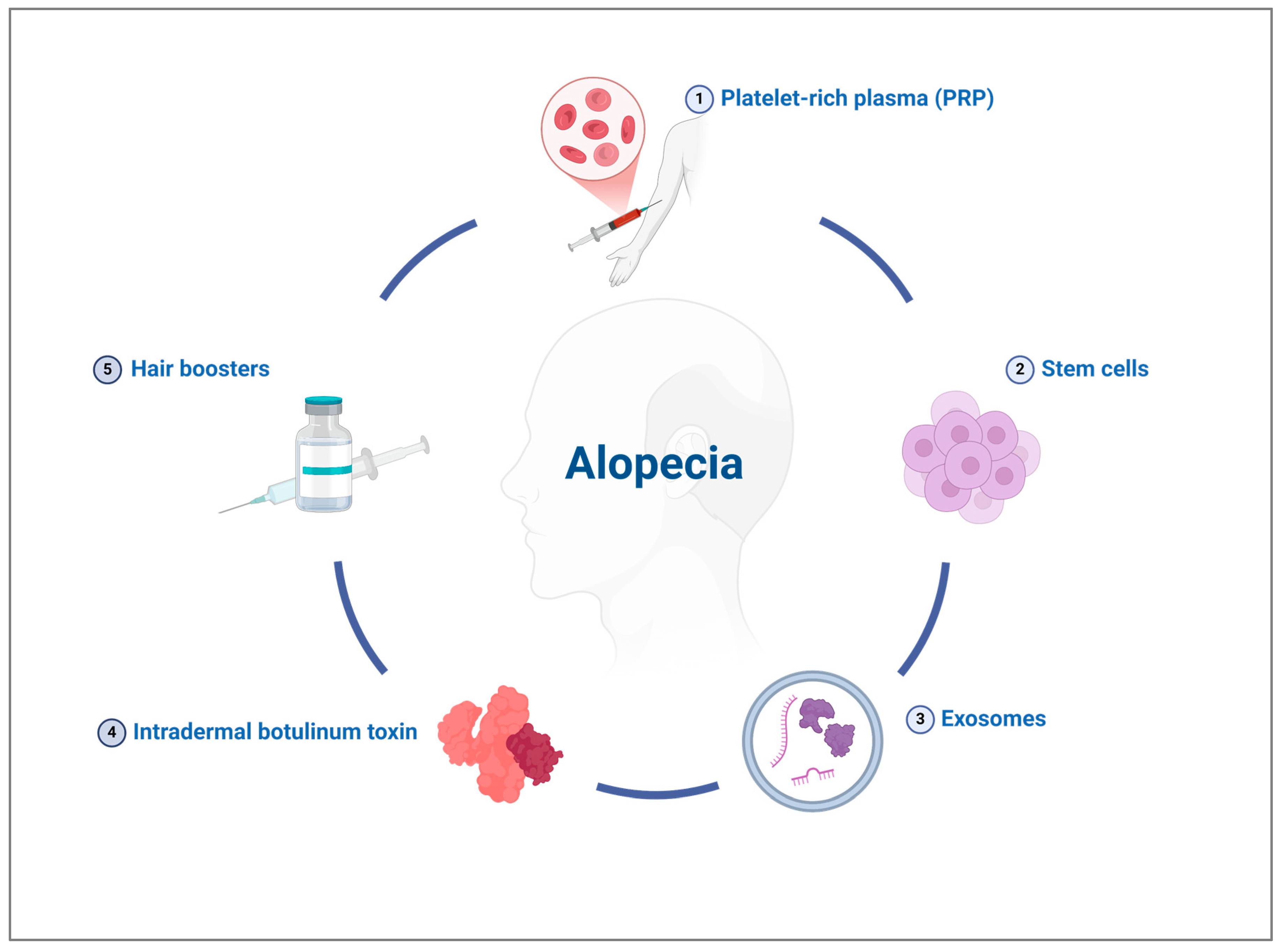
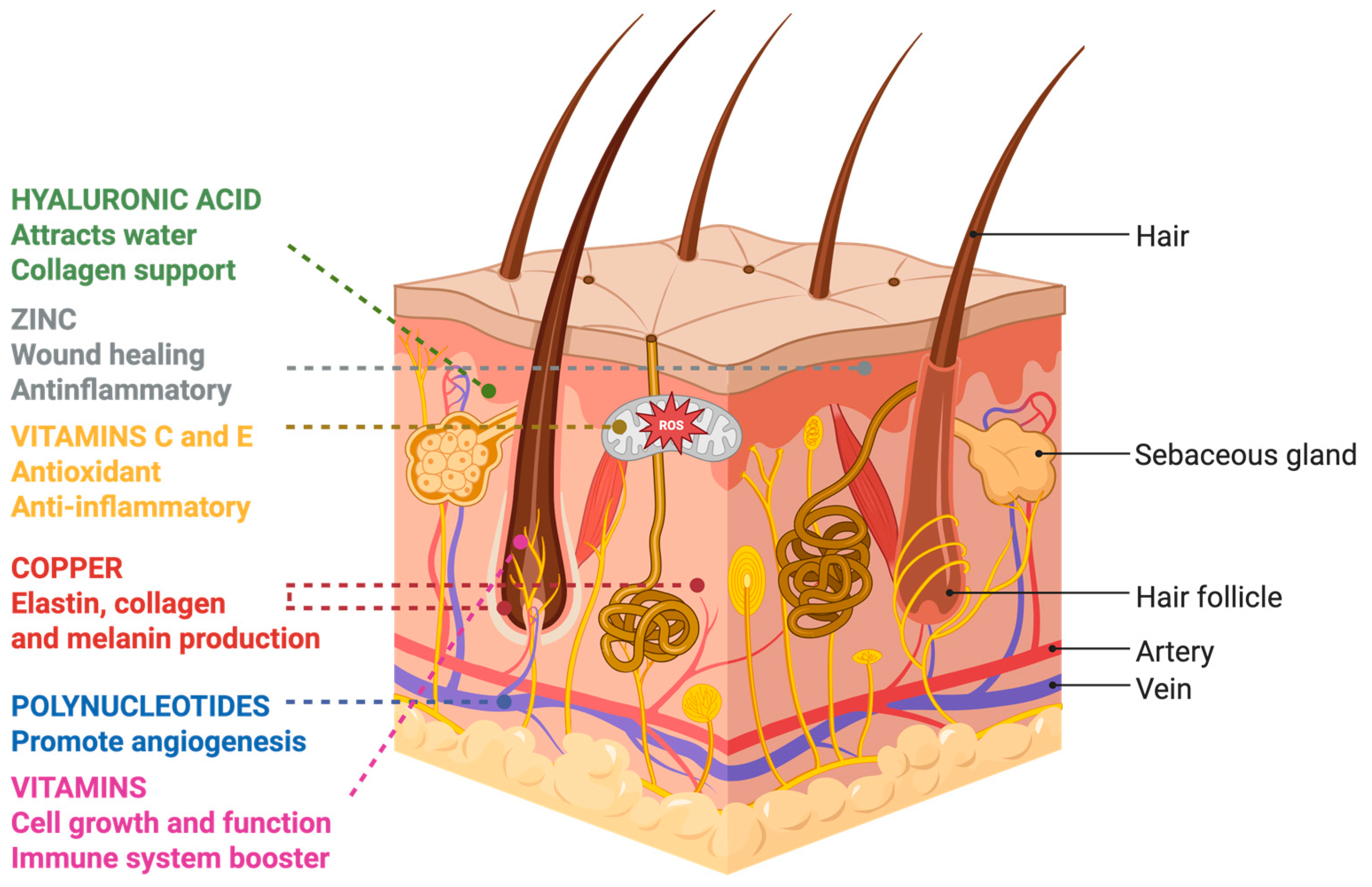
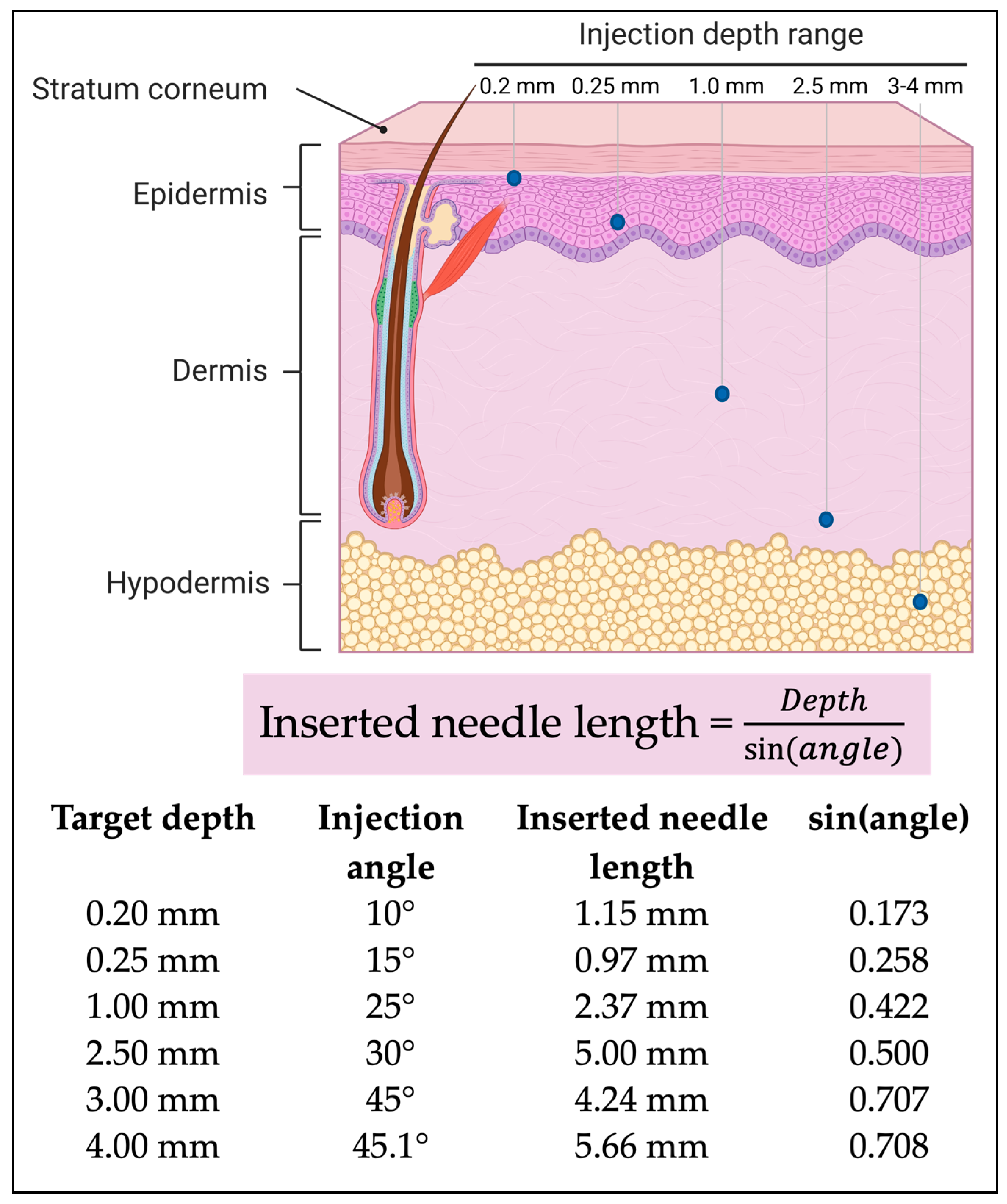
Advances in Medicalized Hair Loss Solutions: A Review of Current Clinical Practices and Regenerative Medicine-Based Protocols with Focus on Off-Label Injectable Treatments


 , , , and
Abstract
1. Introduction
2. Off-Label Injectable Treatments Clinically Used to Mitigate Hair Loss
2.1. Use of Platelet-Rich Plasma (PRP) for Hair Loss Management
2.2. Use of Stem Cells for Hair Loss Management
2.2.1. Autologous Stem Cell-Based Therapies
2.2.2. Allogeneic Stem Cell-Based Therapies
2.3. Use of Exosomes for Hair Loss Management
2.4. Use of Intradermal Botulinum Toxin for Hair Loss Management
2.5. Use of Hair Boosters for Hair Loss Management
2.5.1. Hyaluronic Acid-Based Hair Boosters
2.5.2. Polynucleotide-Based Hair Boosters
2.5.3. Multicomponent Formulations Used as Hair Boosters
2.6. Levels of Evidence for the Described Interventions
3. Scientific Relevance of Recent Clinical Studies and Methodological Assessments
4. Definition of Protocols and Techniques Used for Scalp Injections
5. Conclusions
Supplementary Materials
Author Contributions
Funding
Institutional Review Board Statement
Informed Consent Statement
Data Availability Statement
Conflicts of Interest
Abbreviations
| AA | alopecia areata |
| ADSCs | adipose-derived stem cells |
| AGA | androgenetic alopecia |
| AR | androgen receptor |
| BMSCs | bone marrow-derived stem cells |
| BTA | Botulinum toxin type A |
| DHT | dihydrotestosterone |
| DNA | deoxyribonucleic acid |
| DPC | dermal papilla cells |
| EDAR2 | ectodysplasin A2 receptor |
| EGF | epithelial growth factor |
| FDA | Food and Drug Administration |
| FPHL | female pattern hair loss |
| HA | hyaluronic acid |
| HFSCs | hair follicle stem cells |
| IGF | insulin-like growth factor |
| JAK | Janus kinase |
| MPHL | male pattern hair loss |
| mRNA | messenger ribonucleic acid |
| MSCs | mesenchymal stem cells |
| OCEBM | Oxford Centre for Evidence-Based Medicine |
| OCT | optical coherence tomography |
| PDGF | platelet-derived growth factor |
| PRP | platelet-rich plasma |
| TE | telogen effluvium |
| TGF-β1 | transforming growth factor beta 1 |
| VEGF | vascular endothelial growth factor |
References
- Alessandrini, A.; Bruni, F.; Piraccini, B.M.; Starace, M. Common causes of hair loss—Clinical manifestations, trichoscopy and therapy. J. Eur. Acad. Dermatol. Venereol. 2021, 35, 629–640. [Google Scholar] [CrossRef] [PubMed]
- Walter, K. Common causes of hair loss. JAMA 2022, 328, 686. [Google Scholar] [CrossRef]
- Pinedo-Moraleda, F.; Tristán-Martín, B.; Dradi, G.G. Alopecias: Practical Tips for the Management of Biopsies and Main Diagnostic Clues for General Pathologists and Dermatopathologists. J. Clin. Med. 2023, 12, 5004. [Google Scholar] [CrossRef]
- Al Aboud, A.M.; Syed, H.A.; Zito, P.M. Alopecia. In StatPearls; StatPearls Publishing: Treasure Island, FL, USA, 2025. [Google Scholar]
- Phillips, T.G.; Slomiany, W.P.; Allison, R. Hair loss: Common causes and treatment. Am. Fam. Physician 2017, 96, 371–378. [Google Scholar]
- Devjani, S.; Ezemma, O.; Kelley, K.J.; Stratton, E.; Senna, M. Androgenetic alopecia: Therapy update. Drugs 2023, 83, 701–715. [Google Scholar] [CrossRef]
- Ho, C.H.; Sood, T.; Zito, P.M. Androgenetic alopecia. In StatPearls; StatPearls Publishing: Treasure Island, FL, USA, 2025. [Google Scholar]
- Asfour, L.; Cranwell, W.; Sinclair, R. Male androgenetic alopecia. In Endotext; Feingold, K.R., Anawalt, B., Blackman, M.R., Boyce, A., Chrousos, G., Corpas, E., de Herder, W.W., Dhatariya, K., Dungan, K., Hofland, J., et al., Eds.; MDText.com, Inc.: South Dartmouth, MA, USA, 2000. [Google Scholar]
- Qi, J.; Garza, L.A. An overview of alopecias. Cold Spring Harb. Perspect. Med. 2014, 4, a013615. [Google Scholar] [CrossRef]
- Liu, Z.; Simayijiang, H.; Wang, Q.; Yang, J.; Sun, H.; Wu, R.; Yan, J. DNA and protein analyses of hair in forensic genetics. Int. J. Leg. Med. 2023, 137, 613–633. [Google Scholar] [CrossRef]
- Grymowicz, M.; Rudnicka, E.; Podfigurna, A.; Napierala, P.; Smolarczyk, R.; Smolarczyk, K.; Meczekalski, B. Hormonal effects on hair follicles. Int. J. Mol. Sci. 2020, 21, 5342. [Google Scholar] [CrossRef] [PubMed]
- Natarelli, N.; Gahoonia, N.; Sivamani, R.K. Integrative and mechanistic approach to the hair growth cycle and hair loss. J. Clin. Med. 2023, 12, 893. [Google Scholar] [CrossRef] [PubMed]
- Ntshingila, S.; Oputu, O.; Arowolo, A.T.; Khumalo, N.P. Androgenetic alopecia: An update. JAAD Int. 2023, 13, 150–158. [Google Scholar] [CrossRef]
- Lolli, F.; Pallotti, F.; Rossi, A.; Fortuna, M.C.; Caro, G.; Lenzi, A.; Giannetti, G. Androgenetic alopecia: A review. Endocrine 2017, 57, 9–17. [Google Scholar] [CrossRef]
- King, B.; Senna, M.M.; Mesinkovska, N.A.; Lynde, C.; Zirwas, M.; Maari, C.; Prajapati, V.H.; Sapra, S.; Brzewski, P.; Osman, L.; et al. Efficacy and safety of deuruxolitinib, an oral selective Janus kinase inhibitor, in adults with alopecia areata: Results from the Phase 3 randomized, controlled trial (THRIVE-AA1). J. Am. Acad. Dermatol. 2024, 91, 880–888. [Google Scholar] [CrossRef] [PubMed]
- Younis, N.; Puigmal, N.; Kurdi, A.E.; Badaoui, A.; Zhang, D.; Morales-Garay, C.; Saad, A.; Cruz, D.; Rahy, N.A.; Daccache, A.; et al. Microneedle-mediated delivery of immunomodulators restores immune privilege in hair follicles and reverses immune-mediated alopecia. Adv. Mater. 2024, 36, e2312088. [Google Scholar] [CrossRef]
- Katzer, T.; Leite Junior, A.; Beck, R.; da Silva, C. Physiopathology and Current Treatments of Androgenetic Alopecia: Going beyond Androgens and Anti-Androgens. Dermatol. Ther. 2019, 32, e13059. [Google Scholar] [CrossRef]
- Bagherani, N.; Smoller, B.R.; Tavoosidana, G.; Ghanadan, A.; Wollina, U.; Lotti, T. An Overview of the Role of Carboxytherapy in Dermatology. J. Cosmet. Dermatol. 2023, 22, 2399–2407. [Google Scholar] [CrossRef]
- Doghaim, N.N.; El-Tatawy, R.A.; Neinaa, Y.M.E.-H.; Abd El-samd, M.M. Study of the Efficacy of Carboxytherapy in Alopecia. J. Cosmet. Dermatol. 2018, 17, 1275–1285. [Google Scholar] [CrossRef]
- Metwally, D.; Abdel-Fattah, R.; Hilal, R.F. Comparative Study for Treatment of Alopecia Areata Using Carboxy Therapy, Intralesional Corticosteroids, and a Combination of Both. Arch. Dermatol. Res. 2022, 314, 167–182. [Google Scholar] [CrossRef] [PubMed]
- Nilforooshzadeh, M.A.; Lotfi, E.; Heidari-Kharaji, M.; Zolghadr, S.; Mansouri, P. Effective Combination Therapy with High Concentration of Minoxidil and Carboxygas in Resistant Androgenetic Alopecia: Report of Nine Cases. J. Cosmet. Dermatol. 2020, 19, 2953–2957. [Google Scholar] [CrossRef] [PubMed]
- Sun, Y.; Yang, L.; Du, L.; Zhou, Y.; Xu, K.; Chen, J.; He, Y.; Qu, Q.; Miao, Y.; Xing, M.; et al. Duo-role platelet-rich plasma: Temperature-induced fibrin gel and growth factors’ reservoir for microneedles to promote hair regrowth. J. Adv. Res. 2024, 55, 89–102. [Google Scholar] [CrossRef]
- Pixley, J.N.; Cook, M.K.; Singh, R.; Larrondo, J.; McMichael, A.J. A comprehensive review of platelet-rich plasma for the treatment of dermatologic disorders. J. Dermatol. Treat. 2023, 34, 2142035. [Google Scholar] [CrossRef]
- Kaiser, M.A.; Ferrari, L.M.; Gaumond, S.I.; Issa, N.; Jimenez, J.J.; Issa, N.T. Platelet rich plasma combination therapies for treatment of androgenetic alopecia: A systematic review. J. Cutan. Aesthetic Surg. 2023, 16, 169–177. [Google Scholar] [CrossRef] [PubMed]
- Cruciani, M.; Masiello, F.; Pati, I.; Marano, G.; Pupella, S.; De Angelis, V. Platelet-rich plasma for the treatment of alopecia: A systematic review and meta-analysis: PRP for treatment of alopecia. Blood Transfus. 2021, 21, 24–36. [Google Scholar] [CrossRef] [PubMed]
- Gressenberger, P.; Pregartner, G.; Gary, T.; Wolf, P.; Kopera, D. Platelet-rich plasma for androgenetic alopecia treatment: A randomized placebo-controlled pilot study. Acta Derm. Venereol. 2020, 100, adv00247. [Google Scholar] [CrossRef]
- Everts, P.; Onishi, K.; Jayaram, P.; Lana, J.F.; Mautner, K. Platelet-rich plasma: New performance understandings and therapeutic considerations in 2020. Int. J. Mol. Sci. 2020, 21, 7794. [Google Scholar] [CrossRef]
- Caruana, A.; Savina, D.; Macedo, J.P.; Soares, S.C. From platelet-rich plasma to advanced platelet-rich fibrin: Biological achievements and clinical advances in modern surgery. Eur. J. Dent. 2019, 13, 280–286. [Google Scholar] [CrossRef]
- Karasavvidis, T.; Totlis, T.; Gilat, R.; Cole, B.J. Platelet-rich plasma combined with hyaluronic acid improves pain and function compared with hyaluronic acid alone in knee osteoarthritis: A systematic review and meta-analysis. Arthrosc. J. Arthrosc. Relat. Surg. 2021, 37, 1277–1287.e1. [Google Scholar] [CrossRef]
- Balasundaram, M.; Kumari, R.; Ramassamy, S. Efficacy of autologous platelet-rich plasma therapy versus topical minoxidil in men with moderate androgenetic alopecia: A randomized open-label trial. J. Dermatol. Treat. 2023, 34, 2182618. [Google Scholar] [CrossRef]
- Fadadu, P.P.; Mazzola, A.J.; Hunter, C.W.; Davis, T.T. Review of concentration yields in commercially available platelet-rich plasma (PRP) systems: A call for PRP standardization. Reg. Anesth. Pain Med. 2019, 44, 652–659. [Google Scholar] [CrossRef] [PubMed]
- Anitua, E.; Tierno, R.; Alkhraisat, M.H. Platelet-rich plasma in the management of alopecia: A systematic review and meta-analysis of clinical evidence. Dermatol. Ther. 2025, 15, 3213–3252. [Google Scholar] [CrossRef]
- Shapiro, J.; Ho, A.; Sukhdeo, K.; Yin, L.; Lo Sicco, K. Evaluation of platelet-rich plasma as a treatment for androgenetic alopecia: A randomized controlled trial. J. Am. Acad. Dermatol. 2020, 83, 1298–1303. [Google Scholar] [CrossRef]
- Sasaki, G.H. The Effects of Lower vs. Higher Cell Number of Platelet-Rich Plasma (PRP) on Hair Density and Diameter in Androgenetic Alopecia (AGA): A Randomized, Double-Blinded, Placebo, Parallel-Group Half-Scalp IRB-Approved Study. Aesthetic Surg. J. 2021, 41, NP1659–NP1672. [Google Scholar] [CrossRef]
- Gupta, N. Clinical Evaluation of Intradermal Platelet-Rich Plasma Administration along with Oral Biotin Supplement for the Management of Androgenetic Alopecia in Adult Males: A Randomised Clinical Trial. J. Clin. Diagn. Res. 2022, 16, 1. [Google Scholar] [CrossRef]
- Nilforoushzadeh, M.A.; Roohaninasab, M.; Behrangi, E.; Jafarzadeh, A.; Nouri, M.; Zare, S.; Zare, S. Phase I Clinical Trial: Evaluating the Efficacy, Safety, and Patient Satisfaction of Platelet-Rich Plasma (PRP) Injections and Microneedling for Androgenetic Alopecia Treatment. J. Cosmet. Dermatol. 2025, 24, e70408. [Google Scholar] [CrossRef]
- Gkini, M.-A.; Kouskoukis, A.-E.; Tripsianis, G.; Rigopoulos, D.; Kouskoukis, K. Study of Platelet-Rich Plasma Injections in the Treatment of Androgenetic Alopecia Through a One-Year Period. J. Cutan. Aesthetic Surg. 2014, 7, 213. [Google Scholar] [CrossRef]
- Egger, A.; Tomic-Canic, M.; Tosti, A. Advances in stem cell-based therapy for hair loss. CellR4 Repair Replace. Regen. Reprogram. 2020, 8, e2894. [Google Scholar]
- Gentile, P.; Garcovich, S. Advances in regenerative stem cell therapy in androgenic alopecia and hair loss: Wnt pathway, growth-factor, and mesenchymal stem cell signaling impact analysis on cell growth and hair follicle development. Cells 2019, 8, 466. [Google Scholar] [CrossRef] [PubMed]
- Kim, J.; Song, S.-Y.; Sung, J.-H. Recent Advances in Drug Development for Hair Loss. Int. J. Mol. Sci. 2025, 26, 3461. [Google Scholar] [CrossRef] [PubMed]
- Gentile, P. Autologous cellular method using micrografts of human adipose tissue derived follicle stem cells in androgenic alopecia. Int. J. Mol. Sci. 2019, 20, 3446. [Google Scholar] [CrossRef] [PubMed]
- Hamida, O.B.; Kim, M.K.; Sung, Y.K.; Kim, M.K.; Kwack, M.H. Hair regeneration methods using cells derived from human hair follicles and challenges to overcome. Cells 2024, 14, 7. [Google Scholar] [CrossRef]
- Liu, D.; Xu, Q.; Meng, X.; Liu, X.; Liu, J. Status of research on the development and regeneration of hair follicles. Int. J. Med. Sci. 2024, 21, 80–94. [Google Scholar] [CrossRef]
- Mao, Y.; Liu, P.; Wei, J.; Xie, Y.; Zheng, Q.; Li, R.; Yao, J. Cell therapy for androgenetic alopecia: Elixir or trick? Stem Cell Rev. Rep. 2023, 19, 1785–1799. [Google Scholar] [CrossRef]
- Zuk, P.A.; Zhu, M.; Mizuno, H.; Huang, J.; Futrell, J.W.; Katz, A.J.; Benhaim, P.; Lorenz, H.P.; Hedrick, M.H. Multilineage cells from human adipose tissue: Implications for cell-based therapies. Tissue Eng. 2001, 7, 211–228. [Google Scholar] [CrossRef] [PubMed]
- Hass, R.; Kasper, C.; Böhm, S.; Jacobs, R. Different populations and sources of human mesenchymal stem cells (MSC): A comparison of adult and neonatal tissue-derived MSC. Cell Commun. Signal. 2011, 9, 12. [Google Scholar] [CrossRef]
- Gentile, P.; Sterodimas, A.; Pizzicannella, J.; Calabrese, C.; Garcovich, S. Research progress on mesenchymal stem cells (MSCs), adipose-derived mesenchymal stem cells (AD-MSCs), drugs, and vaccines in inhibiting COVID-19 disease. Aging Dis. 2020, 11, 1191–1201. [Google Scholar] [CrossRef]
- Camia, B.; Monti, M. From biological waste to therapeutic resources: A comprehensive review of stem cell sources, characterization, and biomedical potentials. Stem Cell Rev. Rep. 2026, 22, 5–25. [Google Scholar] [CrossRef]
- Krefft-Trzciniecka, K.; Piętowska, Z.; Nowicka, D.; Szepietowski, J.C. Human Stem Cell Use in Androgenetic Alopecia: A Systematic Review. Cells 2023, 12, 951. [Google Scholar] [CrossRef]
- Gasteratos, K.; Kouzounis, K.; Goverman, J. Autologous stem cell-derived therapies for androgenetic alopecia: A systematic review of randomized control trials on efficacy, safety, and outcomes. Plast. Reconstr. Surg. Glob. Open 2024, 12, e5606. [Google Scholar] [CrossRef] [PubMed]
- Bran, E.L.; Pérez, L.P.; Esteban, P.T.; Morales, M.L.G. Hair Growth Stimulated by Allogenic Adipose-Derived Stem Cells Supplemented with ATP in a Mouse Model of Dihydrotestosterone-Induced Androgenetic Alopecia. Stem Cell Res. Ther. 2025, 16, 292. [Google Scholar] [CrossRef]
- Sung, J.H. Effective and economical cell therapy for hair regeneration. Biomed. Pharmacother. 2023, 157, 113988. [Google Scholar] [CrossRef] [PubMed]
- Bauer, S.R. Stem cell-based products in medicine: FDA regulatory considerations. In Handbook of Stem Cells; Lanza, R., Gearhart, J., Hogan, B., Melton, D., Pedersen, R., Thomson, J., West, M., Eds.; Academic Press: Burlington, MA, USA, 2004; pp. 805–814. [Google Scholar]
- Rehman, A.; Malik, S.S.; Sial, N.; Khan, M.; Satti, H.S.; Akhtar, A.; Iftikhar, R. The effectiveness of allogeneic mesenchymal stem cells therapy on hair regrowth in androgenetic alopecia: A randomized, double-blind, placebo-control trial. J. Haematol. Stem Cell Res. 2025, 5, 165–172. [Google Scholar]
- Rodriguez, C.; Porcello, A.; Chemali, M.; Raffoul, W.; Marques, C.; Scaletta, C.; Lourenço, K.; Abdel-Sayed, P.; Applegate, L.A.; Pelissier Vatter, F.; et al. Medicalized aesthetic uses of exosomes and cell culture-conditioned media: Opening an advanced care era for biologically inspired cutaneous prejuvenation and rejuvenation. Cosmetics 2024, 11, 154. [Google Scholar] [CrossRef]
- Schur, N.; Samman, L.; Shah, M.; Dukharan, V.; Stegura, C.; Broughton, L.; Schlesinger, T. Exosomes: Historical evolution and emerging roles in dermatology. J. Cosmet. Dermatol. 2025, 24, e16769. [Google Scholar] [CrossRef]
- De, A.; Chakraborty, D.; Agarwal, I.; Sarda, A. Present and future use of exosomes in dermatology. Indian J. Dermatol. 2024, 69, 461–470. [Google Scholar] [CrossRef]
- Cheng, M.; Ma, C.; Chen, H.-D.; Wu, Y.; Xu, X.-G. The roles of exosomes in regulating hair follicle growth. Clin. Cosmet. Investig. Dermatol. 2024, 17, 1603–1612. [Google Scholar] [CrossRef]
- Bai, G.; Truong, T.M.; Pathak, G.N.; Benoit, L.; Rao, B. Clinical applications of exosomes in cosmetic dermatology. Ski. Health Dis. 2024, 4, ski2.348. [Google Scholar] [CrossRef] [PubMed]
- Mao, Y.; Liu, P.; Wei, J.; Xie, Y.; Zheng, Q.; Hu, X.; Yao, J.; Meng, W. Exosomes derived from umbilical cord mesenchymal stem cell promote hair regrowth in C57BL6 mice through upregulation of the RAS/ERK signaling pathway. J. Transl. Intern. Med. 2024, 12, 478–494. [Google Scholar] [CrossRef] [PubMed]
- El Andaloussi, S.; Mäger, I.; Breakefield, X.O.; Wood, M.J. Extracellular vesicles: Biology and emerging therapeutic opportunities. Nat. Rev. Drug Discov. 2020, 12, 347–357. [Google Scholar] [CrossRef]
- Kalluri, R.; LeBleu, V.S. The biology, function, and biomedical applications of exosomes. Science 2020, 367, eaau6977. [Google Scholar] [CrossRef] [PubMed]
- Mathieu, M.; Martin-Jaular, L.; Lavieu, G.; Théry, C. Specificities of secretion and uptake of exosomes and other extracellular vesicles for cell-to-cell communication. Nat. Cell Biol. 2019, 21, 9–17. [Google Scholar] [CrossRef]
- Vader, P.; Lim, R.C.; Marban, E.; Coumans, F.A. Extracellular vesicles for therapeutic applications. Adv. Drug Deliv. Rev. 2024, 191, 114569. [Google Scholar] [CrossRef]
- Welsh, J.A.; Goberdhan, D.C.I.; O’Driscoll, L.; Buzas, E.I.; Blenkiron, C.; Bussolati, B.; Cai, H.; Di Vizio, D.; Driedonks, T.A.P.; Erdbrügger, U.; et al. Minimal information for studies of extracellular vesicles (MISEV2023): From basic to advanced approaches. J. Extracell. Vesicles 2024, 13, e12404. [Google Scholar] [CrossRef] [PubMed]
- Salhab, O.; Khayat, L.; Alaaeddine, N. Stem cell secretome as a mechanism for restoring hair loss due to stress, particularly alopecia areata: Narrative review. J. Biomed. Sci. 2022, 29, 77. [Google Scholar] [CrossRef]
- Dikici, E.; Önal Acet, B.; Gül, D.; Kummer, N.; Stauber, R.H.; Odabaşı, M.; Acet, Ö. Bringing exosomes into the game: Current situation, opportunities, limitations and future perspectives. Mater. Today Adv. 2025, 28, 100623. [Google Scholar] [CrossRef]
- Al Ameer, M.A.; Alnajim, A.T.; Al Ameer, A.; Alsalman, Z.; Al Ameer, G.A.; Alnajim, S.T.; Alghamdi, A.A.; Moideen, R.; Al Hadi, E.M. Exosomes and Hair Regeneration: A Systematic Review of Clinical Evidence across Alopecia Types and Exosome Sources. Clin. Cosmet. Investig. Dermatol. 2025, 18, 2215–2227. [Google Scholar] [CrossRef]
- Herrmann, I.K.; Wood, M.J.A.; Fuhrmann, G. Extracellular Vesicles as a Next-Generation Drug Delivery Platform. Nat. Nanotechnol. 2021, 16, 748–759. [Google Scholar] [CrossRef]
- Davies, O.G.; Williams, S.; Goldie, K. The Therapeutic and Commercial Landscape of Stem Cell Vesicles in Regenerative Dermatology. J. Control. Release 2023, 353, 1096–1106. [Google Scholar] [CrossRef] [PubMed]
- ASCEplus. Available online: https://www.asceplus.com/ (accessed on 15 December 2025).
- Plenaris Exosome HGF (Nexus Pharma). Available online: https://nexus-pharma.com/product/plenaris-exosome-hgf/ (accessed on 15 December 2025).
- Exovyal (Louna Aesthetics). Available online: https://louna-aesthetics.com/homepage/exovyal/ (accessed on 15 December 2025).
- Exo-Hair (Skin Derma Cosmetics). Available online: https://skindermacosmetics.com/produto/exo-hair/ (accessed on 15 December 2025).
- Exosome Hair (MCCM Medical Cosmetics). Available online: https://mccmmedicalcosmetics.com/products/exosome-hair?country=CH (accessed on 15 December 2025).
- Pirazzini, M.; Rossetto, O.; Montecucco, C. Botulinum neurotoxins: Biology, pharmacology, and toxicology. Pharmacol. Rev. 2021, 73, 659–717. [Google Scholar] [CrossRef]
- Dressler, D.; Hallett, M. Botulinum toxin: Mechanisms of action. Arq. Neuro-Psiquiatr. 2020, 63, 180–185. [Google Scholar] [CrossRef] [PubMed]
- Hu, L.; Dai, Y.; Zhang, H.; Wu, Y.; Wang, T.; Song, X. Efficacy and safety of botulinum toxin A in the treatment of female pattern hair loss. Ski. Res. Technol. 2024, 30, e13696. [Google Scholar] [CrossRef]
- Wang, Y.; Zhang, H.; Zheng, Q.; Tang, K.; Fang, R.; Sun, Q. Botulinum toxin as a double-edged sword in alopecia: A systematic review. J. Cosmet. Dermatol. 2020, 19, 2560–2565. [Google Scholar] [CrossRef] [PubMed]
- Perez, S.M.; AlSalman, S.A.; Nguyen, B.; Tosti, A. Botulinum Toxin in the Treatment of Hair and Scalp Disorders: Current Evidence and Clinical Applications. Toxins 2025, 17, 163. [Google Scholar] [CrossRef]
- Melo, D.F.; Ramos, P.M.; Antelo, D.A.P.; Machado, C.J.; Barcaui, C.B. Is there a rationale for the use of botulinum toxin in the treatment of androgenetic alopecia? J. Cosmet. Dermatol. 2021, 20, 2093–2095. [Google Scholar] [CrossRef] [PubMed]
- Kumar, R.; Singh, B.R. Botulinum toxin: A comprehensive review of its molecular architecture and mechanistic action. Int. J. Mol. Sci. 2025, 26, 777. [Google Scholar] [CrossRef] [PubMed]
- Jaremek, A.; Kępa, J.; Kandefer, N.; Wyszkowski, M.; Grabarczyk, A.; Pawlak, A.; Grad, S.; Gregorek, M.; Gregorek, P. The use of botulinum toxin in medicine: Safety and efficacy based on the latest research. J. Educ. Health Sport 2023, 44, 35–55. [Google Scholar] [CrossRef]
- Doft, M.A.; Hardy, K.L.; Ascherman, J.A. Treatment of hyperhidrosis with botulinum toxin. Aesthetic Surg. J. 2012, 32, 238–244. [Google Scholar] [CrossRef] [PubMed]
- Singh, S.; Neema, S.; Vasudevan, B. A pilot study to evaluate effectiveness of botulinum toxin in treatment of androgenetic alopecia in males. J. Cutan. Aesthetic Surg. 2017, 10, 163–167. [Google Scholar] [CrossRef]
- Melo, D.F.; Müller-Ramos, P.; Cortez De Almeida, R.F.; Machado, C.J.; Frattini, S.; Donda, A.L.V.; Antelo, D.A.P.; Barcaui, C.B. Efficacy of botulinum toxin in male androgenetic alopecia: A triple-blind, randomized clinical trial. J. Am. Acad. Dermatol. 2024, 91, 996–998. [Google Scholar] [CrossRef]
- Nestor, M.S.; Ablon, G.; Gade, A.; Han, H.; Fischer, D.L. Treatment options for androgenetic alopecia: Efficacy, side effects, compliance, financial considerations, and ethics. J. Cosmet. Dermatol. 2021, 20, 3759–3781. [Google Scholar] [CrossRef]
- English, R.S., Jr.; Ruiz, S. Use of Botulinum Toxin for Androgenic Alopecia: A Systematic Review. Ski. Appendage Disord. 2022, 8, 93–100. [Google Scholar] [CrossRef]
- Shon, U.; Kim, M.H.; Lee, D.Y.; Kim, S.H.; Park, B.C. The effect of intradermal botulinum toxin on androgenetic alopecia and its possible mechanism. J. Am. Acad. Dermatol. 2020, 83, 1838–1839. [Google Scholar] [CrossRef]
- Cheng, F.; Cai, X.; Zhang, Y.; Wu, J.; Yin, S. Effects and Safety of Botulinum Toxin Injection in Treatment of Androgenetic Alopecia: A Meta-Analysis and Systematic Review. Dermatol. Surg. 2025, 51, e5–e9. [Google Scholar] [CrossRef]
- Lima-Galindo, A.A.; Ocampo-Garza, S.S.; Ocampo-Candiani, J.; Tosti, A.; Guerra-Garza, A.S.; Ocampo-Garza, J. Subcutaneous versus Combined Subcutaneous and Intramuscular Botulinum Toxin for Androgenetic Alopecia: A Randomized Clinical Trial. Actas Dermo-Sifiliogr. 2025, 116, 959–966. [Google Scholar] [CrossRef]
- Park, S.; Lee, J. Modulation of hair growth promoting effect by natural products. Pharmaceutics 2021, 13, 2163. [Google Scholar] [CrossRef]
- Sadgrove, N.; Batra, S.; Barreto, D.; Rapaport, J. An updated etiology of hair loss and the new cosmeceutical paradigm in therapy: Clearing ‘the Big Eight Strikes’. Cosmetics 2023, 10, 106. [Google Scholar] [CrossRef]
- Pluryal Medical. PHD Hair Booster Professional Brochure; Pluryal Medical: Luxembourg, 2025; Available online: https://api.pluryal.com/content/uploads/MediaKit/PHD_BRO_PRO_EN_RevA_LR.pdf (accessed on 18 February 2026).
- Juncan, A.M.; Moisă, D.G.; Santini, A.; Morgovan, C.; Rus, L.L.; Vonica-Țincu, A.L.; Loghin, F. Advantages of hyaluronic acid and its combination with other bioactive ingredients in cosmeceuticals. Molecules 2021, 26, 4429. [Google Scholar] [CrossRef]
- Schwartz, J.R.; Marsh, R.G.; Draelos, Z.D. Zinc and skin health: Overview of physiology and pharmacology. Dermatol. Surg. 2005, 31, 837–847. [Google Scholar] [CrossRef]
- Roşian, Ş.H.; Boarescu, I.; Boarescu, P.M. Antioxidant and anti-inflammatory effects of bioactive compounds in atherosclerosis. Int. J. Mol. Sci. 2025, 26, 1379. [Google Scholar] [CrossRef]
- Borkow, G. Using copper to improve the well-being of the skin. Curr. Chem. Biol. 2014, 8, 89–102. [Google Scholar] [CrossRef]
- Baek, J.H.; Yoo, M.A.; Koh, J.S.; Borkow, G. Reduction of facial wrinkles depth by sleeping on copper oxide-containing pillowcases: A double blind, placebo controlled, parallel, randomized clinical study. J. Cosmet. Dermatol. 2012, 11, 193–200. [Google Scholar] [CrossRef] [PubMed]
- Marques, C.; Porcello, A.; Cerrano, M.; Hadjab, F.; Chemali, M.; Lourenço, K.; Hadjab, B.; Raffoul, W.; Applegate, L.A.; Laurent, A.E. From polydeoxyribonucleotides (PDRNs) to polynucleotides (PNs): Bridging the gap between scientific definitions, molecular insights, and clinical applications of multifunctional biomolecules. Biomolecules 2025, 15, 148. [Google Scholar] [CrossRef] [PubMed]
- Almohanna, H.M.; Ahmed, A.A.; Tsatalis, J.P.; Tosti, A. The role of vitamins and minerals in hair loss: A review. Dermatol. Ther. 2019, 9, 51–70. [Google Scholar] [CrossRef]
- Dhurat, R.; Sharma, A.; Goren, A.; Daruwalla, S.; Situm, M.; Kovacevic, M. Mission impossible: Dermal delivery of growth factors via microneedling. Dermatol. Ther. 2019, 32, e12897. [Google Scholar] [CrossRef]
- Kim, M.J.; Seong, K.Y.; Kim, D.S.; Jeong, J.S.; Kim, S.Y.; Lee, S.; Yang, S.Y.; An, B.S. Minoxidil-loaded hyaluronic acid dissolving microneedles to alleviate hair loss in an alopecia animal model. Acta Biomater. 2022, 143, 189–202. [Google Scholar] [CrossRef] [PubMed]
- Scarano, A.; Rapone, B.; Amuso, D.; Inchingolo, F.; Lorusso, F. Hyaluronic acid fillers enriched with glycine and proline in eyebrow augmentation procedure. Aesthetic Plast. Surg. 2022, 46, 419–428. [Google Scholar] [CrossRef] [PubMed]
- Fakhari, A.; Berkland, C. Applications and emerging trends of hyaluronic acid in tissue engineering, as a dermal filler and in osteoarthritis treatment. Acta Biomater. 2013, 9, 7081–7092. [Google Scholar] [CrossRef] [PubMed]
- Fallacara, A.; Baldini, E.; Manfredini, S.; Vertuani, S. Hyaluronic acid in the third millennium. Polymers 2021, 13, 1186. [Google Scholar] [CrossRef]
- Michalczyk, M.; Humeniuk, E.; Adamczuk, G.; Korga-Plewko, A. Hyaluronic acid as a modern approach in anticancer therapy-Review. Int. J. Mol. Sci. 2022, 24, 103. [Google Scholar] [CrossRef]
- Bahmani Kashkouli, M.; Karimi, N.; Sianati, H.; Khademi, B. Techniques of eyebrow lifting: A narrative review. J. Ophthalmic Vis. Res. 2020, 15, 2. [Google Scholar] [CrossRef]
- Kestemont, P.; Fanian, F.; Garcia, P.; Grand-Vincent, A.; Benadiba, L.; Delmar, H.; Bodokh, I.; Brun, P.; Braccini, F.; Desouches, C.; et al. Long-term efficacy and safety of a hyaluronic acid dermal filler based on Tri-Hyal technology on restoration of midface volume. J. Cosmet. Dermatol. 2023, 22, 2448–2456. [Google Scholar] [CrossRef]
- Scarano, A.; Amuso, D.; Amore, R.; Greco Lucchina, A.; Inchingolo, F.; Marchetti, M.; Lorusso, F. Malar augmentation with hyaluronic acid enriched with glycine and proline: A clinical evaluation. J. Biol. Regul. Homeost. Agents 2021, 35, 187–194. [Google Scholar] [CrossRef]
- Zerbinati, N.; Sommatis, S.; Maccario, C.; Capillo, M.C.; Di Francesco, S.; Rauso, R.; Protasoni, M.; D’Este, E.; Gasperina, D.D.; Mocchi, R. In Vitro Hair Growth Promoting Effect of a Noncrosslinked Hyaluronic Acid in Human Dermal Papilla Cells. BioMed Res. Int. 2021, 9, 5598110. [Google Scholar] [CrossRef]
- Xing, H.; Peng, H.; Yang, Y.; Lv, K.; Zhou, S.; Pan, X.; Wang, J.; Hu, Y.; Li, G.; Ma, D. Nitric oxide synergizes minoxidil delivered by transdermal hyaluronic acid liposomes for multimodal androgenetic-alopecia therapy. Bioact. Mater. 2024, 32, 190–205. [Google Scholar] [CrossRef] [PubMed]
- Siquier-Dameto, G.; Boisnic, S.; Verdú, E. Revitalizing effect on the scalp after injection with a mechanically stabilized hyaluronic acid complex in subjects with androgenetic alopecia. J. Clin. Med. 2024, 13, 6878. [Google Scholar] [CrossRef]
- Song, D.; Pan, S.; Jin, W.; Wu, R.; Zhao, T.; Jiang, J.; Zhu, M. Minoxidil delivered via a stem cell membrane delivery controlled release system promotes hair growth in C57BL/6J mice. Front. Bioeng. Biotechnol. 2024, 11, 1331754. [Google Scholar] [CrossRef]
- Li, P.; Sun, Y.; Nie, L.; Shavandi, A.; Yunusov, K.E.; Hua, Y.; Jiang, G. Fabrication of carboxymethyl cellulose/hyaluronic acid/polyvinylpyrrolidone composite pastes incorporation of minoxidil-loaded ferulic acid-derived lignin nanoparticles and valproic acid for treatment of androgenetic alopecia. Int. J. Biol. Macromol. 2023, 249, 126013. [Google Scholar] [CrossRef]
- Asz-Sigall, D.; Iñigo-Gomez, K.; Ortega-Springall, M.F.; Vega-Memije, M.E.; Arenas, R.; Tosti, A. Alopecia secondary to hyaluronic acid embolization: Trichoscopic findings. Ski. Appendage Disord. 2019, 5, 396–400. [Google Scholar] [CrossRef]
- Li, C.; Zhang, W. Vascular compromise and alopecia after hyaluronic acid filler injection in temple region. J. Craniofacial Surg. 2023, 34, e128–e129. [Google Scholar] [CrossRef]
- Van Den Elzen, H.; Schelke, L.; Velthuis, P. Temporary hair loss after injection of hyaluronic acid filler. J. Cosmet. Dermatol. 2022, 21, 625–626. [Google Scholar] [CrossRef] [PubMed]
- Wang, S.; Li, D.; Zou, M.; Wu, J.; Wang, X.; Yang, Y.; Li, X.; Yang, W. Efficacy of autologous platelet-rich plasma combined with a non-cross-linked hyaluronic acid compound in the treatment of female androgenetic alopecia: A retrospective, case-series study. J. Cosmet. Dermatol. 2023, 22, 3268–3275. [Google Scholar] [CrossRef] [PubMed]
- Khare, S. Efficacy of Dr. SKS Hair Booster Serum in the treatment of female pattern alopecia in patients with PCOS: An open-label, non-randomized, prospective study. Cureus 2023, 15, e44941. [Google Scholar] [CrossRef]
- Albargawi, S.; Nagshabandi, K.N.; Shadid, A. Dermal filler-induced alopecia: A case report and literature review. J. Cosmetic Dermatol. 2025, 24, e16684. [Google Scholar] [CrossRef]
- Kyriazidis, I.; Spyropoulou, G.A.; Zambacos, G.; Tagka, A.; Rakhorst, H.A.; Gasteratos, K.; Berner, J.E.; Mandrekas, A. Adverse events associated with hyaluronic acid filler injection for non-surgical facial aesthetics: A systematic review of high level of evidence studies. Aesthetic Plast. Surg. 2024, 48, 719–741. [Google Scholar] [CrossRef]
- Barrera-Ochoa, C.A.; Alonso-León, M.T.; Arenas, R.; Vega-Memjie, M.E.; Asz-Sigall, D. Secondary alopecia induced by aesthetic procedures: An unrecognized potential complication. Australas. J. Dermatol. 2023, 64, 322–329. [Google Scholar] [CrossRef]
- Pozo-Pérez, L.; Tornero-Esteban, P.; López-Bran, E. Clinical and preclinical approach in AGA treatment: A review of current and new therapies in the regenerative field. Stem Cell Res. Ther. 2024, 15, 260. [Google Scholar] [CrossRef] [PubMed]
- Thanasarnaksorn, W.; Limsuchaiwat, N.; Sirithanabadeekul, P.; Charoensuksira, S.; Suwanchinda, A.; Meephansan, J. Polynucleotides as a Novel Therapeutic Approach in Androgenetic Alopecia: An Analysis of Effectiveness and Safety. Arch. Dermatol. Res. 2025, 317, 399. [Google Scholar] [CrossRef]
- Kim, J.; Shin, J.Y.; Choi, Y.-H.; Kang, N.G.; Lee, S. Anti-Hair Loss Effect of Adenosine Is Exerted by cAMP-Mediated Wnt/β-Catenin Pathway Stimulation via Modulation of GSK3β Activity in Cultured Human Dermal Papilla Cells. Molecules 2022, 27, 2184. [Google Scholar] [CrossRef] [PubMed]
- Lisztes, E.; Tóth, B.I.; Bertolini, M.; Szabó, I.L.; Zákány, N.; Oláh, A.; Szöllősi, A.G.; Paus, R.; Bíró, T. Adenosine Promotes Human Hair Growth and Inhibits Catagen Transition In Vitro: Role of the Outer Root Sheath Keratinocytes. J. Investig. Dermatol. 2020, 140, 1085–1088.e6. [Google Scholar] [CrossRef] [PubMed]
- Samadi, A.; Ayatollahi, A.; Kashani, M.N.; Zamani, S.; Firooz, A. Efficacy and Tolerability Assessment of a Polynucleotide-Based Gel for Improvement of Pattern Hair Loss. Arch. Dermatol. Res. 2024, 316, 331. [Google Scholar] [CrossRef]
- Leone, A.E. Polynucleotides Versus Platelet-Rich Plasma for Androgenetic Alopecia: A Case Series. JOJ Dermatol. Cosmet. 2025, 6, 555699. [Google Scholar] [CrossRef]
- Lee, S.-H.; Zheng, Z.; Kang, J.-S.; Kim, D.-Y.; Oh, S.H.; Cho, S.B. Therapeutic Efficacy of Autologous Platelet-Rich Plasma and Polydeoxyribonucleotide on Female Pattern Hair Loss. Wound Repair Regen. 2015, 23, 30–36. [Google Scholar] [CrossRef]
- Gajjar, P.C.; Mehta, H.H.; Barvaliya, M.; Sonagra, B. Comparative Study between Mesotherapy and Topical 5% Minoxidil by Dermoscopic Evaluation for Androgenic Alopecia in Male: A Randomized Controlled Trial. Int. J. Trichology 2019, 11, 58–67. [Google Scholar] [CrossRef]
- Rashad, A.F.; Elgamal, E.; Fouda, I. Intralesional vitamin D3 in treatment of alopecia areata: A randomized controlled clinical trial. J. Cosmet. Dermatol. 2022, 21, 4617–4622. [Google Scholar] [CrossRef]
- Khattab, F.M.; Rady, A.; Khashaba, S.A. Recent modalities in treatment of telogen effluvium: Comparative study. Dermatol. Ther. 2022, 35, e15720. [Google Scholar] [CrossRef] [PubMed]
- OCEBM Levels of Evidence Working Group. The Oxford 2011 Levels of Evidence; Oxford Centre for Evidence-Based Medicine: Oxford, UK, 2011; Available online: https://www.cebm.net/index.aspx?o=5653 (accessed on 19 February 2026).
- Vañó-Galván, S.; Fernandez-Crehuet, P.; Garnacho, G.; Gómez-Zubiaur, A.; Hermosa-Gelbard, A.; Moreno-Arrones, O.M.; Saceda-Corralo, D.; Serrano-Falcón, C. Recommendations on the clinical management of androgenetic alopecia: A consensus statement from the Spanish hair disorders group of the Spanish academy of dermatology and venererology (AEDV). Actas Dermo-Sifiliogr. 2024, 115, T347–T355. [Google Scholar] [CrossRef] [PubMed]
- Levy, L.L.; Emer, J.J. Female pattern alopecia: Current perspectives. Int. J. Women’s Health 2013, 5, 541–556. [Google Scholar] [CrossRef]
- Hori, H.; Moretti, G.; Rebora, A.; Crovato, F. The Thickness of Human Scalp: Normal and Bald. J. Investig. Dermatol. 1972, 58, 396–399. [Google Scholar] [CrossRef]
- Gowda, S.K.; Behera, B.; Sethy, M.; Ayyanar, P. A Brief Review of Scalp Biopsy and Its Interpretation. Indian Dermatol. Online J. 2025, 16, 785–791. [Google Scholar] [CrossRef]
- Available online: https://suisselle.com/wp-content/uploads/CELLBOOSTER-HAIR-clinical-trial-brochure-1.pdf (accessed on 28 March 2025).
- Available online: https://revitacare.net/medical-devices/3-haircare.html (accessed on 28 March 2025).
- Available online: https://www.stefanomarianelli.it/wp-content/uploads/2020/05/Brochure-Marianelli-Haircare-Restructuring.pdf (accessed on 28 March 2025).
- Gupta, A.K.; Ivanova, I.A.; Renaud, H.J. How Good Is Artificial Intelligence (AI) at Solving Hairy Problems? A Review of AI Applications in Hair Restoration and Hair Disorders. Dermatol. Ther. 2021, 34, e14811. [Google Scholar] [CrossRef]
- Boostani, M.; Bánvölgyi, A.; Goldust, M.; Cantisani, C.; Pietkiewicz, P.; Lőrincz, K.; Holló, P.; Wikonkál, N.M.; Paragh, G.; Kiss, N. Diagnostic Performance of GPT-4o and Gemini Flash 2.0 in Acne and Rosacea. Int. J. Dermatol. 2025, 64, 1881–1882. [Google Scholar] [CrossRef] [PubMed]
- Boostani, M.; Bánvölgyi, A.; Zouboulis, C.C.; Goldfarb, N.; Suppa, M.; Goldust, M.; Lőrincz, K.; Kiss, T.; Nádudvari, N.; Holló, P.; et al. Large Language Models in Evaluating Hidradenitis Suppurativa from Clinical Images. J. Eur. Acad. Dermatol. Venereol. 2025, 39, e1052–e1055. [Google Scholar] [CrossRef] [PubMed]
- Kaiser, M.; Abdin, R.; Gaumond, S.I.; Issa, N.T.; Jimenez, J.J. Treatment of Androgenetic Alopecia: Current Guidance and Unmet Needs. Clin. Cosmet. Investig. Dermatol. 2023, 16, 1387–1406. [Google Scholar] [CrossRef]
- Micheels, P.; Besse, S.; Sarazin, D.; Vincent, A.G.; Portnova, N.; Diana, M.S. Quantifying Depth of Injection of Hyaluronic Acid in the Dermis: Data from Clinical, Laboratory, and Ultrasound Settings. J. Drugs Dermatol. 2016, 15, 483–490. [Google Scholar] [PubMed]
- Available online: https://www.capactuel.com/storage/app/media/pdfs/DR.CYJ%20Hair%20Filler.pdf (accessed on 28 March 2025).
- Available online: https://api.pluryal.com/content/uploads/MediaKit/PM_BRO_PRO_EN_RevE.pdf (accessed on 28 March 2025).
- Available online: https://www.eastmidlandslaserclinic.co.uk/wp-content/uploads/2024/07/Croma-philart-hair.pdf (accessed on 28 March 2025).
- Cavallini, M.; Bartoletti, E.; Maioli, L.; Massirone, A.; Pia Palmieri, I.; Papagni, M.; Priori, M.; Trocchi, G.; Italian College of the Aesthetic Medicine Scientific Societies. Consensus report on the use of PN-HPT™ (polynucleotides highly purified technology) in aesthetic medicine. J. Cosmet. Dermatol. 2021, 20, 922–928. [Google Scholar] [CrossRef]
- Ramos, P.M.; Anzai, A.; Duque-Estrada, B.; Melo, D.F.; Sternberg, F.; Santos, L.D.N.; Alves, L.D.; Mulinari-Brenner, F. Consensus on the treatment of alopecia areata—Brazilian Society of Dermatology. An. Bras. Dermatol. 2020, 95, 39–52. [Google Scholar] [CrossRef]
- Alves, R.; Grimalt, R. Randomized placebo-controlled, double-blind, half-head study to assess the efficacy of platelet-rich plasma on the treatment of androgenetic alopecia. Dermatol. Surg. 2016, 42, 491–497. [Google Scholar] [CrossRef] [PubMed]
- Lucky, A.W.; Piacquadio, D.J.; Ditre, C.M.; Dunlap, F.; Kantor, I.; Pandya, A.G.; Savin, R.C.; Tharp, M.D. A randomized, placebo-controlled trial of 5% and 2% topical minoxidil solutions in the treatment of female pattern hair loss. J. Am. Acad. Dermatol. 2004, 50, 541–553. [Google Scholar] [CrossRef] [PubMed]
- Aledani, E.M.; Kaur, H.; Kasapoglu, M.; Yadavalli, R.; Nawaz, S.; Althwanay, A.; Nath, T.S. Mesotherapy as a promising alternative to minoxidil for androgenetic alopecia: A systematic review. Cureus 2024, 16, e59705. [Google Scholar] [CrossRef] [PubMed]
- Alster, T.S.; Graham, P.M. Microneedling: A review and practical guide. Dermatol. Surg. 2018, 44, 397–404. [Google Scholar] [CrossRef]
- Gupta, A.K.; Polla Ravi, S.; Wang, T.; Talukder, M.; Starace, M.; Piraccini, B.M. Systematic review of mesotherapy: A novel avenue for the treatment of hair loss. J. Dermatol. Treat. 2023, 34, 2245084. [Google Scholar] [CrossRef]
- Kulkarni, D.; Damiri, F.; Rojekar, S.; Zehravi, M.; Ramproshad, S.; Dhoke, D.; Musale, S.; Mulani, A.A.; Modak, P.; Paradhi, R.; et al. Recent advancements in microneedle technology for multifaceted biomedical applications. Pharmaceutics 2022, 14, 1097. [Google Scholar] [CrossRef]
- Gentile, P.; Ki, M.-S. Hair growth booster effects of micro-needling with low-level led therapy and growth factors on subjects treated with Finasteride®. Appl. Sci. 2022, 12, 9164. [Google Scholar] [CrossRef]
- Wall, D.; Meah, N.; Fagan, N.; York, K.; Sinclair, R. Advances in hair growth. Faculty Rev. 2022, 11, 1. [Google Scholar] [CrossRef] [PubMed]
- Canadian Board of Aesthetic Medicine. PRP Consent Form; Canadian Board of Aesthetic Medicine: Vancouver, BC, Canada, 2025; Available online: https://www.cbamedicine.com/consent-forms/prp-consent-form/ (accessed on 21 February 2026).



| Study | Shapiro et al., 2020 [33] | Sasaki et al., 2021 [34] | Gupta et al., 2022 [35] | Nilforoushzadeh et al., 2025 [36] | Gkini et al., 2014 [37] |
|---|---|---|---|---|---|
| Kit Used | Regen Blood Cell Therapy kit | Eclipse PRP HC System | Not specified | Kit from Persian Bio-Based Production (PBBP) Company | RegenLab PRP kit |
| Leukocytes presence | Not stated | Near-absence | Not stated | Not stated | Not stated |
| Preparation | 1× 1500 g, 5 min | 1× 1500 g, 10 min | 1500 rpm, 6 min + 2500 rpm, 15 min | 160 g, 10 min + 400 g, 10 min | 1500 g, 5 min |
| Activation | Non-activated PRP | Not stated | Activated (CaCl2) | Not stated | Activated |
| Platelet Concentration | Not reported | Batch A: ~27 × 106 platelets/μL Batch B: ~55 × 106 platelets/μL | Not reported | Not reported | 1.102 × 10⁶ platelets/μL |
| Parameters & Dosage | Two 7.6 × 7.6 cm squares; 0.1 mL–0.2 mL/cm2 | 5 mL per hemiscalp (0.05 mL/cm2) | 3–5 mL injected in a linear fashion about 1 cm apart (0.1 mL/cm2) | 2 cc of PRP were injected | Nappage technique depth of 1.5–2.5 mm (0.05–0.1 mL/cm2) |
| Injection Depth | Intradermal 3–4 mm (angle 35° to 45°) | Intradermal | Intradermal | Group 1—intradermal injection Group 2—microneedling + topical PRP | Intradermal |
| Frequency | 3 monthly sessions | 2 sessions | Group A: PRP every 15 days × 3 months + daily biotin Group B: daily biotin | 2 sessions with 1-month interval | 3 sessions, 3-week intervals |
| Outcomes | +20 hairs/cm2 vs. placebo +15.7; NS difference | Increase in hair density & follicle diameter; high-dose trend better NS when compared to placebo-control sites | Significant regrowth at 6–12 months (p < 0.001) for the Group A (PRP + biotin) | Injected PRP: +62.4% hair count; +58.6% thickness NS differences between groups 1 and 2 | Significant increase in hair density (19.29% and 9.19% at 3 and 6 months) |
| Manufacturer (Location) | Product/Classification | Product Presentation | Active Ingredients | Uses/Applications |
|---|---|---|---|---|
| Suisselle (Yverdon-les-Bains, Switzerland) | CELLBOOSTER® Hair Class III Medical Device | 3 mL vial | Non-cross-linked HA (18 mg), amino-acids, vitamins, copper, zinc | Noncicatricial alopecia, AA, AGA, damaged hair shaft, premature graying, seborrhea, psoriasis |
| REVITACARE (Saint-Ouen-l’Aumône, France) | HAIRCARE Class III Medical Device | 5 mL vial | Non-cross-linked HA (2 mg), amino-acids, B vitamins | Alopecia, scalp health |
| SELANCARE (Amsterdam, The Netherlands) | DR.CYJ HAIR FILLER Class III Medical Device | 1 mL vial | HA (0.7%), phosphate, peptides | Alopecia |
| Pluryal (Luxembourg) | Pluryal Mesoline Hair Class III Medical Device | 5 mL vial | HA, copper peptide, amino-acids, B vitamins, coenzyme Q10, vegetal stem cell booster | AGA, TE |
| Pluryal (Luxembourg) | Pluryal Hair Density Class III Medical Device | 2 mL vial | Polynucleotides (15 mg) | AGA, TE |
| CROMA Pharma (Leobendorf, Austria) | PhilArt/PolyPhil Hair Class III Medical Device | 2 mL pre-filled syringe | Polynucleotides (15 mg) | Female alopecia |
| INNOAESTHETICS (Barcelona, Spain) | INNO-TDS® HAIR LOSS CONTROL | 2.5 mL vial | Fenugreek, capixyl, saw palmetto, azelaic acid, pyridoxine, zinc | Male alopecia |
| INNOAESTHETICS (Barcelona, Spain) | INNO-TDS® HAIR VITAL | 2.5 mL vial | Essential and sulphur amino-acids, trace elements, enzymes, vitamins, peptides | Female alopecia |
| MCCM Medical Cosmetics (Barcelona, Spain) | MCCM Hair cocktail | 10 mL vial | Glutathione, panthenol, biotin, methylsilanol mannuronate | Alopecia |
| CAREGEN (Gyeonggi-do, Republic of Korea) | Dermaheal HL—Anti Hair Loss | 5 mL vial | Biomimetic peptides, vitamins, amino-acids | Alopecia, scalp health |
| ClinicalTrials.gov ID | Phase | Clinical Indications | Intervention/Treatment | Study Details |
|---|---|---|---|---|
| NCT06444451 | II | Severe AA | Amlitelimab | Randomized, double-blind, Pbo-controlled, parallel group, 3-arm, multinational, multicenter, proof-of-concept study to evaluate the efficacy and safety of amlitelimab monotherapy by sc injection. Outcome measure at baseline and weeks 24, 36 and 156. |
| NCT06340360 | IIb | Severe to very severe AA | Rezpegaldesleukin | Randomized, double-blind, parallel group, Pbo-controlled study to evaluate the efficacy and safety of rezpegaldesleukin by sc injection. Outcome measure at baseline and weeks 12, 16, 20, 24, 28, 32, and 36. |
| NCT06564805 | Not applicable | AA | Triamcinolone vs. Candida Albicans Antigen | Comparison between the effectiveness of intralesional triamcinolone and intralesional Candida albicans antigen. Outcome measure after 5 months. |
| NCT06327581 | Not applicable | AA | Microneedling with either 1% lactic acid solution or vitamin D3 or triamcinolone acetonide | Comparative study of combined microneedling with either 1% lactic acid solution or vitamin D3 or triamcinolone acetonide or saline 0.9%. Patients in all groups will be subjected to microneedling using a dermapen “Dr. Pen” with adjustable needle length ranging from 1.5 to 2 mm, using the highest speed level (4–5). First, topical anesthetic cream will be applied. Outcome measure after 3 months. |
| NCT06239207 | II | AGA | Exosomes vs. PRP | Group A patients are injected with exosomes, 2 sessions 3 months apart, intradermally at a dose of 0.1 mL/cm2 of scalp. Exosomes used are GFC CELL EXO SCALP KIT. PRP, 4 sessions 1 month apart. Group B patients are injected with PRP intradermally into scalp. Outcome measure 6 months after the last session. |
| NCT06326359 | Not applicable | Male AGA | Autologous stromal vascular fraction derived from denovo vs. PRP | Group A will receive 2 sessions of stromal vascular fraction directly after fat harvesting and processing and stromal vascular fraction extraction with 1 month interval. Group B will be injected with 2 sessions of PRP, 3 weeks interval at site of fat harvesting and will be followed 1 month later with fat aspiration from site where PRP was previously injected, followed by 2 sessions of stromal vascular fraction injection in the scalp at 1 month interval. Outcome measures at baseline and at 6 months after treatment. |
| NCT06018428 | IIa | Severe AA | ADX-914 | ADX-914 or matching placebo is administered subcutaneously every 2 weeks for 24 weeks, with follow-up for 12 weeks. Outcome measure at week 18, 24 and 40. |
| NCT05866562 | II | Pediatric AA | Dupilumab | Prospective, randomized, double-blind, placebo-controlled clinical trial. Dupilumab 200 mg or 300 mg sc injections every 2 or 4 weeks (weight based). Outcome measure at baseline and week 48 and 96. |
| NCT06043349 | IV | Male AGA | PRP + 5% topical minoxidil vs. 5% topical minoxidil | Effectiveness and safety of PRP and topical 5% minoxidil combination therapy compared with topical 5% minoxidil monotherapy. Outcome measure after 3 months. |
| NCT06066827 | Not applicable | AGA | ADSCs secretome with minoxidil | Effectiveness and safety of ADSCs secretome with minoxidil. Minoxidil 5% solutions for topical use, 1 cc, twice daily, every day for 12 weeks; ADSCs, 2 cc, injected into the scalp on weeks 0, 4, and 8 of the study. Outcome measure at baseline, week 4 after intervention, week 8 after intervention, and week 12 (end of trial). |
| Product (Manufacturer) | Volume per Session | Injection Depth | Syringe/Needle Type | Injection Technique | Treatment Protocol | Reference |
|---|---|---|---|---|---|---|
| CELLBOOSTER® Hair (Suisselle) | 3 mL | Intradermal | 1 mL Luer lock syringes and TSK 33G invisible needles | Micro-papule (at least 50 injection points on the scalp) | Six sessions spaced every two weeks (D0, D14, D21, D28, D42, D56, D70) | [113,139] |
| HAIRCARE (REVITACARE) | 5 mL | Superficial dermis | 30G needle | - | 6 sessions at intervals of 6 to 10 days | [140,141] |
| DR.CYJ HAIR FILLER (SELANCARE) | 1 mL | Superficial or medium dermis | 32G, 30 multi-needle (5 needles of 3 mm), 30° angle | - | 4 sessions with 2 weeks interval following 3 sessions spaced 1 month apart | [147] |
| Pluryal Mesoline Hair (Pluryal) | 5 mL | Intradermal | - | Microneedling (roller of 0.5 mm) | 6–8 sessions at 10 days interval | [148] |
| Pluryal Hair Density (Pluryal) | 2 mL | Deep dermis | 2 × 30G ½ needles | Needle microdroplets | Depends on hair loss type. For AGA: 1 session every 1/2 weeks for a total of 4 sessions followed by 4 sessions performed at 3 to 4-week intervals. To be repeated every year. | [94] |
| Polynucleotides PN-HPT™ PhilArt hair (CROMA Pharma) 15 mg/2 mL | 2 mL | Intradermal | 2 × 30G ½, 13 mm | Needle microdroplets (0.2 mL each infiltration) | Initial treatment cycle: one session every 7 or 14 days for a total of 4 sessions. Followed by one session every 21–30 days for a further 4 sessions. | [149,150] |
| Corticosteroid therapy | 2.5–10 mg/mL | Intralesional | - | 0.05−0.1 mL per puncture into the dermis or upper part of the sc tissue, with a spacing of 0.5–1 cm between the punctures | Interval of 4 to 6 weeks between sessions. Dilution with saline or glycoside is recommended, and it may or may not be mixed with lidocaine. | [151] |
Disclaimer/Publisher’s Note: The statements, opinions and data contained in all publications are solely those of the individual author(s) and contributor(s) and not of MDPI and/or the editor(s). MDPI and/or the editor(s) disclaim responsibility for any injury to people or property resulting from any ideas, methods, instructions or products referred to in the content. |
© 2026 by the authors. Licensee MDPI, Basel, Switzerland. This article is an open access article distributed under the terms and conditions of the Creative Commons Attribution (CC BY) license.
Share and Cite
Ferro, A.; Alkhowailed, M.; Porcello, A.; Cerrano, M.; Chemali, M.; Lourenço, K.; Marques, C.; Raffoul, W.; Applegate, L.A.; Laurent, A.E. Advances in Medicalized Hair Loss Solutions: A Review of Current Clinical Practices and Regenerative Medicine-Based Protocols with Focus on Off-Label Injectable Treatments. J. Clin. Med. 2026, 15, 1836. https://doi.org/10.3390/jcm15051836
Ferro A, Alkhowailed M, Porcello A, Cerrano M, Chemali M, Lourenço K, Marques C, Raffoul W, Applegate LA, Laurent AE. Advances in Medicalized Hair Loss Solutions: A Review of Current Clinical Practices and Regenerative Medicine-Based Protocols with Focus on Off-Label Injectable Treatments. Journal of Clinical Medicine. 2026; 15(5):1836. https://doi.org/10.3390/jcm15051836
Chicago/Turabian StyleFerro, Angelica, Mohammad Alkhowailed, Alexandre Porcello, Marco Cerrano, Michèle Chemali, Kelly Lourenço, Cíntia Marques, Wassim Raffoul, Lee Ann Applegate, and Alexis E. Laurent. 2026. "Advances in Medicalized Hair Loss Solutions: A Review of Current Clinical Practices and Regenerative Medicine-Based Protocols with Focus on Off-Label Injectable Treatments" Journal of Clinical Medicine 15, no. 5: 1836. https://doi.org/10.3390/jcm15051836
APA StyleFerro, A., Alkhowailed, M., Porcello, A., Cerrano, M., Chemali, M., Lourenço, K., Marques, C., Raffoul, W., Applegate, L. A., & Laurent, A. E. (2026). Advances in Medicalized Hair Loss Solutions: A Review of Current Clinical Practices and Regenerative Medicine-Based Protocols with Focus on Off-Label Injectable Treatments. Journal of Clinical Medicine, 15(5), 1836. https://doi.org/10.3390/jcm15051836