Protective Ventilation During Controlled and Partial Ventilatory Support in ARDS: Clinical–Physiological Background and Monitoring
 , ,
, ,
Abstract
1. Introduction
2. Mechanical Ventilation and VILI in ARDS
3. Spontaneous Breathing and P-SILI in ARDS
4. Similarities Between VILI and P-SILI
5. Current Protective Strategies to Reduce the Risk of VILI
6. Current Protective Strategies to Reduce the Risk of P-SILI
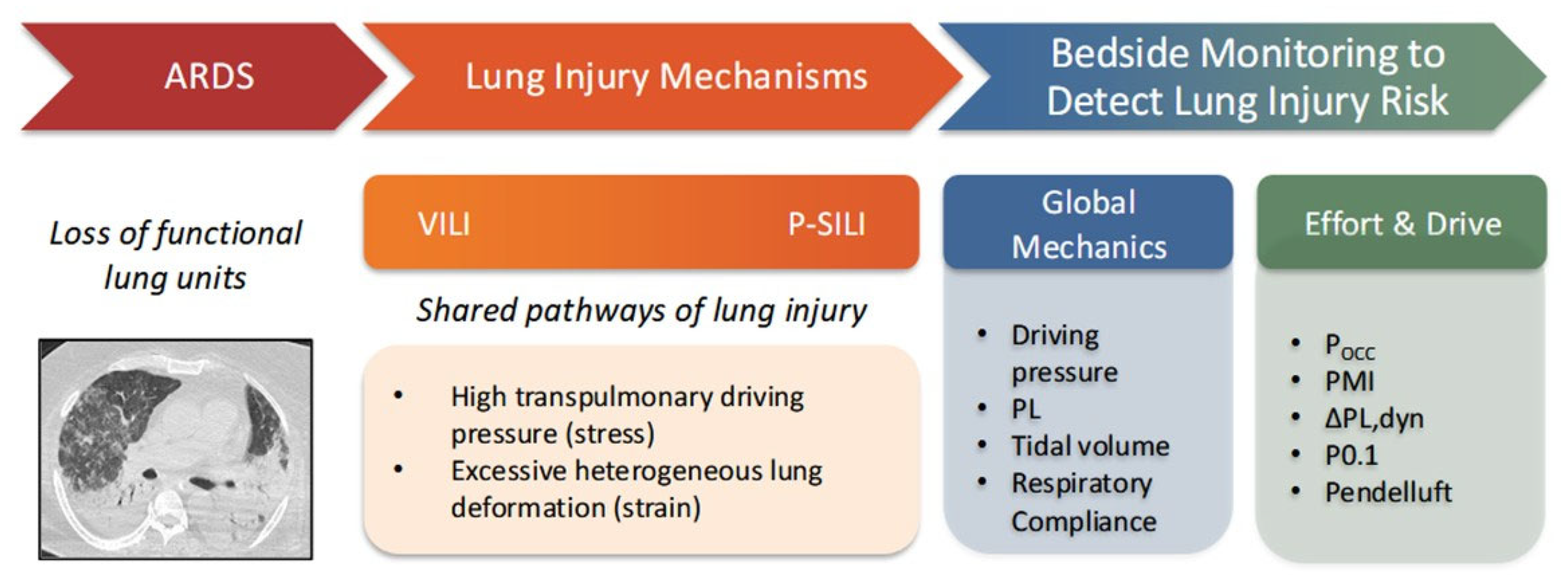
7. Operational Bedside Monitoring to Detect VILI and P-SILI Risk
8. Personalized Mechanical Ventilation and Future Directions
9. Conclusions
Author Contributions
Funding
Data Availability Statement
Acknowledgments
Conflicts of Interest
References
- Slutsky, A.S.; Ranieri, V.M. Ventilator-induced lung injury. N. Engl. J. Med. 2013, 369, 2126–2136. [Google Scholar] [CrossRef]
- Yoshida, T.; Fujino, Y.; Amato, M.B.; Kavanagh, B.P. Fifty Years of Research in ARDS. Spontaneous Breathing During Mechanical Ventilation. Risks, Mechanisms, and Management. Am. J. Respir. Crit. Care Med. 2017, 195, 985–992. [Google Scholar] [CrossRef]
- Acute Respiratory Distress Syndrome Network; Brower, R.G.; Matthay, M.A.; Morris, A.; Schoenfeld, D.; Thompson, B.T.; Wheeler, A. Ventilation with lower tidal volumes as compared with traditional tidal volumes for acute lung injury and the acute respiratory distress syndrome. N. Engl. J. Med. 2000, 342, 1301–1308. [Google Scholar] [CrossRef]
- Qadir, N.; Sahetya, S.; Munshi, L.; Summers, C.; Abrams, D.; Beitler, J.; Bellani, G.; Brower, R.G.; Burry, L.; Chen, J.T.; et al. An update on management of adult patients with acute respiratory distress syndrome: An official American Thoracic Society clinical practice guideline. Am. J. Respir. Crit. Care Med. 2024, 209, 24–36. [Google Scholar] [CrossRef] [PubMed]
- Amato, M.B.; Meade, M.O.; Slutsky, A.S.; Amato, M.B.; Meade, M.O.; Slutsky, A.S.; Brochard, L.; Costa, E.L.; Schoenfeld, D.A.; Stewart, T.E.; et al. Driving pressure and survival in the acute respiratory distress syndrome. N. Engl. J. Med. 2015, 372, 747–755. [Google Scholar] [CrossRef] [PubMed]
- Gattinoni, L.; Tonetti, T.; Cressoni, M.; Cadringher, P.; Herrmann, P.; Moerer, O.; Protti, A.; Gotti, M.; Chiurazzi, C.; Carlesso, E.; et al. Ventilator-related causes of lung injury: The mechanical power. Intensive Care Med. 2016, 42, 1567–1575. [Google Scholar] [CrossRef]
- Costa, E.L.V.; Slutsky, A.S.; Brochard, L.J.; Brower, R.; Serpa-Neto, A.; Cavalcanti, A.B.; Mercat, A.; Meade, M.; Morais, C.C.A.; Goligher, E.; et al. Ventilatory variables and mechanical power in patients with acute respiratory distress syndrome. Am. J. Respir. Crit. Care Med. 2021, 204, 303–311. [Google Scholar] [CrossRef] [PubMed]
- Bos, L.D.J.; Ware, L.B. Acute respiratory distress syndrome: Causes, pathophysiology, and phenotypes. Lancet 2022, 400, 1157–1172. [Google Scholar] [CrossRef]
- Gattinoni, L.; Marini, J.J.; Pesenti, A.; Quintel, M.; Mancebo, J.; Brochard, L. The “baby lung” became an adult. Intensive Care Med. 2016, 42, 663–673. [Google Scholar] [CrossRef]
- Gattinoni, L.; Carlesso, E.; Caironi, P. Stress and strain within the lung. Curr. Opin. Crit. Care 2012, 18, 42–47. [Google Scholar] [CrossRef]
- Protti, A.; Andreis, D.T.; Monti, M.; Santini, A.; Sparacino, C.C.; Langer, T.; Votta, E.; Gatti, S.; Lombardi, L.; Leopardi, O.; et al. Lung stress and strain during mechanical ventilation: Any difference between statics and dynamics? Crit. Care Med. 2013, 41, 1046–1055. [Google Scholar] [CrossRef]
- Haudebourg, A.F.; Chantelot, L.; Nemlaghi, S.; Haudebourg, L.; Labedade, P.; Boujelben, M.A.; Voiriot, G.; Dessap, A.M.; Fartoukh, M.; Carteaux, G. Factors influencing the transition phase in acute respiratory distress syndrome: An observational cohort study. Ann. Intensive Care 2025, 15, 71. [Google Scholar] [CrossRef]
- Smit, J.M.; Van Bommel, J.; Gommers, D.A.M.P.J.; Reinders, M.J.T.; Van Genderen, M.E.; Krijthe, J.H.; Jonkman, A.H. Switching from controlled to assisted mechanical ventilation: A multi-center retrospective study (SWITCH). Intensive Care Med. Exp. 2025, 13, 73. [Google Scholar] [CrossRef]
- Vimlati, L.; Kawati, R.; Hedenstierna, G.; Larsson, A.; Lichtwarck-Aschoff, M. Spontaneous breathing improves shunt fraction and oxygenation in comparison with controlled ventilation at a similar amount of lung collapse. Anesth. Analg. 2011, 113, 1089–1095. [Google Scholar] [CrossRef]
- Kaplan, L.J.; Bailey, H.; Formosa, V. Airway pressure release ventilation increases cardiac performance in patients with acute lung injury/adult respiratory distress syndrome. Crit. Care 2001, 5, 221–226. [Google Scholar] [CrossRef]
- Sassoon, C.S.; Zhu, E.; Caiozzo, V.J. Assist-control mechanical ventilation attenuates ventilator-induced diaphragmatic dysfunction. Am. J. Respir. Crit. Care Med. 2004, 170, 626–632. [Google Scholar] [CrossRef] [PubMed]
- Brochard, L.; Slutsky, A.; Pesenti, A. Mechanical ventilation to minimize progression of lung injury in acute respiratory failure. Am. J. Respir. Crit. Care Med. 2017, 195, 438–442. [Google Scholar] [CrossRef] [PubMed]
- Dianti, J.; Lovblom, L.E.; Iftikhar, M.A.; Sahetya, S.; Telias, I.; Urner, M.; Del Sorbo, L.; Amato, M.B.P.; Slutsky, A.S.; Brochard, L.; et al. Association of respiratory drive and effort with mortality and time to discharge in patients on mechanical ventilation in Canada: A longitudinal, prospective, registry-based cohort study. Lancet Respir. Med. 2025, 13, 1087–1095. [Google Scholar] [CrossRef] [PubMed]
- Retamal, J.; Hurtado, D.; Villarroel, N.; Bruhn, A.; Bugedo, G.; Amato, M.B.P.; Costa, E.L.V.; Hedenstierna, G.; Larsson, A.; Borges, J.B. Does regional lung strain correlate with regional inflammation in acute respiratory distress syndrome during nonprotective ventilation? An experimental porcine study. Crit. Care Med. 2018, 46, e591–e599. [Google Scholar] [CrossRef]
- González-López, A.; García-Prieto, E.; Batalla-Solís, E.; Amado-Rodríguez, L.; Avello, N.; Blanch, L.; Albaiceta, G.M. Lung strain and biological response in mechanically ventilated patients. Intensive Care Med. 2012, 38, 240–247. [Google Scholar] [CrossRef]
- Bellani, G.; Guerra, L.; Musch, G.; Zanella, A.; Patroniti, N.; Mauri, T.; Messa, C.; Pesenti, A. Lung regional metabolic activity and gas volume changes induced by tidal ventilation in patients with acute lung injury. Am. J. Respir. Crit. Care Med. 2011, 183, 1193–1199. [Google Scholar] [CrossRef] [PubMed]
- Morais, C.C.A.; Koyama, Y.; Yoshida, T.; Plens, G.M.; Gomes, S.; Lima, C.A.S.; Ramos, O.P.S.; Pereira, S.M.; Kawaguchi, N.; Yamamoto, H.; et al. High Positive End-Expiratory Pressure Renders Spontaneous Effort Noninjurious. Am. J. Respir. Crit. Care Med. 2018, 197, 1285–1296. [Google Scholar] [CrossRef]
- Cruces, P.; Erranz, B.; González, C.; Díaz, F. Morphological Differences between Patient Self-Inflicted and Ventilator-Induced Lung Injury: An Experimental Study. Am. J. Respir. Crit. Care Med. 2023, 207, 780–783. [Google Scholar] [CrossRef]
- Baedorf-Kassis, E.; Murn, M.; Dzierba, A.L.; Serra, A.L.; Garcia, I.; Minus, E.; Padilla, C.; Sarge, T.; Goodspeed, V.M.; Matthay, M.A.; et al. EPVent-2 Study Group. Respiratory drive heterogeneity associated with systemic inflammation and vascular permeability in acute respiratory distress syndrome. Crit. Care 2024, 28, 136. [Google Scholar] [CrossRef]
- Cornejo, R.A.; Arellano, D.H.; Ruiz-Rudolph, P.; Guiñez, D.V.; Morais, C.C.A.; Gajardo, A.I.J.; Lazo, M.T.; Brito, R.E.; Cerda, M.A.; González, S.J.; et al. Inflammatory biomarkers and pendelluft magnitude in ARDS patients transitioning from controlled to partial support ventilation. Sci. Rep. 2022, 12, 20233. [Google Scholar] [CrossRef]
- Kuipers, M.T.; Aslami, H.; Janczy, J.R.; van der Sluijs, K.F.; Vlaar, A.P.; Wolthuis, E.K.; Choi, G.; Roelofs, J.J.; Flavell, R.A.; Sutterwala, F.S.; et al. Ventilator-induced lung injury is mediated by the NLRP3 inflammasome. Anesthesiology 2012, 116, 1104–1115. [Google Scholar] [CrossRef]
- Dolinay, T.; Kim, Y.S.; Howrylak, J.; Hunninghake, G.M.; An, C.H.; Fredenburgh, L.; Massaro, A.F.; Rogers, A.; Gazourian, L.; Nakahira, K.; et al. Inflammasome-regulated cytokines are critical mediators of acute lung injury. Am. J. Respir. Crit. Care Med. 2012, 185, 1225–1234. [Google Scholar] [CrossRef]
- Chavez, L.; Meguro, J.; Chen, S.; de Paiva, V.N.; Zambrano, R.; Eterno, J.M.; Kumar, R.; Duncan, M.R.; Benny, M.; Young, K.C.; et al. Circulating extracellular vesicles activate the pyroptosis pathway in the brain following ventilation-induced lung injury. J. Neuroinflammation 2021, 18, 310. [Google Scholar] [CrossRef]
- Guérin, C.; Reignier, J.; Richard, J.C.; Beuret, P.; Gacouin, A.; Boulain, T.; Mercier, E.; Badet, M.; Mercat, A.; Baudin, O.; et al. PROSEVA Study Group. Prone positioning in severe acute respiratory distress syndrome. N. Engl. J. Med. 2013, 368, 2159–2168. [Google Scholar] [CrossRef] [PubMed]
- Combes, A.; Peek, G.J.; Hajage, D.; Hardy, P.; Abrams, D.; Schmidt, M.; Dechartres, A.; Elbourne, D. ECMO for severe ARDS: Systematic review and individual patient data meta-analysis. Intensive Care Med. 2020, 46, 2048–2057. [Google Scholar] [CrossRef] [PubMed]
- Papazian, L.; Forel, J.M.; Gacouin, A.; Penot-Ragon, C.; Perrin, G.; Loundou, A.; Jaber, S.; Arnal, J.M.; Perez, D.; Seghboyan, J.M.; et al. ACURASYS Study Investigators. Neuromuscular blockers in early acute respiratory distress syndrome. N. Engl. J. Med. 2010, 363, 1107–1116. [Google Scholar] [CrossRef] [PubMed]
- Goligher, E.C.; Costa, E.L.V.; Yarnell, C.J.; Brochard, L.J.; Stewart, T.E.; Tomlinson, G.; Brower, R.G.; Slutsky, A.S.; Amato, M.B.P. Effect of lowering VT on mortality in acute respiratory distress syndrome varies with respiratory system elastance. Am. J. Respir. Crit. Care Med. 2021, 203, 1378–1385. [Google Scholar] [CrossRef]
- Sarma, A.; Sullivan, K.M.; Baugh, A.D.; Bhakta, N.R.; Calfee, C.S. Evaluating the generalisability of formulas used to set tidal volumes in mechanically ventilated patients: An observational, multicohort, retrospective study. Lancet Respir. Med. 2025, 13, 877–886. [Google Scholar] [CrossRef] [PubMed]
- Guérin, C.; Albert, R.K.; Beitler, J.; Gattinoni, L.; Jaber, S.; Marini, J.J.; Munshi, L.; Papazian, L.; Pesenti, A.; Vieillard-Baron, A.; et al. Prone position in ARDS patients: Why, when, how and for whom. Intensive Care Med. 2020, 46, 2385–2396. [Google Scholar] [CrossRef] [PubMed]
- Cornejo, R.; Papazian, L.; Delgado, M.C.M. Physiological effects of prone positioning during invasive mechanical ventilation: Beyond PaO2. Intensive Care Med. 2026. [Google Scholar] [CrossRef]
- Morais, C.C.A.; Alcala, G.; De Santis Santiago, R.R.; Valsecchi, C.; Diaz, E.; Wanderley, H.; Fakhr, B.S.; Di Fenza, R.; Gianni, S.; Foote, S.; et al. Pronation reveals a heterogeneous response of global and regional respiratory mechanics in patients with acute hypoxemic respiratory failure. Crit. Care Explor. 2023, 5, e0983. [Google Scholar] [CrossRef]
- Del Sorbo, L.; Tisminetzky, M.; Chen, L.; Brochard, L.; Arellano, D.; Brito, R.; Diaz, J.C.; Cornejo, R. Association of lung recruitment and change in recruitment-to-inflation ratio from supine to prone position in acute respiratory distress syndrome. Crit. Care 2023, 27, 140. [Google Scholar] [CrossRef]
- Cornejo, R.A.; Montoya, J.; Gajardo, A.I.J.; Graf, J.; Alegría, L.; Baghetti, R.; Irarrázaval, A.; Santis, C.; Pavez, N.; Leighton, S.; et al. SOCHIMI Prone-COVID-19 Group. Continuous prolonged prone positioning in COVID-19–related ARDS: A multicenter cohort study from Chile. Ann. Intensive Care 2022, 12, 109. [Google Scholar] [CrossRef]
- Walter, T.; Zucman, N.; Mullaert, J.; Thiry, I.; Gernez, C.; Roux, D.; Ricard, J.D. Extended prone positioning duration for COVID-19-related ARDS: Benefits and detriments. Crit. Care 2022, 26, 208. [Google Scholar] [CrossRef]
- Okin, D.; Huang, C.Y.; Alba, G.A.; Jesudasen, S.J.; Dandawate, N.A.; Gavralidis, A.; Chang, L.L.; Moin, E.E.; Ahmad, I.; Witkin, A.S.; et al. Prolonged prone position ventilation is associated with reduced mortality in intubated COVID-19 patients. Chest 2023, 163, 533–542. [Google Scholar] [CrossRef]
- Writing Group for the Alveolar Recruitment for Acute Respiratory Distress Syndrome Trial (ART) Investigators; Cavalcanti, A.B.; Suzumura, É.A.; Laranjeira, L.N.; Paisani, D.M.; Damiani, L.P.; Guimarães, H.P.; Romano, E.R.; Regenga, M.M.; Taniguchi, L.N.T.; et al. Effect of Lung Recruitment and Titrated Positive End-Expiratory Pressure (PEEP) vs Low PEEP on Mortality in Patients With Acute Respiratory Distress Syndrome: A Randomized Clinical Trial. JAMA 2017, 318, 1335–1345. [Google Scholar] [CrossRef] [PubMed]
- Sarge, T.; Baedorf-Kassis, E.; Banner-Goodspeed, V.; Novack, V.; Loring, S.H.; Gong, M.N.; Cook, D.; Talmor, D.; Beitler, J.R. EPVent-2 Study Group. Effect of esophageal pressure-guided positive end-expiratory pressure on survival from acute respiratory distress syndrome: A risk-based and mechanistic reanalysis of the EPVent-2 trial. Am. J. Respir. Crit. Care Med. 2021, 204, 1153–1163. [Google Scholar] [CrossRef] [PubMed]
- Yuan, X.; Zhong, M.; Li, Z.; Sang, L.; Huang, X.; Zhang, R.; Chen, H.; Gao, Y.; Wang, Y.; Lin, Z.; et al. Electrical impedance tomography-guided PEEP and mortality of patients with the acute respiratory distress syndrome: The EITVent randomized clinical trial. Am. J. Respir. Crit. Care Med. 2026. [Google Scholar] [CrossRef]
- Gattinoni, L.; Caironi, P.; Cressoni, M.; Chiumello, D.; Ranieri, V.M.; Quintel, M.; Russo, S.; Patroniti, N.; Cornejo, R.; Bugedo, G. Lung recruitment in patients with the acute respiratory distress syndrome. N. Engl. J. Med. 2006, 354, 1775–1786. [Google Scholar] [CrossRef]
- Chen, L.; Del Sorbo, L.; Grieco, D.L.; Junhasavasdikul, D.; Rittayamai, N.; Soliman, I.; Sklar, M.C.; Rauseo, M.; Ferguson, N.D.; Fan, E.; et al. Potential for Lung Recruitment Estimated by the Recruitment-to-Inflation Ratio in Acute Respiratory Distress Syndrome. A Clinical Trial. Am. J. Respir. Crit. Care Med. 2020, 201, 178–187. [Google Scholar] [CrossRef]
- Constantin, J.M.; Jabaudon, M.; Lefrant, J.Y.; Jaber, S.; Quenot, J.P.; Langeron, O.; Ferrandière, M.; Grelon, F.; Seguin, P.; Ichai, C.; et al. AZUREA Network. Personalised mechanical ventilation tailored to lung morphology versus low positive end-expiratory pressure for patients with acute respiratory distress syndrome in France (the LIVE study): A multicentre, single-blind, randomised controlled trial. Lancet Respir. Med. 2019, 7, 870–880. [Google Scholar] [CrossRef]
- Abrams, D.; Schmidt, M.; Pham, T.; Beitler, J.R.; Fan, E.; Goligher, E.C.; McNamee, J.J.; Patroniti, N.; Wilcox, M.E.; Combes, A.; et al. Mechanical ventilation for acute respiratory distress syndrome during extracorporeal life support: Research and practice. Am. J. Respir. Crit. Care Med. 2020, 201, 514–525. [Google Scholar] [CrossRef]
- Diaz, R.A.; Graf, J.; Zambrano, J.M.; Ruiz, C.; Espinoza, J.A.; Bravo, S.I.; Salazar, P.A.; Bahamondes, J.C.; Castillo, L.B.; Gajardo, A.I.J.; et al. Extracorporeal membrane oxygenation for COVID-19-associated severe acute respiratory distress syndrome in Chile: A nationwide incidence and cohort study. Am. J. Respir. Crit. Care Med. 2021, 204, 34–43. [Google Scholar] [CrossRef]
- Young, D.; Lamb, S.E.; Shah, S.; MacKenzie, I.; Tunnicliffe, W.; Lall, R.; Rowan, K.; Cuthbertson, B.H. OSCAR Study Group. High-frequency oscillation for acute respiratory distress syndrome. N. Engl. J. Med. 2013, 368, 806–813. [Google Scholar] [CrossRef]
- Ferguson, N.D.; Cook, D.J.; Guyatt, G.H.; Mehta, S.; Hand, L.; Austin, P.; Zhou, Q.; Matte, A.; Walter, S.D.; Lamontagne, F.; et al. OSCILLATE Trial Investigators; Canadian Critical Care Trials Group. High-frequency oscillation in early acute respiratory distress syndrome. N. Engl. J. Med. 2013, 368, 795–805. [Google Scholar] [CrossRef] [PubMed]
- Sklar, M.C.; Dres, M.; Fan, E.; Rubenfeld, G.D.; Scales, D.C.; Herridge, M.S.; Rittayamai, N.; Harhay, M.O.; Reid, W.D.; Tomlinson, G.; et al. Association of low baseline diaphragm muscle mass with prolonged mechanical ventilation and mortality among critically ill adults. JAMA Netw. Open 2020, 3, e1921520. [Google Scholar] [CrossRef] [PubMed]
- Bertoni, M.; Spadaro, S.; Goligher, E.C. Monitoring patient respiratory effort during mechanical ventilation: Lung- and diaphragm-protective ventilation. Crit. Care 2020, 24, 106. [Google Scholar] [CrossRef]
- Arellano, D.H.; Brito, R.; Morais, C.C.A.; Ruiz-Rudolph, P.; Gajardo, A.I.J.; Guiñez, D.V.; Lazo, M.T.; Ramirez, I.; Rojas, V.A.; Cerda, M.A.; et al. Pendelluft in hypoxemic patients resuming spontaneous breathing: Proportional modes versus pressure support ventilation. Ann. Intensive Care 2023, 13, 131. [Google Scholar] [CrossRef]
- Rittayamai, N.; Beloncle, F.; Goligher, E.C.; Chen, L.; Mancebo, J.; Richard, J.M.; Brochard, L. Effect of inspiratory synchronization during pressure-controlled ventilation on lung distension and inspiratory effort. Ann. Intensive Care 2017, 7, 100. [Google Scholar] [CrossRef]
- Richard, J.M.; Beloncle, F.M.; Béduneau, G.; Mortaza, S.; Ehrmann, S.; Diehl, J.L.; Prat, G.; Jaber, S.; Rahmani, H.; Reignier, J.; et al. REVA Network. Pressure control plus spontaneous ventilation versus volume assist-control ventilation in acute respiratory distress syndrome: A randomised clinical trial. Intensive Care Med. 2024, 50, 1647–1656. [Google Scholar] [CrossRef] [PubMed]
- Goossen, R.L.; Schultz, M.J.; Tschernko, E.; Chew, M.S.; Robba, C.; Paulus, F.; van der Heiden, P.L.J.; Buiteman-Kruizinga, L.A. Effects of closed loop ventilation on ventilator settings, patient outcomes and ICU staff workloads—A systematic review. Eur. J. Anaesthesiol. 2024, 41, 438–446. [Google Scholar] [CrossRef]
- Jonkman, A.H.; Rauseo, M.; Carteaux, G.; Telias, I.; Sklar, M.C.; Heunks, L.; Brochard, L. Proportional modes of ventilation: Technology to assist physiology. Intensive Care Med. 2020, 46, 2301–2313. [Google Scholar] [CrossRef]
- Bosma, K.J.; Burns, K.E.A.; Martin, C.M.; Skrobik, Y.; Cortés, J.M.; Mulligan, S.; Lafreniere-Roula, M.; Thorpe, K.E.; Montero, J.C.S.; Chorro, I.M.; et al. Proportional-Assist Ventilation for Minimizing the Duration of Mechanical Ventilation. N. Engl. J. Med. 2025, 393, 1088–1103. [Google Scholar] [CrossRef]
- Dianti, J.; Fard, S.; Wong, J.; Chan, T.C.Y.; Del Sorbo, L.; Fan, E.; Amato, M.B.P.; Granton, J.; Burry, L.; Reid, W.D.; et al. Strategies for lung- and diaphragm-protective ventilation in acute hypoxemic respiratory failure: A physiological trial. Crit. Care 2022, 26, 259. [Google Scholar] [CrossRef] [PubMed]
- Costa, E.L.V.; Alcala, G.C.; Tucci, M.R.; Goligher, E.; Morais, C.C.; Dianti, J.; Nakamura, M.A.P.; Oliveira, L.B.; Pereira, S.M.; Toufen, C., Jr.; et al. Impact of extended lung protection during mechanical ventilation on lung recovery in patients with COVID-19 ARDS: A phase II randomized controlled trial. Ann. Intensive Care 2024, 14, 85. [Google Scholar] [CrossRef]
- Cornejo, R.A.; Brito, R.; Rivera, C.; Morais, C.C.A.; Arellano, D.H.; Lazo, M.T.; Fuentes, A.; Paredes, E.; Rojas, V.; Bravo, M.F.; et al. Influence of ventilatory settings on pendelluft and expiratory muscle activity in hypoxemic patients resuming spontaneous breathing. Crit. Care 2025, 30, 13. [Google Scholar] [CrossRef]
- Coppadoro, A.; Grassi, A.; Giovannoni, C.; Rabboni, F.; Eronia, N.; Bronco, A.; Foti, G.; Fumagalli, R.; Bellani, G. Occurrence of pendelluft under pressure support ventilation in patients who failed a spontaneous breathing trial: An observational study. Ann. Intensive Care 2020, 10, 39. [Google Scholar] [CrossRef] [PubMed]
- Louis, B.; Cour, M.; Argaud, L.; Guérin, C. The impact of PEEP on ventilation distribution in ARDS. Respir. Care 2024, 69, 1231–1238. [Google Scholar] [CrossRef] [PubMed]
- Firstiogusran, A.M.F.; Yoshida, T.; Hashimoto, H.; Iwata, H.; Fujino, Y. Positive end-expiratory pressure and prone position alter the capacity of force generation from diaphragm in acute respiratory distress syndrome: An animal experiment. BMC Anesthesiol. 2022, 22, 373. [Google Scholar] [CrossRef] [PubMed]
- Cornejo, R.; Brito, R.; Arellano, D.; Morais, C.C.A.; Lazo, M.T.; Guiñez, D.; Cerda, M.A.; Rojas, V.A.; González, S.; Medel, J.N.; et al. Physiological effects of prone positioning and thoraco-abdominal binding on muscle–ventilation dynamics in ARDS patients at the onset of spontaneous breathing. Intensive Care Med. Exp. 2025, 13, 001625. [Google Scholar]
- Cornejo, R.; Telias, I.; Brochard, L. Measuring patient’s effort on the ventilator. Intensive Care Med. 2024, 50, 573–576. [Google Scholar] [CrossRef]
- Bellani, G.; Grassi, A.; Sosio, S.; Gatti, S.; Kavanagh, B.P.; Pesenti, A.; Foti, G. Driving pressure is associated with outcome during assisted ventilation in acute respiratory distress syndrome. Anesthesiology 2019, 131, 594–604. [Google Scholar] [CrossRef]
- Gao, R.; Zhou, J.X.; Yang, Y.L.; Xu, S.S.; Zhou, Y.M.; Zhang, L.; Miao, M.Y. Use of pressure muscle index to predict the contribution of patient’s inspiratory effort during pressure support ventilation: A prospective physiological study. Front. Med. 2024, 11, 1390878. [Google Scholar] [CrossRef]
- Bertoni, M.; Telias, I.; Urner, M.; Long, M.; Del Sorbo, L.; Fan, E.; Sinderby, C.; Beck, J.; Liu, L.; Qiu, H.; et al. A novel non-invasive method to detect excessively high respiratory effort and dynamic transpulmonary driving pressure during mechanical ventilation. Crit. Care 2019, 23, 346. [Google Scholar] [CrossRef]
- Bitker, L.; Talmor, D.; Richard, J.C. Imaging the acute respiratory distress syndrome: Past, present and future. Intensive Care Med. 2022, 48, 995–1008. [Google Scholar] [CrossRef]
- Zhang, R.; He, H.; Bi, Z.; Long, F.; Xu, J.; Guan, J.; Tan, R.; Moeller, K.; Hong, D.; Zhao, Z.; et al. Diagnostic accuracy and cost-efficiency of ChatGPT in EIT-based pendelluft detection for mechanically ventilated patients: A multicenter study. Respir. Res. 2026; in press. [Google Scholar] [CrossRef] [PubMed]



| Domain | Monitoring Variable | Definition/Measurement | Clinical Role (Why It Matters) | Recommended Targets */ Interpretation |
|---|---|---|---|---|
| Ventilatory Mechanics | Tidal Volume (VT) | Volume delivered per breath (mL/kg PBW). | High VT increases dynamic strain and VILI risk, especially in ARDS with reduced functional lung size (“baby lung”). | 4–8 mL/kg PBW for lung-protective ventilation. |
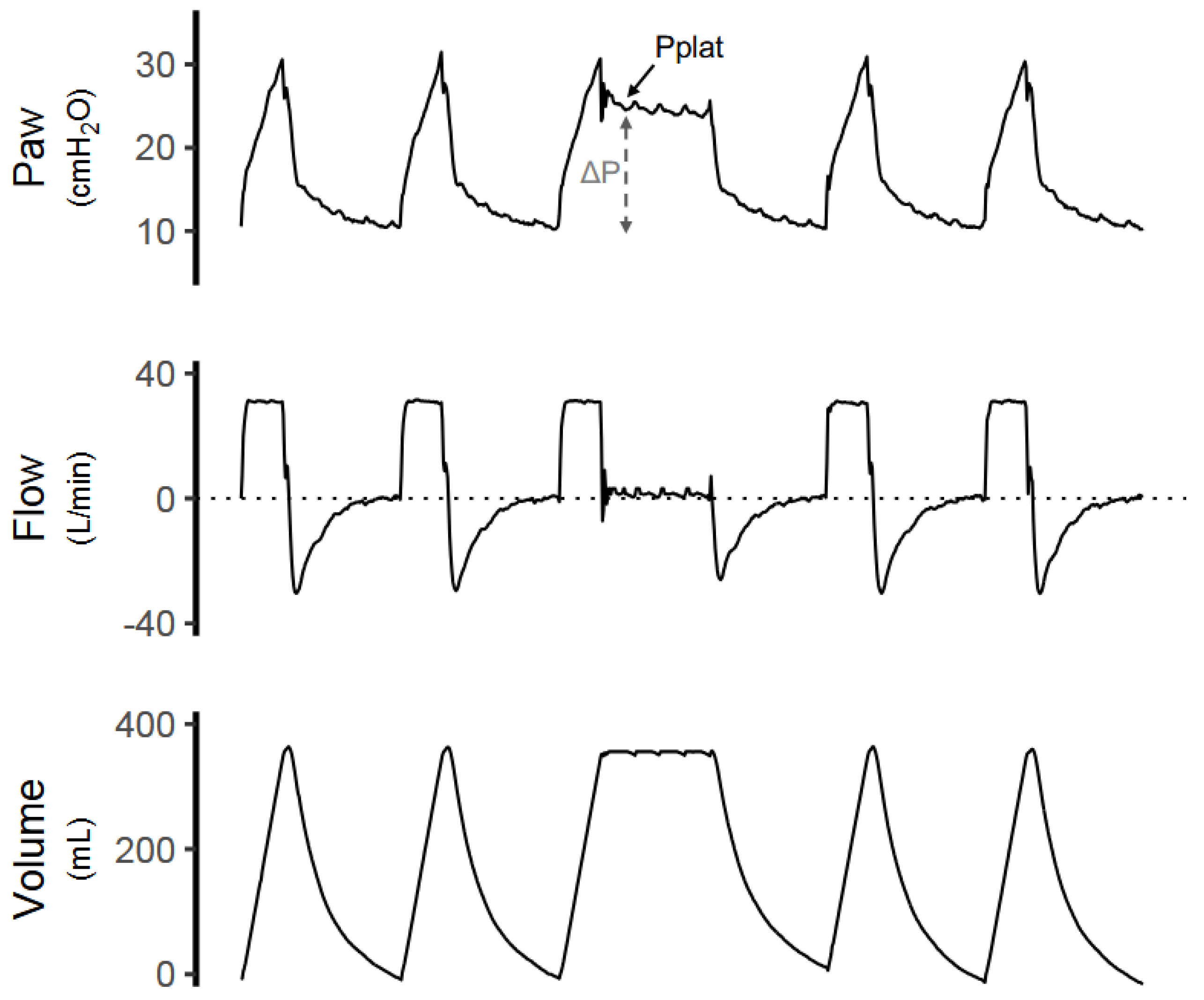
| Plateau Pressure (Pplat) | Measured by end-inspiratory occlusion during passive or assisted ventilation. Reflects static distending pressure of the respiratory system. | Surrogate for alveolar pressure; elevated values increase barotrauma and volutrauma risk. | <30 cm H2O recommended. Higher values reflect reduced compliance. | |
| Driving Pressure (ΔP) | Difference between Pplat and PEEP. | Strong independent predictor of mortality in ARDS; reflects lung size available for ventilation (controlled and assisted ventilation). | <15 cm H2O preferred. | |
| Respiratory System Compliance (CRS) | VT/ΔP. | Declines with ARDS severity; reflects “baby lung.” Longitudinal trends indicate improvement or deterioration. | Reduced CRS = higher VILI susceptibility. | |
| Transpulmonary Pressure (PL = Paw − Pes) | True distending pressure of the lung. | Guides individualized PEEP; avoids overdistension while preventing collapse. | In passive ARDS: Pes-guided PEEP improves oxygenation and may reduce VILI. | |
| Work and Effort of Breathing | Pmus (Muscle Pressure) | Pressure generated by respiratory muscles: Pmus = Pes − chest wall recoil pressure. | Differentiates patient effort from ventilator support; high Pmus = risk of P-SILI. | Peak Pmus ≥ 5 and <15 cm H2O recommended. |
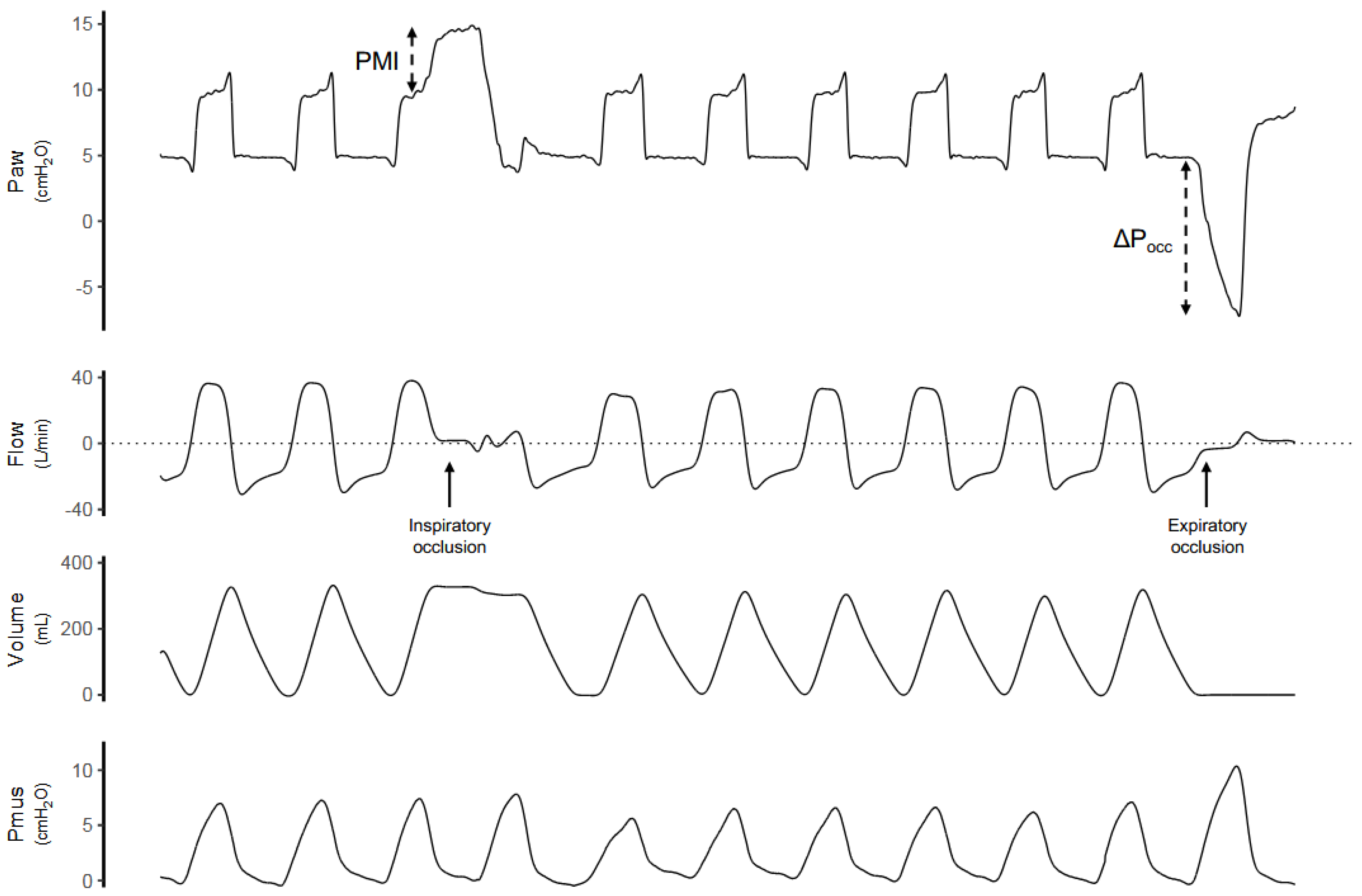
| Pressure Muscle Index (PMI) | Index obtained during PSV when an end-inspiratory pause reveals a difference between peak and plateau airway pressure | Estimate of inspiratory muscle effort during assisted ventilation. High PMI increases P-SILI risk, diaphragmatic overload. Useful for adjusting the assistance during PSV | PMI > 0 and <6 cm H2O considered safe. | |
| Pocc (Airway Occlusion Pressure Drop) | Drop in Paw during a full inspiratory occlusion. | Non-invasive surrogate of ΔPes and Pmus during tidal breathing. | Pmus ≈ Pocc × (−0.75); ΔPes ≈ Pocc × (−0.66). | |
| Respiratory Drive | P 0.1 | Airway pressure drop in first 100 ms of an occluded breath. | Reflects neural respiratory drive; independent of effort/performance capacity. | 1–4 cm H2O normal range. Values > 5 = high drive. |
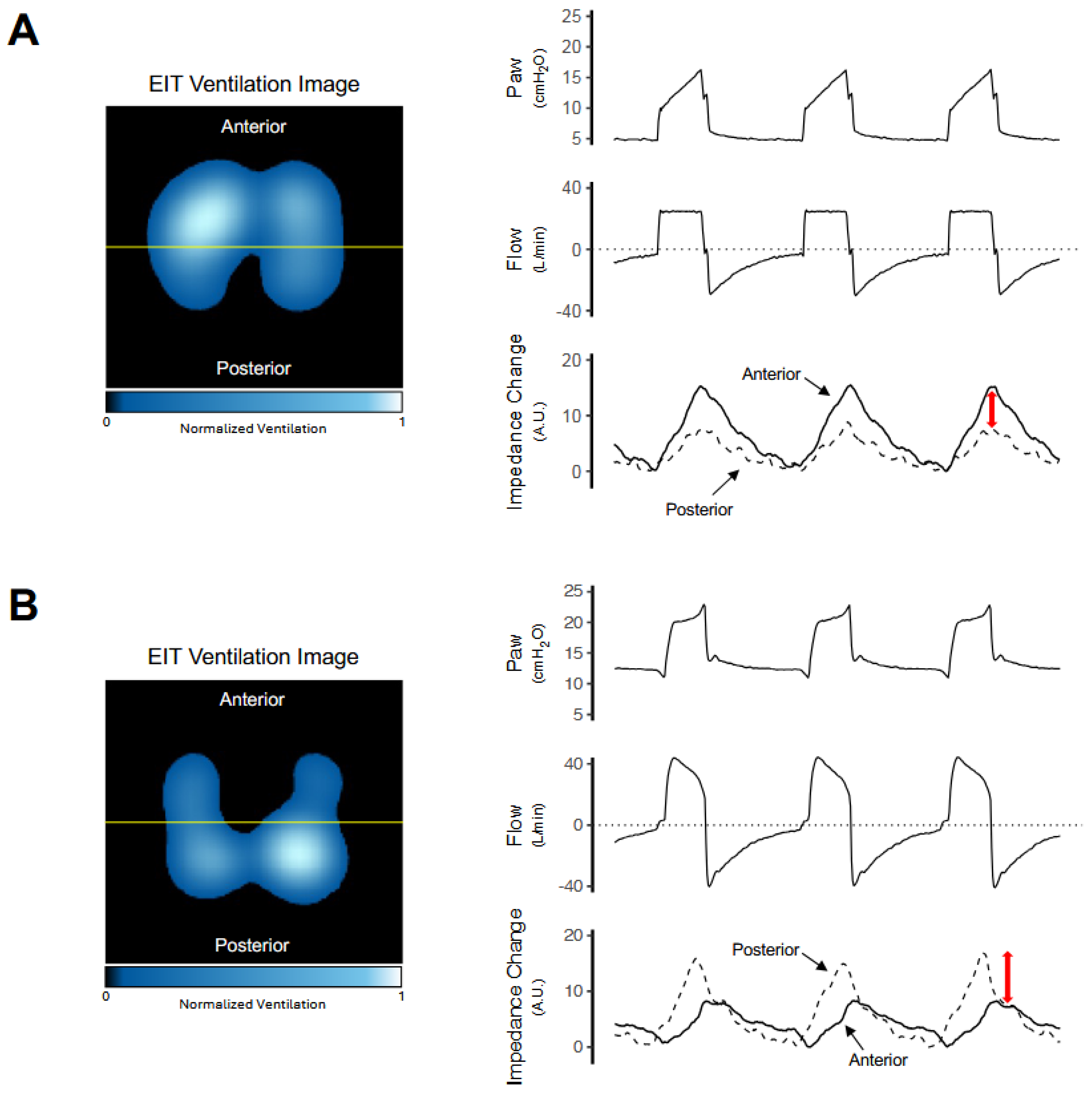
| Regional Lung Imaging & Monitoring | Electrical Impedance Tomography (EIT) | Bedside monitoring using thoracic electrode belt to estimate regional lung aeration and ventilation distribution. | Real-time assessment of overdistension, collapse, pendelluft, and dynamic strain; guides PEEP titration and synchrony. | Detects: regional ventilation, global inhomogeneity, ΔZ, pendelluft, regional strain |
| Pendelluft (via EIT) | Intratidal gas redistribution between lung regions due to asynchronous filling. | Marker of heterogeneous effort, regional stress/strain, risk of P-SILI during spontaneous breathing. | Large pendelluft signals suggest need for unloading, sedation or PEEP adjusting |
Disclaimer/Publisher’s Note: The statements, opinions and data contained in all publications are solely those of the individual author(s) and contributor(s) and not of MDPI and/or the editor(s). MDPI and/or the editor(s) disclaim responsibility for any injury to people or property resulting from any ideas, methods, instructions or products referred to in the content. |
© 2026 by the authors. Licensee MDPI, Basel, Switzerland. This article is an open access article distributed under the terms and conditions of the Creative Commons Attribution (CC BY) license.
Share and Cite
Cornejo, R.A.; Morais, C.C.A.; Arellano, D.H.; Brito, R.; Gajardo, A.I.J.; Lazo, M.T.; Bos, L.B.D.; González, R.; Bruhn, A.R.; Bakker, J. Protective Ventilation During Controlled and Partial Ventilatory Support in ARDS: Clinical–Physiological Background and Monitoring. J. Clin. Med. 2026, 15, 1830. https://doi.org/10.3390/jcm15051830
Cornejo RA, Morais CCA, Arellano DH, Brito R, Gajardo AIJ, Lazo MT, Bos LBD, González R, Bruhn AR, Bakker J. Protective Ventilation During Controlled and Partial Ventilatory Support in ARDS: Clinical–Physiological Background and Monitoring. Journal of Clinical Medicine. 2026; 15(5):1830. https://doi.org/10.3390/jcm15051830
Chicago/Turabian StyleCornejo, Rodrigo A., Caio C. A. Morais, Daniel H. Arellano, Roberto Brito, Abraham I. J. Gajardo, Marioli T. Lazo, Leonore B. D. Bos, Roberto González, Alejandro R. Bruhn, and Jan Bakker. 2026. "Protective Ventilation During Controlled and Partial Ventilatory Support in ARDS: Clinical–Physiological Background and Monitoring" Journal of Clinical Medicine 15, no. 5: 1830. https://doi.org/10.3390/jcm15051830
APA StyleCornejo, R. A., Morais, C. C. A., Arellano, D. H., Brito, R., Gajardo, A. I. J., Lazo, M. T., Bos, L. B. D., González, R., Bruhn, A. R., & Bakker, J. (2026). Protective Ventilation During Controlled and Partial Ventilatory Support in ARDS: Clinical–Physiological Background and Monitoring. Journal of Clinical Medicine, 15(5), 1830. https://doi.org/10.3390/jcm15051830