Point-of-Care Transcranial Doppler Sonography at the Intensive Care Unit—A Practical Review of the Fundamentals
 , ,
, ,
Abstract
1. Introduction
1.1. Technique of Performing Transcranial Doppler/Duplex Investigations
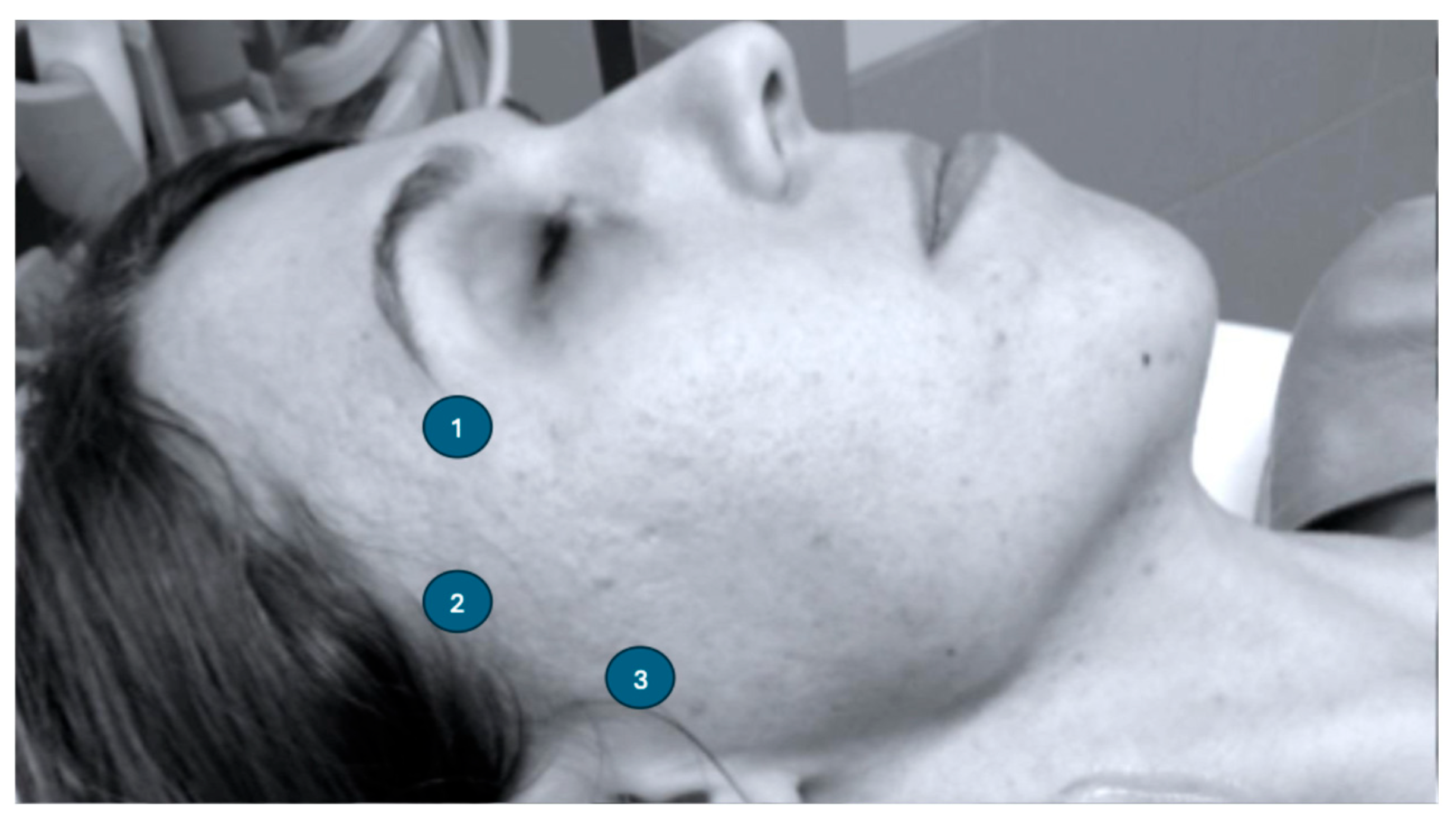
- The anterior temporal window is located above the lateral canthus and can be easily identified as a depression in the bone when palpated with the fingertip. Using this temporal window, the transducer should be positioned so that the ultrasound beam is directed slightly posteriorly, towards the imaginary midline of the skull base.
- The medial temporal window can be identified as a depression in the temporal bone above the junction of the head of the mandible with the zygomatic arch. This is the most commonly used temporal window. If this temporal window is chosen for measurement, the transducer position should be perpendicular to the bone surface.
- The posterior temporal window is located anterior to and above the tragus. When examining in this position, the transducer should be tilted so that the ultrasound beam is positioned frontally and slightly upward.
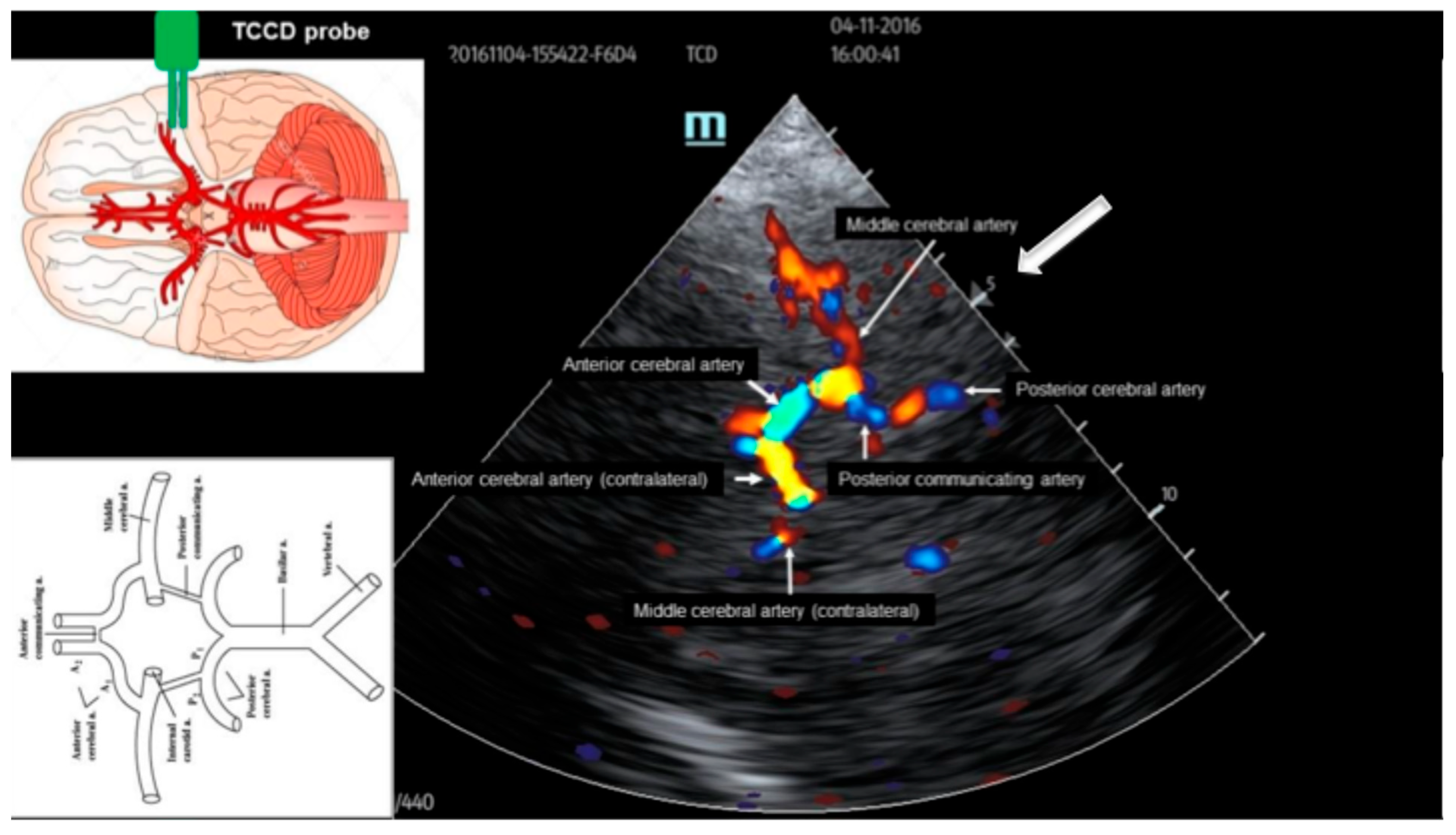
- Transcranial Doppler sonography is typically performed using a pulsed-wave probe with a frequency of 1–2 MHz. It only allows the measurement of the cerebral blood flow velocities in the different parts of the circle of Willis. This is the modality that allows bilateral continuous monitoring of the cerebral blood flow during surgical interventions and may also be part of the multimodal neuromonitoring in the intensive care unit. However, it is an independent device that can only be used for this purpose, given that angle correction of the ultrasound beam is not possible at the site of the assessed arterial segment. Furthermore, the headset that is used for fixing the transcranial Doppler probe may not ensure stable continuous monitoring in all cases, and thus, repositioning may be necessary.
- The most widely used technique for assessing the cerebral circulation is nowadays the use of transcranial colour-coded duplex sonography (TCCD). This technique usually uses a multifrequency transducer with 1.5–3 MHz spectral capability. In the majority of the multipurpose ultrasound devices used in the intensive care units, the same probe is used for transthoracic echocardiography. Duplex ultrasonography combines the B-mode (brightness mode) with the colour pulsed wave technique. This allows visual representation of the different segments of the circle of Willis, and by placing the pulsed wave cursor into the arterial segment, the measurement of the blood flow velocities in the different arteries is also feasible. A further advantage of the technique is that angle correction of the ultrasound beam can be performed on the visual of the vessel, which makes the blood flow velocity measurements more precise.
Mean blood flow velocity
1.2. Operator Dependency and Limitations of the Technique
2. Clinical Use of Transcranial Doppler Sonography in the Intensive Care Unit
3. Intracranial Pressure Monitoring
Informative, Basic Parameters for Daily Use
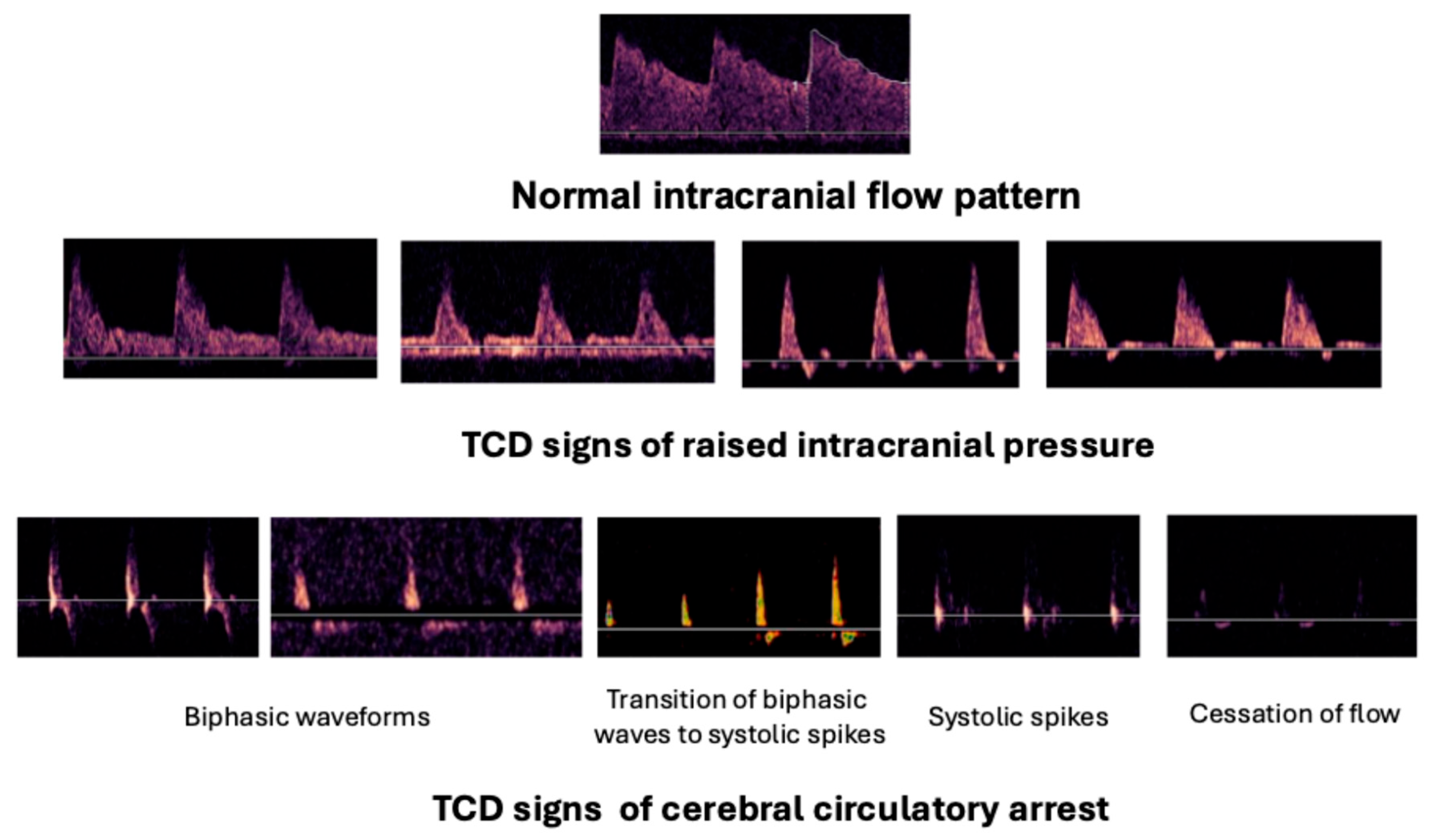
- S/D ratio: As intracranial pressure increases, characteristic changes occur in the transcranial Doppler spectrum: the systolic peak becomes sharp, and the diastolic velocity decreases. Figure 4 depicts the typical waveform alterations in parallel with the increase in the intracranial pressure. As the systolic blood flow velocity is slightly increased or remains stable during this process, and the diastolic velocity gradually decreases, the ratio between the systolic and diastolic velocity may serve as a simple trend monitor of the intracranial pressure rise. An S/D ratio above 3 may warn of an impending intracranial pressure increase. It has to be noted that the S/D ratio has a poor sensitivity for the estimation of changes in intracranial pressure, and thus it can be proposed as a rough trend-monitoring warning sign that may indicate more sophisticated invasive or non-invasive assessment of ICP.
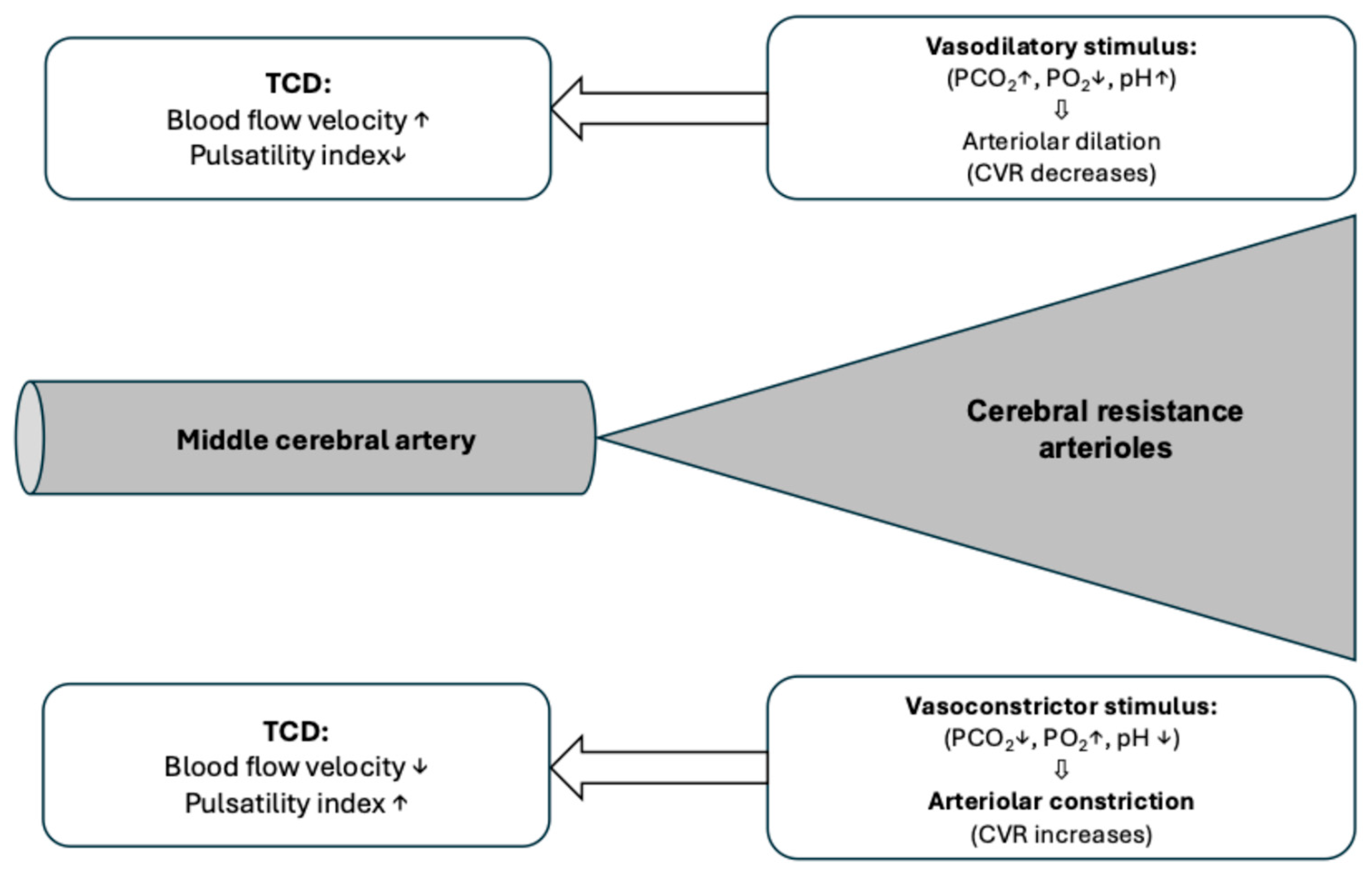
- Pulsatility index (PI) is a non-specific parameter for the diagnosis of raised intracranial pressure. As described above, besides the intracranial pressure, other factors may also influence the PI value. Recent investigations suggested that there is a strong correlation between the pulsatility index and intracranial pressure [14,15]. The recent B-ICONIC consensus statement suggests a threshold of PI of 1.3 in conjunction with a diastolic blood flow velocity < 20 cm/sec as a threshold for considering CBF changes potentially associated with high ICP, or for excluding it [13].
4. Non-Invasive Estimation of Cerebral Perfusion Pressure
invasive mean arterial pressure ×
(diastolic blood flow velocity/mean blood flow velocity) + 14.
5. Transcranial Doppler and TCCD as an Ancillary Test for the Determination of Brain Death
- Biphasic (reverberating, pendular or oscillating) flow with no net anterograde flow;
- Systolic spikes;
- No signal.
6. Assessment of Cerebral Vasospasm
7. Future Directions of the Technique
Author Contributions
Funding
Institutional Review Board Statement
Informed Consent Statement
Data Availability Statement
Conflicts of Interest
References
- Beltrame, M.; Bellan, M.; Patrucco, F.; Gavelli, F. Non-Invasive Hemodynamic Monitoring in Critically Ill Patients: A Guide for Emergency Physicians. J. Clin. Med. 2025, 14, 7002. [Google Scholar] [CrossRef]
- Koca, O.; Koksal, G. Point-of-care Lung ultrasound assessment of positional changes in COVID-19 ARDS in intensive care: A case report and review of the literature. Physiol. Rep. 2025, 13, e70484. [Google Scholar] [CrossRef] [PubMed]
- Hassan, R.; Mohamed, A.; Goffi, A.; Levinson, A. Use of Point-of-Care Ultrasound for the Assessment and Management of Mechanically Ventilated Patients. Crit. Care Clin. 2025, 41, 541–553. [Google Scholar] [CrossRef] [PubMed]
- Hellenthal, K.E.M.; Porschen, C.; Wnent, J.; Lange, M. Evolving role of point-of-care ultrasound in prehospital emergency care: A narrative review. Scand. J. Trauma Resusc. Emerg. Med. 2025, 33, 126. [Google Scholar] [CrossRef] [PubMed]
- Ceriani, E.; Schiavon, R.; La Cava, L.; Ruscitti, C.; Cogliati, C. Point of care ultrasound: Focus on evidence for a critical appraisal. Eur. J. Intern. Med. 2025, 141, 106376. [Google Scholar] [CrossRef]
- Dabo-Trubelja, A.; Perioperative, D. The evolution and future of point of care ultrasound in the perioperative period: Narrative review. J. Clin. Monit. Comput. 2025. Online ahead of print. [Google Scholar] [CrossRef]
- Kuperstein, H.; Alam, W.; Paroya, A.; Patel, K.; Ahmad, S. The design, performance and organizational impact of a point-of-care ultrasound (POCUS) elective for internal medicine residents. BMC Med. Educ. 2025, 25, 261. [Google Scholar] [CrossRef]
- Robba, C.; Poole, D.; Citerio, G.; Taccone, F.S.; Rasulo, F.A.; Consensus on brain ultrasonography in critical care group. Brain Ultrasonography Consensus on Skill Recommendations and Competence Levels Within the Critical Care Setting. Neurocrit. Care 2020, 32, 502–511. [Google Scholar] [CrossRef]
- Kollár, J.; Schulte-Altedorneburg, G.; Sikula, J.; Fülesdi, B.; Ringelstein, E.B.; Mehta, V.; Csiba, L.; Droste, D.W. Image quality of the temporal bone window examined by transcranial Doppler sonography and correlation with postmortem computed tomography measurements. Cerebrovasc. Dis. 2004, 17, 61–65. [Google Scholar] [CrossRef]
- Aaslid, R.; Markwalder, T.M.; Nornes, H. Noninvasive transcranial Doppler ultrasound recording of flow velocity in basal cerebral arteries. J. Neurosurg. 1982, 57, 769–774. [Google Scholar] [CrossRef]
- Fülesdi, B.; Siró, P.; Molnár, C. Neuromonitoring using transcranial Doppler under critical care conditions. In Manual of Neurosonology; Baracchini, C., Ed.; Cambridge University Press: Cambridge, UK, 2016; pp. 258–262. [Google Scholar]
- Réen, L.; Wikström, H.; Visse, E.; Cederberg, D.; Siesjö, P.; Marklund, N. Altered Neurocritical Care Management of Patients with Severe Traumatic Brain Injury Following Changed Positions of the Zero-Reference Points for Intracranial and Arterial Pressure Measurement. Neurocrit. Care 2025, 44, 250–260. [Google Scholar] [CrossRef]
- Robba, C.; Picetti, E.; Vásquez-García, S.; Abulhasan, Y.B.; Ain, A.; Adeleye, A.O.; Aries, M.; Brasil, S.; Badenes, R.; Bertuccio, A.; et al. The Brussels consensus for non-invasive ICP monitoring when invasive systems are not available in the care of TBI patients (the B-ICONIC consensus, recommendations, and management algorithm). Intensive Care Med. 2025, 51, 4–20. [Google Scholar] [CrossRef]
- Moreno, J.A.; Mesalles, E.; Gener, J.; Tomasa, A.; Ley, A.; Roca, J.; Fernández-Llamazares, J. Evaluating the outcome of severe head injury with transcranial Doppler ultrasonography. Neurosurg. Focus 2000, 8, e8. [Google Scholar] [CrossRef] [PubMed]
- Bellner, J.; Romner, B.; Reinstrup, P.; Kristiansson, K.A.; Ryding, E.; Brandt, L. Transcranial Doppler sonography pulsatility index (PI) reflects intracranial pressure (ICP). Surg. Neurol. 2004, 62, 45–51. [Google Scholar] [CrossRef] [PubMed]
- Czosnyka, M.; Matta, B.F.; Smielewski, P.; Kirkpatrick, P.J.; Pickard, J.D. Cerebral perfusion pressure in head-injured patients: A noninvasive assessment using transcranial Doppler ultrasonography. J. Neurosurg. 1998, 88, 802–808. [Google Scholar] [CrossRef] [PubMed]
- Gura, M.; Silav, G.; Isik, N.; Elmaci, I. Noninvasive estimation of cerebral perfusion pressure with transcranial Doppler ultrasonography in traumatic brain injury. Turk. Neurosurg. 2012, 22, 411–415. [Google Scholar] [CrossRef]
- Schmidt, E.A.; Czosnyka, M.; Gooskens, I.; Piechnik, S.K.; Matta, B.F.; Whitfield, P.C.; Pickard, J.D. Preliminary experience of the estimation of cerebral perfusion pressure using transcranial Doppler ultrasonography. J. Neurol. Neurosurg. Psychiatry 2001, 70, 198–204. [Google Scholar] [CrossRef]
- Rasulo, F.A.; Calza, S.; Robba, C.; Taccone, F.S.; Biasucci, D.G.; Badenes, R.; Piva, S.; Savo, D.; Citerio, G.; Dibu, J.R.; et al. Transcranial Doppler as a screening test to exclude intracranial hypertension in brain-injured patients: The IMPRESSIT-2 prospective multicenter international study. Crit. Care 2022, 26, 110. [Google Scholar] [CrossRef]
- O’Brien, N.F.; Lovett, M.E.; Chung, M.; Maa, T. Non-invasive estimation of cerebral perfusion pressure using transcranial Doppler ultrasonography in children with severe traumatic brain injury. Childs Nerv. Syst. 2020, 36, 2063–2071. [Google Scholar] [CrossRef]
- Reynolds, A.S.; Suh, J.; Hasan, A.; Upadhyaya, P.; Rajajee, V.; Hirzallah, M.I.; Greer, D.M.; Sarwal, A.; American Society of Neuroimaging Brain Death Task force. Technical Considerations in the TCD Evaluation of Cerebral Circulatory Arrest in Death by Neurological Criteria. J. Neuroimaging. 2025, 35, e70021. [Google Scholar] [CrossRef]
- Ducrocq, X.; Hassler, W.; Moritake, K.; Newell, D.W.; von Reutern, G.M.; Shiogai, T.; Smith, R.R. Consensus opinion on diagnosis of cerebral circulatory arrest using Doppler- sonography: Task Force Group on cerebral death of the Neurosonology Research Group of the World Federation of Neurology. J. Neurol. Sci. 1998, 159, 145–150. [Google Scholar] [CrossRef] [PubMed]
- Llompart-Pou, J.A.; Abadal, J.A.; Güenther, A.; Rayo, L.; del Rincon, J.P.M.; Homar, J.; Pérez-Bárcena, J. Transcranial sonography and cerebral circulatory arrest in adults: A comprehensive review. ISRN Crit. Care 2013, 2013, 167468. [Google Scholar] [CrossRef][Green Version]
- Singh, Y.; Tissot, C.; Fraga, M.V.; Yousef, N.; Cortes, R.G.; Lopez, J.; Sanchez-de-Toledo, J.; Brierley, J.; Colunga, J.M.; Raffaj, D.; et al. International evidence-based guidelines on Point of Care Ultrasound (POCUS) for critically ill neonates and children issued by the POCUS Working Group of the European Society of Paediatric and Neonatal Intensive Care (ESPNIC). Crit. Care 2020, 24, 65. [Google Scholar] [CrossRef] [PubMed]
- Lysakowski, C.; Walder, B.; Costanza, M.C.; Tramèr, M.R. Transcranial Doppler versus angiography in patients with vasospasm due to a ruptured cerebral aneurysm: A systematic review. Stroke 2001, 32, 2292–2298. [Google Scholar] [CrossRef]
- Fujimoto, Y.; Yamada, K.; Yoshida, T. Diagnostic accuracy of transcranial Doppler for cerebral vasospasm in aneurysmal subarachnoid hemorrhage: A systematic review and meta-analysis. Crit. Care 2026. Epub ahead of printing. [Google Scholar] [CrossRef]
- Lindegaard, K.F. The role of transcranial Doppler in the management of patients with subarachnoid haemorrhage—A review. Acta Neurochir. Suppl. 1999, 72, 59–71. [Google Scholar] [CrossRef]
- Schenck, H.; van Craenenbroeck, C.; van Kuijk, S.; Gommer, E.; Veldeman, M.; Temel, Y.; Aries, M.; Mess, W.; Haeren, R. Systematic review and meta-analysis of transcranial doppler biomarkers for the prediction of delayed cerebral ischemia following subarachnoid hemorrhage. J. Cereb. Blood Flow Metab. 2025, 45, 1031–1047. [Google Scholar] [CrossRef]
- Plante, V.; O’Brien, N.; MacDonald, S.; Tabone, L.; Jutras, C.; Dornoff, E.; Boulet, C.; LaRovere, K. Clinical Applications of Point-of-Care and Diagnostic Transcranial Doppler in the Pediatric Acute Care Setting: A Scoping Review. Neurocrit. Care 2026, 44, 294–314. [Google Scholar] [CrossRef]
- Mozzini, C.; Lucchini, G.; Bertogna, M.; Casadei, A.; Pagani, M. Artificial Intelligence in heart and brain ultrasound: The least you need to know. Intern. Emerg. Med. 2025. Epub ahead of printing. [Google Scholar] [CrossRef]
- Robba, C.; Wong, A.; Poole, D.; Al Tayar, A.; Arntfield, R.T.; Chew, M.S.; Corradi, F.; Douflé, G.; Goffi, A.; Lamperti, M.; et al. Basic ultrasound head-to-toe skills for intensivists in the general and neuro intensive care unit population: Consensus and expert recommendations of the European Society of Intensive Care Medicine. Intensive Care Med. 2021, 47, 1347–1367. [Google Scholar] [CrossRef]



| Window | Artery | Depth (mm) | Mean Velocity (cm/sec) |
|---|---|---|---|
| Transtemporal | Middle Cerebral (MCA) | 30–67 | 62 +/− 12 |
| Anterior Cerebral (ACA) | 60–80 | 50 +/− 11 | |
| Terminal Internal Carotid (IC) | 60–67 | 39 +/− 9 | |
| Posterior cerebral (PCA) | 55–80 | 39 +/− 10 | |
| Transorbital | Ophthalmic | 40–60 | 21 +/− 5 |
| Internal carotid (syphon) | 60–80 | 47 +/− 10 | |
| Suboccipital | Vertebral (VA) | 40–85 | 38 +/− 10 |
| Basilar (BA) | >80 | 41 +/− 10 |
| Critical Care Condition | MBFV | PI |
|---|---|---|
| TBI/elevated ICP | ↓ | ↑ |
| Vasospasm | ↑ | ↓ |
| Brainstem death | ↓ until 0-flow | ↑ |
| Meningitis | ↑ | ↑ |
| Loss of cerebral autoregulation upper threshold | ↑ | ↑ |
| Loss of cerebral autoregulation lower threshold | ↓ | ↓ |
| Severe preeclampsia/eclampsia | ↑ | - |
| Severe sepsis, septic encephalopathy | ↓ | ↑ |
| Fulminant hepatic failure | ↓ | ↑ |
| Sickle cell anemia | ↑ | ↓ |
| Decreased cardiac output | ↓ | ↑ |
| Shock, above the threshold of autoregulation | ↓ | ↑ |
| PaCO2↑ | ↑ | ↓ |
| PaCO2↓ | ↓ | ↑ |
| Hypothermia | ↓ | ↑ |
| Rewarming after hypothermia | ↑ | ↓ |
| Hypermetabolism/fever | ↑ | ↓ |
| Anesthetic induction agents/sedato-hypnotics | ↓ | - |
| Volatile anesthetic agents (MAC-dependent) | - or ↑ | - or ↓ |
| TCD Mean Blood Flow Velocity (cm/s) | Angiographic Vessel Narrowing (%) |
|---|---|
| <125 | <25% |
| 120–200 | 25–50% |
| >200 | >50% |
| Sensitivity | Specificity | Positive Predictive Value | Negative Predictive Value | |
|---|---|---|---|---|
| MCA | 67% | 99% | 97% | 78% |
| ACA | 42% | 76% | 56% | 69% |
| PCA | 48% | 69% | 37% | 78% |
| BA | 77% | 79% | 63% | 88% |
| VA | 44% | 88% | 54% | 82% |
| Severity of Vasospasm | Middle Cerebral Artery Mean Blood Flow Velocity | Lindegaard Ratio |
|---|---|---|
| Mild | <120 | <3 |
| Moderate | 120–200 | 3–6 |
| Severe | >200 | >6 |
Disclaimer/Publisher’s Note: The statements, opinions and data contained in all publications are solely those of the individual author(s) and contributor(s) and not of MDPI and/or the editor(s). MDPI and/or the editor(s) disclaim responsibility for any injury to people or property resulting from any ideas, methods, instructions or products referred to in the content. |
© 2026 by the authors. Licensee MDPI, Basel, Switzerland. This article is an open access article distributed under the terms and conditions of the Creative Commons Attribution (CC BY) license.
Share and Cite
Siró, P.; Fülesdi, Z.; Molnár, C.; Almási, R.; Csiba, L.; Fülesdi, B. Point-of-Care Transcranial Doppler Sonography at the Intensive Care Unit—A Practical Review of the Fundamentals. J. Clin. Med. 2026, 15, 1630. https://doi.org/10.3390/jcm15041630
Siró P, Fülesdi Z, Molnár C, Almási R, Csiba L, Fülesdi B. Point-of-Care Transcranial Doppler Sonography at the Intensive Care Unit—A Practical Review of the Fundamentals. Journal of Clinical Medicine. 2026; 15(4):1630. https://doi.org/10.3390/jcm15041630
Chicago/Turabian StyleSiró, Péter, Zsófia Fülesdi, Csilla Molnár, Róbert Almási, László Csiba, and Béla Fülesdi. 2026. "Point-of-Care Transcranial Doppler Sonography at the Intensive Care Unit—A Practical Review of the Fundamentals" Journal of Clinical Medicine 15, no. 4: 1630. https://doi.org/10.3390/jcm15041630
APA StyleSiró, P., Fülesdi, Z., Molnár, C., Almási, R., Csiba, L., & Fülesdi, B. (2026). Point-of-Care Transcranial Doppler Sonography at the Intensive Care Unit—A Practical Review of the Fundamentals. Journal of Clinical Medicine, 15(4), 1630. https://doi.org/10.3390/jcm15041630